Home Blog Page 2533

Oil price shocks could fuel inflation anew

Fuel retailers on Tuesday implemented big-time price hikes. Gasoline prices rose by P2.65 per liter, diesel by P2.70 per liter, and kerosene by P2.60 per liter. — PHILIPPINE STAR/EDD GUMBAN

FURTHER VOLATILITY in oil prices and potential price adjustments could threaten the inflation downtrend and derail the Bangko Sentral ng Pilipinas’ (BSP) easing cycle, analysts said.

“If the latest fuel price volatility continues to depend on what is happening in Gaza and the rest of the Middle East, we might be looking at some potentially disruptive oil price adjustments,” GlobalSource Research Country Analyst Diwa C. Guinigundo said in a Viber message.

Oil prices shot up after Iran launched a missile attack on Israel in early October. Prices have since slid after Israel signaled it was not planning to attack Iranian nuclear or oil targets.

Pump prices on Tuesday jumped for a fourth straight week for gasoline, and a third straight week for diesel and kerosene as global crude oil prices continued to rise amid heightened tensions in the Middle East. Fuel retailers raised gasoline prices by P2.65 per liter, diesel by P2.70 per liter and kerosene by P2.60 per liter.

“I believe the BSP’s (inflation) forecasts are anchored on a global fuel price of at least $100 per barrel of oil,” Mr. Guinigundo, a former BSP deputy governor, said.

“If this critical level is tipped, and tipped long, there is a likelihood higher global oil prices could affect the supply side, dislodge inflation expectations and risk breaching the inflation target for the next four months,” he added.

The central bank sees inflation averaging 3.4% this year and 3.1% in 2025.

Mr. Guinigundo said the oil price spikes would not necessarily stoke inflation but warned that prolonged or larger adjustments could be inflationary.

“It’s one of those regular adjustments of fuel prices to reflect global prices, among others. If not sustained over a longer period, and at significant measure, higher fuel price adjustments will not significantly affect inflation and its path.”

The latest Development Budget Coordination Committee (DBCC) assumptions show that Dubai crude oil will likely range from $70 to $85 per barrel this year.

The BSP in its latest Monetary Policy Report predicted a scenario where inflation could breach the 2-4% target if Dubai crude prices breach $90 per barrel in 2025 and above $100 per barrel in 2026.

Leonardo A. Lanzona, Jr., an economics professor at the Ateneo de Manila University, also flagged a possible inflation spike with the hefty oil price adjustment.

“The oil price hike will certainly impact inflation. The surprising decrease in inflation in the last few weeks has nothing to do with any reforms the government purportedly implemented,” he said in an e-mail.

Mr. Lanzona said the country might be “vulnerable to the inflation resurgence and greater geopolitical tensions expected in the coming weeks.”

Headline inflation slowed to 1.9% in September from 3.3% in August. This was the slowest since 1.6% in May 2020.

This brought nine-month inflation to 3.4%, matching the central bank’s full-year forecast.

BSP Governor Eli M. Remolona, Jr. earlier said inflation remains on a “target-consistent path.”

Mr. Guinigundo said the central bank might need to be cautious about aggressively reducing rates.

“This, plus the possible weakening of the peso on account of general monetary easing in the region, could make monetary authorities think twice before easing by an amount greater than 25 basis points (bps),” he said.

The Monetary Board is set to meet on Oct. 16 for its policy review.

A BusinessWorld poll conducted last week showed that 16 of 19 analysts expect the Monetary Board to reduce rates by 25 bps, which would bring the target reverse repurchase rate to 6% from 6.25%.

“Again, the future decision of the BSP will remain data-dependent—what the actual inflation is telling us, and the prognosis in the next two years,” he added.

Mr. Remolona earlier said the central bank would likely opt for 25-bp rate cuts over 50 bps. Luisa Maria Jacinta C. Jocson

Social services, food security to get P292-B boost in 2025 budget

PHILIPPINE STAR/RYAN BALDEMOR

By Chloe Mari A. Hufana, Reporter

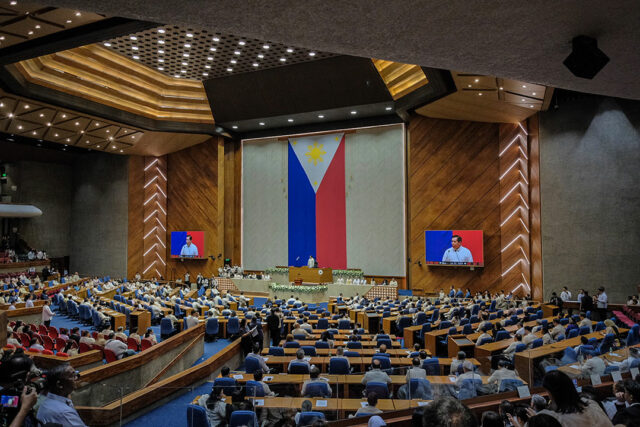
A SMALL COMMITTEE tasked by the House of Representatives to propose changes to the 2025 General Appropriations bill has increased funding for social services, food security and social safety nets by P292.23 billion, in the face of weak economic growth that could go below the government’s target through next year.

In a statement on Tuesday, House Appropriations Committee Chairman and Ako Bicol Party-list Rep. Elizaldy S. Co said the additional allocation is on top of the P591.8 billion already set aside for cash assistance to poor families.

“The additional funding is crucial for supporting those in need,” he said.

The House last month approved the P6.352-trillion national budget for 2025. The Senate is conducting hearings on the proposed budget.

Mr. Co said the small committee had approved an additional P39.8 billion for Assistance to Individuals in Crisis Situations (AICS), and another P39.8 billion for the Ayuda sa Kapos ang Kita Program (AKAP). Next year’s budget for AKAP, which provides cash assistance to people earning P21,000 or less monthly, has surged 206% from the P13 billion allocated for 2024.

The committee also set aside P3.4 billion for the state’s sustainable livelihood program for low-income families.

Appropriations Committee Senior Vice-Chairman and Marikina Rep. Stella Luz A. Quimbo said the Labor department would receive an extra P20.28-billion funding for the Tulong Panghanapbuhay sa Ating Disadvantaged/Displaced Workers and the Government Internship Program.

The committee also allocated an additional P30.01 billion to provide scholarships for underprivileged students pursuing higher education. The funds will be evenly distributed between the Commission on Higher Education’s Tertiary Education Subsidy and Tulong Dunong programs.

The House panel approved an additional P7 billion for the Department of Education to build new school facilities and repair existing ones.

Meanwhile, the Armed Forces of the Philippines (AFP) will get an additional P8.44 billion to boost the subsistence allowances of military personnel. Upon approval, the daily subsistence for soldiers will rise by 67% to P250.

Amid increasing tensions in the South China Sea, the panel allotted P3.2 billion for the AFP to finalize the airport expansion on Pag-asa Island and to develop a shelter port in Lawak, Palawan.

To bolster food security, the committee has realigned P30 billion for the Department of Agriculture’s initiatives, including the Philippine Irrigation Network Piping System, solar-powered irrigation systems and cold storage projects.

The National Irrigation Administration will also receive an extra P44 billion to establish pump irrigation and solar-driven pump irrigation projects.

The House committee also allotted an additional P56.87 billion for the Department of Health’s programs such as health facility enhancement, medical assistance for indigent patients and improvement of specialty and legacy hospitals.

An additional P1 billion has been allocated for the upgrade of the University of the Philippines-Philippine General Hospital.

The remaining P8.43 billion, according to Mr. Co’s office, will be distributed across several sectors, such as to university service centers, vehicle acquisition for local governments, skill development programs and for tourism market development.

Additional funds will also support intelligence, marine research and security programs of the Department of Transportation, and the rehabilitation of the Cultural Center of the Philippines main building.

IMPLEMENTATION ISSUES
University of the Philippines School of Labor and Industrial Relations Assistant Professor Benjamin B. Velasco said the issue is about the implementation of social safety nets.

“It is coursed through politicians and thus becomes entangled in the patronage systems of local and dynastic politics,” he said in a Facebook Messenger chat, adding that incumbent politicians could distribute these AKAP and AICS funds to their constituents.

“We should find a way to disburse aid without the beneficiaries being identified by politicians,” he added, noting that one way to do this is through a national database of indigents, informal workers and migrant families as the pool of legitimate beneficiaries.

Mr. Velasco said increasing social programs could also boost the economy because the money will end up in the hands of consumers.

Federation of Free Workers President Jose Sonny G. Matula also called for an evaluation of those social assistance programs.

“While these programs may provide short-term relief, we need to focus on strengthening and expanding unemployment insurance under the Social Security System and Government Service Insurance System and enhancing training and reskilling programs for displaced or jobless workers to ensure long-term, sustainable support,” he said in a Viber message.

However, Leonardo A. Lanzona, Jr., an economics professor at the Ateneo de Manila University, said the move to increase the budget allocation for social services could stoke inflation.

“It can actually just increase inflation since these are not related to production. Just like in a carnival, when owners know that people have money, they will just raise prices,” he said in a Facebook Messenger chat.

“In the end, people just remain dependent on these dole-outs, thus enhancing the dynasty,” he added.

Economic managers are targeting 6-7% growth this year, and 6.5-7.5% growth in 2025.

The Philippine economy grew by 6% in the first half, as high inflation and elevated interest rates dampened consumption. 

To meet the lower end of the target, GDP expansion should average 6% for the remainder of the year.

Third-quarter economic data will be released on Nov. 7.

Meanwhile, Teodoro C. Mendoza  a retired agronomy professor at the University of the Philippines Los Baños, said instead of investing in production, the government should just buy the products of farmers.

“Buy the farmers’ rice at P25 per kilogram, and they will be happy. They will be motivated to produce more rice,” he said in a telephone call, noting the solar irrigation systems he saw in the past years were not entirely successful.

The House of Representatives might have violated a Philippine Constitution provision disallowing amendments on bills passed on final reading, analysts earlier told BusinessWorld. This could open the House to potential lawsuits that could derail the government’s spending plan next year.

Congressmen approved House Bill (HB) No. 10800, the General Appropriations bill, on final reading last month. The House adopted committee amendments to the spending plan during plenary deliberations while deferring proposed individual reallocations to a later date to meet its self-imposed September deadline.

“No amendment… shall be allowed” after a measure’s last reading, according to Sec. 26 of the 1987 Charter.

Five more PPP projects to be awarded this year, early 2025

A MAN WORKS at a construction site in Navotas City. — PHILIPPINE STAR/RYAN BALDEMOR

FIVE MORE public-private partnership (PPP) projects worth around P28 billion are expected to be awarded this year and by early 2025, the government said.

This, as the state pushes the modernization of several airports to decongest the capital region and boost the tourism sector.

The Public-Private Partnership (PPP) Center in an e-mail said among the projects with a total estimated cost of P27.95 billion that are expected to be awarded in the second half or early in 2025 is the upgrade of the New Bohol International Airport in Panglao, Bohol province.

The Aboitiz group, through its infrastructure arm Aboitiz InfraCapital, Inc. secured an original proponent status (OPS) for the operations and maintenance of the Bohol airport for 25 years. A Swiss challenge is scheduled within the fourth quarter.

Also on the list of projects expected to be awarded within the year or by early 2025 is a 300-bed, state-of-the-art cancer hospital to be built within the compound of the University of the Philippines-Philippine General Hospital (UP-PGH) in Manila.

In April, NEDA said the UP-PGH Cancer Center project’s cost increased to P9.49 billion from P6.05 billion following changes in project terms.

Other projects expected to be awarded this year include the Bislig City Bulk Water Supply project, Bislig City Septage project and the Dialysis Center for the Renal Center Facility of the Baguio General Hospital and Medical Center.

The PPP Center said eight more PPP projects, with a total estimated cost of P270.65 billion, may also be awarded in 2025, “if all required approvals are secured by the respective implementing agencies by early next year.”

These include the upgrade, operation and maintenance of the Iloilo International Airport, Kalibo International Airport and Puerto Princesa International Airport.

The operations and maintenance of the Metro Manila Subway and North South Commuter Railway, as well as the rehabilitation, operations and maintenance of the Metro Rail Transit (MRT) Line 3 are also expected to be awarded next year.

Also to be awarded next year are the Boracay Bridge project and the Philippine Automatic Fare Collection System, the PPP Center said.

The Marcos administration has vowed to harness PPPs to boost Philippine infrastructure. In December, President Ferdinand R. Marcos, Jr. signed the PPP Code or Republic Act No. 11966, which amended the Build-Operate-Transfer (BOT) law to create a unified legal framework for all PPPs at the national and local levels.

The PPP Center said under the new law, PPPs are designed to respond to the needs of the country’s green transition, with the law itself and its implementing rules requiring climate resiliency and sustainability “as early as project development and project approval.”

“The use of green financing instruments as one of the alternative sources of PPP financing was also introduced,” it said.

The law allows performance-based payments, incentivizing private sector players to meet the environmental performance standards or indicators for their projects as set in their contracts, it added.

“The PPP Center is also working with development partners to translate these climate resiliency considerations, which are surfaced during project development and approval, into concrete key performance indicators that could be embedded in PPP contracts and objectively monitored during contract implementation.”

In his State of the Nation Address in July, Mr. Marcos said the government aims to complete 350 airport and seaport projects by 2028. — Kyle Aristophere T. Atienza

Global public debt to top $100 trillion this year; growth to accelerate — IMF

A participant stands near a logo of the International Monetary Fund at the annual meeting in Nusa Dua, Bali, Indonesia, Oct. 12, 2018. — REUTERS/JOHANNES P. CHRISTO/FILE PHOTO

WASHINGTON — The world’s total public debt is set to exceed $100 trillion this year for the first time and may grow more quickly than forecast as political sentiment favors higher spending and slow growth amplifies borrowing needs and costs, the International Monetary Fund (IMF) said on Tuesday.

The IMF’s latest Fiscal Monitor report showed global public debt will reach 93% of global gross domestic product by the end of 2024 and approach 100% by 2030. That would exceed its 99% peak during COVID-19. It would also be up 10 percentage points (ppts) from 2019, before the pandemic exploded government spending.

Released a week before the IMF and World Bank hold annual meetings in Washington, the Fiscal Monitor said there are good reasons to believe future debt levels could be well higher than projected, including a desire to spend more in the US, the world’s largest economy.

“Fiscal policy uncertainty has increased, and political red lines on taxation have become more entrenched,” the IMF said in the report. “Spending pressures to address green transitions, population aging, security concerns and long-standing development challenges are mounting.”

CAMPAIGN SPENDING PROMISES
The IMF’s concerns about rising debt levels come three weeks before a US presidential election in which both candidates have promised new tax breaks and spending that could add trillions of dollars to federal deficits.

Republican presidential candidate Donald Trump’s tax cut plans would add some $7.5 trillion in new debt over 10 years, more than twice the $3.5 trillion added from the plans of Vice-President Kamala Harris, the Democratic nominee, according to central estimates by the Committee for a Responsible Federal Budget (CRFB), a budget think tank.

The report finds that debt projections tend to underestimate actual outcomes by sizeable margins, with realized debt-to-GDP ratios five years ahead averaging 10% higher than originally forecast.

And debt could be further increased significantly by weak growth, tighter financing conditions and greater fiscal and monetary policy uncertainty in systemically important economies such as the US and China. The report includes a “severely adverse scenario” involving these factors that shows global public debt could reach 115% in just three years, 20 ppts higher than projected.

SPENDING BRAKES
The IMF repeated its calls for more fiscal consolidation, saying the current environment with solid growth and low unemployment was an opportune time to do so. But it said current efforts, averaging 1% of GDP over the six years from 2023 to 2029, are insufficient to reduce or stabilize debts with a high probability.

A cumulative tightening of 3.8% would be needed to achieve this goal, but in the US, China and other countries where of GDP is not forecast to stabilize, substantially greater fiscal tightening would be needed.

The US this month is expected to report a fiscal 2024 deficit of about $1.8 trillion, or more than 6.5% of GDP, according to the Congressional Budget Office.

It said the US and other countries where debt is projected to keep growing, including Brazil, Britain, France, Italy and South Africa, could face costly consequences.

“Postponing adjustment will only mean that a larger correction is needed eventually, and waiting can also be risky, because past experience shows that high debt and lack of credible fiscal plans can trigger adverse market reactions and can limit the room that countries have to deal with future shocks,” said Era Dabla-Norris, the IMF’s deputy fiscal affairs director.

She said cuts in public investment or social spending tend to have a much larger negative impact on growth, than more poorly targeted subsidies such as for fuel. Some countries have room to broaden their tax bases and improve the efficiency of tax collections, while others can make their tax systems more progressive by taxing capital gains and income more effectively, Ms. Dabla-Norris said. — Reuters

EDC eyes P25B for geothermal project expansion

PHILSTAR FILE PHOTO

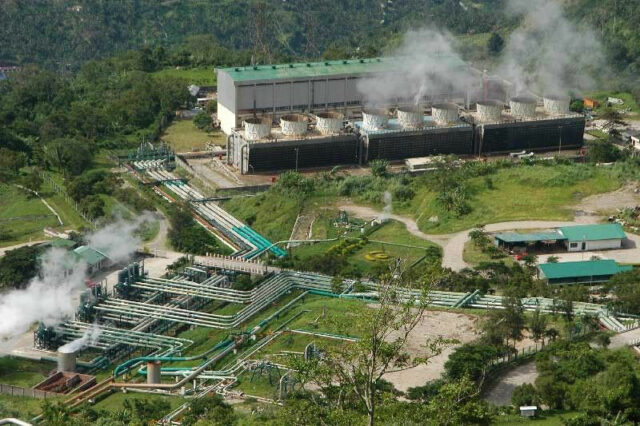
LOPEZ-LED Energy Development Corp. (EDC) plans to allocate P25 billion for the expansion of its 282.5-megawatt (MW) Southern Negros Geothermal Project (SNGP) in Negros Oriental.

“This covers the cost of drilling new wells, the expansion of existing pads, and the construction of new pads, road networks, pipeline routes and other support structures, as necessary,” EDC said in a document submitted to the Department of Environment and Natural Resources.

The estimated amount also includes the budget for emerging technologies, it said.

EDC secured its environmental compliance certificate (ECC) in 2017 for a 5,163-hectare project development block. It includes facilities and activities to attain, sustain and support the operation of geothermal power plants.

A minor amendment was issued in July 2023 for the inclusion of a 30-megawatt-hour battery energy storage system, which consists of a transmission system to connect SNGP to a substation.

The company is currently applying for an ECC amendment for the steamfields of the SNGP, proposing a change in the boundary/shape of the development block and a reduction from 5,163 hectares to 4,027.59 hectares.

“The 4,027.59 hectares proposed development block will allow drilling of new geothermal wells and construction of new infrastructure and facilities to provide make-up and replacement steam to sustain the operation of the Nasuji Power Plant, Palinpinon Geothermal Power Project (PGPP) Units I, II and Nasulo Geothermal Power Plant, and other possible future developments,” EDC said.

Meanwhile, the project area is also proposed for expansion from 151.5 hectares to 400 hectares to support additional infrastructure and operational requirements.

Out of its allowable 282.5-MW steam field capacity, SNGP is operating at 241.8 MW through its existing 94 wells and 32 well pads.

The operating plants currently have a total dependable capacity of 221.8 MW. All power generating units are operating at their installed capacity except for the Nasuji geothermal power plant under PGPP-II, which is under preservation mode due to steam availability constraints.

EDC intends to operate the Nasuji power plant by drilling additional geothermal wells to supply steam to the plant. It is seeking to add eight wells and two well pads in total.

Citing simulation studies, EDC said that geothermal wells experience “a pressure decline which may result in decreased steam flows” that may eventually lead to “a subsequent decline in power availability.”

The company is proposing to implement a periodic makeup and replacement drilling program to sustain and maximize the power generation of the geothermal power plants.

The project is scheduled for public scoping on Nov. 6. It is an early stage in the environmental impact assessment process where the proponents will provide an overview of the proposed projects and gather issues and concerns.

At present, EDC has an installed capacity of 1,480.19 MW, accounting for about 20% of the country’s total installed renewable energy capacity.

Of the total renewable energy capacity, EDC’s 1,189.34 MW provides around 61% of the country’s total installed geothermal capacity. — Sheldeen Joy Talavera

Converge tapped to connect 600-ha industrial park in Batangas

FIRST PHILIPPINE Industrial Park is a joint venture between the local conglomerate First Philippine Holdings and the Japanese conglomerate Sumitomo Corp. — FPIP.COM

LOPEZ-LED First Philippine Holdings Corp. has tapped Converge ICT Solutions, Inc. to provide connectivity solutions for First Philippine Industrial Park’s (FPIP) 600-hectare (ha) industrial park hub in Batangas.

In a joint statement, the two parties said the collaboration would allow Converge to take advantage of FPIP’s dark fiber, enabling fiber connectivity to over 150 locators of FPIP’s industrial park.

They said the commercial agreement between FPIP and Converge would also allow FPIP to adapt to technologies like cloud services, cybersecurity solutions, and digital collaboration tools.

Converge Chief Executive Officer Dennis Anthony H. Uy said it is necessary to deliver connectivity solutions to industrial parks like FPIP because they are the driver of economic growth and critical in bringing foreign investments.

First Philippine Holdings, together with Japan’s Sumitomo Corp., established FPIP as a location for manufacturers and traders, as well as a platform for creating jobs and generating tax revenues for the government.

FPIP has established a shared infrastructure through investments in dark fiber facilities. This has allowed FPIP to maximize its existing underground infrastructure and facilitate deployment of fiber internet services for their locators.

At the local bourse on Tuesday, shares in First Philippine Holdings closed unchanged at P60.70 each, while shares in Converge went up by 68 centavos, or 4.13%, to end at P17.16 apiece. — Ashley Erika O. Jose

Airlines see early holiday booking surge

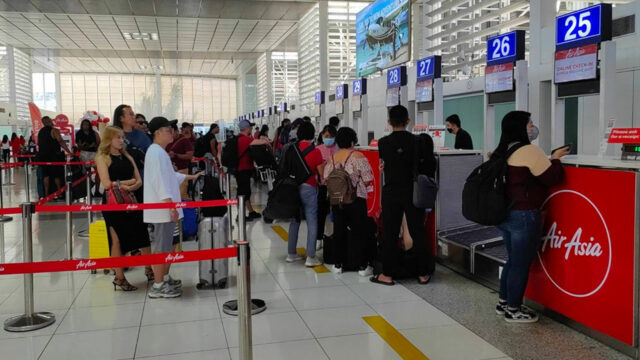
GUESTS IN QUEUE at the AirAsia check-in counters at NAIA Terminal 2. — NEWSROOM.AIRASIA.COM

By Ashley Erika O. Jose, Reporter

PHILIPPINE CARRIERS are gearing up for a surge in flight bookings as the holiday season approaches, driven by early travel planning and cost-saving measures by passengers.

“This increase is attributed to guests planning ahead and securing their travel early to save more and avoid any last-minute hassles,” AirAsia Philippines said in a statement on Tuesday.

Philippines AirAsia, Inc. (AirAsia Philippines) said it sees an increase in bookings for both domestic and international flights.

The low-cost carrier said it had logged more than 50,000 seats sold for the upcoming All Souls’ Day and All Saints’ Day, falling within the travel period of Oct. 30 to Nov. 3.

AirAsia said these numbers are also anticipated to further increase in the coming weeks.

For Christmas and New Year’s Day, AirAsia Philippines reported over half-a-million bookings, totaling 528,031 passengers. Of these, 367,455 are for domestic travel, while 160,576 are for international destinations.

“To accommodate the influx of holiday travelers, we have also increased our manpower at NAIA Terminals 2 and 3. We will always be committed to fulfilling our brand promise of reaching guests safely and on time,” said AirAsia Philippines Communications and Public Affairs Head Steve F. Dailisan.

To date, AirAsia Philippines said it has flown a total of 5.49 million passengers, about 68.5% of its eight million passenger volume target for 2024.

Meanwhile, budget carrier Cebu Pacific, operated by Cebu Air, Inc., said it is anticipating one million passengers for the upcoming All Souls’ Day and All Saints’ Day alone.

“With the addition of new routes and enhanced capacity, we expect a significant increase in passenger numbers this year,” Cebu Pacific said.

The company is also projecting growth in travel demand for the upcoming holidays, driven by its increased capacity from the newly added routes.

Cebu Pacific said earlier that the company is looking at exploring fresh destinations for Filipino travelers for both international and domestic routes.

In October, Cebu Pacific finalized its P1.4-trillion aircraft order with Airbus SE, consisting of 102 A321 new engine option (NEO) and 50 A320neo family.

For the year, the company has initially set a target of 24 million passengers, significantly higher than its 2023 passenger volume.

In the second quarter alone, Cebu Pacific carried a total of six million passengers, its highest quarterly passenger count in its history, the airline said.

The airline currently serves 35 domestic and 26 international destinations across Asia, Australia, and the Middle East.

Philippine Airlines did not respond to BusinessWorld’s request for comment by the deadline.

DMCI stockholders OK share issuance for Cemex purchase

DMCI HOLDINGS Chairman and President Isidro A. Consunji — DMCIHOLDINGS.COM

DMCI HOLDINGS, Inc. has secured stockholders’ approval to issue P10 billion in preferred shares to Dacon Corp., the Consunji group’s private holding company, for the acquisition of Cemex Holdings Philippines, Inc. (CHP).

The issuance involves 10 million Class B preferred shares at P1,000 each, via private placement.

The move was approved during a special stockholders’ meeting on Tuesday.

“The reason for the financing is for us to be able to raise P10 billion for the 56.75% acquisition of Cemex Asian South East Corp. (CASEC). It does not intend to dilute the voting rights of the common shareholders. It will strengthen the balance sheet as it is treated as equity capital,” DMCI Holdings Chairman and President Isidro A. Consunji said during the meeting.

“Furthermore, the convertibility option provides the flexibility in managing the capital structure and optimizes the cost of capital,” he added.

Mr. Consunji said that DMCI remains committed to its dividend policy of at least 25% of the company’s previous year’s core net income amid the share issuance.

“The primary consideration for funding the acquisition is to optimize the financing costs and limit the impact on common shareholders’ dividends while providing mutual benefits for the investors and the company. With fixed interest rates, the annual dividend rate is at 4%,” Mr. Consunji said.

Last month, DMCI, through Dacon Corp., announced a P1.94-billion mandatory tender offer to acquire the remaining 10.14% of CHP.

The tender offer plans to buy up to 1.37 billion publicly owned CHP common shares at P1.42 apiece, equivalent to 10.14% ownership. The offer period will be from the morning of Oct. 23 up to noon of Nov. 21.

Under the planned acquisition, Dacon has been appointed as the bidder for the mandatory tender offer to acquire the remaining 10.14% of CHP’s total issued and outstanding capital stock.

In April, DMCI, Semirara Mining and Power Corp. (SMPC), and Dacon Corp. announced the acquisition of CHP for $305.6 million via a share purchase agreement.

DMCI will buy the entire share of Cemex Asia B.V. in CASEC, the majority owner of CHP with an 89.96% equity interest. DMCI will acquire a 56.75% stake in CASEC, Dacon will secure 32.12%, and SMPC will purchase the remaining 11.13%.

On Tuesday, DMCI shares dropped by 1.01% or 12 centavos to P11.72 per share. — Revin Mikhael D. Ochave

Ayala Corp. scaling new ventures

CEZAR P. CONSING — GLOBE.COM.PH

AYALA Corp. is scaling its newer businesses in healthcare, logistics, infrastructure, education, financial technology, and electric mobility, leveraging its fundraising ability, according to its president.

“Perhaps as important are our newer, less well-known businesses in healthcare, logistics, infrastructure, education, financial technology, and electric mobility. These too will benefit from our ability to raise funding,” Ayala Corp. President and Chief Executive Officer Cezar P. Consing said during a listing ceremony on Tuesday.

“Our objective is to grow these to scale so that even these relatively newer businesses can have a positive impact on the lives of a significant number of our countrymen,” he added.

Mr. Consing said this as Ayala Corp. listed its P15-billion preferred Class B shares at the Philippine Stock Exchange on Tuesday.

Under the issuance, Ayala Corp. sold 7.5 million shares, including a base offer of five million shares and an oversubscription of 2.5 million shares.

The preferred shares were issued at P2,000 per share and are payable quarterly with an initial dividend rate of 6.0538% per annum.

“This issuance provides us with the flexibility to redeem the outstanding preferred shares issued in 2019, and allows us to maintain competitiveness in our cost of capital,” Ayala Corp. Chief Finance Officer Alberto M. de Larrazabal said.

Meanwhile, Mr. Consing said the P15 billion preferred shares will help the conglomerate build businesses that “enable people to thrive.”

“Our bigger and better-known businesses, real estate, banking, telecommunications, and renewable energy, have been beneficiaries of our ability to raise funding at the holding company level,” he said.

On Tuesday, Ayala Corp. shares rose by 1.39% or P10 to 730 per share. — Revin Mikhael D. Ochave

Contemporary Philippine artists in Art Jakarta

VIOLET WOMEN, Lilac Girls, and Tropical RGB by Kitty Kaburo; Stronghold 2 by Chelsea Theodossis — BRONTË H. LACSAMANA

TWO Philippine galleries participated in the recently held Art Jakarta art fair — The Drawing Room and Vinyl on Vinyl — attracting bigger crowds this year than last.

Speaking about the various Asian galleries that attended, Art Jakarta’s fair director Tom Tandio told the press that “stable regional art markets are rife with opportunities for international collaborations. By bringing together all the key players of this larger art market, we’re able to offer artists and creative minds a platform to hone their creations. It is a show of force of our countries’ importance in the global art world,” he said.

When BusinessWorld visited the two Philippine galleries during the fair’s run early in October, they were swarmed by passersby attracted by the art. Both reported that the foot traffic seemed heavier than last year (an impression later corroborated by Art Jakarta’s official count: 38,368 visitors in 2024, compared to 35,578 visitors in 2023).

THE DRAWING ROOM
At The Drawing Room’s booths hung paintings showing three women’s unique reflections on the world around them.

Nicole Decapia, the gallery’s strategies consultant, said that the goal was to bring in “striking works that might resonate in Jakarta” and that featuring all female artists wasn’t intentional.

One of the artists was Kitty Kaburo, whose colorful paintings are a great example of the kind of striking works the gallery was going for. Her paintings simulate transformations over time by depicting human activity in natural settings. The three pieces she contributed depict a playground in South Korea, its people and surroundings lit up in vibrant colors.

“As a Korean-Filipino artist, she talks about how Korea is slowly becoming a tropical climate due to changes in the environment, leading to a blurring of what is Korean and what is Filipino,” said Ms. Decapia.

Meanwhile, Victoria Montinola’s landscapes show off a classical painterly technique in the portrayal of trees. Her three works achieve both a mundane yet fantastical look due to the subtle use of color and texture.

Placed in a fair which highlights both similarities and resonances among different art practices across Asia, both artists’ works are a mark of “everything blending together in a clear display of talent.”

“The Philippines, Indonesia, and other Asian countries have similar histories, experiences, and stories, from the diaspora to the post-colonial. These connections make this fair very strong,” Ms. Decapia said.

A major draw to The Drawing Room’s booth were two paintings by Chelsea Theodossis. In them, levitating Tetris block-like objects stand out in gravity-defying compositions, creating a surreal still life.

Ms. Theodossis told BusinessWorld that it was common for people to approach her works to try and figure out if it was a mixed-media or installation work, only to find that it was a realistic painting.

“The energy here is high-level,” she said of the art fair. “It’s my first time to come along with my works because I usually just send them over. The first thing I have to say is that I’m Filipino, because we Filipinos look Indonesian!” she said.

She then talked about her art, particularly the importance of giving life to the seemingly ordinary objects that she paints. “I feel that it’s good to live as an artist now because there’s a lot of understanding for different points of view. It’s very joyful,” said Ms. Theodossis.

VINYL ON VINYL
The diverse eye-catching works of five artists who have done well internationally filled the booth of Vinyl on Vinyl.

On its outer wall facing one of the central hallways hung Iyan De Jesus’ dreamlike painting of female faces amid lotus pods and swans, composed of graceful lines and circles.

Inside, pieces by Teo Esguerra displayed a peculiar combination of aerosol paint, acrylic, and cutouts on canvas, achieving a vivid memory-like collage. These were contrasted by Dennis Bato’s striking, monochrome abstraction.

Two returning artists were part of the fun, too.

TRNZ (real name: Terence Eduarte) was the gallery’s sole artist in Art Jakarta last year, and featured animated depictions of warm, childlike scenes — not unlike his two paintings shown in this year’s edition.

Back in 2022, the first year that Vinyl on Vinyl participated in the fair, they featured a Reen Barrera solo show. This time, his return is marked by a large, colorful painting of a patchwork-faced character, with wood-and-resin figurines adding spunk to the booth.

Pia Reyes, one of the gallery’s co-founders, told BusinessWorld that it was the first time they did a group show at Art Jakarta.

“There’s no formula as to what artist will connect [with the fair’s visitors], because all of them have the potential to do so. Dennis Bato’s work is abstract-conceptual while Reen Barrera’s is more figurative, and they’re both a hit here,” she said.

“You never really know, so it’s nice to provide diversity.”

For Vinyl on Vinyl co-director Gaby dela Merced, the bond between Indonesian and Filipino artists and collectors helps a great deal.

“From the start of our gallery, we’d already been exhibiting Indonesian artists, so we enjoy bringing our Filipino artists here for a change,” she said. “If you go to fairs like Hong Kong, Singapore, or Korea, it’s more international because there’s a lot [of art] from the West. Our advantage here is the homegrown feeling, the unique flavor that comes from us relating with each other.” — Brontë H. Lacsamana

Gov’t fully awards bonds amid strong demand

STOCK PHOTO | Image by RJ Joquico from Unsplash

THE GOVERNMENT made a full award of the Treasury bonds (T-bonds) it offered on Tuesday amid robust demand and as rates were in line with secondary market levels amid expectations that the Bangko Sentral ng Pilipinas (BSP) will cut borrowing rates further at its meeting this week.

The Bureau of the Treasury (BTr) raised P15 billion as planned via the reissued 10-year bonds it auctioned off on Tuesday as total bids reached P40.876 billion, or almost three times the amount on offer.

This brought the total outstanding volume for the series to P205 billion, the Treasury said in a statement.

The bonds, which have a remaining life of six years and nine months, were awarded at an average rate of 5.69%. Accepted yields ranged from 5.65% to 5.7%.

The average rate of the reissued papers was 55 basis points (bps) higher than the 5.13% fetched for the bonds when they were last awarded on Nov. 9, 2021. This was also 169 bps above the 4% coupon rate for the issue.

Still, this was 1.4 bps lower than the 5.704% fetched for the seven-year bond, the tenor closest to the remaining life of the T-bonds on offer, and 5.53 bps below the 5.7453% quoted for the same bond series at the secondary market before Tuesday’s auction, based on PHP Bloomberg Valuation Service Reference Rates data provided by the BTr.

The government made a full award of its T-bond offer as the average yield fetched for the issue was aligned with prevailing secondary market rates, the Treasury said.

The BTr’s offer was met with strong demand as expected as the bond on offer is “relatively illiquid,” a trader said in a text message.

The Treasury fully awarded its offering as rates were slightly below comparable secondary market levels as the market expects the BSP to reduce borrowing costs at its policy meeting on Wednesday following slower-than-expected headline inflation last month, Rizal Commercial Banking Corp. Chief Economist Michael L. Ricafort said in a Viber message.

The BSP will likely cut benchmark interest rates by 25 bps for a second straight meeting on Wednesday to continue its easing cycle amid an improving inflation outlook, analysts said.

A BusinessWorld poll conducted last week showed that 16 out of 19 analysts expect the Monetary Board to reduce borrowing costs by 25 bps at its policy meeting on Oct. 16 to bring the target reverse repurchase rate to 6%.

On the other hand, two analysts expect the BSP to cut by a bigger 50 bps this week, while one sees the Monetary Board keeping rates unchanged.

The BSP kicked off its easing cycle with a 25-bp cut in August, marking the first time it reduced borrowing costs in nearly four years.

BSP Governor Eli M. Remolona, Jr. earlier said they could deliver a 25-bp rate cut at each of their October and December meetings, which would bring the policy rate to 5.75% by yearend.

Philippine headline inflation sharply slowed to 1.9% year on year in September from 3.3% in August and 6.1% a year ago.

This was below the central bank’s 2%-2.8% forecast for the month and was also the slowest print in over four years or since the 1.6% in May 2020.

For the first nine months, inflation averaged 3.4%, matching the central bank’s full-year forecast and also falling within its 2-4% annual target.

The BTr is looking to raise P145 billion from the domestic market this month, or P100 billion via Treasury bills and P45 billion through T-bonds.

The government borrows from local and foreign sources to help fund its budget deficit, which is capped at P1.48 trillion or 5.6% of gross domestic product this year. — A.M.C. Sy

Bloomberry refinances P72-B loan

BLOOMBERRY.PH

RAZON-LED Bloomberry Resorts Corp. has refinanced a P72-billion loan to enhance financial stability and preserve cash.

Bloomberry subsidiaries Bloomberry Resorts and Hotels, Inc. (BRHI), as borrower, and Sureste Properties, Inc. (SPI), as surety and third-party security provider, signed a P72-billion syndicated refinancing facility with a group of banks on Tuesday, the listed integrated resort operator said in an e-mailed statement.

The new loan facility replaces the existing P73.5-billion syndicated term loan facility obtained in 2018 and the P20-billion additional term loan facility that BRHI obtained in December 2020.

“We view this refinancing as a positive development that will allow the company to lighten its debt service and preserve cash as Solaire Resort North ramps up, improve the company’s bottom line, and ultimately ensure the consistent return of capital to our shareholders in the coming years,” Bloomberry Chairman and Chief Executive Officer Enrique K. Razon, Jr. said.

Bloomberry’s updated loan is priced at a spread that is 75 basis points lower than the previous facilities and gives the option to fix the interest rate within the next 12 months.

The feature will allow the company to benefit from further interest rate cuts that are expected to be implemented in the coming months.

The banks involved in the refinancing loan include BDO Unibank, Inc., Bank of the Philippine Islands, China Banking Corp., and Philippine National Bank.

BDO Capital served as lead arranger and sole bookrunner, while BDO Unibank, Inc. – Trust and Investments Group is the security trustee, facility agent, and paying agent.

Bloomberry’s integrated resort portfolio includes Solaire Resort Entertainment City, Solaire Resort North in Quezon City, and Jeju Sun Hotel & Casino (Jeju City) in Korea.

On Tuesday, Bloomberry shares fell by 0.88% or seven centavos to P7.89 apiece. — Revin Mikhael D. Ochave

ADVERTISEMENT
ADVERTISEMENT