Home Blog Page 2494

Building better, affordable housing for Filipino families

Facebook.com/DHSUDGOVPH

Access to housing is a basic human right and is crucial for ensuring overall health and economic stability. The advancement of housing is not only vital for providing shelter to people and families but also drives progress of the nation.

According to the 2020 Census of Population and Housing released by the Philippine Statistics Authority, the Philippines had around 28.5 million housing units, with 25.2 millions of these occupied by households.

Approximately one-third of all housing units in the Philippines were built within the last decade. The majority of these housing units are built using durable materials, which is a positive indicator of improved housing quality over the years.

The report also said that 87.6% of occupied housing units are single houses, 6.5% are apartments or row houses, 3% are duplexes, and 0.7% are condominiums.

Despite significant developments, the country continues to struggle with housing affordability and a growing housing backlog.

In fact, the distribution of housing types reflects the unequal access to different forms of housing. While more affluent households can afford condominiums and durable single houses, the poor often resort to less secure and substandard housing in informal settlements.

According to the Department of Human Settlements and Urban Development (DHSUD), the country faced a housing backlog of approximately 6.5 million units from 2017 to 2022. The backlog is most pronounced in urban centers like Metro Manila, where over 13 million people reside, leading to a high concentration of informal settlements and inadequate living conditions.

Particularly, the urban poor are the most vulnerable, with many families living in cramped spaces with limited access to basic services. The lack of affordable land in urban areas has contributed to the proliferation of informal settlements, where households often reside in substandard housing with little to no legal tenure.

Population density and affordability crisis

The Philippines has one of the highest population densities globally, which further exacerbates housing shortages, especially in metropolitan regions. The rapid pace of urbanization has placed immense pressure on land resources, limiting the availability of affordable housing.

In Metro Manila, for instance, the population density often exceeds 20,000 people per square kilometer, making land acquisition for housing projects increasingly difficult.

Moreover, the demand for housing continues to rise as the population grows and urban migration accelerates. The high cost of land and construction materials makes it challenging for developers to meet the demand for affordable housing while maintaining profitability.

In addition, housing affordability remains a significant issue for the majority of Filipinos, particularly for low- and middle-income households. The conventional measure for housing affordability, which suggests spending no more than 30% of income on housing, has been criticized for overestimating affordability among low-income groups. Many low-income families are forced to spend a much higher percentage of their income on rent or mortgages, leaving little for other essential needs such as food, education, and healthcare. In addition, a study by the Philippine Institute for Development Studies shows that more than 50% of households are underserved by both government programs and the private housing market — indicating that a significant portion of the population still struggles to secure adequate housing.

Building solutions for Filipino families

According to the United Nations Human Settlements Programme, also known as UN-Habitat, the housing backlog in the Philippines is expected to rise dramatically from 6.5 million in 2022 to an estimated 22 million by 2040 if current trends continue.

In light of the current housing landscape in the country, the National Shelter Month, observed every October, is more relevant as it offers an opportunity to reflect on the challenges facing millions of Filipinos.

Pixabay / Mohamed_hassan

According to the DHSUD, the observance serves as a platform to highlight housing issues while promoting solutions and policies aimed at improving the housing sector. It also calls government agencies, real estate developers, and financial institutions to come together and implement sustainable and inclusive housing strategies.

In response, both the government and the private sector has ramped up efforts to provide more affordable housing, implement urban renewal initiatives, and create housing policies that support the needs of all sectors of society.

For instance, the DHSUD has initiated various programs under the Pambansang Pabahay para sa Pilipino (4PH) program aimed at transforming communities into resilient living spaces.

The 4PH program is providing affordable housing options through various subsidies that lower both home prices and monthly amortization costs. This initiative is particularly beneficial for Filipino workers who are members of Pag-IBIG Fund.

Key features of the program include subsidized interest rates up to 5%, green housing features, and a community-centric approach with essential amenities.

Similarly, Pag-IBIG offers loans at competitive interest rates starting from 4.5%, with repayment terms extending up to 30 years.

In 2023, Pag-IBIG Fund reported a record-high release of P126 billion in home loans, benefiting nearly 97,000 members.

Meanwhile, the National Home Mortgage Finance Corp.  (NHMFC), a government-owned and -controlled corporation, focuses on expanding access to housing finance for low-income families through various initiatives.

The agency’s Housing Loan Receivables Purchase Program (HLRPP) assists families by purchasing their housing loans from developers or financial institutions, thereby providing them with more manageable payment terms.

The Socialized Housing Loan Takeout of Receivables (SHeLTeR), launched in 2016, targets socialized housing developers and aims to make homeownership more accessible for low-income earners.

In a statement, DHSUD Secretary Jose Rizalino L. Acuzar highlighted the importance of collaboration in fulfilling the country’s housing backlogs: “Let us turn these challenges into opportunities toward our shared goal of providing safe, decent yet affordable shelters to Filipinos in sustainable communities patungo sa mas maunlad at mas matatag na Bagong Pilipinas (towards a more developed and stronger New Philippines).” Mhicole A. Moral

Collective initiatives to build more homes for Filipinos

Freepik

Affordable and decent housing is a right that every Filipino has as guaranteed by the 1987 Philippine Constitution. However, the Philippines is currently facing a severe housing crisis that, if left unaddressed, can leave millions of its citizens homeless or living in dangerous areas such as riverbanks, steep slopes, and even cemeteries.

In 2021, the House of Representatives adopted a resolution declaring a housing crisis in the country and urging the Executive department to accelerate housing production. At the time, 4.5 million people were homeless or living in informal settlements in the country with more than 3 million of those residing in Metro Manila.

According to the United Nations-Habitat, that number has shrunk to a still massive 3.7 million Filipino informal settler families (ISFs) in 2023. Still, the Philippine government has a lot of work to do with data from UN-Habitat suggesting a housing units backlog of more than 6.5 million houses in 2022, which could balloon to over 22 million homes by 2040.

To address this housing dilemma, the government launched a flagship housing project aimed at providing 6 million affordably-priced homes and lower monthly amortization costs through various subsidies for Filipino workers who are members of the Pag-IBIG Fund. The Pambansang Pabahay Para sa Pilipino Housing (4PH) Program currently has at least 45 projects in various stages of construction around the country while another 200 memoranda of understanding have been signed with various local government units (LGUs).

“Our housing agenda aims to ensure that all Filipino workers have the means to accessible and affordable housing opportunities. Through the subsidies extended to beneficiaries of the 4PH program, prices of homes and monthly amortization costs will be significantly reduced,” Department of Human Settlements and Urban Development (DHSUD) Secretary Jose Rizalino L. Acuzar was quoted as saying in a press release by the Presidential Communications Office.

The 4PH Program seeks to offer affordable housing to Filipinos, with unit prices varying, depending on the location and type of housing, from P580,000 to P1,150,000. To lighten the burden of payments for ISFs, the DHSUD will also subsidize up to 5% of the loan’s outstanding interest rate, reducing the preferential loan interest rate from 6% to 1%.

Latest developments on the program include the Pag-IBIG Fund’s approval of a P815-million development loan for the construction of 17 medium- to high-rise condominium buildings in San Mateo, Rizal, which will provide a total of 4,670 units for Pag-IBIG members once completed.

Additionally, 1,100 families from Cebu City are expected to have new homes by next year under the 4PH program once the local government completes the construction of six to eight towers in the area. In Mindanao, two 4PH projects in Zamboanga City and Surigao del Norte recently broke ground with the LGUs in the cities targeting 25,000 housing units.

Pixabay / OleksandrPidvalnyi

This ambitious government housing initiative has been greatly aided by the private sector who Mr. Acuzar called “absolute multipliers and prime movers in producing affordable and decent homes for Filipinos.”

One example of this public-private collaboration is the partnership between Megawide Construction Corp.’s real estate arm PH1 World Developers (PH1WD) and the City of Imus to build a five-tower, 1,100-unit mid-rise residential community inside a 1.3-hectare property under the 4PH program. PH1WD’s P2-billion development will also have amenities such as a clubhouse and a basketball court.

Another notable partnership advancing the government’s housing agenda is with AVECS Corp. The service provider company recently signed a memorandum of understanding with the Social Housing Finance Corp. (SHFC), the local government of Pulilan, Bulacan to build eight five-storey condominium buildings which will benefit over 1,000 families identified by the local government.

While the private sector has helped the implementation of the 4PH Program, some organizations have launched their own initiatives to complement the government’s efforts. Religious group Gawad Kalinga, aside from their programs to uplift Filipino communities, has helped the private sector in providing shelter to those in need.

In 2023, San Miguel Corp. partnered with the organization to build homes and communities for natural disaster victims in Iligan City, Cagayan de Oro, Bukidnon, Negros Oriental, Davao, Surigao and Bohol. Furthermore, Gawad Kalinga has also collaborated with DMCI Homes to construct houses for PWDs in Quezon City in 2018.

Other entities such as the Asian Development Bank (ADB) have also launched their own initiatives to help curb the housing crisis in the country. In partnership with technology company Lhoopa, Inc., the ADB aims to provide thousands of eco-friendly and affordable homes for drivers, security personnel, factory workers, teachers, and office staff, with a goal of constructing 4,000 houses annually by 2025 and increasing to 8,000 by 2028.

To provide decent and affordable housing to all the homeless and informal settlers in the country, a collective effort between the government, private sector, and various organizations is necessary. Through the successful implementation of various housing projects from all parties involved, millions of Filipinos will live better lives and have roofs above their heads. — Jomarc Angelo M. Corpuz

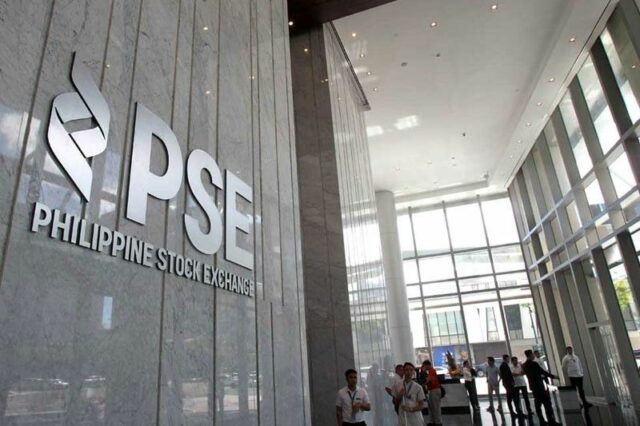
PSE eyes Q1 2025 for GPDR launch, derivatives by 2026

PHILIPPINE STAR/KJ ROSALES

THE PHILIPPINE STOCK Exchange (PSE) plans to launch its global Philippine depositary receipts (GPDRs) and derivatives offerings within the next two years to enhance liquidity and improve the local stock market, its president said.

“In terms of expanding our product offerings, the PSE will offer two new products in the next two years, the GPDRs and derivatives; the GPDRs are targeted to be implemented by the first quarter (Q1) of 2025,” PSE President and Chief Executive Officer Ramon S. Monzon said during a forum organized by the UK MOBILIST Programme and the PSE in Taguig City on Wednesday.

“We are targeting to launch our derivative products by the first quarter of 2026 as we have to work on the regulatory frameworks at both the Securities and Exchange Commission (SEC) and the Bureau of Internal Revenue (BIR),” he added.

GPDRs refer to peso-denominated instruments that represent an economic interest, but not voting rights, in an underlying security listed in an overseas exchange.

The holder has the option to convert the GPDR to the equivalent shares or units of the underlying security, subject to requirements by the issuer.

“This innovation will allow local investors to diversify their portfolios by trading foreign securities within the domestic market,” Mr. Monzon said.

“Philippine listed companies, on the other hand, will likewise be traded in other exchanges, which in turn should generate additional liquidity for the local market,” he added.

On the introduction of derivatives, Mr. Monzon said the PSE is conducting learning sessions with other stock exchanges and foreign market participants such as the Hong Kong and Taiwan Stock Exchanges, Citibank, and HSBC.

The derivatives market comprises derivatives or instruments whose values are derived from other underlying assets. Derivatives include options and futures contracts.

“The introduction of derivatives is expected to enhance market transparency and liquidity by providing market-based pricing information,” Mr. Monzon said.

“PSE index futures with the PSE index as the underlying asset will be the first derivatives product to be traded,” he added.

The PSE previously sought public comment on its proposed GPDR rules, which provide that the securities must be listed, traded, and in good standing in a World Federation of Exchanges-member exchange.

The rules also stated that GPDRs may be issued by PSE trading participants, banks, and nonbank financial institutions authorized by the Bangko Sentral ng Pilipinas, and investment companies under Republic Act No. 2629 or the Investment Company Act.

In September, the SEC said it was looking at the establishment of a derivatives market to improve the domestic capital market and provide more options for investors.

“Developments in the derivatives market as a whole have contributed to more complete financial markets, improved market liquidity, and increased the capacity of the financial system to price and bear risk effectively– ultimately, ushering in stronger economic growth over time,” SEC Commissioner McJill Bryant T. Fernandez said. — Revin Mikhael D. Ochave

FMCG veteran Carl Cruz to replace Ernest Cu as Globe CEO

CARL RAYMOND R. CRUZ (left), Ernest L. Cu — LINKEDIN.COM/GLOBE.COM.PH

By Ashley Erika O. Jose, Reporter

AYALA-LED Globe Telecom, Inc. has named Carl Raymond R. Cruz as deputy chief executive officer (CEO), effective Jan. 1, 2025, with Ernest L. Cu continuing as CEO until the 2025 annual stockholders’ meeting (ASM).

Mr. Cruz has also been nominated for Globe’s board of directors and as CEO for election at the 2025 ASM.

For now, Mr. Cruz will report to Mr. Cu, who will remain chairman of 917Ventures, Inc.; Globe Fintech Innovations, Inc. (Mynt); Kickstart Ventures, Inc.; and STT GDC Philippines, Inc.

Mr. Cu has been a director at Globe since 2009 and has also served on the board’s executive committee. That same year, he was officially appointed as the company’s president and CEO.

According to Globe, Mr. Cruz, 54, has more than three decades of experience in the fast-moving consumer goods (FMCG) industry, specifically in general management and marketing.

He is also the current CEO and managing director of Airtel Nigeria, a telecoms and mobile money services provider in Africa.

Mr. Cruz has also served as the managing director of Unilever West Africa, where he led its operations in Nigeria, Ghana, and Francophone Africa.

He holds a bachelor’s degree in marketing management from De La Salle University.

CHALLENGES TO FACE
“Mr. Cruz will face a range of challenges as he steps into the role in 2025… [He] would bring substantial leadership experience, but the telecom industry poses different dynamics than his previous sectors,” Globalinks Securities and Stocks, Inc. Head of Sales Trading Toby Allan C. Arce said in a Viber message.

For Chinabank Capital Corp. Managing Director Juan Paolo E. Colet, the appointment of Mr. Cruz is considered a welcome development considering his track record of “successfully leading large, consumer-focused organizations in developing and emerging markets.”

However, market watchers also warned that Mr. Cruz will have a heavy burden as he takes on his new role, given the challenging market environment in the digital landscape, competition in the telecommunications industry, and the growth of Globe’s financial services such as GCash.

“He will need to drive innovation, particularly in expanding Globe’s digital ecosystem, while also navigating regulatory pressures and evolving customer demands for better connectivity and digital services,” Mr. Arce said.

“The market will be particularly attuned to Mr. Cruz’s vision and strategic direction for Globe. Two key questions in front of him are where he sees the big opportunities for growth and how he plans to turn those opportunities into actual stakeholder value,” Mr. Colet said.

Stock market analysts also said Globe’s decision to retain Mr. Cu as chairman of Mynt, GCash’s holding company, is meant to assure investors, especially those wary of changes, that Globe will continue its initiatives, with GCash being the company’s growth catalyst.

“Mr. Cu’s continued presence as chairman of Mynt reassures investors that he will see to the completion of his initiatives there, especially the much-anticipated IPO of GCash,” Mr. Colet said.

“Additionally, he will need to build upon the legacy of the long-standing CEO [Mr. Cu], maintaining operational excellence while shaping a new vision for Globe’s future,” Mr. Arce said.

At the stock exchange on Wednesday, shares in the company closed P80, or 3.35% lower, at P2,310 apiece.

Malampaya Phase 4 certified for permit perks

THE CITATION ALLOWS for faster regulatory approvals of energy projects in the country, imperative in advancing energy security and overall nation-building efforts. — Prime Energy Resources Development B.V. — PHILSTAR FILE PHOTO

PRIME ENERGY Resources Development B.V.’s Malampaya Phase 4 Project has received certification for expedited permit processing perks, the Razon-led company announced on Wednesday.

The Department of Energy certified the gas project as an energy project of national significance (EPNS), Prime Energy said in a statement.

“With the EPNS certification in place, Prime Energy and the all-Filipino consortium are committed to working closely with the government to meet the nation’s growing energy demands and ensure a more secure and sustainable energy future,” Prime Energy President and Chief Executive Officer Donnabel Kuizon Cruz said.

The certification, under Executive Order No. 30 signed in 2017, expedites the issuance of regulatory procedures and processes of local and national government agencies.

To qualify, energy projects must invest at least P3.5 billion, significantly contribute to economic development, have a significant environmental impact or involve complex technical processes and engineering designs, and require substantial infrastructure.

Malampaya Phase 4, which is under the Malampaya Deep Water Gas-to-Power Project, involves the drilling of the Camago and Malampaya East production wells and the drilling of the Bagong Pag-asa exploration well.

The planned drilling is expected to require an investment of more than $600 million.

For 2024 alone, the planned expenditure is about $187 million, which would be spent on the procurement of drilling equipment, subsea equipment and umbilicals, and pipelines, and securing the drilling rig, according to Prime Energy.

Drilling is planned for 2025 with the aim to deliver new gas by 2026.

The project is operated by the Malampaya consortium, which is composed of Prime Energy, UC38 LLC, Prime Oil & Gas, Inc., and state-owned PNOC Exploration Corp.

The consortium secured a 15-year renewal of Service Contract No. 38 through 2039, paving the way for the exploration and development of additional gas reserves.

In August, it awarded a contract worth approximately $180 million to Netherlands-based Allseas Nederland (Brasil) B.V., a subsidiary of Allseas Group specializing in offshore pipeline installation.

“With the EPNS certification in place, Prime Energy and the all-Filipino consortium are committed to working closely with the government to meet the nation’s growing energy demands and ensure a more secure and sustainable energy future,” Ms. Cruz said. — Sheldeen Joy Talavera

Costs, poor data hamper AI adoption among PHL manufacturing companies

AN EXPERT said that high costs, poor data quality and access, and lack of related knowledge are the key challenges to artificial intelligence adoption in the Philippine manufacturing sector. — REUTERS

THE PHILIPPINE manufacturing sector’s adoption of artificial intelligence (AI) is being hampered by high costs, poor data quality and access, and a lack of understanding of data science and AI, an expert said.

“There are several challenges, but based on our survey in the Philippines, the key issues include a lack of understanding of data science and AI (DSAI) and the value they can deliver,” Christopher P. Monterola, head of the Asian Institute of Management’s Aboitiz School of Innovation, Technology, and Entrepreneurship and executive managing director of its Analytics, Computing, and Complex Systems or ACCeSs Laboratory, said in an e-mail to BusinessWorld.

He said the main challenges include limited resources due to high costs, poor data quality and accessibility caused mainly by data silos, and difficulties in scaling and operationalizing.

“While the skills gap and talent shortage used to be the top concerns, these are gradually being addressed,” Mr. Monterola said.

About 41% of Philippine manufacturers said AI investments were “very critical” to their businesses, according to a recent study by global management consulting firm Kearney on AI and regenerative manufacturing. Meanwhile, 25% of industry leaders rated their companies as “leading” in AI adoption.

However, a study by the International Data Corp. last year also showed that the Philippines ranked just 12th out of 14th countries in Asia in terms of AI adoption.

Mr. Monterola said around 70% of disruption and innovation across industries are driven by AI, making it key to competition, profit margins, and business expansion, with some firms already seeing measurable returns from their investments in AI.

“This trend is expected to continue over the next five years.”

Mr. Monterola said AI adoption is crucial, with most business leaders today already acknowledging this reality.

“According to my review of various studies, AI leads the way, driving nearly 70% of disruption and innovation. Cloud computing and blockchain, which together account for another 16% over the past five years, follow,” he said.

For manufacturing in particular, marketing and research are two critical factors that add value given the competitive landscape of the sector, he added.

“This is supported by Acer, Inc. founder Stan Shih’s smiling curve hypothesis. Effective marketing enhances the perceived quality of a brand based on its manufacturing location, while research drives innovation in products and processes,” Mr. Monterola said.

“AI plays a pivotal role, serving as a key tool for fostering innovation and shaping the perception of a company as technologically advanced.” — Aubrey Rose A. Inosante

SM Prime to open 87th mall in Mandaue, Cebu

“THIS NEW MALL is designed to cater to the increasing demand for premium commercial and lifestyle experiences in Mandaue City.” — SM PRIME PRESIDENT JEFFREY C. LIM

SM PRIME Holdings, Inc. (SM Prime) will open its 87th mall, SM City J Mall in Mandaue City, Cebu on Friday (Oct. 25), the company announced on Wednesday.

The four-level mall, located along A.S. Fortuna Street in Barangay Bakilid, has over 100,000 square meters of gross floor area that offers various retail, dining, and entertainment options.

“The opening of SM City J Mall reflects our confidence in the robust economic growth of Central Visayas. This new mall is designed to cater to the increasing demand for premium commercial and lifestyle experiences in Mandaue City,” SM Prime President Jeffrey C. Lim said.

“Our expansion into thriving regional hubs like Mandaue City is integral to our strategy of driving economic progress across the Philippines and delivering sustainable value to our stakeholders,” he added.

SM Prime said that about 80% of SM City J Mall’s gross leasable area has been pre-leased, led by anchor tenants such as The SM Store, SM Hypermarket, SM Appliance Center, Watsons, Uniqlo, Levi’s, Miniso, Pet Express, Sports Central, Ace Hardware, BDO, and Chinabank.

The mall will have two director’s club cinemas, a food hall, lifestyle services, and parking for 1,000 vehicles.

Mandaue City is a first-class city in the central-eastern coastal region of Cebu province.

It is the industrial hub in the Central Visayas region and houses about 10,000 industrial and commercial locators.

The Central Visayas region had the highest economic growth rate among regions last year, expanding by 7.3%, based on Philippine Statistics Authority data.

In September, SM Prime Executive Committee Chairman Hans T. Sy said the company is prioritizing the expansion of its mall business in the Philippines due to competitive advantages. SM Prime also has eight malls in China.

SM Prime shares fell by 1.41% or 45 centavos to P31.40 apiece on Wednesday. — Revin Mikhael D. Ochave

Italian wines face triple threat of bad weather, bad debt, and changing fashion

JESSE BELLEQUE-UNSPLASH

A VISIT to Cantina Torrevilla’s winemaking site just south of Milan is a chance to get a real flavor of the problems confronting this cherished old Italian industry. On a cloudy, damp-feeling October day the producer collective’s boss Massimo Barbieri speaks with pride about the grape quality for 2024’s premium La Genisia wines. But it hasn’t been an easy vintage.

Like wine-growing heartlands everywhere from Bordeaux to Napa Valley, Lombardy’s Oltrepò Pavese region is grappling with two historic challenges: a changing climate and changing tastes. It’s been incredibly rainy in northern Italy this year. Fungi took hold of some vines, and had to be dealt with hastily.

At the same time, great viniculture nations like Italy are having to adapt to the waning popularity of red wine, as younger drinkers opt for trendy craft beers and fizzy whites — or swear off alcohol entirely.

And if that’s not enough to contend with, winemakers face a third misfortune right now that’s been far less explored, one that arguably poses a greater immediate threat: the soaring cost of their debts.

“Like everyone, we’ve felt the rise in interest rates,” says Mr. Barbieri, president of Cantina Torrevilla, a cooperative of about 200 producers that makes all sorts of wine from pinot nero to sparkling reds. “They affect final distributions to our shareholders, there’s less to distribute at the end.”

For others, the impact is worse than a shrinking share of profit. Castelli del Grevepesa, a fellow cooperative based in the countryside outside of Florence — the heart of Chianti country — had to file for a formal debt restructuring after years of strain. The double whammy of crippling financial liabilities and Chianti wines’ loss of market share became too much to bear.

Terre Cortesi Moncaro, a co-op that traces its roots back to 1864 and which specializes in Verdicchio whites, sought court protection after two creditors presented bankruptcy petitions. It has suffered the full gamut of corporate woe from soaring interest expenses and operating costs to management turmoil and a mildew outbreak that halved last year’s grape production.

Italy’s winemakers all started as family concerns and they’ve mostly stayed that way, creating an extremely fragmented industry — and producers who often rely on borrowed money to get by.

Combined, their interest costs will rise to €306 million ($333 million) this year from €126 million in 2022, according to estimates from Studio Impresa, a consulting firm. It reckons the hit to revenues from servicing debt will more than double from 0.92% in 2022 to 2.24% in 2024.

MEAGER HARVEST
If the leap in finance costs was happening in isolation, winemakers might have less cause for fear. But climate change and appealing to younger palates, as older fans of heavy reds die off, make the challenge existential for many.

Last year’s super-hot September temperatures led to Italy’s most meager grape harvest in 76 years, and 2024 looks only slightly better. “Sudden temperature swings became the new normal,” says Mr. Barbieri at Cantina Torrevilla. “That means more maintenance and fewer grapes.”

Meanwhile, spiraling inflation hasn’t just meant higher central-bank rates. It also leaves drinkers with less cash to splash out on a bottle.

Italy remains the world’s biggest wine exporter by volume (France is bigger by worth), but the value of its sales to the five biggest consumer markets — the US, France, the UK, Germany, and Japan — fell 7.3% in 2023, according to Italian Wine Union data. The 2024 picture is mixed so far.

“We’ve had a real slowdown in both internal and export markets, caused by these many headwinds,” says Luca Castagnetti, who heads a study center for the country’s wine industry at Studio Impresa. “It’s a mix of transitory trends and others which will instead last for longer. This has led companies in the sector into financial difficulties and many don’t have the managerial capabilities to overcome these hurdles.”

Even the biggest, most professionalized firms have been affected by more sluggish sales. Italian Wine Brands SpA is one of two listed wine companies in the country. Owner of more than 70 brands and private labels, it wants to focus on sparkling whites and premium “Super Tuscans” and Piemonte wines as pickier younger drinkers “buy better.” It still had to cut its 2024 revenue guidance by 4% because of lower volumes and prices.

One regular casualty of changing taste is the strong red wine that was once the vinicultural cornerstone for Italy and France. Italian exports of reds with the prized DOP label — a signal of locally produced quality — fell 5% in 2023, according to data from the Italian National Institute of Statistics (ISTAT). For the similar IGP label, the drop was 7%.

“The younger generations have a multi-category approach,” says Carlo Flamini of the Italian Wine Union’s monitoring center. “They consume wine more sporadically as they pick their drink based on the occasion.”

Like their counterparts around the world, Italy’s vineyards have been experimenting to try to keep pace with drinker preferences.

“When we started noticing the no-alcohol trend on the rise, we gave it some serious thought,” says Marzia Varvaglione, who runs the family business at Azienda Vini Varvaglione in the southern Puglia region that’s been around since 1921. While its specialty is strong reds like Primitivo di Manduria and Negroamaro, it’s been trying out less boozy alternatives and this year presented its first alcohol-free sparkling wine and spritz.

Unfortunately for producers, diversifying takes time and cash, at a moment when finance has gotten much more expensive.

“For now, this remains collateral business and we’re not piling too much money into it,” Ms. Varvaglione adds. “We want to wait for the right time.”

History does at least provide one happy success story for Italian diversification: Prosecco. After the financial crisis, people were tightening belts and that’s when the nation’s producers started pushing for what Mr. Flamini calls the “democratization of sparkling wines.”

Pre-2008, the market for “fizz” was polarized, made up largely of luxury products like champagne or cheap stuff of sometimes dubious quality. Italian growers refocused cultivation toward this class of wine and Prosecco — a less expensive alternative to champagne — emerged as a global winner.

Italy’s export of sparkling wines by volume has more than trebled between 2010 and 2023, according to the wine union’s data. Even French buyers have been switching to cheaper Prosecco as inflation bites, with France’s imports of bubbly Italian whites booming 25% last year.

Italian producers proved “resilient, and capable of change,” Mr. Flamini says.

SHARING A BOTTLE
Change to the industry’s structure, in the hunt for efficiency gains, has been slower to come by. About two-thirds of the Italian sector’s net worth is held by individual families, with 16.6% in the hands of cooperatives, according to a study by Area Studi Mediobanca, a research center. Financial institutions account for about 11%, of which 4.1% is private equity firms.

Still, the last few years have seen some consolidation and outside capital coming in. In 2022, Italian private equity firm Clessidra SpA launched a wine company, Argea SpA, to bring together two acquired producers, Botter and Mondodelvino. Clessidra wants to use it as a vehicle for snapping up other vineyards to create a winemaking champion. Last year it took over Abruzzo-based Cantina Zaccagnini.

Overseas investors have started to sniff around, too. Beverly Hills-based Platinum Equity purchased Farnese Vini in 2020, later renamed Fantini Wines. The group also has roots in Abruzzo but now owns 18 vineyards.

“In this era of big changes from the consumer point of view and difficulties associated with the actual harvest, size, consolidation and diversification help a player to react better,” says Massimo Romani, chief executive officer of Argea.

Cooperatives, meanwhile — whose members typically have less deep pockets — are having to look for support. Legacoop Sicilia, an association representing the island’s collectives, is pitching the local government to offer public guarantees to winemakers looking for financing to make investments or seeking to restructure their debt and defer repayments.

If the proposal’s taken up, the best-run co-ops “will be able to increase their share capital, improve access to credit and invest to improve the production and commercialization of their products,” says Filippo Parrino, Legacoop Sicilia’s president. “The others will have to reckon with their limitations.”

And should all else fail, Italy’s enduring appeal to international vacationers will pick up some slack. Italian winemakers with more than €20 million of annual sales have lifted their revenue from tourist visits and tasting sessions by 15% year on year, according to Area Studi Mediobanca’s report.

Cantina Torrevilla’s Oltrepò Pavese base is home to a distinctive old wine tower, a now-defunct way of producing, and the site regularly plays host to kids stamping grapes as well as more genteel adult tasting sessions. Mr. Barbieri’s collective is thinking about turning the tower into a museum, and maybe adding a restaurant, a path trodden by others.

Varvaglione’s Puglia wineries have started offering a horseback riding tour through the vineyards, followed by a picnic and a glass.

“We’ve experienced an increase in visits to our cellars, even from foreigners,” she concludes. “You can live on wine tourism.” — Bloomberg

The enemy within

RAWPIXEL.COM-FREEPIK

“In the Philippines, you give under the table.

“In (x), they give over the table.

“In our country, we give the table!” an Indonesian friend — a priest — told me decades ago.

I suppose you can switch any of the countries in this joke with the name of almost any other country and it would work as well.

Corruption in various forms hounds many places where people live and work — just part of the dark side of the human condition. In our own neck of the woods, countries have seen fit to impose hefty penalties on those involved in this crime: from death in China and Vietnam (where, however, high-profile anti-corruption drives are suspected to have been used to crack down on officials who have not toed the line), to imprisonment and steep fines in Japan and South Korea, as well as in Indonesia, Malaysia, the Philippines, Singapore, and Thailand.

This disease is so widespread, that outfits comparing the merits of countries for doing business in count it among scores of factors monitored: bribery and corruption as an indicator falls under “Institutional Framework” of IMD’s annual World Competitiveness ranking and is included in the World Economic Forum’s Global Competitiveness Index, Transparency International’s (TI) Corruption Perception Index (which, in turn, is used by various organizations like Chandler’s Good Government Index), and the World Bank’s World Governance Indicators (where the latest data are as of 2022), among others.

The Corruption Perceptions Index, which measures how corrupt governments of 180 economies are perceived to be by experts and businessmen, noted that “corruption takes many forms in Asia,” and that Southeast Asian countries, in particular, “struggle to deliver on anti-corruption efforts.” The latest report — 2023 — shows the Philippines’ score rising back to 2019 (after a big drop from 2018) and 2020 levels only last year. On a scale where 100 means “very clean” (Denmark tops all with a score of 90), our score of 34, which is below the Asia-Pacific average of 45, places us at 115th out of 180 countries and territories, and the last in Southeast Asia, with Thailand just a bit better off with a score of 35.

To be sure, the government has been working to address this problem, e.g., enacting Republic Act No. 9485, or The Anti-Red Tape Act of 2007, and then amending it with R.A. 11032, or the Ease of Doing Business and Efficient Government Service Delivery Act of 2018, that provided for the formation of the Anti-Red Tape Authority. The Philippines also ratified the United Nations Convention against Corruption in 2003 but is not party to the OECD (Organization for Economic Cooperation and Development) Convention on Combating Bribery of Foreign Public Officials in International Business Transactions (in the entire East Asia — northeast and southeast — only Japan and South Korea are signatories).

EASIER SAID THAN DONE
Still, corruption remains a persistent hurdle to doing business in our country, whose impact is particularly telling on those that do not have the funds to weather this challenge or have other location options.

A 2021 discussion paper of the Bangko Sentral ng Pilipinas (BSP), titled: “ASEAN-5 countries: In competition for FDI,” noted, among others, that the Philippines was “perceived to be the most corrupt among the ASEAN-5” with “the lowest rule of law index” and “overall ease of doing business score.” At the same time, it noted that “Asian investors are better able to deal with corruption or government bureaucracy since they may be familiar with such culture/practices in their neighboring ASEAN countries or similar culture/practices in their own countries.”

Why is fighting corruption crucial to attracting new business?

The OECD explains that “[b]ribery undermines economic development, distorts markets and raises the cost of doing business.”

“Not only does it divert public resources from the delivery of essential public services, it also impacts consumers through inferior products and services, disrupts market functions and hampers economic progress.”

Rogelio L. Singson, former Public Works and Highways secretary and now president/chief executive officer of both Metro Pacific Water and Metro Pacific Tollways Corp., among others, said earlier this month that corruption hits the very bottom-line of every national development effort, namely: poverty and social justice. “This has resulted in poor infrastructure, poor education, political dynasties, among others,” he said in remarks during the Oct. 9 general membership meeting of the Management Association of the Philippines (MAP), where he was named MAP Management Person of the Year 2024.

For Jesus P. Estanislao, a former Finance and Socioeconomic Planning chief who, in the late 1990s to 2000, formed the Institute of Corporate Directors (ICD) and the Institute of Solidarity in Asia (ISA) to help boost governance in the private and public sectors, respectively, graft and corruption are “what you see as a result of failure of governance” — of flawed systems and procedures that impact the delivery of services to their markets or public.

The BSP paper noted, among others, that “public governance… is positively and highly correlated with the indicators of ease of doing business, quality of infrastructure, competitive industrial performance, and technological innovation in production — implying that improvements in governance can have both direct and indirect significant effects on a country’s FDI (foreign direct investment) performance.”

In its 2024 Investment Climate Statements on the Philippines, the US State Department noted that “[v]arious organizations, including the World Economic Forum, have cited corruption among the top problematic factors for doing business in the Philippines,” and that “[p]oor infrastructure, high power and logistics costs, regulatory inconsistencies, a cumbersome bureaucracy, and corruption have hampered the government’s efforts to attract foreign investments.”

“The Philippines’ regulatory environment can be unclear in many economic sectors and corruption remains a significant problem,” this report said, noting that “[i]nvestors often decline to file cases in court because of slow and complex litigation processes and corruption fears,” that “[l]ack of resources, staffing, and corruption make investment dispute processes protracted and expensive,” and that “corruption is… prevalent” in the enforcement of laws protecting property rights and real property.

GAME PLAN
With this backdrop, what’s to be done?

Personalities who have been at the forefront of tackling this problem say that in the unfortunate absence of strong institutions, in the Philippines much boils down to quality of leadership and political will — plus a push by civil society and communities affected by particular projects (for there were a few times that government sprang to action when there was enough pressure from below).

Speaking from his experience at the Public Works and Highways department where he led the Good Governance and Anti-Corruption Program, Mr. Singson zeroed in on five key directions, namely:

• National and local government leaders ought to exercise political will and “send strong signals on good governance and anti-corruption measures and change the institutional culture, including changing people from the top.”

• Use digital technologies to enhance transparency of project details — including budget and progress of implementation — to the public.

• Hold department/agency heads accountable for the use of public funds and resources, particularly in terms of ensuring the right projects are selected (what the public really needs and not products of political whim), are implemented at the right cost (through competitive public auction) and with the right quality (according to exacting technical standards — by his estimates, when bribery is 20% or upwards of a project’s cost, this starts eroding its technical soundness).

• Strengthen the rule of law and the justice system by having a powerful, independent anti-corruption agency to make sure that corruption becomes a high risk-low return proposition.

• Encourage citizens’ and stakeholder participation, including forming a private sector-led, community-based watchdog to ensure that projects are executed properly.

Mr. Singson also cited the need to “identify islands of good governance and support these agencies or LGUs (local government units) in simplifying government processes using digitalization.”

Which is what the ICD and ISA have been doing with the help of well-designed scorecards. ICD-ISA founder Mr. Estanislao said that both advocacies focus on improving institutional capabilities in order to reduce corruption. “Corruption thrives where institutions are weak,” he said in a chat last Monday. “And, therefore, the task is to strengthen institutions according to the principles of good governance.”

More than two decades of operation have led the ISA and the ICD to zero in on five key elements of any good governance program, namely:

• Identify core values and ensure that these are cascaded throughout the organization, making sure that they are “sincerely observed and lived” under a system with penalties and rewards.

• Simplify internal processes, since complicated, muddled systems encourage corruption (which is also another tack prescribed by Mr. Singson).

• Adopt and enforce performance targets with clear timetables.

• Install a feedback mechanism by which stakeholders help ensure proper governance of organizations.

• Encourage multisectoral support, starting with the feedback mechanism.

There is, however, the ever-present risk of backsliding to old habits, Messrs. Estanislao and Singson said. “With respect to [the] public sector, frankly, we’ve been going down… in the past eight years,” Mr. Estanislao said. “The situation has become worse. The same old practices have resurfaced and, in some instances, have even worsened.”

This is partly because while one of the first tasks in good governance programs is to identify “champions” in organizations who can push specific courses of action — mga timon (rudders) according to Mr. Singson — momentum fizzles out when these leaders are succeeded by others who are less or not committed at all.

“The problem there is that it is not systemic,” Mr. Estanislao said, noting many people’s inclination to just follow strong leaders.

“Perhaps it is a cultural thing,” he said. “But then we need to move away from a focus on personalities to institutional strengthening by putting in place better systems and procedures. That would make reforms more systemic and more sustainable.”

Otherwise, like a nasty rash, old habits come back with a vengeance just when one thinks that they have finally been licked.


Wilfredo G. Reyes was editor-in-chief of BusinessWorld from 2020 through 2023.

Celebrating the humble pan de sal

AT THE heart of every Filipino morning, the humble pan de sal stands as a beloved symbol of tradition and warmth. This unique bread, known for its affordability and heartiness, has long been a staple on breakfast tables across the country. To celebrate its goodness, the Kamuning Bakery Café, the oldest bakery in Quezon City, celebrated its annual “World Pan de sal Day” on Oct. 16.

“We want to celebrate the goodness, uniqueness of Filipino pan de sal. Pan de sal in the Philippines is unique. There is no pan de sal… anywhere else. It is a uniquely Filipino bread,” Wilson Lee Flores, owner of Kamuning Bakery Café said in an interview.

“We give out free breads, cheese, hams, fruit jams, and other gifts to celebrate World Pan de sal Day.”

Over the 10 years it has been celebrating the occasion, the 85-year-old Kamuning Bakery Café has distributed 100,000 free pan de sal and other food items among poor families, orphanages, and various sectors in need.

It has also given packs of pan de sal as gifts to all teachers, students, and guests at Sinait Integrated School in the remote rural barangay of Sinait in Tarlac City, Tarlac province. Kamuning Bakery Café made the donation to the public school in partnership with the Federation of Filipino Chinese Chambers of Commerce and Industry, Inc.

Meanwhile, several political figures expressed their support for World Pan de sal Day, including Senator Panfilo “Ping” Lacson and Senator Imee Marcos, who led the bakery’s event to support the Filipino pan de sal and address the issue of hunger in the country. World Pan de sal Day coincided with the United Nations’ World Food Day.

“It’s a very significant day; indeed, man does not live on rice alone, but also on bread,” Ms. Marcos said in her opening statement during the World Pan de sal Day forum, highlighting the role of bread in addressing hunger.

Mr. Flores told BusinessWorld that the Kamuning Bakery Café will continue to mark the annual World Pan de sal Day as part of its commitment to establishing pan de sal as the Philippines’ flagship bread, similar to how France rallies around their baguette.

The bakery will also continue baking other beloved Filipino breads and pastries. However, Mr. Flores emphasized that nothing could compare to their classic and original “not sweet pan de sal,” setting it apart from the sweeter varieties found in many other bakeries. — Edg Adrian Eva

More than half of Philippine businesses still use manual methods to measure sustainability progress, says report

FREEPIK

SOME 81% of Philippine businesses have set sustainability targets, but 55% still use manual methods to measure their progress towards these goals, according to a report by Alibaba Cloud, the cloud computing subsidiary of Alibaba Group.

A survey report titled “Tech-Driven Sustainability Trends and Index 2024” commissioned by Alibaba Cloud showed that businesses still rely on manual measurement to track their progress on their goals, emphasizing the need to improve their understanding of digital tools.

The survey covered 1,300 business leaders and senior management across 13 markets in Asia, Europe, and the Middle East from various industries and was conducted from May 10 to June 19 this year.

“The survey findings underscore the urgent need for organizations to reassess their sustainability measurement methodologies and embrace advanced technological solutions like cloud-based platforms and AI (artificial intelligence) services,” Selina Yuan, president of International Business at Alibaba Cloud Intelligence, said in a statement.

These digital tools help streamline the measurement process and provide insights that companies can use to improve their sustainability progress, she said.

“As a dedicated cloud service provider, we are committed to providing innovative and AI-powered solutions… to enable enterprises to effectively measure and analyze carbon emission and energy consumption to advance their sustainability goals. By addressing existing barriers and investing in such advancements, organizations can better align their sustainability initiatives with established targets,” Ms. Yuan added.

The report showed that over 50% of businesses surveyed still rely on traditional manual methods to measure their sustainability performance, including spreadsheets and e-mails.

“All markets, except for Hong Kong (29%), South Korea (43%), and France (49%), exceeded the 50% threshold, with the highest percentages in the UAE (68%), Saudi Arabia (61%), and the UK (60%),” it said.

“Meanwhile, only around a third of businesses use digital software tools, including cloud platforms, for sustainability progress and measurement. Indonesia (59%), Singapore (48%), and Japan (43%) demonstrate a higher adoption of cloud-based solutions, while the average usage is at 38%,” it added.

According to the report, 92% of businesses with sustainability goals have emission reduction targets, but only a third have net-zero commitments with science-based targets (SBTs).

The highest adoption of SBTs was seen among firms in emerging Asian markets like the Philippines, Indonesia, Malaysia, and Thailand at 39%, Alibaba Cloud said.

“Around half of the businesses with sustainability targets cite driving growth (56%), compliance with regulations (54%), and a robust corporate purpose (49%) as their key motivations for establishing targets. Among all markets, Indonesia tops the list with 70% of businesses prioritizing growth, Saudi Arabia leads with 73% emphasizing compliance, and the UAE excels with 61% prioritizing a solid corporate purpose,” it said.

“In the Philippines, compliance with regulations tops the list (60%), business growth (59%), and strong corporate purpose (45%), drive businesses to set up their sustainability targets,” it added.

Meanwhile, 83% of firms in emerging Asian markets believe that technology is crucial for achieving global sustainability goals, second only to the Middle East at 86%. It added that 78% of all firms surveyed said adopting digital technologies like cloud computing and AI will help in their progress.

Still, some businesses admitted that they lack understanding of how technology could help them achieve sustainability, Alibaba Cloud said.

“As businesses strive to enhance their sustainability efforts, practical digital tools are necessary. The survey emphasizes the necessity for companies to improve their understanding of digital tools, as 59% of respondents acknowledge a gap in their knowledge regarding how technology can help achieve sustainability goals. This sentiment is particularly evident in Singapore (83%), Hong Kong (75%), and Thailand (70%),” it said. — A.R.A. Inosante

Pre-need industry posts lower premium income

BW FILE PHOTO

THE PRE-NEED industry’s premium income inched down by 0.35% year on year at end-June amid lower sales of plans, based on Insurance Commission (IC) data.

The industry’s premium income stood at P11.17 billion in the first semester, slipping from the P11.21 billion recorded in the comparable year-ago period, according to IC data based on interim financial statements submitted by 17 companies.

Despite this, the sector’s combined net income rose by 52.06% to P2.88 billion at end-June from P1.89 billion a year prior.

IC data showed nine of out of 17 pre-need companies were in the black during the period, while the rest posted net losses.

Plans sold by pre-need firms declined by 21.76% to 327,841 in the first half from 419,044 a year ago.

Majority of these were life plans at 327,489 (down 21.77% year on year from 418,605), followed by pension plans (26.34% lower than 429 in 2023) at 316 and education plans at 36 (up from 10 last year).

Meanwhile, the sector’s combined investment in trust funds increased by 6.17% to P133.11 billion at end-June from P125.37 billion.

Pre-need reserves, which include benefit obligations or payables as mandated by the Pre-Need Code, rose by 5.69% year on year to P125.28 billion in the first half from P118.53 billion last year.

As a result, the difference between the combined trust funds and pre-need reserves of companies stood at a P7.83-billion surplus at end-June, 6.17% wider than the P6.83-billion surfeit a year prior, the IC’s report showed.

Meanwhile, the pre-need industry’s total net worth grew by 9.87% year on year to P24.9 billion at end-June from P22.67 billion, driven mainly by the 18.48% rise in retained earnings to P15.64 billion.

Firms’ combined capital stock also inched up to P4 billion from P3.994 billion, while other net worth accounts went down to P5.26 billion from P5.47 billion.

On the other hand, the sector’s total assets rose by 5.52% to P157.02 billion from P148.8 billion in the same period last year.

Total liabilities increased by 4.74% to P132.11 billion from P126.13 billion.

Based on the IC report, in terms of premium income, St. Peter Life Plan, Inc. was the top performer with P10.59 billion as it sold a total of 322,667 plans with a total contract price of P18.96 billion in the second quarter.

This was followed by Philplans First, Inc., which recorded a premium income of P411.04 million in the period, selling 1,477 plans worth P411.64 million.

Rounding out the top three was Eternal Plans, Inc., which posted a premium income of P62.73 million.

Meanwhile, in terms of net income, St. Peter Life Plan also ranked first with P3.2 billion, followed by Manulife Financial Plans, Inc. with P28.93 million and Eternal Plans with P15.17 million, according to the data. — Aaron Michael C. Sy

ADVERTISEMENT
ADVERTISEMENT