Home Blog Page 2490

PHL youth org named one of the winners of Schneider Electric’s project call

Schneider Electric Foundation recently named Sustainable Development Solutions Network (SDSN) Youth Philippines as one of the five winners of the company’s global “Youth Innovation for a Sustainable Future” Call for Projects, launched in celebration of the foundation’s 25th anniversary.

The initiative, which received hundreds of applications across two continents, recognizes youth-led projects spearheading innovative solutions for a more sustainable world through a just transition, skills development, and entrepreneurship.

Organized in collaboration with Ashoka’s Changemaker Companies program, the global call aims to identify the 25 most impactful and innovative youth-serving projects from participating regions (Africa & Middle East, Europe, Americas, and Asia). This global call for contributions focuses on professional training, entrepreneurship, and a fair energy transition.

SDSN Youth Philippines is a program under the UN Sustainable Development Solutions Network launched in 2012 to advance global expertise on the Sustainable Development Goals. They will receive a 10,000-euro prize as one of the winners from the Asia-Pacific Region.

The foundation will announce the global winner chosen from the short-listed entries in Asia-Pacific, The Americas, Africa, Europe and The Middle East at the COP29 climate summit in Baku, Azerbaijan. The winning foundation will get a 50,000-euro prize to fund its program and support from Schneider Electric Foundation and Ashoka.

The 2024 “Youth Innovation for a Sustainable Future” other winners in Asia-Pacific are:

  1. The Women’s Foundation (Hong Kong), which seeks to improve the lives of women and girls by challenging gender stereotypes, increasing the number of women in leadership roles, and empowering women in poverty;
  2. Yayasan Solar Chapter (Indonesia), which empowers remote communities through education and development initiatives, building resilience to climate challenges, one step at a time;
  3. Sambhav Foundation (India), which seeks to address critical social issues such as unemployment, lack of quality education, inadequate healthcare, and the need for sustainable community development through targeted programs and impactful interventions; and
  4. Connecting Dreams (India), which empowers youth to drive entrepreneurial actions that enhance livelihoods in sustainable ways, economically, socially, and environmentally.

The campaign continues in South and North America this year after successful editions in Europe, the Middle East, and Asia-Pacific.

Planters Products, Inc. to hold Annual Stockholders’ Meeting on Dec. 5 via Zoom


Spotlight is BusinessWorld’s sponsored section that allows advertisers to amplify their brand and connect with BusinessWorld’s audience by publishing their stories on the BusinessWorld Web site. For more information, send an email to online@bworldonline.com.

Join us on Viber at https://bit.ly/3hv6bLA to get more updates and subscribe to BusinessWorld’s titles and get exclusive content through www.bworld-x.com.

SM Prime’s 2025 capex may reach P110B — president

SM PRIME recently opened SM City J Mall in Mandaue, Cebu, the company’s 87th mall in the country. — BW FILE PHOTO

THE Sy family’s SM Prime Holdings, Inc. may have a capital expenditure (capex) budget of up to P110 billion for 2025 as the company plans to open five new malls, the company’s president said.

“For next year, I think it should be P100 to P110 billion. That’s more of a guide,” SM Prime President Jeffrey C. Lim said during a media briefing in Pasay City last week.

Mr. Lim said the company is not expected to fully use the P100-billion capex earmarked for this year.

“The forecast this year is P100 billion. But I don’t think we’ll get to P100 billion,” he said.

Mr. Lim added that SM Prime is looking to open five new malls next year.

If met, this will bring the company’s domestic mall portfolio to 92 locations.

The planned malls will be in La Union, Zamboanga, Laoag City in Ilocos Norte, and Santa Rosa City in Laguna, while the fifth location has yet to be finalized.

SM Prime recently opened SM City J Mall in Mandaue, Cebu, the company’s 87th mall in the country.

The four-level mall has over 100,000 square meters of gross floor area.

Mr. Lim said SM Prime is also planning mall redevelopments next year, mostly in provincial locations.

“We’re going to do the old mall in Cebu and Rosales, Pangasinan in the north. It depends on the size of the mall. But (redevelopment) ranges from P800 million up to P1.5 billion for every location,” he said.

“You have to continuously evolve because consumers are very demanding. It’s not just about shopping and eating anymore. It’s the experience when they go inside the mall. That’s why we have to add a lot of amenities and also bring in new concepts,” he added.

Mr. Lim does not see “any major issue” that would affect SM Prime’s financial position for the remainder of 2024.

“For the first two quarters, I think we met our targets. Looking forward, I don’t see any major issue,” he said.

For the first six months, SM Prime saw a 13% increase in consolidated net income to P22.1 billion from P19.4 billion a year ago.

Consolidated revenue for January to June rose by 8% to P64.7 billion from P59.9 billion.

SM Prime shares were last traded on Oct. 31, closing at P30.65 per share. — Revin Mikhael D. Ochave

How Fujifilm Philippines integrates AI into healthcare solutions

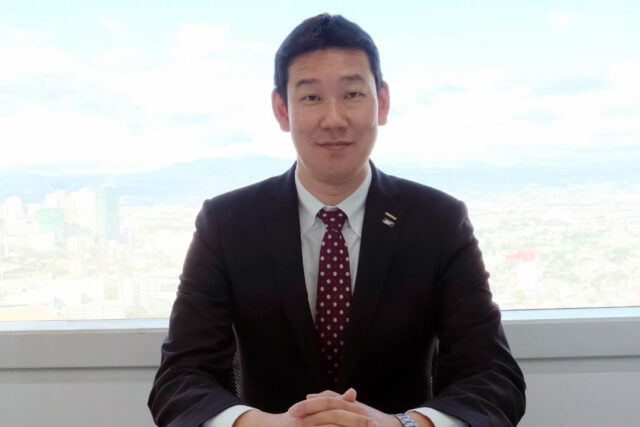
MASAHIRO UEHARA

By Aubrey Rose A. Inosante, Reporter

FUJIFILM Philippines is leveraging artificial intelligence (AI) and medical information technology (IT) to drive its healthcare expansion, with these technologies being central to the company’s strategy, according to its president Masahiro Uehara.

“This is our current initiative. We are offering an AI function. For the customers, they not only purchase our equipment but also, they add our AI function,” he said in an interview with BusinessWorld.

Fujifilm Philippines launched its AI-assisted portable X-ray device, FDR Xair, in September. This can perform tuberculosis screenings in three minutes with the help of a radiologist and doctor, reduce false positive samples, and save costs and time.

It also announced a new digital mammography system for breast cancer screening that offers “low dose, high image quality, and improved workflow” with AI technology.

“The Philippine General Hospital and Southern Philippine Medical Center, they use our medical IT system,” he said, adding that the purchased Fujifilm medical equipment of these institutions seamlessly pairs with their medical IT system.

In a broader view, Mr. Uehara also said the company’s medical expansion is driven by the popularity of diagnostic imaging firm Hitachi Ltd. in the country, which Fujifilm acquired in 2021.

“The Philippines is a very lucky market for Fujifilm. Hitachi’s presence was significant. That’s why the Philippine doctors and healthcare sector officers know that Fujifilm products are former Hitachi products,” Mr. Uehara said. “But other countries have another story.”

The Japanese firm’s healthcare business history dates back to 1936, when it started offering X-ray medical film.

At present, it has a diverse equipment lineup with ultrasound, endoscopy, computer telephony integration (CTI), magnetic resonance imaging (MRI), and more.

“Our long-term vision is to be the top brand in the Philippine market, especially in this kind of diagnostic imaging field. To fulfill this goal, we are currently investing a lot in the enhancement of customer satisfaction,” Mr. Uehara said.

Fujifilm Philippines has opened three service centers: Davao in February, Makati in September, and Cebu to oversee the Visayas area.

“Our product is indispensable for the people — healthcare and photography. So, that’s why automatically all employees understand so if we sell more, we can bring more happiness, more smiles to the people,” Mr. Uehara said when asked about Fujifilm’s longevity.

He attributed the economic growth of the Philippines and rising Filipino incomes to creating business and commercial opportunities for companies.

“Our main business is photography and healthcare. I’m especially optimistic about the healthcare demand. The Philippine government and private hospitals are investing more in enhancing medical services. We will have greater opportunities to provide our system technology,” Mr. Uehara said.

Since the pandemic, Fujifilm Philippines has maintained double-digit growth primarily driven by the healthcare business, he said.

TRANSFER FROM HK TO PHL
Affectionately called “Masa” by his employees, Mr. Uehara was appointed as the new president of Fujifilm Philippines in November 2022 and was at the center of the firm’s new strategy after the pandemic.

Fujifilm had to downsize as sales started to falter amid the pandemic, he said.

But later revived due to the revenge buying trend and the acquisition of Hitachi, spawning new demand for the photography and medical businesses.

His transfer to the Philippines also came during the political turmoil in Hong Kong, where he was the Managing Director of Fujifilm Hong Kong Limited in 2018.

“The Hong Kong era was very tough also because of the pandemic. Before the pandemic, there was political turmoil — the conflict between the Hong Kong government and the Chinese government. I was there,” he said.

Mr. Uehara also added that the two countries differ in terms of business scale and dynamism as Hong Kong is smaller and customers can be reached within an hour, unlike in the Philippines, which is an archipelago.

Long before his appointment in these countries, he started as a product administrator in a factory in Japan near Mount Fuji in 2000, then later assigned to handle the Human Resources (HR) division from 2004 to 2012.

“This period was very hard. Because around 2000, our main business was, of course, photo-related business. Everyone was using analog cameras and had to print out photos. So, from this business, Fujifilm earned a lot of revenue and profit. But, of course, times have changed,” he said.

But as digital cameras arrived, Fujifilm’s sales profit dropped rapidly, and the company had to cut employment and shut down many factories to survive.

“All of those days, my role was HR. I had to explain why the company had to lay off employees. Very tough. Everyone was shouting. This is the company’s fault, not ours. I had to explain one by one,” he said.

When asked about his leadership style, Mr. Uehara said he keeps the balance of his responsibilities of fulfilling the sales profit target and keeping the employees happy.

“I have to make our employees happier and train them to have good careers. Luckily, now we are maintaining double-digit growth,” he said, adding that he always considers how to return the company’s growth to the employees.


Converge sets P15-B capex for 2025

DENNIS ANTHONY H. UY

CONVERGE ICT Solutions, Inc. is allocating up to P15 billion for its capital expenditure (capex) budget next year, mainly for the development of the company’s digital infrastructure projects.

“I think we are focusing on digital infrastructure now, the cloud and all that. Around P12 billion to P15 billion for our capex next year. We are going to spend more on digital infrastructure,” Converge Chief Executive Officer Dennis Anthony H. Uy told reporters last week.

The company’s capex budget for 2025 is lower than its P17 billion to P19 billion budget this year.

“With our earnings improved, we will reduce our capitalization,” Mr. Uy said.

In August, the company announced that it had revised its growth forecast for 2024 to between 12% and 14%, from the earlier estimate of 7-8%, driven by market optimism following stronger second-quarter results.

For the second quarter, Converge registered an attributable net income of P2.74 billion, up 29.8% from the P2.11 billion in the same period last year, the company’s financial statement showed.

Despite posting increased gross expenses for the April-to-June period at P6.18 billion, 15.1% higher than the P5.37 billion previously, the company managed to register higher earnings on elevated revenues.

Converge posted P9.98 billion in gross revenue for the second quarter, climbing by 14.4% from last year’s P8.72 billion.

For the first semester, Converge’s attributable net income surged to P5.29 billion, marking an increase of 23.6% from the P4.28 billion in the same period last year.

Its gross revenues went up to P19.52 billion, higher by 12.4% from the P17.37 billion in the same period last year.

Further, Mr. Uy said Converge is also looking at offering more solutions, particularly launching Smart Home solutions.

“Smart Home, we are doing it now. The future is in the home, you will see,” he said, adding that the company is targeting to launch this new offering by next year.

The listed fiber broadband provider launched in September its Converge Concierge, which is described as a hospitality TV solution.

This digital concierge service is an all-in-one smart TV solution, offering a platform that features an in-room entertainment and information hub, complete with Internet-of-Things-enabled and smart controls.

Smart home solutions are innovative technology that allows homeowners to control appliances, lighting, and other devices remotely through an internet connection or a particular platform. — Ashley Erika O. Jose

Meralco expects 6% rise in energy sales volume

PHILSTAR FILE PHOTO

MANILA Electric Co. (Meralco) expects to end the year with energy sales volume increasing by 6%, exceeding last year’s growth, a company executive said.

“For 2024, (at) the start of the year, we forecasted around 4.7% (growth) but now we’re seeing 6%,” Meralco Senior Vice-President and Chief Revenue Officer Ferdinand O. Geluz told reporters last week.

“So, we’ll end the year (with) around 53,350 plus gigawatt- hours (GWh). That’s technically close to 3,000 GWh additional compared to 2023,” he added.

Mr. Geluz attributed the projected increase in energy sales volume to high growth in the residential segment, followed by commercial, and modest growth in the industrial segment.

For the January-to-September period, Meralco reported a record-high energy sales volume of 40,872 GWh, up 7% from 38,164 GWh last year, fueled by growth in all segments.

If the 6% growth projection for 2024 is realized, Meralco would surpass last year’s energy sales volume of 51,044 GWh.

For the third quarter, Meralco saw its consolidated core net income climb by 10% to P11.89 billion, driven by the continued momentum of the distribution utility, power generation, and retail electricity supply segments.

Meralco’s controlling stakeholder, Beacon Electric Asset Holdings, Inc., is partly owned by PLDT, Inc.

Hastings Holdings, Inc., a unit of PLDT Beneficial Trust Fund subsidiary MediaQuest Holdings, Inc., has an interest in BusinessWorld through the Philippine Star Group, which it controls. — Sheldeen Joy Talavera

9th Philippine International Motor Show: Storm troopers

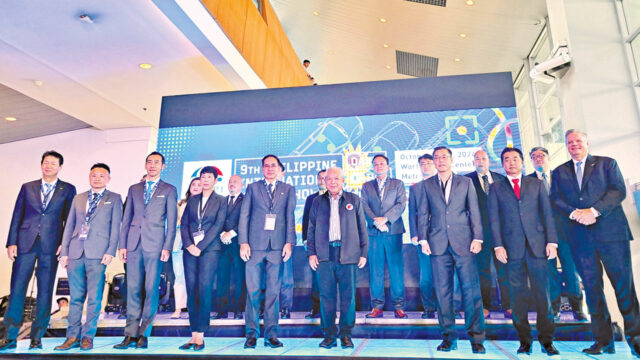
Chamber of Automotive Manufacturers of the Philippines, Inc. (CAMPI) President Atty. Rommel Gutierrez (front row, fifth from left) and Department of Transportation (DoTr) Secretary Jaime Bautista (front row, sixth from left) join executives of CAMPI members participating in the 9th Philippine International Motor Show (PIMS). — PHOTO BY HAZEL NICOLE CARREON

Amid cyclone, curtains successfully open on biennial auto spectacle

WITH SHEETS of rain and howling winds as backdrop, the ninth edition of the Philippine International Motor Show opened the doors of the World Trade Center Manila in Pasay City to the public a fortnight ago. Seventeen brands from the Chamber of Automotive Manufacturers of the Philippines, Inc. (CAMPI) showed off their portfolios and, in some cases, new additions and additions to come. “Velocity” was there to cover the opening canto and the afternoon program of the brands. — Kap Maceda Aguila

T-bill rates may rise further on expectations of faster inflation

STOCK PHOTO | Image by RJ Joquico from Unsplash

RATES of the Treasury bills (T-bills) on offer on Monday may climb amid an expected uptick in October headline inflation.

The Bureau of the Treasury (BTr) will auction off P20 billion in T-bills on Monday, or P6.5 billion in 91- and 182-day papers and P7 billion in 364-day debt.

T-bill rates could track the mixed movements seen for the same tenors at the secondary market as the market expects slightly faster headline inflation in October, Rizal Commercial Banking Corp. Chief Economist Michael L. Ricafort said in a Viber message.

At the secondary market on Thursday, the 91- and 364-day T-bills went up by 12.88 basis points (bps) and 7.16 bps week on week to end at 5.3267% and 5.8008%, respectively, based on PHP Bloomberg Valuation Service Reference Rates data as of Oct. 31 published on the Philippine Dealing System’s website. Meanwhile, the 182-day paper’s yield slipped by 0.58 bp to 5.7955%.

Philippine inflation likely picked up in October amid higher prices of food and fuel, analysts said.

A BusinessWorld poll of 11 analysts yielded a median estimate of 2.4% for the October  consumer price index, within the BSP’s 2-2.8% forecast for the month.

If realized, October inflation would be faster than the 1.9% in September. However, it would still be slower than the 4.9% in the same month a year ago.

Last week, the Treasury raised P20 billion as planned from the T-bills it auctioned off as total bids reached P56.046 billion, almost thrice as much as the amount on offer.

Broken down, the Treasury borrowed P6.5 billion as programmed from the 91-day T-bills as tenders for the tenor reached P14.516 billion. The three-month paper was quoted at an average rate of 5.586%, 12.3 bps higher than the previous week, with bids ranging from 5.48% to 5.674%.

The government also made a full P6.5-billion award of the 182-day securities, with bids reaching P20.17 billion. The average rate of the six-month T-bill stood at 5.752%, up by 2.1 bps, with accepted bid yields at 5.74% to 5.764%

Lastly, the Treasury raised P7 billion as planned via the 364-day debt papers as demand for the tenor totaled P21.36 billion. The average rate of the one-year debt went up by 6.5 bps to 5.751%, with accepted rates ranging from 5.65% to 5.77%.

The government is looking to borrow P90 billion from the domestic market this month, or P60 billion via T-bills and P30 billion through Treasury bonds.

The government borrows from local and foreign sources to help fund its budget deficit, which is capped at P1.48 trillion or 5.6% of gross domestic product this year. — A.M.C. Sy

Kenneth Cobonpue will open new showroom in BGC this month

THE Kenneth Cobonpue showroom in Cebu — AUBREY ROSE A. INOSANTE

CEBU — Patrons and enthusiasts of the works of Kenneth Cobonpue, globally acclaimed designer and native of the province of Cebu, are soon to see the launch of his new showroom in Grand Hyatt Residences in Bonifacio Global City (BGC), Taguig in November.

In an exclusive interview with BusinessWorld, Stephanie Arambulo de la Cruz, the art director for Kenneth Cobonpue, shared her excitement about the upcoming launch. “We’re opening, we’re still in the works. We’re targeted to open by the end of November but this is in Grand Hyatt, so it’s in BGC,” she said.

The new showroom will replace the first one in Greenbelt in Makati which for 10 years housed the iconic furniture that made Mr. Cobonpue a household name.

“We’ve closed that. We moved. That showroom in Makati was moved to BGC,” Ms. De la Cruz said, who also serves as Mr. Cobonpue’s head of marketing and communications.

Media guests toured Mr. Cobonpue’s showroom and factory located in his hometown Cebu City. The guests were greeted with the elegant bloom easy armchair — neatly folded to look like large petals, with the iconic name of the designer at the backdrop.

“We’d like to expand and the space in Makati is quite small already because we have more collections now. BGC is also one place where we can [expand], it’s a new place. We would also like to be there in a bigger place also,” Ms. De la Cruz said.

She also said that although people in Cebu buy the products, Manila has a more diverse market and their spending behavior is more flexible, noting that retail is stronger in Manila.

When asked if they are eyeing expanding to another location in the country, Ms. De la Cruz said they have no plans yet as they are managing international showrooms as well.

“I’m not sure if we are yet. Because currently, we do have international showrooms as well. We do have a showroom in New York. We also have a showroom in Germany,” she said, also mentioning its showroom in Portugal and The Colosseum in India.

The Bloom chair and the Dragnet lounge chair are among the sought-after collections that appeal to its audience.

When asked how the brand was affected during the pandemic, she said they were not as buyers then had the time to check their products online.

“It actually did us good that we’re home,” she said. “In that context, we were really not affected because we still had orders, we were still in operation.”

The company has a workforce of about 300 in the area.

Now, the brand’s immediate target is to launch its Manila showroom and be visible in international shows parading Filipino-made designs.

The renowned Filipino designer and furniture maker recently unveiled the “Linya” art series in the newly opened SM City J Mall in Mandaue City, Cebu. — Aubrey Rose A. Inosante

MSpectrum, Emperador partner for solar facility

MSpectrum, Inc. and Emperador Distillers, Inc. have teamed up to provide the solar power requirement in the latter’s Laguna manufacturing plants. In photo are (LR) Anglo Watsons Glass, Inc. President Alec M. Tempongko, MSpectrum President and chief executive officer (CEO) Ma. Cecilia M. Domingo, Emperador Distillers President and CEO Winston S. Co and MSpectrum Chief Operating Officer Patrick Henry T. Panlilio.

MSPECTRUM, Inc., a wholly owned solar subsidiary of Manila Electric Co. (Meralco), signed a partnership with a subsidiary of brandy and whisky producer Emperador, Inc. for a solar rooftop project.

In a statement on Sunday, MSpectrum said it signed an agreement with Emperador Distillers, Inc. (EDI), to put up a 640-kilowatt-peak solar facility at the latter’s manufacturing plant in Sta. Rosa, Laguna.

The project is expected to generate approximately 832,798 kilowatt-hours of energy annually. This will allow EDI to reduce its carbon footprint by an estimated 593.12 metric tons, equivalent to 27,242 trees planted and more than 2.36 million kilometers reduced in vehicle travel per year.

“The contract signing with MSpectrum is a continuation of the transformative journey of our business. Their solar rooftop installation will not only help us achieve our sustainability goals but also significantly reduce our electricity costs,” EDI President and Chief Executive Officer (CEO) Winston S. Co said.

“We are excited about our partnership with MSpectrum as we continue to explore more solar solutions for our facilities to maximize our energy efficiency and continue our commitment to a greener future,” he added.

With the partnership, MSpectrum will be able to leverage Emperador’s operational scale to implement “impactful solar solutions,” according to MSpectrum Chief Operating Officer Patrick Henry T. Panlilio.

“Through our tailored offerings and strategic alliances with leading technology partners, we are committed to delivering efficient, reliable, and safe solar installations that enhance energy efficiency, reduce costs, and contribute to a more sustainable future,” he said.

MSpectrum’s latest partnership builds on its collaboration with Anglo Watsons Glass, Inc., a unit of EDI, where it installed a two-megawatt-peak solar photovoltaic system in its Canlubang manufacturing plant in 2023.

“We are fully committed to our partnership and look forward to leveraging our expertise to support Emperador in achieving its sustainability goals,” MSpectrum President and CEO Ma. Cecilia M. Domingo said.

MSpectrum offers tailor-fit solar solutions for industrial, commercial, and residential customers “through an in-depth understanding of energy consumption behaviors and strategic partnerships with world-class technology partners.”

Meralco’s controlling stakeholder, Beacon Electric Asset Holdings, Inc., is partly owned by PLDT, Inc.

Hastings Holdings, Inc., a unit of PLDT Beneficial Trust Fund subsidiary MediaQuest Holdings, Inc., has an interest in BusinessWorld through the Philippine Star Group, which it controls. — Sheldeen Joy Talavera

Pericles vs Lycurgus: Mandatory ROTC or not

FACEBOOK/ARMY RESERVE COMMAND

The late 6th century BC saw Sparta as the preeminent hegemon in the Athenian peninsula. Sparta was the preeminent leader of the Greek forces during the second Persian invasion under Xerxes that culminated in victory at the legendary Battle of Thermopylae. This repute was well deserved: the lawmaker Lycurgus saw to it that the constitution and civilian life of Sparta was focused on the cultivation of military arts; a society molded to produce formidable warriors. The upper-class males started rigorous military training at age seven, which continued throughout life.

In the aftermath of the Thermopylae, though, due to their unwillingness to campaign too far from home which was beset by growing civil unrest (partly the revolt of the Messenian zealots), Sparta retreated into relative obscurity. Athens wrested hegemony to lead the anti-Persian struggle. Sparta reasserted its claim to hegemony, which resulted in the Peloponnesian Wars which saw Athens cede hegemony back to Sparta partly because of help by Persians under Lysander whose fleet defeated the Athenian allied fleet and forced Athens to capitulate in the Battle of Aegostami.

But after their disastrous defeat at the hands of the Thebans under Epaminondas in 371 BC at the Battle of Leuctra, Sparta descended into the nadir of prestige. The Spartiates, the army proper of Sparta and the rampart of the Spartan ruling class against the more numerous and increasingly mutinous Messenian helots (slave class) was losing manpower due to strict rules on marriage.

Athens was the anti-thesis of Sparta. It cultivated citizen participation in its politics; it valued education, the theater, sports and other public activities. Its attitude towards war was lackadaisical: “Let’s cross the bridge when we come to it.” Meanwhile, there is more to life than cutting throats. As the famed lawgiver Pericles (via Thucydides’ The Peloponnesian Wars) put it: “There are certain advantages, I think, in our way of meeting danger voluntarily, with an easy mind instead of laborious training with natural rather with state-induced courage — and when they are actually upon us we show ourselves just as brave as these others who are always in strict training.”

Athens (Pericles) and Sparta (Lycurgus) displayed the two contrarian philosophies of civic duty to the state that modern societies still confront today. Nobody has come out with a convincing story on which one is the superior posture for the modern state. All we know is that today 67 countries have mandatory military service and many have mandatory Reserve Officers’ Training Corps (ROTC) at secondary and tertiary education.

The Prussians, under the Hohenzollerns, closely followed Sparta in its militarism and severe discipline. As a consequence,  it emerged as a rival to top military powers in Europe in 1700s. The movement was spearheaded by the Prussian Junkers (upper-class males who followed the Bismarck-Von Clausewitz leadership) who swore to so-called Prussian virtues of loyalty, punctuality, frugality, honesty and order. Prussia as a polity, fragmented by religious (Calvinism, Pietism, Lutherans, Catholics, Jews, Slavs) and political cleavages, started to heave. It needed a centralizing principle. As war author Walter Flex put it, “He who swears by the Prussian flag no longer has anything that belongs to himself.” Duty, duty, duty. The value of the individual is nothing except as a thread forming a fabric of the carpet. According to Prussianism ideologue Oswald Spengler (1921) (The Decline of the West), Prussian instinct worshipped the whole: “…Power belongs to the whole. The individual serves it. The whole is sovereign…”

The Prussian militarism became a template for other countries still in the state-building phase — a separate body of men marching in uniform by a single anthem seems to be very attractive. Japan adopted the Prussian model for its military to quell the turmoil following the Meiji Restoration. The slogan “Enrich the country, strengthen the army” signaled the Restoration government’s belief in Prussian template. The social revolution was so successful that within 30 years Japan had become a recognized world power, the equal of European colonial powers.

These contrarian philosophies are once again pitted against each other in the 2024 Philippines. Before 2002 and the passage of the National Service Law (RA 9163), ROTC was mandatory in secondary and tertiary education. In 2002, and after the death of Mark Welson Chua, who denounced the corruption in UST’s military training program, ROTC became optional and could be replaced by the Literacy Training Service (LTS) or Civic Welfare Training Service (CWTS). It was not conviction but passion (the death of a critic of ROTC corruption) that determined the course of the country’s history. ROTC became the last choice of most students to escape the rigors associated with military training.

President Ferdinand “Bongbong” Marcos, Jr. has now called on Congress to pass the bill mandating the ROTC as mandatory component for tertiary students of higher learning (Senate Bill 2034). He designated this as a priority bill. Arrayed against it is the usual noisy phalanx of well-meaning defenders of the status quo (The National Service Law) mandating as options of LTS and CWTS to ROTC making the case for Periclean “meeting danger voluntarily with an easy mind…” But the mandatory ROTC advocacy is no longer to fight a shooting war but to confront the protracted war of underdevelopment and destitution.

The perspective that deserves consideration in the debate is where the Philippines is at with respect to state building. Japan in the Meiji era or of Florence in 1500 in the times of the Machiavelli were in the state-building stage relative to countries already established and, as it were, secure in their skin. I consider the Philippines as still in a state-building stage. While we have graduated from the Hobbesian state of “warre of all against all,” we are still some distance away from proper nationhood. As National Artist F. Sionil Jose (1999) put it, “We have become a state before we became a nation.” And we have not attained a proper rule of law. To quote F. Sionil Jose futher: “This is what ails us all — we do not ostracize them, we do not punish them — no we anoint these vermin instead.” See how the bigwig perpetrators of the Napoles scandal have mostly been exonerated. We instead imprisoned a former lady senator on trumped charges related to drugs brought by a clique in the past government. Foremost in our consciousness is “What’s in it for me?” not “What’s in it for the nation?”

By “nation” we mean an “imagined community” whose members, in the words of political scientist Benedict Anderson (1983, 1991*) “will never know most of their fellow members… yet in the minds of each lives the image of their communion.” Fellowship in a nation is a mental image of belonging. This fellowship implies an obligation contained in Margaret Mead’s parable of the “healed broken femur.” When asked where civilization started, Mead’s retort was classic: “…That in the animal kingdom, if you break a leg, you die; you are meat for prowling predators… A broken femur that healed is evidence that someone has taken the time to stay with the one who fell… had carried the person to safety… Helping someone else through difficulty is where civilization starts.” Civilization as obligation to mutual help is really a collective action personified. The grant or the sharing of one’s personal fitness with another member of the group in need, risks becoming oneself a prey to other predators — that is what started civilization. It is incompatible with the economic favorite starting postulate of homo economicus or what Nobel laureate, D. Kahneman, pejoratively calls “Econs” in Thinking Fast and Slow (2011).

From the perspective of F. Sionil Jose’s “… becoming a state before becoming a nation,” of a polity in need of a centralizing principle, I tend to favor the Spartan and the Prussian philosophy of duty to the state.

*Imagined Communities: Reflections on the Origin and Spread of Nationalism, (1991, London: Verso).


Raul V. Fabella is a retired professor of the UP School of Economics, a member of the National Academy of Science and Technology, and an honorary professor of the Asian Institute of Management. He gets his dopamine fix from bicycling, tending flowers with wife Teena, and assiduously, if with little success, courting the guitar.

Stage is set for 500K auto sales target

The MG HS PHEV will ‘probably’ arrive in January next year, according to a SAIC Motor Philippines official. — PHOTO BY DYLAN AFUANG

By Dylan Afuang

IT’S SAFE to say that the recent 9th Philippine International Motor Show (PIMS) will drive local auto sales upward — likely all the way to the projected target of 500,000 units sold by 2024 or the succeeding year.

Vehicle sales reached 344,307 units last September, a joint report by the bi-annual PIMS organizer the Chamber of Automotive Manufacturers of the Philippines, Inc. (CAMPI) and the Truck Manufacturers Association (TMA) showed. This represents a month-on-month increase of 1.0%, the two groups said in a release. The statement also quoted CAMPI President Atty. Rommel Gutierrez thus, “The increase can be attributed to new stock arrivals and improved promotions from the brands.”

Indeed, the 17 participating marques promoted and launched new offerings once more at the PIMS, held at the World Trade Center Manila from Oct. 24 to 27, and with the theme, “Dare. Drive. The Future Redefined.”

“The target of 500,000 units was first expressed 10 years ago,” Atty. Gutierrez was quoted previously. “We’re confident that we’ll hit that, if not this year, then the next.”

At the 9th PIMS, “Velocity” witnessed the arrival of the following vehicles — conventionally powered (ICE) and electrified (EVs) — that could contribute to the half-million sales mark.

MG

The MG HS PHEV will ‘probably’ arrive in January next year, according to a SAIC Motor Philippines official. — PHOTO BY DYLAN AFUANG

Shanghai Automotive Industry Corp. (SAIC) Motor Philippines (SMP) saw a seven-percent average monthly sales growth from January to September 2024, SMP President Felix Jiang announced at the PIMS.

While SMP has yet to officially introduce it to the local market, it held a preview of the HS PHEV. Being a plug-in hybrid, the crossover is powered by both ICE and electric power. Using electric power alone, the HS PHEV promises a range of 100km. The vehicle’s ICE and EV range combined is rated at 1,065km.

CHANGAN

The Changan Hunter REEV is presented by Changan Auto Philippines General Manager Maricar Parco. — PHOTO BY DYLAN AFUANG

Inchcape-led Changan Auto Philippines staged a preview for the brand’s Hunter, which is plugged as the world’s first “Range-Extended Electric Vehicle” (or REEV) pickup truck. It’s slated to go on sale in the first quarter of 2025 with a price falling under P2 million, Changan Auto Philippines Head of Sales and Network Development Jun Cajayon announced.

The Hunter REEV’s turbocharged engine generates charge for the 31.18-kWh battery, which is then linked to two electric motors. Depending solely on electric power, the Hunter can travel 180km and 1,031km when assisted by the range extending engine.

KIA

The EV9 GT-Line (right) takes its place in the PIMS lineup of Kia. — PHOTO BY DYLAN AFUANG

ACMobility-led Kia Philippines launched the South Korean car maker’s EV9 electric SUV. Aside from holding international acclaim — such as the 2024 World Car of the Year award — the EV9 boasts a six-seater cabin, Meridian sound system, and 512km of range with its dual-motor setup. In GT-Line AWD spec, the SUV retails for P5.888 million.

“We aim to empower individuals and families to embrace an EV-powered lifestyle,” ACMobility Chief Executive Officer Jaime Alfonso Zobel de Ayala stated during the EV9’s public unveiling at the PIMS.

DAEWOO

Daewoo’s take on the Philippine jeepney features either forward-facing seats or sideways-facing benches and air-conditioning. — PHOTO BY DYLAN AFUANG

Columbian Manufacturing Corp. (CMANC) is a local coachbuilder that specializes in public transport vehicles including South Korean Daewoo-branded buses. The company operates its assembly plant in Santa Rosa, Laguna.

CMANC presented its Daewoo BS106 bus and customizable Smartbody intended for commercial applications. The company also offers a modern take on the Philippine jeepney, featuring a cabin with forward-facing seats or sideways-facing benches and air-conditioning.

HONDA

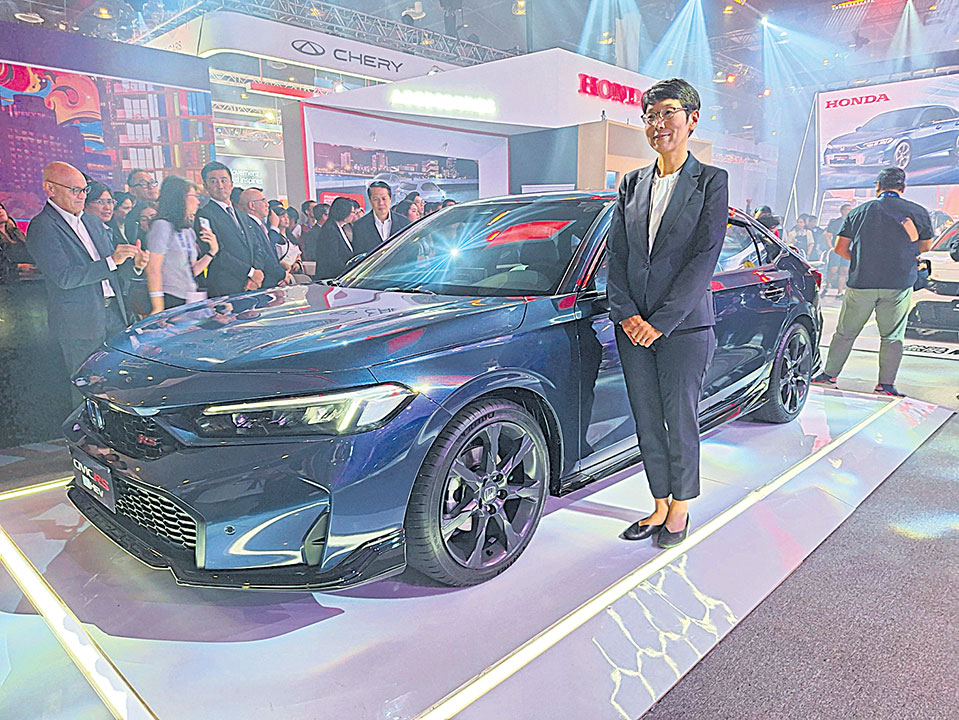
Honda Cars Philippines, Inc. President Rie Miyake poses with the just-launched Civic RS e:HEV. — PHOTO BY DYLAN AFUANG

The stage of Honda Cars Philippines, Inc. (HCPI) represented the company’s goal of offering safe, sporty, and sustainable vehicles, HCPI President Rie Miyake underscored in her message.

But HCPI emphasized the beginning of its electrification offensive — as represented by the brand’s newly introduced EM1 e: electric scooter (P155,400) and hybrid-electric models in the Civic RS e:HEV (P1.99 million) and CR-V (P2.59 million).

FOTON

Foton’s Traveller Sierra EV (left) with the Wonder pickup truck — PHOTO BY DYLAN AFUANG

Representing the China-headquartered vehicle brand, Foton Motor Philippines, Inc. (FMPI) also operates an ISO-compliant manufacturing facility in the Clark Freeport Zone in Pampanga. FMPI General Manager Levy S. Santos led the preview of what he described as Foton’s “fully electric and hybrid models that span a wide range of automotive segments.”

These vehicles are the Traveller Sierra EV and Wonder pickup truck. The Traveller is touted to be the first-ever battery electric passenger van in the Philippines, while the Wonder features a gasoline engine and a payload capacity of up to 900kg.

MAZDA

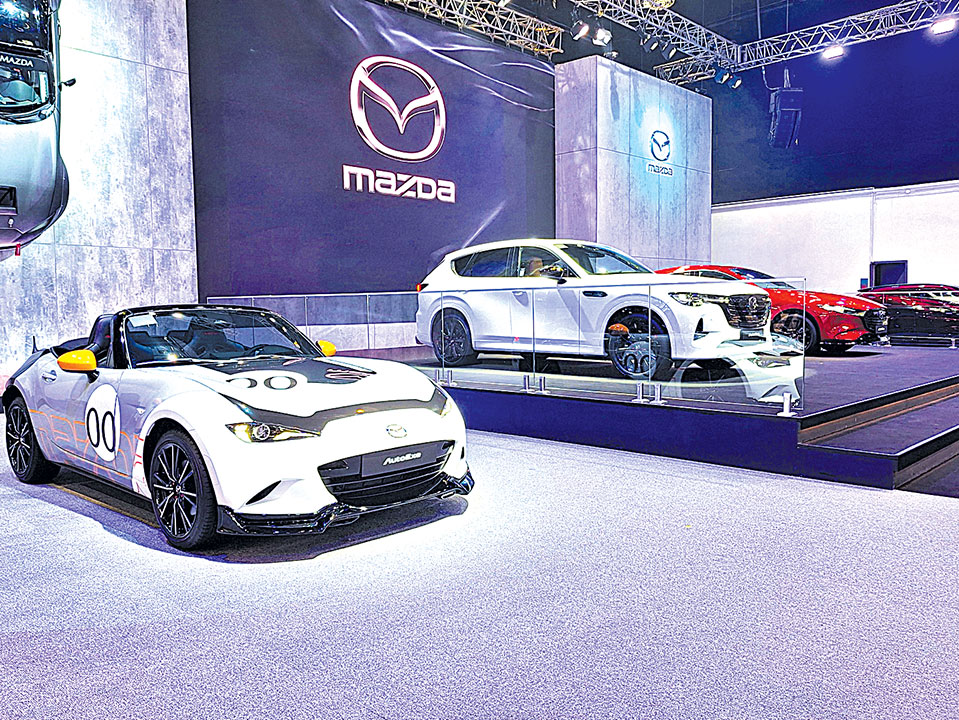
Mazda’s partnership with AutoExe opens a range of customization options for Mazda owners. — PHOTO BY DYLAN AFUANG

“Each time you get into one of our cars, it tells our story,” Mazda Philippines President Steven Tan stated. With the company’s AutoExe program, and MX-30 R-EV plug-in hybrid (which, Mr. Tan said to “Velocity,” is meant “to showcase an EV with a rotary range extender”), Mazda’s focus on driver-oriented vehicles and exploration of carbon-neutral propulsion is evident.

With the company’s AutoExe customization program, Mazda customers can now purchase from Mazda Philippines dealerships cosmetic and performance upgrades for their vehicles. The MX-30 R-EV — previewed only at the PIMS — is powered by an single-rotor ICE engine that generates charge for an lithium-ion battery.

NISSAN

Nissan X-Trail with E-Power — PHOTO BY DYLAN AFUANG

Celebrating 55 years in the Philippine market, the Nissan Philippines, Inc. (NPI) lineup “reflects (its) dedication to diverse customers,” NPI President Yasuhisa Masuda expressed during the show.

NPI staged a preview of its Magnite subcompact crossover that could represent the brand’s most affordable model and X-Trail SUV that’s powered by Nissan’s signature hybrid-electric E-Power drivetrain, and opened the order books for the Z Nismo sports car (P4.688 million).