Home Blog Page 2489

Empower Filipinos of all ages and levels to maximize AI use – DOST

FREEPIK

by Patricia B. Mirasol, Producer

In order to maximize artificial intelligence (AI) as a tool, Filipinos from every age and every level of society will need to be capacitated on its use, experts say. 

Franz A. de Leon, director of the Department of Science and Technology (DoST)’s Advanced Science and Technology Institute, said that it is best to start capacity building at an early age. 

“The interest in science, math, etc… if it’s just at the university level, it might be too late,” he said at the second day of the AI Horizons PH 2024 conference. “We want to engage the youth.” 

“The more we diffuse this technology to the very least of our citizens, the more they can gain from it,” also said Enrico C. Paringit, executive director of the DoST-Philippine Council for Industry, Energy and Emerging Technology Research and Development. 

“The reason why ChatGPT [an AI model that’s designed to generate human-like text based on the input it receives] is so ubiquitous is because it’s so accessible,” he told the audience of the same October 25 event.  

“It must have that type of accessibility,” he added, “to achieve the type of impact that you want.” 

With 189 scientists per million people, the Philippines has lower than the UNESCO recommendation of 380 per million. 

The DoST has been creating 21st century learning environment models (CLEM) since 2018 to help meet the demand for such professionals. 

The 21st century CLEM is a school-based classroom setup equipped with technologies such as robotics, three-dimensional modelling and printing, and virtual and augmented reality. It aims to promote teaching and learning skills and is intended as a support system to the education department’s K-12 curriculum. 

The 16th and latest one was launched on October 14 in Cavite’s Angelo L. Loyola Senior High School. 

The bulk of the investment is from the local government unit, which situates the facility in schools that are managed by the Department of Education, explained Albert G. Mariño, director III of DoST’s Science Education Institute (SEI). 

Parati namin inu-update yung mga resources dito (We update the resources in these classrooms),” he said at the October 14 launch. “Kung anong ma-develop naming bago, nilalagay po namin dito (We always incorporate whatever new technology we develop).” 

Students who qualify for SEI’s undergraduate scholarship program can join the roster of the country’s scientists, researchers, and engineers, he said. 

Yan kailangan ng ating bansa dahil sila yung nagiisip ng new knowledge at nagde-develop ng new technologies (This is what the country needs, because it’s the scientists, researchers, and engineers that discover new knowledge and develop new technologies),” he added.  

Children nowadays have an “easy grasp of technology,” Mr. De Leon said at AI Horizons PH 2024. “If we can do some intervention and engage them from the start, that would be good.” 

Interoperability a key component in digital health

STOCK PHOTO | Image by vjohns1580 from Pixabay

by Patricia B. Mirasol, Producer

Data integration and systems interoperability are key components in the digital transformation of healthcare, according to experts speaking at an international symposium by The Association of Academies and Societies of Sciences in Asia (AASSA) and the National Academy of Science and Technology Philippines (NAST PHL). 

Electronic health records (EHRs) exist in the Philippines, but “EHR data is not collected and curated in a way that is optimized for learning health systems (LHS),” said Dr. Iris Isip-Tan, a professor at the University of the Philippines Manila’s College of Medicine. 

An LHS creates a feedback loop of ongoing improvement in healthcare by using data from healthcare encounters. A 2021 BMC Health Services Research publication notes that EHRs are important to an LHS because they provide the data needed to drive this improvement. 

“There’s acceptance among clinicians in digital systems,” Dr. Tan said at the symposium on October 30. “The barrier is infrastructure in terms of data connectivity in our islands.” 

Good outputs need good data, according to Carmencita D. Padilla, a national scientist and a member of the health sciences division of NAST PHL. 

“The issue of interoperability is very important if you want to fast-track the issue of integration of data,” she said. 

“You have to strategically plan and include budget for it [the digitalization of the healthcare process] in your system,” she added. “The primary source of funding should be the government, with the assistance of the private sector.” 

“The cost of digital transformation should of course be done by the government,” also said Dr. Ertugrul Kilic, a member of the Turkish Academy of Sciences. 

Turkey’s entire healthcare process has been digitalized, Dr. Kilic shared in the same event. 

The e-Nabiz Personal Health System, for one, has enabled the country’s citizens to access their digital health records since 2015. It draws information from – among others – over 1500 hospitals and 9000 medical centers. 

Turkey’s digital transformation roadmap – which began in 2004 with its Health Information Systems Action Plan – includes the centralization of health data in 2008, as well as the launch of a communications center in 2016 that provides video translation for those with hearing impairment. 

Younger generations need to be aware of the world’s pressing health problems, advised Narinder Mehra, a professor and the vice president of international affairs of India’s National Academy of Sciences. 

Among these global issues are air pollution and antimicrobial resistance, of which climate change can act as a catalyst.  

“We need to change the narrative: from the threat of climate change, [let’s shift the focus] to a healthier future through climate action,” Mr. Mehra said. 

BingoPlus Foundation stands strong for seniors, breast cancer warriors, and LGBTQIA+ community this October

BingoPlus Foundation and the National Commission on Senior Citizens collaborate to provide lolos and lolas with eye checks and glasses during Elderly Filipino Week.

As part of its ongoing commitment to improving community welfare, BingoPlus Foundation, the social development arm of DigiPlus Interactive, dedicated the month of October to three critical health initiatives supporting senior citizens, breast cancer survivors, and the LGBTQIA community.

By partnering with leading organizations in healthcare and social advocacy, BingoPlus Foundation helped bring life-changing support to communities in need.

Celebrating Elderly Filipino Week: Clearer Vision, Brighter Tomorrows

To honor Elderly Filipino Week, BingoPlus Foundation joined forces with the National Commission on Senior Citizens to host a medical mission for over 500 senior citizens in BASECO Compound, Tondo, Manila.

The Foundation provided vision screenings and glasses, giving “lolos” and “lolas” the gift of clearer sight and a renewed sense of independence.

The initiative also included medicines, dental checks and other services from the Department of Health (DoH), Philippine Amusement and Gaming Corp. (PAGCOR), the Philippine Charity Sweepstakes Office (PCSO), among others.

Pink Ribbon Month: Empowering Breast Cancer Warriors with Livelihood Opportunities

A new PLUS e-Center will be established for the benefit of Kasuso Foundation to bridge remote work opportunities for breast cancer warriors and survivors, and sustain financial independence throughout their journey to recovery.

In celebration of Pink Ribbon Month, BingoPlus Foundation partnered with the Philippine Foundation for Breast Care (Kasuso Foundation) to launch a PLUS e-Center to bridge remote work opportunities for breast cancer survivors and their families.

With access to roles as online tutors and virtual assistants, “Pink Warriors” — many of whom are immunocompromised — will have sustainable ways to earn and cover medical expenses, ensuring they remain financially independent while staying safe. The grant was announced during a benefit ballet by SM Cares.

LGBT History Month: Making Healthcare Accessible for LGBTQIA+ Communities

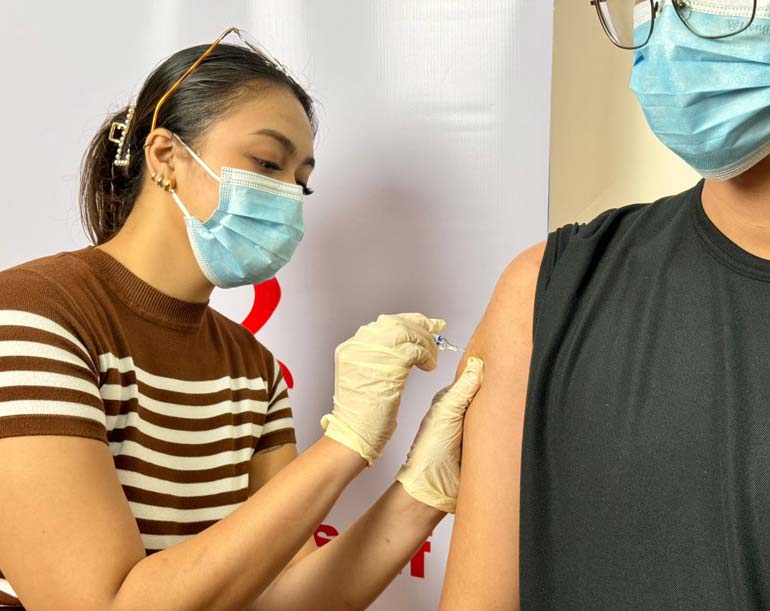
BingoPlus Foundation turned over flu vaccines to boost the immunity of HIV+ clients of Love Yourself PH, represented by Head of Operations Mark Ryan Costales and Head for External Partnerships Calvin June Sintoy.

BingoPlus Foundation also observed LGBT History Month by continuing its collaboration with Love Yourself PH, an organization devoted to providing healthcare services and fostering acceptance for the LGBTQIA community.

In solidarity, the Foundation sponsored a vaccination drive for 600 HIV-positive clients, addressing the critical healthcare needs of this community while promoting health and wellness.

As LGBT History Month celebrates the history and achievements of the lesbian, gay, bisexual, and transgender community, this drive highlights the Foundation’s commitment to reducing stigma and increasing access to healthcare for vulnerable populations.

BingoPlus Foundation remains steadfast in its mission to support the healthcare needs of various communities across the Philippines.

By addressing health disparities and fostering resilience through strategic partnerships, the Foundation is making a lasting impact on the lives of those most in need.


Spotlight is BusinessWorld’s sponsored section that allows advertisers to amplify their brand and connect with BusinessWorld’s audience by publishing their stories on the BusinessWorld Web site. For more information, send an email to online@bworldonline.com.

Join us on Viber at https://bit.ly/3hv6bLA to get more updates and subscribe to BusinessWorld’s titles and get exclusive content through www.bworld-x.com.

Poll: GDP growth likely cooled in Q3

PHILIPPINE STAR/MIGUEL DE GUZMAN

THE PHILIPPINE ECONOMY likely slowed in the third quarter as household spending remained muted after the central bank cut interest rates in August.

A BusinessWorld poll of 12 economists and analysts conducted last week yielded a median gross domestic product (GDP) annual growth estimate of 5.7% for the July-to-September period.

If realized, it would mark a slowdown from the 6.3% growth in the previous quarter and the 6% expansion in the third quarter of 2023.

Q3 2024 GDP growth forecast

This would also bring the year-to-date growth to 5.9%, just below the 6-7% target for the year.

The Philippine Statistics Authority (PSA) is scheduled to release third-quarter GDP data on Thursday (Nov. 7). 

Most economists polled by BusinessWorld said GDP growth likely slowed as elevated inflation may have tempered household spending in the third quarter.

“On the demand side, household consumption was still the primary driver of growth, though it may have remained subdued due to persisting price pressures,” said Chinabank Research, which projected a 5.7% GDP growth in the third quarter.

Inflation quickened to a nine-month high of 4.4% in July but slowed to 3.3% in August. Inflation further eased to a four-year low of 1.9% in September, settling below the 2-4% target. In the first nine months, consumer price growth averaged 3.4%, which is also the central bank’s forecast for the year.

“We expect growth in 3Q 2024 to have cooled to 5.7% year on year as public spending, both in consumption and investment, moderated. Though the central bank did begin its easing cycle during the quarter, we don’t think the change in the monetary stance had affected [the third-quarter] growth,” HSBC ASEAN (Association of Southeast Asian Nations) economist Aris D. Dacanay said in an e-mail.

The Bangko Sentral ng Pilipinas (BSP) began its easing cycle with a 25-basis-point (bp) cut at its Aug. 15 meeting, followed by another 25-bp reduction at its Oct. 16 meeting. This brought the target reverse repurchase rate to 6%.

“Private consumption will stay muted as it will take time for the recent rate cuts to filter through the economy,” said Sarah Tan, an economist at Moody’s Analytics.

Patrick M. Ella, economist at Sun Life Investment Management and Trust Corp., said third-quarter GDP likely expanded by 6%. This, as he expects household spending to have grown by 5%-5.5% in the period ending September from 4.6% seen in the second quarter.

He noted the rate cut’s effect could be seen in “both improved liquidity and a firmer expectation of lower forward inflation.”

Angelo B. Taningco, vice-president and Research Division head at Security Bank Corp., said third-quarter growth may have also been driven by “healthy” government spending, “resilient” capital formation, and a wider trade deficit.

Government spending jumped by more than a tenth to P4.26 trillion in the first nine months, breaching the P4.22-trillion program for the period.

So far, the government has already disbursed almost three-fourths of its P5.8-trillion revised spending program this year.

“Continued public and private construction activities continued to support growth in capital formation,” said Chinabank Research.

Ser Percival K. Peña-Reyes, director of the Ateneo Center for Economic Research and Development, said in an e-mail that construction, transport and storage, and accommodation and food service activities also likely drove GDP expansion to 6.5% in the third quarter.

However, some economists noted adverse weather conditions in the July-to-September period may have hurt agricultural output, which accounts for around 10% of GDP.

“With farm output challenged by recent typhoons and strong monsoon rains, the nonfarm GDP driven by private sector spending, would probably do much of the heavy lifting for 3Q24 GDP to rise by 6.2% year on year,” Ruben Carlo O. Asuncion, chief economist of Union Bank of the Philippines, said.

Chinabank Research said agriculture likely remained “a drag” on third-quarter growth as output declined due to bad weather.

For instance, the effect of Super Typhoon Carina and the enhanced southwest monsoon left around P4.73 billion worth of agricultural damage, affecting farmers and fisherfolk mostly in Luzon.

Third-quarter agricultural output data will be released on Wednesday.

“On the supply side, services continued to power the economy but may have moderated amid lackluster consumption,” Chinabank Research said.

Mr. Asuncion also noted that recent disinflation, strong employment generation by the services sector in August, and robust manufacturing are “clear signals of positive macro catalysts during the quarter.”

OUTLOOK
“Overall, we expect the Philippine economy to grow 5.9% in 2024,” Moody’s Analytics’ Ms. Tan said. “That will be just shy of the government’s 6% to 7% target for the year but will again outperform many of its regional peers in terms of growth.”

Harumi Taguchi, principal economist at S&P Global Market Intelligence, said they expect “lower borrowing costs and softer financial conditions to lift household and business sentiment and lift credit growth in 2025.”

“Overall economic performance is expected to remain on an uptick even though the impact from previous policy rate hikes suppress investment in the private sector. While robust infrastructure spending will drive economic activity, a steady increase in remittance will support private consumption,” Ms. Taguchi said.

John Paolo R. Rivera, senior research fellow at Philippine Institute for Development Studies, said he maintains an optimistic outlook for the rest of the year as a rise in remittances ahead of the holidays is expected to boost consumer spending.

HSBC’s Mr. Dacanay said he expects growth in household consumption to “finally change direction for the better as inflation significantly eased over the quarter.”

“Services exports also likely remained unperturbed with the BPO (business process outsourcing) sector leading the charge while goods exports likely held its ground,” he said. Pierce Oel A. Montalvo

GOCC subsidies decline by 14% in September

In September, the Philippine Health Insurance Corp. (PhilHealth) received P9.34 billion in government subsidies. — PHILIPPINE STAR/MIGUEL DE GUZMAN

SUBSIDIES PROVIDED to government-owned and -controlled corporations (GOCCs) dropped by an annual 14% in September, according to the Bureau of the Treasury (BTr).

The latest data from the Treasury showed that budgetary support to GOCCs declined by 14.33% to P18.22 billion in September from P21.26 billion in the same month a year ago.

Month on month, GOCC subsidies doubled (100.19%) from P9.1 billion in August.

State-owned firms receive monthly subsidies from the National Government (NG) to support their daily operations if their revenue is insufficient.

In September, the Philippine Health Insurance Corp. (PhilHealth) received the biggest amount of subsidies at P9.34 billion, accounting for 51.27% of the total.

This was the second time PhilHealth received subsidies this year, after the P260 million it got in June.

The National Irrigation Authority (NIA) received the second-biggest amount of government subsidies for the month at P5.5 billion, followed by the National Electrification Administration at P1.01 billion.

Several GOCCs received at least P200 million in subsidies, including the Philippine Crop Insurance Corp. (P353 million), Philippine Heart Center (P348 million), Social Housing Finance Corp. (P284 million), and the National Kidney and Transplant Institute (P223 million).

At least P100 million in subsidies were given to the Philippine National Railways (P171 million), Philippine Children’s Medical Center (P151 million), National Power Corp. (144 million), and the Philippine Coconut Authority (P112 million).

State-owned corporations that received at least P50 million include the Cultural Center of the Philippines with P80 million, Light Rail Transit Authority with P72 million, Lung Center of the Philippines with P70 million, Development Academy of the Philippines with P64 million, and the Tourism Promotions Board with P54 million.

In September, no subsidies were given to the Bangko Sentral ng Pilipinas, National Home Mortgage Finance Corp., Philippine Deposit Insurance Corp., Small Business Corp., and the National Housing Authority.

GOCCs that also received zero subsidies during the month include the National Food Authority, Bases Conversion and Development Authority, Philippine Fisheries Development Authority, Philippine Postal Corp., Power Sector Assets and Liabilities Management Corp. (PSALM), and the Tourism Infrastructure and Enterprise Zone Authority.

In the January-September period, GOCC subsidies fell by 23.25% to P105.24 billion from P137.13 billion in the same period last year.

The NIA remained the top recipient of subsidies in the nine-month period with P54.38 billion, followed by PhilHealth (P9.6 billion), and PSALM (P8 billion).

Rizal Commercial Banking Corp. Chief Economist Michael L. Ricafort said that GOCCs received less subsidies in September “amid the need to better manage/narrow the NG budget deficit through more disciplined government spending.”

As of end-September, the NG’s fiscal gap slightly narrowed by 1.35% to P970.2 billion from P983.5 billion a year ago.

“Subsidies decline for a host of reasons, likely due to: funding reallocation from subsidy to calamity response and recovery, social amelioration and protection programs; and the increased profits of GOCCs — warranting the NG to reallocate funds for other pressing matters like infrastructure spending, DRRM (disaster risk reduction and management) response, and social protection programs,” Philippine Institute for Development Studies Senior Research Fellow John Paolo R. Rivera said via Viber.

In the coming months, the government must increase its subsidies to GOCCs that are involved in education and nutrition, Mr. Ricafort said.

“GOCCs [that should receive higher subsidies] include those needed by the poorest of the poor, and those that would have the greatest impact in society such as healthcare, nutrition, even others related to education and boosting productivity,” he said in a Viber message. — Beatriz Marie D. Cruz

Harris presidency more beneficial to PHL economy — analysts

United States Vice-President Kamala Harris speaks during a town hall meeting in Pasay City, Philippines, Nov. 21, 2022. — PHILIPPINE STAR/KRIZ JOHN ROSALES

By Luisa Maria Jacinta C. Jocson, Reporter

A KAMALA HARRIS presidency would be more beneficial to the Philippine economy, analysts said, noting the potential impact on monetary policy, trade and other economic indicators.

“The implications of a Trump or Harris presidency on the Philippines can vary significantly, particularly in terms of interest rates, foreign exchange, and the overall economy,” Jonathan L. Ravelas, senior adviser at professional service firm Reyes Tacandong & Co., said.

Republican candidate Donald J. Trump faces Vice-President and Democratic nominee Ms. Harris in the US presidential elections on Nov. 5.

More than 75 million Americans have already cast their ballots, according to the Election Lab at the University of Florida, Reuters reported.

Mr. Ravelas noted the impact of the US elections on the US Federal Reserve and possibly the Philippines’ own monetary policy.

“A Harris presidency is expected to maintain a more stable economic policy, similar to the current administration. This could lead to a more predictable interest rate environment, with the US Federal Reserve potentially continuing its rate-cutting cycle,” he said.

The Bangko Sentral ng Pilipinas (BSP) kicked off its easing cycle in August, delivering a total of 50 basis points (bps) worth of rate cuts since then. BSP chief Eli M. Remolona, Jr. has also signaled further easing moving forward.

The Fed likewise began cutting interest rates in September, its first time reducing rates in four years. It delivered a larger-than-expected half-percentage-point cut, bringing the Fed funds rate to the 4.75%-5% range.

Markets are anticipating further rate cuts from the US central bank, but at a more modest pace of 25 bps.

On the other hand, Mr. Ravelas said a Trump win could “lead to higher interest rates in the US due to potential inflationary pressures from increased fiscal spending and tariffs.”

The former US President plans to implement stringent trade restrictions including a 10-20% universal tariff on all imports as well as a tariff of 60% or higher on Chinese goods.

On the other hand, Ms. Harris has opposed the concept of a universal tariff, instead favoring “strategic tariffs to help workers or punish trade adversaries,” Reuters reported.

The Philippine economy is seen to more likely thrive under a Harris presidency amid her less restrictive trade policies, analysts said.

“The Philippine economy could benefit from policy continuity under Harris. Her administration is likely to focus on strengthening economic ties and maintaining stable trade relations, which could support Philippine exports and the business process outsourcing (BPO) sector,” Mr. Ravelas said.

“A Trump presidency could introduce more economic uncertainty and potential challenges for the Philippines, while a Harris presidency might offer more stability and continuity in economic policies.”

ANZ Research said that while both candidates’ platforms are restrictive on trade with China, each have different approaches.

“Trump’s stance tends to be ‘American only,’ while Harris will likely extend Biden’s ‘friend shoring,’” it said in a report.

Data from ANZ showed that during the Trump and Biden terms, the United States imported less from mainland China and more from the rest of Asia. However, a second Trump term would “likely target Asia more broadly.”

“Biden’s administration has maintained the tariffs imposed under Trump. He also strengthened export controls,” it said.

“This policy mix has changed global and Asian trade patterns. Between June 2018 and September 2024, US goods imports from mainland China slumped by 20%. The share of US total imports from mainland China fell 8% to 14%.”

ANZ noted that Ms. Harris is likely to favor the Indo-Pacific Framework proposed by Mr. Biden, while Mr. Trump is not in support of multilateral agreements, citing his withdrawal from the Trans-Pacific partnership.

“Trump’s current campaign proposals are more severe than the actual trade policies he implemented as president. If his current proposal of a 60% tariff on all Chinese imports and a 10-20% universal baseline tariff become a reality, the average US tariff would rise to 17.7%, a level not seen since 1934,” ANZ said.

This would have consequences such as higher prices for US consumers; margin compression for Chinese exporters and US importers; as well as a negative effect on the rest of Asia despite a supply-chain diversion from China, it added.

Mr. Ravelas noted that Mr. Trump’s protectionist policies “could hurt the Philippine economy by reducing exports to the US and affecting remittances from Filipino workers in the US.”

The United States remains the top destination of Philippine-made goods. In August, it accounted for close to 20% of exports during the month.

The world’s most powerful economy also typically accounts for nearly half of overall monthly remittances to the Philippines.

Meanwhile, the peso is also seen to be under less pressure if Ms. Harris assumes the presidency.

“The Philippine peso might experience less volatility under a Harris presidency. A stable US economic policy could lead to a more predictable exchange rate environment, benefiting the Philippine peso,” Mr. Ravelas said.

Under a Trump administration, the local currency could depreciate against the dollar if US interest rates rise.

“Investors might prefer the higher returns in the US, as well as the impact of tariffs could lead to competitive devaluation.”

The peso closed at P58.10 per dollar on Thursday, rising by 13 centavos from its P58.23 finish on Wednesday. Peso trading was closed on Friday due to the All Saints’ and Souls’ Day weekend.

The peso has returned to the P58-per-dollar level since August.

Congress expected to ratify budget bill by mid-Dec.

BW FILE PHOTO

CONGRESS will likely ratify the proposed 2025 General Appropriations Bill before its break in mid-December, a House of Representatives leader said on Sunday.

“We hope to ratify the [Bicameral Conference Committee] report before our Dec. 20 Christmas break. There is enough time to approve the final version of the budget,” House Majority Leader and Zamboanga City Rep. Manuel Jose M. Dalipe said in a statement.

The House submitted its version of the proposed P6.352-trillion national budget to the Senate on Oct. 24. This after a small House committee tasked to resolve individual amendments to the proposed spending plan boosted funding to social services, food security and social safety nets by P292 billion.

The Senate is scheduled to start plenary debates on its version of the appropriations bill this week.

The Senate plans to approve the 2025 budget bill by the second week of December at the latest, Senate President Francis G. Escudero said last month.

“As in the past, the spending program for the coming year will be in place before the current fiscal year is over to ensure continuity of spending and seamless implementation of activities and programs,” Mr. Dalipe said.

Increasing funding for the social services sector is the “best investment approach” for the Philippine government, Rizal Commercial Banking Corp. Chief Economist Michael L. Ricafort said in a Viber message.

The House is also set to tackle remaining priority measures as session resumes on Monday (Nov. 4).

Mr. Dalipe said the House will prioritize Legislative-Executive Development Advisory Council (LEDAC) measures, such as the National Defense and Budget Modernization bills, as well as amendments to the Agrarian Reform Law and the Foreign Investors’ Long-Term Lease Act.

The bills remain pending at their respective House panels.

“It would be prudent to focus on the LEDAC list. But lawmakers shouldn’t be pressured to take legislative shortcuts,” Michael Henry Ll. Yusingco, a fellow at the Ateneo de Manila University Policy Center, said in a Facebook Messenger chat. “The important thing is for the LEDAC bills be properly considered and thoroughly discussed.” — K.C.L. Basilio

StartUp QC supports 6 startups from third cohort

facebook / StartUpQuezonCity

By Jomarc Angelo M. Corpuz, Special Features and Content Writer

Quezon City’s aspiration to become the country’s “start-up capital” has taken another step forward as the local government’s StartUp QC program awarded grants to six startups from the program’s third cohort.

During the Demo Day held last Oct. 25 at the Blue Leaf Cosmopolitan, the Quezon City Government awarded a total of P6 million in equity-free grants to the winning startups to support and empower homegrown innovators as they create impactful solutions for various sectors.

The list of this year’s winners includes Callback, Inc., an app for the entertainment industry that provides a way to connect industry professionals and aims to professionalize the casting process for cultural workers.

Another startup that received the equity-free grant is Kwentoon OPC, which seeks to enhance youth literacy and promote Filipino contemporary arts through storytelling digital platforms.

Lithos Manufacturing, a rooftop rainwater harvesting system manufacturer that tackles climate resilience with a compact, portable water filtration system that provides safe drinking water to remote or disaster-affected areas, was also awarded during the event.

Also recognized was NYHA Robotics by Sentience, an emerging startup looking to encourage Filipino students to try robotics and make robotics education more accessible to children.

Similarly awarded an equity-free grant, PasaJob, Inc., the country’s first patented long-chain job referral platform, accelerates job placements through a system that rewards users with referral fees.

Among the other grant recipients, RevUpFinance is an intuitive platform that revolutionizes SME financial operations by cutting invoicing and payment processing times by 80% and streamlines payment verification and bank reports.

“We are proud to see how these startups evolve and create meaningful sectoral transformation,” said Quezon City Mayor Joy Belmonte in a statement. “Quezon City remains proactive and open to cultivating a more vibrant environment for local talents, business, and economic development.”

“With the help of the StartUp QC Program, our objectives remain steadfast. We want to create a culture shift and build a startup community, promote innovation, and create job opportunities,” Quezon City Head of Local Economic Investment and Promotions Office Juan Manuel Gatmaitan said during the Demo Day.

StartUp QC is the first and largest LGU-led startup program in the Philippines supporting these budding businesses by providing mentorship, equity-free grants, and an avenue to network with industry leaders.

From an initial pool of 58 applicants, the final awardees were selected after a rigorous selection process. They started their journey on the program on Aug. 9 and underwent training, coaching, and mentorship to help accelerate the growth of their businesses.

Web3 conference, tournaments to highlight YGG Play Summit 2024

YGG Pilipinas Country Head Mench Dizon

Yield Guild Games (YGG), the world’s first and biggest Web3 gaming guild, has given a preview of what to expect in this year’s YGG Play Summit 2024 at a press conference held in Bonifacio Global City, Taguig.

The play summit is an avenue for gamers and developers around the world to explore the newest developments in blockchain gaming, interact with the leading figures of the industry, and learn tips from pro Web3 gamers.

“The Philippines is known as the beating heart of Web3 games and the YGG Play Summit is the biggest Web3 gaming event, bringing together game founders, developers, creators, and players; and we’re very, very proud of that. We are expecting over 10,000 people over a full week at the YGG Play Summit,” YGG Pilipinas Country Head Mench Dizon said.

One of the more notable events in this year’s YGG Play Summit will be “Industry Day,” a conference with more than 50 Web3 builders and thought leaders. Notable speakers include YGG Co-Founders Gabby Dizon and Beryl Li, Head of Base Jesse Pollak, Wildcard (and previously, Words With Friends) Co-Founder Paul Bettner, and Pixels Co-Founder Luke Barwikowski with CMO Heidi Christine.

As announced earlier this year, an e-sports tournament in collaboration with Parallel Trading Card Game will also take place at the summit with 16 of the world’s best Parallel players battling it out for a cash prize of $100,000.

Finalists from a two-division Game Jam hackathon organized by Web3 Metaversity will be presenting their ideas on modding, social games, digital assets, and on-chain game logic during the summit as well. The event will have a P500,000 prize pool distributed among winners.

Other competitive events are for the games Arena of Faith (AOF), Anichess, and Indus, each with a $10,000 prize pool, and a cosplay competition with a P130,000 prize pool.

Red carpet events are also lined up throughout the summit including the prestigious GAM3 Awards ceremony which will be held in the Philippines and in-person for the first time as well as the invite-only red carpet premiere of the Metaverse Filipino Worker 5-part video series at the SM Aura Premier Cinema.

The YGG Play Summit 2024 will be held on Nov. 19-23, at the SMX Convention, SM Aura BGC Taguig, Metro Manila, Philippines. Tickets for the event are available at the YGG Play Summit website, with an early bird discount running until Nov. 1. — Jomarc Angelo M. Corpuz

Lufthansa Technik Philippines unveils top AI Innovators in global aviation MRO challenge

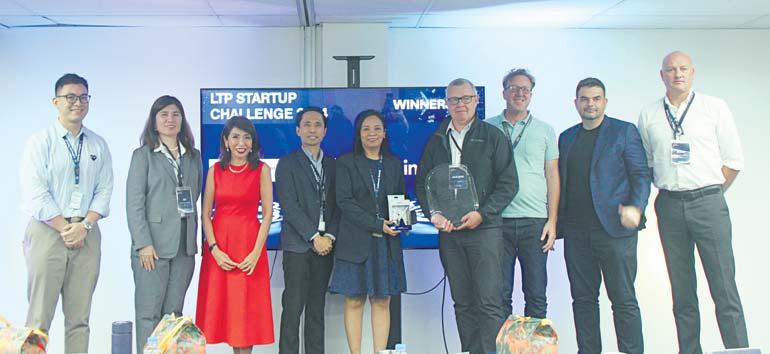
LTP judges with Inspekly’s Steven Lam (sixth from left)

Lufthansa Technik Philippines (LTP) concluded its LTP Startup Challenge 2024, spotlighting groundbreaking artificial intelligence (AI) solutions for the aviation maintenance, repair, and overhaul (MRO) industry.

The event, held at LTP facility last Oct. 28, saw eight finalists from around the world competing to revolutionize aircraft maintenance through AI.

The LTP Startup Challenge, now in its third year, aims to address critical inefficiencies in aviation MRO. With the global aviation MRO market projected to reach $55.6 billion by 2026, the need for innovative solutions to enhance safety, reduce downtime, and improve operational efficiency has never been more pressing.

“Today’s aircraft generate terabytes of data, but the industry still largely relies on manual processes,” said Stefan Yordanov, vice-president for finance and strategy at LTP. “Our challenge seeks to bridge this gap, leveraging AI to transform raw data into actionable insights that can predict maintenance needs, optimize inventory, and ultimately keep planes flying safely and efficiently.”

The LTP Startup Challenge 2024 builds on the success of its 2022 predecessor, which led to the implementation of several innovative solutions in LTP’s operations. This year’s focus on AI aims to push the boundaries even further, cementing LTP’s position as a pioneer in aviation MRO innovation.

LTP judges with Philippe Saada of AIRINT SERVICES (sixth from left)

The finalists, selected from more than 80 applicants worldwide, presented solutions ranging from AI-powered predictive maintenance algorithms to computer vision systems for aircraft inspection.

AIRINT SERVICES from France offers digital maintenance solutions for airlines and MROs. Amygda from United Kingdom pitches AI and generative AI for transforming aircraft maintenance. AR Engineering from United Arab Emirates focuses on interactive 3D AR applications for technical manuals. HRForecast from Germany specializes in AI-driven workforce planning and skills management. Inspekly from Singapore is working on remote management of maintenance tasks using digital twins and AR. MotionsCloud from Germany develops AI computer vision-powered damage inspections and assessments. OBUU TECH from Spain is developing AI software for MRO logistics and visual inspections. Pzartech Ltd. from Israel is creating computer vision-based tools for MRO, including OCR for inventory management.

After intense deliberation, Inspekly, AR Engineering, and AIRINT SERVICES emerged as the top innovators. They will be invited to LTP headquarters for potential collaboration.

“The caliber of innovations we’ve seen is truly exciting. [It’s] amazing to see how these startups are reimagining the future of aviation maintenance from the ground up, incorporating the power of AI,” Archie Moberly, program Manager at Seedstars, commented.

The winners expressed their excitement about the collaboration ahead. Steven Lam of Inspekly remarked on the potential of their digital twin technology to streamline LTP’s maintenance workflows. Akram Amir from AR Engineering highlighted how the challenge pushed them to refine their AR manual concept, while Philippe Saada of AIRINT SERVICES looked forward to seeing where their digital solutions could make the biggest impact on LTP’s processes.

“These startups have shown potential for cooperation that will lead to improvements in our operations. We’re excited to see the impact on our business,” Mr. Yordanov emphasized.

TedxUPV Women event features global leaders in lifestyle, leadership, and legacy

A first-of-its-kind TEDx event is set to take place in the Philippines. TEDxUP Visayas (TEDxUPV) Women: Anchored in Tech will feature a lineup of influential speakers from various industries, sharing their insights and experiences on Nov. 15 at The Theatre at Solaire, Entertainment City, Aseana Ave., Parañaque.

The event marks the first TEDx conference in the region with a dedicated focus on technology and its impact across various sectors.

The theme “Anchored in Tech” aims to spotlight the importance of forward-thinking leadership and the role of technology in shaping society’s future through thought-provoking talks and discussions.

TEDxUPV Women will bring together 26 prominent speakers from diverse industries, each poised to share insights on resilience, innovation, and growth in an era of rapid technological advancement. The event is structured around three core themes — Lifestyle, Leadership, and Legacy — each led by notable industry leaders, influencers, and innovators.

Headlining speakers include Jade Bonacolta, Head of North America Marketing at Google and LinkedIn influencer with over 370,000 followers, known for her platform The Quiet Rich; Nikki Huang, a writer and content creator known for her unique insights into media and society; Lotis Ramin, country manager at AstraZeneca, with extensive experience in healthcare and pharmaceutical leadership; Belle Rodolfo, a beauty editor and digital content creator in the fashion and lifestyle industries; Dr. Fabi Carino, a HR professional celebrated for her contributions to organizational development; and Andria Nicolas, the CMO of Rising Tigers who will talk about the rising leaders in the region.

In the Lifestyle track, attendees will hear from leaders like Andrea del Rosario, co-founder of the Philippines’ Top 30 Leaders on LinkedIn, and Sydney Lai, head of developer advocacy at Gaia and CTO at EVM Capital, among others. This segment will explore the intersection of personal growth and technological progress, focusing on how tech influences modern lifestyles.

The Leadership segment will feature Mara Schulze, co-founder and managing director of PINO Studio; Susan Blanchet, CEO and founder of Origen Air; and Chezka Gonzales, founding vice-president of the Blockchain Council of the Philippines. These speakers will address the challenges and opportunities of leading in a digital age.

In Legacy, speakers such as Nandini Singh, political activist; and Rana Gujral, CEO of Behavioral Signals, will discuss the lasting impact of technological and social leadership on future generations.

Tickets are now available for reservations, with early-bird discounts available at lu.ma/v7pnv8bf. Learn more about the event at www.manilatedx.com.

PHL youth org named one of the winners of Schneider Electric’s project call

Schneider Electric Foundation recently named Sustainable Development Solutions Network (SDSN) Youth Philippines as one of the five winners of the company’s global “Youth Innovation for a Sustainable Future” Call for Projects, launched in celebration of the foundation’s 25th anniversary.

The initiative, which received hundreds of applications across two continents, recognizes youth-led projects spearheading innovative solutions for a more sustainable world through a just transition, skills development, and entrepreneurship.

Organized in collaboration with Ashoka’s Changemaker Companies program, the global call aims to identify the 25 most impactful and innovative youth-serving projects from participating regions (Africa & Middle East, Europe, Americas, and Asia). This global call for contributions focuses on professional training, entrepreneurship, and a fair energy transition.

SDSN Youth Philippines is a program under the UN Sustainable Development Solutions Network launched in 2012 to advance global expertise on the Sustainable Development Goals. They will receive a 10,000-euro prize as one of the winners from the Asia-Pacific Region.

The foundation will announce the global winner chosen from the short-listed entries in Asia-Pacific, The Americas, Africa, Europe and The Middle East at the COP29 climate summit in Baku, Azerbaijan. The winning foundation will get a 50,000-euro prize to fund its program and support from Schneider Electric Foundation and Ashoka.

The 2024 “Youth Innovation for a Sustainable Future” other winners in Asia-Pacific are:

  1. The Women’s Foundation (Hong Kong), which seeks to improve the lives of women and girls by challenging gender stereotypes, increasing the number of women in leadership roles, and empowering women in poverty;
  2. Yayasan Solar Chapter (Indonesia), which empowers remote communities through education and development initiatives, building resilience to climate challenges, one step at a time;
  3. Sambhav Foundation (India), which seeks to address critical social issues such as unemployment, lack of quality education, inadequate healthcare, and the need for sustainable community development through targeted programs and impactful interventions; and
  4. Connecting Dreams (India), which empowers youth to drive entrepreneurial actions that enhance livelihoods in sustainable ways, economically, socially, and environmentally.

The campaign continues in South and North America this year after successful editions in Europe, the Middle East, and Asia-Pacific.