Home Blog Page 247

TV5 cites payment issues in ending ABS-CBN content deal

BW FILE PHOTO

By Ashley Erika O. Jose, Reporter

TV5 NETWORK, Inc. said ABS-CBN Corp.’s failure to meet its financial obligations under their content supply agreement has become a burden, prompting the company to terminate the deal.

“TV5 recognizes the value of ABS-CBN’s well-loved programs to our viewers. However, their failure to meet their financial commitments to us has made it very difficult for us to compensate our own employees, talents, and partners who help deliver these programs to your homes,” TV5 Network said in a statement on Thursday.

ABS-CBN confirmed that it received the termination notice issued by TV5 for their five-year content supply agreement signed in 2023. The company said it remains committed to resolving the dispute.

“We have sought additional time to resolve this matter and are working urgently within the 30-day period we have been given. While this timeline is challenging given our current circumstances, we are committed to finding a way to fulfill our obligations — not only to TV5 but to all our partners and stakeholders,” ABS-CBN said.

The company also denied that it deliberately withheld payments, saying such claims do not reflect its current financial situation.

“Should this partnership be terminated, we will find ways to reach you, our audiences. Just as we overcame the initial difficulties after losing our franchise, we will not abandon our Kapamilya and will find ways to continue serving you,” it added.

TV5 said the agreement required ABS-CBN to remit its share of advertising revenues on time.

“These amounts collected, our share being held by ABS-CBN for TV5, has reached such material value as to severely affect TV5’s ability to settle its own obligations,” the statement said.

TV5 noted that despite repeated appeals, ABS-CBN has not paid what is due or indicated its intention to do so.

“To be clear, we value the partnership with ABS-CBN and, as part of the same industry, understand ABS-CBN’s financial difficulties. But TV5 is also faced with its own challenges. We need the funds owed to us to continue serving you, our viewers. Our leniency, as well as forbearance, must now yield to the realities of this business,” TV5 said.

ABS-CBN said the financial challenges stem from the loss of its broadcast franchise, which “significantly reduced” revenues and caused ongoing losses.

“We deeply regret that this action has been taken at this critical juncture in our recovery, particularly as we continue to navigate the unprecedented challenges arising from our franchise loss,” ABS-CBN said.

For the third quarter, ABS-CBN’s net loss widened to P1.28 billion from P389.87 million a year earlier. Combined revenues rose 19.63% to P3.48 billion, while total expenses fell 7.85% to P4.58 billion.

Globalinks Securities and Stocks, Inc. Head of Sales Trading Toby Allan C. Arce said TV5’s termination is a major setback for ABS-CBN’s collaborative broadcast strategy and financial growth.

“[It] highlights deep operational and financial tensions between the two networks,” Mr. Arce said. “In the near term, the collapse of the deal could weigh on ABS-CBN’s expected revenue growth for 2026, as free-to-air partnerships have been critical in expanding audience reach and monetization after the loss of its own broadcast franchise.”

He added that the dispute could affect future partnerships, noting that termination may make potential partners more cautious.

“Escrow arrangements, and stricter payment terms likely to become standard in future content-sharing or block time agreements,” Mr. Arce said.

ABS-CBN said its transformation into a storytelling company has shown “steady performance improvement.”

In June, it projected a return to profitability within 18 months, citing higher advertising revenue and contributions from digital, film, and music operations.

For the nine months to September, ABS-CBN reduced its net loss to P2 billion from P2.41 billion despite lower revenues. Gross revenue fell 3.05% to P11.75 billion, while expenses dropped 10.99% to P13.52 billion. Advertising revenue rose 14.68% to P5.47 billion, while consumer revenue expanded 13.31% to P3.66 billion.

On Thursday, ABS-CBN shares fell by seven centavos, or 2.03%, to close at P3.38 apiece.

TV5 Network is part of MediaQuest Holdings, Inc., whose unit Hastings Holdings, Inc. — under the PLDT Beneficial Trust Fund — holds a majority stake in BusinessWorld through the Philippine Star Group.

Meralco unit explores offtake for 1,200-MW coal plant in Quezon

TOLEDO POWER CO.

MERALCO POWERGEN Corp. (MGEN), the power generation arm of Manila Electric Co. (Meralco), is exploring options to secure offtake for the capacity of its planned 1,200-megawatt (MW) coal-fired power project in Quezon province as early as next year.

Speaking to reporters last week, MGEN President and Chief Executive Officer Emmanuel V. Rubio said the company has begun preparing to participate either in a competitive selection process (CSP) or in a baseload capacity auction.

“We’re coordinating with the DoE (Department of Energy) the best way to actually get this capacity,” Mr. Rubio said.

Under current rules, power suppliers offer capacity through CSPs conducted by distribution utilities via a transparent, least-cost procurement mechanism.

Auctions, meanwhile, are market-based processes designed to secure offtake agreements for power supply.

MGEN, through its subsidiary Atimonan One Energy, Inc., plans to develop a 1,200-MW ultra-supercritical pulverized coal-fired power plant in Quezon.

The Philippine government in 2020 stopped accepting new proposals for coal-fired power projects to improve energy sustainability, reliability, and flexibility.

The Atimonan project, however, obtained a certification confirming that it remains outside the coverage of the moratorium, allowing it to continue securing the remaining permits.

MGEN intends to build the facility using high-efficiency, low-emission (HELE) technology, which operates at higher temperatures and pressures to maximize energy output while reducing fuel consumption.

Once completed, the plant is expected to generate sufficient electricity to supply at least five million households.

“We’re expecting that the delivery of this unit is February 2030,” Mr. Rubio said.

As of July, MGEN’s total net saleable capacity stood at 5,068 MW, which the company expects to double over the next five years through ongoing growth projects, including Atimonan.

Meralco’s controlling stakeholder, Beacon Electric Asset Holdings, Inc., is partly owned by PLDT Inc. Hastings Holdings, Inc., a unit of PLDT Beneficial Trust Fund subsidiary MediaQuest Holdings, Inc., holds an interest in BusinessWorld through the Philippine Star Group, which it controls. — Sheldeen Joy Talavera

Have a spot of tea with Bantay and Muning

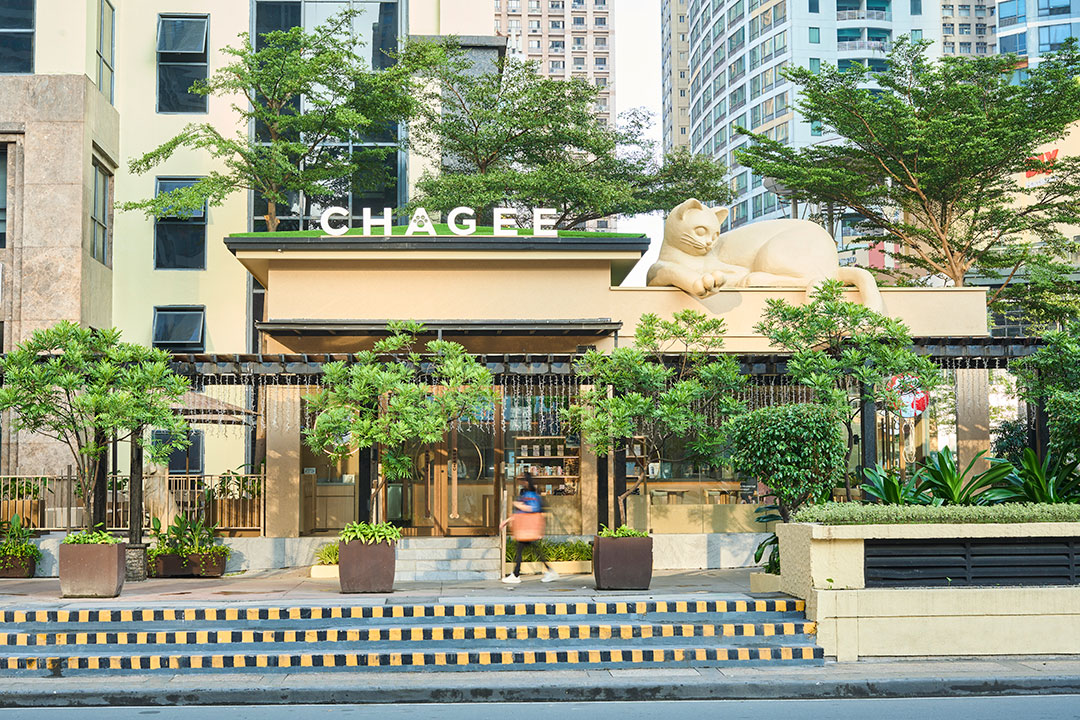
CHAGEE’S first-ever pet-friendly store in Quezon City, Philippines

Chagee opens first pet-friendly store

CHINESE MILK TEA brand Chagee, which brought the premium tea bar experience to the Philippines, has introduced a concept store that is inclusive not just to humans. It has opened its first-ever pet-friendly store in Southeast Asia — in Quezon City, Philippines.

“Chagee has become welcoming space where tea culture meets pet companionship. It’s a community hub where people can connect with their loved ones,” said Christopher Tiong, Chagee country general manager, at the media preview on Dec. 2 in Eastwood, where the concept tea bar is located.

“This store carries that same spirit of thoughtful design, so that fur parents and fur babies alike can enjoy the space,” he added.

Fueled by growing pet ownership among Filipinos, Chagee’s mission “to craft moments of connection through high-quality tea” has expanded to include pets, not just their humans.

PET-FRIENDLY FEATURES
Chagee showed the press the pet-friendly features that can be found at the store. From the outside, a playful giant cat installation adorning the rooftop greets those who enter, while the al fresco dining area is guarded by a dog sculpture.

The safety, hygiene, and comfort of both humans and animals are taken into consideration, with non-slip and durable flooring and air purifiers strategically situated around the store. Chagee also offers free water served in specially designed bowls for pets.

A novelty in this store that the other three branches don’t have is an enclosed tea bar counter with glass panels, keeping drinks visible yet protected from pet fur or dander.

Oliver Rabatan, Chagee deputy general manager, told the press that the enclosed area protects the integrity of the drinks.

“We want it to be hygienic and we want to maintain cleanliness,” he said.

Mr. Rabatan also pointed out the dedicated cleaning station equipped with wet wipes, lint rollers, and trash bags. The indoor handwash station next to it also helps the customers themselves stay clean and fresh.

“Every detail in this pet-friendly store is intentionally designed with both our guests and our pets in mind, while also preserving the premium and relaxing atmosphere of every Chagee store,” he explained.

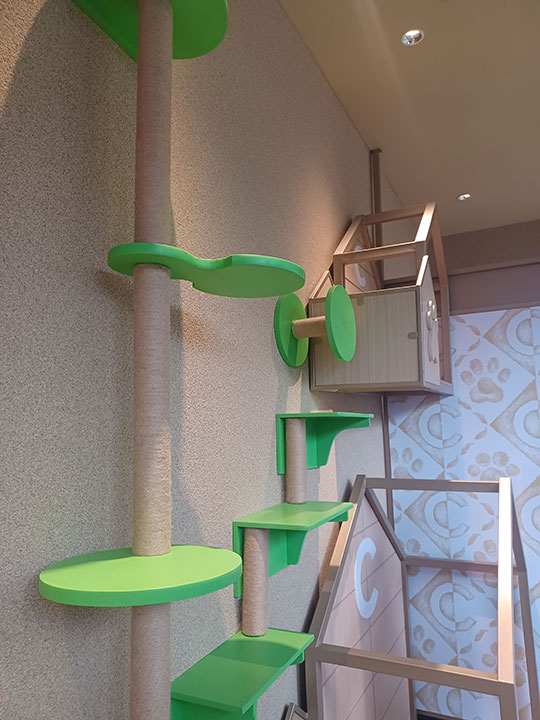
There is also a playpen that can also serve as a photowall for cats. It contains a mini house, tiered ledges, and scratch poles for them to explore and let off steam.

Mr. Tiong told BusinessWorld that they chose Eastwood as the location for their pet-friendly concept because it’s accessible (it is an outdoor branch and not in a mall) and offered the proper space for the vision to come to fruition.

“It’s a location that really is mindful of the needs of the fur parents and the fur babies,” he said. “It serves a community that is known for being pet-friendly. Eastwood has been doing that for decades.”

Aside from the store design itself, Chagee’s Eastwood tea bar uses cups exclusive to the branch, depicting cartoon dogs and cats on the cups.

ANIMAL WELFARE
Malou Perez, founder of the nonprofit organization Pawssion Project, talked about how the space can leave a positive impact on animal welfare.

“Seeing all of these things could change the perspective of people and make them understand that we can actually coexist with animals. Requesting the pound to catch strays is never the solution,” she explained.

Pawssion Project, which has rescued over 3,000 stray animals and rehomed more than 2,000 since 2018, is Chagee’s partner for the store. For the opening weekend of Dec. 5 to 7, all proceeds from Chagee’s pet merchandise available at the store will be donated to the Pawssion Project.

For Ms. Perez, creating more pet-friendly spaces will create a kinder world for animals, which is our responsibility “as their stewards.”

She noted that pet-friendly spaces shouldn’t bear the full burden of dealing with the animals, as it should also depend on responsible pet owners.

“The reason a lot of spaces are hesitant to open their doors to pets is because of irresponsible pet parents. There are malls, hotels, accommodations, and restaurants who start as a pet-friendly establishment and then later on take that away because of pet parents who allow their dog to make a mess,” Ms. Perez explained.

“All of these problems that eventually affect animals are the fault of irresponsible pet owners,” she said. “It serves as a reminder to all of the pet parents that our pets are our responsibility.”

Mr. Tiong said that they will display photos of Pawssion Project’s rescues in the store to boost adoption and raise awareness about the state of stray animals in the Philippines.

“Pawssion Project’s advocacy fits so naturally with our goal of building kinder, more connected communities. With this partnership, we hope to give customers an easy, meaningful way to help more animals find loving homes,” he explained.

As for whether it will have more branches like this, Chagee has said that its focus for now will be on the Eastwood store, though they are “open to new opportunities.”

“Right now, we’re focused on the stores we have. We want to really connect with the communities that we serve,” he said.

GRAND OPENING
From Dec. 5 to 7, the store will offer guests a variety of photo opportunities in the area, like a Chagee giant cup, a “pawtrait” photo booth, and even a “paw-shion” show, which will be open to walk-ins.

Participants who will complete two activities at the pop-up event can take home prizes, such as a free drink voucher. Pet parents who purchase any of the pet store merchandise will get a free family “paw-trait” while pet parents who post their “paw-trait” and tag Chagee’s social media can get a chance to win big in a giveaway.

To ensure the safety of the pets and owners, all pets joining the activities must present both the original and a photocopy of their updated vaccination records.

Chagee is also bringing back its popular Tear and Win promo, along with pet merchandise, exclusively for the grand opening weekend. Customers who purchase any large Chagee fresh milk tea from Dec. 5 to 7 will automatically get upgraded to a Tear and Win cup, with prizes including a Fendi dog collar and leash, an exclusive pet spa session, pet pins, thermal cups with a strap, and pet foldable tents.

Chagee is also offering special bundle deals, where customers can enjoy two large BO·YA Jasmine Green Milk Teas for P165 or one large BO·YA Jasmine Green Milk Tea and one large Da Hong Pao Milk Tea for P169. Both bundles are eligible for the Tear and Win promo. — Brontë H. Lacsamana

SEC proposes tiered public ownership rules for IPO listings

SEC.GOV.PH

THE Securities and Exchange Commission (SEC) has released for public comment a draft memorandum circular proposing a tiered minimum public ownership framework for companies seeking to list shares on the stock exchange.

The draft circular, issued on Dec. 3, is open for comments until Dec. 23. It seeks to establish a tiered approach to public ownership requirements based on the size of the issuer, balancing factors such as market liquidity, investor protection, capital formation, and market competitiveness.

“A tiered minimum public ownership framework provides a proportionate and market-aligned approach that preserves the long-term benefits of adequate public float while addressing potential constraints in demand absorption for large issuances, thereby supporting capital formation and encouraging more companies to pursue listing in the Philippines,” the circular said.

In earlier statements, SEC Chairperson Francisco Ed. Lim said the plan to implement a tiered minimum public float requirement was prompted by the limitations of the current 20% rule, which he described as a “one-size-fits-all” approach that does not account for differences in company market capitalization.

Under the draft rules, companies planning to list on an exchange will be assigned to one of five tiers based on their expected market value at listing.

Tier I companies with a market value of up to P500 million must maintain a minimum initial public float of 33%. Tier II companies valued between P500 million and P1 billion must have at least 25% public float, but not less than P165 million in shares.

Tier III companies with a market value from P1 billion to P50 billion are required to maintain at least 20% public float worth a minimum of P250 million. Tier IV companies valued between P50 billion and P150 billion must have at least 15% public float, valued at no less than P10 billion, while Tier V companies with market value above P150 billion must maintain at least 12% public float worth at least P22.5 billion.

After listing, companies are required to maintain a fixed minimum level of public ownership corresponding to their initial public offering (IPO) tier.

Tiers I, II, and III must maintain at least 20% public ownership, Tier IV at least 15%, and Tier V at least 12%.

The commission said that if public ownership falls below the required level, the company must report the shortfall to the SEC by the next business day, submit a business plan within 10 days, and has up to 12 months to restore the minimum float.

The draft also requires companies to implement internal policies and procedures to monitor minimum public ownership and provide regular reports to the SEC.

Companies must submit a public ownership report and updates on progress within 15 days after each month-end until the public float meets the required minimum.

“Companies who made their IPOs before the effectivity of these rules shall be subject to the maintenance requirement of 20% provided under SEC Memorandum Circular No. 13, series of 2017,” the draft memorandum read.

Last month, Mr. Lim told reporters he hopes the draft will be approved in time for January next year.

“Maybe in Q1 or even earlier, but I probably won’t be able to accomplish everything this year. At least we can start fresh next year since everything is already in place, right?” he said. — Alexandria Grace C. Magno

Ben&Ben, Maki to headline 12th Himala sa Buhangin Festival in Ilocos Norte

THE iconic sand dunes of Paoay, Ilocos Norte serve as the backdrop for the 12th Himala sa Buhangin Festival where Ben&Ben (inset) is set to perform. — ARTEMIO A. DUMLAO

PAOAY, Ilocos Norte — The Paoay Sand Dunes are set to come alive again as the Himala sa Buhangin Arts and Music Festival returns for its 12th edition on Dec. 5 and 6.

Known as the country’s “only sand dunes festival,” it celebrates Ilokano creativity and culture, drawing thousands to one of Ilocos Norte’s most iconic landscapes.

Kicking off the two-day event is Ben&Ben, one of the Philippines’ most popular bands, known for its heartfelt lyrics and genre-defying sound.

On the festival’s second day, rising pop singer Maki will take the stage, joined by chart-topping rapper Hev Abi, promising a high-energy performance in the middle of the dunes.

The festival’s music lineup also features other well-known acts such as Indio I and Brownman Revival, alongside homegrown Ilokano talents Lvndrs, Magrus, Vintage Core, and Tape Monkeys.

After dark, the celebration continues with DJ sets from Gunna Lex, Nasty, Eric Manalo, and MC Travis, who will keep things going until dawn.

Beyond music, the festival showcases Ilokano artistry through immersive installations. Bamboo structures inspired by bawang (garlic), sea-themed displays, and traditional fishing instruments called alat highlight the province’s coastal heritage, everyday life, and enduring connection between the people and the sea.

Festivalgoers can also enjoy a variety of activities, including obstacle courses, 4×4 test drives and races, cultural dance performances, and fire and belly dancing shows.

The festivities conclude with a sunset screening of the film The Fisher on the second day, offering a reflective moment amid the area’s dunes.

Conceived by former Governor Imee Marcos to promote the Paoay Sand Dunes as a cultural and tourism landmark, Himala sa Buhangin has grown into a major attraction.

Having drawn over 50,000 festivalgoers in 2024, organizers expect an even larger crowd this year, as the dunes — immortalized in films like Himala and Ang Panday — once again provide a dramatic backdrop for a festival that blends heritage, creativity, and modern entertainment. — Artemio A. Dumlao

Globe’s ¥20-B loan positions company for 5G growth, BMI says

PHILSTAR FILE PHOTO

GLOBE Telecom, Inc.’s ¥20-billion loan signals the telecommunications company’s improved debt servicing capacity and positions it to capture growth in 5G, according to a study by BMI, a unit of Fitch Solutions.

“The loan provides liquidity to manage debt maturities while maintaining financial flexibility during this operational transition,” BMI said in a report dated Dec. 3.

Last month, Globe announced that it had signed a ¥20-billion (around P7.6 billion) term loan facility with Mizuho Bank, Ltd., a major Japanese commercial bank, to partially finance its capital expenditures (capex), debt refinancing, and other corporate requirements for the year.

BMI said Globe is well-positioned to capture the expected growth in 5G adoption in the Philippines, noting that the company’s loan with Mizuho Bank reflects its transition from infrastructure deployment to revenue generation after its investments in 5G technology.

For the three months ending September 2025, Globe reported a 12.79% drop in attributable net income to P5.25 billion from P6.02 billion a year ago, on slightly lower revenues of P44.36 billion, down 1.68% from P45.12 billion.

For the January-to-September period, attributable net income fell 14.04% to P17.69 billion, while revenues declined 2.34% to P131.59 billion.

Globe said it had invested about P31.4 billion in capital expenditure for the first nine months of 2025, down 23% from P41 billion in the same period last year.

The company expects full-year 2025 capex to fall below $1 billion, reflecting a strategic shift toward targeted investments and reinvestment of proceeds from tower sales for the remainder of the year.

Earlier this year, Globe also signed P20 billion in loan facilities with local banks BDO Unibank, Inc. and Metropolitan Bank & Trust Co. to fund its 2025 capex and reduce debt.

“As the company monetizes infrastructure assets including towers and potentially fiber networks, debt financing becomes less critical for core operations,” BMI said.

The study also highlighted Globe’s initiatives to diversify into financial technology and digital services through its e-wallet platform GCash, noting that this positions the company to grow average revenue per user (ARPU) through revenue streams beyond traditional connectivity.

BMI added that Globe could benefit from the Konektadong Pinoy Act, leveraging its mobile network infrastructure, spectrum holdings, and integrated mobile-fixed offerings to provide services in urban consumer markets.

“The primary risks are enterprise segment pricing pressure and potential rural broadband market share loss, where Globe’s infrastructure deployment remains limited compared to urban coverage,” BMI said.

At the stock exchange on Thursday, shares in Globe fell by P9, or 0.56%, to close at P1,600 apiece. — Ashley Erika O. Jose

Tongits: How to play with smart tactics for new players

Tongits looks simple from a distance, but anyone learning it for the first time quickly realizes there’s more calculation involved than the casual table talk suggests.

Search engines overflow with “Tongits: How to Play” guides, yet what beginners actually need is clarity, structure, and strategy.

This breakdown focuses on practical, easy-to-apply tactics designed to help new players approach the game with confidence.

Foundational Structure of Tongits: How to Play

Tongits uses a standard 52-card deck and is best played with two or three players.

Some families add Jokers as wildcards to shake up the gameplay, though traditional formats leave them out.

Regardless of variation, one principle stays constant: the player who manages deadwood the best usually wins.

Objectives and Meld Types

To play Tongits effectively, you need to understand what you’re trying to build:

  • Trios: three cards of equal rank
  • Straights: three or more sequential cards of the same suit

Anything outside these structures is deadwood. Reducing it from the very beginning gives you more control over the round, especially when it heads toward a draw.

The Turn Cycle: Tongits — How to Play from Start to Finish

A round unfolds through a series of small decisions. Over time, these small decisions define your success.

Draw Phase

You begin every turn by drawing either the top card from the deck or the most recent discard. Each choice signals your intentions, so consider what others may interpret from your pick.

Forming Melds

When a card completes a trio or straight, you can place it down. Melds reduce deadwood and stabilize your hand.

Beginners gain security by laying melds early, even though advanced players sometimes hold them for later.

Adding to Melds

A defining mechanic of Tongits is the ability to extend melds already on the table. You can add to your own or your opponents.’

Adding reduces deadwood and often changes the balance of a round, especially when a draw is looming.

Discarding

Every turn ends with a discard. This is where new players make costly mistakes. One careless discard can strengthen an opponent’s straight or trio.

Discard only after assessing the table and the possible melds others might be chasing.

How Rounds End

Tongits rounds wrap up in three possible ways, and each one hinges on timing.

Calling Tongits

A player who empties their hand through melds and adds wins instantly. This requires clean planning, steady deadwood control, and awareness of other players’ moves.

Declaring a Draw

If the deck empties out, players compare deadwood totals. Lowest wins. This is where discipline pays off, because staying light matters more than flashy melds.

Sapaw Challenges

A draw can be challenged if another player demonstrates they can reduce deadwood further by adding or melding.

If they succeed, the draw is canceled, and then the round continues. Sapaw tests timing and accuracy, rewarding players who watch the table closely.

Scoring Basics

Scoring varies by household, but core point values remain consistent:

  • Aces = 1 point
  • Number cards = face value
  • Face cards (King, Queen, and Jack) = 10 points

The goal is always the same: keep your deadwood total as low as possible. This single habit influences every strategic decision you make.

Strategic Tips for Tongits: How to Play the Smart Way

Learning rules is one thing; playing smart is another. These principles help beginners build foundational awareness.

Track Discards.

Every card thrown away is information. High cards become dangerous the longer you keep them. Unless part of a clear straight, release them early to avoid penalties during a draw.

Slow Down Your Discards.

Rushed discarding helps your opponents more than you. Evaluate meld possibilities, patterns, and the suits others might be collecting.

Don’t Reveal Your Plan Too Early.

Putting down melds exposes your direction. While it stabilizes your hand, it also gives others a window into your strategy. Some rounds call for patience before revealing anything.

Keep Deadwood Low.

Even with incomplete melds, shape your hand so that it remains light. Low deadwood protects you from late-round surprises.

Use Sapaw Wisely.

Sapaw can save a round that seems lost. If you can legally reduce your deadwood during a challenge, do it. Many beginners overlook this opportunity.

Why Tongits Stays a Filipino Staple

Tongits continues to thrive because it blends fast thinking, social tension, and cultural familiarity.

It encourages quick decisions and tactical reading of opponents, yet remains accessible enough for casual gatherings.

Digital versions have amplified the reach of Tongits. Online platforms automate scoring, resolve disputes, and introduce competitive structures similar to tournaments and rankings.

This keeps the game exciting for both new players and longtime fans.

Common Beginner Mistakes

New players tend to stumble in the same places. Knowing these pitfalls early helps you avoid unnecessary losses.

Holding Too Many High Cards

High cards inflate deadwood totals. Keep them only when forming a straight is guaranteed.

Ignoring Opponents’ Melds

Every meld tells you a story about your opponent’s direction. Use that information to block or anticipate.

Calling Draw Too Early

Early draw calls usually backfire. A successful challenge can leave you exposed and unprepared.

Forgetting the Power of Extending Melds

Adding to existing melds seems minor but often shifts momentum, especially in late-round scenarios.

Final Outlook

Mastering Tongits begins with understanding the rules, but genuine progress comes from studying its flow.

The strategic balance of drawing, melding, adding, and discarding creates a rhythm that rewards thoughtful players.

Whether you plan to play casually or aim to compete online, consistent practice builds intuition.

With strong fundamentals and steady decision-making, Tongits transforms from a confusing card puzzle into a strategic, culturally rich pastime that continues to connect generations.

FAQ: Tongits — How to Play and Strategy Basics

1. When should I lay down my melds?

Beginners should lay down melds early for safety. Advanced players sometimes delay melds to hide their direction.

Your decision depends on the table dynamics, the pace of the draw pile, and whether exposing your hand benefits or hurts your current strategy.

2. Is it better to keep high cards for combinations or discard them early?

Unless a high card fits cleanly into a developing straight, discard it early. High-value deadwood is the most common reason beginners lose during a draw.

3. What exactly is Sapaw?

Sapaw is a challenge that cancels a premature draw call. If a player shows they can reduce deadwood by adding or melding more cards, the round continues.

Sapaw adds depth and keeps players accountable for their timing.

Author’s Bio

Doreen Barnachea is a Filipino content writer with over six years of experience crafting content on a wide variety of subjects. She has mastered storytelling, drawing inspiration from a myriad of things — coffee, folklore, freediving spots, and why tennis balls are green (or yellow).

Ms. Barnachea currently writes for GameZone and divides her time between Quezon City and Taguig. When not writing, she enjoys reading, doing arts and crafts, and free diving.


Spotlight is BusinessWorld’s sponsored section that allows advertisers to amplify their brand and connect with BusinessWorld’s audience by publishing their stories on the BusinessWorld Web site. For more information, send an email to online@bworldonline.com.

Join us on Viber at https://bit.ly/3hv6bLA to get more updates and subscribe to BusinessWorld’s titles and get exclusive content through www.bworld-x.com.

Filipinos seek to ensure heirs’ financial security

FREEPIK

NEARLY 80% of Filipinos said financial security is their top priority in legacy planning, but most fear that wealth may not last beyond their immediate heirs due to the lack of literacy, according to a survey by Sun Life Asia.

The survey showed that 77% of Filipino respondents said ensuring their family’s financial security is the most important factor in estate planning.

“Legacy planning is deeply personal, yet there are certain hopes and aspirations that are shared by many respondents. For most, legacy planning is about ensuring financial security, passing on values and creating opportunities for the next generation,” Sun Life Asia said.

“People want reassurance that if something were to happen to them, their loved ones would be financially secure.”

The survey covered more than 3,000 respondents from the Philippines, Hong Kong, Indonesia, Malaysia, Singapore, and Vietnam. It aims to show the attitudes, behaviors and aspirations surrounding legacy planning in Asia as it expects that the region will see the largest intergenerational wealth transfer in its history in the coming decade.

“With a long, rich history of family-owned businesses forming the backbone of many Asian economies, effective succession planning is a crucial element in preserving not just wealth but also business legacies,” Sun Life Asia said.

Meanwhile, the other top factors for estate planning among Filipino respondents were educating future generations about financial responsibilities after inheritance (53%), and building enough wealth to pass down to the next generation (52%), the report said.

Sun Life Asia said Filipinos think legacy is not just about money. “While passing on wealth remains the top priority (37%), families are also focused on making a lasting personal impact on the lives of family and friends (16%) and the intangible inheritance of family traditions (13%).”

“Legacy planning today is more than just a financial transfer. It’s about safeguarding stability while preserving identity and purpose for the next generation,” it added.

The respondents said they want their heirs to use their inherited assets to support essential needs like housing and healthcare (69%), while 63% want them to invest in long-term wealth creation for themselves and for future generations. It added that 62% said they want their inheritance to fund educational growth, and 43% said they want their heirs to contribute to charitable causes.

However, 81% of Filipino respondents said they fear that their inheritance may not survive the next generation, Sun Life Asia said, highlighting the importance of proper legacy planning.

It added that 64% are concerned that their heirs would not be financially equipped to manage their inheritance, with 49% fearing that family disputes could endanger their assets, and 41% also see market volatility as a threat to preserving their wealth’s value.

“Beyond money, families also worry about the erosion of values. Almost half (43%) of Filipino respondents believe their children will uphold the values and traditions they pass down,” it said.

UNPREPARED
It said that more Filipinos are becoming aware of the importance of legacy planning, but most families remain unprepared, with 52% of respondents saying they don’t know how to start the process.

“Only 18% of Filipino respondents feel fully prepared in terms of legacy arrangements if they were to pass away,” Sun Life Asia said.

“When it comes to documentation, only 6% of Filipino respondents have completed and communicated their legacy plans. Over half (53%) have only partial plans, and 25% admit to having nothing at all.”

It said that 64% of Filipino respondents know about wills and estate planning documents but only 32% said they use them. It added that 76% are aware of financial advisors but only 39% have sought professional advice, with most saying they don’t have the scale of wealth to justify seeking these services.

“Families are turning financial education into the next form of inheritance, passing on wisdom as well as wealth. Older generations are taking active steps to prepare their heirs, not just financially but intellectually, to manage wealth responsibly. Many are driven by concerns over financial literacy gaps and a desire to protect their family legacy,” Sun Life Asia said.

“Before transferring assets, families are prioritizing financial knowledge-sharing. When asked what actions they have taken, or plan to take to strengthen the next generation’s confidence, the majority of Filipino respondents say they are teaching financial basics (66%), followed by engaging in financial discussions and sharing personal experiences, both at 57%.”

Sun Life Asia said wealth creators who want to secure their legacies for more than one generation should build holistic and regularly updated estate plans with the help of professional financial advisors specializing in wealth management and succession planning, and draft comprehensive wills.

They should also invest in financial education for their heirs and communicate with their family so that they are aligned about their goals. — A.R.A. Inosante

Stuff to Do (12/05/25)


Go to PPO’s special concert

CELEBRATE the season with the Philippine Philharmonic Orchestra (PPO) in a special benefit concert. Marking the 200th anniversary of Johann Strauss II, the program has Strauss waltzes and polkas, beloved arias, Handel’s Messiah, and highlights from Carmina Burana. Featuring soprano Katarzyna Dondalska, the Philippine Madrigal Singers, and the PPO under the baton of Grzegorz Nowak, this concert is for the benefit of The Brain Foundation of the Philippines. It takes place on Dec. 5, 7:30 p.m., at the Samsung Performing Arts Theater, Circuit, Makati. Tickets range from P1,000 to P3,500.


Shop at the Agraryo Trade Fair

ONGOING until Dec. 5 at the Quantum Skyview, Upper Ground B, Gateway 2, in Cubao, Quezon City, is the Agraryo Trade Fair: Gawang Arbo, Tatak Agraryo. This event features products made by Agrarian Reform Beneficiaries Organizations, showcasing a wide variety of goods from different communities.


See Hermisanto’s solo art exhibit at Kapitolyo

AT Kapitolyo Art Space, Pasig, Anihan features the works of pioneer rice artist and multimedia artist, Hermisanto. The solo show highlights his latest works in rice painting as a continuous dialogue with grain, honoring its stories, promoting Filipino identity, and the resilience it symbolizes. Much like a farmer tending to his fields through unpredictable seasons, Hermisanto’s artistic ethos centers on perseverance through adversity. The exhibit runs until Dec. 7 at Kapitolyo Art Space, 23 West Capitol Drive, Kapitolyo, Pasig.


Watch folk dance performances at Rizal Park

THE Bayanihan Philippine National Folk Dance Company is holding Fiesta Folkloriada this year, bringing together dance companies from around the world in a vibrant celebration of culture, music, and tradition. A project of the Bayanihan Folk Arts Foundation, the festival aims to foster education, understanding, and respect among nations through the universal language of dance. It is set to happen on Dec. 6, 6 p.m., at the Rizal Open Air Auditorium of Rizal Park, Manila. It is free and open to the public.


Attend Ateneo’s alumni homecoming party

THE Ateneo Blue Eagles are invited to fly back for “One Big Feast: The 2025 Ateneo de Manila University Grand Alumni Homecoming,” taking place on Dec. 6 at the Ateneo Junior High School Covered Courts. Guest performers at the party are OPM band The Itchyworms and stand-up comedian Victor Anastacio. Hosted by this year’s Silver Jubilarians, the Ateneo High School Class of 2000, the event will donate a portion of the proceeds to the Teachers’ Retirement Fund, the AAA Order of the Blue Eagles Scholars, and the Ateneo Track and Field Team.


Join McKinley Hill’s Grand Christmas Parade

THE McKinley Hill Grand Christmas Parade is taking place on Dec. 6, 5 p.m. The parade features festive character mascots, vibrant performances, and towering giant balloons. It will go around the Venice Grand Canal Mall in Taguig.


Learn something new at Christmas workshops

THIS WEEKEND, Anko is opening its doors for a pair of creative workshops designed to help households refresh their kitchen and dining rituals with guidance from two specialists in styling and coffee. Event stylist Elena Flor Salazar of Likha by Elena and coffee expert John Tumulak of Arcana Coffee will lead back-to-back sessions at Anko TriNoma on Dec. 6 and at Anko Alabang Town Center on Dec. 7, both starting at 2 p.m. Both workshops aim to give families practical, accessible ideas they can bring straight into their Christmas gatherings. Of course, they will be using Anko’s festive collection of holiday dinnerware, glassware, décor, and coffee essentials to demonstrate.


Learn how to decorate at Mitsukoshi

THIS holiday season, Lexus brings its signature philosophy of artistry, refinement, and human-centric design to life with “Crafted for the Season: A Holiday Showcase,” a two-day experiential pop-up event at Lexus Mitsukoshi BGC, Grand Central Park, 8th Avenue cor. 36th Street, North BGC, Taguig on Dec. 6 and 7. On Dec. 6, at 1:30 p.m., there will be a “Christmas Ornament Making Workshop (by Pottery Sessions)” where guests will participate in hand-painting ceramic Christmas ornaments and explore color, detail, and finishing techniques that can elevate a simple piece into a refined holiday keepsake. Meanwhile, “The Art of Adornment: Christmas Tree Decorating Workshop” will be conducted on Dec. 7, at 1:30 p.m. Guests can observe set design expert Jes Dizon who will demonstrate how to thoughtfully curate ornaments, ribbons, lights, and texture to transform a space with elegance and holiday charm. Register here to sign up for a slot: https://forms.gle/ktAHGs4SSAepYLiX6.


Watch League of Legends matches on Disney+

THE 2025 League of Legends KeSPA Cup will be available to livestream from Dec. 6 to 14, exclusively on Disney+. Gamers from Korea, Japan, the US, and Vietnam, are set to battle it out across 35 matches for prize money, prestige, and bragging rights, which can be viewed across Asia, including the Philippines. The esports competition for the popular video game League of Legends, this marks the first time the events will be seen on Disney+. It is initially hosted online with later matches to take place at Korea’s Sangam SOOP Colosseum. Full match replays will be available for a limited period after each game, followed by highlight clips.


Enjoy a Christmas concert at The Pen

FROM holiday carols to music from film, Disney classics, and light opera, The Peninsula Manila marks the 40th anniversary of its annual festive season concert with the Manila Symphony Orchestra, mezzo sopranos Cris Villonco and Yanah Laurel, and the 50-voice Ateneo Chamber Singers under the baton of Jonathan Velasco. The concert will be held on Dec. 7, from 5 to 7 p.m. at The Lobby. The first part of the concert will feature a mix of Barry White, movie musicals, light opera, Disney, and a well-loved Filipino pop classic. As tradition dictates, the second part will be filled with the familiar sounds of Christmas including the “Hallelujah Chorus” from Handel’s Messiah. Table reservations at The Lobby are available at P75,000 with a set deluxe festive merienda menu for 10. Tables for four are available at P30,000 with a set deluxe festive merienda menu. The Upper Lobby seating is available at P20,000 for tables of four with a set festive merienda menu. For inquiries on the Christmas Concert at The Pen 2025, call 8887-2888, extension 7410 (Festive Desk), e-mail diningpmn@peninsula.com, or visit the website peninsula.com.


Catch a Japanese pro wrestling champion

ON Dec. 7, the show FPW Astig, hosted by Filipino Pro Wrestling (FPW), will be headlined by global wrestling superstar Kushida. It will be the group’s last wrestling show of the year. Audiences can expect Kushida to bring his New Japan Pro Wrestling heritage and experience as a former World Wrestling Entertainment Cruiserweight champion. For this special debut, he teams up with FPW standout Cali Nueva, whose dynamic in-ring presence and breakout momentum has made him one of FPW’s rising stars. FPW Astig takes place on Dec. 7, 2 p.m., at Baked Studios, Makati. Tickets, priced at P1,200, are available via www.ticket2me.net/event/22544. Walk-in tickets are available on-site for P1,500.


Watch talented kids in a mall show

THE MKF Dynamic Star Music Studio brings together 70 kids to sing, perform, and share their talents with the public through a mall show on Dec. 7 at the Activity Area, Lower Ground, Farmers Plaza, Cubao, Quezon City.


Go to a special art exhibit

Ongoing until Dec. 10 at the Chapel Area, Upper Ground, Farmers Plaza, in Cubao, Quezon City, is Sinag: Likha Ng Pag-asa, an art exhibit held in celebration of the International Day of Persons with Disabilities, highlighting creative works that reflect talent, expression, and inclusivity.


Have a family-friendly evening at the theater

MANY YEARS AFTER Chitty Chitty Bang Bang in 2017, Newport World Resorts’ production company, Full House Theater Company, has returned to family-oriented productions with Shrek The Musical at the Newport Performing Arts Theater. Younger audiences will delight in the slapstick antics and fairytale creatures, while older viewers catch the clever writing, sly wordplay, and lessons embedded in the story. This allows the show to resonate as a true family experience. The musical stars Jaime Wilson as Shrek and Topper Fabregas as Donkey. Shrek The Musical is based on the DreamWorks Animation Motion Picture and the book by William Steig. It features book and lyrics by David Lindsay-Abaire and music by Jeanine Tesori. Tickets are available at Ticketworld, Newport World Resorts Box Office, and Helixpay. They range in price from P1,500 to P4,500. For inquiries, contact Customer Care at 7908-8888 or info@fhtcentertainment.com.


Watch TP’s musical on Gregoria de Jesus

TANGHALANG PILIPINO’S (TP) newest production for its 39th season is a groundbreaking original musical that reimagines the life of revolutionary Gregoria de Jesus through the sound of Pinoy pop music. With music by Nica del Rosario and Matthew Chang, and a book by Nicanor Tiongson and Eljay Deldoc, the show stars Marynor Madamesila and is directed by Delphine Buencamino. It is ongoing until Dec. 14, with performances at 3 and 8 p.m., at the Tanghalang Ignacio Gimenez (CCP Black Box Theater), CCP Complex, Pasay City. VIP tickets cost P2,000 while regular tickets are P1,800.


Bring your kids to Zootopia 2 in cinemas

DETECTIVES Judy Hopps (voiced by Ginnifer Goodwin) and Nick Wilde (voiced by Jason Bateman) are back in Walt Disney Animation Studios’ Zootopia 2. Here, they find themselves on the twisting trail of a mysterious reptile who arrives in Zootopia and turns the mammal metropolis upside down. The film is directed and written by Oscar winner Jared Bush. Zootopia 2 is now in cinemas nationwide.


Attend a talk on the human conversation

AS PART of Instituto Cervantes de Manila’s ongoing commitment to  exploring the Hispanic language and culture, the Intramuros branch  will host scholar Guadalupe Ruiz Fajardo on Dec. 9, 2 p.m., for a lecture titled “How Difficult It Is to Converse (and Why That’s Fascinating).” A renowned scholar of conversation analysis and Spanish language teaching, Ms. Ruiz Fajardo teaches interactional competence at Columbia University, with decades of research on the dynamics of everyday talk and cross-cultural communication under her belt. Entrance is free. Seats can be reserved via https://forms.office.com/e/3xMY8FgtkN. For more information, visit the Instituto Cervantes de Manila website or Facebook page.

Regulator revokes Discaya construction firms’ registrations

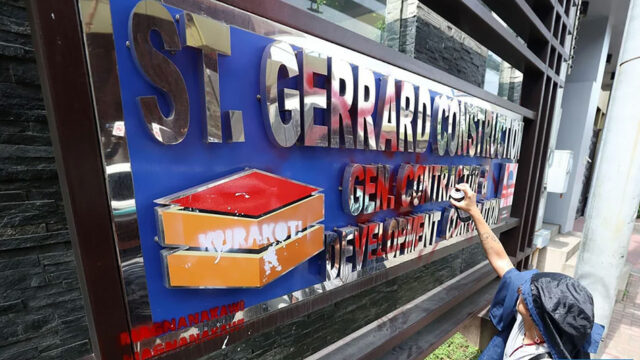
PHILIPPINE STAR/MIGUEL DE GUZMAN

THE SECURITIES and Exchange Commission (SEC) has revoked the corporate registrations of St. Timothy Construction Corp. and St. Gerrard Construction General Contractor and Development Corp., both owned by the Discaya family, for submitting false beneficial ownership information.

“In separate resolutions issued on Nov. 26, the SEC Enforcement and Investor Protection Department (EIPD) canceled the certificates of incorporation of St. Timothy Construction Corp. and St. Gerrard Construction General Contractor and Development Corp.,” the commission said in a statement on Thursday.

During a Senate Blue Ribbon Committee hearing on Sept. 1, Cezarah Rowena C. Discaya claimed ownership and officer positions in St. Timothy and St. Gerrard.

However, SEC records show that the EIPD found Ms. Discaya was not listed as a beneficial owner in the declarations for St. Timothy from 2022 to September 2025, or for St. Gerrard from 2022 to 2024.

“The SEC underscores that corporations must accurately and truthfully disclose beneficial ownership information. Failure to comply — whether by omission or by submission of incorrect information — undermines market integrity and will be met with decisive regulatory sanctions,” the commission said.

“Corporations are expected to respond promptly and responsibly when allowed to clarify or rectify discrepancies in their filings,” it added.

Each firm was ordered to pay a P2 million penalty, as set out in Section 11, I-A of SEC Memorandum Circular No. 10, Series of 2022, along with a daily administrative fine of P1,000 for any ongoing violations, in accordance with Section 158 of the Revised Corporation Code (RCC).

The SEC issued notices as early as September, ordering the companies to pay fines and correct their disclosures, but neither responded within the 15-day period.

The commission said that these sanctions are administrative and do not prevent other civil, criminal, or administrative proceedings under the RCC or other applicable laws from being pursued. — Alexandria Grace C. Magno

Our own Trillion Peso Spring

PHILIPPINE STAR/MIGUEL DE GUZMAN

The Philippines’ political dynamics and institutions differ greatly from those of the key Arab Spring states. Unlike the largely authoritarian regimes in the Middle East, the Philippines remains a functioning — if flawed — electoral democracy. Yet the parallels are hard to ignore. Public frustration with corruption, patronage politics, and deeply entrenched political dynasties echoes many of the grievances that fueled the uprisings across the Arab world in December more than a decade ago.

Here, as in the Middle East, dissatisfaction has been building for years. The once-clear lines between political and business elites have blurred, creating an oligarchic bloc whose power is self-reinforcing. For many Filipinos, these elites represent the core of our democratic deficit. This is the combustible mix we face today: institutionalized corruption, weak governance, and a society whose patience is steadily wearing thin.

The recent flood control scandal exposed how deeply corruption has penetrated public institutions. It also opened a rare window for demanding accountability and reform. The real challenge now is how to sustain the gains from the public’s anger and engagement — how to ensure this moment becomes a springboard for structural change rather than a fleeting episode of outrage.

Books examining the Arab Spring, including Mark Haas and David Lesch’s Arab Spring: The Hope and Reality of the Uprisings (2016), consistently outline four reasons why the uprisings failed to produce lasting democratic transitions: one, entrenched authoritarian structures that proved resilient; two, fragmented civil society and reform movement with conflicting goals; three, deteriorating business conditions that further deepened instability; and transition fatigue and backlash.

These lessons are useful as we grapple with our own “Trillion Peso Spring.” They prompt a sober question: Will this moment of awakening lead to meaningful change, or will it dissipate into a long and discouraging “Trillion Peso Winter?”

There is no denying that corruption and bad governance in the Philippines are systemic. They are not merely persistent — they are durable. The electoral process is often influenced long before votes are cast, shaped by political dynasties and business powerbrokers who can buy influence and secure leverage across branches of government. Without decisive action now, the momentum generated by current investigations could fade, and the names implicated in official documents or whistleblower accounts may soon be forgotten. History has shown that even convicted officials have managed to return to power, resurrecting political careers as if nothing had happened.

Many authoritarian Arab regimes entered the uprisings with similar levels of entrenched patronage networks, weak civil society, and fragile democratic traditions. With such brittle foundations, the initial wave of protests proved difficult to convert into sustainable institutions of accountability.

Contrary to the belief that corruption is a concern only of the elite or the middle class, recent Pulse Asia findings (September 2025) show that Filipinos rank the fight against graft and corruption as the second most urgent national concern, just after inflation. More than half of respondents are deeply troubled by corruption, placing it even higher than concerns over wages, criminality, poverty, illegal drugs, and jobs.

If the flood control scandal has done anything, it is to expose how corruption permeates multiple layers of governance, from the highest offices down to local bureaucracies. This recognition has emboldened many citizens. The strong turnout at both the Sept. 21 and Nov. 30 Trillion Peso Marches showed that Filipinos are not alone in their frustration; many are ready to uphold truth, transparency, and accountability.

For some, the magnitude of corruption may feel overwhelming, inspiring resignation rather than resistance. But for many others, this moment demands vigilance, a renewed commitment to confronting corrupt officials and institutions until genuine reform is finally achieved.

Yet the Arab Spring reminds us that division can be fatal to reform movements.

Fragmentation plagued many of the uprisings, and similar strains are visible here. The Luneta and EDSA rallies, though united in demanding integrity and accountability, disagreed on the call for President Ferdinand “Bongbong” Marcos, Jr. and Vice-President Sara Duterte to resign. The Luneta demonstrators insisted on leadership accountability and systemic reforms, including the abolition of political dynasties and the restitution of stolen public funds. Meanwhile, the EDSA rally supported the fight against corruption but distanced itself from the demand for resignations, expressing fears of unintended consequences such as a transition council, revolutionary government, or civilian-military junta.

Cardinal Ambo David’s statement acknowledged this tension while keeping channels of unity open. His words — “we do not yet believe in the call of the people who are in Luneta” — suggested caution, not rejection. This openness creates space for reconciliation rather than division, a critical ingredient for sustaining any reform movement.

Groups like 1Sambayan echoed the Cardinal’s position, emphasizing accountability, peace, and constitutional order. They rejected attempts at extraconstitutional regime change and warned against divisive politics amid economic and political instability.

The truth is that EDSA and Luneta share far more goals than differences.

Efforts should focus on strengthening common ground while constructively addressing disagreements. There is no deep ideological chasm separating the two — only differing views on political timing and the sequence of reforms. Some actors have in fact begun to exploit these divisions to push for outcomes such as a forced resignation that could favor particular political factions. But public discourse must stay anchored in evidence: if documentation is stronger in support of an impeachment case against the Vice-President than the President, then the political narrative should reflect that reality rather than partisan speculation.

To move forward, we need institutional spadework. Key legislative reforms must include enforcing constitutional prohibitions against political dynasties, passing electoral reforms to strengthen campaign finance rules and transparency, mandating lifestyle checks for public officials, and overhauling budget processes to prevent insertions and abuse.

The Arab Spring also revealed that political uprisings cannot succeed without addressing underlying economic issues. Many of the protests in the Middle East were fueled by unemployment, stagnation, and declining living standards. Similarly, in the Philippines today, the economic context adds urgency and complexity. If the Trillion Peso March leads to accountability but fails to bring improvements in economic growth, job creation, business confidence, and living conditions, sustaining the movement’s momentum will be difficult. The BusinessWorld Forecast 2026 captured this anxiety: we are confronting a “corruption crisis combined with political volatility” that is eroding business confidence.

The public now demands resibo — tangible proof that reform is not just political theater. Citizens want to see rising incomes, stable prices, sustainable fiscal policy, stronger healthcare and education systems, improved social infrastructure, declining poverty, better public services, lower cost of doing business, and more productive employment opportunities.

Revolutions and regime changes often falter when they fail to deliver results. The Arab Spring demonstrated that enthusiasm can quickly turn to disillusionment when transitions do not yield better governance or improved livelihoods. In several Arab countries, initial optimism was followed by civil liberties shrinking again as old elites reasserted their power.

This transition fatigue is real and dangerous.

We must guard against such a trajectory. Many Filipinos already feel that the spirit of EDSA 1986 was squandered, leading to cynicism about regime change and skepticism toward constitutional reforms. The belief that simply amending the Constitution will usher in transformative change reflects a recurring misunderstanding of what it takes to build strong, accountable institutions.

If we fail to address weak institutions, fragmented civic movements, deep socio-economic challenges, and the risk of transition fatigue, our aspirations will falter. What began as a Trillion Peso Spring — an awakening to the possibility of unity, integrity, and reform — could easily descend into a Trillion Peso Winter marked by disappointment and continuing upheaval.

But it does not have to. The window is open. It is narrow, but real.

The test before us is whether we can seize this moment, sustain the unity necessary to demand meaningful reforms, and strengthen the institutions needed to guard against future abuses. The future of the Trillion Peso Spring depends not on a single march or a single scandal, but on our collective ability to translate anger into action and action into durable, credible change.


Diwa C. Guinigundo is the former deputy governor for the Monetary and Economics Sector, the Bangko Sentral ng Pilipinas (BSP). He served the BSP for 41 years. In 2001-2003, he was alternate executive director at the International Monetary Fund in Washington, DC. He is the senior pastor of the Fullness of Christ International Ministries in Mandaluyong.

Peso sinks to P59 level again as growth concerns hit sentiment

PHILIPINE STAR/IRRA LISING

THE PESO on Thursday sank to the P59 level against the dollar, hitting an over two-week low, as expectations of another rate cut from the Bangko Sentral ng Pilipinas (BSP) next week due to dimming economic growth prospects weighed on sentiment.

The local unit closed at P59.022 per dollar, weakening by 10.2 centavos from its P58.92 finish on Wednesday, Bankers Association of the Philippines data showed.

This was the peso’s lowest close and was the first time it ended at the P59 level against the greenback in two weeks or since it finished at P59.065 on Nov. 20.

The peso opened Thursday’s trading session weaker at P58.95 against the greenback. Its intraday best was at P58.92, while its worst showing was at P59.17 versus the dollar, which is the local unit’s record-low close logged on Nov. 12.

Dollars traded declined to $1.29 billion on Thursday from $1.41 billion on Wednesday.

“The peso closed higher today on buying momentum after the recent comments from BSP regarding the local GDP (gross domestic product) outlook and possibilities of a rate cut,” a trader said in a phone interview.

On Wednesday, BSP Governor Eli M. Remolona, Jr. said that Philippine GDP growth may only settle between 4% and 5% this year as the corruption scandal continues to limit government spending and weaken investor sentiment. This would be well below the government’s full-year growth target of 5.5% to 6.5%.

Mr. Remolona said this raises the chances of a fifth straight rate cut at the Monetary Board’s Dec. 11 meeting.

In October, the central bank lowered borrowing costs by 25 basis points (bps) for a fourth meeting in a row to bring the policy rate to 4.75%.

It has reduced benchmark rates by a total of 175 bps since it began its easing cycle in August 2024.

For Friday, the trader said the peso could range from P58.80 to P59.20 versus the dollar.

Still, the local unit is unlikely to stay at the P59 level for long as the expected increase in remittances for the holiday season could give the currency a boost, the trader said.

Meanwhile, the US dollar was steady near a five-week low after lackluster US data seemingly cemented the case for a Federal Reserve rate cut next week, providing relief to the yen and pushing the euro to an almost seven-week high, Reuters reported.

Investors have also been weighing the prospect of White House economic adviser Kevin Hassett taking over as Fed Chair after Jerome H. Powell’s term ends in May. Mr. Hassett is expected to push for more rate cuts.

US President Donald J. Trump said this week he will unveil his pick to succeed Mr. Powell early next year, extending a months-long selection process despite previously claiming he had already decided on a candidate.

A move to appoint Mr. Hassett could pressure the dollar, analysts have said, with bond investors expressing concerns to the US Treasury that Mr. Hassett could aggressively cut rates to align with Mr. Trump’s preferences, the Financial Times reported.

Traders are pricing in an 85% chance of a quarter-point rate cut next week, LSEG data showed.

The dollar index, which measures the US currency against six rivals, was little changed at 98.94 after falling for nine straight days. It was languishing near a five-week low and remains down nearly 9% for the year.

A Reuters survey showed a sizeable minority of foreign exchange strategists are now predicting the dollar to strengthen next year although most largely stuck to forecasts for a softer greenback in 2026 on rate cut wagers. — Katherine K. Chan with Reuters