Home Blog Page 2466

Europe’s growth rebound hinges on savings puzzle

Fifty-euro notes are seen in this file photo. — REUTERS

FRANKFURT — European families are sitting on an ever-growing pile of savings, confounding hopes that consumer largesse can boost the region’s economy as it falls yet further behind that of the United States.

This rise in savings when consumers are enjoying the best income growth in years goes against textbook wisdom on consumer behavior and has prompted some to question whether there has been a paradigm shift that bodes ill for Europe’s future growth.

Some economists think the world will soon be back to normal, but others see a more permanent shift. A great deal depends on the answer to this puzzle.

If savings, at their highest rate since the worst days of the pandemic, are unwound, growth could take off.

But the absence of the turnaround could prompt businesses, which have been hoarding labor for years, to reduce headcount, further depressing consumption and potentially starting a downward spiral for the economy.

“When I think about prospects for activity going forward, consumer behavior really is the linchpin,” Bank of England policy maker Catherine Mann said. “It has been the case over time that how the consumer goes is really how business investment goes, how the state of the fiscal side goes, and so forth.”

Euro zone households saved 15.7% of their disposable income in the second quarter — well above levels around 12% before the pandemic — and this rate has been trending up for the past two years.

In Britain, the so-called savings rate was at 10.0% and has also been trending up for years to levels not seen since the pandemic, when consumers had fewer spending opportunities.

In stark contrast, the personal savings rate in the United States has been trending down this year as consumers gain confidence in growth.

PERMANENT CHANGE?
The underlying causes are difficult to decipher, because some are temporary while others may be more permanent.

Those who see the trend as temporary say that families are keen to rebuild cash buffers and wealth after the worst bout of inflation in more than a generation. Some are still bracing for the repricing of their mortgages since interest rates have shot up in recent years.

Consumers are also uneasy about war on Europe’s eastern border, volatility in energy prices, the potential impact of the U.S. election, turmoil in the Middle East and the deep industrial recession that could lead to more job losses.

Europe’s savers are also relatively unsophisticated, so high bank deposit rates are also encouraging customers to put cash into term deposits.

But structural shifts are more worrisome. Savers just experienced three once-in-a-lifetime shocks, including the pandemic, Russia’s invasion of Ukraine and inflation, and these could prompt some to be ever more cautious even in the longer run.

Climate change, the decline of the working age population, deglobalization and the economy’s shift from industry to services also weigh on confidence in a way that is unlikely to reverse quickly.

The German Savings Banks Association recently surveyed consumers on what they would do if they were unexpectedly given 500 euros and most said they would save it up.

“This is not temporary, nor just a snapshot, because we would then have gotten the opposite result,” Ulrich Reuter, the chairman of the association said.

“The younger generation is also insecure. They say: ‘what about climate change? What about my retirement provision? The older generation lives at my expense!’”

Household consumption rose just 0.1% in the second quarter in the European Union, while the investment rate has fallen steadily.

HOPEFUL SIGNS
There are some encouraging signs on the horizon.

Interest rates are falling, so commercial banks will cut term deposit rates, encouraging some savers to spend.

Sentiment gauges also show a modest improvement in expectations and households are enjoying some of the best income growth in three years or more since inflation is now largely back to 2%.

“Household confidence is gradually improving and that might be a signal that the savings rate could be peaking,” ECB policy maker Martin Kazaks said. “That could be an early indication that consumption could turn around and drive the recovery.”

Indeed, the small surprise in euro zone growth last quarter was due in great part to private consumption, which remained weak but may have bottomed out.

On top of that the labour market remains resilient, despite some softening in surveys and vacancy rates.

“It’s possible that firms could start reducing their workforce in the absence of a recovery, but if that were to happen, that should already be taking place, given two years of near stagnation,” Belgian central bank Governor Pierre Wunsch said.

“Firms still struggle to fill vacancies and people, especially skilled workers, find work relatively easily,” he added. “My base case is for a recovery in 2025 and I would not exclude that it would surprise us on the upside at some point as people get comfortable with their higher real income growth.” — Reuters


Musk’s X ineffective against surge of US election misinformation, report says

STOCK PHOTO | Image by Julian Christ from Unsplash

THE CROWD-SOURCED fact-checking feature of Elon Musk’s X, Community Notes, is “failing to counter false” claims about the US election, the Center for Countering Digital Hate (CCDH) said in a report on Wednesday.

Out of the 283 misleading posts that CCDH has analyzed, 209 or 74% of the posts did not show accurate notes to all X users correcting false and misleading claims about the elections, the report said.

“The 209 misleading posts in our sample that did not display available Community Notes to all users have amassed 2.2 billion views,” CCDH said, urging the company to invest in safety and transparency.

X did not immediately respond to a Reuters request for comment.

X launched its “Community Notes” feature last year, which allows users to comment on posts to flag false or misleading content, in effect crowd-sourcing fact checking to users rather than a dedicated team of fact checkers.

The report comes after X lost a lawsuit brought by CCDH earlier this year that faulted it for allowing a rise in hate speech on the social media platform.

Social media platforms, including X, have been under scrutiny for years over the spread of misinformation and conspiracy theories, including false information about elections and vaccines.

Last month, secretaries of state from five US states urged billionaire Musk last month to fix X’s AI chatbot, saying it had spread misinformation related to the Nov. 5 election.

Mr. Musk, who last month endorsed Republican presidential candidate Donald Trump, himself has been accused of spreading misinformation. Polls show Mr. Trump is in a tight race with Democratic Vice-President Kamala Harris. — Reuters

With coral reefs in jeopardy, UN emergency meeting seeks to raise money to aid them

SCREENGRAB FROM PHILIPPINE COAST GUARD FB PAGE

CALI, Colombia — The United Nations (UN) and coastal countries warned on Wednesday that the world’s coral reefs are being devastated by the effects of warming oceans and urged nations to increase funding for urgent efforts to save them.

They held an emergency special session alongside the UN Conference of the Parties (COP16) talks on biodiversity in response to corals globally experiencing their worst bleaching on record.

UN special sessions are typically called in response to humanitarian emergencies related to war or natural disasters.

“We’re approaching this point where the planet may lose its first planetary ecosystem,” said Peter Thomson, the UN special envoy for oceans

“Coral is the first to go if we continue down the track that we’re on at the present.”

As climate change increases ocean temperatures, corals are experiencing more heat stress that causes them to expel the colorful algae living in their skin, turning them white in a phenomenon known as bleaching. Without the algae, corals are vulnerable to starvation, disease and death.

The current coral bleaching event that began in February 2023 is the worst on record, with 77% of corals experiencing bleaching, according to the U.S. National Oceanic and Atmospheric Administration.

Experts and country representatives on Wednesday discussed efforts to save reefs including by preventing overfishing, identifying corals that better resist heat and establishing marine protected areas.

“We are at the frontlines in the fight to save coral reefs and we must take action now,” said Ilima Kloulchad, an environmental official from the island nation of Palau.

The session was intended to push countries to contribute more money to a global fund for coral reefs after $30 million in new pledges at this week’s COP meetings fell short of hopes.

“We’ve heard the solutions today … but what’s the missing ingredient? The missing ingredient is money,” Thomson said. — Reuters

AI has potential to reduce inequity in Philippine healthcare

A survey conducted by PwC Philippines in partnership with MAP showed that 40% of the CEOs in the country said that they have already adopted generative artificial intelligence (GenAI). — REUTERS/DADO RUVIC/ILLUSTRATION

By Patricia B. Mirasol, Producer

Depending on how it’s designed, artificial intelligence (AI) may be able to reduce inequities in Philippine healthcare, according to medical experts at the AI Horizons PH 2024 event. 

“We should…discover new ways to implement what we already know,” said Dr. Antonio Miguel L. Dans, professor emeritus of the University of the Philippines (UP) Manila’s College of Medicine.  

AI isn’t only for the rich, he said on day two of the conference by the University of the Philippines Bonifacio Global City. 

“We can increase the likelihood of reducing inequities…depending on how we design it,” he said on October 25. 

In its Ethics and governance of artificial intelligence for health: Guidance on large multi-modal models, the World Health Organization highlighted the importance of developing AI technologies in a way that addresses biases, so health inequities are not perpetuated. 

The guidelines, published in January 2024, also said AI technologies should be made accessible and affordable to all, particularly to the most vulnerable.  

“Let’s focus our research on narrowing the gap by discovering new ways of doing old things, like Efren, which is a new way of…checking on our patient,” Dr. Dans said. 

If that can be done for those with less, then it’s something that can actually help bridge the gap,” he added. 

Efren is a chatbot that assesses diabetes distress (or the emotional response of living with diabetes) among Filipino patients. 

Diabetes distress can lead to adverse outcomes like reduced physical activity and less healthy eating, according to Dr. Iris Thiele Isip-Tan, professor 12 of UP Manila-College of Medicine’s Medical Informatics Unit. 

“I know firsthand that physicians may have limited time to assess diabetes distress,” said Dr. Tan, whose team is designing the conversational agent. 

“Patients may also not be expected to ask – nor wish to talk about – their emotional state,” she said at the same event. 

For the diabetes distress scale, moreover, “there are actual questions about the physician like ‘Do you feel that your doctor does not take your concerns seriously enough?’” 

Underpinning all AI endeavors such as Efren is data, a component of the Genomics Philippines Initiative, which will sequence the genomes of 25,000 Filipinos by 2030. 

Filipinos need their own database with their own genomes represented, according to Dr. Felicitas L. Lacbawan, executive director of the Philippine Genome Center (PGC). 

This, she said, will allow for a more precise and accurate interpretation of their test results. 

“The PGC is taking baby steps in transforming laboratory services towards accessible, affordable…genomics testing for Filipinos,” she told the audience of the October 25 event. 

“If we can drive cost of sequencing down, we’re happy with it,” Dr. Lacbawan added. 

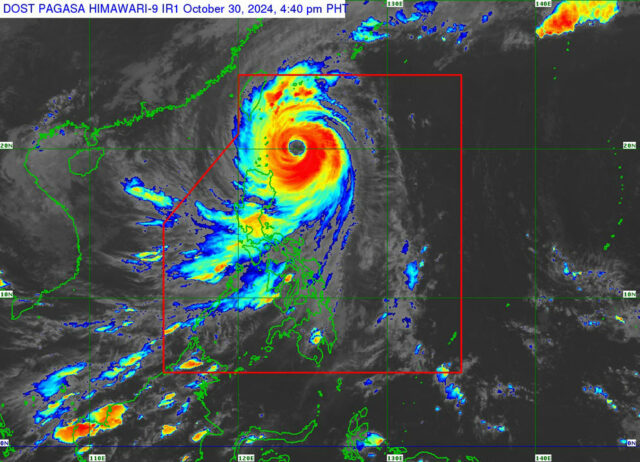
Leon weakens to Typhoon status as it passes close to Orchid Islands, Taiwan—PAGASA

PAGASA.DOST.GOV.PH

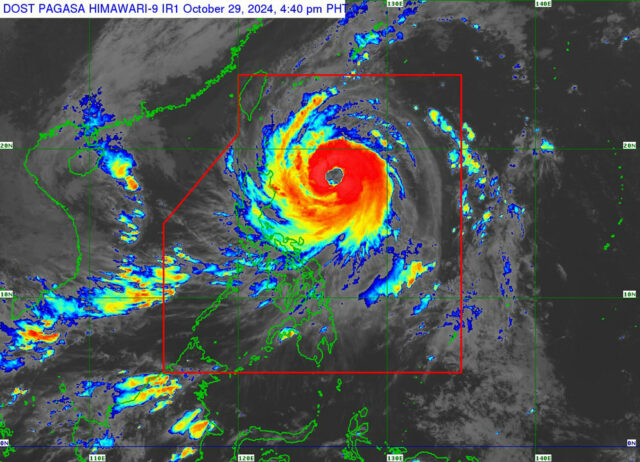
Typhoon Leon (Kong-rey) weakened from super typhoon status on Wednesday as it passed over the Orchid Islands in southern Taiwan, Philippine Atmospheric, Geophysical and Astronomical Services Administration (PAGASA) said.  

In a weather advisory released by PAGASA at 11 a.m. on Thursday, the center of Typhoon Leon was estimated to be located 155 km north of Itbayat, Batanes (22.2°N, 121.9°E), moving northwestward at a speed of 25 km/h. 

Leon was reported to have maximum sustained winds of 175 km/h near the center, with gusts reaching up to 215 km/h. 

Although Leon may have weakened, Tropical Cyclone Wind Signals (TWCS) remain in effect across various areas in Northern Luzon. 

Tropical Cyclone Wind Signal No. 3 is currently in effect for Batanes, where wind speeds of 89 to 117 km/h are expected within the next 18 hours. PAGASA warns that at this rate, the wind impact could pose a moderate to significant threat to life and property. 

Tropical Cyclone Wind Signal No. 2 is in effect for the Babuyan Islands, where wind speeds of 62 to 88 km/h are expected within the next 24 hours. The wind impact could pose a minor to moderate threat to life and property. 

Also, other areas, including Mainland Cagayan, Isabela, Apayao, Abra, Kalinga, Mountain Province, Ifugao, the northern portion of Benguet (Mankayan, Bakun, Buguias), Ilocos Norte, and Ilocos Sur, are under Tropical Cyclone Wind Signal No. 1, where wind speeds of 39 to 61 km/h are anticipated within the next 36 hours. The wind impact could pose a minimal to minor threat to life and property. 

According to PAGASA’s track and intensity outlook, Typhoon Leon is expected to make landfall along the eastern coast of Taiwan this afternoon.  

Following landfall, it will turn northeastward over the Taiwan Strait toward the East China Sea and is projected to exit the Philippine Area of Responsibility by Thursday evening or Friday morning.Edg Adrian A. Eva

CICC, DOTr warn public against online scams during ‘Undas’

STOCK IMAGE | Image by Dee from Pixabay

The rise in volume of commuters can also mean a rise in online scams, according to the Department of Transportation (DOTr) on Wednesday. 

To safeguard travelers during this period, the Cybercrime Investigation and Coordinating Center (CICC), the DOTr, and Scam Watch Pilipinas reactivated the “Oplan Bantay Lakbay: Undas 2024” to protect travelers from online fraud. 

“We have made the necessary preparations and mobilized our people to assist travelers at all our travel access points nationwide, whether by air, land, or sea,” DOTr Assistant Secretary Hector A. Villacorta said. 

The information drive aims to warn Filipinos and other tourists against different types of online scams in preparation for All Soul’s Day and the volume of passengers going to provinces. 

“While our fellow Filipinos are eager to visit the grave of our dearly departed, we sometimes also fall prey to online scammers through hotel and transportation bookings,” Cybercrime Investigation and Coordinating Center (CICC) Executive Director Undersecretary Alexander K. Ramos said. 

The department reminds the public to be careful dealing with open and unsecured Wi-Fi, fake e-wallet apps, fake customer service, fake accommodations scams, too-good-to-be-true deals, fake travel agents, charity cons, counterfeit cash, hidden CCTVs, and ticket fixers. 

Mr. Ramos added that victims of cybercrime can also report incidents or any travel concerns to the CICC’s 24/7 Inter-Agency Response Center (IARC) Hotline 1326. 

“Our response team from CICC are closely coordinating with their counterparts from DOTr,” he said. 

Online scam victims are advised to report to 1326. Meanwhile, text scams or phishing email screenshots can be reported on the eGov Super App via eReport.  

Detecting suspicious calls and text messages can also be done in the Whoscall application, Scam Watch Pilipinas Co-Founder Jocel de Guzman said. 

The information drive will run from October 30 to November 5 to ensure a safe and efficient travel experience during the commemoration.Almira Louise S. Martinez

Judge orders Elon Musk to court over $1 million giveaway in US election

ELON MUSK — REUTERS

A judge ordered all parties, including Elon Musk, to attend a court hearing in Philadelphia on Thursday in a lawsuit seeking to stop a political action committee controlled by the billionaire from awarding $1 million to registered U.S. voters in battleground states ahead of the Nov. 5 U.S. election.

The Philadelphia District Attorney’s Office filed the lawsuit on Monday. It called the giveaway by Mr. Musk’s America PAC, which backs Republican former President Donald Trump, an “illegal lottery” that enticed Pennsylvania residents to share personal data.

“It is further ordered that all parties must be present at the time of the hearing,” a judge wrote on Wednesday in an order with the Philadelphia County Court of Common Pleas. The hearing in the case was moved up to Thursday morning from Friday.

Mr. Trump faces Democratic Vice President Kamala Harris in what polls show to be a tight race for the White House.

A representative for America PAC did not immediately respond to a request for comment. Musk’s representatives have not responded to requests for comment.

Mr. Musk promised to give $1 million each day to someone who signed his online free-speech and gun-rights petition. Legal experts consulted by Reuters last week were divided on whether the giveaway violates federal laws that make it a crime to pay or offer to pay a person to register to vote.

The Justice Department sent a letter to America PAC warning that the billionaire’s giveaways for registered voters who sign his petition may violate federal law, CNN reported last week.

The Trump campaign is broadly reliant on outside groups for canvassing voters, meaning the super PAC founded by Musk – the world’s richest man – plays an outsized role in what is expected to be a razor-thin election. – Reuters

Taiwan shuts down for arrival of strong Typhoon Kong-rey

PAGASA.DOST.GOV.PH

 – Taiwan shut down ahead of the arrival of strong Typhoon Kong-rey on Thursday with all cities and counties declaring a day off, financial markets closed and hundreds of flights cancelled for what is expected to be the largest storm by size in 30 years.

The storm is forecast to make landfall on the mountainous and sparsely populated east coast around 2:00 p.m. (0600 GMT), according to Taiwan’s Central Weather Administration, with strong winds and torrential rain affecting almost all the island.

At one point a super typhoon, Kong-rey slightly weakened overnight but remained powerful as the equivalent of a Category 4 hurricane packing gusts of more than 250 kph (155 mph), according to Tropical Storm Risk.

Taiwan’s weather administration said it would be the biggest typhoon in size to hit the island since 1996.

Administration forecaster Gene Huang said after hitting the east coast it would head towards the Taiwan Strait as a much weakened storm and urged people across the island to stay at home due to the danger of high winds.

“The size of the storm is very large and the winds are high,” he said.

Warnings for destructive winds of more than 160 kph (100 mph) were issued in the eastern county of Taitung, whose outlying Lanyu island recorded gusts above 260 kph (162 mph) before some of the wind-barometers there went offline.

Up to 1.2 meters (3.9 feet) of rainfall is expected in eastern Taiwan with destructive winds along coastal areas, according to the administration.

The defense ministry has put 36,000 troops on standby to help with rescue efforts while 1,300 people have been evacuated from high risk areas ahead of time, the government said.

Taiwan Semiconductor Manufacturing Co, the world’s largest contract chipmaker and major supplier to companies like Apple and Nvidia, said it has activated routine typhoon alert preparation procedures at all its factories and construction sites.

“We do not expect significant impact to our operations,” it said in an emailed statement.

Taiwan’s transport ministry said 298 international flights had been cancelled, along with all domestic flights and 139 ferry services to and from outlying islands.

Taiwan’s high speed railway, which connects major cities on its populated western plains, continued to operate with a much reduced service.

In the capital Taipei, the city government said overground parts of the subway system had stopped operations as the wind was too strong.

The government has warned people to stay away from the mountains and the coast.

Kong-rey is forecast to graze China along the coast of Fujian province on Friday morning.

Subtropical Taiwan is frequently hit by typhoons. The last one, Typhoon Krathon, killed four people earlier this month as it passed through the south of the island. – Reuters

China tells carmakers to pause investment in EU countries backing EV tariffs, sources say

Workers inspect dual-mass flywheels at the production line of an auto parts factory in Nanjing, Jiangsu province, China June 27, 2024. — REUTERS

 – China has told its automakers to halt big investment in European countries that support extra tariffs on Chinese-built electric vehicles, two people briefed about the matter said, a move likely to further divide Europe.

The new European Union tariffs of up to 45.3% came into effect on Wednesday after a year-long investigation that divided the bloc and prompted retaliation from Beijing.

Ten EU members including France, Poland and Italy supported tariffs in a vote this month, in which five members including Germany opposed them and 12 abstained.

Chinese automakers including BYD, SAIC, and Geely were told at a meeting held by the Ministry of Commerce on Oct. 10 that they should pause their heavy asset investment plans such as factories in countries that backed the proposal, said the people.

They declined to be named, as the meeting was not public.

Several foreign automakers also attended the meeting, where the participants were told to be prudent about their investments in countries that abstained from voting and were “encouraged” to invest in those that voted against the tariffs, the people said.

Geely declined to comment. SAIC, BYD and the commerce ministry did not immediately reply to requests for comment.

The move by Chinese authorities to suspend some investment in Europe would suggest the government is seeking leverage in talks with the EU over an alternative to tariffs, keen to avoid a sharp fall in EV exports to the key market.

Europe accounted for more than 40% of EVs shipped from China in 2023, according to Reuters’ calculations using data from the China Passenger Car Association.

Given 100% tariffs on Chinese-made EVs in the United States and Canada, a drop in EV exports to Europe would risk deepening overcapacity Chinese automakers face in their home market.


INVESTMENTS IN EUROPE

During a visit to China by Spanish Prime Minister Pedro Sanchez last month, a Chinese company agreed to build a $1 billion plant in Spain to make machinery used for hydrogen production. Spain was one of the 12 EU states that abstained.

Italy and France are among EU countries that have been courting Chinese automakers for investments, but they have also warned of the risks that a flood of cheap Chinese EVs pose to European manufacturers.

State-owned SAIC, China’s second-largest auto exporter, is choosing a site for an EV factory in Europe and has been separately planning to open its second European parts center in France this year to meet growing demand for its MG-brand cars.

An aide to France’s junior trade minister Sophie Primas said they had no comment to make ahead of her trip to China next week.

The Italian government is in talks with Chery, China’s largest automaker by exports, and other Chinese automakers, including Dongfeng Motor 0489.HK, about potential investments.

Italy’s industry ministry declined to comment. Dongfeng didn’t immediately respond, while Chery declined to comment.

BYD is building a plant in Hungary, which voted against the tariffs. The Chinese EV giant has also been considering relocating its European headquarters from the Netherlands to Hungary due to cost concerns, two separate people with knowledge of the matter said.

Even before Beijing issued its guidance, Chinese companies were cautious about independently setting up production sites in Europe, as it requires large sums of investment and a deep understanding of local laws and culture.

The automakers were also told at the Oct. 10 meeting that they should avoid separate investment discussions with European governments and instead work together to hold collective talks, the people said.

The directive follows a similar warning in July when the commerce ministry advised China’s automakers not to invest in countries such as India and Turkey, and to be cautious with investments in Europe. – Reuters

BOJ keeps rates steady, puts focus on global risks

WIKIPEDIA.ORG

 – The Bank of Japan maintained ultra-low interest rates on Thursday and signaled the need to scrutinize global economic developments, highlighting its focus on risks to a fragile domestic recovery in deciding when to next tighten policy.

But the central bank projected inflation to move around its 2% target in coming years, stressing its resolve to keep hiking borrowing costs if the economy sustains a moderate recovery.

“The BOJ needs to pay due attention to the future course of overseas economies, particularly the U.S. economy, and developments in financial markets,” the BOJ said in a quarterly outlook report.

“It also needs to examine how these factors will affect the outlook for Japan’s economic activity and prices, the risks surrounding them, and the likelihood of realizing the outlook.”

The phrases were added to the report’s portion explaining the BOJ’s policy guidance, which also repeated that the bank would continue to raise rates if the economy and prices move in line with its forecasts.

As widely expected, the BOJ kept short-term interest rates steady at 0.25% at its two-day meeting that ended on Thursday.

The board cut its core consumer inflation forecast for fiscal 2025 to 1.9% from 2.1% in the previous estimate in July, but said risks were skewed to the upside for that year. It kept unchanged its fiscal 2026 core inflation forecast at 1.9%.

It also saw “core-core” inflation, which strips away the effect of fuel costs and is closely watched by the BOJ as a key gauge of demand-driven price moves, hit 1.9% in fiscal 2025 and 2.1% in 2026 – both unchanged from July.

The yen remained under pressure on the BOJ’s decision to keep ultra-low rates, standing at 153.34 JPY=EBS versus the dollar. The benchmark 10-year government bond yield was little changed after the announcement.

The report repeated the BOJ’s view that it expects underlying inflation to converge around 2% some time around late 2025 or beyond, as service prices continue to rise moderately.

“The decision was as expected as it was likely hard for the BOJ to hike rates at this timing. The BOJ probably won’t be able to shift policy until the political situation stabilizes,” said Kazutaka Maeda, an economist at Meiji Yasuda Research Institute.

“I still think there’s a chance of a December rate hike,” though there is an increasing risk of the timing being delayed due to uncertainty over the domestic political situation and the outcome of the U.S. presidential election, he said.

Markets will focus on Governor Kazuo Ueda’s post-meeting briefing, scheduled to be held at 3:30 p.m. (0630 GMT) for clues on the timing and pace of further interest rate hikes.

The BOJ ended negative rates in March and raised short-term rates to 0.25% in July on the view Japan was making progress towards sustainably achieving its 2% inflation target.

Ueda has repeatedly said the BOJ will keep raising rates if the economy moves in line with its forecast. But he has also said the bank was in no rush as inflation remained moderate.

Data released on Thursday showed Japan’s factory output and retail sales rose in September, suggesting the economy was on track for a moderate recovery.

The ruling coalition’s loss of a majority in a weekend election has heightened concerns about policy paralysis, which could raise the hurdle for additional rate hikes, analysts say.

A slim majority of economists polled by Reuters expect the BOJ to forgo a hike this year, though most expect one by March. – Reuters

KUKA HOME is now at OUR HOME

Gallway Accent Chair

KUKA HOME and OUR HOME launch an exclusive furniture collection featuring KUKA’s luxurious chairs, designed to cater to diverse tastes and preferences through exceptional craftsmanship, quality materials, and modern design.

Gent Accent Chair

Dedicated to enhancing everyday moments, KUKA’s beautiful and functional furniture serves as a backdrop to life’s important experiences, contributing to lasting comfort and happiness. Each KUKA chair embodies a unique personality, ensuring a perfect fit for everyone.

Gian Accent Chair

Founded in 1982 by the Gu Family in Hangzhou, KUKA HOME has built its reputation on a foundation of traditional craftsmanship and modern design. Inspired by the rich woodworking heritage of their region, the founders aimed to merge artisanal skill with a contemporary aesthetic. Under the leadership of Jason Gu, the next generation of the family, KUKA HOME has expanded internationally while staying true to its roots in quality and craftsmanship.

Gilman Accent Chair

Each piece of KUKA HOME furniture is crafted by skilled artisans, ensuring each item is a work of art made with care. The international design team, drawing inspiration from cities like Milan, Florence, New York, Tokyo, Shanghai, and Hong Kong, incorporates diverse cultural insights into their designs, creating a unique fusion of styles.

Guelma Accent Chair

From sleek, modern designs to classic styles, each chair seamlessly blends comfort with aesthetic appeal, making it a perfect addition to any living space. This collaboration with KUKA HOME by Golden Fashion reinforces OUR HOME’s commitment to providing high-quality, stylish, and innovative furniture that caters to the needs of every customer — there’s a KUKA chair for everyone!

Giza Accent Chair

Visit OUR HOME today to find the chair that reflects your individual style, and bring home happiness with the KUKA HOME furniture collection, available exclusively at OUR HOME. For customers who prefer to shop from their homes, OUR HOME offers Call to Deliver at 0917-830-8037. Visit KUKA’s page at OUR HOME’s website. Click https://bit.ly/KukaHomeXOurHome to know more.

Greece Recliner


Spotlight is BusinessWorld’s sponsored section that allows advertisers to amplify their brand and connect with BusinessWorld’s audience by publishing their stories on the BusinessWorld Web site. For more information, send an email to online@bworldonline.com.

Join us on Viber at https://bit.ly/3hv6bLA to get more updates and subscribe to BusinessWorld’s titles and get exclusive content through www.bworld-x.com.

North Korea conducts longest ICBM test amid storm over troop deployment to Russia

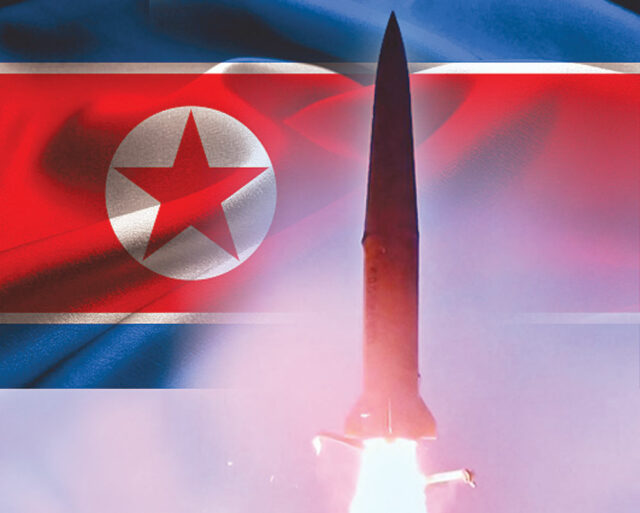
 – North Korea conducted what appeared to be its longest ever intercontinental ballistic missile test on Thursday as South Korea warned Pyongyang could seek missile technology from Russia in exchange for deploying troops to help with the war in Ukraine.

The missile was launched on a sharply lofted trajectory from an area near the North’s capital and splashed down about 300 km (190 miles) west of Japan’s Hokkaido, recording the North’s longest ever ICBM flight time.

The muscle-flexing by Pyongyang came a day after Seoul reported signs the North may test-launch an ICBM or conduct a seventh nuclear test around the U.S. presidential election on Tuesday, seeking to draw attention to its growing military prowess.

The launch drew swift condemnation from South Korea, Japan and the U.S., coming amid rising international alarm over North Korea reportedly dispatching thousands of troops to Russia to support its war in Ukraine.

“It is believed the North Korea ballistic missile is a long-range ballistic missile fired at a high angle,” South Korea’s Joint Chiefs of Staff said in a statement.

Initial analysis points to a possible use of a newly developed solid-fuel booster, it said later in a news briefing.

According to South Korea and Japan, the missile recorded a flight-time of 87 minutes, longer than the last ICBM test launch in December 2023 which clocked at 73 minutes.

The trajectory reached an altitude of 7,000 km and flew a distance of 1,000 km, the Japanese government said, calling it an ICBM-class missile.

A U.S. official told Reuters the missile was an ICBM.

The so-called lofted trajectory of a projectile flying at a sharply raised angle is intended to test its thrust and stability over much shorter distances relative to the designed range, partly for safety and to avoid the political fallout of sending a missile far into the Pacific.

The last ICBM tested in December last year, dubbed the Hwasong-18, fueled by solid-propellant and fired from a road launcher, was also launched at a sharply raised angle and gave a flight time that could translate to a potential range of 15,000 km (9,300 miles) on a normal trajectory.

That is a distance that puts anywhere in the mainland United States within range.


NORTH KOREA-RUSSIA MILITARY COOPERATION

The launch followed a storm of international condemnation over what the U.S. and others say is North Korea’s deployment of 11,000 troops to Russia and 3,000 of them close to the western frontlines with Ukraine.

Neither Moscow or Pyongyang have directly acknowledged the deployment, but Russia’s U.N. Ambassador Vassily Nebenzia on Wednesday questioned why its allies like North Korea could not help Moscow in its war against Ukraine given Western countries claim the right to help Kyiv.

U.S. Secretary of Defense Lloyd Austin and his South Korean counterpart Kim Yong-hyun condemned the troop deployment at a meeting in Washington on Wednesday, hours before the North Korean missile launch.

North Korea’s move to make its troops co-belligerents fighting alongside the Russians has the potential to lengthen the already 2-1/2 year Ukraine conflict and draw in others, Austin said.

South Korea said the deployment was a direct threat to its security because the North would gain valuable combat experience in a modern warfare and it will likely be rewarded by Moscow with “technology transfers” in areas such as tactical nuclear weapons, ICBMs, ballistic missile submarines and military reconnaissance satellites.

Shin Seung-ki who is the head of research on North Korea’s military at the state-run Korea Institute for Defense Analyses, said the longer flight time demonstrating a stronger thrust may be from improved performance of the booster – possibly with the help of Russia.

“North Korea will want to keep getting help like this, because it saves times and costs while improving performance and upgrading the stability of weapons system,” he said.

Having come under pressure over its engagement with Russia, “the intention may be to show that it will not bow to pressure, that it will respond to strength with strength, and also to seek some influence on the U.S. presidential election,” Mr. Shin added. – Reuters

ADVERTISEMENT
ADVERTISEMENT