Home Blog Page 2433

DoubleDragon gets Triple A rating for first tranche of P30-B bond program

DOUBLEDRAGON.COM.PH

LISTED property developer DoubleDragon Corp. got the highest credit rating for a P10-billion planned bond issuance in November as the company aims to expand its investor base.

It secured the “PRS Aaa” with a stable outlook for the bond offer with a base amount of P5 billion and an oversubscription option of as much as P5 billion, it said in a stock exchange filing on Thursday.

The P10-billion bond sale is the first tranche of DoubleDragon’s P30-billion multiyear retail bond issuance. The tenor is at 5.5 years, while the interest rate is at 8%, with a P50,000 minimum denomination.

The “PRS Aaa” rating is given to debt with marginal credit risk, while a stable outlook means that the rating is likely to remain unchanged in the next 12 months.

DoubleDragon’s bond issuances for 2025 and 2026 will be priced at about 7% and 6% per annum, respectively.

“The pipeline capital-raising issuances at this stage of DoubleDragon’s growth are intended to further boost its financial position by increasing its cash position,” the company said.

Meanwhile, DoubleDragon Chairman Edgar “Injap” J. Sia II said he expects the bond sale to attract retail investors.

“Since the cycle of low interest rates has begun, this retail bond offering could be the very last time in many years at 8% per annum,” he said.

This offer would also accommodate retail investors who failed to participate in the recent DoubleDragon retail bond sale, he added.

In July, the company finished a P10-billion retail bond offer that was fully subscribed five days before schedule. It was the initial segment of DoubleDragon’s shelf-registered debt program.

DoubleDragon shares gained 0.37% or 4 centavos to close at P10.82 each. — Revin Mikhael D. Ochave

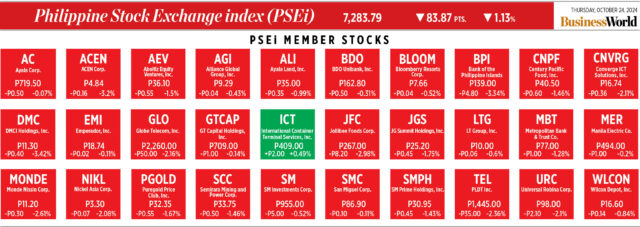
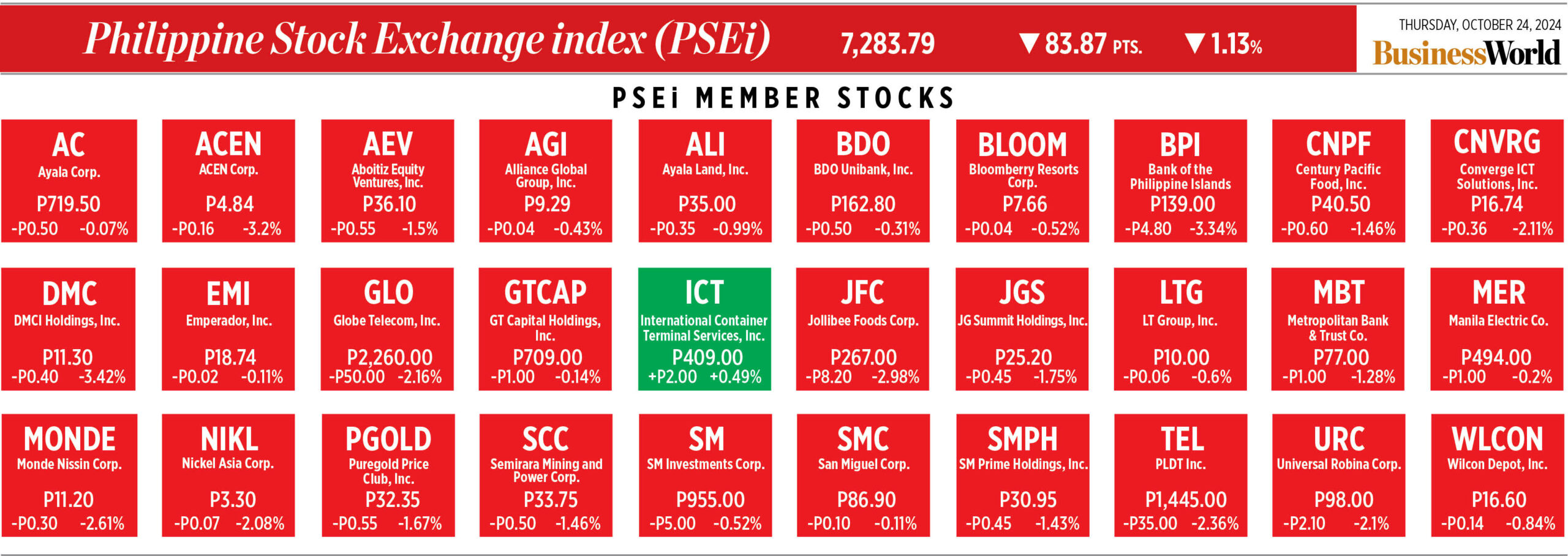
How PSEi member stocks performed — October 24, 2024

Here’s a quick glance at how PSEi stocks fared on Thursday, October 24, 2024.


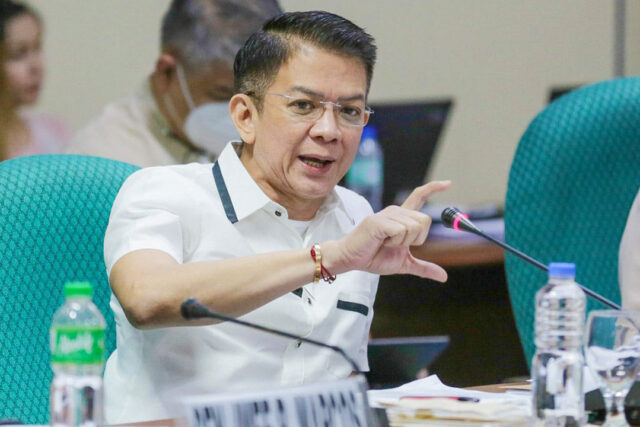
Escudero sees CREATE MORE signing next month

PHILIPPINE STAR/GEREMY PINTOLO

SENATE President Francis G. Escudero said President Ferdinand R. Marcos, Jr. is due to sign the bill that will amend the Corporate Recovery and Tax Incentives for Enterprises (CREATE) in less than three weeks.

“The President is due to sign it on Nov. 11, barring any typhoons and calamities,” Mr. Escudero said at the 13th Arangkada Philippines Forum in Pasay City on Thursday.

The measure “seeks to encourage more investors to actually come into the Philippines by providing a level, more predictable, and sustainable playing field, (thereby generating) jobs here in the Philippines,” he added.

The bill amending CREATE is known as CREATE to Maximize Opportunities for Reinvigorating the Economy (CREATE MORE).

Saying that he expects no veto from the Palace, Mr. Escudero said: “We are 90% sure that it will be signed as is because it was coordinated with the office of the President.”

He added that the 10% accounts for the possibility of last-minute adjustments.

He noted that a veto is unlikely because the Senate is closely coordinating with the Office of the Executive Secretary and the Office of the President in the legislative process.

Congress passed the CREATE MORE bill in September. It seeks to lower corporate taxes to 20% from 25% and set a local tax of 2% for registered business enterprises (RBEs).

It will also grant RBEs a VAT zero rating on local purchases, a VAT exemption on imports, and duty exemptions on imports of capital equipment, raw materials, spare parts, and accessories.

American Chamber of Commerce of the Philippines (AmCham)Executive Director Ebb Hinchliffe said that the impending signing of the CREATE MORE bill is a positive development.

“We have been advocating for that ever since the CREATE Act left gaps. And then CREATE MORE, finally, four years later, closes that gap,” Mr. Hinchliffe told BusinessWorld.

“It did not have everything we wanted, but it did clarify the tax refund and a little bit more about the work from home situation. We would prefer to make it equal with BoI to the other investment promotion agencies (IPAs). But 50-50 (onsite work share) is better than nothing,” he added.

He said AmCham had been pressing for a 100% work-from-home option, subject to a ruling by the investment promotion agencies such as the Philippine Economic Zone Authority on whether such a policy is suitable. — Justine Irish D. Tabile

Electric vehicle incentive scheme could be issued before end of year

PHILSTAR FILE PHOTO

THE Department of Trade and Industry (DTI) said it hopes to release the incentive scheme for the electric vehicle (EV) industry by year’s end.

“We aim to have the EVIS (Electric Vehicle Incentives Strategy) issued before the end of the year. This is also in response to what the President said two days ago,” Undersecretary Ceferino S. Rodolfo told reporters on the sidelines of 12th Philippine Electric Vehicle Summit 2024 on Thursday.

Earlier this week, President Ferdinand R. Marcos, Jr. said the government is considering giving incentives to businesses that invest in the local manufacturing of electric vehicles.

This incentive policy will cover potential investors in the e-mobility industry while also prioritizing Philippine companies.

The DTI, together with the Department of Science and Technology, are tasked with coming up with a framework for the incentive scheme under the Electric Vehicle Industry Development Act. 

According to the DTI, the Board of Investments will recommend an EVIS to the Fiscal Incentives Review Board for approval.

Mr. Rodolfo said EVIS aims to support the transition from Internal Combustion Engine to EVs.

The EV Incentive Strategy is expected to result in the domestic manufacture of around four million EVs in the next 10 years.

This strategy covers incentives for consumers like purchase subsidies through direct financial rebates or discounts, tax credits, value-added tax exemptions or reductions, and special electricity rates for EV charging stations, the Energy department has said.

Separately, the Electric Vehicle Association of the Philippines (EVAP) remains positive it will hit its 2.45 million unit EV sales target by 2028, despite low penetration rates.

“As you are probably aware, we are aggressively pushing for e-vehicles in the public transport sector, with a growing number of PUV drivers and operators shifting to EVs especially in the countryside,” Transportation Secretary Jaime J. Bautista said at a separate event.

EVAP President Edmund A. Araga said the Philippines is behind on its target, but EVAP is banking on the performance of two-wheeler EVs and other light electric vehicles.

“If we are going to factor in two-wheel and three-wheel vehicles, we can reach this target,” he said.

EVAP is projecting a 6.6 million EV fleet by 2030. — Ashley Erika O. Jose

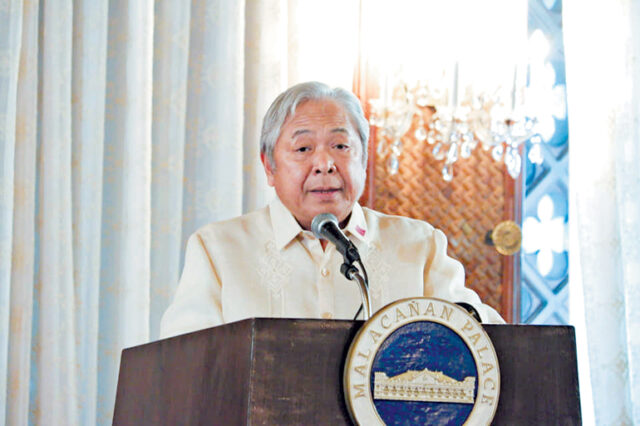
Transport dep’t sees EV perks possibly covering parts imports

Transportation Secretary Jaime J. Bautista

INCENTIVES for electric vehicle (EV) manufacturers could also include tax breaks on parts imports to boost domestic production and consumer adoption, the Department of Transportation said on Thursday.

Transportation Secretary Jaime J. Bautista said at an international motor show organized by the Chamber of Automotive Manufacturers of the Philippines, Inc. (CAMPI) in Pasay City that the tax break proposal for parts was put forward by President Ferdinand R. Marcos, Jr. as part of the expansion of incentives to be offered under the Electric Vehicle Industry Development Act (EVIDA).

Mr. Bautista said the proposal was made during a recent cabinet meeting.

“The President would like to study the possibility of extending incentives not only for whole-EV imports but also parts because we can assemble or manufacture EVs here in the Philippines. Some parts will be imported,” Mr. Bautista said.

According to Mr. Bautista, the incentive scheme is still being studied by the Department of Trade and Industry (DTI).

Executive Order No. 62, signed by Mr. Marcos on June 20, extended the zero-tariff policy on EVs and parts through 2028. The order also expanded the coverage of zero tariffs to e-motorcycles, e-bicycles, nickel metal hydride accumulator batteries, e-tricycles and quadricycles, hybrid EVs and plug-in hybrid EV jeepneys or buses.

In a recent statement, Malacañang cited the need for an incentive policy for potential investors in the EV industry.

It added that the DTI has been drafting a strategic roadmap under the EVIDA which will define the possible incentives.

EVIDA sets a quota for EV adoption in organizations with vehicle fleets. One of the law’s components is the Comprehensive Roadmap for the Electric Vehicle Industry, which aims to establish the country as an EV producer and exporter by 2040.

Separately, CAMPI President Rommel R. Gutierrez said the industry is expecting a 10% increase in EV sales this year.

“Last year, there were 10,000 hybrid and pure EV (units sold). Definitely, 10,000 units sold will be surpassed this year. We’re confident (sales will exceed last year’s by) 10%,” he said.

As of Oct. 18, 25,196 EVs were registered and served by 705 EV charging stations, according to the Palace. — Revin Mikhael D. Ochave

MIAA, BCDA still discussing terms of NAIA T3 land deal

PHILIPPINE STAR/AJ BOLANDO

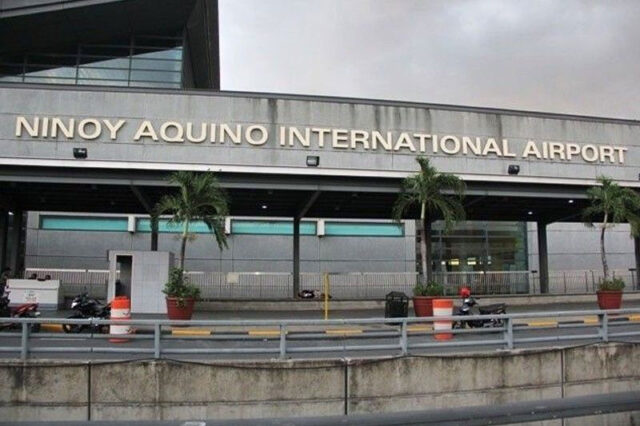
THE Department of Transportation (DoTr) said on Wednesday that the Manila International Airport Authority (MIAA) is still studying the terms of its land purchase deal with the Bases Conversion and Development Authority (BCDA) covering the leased site of Ninoy Aquino International Airport (NAIA ) Terminal 3.

On the sidelines of the EY Entrepreneur of the Year 2024 Philippines Awards Banquet, Transport Secretary Jaime J. Bautista said discussions are ongoing regarding the purchase of the lot where (T3) stands,” Mr. Bautista told BusinessWorld.

“There is no major agreement yet; nothing is final. In fact, there will be a MIAA board meeting, I think tomorrow (Thursday), where it will be discussed again,” he added.

He said that the MIAA has still not yet decided whether it will continue leasing the site or move to purchase the asset from the BCDA.

“Terms that the BCDA (has put forward) are still being studied by the board of directors of MIAA,” he said.

One of the terms BCDA is proposing is the right to repurchase the site if it ceases to be an airport, he said.

He said he is neutral on whether MIAA should buy the site or continue to lease.

“They are both government agencies. So at the end of the day, it will still be the government,” he said.

He also added that the deal will not have a big impact on airport users.

In January, BCDA President and Chief Executive Officer Joshua M. Bingcang told reporters that the 25-year lease agreement with MIAA expired last year.

The lease covers BCDA’s 60-hectare property, for which he gave a zonal value of P50 billion. — Justine Irish D. Tabile

AI seen improving ASF vaccine development

REUTERS

ARTIFICIAL INTELLIGENCE (AI) is helping improve the development of vaccines for livestock diseases like the African Swine Fever (ASF), a professor from the University of the Philippines Los Baños (UPLB) said.

“Through machine learning, we can bolster our ability to study the discovery, evolution, and diversity of viruses,” Homer Pantua, a professor with the UPLB Institute of Biological Sciences, said in a forum on Thursday.

A recent resurgence of ASF cases around the country prompted the government to fast track its vaccine procurement and rollout to hog farmers.

The Department of Agriculture (DA) allocated P350 million to procure 600,000 doses for hog farmers. The limited rollout started in Batangas on Aug. 30.

However, farmers have said onerous eligibility requirements are delaying their participation in the vaccination program.

Mr. Pantua said researchers need to optimize sample collection and data documentation to produce better data in addressing animal diseases. 

“We propose that machine learning guided applications can help support vaccine research and also help in making careful analyses of the virus origin and evolution,” he added.

He cited research findings indicating that ASF strains in the Philippines have evolved “either temporally or geographically.”

He added that better data input could allow scientists to “rapidly and objectively identify good vaccine candidates.”

So far, only the AVAC ASF Live vaccine from Vietnam has been approved by the Food and Drug Administration for a government-controlled rollout.

Last week, the DA allowed commercial hog farms to participate in the vaccination program amid delays in inoculation.

As of Oct. 18, 108 municipalities across 25 provinces had active ASF cases, according to the Bureau of Animal Industry. — Adrian H. Halili

PHL death toll hits 10 as Storm Trami continues to inundate Bicol region

PAGASA.DOST.GOV.PH

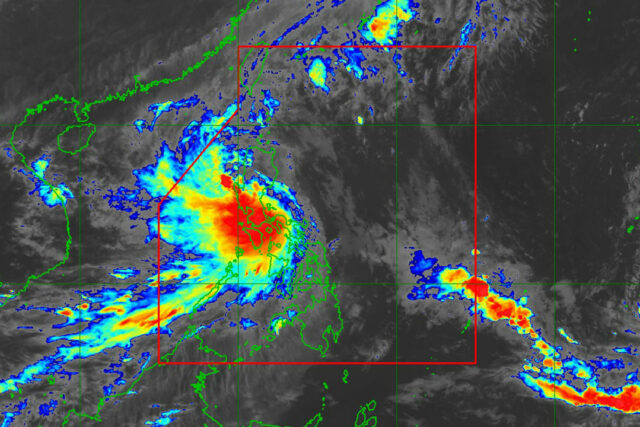
THE OFFICE of the Civil Defense (OCD) on Thursday said it had verified 10 deaths amid the onslaught of severe tropical storm Trami, locally known as Kristine, which continued to flood parts of the Bicol region.

These deaths were from the provinces of Albay, Naga, Catanduanes, and Masbate in Bicol region, La Union province in Ilocos region, and Quezon province in Calabarzon, OCD Director Edgar L. Posadas said at a Palace briefing.

Trami, which made landfall in the northern province of Isabela early Thursday morning and is dubbed as third highly devastating weather event to batter the country this year, was already over the coastal waters of Southern Ilocos, according to a 2 p.m. report of the state weather bureau.

In its 5 p.m. report, the Philippine Atmospheric, Geophysical and Astronomical Services Administration (PAGASA) forecast Trami will exit the Philippine Area of Responsibility (PAR) on Friday afternoon and circle back over West Philippine Sea (WPS) on Sunday.

“There is a developing forecast situation wherein Kristine will be looping over the West Philippine Sea on Sunday and Monday and move eastward or east northwestward towards the general direction of the PAR region,” the report read. “However, this scenario heavily depends on the behavior of the weather disturbance east of the PAR region which is expected to develop into a tropical depression within the next 24 hours,” the agency added.

PAGASA said that the storm is forecast to re-intensify over the WPS, while the likelihood of it being upgraded into a typhoon is “not ruled out.”

As of 5 p.m. Trami was last seen over the coastal waters of Santa Lucia, Ilocos Sur province, moving westward slowly. The storm was packing maximum sustained winds of 95 kilometers per hour (kph) and gustiness of up to 115 kph.

Mr. Posadas said data on deaths being released by the OCD, the implementing arm of the National Disaster Risk Reduction and Management Council (NDRMMC), undergo documentation, such as validation of death certificates and police blotters, and are “attributable” to existing disasters.

“Complementing us are the efforts of the Philippine National Police because we need their report, and then of course everything starts with the local government units (LGUs) involved,” he added, citing reports from local health workers, social workers, and disaster authorities.

Deaths reported by LGUs are forwarded to regional authorities, he added. “We report as validated.”

The Bicol Regional Police Office earlier reported 20 fatalities, but these were still under validation.

In its 8 a.m. report, the NDRRMC posted seven deaths that were still up for “validation.”

Mr. Posadas said nine people were missing in La Union, Quezon, Camarines Sur, Masbate, and Cebu.

Citing regional reports, Mr. Posadas said winds and rains were stronger before the actual landfall of Trami.

He said 17 air assets of the Philippine military were already prepositioned for relief and rescue efforts.

The NDRRMC also said there were 191 flooded areas in Calabarzon, Mimaropa, Bicol, Western Visayas, Eastern Visayas, Zamboanga Peninsula, and the Bangsamoro. 

The number of damaged houses had hit 1,007. Of which, 92 were totally destroyed, it said.

It said Trami had affected 431,738 families or over 2 million people.

In a 6 p.m. report, the OCD said Bicol region was the most affected region with affected people hitting 1.67 million.

It was followed by Eastern Visayas with 528,103 affected people, the Bangsamoro region (433,940), Soccsksargen (78,075), and Mimaropa (35,334).

Philippine Ports Authority Assistant General Manager Mark Jon S. Palomar said that as of Thursday morning, there were 7,313 stranded passengers and 1,733 Ro-Ro vessels that were unable to travel.

“We have 14 ports which are currently experiencing the effects of the storm and there are no trips as of this day.”

Social Welfare Secretary Rexlon T. Gatchalian said the number of family food packs in its warehouses had fallen to 1.982 million on Thursday morning from about 2 million on Wednesday as more local government units withdrew stockpiles amid declining flood water levels.

“Yesterday, LGUs started to withdraw… withdraw from our provincial and regional warehouses,” he said.

He said the stockpiles in the agency’s warehouses will further go down “as the water subsides and as they (LGUs) withdraw the goods.”

Mr. Gatchalian noted that LGUs are the first responders during calamities since they have their own quick response and disaster funds, and they have their own support systems.

Social welfare services have also been devolved to LGUs, he added, referring to a 2018 Supreme Court ruling that granted LGUs a larger share of the national tax.

He said National Government agencies, such as the Department of Social Welfare and Development (DSWD), will only intervene if they need additional resources.

LGUs, not the National Government, should be held accountable for the delayed provision of goods, Mr. Gatchalian said, noting that the manpower of the DWSD is not enough to deliver goods at the community-level.

“That would be the responsibility of the local government units,” he said. “Remember social welfare is devolved. DSWD personnel would not be enough to deliver to the doorstep of victims — so, that would be the responsibility of our LGUs, and it has started already.”

Meanwhile, Mr. Gatchalian said the DSWD plans to put up another repacking center in the southern province of Butuan in Caraga region by next year as part of the government’s “anticipatory actions.”

“That will serve the Mindanao and the eastern seaboard of Visayas.”

Currently, the country has two repacking centers — one in Pasay City in Metro Manila, and one in the central province of Cebu.

“Plans are also underway to look into expanding more of our packing centers to the eastern seaboard, for example the Bicol region, Quezon province and all the way to Region II.”

In a statement, Interior and Local Government Secretary Juanito Victor C. Remulla, Jr. said he had briefed the President and “provided him with critical updates on the situation on the ground.”

“He personally instructed me to ramp up preparations for the provision of emergency field hospitals and medicines, which shall be deployed in Naga and all other affected areas as soon as conditions improve.” Kyle Aristophere T. Atienza with Adrian H. Halili

Employers told not to punish workers refusing to work due to typhoon

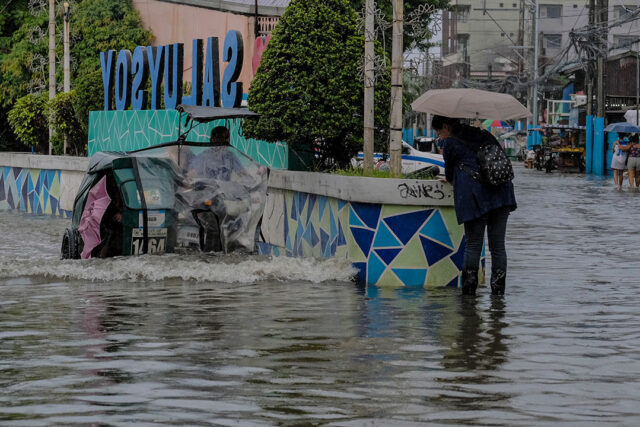
Motorists are experiencing flood along Saluysoy Road in Meycauayan, Bulacan, on Thursday due to Typhoon Kristine. — PHILIPPINE STAR/RYAN BALDEMOR

WORKERS have the right to refuse work if it would endanger their life, safety, and health, labor group Federation of Free Workers (FFW) reminded employers as the country is hit by another “highly devastating” typhoon.

Severe tropical storm Trami, locally known as Kristine, has made landfall over Isabela on Thursday, according to the state weather bureau. Greenpeace Philippines described it as the “third highly devastating weather event” to hit the Philippines this year.

“Employees who cannot enter or refuse to work due to the threat of danger from calamities or similar situations should not be subjected to any administrative penalty,” FFW President Jose Sonny G. Matula said in a statement on Thursday.

The labor group leader particularly cited the Occupational Safety and Health Law, under Republic Act No. 11058, and Labor Advisory No. 17, Series of 2022, which both provided that no administrative sanctions should be imposed on employees who fail or refuse to work by reason of imminent danger resulting from weather disturbances and similar occurrences.

Trami has placed the Bicol, Calabarzon (Cavite, Laguna, Batangas, Rizal, Quezon), and Eastern Visayas regions under a state of calamity after its torrential rains wreaked havoc, leading to several flash floods.

Local governments may use their calamity funds for faster relief operations under a state of calamity. A price freeze on essential goods has also been imposed.

“As we enter a season prone to extreme weather conditions, it is vital that all employers remain mindful of the safety and welfare of their workers,” Mr. Matula added.

He reminded that the advisory explicitly states that when there is an imminent danger to life or safety due to natural disasters such as typhoons, floods, or other related hazards, employees have the right to prioritize their safety without fear of reprimand, suspension, or other administrative penalties.

“We encourage all employers to take this advisory seriously, considering the unpredictable nature of weather disturbances, and to promote a safe working environment in which employees can make decisions without fear of negative consequences when their lives or safety are at risk.” — Chloe Mari A. Hufana

Main index sinks to three-week low in thin trade

PHILIPPINE STAR/KRIZ JOHN ROSALES

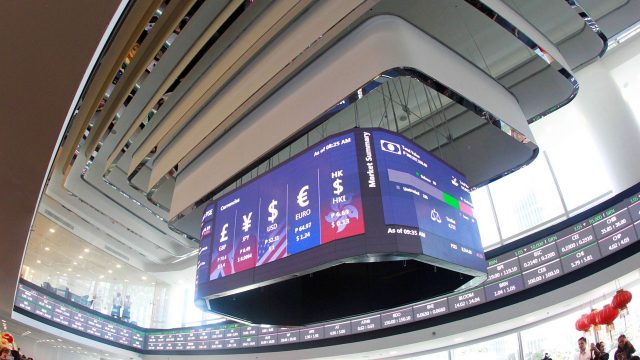
PHILIPPINE SHARES dropped to the 7,200 level on Thursday to hit a three-week low amid thin trade as the market continued to look for positive leads and with negative sentiment on Wall Street spilling over to the local bourse.

The Philippine Stock Exchange index (PSEi) dropped by 1.13% or 83.87 points to end at 7,283.79 on Thursday, while the broader all shares index lost 1.07% or 43.37 points to close at 4,007.39.

This was the PSEi’s lowest close in over three weeks or since it ended at 7,272.65 on Sept. 30.

“The local market extended its decline this Thursday as investors continued to exit amid the lack of positive catalysts. Negative spillovers from Wall Street amid the rise in the US’ long-term Treasury yields also weighed on the local bourse,” Philstocks Financial, Inc. Senior Research Analyst Japhet Louis O. Tantiangco said in a Viber message. “The exit of foreign funds also contributed to the fall.”

Value turnover decreased to P3.8 billion on Thursday with 776.65 million issues changing hands from the P4.52 billion with 1.2 billion shares traded on Wednesday.

Meanwhile, net foreign selling rose to P206.43 million on Thursday from P159.24 million on Wednesday.

“Local sentiment was pulled down, tracking global sentiment amid rising yields and economic uncertainties,” Regina Capital Development Corp. Head of Sales Luis A. Limlingan said in a Viber message. “Philippines shares marked another loss as the Dow and S&P 500 fell, pressured by the 10-year Treasury yield’s rise to 4.25%.”

Wall Street closed lower on Wednesday, as climbing Treasury yields pressured mega-cap stocks and investors grew less confident about strong rate cuts from the Federal Reserve, Reuters reported.

Benchmark 10-year US Treasury yields reached a three-month high with investors reassessing the Fed rate cut outlook over the next few months against the backdrop of strong economic data and the upcoming presidential election.

The Dow Jones Industrial Average fell 409.94 points or 0.96% to 42,514.95; the S&P 500 lost 53.78 points or 0.92% to 5,797.42; and the Nasdaq Composite lost 296.47 points or 1.6% to 18,276.65.

US markets are near record-high levels, but a combination of earnings, a changing monetary policy outlook and the upcoming presidential election will test the rally and could stoke volatility, analysts said.

Back home, all sectoral indices closed lower on Thursday. Financials went down by 1.76% or 42.52 points to 2,364.47; industrials dropped by 1.71% or 172.66 points to 9,904.09; mining and oil declined by 1.24% or 108.67 points to 8,597.95; property sank by 1.01% or 29.26 points to 2,868.35; holding firms lost 0.66% or 41.40 points to end at 6,148.86; and services retreated by 0.57% or 12.95 points to 2,224.81.

Market breadth was negative as decliners outnumbered advancers, 139 versus 53, while 53 names closed unchanged. — R.M.D. Ochave with Reuters

NAIA baggage issue should be ‘urgently’ resolved — Poe

Passengers are seen at the Ninoy Aquino International Airport Terminal 3 in Pasay City in this file photo. — PHILIPPINE STAR/RYAN BALDEMOR

THE SAN MIGUEL-LED New NAIA Infrastructure Corp. (NNIC) must resolve issues in the 20-year-old baggage handling system in the country’s main airport as part of its rehabilitation efforts after reports of over 800 pieces of luggage being left behind earlier this week, a Philippine senator said on Thursday.

“Whoever is responsible must address the matter urgently as what’s piling up in the airport are valuable belongings of passengers,” Senator Mary Grace Natividad S. Poe-Llamanzares said in a statement.

“The technical issue must be resolved with the rehabilitation of NAIA. While at it, the airport management and the airline owe it to the affected passengers to be helpful and show they are not sitting on the problem.”

Ms. Poe also said the passengers affected by the technical glitch should be given a refund and additional compensation for the inconvenience.

“Passengers pay for their checked-in bags as required by the airline company. They deserve a refund and more for the trouble caused,” she said.

Budget carrier Cebu Pacific earlier this week reported about 821 bags were left behind due to a technical glitch in the system, affecting more than 400 passengers.

The baggage delay was due to the malfunctioning 20-year-old baggage handling system, which the NNIC plans to replace as part of its efforts to rehabilitate NAIA.

“NNIC has already procured a new, advanced system with additional redundancy measures set to be implemented to prevent future disruptions and enhance operational efficiency,” NNIC said in a statement on Tuesday.

RETHINK AIRPORT FEES
In a separate statement, consumer advocacy group CitizenWatch said the recent luggage fiasco at the Ninoy Aquino International Airport (NAIA) Terminal 3 showed that airport fee hikes are unreasonable due to these persistent issues that inconvenience hundreds of passengers.

“While we all hope for immediate improvements of our airports and aviation facilities, we call on the public to be partners of change and become proactive voices in sharing our grievances and advancing public interest,” CitizenWatch co-convenor Jose Christopher Y. Belmonte said. “The airport fee hikes need a serious rethink.”

The NNIC, which includes the operator of South Korea’s main international airport, took over NAIA operations on Sept. 14, with plans to improve the airport’s roads, expand its terminal and capacity, and upgrade the passenger experience.

Beginning Oct. 1, the NNIC started collecting higher landing and take-off fees from airlines, which are charges levied for the use of airport facilities and services.

South Korean Ambassador to the Philippines Lee Sang-hwa earlier told BusinessWorld that he is banking on Incheon International Airport Corp.’s technical know-how to bring NAIA to a global standard of quality.

NAIA ranked 199th out of 239 airports in 69 countries in the 2024 global airport ranking report released by flight compensation company AirHelp.

SMC President and Chief Executive Officer Ramon S. Ang had said the conglomerate expects to show results and improvements to the airport within six months.

It said it would be spending about P3 billion and P5 billion on a new off-ramp from NAIA Expressway to Terminal 3.

The Department of Tourism has set a target to post 7.7 million international tourist arrivals this year.

As of Aug. 7, the Philippines has received 3.62 million inbound visitors, with 92% of them being foreigners, the DoT said last month.

“It’s unacceptable that hundreds of luggage are stuck at the airport due to a technical glitch,” Ms. Poe said.

“A delayed flight is a bad thing; a mishandled or delayed luggage is equally disappointing.” — John Victor D. Ordoñez

Gov’t told to form agency for education oversight

RUBEN RODRIGUEZ-UNSPLASH

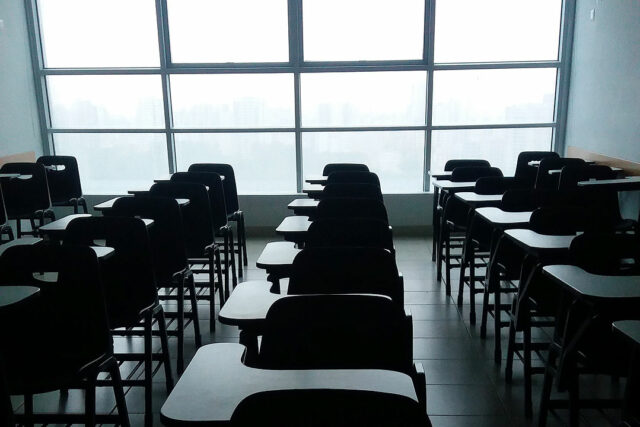
PHILIPPINE LAWMAKERS should consider creating an independent commission tasked to oversee the country’s education agencies to improve schooling quality amid its current dismal state, a state think-tank said.

The proposed commission would help improve education quality by closely monitoring the effectiveness of policies being implemented by the state’s education agencies, attributing learning failures to the lack of an accountability system governing them, The Philippine Institute for Development Studies (PIDS) said in a discussion paper published on Oct. 18.

“Creating a new independent agency dedicated to educational oversight appears to be a straightforward solution to improving the governance of the PETS (Philippine Education and Training System),” the paper read in part, “The study recommends that the government explore the value of a legislative bill that would develop and establish [the] independent body.”

The Philippine education system is in dire straits as Filipino students emerged as among the weakest in math, reading, and science, according to the 2022 Program for International Student Assessment. The Philippines also ranked 77th out of 81 countries and performed worse than the global average in all qualities. 

The same report also found that fifteen-year-old Filipino students ranked 63rd out of 64 countries in terms of creative thinking.

Establishing an oversight committee tasked to monitor the Department of Education (DepEd), Commission on Higher Education (CHED), and Technical Education and Skills Development Authority (TESDA) would whip them straight, encouraging more effective educational reforms towards resolving the learning crisis, according to the PIDS.

LACK OF CLARITY
“Some of these issues have fallen through the cracks due to the lack of clarity as to which agency is responsible and how to hold it accountable for the country’s poor educational performance,” PIDS stated, referring to a lack of coordination among the agencies and seamless curriculum across educational levels for learners.

“This strategy… is foundational for successful development and implementation of other reforms that require strong institutional incentives,” the think tank added.

The proposed commission would conduct regular assessments of the education agencies, measuring the “quantity and quality of outputs, outcomes, as well as the cost-effectiveness of achieving them,” according to a draft bill included in the paper.

It should also establish objective assessment criteria and indicators for DepEd, CHED, and TESDA, with the commission determining how aligned their projects and reforms are to the country’s socioeconomic plans, PIDS added.

The proposed oversight commission could be integrated with the Commission on Audit (CoA), it said, noting similarities between their mandates. “…This integration could provide a formal legal basis for [the commission] within CoA to perform audits on educational institutions such as DepEd, CHED, and TESDA.”

The PIDS report, titled “The Impact of Trifocalization on Philippine Education Outcomes and the Coordination Issue,” was prepared by Vicente B. Paqueo, Johanna Marie Astrid A. Sister, Solomon R. Sarne, Marie Louissie Ynez U. Lavega, Aniceto C. Orbeta, Jr., Michael R.M. Abrigo, and Ricxie B. Maddawin. — Kenneth Christiane L. Basilio