Home Blog Page 2425

Alsons Power’s first RE project set for September launch

By Sheldeen Joy Talavera, Reporter

ALSONS Power Group, the power arm of the Alcantara Group, said it will commence commercial operations of its P5.5-billion hydropower project in Sarangani province next month.

“Our first renewable energy (RE) project, the 14.5-megawatt (MW) Siguil Hydro Power Plant in Maasim, Sarangani, is scheduled to begin commercial operations this September,” Alsons Power Chief Executive Officer Antonio Miguel B. Alcantara told BusinessWorld last week.

The hydropower project is expected to generate 95,000 megawatt-hours per year and will be capable of powering approximately 41,000 households.

Mr. Alcantara noted that the road network established to support the operation and maintenance of the 23-kilometer water conveyance system of the power station “improved access to and from various indigenous settlements in the area.”

“This facilitates the transport of goods and produce from the hinterlands to the town center, significantly enhancing the incomes of the people around the power plant,” Mr. Alcantara said.

In addition to the Siguil hydropower project, the company is also developing a hydropower project along the Sindangan River in Zamboanga del Norte and Zamboanga del Sur, as well as another hydropower project in Negros Occidental.

These projects are expected to begin construction by early next year.

Mr. Alcantara mentioned that these projects are part of a pipeline of nine hydropower projects which the company aims to complete over the next five years.

“We also plan to start the construction of our first large-scale solar project by the end of 2024, the first of several intended to establish Alsons Power as a major player in solar power generation,” he said.

Currently, Alsons’ power generation facilities are primarily concentrated in Mindanao. In total, Alsons’ portfolio comprises four power facilities with a combined capacity of 468 MW.

Road Rave

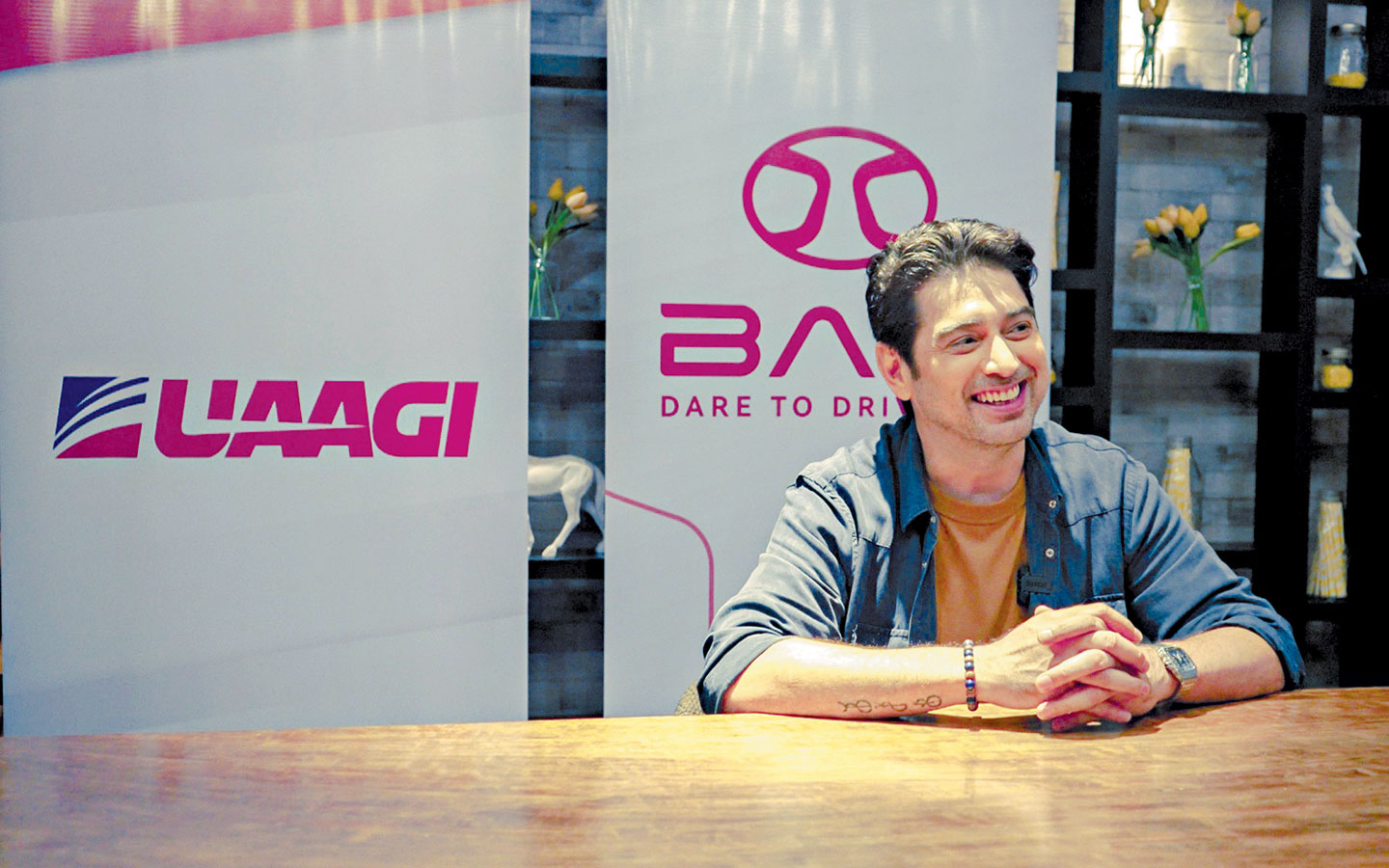
Actor and adventurer Ian Veneracion poses with his BAIC B60 Beaumont 4x4 SUV. — PHOTO BY KAP MACEDA AGUILA

Veteran celebrity Ian Veneracion talks about when and what he first drove, why he chose the BAIC B60 Beaumont, and everything else

By Joyce Reyes-Aguila

ACTOR AND musician Ian Veneracion has been asked to endorse — and lend his credibility and celebrity — to a myriad of brands over the years, but not every brand got his buy in.

“I do not want to endorse products that I do not believe in,” says the seasoned veteran, with over 80 films and television projects to his name. “It’s hard to be associated with something, because your name and reputation are on the line.”

So, when automotive distributor United Asia Automotive Group, Inc. (UAAGI) which handles, among other auto brands, Beijing Automotive Industry Holding Company, Ltd. (BAIC), invited the actor to be its face in the Philippine market, Ian did his usual vetting before signing up with the brand.

“I wasn’t familiar with BAIC then,” he reveals. “Then, I learned about its strategic partnerships with Mercedes-Benz, Daimler, and Hyundai. UAAGI showed the brand’s history and walked me through their manufacturing process. I requested for a test drive, too.”

That test would turn into a long-term drive for the actor who, aside from being BAIC’s brand ambassador today, is also now a proud owner of one its SUV products, the B60 Beaumont. “When I saw the unit, I was surprised because it has so many luxury appointments,” he shares about the seven-seater. “I like the fact that its engine is a diesel hybrid. It’s perfect for me because I have kids and I bring a lot of things when I go camping and stuff.”

Ian is known to enjoy the outdoors. The licensed pilot is also certified in skydiving, paragliding, scuba diving, and more. “Land, sea, and air,” he shares to “Velocity” with a grin. “That’s why a big SUV is perfect for me. I like driving myself outside the city, even if I have a driver with me.”

The actor’s lifestyle takes him from the most rugged locations outside the metro to film sets and evening mixers where he walks the red carpet in a tuxedo. “The B60 is both luxurious and rugged,” he asserts. “It’s very versatile. Imagine what it adds to your image, especially when you’re dressed for events. But at the same time, it does not matter if I’m in the mountainside and it’s covered in mud. The B60 is still capable.”

He adds, “It’s really a good compromise. I like how they designed it and I just appreciate it. Its safety standards are at par with the more expensive brands. It’s really bang for the buck, basically,” Mr. Veneracion continues.

The B60 Beaumont is equipped with a 2.0-liter diesel engine mated to an eight-speed automatic transmission, with a power output of 163hp and 400Nm of torque. It boasts a 48V Hybrid Electric Assist, making it a mild hybrid.

The actor and outdoorsman told “Velocity” he actually first tried to drive at the age of 11. “I would secretly take our car out,” he reveals. “It was a Volkswagen Brasilia. That’s how I learned to drive. If you could drive a Brasilia, you could drive anything. It has a manual shift, there was no air-conditioner, and it has a carburetor. I drove it around our subdivision. And then when my father formally taught me how to drive, he brought me to a memorial park so I can learn how to stop at corners, go uphill and downhill on bridges.”

The actor, who has been in industry for over four decades, saved for his first car that he purchased at 16. “It was a box-type Mitsubishi Lancer,” he recalls. “I really enjoyed that car. I didn’t have a license at that age still though, but some of us really dream of having our first cars at that age. Eventually, I was able to appreciate more cars, the designs of these, how bigger cars are also nice to drive. I learned that every vehicle has its own strengths and weaknesses.”

Prior to driving a B60 home, Ian said the BAIC B40 also caught his attention. “I tried it during the launch where there was an obstacle course that suspended the car in the air,” he shares of his experience with the five-seater SUV. “It felt like I was in a seesaw before I descended. It’s very predictable, like the B60. You always want to know the edge of traction so you’re well-calibrated to it. I do not want to go beyond the traction limit, in terms of grip. You need to know if you still feel the suspension properly.”

Through his experience with BAIC, Ian said his apprehension in owning a Chinese car has dissipated. “I discovered for myself what ‘made in China’ means now,” he asserts. “The experience, the tooling — it’s impossible for them not to catch up with technology. It’s good that we now have a lot of car and motorcycle brands available here,” he tells. “Before, you would have to buy imported vehicles then pay for duties, taxes, and all of that. Then some of these brands did not have dealerships here in the past, so what would owners do if they needed parts or to have them serviced? It was a big problem.”

He continues, “But now almost all brands are available to us. We have many options and hopefully, eventually, more cars will become accessible to more people price-wise. Technologically, I hope more vehicles become cleaner and greener, too. I’m happy to be living in these times.”

By the way, is there anything this multi-hyphenate doesn’t do?

“I don’t dance,” he admits with a hearty laugh.

***

The B60 Beaumont is priced at P2.998 million and comes with a five-year/150,000-km (whichever comes first) warranty. BAIC dealerships are located in Alabang, Bulacan (Baliuag, Marilao), Bacolor, Iloilo, Cagayan de Oro, Davao, Zamboanga, and Tuguegarao.

SEC says 2024 company registrations to exceed previous record

BW FILE PHOTO

THE SECURITIES and Exchange Commission (SEC) said it is likely to surpass its previous record for company registrations this year.

“The SEC is on track to hit another record this year, with 27,734 firms registered as of end-June,” the commission said in an e-mailed statement over the weekend.

The SEC recorded a high of 49,506 company registrations in 2023, an increase of 15.3% from the 42,943 registrations in 2022.

The commission attributed the surge in company registrations to its digital initiatives, such as the Electronic Simplified Processing of Application for Registration of Companies and the One-Day Submission and Express Registration of Companies.

With this, the SEC said it will push for more solutions to support the development of the country’s capital market.

“The SEC will remain committed to providing innovative solutions that will enable a robust capital market and will support the growth of businesses and the Philippine economy,” SEC Chairperson Emilio B. Aquino said.

The SEC recently launched five programs to support the growth of the capital market. These programs include the SEC Zuper Easy Registration Online, which allows for the digital authentication of system-generated forms through the Electronic Submission Authentication Portal.

The SEC also introduced the Foreign Investment Registration Station Green Lane Unit, which provides a dedicated lane for the corporate registration applications of foreigners.

The commission also unveiled the Electronic Application for Modification of Entity Data online portal, which processes amendments to company information, as well as the Swift Corporate and Other Records Exchange protocol, which handles requests from partner regulatory and enforcement agencies for corporate data. — Revin Mikhael D. Ochave

Electrifying and enlightening

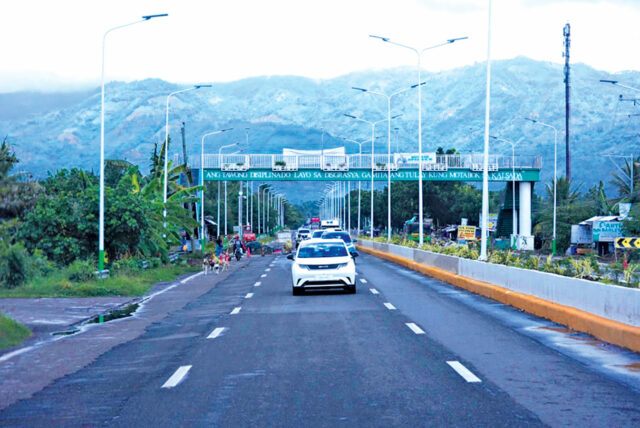
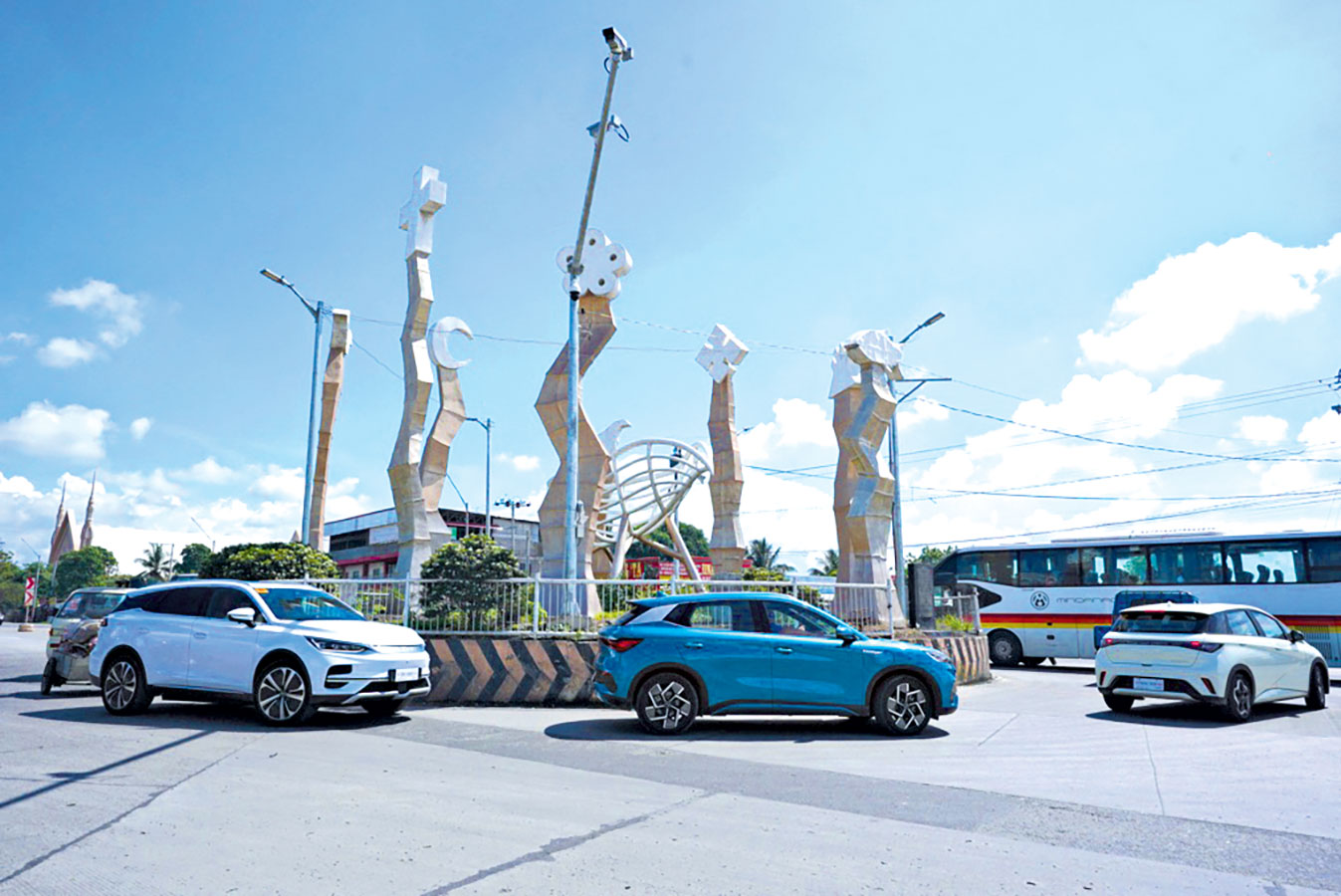
A queue of BYD vehicles hit the road in Davao. — PHOTO FROM BYD PHILIPPINES

Learning about the BYD Atto 3 and misconceptions on EV ownership

By Dylan Afuang

ROLLING VIEWS of hills and vistas are the backdrop of the winding national highways connecting General Santos City and Davao City. The tarmac and the discipline of Mindanaoan motorists seemed smooth and impeccable, too. And these all added to the enjoyment of driving BYD’s range of capable cars to the BYD Davao City dealership.

This was when BYD Cars Philippines brought members of media from Manila to witness the grand opening of the ACMobility-led company’s first dealership in Mindanao. Aside from the occasion, the company had us test-drive the electric vehicle brand’s Dolphin, Atto 3, and Tang models.

The company also debunked misconceptions Philippine consumers may feel toward EV ownership, like the high maintenance costs of such vehicles, short range, and charging infrastructure.

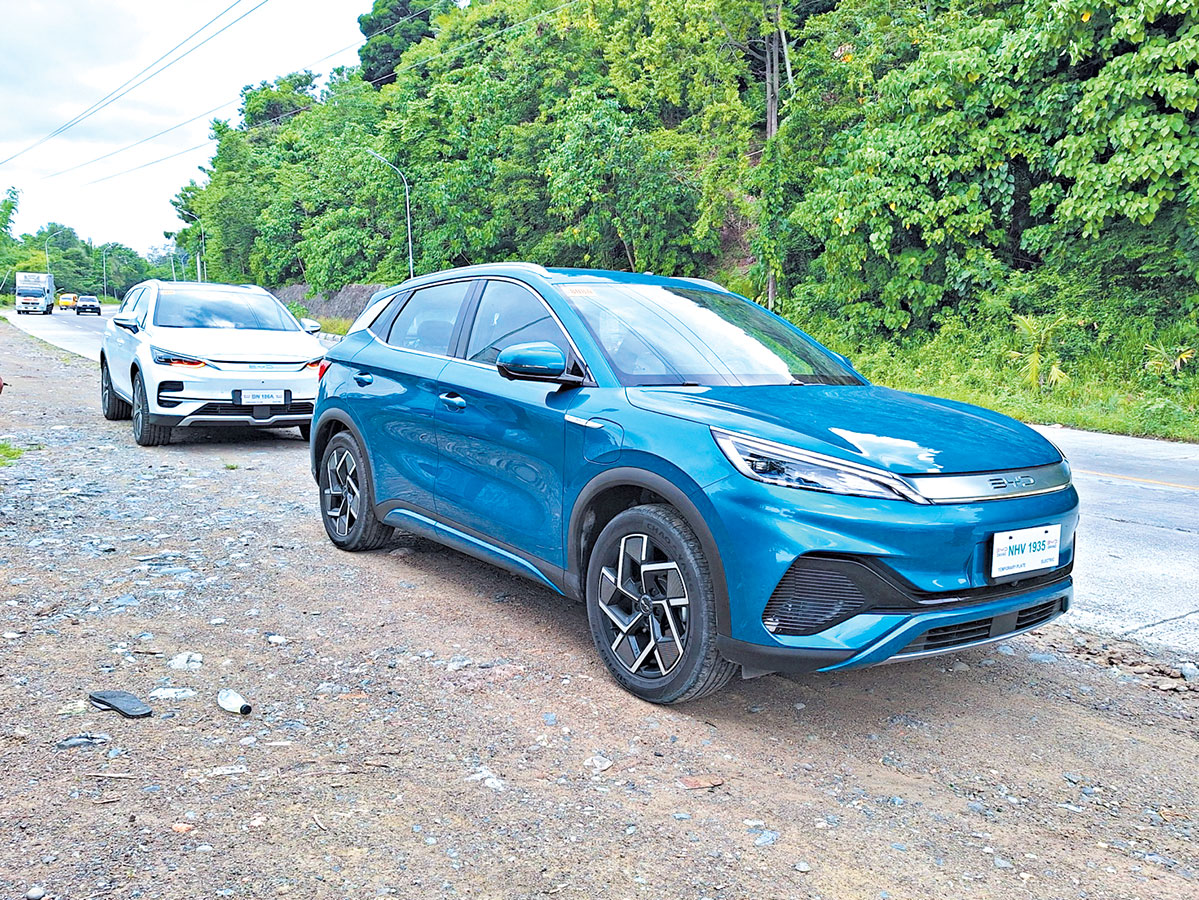
For the drive, other members of the group received the electric vehicle brand’s Dolphin subcompact hatchback and Tang luxury crossover, while we lucked into the Atto 3 Premium (P1.798 million). The crossover is the EV brand’s best-selling model here, according to ACMobility Corporate Communications Manager Mikko David.

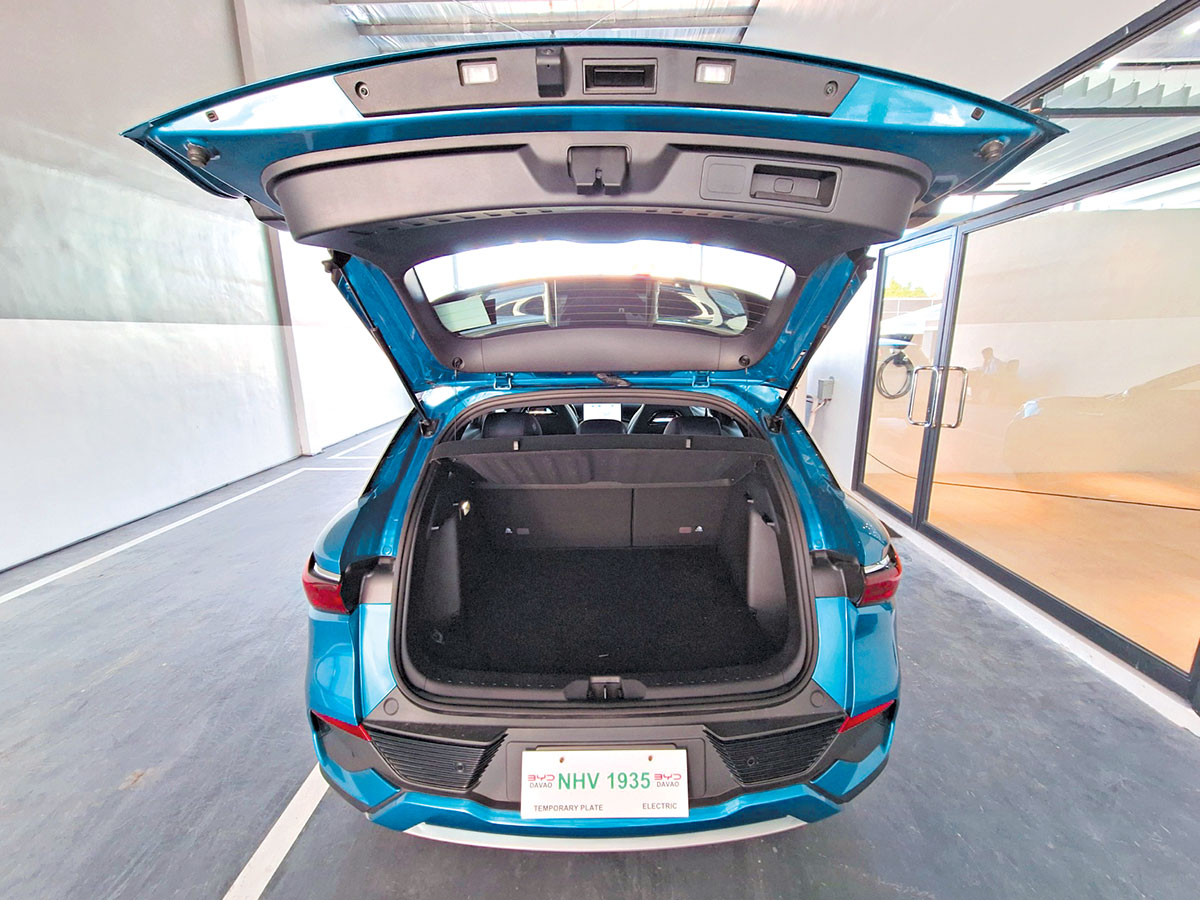
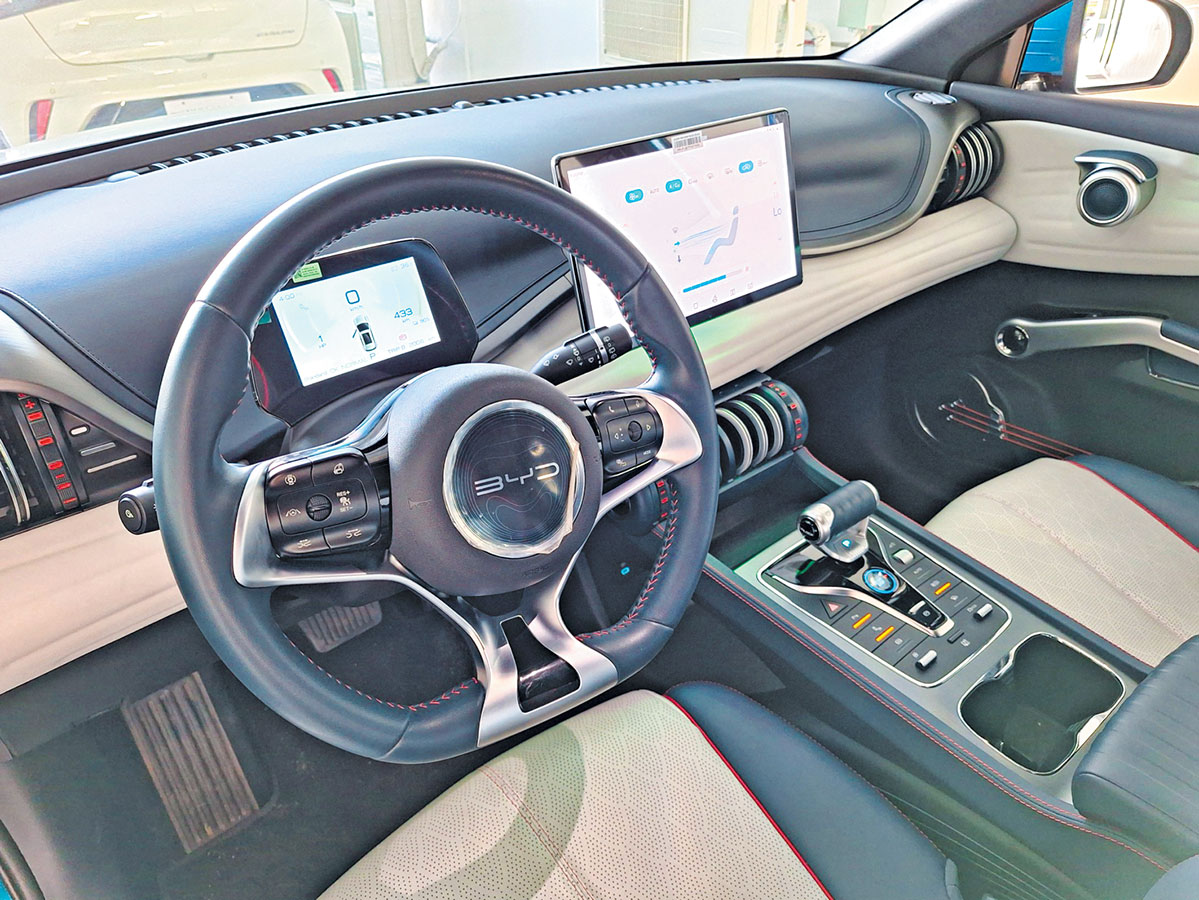
A single electric motor (delivering 204hp and 310Nm of torque) drives the Atto 3’s front rollers. The 60.5-kWh, 400-V lithium iron phosphate cell is a Blade Battery kind — which, BYD boasted, is its signature battery design whose modules are packed in an array within structure in order to make a smaller and lighter package that results in a manufacturer-claimed range of 420km.

Our trip spanned only roughly 160km, but we did feel reassured to drive spiritedly in an EV that carried an abundance of energy reserve. On long, almost empty stretches and during overtaking, the Atto 3 willingly got up to speed with a hint of torque steer. The car’s brakes bit hard as they wrested energy back to the battery, and this was matched with a stable ride quality.

Besides proving its driving attributes, the Atto 3 represented the answers regarding the misconceptions on EV ownership. Mr. David enumerated these during the opening of the BYD Davao City outlet located on the city’s JP Laurel Avenue.

The executive explained that with the Atto 3 (priced from P1.598 million for the Dynamic model), a motorist could save 70% or P69,069 in maintenance costs over five years compared to an ICE vehicle. To make these estimates, the company compared the prevailing prices of electricity per kWh versus prices of fuel per liter.

Also, since an EV employs fewer moving parts than an ICE, costs of routine servicing for the former could be lower, too. Within five years, the Atto 3 would necessitate its owner to shell out P221,273 — compared to P755,169 for a conventionally powered model, per the ACMobility executive.

The Atto 3 had also dispelled the supposed limited range of an EV, and that the charging stations in the Philippines are few and far between.

The Atto 3, without recharging, was able to travel over 300km from Manila to Baguio, one way, in a media drive held this year. ACMobility’s nationwide charging network now has a total of 70 charge points in 31 locations, the company noted in a release.

ACEN keen on 4th green energy auction

ACEN Corp., the listed energy arm of the Ayala group, is interested in participating in the fourth round of the green energy auction (GEA), which involves energy storage systems, the company’s president said.

“Depending on the size of the bid and the tenor, we’re interested but hopefully there’s enough time to prepare… for the project itself, the commercial operations date,” ACEN President and Chief Executive Officer Eric T. Francia told reporters on the sidelines of an event last week.

The Department of Energy (DoE) announced last week that it would conduct GEA-4 in the fourth quarter this year, which is designed to cover integrated renewable energy and energy storage systems (IRESS).

As described by the DoE, IRESS is “a comprehensive energy solution that combines renewable energy technology with energy storage systems.”

Energy storage systems include batteries, flywheel, or pumped storage hydropower systems.

“By combining renewable energy and energy storage, IRESS enhances the stability and reliability of the energy system, enabling a more consistent and efficient supply of power,” the DoE said.

Mr. Francia said that the company’s participation would depend on the rules and tenor, as it is not easy to build an IRESS.

“If it’s gonna be just one year, I don’t think anyone can build an IRESS plant in one year. Unless you already have the solar plant and then you will just need to add the battery,” he said.

He also said that ACEN “had a headstart” but not all of its projects are ready.

Currently, ACEN holds around 4.7 gigawatts (GW) of attributable capacity across the Philippines, Vietnam, Indonesia, India, and Australia. The company also has one GW of signed agreements and secured competitive tenders.

The DoE said it will release the indicative timeline of GEA-4 activities in the coming months, when it expects to issue a notice of auction.

The GEA program aims to promote renewable energy as one of the country’s primary sources of energy through competitive selection.

GEA was first conducted in 2022 and attracted 1,996.93 MW worth of bids for renewables, while GEA-2 was held in 2023 and awarded 3,440.756 MW. — Sheldeen Joy Talavera

Filipino art deco the theme of Jor-El Espina’s 20th anniversary designs

HEADS turned at Casa Buenas as Filipino fashion designer Jor-El Espina unveiled his latest designs for ready-to-wear pieces, all made from local fabrics and boasting art-deco elements.

The collection is meant to kick off a series of pocket celebrations that will lead up to his 20th anniversary in the fashion business next year. Some of the pieces will be showcased in the main show scheduled for May of 2025.

The show, Adaptation: 20 years of design, filled the restaurant space with fashion personalities, well-known industry clients, and the designer’s friends and family, some of whom came all the way from Iloilo.

Mr. Espina grew up in that province and opened an atelier there in the mid-2000s. His Iloilo clientele consisted mainly of relatives and their friends.

Notably, the bespoke evening wear he designed at the time already incorporated local fabrics such as piña, abaca, and hablon — way before many Filipino designers made the switch from imported to local.

The collection celebrates these origins. At the preview BusinessWorld attended, the runway became a colorful homage to locally made tops, tapis, and cover-ups that adorned the models’ bodies in distinctly modern silhouettes.

Many designs featured mother of pearl, giving the pieces a smooth and crystalline quality, as well as intricate beadwork for a classic feel.

This unique take on Philippine artistry woven into contemporary designs is pretty much Mr. Espina’s claim to fame. In 2017, the artisanal trade fair ArteFino saw his signature bomber jacket-barong hybrid, the Bomberong jacket, garner widespread attention.

The fair’s 2024 edition, slated for Aug. 22 to 25, will once again have a showcase — this time of the art deco-inspired, Filipino fabric pieces in the newly unveiled collection.

“I actually don’t design entire looks. I design piece by piece, per skirt or top, and then make a look after I complete it,” Mr. Espina told BusinessWorld after the preview. “My direction is retail with a designer touch, so people can buy my pieces off the rack and pair it with others.”

As for how he incorporates local fabrics into modern styles, he revealed that his approach is genderless: “I have a diverse set of clients. There are male clients who want to wear tapis; there are female clients who want to wear barong-like tops for men. I design for all genders and I design for myself.”

He added that using a wide range of materials, from piña and hablon to mother of pearl, is an enjoyable challenge.

“I like to create things that are unusual out of them, like a modern silhouette, some beadwork, and different techniques and mixtures of fabric,” he said.

With access to online resources, beautiful materials, and talented artisans that have emerged in the wake of the “love local” movement, it is impossible not to treat fashion design as a continuous learning process. For Mr. Espina, there is a feeling of “being very new to the industry every single day.”

“I still want to learn more. I want to learn from other artists and from my clientele. They are my inspiration for everything.” — Brontë H. Lacsamana

‘Honda Helps’ extends 30% discount on select parts for Carina-affected cars

PHOTO BY KAP MACEDA AGUILA

HONDA CARS PHILIPPINES, INC. (HCPI), through its Honda Helps program, extends a helping hand to customers whose vehicles were adversely affected by the recent Super-Typhoon Carina. HCPI offers a 30% discount on select spare parts for units damaged by the typhoon.

The parts include: ECU, cooling fan motor, accelerator pedal, throttle body, SRS unit, meter assembly, alternator, air bag module, EPS, starter motor, cable reel, heater control, radiator fan motor, fuse box (MICU), and seatbelt pre-tensioner.

Said HCPI President Rie Miyaki in a release, “We would like to offer our sympathies to all Filipinos affected by Super-Typhoon Carina. ‘Honda Helps’ is our way of supporting our loyal customers in bouncing back from this calamity, and get them back on the road as soon possible. We sincerely hope everyone stays safe at this time.”

The company stated that as it aims to provide quality service and products, “part of this commitment is to ensure the safety of customers by making it easier to take care of their units.” The list of Honda Cars dealerships can be found at https://www.hondaphil.com/dealer-finder. This offer is valid for all inundated units received until Sept. 30, 2024.

Toby’s Sports sees 20% growth in revenues this year

SPORTING GOODS retailer Quorum International, Inc. (Toby’s Sports) is expecting revenue growth of up to 20%, driven by athleisure wear and growing interest in sports.

Quorum Founder and Chairman Roberto S. Claudio, Sr. said the company is looking at a 15%-20% increase in revenues this year.

“The main driver is that since the pandemic, people have become more conscious of their health, so there is really an effort to engage in sports because it is the cheapest way to work out,” Mr. Claudio told reporters last week.

“Second is that because of the pandemic, which resulted in work-from-home arrangements, the attitude of people now is to dress down. So employees come into their offices wearing sneakers and jogging pants,” he added.

Mr. Claudio did not provide the company’s revenues for last year but noted that 2023 revenues have already exceeded the pre-pandemic level.

In line with the company’s revenue growth projections, it is also planning to open four to five new stores this year, valued between P5 million and P10 million, depending on the size of the stores.

“These will be located in new malls. Half will be in provinces, and the other half will be in Metro Manila,” he said.

“So yes, the retail business is still growing; in fact, we just recently opened stores in Cabanatuan and Tuguegarao,” he added.

So far, the company has 70 stores nationwide, divided across three formats: Toby’s Sports, Runnr, and Urban Athletics.

“Our Urban Athletics format is the fastest-growing because the young generation nowadays is not only looking at performance when buying shoes but is also looking for lifestyle shoes,” he said.

“But the store openings this year will be a mix of the three formats. Most probably, three will be Toby’s Sports outlets, and one will be an Urban Athletics outlet,” he added.

Despite the optimistic outlook for the company’s top line, Mr. Claudio said that retailers these days are being hit by inflation, the exchange rate, supply chain problems, the recent wage hike, and a shortage of manpower.

“The cost of doing business has also increased just as much as our revenues. So most retailers are really focusing on maintaining good cash flow so we can pay our employees and our payables,” he added. — Justine Irish D. Tabile

Rice imports hit 2.44 MMT in late July

REUTERS

THE PHILIPPINES imported 2.44 million metric tons (MMT) of rice by late July, according to the Bureau of Plant Industry (BPI).

The BPI reported that rice shipments for the month as of July 25 totaled 101,013.48 MT, less than the 156,981.75 MT recorded a year earlier.

The government lowered the tariffs on imported rice to 15% from 35%, until 2028 through Executive Order No. 62. The order took effect last month.

The Department of Agriculture is expecting rice imports to pick up in the coming months, citing the approved volumes in import permits issued by the BPI.

For July, the BPI issued 686 sanitary and phytosanitary import certificates with approved applicants seeking to import 557,815 MT.

As of late July, the permits issued amounted to 5,133 with applicants seeking to ship in 5.62 MMT.

The BPI reported that Vietnam remained the top supplier of rice as of late July, accounting for 75% of all imports in the year to date, or 1.83 MMT.

Thailand supplied 358,727.74 MT during the period, or 14.7% of the total, followed by Pakistan with 154,523 MT, or 6.3%.

It added that Myanmar and India shipped 66,640 MT and 21,605 MT of rice, respectively.

The US Department of Agriculture projects Philippine rice imports to hit 4.7 MMT this year, upgrading its initial 4.6 MMT estimate due to the higher-than-expected volumes during the first semester.

Imports as of the first half amounted to 2.33 MMT, up 25.3% from a year earlier. — Adrian H. Halili

The 2024 SONA on nutrition, early education — focus on results

PHILIPPINE STAR/ EDD GUMBAN

A meaningful assessment of the 2024 State of the Nation Address (SONA) by President Ferdinand Marcos, Jr. should be made relative to clear goals and targets in terms of what the country needs. Such goals were spelled out in the 2017-2022 Philippine Development Plan (PDP) for the Duterte administration and the 2023-2028 PDP for the Marcos Jr. administration. Both five-year plans were developed in the context of the longer-term Ambisyon 2040.

This piece will focus on just a couple of thematic but very critical, even existential, issues that need to be addressed forcefully and at a scale significant or massive enough to make a dent on the problem.

The opening tone got my attention that this was a serious SONA, when the president faced head on the gut issues by acknowledging that economic growth numbers did not mean anything to the people who have to buy rice at P44 to P65 per kilo. This is a vast improvement from last year’s opening, when he erroneously said “Bumaba ang presyo ng mga bilihin” (prices of basic commodities went down) when he meant to have said “bumagal ng pagtaas ng presyo” (inflation rate slowed down).   

The inflation rate for the bottom 30% of households has been consistently higher by one to two percentage points than the national inflation rate. The inflation basket for the bottom 30% consists mostly of food and basic necessities like water, electricity, and transportation. For the last June 2024 inflation rate of 3.7%, a full 45.2% was accounted for by rice alone. This is consistent with Engel’s law in economics which says that the lower the income level, the greater the proportion spent on food and basics.  Conversely, at higher income levels the share of basic necessities goes down, while the share for discretionary spending goes up.

Without going into much detail, one can only point out that the historical growth rate of the Agriculture, Fisheries, and Forestry (AFF) sector has been in the 1% range. While the 2023-2028 PDP targets for AFF growth at 1.8-3.3% (very optimistic or aspirational), the World Bank projection for 2023-2026 for the sector is only 0.1% (WB, Philippine Economic Update, June 2024, page 40). An economy expected to have a growth rate of 5-7% that includes an agricultural sector growing at only 1% can only mean it will not be producing enough to feed its people, with serious repercussions on food inflation and nutrition.

NUTRITION — AN EXISTENTIAL ISSUE FOR THE NEXT GENERATIONS
The chronically low growth of agriculture which underpins food inflation directly impacts the malnutrition problem that handicaps one-third of our young children.

Dr. James Heckman of the University of Chicago won the Nobel prize for Economics in 2000, and he was a keynote speaker at the 2022 annual convention of the Philippine Economic Society. His work emphasized the importance of drastic interventions to address malnutrition from age zero to age three, or the first 1,000 days. Some correctly argue that the intervention should begin with proper pre-natal care, even before the child is born. If they do not get the proper nutrition by age three, they will remain stunted forever, and no amount of additional nutrition or learning input will improve their cognitive capacity.  As an analogy, children stunted by age three will just become the equivalent of a Celeron chip and will never become a Pentium chip no matter what you do afterwards.

This is the most basic starting point for an economy and society. Both the World Bank and the Philippine Statistics Authority document that 29-30% of children at age three are malnourished, which handicaps them EVEN BEFORE they reach pre-school. To be fair, this finding is clearly recognized in the EDCOM 2 Year One report, although it uses a slightly different metric of under-five stunting at 26.7% (MISEDUCATION: The Failed System of Philippine Education, page xxv). The report identified Nutrition and Feeding as a Priority 1 recommendation (page xxxvi, Executive Summary).

DEMOGRAPHIC DIVIDEND — NUTRITION and EARLY EDUCATION
Having properly nourished children is just the first building block that will determine whether a country can reap the so-called demographic dividend. There is a major distinction between a demographic WINDOW and the demographic DIVIDEND.  They are not the same. Demographic window is a period during which the working age population increases as a ratio of the total population —this is projected to last up to 2045 for the Philippines, longer than the same window for India.

On the other hand, the demographic dividend is achieved only when the working age population is productive, which is the result of receiving the proper nutrition and the proper early education. If the children are malnourished, at best they will end up as unskilled workers while at worst they will end up as drug addicts and criminals. In short, a demographic burden to society instead of a dividend.

The second very critical building block to reaping the demographic dividend is quality EARLY EDUCATION. Here the starting point is also dismal. The 2023-2028 PDP notes that learning poverty rate, defined as children at 10 years old who are unable to read a simple text, stood at 91% as of 2021 (PDP 2023-2028, page 55).

NO TARGET IN PDP
While the 2023-2028 PDP was an improvement over the previous five-year plans which start with a baseline number of 90.9% as of 2019 and projected targets for improvements through 2028, it is rather shocking to learn that there is no numerical target for the reduction of the learning poverty rate in the PDP — only the world “declining” (PDP 2023-2028, page 55).  This target, so conspicuous by its absence, should be a priority area for Education Secretary Sonny Angara that should sharpen the focus of the numerous EDCOM 2 recommendations.

Without discussing anything else in the SONA, the issue of malnutrition and early education are the foundational issues that will determine in the next 10-20 years whether we can indeed reap the demographic dividend. From my perspective as a strategic planner, it is imperative for the president to set bold goals to address these two foundational issues of malnutrition and early education.

The key task of a CEO or head of state is to challenge the nation, his cabinet and Congress with clear, unequivocal goals that will galvanize them into a clear direction. For example, I would recommend:

1. Accelerate the target to cut the rate of stunting from 26.7% in 2021 to 5% by 2030, instead of 17.9% in the 2023-2028 PDP (page 87).

2. Reduce the learning poverty rate from 90% to 10% in five years.  With corresponding adjustments to the EDCOM 2 recommendations on how to achieve this.

3. Improve the PISA scores from an average of 250 points in reading, science, and mathematics by 100 points in 2028. This will cut the gap between Philippine and Singapore (which has an average score of 550) scores by half. The PISA report states that a 10-point gap means a one-year lag. This means the 200 points gap with Singapore is equivalent to 20 years!  A marginal or incremental improvement is no longer acceptable.

With the clear, specific and measurable targets the president’s task of throwing the challenge is set. It is then incumbent upon the rest of his team to work together to work backwards and figure out how to reach that goal. The team can then focus on WHAT WILL IT TAKE (resources, organization, especially multi-agency coordination and alignment) to achieve the desired results.

And for the next SONA, the message of the president on the issue of malnutrition and early education — and any other key result area — should be simplified to say the following “At the start of my term or last year we set the following audacious goals for my administration. For this year’s report, this is what we have accomplished, and this is where we did well. On the other hand, this where we fell short and this what we are doing to catch up.”

This change in approach will mean a major paradigm shift — focusing on RESULTS that really matter instead of simply activities. And whether the results or progress are good enough.


Alexander C. Escucha is president of the Institute for Development and Econometric Analysis, Inc. (IDEA), and chairman of the UP Visayas Foundation, Inc. (UPVFI). He is a fellow of the Foundation for Economic Freedom (FEF) and a past president of the Philippine Economic Society (PES) and a past president of the Corporate Planning Society of the Philippines (CPSP). He wrote the Handbook on the Overview of the Banking Industry for the BAP’s 65th anniversary in 2014. He is an international resource director of The Asian Banker (Singapore).

alex.escucha@gmail.com

From lockdowns to skyscrapers: Dermorepubliq opens new office

DERMOREPUBLIQ PRODUCTS

IT’S NOT easy to find good skincare at P500: all the new acids and proteins and vitamins do cost money. Dermorepubliq does all that, and at and at just over P200.

We’ll let you in on a little secret: we used Dermorepubliq’s Clarifying Toner, at P189 for a 100 mL bottle, after we ran out of a more expensive brand and couldn’t get it immediately. After a week of using the cheaper product, we decided not to go back — the local product did the job of the American brand just as well. However, we went back to our old brand after about five months, because the Dermorepubliq toner’s bottle managed to twist off its atomizer cap in our suitcase, and left a wet, medicinal-smelling film all over our cosmetic pouch. We told Keith Sta. Barbara, President and Founder of Dermorepubliq, about this incident during our interview on July 30 at their new corporate offices in Eastwood (they’re working on it).

Mr. Sta. Barbara had been just like us: he started out by looking for new, more affordable products. The thing is, he kicked off a brand in the middle of a global pandemic.

“During the pandemic, we were cooped up at home. I still had my corporate job. I worked as a corporate trainer for a B2B company based in the US,” he said. “It was very stressful right? You’re always at home, you’re also puyat (up late at night). I did really break out a lot,” he said.

To cure himself of his acne back in the lockdowns of 2020, he resorted to using expensive products from a well-known brand, which back then cost upwards of P1,000 for a bottle of serum. He found just two local brands that also did the job and cost less, and figured he could fill a gap.

He took an online cosmetic formulation course from Australia for about a year, and then made his own formulas (the first one was a dupe of the expensive serum he bought), then presented it to manufacturers. He then made two more products and started filling orders with his partner and two other people out of his Marikina condominium. After six months on the Shopee online platform, he expanded his store to Lazada. To fund their own laboratory in Rizal, he borrowed money from his mother, dipped into his savings, and sold his car. “Blood, sweat and tears,” he told us. “I put everything in it.”

The gamble paid off: their serums are bestsellers on TikTok, and their Hyaluronic and Snail Mucin Serum, meanwhile, is No. 1 on Shopee for that category. The price, well below the P500 mark, plays a role in it.

They also have FDA (Food and Drug Administration) approval, and they test their products according to FDA and ASEAN directives. Their lab in Rizal is populated with scientists, chemists, chemical technicians, and microbiologists (their dermatology consultation is done by a third party).

“Our edge from other local competitors is we manufacture everything in-house,” he said. “At the end of the day, everyone deserves quality skincare. That’s always been our motto.”

The products are also formulated according to Filipino skin needs. While the active ingredients are based on products we see in other more expensive lines, there are significant differences. Mr. Sta. Barbara says, “Personally, it’s because of the climate. It’s very humid [here]. I think that’s one of the reasons why most of our products don’t contain oil. Oil does not really cooperate well with our climate.”

They only have stalls in SM Masinag, SM Tanza, and recently, at SM Fairview, and Riverbanks as their physical presence, and the venture focuses primarily on their online sales. That’s a result of starting online during the pandemic, which jumpstarted many online businesses. He’s not in a hurry to build in the real world though: “There’s also the economic side of things. It’s a lot cheaper to set up an online presence rather than putting up a kiosk.”

They’re releasing a new hydrating ampoule later this year, and putting the finishing touches on their new office. “Right now, my gauge of success are my employees. As long as we continue to provide jobs, that’s my measure of success,” he said. Still, he said, “We want to be a household name… that’s always going to be a dream for me.”

Mr. Sta. Barbara was once behind a coffee venture that failed: “I’m glad it didn’t work out. I used the learning,” he said. To potential entrepreneurs looking into starting their own ventures, he says, “If you believe in the product, you have to go big or go home.”

Dermorepubliq is available on Shopee, Lazada, and TikTok. — Joseph L. Garcia

Do you have what it takes to be a sim racing champ?

IMAGE FROM TOYOTA MOTOR PHILIPPINES

TOYOTA MOTOR PHILIPPINES (TMP) has announced the start of registration for its premier sim racing competition, the Toyota Gazoo Racing Gran Turismo Cup (TGR GT Cup). Sim racing enthusiasts from all over the country are invited to see who is king (or queen) of the hill. Winners stand to get cash prizes, original GR merchandise, as well as Autocross and Asia Finals stints.

Now on its fifth season, the TGR GT Cup is introducing a new competition format. Qualifiers will be picked via a time-attack challenge, then the 40 quickest players will advance to the quarterfinals. This will take place from July 26 to Aug. 3.

Registrants have the option to participate in their qualifier online or on-site at the Toyota Motor Philippines Marketing office in Makati City. The top 20 players from the quarterfinals will then advance to the semifinals which, in turn, will determine the top 10 who will battle it out in the national finals. The top three will go on to represent the Philippines at the Asia finals in Malaysia later this year.

The quarterfinals, semifinals, and national finals will be held at an on-site event in Metro Manila on Aug. 17 and 18. Participants will compete in a series of sprint races to determine their standing. Interested participants can register through https://tinyurl.com/GTCup2024Registration. To participate, a player must be a Filipino citizen residing in the Philippines, 14 years old or older at the time of registration, and have an active PlayStation Network (PSN) account and active PS Plus subscription.

For other requirements and more information on the TGR GT Cup Philippines, visit https://toyota.com.ph/tgrphilippines/tgr-gtcup and follow (TGR Philippines) on Facebook and Instagram.

The Toyota Gazoo Racing GT Cup Philippines is presented by Petron and GT Radial, and in cooperation with Seiko. This event is also supported by Toyota Financial Services Philippines, myToyota Wallet, Denso, AVT, 3M, ROTA, Tuason Racing, OMP, and Kinto One. For Toyota updates on products, services, events, and more, follow (Toyota Motor Philippines) on Facebook and Instagram, ToyotaMotorPH on X, and join the Viber community at Toyota PH.