Home Blog Page 241

DICT mulls banning Telegram

PEOPLE are seen using their mobile phones along Claro M. Recto Avenue in Divisoria, Manila, Dec. 27, 2022. — PHILIPPINE STAR/EDD GUMBAN

THE Department of Information and Communications Technology (DICT) is considering banning instant messaging platform Telegram in the Philippines over pornography and illegal gambling.

“If we continue to find violations in OSAEC (Online Sexual Abuse or Exploitation of Children) and illegal gambling then we might ban them as a consequence,” ICT Secretary Henry Rhoel R. Aguda said in a Viber message on Wednesday.

Mr. Aguda said the agency has received reports that the online messaging platform is being used for online sexual exploitation, scams, illegal gambling, and deepfake content. He did not provide further details.

In a radio interview, Mr. Aguda said the agency is coordinating with Telegram to enforce restrictions and safety measures to prevent the platform from being used for illicit activities. Should Telegram fail to implement such measures, he added, the DICT may be compelled to ban its use.

Telegram is cloud-based instant messaging platform developed in 2013. The platform has gained popularity due its privacy-focused platform and lax verification process allowing users to easily create and use the platform for messaging, which can also be exploited for illegal activities.

Last month, the DICT also ordered the ban of Grok, the generative artificial intelligence (AI) chatbot developed by X.AI Corp. (xAI), owned by Elon Musk over deepfake and growing threats involving women and minors.

The ban was immediately lifted following Grok’s commitment to implement safeguards that would prevent the generation of inappropriate content.

The DICT is also working on a measure that would require users in the country to have their accounts verified.

The DICT is set to meet with the National Privacy Commission and incumbent telecommunications players to seek comments on the possible implementation of user account verification, which will allow easier tracing in cases of AI misuse online. — Ashley Erika O. Jose

PHL gets $3-M typhoon grant

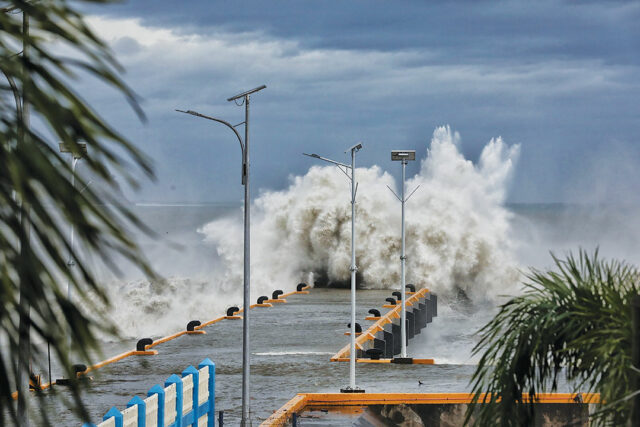
HIGH WAVES hit a dock in Aurora as Super Typhoon Fung-Wong (locally called Uwan) moves closer to the northern part of Luzon. The central portion of the province has been placed under wind signal No. 5, while the rest of Aurora is under signal No. 4, as of Sunday afternoon. — PHILIPPINE STAR/WALTER BOLLOZOS

THE Asian Development Bank (ADB) has greenlighted a $3-million grant for the Philippine communities affected by Typhoons Tino and Uwan last year.

In a project data sheet, the ADB said that the grant was approved on Monday under the Asia Pacific Disaster Response Fund, which provides fast-tracked grants to developing member countries in the immediate aftermath of major natural disasters.

Through the grant, the ADB will provide emergency cash assistance to eligible disaster-affected families, specifically for affected families in Camarines Norte.

It seeks to “improve access of affected families to basic needs during the immediate post-disaster period, enhance capacity of families to recover and rebuild following the disaster, and reduce negative coping strategies among vulnerable families.”

The ADB first expressed its readiness to support communities affected by the torrential rains and floods that hit the country late last year in a statement on Nov. 7.

In which, the bank shared its commitment to make available up to $3 million in grant funds upon request of the Philippine government.

“We are deeply saddened by the loss of life and the suffering caused by the recent series of disasters in the Philippines,” said ADB President Masato Kanda in a letter to President Ferdinand R. Marcos, Jr.

“This immediate emergency support reflects ADB’s enduring commitment to the Filipino people, addressing both urgent humanitarian needs and long-term development goals.

Apart from the grant, the Manila-based multilateral lender also expressed its readiness to mobilize significantly additional resources to support infrastructure rehabilitation and recovery.

The bank currently provides financial assistance to construct resilient roads, bridges, and railways in the country while helping it achieve its climate action agenda. — Justine Irish D. Tabile

E-certificate rollout to boost civil registry transactions

PHILIPPINE STAR/WALTER BOLLOZOS

THE Philippine Statistics Authority (PSA) is expecting an increase in digital transactions for civil registry documents through the launch of the e-certificate service.

“In 2019, only 6% were transacting online. So, there were a lot of people transacting in the outlets. That’s why the lines were long,” National Statistician Claire Dennis S. Mapa told reporters on Wednesday.

“After the pandemic, this one increased already to, right now, 27% to 30%. So, online transactions are already substantial, but with the introduction of our e-certificate, we feel that this would further increase and people will transition into digital,” he said in mixed English and Filipino.

The PSA recorded an 18.73 million transaction count from in-person and online requests in 2025, lower than the 18.75 million transaction count in 2024.

On Wednesday, the PSA, in partnership with PSAHelpline, launched the e-certificate service, which will enable institutions to receive and verify official civil registry documents in digital form

“This allows stakeholders to transition to modern document submissions — via e-mail, direct portal uploads, or API connections — guaranteeing that sensitive data is transferred both securely and instantaneously,” it said.

Through the service, applicants receive a digital file complete with a unique reference number and QR code that can be shared instantly.

The PSA e-certificate ranges from P290 for birth, marriage, or death certificates to P345 for certificates of no marriage record and no death.

According to the PSA, the bulk of requests still constitute birth certificates.

Data from PSA released on Wednesday showed that the number of registered births from January to September 2025 reached 907,362, which is lower by 8% compared to the 985,916 recorded in the same period in 2024.

Meanwhile, PSA recorded 198,344 marriages in the first nine months last year, reflecting a 30.5% drop from the 285,242 registered marriages in the previous year.

The report also stated a 19% drop in the provisional number of registered deaths from January to August 2025 to 379,097, from registered deaths of 467,954 in 2024.

According to a separate PSA report, the leading causes of death from January to August 2025 were ischemic heart diseases, neoplasms, and cerebrovascular diseases. — Justine Irish D. Tabile

BoC told to tighten Manila ports monitoring amid congestion

PHILIPPINE STAR/WALTER BOLLOZOS

THE Palace on Wednesday ordered the Bureau of Customs (BoC) to closely monitor port congestion in the Manila South Harbor and Manila International Container Port.

“Whatever the problem is with port congestion, the President is focusing on that,” Palace Press Officer Clarissa A. Castro told a news briefing in Filipino.

“We spoke directly with the leadership of the Bureau of Customs, and they told us that there is usually port congestion during weekends but on weekdays it gets better, the flow becomes normal.”

She cited the yard utilization levels of the country as low at 90% as of Feb. 19.

For the Port of Manila, the yard utilization is at 79.80%, the Manila International Container Port at 84.45%, while other major ports reported the following: Batangas at 49.60%, Subic at 60%, Cebu at 33%, and Davao at 68.34%.

“Port operators still can continue moving and processing cargo within their area,” Ms. Castro said. “There is no immediate threat of container movement being halted at this time. Port utilization also continues to decline.”

Ms. Castro said the immediate steps being advanced are straightforward and focus on earlier data collection, tighter inter-agency coordination and operational readiness to ensure uninterrupted services.

She added that the BoC will accredit additional container yards and hold quarterly coordination and assessment meetings with international shipping lines and port stakeholders, particularly ahead of peak months when facilities typically operate at high capacity.

“The BoC also supports infrastructure readiness initiatives, particularly investments in additional reefer facilities and complementary policy issuances,” said Ms. Castro.

“So, the BoC’s crisis management protocols remain active in case the utilization rate reaches a critical level. So, that is their immediate response to the alleged issue of port congestion.” — Chloe Mari A. Hufana

March holidays declared in 10 areas

PHILIPPINE STAR/MIGUEL DE GUZMAN

PRESIDENT Ferdinand R. Marcos, Jr. declared special nonworking days across provinces and cities in March, for founding anniversaries, fiestas, and one special election.

Under Proclamation Nos. 1170-1179, signed by Executive Secretary Ralph G. Recto, the Palace announced special non-working holidays in the following areas:

• Gutalac, Zamboanga del Norte (March 6)

• Tadian, Mountain Province (March 6) – Ayyoweng Di Lambak Ed Tadian Festival

• Passi, Iloilo (March 14)

• Antipolo City – Second legislative district (March 14) – Special Election

• Davao City (March 16)

• Lugait, Misamis Oriental (March 16)

• Tayug, Pangasinan (March 17)

• Kawayan, Biliran (March 19)

• Canlaon, Negros Oriental (March 19) – Pasayaw Festival

• Tabaco, Albay (March 24)

Most holidays were declared for the celebration of their respective founding anniversaries, while others were for local festivals.

It also included Proclamation No. 1173, which declared a holiday in the second legislative district of Antipolo City for the conduct of a special poll, following the death of Rep. Romeo M. Acop last Dec. 20.

“There is a need to declare Saturday, 14 March 2026, as a special (nonworking) holiday to enable the people of the areas comprising the Second Legislative District of the City of Antipolo to properly exercise their right to vote,” the proclamation read. — Chloe Mari A. Hufana

Mining exec Joseph Sy’s detention ‘illegal,’ CA says

JOSEPH C. SY — GFNI.COM.PH

THE Court of Appeals (CA) has upheld a lower court ruling declaring the detention of former Global Ferronickel Holdings, Inc. Chairman Joseph C. Sy illegal.

In a 15-page decision on Feb. 20, the CA’s special eighth division denied the appeal of Bureau of Immigration (BI) officials, acting through the Office of the Solicitor General.

The court ruled that Mr. Sy’s registered birth certificate, which lists him as a Filipino born in Quezon City to Filipino parents, takes precedence over the Alien Certificate of Registration presented by the BI. The CA noted that the BI cannot challenge a presumed-valid birth certificate without a judicial order.

“Owing to his birth certificate, Sy should be considered a Filipino and not a proper subject of the BI’s jurisdiction,” the CA ruled.

“At best, the deportation proceeding against Sy was prematurely instituted, as he has an existing birth certificate issued by the Office of the Civil Registrar that has not yet been canceled,” it added.

Mr. Sy was intercepted by BI personnel at Ninoy Aquino International Airport on Aug. 21, 2025, after returning from Hong Kong, and detained at the BI Warden Facility despite holding a valid Philippine passport until 2031. — Erika Mae P. Sinaking

SC junks petition vs mining on Sibuyan Island

THE Supreme Court (SC) has denied a petition for a Writ of Kalikasan filed against Altai Philippines Mining Corp. (APMC) and environmental regulators, ruling that the petitioners failed to prove that the mining operations posed a threat of sufficient magnitude to warrant the legal remedy.

In a 27-page decision penned by Associate Justice Ramon Paul L. Hernando, and made public Feb. 23, the High Court en banc found that the petitioners, representing the group Bantay Kalikasan ng Sibuyan, did not satisfy the jurisdictional requirement that environmental damage must affect “two or more cities or provinces.”

The case arose from APMC’s nickel ore exploration and attempt to export 50,000 wet metric tons of ore from its mineral production sharing agreement area in San Fernando, Romblon. Residents had barricaded the company’s port in early 2023, alleging illegal mining and potential “unquantifiable loss of natural heritage”

But because the mining area was confined within the municipality of San Fernando or, at most, the province of Romblon, and that APMC’s ore transport permit and mineral ore export permit had already expired in early 2023, the petition was deemed moot and academic.

The tribunal also noted that a joint order issued by the Department of Environment (DENR) and Natural Resources and the Mines and Geosciences Bureau (MGB) had directed APMC to cease and desist from constructing its causeway, effectively granting the principal reliefs sought by the petitioners.

In dismissing the case, the court said the residents’ claims regarding the alleged “potential for liquefaction” of nickel ore and threats to endemic species were unsupported by empirical evidence.

“Nonetheless, petitioners failed to show the environmental damage and its extent that would warrant the issuance of a Writ of Kalikasan,” the SC said in its ruling.

“This Court has consistently held that a Writ of Kalikasan will not be issued as a mere substitute to legal, administrative, or political remedies that may be available to parties,” it added

“This does not mean, however, that we condone the environmental issues hounding San Fernando, Sibuyan Island, Romblon,” the SC added.

While denying the petition, the court clarified that the residents did not commit forum shopping by simultaneously seeking relief from the DENR and the MGB, reversing an earlier finding by the Court of Appeals.

In a separate concurring opinion, Senior Associate Justice Marvic M.V.F. Leonen said the Rules of Procedure for Environmental Cases contain a systemic gap, noting that the “magnitude requirement” for a Writ of Kalikasan disadvantages small islands composed only of barangays or municipalities.

“With the Rules as presently worded, small islands in the Philippines… can never claim for a petition for a Writ of Kalikasan,” Mr. Leonen said. He proposed an “ecosystem approach,” under which damage to a unique ecosystem within a single province could still qualify if the impact is “sufficiently grave and wide-reaching.”

Associate Justice Rodil V. Zalameda, also concurring, underscored the need for courts to seriously engage scientific evidence, noting that “we cannot claim fidelity to the truth while willfully ignoring science.” — Erika Mae P. Sinaking

Aboitiz Foods’ corn sourcing initiative boosts farmer incomes

ABOITIZ Equity Ventures, Inc.’s (AEV) unit Aboitiz Foods said its eight-year yellow corn sourcing program has helped smallholder cooperatives increase revenues sixteenfold through direct sourcing, training, and post-harvest support.

In a statement on Wednesday, Aboitiz Foods said the initiative, known as Project Silk, has supported 2,835 farmers in the Philippines from 2017 to 2025, generating more than $818,000 in corn sales.

The program is implemented through AEV subsidiary Pilmico Foods Corp., in partnership with the Department of Agriculture, local government units, and the Aboitiz Foundation.

“Through Project Silk, we help corn farmers in the Philippines become better entrepreneurs so they can build viable and competitive enterprises,” Joeben Gamatero, vice-president for brand and reputation management and agribusiness marketing of Aboitiz Foods, said in the statement.

The company said Project Silk provides farmers with a stable market for a portion of Pilmico’s corn requirements for livestock feed production. The program also offers training in bookkeeping, financial management, market planning, and cooperative governance.

Aboitiz Foods said it has also invested in facilities and programs to help farmers reduce post-harvest losses, improve market access, and secure better prices.

Meanwhile, the company said it has invested in various food security, education, livelihood, and environmental initiatives across Asia.

In Brunei, Project Synergea, a partnership between Aboitiz Foods’ subsidiary Gold Coin and the Institute of Brunei Technical Education, is equipping communities with agricultural knowledge and technical expertise in poultry.

The company said Project EduCare in China and Vietnam targets underserved communities, offering educational programs to help equip young people with skills to participate in sustainable agriculture and food systems.

Project ROOTS in Malaysia and China focuses on environmental restoration, including replanting trees, rehabilitating shorelines, and improving coastal ecosystems to strengthen climate resilience in communities dependent on food production, the company said.

“As we expand our business across the region, we will keep creating pathways toward shared progress and nourishing a more sustainable food future together with the communities,” Mr. Gamatero said. — Vonn Andrei E. Villamiel

Wage hike for workers in Davao region OKd

A mural depicting a construction worker is seen in Manila. — PHILIPPINE STAR/KRIZ JOHN ROSALES

THE National Wages and Productivity Commission (NWPC) has affirmed two new wage orders for the Davao Region, adjusting the daily pay for private sector workers and monthly rates for domestic helpers effective March 13, 2026.

In a statement on Wednesday, the NWPC said that a decision from its Feb. 23 meeting has paved the way for Wage Order No. RB XI-24, which will raise daily wages for workers in the non-agriculture sector by P30, and by P20 for those in the agriculture sector.

These adjustments will be implemented in two tranches, with the first half effective upon the order’s start date and the second half scheduled for Sept. 1.

Once fully realized, daily minimum wages will reach P540 for non-agriculture and P525 for agriculture sectors, benefiting approximately 66,772 workers.

Meanwhile, Wage Order No. RB XI-DW-04 mandates a monthly increase for the region’s 64,111 kasambahays, according to the wage commission.

Domestic workers in the Davao Region will see monthly wage increases of P500 in chartered cities and first-class municipalities and P1,500 in other municipalities, bringing the regional monthly minimum wage to a uniform rate of P6,500.

The NWPC noted that the Davao Region wage board complied with the Wage Rationalization Act and the Batas Kasambahay, balancing the needs of workers with the employers’ capacity to pay.

The Department of Labor and Employment said that retail and service establishments with ten or fewer employees, as well as businesses affected by disasters, may apply for exemptions until May 11. Registered Barangay micro business enterprises remain exempt from the minimum wage law.

Beyond the immediate hikes, the board is providing technical assistance to address wage distortions for an estimated 402,968 full-time workers earning above the minimum. — Erika Mae P. Sinaking

DTI eyes three-year roadmap to Western Visayas exports

THE Department of Trade and Industry (DTI) is planning to roll out a three-year roadmap to help promote Western Visayas products globally, it said in a statement on Wednesday.

The Western Visayas Export Development Roadmap for 2026-2028 includes plans to launch a one-stop-shop and online training for region’s micro, small, and medium enterprises.

The initiative seeks to address smaller firms’ gaps in export readiness while providing them with direct access to international markets.

DTI said it plans to launch a “Western Visayas Global Brand” and a regional export one-stop-shop to help local exporters streamline their operations.

Likewise, it is looking to establish a new e-Export Academy to train business owners in digital marketing and online sales.

“Furthermore, the strategy leverages the Visayas Container Terminal in Iloilo, with a goal to slash regional shipping costs by 15% through consolidated freight services,” the agency said.

The final roadmap will be presented to the Regional Development Council by the middle of the year, the DTI said.

It also noted that each province has products suited for high-value markets, with Aklan’s nito and piña crafts potentially appealing to European and Japanese buyers, while Guimaras is known for its mangoes.

The DTI also sees global demand for Iloilo and Capiz’ premium seafood and organic goods, as well as Antique’s coco-based products and muscovado sugar.

In 2024, Western Visayas’ economy grew by 4.3%, slower than last year’s national level of 5.7%. — Beatriz Marie D. Cruz

PSEi surges to 6,600 level on buying momentum

BW FILE PHOTO

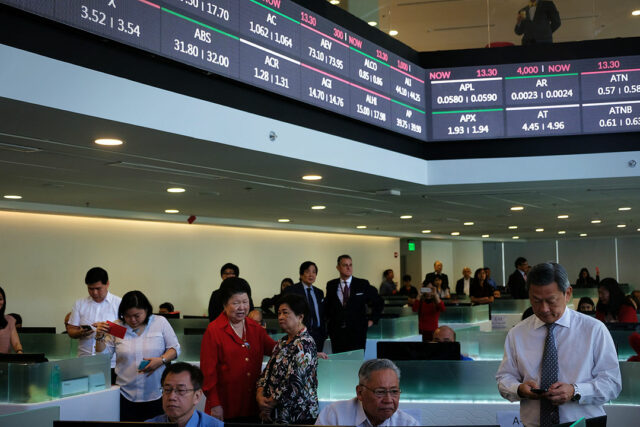
THE PHILIPPINES’ main stock benchmark on Wednesday soared to 6,600 level for the first time since January 2025, buoyed by a strong peso and positive corporate results that boosted buying activity.

The Philippine Stock Exchange index (PSEi) jumped by 1.09% or 71.89 points to close at 6,619.87, while the broader all shares index went up by 0.71% or 25.91 points to end at 3,640.38.

This was the PSEi’s best finish in over 13 months or since it closed at 6,625.17 on Jan. 6, 2025.

“The local market rallied further as investors continue to anticipate fourth-quarter and full-year 2025 corporate results with optimism,” Philstocks Financial, Inc. Research Manager Japhet Louis O. Tantiangco said in a Viber message.

“The PSEi ended higher, reaching the 6,600 level as buying pressure remained intact across the board. Investor confidence stayed elevated, with ongoing earnings releases driving gains in select stocks and attracting renewed participation from investors,” Regina Capital Development Corp. Head of Sales Luis A. Limlingan said in a Viber message.

“Meanwhile, the strengthening peso against the US dollar further bolstered overall market sentiment and supported sustained optimism in equities.”

On Wednesday, the peso rose by 24.50 centavos to close at a new five-month high of P57.51 versus the greenback as fresh tariff uncertainty weighed on the dollar.

“Investors were also relieved as the US implemented a global tariff of 10%, lower than President Donald Trump’s prior announcement of 15%,” Mr. Tantiangco added.

The Trump administration is working to increase the rate on Mr. Trump’s new, temporary global tariff to 15% from the 10% rate published by the US Customs and Border Protection (CBP) agency, a White House official said on Tuesday, Reuters reported.

The official said Mr. Trump has had “no change of heart” on his desire for a 15% tariff rate, which he had announced on Saturday after issuing a formal order on Friday for a 10% rate on the new duties that will last 150 days. The temporary tariff imposed under Section 122 of the Trade Act of 1974 is meant to replace Mr. Trump’s global emergency tariffs struck down by the US Supreme Court on Friday.

Four of the six sectoral indices closed higher on Wednesday. Services surged by 4.24% or 117.08 points to 2,874.21; mining and oil increased by 1.68% or 325.65 points to 19,694.44; industrials went up by 0.72% or 67.91 points to 9,467.51; and financials climbed by 0.2% or 4.47 points to 2,186.91.

Meanwhile, property declined by 0.63% or 14.07 points to 2,188.76, and holding firms dropped by 0.09% or 4.85 points to 5,151.01.

Advancers outnumbered decliners, 116 to 91, while 59 names closed unchanged.

Value turnover rose to P9.998 billion on Wednesday with 1.32 billion shares traded from P8.07 billion with 2.07 billion issues that changed hands on Tuesday.

Net foreign buying increased to P1.85 billion from P406.68 million in the previous session. — Alexandria Grace C. Magno

PHL seeking to manage US trade unpredictability

REUTERS

THE PHILIPPINES will push for “stable and predictable” trade relations with the US following President Donald J. Trump’s decision to impose a 15% global tariff, as economic managers assess risks to exporters, the Palace said on Wednesday.

Quoting the economic managers, Palace Press Officer Clarissa A. Castro said the government is in talks with the US to evaluate the potential impact of the tariff order.

“Our goal is to ensure that our trade and investment relations with the US remain stable and predictable,” she said.

The US will be imposing a new 15% duty on imports starting Feb. 24. 

Reuters has also reported that Washington will impose another 10% tariff on all goods not covered by exemptions, citing a notice from the US Customs and Border Protection.

The US Supreme Court has ruled Mr. Trump overstepped his authority when he imposed the reciprocal tariffs.

It invalidated duties imposed by the administration on China, Japan, South Korea, Taiwan and Southeast Asian nations. Philippine goods faced a 19% levy.

“We will continue to engage with the US given that US remains a major trading partner. In the meantime, we will evaluate and monitor recent developments,” Ms. Castro said.

Trade Secretary Ma. Cristina A. Roque said on Tuesday that the Philippines is hoping to lead discussions among Association of Southeast Asian Nations members for a unified stance on the new levies.

She said the US tariffs will be discussed by economic ministers on March 13 in Manila.

President Ferdinand R. Marcos, Jr. said on Tuesday that the Philippines will broaden trade ties to counter slowing economic growth and unpredictable trade policies.

Growth dipped to a post-pandemic low of 4.4% in 2025, weighed down by a corruption scandal that dented spending, consumption and confidence.

The Philippines is now seeking to tap markets in Latin America, the EU and Canada to diversify its trade and shield itself from shocks. — Chloe Mari A. Hufana

ADVERTISEMENT
ADVERTISEMENT