Home Blog Page 2407

D.M. Wenceslao’s P4-B Parqal in Aseana City focuses on work-life balance

By Aubrey Rose A. Inosante, Reporter

D.M. WENCESLAO and Associates, Inc. (DMW) said it had invested P4 billion in Parqal, its latest mixed-use development located in Parañaque City’s Aseana City.

The project focuses on creating a “third space” designed to enhance work-life balance for individuals working in Aseana City. Third spaces are environments intended for social interaction and public relaxation, distinct from home and office settings.

Parqal spans five hectares and has a gross floor area of 70,000 square meters (sq.m.). It has reached a 90% occupancy rate for retail spaces and 40% for commercial spaces, DMW Chief Executive Officer Delfin Angelo C. Wenceslao told BusinessWorld via an e-mailed statement on Aug. 16.

“Parqal created an ecosystem where office workers can access not just retail and commercial services but amenities that support the community and contribute to enhancing social connections through its world-class public spaces,” Mr. Wenceslao said.

The property has nine four-story buildings with retail and commercial spaces occupying the first and second floors, and offices located on the third and fourth floors.

“With the increasing demand for office spaces in Metro Manila, Parqal aims to offer not just a place to work but a chance to feel at home away from home,” Mr. Wenceslao said.

He said Parqal is changing the work experience of the office population by providing access to public spaces and amenities that promote relaxation and social connections.

Office workers have proximity to wellness facilities, sports amenities, and outdoor spaces and plazas such as the courtyard and amphitheater.

The firm also said the “floating canopy,” which serves as a flagship component of Aseana City’s sidewalk master plan, covers about 5,000 sq.m. of the development’s linear greenway spine.

“The company is currently in the late planning stages of additional office, residential, hospitality, and medical clinic/office projects for its five-year development pipeline,” Mr. Wenceslao said.

He added that Parqal’s foot traffic is increasing, with daily visitors rising from 10,000 to 20,000 weekly. Footfall even doubles during events, showcasing the destination’s growing popularity.

Since opening in September 2023, Parqal has hosted the Big Bad Wolf Booksale, Toycon Launch, Nikon Day 2024, and the Aurora MLBB event.

It has also hosted the weekly community run of Aseana City, or Run Aseana, in partnership with the Recreational Outdoor Exchange and Run With Pat.

Mr. Wenceslao said Parqal highlights the company’s vision of a “15-minute city,” aiming to provide essential uses, amenities, services, and experiences to all Aseana City residents within a 15-minute distance.

Parqal also aims to curb carbon emissions by reducing car usage through pedestrian and cycling infrastructure.

“While DMW has the option to expand its land bank on its frontage, the company is currently focused on developing its existing portfolio. Approximately 50% of Aseana City is currently occupied with existing developments,” DMW said.

Court blocks key part of California law on children’s online safety

A UNITED States appeals court on Friday left intact a key part of an injunction blocking a California law meant to shield children from online content that could harm them mentally or physically.

The 9th US Circuit Court of Appeals in San Francisco said NetChoice, a trade group for companies that do business online, was likely to show that the California Age-Appropriate Design Code Act violated its members free speech rights under the Constitution’s First Amendment.

California required businesses to create “Data Protection Impact Assessment” reports addressing whether their online platforms could harm children, such as through videos promoting self-harm, and take steps prior to launch to reduce the risks.

Businesses were also required to estimate the ages of child users and configure privacy settings for them, or else provide high settings for everyone.

Civil fines could reach $2,500 per child for each negligent violation, or $7,500 per child for each intentional violation.

NetChoice said the law would turn its 37 members — including Amazon.com, Google, Facebook parent Meta Platforms, Netflix and Elon Musk’s X — into “roving censors” of whatever California deemed harmful.

Circuit Judge Milan Smith wrote for a three-judge panel that the first requirement was likely unconstitutional because California had less restrictive ways to protect children. He said the state could improve education for children and parents about online dangers, give companies incentives to filter or block content, or rely on enforcing its criminal laws.

Requiring “the forced creation and disclosure of highly subjective opinions about content-related harms to children is unnecessary for fostering a proactive environment in which companies, the state and the general public work to protect children’s safety online,” Mr. Smith wrote.

The 9th Circuit set aside the rest of the September 2023 preliminary injunction from US District Judge Beth Labson Freeman, including as to the law’s restrictions on collecting and selling children’s geolocation information and other data.

The court said Ms. Freeman did not properly assess if the law could survive without the unconstitutional provisions, and returned the case to her.

California modeled its law after a similar law in the United Kingdom. Governor Gavin Newsom signed the state law in September 2022, and it was to have taken effect on July 1, 2024.

In a statement, Mr. Newsom said the appeals court “largely sided” with the state. The governor also urged NetChoice to “drop this reckless lawsuit and support safeguards that protect our kids’ safety and privacy.”

Chris Marchese, director of the NetChoice Litigation Center, called the decision “a victory for free expression, online security and Californian families.”

The case is NetChoice LLC v Bonta, 9th United States Circuit Court of Appeals, No. 23-2969. — Reuters

Philippines: Balance of Payments (BoP) Position

THE COUNTRY’S balance of payments (BoP) position swung to a surplus in July, data from the Bangko Sentral ng Pilipinas (BSP) showed. Read the full story.

Philippines: Balance of Payments (BoP) Position

How PSEi member stocks performed — August 19, 2024

Here’s a quick glance at how PSEi stocks fared on Monday, August 19, 2024.


PSEi rallies to 6,800 on positive market sentiment

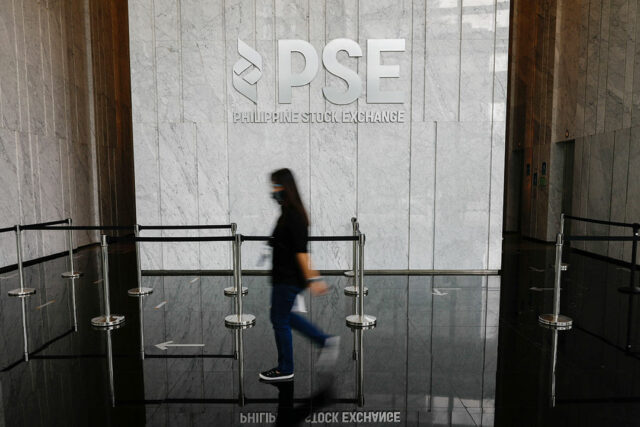
The lobby of the Philippine Stock Exchange in Taguig City, Sept. 30, 2020. — REUTERS

THE MAIN INDEX rallied to the 6,800 level on Monday as the market continued to cheer the Philippine central bank’s first rate cut in nearly four years and amid easing recession fears in the United States.

The Philippine Stock Exchange index (PSEi) rose by 0.62% or 42.50 points to end at 6,889.87 on Monday, while the broader all shares index gained by 0.4% or 15.03 points to close at 3,706.45.

Monday’s close was the PSEi’s best finish in over four months or since it closed at 6,960.43 on April 2.

“Investors continued to draw optimism from the Bangko Sentral ng Pilipinas’ (BSP) recent policy rate cut as well as the prospect of further monetary policy easing moving forward,” Philstocks Financial, Inc. Senior Research Analyst Japhet Louis O. Tantiangco said in a Viber message.

“The Philippine stock market gained, buoyed by a favorable shift in both monetary policy and macroeconomic outlooks. As the earnings reporting season winds down, investors’ attention has turned to broader economic trends, which are currently shaping the market’s positive trajectory,” AB Capital Securities, Inc. Vice-President Jovis L. Vistan said in a Viber message.

The Bangko Sentral ng Pilipinas (BSP) on Thursday cut benchmark interest rates for the first time in almost four years amid an improving inflation and economic outlook, with its governor signaling at least one more reduction before the end of the year.

The BSP slashed its target reverse repurchase rate by 25 basis points (bps) to 6.25%.

BSP Governor Eli M. Remolona, Jr. said at a briefing that they could cut rates by another 25 bps within the year.

“The positive spillovers from Wall Street’s performance last Friday driven by growing confidence on the United States economy also helped in [Monday’s] session,” Mr. Tantiangco added.

Back home, the majority of sectoral indices ended higher. Property rose by 1.55% or 42.69 points to 2,788.48; mining and oil went up by 1.42% or 115.74 points to 8,257.60; financials climbed by 1.41% or 28.41 points to 2,040.08; and services increased by 0.58% or 12.59 points to 2,180.62.

On the other hand, industrials declined by 0.5% or 46.89 points to 9,271.98; and holding firms fell by 0.14% or 8.56 points to 5,840.05.

Value turnover rose to P7.64 billion on Monday with 625.66 million shares changing hands from the P7.14 billion with 699.87 million issues traded on Friday.

Decliners beat advancers, 104 versus 94, while 54 issues were unchanged.

Net foreign buying rose to P1.41 billion on Monday from P654.36 million on Friday.

“The recent rally pushed the PSEi past the critical 6,800 resistance level. We are now eyeing the 7,000 psychological resistance… as the next target,” Mr. Vistan said. “This indicates a strong upward momentum that could propel the index further if macroeconomic conditions remain supportive.” — R.M.D. Ochave

Peso surges vs dollar on dovish Fed hopes

BW FILE PHOTO

THE PESO surged to a new four-month high against the dollar on Monday on expectations of dovish signals from the US Federal Reserve chief this week.

The local unit closed at P56.64 per dollar on Monday, strengthening by 60.5 centavos from its P57.245 finish on Friday, Bankers Association of the Philippines data showed.

This was the peso’s strongest finish in more than four months or since its P56.53-per-dollar close on April 12.

The peso opened Monday’s session stronger at P57.05 against the dollar, which was already its weakest showing for the day. Its intraday best was at P56.63 versus the greenback.

Dollars exchanged rose to $1.61 billion on Monday from $1.44 billion on Friday.

The peso strengthened against a generally weaker dollar on Monday due to market expectations of dovish sentiment from the minutes of the Federal Open Market Committee’s July policy meeting and Fed Chair Jerome H. Powell’s speech at the Jackson Hole Symposium this week, a trader said by phone.

The local unit gained on “softer US economic data lately and mostly dovish signals from most Fed officials recently that could support future Fed rate cuts,” Rizal Commercial Banking Corp. Chief Economist Michael L. Ricafort said in a Viber message.

The dollar slid on Monday on expectations the US economy would dodge a recession and cooling inflation would kick off a cycle of interest rate cuts, Reuters reported.

The dollar lapsed 1% to 146.12 yen, while the euro firmed to $1.1040, just below last week’s peak of $1.1047.

Federal Reserve members Mary Daly and Austan Goolsbee were out over the weekend to flag the possibility of easing in September, while minutes of the last policy meeting due this week should underline the dovish outlook.

Meanwhile, Mr. Powell speaks in Jackson Hole on Friday and investors assume he will acknowledge the case for a cut.

Futures are fully priced for a quarter-point move, and imply a 25% chance of 50 basis points with much depending on what the next payrolls report shows.

For Tuesday, the trader sees the peso moving between P56.60 and P56.90 per dollar, while Mr. Ricafort expects the peso to range from P56.55 to P56.75. — AMCS with Reuters

Finance department warned over raids on PhilHealth reserve funds

PNA/JOAN BONDOC

By Beatriz Marie D. Cruz, Reporter

HEALTHCARE industry representatives urged the Department of Finance (DoF) to halt future transfers of “excess” funds out of the Philippine Health Insurance Corp. (PhilHealth), saying that as an insurance entity PhilHealth needs to maintain an adequate reserve that, if tapped, must finance improved health services.

In a letter addressed to Finance Secretary Ralph G. Recto, the healthcare associations said PhilHealth funds belong to the system’s members and must not be tapped by the government to cover for budget shortfalls.

“We strongly believe that the solution to PhilHealth’s inability to use its funds is not to strip Filipinos of healthcare funding but to implement immediate and substantial PhilHealth reforms such as increasing the scope and coverage of benefit packages,” according to the letter signed by 71 representatives from the healthcare sector.

They called it “unjust to take these funds for other purposes, when the unmet need for healthcare is enormous.”

According to the letter, around 44% of healthcare spending consists of out-of-pocket payments, pointing to the inadequacies of the health insurance system.

“We are daily witnesses to patients who are unable to get the care they desperately need due to the inefficiencies within our social health insurance system,” they said.

In March, the DoF issued Circular No. 003-2024, instructing government-owned and -controlled corporations (GOCCs), including PhilHealth to remit their excess funds to the Treasury, which would allow the government to fund unprogrammed appropriations in accordance with a provision in the 2024 General Appropriations Act.

The third and fourth tranche of fund transfers amounting to P30 billion is scheduled for October, with P29.9 billion to follow in November.

Mr. Recto said via Viber that while PhilHealth payouts have improved significantly for some treatments, “Even so, (PhilHealth) still will have P500 billion in reserve funds.”

Following the DoF circular, PhilHealth remitted P20 billion to the national treasury in the first tranche of fund transfers. These funds were applied to the P27-billion unpaid Health Emergency Allowance (HEA) for healthcare workers who worked through the pandemic.

The funds transferred out of the GOCCs will also be used to co-finance foreign-assisted and other big-ticket infrastructure projects. 

In a separate statement, Mr. Recto said the use of PhilHealth’s funds for the government’s priority programs will not affect PhilHealth’s daily operations.

“The DoF’s move is consistent with the medical principle of ‘do no harm’. I repeat, the daily operations of PhilHealth will not be affected and we will not use its members’ contributions,” he said.

Mr. Recto also said the P500 billion PhilHealth will have left over after the transfers “is more than enough to increase the benefits of its direct and indirect contributors, covering two to three years of expenses.”

Antonio L. Dans, President of the Asia Pacific Center for Evidence-based Healthcare, said at a briefing that the law compels PhilHealth to maintain a certain level of reserves.

Under Section 11 of Republic Act (RA) No. 11223 or the Universal Healthcare Act, PhilHealth must set aside a portion of its excess accumulated revenue as reserve funds, provided that the total reserve does not the exceed a ceiling equivalent to the amount actuarially estimated for two years of projected expenditures.

PhilHealth reserves should be used to increase its benefits or to reduce member contribution levels, according to the law.

“No portion of the reserve fund or income thereof shall accrue to the general fund of the National Government or to any of its agencies or instrumentalities, including GOCCs,” the law said.

PhilHealth funds are better spent on increasing case rates and outpatient care benefits, Mr. Dans told BusinessWorld on the sidelines of the briefing.

“Outpatient benefits are expensive. It’s going to cost a lot of money. Our initial estimate is P120 billion will be spent per year just to supply half of the outpatient care benefits.”

Binabayaran lang natin ’yung hospitalization ’pag malapit nang mamatay pero wala tayong benefit para doon sa mga sakit na naging sanhi ng ating pagka-ospital” (We only pay for the hospitalization of people who are well along in their illness, but we have no benefits for the conditions that led to the hospitalization), Mr. Dans said.

Case rates refer to the fixed amount of hospital expenses to be paid by PhilHealth. This was recently adjusted by the PhilHealth board to 30% in March.

“But that was after 10 years. If you compound inflation in 10 years, that’s supposed to be more than 30%,” Mr. Dans added.

“Instead of diverting the purported funds for the bolstering of the economy, infrastructure, and other social services, the same must be used in the furtherance of the mandate of RA 11223 and PhilHealth, affording the members and those who are in dire need of healthcare services of their rights to benefit from it,” Anthony C. Leachon, healthcare advocate and former president of the Philippine College of Physicians, said via Viber.

The Supreme Court has ordered government officials including those in the DoF to comment on a petition seeking to block the PhilHealth fund transfers. 

“(We) will follow whatever Supreme Court decides on the matter,” Mr. Recto said.

Movement of healthy hogs being planned for ASF ‘red zones’

PHILIPPINE STAR/ MICHAEL VARCAS

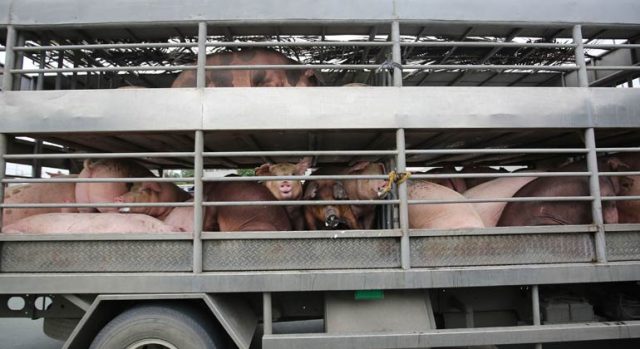
THE Department of Agriculture (DA) said on Monday that it is seeking to allow the transport of healthy pigs within African Swine Fever (ASF) “red zones,” where the disease is known to be active, in order to keep the market supplied.

“The government will ease (movement restrictions), but we have to make sure only live and healthy pigs are transported, not the infected ones, to avoid the spread of ASF,” Agriculture Undersecretary for Policy and Planning Asis G. Perez said in a statement.

The DA has met with industry representatives and local government officials to ensure the health of the hog being moved, he said.

“It’s important that we ensure infected animals stay in the red zone,” he added.

Mr. Perez said the easing of movement restrictions on non-infected pigs will ensure the market is adequately supplied and allow hog raisers to continue earning.

New ASF cases have clustered around Batangas, prompting the declaration of a state of calamity.

The DA has procured 10,000 doses of the AVAC ASF Live Vaccine from Vietnam for emergency inoculation of non-infected Batangas hogs. The inoculation is expected this week.

About P50 million has been earmarked for the indemnification of farmers whose hogs will need to be culled.

Additionally, Undersecretary for livestock Deogracias Victor B. Savellano said that the DA has raised the indemnification rate to P4,000 for piglets, P8,000 for medium-sized hogs, and P12,000 for sows and large hogs.

The maximum indemnification was previously P5,000 per animal.

“The higher indemnification is meant to encourage pig farmers to surrender their animals instead of selling them to traders who eventually transport the infected swine to other areas for slaughter,” Mr. Savellano said.

There are 32 barangays in seven Batangas cities or municipalities with active cases of ASF, according to the Bureau of Animal Industry.  The seven are Lipa City, Calatagan, Lian, Lobo, Rosario, San Juan, and Talisay.

The DA last week placed checkpoints along Commonwealth and Mindanao Avenues in Quezon City; EDSA Balintawak; Marulas and Malanday, Valenzuela City; STAR Tollway in Sto. Tomas, Batangas; Calamba, Laguna; and Alfonso, Cavite to stop the movement of infected hogs. 

Agriculture Assistant Secretary for Poultry and Swine Constance J. Palabrica said other vaccine manufacturers from the US, South Korea and Vietnam are also applying with the Food and Drug Administration (FDA) for approval.

The FDA has approved a controlled rollout of the ASF vaccine from Vietnam, concentrating on red zones and so-called pink zones, or those areas adjacent to zones with active infections. — Adrian H. Halili

PPA issues bid notices to develop Zamboanga del Norte, Leyte ports

THE Philippine Ports Authority (PPA) said it plans to offer P584.9 million worth of contracts to develop ports in Zamboanga del Norte and Southern Leyte.

In a notice to bid, PPA is now inviting potential contractors to expand Sindangan port in Zamboanga del Norte and rehabilitate Limasawa port in Southern Leyte for P537.73 million and P47.17 million, respectively.

The PPA said any bids made in excess of the approved amount of the contract will be rejected at the bid opening and only those interested parties with experience of working on a similar project will be considered eligible.

For the Sindangan port expansion project in Zamboanga del Norte, the PPA will hold a pre-bid conference on Aug. 23.

All interested parties must submit their bids on or before Sept. 5, the PPA said.

The PPA said that the project must be completed within 720 days.

Meanwhile, interested parties may also bid on the Limasawa port rehabilitation project by Sept. 5. The Port of Limasawa project contract must be completed within 360 calendar days, PPA said.

In the next four years, the PPA is setting aside about P16 billion to fund its infrastructure projects, including 14 flagship projects. — Ashley Erika O. Jose

EV industry meets with Customs to work out supply chain snags

PHILSTAR FILE PHOTO

THE Electric Vehicle Association of the Philippines (EVAP) said it is counting on collaboration with the Bureau of Customs (BoC) to smooth out potential snags in the electric vehicle (EV) supply chain.

In a statement, EVAP said it paid a visit to the BoC to work out how the Electric Vehicle Industry Development Act (EVIDA) will be implemented.

“The BoC plays a crucial role in ensuring that the benefits and incentives provided by the EVIDA law are fully realized by the industry,” EVIDA Vice-President Ralph Legaspi said.

EVAP has committed “to work closely with the BoC to address any challenges and to ensure the smooth and efficient import of electric vehicles and components,” he added.

EVIDA sets a quota for EV adoption in organizations with vehicle fleets, in order to support domestic manufacturers and encourage EV adoption.

One of the law’s components is the Comprehensive Roadmap for the Electric Vehicle Industry (CREVI), with the objective of establishing the Philippines as a producer and exporter of EVs by 2040.

Under CREVI, the baseline scenario target is 10% EV share of the vehicle fleet by 2040. Under the clean-energy scenario, the target is at least a 50% EV share.

“The BoC is committed to supporting the growth of the electric vehicle industry in the Philippines,” Assistant Commissioner Vincent Philip C. Maronilla said.

“We recognize the importance of the EVIDA law in promoting sustainable transportation, and we are eager to work with EVAP to ensure its successful implementation,” he added.

According to EVAP, the meeting addressed import procedures, tariff incentives, and the streamlined processing of EV-related shipments.

It also tackled potential joint initiatives aimed at facilitating the growth of the EV industry.

“This collaboration is expected to pave the way for more efficient processes and clearer guidelines that will benefit industry players and consumers alike,” it added.

EVAP is organizing the 12th Philippine Electric Vehicle Summit on Oct. 24-26. 

“The summit is expected to bring together key stakeholders from the government, industry, and private sector to discuss and promote the growth of the electric vehicle industry in the country,” it added. — Justine Irish D. Tabile

PHL urged to prepare for growth in global semiconductor demand 

THE GOVERNMENT needs to ensure that Philippine semiconductor manufacturers can handle the expected growth in global chip demand, according to a Senate think tank.

“Philippine export performance will likely benefit from this anticipated expansion (of world semiconductor trade), underscoring a need to ensure that domestic manufacturers are prepared to increase capacity and meet additional demand,” the Senate Economic Planning Office said in a policy brief.

According to the World Semiconductor Trade Statistics report, demand growth for chips is projected at 12.5% next year.

It also cited 2025 estimates from the World Trade Organization, which forecast world merchandise trade growth to accelerate to 3.3% as consumption picks up.

“Nevertheless, opportunities remain which the government could leverage for better trade outcomes,” the think tank said.

The Philippine Statistics Authority said that in June, semiconductor exports fell 29.5% to $2.32 billion.

Washington is looking to invest in the Philippine chip industry and possibly doubling the number of existing packaging, testing, and assembly facilities, US Commerce Secretary Gina M. Raimondo said in her visit to Manila in March.

The Philippines has 13 semiconductor assembly, testing, and packaging facilities.

The Philippines is one of seven countries that the US is partnering with to diversify its semiconductor supply chain under the CHIPS and Science Act.

Under the law, the US will provide $52.7 billion in federal subsidies to support chip manufacturing and persuade chipmakers with operations in China to relocate to the US or to friendly countries. — John Victor D. Ordonez

Rice imports hit 2.57 MMT as of Aug. 8

BW FILE PHOTO

PHILIPPINE rice imports totaled 2.57 million metric tons (MMT) as of Aug. 8, according to the Bureau of Plant Industry.

The bureau said inbound shipments for Aug. 1 to 8 reached  61,460 MT.

Vietnam accounted for 75.88% of all shipments to the Philippines, or 1.95 MMT, in the year to date.

Last week the US Department of Agriculture lowered the Philippines’ rice import forecast to 4.6 MMT this year due to weaker-than-expected purchases of rice from Vietnam.

“Importers are hesitating to raise orders because of the lawsuit against lower tariffs,” Roehlano M. Briones, a senior research fellow with the Philippine Institute for Development Studies, said via Viber.

Executive Order No. 62 lowered the tariffs on imported rice to 15% from 35% until 2028, in a move designed to bring down rice prices.

Farmers’ groups have sought to stop the lowering of the rice tariff, citing the threat to domestic growers.

“The reduction of tariffs to 15% should lead to even more imports.  And then there is the reduction of output in the first semester,” Federation of Free Farmers National Manager Raul Q. Montemayor said via Viber.

In the first half, palay (unmilled rice) production dropped 5.5% to 8.53 MMT, according to the Philippine Statistics Authority. This was the lowest first half production total since the 8.39 MMT posted in 2020.

Agriculture Secretary Francisco P. Tiu Laurel, Jr., said that the Department of Agriculture is projecting rice imports of 4 MMT in 2024.

The bureau added that Thailand supplied 360,444 MT during the period, or 14% of the total, followed by Pakistan with 154,523 MT, or 6.3%.

Rounding out the top five were Myanmar and India which shipped 66,640 MT and 21,676 MT of rice, respectively. — Adrian H. Halili