Home Blog Page 2401

Pushing sustainability goals forward through CSR

freepik

With mounting global pressures, there is a growing need to adopt a more sustainable and responsible path to development. Today, many businesses are working towards being more socially responsible towards the environment, as well as helping and developing communities.

The business sector is among those at the forefront of addressing sustainable development, in response to calls to apply socially responsible practices in their operations. Among various means, corporate social responsibility (CSR), is one of the tools businesses use to fulfill its social, environmental, and economic responsibilities. Through CSR, businesses are increasing awareness, targeting eco-conscious markets, and helping achieve sustainable development goals (SDGs) towards addressing global issues such as hunger, health gaps, and climate change. There are various ways for companies to practice CSR. Some well-known initiatives include reducing carbon footprints, volunteering to communities, innovating eco-friendly products, and practicing socially responsible investing.

With the future of the planet at stake, it is clear that establishing sustainable businesses is more important than ever to create a long-lasting and meaningful impact for future generations. The United Nations’ SDGs, for example, sets a road map that leads to the building of a better and more sustainable world for people to live in.

These SDGs are crafted with a wide range of targets aimed to be achieved by 2030, in hopes of ensuring a better future for the planet. These provide the business sector the means to harness their influence in contributing to global goals.

While the Philippines saw substantial economic growth and resilience in the face of a complex global economic landscape, it encountered difficulties in making significant advancements towards achieving SDGs.

According to the most recent Sustainable Development Report, the Philippines moved up to 92nd place out of 167 countries, placing sixth among ASEAN countries in attaining SDGs.

The report showed the Philippines is on track in meeting targets related to no poverty (SDG 1); zero hunger (SDG 2); decent work and economic growth (SDG 8); industry, innovation, and infrastructure (SDG 9); reduced inequalities (SDG 10); life below water (SDG 14); life on land (SDG 15); and partnerships for goals (SDG 17).

Meanwhile, the country’s targets on good health and well-being (SDG 3); quality education (SDG 4); gender equality (SDG 5); clean water and sanitation (SDG 6); affordable and clean energy (SDG 7); sustainable cities and communities (SDG 11); and achieving peace, justice, and strong institutions (SDG 16), show slow progress.

Initiatives towards sustainability

In recent years, unmindful mass production of products is one of the leading causes of environmental problems, leading to significant threats felt by many countries globally. Recognizing this, many companies have opted to go sustainable to reduce environmental footprint and negative impact to communities.

unsplash / Markus Spiske

For instance, One Meralco Foundation (OMF), the CSR arm of Meralco, has continuously provided quality and reliable electricity to the Filipino people. Through its electrification program, OMF has extended energy access to low-income households and off-grid communities. As per its 2023 annual report, Meralco has powered 5,751 low-income households, reaching a total of 75,715 low-income households since it started. Additionally, the program has effectively used solar power to electrify 300 remote public schools, enhancing their access to various multimedia learning tools and other technologies in the provinces of Palawan and Mindanao.

The SM Group also sets a remarkable example of CSR in action. Through its Green Movement, it has focused on making everyday living sustainable. SM Green Finds, a key program within this movement, offers a variety of eco-friendly products made from natural ingredients and crafted by local artisans. Another program under this movement is The Tarp Project, an initiative with local artisanal fashion brand Zarah Juan, that repurposes used tarpaulins and transforms them into stylish bags and pouches. Aiming to provide quality and equal access to education, SM Foundation’s Page for Progress, a book donation program in partnership with Phoenix Publishing House, provided students with the necessary educational materials, specifically books for the academic year. Previously, the program has already donated P15 million worth of books to various local schools; and this year, they will be donating 3,000 books in Pampanga.

Also joining the lead on CSR initiatives, Ayala Foundation has focused on further elevating the lives of Filipino families by fulfilling their basic needs. The ProFuture Project, a digital education program, is one of its initiatives that aims to improve the quality of education in vulnerable communities. This involves providing digital devices, modules, and other digital learning tools suited for students and teachers. To date, the program has reached 126 schools and helped 19,580 students and teachers since its establishment in 2017.

Investing in sustainability

Looking ahead, the surge in sustainability investments shows a positive sign. A report by Capgemini Research Institute, cited by the World Economic Forum (WEF) in an article published on its website, showed that the number of executives globally who recognized the importance of sustainability for businesses has tripled in the last two years. In addition, 52% of executives have stated their intention to up their sustainability investments in 2024, a big jump from 33% recorded the previous year. This presents a growing opportunity to create value and spearhead the sustainability movement forward.

“It is good news that the private sector is fully grasping its responsibility to contribute to the transition towards a more sustainable economy and that it understands it is the only way to create sustainable value,” Cyril Garcia, head of Sustainability Services and Corporate Responsibility at Capgemini, wrote in the WEF’s website.

Mr. Garcia highlighted that businesses need to set the groundwork for sustainable transformation, focusing on areas where they can make the biggest impact. These areas include harnessing climate technologies (e.g., renewables, low-carbon hydrogen, electric vehicles, etc.), adopting circular economy practices, and improving their capabilities on reporting emissions.

“It’s understandable, as these emissions are not within the company’s direct control, but they also tend to be far greater than the organization’s own emissions. It is paramount to ensure the company has internal and/or external resources to track them and ensure they go down properly,” Mr. Garcia said. — Angela Kiara S. Brillantes


Resurgence in the hospitality segment of real estate

macrovector on Freepik

The Philippines welcomed 5,450,557 international visitors in 2023, surpassing the Department of Tourism’s (DoT) target of 4.8 million by approximately 650,000 visitors.

Domestic tourism expenditure also saw a remarkable increase of 72.3%, rising from P1.55 trillion in 2022 to P2.67 trillion. According to Tourism Secretary Christina Garcia-Frasco, there is a growing trend among Filipinos to explore and travel within their own country, driven by a heightened interest in local and “lesser-known” destinations.

The achievements in both international and domestic tourism have had a positive ripple effect on the hospitality and real estate sector. According to a report by Colliers, hotel occupancies and average daily rates (ADRs) have seen significant boosts as a result of the increased tourist influx.

In fact, the number of international arrivals in the second half of 2023 reached 5.45 million. Meanwhile, the average hotel occupancies in Metro Manila reached 65% in the second half of 2023, up from 61% in the first half, attributed to holiday-induced spending and a surge in foreign arrivals in the fourth quarter of 2023.

Colliers stated that four-star hotels posted the fastest average daily rate (ADR) increase in the second half of 2023. Five-star hotels continued to see year-on-year (YoY) growth due to sustained demand for leisure and in-person corporate events.

Furthermore, a notable improvement in occupancy rates is seen in 2023 due to increased holiday spending and the sustained demand for in-person events. The end of 2023 saw occupancy rates at 65%, with an ADR of US$80.

On the other hand, the Philippine tourism and hotel market is estimated to be worth US$2.75 billion by the end of 2024, according to the forecast of Mordor Intelligence. This figure is expected to reach US$3.37 billion by 2029, growing at a compound annual growth rate (CAGR) of 4.15% during the forecast period.

Similarly, Colliers projected average hotel occupancy to reach 68% by the end of 2024, anticipating more international tourists despite substantial new hotel room completions in the capital region. Projections indicate 7.7 million arrivals for the full year 2024 and an annual average of 8.1 million arrivals from 2024 to 2026.

By the end of 2024, the occupancy rates are expected to rise this year to 68%, with ADRs reaching US$85. This upward trend is projected to continue, with annual average growth leading to an ADR of US$102 and an occupancy rate of 70% by the end of 2028.

The growth in average daily rate and occupancy rates is primarily driven by leisure demand, as foreign arrivals approach pre-COVID-19 levels. The report also noted that ADRs grew by 10.4% in 2023, expected to sustain growth with a 5.1% increase by the end of the second half of 2023 and a 6.0% year-over-year increase by the end of 2024.

In addition, the outlook for 2024 forecasted a record-high new supply of hotel rooms, with the Bay Area accounting for nearly half of this expansion.

Specifically, 1,797 rooms were completed in the second half of 2023, and a substantial 5,100 rooms are projected to be completed in 2024. From 2024 to 2026, an annual average of 2,300 rooms is expected to be added to the market.

The significant increase in supply is expected to cater to the growing demand, ensuring that the hospitality sector can accommodate the influx of tourists and business travelers. Colliers reported that the surge in foreign visitors is anticipated to further elevate hotel occupancies and ADRs, contributing to a vibrant and dynamic hospitality market.

Opportunities

Post-pandemic recovery has transitioned into a period of growth because of the increasing occupancies and daily rates. The sector is now focused on sustaining these gains and drawing further interest from stakeholders, including local and foreign travelers, hotel developers, and operators.

According to Colliers, corporate events, property exhibits, product launches, and summits are essential for driving hotel occupancies. Such events are primarily hosted in hotels’ meeting rooms and exhibition centers.

Therefore, hotel operators are recommended to capitalize on the return of these in-person events by offering attractive packages to corporate clients. For instance, collaborating with the DoT, which is actively enticing international organizations to hold their events in the Philippines, can further boost this segment. Especially, the Philippines’ positioning as a key MICE (meetings, incentives, conferences, and exhibitions) destination in Asia is expected to result in a surge of international MICE events, particularly in Metro Manila, Clark, Cebu, and Davao.

Moreover, hotel operators should collaborate with the government to attract more tourists, likely to increase hotel stays and leisure-related expenditures.

The “Build, Better More” initiative by the government, on the other hand, offers significant opportunities for property firms to expand their leisure foothold. The improvement of road networks and airports leading to tourist spots will further enhance the accessibility of these areas. Developers with land near major airports and mass transit systems should consider developing new hotels and complementing them with MICE facilities. — Mhicole A. Moral

Technology’s role in the future of property management in the Philippines

Freepik

Property management as an industry thrives in developing economies like the Philippines with robust real estate markets, stable legal frameworks and regulatory oversight, and an environment ripe for turning assets into thriving investments.

Metro Manila’s decentralization and the rise of emerging cities in the provinces are spurring the industry to life. As the urbanization of provinces accelerates and real estate markets expand to those outside the capital, the demand for professional property management also rises.

Property managers — whose tasks encompass a gamut of services from the oversight and administration of daily property operations to maintaining property quality through consistent upkeep and repairs — are necessary to ensure the efficient utilization and maintenance of real estate assets, especially for property investors.

The property management industry brings structure and expertise to managing residential, commercial, and mixed-use properties, ensuring they meet modern standards of safety, sustainability, and tenant satisfaction. In a developing economy, where resources need to be maximized, effective property management can even considerably enhance the appeal and functionality of real estate, attracting investments and contributing to economic stability and growth.

It is an especially remarkable period for the industry, as the country’s onward march towards economic growth and urban development coincides with transformative breakthroughs in technology. Machine learning (ML) and artificial intelligence (AI), for instance, are at the forefront, offering unprecedented capabilities to predict and manage various aspects of property management.

Advanced property management software today utilizes big data to monitor property performance, finances, and tenant behaviors, enabling managers to identify key performance indicators and address weak areas. Meanwhile, sustainability is another critical trend reshaping the industry, as property managers increasingly focus on reducing the carbon footprint of their assets by optimizing energy consumption, improving waste management, and incorporating renewable energy resources.

In fact, many local governments across the nation are utilizing technology to improve their cities. In April, the Baguio City government said it is implementing a technology-enabled initiative titled “Project MINERVA (Monitoring of Indicators for Efficient Redevelopment and Value Assessment)” to address urban decay and promote smart city development.

“With the project’s ultimate goal of driving predictions and monitoring models for air quality, water quality, urban mobility, and tourism management, we’re able to use technology to advance our goal of becoming a truly smart city by 2027,” Baguio City Mayor Benjamin B. Magalong said.

Other cities are also turning towards the smart city route. There are the emerging hot spots, like Cebu, Davao, Bacolod, and Iloilo. Early this year, smart city developer Iveda launched a $5-million venture to execute several contracts over the next 12 months to bring smart technologies to these cities. The initiative will build on their existing work in the country and roll out AI-enabled technologies to modernize key infrastructure, such as airports, roads and sidewalks, leveraging AI tools to enhance public safety and city management.

There are also others like the City of Victorias in Negros Occidental, for another example, which announced a digital road map for the implementation of a smart city master plan merging technology and government in partnership with data science and artificial intelligence company Aboitiz Data Innovation (ADI).

Technology is revolutionizing the real estate sector as a whole; and property managers, by embracing these technological trends, can stay competitive in an industry that is poised for growth and meet the ever-evolving needs of urban living. — Bjorn Biel M. Beltran

Future Filipino business leaders to compete in FedEx/JA International Trade Challenge Regional Finals

Federal Express Corp. (FedEx), one of the world’s largest express transportation companies, announced the six winners of the 2024 FedEx/Junior Achievement International Trade Challenge (FedEx/JA ITC) Philippines Finals. The winners will advance to the FedEx/JA ITC Asia, Middle East, and Africa (AMEA) regional competition to be held in August 2024.

For the past four years, FedEx has been working with Junior Achievement (JA) Philippines to foster the growth and development of Filipino youth. Through the International Trade Challenge program, FedEx and JA provide students with team activities and tailor-made workshops focused on global trade, paving the way for their future success as leaders of commerce.

From over 800 students from different schools across the country, Team Maibago, composed of Rysa Sumalinog and Kate Bacasmas from University of San Jose Recoletos, won the grand prize at the FedEx/JA ITC Local Finals with its innovative AquaCon water tracker. This droplet-shaped device alerts users when they exceed recommended water usage during washing or showering, effectively addressing Australia’s water conservation challenges.

Team ReDrip, represented by Jhazzen Lourdes Mikylle A. Mateo and Marianne De Silva from St. Scholastica’s College Manila, secured second place with its ReDrip water filtration device, which filters household wastewater and rainwater for reuse in activities like gardening.

Team Aquarun, consisting of Geonnie Nicole S. Cadiz and Yzella Amor S. Tepace from Beaconhouse Angels In Heaven School Inc., ranked in the top three with Aquarun mobile game dedicated to water delivery.

The Regional Finals will mark a return to an in-person event for the first time since the pandemic in Singapore this August. The Filipino winners will have the opportunity to collaborate and compete with students from Hong Kong, India, Indonesia, Japan, Korea, Malaysia, Singapore, Thailand, and Vietnam. This format offers Filipino students a unique opportunity for collaborative brainstorming, exchanging of ideas and insights, and engaging in constructive discussions with peers hailing from a rich tapestry of cultures from across the region.

This year, the students were challenged to develop a market entry strategy targeting Australia for a product centered around water conservation. This project is timely and relevant as extreme heat has impacted Australian ecosystems and infrastructure.

“This year’s challenge saw a strong display of creativity, critical thinking, and problem-solving from our young participants who have used what they learned from the ITC local workshops to devise innovative solutions and solve real-world challenges,” said Maribeth Espinosa, managing director of FedEx Philippines. “We look forward to the positive impact these students will bring to the local community as they blossom into the next generation of entrepreneurs that will contribute to the economic growth and prosperity of the Philippines.”

Since 2009, more than 8,000 Filipino students have participated in the FedEx/JA ITC competition, with 78 students representing the country in the regional finals.

Founders Launchpad unveils second cohort of high-potential startups

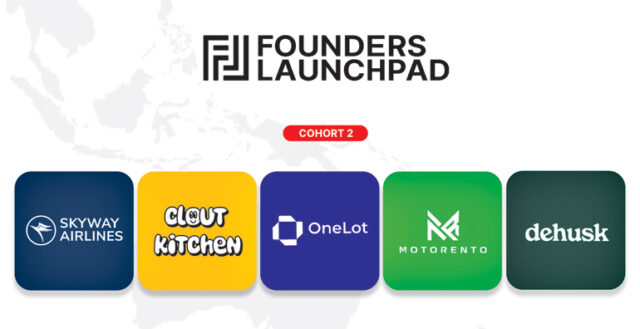
Startup accelerator Founders Launchpad (FL) unveils its second cohort, featuring five promising startups. With their impressive early achievements, the FL team is eager to support their journey forward.

FL’s Cohort 2 is comprised of: Motorento, a logistics startup that is revolutionizing fleet management for two-wheelers in the Philippines; Clout Kitchen, a platform helping top creators monetize their IP through AI-powered gaming solutions; Dehusk, which creates coconut-based milk alternatives for the local market; OneLot, a fintech startup offering collateralized car loans and software tools for used car dealers; and Skyway Airlines, another logistics startup which operates a dedicated cargo airline in the Philippines to improve supply chain efficiency across the archipelago.

Offering more than just funding, FL’s 14-people team is working closely with the cohort to help them accelerate operations and navigate their space effectively.

“We are thrilled to welcome our second cohort of startups. At Founders Launchpad, our commitment goes beyond providing funding. Our team works tirelessly alongside the founders, dedicating extensive effort to increase the chance of success for each venture. We are eager to work with the next batch of startups,” said Simon Bauer, co-founder of Founders Launchpad.

FL provides not just venture capital but also a wide range of support to early-stage companies. This includes hands-on help with fund raising, operations, marketing, sales, legal counsel, and technical development. FL also offers tailored workshops, mentorship, and networking opportunities to help startups grow and overcome the challenges they may face.

Moreover, FL is building a team that acts as an extension of each startup team. It operates in a high-paced environment where founders can build together, work together, and learn from one another in its coworking and community space.

Not just nails

KISS imPRESS False Eyelashes and Press-on Nails

NAILS may not be the top priority when it comes to one’s morning routine, but for the brand Kiss, present in all of America’s major stores (Ulta, Walmart, Target; name it), nails have put an edge on the industry.

James Park, Kiss Senior Vice-President for Nail Division and Senior Vice-President and General Manager for Kiss International Business Division, in an event in Makati on July 16, told us about the results of market research they did back in 2011. According to him, the market for nail polish was five times greater than for “fashion” (read: press-on) nails. “This year, we surpassed nail polish.”

Kiss was born in 1989 as a nail salon started by John Y. Chang, Sung Yong Chang, and Won Shik Kang in Flushing, Queens (home of The Nanny’s Fran Fine).

Kiss represents the Asian-American immigration story: in the 1970s, after the end of the Vietnam War, actress Tippi Hedren flew in her personal manicurist to train Asian women to do nails after a visit to a refugee camp. Korean immigrants started to dominate the industry in the 1980s. In a study called “Nail File: A Study of Nail Salon Workers and Industry in the United States” by the UCLA Labor Center and California Healthy Nail Salon Collaborative (Sharma, P., Waheed, S., Nguyen, V., Stepick L., Orellana, R., Katz, L., Kim, S. Lapira, K. 2018), it cites that there were over 2,000 Korean-owned nail salons in the New York metropolitan area.

As for Kiss, by 1992, they had begun to sell their nail products in Walgreens stores, hitting the mainstream.

“The nail salons are run by a lot of the Koreans, and now you see a lot of the Vietnamese doing it in the USA. Not just in LA, but in New York as well,” said Mr. Park. He called himself a “1.5-generation” immigrant, meaning he came to America as a young person (his parents form a full first generation). “I was able to study and build a career. The first generation, they really didn’t have that opportunity. So they end up doing something skill-set [based].

“We see a lot of the women now — I see my mom, worked. The first generation, they had to work. I see a lot of young people working as well. They’re professionals. They’re no longer homemakers. By us providing this type of product, they could continue to maintain beauty,” he said.

As for the name, Mr. Park said, “I asked the same question about 30 years ago,” he said. “How perfect the name is. Nobody will forget. And it’s red,” he said, referring to their logo.

During the July 16 event, stations were set up to show off the brand’s line of false nails, lashes, and hairstyling products. The brand holds something like 300 patents.

“I always tell my team this: don’t think about what you want; think about what your customer wants,” said Mr. Park on their innovations.

“We’re constantly thinking about little minor things… we have to work with the plastic. We have to work with the mold, to make sure it fits people perfectly.” As an example, he cited one of their products, designed to mimic the look of French manicures (natural-colored nails with the signature white tip). He said that the tip used to be painted on. “We created tool injection” in which the white plastic was merged with beige or pink plastic in a machine, forming one nail. “So it doesn’t chip,” explained Mr. Park.

The company is over 35 years old, and is available in over 100 countries in the world. “Longevity is innovation. And passion,” said Mr. Park.

“I tell the team: you’ve got to love what you’re doing,” he said. And this, he thinks, is the reason why the products fit so well in the Philippines. “A lot of the women here, I see, are very passionate.”

iFace is the official distributor of KISS products here in the Philippines, with the products sold in Watsons. — Joseph L. Garcia

Expected rate cuts, earnings brighten Ghost Month outlook

BW FILE PHOTO

By Revin Mikhael D. Ochave, Reporter

DESPITE August’s historical reputation as the weakest month for the stock market, some analysts are bullish, driven by anticipated rate cuts and strong second-quarter profit projections.

“Historically speaking, August is the worst month for the stock market. The stock market posted negative month-on-month returns for the month of August in 13 out of the past 20 years. This is typically a broad-based decline, meaning almost all the sectors are affected,” AP Securities, Inc. Research Head Alfred Benjamin R. Garcia told BusinessWorld in a Viber message.

“However, we’re a bit more optimistic this year, with rate cuts on the horizon and good earnings outlook for the second-quarter reports due to come out in early August,” he added.

Ghost Month, which typically falls in August, originates from an ancient Chinese belief that the gates of hell open, allowing ghosts to return to the living world.

This year, Ghost Month, the seventh month in the Chinese lunar calendar, runs from Aug. 4 to Sept. 2.

In light of this, Mr. Garcia advised investors to consider any market declines in August as a ‘buying opportunity.”

“Historically speaking, in 13 out of the past 20 years, stock market returns from September to December has been positive,” he said.

Finance Secretary Ralph G. Recto said last week that the Philippines is on track for a rate cut this year, as inflation slowed to 3.7% in June. The Bangko Sentral ng Pilipinas (BSP) has kept interest rates steady at 6.5% in its last six meetings.

BSP Governor Eli M. Remolona, Jr. has indicated that a rate cut is likely at the Monetary Board’s August 15 meeting.

Rastine Mackie D. Mercado, research director at China Bank Securities Corp., noted that since 1998, August has typically shown weak month-on-month price performance, with both average and median returns just under 2%, and over 65% of Augusts recording month-on-month losses.

“It’s also worthy to note that around 65% of Julys over the same period also posted positive month-on-month returns, which may offer some insight that August may be a month which typically sees profit taking,” he added.

Despite this, Mr. Mercado said it is better to focus on the catalysts that will drive the market in the near term.

“Given that the month-to-date return for July is at around 4.7%, we think that this coming August may be a month where we’ll see profit-taking. If the index stages a consolidation, then we think that a successful test of the 6,550 support could present some redeployment opportunities,” he noted.

“With respect to specific sector performance, we think that the upcoming earnings season will be a key driver in price action,” he added.

For the rest of the year, Mr. Mercado said the prospect of a rate cut will drive the local equity market.

“However, the key to sustaining the uptrend would be an expansion in earnings expectations,” he added.

Mark V. Santarina, Senior Trader at Globalinks Securities and Stocks, Inc., is also optimistic about the market’s outlook for September, aligning with the anticipated rate cuts.

“August presents a good opportunity to accumulate blue-chip stocks as the PSEi is likely to trade sideways,” he said in a Viber message.

Meanwhile, Michael L. Ricafort, Chief Economist at Rizal Commercial Banking Corp., said in a separate Viber message that the market slowdown in August coincides with bad weather and the vacation season in Northern Hemisphere countries such as the United States.

“Any slowdown in trading, economic, business activities is not only due to Ghost Month, but it is also a factor,” he said.

PSE’s Investor Day to highlight key updates from 14 publicly listed companies

The lobby of the Philippine Stock Exchange in Taguig City, Sept. 30, 2020. — REUTERS

The Philippine Stock Exchange (PSE) will host a three-day Investor Day program for publicly listed companies (PLCs) to discuss their first-half financial performance and projects.

The market operator will host the PSE STAR: Investor Day from Aug. 14 to 16, which will be attended by 14 PLCs. These companies will present their short- to mid-term strategies and other corporate developments.

“The return to a three-day schedule speaks of the keen interest of stakeholders involved in this program. PLCs want to share company updates to a wider audience so they join PSE STAR,” PSE President and Chief Executive Officer Ramon S. Monzon said in an e-mailed statement over the weekend.

“Fund managers, equities analysts, and investors, on the other hand, get the latest information and appreciate that they can ask questions directly to the heads of the companies,” he added.

The PLCs participating in the three-day event are ACEN Corp., AREIT, Inc., BDO Unibank, Inc., Cebu Landmasters, Inc., DigiPlus Interactive Corp., D.M. Wenceslao & Associates, Inc., East West Banking Corp., and Global Ferronickel Holdings, Inc. Other companies joining the program include GT Capital Holdings, Inc., MacroAsia Corp., Megawide Construction Corp., Philippine Business Bank, PLDT Inc., and Semirara Mining and Power Corp.

PSE STAR is co-hosted by Bloomberg LP, with partners Fund Managers Association of the Philippines and the Trust Officers Association of the Philippines.

The PSE STAR portal provides additional information on companies through the Spotlight write-up that contains details on the PLCs. The portal also has recorded briefings of PLCs that participated in previous editions of PSE STAR. Bloomberg analysts will also discuss their outlook on the economy and select sectors. — Revin Mikhael D. Ochave

iThink Hackathon offers P225,000 in prizes to Web3 developers to drive social impact

Aiming to leverage the innovations and opportunities presented by the blockchain ecosystem to power social advancement, ISLA Camp (ICP HUB Philippines) has launched the fourth edition of the iThink Hackathon and offers a total of P225,000 in prizes to Web3 developers that will build groundbreaking solutions.

iThink Hackathon “Pump Up The Jam” is being held in collaboration with the Rotary Club of Midtown Diliman and DEVCON to engage developers across the Philippines by providing a platform to showcase their creativity and innovations that address challenges in one of Rotary’s Areas of Focus: Peace Building and Conflict Prevention, Disease Prevention and Treatment, Water Sanitation and Hygiene, Maternal and Child Health, Basic Education and Literacy, Community Economic Development, and Environment.

The hackathon is designed to foster creativity, innovation, and collaboration among developers nationwide. Participants will work on projects in one of two tracks: Web Application or Web Game Application, utilizing both frontend hosting and backend Application Programming Interface (APIs) deployed on the Internet Computer Protocol (ICP).

For the Web application track, projects must utilize ICP for frontend hosting and backend API; frontend can also be developed using any technology, such as React, Angular, or Vue.js, as an option. Applications should be responsive and user-friendly.

For the Web Game Application track, games must also utilize ICP for the backend API and can be developed using any framework or engine, such as Unity, Phaser, Godot, or Defold. The games should be engaging, intuitive, and playable in a browser.

On June 22, ISLA Camp awarded P225,000 in total prizes to the winners of its recent nationwide iThink Hackathon. In first place was Waste2Earn, a platform that rewards recycling efforts and promotes sustainable practices and environmental conservation; followed by Wander.ly, a travel planning platform using blockchain for personalized, secure travel experiences; and Happ3n, social event management platform using blockchain to enhance event organization, in second and third place, respectively.

Applicants must choose their desired track. They may join the event solo or in teams of up to five members. Familiarity with the ICP is mandatory, and mentoring will be provided. Teams must not have received grants or hackathon prizes from the DFINITY Foundation or ICP HUB Philippines for the project they wish to submit. All participants must be above the age of 18.

ISLA Camp will select 10 teams per track and will equip them with the necessary tools and technologies to develop scalable innovations through a series of in-person and online design thinking sessions, mentorship sessions, and workshops with partner experts. The event will culminate in an IRL Showcase day on July 31.

Projects will be evaluated based on innovation (creativity and originality of the idea), functionality (how well the application works and its usability), design and user experience (visual appeal and user interaction), technical implementation (use of ICP and other technologies), and presentation (clarity and effectiveness of the project demo and documentation).

The champion team will receive a cash prize of P50,000, while the first and second runners-up will receive cash prizes of P30,000 and P20,000, respectively, per track. ISLA Camp will also award special prizes of P12,500 each for the most innovative DApp and impressive Game concept.

Interested participants must register and submit their requirements through the website https://hackathon.islacamp.ph/.

LVMH’s luxury wares earn top billing at Olympics opening

AN EMPLOYEE shows the Paris 2024 — Berluti label sewn inside the suit jacket for the French team athletes for the opening ceremony by LVMH's upscale menswear label Berluti, in a showroom at Berluti headquarters in Paris, France, April 10. — REUTERS

PARIS — Bernard Arnault, France’s wealthiest man and chief executive of luxury group LVMH, paid some 150 million euros ($163 million) to be the premium sponsor of the Paris Olympics. At the Games’ opening ceremony, his wares were placed front and center of an extravaganza viewed by a global audience.

Grammy-winner Lady Gaga delivered an energetic performance of Renee “Zizi” Jeanmaire’s “Mon truc en plumes” (My Feather Friend) decked out in a Dior Haute Couture black feather jacket over a black satin bustier.

Aya Nakamura, France’s most-listened to female singer in the world, performed a medley of her top hits clad in a Dior over-the-shoulder gold feather and silk dress.

Meanwhile, LVMH’s Berluti label dressed France’s athletes for the ceremony.

Mr. Arnault, who a day earlier had been rubbing shoulders with Tesla-owner Elon Musk at a lunch hosted by President Emmanuel Macron, followed the ceremony from his opulent Cheval Blanc hotel overlooking the Seine.

Asked in an interview broadcast by CNBC on Friday why LVMH sponsored the Games, Mr. Arnault said: “As we are the number one French company, we cannot avoid helping.

“But it has to have a sense. We are just not going to give money and say, OK, you thank us, but that’s it. We wanted to find a way to show through the Olympics to the world that France as itself is a creative country, is a refined country, is a craftsmanship country.”

LVMH’s Moët & Chandon champagne and Hennessy cognac will be quaffed in VIP bars, its jewelry brand Chaumet has designed medals for the event, while Louis Vuitton is the label behind the medal trays and torch trunks.

The opening extravaganza displayed cinematic video footage of the trunks being carried down to the Seine and production of the athletes’ medals. “In tonight’s opening ceremony, you will see very beautiful dresses done by Dior and other houses,” Mr. Arnault told CNBC. “It’s, I think, a fantastic way to show that France is special.” — Reuters

Jollibee Foods to review preferred shares plan

JOLLIBEE Foods Corp. (JFC) said it will review its planned issuance of preferred shares, citing the faster-than-expected growth of the company’s domestic business.

“The idea for the preferred shares issuance was for the growth in the Philippines. What we’ve seen recently is our growth in the Philippines is faster than our planned growth,” JFC Chief Financial Officer Richard Shin said during a virtual briefing last week.

“We don’t know how much we really need in terms of preferred shares because our (Philippine) business is actually growing much faster. We’re going to reevaluate and we’re going to consider if we need to do the preferred shares offering,” he added.

In March, JFC’s board approved a plan to offer and issue five million preferred shares with an oversubscription option of up to three million preferred shares at P1,000 apiece, with an estimated total value of up to P8 billion.

This planned issuance will be the second tranche of JFC’s 20 million preferred shares shelf registration approved by the SEC in September 2021.

According to Mr. Shin, the move is also influenced by the local central bank’s expected interest rate cut.

“We’re taking a look at this again, understanding that the rates haven’t come down yet. That’s important because you lock into a fixed rate, whether it’s a coupon or whether it’s interest, at the time of a potential rate cut, that’s probably not the right way,” he said.

“We’re looking at other instruments that are more variable to take advantage of lower interest rates that we know are coming. We are looking at this holistically. We are looking at all the options at the moment,” he added.

Previously, the fast-food giant said a portion of the offering’s net proceeds would be used to refinance financial obligations including the company’s callable Series A preferred shares due October this year and for other general business purposes.

“JFC is undertaking this funding transaction to maintain strong capital structure, robust leverage position, and optimize liquidity by managing maturities of financial obligations,” the company said.

JFC has earmarked P20-23 billion as its capital expenditure budget to fund the company’s plan of opening 700 to 750 new stores this year.

The company’s shares were last traded on July 26, ending at P228 apiece. — Revin Mikhael D. Ochave

Habi announces fair dates, piña and abaca weaving contests

A scene from last year's judging and deliberation of entries; From left - Fashion designer Barge Ramos, Noli Hans (Hidden), and Erlie Gomez-Manaloto.

HABI: The Philippine Textile Council invites piña and abaca weavers to showcase their skills in its two flagship competitions: the 7th Lourdes Montinola Piña Weaving Competition and the 3rd Eloisa Hizon-Gomez Abaca Weaving Competition. The competitions, which are part of HABI’s mission to preserve, promote, celebrate, and develop Philippine textiles and the country’s weaving culture, are among the highlights of the council’s annual Likhang Habi Fair which will be held on Oct. 18 to 20 at the Glorietta Activity Center in Makati.

Last year, Marilyn Almero of La Herminia Piña Weaving won two prizes at the 6th Lourdes Montinola Piña Competition for the excellence and innovation of her piece called Peacock. Aklan weavers Raquel Eliserio and Anna India Legazpi were first and second runner-up, respectively.

Winners of last year’s Eloisa Hizon-Gomez Abaca Weaving Competition were Anna India Legazpi, Agustin Tawi Sudaw of Bulacan, and Edgar Cornito, a T’Boli from Lake Sebu, South Cotabato.

This is the 7th edition of the Lourdes Montinola Piña Weaving Competition, the Philippines’ premier piña weaving contest, named after the chair emeritus of the Far Eastern University and author who is a champion of indigenous textiles. She has written several books including Piña, a landmark book about the origins, the history, and the artistry of the pineapple fiber cloth.

Artists and artisans who want to join the competition may work on their own or collaborate in creating extraordinary piña. Entries will be evaluated based on quality of making — excellence of the range of processes used including the knotting of the fiber, control over weaving tension, balance between the tensile strengths of piña and other fibers woven with the pineapple fiber, dyeing or other form of coloring, the physical relationship of the embellishments to the woven cloth and more — and quality of innovation and use of imagination.

The judges will be looking for freshness and excellence in the way they handle piña as a material. Blending with other natural fibers is allowed, as long as piña makes up more than 50% of the body of the cloth. Participants are encouraged to explore new possibilities for couture and experiment with new procedures in the making of pineapple fiber cloth. Submissions need to be at least two meters long. There is no regulation on the width.

Three winners will be chosen and ranked first, second, and third. “There will be special awards for young weavers under 30 years old and for outstanding innovation,” said Adelaida Lim, President emeritus of HABI.

Abaca weavers get their chance to shine in the Eloisa Hizon Gomez Abaca Weaving Competition. Ms. Lim said, “The abaca competition was initiated by the former fashion designer Gang Gomez, now Don Martin, OSB, and his siblings, to honor the memory of their mother who championed the wearing of native attires and use of local textiles.”

For the 3rd Eloisa Hizon-Gomez Abaca Weaving Competition, participants may also work on their own or collaborate with other artists in creating extraordinary abaca cloth. Submissions must be at least three meters long and woven exclusively using abaca fiber. The width is up to the contestants. Entries will be judged based on excellence in execution, skill and technique, including knotting and control of weaving tension, design and weaving qualities specific to the culture of the weaving community, aesthetics, dyeing or other forms of coloring and quality of innovation, if any.

Three exceptional pieces will be chosen and awarded equal prizes.

Entries must be packed with care and submitted to Habi: The Philippine Textile Council, Inc. Office at No. 962 May St., Mandaluyong City, Metro Manila. Entries must include a signed application form with the following details: title of work, name of weaver, age of weaver, indigenous group, mentor, address, weaving experience, how long it took to make the piece, description of the process and date. The deadline for submissions is on Sept. 16.

Interested parties may find out more about the competition mechanics by checking the council’s website habiphilippinetextilecouncil.com, and its social media pages on Facebook and Instagram (@HABICouncil). For more information, call HABI: The Philippine Textile Council at 0921-849-6974 or e-mail support@habiphilippinetextilecouncil.com.