Notice: Function _load_textdomain_just_in_time was called incorrectly. Translation loading for the Newsmag domain was triggered too early. This is usually an indicator for some code in the plugin or theme running too early. Translations should be loaded at the init action or later. Please see Debugging in WordPress for more information. (This message was added in version 6.7.0.) in /data/bwonline/walaakomaisip/wp-includes/functions.php on line 6131
BusinessWorld Online | BusinessWorld: The leading and most trusted source of business news and analysis in the Philippines | Page 238                                   
Home Blog Page 238

Philippine vehicle sales slump in January

Vehicles crawl through bumper-to-bumper traffic along EDSA-Taft in Pasay City, May 20, 2025. — PHILIPPINE STAR/RYAN BALDEMOR

By Beatriz Marie D. Cruz, Reporter

PHILIPPINE CAR SALES slumped in January amid a weaker demand for both passenger and commercial vehicles, according to an industry report.

In a joint report by the Chamber of Automotive Manufacturers of the Philippines, Inc. (CAMPI) and the Truck Manufacturers Association (TMA), vehicle sales declined by 10.4% to 33,696 units in January from 37,604 units sold in the same month in 2025.

January saw the biggest annual decline in four years or since the 11.2% drop in January 2022.

Month on month, vehicle sales plunged by 21.4% from 42,870 units sold in December 2025, when demand is typically higher.

Despite this, vehicle sales are still expected to exceed 500,000 units this year, as demand is likely to pick up in the latter part of the year, CAMPI President Jose Maria M. Atienza said in a statement.

“When market seasonality adjustment is factored in, the January sales level aligns with the steady pace observed during the second half of last year,” CAMPI said.

Passenger car sales, which accounted for 18.33% of total industry sales, dropped by 20.1% to 6,178 units in January from 7,729 units sold in the same month last year. Month on month, sales of passenger cars fell by 22.86% from 8,009 in December.

In January, commercial vehicle sales slipped by 7.9% to 27,518 units from 29,875 a year ago. This accounted for 81.67% of the industry’s total sales for the month.

Month on month, sales of commercial vehicles dropped by 21.1% from 34,861 units sold in December last year.

Broken down, light commercial vehicle sales fell by 8.8% to 20,392 units, while sales of Asian utility vehicles (AUV) declined by 6.6% to 6,253.

Sales of light commercial vehicles and AUVs both declined month on month by 17.3% and 32.5%, respectively.

The only segment that saw annual growth was light truck sales, which jumped by 21.7% to 605 units in January from 497 units a year ago. On a monthly basis, sales also increased by 15% from 526 in December.

Medium truck sales slipped by 13.4% year on year in January to 226 units, and also plunged by 40.4% month on month.

Sales of heavy trucks slumped 39.1% to 42 units year on year but doubled from 21 in December.

Rizal Commercial Banking Corp. Chief Economist Michael L. Ricafort attributed the drop in vehicle sales to the weak consumer sentiment that has persisted amid the corruption scandal.

“[Investors are on a] wait-and-see mode if catch-up government spending premised on priority anti-corruption measures/reforms are taken seriously, which could help uplift investor confidence, including spending on big-ticket items like vehicles,” he said in a Viber message.

BRIGHT SPOT
Meanwhile, CAMPI said it is betting on the growing demand for electric vehicles (EV) in the country to drive industry sales this year.

“Despite the decline in both the passenger and commercial vehicle main categories, CAMPI sees a bright spot in the continuous growth in the electrified segment,” it said.

Data from CAMPI and TMA showed that electric vehicle sales surged by an annual 63.1% to 2,610 units in January from 1,600 a year ago.

The segment, which includes battery EV (BEV), plug-in hybrid EV (PHEV), and hybrid EV (HEV), accounted for a 7.75% share of the market.

Month on month, EV sales declined by 40.1% from 4,358 units sold in December 2025.

Sales of BEVs jumped by 78.8% year on year to 261 units in January, while sales of PHEVs surged by 2,977.8% to 277 units.

On a monthly basis, BEV and PHEV sales dropped by 25.2% and 5.1%, respectively.

Sales of hybrid EVs jumped by 43.4% year on year in January to 2,072 units but declined by 44.3% from December.

Mr. Ricafort expects higher EV sales this year, as the entry of new players reduced prices and gave consumers more options.

He also noted that more taxis and utility vehicles are expected to shift to EVs this year, adding that more consumers have shown an increased preference for low-carbon cars.

In January, Toyota Motor Philippines Corp. remained the leader with a 48.51% market share, despite a 9.6% decline in year-on-year sales to 16,346 units.

This was followed by Mitsubishi Motors Philippines Corp., whose sales fell by an annual 5% to 7,003 units in January.

Suzuki Phils., Inc. came in third even as sales declined by 7.6% to 1,646 units.

Also included in the top five were Nissan Philippines, Inc., whose sales dropped by 32.8% to 1,589 units; and Ford Motor Company Phils., Inc., whose sales declined by 19.3% to 1,272 units.

Cybersecurity self-assessment for banks, nonbanks proposed by BSP

FREEPIK

THE BANGKO SENTRAL ng Pilipinas (BSP) is proposing to require all banks and nonbanks to conduct a self-assessment of their cybersecurity maturity amid growing concerns over increasing cyber risks.

This, as the central bank seeks to strengthen the financial system through its supervised financial institutions (BSFI) against rapidly evolving threats in cyberspace.

“Digital financial and payment services and platforms continue to evolve rapidly, with innovative solutions emerging to enhance customer experience, improve operational efficiency, expand accessibility, and strengthen market competitiveness,” the central bank said in the exploratory note of the draft circular.

“However, these developments are accompanied by a corresponding increase in cyberthreats, which heighten risks to both financial institutions and their customers,” it added.

According to the central bank, the Cybersecurity Control Self-Assessment (CCSA) will allow BSFIs to enhance their offsite surveillance and risk assessments for information and cybersecurity.

“This initiative aims to enhance the financial sector’s resilience against  evolving cyberthreats by enabling BSFIs to assess their cybersecurity maturity against established best practices and develop a roadmap toward their target maturity level,” the BSP said.

BSP Deputy Governor Lyn I. Javier earlier noted that more frequent, more scalable and targeted cyberthreats are endangering the financial system’s digital shift, with the improving interconnectivity enabling more cybercriminals to exploit its weak points.

Based on the latest central bank report, social engineering such as phishing scams, account takeover and identity theft accounted for 76% of the total amount lost to financial fraud in the first half of 2025, making it the top cyberthreat of the local banking system.

This was followed by hacking, which made up 13% of the total losses, and card-not-present fraud with 8%.

Under the draft circular, the BSP clarified that the CCSA will not replace the current Supervisory Assessment Framework for cybersecurity and information security. 

Instead, it will serve as an additional requirement alongside the annual information technology (IT) profile that financial institutions were previously required to submit 25 days after the end of each reference year.

“Rather, these tools are designed to complement existing supervisory mechanisms by enabling BSFIs to identify areas for improvement and systematically track progress toward their desired maturity level,” the BSP said. 

The central bank also noted that the CCSA will use a Cybersecurity Maturity Framework (CMF) to measure the BSFI’s maturity level, based on the CCSA results, and its target maturity level aligned with its IT risk profile.

The assessment tool features capability-based questions to evaluate the BSFI’s maturity in specific control areas, as well as survey questions to gather further insights for policy development and regulatory guidance.

NBFIs’ maturity levels could be classified as foundational, established, managed or optimized, according to the BSP.

The level will be evaluated based on their information security governance, information security risk management, security control implementation, and cyberthreat intelligence and collaboration.

Both the CMF and the CCSA will then be integrated in the Advanced Suptech Engine for Risk-based Compliance, which the BSP said “may be periodically reviewed and enhanced to ensure a dynamic and responsive assessment process.”

“The result shall provide the BSFI’s current maturity and inform of the possible areas requiring intervention or a plan for improvement to achieve their target maturity,” the BSP added.

BSFIs with a moderate and complex IT profile will be mandated to electronically submit their respective CCSAs to the BSP yearly on or before March 31, following the end of the reference year. — Katherine K. Chan

Marks & Spencer to exit Philippine market by May

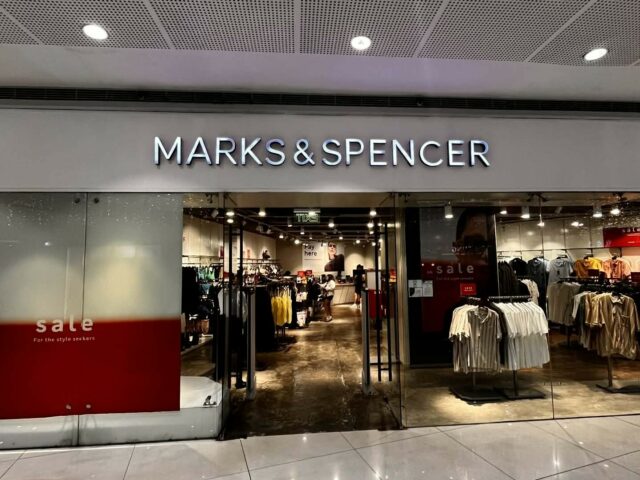
MARKS & SPENCER SM Megamall Fashion Hall — ALEXANDRIA GRACE C. MAGNO

By Alexandria Grace C. Magno, Reporter

STORES SPECIALISTS, INC. (SSI), a wholly owned subsidiary of SSI Group, Inc., said it will cease operating Marks & Spencer (M&S) stores in the Philippines this year, with the final day of operations set for May 2.

“This has not been an easy decision,” the company said in a disclosure on Wednesday. “Building Marks & Spencer in the Philippines has been a meaningful and rewarding chapter for our organization. We are deeply grateful to our loyal customers, dedicated employees, and partners who have supported the brand through the decades,” it added.

Marks & Spencer is a British retailer that sells food, clothing, and homeware worldwide.

In the Philippines, Marks & Spencer is operated by Rustan Marketing Specialists, Inc., part of Tantoco-led listed specialty retailer SSI Group.

Under SSI’s stewardship, Marks & Spencer opened its first Philippine store nearly 40 years ago.

SSI said changing consumer tastes and shopping habits prompted the company to redirect resources toward brands aligned with current and future market trends, describing the move as a necessary step for growth.

“Retail is constantly transforming. Change is inevitable, tastes evolve, and therefore so should we. We remain committed to the constant strengthening of our portfolio and delivering experiences that resonate with today’s consumers,” the company said.

The company added that it will coordinate with employees, partners, and stakeholders to ensure an orderly wind-down of operations, with further details on timelines, promotions, and customer notices leading up to May 2, 2026, to be announced.

STORE CLOSURES AND DISCOUNTING
Before the announcement, a series of store closures and extended discounting across the Philippines had fueled speculation among customers and market watchers that the retailer was preparing to exit the country.

Several branches, including Mall of Asia, TriNoma, Eastwood, and Robinsons Manila — which closed on Jan. 5 — have been marked as “permanently closed,” while the Ayala Center Cebu branch is listed as “temporarily closed.”

Some customers also noted that many remaining branches are offering discounts of up to 70% on selected items. These promotions are available to both in-store customers and loyalty members, although certain items may be limited or unavailable.

Despite multiple closures, branches listed on the company’s website — including Alabang Town Center, Central Square, Bonifacio High Street, Gateway Mall, Glorietta 4, Greenbelt 5, Power Plant Mall, Rockwell, SM Aura Premier, SM City North EDSA, Shangri-La, SM Megamall Fashion Hall, Paseo de Santa Rosa, Abreeza Mall in Davao, and SM Lanang Premier — remained operational as of Wednesday.

ANALYSTS SEE PORTFOLIO RATIONALIZATION
F. Yap Securities, Inc. investment analyst Marky Carunungan said SSI’s move appears to reflect portfolio rationalization rather than financial distress.

“The discounts are consistent with a confirmed exit rather than an earnings patch. Marks & Spencer is classified under SSI’s casual segment, which declined 2.9% in 9M25. However, SSI does not disclose brand-level data, so we cannot attribute that segment decline specifically to Marks & Spencer,” he said in a Viber message.

Mr. Carunungan added that the markdowns are typical liquidation measures ahead of the planned May 2026 closure rather than a response to weak third-quarter (Q3) results.

“M&S sits within the casual category, which accounts for roughly 14-15% of group sales. While there may be short-term exit costs and some revenue impact, SSI remains diversified with P20.3 billion in 9M25 sales across 103 brands,” he added.

In November, SSI Group reported a 64.99% decline in Q3 attributable net income to P188.08 million from P537.18 million a year earlier, as weaker sales in its luxury, bridge, and casual wear segments weighed on results.

Revenue for the three months ending September slipped by 0.93% to P6.9 billion, while net sales declined 0.9% to P6.88 billion.

The company attributed the decline mainly to lower sales in the luxury and bridge segments, which fell 3.8%, and casual wear, which declined 2.9%, reflecting reduced discretionary spending in the high-end market during the quarter.

SSI reported operating 613 stores nationwide across 103 brands as of end-September, after opening 17 and closing two stores during the third quarter.

Meanwhile, Unicapital Securities Equity Research Analyst Jeri R. Alfonso said developments leading up to the announcement had indicated a possible market exit.

“In the case of Marks & Spencer Philippines, stores have been slowly closing nationwide, and its social media presence does not appear heavily invested in marketing as recent content seems largely centered on promoting discounts,” she said in a Viber message.

“These early signs already suggested that the Philippines might be one of the markets Marks & Spencer was planning to leave, and true enough, SSI has since confirmed that Marks & Spencer will officially exit the country in May this year,” Ms. Alfonso added.

GLOBAL STRATEGY RESET
In several press releases, Marks & Spencer outlined plans to reset priorities for its international business to strengthen long-term growth.

In February last year, the retailer strengthened its global leadership team with three senior appointments, including a new international partnerships director, commercial director, and managing director of Marks & Spencer India, as part of its reset and future growth plan.

Marks & Spencer reported an 11.58% decline in international sales to £255.8 million in the first half of 2025 from £289.3 million in 2024, citing lower first-quarter franchise shipments and reduced clearance sales in owned markets amid value investments.

“Having reset the International business to reshape Marks & Spencer for global growth, we’re focusing on bigger, better partnerships, which enable us to bring the best of Marks & Spencer to the world,” Marks & Spencer Managing Director of International Mark Lemming said during the signing of a partnership with a B2B logistics solutions provider in November last year.

According to its website, Marks & Spencer operates in more than 70 international markets with over 380 stores overseas.

On Tuesday, SSI Group shares fell by two centavos, or 0.74%, to close at P2.68.

Meralco 2025 profit grows 12% to P50.6 billion

PHILSTAR FILE PHOTO

PANGILINAN-LED Manila Electric Co. (Meralco) achieved its P50-billion profit target for 2025, driven by power generation growth and contributions from its distribution business.

The company’s 2025 consolidated core net income (CCNI), which excludes non-recurring items to reflect underlying performance, rose 12% to P50.6 billion from P45.1 billion in the previous year, Meralco Chief Finance Officer Betty C. Siy-Yap said during a briefing on Tuesday.

Meanwhile, the company’s reported net income, which represents total profit including one-time gains and losses, climbed 11% to P51 billion from P45.9 billion in 2024.

Consolidated revenues grew 6% year on year to P497.3 billion, supported by higher distribution charges, increased power generation revenues, and higher volumes sold by the retail electricity supply (RES) business.

“Meralco had another record year in 2025 — marked by a double-digit growth in our CCNI and full-year profit that surpassed our target,” Meralco Chairman and Chief Executive Officer (CEO) Manuel V. Pangilinan said.

“These results were driven by the steady performance of the core distribution business and solid growth of the power generation business, supported by disciplined financial management,” he said. “Our strategy of maintaining a balanced mix of regulated and unregulated operations has served us well.”

Meralco’s distribution utility business accounted for the largest share of earnings at 58%, amounting to P29.6 billion. Power generation contributed 33% or P16.8 billion, while the RES business and non-electricity operations had a combined 9% share of the bottom line.

For the full year, the power distributor recorded a nearly flat energy sales volume, with a 0.7% decline to 53,997 gigawatt-hours (GWh), affected by softening demand due to extreme weather, increased solar rooftop adoption, and slower economic growth.

Meanwhile, Clark Electric Distribution Corp. and Shin Clark Power Corp. reported increases of 35% and 18%, respectively, contributing a combined 20.7 GWh in energy sales.

By segment, the commercial sector remained the largest contributor to energy sales, which slightly declined by 0.4% to 20,326 GWh.

Sales volume in the residential sector fell 2% to 19,060 GWh as temperatures began cooling in May, while the industrial sector posted a 1% uptick to 20,326 GWh, anchored on resilient demand in the semiconductor and construction-related industries.

“Our commitment that no one will be left in the dark remains constant — through investments in innovative solutions like microgrid systems that bring electricity to communities that are not connected to the country’s main power grid,” Meralco Executive Vice-President and Chief Operating Officer Ronnie L. Aperocho said.

Meralco PowerGen Corp. (MGEN), a wholly owned Meralco subsidiary, reported a 52% increase in earnings contribution, driven by investments in liquefied natural gas and higher income from thermal assets.

“2025 was a year of strong growth for MGEN, driven by sustained reliability across our diverse portfolio, with global recognition underscoring the strength of our strategic direction and our people,” MGEN President and CEO Emmanuel V. Rubio said.

Asked if Meralco has set a new profit target for 2026, Mr. Pangilinan said the company is a bit “reluctant” as it still needs to gauge how its large-scale solar farm and energy storage project will contribute this year.

“Terra Solar is going to gradually become profitable for the year… the sooner it generates power and sells to the grid, the better the prospects for 2026 would look like for Meralco,” he said.

Meralco is the country’s largest private electric distribution utility, serving more than 8.2 million customers in Metro Manila and nearby provinces, including Bulacan, Cavite, Rizal, and parts of Laguna, Batangas, Pampanga, and Quezon.

The company sought a tariff adjustment of P2.34 per kilowatt-hour as part of its application before the Energy Regulatory Commission for the first regulatory period (1RP) rate reset.

“Finally, the timely implementation of new distribution tariffs under the 1RP will further allow Meralco to undertake capital-intensive projects that will not only meet growing power demand and modernize energy infrastructures, but also future-proof our operations — all of which will benefit our customers in the long term,” Mr. Pangilinan said.

Meralco’s controlling stakeholder, Beacon Electric Asset Holdings, Inc., is partly owned by PLDT Inc. Hastings Holdings, Inc., a unit of PLDT Beneficial Trust Fund subsidiary MediaQuest Holdings, Inc., has an interest in BusinessWorld through the Philippine Star Group, which it controls. — Sheldeen Joy Talavera

Cebu fuel retailer Top Line to set up trading house in Singapore

PHILIPPINE STAR/EHDA M. DAGOOC

CEBU-BASED fuel retailer Top Line Business Development Corp. is planning to establish a trading house in Singapore to facilitate fuel importation and optimize its supply chain.

In a statement on Wednesday, the company said its board of directors approved the plan to set up a wholly owned subsidiary in Singapore that will operate as a trading house and manage import logistics.

The proposed Singapore-based entity will serve as Top Line’s international trading arm, enabling the company to directly engage with global fuel suppliers and improve its procurement processes.

“By establishing a trading presence in Singapore, we enhance our fuel supply reliability and efficiently structure our costs. Over time, this is expected to contribute to better margins and more efficient fuel sourcing across our network,” Top Line First Vice-President and Chief Financial Officer Constance Marie C. Lim said.

The company’s logistics subsidiary, Topline Logistics and Development Corp., recently secured a certificate of registration from the Bureau of Customs, allowing it to undertake fuel importation activities.

Singapore serves as Asia’s largest oil trading hub, bridging Middle Eastern producers and Southeast Asian demand markets.

According to the company, establishing a presence in Singapore positions it closer to key market participants, trading platforms, and pricing benchmarks.

Last week, Top Line announced it had opened eight new fuel stations in northern Cebu following the completion of renovations on its acquired fuel retail network.

The initiative is part of Top Line’s broader per-cluster renovation and rebranding program, covering stations in Cebu, Leyte, Siquijor, and Negros Oriental.

The company has allocated approximately P925 million for the acquisition and renovation of stations in Cebu and for new locations, accelerating the rollout of its retail arm, Light Fuels, in the Visayas.

Top Line started in leasing and real estate but entered the fuel industry in 2017. It is now active in commercial trading, depot operations, and retail fuel in the Visayas region. Through Light Fuels, the company introduced its first service station in Mandaue City, Cebu, in 2023.

At the local bourse on Wednesday, Top Line shares rose 1.31% to close at P1.55 apiece. — Sheldeen Joy Talavera

PHL digital payment landscape now maturing

JCOMP/FREEPIK.COM

THE PHILIPPINES’ digital payment landscape is likely to develop further this year as more Filipinos prefer to go cashless, with interoperability expected to be a priority as consumers want frictionless transactions.

Digital payments now have a bigger role in everyday commerce in the country and has now become a necessity for both consumers and merchants from just being a nice-to-have, according to Fiuu, a payments service provider operating in Southeast Asia, including the Philippines.

This shift was partly driven by the Bangko Sentral ng Pilipinas’ (BSP) push to digitalize retail transactions to improve financial inclusion and the development of the country’s real-time payments infrastructure, which has led to the growth of cashless and contactless transactions.

“The digital payment landscape is moving into a more mature phase as we enter 2026, shaped as much by infrastructure and regulation as by consumer behavior,” Fiuu Chief Executive Officer Eng Sheng Guan said.

“Our focus at Fiuu in the Philippines is on supporting merchants as expectations rise, daily digital payment usage accelerates, and the ecosystem continues to mature.”

Consumers in the Philippines now expect convenience, value, and security as standard when making online payments, the company said.

“Retailers are using payments as strategic tools for growth, engagement, and risk management. Banks and wallets are differentiating themselves through interoperability, compliance capabilities, and trust,” it added.

“Infrastructure, regulation, and consumer behavior are increasingly aligned, setting clearer parameters for success. In this environment, market leadership will be defined not by rapid adoption alone, but by the ability to deliver consistent, interoperable, and secure payment experiences at scale.”

Interoperability has become more important as consumers want to be able to pay with any card or wallet without friction, it said.

“The arrival of Apple Pay and Google Pay significantly raises consumer expectations around universal acceptance, while 24/7 payment rails remove timing and availability as limiting factors… As a result, fragmented ecosystems, limited wallet acceptance, or system downtime increasingly result in abandoned transactions rather than workarounds.”

Retailers are beginning to adopt multi-wallet checkout systems to cater to their customers’ needs to maximize their sales, it said.

“Interoperability in 2026 is not about innovation. It is about meeting minimum commercial expectations in an increasingly competitive retail environment where consumers expect to tap and pay instantly, regardless of channel or purchase size,” Mr. Eng said.

More consumers in the country are also shifting towards contactless and card-based payments, even for small-value transactions like transport and dining, which were previously done with cash, which shows that they are becoming more comfortable with going cash-lite and cashless as a default, Fiuu said.

Meanwhile, flexible payment options like embedded credit and buy now, pay later are also growing, supported by better regulatory controls and identity verification.

“Consumers remain open to embedded credit when it is seamless, transparent, and secure. Trust is increasingly the deciding factor, rather than access alone. Importantly, the growing familiarity with using cards for everyday spending is also normalizing short-term credit as a routine payment behavior, not just financing tools for large purchases,” Fiuu said.

“For retailers, embedded finance offers clear upside, including higher basket sizes and improved conversion rates. However, partnerships are becoming more selective. Merchants are prioritizing providers that can balance speed with compliance, ensuring growth does not introduce regulatory or reputational risk.”

Mr. Eng said platforms that ensure strong customer protection, transparency, long-term trust, compliance, and governance will drive the expansion of embedded finance in the Philippines.

The share of online payments in monthly retail transactions stood at 57.4% in terms of volume and 59% in value terms in 2024, BSP data showed. These are up from 52.8% and 55.3%, respectively, in 2023.

The central bank wants digital payments to make up 60%-70% of the total volume of retail payments by 2028 in line with the Philippine Development Plan. — Bettina V. Roc

Maya plans US, Philippine dual listing for 2026 IPO

MPIC/BW FILE PHOTO

FINANCIAL TECHNOLOGY (fintech) firm Maya is targeting an initial public offering (IPO) in the second half of the year, with plans to list first in the United States and then on the Philippine Stock Exchange (PSE), Chairman Manuel V. Pangilinan said.

“Our target is to pursue a dual listing. That is what our foreign shareholders want, but we are insisting on the Philippine market as well,” Mr. Pangilinan told reporters on the sidelines of an event on Wednesday.

The IPO is part of Maya’s plan to raise new capital while allowing existing investors to exit and enabling PLDT Inc. to maintain its stake in the digital fintech company.

“PLDT and First Pacific together own a 39% stake. We want preemptive rights to the new share issue to maintain our stake at 39.6%. We are prepared to subscribe to the untaken portion of the primary offering,” he said.

Mr. Pangilinan added that while the IPO is expected this year, the timeline remains uncertain. “It does not mean it will happen, but that is the target,” he said.

China Bank Capital Corp. Managing Director Juan Paolo E. Colet said the dual listing is a “good option to support the local stock market,” allowing more Filipinos to participate in the offering.

“The dual listing route will also enable Maya to access the highly liquid and sophisticated US equity market, which provides opportunities for better price discovery and more robust bookbuilding,” he said in a Viber message.

Maya’s existing shareholders include PLDT and First Pacific, which together hold 39.6%, as well as KKR & Co., Tencent Holdings, and the International Finance Corp.

Hastings Holdings, Inc., a unit of PLDT Beneficial Trust Fund subsidiary MediaQuest Holdings, Inc., holds a majority stake in BusinessWorld through the Philippine Star Group, which it controls. — Ashley Erika O. Jose

Entrepreneurship and Feng Shui: The playbook for the Year of the Fire Horse

SOFIA RELOSA — a Philippines-based Feng Shui and Chinese metaphysics consultant. — THE RJ LEDESMA PODCAST

“Millionaires don’t use astrology, billionaires do.” This quote, which is often attributed to the legendary banker J.P. Morgan, is the perfect introduction to the lunar year, the Year of the Fire Horse. It’s a rare year, according to Chinese astrology, that is full of “wildfire energy” which magnifies both rapid growth and financial risks. And, put simply, the J.P. Morgan quote is about how the best entrepreneurs use every tool at their disposal — astrology, Feng Shui, or Qi Men Dun Jia — to gain an advantage.

Put another way, 2026 is “a high fire element year where there’s no water,” says Sofia Relosa, a Feng Shui, BaZi, and Qi Men Dun Jia consultant whose business has been booming for nine years now. I spoke to Ms. Relosa to shed some light — or positive energy if you will — on the role Chinese mysticism can play in the lives of entrepreneurs.

Before anything — and this is important to a Catholic like myself and millions of Filipinos — Feng Shui or the other arts in Chinese mysticism are not a religion. Ms. Relosa insists that it is not a belief system either, nor is it “the devil’s playground.” “You don’t have to believe in Feng Shui for it to work,” she says, making analogies to science. “It’s a tool that you use for your life,” she summarizes.

My conversation with her, which you can watch in full on the RJ Ledesma Podcast, offers fascinating advice on two fronts. First, if you’re open to Chinese mysticism, she offers her recommendations on how to tackle both the risks and opportunities that the Year of the Fire Horse has to offer. Second, as an entrepreneur herself, Ms. Relosa’s journey is a fascinating story about resilience and perseverance.

JUST A LITTLE PATIENCE
The outlook for 2026 in Chinese astrology mirrors actual world events. A declining global economy, geopolitical upheaval, and healthy growth for the Philippines are all, simultaneously, in the cards. Ms. Relosa explains that 2026 will be a year where both growth and risks are magnified.

Returning to how the Year of the Fire Horse is high in fire and no water, she said, “We have to act in accordance to what’s missing, which is water.”

For entrepreneurs, this means exercising a little patience. It means employing well-thought-out strategies and being intentional in business.

“Water is all about wisdom, thinking, reflecting,” she continued. “Since there is no water, people act with haste, without thinking, without incorporating wisdom into the things that they do. And a good example, because he is a personified fire horse, is Trump.

“In order to thrive, we have to do the opposite. This year a sort of patience is required. Patience to dive deep, do due diligence and research before moving forward.”

Ms. Relosa encourages entrepreneurs to hire consultants like herself to employ this kind of thinking. Trained under Joey Yap’s Mastery Academy in Singapore and Malaysia, she practices three disciplines: Feng Shui, which is about the flow of qi or energy in a space, BaZi or Chinese astrology, which acts like a “personal Feng Shui” and Qi Men Dun Jia, a powerful divinity tool employed in decision making.

QUICK LESSONS IN THE YEAR OF THE FIRE HORSE
1. Many industries will thrive in 2026. Given that the Year of the Fire Horse will be fast-moving and volatile, what industries then will be successful? Ms. Relosa said business will grow in 2026, and names restaurants and aesthetics clinics in particular.

“Industries are actually thriving,” she explained. “Or if you’re not innovative enough, you might even see yourself experiencing a lot of competition in the fire industry.”

2. Innovate, but be consumer-centric. With so much creative energy in the Year of the Fire Horse, her message to entrepreneurs is to be nimble and innovate. She said, “[In a] fire year, everything is fast. You have to really innovate every now and then… You have to really change. If you’re resisting social media content, you’re going to have difficulty as a business owner. You have to be open to using AI and continuously change and adapt.”

At the same time she warned against innovation for its own sake. She reminded entrepreneurs that innovation should be rooted in consumer-centric values.

THE COURAGE TO BE DISLIKED
Ms. Relosa’s own entrepreneurial journey is one full of lessons in business, about passion and resilience. She began entrepreneurship in 2008 with a skincare business. After employing a Feng Shui consultant for her clinic with disappointing results, she began studying Feng Shui on her own. But she knew her religious family and her own husband would not approve. She proceeded anyway, enrolling in Joey Yap’s Mastery Academy in Singapore in secret at first.

Afterwards, she began her consultancy in 2017, and by promoting herself through vlogs, the business took off.

She tells entrepreneurs to “have the courage to be disliked.”

She said, “It’s okay to be disliked, for as long as it’s making you spark that intuitive guide in you… You have to listen to your intuition because this is where God speaks.”

It is this spark that entrepreneurs need to nurture. “Take care of it, value it,” she encouraged. “If there are nudges that keep you awake on sleepless nights, listen to it because there is something there.”

After nine years in the business, the fire of that spark burns brightly in Sofia Relosa. And the reason she continues is a genuine desire to help Filipino families with her consultancy. “Imagine if Feng Shui is freely accessible to everyone,” she says. “Filipinos in particular. We are going to be in a much better state.”


RJ Ledesma (www.rjledesma.com) is a Hall of Fame Awardee for Best Male Host at the Aliw Awards, a multi-awarded serial entrepreneur, motivational speaker, and business mentor, podcaster, an Honorary Consul, and editor-in-chief of The Business Manual. Mr. Ledesma can be found on LinkedIn, Facebook and Instagram. The RJ Ledesma Podcast is available on Facebook, Spotify, Google and Apple Podcasts. Are there entrepreneurs you want Mr. Ledesma to interview? Let him know at ledesma.rj@gmail.com.

Yields on BSP’s term deposits drop further after latest rate cut

BW FILE PHOTO

THE BANGKO SENTRAL ng Pilipinas’ (BSP) one-week term deposits continued to fetch lower yields on Wednesday as it cut benchmark interest rates further amid economic growth concerns.

Total bids for the central bank’s term deposit facility (TDF) amounted to P117.878 billion, exceeding the P90 billion auctioned off. However, this was below the P124.877 billion in tenders for the same offer volume last week.

This caused the bid-to-cover ratio to decline to 1.3098 times from the 1.3875 ratio seen the previous week.

Still, the central bank made a full award of its P90-billion offering.

Accepted rates were at 4% to 4.3%, lower and narrower than the 4.45% to 4.495% margin logged a week earlier. This brought the weighted average yield of the seven-day deposits to 4.2404%, dropping by 23.9 basis points (bps) from the 4.4794% in the previous auction.

“[The] weighted average interest rate for the seven-day TDF fell… following the BSP’s policy rate cut announcement on Feb. 19,” the central bank said in a statement.

“The BSP TDF average auction yield continued to ease after the widely expected 25-bp BSP rate cut,” Rizal Commercial Banking Corp. Chief Economist Michael L. Ricafort likewise said in a Viber message.

Last week, at its first policy review for the year, the central bank trimmed borrowing costs by 25 bps for a sixth consecutive time, bringing the policy rate to an over three-year low of 4.25%.

The Monetary Board has now cut rates by 225 bps since its current easing round began in August 2024.

BSP Governor Eli M. Remolona, Jr. said their policy path ahead is now less certain, adding that further reductions may not be enough to boost economic growth, even as they still have policy space as inflation remains subdued. He also said that they are already seeing “tentative” signs of recovery in confidence, which could lift domestic demand.

Philippine gross domestic product growth slowed to a post-pandemic low of 4.4% in 2025 as a graft scandal tied to flood-mitigation projects affected government spending, consumption and investor and consumer sentiment.

Mr. Ricafort also attributed the lower TDF yields to the peso’s recent rise against the dollar, as this would lead to lower import costs that could ease price pressures, which would support the case for further monetary easing.

On Wednesday, the peso jumped by 24.5 centavos to close at a new five-month high of P57.51 against the dollar as fresh uncertainty over the Trump’s administration’s trade policies weighed on the greenback.

The Trump administration is working to increase the rate on US President Donald J. Trump’s new, temporary global tariff to 15% from the 10% rate published by the US Customs and Border Protection agency, a White House official said on Tuesday, Reuters reported.

The temporary tariff imposed under Section 122 of the Trade Act of 1974 are meant to replace Mr. Trump’s global emergency tariffs struck down by the US Supreme Court on Friday.

The central bank uses the TDF and BSP bills to mop up excess liquidity in the financial system and better guide market rates towards the policy rate.

It last auctioned off both the seven-day and 14-day deposits on Oct. 29. It has not offered 28-day term deposits for over five years to give way to its weekly offerings of securities with the same tenor.

BSP Deputy Governor Zeno Ronald R. Abenoja earlier said that the central bank limited its issuance of short-term papers to enhance monetary policy transmission and push banks to better manage their liquidity.

Based on the BSP’s latest monetary policy report, its market operations have absorbed P1.5 trillion in liquidity as of mid-November 2025, with 5.4% of this being siphoned off via the term deposit facility. — Katherine K. Chan

Why agentic AI and real-time data could be groundbreaking for mining operations

DAVID HELLMANN-UNSPLASH

By Floyd Davis

THE MINING INDUSTRY has notoriously been defined by caution, favoring incremental improvements over radical transformation. But today’s operational pressures, coupled with the growing competitive advantages of agentic AI, are forcing a rethink, pushing even the most conservative operations to reconsider how technology underpins their core operations. Nearly 70% of global mining companies are already integrating AI-driven technologies into their operations, signaling a clear shift from experimentation to enterprise-wide deployment.

In Asia-Pacific (APAC) countries like Australia, where mining contributes around 75% of the country’s exports, and Indonesia, where the sector is projected to grow at a compound annual growth rate (CAGR) of 8.1% through 2031, investment in AI is rapidly accelerating to improve safety, boost productivity, and meet mounting sustainability expectations. Yet, beneath this momentum lies an uncomfortable reality: AI alone rarely delivers impact at scale.

In an industry defined by remote sites, harsh conditions, and highly distributed systems, AI lives and dies by the quality, timeliness, and context of data. Many mining organizations are discovering that legacy, batch-based architectures simply cannot keep pace, leaving even the most advanced AI models starved of the real-time insight they need to act efficiently.

THE GAP BETWEEN DATA AND DECISIONS
Mining operations generate a continuous stream of signals — from equipment telemetry and environmental sensors to safety alerts and logistics updates. Yet much of this data remains trapped in silos across operational technology (OT), IT systems, edge devices, and cloud platforms. As AI is introduced into mining environments, AI models and agents are layered onto this already complex landscape, further amplifying the challenges of siloed and poorly connected data flows.

Traditional batch-based integration and point-to-point connections struggle to keep up. Latency increases, visibility is limited, and information often arrives too late to be useful (if at all). It’s little surprise that 60% of mining professionals report having insufficient information to make data-driven decisions. This fragmentation is where many AI initiatives falter — not because the models lack sophistication, but because the data feeding them is delayed, incomplete, or lacks operational context.

As a result, most AI deployments remain largely reactive. They analyze historical data, flag anomalies, and raise alerts, but stop short of driving action. Human operators are still required to interpret insights and determine next steps, introducing delays in environments where seconds can determine safety, uptime, or loss. Without a real-time, event-driven foundation, even advanced AI remains an observer, rather than an active participant in mining operations.

MILLISECONDS MATTER IN MINING
To unlock the full potential of AI, mining organizations must rethink how data moves across their operations. Information can no longer be treated as static records, and every operational signal must be handled as an event — captured, shared, and acted on in real-time.

Mining is, at its core, a sequence of time-critical events: a temperature spike in a crusher, a deviation in haul truck performance, a sudden change in weather, or an unexpected safety hazard. Each demands immediate attention, and even minutes of latency can translate into lost productivity, heightened risk, or operational disruption.

This is especially critical for agentic AI systems, which are only as effective as the events feeding them, requiring continuous access to timely, contextual, and reliable information. In practice, this could mean AI adjusting haul truck routes in real-time to avoid congestion; dynamically controlling ventilation systems in underground mines to maintain safe air quality; or predicting machinery maintenance needs before a breakdown occurs.

Across APAC, mining leaders are already exploring these capabilities. For example, a leading ore mine in Western Australia has deployed autonomous haulage systems using sensors and machine learning to enhance safety and accident prevention while optimizing operations.

STRIKING WHILE THE DATA’S HOT
An event-driven integration platform — provides the connective layer that enables this shift, allowing systems, sensors, and agents to share information as conditions change.

At the core of this architecture is the Event Mesh, which instantly routes ‘events’ — from sensor readings, system alerts, to operational updates — to any relevant system or AI agent that needs to respond. Layered on top is the Agent Mesh, a distributed layer of intelligence that uses shared context to automate workflows, detect anomalies, and maintain real-time situational awareness across operations.

Together, these layers enable AI to act autonomously or in coordination with humans, rather than simply analyzing historical data. In essence, the Event Mesh delivers the signal, and the Agent Mesh decides how best to act on it.

This real-time foundation is critical in mining, particularly for unmanned worksite operations like autonomous haul trucks or automated production systems, where every millisecond matters. With thousands of sensors and hundreds of actuators, a single centralized hub can create bottlenecks and single points of failure. An underlying EDA platform distributes information safely across multiple applications and agents simultaneously, allowing operations to scale effectively while maintaining speed and reliability.

For example, in a gold mine, AI could automatically adjust ore processing rates based on real-time sensor data, while simultaneously alerting maintenance teams of equipment anomalies. In a coal operation, predictive AI could reroute autonomous trucks around sudden weather events or hazardous terrain.

Essentially, events power operational efficiency, and the agent mesh ensures AI agents operate with full, and real-time context to empower the decisions that matter the most.

STRIKING GOLD WITH THE NEXT ERA OF MINING
The future of mining will not be defined by who deploys AI first, but by who builds the infrastructure to make it effective at scale. Investment in AI in the mining industry has soared from less than $200 million in 2020 to $900 million in 2025, underscoring the sector’s urgency for smarter, more efficient operations.

Ultimately, the success of agentic AI depends on access to high-quality, real-time data. Mining organizations that get it right stand to gain stronger margins, improved fuel efficiency, and safer operations.

Yet AI alone is not enough. Without a resilient foundation that ensures data flows continuously, decisions are governed, and workflows are automated, even the most advanced models fall short. The question is no longer whether agentic AI will transform mining, but how quickly leaders are willing to build systems that think, respond, and adapt as fast as the mining operation itself.


Floyd Davis is the Solace vice-president for Solution Engineering, APJ & ME.

Baller chef

COURTESY OF CHRISTOPHER TAMAYO

Cooking for NBA players was a dream, but something bigger came up

THINK of any NBA star in the past few years — chances are, they’ve been eating food from our very own Christopher Tamayo, who hails from the family of the popular Tamayo’s Catering company.

In a phone call with Mr. Tamayo — who worked at the Miller & Lux restaurant (headed by Tyler Florence) at the Chase Center, the home court of the Golden State Warriors — he said, “As long as nakalaban sila ng (they are playing against the) Golden State Warriors, I cooked for them.” And the home team, of course.

“A week before the NBA game, I’d get in touch with the team’s nutritionist,” he said. He prepared the meals at the Miller & Lux kitchen, and they would be brought to the teams’ locker rooms.

Mr. Tamayo talked to us about the dietary requirements of the NBA players — though because of multiple non-disclosure agreements he’s signed, he can’t name any specific players. But in a mix of English and Filipino, he said, “There are teams that [have] general diets, then there are teams with player-specific diets.

“Top-tier athletes have different diets,” he said. He used players’ physiques to illustrate the point: a leaner player would need “clean and lean” proteins like salmon and chicken, while someone beefier required, well, beef.

“It really depends on the diet of the player. They’re really serious about their diets. They need to perform in their top shape. If they get overweight or something, and they’re not used to that kind of weight, then they’ll get injured easily,” he said in English and Filipino.

He recounted some of the memorable orders he’s executed. One player ordered a whole beef tenderloin, all for himself. “That’s nine filet mignons in one sitting,” he recalled. “That guy can eat.”

Another order was a plain chicken breast, salted and seared. “That’s it.”

As a basketball fan himself (in his younger days, he used to be a fan of the LA Lakers, but moving to San Francisco and meeting the Golden State Warriors face to face changed that), he recalled his amazement at meeting all of his favorite players, telling us that on workdays, he was usually looking up at the ceiling due to the players’ heights.

“It’s a huge honor for me to be showcasing my talent as a Filipino to these top athletes,” he said. The working hours were long: 12 to 13 hours, sometimes reaching 15. “I can’t complain, but just be grateful for the opportunity that was given to me.”

FAMILY
He was invited to work at Miller & Lux due to his skill, honed at the Culinary Institute of America in Napa Valley. The restaurant sponsored his immigration process, and he ended up working there from 2022 to 2024, serving some of the world’s most famous athletes.

By that point he was already an old hand in the kitchen. While speaking to BusinessWorld, he said that he was 32 years old, but had spent 28 of those already helping out in the kitchen.

“We come from humble beginnings, as a family,” he said. His father, Steve Tamayo, founded the catering company in 1995, but worked first as a janitor and a waiter. The catering company itself started life as a carinderia.

He remembers going into the kitchen at the Culinary Institute of America and thinking all his years in the catering kitchen was enough: “Nagmukha akong bobo doon (I looked like an idiot there).”

The younger Tamayo would remind himself that he is “a humble kid who grew up in a carinderia is now serving NBA players,” while looking up at one such player during a workday.

He left the Philippines in 2017, despite already managing the family business in 2014 after graduating with a Hotel and Restaurant Management degree from the University of Santo Tomas. “I was questioning myself. Am I being respected because of my last name, or because of my skills? That’s why I left the Philippines.”

He said that he used to joke to his family: “Lalagpasan ko pa si Tamayo’s (I will surpass Tamayo’s),” he said. “Not in a bitter way, but in a good way.”

When he started at Miller & Lux, he told management: “I’m not here for the money. I’m here because I want to prove to myself that I have skills.”

After deciding that he had the skills indeed, he came back to the Philippines. “Now, I’ve found my confidence. I do have skill.”

LIVING THE DREAM
Next month, while continuing to work in his family’s catering operations, he’s going to open Textures by Tamayo’s in Tagaytay, a fine-dining concept. Asked to compare the experience in catering and fine dining, he said, “You can’t really compare.

“There are things that you cannot serve in a catering setup, and things you cannot serve in a restaurant setup,” he said, making a comparison between general practitioner-doctors and specialists. “They might sound the same — it’s still food — but it’s really different.”

This is just another feather in the Tamayo’s Catering cap under his watch: in 2022, he opened Cafe Intramuros in front of San Agustin Church (he also has plans to expand that), then extended their operations in the Southern regions. The biggest dream for his father though, is to open their own culinary school, but he thinks that’s far in the future.

“I cooked for high profile athletes… but at the end of the day, I still want to go back to my roots,” he said. “This may be a dream for a lot of people, to cook for NBA players, but my dream is to carry on the legacy of my parents.

Lahat ng paghihirap (all they sacrificed) for us… I would honor it in the way that I can. Through food. Food with finesse — but still with love,” he said.

“Bringing families together on a table, then them enjoying the food — it’s a different thing for me.

“It’s a chef’s dream.”

When Textures by Tamayo’s opens next month (he hopes), it will be in 1975 Maglabe Drive, Brgy. Asisan, Tagaytay City. — Joseph L. Garcia

Century Properties launches housing project in Cavite

CENTURYPROPERTIES.COM.PH

CENTURY PROPERTIES Group, Inc. (CPG) has launched Cerulean Residences, a 25-hectare house-and-lot development in General Trias, Cavite, under its subsidiary Century Limitless Corp., targeting the premium residential market.

Century Properties’ first-home brand PHirst is also set to launch a new development in General Trias in March, further expanding the group’s presence in Cavite.

“With Cerulean under our premium segment and continued PHirst expansion — including our move into Mindanao — we are building a truly nationwide platform that addresses multiple market segments,” Century Properties President and Chief Executive Officer Marco R. Antonio said in a statement on Wednesday.

“By balancing our PHirst and Premium residential segments, we are able to sustain growth while expanding our footprint across the nation’s key growth corridors,” Mr. Antonio said.

PHirst recently entered Mindanao with the launch of PHirst Park Homes Gen San on Feb. 21, supporting its expansion as a nationwide first-home developer. Meanwhile, Century Limitless continues to expand CPG’s premium portfolio in key locations.

“With two projects launching in General Trias this March — Cerulean Residences under Century Limitless and PHirst’s new project — CPG continues to execute a dual-brand growth strategy: scaling its premium offerings while broadening access to quality homes through PHirst, all under a strengthened and growing consolidated platform,” Mr. Antonio said.

In the same regulatory filing, the company said it has allocated P12 billion in capital expenditures to support its 2026 projects.

CPG reported a 16.7% increase in net income after tax to P2.10 billion in the first nine months of 2025 from P1.80 billion a year earlier.

Consolidated revenues rose 15.2% to P12.31 billion from P10.69 billion in the same period in 2024.

PHirst accounted for P8.4 billion, or 69% of Century Properties’ total revenues in the first nine months of 2025.

On Wednesday, Century Properties shares rose by one centavo, or 1.32%, to close at P0.77. — Alexandria Grace C. Magno

ADVERTISEMENT
ADVERTISEMENT