Home Blog Page 2379

Celebrate Clean Air Month: Time to breath clean and easy

As we celebrate National Clean Air Month, it’s a timely reminder to think about the air we breathe indoors. In the Philippines, the Clean Air Act was declared to educate the public and create awareness about air pollution, the impact and importance of clean air, the relationship between air quality and respiratory health and how to improve air quality. While much attention is given to outdoor pollution, our indoor environments also need attention. Our homes can accumulate pollutants that affect our well-being. The good news? With the right tools and practices, we can make a significant difference in the air quality inside our homes.

1. Use Efficient Appliances for Cleaner Air

Your kitchen is a magnet for indoor pollutants. Cooking releases smoke, grease, and gasses that can linger in your home, especially if ventilation is poor. Amidst these concerns, there’s a glimmer of hope in the form of innovative solutions such as range hoods. These devices capture and remove pollutants, making the air in your home much cleaner. The range hood above your stove guarantees that cooking doesn’t leave an invisible cloud of contaminants behind.

For added comfort, the air-conditioner is another great choice. Investing in a high-quality air-conditioner is a smart step. It not only cools the air but also acts as a filter agent. It captures dust, allergens, and even bacteria. Take your chance with Kaze.

This air-conditioner offers a range of advanced features designed for convenience and productivity. It includes an LED display and a user-friendly control panel with multiple functions, making it easy to adjust settings. The unit boasts 3D airflow, allowing for both vertical and horizontal adjustments. It is easy-to-remove, washable filter simplifies cleaning, while the high-quality inner-grooved copper pipe and titanium fin evaporator and condenser ensure long-lasting performance. And it is equipped with a globally renowned compressor brand and electronic control with a remote.

It’s also important to know that it’s best to keep the filters of airconditioning units clean to maximize efficiency and keep your air as fresh as possible. Regular maintenance can go a long way in improving both performance and indoor air quality.

2. Maintain Your Appliances for Optimal Airflow

Proper care and maintenance of appliances can make a big difference in indoor air quality. Clogged dryer vents or poorly sealed refrigerators can release pollutants into your home. Scheduling regular cleanings with environmentally safe products ensures that your appliances are not only functioning well but also reducing their negative impact on your air. Take your dryer, for instance. When its vents are clogged, it struggles to function efficiently, releasing more particles into the air. Simple fixes like cleaning and sealing can prevent unnecessary emissions.

3. Ventilate to Let Fresh Air In

A good ventilation system is one of the most effective ways to improve air quality. Wilcon’s exhaust fans provide an excellent solution for spaces where air circulation is limited, such as bathrooms and kitchens. They work adeptly to remove stale air and introduce fresh air, reducing the concentration of indoor pollutants. Additionally, make it a habit to open windows when using appliances like dishwashers or dryers to allow proper ventilation and keep your air fresh.

4. Balance Indoor and Outdoor Air Exchange

Another effective method for reducing indoor pollutants is increasing outdoor air circulation. Whether through your windows or with mechanical systems like central air solutions, bringing fresh air indoors helps dilute harmful particles. Central air systems filter and circulate air throughout your home. It offers consistent airflow and improves overall air quality.

What can we do as our contribution to the Philippine Clean Air Act of 1999?

The Philippine Clean Air Act of 1999 is a reminder that we all have a role in protecting the air we breathe. Small yet impactful changes in our daily routines contribute to this collective effort. Shifting to public transportation or carpooling reduces emissions. Using energy-efficient appliances cuts household pollution, while simple habits like proper waste disposal prevent harmful chemicals from reaching the atmosphere. Opting for renewable energy sources like solar panels or supporting eco-friendly brands adds momentum to cleaner air initiatives. As individuals, these steps are part of the broader push for a healthier environment, directly affecting our quality of life.

This is a perfect opportunity to advocate for healthier, cleaner air — indoors and out. Celebrate the National Clean Air Month with Wilcon!

For more information about Wilcon, visit www.wilcon.com.ph or follow their social media accounts on Facebook, Instagram, and TikTok, or subscribe and connect with them on Viber Community, LinkedIn, and YouTube. Or you may contact Wilcon Depot Hotline at 88-WILCON (88-945266) for inquiries.


Spotlight is BusinessWorld’s sponsored section that allows advertisers to amplify their brand and connect with BusinessWorld’s audience by publishing their stories on the BusinessWorld Web site. For more information, send an email to online@bworldonline.com.

Join us on Viber at https://bit.ly/3hv6bLA to get more updates and subscribe to BusinessWorld’s titles and get exclusive content through www.bworld-x.com.
 

ACEN boosts presence in Vietnam with $70.5-M investment

ACEN, the energy platform of the conglomerate Ayala group, holds about 6.8 gigawatts of attributable renewables capacity in operation, under construction, and committed projects. — ACENRENEWABLES.COM

ACEN Vietnam Investment Pte. Ltd., an affiliate of ACEN Corp., has acquired a 49% stake in the Vietnamese renewable energy firm BIM Energy Holding Corp. (BIMEH) for $70.5 million (P4.15 billion) to expand its project portfolio in the country.

ACEN Vietnam recently signed a share purchase agreement with Huntington Renewable Investments Ltd., a company specializing in renewable energy investments, to acquire a stake in BIMEH, ACEN said in a regulatory filing on Wednesday.

“The acquisition will allow ACEN to increase its pipeline projects in Vietnam,” the local energy company said.

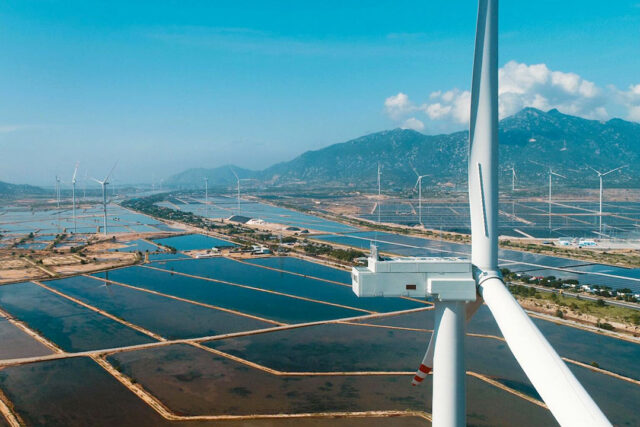
ACEN and BIMEH, the renewable energy platform for BIM Group, have joint venture developments in the 405-megawatt (MW) Ninh Thuan Solar and the 88-MW Ninh Thuan Wind.

Ninh Thuan Solar started its commercial operations in 2019, while Ninh Thuan Wind began injecting power into Vietnam’s grid in 2021. Together, the power projects are generating around 900 million kilowatt-hours of renewable energy per year.

BIM Group is a multi-sector corporation in Vietnam with interests in real estate, agriculture and food, renewable energy, and consumer services.

ACEN, the energy platform of the conglomerate Ayala group, holds about 6.8 gigawatts of attributable renewables capacity in operation, under construction, and committed projects.

The company operates across a diverse range of markets, including the Philippines, Australia, Vietnam, India, Indonesia, Laos, and the United States.

ACEN’s new renewable energy plants that were operationalized earlier in 2024 continued to contribute significantly to generation output and, in turn, financial performance, according to the company.

For the nine months ending in September, the company registered an attributable net income of P8.14 billion, higher by 23.9% from last year’s P6.57 billion.

At the local bourse on Wednesday, ACEN shares fell 2.82% to close at P4.13 each. — Sheldeen Joy Talavera

Vegans can now dine at Burger King

BURGERKING.COM.PH

Even the Plant-based Whopper’s mayo is animal product-free

BURGER KING is riding on the plant-based bandwagon with a new version of its 2020 Plant-based Whopper.

The burger was launched through a party in its Shaw Boulevard branch on Nov. 14. Accordingly, guests were told to show up in green.

Two guests were asked to blind-taste the burgers, without revealing which one was made of beef and which one was plant-based — one of them guessed which one was plant-based correctly. As for us, while we could tell which one was which through the mouthfeel (the plant-based burger’s texture was a little finer and more consistent than if it had been beef), the flame-grilled charred flavor is mostly the same.

This new release is vegan, with the sauces (even the mayo) and the other toppings free of animal-derived products.

Kristine Wong, Burger King’s assistant vice-president and head of marketing in the Philippines said about the relaunch, “We’re always looking for ways to improve our bestselling products, making sure that we elevate it every time.”

As for offering plant-based options, it’s a matter of inclusivity: “We’re making sure that there’s options for everyone. Globally, it’s ‘Have it your way,’” she said, quoting the brand’s tagline. “You want to make sure that you also cater to those embracing the plant-based lifestyle.”

The burger is toe-to-toe and then some when compared with the beef burger, with 17 grams of protein in each patty. Ms. Wong declined to comment on other nutritional information, but she did say that it’s made of soy and gluten, which are declared on their allergen information.

Their partner for creating the patty is Unilever Food Solutions’ Vegetarian Butcher. According to their “chef-fluencer” Kenneth Cacho, while they are currently concentrating on big corporate clients like Burger King, worldwide, they have about 60 varieties of plant-based “meat” products. He also told us that the Plant-based Whopper has a Halal certification.

Ms. Wong said that Burger King isn’t stopping with just one plant-based burger. “The Plant-based offer is just one of it. As the plant-based demand also comes in, we’re looking at other favorites as well to have plant-based options.”

Going plant-based is a step towards sustainability, but Burger King, as part of Jollibee Foods Corp. in the Philippines, is already on track on the conglomerate’s own sustainability program. Globally, meanwhile, they’re also following Burger King’s responsibly sourced palm oil initiative (due to the environmental impacts of palm oil plantations worldwide).

Under Jollibee’s leadership, Burger King in the Philippines now has 127 stores, according to Ms. Wong’s count. “We’re always looking for opportunities on where we can tap the market. Nothing specific at this point.” — Joseph L. Garcia

PHINMA Corp. completes P1-B stock rights offering

(L-R) PHINMA Chief Financial Officer EJ A. Qua Hiansen; Group Controller Regina B. Alvarez; Executive Vice-President - Construction Materials Eduardo A. Sahagun; Chairman & Chief Executive Officer Ramon R. del Rosario, Jr.; and Chairman Emeritus Oscar J. Hilado.

PHINMA Corp. has completed its P1-billion stock rights offering (SRO) with the shares listed on the Philippine Stock Exchange on Wednesday.

The SRO comprised 50 million shares priced at P20 each, which were offered from Nov. 13 to 19, the conglomerate said in a regulatory filing.

Of the total, PHINMA will allocate P250 million for the establishment of PHINMA Hospitality’s TRYP by Wyndham hotel in its 21-hectare Saludad township in Bacolod City, while P210 million will go to the development of Union Insulated Panel Corp.’s new facility in Pampanga with an annual capacity of one million square meters.

Some P200 million will be for PHINMA Property Holdings Corp.’s projects in Bacolod, Cebu, and Davao.

“These projects will allow us to fulfill the housing aspirations of low- to mid-income Filipinos,” PHINMA Chairman and Chief Executive Officer Ramon R. del Rosario, Jr. said during the SRO’s listing ceremony.

PHINMA will use P170 million for the 58 projects secured by PHINMA Solar Energy Corp. in the government’s Green Energy Auction Program, while P114 million will go to the establishment of Philcement Corp.’s cement manufacturing facility in Davao del Norte with a yearly capacity of two million metric tons.

The conglomerate will allot P239.56 million for investments in socialized housing, food security, healthcare, and the green industry, along with general corporate purposes.

“The offering provides existing eligible shareholders and new ones in the form of institutional investors with an opportunity to deepen their investment in PHINMA’s mission to help build our nation through competitive and well-managed business enterprises that enable Filipinos to attain a better quality of life,” Securities and Exchange Commission Commissioner McJill Bryant T. Fernandez said.

“PHINMA has successfully forayed into various industries and established its mark in these sectors through the years. Its diverse interests are also a reflection of its commitment to pursuing businesses that will uplift the lives of Filipinos,” Philippine Stock Exchange President and Chief Executive Officer Ramon S. Monzon said.

On Wednesday, PHINMA shares rose by 1.03% or 20 centavos to P19.70 per share. — Revin Mikhael D. Ochave

A Carmelo’s Christmas

From turkey, to roast beef, to cheesecake

CRISTINA SANTIAGO, daughter of Melo’s founder Carmelo Santiago, recalled fond holiday memories with her father during a tasting at her Proscenium restaurant in Rockwell on Nov. 12. “We normally meet at 10 p.m., and we eat nonstop,” she said.

The spread on the holiday table of the Santiago family — whose patriarch popularized Angus beef in the country (thus changing the restaurant scene) with his restaurant Melo’s in 1987 — included roast beef, turkey, ham, ensaymadas, empanadas, paella, pasta for the kids, and Ms. Santiago’s cheesecake. “The cheesecake was his favorite,” she said of her father.

Some of the items from these holiday tables are making it to the restaurant’s menu, and also on those for catering and take-out.

The tasting on Nov. 12 started with Mushroom Vol Au Vents encased in flaky puff pastry. Roast Beef came out next, with a recipe almost 40 years old and made with secret ingredients passed down through the family. It was butter-tender and needed little prodding with a knife and fork, and was served with a beef jus. While a personal favorite of Ms. Santiago, she told us that she doesn’t really like steak, despite being a daughter of the steak guy. “I can taste a good steak and a bad steak. It’s just that I get full,” she confessed.

The turkey came out with some spectacle: the bird was sourced from the US (for those celebrating: American Thanksgiving falls today, on Nov. 28), and came out to be carved all brown and shiny like on greeting cards. It was surprisingly moist — roast turkey is often accompanied by the complaint of dryness. It was served with a bread stuffing, gravy, and cranberry sauce — and all this accompanied by their family’s paella, and more than a few versions of her eggnog (called the Nutcracker, it’s the spiced egg cocktail but flavored with nuts).

Ms. Santiago’s secret for keeping the turkey moist is, “Slow-cooking lang talaga (just slow-cooking really),” and the same could be said for the roast beef, which to her memory is cooked slowly for 10 hours. “I’m confident with my chefs. It’s very juicy.”

The meal ended with her L’Amour Cheesecake, creamy and so delicate it was almost a semi-solid.

Uniformly, the meal was hearty and comforting, and quite hefty and heavy.

The dishes are not (yet) available for plate service: when you order either the roast turkey or the roast beef, it will always be for 10 to 15 persons. If it’s to be taken to a party, the roast beef comes in a nice little crate, with a tray, all-covered up with foil. “They end up ordering more to give away,” said Ms. Santiago of customers.

There’s one thing missing from her holiday spread, which she will be attempting next year: her father’s Chinese Ham with Honey Sauce. “It’s my dad who ma(de) it. That’s the thing I’m going to try to do next year.”

Ms. Santiago is also releasing a line of Holiday Hampers, which include the signature Carmelo’s Paté, her dessert line Sweet Bella’s Hot Chocolat, as well as a box of her Queso de Bola Ensaymada and Cheese Roll. For more chocolate-y pastry options, there’s the Nutella Croissant and Pain Au Chocolat.

For inquiries, contact 0915-903-8005 or @carmelossteakhouse on Instagram. — Joseph L. Garcia

Over 70% of Filipinos think account security risks are increasing — GSMA

PEOPLE are seen using their mobile phones along Claro M. Recto Avenue in Divisoria, Manila, Dec. 27, 2022. — PHILIPPINE STAR/EDD GUMBAN

SOME 71.4% of Filipinos think risks involving account security are increasing, with financial fraud being among their top concerns, according to a survey by GSMA, a global group of mobile operators and organizations across the mobile ecosystem and related industries.

“More than a quarter of respondents from across Indonesia, Malaysia, the Philippines, Singapore, and Thailand have been victims of financial crimes, such as online hacking, identity theft and bank card theft,” GSMA said in a report titled “Consumer Attitudes Toward Fraud and Opportunities for Mobile Network Operators (MNOs) in Southeast Asia” released on Tuesday.

The report looks into consumer attitudes towards fraud in five Southeast Asian markets, namely the Philippines, Thailand, Singapore, Malaysia, and Indonesia.

According to the study, fraud is a growing concern among consumers, especially involving financial transactions.

The study showed that 82.8% of Filipino respondents said they would change their financial provider for better security. It also said that 28.6% of Filipino respondents have encountered financial fraud at least once, and 26.4% are “very worried” about becoming a victim of fraud.

Several markets also showed concern over SIM (Subscriber Identification Module)-swap fraud, GSMA said. This occurs when a hacker gains control of a mobile number by transferring it to a new SIM card.

It said 71% of Filipino consumers reported the “highest levels of concern” SIM-swap fraud. Consumers in Indonesia (78%) and Singapore (50%) also showed concern over cases of SIM-swap fraud.

“In markets like Indonesia and the Philippines, where SIM-swap fraud is a major concern, MNOs can develop APIs (Application Programmable Interfaces) that provide real-time monitoring and alerts for SIM changes,” GSMA said. “These APIs would notify fintech platforms if a user’s SIM card has been swapped, allowing them to take preventive actions, such as temporarily locking accounts or requiring additional authentication steps.

It added that more than 60% of respondents in Malaysia, Indonesia, and the Philippines are “very worried” about the misuse or theft of Personally Identifiable Information and financial data, GSMA said.

“These concerns are rooted in the growing number of high-profile data breaches across the region,” it added.

Asked who is the most responsible for preventing fraud and ensuring security, respondents in the region said this should be account custodians, or banks and e-wallet providers, among others.

“Between 43% (Malaysia) and 62% (Indonesia) of respondents assigned primary responsibility to the companies operating the services. This places fintech companies, banks, and other financial institutions at the forefront of fraud prevention efforts,” GSMA said.

“However, consumers also expect device manufacturers (such as Apple, Google, and Samsung) to play a key role in protecting their accounts. This expectation is higher in markets like the Philippines, where 29% of respondents believe that device manufacturers bear some responsibility, compared to 15% in Indonesia,” it added.

About 10-13% of respondents across all five markets covered in the survey said they also expect MNOs and their governments to bear responsibility for the prevention of fraud, it said.

“MNOs in Southeast Asia are uniquely positioned to address the growing concerns about fraud. By developing APIs that integrate with fintech platforms, banks, and digital commerce providers, MNOs can offer enhanced security features, real-time fraud detection, and data-sharing tools that can help protect consumers from various forms of fraud,” GSMA said.

“One of the most significant opportunities for MNOs lies in the development of APIs that strengthen account security and prevent fraudulent activities like SIM-swap attacks. The high level of concern surrounding these attacks, particularly in markets like Indonesia and the Philippines, makes this an area of urgent need.”

Two-factor authentication and SIM-swap prevention APIs that provide real-time monitoring and alerts for SIM changes can help financial institutions, payment firms and online retailers strengthen account security, GSMA added.

“Given the high penetration of mobile devices across Southeast Asia, with 91% of respondents in Indonesia and 80% in the Philippines accessing their financial accounts via mobile, MNOs are well-positioned to develop APIs that enhance the convenience and security of mobile-first financial services,” it said.

“The widespread use of e-wallets in markets like Indonesia and the Philippines presents a significant opportunity for MNOs to develop APIs that integrate mobile services with e-wallet platforms. These APIs would provide fintech and other industries seamless identity verification, transaction monitoring, and secure fund transfers.” — B.M.D. Cruz

Cemex Holdings PHL sells stake in Swiss-based unit

CEMEX

CEMEX Holdings Philippines, Inc. (CHP) sold its entire stake in Swiss-based Cemex Asia Research AG (CAR) to Cemex Innovation Holding AG for $900,459 (P53 million) to streamline its business.

CHP signed a share purchase agreement with Cemex Innovation on Nov. 26 involving the sale of 118,849 shares.

“CHP and its subsidiaries have secured access to trademarks and intangible assets sublicensed by CAR necessary for their operations independently from CAR,” CHP said in a regulatory filing on Wednesday.

“CAR’s functions as a subsidiary of CHP are no longer required by CHP and its subsidiaries,” it added.

Established in Switzerland, CAR is a foreign subsidiary of CHP.

The company is the licensee under certain license agreements with Cemex and its subsidiaries for certain trademarks and intangible assets, which it sublicensed to CHP and its domestic subsidiaries.

Cemex Innovation is an affiliate of Mexican operating and holding company Cemex S.A.B. de C.V.

For the first nine months, CHP expanded its net loss by 131% to P2.87 billion on lower cement prices, higher financial expenses, and higher income tax expenses year over year.

Revenue fell by 9.4% to P12.21 billion as a result of intense industry competition and lower cement prices.

CHP shares dropped by 2.96%, or five centavos, to P1.64 per share on Wednesday. — Revin Mikhael D. Ochave

Popular restaurateur and former paparazzi Roberto Bellini, 84

FACEBOOK.COM/FREDSREVOLUCION

ROBERTO BELLINI, founder of Cubao’s once-secret, mural-covered Italian restaurant, passed away on Nov. 24 at the age of 84.

His passing was confirmed in a Facebook post by one of his daughters, Joy Bellini.

Most fans of the restaurant learned of his death when chef Waya Araos-Wijangco said in a Facebook post, “330. Godspeed Roberto Bellini! Your little shop in Cubao was home to many memories for our family. We learned about Italian food from you, in the accessible, friendly and unpretentious space you made. I will always remember our run-ins and friendly banter at Farmers Market. You are a legend. Salute!”

The restaurant, founded in 1999, used to be a well-kept society secret, entertaining celebrities, politicians, and bohemians (thanks to its relatively accessible prices) alike. It stopped being a secret in its Cubao Expo location with the release of the 2007 film One More Chance, which had scenes set there. One of the film’s stars, John Lloyd Cruz, had kept in touch with Mr. Bellini through the years, greeting him on his birthday in January, recalling that the restaurateur told him, “You have to work, John Lloyd.” An earlier post in 2018, shows the actor with Mr. Bellini, “the only paparazzi I love.”

Being behind the camera was Mr. Bellini’s life prior to settling in the Philippines with his wife and three children.

According to a profile on Esquire by the late journalist Regina Abuyuan, Mr. Bellini had photographed Diana, Princess of Wales, Frank Sinatra, Ella Fitzgerald, Julio Iglesias, and Tom Cruise, among others. Remnants of this past life can be seen on a wall of his restaurant which is nearly papered in his celebrity shots.

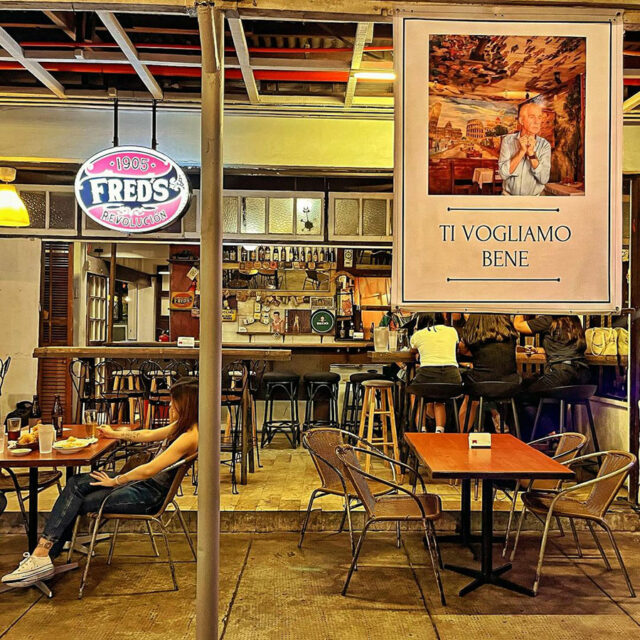
Ms. Abuyuan happened to be the co-founder of Fred’s Revolucion, Bellini’s Cubao Expo neighbor. Accordingly, the bar posted a tribute to Mr. Bellini on their Facebook page: “Buonanotte, nostro Principe” (Good night, our prince), accompanied by a photograph of their bar with a sign for Mr. Bellini, reading “Ti Vogliamo Bene” — a phrase that expresses love in Italian, literally meaning “We want the best for you.”

Hailing from Pisa and born on Jan. 3, 1940 to a family in the restaurant and hotel industry, Mr. Bellini trained to be a paratrooper and entered military service, before turning to the film camera.

To patrons of Cubao Expo, he will always be the friendly man sending free drinks to first-timers (and, if he remembered your face, on the next visit), in a pastel shirt with a few buttons open, exposing a gold chain. He would be out in the last few hours of daylight, supervising things before his restaurant opened. — J. L. Garcia

Cop29 climate finance deal: Why poor countries are so angry

FREEPIK

After a fortnight of bitter struggle, nearly 200 countries agreed on a new goal to raise money to tackle the climate crisis at Cop29, the 29th annual UN climate conference in Baku, Azerbaijan.

Rich countries agreed to take the lead in paying $300 billion a year to the poorest nations by 2035 from a variety of financial sources (public, private, between countries, and across multilateral sources like development banks). This is less than a quarter of what developing countries asked for, and not in the form of the no-strings-attached grants money that they need.

There is no consensus on how to define “climate finance” within the United Nations Framework Convention on Climate Change (UNFCCC), the UN process for negotiating an agreement to limit global warming. Developed countries prefer a mélange of public and private funding sources, including loans and “debt swaps” (reducing or forgiving a country’s debt in exchange for that country investing money into projects that protect the environment or fight climate change). Their preference is reflected in the final Cop29 decision.

These same developed countries are responsible for most of the greenhouse gas emissions that are heating Earth to dangerous levels. Developing countries have demanded a share of their immense wealth to help them cut emissions, adapt to the impacts of a warming climate, and address the consequences of existing disasters (what is generally referred to as loss and damage). The UNFCCC estimates that developing countries need $5 trillion to $6.9 trillion to implement their national climate plans by 2030.

The original climate finance target was set in 2010 and is due to expire in 2025. This encouraged rich nations to funnel $100 billion to the developing world annually, but it was only met for the first time in 2022.

Negotiators from poor nations are right to be frustrated. While the latest UN Intergovernmental Panel on Climate Change report suggests that there is enough money in the global economy to properly fund a green transition, the financial system is systemically skewed against developing countries.

DEBT AND INEQUALITY
The World Bank and other international monetary institutions were conceived at the end of the second world war, before many of the countries they affect had gained independence, calling into question the legitimacy of a global regime conceived in the colonial era.

In 2022, 58 of the world’s poorest and most climate-vulnerable countries spent $59 billion repaying debts compared to the $28 billion they received in climate finance, over half of which were loans.

The cost of borrowing money can be up to seven times higher for developing countries than the US and Europe. This is because lenders see poorer countries as riskier places to invest, given their perceptions of political instability or low credit ratings. This arrangement entrenches inequality.

Poor countries like Bangladesh that are increasingly exposed to extreme weather need more and more money to adapt. When this money is provided in the form of loans, the interest traps them in a downward spiral of mounting debt.

‘YOU OWE US’
Countries that bear the least responsibility for climate change suffer its harshest consequences. It is estimated that between 2000 and 2019, 55 of the countries most vulnerable to climate change lost $525 billion to impacts like sea-level rise and storms despite accounting for 4% of global emissions.

The UNFCCC acknowledges that countries have different abilities but also a common responsibility to mitigate climate change. While the UN process affirms the inequality of resources, power, and historical contributions among countries, it does not provide recourse to address these imbalances.

In fact, vulnerable countries are already owed a great deal for paying the price of a crisis they did not produce. Purely in terms of emissions, this “climate debt” has been calculated at $5 trillion annually, or $192 trillion by 2050.

Even without climate change, research has found that developed countries owe developing countries $10 trillion a year for the land, labor, and resources the former extracts from the latter for its economic growth and development.

LET THE MARKET FIX IT
Whether solutions to climate change are “cost-effective” has motivated official efforts to tackle climate change since the inception of the UNFCCC in 1992.

The 1997 Kyoto protocol allowed rich countries to invest in emission-reducing projects in developing countries to meet their own targets. This was called the clean development mechanism.

In a similar vein, prior to the signing of the 2015 Paris agreement, negotiators of rich nations considered government funding insufficient for transitioning societies to net zero carbon emissions. The objective was to “shift the trillions” from the private sector by creating incentives for investment.

This put governments in a facilitating role, letting private funders take the lead in developing solar farms and restoring wetlands. This does not mean that governments disappear from the scene, however.

Instead, governments create a less risky, more attractive investment environment for the private sector by using subsidies or guarantees that the state will take on the debt if a private company cannot pay. Effectively, this process makes the public responsible for the risks of climate finance while private companies get to keep all of the financial gains.

Using loans and private finance costs rich governments the least, and financing with strings attached gives them more control over how money is spent. For developing countries, however, grant-based finance provides tangible support for addressing a climate crisis they did not create.

In such an unequal system, the first recourse has not been to cancel debt, as many developing countries have called for. Instead, companies, civil society groups, and even private financiers are being asked to fill the moral gap left by rich governments.


Jodi-Ann Jue Xuan Wang is a DPhil (PhD) candidate in International Development at the University of Oxford.

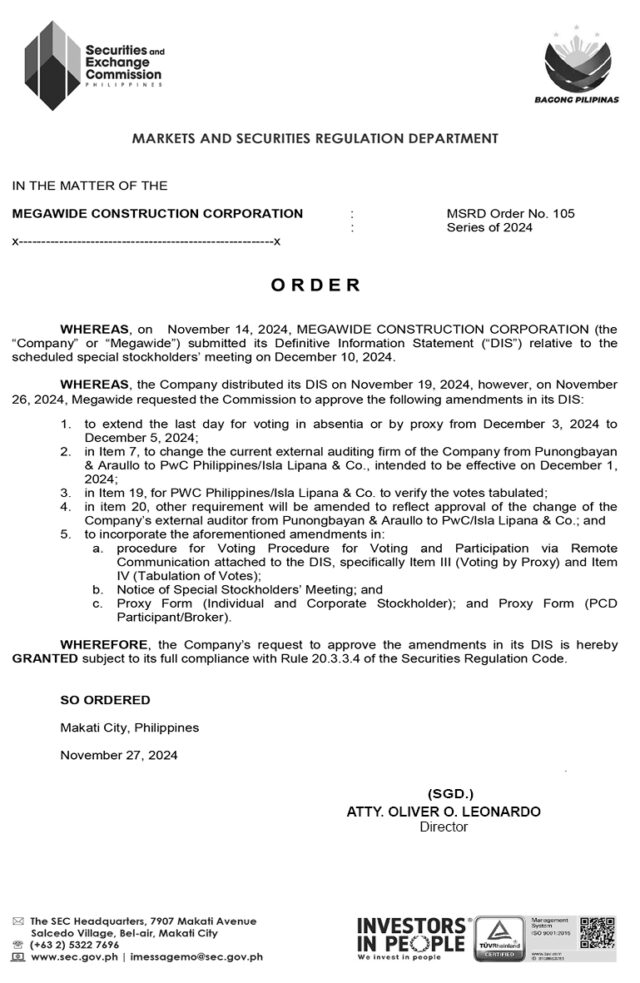
SEC approves Megawide Construction Corp.’s amendments on its DIS relative to its Special Stockholders’ Meeting


Spotlight is BusinessWorld’s sponsored section that allows advertisers to amplify their brand and connect with BusinessWorld’s audience by publishing their stories on the BusinessWorld Web site. For more information, send an email to online@bworldonline.com.

Join us on Viber at https://bit.ly/3hv6bLA to get more updates and subscribe to BusinessWorld’s titles and get exclusive content through www.bworld-x.com.

Aboitiz group receives notice of award for Bohol airport

ABOITIZINFRACAPITAL.COM

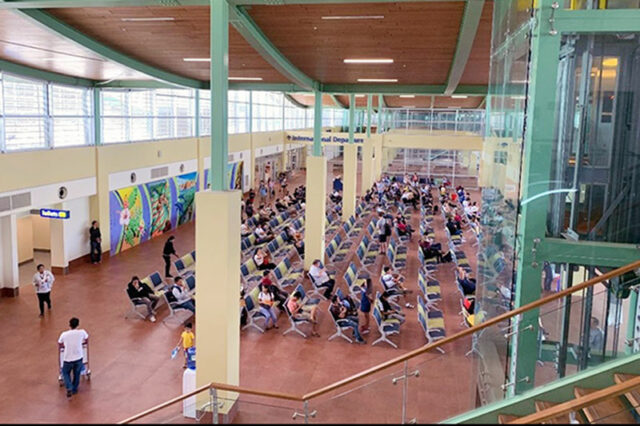
ABOITIZ InfraCapital, Inc. (AIC) has officially received the notice of award to upgrade, operate, and maintain the Bohol-Panglao International Airport, its parent firm announced on Wednesday, detailing its immediate plans for enhancing the Philippines’ ninth busiest gateway.

In a regulatory filing, Aboitiz Equity Ventures, Inc. said its infrastructure arm is expected to sign the concession agreement by the end of the year.

The Transportation department previously announced that Aboitiz InfraCapital would be awarded the P4.53-billion contract for Bohol-Panglao International Airport’s operations and maintenance after the Swiss Challenge ended with no other bids.

This is the group’s second airport public-private partnership project this year, following the award of Laguindingan International Airport after no other parties challenged its unsolicited proposal.

“This project is not just about upgrading facilities but also about boosting economic opportunities, enhancing tourism, and improving connectivity in the Visayas region, and we are excited to be a part of this initiative,” Aboitiz InfraCapital President and Chief Executive Officer Cosette V. Canilao said in a statement.

The company said that it will expand the passenger terminal building and modernize airside and landside facilities of the airport within its 30-year concession period.

Ms. Canilao said on the sidelines of BusinessWorld Forecast 2025 Forum on Tuesday that the company plans to tap Ireland-based daa International as its technical services provider for Bohol-Panglao airport.

Improvements and enhancements will be immediately implemented at the airport as early as next year, she told reporters.

Aboitiz InfraCapital is scheduled to take over the operations and maintenance of Bohol-Panglao International Airport by June 2025, according to the timeline set by the Transportation department.

In its statement on Wednesday, Aboitiz InfraCapital said it will invest to increase the airport’s capacity from the current two million passengers annually to 2.5 million within two years.

“These investments will enhance the passenger experience, improve operational efficiency, and elevate the airport’s safety and security standards, aligning with AIC’s vision of creating globally competitive airports that showcase the best of the Philippines,” the company said.

The company expects to finish its capacity expansion initiatives for the airport by 2030, allowing it to reach 3.9 million passengers per annum, it said.

At the stock exchange on Wednesday, shares in Aboitiz Equity fell by 40 centavos, or 1.17%, to end at P33.90 apiece. — Ashley Erika O. Jose

HONOR’s latest foldable Magic V3 now available in the Philippines

HONOR Philippines last week launched in the country its newest foldable smartphone, the HONOR Magic V3.

The new smartphone, which comes in Green and Black, retails for P89,999 and is now available via Globe Postpaid Plans starting at GPlan Plus 1799 with a free HONOR Pad X9 that is valued at P9,999. The device can also be purchased at HONOR Experience and Partner Stores and online via Shopee, Lazada, and TikTok Shop.

“It feels like just yesterday when we launched the HONOR Magic V2 and now, we are ecstatic to introduce HONOR’s newest and thinnest foldable smartphone, the HONOR Magic V3. AI (artificial intelligence) is slowly but surely reshaping our industry, enriching and creating new experiences that improves creativity and productivity for consumers all around the world, every day, and right now, it’s our priority to make comfort and technology accessible to more Filipinos” HONOR Philippines Vice-President Stephen Cheng said.

The HONOR Magic V3 has AI-enabled hardware capabilities and is the world’s thinnest inward foldable phone, the brand said.

“With a sleek folded thickness of 9.2mm and featherlight body weighing just 226g, the HONOR Magic V3 rivals the slimness and weight of a flagship bar phone, ensuring utmost portability for users. This feat is accomplished through the meticulous application of 19 innovative materials and 114 microstructures, propelling foldable devices into a new era of precision and slimness,” it said.

“Featuring a dome-shaped octagonal camera module, the HONOR Magic V3 seamlessly combines the architectural beauty of dome structures with technological innovations. This camera module showcases a diamond cut, adding an element of elegance and sleekness to the device’s overall appearance,” it added.

The foldable phone’s body incorporates a special fiber material to boost impact resistance, while the HONOR Super Steel Hinge allows the device to withstand up to 500,000 folding cycles for increased durability, along with the HONOR Super Armored Inner Screen and HONOR Anti-scratch NanoCrystal Shield.

The HONOR Magic V3 has a 6.43-inch external display and a 7.92-inch internal foldable screen.

“Dedicated to prioritizing user well-being and comfort, this device incorporates a range of innovative eye-comfort features, such as the world’s first AI Defocus Display technology, 4320Hz Risk-free PWM Dimming, Dynamic Dimming, Circadian Night Display, and Natural Tone Display,” HONOR Philippines said.

The phone also has a 5,150mAh silicon-carbon battery that supports 66W wired and 50W wireless HONOR SuperCharge.

“Featuring the innovative HONOR Falcon Camera System which encompasses a 50-MP Periscope Telephoto Camera, a 50-MP Main Camera, and a 40-MP Ultra-wide Camera, the device promises unparalleled imaging quality and versatility for users seeking stunning smartphone photography,” it added.

The HONOR Magic V3 also comes with on-device AI-enabled photography features. — BVR