Home Blog Page 232

Maynilad shares rise on earnings, cash dividends

MAYNILADWATER.COM.PH

By Lourdes O. Pilar, Researcher

MAYNILAD WATER Services, Inc. was one of the most actively traded stocks last week following the release of its 2025 earnings report, MSCI inclusion, and dividends declaration.

Data from the Philippine Stock Exchange (PSE) showed that Maynilad was the second most traded stock during the week, with a value turnover of P2.77 billion from a total of 126.78 million shares traded from Feb. 23 to 27.

The Pangilinan-led water concessionaire closed the week at P22 per share, up 6.3% from a week earlier. The company’s stock outperformed both the industrial sector, which inched up 3%, and the benchmark PSE index (PSEi), which rose 2.3%.

Year to date, the stock has climbed 30.2%, beating the industrial index’s 9.6% and the PSEi’s 9.2% growth.

Analysts attributed Maynilad’s active trading last week to the company’s strong full-year earnings report and dividends payout.

“Maynilad saw elevated trading activity and heightened investor attention in recent weeks, driven by its inclusion in the MSCI (Morgan Stanley Capital International) Philippines Small Cap Index and anticipation surrounding its first full-year earnings results and dividend payout since listing,” Franco M. Fernandez, equity research analyst at DragonFi Securities, Inc., said in a Viber message.

Mr. Fernandez also noted that 2025 earnings showed “strong growth and sustained momentum.”

“Maynilad’s strong earnings print, alongside its dividend payout, reinforced investor confidence and helped sustain price momentum above the P21 level,” Mr. Fernandez added.

“Broader market sentiment and risk appetite during this period were also constructive for the stock.”

Jash Matthew M. Baylon, an equity analyst at First Resources Management and Securities Corp., said in a Viber message that Maynilad was one of the most active stocks as the stock continued to trade on an uptrend support by its strong 2025 earnings and dividend declaration with a yield of 5%.

“The positive performance of Maynilad’s bottomline positively affects the stock’s performance for the week as it adds optimism among investors. The higher tariffs are expected to be seen until this year which may continue to positively affect Maynilad’s profitability,” said Mr. Baylon.

In a press release last week, Maynilad declared an 18.8% year-on-year rise in consolidated net income to P15.2 billion in 2025 from P12.8 billion a year earlier driven by improved operating efficiencies and continued infrastructure investments.

Consolidated revenues increased by 9.3% to P36.6 billion in 2025 from P33.5 billion in 2024, supported by higher tariffs and stable billed connections.

Earnings before interest stood at P25.3 billion, while its margin improved to 69%.

Mr. Fernandez gave an estimate of Maynilad’s 2026 net profit in the range of P16.4 billion to P17 billion.

The company has yet to release its full report for the period.

In a separate disclosure, the company’s board approved the declaration of cash dividends of P1.14 per common share in the aggregate amount of P8,438,968,104 out of its unrestricted retained earnings.

The dividends will be payable and distributed on March 18, to all shareholders.

Meanwhile, Maynilad was included in the MSCI Philippines Small Cap Index following the results of the February 2026 Index Review for the MSCI Equity Indexes.

Maynilad made its stock market debut in November last year after raising P34.3 billion from its maiden offering, the second-largest initial public offering in PSE history.

The MSCI Philippines Small Cap Index is designed to measure the performance of the small cap segment of the Philippines market. The index represents approximately 14% of the free float-adjusted market capitalization of the Philippines equity universe.

“Looking ahead, the near-term focus shifts to how Maynilad’s share price normalizes over the coming weeks as its key catalysts for the month have been realized,” Mr. Fernandez said.

“On the technical side, immediate support is seen around P21, followed by the 20-day SMA (simple moving average) at P20 based on Friday’s close. On the upside, resistance is pegged at the stock’s all-time high of P22.35,” he added.

Mr. Baylon sees the P20.50-P21 level as the support while the P25 level as the psychological resistance.

“We think that in the upcoming weeks, investors should monitor the firm’s capital allocation as it may affect its performance for the year,” said Mr. Baylon.

Wartime fashion statements

A beleaguered nation dresses up

WHEN Ukrainian President Volodymyr Zelensky met with US President Donald J. Trump last year, the media buzzed with his choice of outfit: a military-style sweatshirt, in a world ruled by suits. Called out for his outfit, he answered: “I will wear costume after this war will finish.”

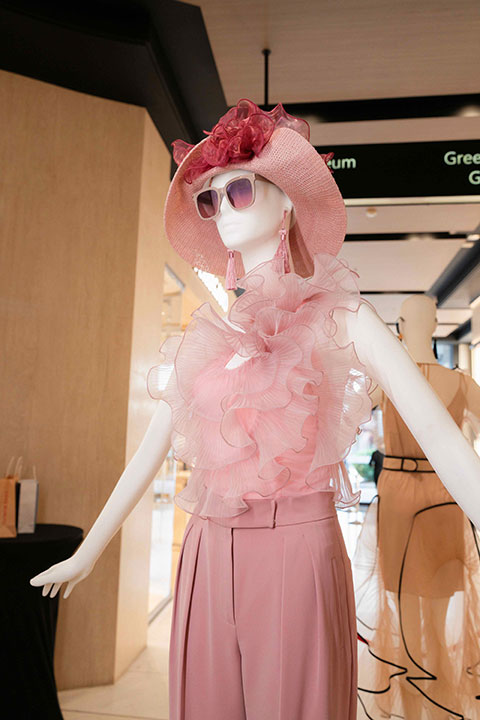
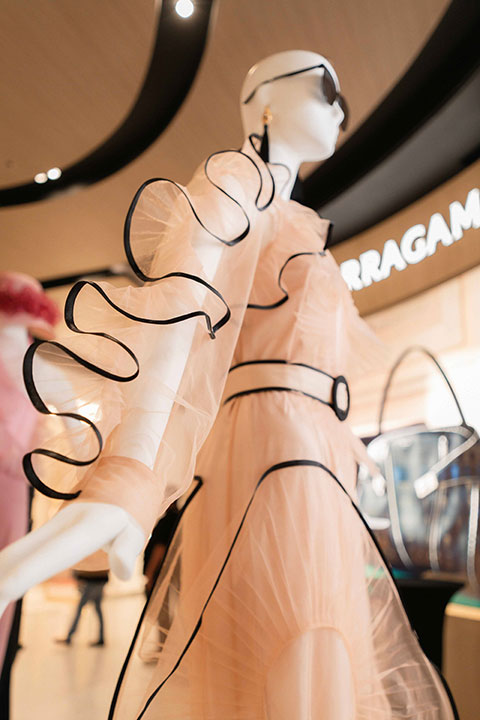
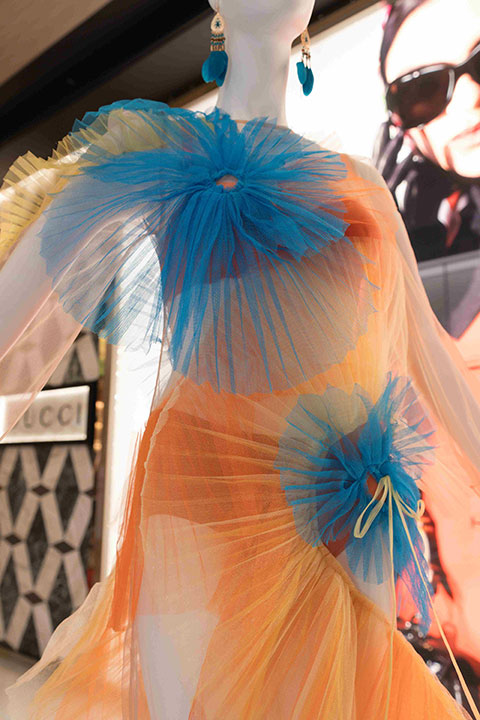
On Feb. 23, the Embassy of Ukraine in the Philippines took a similar thread in helping clothes make a statement about their nation. The embassy, along with the Ukrainian and Philippine Fashion Weeks, produced an exhibition called From Kyiv to Manila. It ran for just three days at Greenbelt 4’s atrium, but more examples of cultural diplomacy are on the way for the embassy.

The exhibition featured the clothes of Ukrainian designer Nadya Dzyak, in a collection called BORYVITER (a Ukrainian word for the Kestrel bird, and also a symbol of resistance within the country).

The clothes, however, feature flounces and light fabrics — it is her Spring/Summer collection after all. What they hold instead are memories of summers stolen by war.

“Berdiansk and the Azov Sea mean a lot to me. This is my personal story. We spent many summers, many holidays in Berdiansk. The strongest in my collection was created there. Now, this region is occupied by Russia,” she said in a video message showed during the exhibition. “It’s very hard to understand, but we believe that some(day), we’ll return to this region, and it will be great.”

WAR
While there had been a string of conflicts between Russia and Ukraine, these escalated in 2022 with the Russian invasion of Ukraine. According to the Ukrainian ambassador Yuliia Fediv, Ms. Dzyak’s production lines are still active in Ukraine, just 200 kilometers from the frontlines. “Her pieces represent the parts of Ukraine which are now on the frontline or under occupation,” she told BusinessWorld.

“You see that under occupation are Ukrainians who are living, and they want to be part of Ukraine. Russian narratives are saying that it’s pro-Russian.

“No. We wanted to show that people from the parts of Ukraine are Ukrainians who are obliged to leave, (either) within Ukraine or to go abroad, because they lost their homes because of the Occupation. They do not want to stay under the Russian empire,” she declared.

“It’s also the sign that (it’s) better abroad or within other territories, without water, without light… but not under Russia,” she said.

Ms. Dzyak herself said, “Today, I live in different countries, and I truly feel that real creativity has no borders.

“Fashion and creativity are really our language: we speak to the world,” she said. “Creativity helps us move forward in difficult times. It gives strength and a voice,” she said. “I want to say to Philippine designers: please listen to your heart. Always trust your creativity, and never stop creating.

“We don’t give up. We continue creating no matter what.”

PRACTICALITY
“Cultural diplomacy is a practical form of solidarity,” Ms. Fediv said in a speech.

“The main message is to show the resilience of Ukrainians and also to show that amid the war, Ukrainians are open to collaborate and to partner with Filipino designers, and (do) business together.”

According to her, many people think that lives are on hold during war, “And you need to wait until peace will come to the land.”

“We wanted to show that it’s a new kind of war. The main idea of this war, from the Russian side, is to erase the identity of Ukrainians,” she told BusinessWorld. “That’s why we should maintain our culture… to help preserve the country.”

Small and medium enterprises like Ms. Dzyak’s, which continue to produce in Ukraine, have now become vital for the country’s survival. “They remain in the country to pay taxes and to make our economy ongoing,” she said. “It’s like a sign: you need to fight for your country through any means, even just doing business.”

While the exhibition may have ended this week, it’s just a first step for the embassy. They’re looking into a designer exchange, where Ukrainian designers can show their work during Philippine Fashion Week, but she’s also looking into other fields like the visual and performing arts. “There are many plans ahead. Hopefully, it will become reality,” said the ambassdor.

“We need help from all people around the world. You don’t need to donate… you can just collaborate with our people,” she said. “Please be open to collaborate with Ukraine in this regard: in fashion, crafts, and all other creative industries.” — Reuters

Trump’s ambitions for Iran are now clear: He wants everything

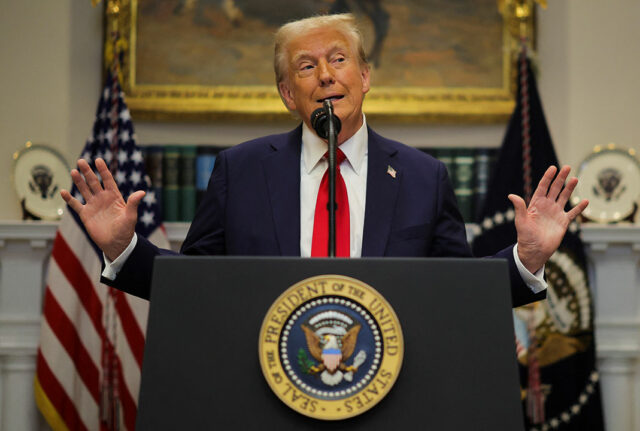
U.S. President Donald Trump delivers remarks at the Roosevelt room at White House in Washington, US, Jan. 21, 2025. — REUTERS

By Marc Champion

US PRESIDENT Donald Trump never did explain to Congress or anyone else what his justifications and goals would be for attacking Iran. Now, with “Operation Epic Fury” underway, we know. The answer was “everything,” making this a gamble on a scale way beyond anything even this former casino owner has done before.

Setting out goals for military action determines why it is needed, how it will be done, and what is the measure of success. In the eight-minute address Trump posted on Truth Social, he laid out at least half a dozen reasons for going to war, starting with the prevention of an imminent threat to the US, of which — with nuclear negotiations due to resume next week — there was none.

He followed up with a string of other motives for this major attack: It would eliminate for good Iran’s nuclear program; destroy its missiles and the production lines to make them; crush its military and ability to support proxies abroad; annihilate its navy; avenge Iranian attacks on US servicemen over 47 years; and halt the Islamic Republic’s further slaughter of its own people.

Yet the most ambitious goal, and the one that must be achieved to make sense of all the others, was regime change. Without that, the Republic and its activities can be weakened, interrupted, or delayed, but not stopped. Its missiles, nuclear program, domestic repression, and military activities abroad would revive, only now with lessons learned and in a state of war.

Without change at the top, many of the problems Trump and Israel set out to resolve would only be made more difficult. Iran’s leadership would, for example, almost certainly kick out international nuclear inspectors, radically reducing the ability of the US and others to track Iran’s uranium enrichment.

Of course, if Trump succeeds in forcing the regime’s downfall, all will be forgiven and his triumph would be indisputable. That outcome came a step closer with Iranian state television’s confirmation on Sunday of Supreme Leader Ayatollah Ali Khamenei’s death. He and the aging revolution he embodied had little support at home and still less abroad. His regime has nothing to recommend it, and the world would — without question — be a better place with it gone. For those dismissive of the value of genuine democracy, Khamenei’s Iran should be an abject lesson.

The risks involved in this operation are, nonetheless, all too real. The moment he launched such a large attack with unlimited goals, Trump incentivized the regime in Tehran to use every means at its disposal to strike back in what it must now treat as a fight for survival. The only question is how much damage it will prove capable of inflicting on the US and its allies, and for how long.

It will take a little time before we know how much of the Iranian leadership, in addition to Khamenei, the initial US strikes killed. Likewise, we can’t say yet whether US and Israeli jets and missiles were able to destroy enough of Iran’s ballistic missile launchers to remove any significant threat to American military bases and personnel abroad. Initial explosions were reported in Bahrain, which hosts the US Fifth Fleet, as well as in Dubai. Israel declared a state of emergency as approaching missiles were detected.

Also unknown is what Iranian capabilities will remain to carry out its threats to close the Strait of Hormuz, to sink oil tankers, or to strike the lightly defended oil infrastructure of US Gulf allies. Those dangers explain the reticence of Saudi Arabia, the United Arab Emirates, and other Sunni Arab states with no love for Tehran, to support, let alone participate in, the US-Israeli assault.

If air strikes alone can achieve regime change anywhere, Iran is a good candidate. Khamenei, his ruling elite, and the Islamic Revolutionary Guard Corps (IRGC) that protect them have exhausted their competence to deliver even basic solutions to the state’s economic failures, and have lost touch with the country. Only weeks ago the IRGC killed thousands, if not tens of thousands, of their own people to cling onto power. These men are the enemies of their citizens.

And yet, there are no precedents for toppling a regime using solely air power. Hence Trump’s appeal to the Iranian people to rise up and take control. It all now depends on them. Even then, should the Islamic Republic fall, the impact on Iran and its neighboring states might only have begun. This is a country of 92 million people, with a long and proud history, but also no organized domestic opposition ready to take charge and large minorities that may well seek to take advantage of the chaos.

Indeed, a Feb. 22 announcement by five Kurdish Iranian groups to form an Alliance of Political Forces in Iranian Kurdistan has caused immediate concern in Turkey. Kurds — with a population of 30-plus million spread across Iran, Iraq, Syria, and Turkey — are among the largest ethnic groups in the world to have no state of their own. This would be a rare opportunity and the temptation to seize it would be great.

The US has been here before: in Afghanistan for 20 years, in Iraq from 2003, and in Libya in 2011, to name just a few instances where its military interventions in the Middle East failed. That does not mean it can’t work this time, but one thing is certain: There is nobody in Washington who can be sure of where this war of choice leads.

BLOOMBERG OPINION

Auto sales down 10% in Jan. YoY — CAMPI, TMA

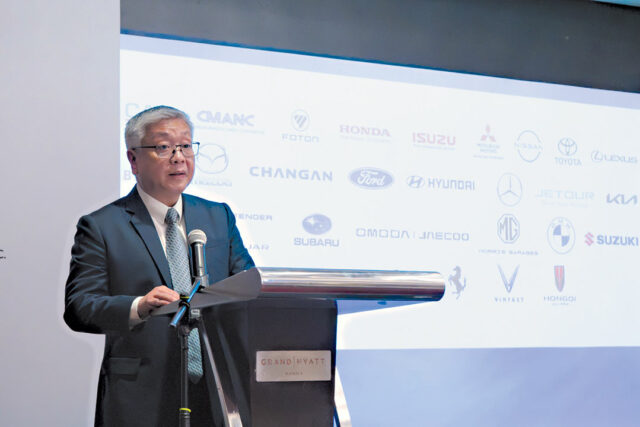
Chamber of Automotive Manufacturers of the Philippines, Inc. (CAMPI) President Jose Ma. “Jing” Atienza — PHOTO BY KAP MACEDA AGUILA

Despite seasonal slump, year’s sales expected to breach 500K units

By Kap Maceda Aguila

VEHICLE SALES in the Philippines totaled 35,035 units last January, the 26% dip from December 2025’s 47,371-unit output expected on account of market seasonality factors — such as the “yearend (buying) rush in the market,” according to a recent joint report by the Chamber of Automotive Manufacturers of the Philippines, Inc. (CAMPI) and Truck Manufacturers Association (TMA). These figures are total industry figures; when accounting for CAMPI and TMA member companies only, the numbers are 42,870 (December 2025) and 33,696 (January 2026) for a decline of 21.4%. Still, CAMPI pointed to the “exceptional performance” in December 2025, which “(set) the highest December sales record since 2017.”

When viewed from a year-on-year lens, there was a similar dip of 10.2% from 37,504 units in the same month last year for CAMPI and TMA. CAMPI President Jose Ma. “Jing” Atienza, however, remains optimistic about achieving its goal to sell 500,000 units or more this year. “The Philippine auto market growth trajectory of recent years consistently pointed toward breaking the 500,000 sales level, but last year’s second-half slowdown temporarily disrupted the trend,” he said.

He forecasts sales growth in electrified models in both passenger and commercial vehicle segments, adding that “for 2026, we see that the strong market fundamentals, boosted by new model launches and aggressive marketing campaigns, will push the market back on track.”

CAMPI and TMA member companies “sold 2,610 electrified vehicles (xEVs) in January 2026, higher than the 1,600 units sold in the same month last year. This number represents 7.75% of the total CAMPI-TMA vehicle sales,” continued the release.

Among the groups’ member companies, Toyota Motor Philippines (TMP) led the sales charge in January with 48.51% market share, followed by Mitsubishi Motors Philippines Corp. (MMPC) at 20.78%, Suzuki Philippines (SPH) at 4.88%, Nissan Philippines, Inc. (NPI) at 4.72%, and Ford Group Philippines (FGP) at 3.77%. Completing the top 10 are Honda Cars Philippines, Inc. (HCPI) with 3.45% share, Isuzu Philippines Corp. (IPC) at 3.34%, SAIC Motors Philippines (or MG) at 2.12%, Hyundai Motor Philippines (HMPH) at 2.11%, and KP Motors (or Kia) at 1.98%.

Meat industry wants hike in tariffs as January imports rise

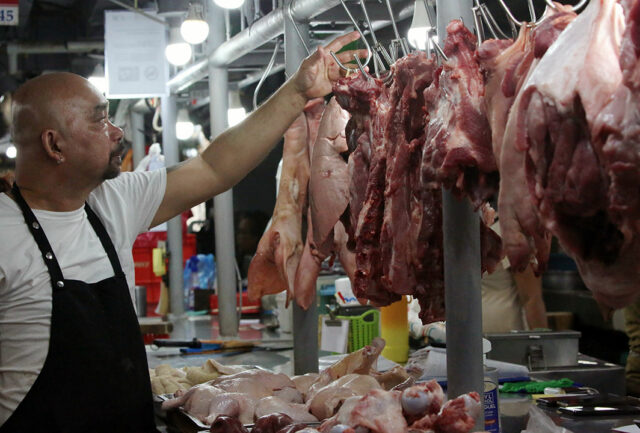
PHILIPPINE STAR/EDD GUMBAN

By Vonn Andrei E. Villamiel, Reporter

HOG AND POULTRY raisers called for higher tariffs on imported meat after January inbound shipments rose 4.23% year on year, intensifying pressure on farmers already struggling with low farmgate prices.

The Bureau of Animal Industry (BAI) reported that meat imports in January amounted to  143.84 million kilos.

Alfred Ng, vice chairman of the National Federation of Hog Raisers, told BusinessWorld that the swine industry is struggling to keep up with the surge of cheap pork imports.

“Current liveweight prices are below production cost, and farmers are losing money. The landed cost of these imported pork is P120 per kilo, which is lower than our production cost,” he said via Viber.

Mr. Ng is urging the government to limit imports and restore higher tariffs on pork products.

“We therefore request the government to bring back tariffs to the original levels of 35% to 45% from 15% to 25% currently, (and to) control and limit pork importation to the actual deficit of pork supply in the country,” he said.

Rosendo O. So, chairman of the Samahang Industriya ng Agrikultura (SINAG), said pork imports this year should be reduced to around 550,000 metric tons, after carryover stock from earlier imports left a “substantial oversupply.”

Mr. So said import volumes should be managed in the same way rice imports were restricted last year, when an influx of cheaper foreign rice led to significant losses for farmers.

“The government saw that situation with rice, so the same approach should be applied to pork,” he was quoted as saying in a SINAG statement on Sunday.

Meanwhile, Elias Jose M. Inciong, chairman of the United Broiler Raisers Association, said the surge in chicken imports shows that current tariff rates are not sufficient to protect the poultry industry.

“If you look at the declared transaction values for imported chicken, and even if you apply a 40% tariff, it is still cheaper,” he told the plenary session at the International Farmers Summit last week.

Despite an increase in domestic poultry production, chicken imports rose 8.92% year on year in January to 49.7 million kilos.

Mr. Ng also flagged the surge in imports of whole chicken, which he said are usually less preferred over other chicken cuts.

“Before, there were no inbound shipments of whole chicken because they were more expensive. However, prices have dropped to almost $1.70 to $1.80 (per kilo),” he said.

According to the BAI, shipments of whole chicken in January grew to 884,414 kilos from 83,732 kilos a year earlier.

Separately, Mr. Inciong told BusinessWorld that the poultry industry is at a disadvantage against heavily subsidized competitors.

“We are being compelled to compete with countries that have received serious domestic support for decades. In contrast, it is only now that agriculture (in the Philippines) is taken seriously because of supply chain disruptions and climate change,” he said via Viber.

SINAG Executive Director Jayson H. Cainglet said the government should immediately establish fully equipped first-border inspection facilities at all major ports to protect the livestock and poultry industries against biosecurity threats.

“We seek the support of the government to strengthen biosecurity, enhance food security regulations for food safety and public health, and prevent the entry of contaminated or disease-affected meat through 100% inspection at the port of entry,” Mr. Cainglet said in his presentation at the International Farmers Summit.

He also called on the government to implement stricter measures to prevent misdeclaration and undervaluation of meat imports.

Mr. Ng also urged the DA to implement strict inspection systems in planned biosecurity facilities. He said an earlier DA presentation for planned cold examination facilities in agriculture (CEFA) in Manila, Subic, and Davao proposed only five-minute X-ray inspections.

“When it was presented to us, they said the X-ray inspection would last only five minutes. We are concerned that they want the goods to pass quickly. We should have a real inspection,” Mr. Ng told reporters.

The DA is currently constructing CEFAs to prevent the entry of plant pests and economically significant animal diseases. Operations of the facilities are expected to commence by 2027.

Mr. Ng said the facilities must include laboratory tests to detect animal diseases. “How can they detect that if it’s just X-ray? The only thing they’ll be able to check is misdeclaration,” he said.

Agriculture Secretary Francisco P. Tiu Laurel, Jr. told reporters in December that the CEFAs will feature laboratories to test for diseases. He did not immediately respond to a query seeking clarification.

SEC orders Digido to permanently halt financing operations

SEC.GOV.PH

THE SECURITIES and Exchange Commission (SEC) has ordered Digido Finance Corp. to permanently cease all its financing operations after discovering that the company continued operating despite the revocation of its corporate registration and secondary license last year.

In an order dated Feb. 18, the SEC’s Financing and Lending Companies Department (FLCD) found Digido administratively liable for violations of Section 12(b)(1) and (2), and Section 14 of the implementing rules and regulations (IRR) of Republic Act No. 8556, or the Financing Company Act (FCA).

“The order came following an investigation by FLCD which found that Digido continued to engage in the business of financing even after the Commission’s issuance of an order on May 9, 2025, revoking its certificate of incorporation and certificate of authority to operate as a financing company,” the Commission said in a statement on Friday.

Section 12 of the FCA IRR bars entities from operating as a financing company or representing themselves as one without a valid certificate of authority and certificate of incorporation. Meanwhile, Section 14 penalizes failure to comply with any lawful, immediately executory order from the Commission.

The SEC then ordered Digido to pay a P600,000 administrative fine, consisting of P100,000 each against the company and its five officers.

The FLCD denied Digido Finance Corp.’s argument that the order was not yet final or appealable, explaining that revocation orders qualify as immediately executory under the 2016 SEC Rules of Procedure.

The FLCD said that Digido continued processing and approving loan applications, disbursing funds to borrowers, issuing disclosure statements and promissory notes, and maintaining active loan accounts.

“Each post-revocation loan transaction constitutes a discrete and independent act of engaging the business of a financing company without authority. The statutory violation is not theoretical; it attaches to every extension of credit made after revocation,” the order read.

The FLCD also discovered that Digido had been handling loan servicing and collections through Fingertip Finance Corp., a wholly owned subsidiary of Singapore-based Robocash Pte. Ltd.

“The continuation of collection operations through Fingertip is particularly telling. Collection and servicing are not ministerial remnants of past activity when they are executed through structured payment channels, borrower communications, and organized remittance instructions,” the order read.

“They are integral incidents of financing operations. By directing borrowers to remit payments through Fingertip after revocation, [Digido] sustained the operational core of its financing business despite the Commission’s withdrawal of authority,” it added.

BusinessWorld sought comment from Digido Finance Corp. via e-mail but had not received a response as of press time. — Alexandria Grace C. Magno

Milan Fashion Week: Dolce & Gabbana goes all black; Demna presents 1st Gucci show; Armani gets ‘sparkling’ touch; Prada pairs winter jackets, light dresses

MILAN — Italian luxury label Dolce & Gabbana unveiled an almost entirely black collection at Milan Fashion Week on Saturday, drawing on elements that define the house’s roots and identity.

(Watch the show here: https://tinyurl.com/5ebb2v78 )

Pop superstar Madonna, who recently fronted the brand’s advertising campaign for two new fragrances, watched the show from the front row.

The fashion house has made substantial investments in its beauty division, which it brought in‑house three years ago, even as demand for high‑end goods has softened.

The show, titled “Identity,” opened with a series of coats and jackets featuring backs that replicated their buttoned fronts.

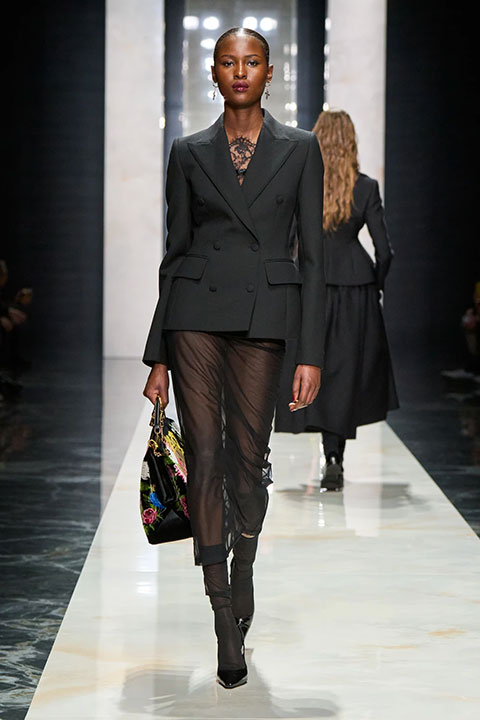
Italian designers Domenico Dolce and Stefano Gabbana dressed models in tailored suits and see‑through black lace dresses, often worn with shawls and mid‑calf socks, paired with low lace‑up shoes or stiletto heels.

“Identity is the ultimate luxury — a language built on roots that are still alive: Sicily as emotion, black as strength, lace as intimacy, tailoring as authority,” they wrote in the press notes.

GUCCI
Gucci’s new creative director Demna presented a collection of legging-pants, seamless mini dresses, and shimmering gowns in his first fashion show for the Italian label, as French owner Kering bets on a creative reset to revive its flagship brand.

(Watch the show here: https://tinyurl.com/mm2n8dmv )

Demna’s range of different looks and stylistic propositions sought to appeal to a wide variety of people, he said in the press notes.

The Georgian designer, who spent a decade at Kering’s Balenciaga brand, took over as Gucci’s creative director in July last year, after a two-year tenure by Sabato De Sarno.

“In general I intend for Gucci to become lighter, softer, more refined, more elaborate, more emotional, even senseless sometimes. I don’t want it to be intellectual,” Demna, 44, wrote in a letter published in some newspapers on Friday and released on Instagram on Thursday.

At the September Milan Fashion Week, Demna unveiled his first collection for the brand in a lookbook on Instagram and screened a short film in which actors wore the outfits.

The new collection is called “Gucci Primavera.”

“My vision of Gucci is about the coexistence of heritage and fashion. Here they are not opposites, they are lovers,” Demna said in the letter. “This first Gucci show introduces a universe of people, archetypes, consumers and dress codes that will shape my design language moving forward,” he added.

A selection of items from the new collection would be available for sale on Friday in some shops and online, ahead of the official launch in July.

“It was important to give a sign of speed and dynamism,” new Kering Chief Executive Officer (CEO) Luca de Meo told journalists on the sidelines of the show. Mr. De Meo was appointed last September to lead a turnaround at the group and particularly at its flagship label Gucci, whose sales fell 22% in 2025. He said he believed the brand was moving “in the right direction.”

ARMANI
The heirs of Giorgio Armani — his partner Leo Dell’Orco and his niece Silvana Armani — said they “had fun” working together on the Emporio Armani collection, which stays true to the late designer’s style while introducing some new touches.

(Watch the show here: https://tinyurl.com/2n3hmfyb )

“We managed to give continuity to what Mr. Armani used to do, but with the addition of something he would not have included himself,” said Silvana Armani, head of womenswear.

The collection was “a bit younger, a bit more dynamic and sparkling,” added Mr. Dell’Orco, head of menswear.

Emporio Armani’s autumn/winter collection — the first jointly developed by the two — was titled “Maestro,” in homage to the brand’s founder, who died last September.

In his will, Mr. Armani instructed heirs to gradually sell the fashion house he created 50 years ago or consider a market listing.

Models — women in double‑breasted jackets and men in flat caps — walked in a trademark Armani color palette ranging from beige‑grey to brown, with touches of blue and violet.

PRADA
Prada’s autumn/winter show in Milan on Thursday included embroidered satin dresses, sheer skirts and wool sweaters, while the front row presence of Mark Zuckerberg fueled speculation about a potential smart glasses partnership.

(See the show here: https://tinyurl.com/bdnzm6t3)

Designers Miuccia Prada and Raf Simons chose to have only 15 models walk the runway, each wearing multiple looks to focus on layering clothes to best effect, including short jackets over lightweight tunics.

“As a woman, your life is layered — each day demands not only a shifting of clothes, but a richness of identities within yourself,” said Miuccia Prada in the press notes.

Brightly colored handbags and quirky kitten heel shoes were also on display.

Mr. Zuckerberg, CEO of Facebook owner Meta Platforms, and his wife Priscilla Chan sat alongside Prada’s CEO Andrea Guerra and Prada’s family heir Lorenzo Bertelli.

In November, Mr. Bertelli, who is Prada’s chief marketing officer, told Reuters that the group had had “exploratory talks” with EssilorLuxottica over the potential development of smart glasses under its brands, but no decision had been made.

Prada has a licensing agreement with the Franco-Italian eyewear maker, which has a partnership with Meta to develop artificial intelligence-powered glasses. — Reuters

Industrial policy revival: Can it lead to real economic transformation?

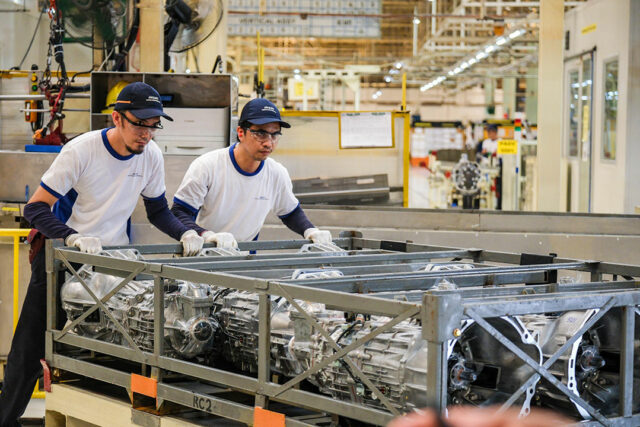
WORKERS are seen at a manufacturing facility in Santa Rosa, Laguna. — PHILIPPINE STAR KRIZ JOHN ROSALES

During the 63rd Annual Conference of the Philippine Economics Society, I had the privilege of participating in a plenary session on industrial policy and shifting perspectives on development. Professor Danny Quah of the National University of Singapore observed that industrial policy today operates in two worlds: In advanced economies, it is increasingly an instrument of statecraft; in developing economies, it remains a tool of structural transformation.

The question for countries like the Philippines is not whether industrial policy is back — it clearly is. The real challenge is whether we can design and implement it in a way that leads to genuine economic transformation rather than episodic, short-lived interventions.

GLOBAL CONTEXT
We are operating in a fragmented global order, a “G-minus world” where coordination weakens and strategic competition intensifies. The US CHIPS and Inflation Reduction Acts, the EU Green Deal, and China’s Made in China 2025 signal a decisive shift: Competitiveness is no longer defined solely by efficiency. It now encompasses resilience, technological sovereignty, and economic security.

Industrial policy has thus become a form of strategic self-protection. For smaller economies, however; it cannot be about power projection. It must be about capability building.

Global supply chains are restructuring, creating new openings as firms seek trusted and diversified partners. Risk diversification is accelerating. The green transition is driving demand for batteries, electric vehicles (EVs), and clean energy systems. At the same time, digitalization and Artificial Intelligence (AI) are reshaping production models. These megatrends are redefining industrial policy worldwide.

For the Philippines, these shifts present windows of opportunity, but only if we move beyond sites of assembly toward becoming partners in value creation. This is where targeted and coherent industrial policy becomes decisive. Windows of opportunity close quickly when domestic capabilities are weak. We must, therefore, strengthen our industrial base even as we navigate an increasingly fragmentated global landscape.

THE PHILIPPINE JOURNEY
Our industrial story has been characterized by policy swings. We pursued import substitution after the war. We embarked on a rapid trade liberalization in the 1980s and 1990s, arguably before our industries were ready. Then came the services boom of the 2000s: growth accelerated, but manufacturing remained shallow. Its average contribution to GDP declined from an average of 22% in 2001 to 2005 to 18.6% in 2021 to 2023.

The East Asian experience suggests a different pattern. Korea and Taiwan built capabilities before opening fully. Vietnam linked FDI (foreign direct investments) attraction with supplier development and export upgrading. Thailand sequenced liberalization with sectoral strategies, raising its manufacturing share from an average of 22% in 1981-1985 to 31% in 2006-2010, emerging as a regional manufacturing powerhouse in automotive, electronics, and agro-processing. In contrast, Philippine manufacturing fell from 25% to 22% during the same period.

The lesson is not protectionism, the lesson is sequencing and learning: liberalize after firms have learned, not before they can compete. This means aligning investment, innovation, and skills development so they advance together.

INDUSTRIAL POLICY IN PRACTICE: THE CARS EXPERIENCE
Beginning in 2014, successive efforts were made to revive industrial policy. The Aquino administration implemented the Comprehensive Automotive Resurgence Strategy (CARS) under the Comprehensive National Industrial Strategy. CARS aimed to strengthen domestic parts manufacturing by providing time-bound, performance-based tax credits to firms investing in metal stamping and large body and plastic parts production.

Wary of the distortions with earlier import substitution policies, President Benigno Aquino III required strong private-sector commitment before approval. More than 45 Japanese firms expressed their intent to invest and support the program. The incentives were targeted, conditional, and subject to performance metrics.

Industrial policy, however, is not costless. Programs like CARS compete with education, social protection, infrastructure, and education spending. They must pass a fiscal test demonstrating expected productivity gain, production and export impact, domestic value-added expansion, and long-run tax revenue potential.

The succeeding administrations continued the same policy through the Inclusive Innovation Industrial Strategy (i3S) and later the science-, technology-, and innovation-driven framework organized around four clusters: industrial, manufacturing, and transport; technology, media, and telecommunications; health and life sciences; and modern basic needs and resilient activities.

Yet, the initiatives faltered due to weak coordination, limited resources, and the lack of a durable governance framework. The CARS experience illustrated both possibility and fragility. Funding uncertainties, leadership transitions, and budgetary classification under unprogrammed appropriations undermined continuity. Industrial policy requires institutional architecture that survives political cycles.

GOVERNANCE: THE BINDING CONSTRAINT
Industrial policy is difficult not because the strategy is unclear, but because governance discipline is demanding.

Its implementation requires sustained political commitment, ideally led at the highest level. In Korea, President Park Chung Hee personally monitored firm performance. In Thailand, the National Committee for Industrial Development, chaired by the Deputy Prime Minister, coordinated ministries, business, and academe in implementing industrial restructuring.

For the Philippines, key governance principles should include:

Clear performance benchmarks tied to productivity, exports, and technological upgrading;

• Time-bound incentives with sunset clauses;

• Transparent monitoring and reporting systems;

• Independent technical evaluation capacity; and,

• Automatic review mechanisms for continuation or termination.

Support must be conditional, not permanent, and discipline must accompany incentives.

INDUSTRIAL POLICY AS CAPABILITY AND CREDIBILITY
The Tatak Pinoy Act, authored by then Senator, now DepEd Secretary Sonny Angara, provides an opportunity to rebuild our productive base and to compete not on cost, but on sophistication, credibility, and quality.

Modern industrial policy is not about shielding firms from competition. It is about enabling them to learn, innovate, and scale. The Act seeks to link human capital, infrastructure, and innovation within a unified framework — aligning education, technology, and enterprise development so that Philippine industries can move up the value chain.

In semiconductor and electronics assembly and testing, where the Philippines has established strengths, the challenge is to move toward higher value functions such as integrated circuit design, advanced materials processing, automation integration, AI-driven production systems, and mineral processing linked to clean energy supply chains.

Industrial policy must therefore be tightly linked to skills transformation, deepening of Science, Technology, Engineering, and Mathematics (STEM), AI capability development, university-industry Research and Development (R&D) partnerships, and supplier upgrading programs.

This is our own form of economic statecraft, which is demonstrated not by projecting power, but by building trust and credibility. “Made in the Philippines” should signal reliability, creativity, and excellence.

To strategically implement the Tatak Pinoy Act, the Tatak Pinoy Council could evolve into a Presidential Industry Council that aligns programs, integrates education and industry policy, tracks measurable upgrading outcomes, coordinates with fiscal authorities, engages the private sector in structured dialogues, and ensures policy continuity across administrations.

True industrial transformation occurs when institutions learn together.

REINDUSTRIALIZATION THROUGH SERVICIFICATION
Manufacturing today is no longer defined by smokestacks. With automation, digital design, and AI, goods now embed services — software in hardware, intelligence in machines, data in production systems. This convergence, known as “servicification,” integrates manufacturing and services into smart, knowledge-driven industries.

Servicification offers developing countries a potential pathway to leapfrog towards their goals, but only if institutional coordination, skills systems, and innovation ecosystems are aligned.

The Tatak Pinoy Strategy should therefore lead toward building smart, service-rich manufacturing that competes in technology and trust.

CLOSING REFLECTION
Big economies use industrial policy for power; smaller ones must use it for empowerment. Our form of statecraft is not coercion, it is capability.

Industrial policy for the Philippines should aim to deepen domestic value creation, increase export sophistication, build technological capability, enhance supply chain resilience, and raise productivity sustainably.

Modern industrial policy begins with a clear economic rationale. It is justified where markets systematically underprovide learning and innovation, coordination across sectors, long-term risk capital, and skill formation aligned with frontier technologies.

In a fragmented global landscape where national security increasingly intersects with economic security, our competitive advantage must rest not on low cost but on credibility, innovation, and trust. Industrial policy is not about shielding weakness. It is about building capability and resilience.


Rafaelita Mercado Aldaba is a strategic advisor at the Department of Education Philippine Qualifications Framework Secretariat and Education Center for AI Research. She is an emeritus research fellow at the Philippine Institute for Development Studies, and a fellow at Action for Economic Reforms.


Peso may fall as US, Israel attack Iran

BW FILE PHOTO

THE PESO could depreciate against the dollar in the coming days amid mounting geopolitical risks as the United States and Israel attacked Iran over the weekend.

On Friday, the local unit closed at P57.665 per dollar, weakening by 5.7 centavos from its P57.608 finish on Thursday, data from the Bankers Association of the Philippines showed.

Week on week, however, the peso jumped by 48.5 centavos from its P58.15 close on Feb. 20.

“The dollar-peso traded higher on cautious positioning ahead of the release of US PPI (producer price index), which will clarify the US Federal Reserve’s policy trajectory,” a trader said by phone on Friday.

The peso declined as Chicago Fed President Austan Goolsbee signaled more rate cuts this year, Rizal Commercial Banking Corp. Chief Economist Michael L. Ricafort said in a Viber message.

The US dollar rose on Friday after hotter-than-expected producer price data for January and on concerns about rising tensions between the United States and Iran, Reuters reported.

The PPI for final demand rose 0.5% last month after advancing by a downwardly revised 0.4% in December. Economists polled by Reuters had forecast the PPI gaining 0.3% after a previously reported 0.5% increase in December.

For this week, the trader said the peso could be pressured by the faster-than-expected US PPI data.

The trader added that players will await the release of February inflation data as this could provide clues on the Bangko Sentral ng Pilipinas’ policy path.

Meanwhile, Mr. Ricafort said the peso could be weighed down inflation concerns due to higher oil prices amid potential supply disruptions as the US and Israel launched air strikes on Iran.

The trader sees the peso moving between P57.40 and P57.85 per dollar this week, while Mr. Ricafort expects it to range from P57.50 to P58.

Israel said it launched another wave of strikes on Iran on Sunday, as Iranians grappled with uncertainty after the killing of their supreme leader in US and Israeli attacks that threaten to destabilize the wider Middle East, Reuters reported.

Hours after both nations said an airstrike killed Ayatollah Ali Khamenei in the most ambitious series of attacks on Iran in decades, the country’s state media confirmed the 86-year-old leader’s death on Saturday.

Iran’s armed forces would soon retaliate again with their biggest offensive against US bases and Israel, Islamic Revolutionary Guard Corps vowed in a statement on Sunday.

On Saturday, Tehran warned that it had closed the Strait of Hormuz, the narrow conduit for about a fifth of global oil consumption, raising expectations of a sharp jump in oil prices. — Aaron Michael C. Sy with Reuters

BMW X1 gets a plug-in hybrid powertrain

The BMW X1 xDrive25e M Sport is priced at P3.998 million.

SMC ASIA CAR Distributors Corp., the official importer and distributor of BMW in the Philippines, recently introduced the new BMW X1 xDrive25e M Sport, priced at P3.998 million, through a selling display at the Rockwell Power Plant Mall. Significantly, this is the first time for the compact crossover to come with a plug-in hybrid powertrain — joining the brand’s lineup of electrified models here — and will be the sole motivator for the X1 nameplate moving forward.

In a release, BMW in the Philippines said the arrival of the X1 PHEV is another expression of its “Power of Choice” strategy which provides customers with “the flexibility of both a combustion engine and an electric motor.”

The system submits a total output of 245hp and 477Nm of torque translating to, among others, a standstill-to-100kph time of 6.8 seconds. Electric range is 101 kilometers, enabled by BMW’s fourth-generation battery technology in the X1. The company said this makes it “ideal for daily urban commutes.” Combined with the internal combustion engine (a 1.5-liter, three-cylinder gasoline sipper) range, the X1 can muster up to 764 kilometers.

For now, the X1 PHEV will come in a single M Sport variant, with another one (the X1 xDrive25e xLine) to arrive in “mid-March,” according to a source. That xLine variant is expected to be priced at P3.498 million.

The M Sport gets design accents including an M Aerodynamics package, high-gloss Shadowline trim, and M light-alloy wheels. Aboard is the newest BMW Widescreen Display with iDrive Operating System 9 for “seamless connectivity and intuitive control.” Sport seats are wrapped in M Alcantara/Veganza, and content will find expression through a high-fidelity Harman Kardon loudspeaker system.

The model also comes with BMW ConnectedDrive. Said to be a first in the country, an “integrated data SIM card enables BMW Live Maps with real-time traffic information and route calculation.”

The new BMW X1 xDrive25e M Sport is available in “a limited introductory quantity” with six color choices: Alpine White, Black Sapphire, Space Silver Metallic, M Portimão Blue Metallic, Cape York Green Metallic, and Fire Red Metallic.

For more information, visit www.bmw.com.ph or any authorized BMW dealership nationwide. — Kap Maceda Aguila

Gov’t debt yields go down

YIELDS on government securities (GS) mostly went down last week on strong demand and as players repositioned as the month closed and following updates on the country’s potential re-inclusion in the JPMorgan Chase & Co. Government Bond Index-Emerging Market (GBI-EM) series.

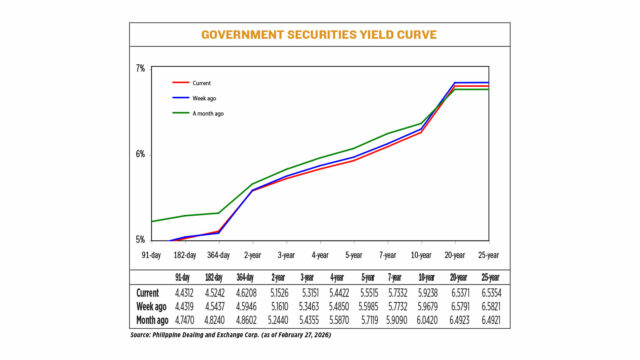
GS yields, which move opposite to prices, fell by an average of 2.69 basis points (bps) week on week at the secondary market, according to PHP Bloomberg Valuation Service Reference Rates as of Feb. 27 published on the Philippine Dealing System’s website.

At the short end of the curve, yields on the 91- and 182-day Treasury bills (T-bills) slipped 0.07 bp to 4.4312% and 1.95 bps to 4.5242%, respectively. Meanwhile, the rate for the 364-day tenor went up by 2.62 bps to 4.6208%.

Rates at the belly declined across the board, with the two-, three-, four-, five-, and seven-year Treasury bonds (T-bonds) dropping 0.84 bp (to 5.1526%), 3.12 bps (5.3151%), 4.28 bps (5.4422%), 4.7 bps (5.5515%), and 4 bps (5.7332%), respectively.

At the long end, yields on 10-, 20-, and 25-year debt papers fell by 4.41 bps (to 5.9238%), 4.2 bps (6.5371%), and 4.67 bps (6.5354%), respectively.

GS volume traded increased to P58.58 billion last week from P44.06 billion previously.

“Overall, the week saw downward pressure on yields, especially at the short to belly portion of the curve, driven by strong auction results, sustained liquidity, and the month-end rush,” the first bond trader said in a Viber message.

The trader said both the T-bill and T-bond auctions last week saw strong demand as investors likely wanted to lock in yields at their current levels on expectations that rates would go down further.

“The decent participation in the three-year and seven-year tenor, to a lesser degree, suggested that investors are comfortable with some duration risk, leading to the flattening yield curve for belly tenors later during the week,” the trader added.

“BTr (Bureau of the Treasury) auctions this past week continued to attract robust demand, with most participants channeling excess liquidity into the Philippine peso-denominated government bonds market as bond yields continue to offer attractive spreads over the BSP’s (Bangko Sentral ng Pilipinas) policy rate,” the second bond trader likewise said in a Viber message.

The trader said the country’s potential inclusion in JPMorgan’s GBI-EM Index drove strong demand for tenors at the belly and the long end.

“Sentiment improved midweek after the National Treasurer shared updates regarding the Philippines’ potential inclusion in the JPMorgan Government Bond Index. Estimated inflows of up to $3 billion, if inclusion materializes, would be meaningful for the local market. Beyond the headline number, the structural implication is deeper foreign participation,” Lodevico M. Ulpo, Jr., vice-president and head of Fixed Income Strategies at ATRAM Trust Corp., said in a Viber message.

National Treasurer Sharon P. Almanza told Bloomberg last week that the Philippines could attract about $3 billion in inflows if its government bonds are added to the foreign bank’s emerging-market index, as it would have an initial weight of about 1%. She said an update on the country’s inclusion bid could come as early as this month.

For this week, Mr. Ulpo said the BTr’s bond auction would be a trading driver as this would test demand for tenors at the belly of the curve.

He added that the release of February inflation data on Thursday (March 5) would be a key catalyst for the market. “A downside surprise would reinforce expectations of continued policy easing and support a further bull flattening. Conversely, an upside print could temper dovish expectations and prompt some profit taking.”

“We could expect relatively neutral movements in the coming weeks with broadly stable macroeconomic conditions. However, upside inflation risks could push the long end of the curve higher. Markets appear to be anticipating a faster local inflation print in February, but any surprise to the upside could spur broad risk-off sentiment,” Marco Antonio C. Agonia, an economist at the University of Asia & the Pacific, said in an e-mail.

“Yields will likely trade sideways with a slight upward bias as the BSP’s expectations on the inflation data anticipate higher CPI (consumer price index). The front end of the curve will likely remain anchored by BSP policy expectations, while the long end will take cues from US Treasury movements and global developments,” the first bond trader said. “Overall, barring any surprise data, the yield curve may continue to be stable or trade slightly higher on local CPI data, supported by strong domestic demand.”

The analysts added that market players will also monitor external developments, such as the movements of US Treasuries, geopolitical news, and US economic data releases. — Isa Jane D. Acabal

Palm oil expansion raises concerns over environment, coconut industry impact

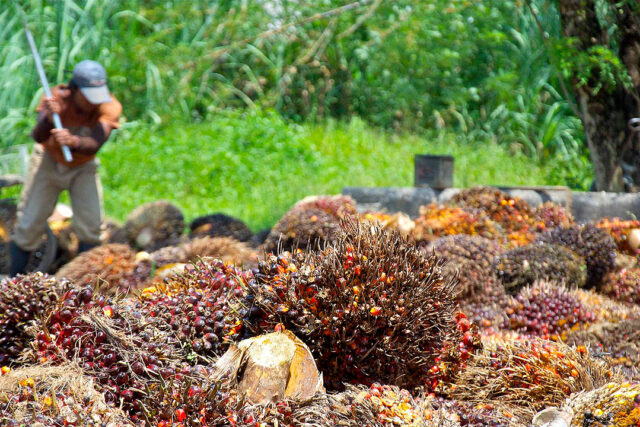
CRAIG MOREY/FLICKR/CC BY-SA 2.0

THE government’s plan to expand palm oil production in Mindanao must not come at the expense of the coconut industry or the environment, industry leaders said.

Danilo V. Fausto, president of the Philippine Chamber of Agriculture and Food, Inc., said the government should prioritize the development of the coconut industry.

“We should first accelerate the development of our coconut industry, where the Philippines has a dominant and competitive edge in the world,” he told BusinessWorld via Viber.

Mr. Fausto said the government should invest in post-harvest facilities, logistics, and technology to increase coconut farmer incomes.

In a statement on Friday, the Department of Agriculture (DA) said it is ramping up efforts to expand oil palm plantations in Mindanao to curb imports and bolster the supply of edible oils.

Oil palm yields average about 3.8 metric tons per hectare, compared with less than one metric ton per hectare for coconut. Because of higher yield, oil palm farmers earn at least double the roughly P90,000 that coconut farmers earn annually, the DA said. 

Philippine Coconut Authority (PCA) Administrator Dexter R. Buted said it is working on establishing nurseries in Mindanao and cultivating planting materials on a local basis.

Former Agriculture Undersecretary Fermin D. Adriano said Mindanao is suitable for palm production because it is rarely visited by strong typhoons, but cited land consolidation as a major constraint.

“The main problem is acquiring contiguous lands for palm oil production. You need thousands of hectares. The Malaysians and the Japanese tried in the past but failed to consolidate land for palm oil production,” he told BusinessWorld via Viber.

Former Agriculture Secretary William D. Dar said the DA’s palm oil expansion plans must not disturb forested areas.

“We need to protect our environment while pushing for the expansion of palm oil production in the country,” he told BusinessWorld via Viber.

Mr. Dar said joint ventures between agribusiness companies and clusters of farmers should be encouraged to develop the industry.

“In effect, a public-private-producer partnership will be the best business model anchored on regenerative and resilient agriculture,” he said.

Charles R. Avila, chairman of the Confederation of Coconut Farmers’ Organizations of the Philippines, expressed his opposition to expanding oil palm, citing risks to biodiversity and the potential for exploitative labor practices.

“The conversion of natural vegetation to monoculture plantations, as in oil palm, definitely reduces biodiversity… the industry is associated with exploitative practices, low wages, disappearance of land rights, and precarious working conditions for farm workers,” he told BusinessWorld via Viber.

Mr. Avila also said it was a mistake to task the PCA with overseeing oil palm expansion.

“It is the same PCA that was made to assure the nation that they have the formula to double the income of coconut farmers through its various productivity and social service programs,” he said.

“Does not the government believe its own PCA? Why, then, use (the coconut industry’s) low productivity as an argument to shift to oil palm?” Mr. Avila added. — Vonn Andrei E. Villamiel

ADVERTISEMENT
ADVERTISEMENT