Home Blog Page 23

Taiwan electric bus manufacturer considering PHL operations — PEZA

THE Philippine Economic Zone Authority (PEZA) said a maker of electric buses from Taiwan is considering a $25-million manufacturing investment in the Philippines.

In a statement on Tuesday, PEZA said the investment lead emerged during an investment mission to Taipei in mid-March.

“We are seeing strong and sustained interest from Taiwan investors, particularly in high-growth and innovation-driven sectors,” PEZA Director General Tereso O. Panga said.

PEZA also received interest from a Taiwan food manufacturer looking into a possible economic zone investment.

A Taiwan electronics and semiconductor delegation is expected to visit the Philippines soon to explore opportunities, PEZA added.

“Several firms signified interest in capacity expansion and diversification into higher-value activities, reinforcing the importance of sustained aftercare services in anchoring long-term investments in the Philippines,” PEZA said.

Meanwhile, PEZA and the Manila Economic and Cultural Office, the Philippine government’s de facto representatives in Taiwan, signed a memorandum of understanding to facilitate business support organizations partnerships.

The tie-up will promote investments, facilitate business matching, and enhance the overall ease of doing business between the Philippines and Taiwan, PEZA said. — Beatriz Marie D. Cruz

PHL rice imports seen rising to 5.1 million MT

BW FILE PHOTO

PHILIPPINE rice imports are projected to exceed five million metric tons (MMT) in marketing year (MY) 2026-2027, the US Department of Agriculture (USDA) said.

The USDA forecast inbound rice shipments to increase nearly 16% during the period, up from the estimated 4.4 MMT in the ongoing MY 2025-2026.

The rice marketing year runs from July to June of the following year.

The anticipated rise in imports is linked to tighter stock levels carried over from the current marketing year. Rice inventories are expected to drop to 2.9 MMT, slightly below the previous year’s 2.95 MMT.

“Ending stocks are expected to decline compared to the previous marketing year due to the impact of the four-month rice import ban, which reduced stock carryover,” the USDA said.

Palay (unmilled rice) output is projected at 19.68 MMT in MY 2026-2027, reflecting a 0.4% increase from the prior year.

Despite the slight uptick in production and incremental yield gains, the USDA said steady population growth will continue to push demand for the staple grain, which will “keep overall consumption on an upward trend,” the USDA said.

It said Philippine rice consumption in MY 2026-2027 is expected to inch up to 17.65 MMT from 17.6 MMT in the current MY. — Vonn Andrei E. Villamiel

PPP under study for CLLEX O&M contract

DPWH

THE Department of Public Works and Highways (DPWH) is seeking to tap the private sector for the operations and maintenance (O&M) of the Central Luzon Expressway (CLLEX) project, following the completion of the expressway’s first phase.

“It is (toll) free for the foreseeable future. The government will maintain it, although we are in talks with private sector partners for its maintenance and operations. We really want PPP for this,” Public Works Secretary Vivencio B. Dizon told reporters.

On Tuesday, the DPWH opened contract package 4 of CLLEX, which connects Tarlac–Pangasinan–La Union Expressway (TPLEX) with Cabanatuan City.

The opening coincided with the completion of Phase 1 of the CLLEX, a 29.2-kilometer, four-lane expressway.

The DPWH website indicates that Package 4 consists of the 10.3-kilometer Cabanatuan section, which has an estimated cost of P3 billion.

CCLEX phase 1 is divided into five contract packages, and was originally estimated to cost P14.94 billion.

CCLEX makes up part of the lateral (east–west) high-standard highway network of roads within 200 kilometers of Metro Manila. — Ashley Erika O. Jose

Rice, fish prices up, meat down in mid-March

PHILIPPINE STAR/ MICHAEL VARCAS

THE retail prices of rice and fish increased year on year at mid-March, while meat prices declined, according to the Philippine Statistics Authority (PSA).

During the March 15-17 period, which the PSA calls the second phase of March, the national average retail price of regular-milled rice increased 5.8% year on year to P48.69 per kilo.

The second-phase price is also higher than the P47.47-per-kilo average in the first phase of the month (March 1-5) and P46.01 a month earlier.

The highest average retail price of regular-milled rice in the second phase was recorded in the Bangsamoro Autonomous Region in Muslim Mindanao at P53.26 per kilo, while the lowest retail price was reported in the Cagayan Valley at P41.37.

The retail price of galunggong (round scad) rose 4.56% to P248.64 per kilo in the second phase of March. The national average is also higher than the  P242.67 recorded in the first phase of March and P246.38 a month earlier.

Chicken retail prices rose to P212 per kilo in the second phase of March from P211.67 a year earlier. The average retail price is higher than the P211.41 recorded in the first phase of March, but lower than P212.85 a month earlier.

Meanwhile, the retail price of fresh pork shoulder averaged P341.48 per kilo in the second phase of March, down 6.46% from a year earlier. The national average is slightly higher than P340.80 recorded in the first phase of March but lower than P342.37 a month earlier. — Vonn Andrei E. Villamiel

Coconut oil exports fall 5.8% in Feb. on weak output

PHILSTAR FILE PHOTO

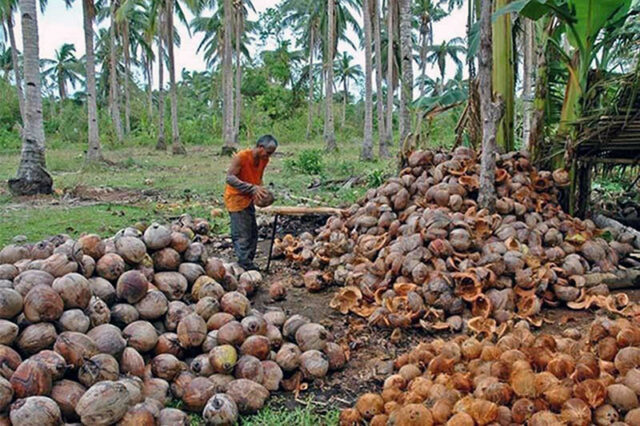
COCONUT OIL exports in February declined 5.8%, the Philippine Statistics Authority (PSA) reported, with an industry official citing raw material availability issues that weighed on output.

Citing preliminary data, the PSA said shipments of coconut oil, the leading Philippine agricultural export commodity and eighth overall among exports, slipped 5.8% year on year to $237.41 million in February.

The PSA said that, as a share of the country’s total exports, coconut oil declined to 3.2% from 3.7% previously.

In the first two months, coconut oil exports fell 11.6% to $442.97 million. The decline happened in the face of a 7.4% year-to-date rise in agro-based exports.

Charles R. Avila, chairman and chief executive officer of the Confederation of Coconut Farmers’ Organizations of the Philippines, said the drop in exports was mainly due to supply-side constraints stemming from weather disturbances.

“There is no denying that the 2024/2025 El Niño and subsequent dry conditions reduced coconut yields, affecting copra production and leading to a tightening in the supply of exports,” Mr. Avila told BusinessWorld.

According to the PSA, output of mature coconut, the raw material for copra, stagnated at about 14.08 million metric tons (MMT) in each of the last two years, against 14.47 MMT in 2023.

Mr. Avila added that dry weather tends to encourage the spread of the coconut scale insect, known as cocolisap, which also reduces production.

In June, the Philippine Coconut Authority (PCA) reported cocolisap infestations in nine regions, which resulted in an estimated P280 million in lost production.

About 516,000 coconut trees were struck by the pest, many of them in Calabarzon, a leading coconut producer.

Mr. Avila said increased domestic consumption of coconut products, including by the biofuel industry, may have also contributed to the decline in coconut oil exports.

“Despite the mandatory biodiesel blend, the mandate was suspended at 3%, and we have not yet reached the expected mandatory 5% (B-5). Overall, it is not yet such a big factor as to substantially reduce export supply,” he said.

Meanwhile, Mr. Avila said  the anticipated production rebound this year may not materialize, despite the government target of boosting coconut exports to $3 billion.

“Even with rising demand, a corresponding increase in supply is not a given,” he said.

Mr. Avila said limited farmer access to funding, infrastructure gaps, and weak coordination among producers and government agencies continue to hamper efforts to expand output. — Vonn Andrei E. Villamiel

DENR’s Cuna signals waste-to-energy push

REUTERS

By Vonn Andrei E. Villamiel, Reporter

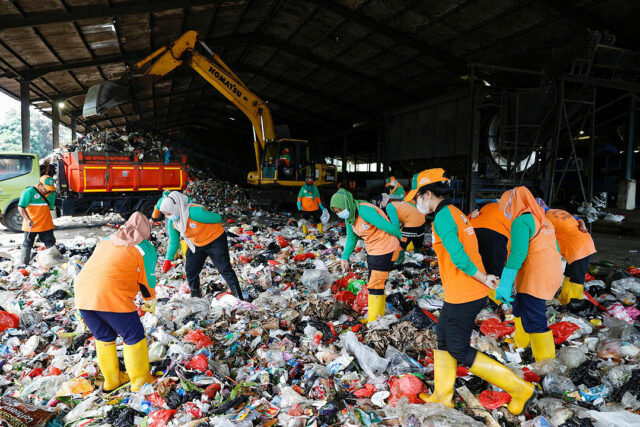
ENVIRONMENT SECRETARY Juan Miguel T. Cuna said the Department of Environment and Natural Resources (DENR) supports waste-to-energy (WTE) technology, positioning such projects as a means of containing waste.

“Our priority is protecting the environment and we welcome technologies that will work to manage solid waste in the country, including waste‑to‑fuel, biomass conversion, WTE, and advanced recycling or upcycling,” Mr. Cuna told BusinessWorld.

The newly-appointed Mr. Cuna said the DENR is supporting the Department of Energy’s push for WTE legislation, and will help ensure that proposed legislation is consistent with environmental laws.

“We have already provided guardrails to ensure alignment with the Clean Air Act and the Ecological Solid Waste Management Act,” he said.

The proposed WTE legislation is a priority item of the Legislative-Executive Development Advisory Council for the 20th Congress. It seeks to establish a national energy policy and regulatory framework for facilities that convert waste into energy.

The proposed measure also aims to classify WTE as a renewable energy source, addressing the dual challenges of solid waste management and energy security, while encouraging investment from the private sector and local government units (LGUs).

In December, the House of Representatives passed its version of the Waste Treatment Technology Act, which includes provisions on WTE, while a counterpart bill remains under discussion in the Senate Committee on Energy.

The DENR has said it received support from several legislators, including former President and Pampanga Rep. Gloria Macapagal-Arroyo, on the matter of amending the 25-year-old Republic Act No. 9003 or the Ecological Solid Waste Management Act.

The proposed amendments would allow the use of new waste incineration technologies and establish a clearer regulatory framework for their adoption.

Former Environment Secretary Raphael P.M. Lotilla said that since the law’s passage in 2001, advances in incineration technology have made WTE projects more viable.

“New incineration technologies have emerged that can now meet current environmental standards,” he earlier told reporters.

Private-sector investments also point to growing momentum behind WTE technologies.

In November, the Bases Conversion and Development Authority (BCDA), in partnership with a Filipino-Indian consortium, announced the establishment of a WTE plant in New Clark City.

The BCDA said the P4-billion project would become the first large-scale facility of its kind in the country.

The BCDA said the plant is expected to process up to 600 metric tons of waste daily and generate 12 megawatts of electricity, enough to power over 10,000 homes in Clark and nearby communities.

Energy Undersecretary Giovanni Carlo J. Bacordo said the project would support the Philippines’ renewable energy targets set out in the Philippine Energy Plan 2023–2050, while also addressing long-standing waste management issues.

“It’s not only for job generation in the region and power generation, but it is also about waste management,” he has said. “It is like hitting two birds with one stone — waste management, power generation and renewable energy.”

Environmental groups have long objected to incineration, warning of risks to public health and the environment.

“The process of incineration, whether for waste disposal or power generation, poses a significant threat to the health of Filipinos,” Greenpeace Philippines said in a position paper.

The group said during incineration, harmful compounds are either concentrated or created, exposing nearby communities to pollutants linked to various diseases.

“Thermal WTE technologies emit pollutants such as heavy metals, furans and dioxins, which have been found to contribute to respiratory and reproductive diseases. Dioxins have also been linked to cancer and negative effects on fetal development,” Greenpeace said.

Marian Frances T. Ledesma, zero-waste campaigner at Greenpeace Philippines, said WTE facilities could also worsen the climate crisis.

“Incinerators produce 2,988 pounds of carbon dioxide per unit of electricity (MWh), making it a highly carbon-intensive form of energy production,” she told BusinessWorld via e-mail.

She added that such facilities are costly and may not be suited to the country’s waste profile.

“WTE facilities are outrageously expensive and would force cities to take on large debts,” Ms. Ledesma said. “It is also highly inefficient for our waste stream, which is mostly organic waste. We’d use more energy to burn organic waste than what a facility can generate.”

Ochie L. Tolentino, zero-waste campaigner at EcoWaste Coalition, told BusinessWorld by phone that the government should instead focus on enforcing existing waste laws.

“We don’t need WTE. It’s a new source of pollution,” she said, adding that proper implementation of the Ecological Solid Waste Management Act would be sufficient.

“The priority should be improving waste diversion across municipalities,” she said. “Having a waste management plan is one thing, but implementation is another. Waste diversion must be closely monitored at the local level to reduce landfill use.”

Industry officials contend that WTE resolves structural gaps in the waste management system.

Jose Maria Niño Jesus P. Madara, president and chief executive officer of Metpower Ventures Holdings, Inc. (MPVHI), said WTE addresses gaps in the current waste management system by processing residual waste that cannot be recycled or reused.

“Segregation at source is mandated, but in practice, not all waste is properly segregated,” he told BusinessWorld. “WTE provides a practical solution by recovering energy from residual waste that would otherwise end up in landfills.”

MPVHI, a wholly-owned subsidiary of Metro Pacific Investments Corp., invests in renewable energy generation and in the production of refuse-derived fuel, biomethane, and fertilizer.

Mr. Madara said WTE should be seen as complementary to, rather than a replacement for, waste reduction and recycling efforts.

“It’s not to say that we should stop segregation of the resource. Because ultimately, if the quality of the waste, in terms of calorific content, improves through segregation, that actually also benefits the facility, because now we have higher energy output, higher efficiency,” he said.

Mr. Madara also said WTE solutions are applicable to the Philippines as the technology is adaptable and already widely deployed in comparable markets.

“There are many reference points in Asia — Japan, China, Singapore — where these facilities are operating at scale. In terms of the waste characteristics, we’re pretty similar to China, and they have hundreds of such facilities,” he said.

He also said the health risk claims are often based on outdated assumptions about waste incineration technologies.

“A lot of the concerns are based on older models of incineration,” he said. “Today’s facilities are highly capable of controlling emissions within strict environmental standards.”

Meanwhile, the DENR said it has enhanced its capacity to regulate such technologies.

“The Environmental Management Bureau has strengthened its technical capacity and now has the capability to measure and monitor emissions from WTE facilities,” Mr. Cuna said.

He said that the department’s capability is critical to ensuring compliance with air quality standards and strengthening regulatory oversight.


Palace readies measures as peso tumbles to record; House eyes bills

PHILSTAR FILE PHOTO

By Chloe Mari A. Hufana and Kenneth Christiane L. Basilio, Reporters

THE Presidential Palace on Tuesday signaled that it is prepared to roll out additional measures to soften the economic impact of a weakening peso, as escalating war in the Middle East continues to weigh on the currency and fuel inflation risks.

Palace Press Officer Clarissa A. Castro said the peso’s fall to historic lows reflects external pressures linked to the conflict and warned that volatility could persist if hostilities drag on, though she stressed that the administration is working to contain the fallout.

“We know what the President and the administration are doing to mitigate the impact of the Middle East conflict and to do everything possible to address the situation, including helping our fellow Filipinos,” she told reporters in Filipino, without providing details.

She said the peso’s slide to successive record lows might continue as long as the war drags on. “This is the possible outcome while the conflict is not contained.”

The peso has posted multiple sharp declines this month as the conflict disrupts global energy markets, stoking fears of imported inflation and renewed strain on financial stability in an economy heavily reliant on foreign fuel supplies.

In a separate video message, President Ferdinand R. Marcos, Jr. said his administration would continue providing intervention and relief to Filipinos as the economic effects of the war weigh on households, citing government aid measures aimed at cushioning consumers.

He said an inter‑agency committee is coordinating efforts to stabilize prices and speed up the delivery of assistance. These include a planned price cap of P50 per kilo on imported rice and the expansion of subsidized P20 rice outlets nationwide.

The committee met on Monday to discuss additional measures in response to the war. The Development Budget Coordination Committee is scheduled to meet later this week to submit its assessment on the possible suspension or reduction of excise taxes on petroleum products.

“As long as there is even one Filipino who needs help, we will continue to work to reach them,” Mr. Marcos said in Filipino. “We will not stop taking action until this is felt in every household.”

Mr. Marcos has said the government would not exhaust the country’s foreign exchange reserves solely to defend the peso, noting that there is a limit to state intervention against market forces driving the dollar higher.

He said a degree of peso weakness would be tolerated, reflecting a policy stance focused on curbing excessive volatility rather than targeting a specific exchange rate level.

The peso closed at an all‑time low of P60.748 to the dollar on Tuesday, breaching its previous record of P60.69 set a day earlier, according to Bankers Association of the Philippines data posted on its website.

Bangko Sentral ng Pilipinas Governor Eli M. Remolona, Jr. has said the central bank sees no need for aggressive market intervention, reiterating that it steps in only during periods of excessive volatility rather than defending a fixed exchange rate.

Currency depreciation raises the cost of imported goods, particularly petroleum products, heightening inflation risks at a time when global oil prices remain elevated due to supply concerns linked to the Middle East war.

The administration has rolled out subsidies and transport discounts as part of efforts to cushion households and workers from higher fuel and transport costs.

The Philippines is under a one‑year national state of energy emergency, the first such declaration globally, as the war threatens fuel supply chains and exposes vulnerabilities in the country’s energy system.

‘UNIFIED RESPONSE’
At the House of Representatives, lawmakers are moving to draft a package of measures aimed at shielding the economy from oil shocks that could deepen inflation and weaken growth.

The chamber would form a joint congressional panel composed of 13 committees to craft proposals to blunt the impact of oil price spikes, including improving subsidy-targeting and possibly expanding assistance through budget realignments, Marikina Rep. Romero “Miro” S. Quimbo told a news briefing.

“We want something very comprehensive that will make the economy more resilient, so we don’t suddenly stumble whenever there are drastic increases in oil prices,” he said in mixed English and Filipino.

Urgency has grown as the month‑long conflict involving the US, Israel and Iran has underscored how exposed the country’s import‑dependent economy is to geopolitical disruptions.

Now in its fifth week, the conflict has already prompted President Marcos to reopen talks with China on joint energy exploration in the South China Sea.

“The sole purpose is to have an orchestrated and unified response to confront and examine the urgent steps we can take to address this oil price crisis,” Mr. Quimbo said.

The Philippines, a net crude importer sourcing most supplies from the Middle East, is facing record pump prices, with gasoline in Metro Manila nearing P115 per liter and diesel climbing to as high as P156 per liter.

Mr. Quimbo said the 13 House committees, including those on budget, taxation, economic affairs, transport and agriculture, will meet on April 8 for briefings by economic managers before forming subcommittees to develop proposals.

The key objective is to identify which sectors and industries are immediately affected, he said. “We want to know what industries will have deep, threatening effects on the entire economy.”

He recommended tax incentives and subsidies for electric vehicle manufacturers to encourage adoption and reduce dependence on oil, and called for faster renewable energy investments by cutting bureaucratic bottlenecks.

“The role of the government is to create a climate where investments are easily attracted and protected,” Mr. Quimbo said.

The joint panel will also review the 1998 Oil Deregulation Law and examine proposals to establish a national petroleum reserve, while studying options to reallocate funds for aid programs without disrupting existing spending commitments.

“The first step is really to have an aid program — identifying available cash and looking for new sources,” he added.

Children’s council backs push to restrict Filipino minors’ social media use

A person using a smartphone is seen in front of displayed social media logos in this illustration taken on May 25, 2021. — REUTERS

By Kaela Patricia B. Gabriel

THE Council for the Welfare of Children (CWC) on Tuesday backed proposals to restrict minors’ access to social media platforms, saying such measures could help protect children’s mental health and overall well-being.

In a statement sent via Facebook chat, CWC Undersecretary Angelo M. Tapales said safeguarding children in the digital space is a shared responsibility, and laws must evolve alongside technological change.

Protecting children in the digital space is an “obligation of every Filipino,” Mr. Tapales said. “This is not about restriction, but about meaningful child protection during a stage where children are still developing judgment and resilience.”

The statement followed renewed calls by Senator Sherwin T. Gatchalian to bar minors from using social media platforms to improve online safety, citing the prevalence of online sexual abuse and exploitation of children.

In a statement on Monday, Mr. Gatchalian cited Australia’s ban on social media use for those aged 16 and below, the first nationwide policy of its kind globally. He also cited the 2022 Programme for International Student Assessment, which linked lower mathematics scores among 15-year-old students to distractions caused by recreational use of digital devices.

Separately, Senator Ana Theresia N. Hontiveros‑Baraquel filed a Senate resolution calling for an inquiry into several online gaming platforms including Roblox, Minecraft, Fortnite, Call of Duty and Free Fire.

The resolution seeks the adoption of strict age verification mechanisms modeled after practices in Australia, the Netherlands and New Zealand to prevent minors’ exposure to sexual predators online.

However, an analyst warned that implementing foreign age‑verification systems might be difficult in the Philippine setting due to gaps in cybersecurity infrastructure and digital literacy.

“In other countries, age verification tools include facial recognition or the presentation of valid identification cards,” Maria Elize H. Mendoza, an assistant political science professor at the University of the Philippines, told BusinessWorld. “Both are unreliable in our context.”

Ms. Mendoza also noted that social media platforms serve as essential communication tools for students and parents, particularly through messaging apps and group chats.

“An outright ban could disrupt these practices,” she said in an e-mailed reply to questions, adding that users might try to bypass restrictions, such as through virtual private networks, if alternatives are not provided.

Instead of a total prohibition, Ms. Mendoza recommended stronger content moderation, wider digital literacy programs for children and adults, and greater accountability for platforms hosting minors.

She cited child‑focused versions of apps such as YouTube Kids and Messenger Kids as possible models.

She further suggested requiring explicit parental consent alongside age checks and encouraging schools to promote education‑focused tools such as Google Workspace and Microsoft Office.

Telecommunications companies, she added, could support these efforts by offering affordable data packages for learning platforms.

A 2024 report by the United Nations Children’s Fund estimated that about 2 million Filipino children aged 12 to 17 are subjected to online sexual abuse each year, with 23% to 38% of victims choosing not to report the incidents.

Last week, Indonesia began enforcing regulations deactivating accounts of users aged 16 and below on platforms deemed high risk, including TikTok and Roblox.

In the House of Representatives, Party‑list Rep. Eduardo C. Villanueva earlier filed a bill proposing a minimum age requirement for social media users to strengthen child protection online.

Marcos orders use of Philippine names for SCS features

AN AERIAL view shows the Nanshan Island, locally known as Lawak, one of the nine features the Philippines occupies in the disputed Spratly Islands, in the South China Sea, March 9, 2023. — REUTERS

PRESIDENT Ferdinand R. Marcos, Jr. has ordered the adoption of Philippine names for 131 maritime features in the Spratly Islands, a move aimed at reinforcing governance and strengthening the country’s sovereignty claims in the South China Sea (SCS).

Under Executive Order (EO) No. 111 signed on March 26, the Philippines will adopt a standardized set of local names for maritime features located in Kalayaan, Palawan province following recommendations from the National Maritime Council.

Malacañang said the directive is consistent with existing maritime laws and policies and underscores state efforts to assert the country’s maritime rights.

“President Marcos issued the EO last March 26 in line with existing maritime laws and policies,” the Palace said in a statement.

The council said a unified naming system is essential to improving administrative coordination and reinforcing the country’s assertion of sovereignty and jurisdiction over its maritime zones.

Guo Wei, deputy spokesman of the Chinese Embassy in Manila, did not immediately reply to a Viber chat seeking comment.

The order comes amid geopolitical tensions between the Philippines and China over competing claims in the South China Sea. Beijing continues to assert expansive sovereignty claims through its so-called nine-dash line, which overlaps with areas claimed by Manila.

The Philippines has repeatedly invoked the 2016 South China Sea arbitration ruling, which voided China’s sweeping claims under international law. Despite the ruling, confrontations between Chinese and Philippine vessels in contested waters have persisted.

Executive Order No. 111 builds on existing legal frameworks, including the Philippine Maritime Zones Act, which defines the country’s western maritime areas — covering the Luzon Sea, Bajo de Masinloc (Scarborough Shoal) and the Kalayaan Island Group (Spratlys) — as collectively forming the West Philippine Sea.

Under the directive, the National Mapping and Resource Information Authority is tasked with updating official charts and maps to reflect the newly adopted names.

All government agencies and state-run institutions must use the standardized names in official documents, reports and communications.

The order also directs education agencies — including the Department of Education, Commission on Higher Education and Technical Education and Skills Development Authority — to integrate the standardized maritime names into teaching materials, research and academic publications. — Chloe Mari A. Hufana

Manila seeks Iran assurance on oil transit

A 3D-printed oil pump jack and a map showing the Strait of Hormuz and Iran appear in this illustration taken March 2, 2026. — REUTERS

THE Philippine government is preparing to engage Iran in diplomatic talks to help ensure the safe passage of vessels bound for the country through the Strait of Hormuz, amid growing concerns over potential disruptions to the vital shipping route.

President Ferdinand R. Marcos, Jr. ordered the move after a meeting of a government task force that is coordinating responses to global oil supply risks, Palace Press Officer Clarissa A. Castro told a news briefing on Tuesday.

She said Foreign Affairs Secretary Ma. Theresa P. Lazaro is set to meet with Iran’s ambassador, possibly as early as this week or by next week at the latest.

Relations between the Philippines and Iran remain “good,” she pointed out.

Senator Sherwin T. Gatchalian over the weekend urged the Executive branch to pursue high‑level discussions with Iran to safeguard the transit of Philippine‑bound oil tankers through the Strait of Hormuz. He cited Thailand’s direct engagement with Iran as a potential model.

The Strait of Hormuz, a narrow waterway separating Iran and Oman that links the Persian Gulf to the Arabian Sea, is one of the world’s most critical oil chokepoints, handling a significant share of global crude shipments.

Asked whether Philippine‑bound vessels are scheduled to pass through the Strait, Ms. Castro said Ms. Lazaro did not provide details.

Mr. Marcos has said the government continues to diversify the country’s petroleum supply to reduce exposure to geopolitical risks, including exploring government‑to‑government arrangements with nontraditional suppliers.

Potential sources being considered include Russia, Indonesia and India, the President said.

At an event last week, Mr. Marcos said Petron Corp., the country’s only oil refiner, has assured the government that domestic supply is sufficient until June 30.

The conflict involving Iran erupted on Feb. 28 after coordinated airstrikes by the US and Israel targeted Iranian military, nuclear and leadership facilities, triggering retaliatory missile and drone attacks across the Middle East.

The war marked the most direct confrontation to date between the long‑standing adversaries, expanding beyond proxy conflicts and drawing in regional actors while disrupting key energy routes.

It has since rattled global markets, as attacks on infrastructure and threats to shipping lanes heightened concerns over oil supply disruptions and contributed to sharp swings in energy prices. — Chloe Mari A. Hufana

Marcos opens CLLEX Cabanatuan link

PCO

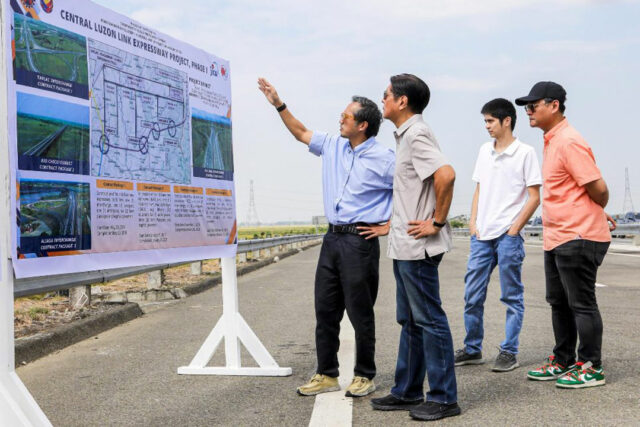
PRESIDENT Ferdinand R. Marcos, Jr. on Tuesday opened a new segment of the Central Luzon Link Expressway (CLLEX) connecting the Tarlac-Pangasinan-La Union Expressway to Cabanatuan City, cutting travel time to about 20 minutes from 90 and easing fuel use and transport costs amid rising global oil prices.

Speaking after the inauguration of the Aliaga-Cabanatuan section, Mr. Marcos said the project supports the government’s push to build connector roads to decongest highways and improve mobility across Luzon.

“This is significant because fuel consumption is one of our major concerns today, and by reducing travel time, fuel use will also decline,” he said in Filipino, according to a Palace transcript.

The project is expected to lower transport costs for goods from Nueva Ecija, the country’s rice granary, helping stabilize rice prices as Middle East tensions threaten to push up commodity costs.

About 11,400 vehicles are projected to use the segment daily, easing congestion on MacArthur Highway. The toll-free section will be open until December to encourage use, including by trucks carrying agricultural products.

The newly opened stretch links the San Juan Interchange in Aliaga to the Cabanatuan exit, completing Phase 1 of the 29.2‑kilometer, four-lane expressway. The P10‑billion first phase was financed through official development assistance from the Japan International Cooperation Agency. — Chloe Mari A. Hufana

Half-day work on April 1 declared

BW FILE PHOTO

MALACAÑANG announced a half-day work for government employees on April 1, giving them the full opportunity to properly observe Maundy Thursday and Good Friday.

Memorandum Circular No. 116, published on Tuesday and signed by Executive Secretary Ralph G. Recto, also provides them time to travel home to their respective provinces.

The order noted agencies tasked to deliver basic and health services, disaster or calamity response, and other vital services will continue with operations under usual working arrangements.

Meanwhile, President Ferdinand R. Marcos, Jr. will return to his home province of Ilocos Norte for Holy Week.

According to Palace Press Officer Clarissa A. Castro, the President’s move does not mean he is vacationing.

Mr. Marcos will continue to work despite the holiday break, she noted. — Chloe Mari A. Hufana