Home Blog Page 2208

ANZ: RRR cut won’t automatically boost lending

OJ SERRANO-UNSPLASH

THE UPCOMING CUT in Philippine banks’ reserve requirement ratios (RRR) will not necessarily lead to faster lending growth, ANZ Research said on Tuesday.

“Banks do have the flexibility to lend out the liquidity arising from the RRR reduction. However, this does not imply that bank lending will necessarily increase by an equivalent amount,” it said in a report.

The Bangko Sentral ng Pilipinas (BSP) last month announced that it would reduce the RRR for universal and commercial banks and nonbank financial institutions with quasi-banking functions by 250 basis points (bps) to 7% from 9.5% effective on Oct. 25.

It will also cut the RRR for digital banks by 200 bps to 4%, while the ratio for thrift lenders will be reduced by 100 bps to 1%. Rural and cooperative banks’ RRR will likewise go down by 100 bps to 0%.

The RRR is the portion of reserves that banks must hold onto rather than lending out.

Based on historical data, ANZ Research said there is no “durably positive relationship between RRR cuts and bank lending.”

“The Philippine credit cycle has been quite independent of RRR cuts, even if the pandemic years of 2020 and 2021 are excluded,” it said. “On balance, we do not anticipate a boost to credit arising from the RRR cuts until nonfinancial constraints on the Philippines’ business cycle eases.”

“Overall, the decision to lower the RRR is a positive development; though, in the short term, credit growth is unlikely to materially accelerate. The demand for credit remains moderate at an overall level and is narrowly focused on some segments of household lending.”

Latest data from the BSP showed bank lending rose by 10.7% to P12.25 trillion in August, the fastest increase in 20 months or since the 13.7% in December 2022.

ANZ expects around P300 billion in liquidity, equivalent to about 1.1% of gross domestic product (GDP), to be released into the financial system following the RRR cut.

“A surprisingly commonly held view is that this additional liquidity will be directed towards bank lending. This is unlikely to be the case, even though banks will have the flexibility to do so,” it said.

It added that current conditions do not show a “strong borrower appetite for funds.”

“Transitioning to market-based liquidity management has been a long-standing objective of the central bank. As the RRR is not market determined, it does not accurately reflect prevailing liquidity conditions.”

“We think most of this additional liquidity will be absorbed via the BSP’s market-based tools of liquidity management,” it added.

ANZ said the Philippines’ RRR level is “unusually high.”

“It was kept at an elevated level to avoid a repeat of bank failures that occurred in the 1980s. However, with other measures of financial stability evolving, the BSP has scope to lower the RRR and has been doing so since 2018,” it said.

BSP Governor Eli M. Remolona, Jr. has also said that the country’s reserve requirements are higher than those of its neighbors.

The central bank has brought down the RRR for universal and commercial banks to a single-digit level from a high of 20% in 2018.

Mr. Remolona this month said they may bring down big banks’ RRR to zero by the end of his term in 2029.

ANZ said that RRR reductions are also unlikely to lead to increased interest earnings for banks.

“Unlike other liquidity management tools, the RRR does not earn interest, so it raises intermediation costs for banks and impedes monetary policy transmission,” it said. “A reduction will therefore bolster bank profitability and reduce intermediation costs. It should also, over time, improve policy transmission.”

It added that as RRR balances do not earn interest, this may “suppress banks’ net interest margins (NIM).”

“A reduction in the RRR should improve NIMs as has been the case with previous reductions. As such, NIMs of banks have trended up in the tightening cycle as lending rates have risen by more than deposit rates. This increase is likely to reverse with monetary policy easing particularly as the share of time deposits in overall deposits has risen and will take time to mature.” — Luisa Maria Jacinta C. Jocson

Can Philippine manufacturing ever recover? The transition from Industry 1.0 to  Industry 4.0

PIKISUPERSTAR-FREEPIK

(Part 2)

As we can read in the blog of Eric Howard entitled “The Evolution of the Industrial Ages:  Industry 1.0 to 4.0,” modern industry has undergone great advances since its earliest iteration at the beginning of the industrial revolution in the 18th century (1770 to 1840).

Previous to that game-changing economic event — literally for millennia — most of the goods consumed by human beings all over the world, which included weapons, tools, food, clothing and housing, were fabricated by hand or by using animals.  These ancient practices changed at the end of the 18th century with the introduction of manufacturing processes. The progress from Industry 1.0 was then a rapid uphill climb that led to what is now called Industry 4.0 characterized by the digital age to which we belong. We will now briefly recount the transition from Industry 1.0 to Industry 4.0.

Industry 1.0 is the first industrial revolution which began in England in the 18th century, covering more or less the period between 1770 to 1840, almost 300 years ago. By the end of the 18th century, this industrial revolution had already spread to the British colonies including America. The core of this first industrial revolution was the mechanization of production, the replacement of human or animal work with machines. It was also the beginning of the vast usage of steam power. The Industrial Revolution (IR) 1.0 marked the first major transition from a handicraft economy to one involving the use of machines in the manufacturing processes.

It is clear from the present situation of the Philippine economy that we have not completely transitioned to IR 1.0. In the agricultural sector, there is still a widespread use of human or animal effort in the various phases of farming and not to mention in the transport of goods. In the fabrication of goods, especially in clothing and household goods, the handicraft economy is still prevalent. We still have to depend on the handicraft sector for poverty eradication rather than for significantly increasing our per capita income. This is also true for the small farming sector. The government efforts to help them with infrastructure and other support services are predominantly oriented towards poverty reduction rather than an increase in agricultural productivity. Only large-scale production of goods in the manufacturing or agricultural sectors through increased mechanization will result in big increases in our GDP per capita.

The industries that were impacted by IR 1.0 included the glass, mining, agriculture, and textile sectors. For example, before the first industrial revolution, threads for textiles were manufactured at home using simple spinning wheels. The basic tools, materials and equipment used to make the textiles were usually provided by merchants. The need to use tools made it difficult to manage production and to produce large quantities of items with the desired quality. With the onset of IR 1.0, mechanization was introduced into the production process, leading to faster turnarounds and relatively large-scale production. In fact, the mechanized version of textile making led to a total production that was eight times more in volume than the former production process.

While steam power was already known, it had not yet begun to be utilized in manufacturing. When its usage was introduced in industry, it was considered the biggest breakthrough ever accomplished during this era. Not only did steam power lead to the production of larger volumes, it also led to a significant increase in the productivity of labor, making possible the granting of higher wages. For example, rather than employing people to power weaving looms, steam engines were used to provide adequate power for the machines.  In sum, the landmark technologies that characterized IR 1.0 were the machines powered by water and steam, such as the mechanized weaving loom that was first developed in 1784. Other machines that were invented during this period included the water wheel, more complex spinning wheels, and the steam engine.

These newly invented machines allowed workers to produce goods in large quantities, enabling economies of scale that reduced the cost per unit of the products. This allowed small businesses to grow and to develop larger organizations that served larger markets. The two sectors that benefited most were the textile and transport industries. These benefits were enhanced further when coal began to be used as an additional source of fuel for different manufacturing processes.

The dark side of IR 1.0, exposed in the famous novels of Charles Dickens, was the greater demand for the production machines than could be produced. After all, these machines had just been invented and it took some time before they could be mass produced. The consequence was that there were relatively fewer machines and technologies to meet the swelling demands of a rapidly growing population. Ironically, this situation led to greater pressure on workers who were forced to work for longer hours to make fuller use of the scarce machines and often under unhealthy working conditions. Even more tragic was the use of child labor and even pregnant mothers to supplement the working hours of the employed labor force.

Such abuses precipitated the revolt of the masses and the ascendance of the anti-capitalist doctrine of Karl Marx who predicted the demise of capitalism. These abuses also led to the articulation of the social doctrine of the Catholic Church by Pope Leo XIII who wrote the first social encyclical entitled Rerum Novarum which defined the human rights of workers to just wages and humane working conditions. On the part of civil authority, in 1833, the Factory Act was put in place in the United Kingdom to ensure that high standards were followed in all workplaces, guaranteeing the safety, health, and protection of all employees and prohibiting, among other malpractices, child labor.

The second industrial revolution (IR 2.0) began in the 19th century, around the 1870s. The main engine of this industrial revolution was the development of machines running on electric energy, especially in Britain, America, and Germany. Electric energy was already being used as a primary source of power. Electric machines were more efficient to operate and maintain, both in terms of cost and effort, compared to water and steam. Those using water and steam were comparatively inefficient and resource hungry. The first assembly line was also built during this era, further streamlining the process of mass production which became a standard practice.

Another notable feature of IR 2.0 was the improvement in the industry culture. Even today when factories are moved to the countryside in the Philippines, managers face the hard challenge of changing century-old habits nurtured in a rural setting such as lack of punctuality, the so-called mañana habit of postponing things for tomorrow, the lack of attention to exactness in the smallest details of work (medyo tama, medyo mali, puede na — a little right, a little wrong, that will do) and too much socializing in the work place.

During IR 1.0, management programs were introduced through the Factory Act of 1833 in England. These programs not only ensured that manufacturing facilities were highly efficient but also ensured that employees worked for reasonable hours and were protected from abuse.

The Philippines experienced IR 1.0 and IR 2.0 without having completed the necessary stage of the agricultural or green revolution that England and other large nations went through.  This happened at the beginning of our industrialization efforts in the 1950s and 1960s during which time manufacturing grew at an average of 12% annually, stimulated by import restrictions. The problem was that we lingered too long at the import-substitution and protectionist stage of industrialization. Our East Asian neighbors also had their stage of import-substitution industrialization. But in less than a decade, they knew how to transition to the more profitable export-oriented industries that were encouraged by their respective governments through the appropriate market-oriented policies. As we shall see in the subsequent articles, our inability to take advantage of our demographic dividend by transitioning to an export-oriented industrialization strategy led to a significant slowdown in Philippine manufacturing from which we are still trying to recover.

When and how can Philippine manufacturing recover its former growth?

(To be continued.)


Bernardo M. Villegas has a Ph.D. in Economics from Harvard, is professor emeritus at the University of Asia and the Pacific, and a visiting professor at the IESE Business School in Barcelona, Spain. He was a member of the 1986 Constitutional Commission.

bernardo.villegas@uap.asia

Razon’s MORE Power energizes substation in Iloilo

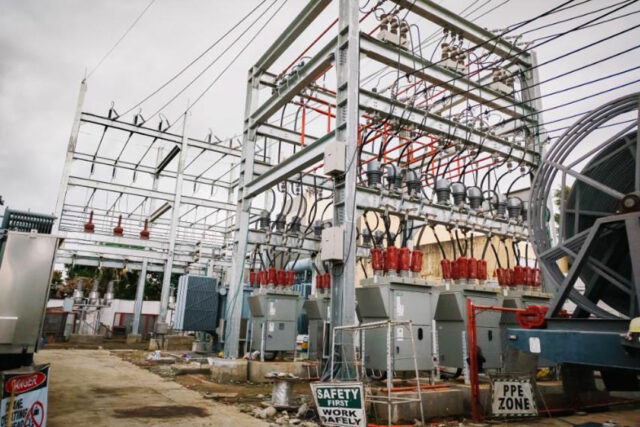
MORE Electric and Power Corp. (MORE Power) has energized its rehabilitated substation in Iloilo City, the Razon-led power distributor said on Tuesday.

“The Molo Substation had been in operation for 23 years without proper maintenance, leading to frequent equipment malfunctions,” MORE President and Chief Executive Officer Roel Z. Castro said in a statement.

“This upgrade is essential not only to meet the increasing demand for electricity due to population growth and commercial expansion in the area but also to extend the life of the transformer and improve its performance using advanced technology to ensure stable and efficient power distribution,” he added.

The rehabilitation of the 25/30-megavolt ampere substation, which has an estimated cost of P60.6 million, started on July 5, 2023, with EEI Power Corp. as the contractor.

It involved replacing outdated and unreliable equipment, including the control system, switchyard, and other important devices.

The Molo Substation’s upgrade also includes a reconfigured in-out system, which reduces the risk of outages, especially during peak demand, the company said.

The system allows for flexibility, enabling power to be easily rerouted through the SCADA (supervisory control and data acquisition) system if a transmission line segment encounters a fault.

“The integration of this modern substation into Iloilo City’s power system also allows for smarter load management, ensuring that MORE Power can swiftly respond to fluctuations in demand,” said Armil Logarta, MORE Power’s project manager and development head. — Sheldeen Joy Talavera

Entertainment News (10/09/24)


The Forge opens exclusively in Ayala Malls Cinemas

THE latest inspiring drama from the Kendrick brothers, The Forge, is coming to Ayala Malls Cinemas this month. Starting Oct. 9, moviegoers can watch the spinoff to the hit War Room, directed by Alex Kendrick and co-written by Stephen Kendrick. The two brothers are known for making faith-based films. In The Forge, they tell the story of a young man who is a year out of high school with no plans for his future until the prayers of his mother, a prayer warrior, and a new mentor lead him to discover God’s purpose for his life. The Forge comes exclusively to Ayala Malls Cinemas on Oct. 9.


Sips & Sounds features Barbie Almalbis, Jikamarie

SIPS & SOUNDS at El Calle Food and Music Hall in Newport World Resorts is back for a second session. Providing laid-back jam, good food, and a mix of drinks is an Oct. 11 show that starts at 8 p.m. and shines the spotlight on alt-rock icon Barbie Almalbis and breakthrough rhythm and blues artist Jikamarie. The two artists will perform back-to-back on stage, with a repertoire filled with OPM hits. Entrance is free.


Uncut R-18-rated Smile 2 in cinemas this October

THE sequel to the box office horror hit Smile has been rated R-18, and will be shown in cinemas in its full uncut glory. The first film, released 2022, was filled with psychological horror. This year’s Smile 2 ups the ante, with a story centered on a global pop singer Skye Riley, played by Naomi Scott, who begins to experience increasingly terrifying and inexplicable events just as she’s about to embark on a world tour. The film arrives in Philippine cinemas on Oct. 16.


UNIS announces first PHL fancon in Manila, Cebu

SOUTH Korean K-Pop sensation UNIS is set to hold their first fancon in the Philippines. The special event, titled UNIS in CURIOUSland, is set for Oct. 25, 7 p.m., at the New Frontier Theater in Quezon City, and Oct. 26, 7 p.m., at the Waterfront Cebu City Hotel, Cebu. There will be games and exclusive interactions with the members of UNIS. Lucky attendees will get the chance to participate in photo-op sessions with the members of the girl group. Tickets are now available via TicketNet.


Coldplay releases 10th album

THE highly anticipated 10th album of pop band Coldplay, titled Moon Music, has landed in stores and on streaming services. Produced by Max Martin, it contains the chart-topping single “We Pray” with Little Simz, Burna Boy, Elyanna & TINI, as well as the single “feelslikeimfallinginlove.” The single “All My Love,” released alongside the album, also has a music video filmed at a Las Vegas karaoke bar. Moon Music is out now on all digital music streaming platforms worldwide.


City of Dreams hosts daily live music performances

THE integrated resort City of Dreams Manila has launched Sounds of the City, where various musical genres elevate the venue’s entertainment and dining experience. In Nuwa Manila, this takes the form of the soothing music of a harpist in the hotel lobby, there from Monday to Thursday, 5:30 to 8 p.m. At Haliya, just off the lobby, an acoustic duo is set to perform timeless ballads from Friday to Sunday, 6 to 10 p.m. At Nobu Hotel Manila, DJ tracks will match the vibe of the luxury hotel from Thursday to Saturday, 7 to 10 p.m.


dwta releases single on unrequited love

CONTINUING her rise in music, dwta has released her new single, “Di Naman,” via Sony Music Entertainment. The alt-pop track is the Albay native’s expression of frustrations with someone who does not reciprocate her feelings. “Back when I first started writing it, it felt like I was just venting about my crushes and my fear of rejection. But as time passed and I experienced more, I realized the song wasn’t just about being scared to make the first move but also about accepting that sometimes things don’t go your way in love,” she said in a statement. The track, co-produced with Brian Lotho, reimagines chamber pop and jazz music influences through a contemporary lens. It is out now on all digital music platforms worldwide.


Solaire adds one more show for Salonga’s concert

SOLAIRE Resort Entertainment City has announced an additional performance of Lea Salonga’s Stage, Screen, & Everything in Between concert on Nov. 7, 8 p.m., at The Theatre at Solaire. The Nov. 4 and 5 shows are already sold out, prompting the announcement of a third show to cater to more of her fans. All three shows include her special guest Clay Aiken, known for his first runner-up win on the second season of American Idol. Tickets for the additional show will be available starting Oct. 9 via TicketWorld.


Klockwise wins Red Bull Dance Your Style tilt

After the nation’s top dancers gathered to compete in the Red Bull Dance Your Style Philippines National Finals at Rizal Park in Luneta last September, Valenzuela City-based Klockwise (Kenneth Martinez) was name the national champion. Mr. Martinez is known for injecting theatricality with his “campbellock” or “locking” freestyle performances. He now has a ticket to the World Finals as the exclusive representative of the Philippines. The finals will be held on Nov. 9 at Dome, NSCI, in Mumbai, India.


Choi Jin Hyuk fan-con set in Manila

FILIPINO fans of Choi Jin Hyuk will have a chance to meet their idol up close and personal in the “Choi Jin Hyuk Fan-Con Tour in Asia: Day and Night.” It will take place in Manila on Nov. 9 at the New Frontier Theater. Mr. Choi is known for his supporting roles in Gu Family Book (2013) and The Heirs (2013) and his lead roles in Emergency Couple (2014), Pride and Prejudice (2014-2015), Tunnel (2017), Devilish Charm (2018), The Last Empress (2018-2019), and Rugal (2020). His most recent TV series was Miss Night and Day with Lee Jung-eun and Jung Eun-ji. Tickets to the fan meet are available via TicketNet.

PHL banks’ Q2 exposure to real estate sector lowest in 4.5 years

BW FILE PHOTO

By Luisa Maria Jacinta C. Jocson, Reporter

THE EXPOSURE of Philippine banks and trust entities to the property sector declined to 19.92% at end-June, data from the Bangko Sentral ng Pilipinas (BSP) showed.

This was lower than the 20.31% ratio at end-March and the 20.8% logged in the same period a year ago.

This was also the lowest real estate exposure ratio recorded in four and a half years or since the 19.84% seen as of December 2019.

The BSP monitors lenders’ exposure to the real estate industry as part of its mandate to maintain financial stability.

Investments and loans extended by Philippine banks to the real estate sector rose by 3.6% to P3.16 trillion as of June from P3.05 trillion a year ago.

Broken down, real estate loans increased by 7.3% to P2.79 trillion in the period from P2.6 trillion at end-June 2023.

Residential real estate loans jumped by 8.9% year on year to P1.04 trillion from P958.192 billion, while commercial real estate loans edged up by 6.1% to P1.74 trillion from P1.64 trillion.

Past due real estate loans stood at P141.254 billion, higher by 7.1% from P131.843 billion a year prior.

Past due residential real estate loans rose by 3.5% to P97.89 billion from P94.59 billion, while past due commercial real estate loans climbed by 16.4% to P43.37 billion from P37.25 billion.

Meanwhile, gross nonperforming real estate loans went up by 5% to P110.862 billion as of the second quarter from P105.632 billion a year ago.

This brought the gross nonperforming real estate loan ratio to 3.98% at end-June, easing from 4.07% a year earlier.

On the other hand, real estate investments fell by 18.4% to P371.108 billion from P454.856 billion in the same period a year ago.

This, as debt securities declined by 16.7% year on year to P245.313 billion from P294.558 billion. Equity securities likewise dropped by 21.5% to P125.795 billion from P160.298 billion.

Joey Roi H. Bondoc, director and head of research at Colliers Philippines, said the low real estate exposure seen at end-June is in line with the slow recovery of the property market.

“It’s what we’re seeing right now. It’s definitely reflecting the slow take-up that we’re seeing in the market,” he said via phone call.

Mr. Bondoc said this was due to the lengthened remaining inventory life of unsold condominium units.

“We have about 21,000 units right now across Metro Manila and these remain unsold. These are ready for occupancy already. But the problem is, we’re seeing a slow take-up of this ready-for-occupancy (RFO) units, about 21,000 units, and our estimate is that it will take the market five years to fully absorb these unsold RFOs,” he said.

From 2017 to 2019, the annual average period for absorption of unsold RFOs was at 12 months, according to Colliers data.

“But right now, take-up(for the pre-selling sector) is only about 12,000 to 13,000 units and then the amount of time for the unsold RFOs to be absorbed is 60 months,” Mr. Bondoc said.

“So, it’s really a dampened market at this point, especially in Metro Manila. This only reflects the slow exposure of banks to the residential real estate market.”

Mr. Bondoc also noted that real estate developers are not launching new projects, especially in Metro Manila.

“They’re not launching a lot of vertical projects. If you’re seeing less launches right now, after four or five years, these launches will be under bank financing. Definitely, we will see reduced exposure of the Philippine banking system to residential loans in the near to medium term,” he added.

Rizal Commercial Banking Corp. Chief Economist Michael L. Ricafort said the lower exposure of banks was also due to the “adoption of credit risk management based on global best practices.”

This led to “more prudent management of property exposures in view of prescribed limits set by regulators also partly led to the decrease in the said exposures to the sector,” he said in a Viber message.

In 2020, the central bank raised the real estate loan limit of banks to 25% of their total loan portfolio from 20% previously to help free up additional liquidity as a relief measure during the coronavirus pandemic.

Mr. Ricafort also noted higher vacancies due to the rise in hybrid or remote work arrangements, shuttering of Philippine offshore gaming operators (POGOs) and increase in online businesses.

“Thus, the continued need for banks to diversify their loan portfolio and credit risk exposures, also in view of tighter capitalization standards that may require higher risk weights for riskier loans and investments, including those in the real estate sector,” he added.

Separate data from the central bank showed that the Residential Real Estate Price Index rose by an annual 2.7% in the second quarter, much slower than the 6.1% recorded in the previous quarter.

Mr. Bondoc added that the BSP’s easing cycle will have a lagged impact on real estate loans.

“It will not be immediately felt by the market. We’re estimating, since the cut was just recent, perhaps early 2025 to mid 2025,” he said.

“If there will be additional cuts, perhaps if there are two more rounds this year, those will definitely be felt by mid of next year.”

The central bank began its easing cycle in August, cutting borrowing costs by 25 basis points (bps) to bring the policy rate to 6.25% from an over-17 year high of 6.5% previously.

BSP Governor Eli M. Remolona, Jr. earlier said that the Monetary Board can deliver 25-bp rate cuts at each of its last two meetings of the year.

“Definitely, there is greater room for policy rate easing, but in terms of their effect on mortgage rates, which currently is at 8.3% average, it will take a bit longer for the policy rate cut to have an effect on the actual mortgage rates imposed by banks. There really is a lag effect, so it will not have an immediate impact on the residential take-up,” Mr. Bondoc said.

The tragedy of proxy wars in the Middle East

FREEPIK

The ongoing crisis in the Middle East is undeniable, yet often obscured by the sheer complexity of the conflicts unfolding in the region. The current bloodshed, destruction, and displacement are not merely a result of sectarian violence or regional rivalries; they are the tragic outcomes of a long-standing strategy of proxy wars. This has exacted a devastating toll on human lives and has made the prospect of peace more elusive.

Proxy wars are often utilized to obscure accountability and avoid direct retaliation, a common reason why terrorist groups are frequently used as proxies. For example, Hezbollah, which operates training camps in Lebanon’s Bekaa Valley and runs Al-Manar TV, possesses well-honed terrorist capabilities and has targeted civilians and military sites in Lebanon, Argentina, and Europe, enabling the execution of attacks on Israel and other adversaries.

By fostering proxy networks across the Middle East — Iran has backed terrorist groups like Hezbollah in Lebanon, Hamas and Islamic Jihad in Gaza, and various militias in Syria and Iraq —Tehran has successfully projected power beyond its borders while avoiding direct confrontation with rival states. The casualties of this approach, however, are the countless civilians who find themselves trapped in these conflicts.

The scale of this suffering underscores the systematic violation of the principles of human security. The United Nations outlines that human security should encompass freedom from fear, want, and the ability to live in dignity. Yet, for those in regions ensnared by proxy conflicts, these principles remain out of reach. Hunger is rampant as food supplies dwindle, and health crises deepen as hospitals struggle to cope with rising cases of diseases and the influx of casualties.

This situation is compounded in Lebanon, where the presence of Hezbollah — a group that owes much of its power and influence to its principal-agent — has turned the nation into another battleground.

Lebanon’s plight is emblematic of the broader consequences of this proxy strategy. Since the recent escalation of hostilities, over 1,600 people have been killed, and one million displaced in Lebanon alone. The damage to Lebanon’s economy, healthcare system, and social fabric is profound, leaving its people to contend with both the direct impacts of war and the constant threat of renewed violence.

As Hezbollah aligns its actions with its principal, Lebanon’s sovereignty is undermined, and its citizens are forced to endure the instability of a nation caught in the throes of external influence. The support given to Hezbollah allows it to operate with near autonomy, drawing Lebanon into conflicts that are its principal’s goals rather than those of the Lebanese people. Consequently, the country remains on edge, its future shaped by the whims of a foreign power intent on regional dominance.

Among the most devastating impacts of these conflicts is the damage to education. The relentless cycle of violence risks creating a lost generation — children who may never know the stability and security that education provides. This deprivation extends beyond the loss of knowledge; it deprives young people of hope and a future, deepening the trauma that they, and their societies, will carry forward.

Dr. Samah Jabr, Chair of the Ministry of Health in Palestine, describes the situation poignantly, observing that for many in Gaza and Lebanon, the term “post-traumatic” is misleading. The trauma they endure is ongoing, with little reprieve from the relentless threats to their safety and well-being.

Proxy wars have transformed the Middle East into a powder keg, where the effects of conflict spill over borders, impacting not only the region but the world. The interconnectedness of our global society means that no conflict is truly isolated.

The Philippines, for example, is home to a significant diaspora community working in the Middle East, and the safety and economic stability of these overseas workers are increasingly at risk. This situation highlights the urgency of a global response to these destabilizing activities. Countries with influence in the region must recognize and act to counter the perpetration of these proxy wars.

Moreover, sustained diplomatic efforts and humanitarian aid can alleviate the immediate suffering of those caught in the crossfire while addressing the root causes of the conflict.

The path to peace in the Middle East is fraught with challenges, yet the international community has a moral responsibility to seek an end to the hostilities exacerbated by proxy networks. By highlighting the devastating human cost of these wars, the world can begin to take steps toward a more stable and peaceful future.

Diplomacy, humanitarian assistance, and a firm stand against proxy warfare can pave the way for regional cooperation and diminish the destructive influence of foreign intervention. The cost of inaction is simply too high. Without a unified, determined response to proxy wars, the Middle East — and indeed the world — will continue to bear the burden of these tragic conflicts, paying a price that no society should have to.


Victor Andres “Dindo” C. Manhit is the president of the Stratbase ADR Institute.

Philippine Labor Force Situation

UNEMPLOYMENT in the Philippines eased to 4% in August as more female workers got hired in the service sector, the local statistics agency said on Tuesday. Read the full story.

Philippine Labor Force Situation

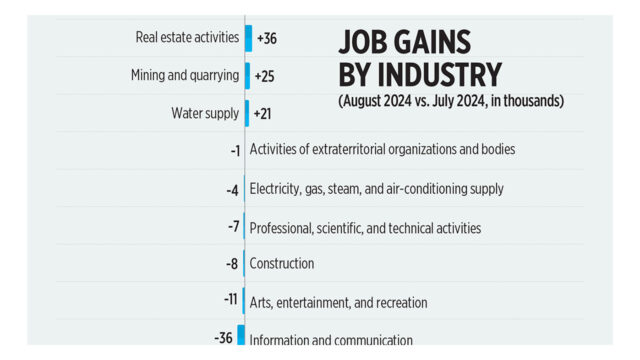
Job gains by industry (Aug. vs July)

In August, employed Filipinos reached 49.15 million, higher by 1.46 million from July. This can be traced to 1.15 million jobs generated month on month by wholesale and retail trade. Read the full story.

Job gains by industry (Aug. vs July)

Eton Properties Philippines signs sustainability pact

LUCIO C. TAN’S Eton Properties Philippines, Inc. has partnered with the ASEAN Centre for Biodiversity (ACB) to promote environmental sustainabiliy in real estate development.

A memorandum of understanding was signed on Sept. 27 for the partnership, which focuses on the management of protected areas within or near development sites, conserving natural habitats, and creating spaces to support local wildlife and plant species, Eton Properties said in an e-mailed statement on Tuesday.

The two groups will also work on improving disaster resilience via nature-based solutions and ecosystem-based approaches, sharing data and research results, and increasing awareness and engaging local communities on biodiversity conservation.

“This partnership demonstrates our shared vision to build a sustainable future, where economic growth complements the preservation of our natural ecosystems,” Eton Properties Philippines President and Chief Executive Officer Kyle C. Tan said.

Eton Properties said biodiversity loss has a direct impact on the expanding economy of the region, which depends on natural resources and is deemed highly vulnerable to climate change impacts.

“Businesses have relevant knowledge, expertise, and resources that can, directly or indirectly, have positive or negative impacts on biodiversity. Hence, the actions and decisions that this sector makes will be pivotal in our efforts to successfully address biodiversity loss and its accompanying consequences,” ACB Executive Director Theresa Mundita S. Lim said.

Eton Properties is the real estate unit of listed conglomerate LT Group, Inc. The property developer specializes in high-end and mid-income high-rise and horizontal residential developments, office projects, commercial centers, and mixed-use township developments.

Established in 2005, ACB facilitates cooperation and coordination among ASEAN countries and different regional and global dialogue and development partners to intensify regional actions on the conservation and sustainable use of biological diversity. — Revin Mikhael D. Ochave

US Supreme Court rebuffs singer R. Kelly’s challenge to sex abuse conviction

WASHINGTON — The US Supreme Court declined on Monday to hear imprisoned former R&B superstar R. Kelly’s appeal of his 2022 federal conviction on charges involving child pornography and luring underage girls to have sex with him, one of two cases in which he was found guilty of sex crimes.

The justices turned away Mr. Kelly’s challenge to a lower court’s decision upholding his conviction by a federal jury in Chicago.

Mr. Kelly, now 57, claimed in his Supreme Court filing that prosecutors filed the charges against him in the case after the statute of limitations had expired.

During that trial, several women testified that Mr. Kelly sexually abused them when they were minors. The jury also was shown video of Mr. Kelly molesting his goddaughter, who testified that the abuse began in the 1990s when she was a teenager.

Mr. Kelly, whose full name is Robert Sylvester Kelly, was sentenced to 20 years in prison in the case. He was found guilty of three child pornography counts and three counts of enticing minors for sex, but acquitted of seven other charges that included obstruction of justice, and conspiracy to receive child pornography.

Mr. Kelly in 2021 was convicted in another trial by a jury in New York City’s borough of Brooklyn on all nine charges he faced, including racketeering and eight counts of violating the Mann Act, which forbids transporting people across state lines for prostitution. He was given a 30-year prison sentence in that case, set to largely overlap with his sentence in the Chicago case.

Mr. Kelly is incarcerated at a Butner, North Carolina federal prison and is eligible for release in 2045, according to federal Bureau of Prisons records.

Mr. Kelly filed his Supreme Court appeal after the Chicago-based 7th US Circuit Court of Appeals in April rejected his challenge. — Reuters

Peso drops further due to Middle East conflict

BW FILE PHOTO

THE PESO dropped further against the dollar on Tuesday, moving closer to the P57 level, amid the worsening conflict in the Middle East.

The local unit closed at P56.905 per dollar, weakening by eight centavos from its P56.825 finish on Monday, Bankers Association of the Philippines data showed.

This was the peso’s lowest close in almost two months or since its P57.245-per-dollar finish on Aug. 16.

The peso opened Tuesday’s session slightly stronger at P56.80 against the dollar. It climbed to as high as P56.72, while its weakest showing was at P56.98 versus the greenback.

Dollars exchanged rose to $1.897 billion on Tuesday from $1.295 billion on Monday.

The peso weakened on Tuesday due to safe-haven demand for the greenback amid growing tensions in the Middle East, a trader said in a phone interview.

The conflict also led to higher global crude prices and US Treasury yields, Rizal Commercial Banking Corp. Chief Economist Michael L. Ricafort said in a Viber message.

For Wednesday, the trader sees the peso moving between P56.60 and P57.10 per dollar as the market awaits the release of minutes of the US Federal Reserve’s September policy meeting and US consumer inflation data.

For his part, Mr. Ricafort expects the local unit to range from P56.80 to P57 versus the greenback.

The dollar clung to seven-week highs against major currencies on Tuesday as investors pondered the outlook for US rates after a strong jobs report last week dashed bets for large rate cuts, while escalating tensions in Middle East dented risk sentiment, Reuters reported.

Traders have drastically shifted their monetary easing expectations from the Federal Reserve this year.

Markets are no longer fully pricing in a rate cut in November and are ascribing an 86% chance of a 25-basis-point (bp) reduction, the CME FedWatch tool showed. Just 50 bps of easing is priced in by December, down from more than 70 bps a week earlier.

That has kept the dollar on the front foot and surging to a multi-week high against the euro, sterling and the yen, though the yen clawed back some of the losses on Tuesday as rising geopolitical worries led to safe-haven flows.

The dollar index, which measures the US currency against major rivals, last fetched 102.38, just below the seven-week high of 102.69 it touched on Friday.

Meanwhile, Israel’s military said on Tuesday it had begun ground operations in southwest Lebanon, expanding its incursions to a new zone a year after exchanges of fire began with armed group Hezbollah and amid pleas by the UN for a diplomatic solution.

The regional tensions triggered a year ago by Palestinian armed group Hamas’s attack on southern Israel have spiraled to a string of Israeli operations by land and air over Lebanon and direct attacks by Iran onto Israeli military installations. — Aaron Michael C. Sy with Reuters

Empowering Filipino youth for a resilient future

AVEL CHUKLANOV-UNSPLASH

ON International Disaster Risk Reduction Day, we turn our attention to a powerful force shaping the Philippines’ resilient future: the youth.

There are 30 million young people aged 10-24 in the Philippines, making up 28% of the total population. This will remain nearly the same by 2055 based on the projection of the Philippine Statistics Authority.

In 2024, the World Risk Index tagged the Philippines as the most disaster-prone country in the world. In general, young people didn’t cause climate change, yet they will inherit a world riddled by its consequences.

While this poses a concern on the potential vulnerability of young people to climate change and disasters, this demographic holds immense potential to drive significant change on the country’s overall resilience. It represents not only the shift in numbers, but it is also a unique opportunity. These young Filipinos are not mere bystanders, but active voices in many platforms where a disaster-free future is central to the conversation. They bring fresh perspectives, innovative ideas, and a deep understanding of local contexts.

The recently concluded UN Summit of the Future committed to empowering young people by cultivating a nurturing environment that allows youth and future generations to fully realize their dreams and ambitions. The youth ought to be both protagonists and beneficiaries in resilience agenda. With access to information and education, the youth are well placed to lead innovation, disaster risk reduction, and local resilience action.

Championing resilience in the context of empowering the next generation is where the Strengthening Institutions and Empowering Localities Against Disasters and Climate Change (SHIELD) Program plays a critical role through the support of the Australian Government.

As the climate and disaster resilience flagship program in the Philippines, SHIELD enables harnessing the collective strength of communities to build resilience against disasters and climate change. Being led by the United Nations Development Program (UNDP) in the Philippines, the program prioritizes inclusivity, integrating gender equality, disability, and social inclusion across all its workstreams, ensuring that the specific needs and perspectives of young people, especially those from marginalized groups, are considered in every resilience-building activity.

Recognizing multi-stakeholder partnerships as core agent of change in this process, SHIELD invests in the unique potential of youth in building climate resilience. The program targets to deliver strong partnership and collaboration platforms in the formation of Sama-Samang mga Samahan para sa Isang Matatag na Bayan (Sambayanihan) — a locally led collaborative effort, where young people could engage with policymakers, marginalized groups, and development partners in the very important decisions and implementation in resilience space.  Youth representatives from the Local Youth Development Offices and youth non-government organizations are part of the core working groups that are involved in a series of capacity development and resilience planning and programming activities — creating a community of practice at the local level.

In the provinces of Davao Oriental and Eastern Samar, and the Bangsamoro Autonomous Region in Muslim Mindanao, for instance, youth participation has been crucial in SHIELD’s resilience initiatives. The youth representatives have been actively involved in the program’s wide-ranging workstreams on the ground, including capacity assessments and risk scenario development, which are essential in ensuring that their needs and priorities are reflected in local resilience planning and decision-making process.

It is imperative that we continue to engage with the youth and we treat them not only as a vulnerable group but, more importantly, as allies, change makers, community partners, and key decision-makers in building resilience. Their inclusion ensures that the solutions designed to strengthen local resilience reflect the perspectives of the younger generation, whose futures are directly impacted by today’s climate crisis, racing against time.

In the coming years, the UNDP is committed to working closer with the youth in scaling up data systems, financing for resilience, designing proposals, and establishing policy frameworks and advocacy. The actions we take today will undoubtedly shape the future and generations to come. Inaction is not an option. Through programs like SHIELD, our work goes beyond preparing for disaster today; we are working towards paving the path for a more resilient future for generations to come.

SHIELD is a multi-year partnership covering 11 provinces and two regions in the Philippines that are among the most vulnerable to disasters and climate change impacts. It is implemented by the UNDP Philippines, the consortium partners: Philippine Business for Social Progress, the National Resilience Council, the Consortium of Bangsamoro Civil Society, and the United Nations Human Settlements Program or UN Habitat, together with government partners: the Department of the Interior and Local Government, the Office of the Civil Defense, and the Department of Science and Technology with generous support from the Australian Government.


Dr. Selva Ramachandran is the UNDP Philippines resident representative.