Home Blog Page 2195

AI, Musk and Trump add up to a turbulent 2025 for tech

FREEPIK

YOU MAY HAVE HEARD that the Oxford dictionary’s 2024 “word of the year” was “brain rot.”

I found that interesting for two reasons. The first is that it is clearly two words. The second is that unlike prior words of the year — like 2013’s “selfie” or last year’s “rizz” — “brain rot” is neither new nor changed from its original intended meaning. Its first use was recorded in 1854 and said to be “indicative of a general decline in mental and intellectual effort” — which, well, yeah.

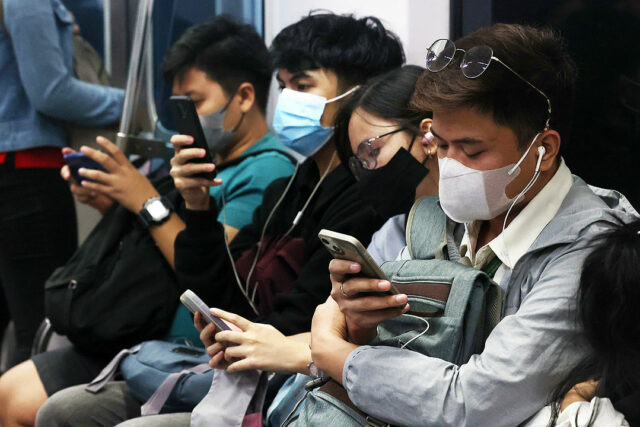
Since the selection for Oxford’s yearly word is done by public poll, this leads me to my first prediction in this column of observations for tech in 2025: The brain rot economy will show signs of weakness as people grow more wary of what is being served up to them by algorithms as they scroll endlessly. In the past year, the flood of artificial intelligence (AI) slop content has made looking at Facebook even more pointless — and eyeballs will go elsewhere.

Along the same lines, we can expect more anti-social media and anti-smartphone legislation from governments and local authorities around the world following the drastic action taken by Australia to ban users younger than 16 from social media and more and more bans on smartphones in US schools. Momentum is growing, and I expect more sweeping directives will follow — along with more spirited debate over whether such bans are justified or effective. See also well-intentioned but poorly executed age verification efforts.

The biggest jolt to the social media landscape could come from a US ban on TikTok. The Jan. 19 deadline for its divestiture is fast-approaching, but before then, on Jan. 10, the Supreme Court will hear arguments from each side — TikTok and the Justice department — on the whether the ban is constitutional. Many legal observers have deemed it unlikely the court will overturn the lower court’s ruling, which sided with the government on its somewhat vague concerns of national security. But in recent days the pendulum has shown signs of a swing. Trump, after weeks of will-he, won’t-he, has sought to pause the law until he is in office. A delay would allow “breathing space for the court to consider the questions on a more measured schedule,” he argued in an amicus brief. Many on the left and right agree with him.

If the steady stream of tech CEOs visiting Mar-a-Lago is any indication, we can expect Silicon Valley to be more willing to do Trump’s bidding in 2025 than it was in 2017, when we saw widespread condemnation of Trump and a pledge to not aid him in carrying out his policies. It will take several big tech partners to put in motion Trump’s mass deportation goals should he actually attempt to go through with them. Tech companies, more frugal these days and with employees on a much tighter leash, will jump at the chance — history books be damned. The wars in Ukraine and Gaza will continue to provide moral cover for Silicon Valley firms to enter military contracts they have previously shirked out of fear of upsetting their rank-and-file workers and customer base.

At the center of tech policymaking will be Elon Musk. The world’s richest man will be looking for a strong return on his investment in Trump. What exactly that looks like remains to be seen, though we’ve already seen him wield the force of his social network X to bend Congress to his will. But his ownership of X and his power over what is posted and amplified there will likely make him a lightning rod for the warring factions in right wing politics. Last week’s bitter row over H-1B visas shows how suspicions over Musk’s aims lie just beneath the surface, and the billionaire’s unwillingness to back down from a fight could prove damaging to his companies. In 2025, Musk needs to show real progress on his robotaxi vision, which requires more legislative support than it has now. Tesla’s share gains since Trump was elected suggest Wall Street thinks the plan is right on track, but I think Tesla investors will be sorely disappointed when Musk’s robotaxi plan reveals itself to be infeasible (some would argue that’s apparent already).

Investors will also be keeping a close watch on chipmaker Nvidia Corp. Chief Executive Officer Jensen Huang, the so-called godfather of artificial intelligence, will be a man under siege as rivals such as Amazon.com, Inc. and Broadcom, Inc. seek to provide bonafide alternatives to Nvidia’s AI chips and geopolitical tensions between the US and China put Nvidia on the front line. Beijing is looking for effective means of retaliation over US trade restrictions, and Nvidia is vulnerable.

Wall Street demands for meaningful return on investment from AI will get louder. Capital expenditures from data center construction and semiconductor hoarding will skyrocket, but the capabilities and revenue of AI won’t match the pace of investment. In a political environment friendlier to large mergers and acquisitions, we can expect significant consolidation in the AI industry. The also-ran startups will go under. At the same time, politicians will increasingly find themselves caught between big tech interests and the fury of their constituents as AI companies seek to rapidly put data centers in towns that don’t want them.

AI pushback will also come from news organizations that feel AI companies are stealing their work and putting their futures at risk. In 2025, newsrooms globally will need to contend with AI as both friend and foe, recognizing its potential for arming journalists with incredibly powerful new reporting tools while wondering if multimillion-dollar deals with OpenAI and others are giving away the farm. Legislators and judges will get into the fine print of modernizing copyright law. One phrase we’ll be hearing a lot is “fair use,” which will hopefully receive a precedent-setting revised definition sooner rather than later.

Consolidation, or at least cooperation, might be in the air for streaming companies as consumers stare down serious subscription fatigue. We’ve recently seen price increases for YouTube TV, Disney+, Max and Paramount+, in addition to password crackdowns and the introduction of ads. The streaming market is too crowded and major streaming providers will look to bundle up their offerings in a way that will look suspiciously like traditional cable TV.

Elsewhere in entertainment, the 10-years-in-the-making Grand Theft Auto 6 will walk a culture war tightrope as it seeks to become the most popular entertainment product of all time. The game rose to prominence as an ultra-violent, no-holds-barred, over-the-top portrayal of the scummy criminal underworld. In the decade since its previous installment, sensibilities have changed, though something tells me developer Rockstar Games will err on the side of offensiveness. All publicity is good publicity, and it sure makes for fiery debate. See you in the new year.

BLOOMBERG OPINION

Investors told to consider banking, consumer stocks

REUTERS

BANKING and consumer stocks are expected to do well in 2025 amid lower interest rates and faster economic growth.

“Banks should continue to do well,” April Lynn Lee-Tan, chief equity strategist at COL Financial Group, Inc., said in a Viber message. “Lower interest rates plus faster gross domestic product (GDP) growth will lead to higher demand for loans. Buy on pullbacks.”

Investors should consider banking companies like BDO Unibank, Inc., Bank of the Philippines Islands and Metropolitan Bank & Trust Co., she added.

Ms. Tan said consumer companies like Monde Nissin Corp. and Jollibee Foods Corp. also stand to benefit this year. “Consumer stocks should benefit from lower inflation, faster economic growth and very attractive valuations.”

Bangko Sentral ng Pilipinas (BSP) Governor Eli M. Remolona, Jr. has said the central bank would likely keep slashing rates in “baby steps” as it carefully monitors risks to inflation. He added that 100 basis points (bps) worth of rate cuts for 2025 might be “too much.”

The BSP lowered benchmark rates by 75 bps in 2024.

The Philippine Stock Exchange Index ended 2024 at 6,528.79, up 1.2% or 78.75 points from 2023, the first yearly advance since 2019.

“We would be on the lookout for bargains across sectors especially in banking, consumer, conglomerate and real estate,” China Bank Capital Corp. Managing Director Juan Paolo E. Colet said in a Viber message.

Telecommunications and consumer companies could also outperform this year, Alfred Benjamin R. Garcia, research head at AP Securities, Inc., said in a Viber message.

The property sector might also start showing signs of recovery. “But that might happen later in the year.”

Leechiu Property Consultants earlier said vacated office spaces rose 65% in 2024 to 690,000 square meters (sqm) from 418,000 sqm last year, mainly due to the total ban on Philippine offshore gaming operators.

“The midterm elections could benefit businesses that have higher sales, earnings and overall valuations as seen for many years,” Michael L. Ricafort, chief economist at Rizal Commercial Banking Corp., said in a Viber message.

The local bourse raised P82.37 billion in capital last year, 42% lower than in 2023. The service index had the fastest growth among sectoral indices at 29.7%. — Revin Mikhael D. Ochave

Killing corruption

FREEPIK

A lawmaker wants the death penalty back — by firing squad, rather than by lethal injection. House Bill No. 11211, filed by Zamboanga City Rep. Khymer Adan T. Olaso, proposes the death penalty for all public officials — from the President down to barangay officials including judges and members of the police and military — who are convicted of graft and corruption, misuse of public funds or plunder.

He specifically wants capital punishment to apply to “all public officials, whether elected or appointed, including officials in the executive, legislative, and judicial branches, as well as those serving in constitutional commissions, government-owned and -controlled corporations and other instrumentalities…[and to] members of the Armed Forces of the Philippines and the Philippine National Police.”

Historically, many Filipinos have been executed after being convicted of crimes punishable by death. Some met their end by garrote or hanging, but most died by electric chair, including Julio Guillen, who attempted to assassinate President Manuel Roxas in 1947. In 1970, four men also faced the electric chair for the abduction and rape of actress Maggie de la Riva.

From 1993 to 2000, seven people were executed by lethal injection. Although the 1987 Constitution removed the death penalty, it was reinstated in 1993 — only to be abolished again by a 2006 law that reduced the maximum penalty to life imprisonment. There are six bills in Congress that seek to reinstate capital punishment.

I recall only two official executions by musketry. The most famous took place on Dec. 30, 1896, when Jose Rizal was shot at Bagumbayan. The other was that of Lim Seng, a Chinese national believed to be the last person in the country executed by firing squad. In January 1973, four months after martial law was declared, he was tied to a post and shot by a military squad, having been convicted of trafficking heroin.

Proposals to reinstate the death penalty, especially for corruption, plunder and misuse of public funds likely resonate with a public exasperated by graft. Still, I remain unconvinced that the threat of death post-conviction will deter corruption or the misappropriation of funds.

I have yet to encounter any substantial research backed by data proving that the death penalty deters corruption. Corruption often involves bribery, embezzlement, misuse of authority, nepotism, fraud, and collusion — acts that happen behind closed doors. For a punishment to deter a crime, offenders must believe they can be caught, and that the outcome (in this case, death by firing squad) is not worth the risk.

However, in places where corruption is pervasive, the fear of being caught is minimal because oversight institutions tend to be weak or the judicial system may be compromised. Under those circumstances, even the most severe penalty may fail to serve as a deterrent. Not until we have credibility, transparency and impartiality in the investigation, prosecution and sentencing of corrupt officials will real deterrence emerge.

As far as I know, only China, Vietnam and North Korea enforce death sentences on corrupt officials. In 2007, China executed the former head of its State Food and Drug Administration for accepting bribes to approve substandard medicines. Even so, no conclusive evidence shows that executions meaningfully reduce corruption in those countries.

I understand the popularity of the Olaso proposal in a country where frustration with graft has reached a boiling point. People want to send a strong message that corruption is intolerable. Perhaps for this reason, only a minority may publicly oppose the death penalty. Yet in my view, capital punishment has never effectively deterred heinous crimes, including corruption.

I subscribe to the argument that certainty of punishment is more important than severity. If corrupt officials believe they can elude conviction, then even the prospect of a firing squad loses its effect. Conversely, if there is a high likelihood of being convicted, sentenced and punished, even life imprisonment would suffice as a deterrent.

But this approach works only if our system ensures that life imprisonment prevents officials from continuing to exploit their positions. Punishment must also extend beyond incarceration. Stolen or hidden assets have to be recovered. Accomplices, subordinates, superiors and even the families of those convicted should still be scrutinized to facilitate asset recovery.

Confiscation of illegitimate gains especially those transferred to family members must be a priority. If stolen assets can no longer be recovered, the convicted individual’s or their family’s property should be seized as restitution. They should realize that the family, too, can face the consequences of a corrupt official’s wrongdoing.

Reinstating the death penalty might appear as a quick fix, but it is far from ideal. We should concentrate on fortifying the justice system so that corrupt acts are detected swiftly, effectively and punished consistently. A transparent government is inherently less prone to deep-rooted corruption, and whistleblowers should receive robust protection.

Asset recovery is just as crucial. Congress would do well to pass legislation holding convicted officials liable beyond their personal wealth, extending that liability to spouses, children or other relatives who benefit from illicit funds. If stolen assets are voluntarily surrendered, settlements can be negotiated.

The threat of confiscation and forfeiture of family assets can deliver a stern warning that corruption simply does not pay. Stripping offenders and their families of illicit gains and imposing fines in addition to restitution could prove more meaningful than a high-profile execution that does little to restore stolen wealth.

Ultimately, effective sanctions rely on the willingness of political leaders to lead by example. Even the most robust laws mean nothing if enforced selectively. Governments must demonstrate impartiality by holding everyone to the same standards, and government service must prioritize merit, competence and transparency. Only then can we truly diminish the influence of corruption.


Marvin Tort is a former managing editor of BusinessWorld, and a former chairman of the Philippine Press Council

matort@yahoo.com

Budget constraints may limit gov’t data center investments this year

BW FILE PHOTO

THE DEPARTMENT of Information and Communications Technology (DICT) will use its 2025 budget for data centers for Subic Data Center (SDC) instead of investing in new facilities due to limited funding.

“One of our challenges is budgetary constraints when it comes to investing in data centers,” DICT Assistant Secretary for Legal Affairs Renato A. Paraiso told BusinessWorld in an interview.

“As far as 2025 goes, our budget for data centers will go to the SBMA (Subic Bay Metropolitan Authority) data center that we have already constructed and to make it up to specs for it to be usable,” he added.

He said the DICT is in talks with other private companies for public-private partnerships for data centers to help bridge the funding gap.

“It’s not because of lack of drive, lack of initiative. It’s just plain old budgetary constraints,” Mr. Paraiso said.

In April 2024, the DICT signed a memorandum of agreement with Development Bank of the Philippines Data Center, Inc. to construct the Subic Data Center.

The DICT said the SDC is a vital component of its National Government Data Center Project and “will drive digital transformation in Central Luzon by extending reliable ICT services to client agencies.”

“The SDC will also power the deployment of IT-enabled banking products such as e-wallet, payment and financial services platforms, and internet banking, tapping into the decades of experience of the country’s pre-eminent development bank,” it earlier said.

GROWING DEMAND
Dominic Vincent D. Ligot, founder of Cirrolytix, a social impact technology company, said predicted investment trends for data centers this year involve “significant funding” from local and foreign investors seeking to establish or expand data center operations.

“The Philippines is positioning itself to meet growing demands for data centers through increased investments and government support,” he said in an e-mail.

Mr. Ligot added that the growing deployment of artificial intelligence (AI) across industries has spurred the growth of data centers in the Philippines.

“As organizations integrate AI technologies into their operations, they require robust data storage and processing capabilities provided by advanced data centers.”

Utilizing AI and data centers will enable businesses to adopt cloud-based solutions more effectively, he said.

Meanwhile, the total capacity of data centers in the country is expected to reach 300 megawatts (MW) this year from its current 96 MW, Mr. Ligot said.

The market’s size is projected to hit 954.22 MW by 2029, showing the “robust growth trajectory for the sector,” he added. — Almira Louise S. Martinez

Digital loans to grow as demand for online financial services soars

UNSPLASH

DIGITAL LENDING is expected to grow further in the next three to five years, with demand to be driven by the increasing number of tech-savvy individuals in the Philippines and small borrowers in need of funding, financial technology company AND Global Pte. Ltd. said.

“The use of digital loans is expected to continue rising, driven by supportive regulations, technological advancements, and the growing demand for accessible financial services… The country’s young, tech-savvy population, combined with increasing smartphone use and government support for financial inclusion, has accelerated adoption,” AND Global Chief Business Development Officer Baasandorj Davaasuren said in an e-mail interview with BusinessWorld.

“As infrastructure improves and mobile networks expand, digital lending will likely reach more remote areas, further reducing the financial inclusion gap. Government reforms, such as open banking, will increase competition, improve product offerings, and keep interest rates competitive,” Mr. Davaasuren said.

He noted that Filipinos have adopted digital loans faster than expected, similar to Mongolia.

“Once people experience the accessibility, convenience, and speed of digital lending, they often prefer it over traditional methods,” he said.

He added that digital loans can support the government’s push for financial inclusion as it eliminates the need to visit bank branches, as these are easily accessible and can be processed faster via end-to-end online platforms, involve less paperwork, and can even be personalized based on a borrower’s needs.

“Mobile access means users can apply for loans anytime and anywhere, a distinct advantage over traditional banks’ limited hours and in-branch requirements. Automated processes significantly reduce loan approval times, allowing borrowers to access funds within hours,” Mr. Davaasuren said.

The processing of these loans also typically involves the use of alternative data for credit risk assessment, helping provide funding access to individuals without credit histories, such as first-time borrowers, small business owners, and gig economy workers, he said.

“For MSMEs (micro, small, and medium enterprises), digital lending offers an essential financial lifeline. Flexible loan options empower entrepreneurs to manage short-term cash flow needs and invest in growth. This is especially important in the Philippines, where MSMEs are vital for GDP (gross domestic product), job creation, and innovation, but often struggle with slow financing processes.”

For banks, digital lending could help increase efficiency, reduce risks, enhance customer experience, offer data-driven insights, and reduce operational costs, he added, and the scalability of digital loan products would also allow them to target specific market segments.

However, cybersecurity, data privacy risks, as well as predatory lending practices are key concerns, Mr. Davaasuren said.

Limited digital infrastructure in rural areas could also limit the growth of digital loans, he added.

“In the Philippines, developing centralized credit databases could help lenders track debt across platforms, preventing over-borrowing. Enhanced customer support and digital literacy programs would empower borrowers to make informed financial decisions and avoid predatory lending practices,” Mr. Davaasuren said.

“AI (artificial intelligence) can also play a role in reducing these risks, particularly in fraud detection, which is crucial for regulatory compliance and consumer protection. Developing these safeguards could make digital lending safer and more sustainable for all.” — Aaron Michael C. Sy

Appellate court favors Ginebra in trademark lawsuit

PHILSTAR FILE PHOTO

THE COURT of Appeals (CA) has sided with Ginebra San Miguel, Inc. by barring a Cebu lawmaker from registering the gin product “FRASCO” for his nonalcoholic beverages.

In a decision promulgated on Dec. 13, the appellate court’s Seventh Division reversed the order of the Intellectual Property Office-Office of the Director General (IPO-ODG) that allowed Cebu Rep. Vincent Franco D. Frasco to register the FRASCO trademark for bottled water and nonalcoholic drinks.

Ginebra already uses FRASCO in its gin products, and allowing the congressman to use the trademark could confuse and deceive consumers given their visual and phonetic similarities, the appellate court said.

“The likelihood of confusion is already considered a damage that would be sufficient to sustain the opposition and rejection of [Mr. Frasco’s] trademark application,” according to the eight-page ruling written by Associate Justice Mary Charlene V. Hernandez-Azura.

The court said the trademarks share identical letters and sounds, as well as similar fonts, lettering and background. It added that the marks are associated with beverages with a clear liquid appearance.

“It can be concluded that the respondent’s mark nearly resembles the petitioner’s mark that it is likely to deceive or cause confusion,” it added.

The case stemmed from the lawmaker’s application for several trademarks using the mark FRASCO for “purified and aerated waters and other nonalcoholic drinks and beverages” under Class 32 of the Nice Classification.

Ginebra San Miguel, the petitioner, opposed the trademark applications, saying it is the rightful and lawful owner of the FRASCO mark, which it uses for its gin products.

The director of the Intellectual Property Office’s Bureau of Legal Affairs ruled in favor of Ginebra San Miguel, barring Mr. Frasco from registering the trademark. But in January 2024, the office reconsidered on appeal.

The IPO-ODG said Ginebra San Miguel and Mr. Frasco’s products were distinct, and consumers would likely be able to differentiate the origins of the goods, minimizing the risk of confusion.

The gin maker then elevated the case to the appellate court, arguing the IPO-ODG’s ruling did not tackle the similarities of the FRASCO marks.

It said this would likely lead to confusion since the competing marks are intended for beverage products targeting the same demographic.

It noted that these products would likely be displayed in the same areas within stores, increasing the potential for consumer misunderstanding.

Mr. Frasco, in his defense, argued that Ginebra San Miguel’s use of FRASCO does not qualify as a trademark deserving protection, claiming it merely describes a specific bottle type for its gin products.

He also said his FRASCO mark is a grade mark intended to differentiate quality levels or categories of goods. The potential for confusion, whether of goods or business origins, was minimal, he added. — Chloe Mari A. Hufana

How to store holiday leftovers and cut food waste

By Zahra Hirji

CELEBRATING the holidays usually involves an abundance of food: cheese platters galore, big Christmas dinners with a centerpiece of turkey or ham or Hanukkah parties overflowing with latkes, and of course piles of cookies, cakes, and other desserts.

“It’s part of our culture,” says Dana Gunders, president of the US-based nonprofit ReFED, which works to reduce food waste. “But I do think there are steps you can take to make sure it’s not wasteful.”

Between 30% and 40% of the US food supply is wasted, according to the Department of Agriculture (USDA). That’s driving climate change, with the Environmental Protection Agency estimating nearly 60% of methane emitted from municipal solid waste landfills comes from decomposing food.

And yet most people underestimate how much food they waste. Multiple surveys in recent years have found that roughly three-fourths of Americans say they waste less than the average person.

“Obviously, that’s not possible,” Roni Neff, a food waste researcher at Johns Hopkins Bloomberg School of Public Health. (The school is supported by Michael Bloomberg, founder and majority owner of Bloomberg LP, parent company of Bloomberg News.)

The good news is there are simple ways to reduce waste. Many of them are focused on being smarter about food safety. Implementing them can help the climate and save money.

With fridges swelling with leftovers, Bloomberg Green reached out to food safety and waste experts to get answers to common questions about how to best handle food and avoid unnecessarily trashing it.

Does the smell test work to determine if food is good to eat or not?

Sniffing food can be useful to check if quality has declined, says Savana Nunn, a food safety expert at North Carolina State University. Other senses can also provide clues: Beyond smelling bad, if food looks moldy or slimy, or tastes bad, experts do not recommend eating it.

But our noses can’t detect the presence of foodborne pathogens such as salmonella that can contaminate food. “Really any foodborne pathogen can infect you where the lowest infectious dose won’t create a scent detectable to a human,” says Ms. Nunn.

Is it ever okay to scrape the mold off something and then eat it? Or, say, if there’s mold on one clementine in a bag or one piece of bread in a loaf, can you toss it and eat the rest?

Some mold makes us sick, some don’t. But the average person can’t easily distinguish between the different types, Ms. Nunn explains.

It’s also important to recognize that mold visible on the surface likely doesn’t represent its full extent. “When a food shows heavy mold growth, ‘root’ threads have invaded it deeply,” warns a USDA mold factsheet. Among the items the agency recommends tossing if mold is visible are bread, cooked pasta, lunch meat, soft cheese, soft fruits and vegetables such as cucumbers and peaches, peanut butter and jams, and yogurts. But there are some exceptions. Hard cheeses and firm fruits and vegetables, such as cabbage and red peppers, are still OK if you cut off at least an inch around and under the moldy spot, per USDA.

How long can you leave something cooked on the counter without it going bad? Does it need to go into the fridge or freezer after cooking?

From roasted meat to simmered vegetable soups to cooked rice, Ms. Nunn recommends getting that prepared food off the stove or the dining table within four hours. But if the temperature is 90°F (32.2°C) or above, it should only be left out of the fridge or freezer for an hour at most, she says.   

Refrigerated leftovers can be OK for up to seven days, Ms. Nunn says, noting her recommendation differs from the more conservative four days recommended by the USDA.

Leaving out food too long can cause pathogens to grow and create harmful endotoxins, explains Ms. Nunn. The endotoxins can also be heat stable, meaning re-heating the food won’t kill them. One example of this is the bacterium Bacillus cereus, which can multiply quickly on pasta and rice at room temperature and produce toxins. While it won’t likely kill you if you’re healthy, the elderly and immunocompromised, “are at a greater risk for suffering complications,” says Ellen Shumaker, director of outreach for North Carolina State University’s food safety program, “and deaths have occurred.”

Is it better to put warm food in the fridge right away or wait until it reaches room temperature?

There’s no need to wait nowadays. Older appliances weren’t as efficient and “putting hot foods in could cause strain on the ability for the fridge to keep everything cold,” Ms. Shumaker says. Today, “refrigerators can handle the warm food going right in,” says Ms. Nunn.

She recommends packing hot things destined for the fridge in shallow containers to help speed up the cooling process and avoiding stacking multiple hot containers on top of one another.

How much worse is it to waste resource-intensive foods? For example, is it worse to waste a pound of steak compared to a pound of broccoli?

It’s “absolutely” worse, according to Ms. Neff. The carbon emissions associated with producing meat, particularly red meat “is far higher than other foods,” she says. Thankfully research also suggests people tend to waste less meat, perhaps because it’s more expensive compared to fruits and vegetables.

Moreover, some modeling suggests that food items with higher water content, such as fruits and vegetables, “are expected to have lower methane generation potential,” explains Minerva Ringland, ReFED’s climate and insights manager.

How long does frozen food stay safe to eat?

Assuming your freezer doesn’t warm up due to a power outage or other issue, it should keep food safe indefinitely, although the quality may decline over time, says Ms. Gunders. She uses her freezer constantly, from stashing bread to packing leftovers before going on a trip. That includes surprise items like milk.

Chefs are developing a growing number of recipes specifically to encourage cooking things without needing to defrost them first, particularly seafood. “The idea is if you buy seafood frozen and you never defrost it, then you’re much less likely to have these issues with worrying if it’s going to go bad and the supermarket’s also going to not have to worry about it going bad,” says Neff. “You can prevent a lot of waste that way.”

Do things high in fat, salt, acid, or other natural preservatives like soy sauce and peanut butter need to be refrigerated? And if not, does refrigerating extend their shelf life?

Refrigerating such products “can definitely extend shelf life,” Ms. Nunn says, by slowing down the growth of spoilage organisms over time. She says the best course of action is to look at a food label and see what the manufacturer recommends. 

Do refrigerator crisper drawers actually keep fruit and vegetables fresher for longer?

In a word, yes. You can control the airflow into crisper draws. It’s best to keep vents open for low-humidity foods, such as apples, pears, melon and most other types of fruit (except berries), Ms. Nunn explains. On the flip side, she recommends closing vents to store high-humidity foods prone to wilting or thin-skinned. Think lettuce, other leafy greens, herbs and cucumbers.

Ms. Nunn also has a tip for extending the freshness of produce left on your countertop. Some fruit, including bananas, produces a hormone called ethylene that induces ripening for anything in its vicinity. So if you don’t want your avocados to ripen too quickly, don’t put them near ripe bananas, Ms. Nunn says. — Bloomberg


THE Center for Culinary Arts Manila (CCA Manila) is helping us out with recipes that utilize holiday party leftovers, for a more efficient (and tasty) New Year.

BEEF CALDERETA TACOS WITH PICKLED VEGETABLES
Yield: six servings

INGREDIENTS:
White vinegar, 120 ml

Water, 60 ml

Sugar, white 10 g

Salt, 5 g

Carrots, julienned 60 g

Eggplant, sliced 50 g

Red onion, sliced 30 g

Tortilla wrap, toasted 6 pcs

Iceberg lettuce, shredded as needed

Leftover beef caldereta, 300 g

Cheddar cheese, 60 g

PROCEDURE:

1. Combine white vinegar, water, sugar and salt in a pot. Let it boil for 3 minutes.

2. Add carrots, eggplant, and onion. Turn off heat.

3. Marinate vegetables for 5-10 minutes. Remove vegetables and set aside.

4. On a tortilla wrap, place shredded lettuce at the bottom.

5. Add beef caldereta, reserved pickled vegetables and cheese on top.

LECHON SOPAS
Yield: four to six servings

INGREDIENTS:
2 cups shredded leftover rotisserie chicken or pork lechon

½ small cabbage, chopped

2 cups small elbow macaroni

1 cup Fiesta Ham, chopped

1 medium carrot diced

3 stalks celery chopped

1 medium yellow onion chopped

2 tablespoons butter

6 cups chicken stock

1 can (340 ml) evaporated milk

Salt and pepper to taste

As accompaniment:

6 pieces pandesal, toasted with grated leftover queso de bola

PROCEDURE:

1. Heat the cooking pot and add butter. Let it melt.

2. Sauté ham, carrot, celery, and onion for 3 minutes or until soft.

3. Put the shredded rotisserie chicken or pork lechon into the pot. Stir and cook for three minutes.

4. Pour chicken broth. Let it boil. Cover the pot and continue to cook in medium heat for at least ten minutes to develop flavors.

5. Add cabbage, and put the elbow macaroni into the pot. Cover and cook until al dente.

6. Pour evaporated milk. Stir. Continue to cook for two minutes.

7. Season with ground black pepper and salt. Serve hot with toasted pandesal and queso de bola.

New warnings about land reclamation from Florida

FREEPIK

ON JUNE 24, 2021, at about 1:22 a.m. in the oceanside Miami suburb of Surfside, Florida, a 12-story beachfront condominium named Champlain South partially collapsed, killing 98 people.

Back then, I warned through Philippine media that Champlain South was 40 years old, and that over time its concrete slowly absorbed salty sea air that rusted its steel reinforcing bars. This caused “concrete cancer,” fatally weakening it. Strong vibrations from pile-driving during construction of the Eighty Seven Park condo next door have also been blamed.

My worry was that much construction in Metro Manila uses much Pinatubo lahar sand, which is exceptionally porous. Furthermore, any construction on Manila Bay reclamations would doubtless also use Pinatubo sand, and the salty bay breezes would especially threaten those structures.

I have warned for many years about the dangers that confront people who build and live on reclaimed nearshore: land subsidence, earthquake-generated liquefaction and tsunamis, storm surges and waves from the strong typhoons that climate change is making more frequent.

Now, news from Miami has yet another serious implication for reclaimed land along Manila Bay.

It is described in a recent CNN report (“Dozens of luxury condos and hotels in Florida are sinking, study finds”: cnn.com/2024/12/23/climate/florida-condos-hotels-sinking/index.html). The title of the scientific study that CNN reported on says it all: “InSAR Observations of Construction-Induced Coastal Subsidence on Miami’s Barrier Islands, Florida” (emphasis mine).

In short, buildings already standing on reclaimed land will subside or suffer damage as construction of new buildings as far away as 320 meters cause the land to vibrate, expel the water between sediment grains, and settle.

Along the 15-mile (24-kilometer) stretch from Golden Beach South to Miami Beach, 35 buildings in which tens of thousands of people live, have subsided an average of 2.6 inches per decade from 2016 to 2023. These buildings include two massive Trump edifices, and both Ritz-Carlton Residences and Surf Club Towers. The underlying rocks are young coralline limestone with interfingered sandy layers; not the best foundation, but with more strength and structural integrity than Manila Bay reclamations.

The multinational research was conducted by marine, earth, and atmospheric scientists of the University of Miami, the California Institute of Technology, the University of Houston, and several German institutions. It was led by the University of Miami’s Dr. Falk Amelung. How the ground subsided was monitored from space with satellites using “InSAR” – Interferometric Synthetic Aperture Radar.

This is the same technique that Filipino scientists collaborating with Dr. Amelung used to evaluate land subsidence in the Metro Manila region (published in 2020 as Eco, Rodrigo C., Kelvin S. Rodolfo, Jolly Joyce Sulapas, A. M. Morales Rivera, A. M. F. Lagmay, and F. Amelung, “Disaster in slow motion: Widespread land subsidence in and around Metro Manila, Philippines quantified by InSAR time-series analysis.” JSM Environmental Science & Ecology 8, no. 1.)

The 2021 Champlain South disaster has also been blamed on strong vibrations from pile-driving during construction of the Eighty Seven Park condo next door.

What this all means is that structures built on Manila Bay reclamations may not even need natural forces to damage or destroy them: vibrations and subsidence from newer structures being built hundreds of meters away can do the job.

I have given up my efforts to convince the powers-that-be to stop the reclamations. Instead, I appeal to the common sense of would-be investors.

If you want to buy or build on reclaimed land, first make sure you can buy damage insurance.

If you cannot get insurance, be forewarned.

If the financial backers of reclamation are so certain such investments are safe, surely they will be glad to be the insurers themselves.

If they refuse to do so, what does that tell you?

Have a happy, environmentally, ecologically, and financially sound New Year!


Kelvin S. Rodolfo, PhD is the professor emeritus of Earth & Environmental Sciences at the University of Illinois, Chicago and a senior research fellow at the Manila Observatory.

Greece presents strategy vs youth internet addiction

PHILIPPINE STAR/MIGUEL DE GUZMAN

THE GREEK government announced on Monday a national strategy to protect minors from internet addiction and excessive social media use.

Greek Prime Minister Kyriakos Mitsotakis said protecting children’s well-being was a societal imperative, although he voiced doubts regarding the effectiveness of a complete ban on social media.

Instead, he said the challenge for the future was how to design apps with children and teenagers in mind.

He was speaking in a debate with a 16-year-old as part of an event to mark the launch of the strategy whose main pillars are strengthening parental controls, age verification and engagement with social media platforms.

On Monday, Greece launched a dedicated website, providing user-friendly guides and instructions on parental control features, and next year it will roll out a digital wallet application that will serve as a parental control and age verification system. — Reuters

Malayan Insurance expects losses from typhoons to dent 2024 income

MALAYAN Insurance Co., Inc. expects its 2024 bottom-line growth to be affected by typhoons, its top official said.

“I mean, we’re still trying to grow, but definitely that (typhoons) has an impact on the bottom line because of all the losses,” Malayan Insurance President and Chief Executive Officer Paolo Y. Abaya told BusinessWorld.

“These climate change-related catastrophes have really hurt… So, it hasn’t been that good because of those catastrophes,” Mr. Abaya added.

Malayan Insurance booked a net income of P600.77 million in 2023, data from the Insurance Commission (IC) showed.

Its net premiums written stood at P4.72 billion, with premiums earned at P4.27 billion and gross premiums written at P15.05 billion.

The overall performance of the nonlife insurance industry could likewise be affected by natural disasters, Mr. Abaya said.

The nonlife insurance sector’s net premiums written increased by 10.19% to P53.13 billion as of end-September 2024 from the same period last year, IC data showed. Its net income grew by 17.17% to P6.41 billion.

Despite this, Malayan Insurance still expects its 2024 top line to grow by 5-10%, Mr. Abaya said. For this year, they see “flat or modest” premium growth amid elevated global reinsurance costs.

“It’s been very hard. It’s been a hard market lately, and it will probably continue to be hard next year… Everywhere around the world is getting hit by climate change right now. So, it’s driving all the prices to go up,” Mr. Abaya said.

“It’s really the reinsurance cost driving up all of these charges, especially if you’re in property.”

In the Philippines, nonlife premium rates have gone up by about 10-15% because of high reinsurance costs, Malayan Insurance Chief Operating Officer Eden R. Tesoro earlier said.

This has caused the company to stop writing premiums for several clients, resulting in a 5-6% loss in gross premiums written, she said, although some are still opting to stay despite high prices, offsetting losses. — A.M.C. Sy

SEC eyes rules on expanded PHL fundraising

THE SECURITIES and Exchange Commission (SEC) is set to release guidelines that would expand fundraising and investment opportunities in Philippine capital markets, it said in a statement on Wednesday.

“The SEC is preparing new guidelines that will expand fundraising and investment opportunities in the Philippine capital market and, at the same time, strengthen the protection of investors and other financial consumers,” it said.

Last year the corporate regulator issued draft guidelines on the issuance and disclosure of Sukuk bonds and defining seasoned issuers and the extension of shelf registration.

The SEC also released proposed changes to the rules covering registrars of qualified institutional and individual buyers, cryptocurrency asset service providers and the so-called Philippine Green Equity.

On Dec. 26, it proposed rules on the issuance and disclosure of Sukuk bonds.

One of the provisions in the proposed guidelines is that eligible issuers of Sukuk bonds include the National Government, special purpose vehicles (SPV) created for sukuk issuance and publicly listed companies through an SPV.

“The guidelines seek to further the administration’s agenda to promote the development of Islamic banking and finance in the country and to create the opportunity for other Philippine issuers to access the sukuk market in the future,” the SEC said.

Sukuk bonds are Islamic financial certificates, similar to a bond in Western finance, that comply with Islamic religious law commonly known as Shari’ah.

The issuances should adhere to Islamic principles and must be structured to prohibit elements such as interest, uncertainty and investments in businesses that deal with prohibited goods or services.

The SEC also issued draft rules on seasoned issuers and shelf registration on Dec. 26. The rules seek to update the definition of terms to include the seasoned issuer, which means any issuer designated by the commission as having demonstrated its compliance with requirements on size, listing history and track record.

The draft also covers the extension of shelf registration granted to seasoned issuers, allowing them to extend the offering period for additional tranches of securities beyond the original three-year period.

The SEC also released draft guidelines for Philippine green equity, which is a complement to sustainable debt instruments. The green equity label expands the range of sustainable investment products in the market.

Meanwhile, the regulator also issued rules on cryptocurrency asset service providers to improve investor protection.

The commission also issued draft rules on qualified institutional and individual buyers. The rules reinforce the SEC’s authority to verify the procedures of authorized registrars in accrediting qualified buyers.

Public comments for the guidelines on Sukuk bonds and seasoned issuers and the extension of shelf registration will be accepted until Jan. 26, while public comments on Philippine green equity will be open until Jan. 25.

The SEC will accept public comments on the guidelines for crypto asset providers until Jan. 18, while comments on the rules on qualified institutional buyers will be entertained until Jan. 10. — Revin Mikhael D. Ochave

Dating in 2025: Women refuse to settle for less, says Bumble

FREEPIK

BUMBLE, the global dating app that empowers women to make the first move, has unveiled its 2025 dating trends. After shifting away from the pursuit of perfection and prioritizing emotional openness and shared values in 2024, the year 2025 is described as a “transitional year” for women as they embrace greater self-honesty and refuse to make compromises.

Meihui Chen, communications lead for Bumble in Asia Pacific, said that out of 41,294 Gen Z and millennial Bumble members surveyed worldwide, nearly two in three female respondents (64%) said Filipina women are determined to not compromise or alter their standards just to find a partner.

“Instead, they are going all-in on everything they want and deserve — with a renewed sense of hope and sureness that what they are looking for is out there,” Ms. Chen said in a written interview.

It is not like a checklist to fulfill but rather women prioritizing more intangible characteristics that they think their partners should have, Ms. Chen added.

“Now, more and more people are taking a step back to figure out what truly matters to them in a relationship. They’re determined to find something real and lasting — and for women, this shift is huge.”

In 2025, singles, especially women, are expected to seek more stability, emotional vulnerability, shared community values, and self-acceptance, while turning to platonic male friendships at key moments to help navigate their dating lives.

“You can really see this in the rise of ‘micro-mance’ — little, thoughtful gestures like sending a playlist, sharing inside jokes, or going for a casual morning coffee walk. Women are less interested in finding the ‘perfect partner’ according to a checklist and more focused on these small but meaningful moments that show true emotional connection,” Ms. Chen explained. 

“Micro-mance” is being embraced by 97% of Filipino singles in the survey, who appreciate expressions of love through smaller gestures which leave a big impact.

Other dating hot takes for 2025 are emerging, as Bumble’s latest survey reveals significant shifts in Filipino dating trends. DWM (Date With Me) shows that 66% of Filipino singles are embracing more authentic dating content on social media, appreciating not only the highs but also the lows of relationships, which fosters healthier relationship goals and reduces feelings of loneliness.

In On The Same (Fan) Page, 56% of Filipino singles find unique and quirky interests increasingly attractive, with 62% of women leaning into their passions while dating.

Meanwhile, Male-Casting and Future-Proofing highlight evolving conversations around masculinity, with 61% of women pushing for more diverse views on positive masculinity, and 65% of Filipino women prioritizing stability in their relationships due to uncertainties about the future.

In a shift toward more meaningful connections, Guys That Get It highlights a growing trend where Filipino women are turning to their male friends for help in choosing potential partners. About 34% of women rely on their male friends to help pick dates, while 58% seek advice from the men in their lives to better understand men’s dating behavior. — Edg Adrian A. Eva

ADVERTISEMENT
ADVERTISEMENT