Home Blog Page 213

China says it seeks communication with US but vows to hold its ‘red lines’

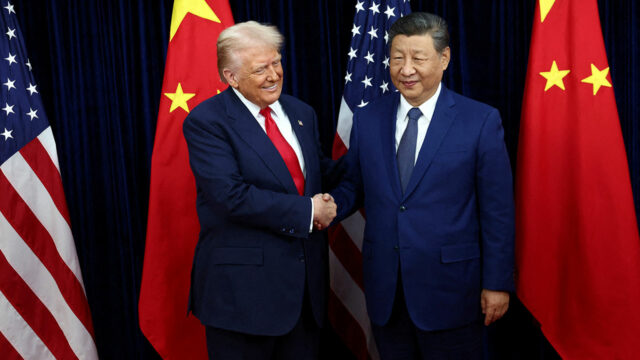
US PRESIDENT Donald J. Trump shakes hands with Chinese President Xi Jinping as they hold a bilateral meeting at Gimhae International Airport on the sidelines of the Asia-Pacific Economic Cooperation (APEC) summit in Busan, South Korea, Oct. 30, 2025. — REUTERS/EVELYN HOCKSTEIN

BEIJING — China is willing to work with the United States to promote communication at all levels while upholding its “red lines” and principles, a spokesperson for its parliament said on Wednesday.

The comments come ahead of the opening of the National People’s Congress annual session on Thursday and as both countries look to stabilize ties ahead of an expected summit of leaders Donald Trump and Xi Jinping in Beijing at the end of March.

Bilateral relations, already bruised due to trade tensions, have been further strained by the capture of Venezuelan President Nicolas Maduro in a Caracas raid in January and the US-Israeli war against Iran that killed Supreme Leader Ayatollah Ali Khamenei. China counts both countries as long-time major oil suppliers and close partners.

Spokesman Lou Qinjian repeated China’s call for an immediate ceasefire and urged respect for Iran’s sovereignty.

“No country has the right to control international affairs, dictate the fate of other nations, or monopolize development advantages, still less to act as it pleases on the world stage,” he told a press conference.

China and the United States should respect each other and coexist peacefully, he said, calling on the US Congress to view China “objectively” and do more to benefit ties.

But he added: “China has its own principles and red lines, and as always, will resolutely defend its sovereignty, security, and development interests.”

A White House official has said Mr. Trump will travel to China from March 31 to April 2, although Beijing has made no official announcement.

Top trade negotiators from both sides are expected to meet in Paris next week to discuss potential business deals linked to the highly anticipated meet, Bloomberg News said on Tuesday. — Reuters

Cocolife Healthcare extends care through telehealth partnerships

At a time when convenience, accessibility, and efficiency are much sought in healthcare, Cocolife Healthcare continues their commitment to raise the standard.

As the Philippines’ first ISO-certified healthcare program provider, Cocolife Healthcare is dedicated to serve Filipino families by forging strategic partnerships with three leading digital health platforms: Doctor Anywhere, HiDoc, and KonsultaMD.

Last December, Cocolife Healthcare signed memoranda of agreement with the said platforms — all witnessed and supported by the unit’s key executives, namely Executive Vice-President and Healthcare Division Head Atty. Alloysius R. Yebra, First Vice-President and Sales and Marketing Department Head Christopher V. Tan and First Vice-President and Customer Care Department Head Angelita A. Trinidad.

These collaborations signal a decisive move toward a more integrated, technology-driven healthcare ecosystem, one that empowers their members to take control of their health anytime, anywhere.

Elevated accessibility with Doctors Anywhere

Through its partnership with Doctors Anywhere, Cocolife Healthcare expands its digital health network with a comprehensive telehealth platform designed for modern patients. This service goes beyond traditional teleconsultation, offering cardholders secure video consultations with certified physicians, digital medical record management, specialist referrals, and electronic prescriptions.

The platform minimizes unnecessary hospital visits by providing timely medical guidance remotely. Members can log in using their Cocolife Healthcare credentials and receive on-demand care wherever they are — at home, at work, or even while traveling.

By reducing logistical barriers and streamlining care coordination, Cocolife Healthcare enhances both patient convenience and clinical responsiveness.

This collaboration reinforces a clear mission: making quality, efficient, and patient-centered healthcare accessible to every Filipino.

24/7 care through HiDoc

Healthcare needs rarely follow a schedule. Recognizing this reality, Cocolife Healthcare formalized its partnership with HiDoc, a 24/7 telemedicine platform designed to redefine the medical experience.

With HiDoc, members gain round-the-clock access to licensed physicians through video or voice consultations. Beyond basic teleconsultation, the platform enables laboratory and imaging requests, issuance of medical certificates, specialist referrals, and secure e-prescriptions — all processed within a single digital interface.

For busy professionals, parents, and individuals managing chronic conditions, immediate medical access can make a critical difference. By integrating HiDoc’s always-available telemedicine capabilities, Cocolife Healthcare ensures that expert care is not limited by clinic hours or geographic constraints.

This attests to their commitment to have a proactive rather than reactive healthcare, designed around patients’ needs rather than institutional schedules.

Holistic wellness through KonsultaMD

True healthcare extends beyond treatment through prevention, monitoring, and lifestyle management. This philosophy underpins Cocolife Healthcare’s partnership with KonsultaMD, the nation’s first fully integrated health and wellness application.

Through KonsultaMD’s user-friendly platform, members access a seamless health journey that combines telemedicine, personalized wellness programs, health tracking tools, and automated reminders for check-ups and vaccinations.

The integration allows both principal members and dependents to link their accounts, ensuring comprehensive family coverage under one digital ecosystem.

Members can securely view digital health records, track wellness progress, schedule teleconsultations, and connect with licensed healthcare professionals.

This approach shifts healthcare from episodic interventions to continuous engagement, encouraging preventive care and long-term health management.

For Filipino families, this means greater peace of mind and more structured oversight across every stage of life.

Unifying digital health ecosystem

Individually, each partnership strengthens access to telehealth. Collectively, they establish a robust digital healthcare framework that prioritizes accessibility, efficiency, and patient empowerment.

Cocolife Healthcare’s strategic integrations accomplishments include improved accessibility, operational efficiency, preventive health focus, family-centered coverage, and reduced healthcare congestion.

Since its establishment in 1997, Cocolife Healthcare has complemented Cocolife’s broader portfolio of risk protection and financial services.

Its expansion into advanced digital healthcare reinforces a long-standing commitment, safeguarding both financial stability and wellbeing of Filipino families.

The healthcare landscape is rapidly evolving. Patients expect speed, transparency, and convenience without compromising quality. By leveraging secure telehealth platforms, Cocolife Healthcare demonstrates how technology can enhance, rather than replace, personalized healthcare.


Spotlight is BusinessWorld’s sponsored section that allows advertisers to amplify their brand and connect with BusinessWorld’s audience by publishing their stories on the BusinessWorld Web site. For more information, send an email to online@bworldonline.com.

Join us on Viber at https://bit.ly/3hv6bLA to get more updates and subscribe to BusinessWorld’s titles and get exclusive content through www.bworld-x.com.

Philippine House panel finds ‘substance’ in VP Duterte’s ouster case

Vice President Sara Z. Duterte-Carpio announces her intention to run for president during a press conference in Mandaluyong City, Feb. 18, 2026. — PHILIPPINE STAR/MIGUEL DE GUZMAN

A congressional panel on Wednesday found the complaints against Vice-President Sara Duterte-Carpio to be sufficient in “substance,” moving the cases forward to a full inquiry that will determine whether the charges should be elevated to the Senate for trial. 

The House of Representatives Justice Committee approved two remaining impeachment complaints against Ms. Duterte after earlier striking out one that failed an eligibility test and another that was withdrawn by its complainants. 

The panel’s ruling on the complaints against the 47-year-old official will advance them to a full-blown inquiry on their merits, setting the stage for a protracted debate over charges that have politically weighed on Ms. Duterte and risks reopening a deep political rift with President Ferdinand R. Marcos, Jr. 

Ms. Duterte faces a range of accusations fueling the impeachment drive, including claims she misused hundreds of millions of pesos in funds earmarked for surveillance and intelligence work under the Office of the Vice-President and the Education department during her tenure as its secretary. 

The filings also include accusations she amassed wealth disproportionate to her income, efforts to destabilize the government and plotting to assassinate Mr. Marcos, his wife and former Speaker Ferdinand Martin G. Romualdez, charges which she has denied.

Michael T. Poa, spokesman for Ms. Duterte’s defense team, did not immediately reply to a Viber message seeking comment.  

Ms. Duterte has 10 days to file her answers before the committee to the impeachment cases and allegations raised against her. — Kenneth Christiane L. Basilio 

Asia stocks slump as markets brace for energy shock

BW FILE PHOTO

SINGAPORE — Asian markets skidded on Wednesday, with investors cutting crowded positions in gold and chipmakers on worries a wider Mideast war could deliver an energy shock that raises inflation and delays rate cuts.

Shares in Seoul dived 4% to take two-day losses beyond 11% as fast-money and foreigners bailed out of a market that had soared on memory chipmakers’ vast AI-driven profits.

The selloff dragged the won to a 17-year low.

Japan’s Nikkei slid 2.5% in a third straight session of losses. Japan and South Korea are major energy importers.

Benchmark Brent crude oil futures are up more than 12% for the week at $81.40 a barrel, though they came off highs after US President Donald Trump ordered an insurance guarantee on Gulf shipping and said the navy may escort oil tankers through the Strait of Hormuz if necessary.

US and Israeli forces have pounded Iran for four days and Iranian drones and missiles have struck Gulf oil refineries and also US embassies in Saudi Arabia and Kuwait.

“It does look like conflict is going to go a little bit longer than what people thought initially. And there’s been escalation, because the war is now broadening out to include allies of the US,” said Damien Boey, portfolio strategist at Wilson Asset Management in Sydney.

“Oil infrastructure seems to be under attack … so people are having to think about what is the duration of all of that.”

Gold fell about 4.5% overnight and the Aussie dollar slid 0.8% as traders were cashing out of winning bets to cover losses elsewhere in a volatile week. Early in the Asia session gold steadied at $5,128 an ounce, while US and European futures also tried to stabilize, with S&P 500 futures flat and European futures up 0.8%.

On Wall Street, indexes pared heavier losses but the S&P 500 closed 0.8% lower on fear over potentially prolonged higher oil prices.

“The biggest issue that (investors) are trying to weigh gets back to the intertwining of inflation and interest rates,” said Chuck Carlson, CEO at Horizon Investment Services in Hammond, Indiana.

“Are energy prices going to remain elevated for a longer period of time than people thought yesterday, and then does that pass through?”

The euro has slid below $1.16 as investors expect Europe will be hit hard by higher energy costs. Benchmark European gas prices have jumped about 65% in two days. — Reuters

Apple launches new MacBooks with M5 chips, bigger base storage

The new MacBook Air with M5 - APPLE.COM

APPLE on Tuesday unveiled updated MacBook Air and MacBook Pro models, featuring its latest M5-series chips and bigger base storage, in a bid to lure buyers in a softening PC market squeezed by rising memory costs.

The update includes a new MacBook Air powered by Apple’s latest M5 chip and higher-end MacBook Pro models equipped with the new M5 Pro and M5 Max processors, which the company says deliver significant gains in performance and on-device AI capabilities.

The 13-inch MacBook Air starts at $1,099 and now comes with 512 gigabytes of storage as standard, double the base storage of the previous generation. In the older lineup, customers had to pay $1,199 to get a 512GB configuration, making the new starting price effectively a price cut for the same storage tier.

Since transitioning from Intel processors to its in-house M-series chips beginning in 2020, Apple has touted gains in performance and battery life, helping it differentiate from Windows-based PC makers.

The 14-inch MacBook Pro models powered by the M5 Pro chip start at $2,199 and now come with 1 terabyte of storage as standard, up from 512GB in many earlier base configurations.

With higher base storage on the MacBook Pro, Apple has adopted a similar pricing strategy, bumping up standard configurations while keeping headline prices largely unchanged.

The broader PC market has faced uneven demand in recent years, with vendors competing aggressively on price as consumers and businesses delay upgrades following the pandemic-era surge in laptop purchases.

Memory chips such as DRAM and NAND flash are critical components in laptops, affecting performance and storage capacity, and their prices have sharply increased with limited supply as chipmakers focus on manufacturing for AI applications.

On Monday, Apple launched the iPhone 17e, its more affordable smartphone model starting at $599, and increased the base storage to 256 gigabytes. — Reuters

Epstein estate’s $35 million settlement with accusers wins preliminary judge approval

Mugshot of Jeffrey Epstein taken in July 2013.—WIKIMEDIA COMMONS/STATE OF FLORIDA

NEW YORK — A US judge granted preliminary approval on Tuesday to an agreement for Jeffrey Epstein’s estate to pay as much as $35 million to resolve a class action lawsuit that accused two of the disgraced financier’s advisers of aiding and abetting his sex trafficking of young women and teenage girls.

Boies Schiller Flexner, a law firm representing Epstein victims, announced the settlement on February 19. On Tuesday, Manhattan-based US District Judge Arun Subramanian said the agreement appeared fair. The judge scheduled a hearing for September 16 to consider granting final approval.

The deal would bring an end to a 2024 lawsuit filed against Mr. Epstein’s former personal lawyer Darren Indyke and former accountant Richard Kahn, who are co-executors of Mr. Epstein’s estate.

Mr. Epstein’s estate previously set up a restitution fund that paid out $121 million to victims. The estate also paid $49 million in additional settlements to victims.

Daniel Weiner, a lawyer for Mr. Indyke and Mr. Kahn, said neither man admitted wrongdoing or conceded misconduct as part of the settlement.

“Because they did nothing wrong, the co-executors were prepared to fight the claims against them through to trial, but agreed to mediate and settle this lawsuit in order to achieve finality as to any potential claims against the Epstein Estate,” Mr. Weiner said in a statement.

Sigrid McCawley, a lawyer who brought the case, said in a statement, “We are pleased we could take another step forward on that long road for the survivors and provide some sort of justice.”

Mr. Epstein died in a New York jail in August 2019. His death was ruled a suicide.

Millions of documents released this year by the Justice Department from its investigation into Mr. Epstein have shed light on his social ties to wealthy and powerful people around the world.

In the 2024 lawsuit, lawyers at Boies Schiller Flexner said Mr. Indyke and Mr. Kahn helped Mr. Epstein create a complex web of corporations and bank accounts that let him hide his abuses and pay victims and recruiters. Mr. Indyke and Mr. Kahn were “richly compensated” for their work, the lawsuit said.

The Boies law firm previously helped obtain $365 million of settlements with JPMorgan Chase and Deutsche Bank after accusing them of missing red flags about Mr. Epstein, once a lucrative client. — Reuters

Goldman CEO says markets may take ‘couple of weeks’ to digest Iran war impacts

REUTERS

SYDNEY – Goldman Sachs CEO David Solomon said on Wednesday that he was surprised at the “benign” reaction in financial markets over the conflict in the Middle East, and it may take a “couple of weeks” for investors to more fully digest the impacts.

“I look at the market reaction, and I’m actually surprised that the market reaction has been more benign given the magnitude of this as you might think,” Mr. Solomon said in a speech at a business summit in Sydney.

Mr. Solomon said markets tend to react in a muted way to geopolitical events unless they have a direct impact on economic growth.

“There’s a cumulative effect of everything that’s happening and a much harsher reaction. Up to this point, we haven’t seen that cumulative effect,” he said. “But it’s very hard to speculate because there is so much that is unknown at this point.”

“I think it’s gonna take a couple of weeks for markets to really digest the implications of what has happened both in the short term and medium term, and I can’t speculate as to how that would play out,” he said.

Oil prices have spiked as the widening conflict stoked supply worries, exacerbating investor concerns about inflation.

Global stock indexes have slumped while the US dollar has strengthened as investors sold riskier assets and flocked to traditional safe havens.

However, Wall Street losses have been relatively mild, with the S&P 500 down less than 1% this week after paring early losses into the close on both trading days.

Mr. Solomon said a combination of factors, including an easing monetary cycle and a significant relaxation of regulatory practices, had helped keep the US economy in solid shape.

“Let us put aside what’s going on in the Middle East at the moment,” he said. “We have a confluence of strong macro tailwinds that make the economic growth trajectory of the United States, I think, quite compelling.” — Reuters

Philippines, South Korea leaders pledge closer cooperation as geopolitical uncertainty mounts

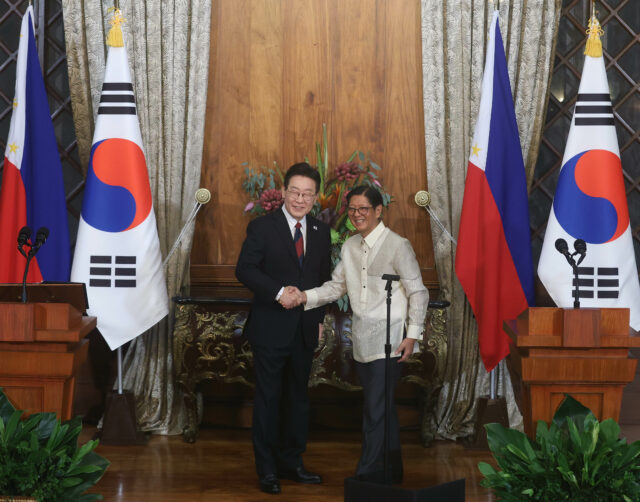
President Lee Jae Myung of the Republic of Korea and President Ferdinand R. Marcos Jr. shake hands at the President's Hall in  Malacañan Palace during their joint press statement, Mar. 3, 2026.—PPA POOL/ MARIANNE BERMUDEZ

MANILA — Philippine President Ferdinand Marcos met South Korean President Lee Jae Myung in Manila on Tuesday, where they discussed ways to deepen economic and security ties.

President Lee was in Manila on a state visit.

  • Mr. Marcos said both sides “recognize growing uncertainty in geopolitical developments,” and agreed on the need to uphold a rules‑based international order, including in the maritime domain.
  • The Philippines and South Korea agreed to expand cooperation in shipbuilding, nuclear energy and artificial intelligence.
  • Mr. Lee said the two countries will also cooperate in infrastructure and defense industries.
  • Mr. Lee added that South Korea and the Philippines plan to work together on critical minerals and supply chains.
  • The two leaders also discussed the situation in the Middle East during their talks.
  • South Korean companies will help the modernization of the Philippine military, Mr. Lee said.
  • The countries signed MOUs in various sectors, including digital technology, procurement of specific defense equipment, agriculture, intellectual property, foreign language education, culture, and police investigations.

— Reuters

Airline, travel industries scramble with fallout from Middle East conflict

Photo from www.facebook.com/DOTrPH

LONDON/CHICAGO/SYDNEY —- The airline and tourism industries scrambled to deal with the fallout from the escalating US and Israeli air war against Iran, while governments rushed to bring stranded travelers home from the Middle East following the cancellation of more than 20,000 flights in recent days.

Major Gulf hubs including Dubai, the world’s busiest international airport, remained closed or severely restricted for a fourth day, leaving tens of thousands of passengers stranded. According to Flightradar24, some 21,300 flights have been canceled at seven major airports including Dubai, Doha, and Abu Dhabi since the strikes started.

The attacks have upended travel across a growing region with several thriving business hubs that are trying to diversify away from oil-dominated economies. The turmoil also narrows an already-slim flight corridor for long-haul flights between Europe and Asia, complicating operations for global air carriers.

Stranded travelers across the Gulf rushed to secure seats on a limited number of repatriation flights as governments moved to bring passengers home even as explosions tore through Tehran and Beirut. Emirates, flydubai and Etihad have been operating a limited number of flights since Monday, mostly to repatriate stranded passengers.

“It’s pretty well the biggest shutdown we’ve seen certainly since the COVID pandemic,” said Paul Charles, CEO of luxury travel consultancy PC Agency, adding that beyond passenger disruption the cargo impact would run to “billions of dollars.”

Many passenger airlines also move cargo in their aircraft bellies, resulting in disruptions to air freight. Cargo specialist FedEx said by email it was using “contingency measures” it did not describe in the Middle East, after saying earlier in the day that it had resumed pickup and delivery services in the region where possible.

EMERGENCY EVACUATIONS
The United Arab Emirates government said 60 flights had taken off, operating in dedicated emergency air corridors. The next phase will be operating more than 80 flights.

The United States is securing military and charter flights to evacuate Americans from the Middle East, a US State Department official said on X on Tuesday, adding that it was in contact with nearly 3,000 US citizens. The department was under fire from US lawmakers who said the Trump administration should have advised people to leave before the attacks started.

Delta Air Lines said on Tuesday it paused New York-Tel Aviv flights through March 22 because of the conflict and was offering rebooking options and a travel waiver for affected customers through March 31.

Demand for alternatives to Gulf airlines has surged, with bookings and ticket prices jumping on routes like Hong Kong-London, Reuters’ checks showed on Tuesday. Should the conflict drag on, it could cost the Middle East billions in tourism dollars, analysts estimate.

“We can’t get home, we can’t go back to work, we can’t get the kids back to school,” said Tatiana Leclerc, a French tourist stuck in Thailand, whose flight had been set to go via the Middle East hubs that are a key link between Asia and Europe.

In an early sign of a thaw, Virgin Atlantic said on Tuesday it would resume services as scheduled between London’s Heathrow Airport and Dubai or Riyadh.

AIRLINE STOCKS SLIP
Shares of air carriers worldwide fell on Tuesday. The operational and financial effect varies significantly among airlines, said Karen Li, JP Morgan’s head of Asia infrastructure, industrials and transport research.

“There are important differences across carriers in terms of hedging strategy, air cargo exposure, and network rerouting capabilities that will shape the actual impact from the Middle East situation,” Li said.

Oil prices have surged amid the widening conflict. Benchmark crude is up roughly 30% so far this year, threatening to lift jet fuel costs and squeeze airline profits. Most US airlines long ago gave up on hedging fuel purchases, their second-largest operating cost behind labour.

In its latest annual filing, Delta said every one-cent increase in the price of jet fuel per gallon added about $40 million to its yearly fuel bill. A 10% increase would add $1 billion to Delta’s 2026 fuel bill, Third Bridge analyst Peter McNally said.

Shares of most US carriers ended lower, with Southwest down about 1% and Alaska Air off roughly 2%.

In Europe, shares of Wizz Air, British Airways owner IAG, Lufthansa, and Air France KLM ended down 5% to 8%.

Ryanair CEO Michael O’Leary told Reuters the airline was hedged for the next 12 months at about $67 a barrel and that the recent fluctuations would not impact the business. Its stock fell 2.2% on Tuesday.

Qantas Airways CEO Vanessa Hudson said the airline has “pretty good” fuel hedging but the spike in oil prices was significant for the industry. The Australian airline’s shares fell 1.8%.

Shares of Japan Airlines closed down 6.4%, while Korean Air Lines dropped 10.3%, its biggest fall since March 2020, as it resumed trading after a public holiday on Monday.

Shares of major Chinese carriers including Air China and China Southern Airlines lost between 2% and 4% in Hong Kong and Shanghai. — Reuters

When good intentions get misread

Why generational fluency matters

Since 2014, Acumen has led a multi-year generational study in the Philippines, mapping the shifting values, fears, and aspirations that drive behavior and decision-making. Project Alphabet is the latest in this series of studies conducted in 2025, with data and insights that can help companies better understand the evolving multi-generational Philippine consumer and workforce.

Generational Fluency is one of the key concepts laid out in Project Alphabet. Read on to get a glimpse of why it is a strategic skill for leaders, teams, and organizations in today’s workspaces.

Have you ever said something in a meeting and suddenly felt the air shift, like you had triggered tension you never intended?

I have been there.

Once, I gave what I thought was simple feedback to a group of young analysts. Nothing dramatic, just notes for revision. But the reaction was intense. Another time, I suggested improving a process an older colleague had built years ago. The response was immediate defensiveness.

As we analyzed the data and interviews from Project Alphabet, our latest study on Filipino generations, I realized my own experiences were not isolated moments. We kept hearing the same stories, only told from different sides.

The younger colleague was not resistant to feedback. What hurt was feeling their effort was unseen.

The older colleague was not against change. What they resisted was the sense that their contribution no longer mattered.

That was the turning point.

Across generations, people actually want the same things at work. Respect, trust, growth, and the chance to contribute. But each generation interprets these differently based on the context they grew up in.

When those contexts collide without understanding, miscommunication turns into misalignment, and eventually mistrust.

Here is where Generational Fluency comes in. But what is it?

It is about empathy, language, and awareness to see beyond the labels and to harness the strengths of all four generations together.

As of 2024, Generation Y (born between 1981 to 1996) and Generation Z (1997 to 2012) make up 75% of the Philippine workforce. The older Gen X (1965-1980) and Baby Boomers have become a minority but they still hold majority of senior leadership roles.

It is this new mix that is driving much of the tension seen in the workplace today.

The evolving workforce composition demands that organizations pay close attention to its implications.

Companies are feeling the strain as long-established systems built on stability and uniformity are being challenged by growing demands for flexibility, transparency, and personalization. These demands are shaped by the different values and priorities that the younger generations bring into the workplace.

Generational Fluency is the ability to understand the perspective each generation brings and intentionally bridge those differences to unlock stronger collaboration and better outcomes.

What surprised us most in Project Alphabet was this: These misreads do not only affect workplace relationships. They influence how teams make decisions, how leaders manage change, and even how organizations understand their customers.

In highly competitive environments, teams that lack Generational Fluency often struggle to align internally, resulting in slower execution, weaker strategies, and messages that fail to connect externally.

Organizations that build this fluency see something different. Clearer communication, stronger leadership alignment, and sharper understanding of evolving customer expectations.

WHAT THIS MEANS FOR COMPANIES

We must emphasize that Generational Fluency is not simply a soft skill. It has structural implications.

For leaders, it is a capability that must be intentionally developed within teams. Many organizations are embedding generational fluency into leadership and commercial capability programs to strengthen execution and collaboration.

For organizations navigating changing customer expectations, it becomes a strategic advantage. Generational insight can sharpen value propositions and inform more meaningful customer experiences, especially as expectations evolve across generations of customers.

For family enterprises transitioning leadership across generations, it can mean the difference between continuity and conflict. We often see this emerge most strongly in family corporations navigating succession and professionalization journeys.

From the research, here are a few ways organizations can begin building generational fluency:

Listen for intent, not just words. Pause before reacting and ask, “What did they really mean?” Curiosity shifts conversations away from conflict and toward collaboration.

Respect the past, invite the future. Acknowledging what has worked creates psychological safety for innovation. Legacy and progress are not opposites. They are partners.

Clarity is crucial. Make assumptions, expectations, and decision rules explicit. What feels obvious to one generation is often invisible to another.

Organizations can move beyond misreads, recognize each generation’s strengths, and build workplaces and businesses that work better because of their differences, not despite them.

If these challenges sound familiar, we invite you to explore more insights from Project Alphabet and how Generational Fluency can be applied within your organization. — Andrea Tamayo-Oliveros, Senior Strategist, Acumen (www.acumen.com.ph)


Spotlight is BusinessWorld’s sponsored section that allows advertisers to amplify their brand and connect with BusinessWorld’s audience by publishing their stories on the BusinessWorld Web site. For more information, send an email to online@bworldonline.com.

Join us on Viber at https://bit.ly/3hv6bLA to get more updates and subscribe to BusinessWorld’s titles and get exclusive content through www.bworld-x.com.

Disney Adventure arrives in Singapore

A water salute and fireworks display welcomed the Disney Adventure as it docked at the Marina Bay Cruise Centre Singapore, March 3. -- Disney Cruise Line

Disney Cruise Line’s (DCL) newest cruise ship, the Disney Adventure, arrived on Tuesday at its new home port of Singapore, as it prepares for its maiden voyage on March 10.

“The arrival of the Disney Adventure in Singapore marks a significant milestone in our global expansion, introducing Disney cruising to Asia for the very first time,” Joe Schott, president of Disney Signature Experiences, said in a statement.

“Honoring Disney Cruise Line’s legacy of unforgettable journeys, our newest ship brings together our signature storytelling and creativity in an exciting new destination,” he added.

The Disney Adventure was welcomed with a water salute and fireworks at the Marina Bay Cruise Center Singapore.

“Disney Cruise Line’s decision to homeport their newest ship in Singapore is a testament to our appeal as a premier cruise destination. Singapore’s repertoire of compelling onshore tourism experiences is a fitting complement to the Disney Adventure’s unique entertainment-led vacation at sea,” Melissa Ow, chief executive of the Singapore Tourism Board, said.

The ship offers three- and four-night sailings at sea, continuing the Disney Cruise Line’s tradition of delivering “the most magical and relaxing vacations at sea” with an immersive Disney storytelling experience. — Cathy Rose A. Garcia

Budget gap exceeds ceiling in 2025

Men are seen working on the rehabilitation of Epifanio de los Santos Avenue (EDSA) in Pasay City. — PHILIPPINE STAR/ RYAN BALDEMOR

By Justine Irish D. Tabile, Senior Reporter

THE NATIONAL Government’s (NG) budget deficit breached its 2025 ceiling after the main tax agencies missed their collection targets and state spending slowed amid a corruption scandal, the Bureau of the Treasury (BTr) said.

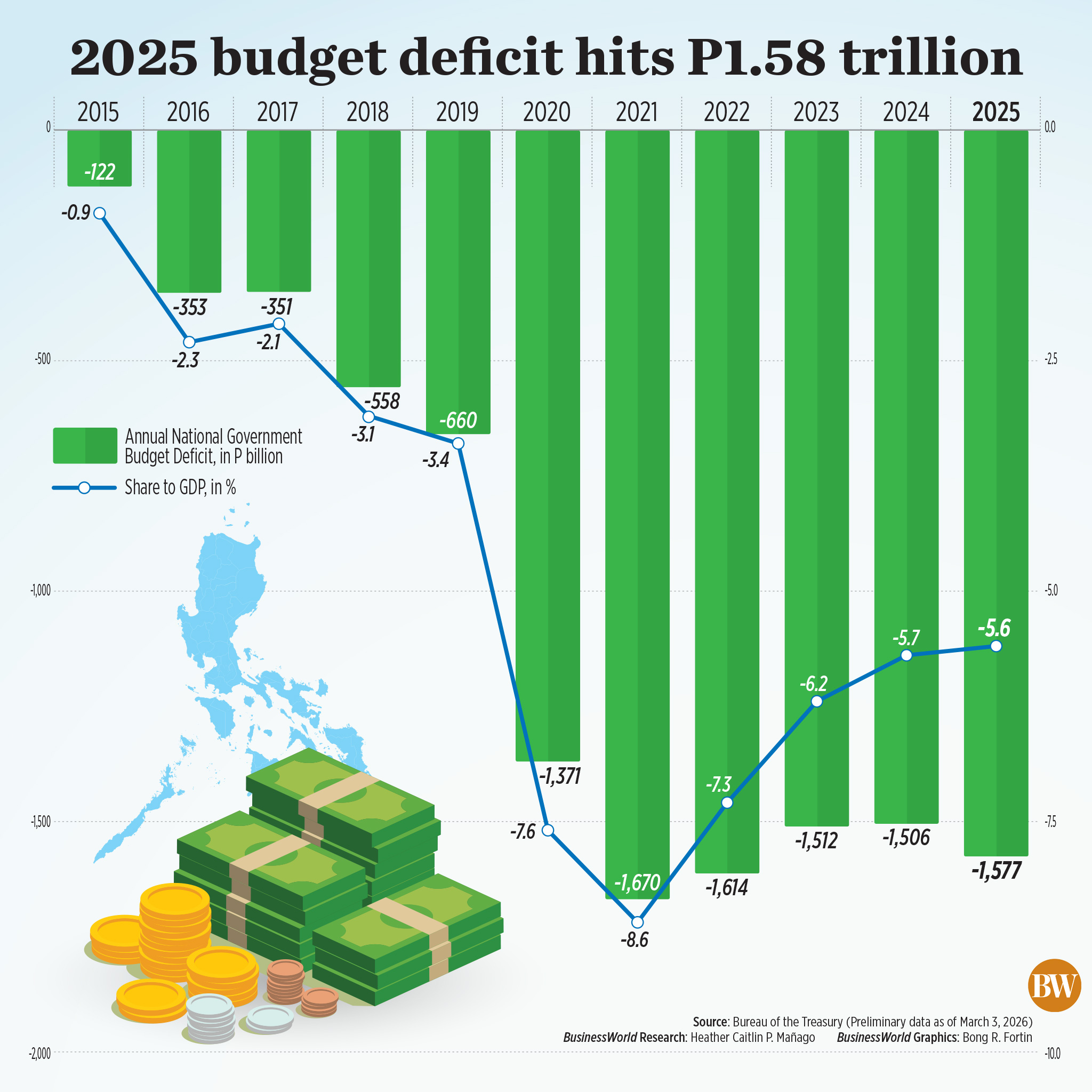
Data from the Treasury released on Tuesday showed that the budget deficit widened by 4.68% or P70.5 billion to P1.58 trillion in 2025 from P1.51 trillion in 2024.

It exceeded the P1.56-trillion deficit ceiling set by the Development Budget Coordination Committee for 2025 or by P15.1 billion.
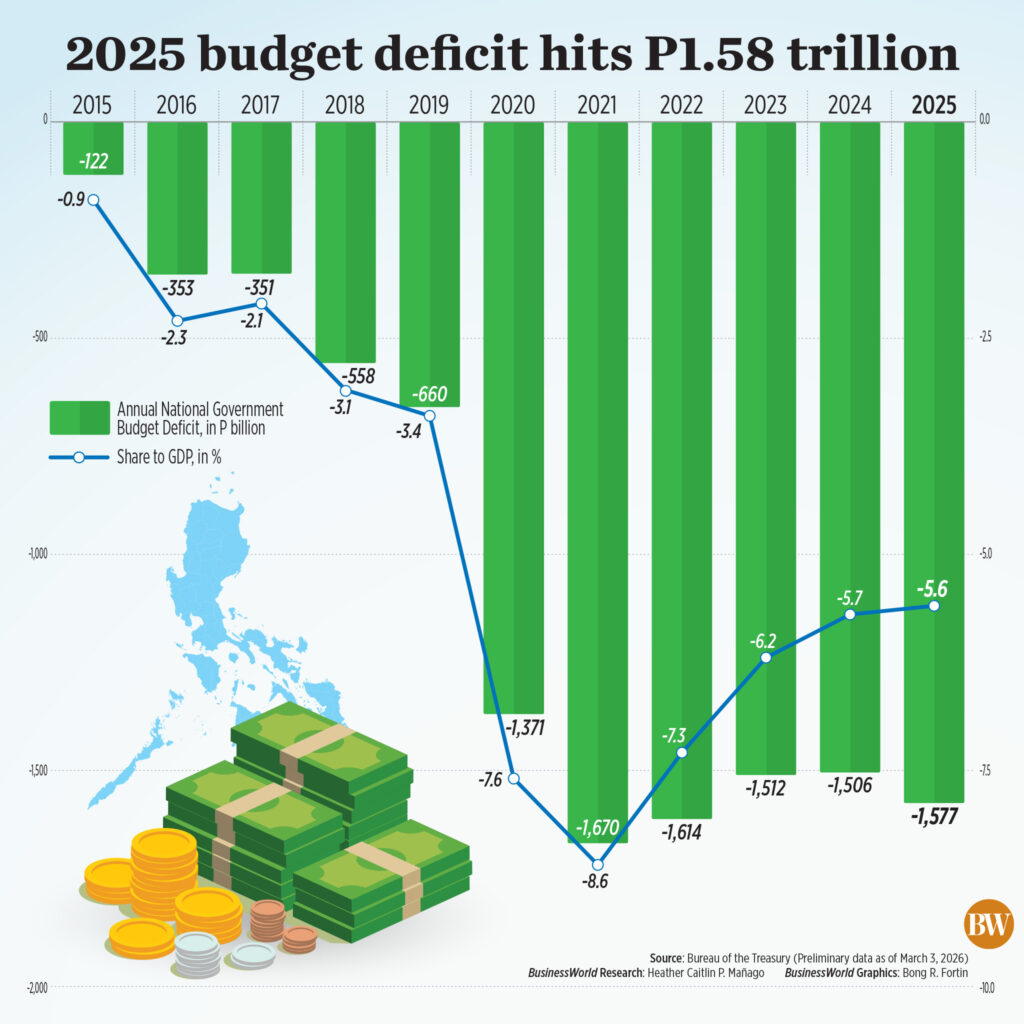
“The deficit only slightly exceeded the 2025 target by 0.97% as the 1.48% shortfall in revenue collections was partly offset by spending restraint, with actual disbursements kept below the programmed level by 0.85%,” the Treasury said.

As of end-2025, the deficit as a share of gross domestic product (GDP) settled at 5.63%, reflecting an improvement from the 5.7% in 2024 but slightly higher than the 5.5% target.

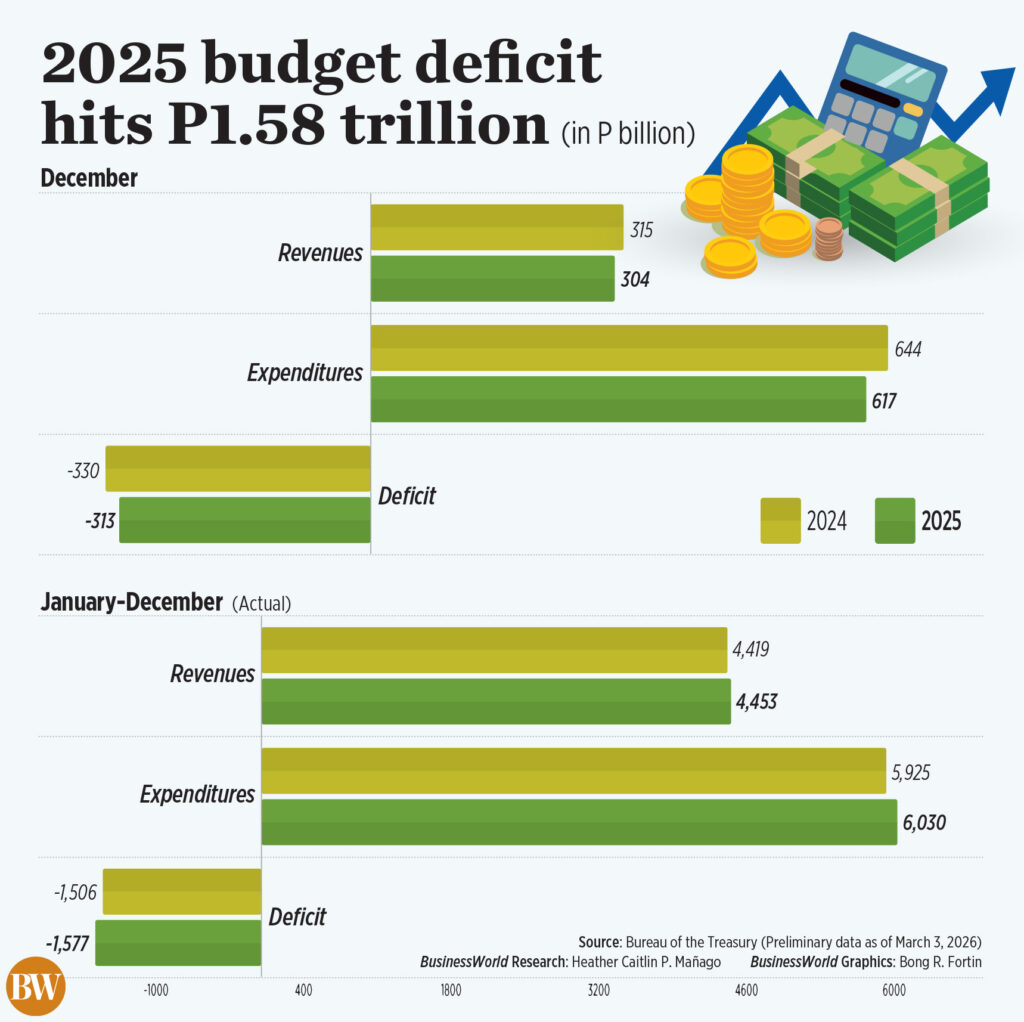
BTr data showed revenue collection inched up by 0.78% to P4.45 trillion, higher than the P4.42 trillion collected in 2024.

“The revenue uptake fell short of the revised fiscal year 2025 program of P4.52 trillion by P67 billion, as the P69.8-billion overperformance in nontax revenues was not enough to offset the P136.8-billion shortfall in tax collections,” it said.

Tax revenues, which accounted for 91.55% of the total revenues, jumped by 7.27% to P4.08 trillion in 2025, but 3.25% below the P4.52-trillion program.

Broken down, collections by the Bureau of the Internal Revenue (BIR) increased by 9.06% year on year to P3.11 trillion from P2.85 trillion collected in 2024.

“This growth was driven by stronger collections from corporate income tax, personal income tax, value-added tax (VAT), documentary stamp tax, and excise tax on tobacco,” the Treasury said.

However, BIR collections were 3.41% lower than the P3.22-trillion target for the year due to a pause in payments for infrastructure-related government contracts amid investigations into flood control projects and the temporary suspension of audit operations.

On the other hand, the Bureau of Customs’ (BoC) revenues inched up by 1.75% to P932.7 billion in 2025 from the P916.7 billion collected a year prior, amid strengthened enforcement measures and better monitoring of import declarations.

“VAT remained the principal driver of growth among the import taxes, with excise collection likewise posting year-on-year gains, effectively mitigating the significant effect of the decline in collections from import duties,” it said.

However, BoC collections were 2.72% short of its P958.7-billion target for the year due to “weaker import volumes, the suspension of rice importation, and lower global oil and commodity prices.”

Meanwhile, nontax revenues, which accounted for 8.45% of the total receipts, slumped by 39.15% to P376.3 billion in 2025 from P618.3 billion in 2024. However, it exceeded the full-year target of P306.5 billion by 22.77%.

“This drop was mainly due to the expected absence of one-time remittances received in 2024,” the BTr said. “However, full-year nontax collections surpassed the revised target… largely due to above-target performance of BTr income, particularly from its operations and dividend collections.”

The Treasury’s income declined by 17.7% to P233.2 billion last year, due to the base effect of non-recurring windfall receipts and the impact of interest rate cuts on income from investments and deposit earnings.

Despite the decline, BTr’s income still surpassed the P179.2-billion target for 2025 by 30.11% amid stronger dividend remittances, income from managed funds, higher interest income on government deposits, and guarantee fee collections.

The BTr also attributed this to the NG share from the profits of Philippine Amusement and Gaming Corp. and the Manila International Airport Authority’s terminal fees.

Revenue from other offices declined by 57.29% to P143.1 billion in 2025 but exceeded its P127.2-billion program by 12.43%.
SPENDING SLOWDOWN
Meanwhile, government expenditures edged up by 1.77% to P6.03 trillion in 2025 from P5.93 trillion a year prior. This was 0.85% below the P6.08-trillion annual program.

“The increase in spending was primarily driven by higher allocations for the National Tax Allotment to local government units, interest payments, and personnel services expenditures due to the implementation of the second tranche of salary adjustment of qualified civilian government employees,” the BTr said.

However, it said that the lower-than-program-level disbursements resulted from “proactive fiscal management, including stricter oversight on infrastructure projects linked to corruption scandals.”

Primary spending — which refers to total expenditures minus interest payments — was flat at P5.166 trillion last year from P5.162 trillion a year prior. It was also 1.3% short of the programmed P5.23 trillion.

Interest payments jumped by 13.21% to P864.1 billion in 2025 due to the “additional debt incurred to support the deficit program and the repricing of matured pandemic debt at higher prevailing rates.” This is 1.9% higher than the programmed P848 billion for 2025.

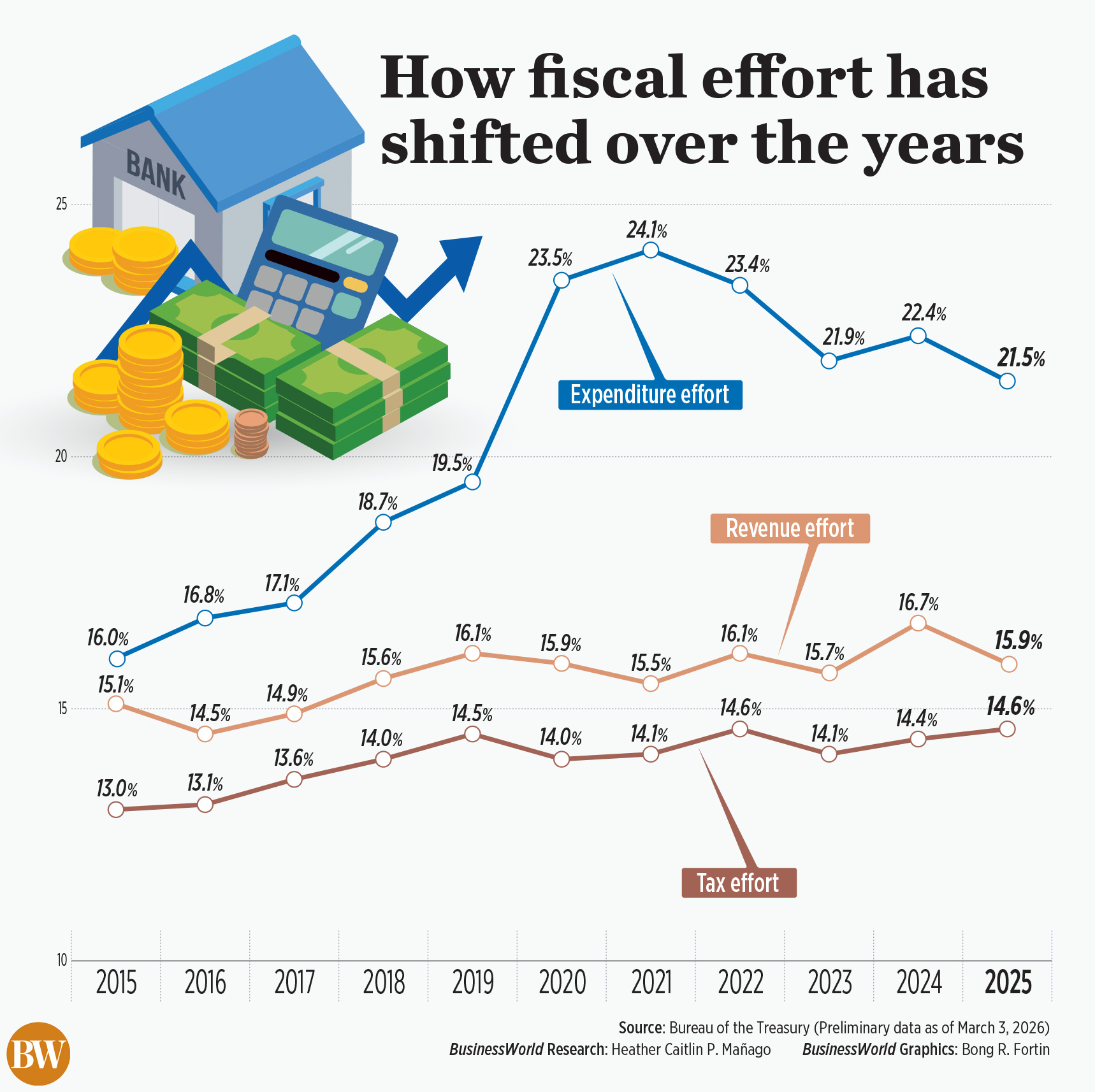
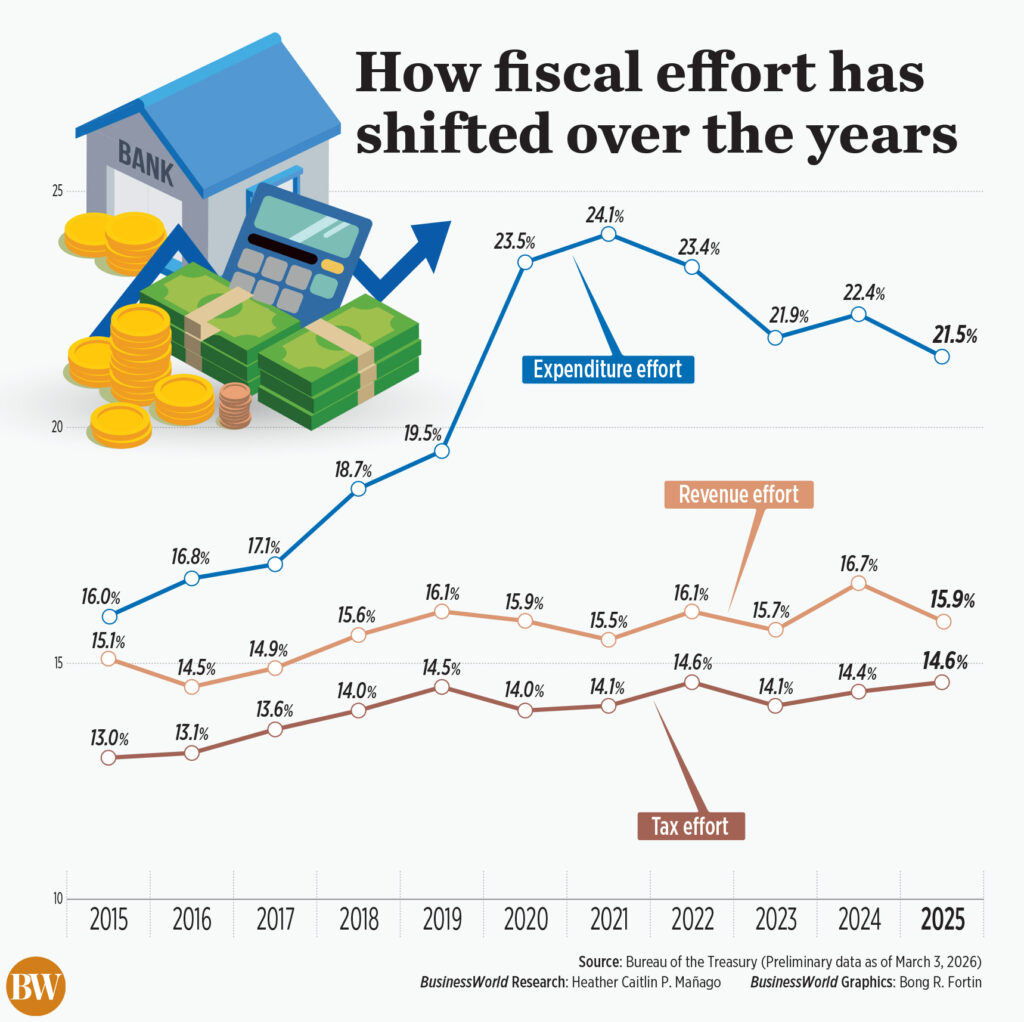
The full-year expenditure was 21.53% of GDP, slightly above the 21.45% target for 2025, but lower than the 22.41% seen in 2024.
DECEMBER DEFICIT
In December alone, the NG’s budget deficit narrowed by 4.96% to P313.2 billion from P329.5 billion in the same month in 2024.

Revenue collection declined by 3.31% to P304.3 billion in December as nontax revenues plunged by 59.31% to P25.7 billion.

This is as Treasury’s revenues fell 64.42% to P18 billion, and other offices’ revenues dropped by 38.47% to P7.6 billion.

However, tax revenues jumped by 10.73% in December to P278.6 billion as BIR collections went up by 11.08% to P204.2 billion, while Customs collections rose by 9.75% to P73.2 billion.

On the other hand, government spending slid by 4.15% to P617.4 billion in December, even as interest payments rose by 9.75% to P63.6 billion. Primary spending contracted by 5.53% to P553.8 billion.

Rizal Commercial Banking Corp. Chief Economist Michael L. Ricafort said that last year’s budget deficit could have been wider if not for government underspending on infrastructure.

“Going forward, geopolitical risks, especially in the Middle East, could lead to higher inflation that could bloat government spending,” he said in a Viber message.

He said the government’s catch-up spending plan, particularly for infrastructure, could also lead to a wider budget deficit.

Union Bank of the Philippines Chief Economist Ruben Carlo O. Asuncion said that the National Government’s slightly higher budget deficit in 2025 “was driven mainly by weaker‑than‑expected tax collections, even as spending remained below program.” 

“Despite these pressures, disbursements were kept 0.85% below the full-year program due to tighter project oversight, indicating that the deficit expansion was rooted in revenue underperformance rather than overspending,” Mr. Asuncion said in a Viber message.

“Looking ahead to 2026, the fiscal position is expected to improve modestly, supported by recovering tax operations as administrative disruptions ease and by continued fiscal consolidation efforts, although elevated interest payments — which rose 13.21% in 2025 — will remain a structural constraint,” he added.