Home Blog Page 2112

Philippine shares slip before Trump inauguration

PHILIPPINE SHARES inched down on Monday in cautious trading before the inauguration of US President-elect Donald J. Trump. 

The Philippine Stock Exchange index (PSEi) slipped by 0.03% or 2.23 points to end at 6,349.89 on Monday, while the broader all shares index dropped by 0.02% or 0.87 point to 3,702.86.

“Philippine shares started the week on a flat note… Focus shifts to Monday’s inauguration of Donald Trump, where investors will watch for early policy announcements,” Regina Capital Development Corp. Head of Sales Luis A. Limlingan said in a Viber message on Monday.

“The local market edged lower this Monday as investors traded cautiously while waiting for US President-elect Donald Trump’s inauguration. Investors in particular are waiting for the incoming president’s policies in his first few days in the office,” Philstocks Financial, Inc. Senior Research Analyst Japhet Louis O. Tantiangco likewise said in a Viber message.

Mr. Trump was set to be inaugurated overnight. He told thousands of roaring supporters he would impose severe limits on immigration on his first day in office, vowing to swiftly fulfill the central promise of his presidential campaign at a rally on Sunday inside a packed Washington arena a day before he returns to power, Reuters reported.

Mr. Trump repeated his campaign pledge to launch the largest deportation effort in US history, which would remove millions of immigrants. An operation of that scale, however, would likely take years and be hugely costly.

Mr. Trump’s rally, along with his inaugural address on Monday, could preview the tone he plans to adopt during his second White House term.

He vowed to repeal “every radical and foolish executive order of the Biden administration” within hours of assuming the presidency.

A source familiar with the planning said Mr. Trump will take more than 200 executive actions on Monday.

Sectoral indices were split on Monday. Property declined by 1.61% or 37.94 points to 2,316.66; services went down by 0.21% or 4.56 points to 2,098.21; and holding firms dropped by 0.08% or 4.56 points to 5,325.11.

Meanwhile, financials rose by 0.78% or 17.07 points to 2,189.45; mining and oil went up by 0.48% or 38.39 points to 7,930.96; and industrials climbed by 0.41% or 37.27 points to 8,972.63.

“Monde Nissin Corp. was the top index gainer, climbing 3.68% to P7.05. ACEN Corp. was the worst index performer, dropping 3.30% to P3.52,” Mr. Tantiangco said.

Value turnover dropped to P3.81 billion on Monday with 1.54 billion shares traded from the P4.93-billion worth of 993.88 million issues that changed hands on Friday.

Decliners outnumbered advancers, 105 versus 98, while 48 names closed unchanged.

Net foreign selling increased to P107.92 million on Monday from P97.37 million on Friday. — R.M.D. Ochave with Reuters


Review of PHL bilateral labor ties sought after OFWs’ death in Kuwait

DMW

A PHILIPPINE senator on Monday called for the review of bilateral labor deals and recruitment policies with Kuwait after two overseas Filipino workers (OFWs) based in the West Asian country died of “anomalous causes.”

“The government must stop the abuse in its tracks by strengthening recruitment policies and ensuring that host countries comply with bilateral agreements on the welfare and rights of OFWs,” Senator Emmanuel Joel J. Villanueva said in a statement.

“We cannot be reactive and rely on a ban-lift-ban cycle of OFW deployment.”

Kuwait-based worker Jenny Alvarado on Jan. 2 was reported to have died by coal smoke inhalation at her place of work with her Nepalese and Sri Lankan coworkers. 

In December, the decomposing body of Dafnie Nacalaban, a domestic worker in Kuwait since 2019, was dug up and discovered at the residence of a Kuwaiti national. She had been reported missing by her employer since October.

Migrant Workers Secretary Hans Leo J. Cacdac earlier said his agency was temporarily halting OFW deployment to Kuwait due to the deaths.

The Philippines in 2018 imposed a worker deployment ban to the Gulf country after the killing of Filipina domestic helper Joanna Daniela Demafelis, whose body was found in a freezer at an abandoned apartment. It partially lifted the ban in the same year after the two countries signed a protection agreement for workers.

In May 2019, Filipina maid Constancia Lago Dayag was killed in Kuwait, and a few months later, another one, Jeanelyn Villavende, was tortured by her employer to death.

The government again imposed a deployment ban in January 2020, which it lifted when Kuwaiti authorities charged Ms. Villavende’s employer with murder and sentenced her to death by hanging.

The International Labor Organization has said only 6% of domestic workers worldwide have access to comprehensive protection including medical care and unemployment benefits.

“Every OFW we allow to work in a foreign land must be assured of a safe workplace, decent living conditions, timely payment of correct wages and benefits, and must be able to return to their families alive and with gainful income worthy of their sacrifices,” Mr. Villanueva said.

DIPLOMATIC OPTIONS
In a separate statement, a lawmaker also asked the Philippine Department of Migrant Workers (DMW) to weigh all diplomatic options and “seriously study” its proposal to implement a deployment ban in Kuwait.

Mr. Cacdac last week floated the possibility of declaring a deployment ban on Kuwait following the recent deaths of two OFWs in the middle eastern country.

“We appeal to the DMW to seriously study and rethink its reported consideration of another deployment ban, and to adopt a more nuanced and strategic approach,” Party-list Rep. Ron P. Salo said in a statement.

“An outright ban may exacerbate the situation of approximately 260,000 Filipinos currently working in Kuwait, potentially placing them in even more precarious positions,” he added.

Manila prohibits first-time OFWs from being deployed to Kuwait, according to Mr. Cacdac.

“It is also essential to consider that deployment bans are typically implemented when a host country violates an existing bilateral agreement. Crimes committed by private individuals, though deeply tragic, do not necessarily constitute a breach by the Kuwaiti government,” said Mr. Salo.

“Determining the host government’s breach, if any, is vital before imposing such an extreme measure,” he added. — John Victor D. Ordoñez and Kenneth Christiane L. Basilio

Sandiganbayan finds former QC mayor guilty of graft in P32.1-M deal

FORMER Quezon City Mayor Herbert M. Bautista — TARLAC CITY PIO

FORMER Quezon City (QC) Mayor Herbert M. Bautista was found guilty of graft over a P32.1-million procurement deal with a local software company in 2019, the Philippine anti-graft court said on Monday.

In a 146-page decision, released on Jan. 20, the Sandiganbayan Special Seventh Division convicted Mr. Bautista and a former city administrator for the procurement of an online application system, Online Occupational Permitting Tracking System (OOPTS), which expedites processing of occupational permits.

Imprisonment of six to ten years and perpetual disqualification from public office were meted out by the court on the convicted officials.

But they won’t be ordered to pay back the P32.1-million involved in the deal as “it cannot be directed to be paid by either accused,” with the software company not a respondent to the case, a part of the ruling penned by Associate Justice Ma. Theresa Dolores C. Gomez-Estoesta.

The camp of Mr. Bautista said they are “deeply saddened” by the decision, maintaining that the former mayor is innocent, his legal counsel, Nilo T. Divina, told BusinessWorld in a Viber message.

We “assert that no act constituting the offense was committed. Notably, the vote was split 2-1, highlighting reasonable doubt,” he noted.

“Evidence presented in the trial confirmed the project was delivered and received by the Quezon City Government, with payment made by the succeeding administration. Mayor Bautista did not financially benefit from the project, and no harm or injury was incurred by the city or its people.”

Mr. Divina said they will file a motion for reconsideration, in the hopes that a thorough review of the evidence will affirm Mr. Bautista’s innocence.

The former mayor had denied any irregularities in the bidding procedure and implementation of the project, the ruling read in part. He had also denied conspiring with his co-accused to defraud the government.

Mr. Bautista sought the case’s dismissal last year, but the Sandiganbayan rejected it, saying the case deserved a full-blown trial after finding probable cause.

The case emerged in 2019 after an internal audit revealed that full payment was made to the contracted software company for OOPTS despite the incomplete delivery of the project.

“Complaints on the non-functionality of the OOPTS (Online Occupational Permitting Tracking System) spurred an internal audit which revealed that the delivery of the project was not complete; yet, full payment was made to the supplier,” the decision stated.

The former mayor had said he received no reports that the project was defective or incompletely delivered. He also argued that there were reports by the Quezon City government’s General Services Department (GSD) and Information Technology Development Department (ITDD) finding that the delivery of the system was in order.

The Court, however, said that there were “visible red flags” in the inspection reports of GSD and ITDD, which should have been noticed by Mr. Bautista and his co-accused. The report particularly lacked photos and manuals from the delivery inspected by the GSD, while the ITDD remarked the online application itself was not included.

“This notation should have been the brunt that should have cautioned one’s guard. An online system without the software application defied the very essence of the Project,” the ruling read.

The Sandiganbayan also noted that the OOPTS was launched in “late 2021 to early 2022,” almost three years after the payment’s release. “Payment was approved and released to [the software company] at the end of June 2019, in spite of numerous glitches, crashes, and non-functional features afflicting its application.”

The ex-mayor should have endorsed the project to his successor instead of rushing the payment, the anti-graft court said. – Kenneth Christiane L. Basilio

DBP charter advances in House

COURTESY OF DBP FACEBOOK PAGE

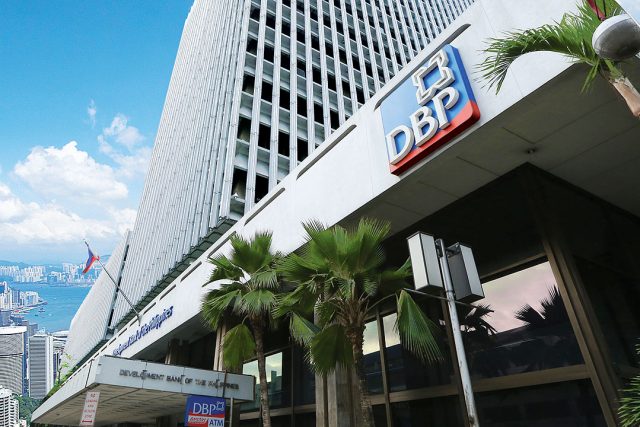
THE HOUSE of Representatives on Monday approved on second reading a measure seeking to raise the Development Bank of the Philippines’ (DBP) authorized capital stock to P300 billion from P35 billion.

Through voice voting, congressmen agreed to House Bill (HB) No. 11230, which would repeal DBP’s almost 27-year-old charter, a move that would allow the lender to better finance infrastructure projects and small businesses.

This is a shift away from the state-run bank’s current charter, which is currently focused on providing services to agricultural and industrial enterprises.

“[The] amendments will provide and expand the powers and functions of DBP with the corresponding needed increase in its capitalization [and] enhance the bank’s ability to ensure continuity of developmental service to the nation,” Manila Rep. Erwin C. Tieng, who heads the House banks committee, told lawmakers during his sponsorship speech.

The Finance department is supporting the congressional approval of proposals granting the DBP a new charter, it said in an earlier statement. It would provide the state-run bank with more efficient access to capital and reduce its dependency on the National Government through dividend relief.

The Senate approved its counterpart version of the measure in Sept. 2024.

Under the bill, the DBP would be allowed to issue stocks through an initial public offering, allowing the public to own up to 30% of the lender’s capital stock, pending the “manner and quantities” approved by the Finance secretary.

“The capital stock of the bank shall be P300 billion, divided into 3 billion shares, with a par value of P100 per share,” the bill stated.

The National Government is mandated to own 70% of the bank’s stocks at all times, while 10.67%, or P32 billion of the stock, should be subscribed to and paid from state coffers.

The DBP is authorized to allocate a “part or all” of its unrestricted retained earnings towards increasing the National Government’s paid-up capital stock.

The state-run bank would be allowed to give loans for the development of physical and digital infrastructure, while also lending for tourism and energy development purposes.

It also would enable the DBP to extend financial support to micro, small, and medium enterprises, government-owned or -controlled corporations, and local government units, the bill stated.

Mr. Tieng said the bill also allows the government bank to engage in “traditional and non-traditional modes of financing,” which would allow it to fund the acquisition and construction of government properties, such as Philippine embassies abroad.

Amending the DBP’s charter would allow the bank to be more responsive to the “evolving needs” of the Philippine economy, according to John Paolo R. Rivera, a senior research fellow at the Philippine Institute for Development Studies.

“The current DBP charter may no longer align with the evolving needs of the economy, especially as the country focuses on inclusive growth, infrastructure development, and digital transformation,” he said in a Viber message before the bill’s approval.

The proposed chapter could help align the bank’s priorities with the government’s long-term socioeconomic development plans, such as the Marcos administration’s Philippine Development Plan 2023-2028, he added. — Kenneth Christiane L. Basilio

Bill on PCG commandant term OKd

PHILIPPINE COAST GUARD PHOTO

THE PHILIPPINE Senate on Monday approved on third and final reading a bill that would fix the term of the commandant of the Philippine Coast Guard (PCG) to three years, expected to ensure stability in the agency’s leadership structure amid maritime tensions.

Twenty senators unanimously voted in favor of House Bill No. 10841, which provided that the PCG commandant who holds the rank of coast guard admiral may only serve three years and be considered retired only after he serves the maximum term, unless relieved by the President.

In a statement, Senate President Francis G. Escudero said fixing the term allows appointed commandants who near the age of 56 years old to serve full terms in the position and to carry out programs for the agency.

“Given the situation we are facing in the West Philippine Sea, it is in our best interest to ensure that we have some level of continuity in the leadership of the PCG, the agency tasked to patrol our territorial waters and secure our shores,” he said in a statement. In 2016, a United Nations-backed arbitration court based in The Hague said China’s claim to nearly the entire South China Sea was illegal.

China has largely ignored the ruling, calling it void. Aside from the Philippines and China, Brunei, Malaysia, Taiwan and Vietnam also claim parts of the waterway.

“With the passage of this measure, we will have continuity of leadership, a definitive term that allows the Commandant to fully implement maritime security plans, infrastructure projects, and modernization programs without the risk of abrupt leadership changes,” Senate Majority Floor Leader Francis N. Tolentino told the plenary floor after the bill’s approval.

“We strengthen the autonomy and integrity of the Philippine Coast Guard, allowing it to focus solely on its mandate. And most importantly, it will achieve a strategic modernization program.” — John Victor D. Ordoñez

Bills pushed as food security emergency looms

PHILIPPINE STAR/MICHAEL VARCAS

THE Philippine Congress should fast-track the approval of proposed laws to make food affordable, a congressman said on Monday, as the Agriculture department looks to declare a food security emergency to curb mounting food prices.

Agriculture Secretary Francisco P. Tiu Laurel, Jr. said last week his department will likely declare a food security emergency as market prices for rice remain stubbornly high.

In a statement, Party-list Rep. Wilbert T. Lee said lawmakers should immediately pass bills he filed, such as House Bills (HB) No. 3957 and 9020, which he described as providing needed support to Filipino farmers.

“If there is complete support for local farmers, there would be no need to declare a food security emergency,” he said in a statement. “By enacting these proposed laws, we believe that the price of rice can be reduced until the government’s goal of twenty pesos per kilo is achieved.”

HB No. 3957, filed in Aug. 2022, seeks to establish Kadiwa centers nationwide to make below-market-price food products readily accessible.

Meanwhile, Mr. Lee filed HB No. 9020 in Aug. 2023, which aims to create a “price stabilization program for rice” to help secure farmers against price declines and shocks.

“Aside from the stop-gap measures that the government is implementing to immediately alleviate the burden on consumers due to high prices… we also need to start implementing long-term solutions where both farmers and consumers will benefit and be helped,” Mr. Lee said.

In a separate statement, Party-list Rep. Percival V. Cendaña said the government should take “decisive action” against rice cartels keeping rice prices elevated.

“We need to teach these greedy, exploitative businessmen a lesson — imprison them, if necessary,” he said in Filipino. — Kenneth Christiane L. Basilio

NBI nabs 3 alleged spies

NBI FACEBOOK PAGE

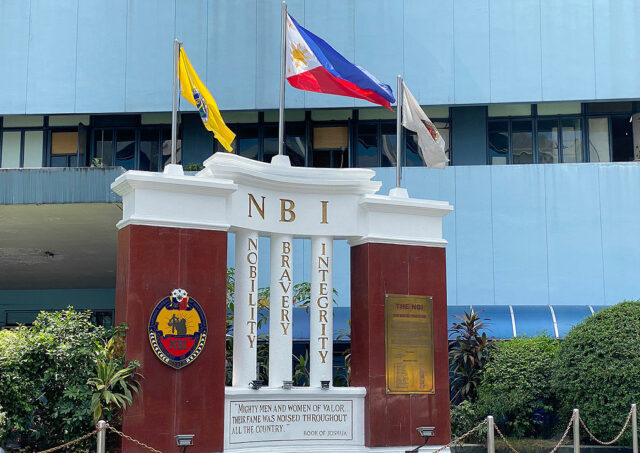
THE National Bureau of Investigation (NBI) on Monday said it arrested a Chinese man, and two Filipino cohorts believed to be using surveillance types of equipment for espionage around military sites.

In a briefing in Manila City, Director Jaime B. Santiago said they apprehended a Chinese national named Deng Yuangqing, who had been traversing Luzon since Dec. 8, 2024, with two Filipino cohorts, in a Toyota Rav-4 equipped with suspected surveillance items.

Per their investigation, the trio had been located near Enhanced Defense Cooperation Agreement (EDCA) sites, raising alarm on national security.

NBI said they were arrested last Jan. 17 in a condominium in Makati City. On Jan. 20, the NBI filed an espionage complaint in connection with cybercrime before the Department of Justice.

“When we caught [Mr. Deng], we asked him if he was a licensed surveyor, or if he represented a research institution, or if he came from a private company, whether he was a military or a law enforcer…He did not have a permit or any license or authority,” NBI Cybercrime Division Chief Jeremy C. Lotoc said in mixed English and Filipino.

Mr. Deng is a specialist in control engineering, automation and engineering, Mr. Santiago said.

The NBI with the Armed Forces of the Philippines identified the equipment found in Mr. Deng’s car as items capable of creating three-dimensional images of structures and a Global Navigation Satellite System, which is used for navigation artillery and guided missiles.

“It’s very possible that the coordinates and the topography could be used for military purposes, military targeting purposes,” Armed Forces of the Philippines Chief of Staff Romero S. Brawner, Jr. said. — Chloe Mari A. Hufana

P330-M Maynilad project nears completion

MAYNILAD Water Services, Inc. said it is nearing the completion of its P330-million pipe replacement project in South Caloocan, aimed at enhancing water pressure and reducing water losses in the area.

“This initiative is part of our P11.2-billion investment in pipe replacement projects from 2023 to 2027, aimed at reducing water losses and improving service reliability,” Maynilad Chief Operating Officer Randolph T. Estrellado said in a statement on Monday.

The pipe replacement project involves upgrading and replacing nearly 2 kilometers of aging and leaking pipelines along General San Miguel Avenue in Sangandaan, Caloocan City, the company said.

Slated for completion within the year, the project is targeted to improve water pressure for over 55,000 customers and recover approximately 2.25 million liters of potable water daily, previously lost due to pipeline leaks.

“We remain committed to implementing infrastructure upgrades that ensure a more sustainable and reliable water supply for our customers,” Mr. Estrellado said.

The company serves certain portions of Manila, Quezon City, and Makati. It also operates in Caloocan, Pasay, Parañaque, Las Piñas, Muntinlupa, Valenzuela, Navotas, and Malabon. It also supplies the cities of Cavite, Bacoor, and Imus, and the towns of Kawit, Noveleta, and Rosario, all in Cavite province.

Metro Pacific Investments Corp., which has a majority stake in Maynilad, is one of three Philippine units of Hong Kong-based First Pacific Co. Ltd., the others being Philex Mining Corp. and PLDT Inc.

Hastings Holdings, Inc., a unit of PLDT Beneficial Trust Fund subsidiary MediaQuest Holdings, Inc., has an interest in BusinessWorld through the Philippine Star Group, which it controls. — Sheldeen Joy Talavera

Stricter special educ fund use urged

UNSPLASH

A SENATOR on Monday called for more mechanisms to boost transparency and accountability in the use of the Special Education Fund, which is meant to cover school building repairs, maintenance, and construction, after reports of the fund’s misuse and underspending.

In a statement, Senator Sherwin T. Gatchalian called for a transparency board that would report on and oversee special education spending to ensure it is being used for its intended purpose.

He earlier filed Senate Bill No. 155, which would expand the use of the Special Education Fund to cover salaries and honoraria of teachers and non-teaching personnel in public schools.

Citing a study by the Second Congressional Commission on Education (EDCOM II), underuse of the fund amounted to P15 billion from 2018 to 2022. The Bureau of Local Government Finance cited procurement issues and limitations on allowable use as factors in underutilization.

A 2023 Commission on Audit report also showed that millions of pesos meant for improving public education in Metro Manila have been improperly spent or underspent by several local government units. — John Victor D. Ordoñez

Philippine Heart Center flagged for lack of publicized medical price list

PHC.GOV.PH

THE Commission on Audit (CoA) has flagged the Philippine Heart Center for violating the 2019 Universal Healthcare Act by failing to provide patients with an accessible price list of all health services and goods.

In a December report, state auditors said the state’s heart hospital lacks a “publicly accessible price list” of its health services, depriving its patients the ability to make informed medical decisions.

“The non-availability of such a list results in a significant information gap for patients and the general public, depriving them of the opportunity to make informed decisions about their healthcare choices,” the CoA said.

The Philippine Heart Center did not immediately respond to an e-mail seeking comment.

The Universal Healthcare Act mandates hospitals and clinics to prepare a “readily accessible” information sheet about the prices of health services and medical goods it offers to patients, according to the audit report.

“During the audit, it was observed that rates for some medical and surgical procedures, laboratory tests, and imaging diagnostic tests were published on the Center’s official website… However, other prevailing rates or prices of health services and goods offered are not readily accessible,” the report stated. — Kenneth Christiane L. Basilio

Four drug traders caught in Baguio raid

STOCK PHOTO | Image by rawpixel.com from Freepik

BAGUIO CITY — Four alleged drug traders, whose names were withheld by authorities, were caught with 11.2 grams of crystal meth (shabu), worth over P76,000, during a raid Sunday morning in Barangay Irisan, here.

Cordillera police director Brig. Gen. David K. Peredo said operatives from the Regional Police Drug Enforcement Unit, City Drug Enforcement Unit, City Intelligence Unit of the Baguio City Police Office (CPO), Baguio CPO Police Station (PS) 9, and Regional Intelligence Unit-14 launched the raid to clamp down on the four traders, after months of tailing and monitoring their drug dealing activities.

Mr. Peredo hailing the work of the operatives, including their dedication and professionalism, stressed the importance of collaborative efforts in curbing illegal drug activities and ensuring public safety across the highland region.

He further reaffirmed the Cordillera police’s commitment to sustain its campaign against illegal drugs.

All four suspects were taken to face illegal drug charges. — Artemio A. Dumlao

Maguindanao del Norte residents surrender 20 more combat weapons

COTABATO CITY — The Army collected 20 more combat weapons on Saturday, turned in by Moro villagers in Talitay, Maguindanao del Norte in support of a disarmament program complementing the Mindanao peace process.

Lt. Gen. Antonio G. Nafarrete, commander of the Army’s 6th Infantry Division (ID), told reporters on Monday that assault rifles, bolt-action sniper rifles, pistols, grenade, and rocket launchers were surrendered by residents of Talitay through the intercession of local executives and officials of Army units covering the municipality.

They agreed to turn over their weapons to Lt. Col. Robert F. Betita of the 1st Mechanized Battalion and to the acting commander of the 601st Infantry Brigade, Col. Ricky P. Bunayog, after both officers and barangay leaders in Talitay had explained the intricacies of the Small Arms and Light Weapons (SALW) Program.

Residents of Talitay submitted for 6th ID’s custody of their combat weapons during a symbolic rite at their local government operations center last Saturday.

The SALW Program is being implemented jointly in Central Mindanao by the 6th ID and the office of Presidential Adviser on Peace Reconciliation and Unity Carlito G. Galvez, Jr. — John Felix M. Unson

ADVERTISEMENT
ADVERTISEMENT