Home Blog Page 2102

S. Korea’s birthrate set to rise for the 1st time in 9 years

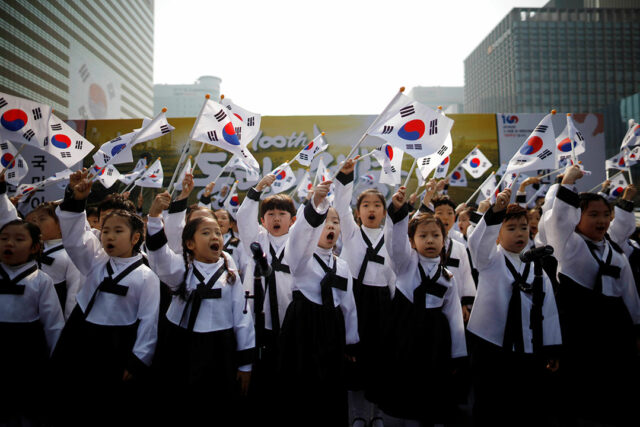
Children in traditional costumes are seen in central Seoul, South Korea, March 1, 2019. — REUTERS

SEOUL — South Korea’s birthrate is set to show a rise in 2024 for the first time in nine years, following a rebound in marriages that were delayed due to the COVID-19 pandemic.

The Asian country has recorded the world’s lowest fertility rates, but the number of newborns between January 2024 and November 2024 rose 3% from a year earlier to 220,094, monthly government data showed on Wednesday.

In 2023, newborns fell by 7.7%, extending declines to an eighth consecutive year and resulting in an annual fertility rate of 0.72, the lowest globally.

The rise comes as marriages rose in 2023, marking the first increase in 12 years after couples had postponed weddings during the pandemic.

In the Asian country, there is a high correlation between marriages and births, with a time lag of one or two years, as marriage is often seen as a prerequisite to having children.

In a government survey last year, 62.8% of South Koreans opposed births outside marriage, though that was down from 77.5% seen a decade ago.

In neighboring China, the number of births rose 5.8% to 9.54 million in 2024, also boosted by delays in marriages due to the pandemic.

The number of marriages in South Korea in the January to November period jumped 13.5% to 199,903. That figure, unless there is a change in December, will mark the biggest annual increase since 1980.

Last year, South Korea rolled out various measures to encourage young people to get married and have children, after now impeached President Yoon Suk Yeol declared a “national demographic crisis” and a plan to create a new ministry devoted to tackling low birth rates.

Most of the measures consisted of financial support through tax cuts and subsidies, namely a one-time tax cut of 500,000 won ($349.35) per person for couples married between 2024 and 2026, though the government has said it will try to take a more comprehensive approach.

The annual data for 2024 is due to be released on Feb. 26. — Reuters

In Japan, wage growth gathers steam as retailers reluctantly raise pay

A STAFF MEMBER works at the Uniqlo flagship store in Tokyo in this April 9, 2015 file photo. — REUTERS

TOKYO — Japan’s retailers, typically among the most tight-fisted of employers, are offering big pay increases for a second year in a row, meaning squeezed profits for companies, more spending money for workers, and a green light for more central bank rate hikes.

Japan’s labor-intensive service sector had long managed to avoid making big or sustained pay raises, by tapping a vast pool of part-time, lower-paid retirees and housewives.

But that began to change last year as a rapidly shrinking working-age population and rising inflation made it harder for retailers — who employ 10% of Japan’s workers — to attract and retain staff.

Their acquiescence to successive wage hikes, marking a breakthrough among low-wage service businesses and small manufacturers, has not escaped the notice of policymakers, including central bankers keen for signs that wage growth is taking hold after 25 years of stagnation.

“There was a lot of positive talk on the wage outlook,” Bank of Japan (BoJ) Governor Kazuo Ueda said at a gathering of regional bank executives last week, referencing a meeting of BoJ branch managers the week before.

The central bank has predicated its latest cycle of interest rate hikes, including another expected at a policy meeting later this week, on a sustained “virtuous circle” of higher wages that support higher prices, for services as well as for manufactured goods.

UA Zensen, a group representing retail, restaurant, textile and other industry unions, is seeking wage hikes of 6% for full-time workers and 7% for part-timers for 2025, outpacing the baseline 5% target set by Rengo, the nation’s largest union.

Talks over 2025 wage levels typically conclude around March, and go into effect up to a few months afterwards.

“Solid wage hikes will help put the Japanese economy on a growth track,” said Tamon Nishio, UA Zensen’s general secretary.

“Many of our union members are from small and medium-sized firms and are part-time workers. We want wage hike momentum to spread broadly to our members to achieve real wage growth and create a positive cycle for the economy.”

Economists and executives, however, point to a number of doubts and potential downsides with this momentum, including rising costs for retailers and uncertainty whether workers would be willing to spend their windfall.

“The big pay hikes will boost our cost burden,” Takaharu Iwasaki, president of Japan’s largest food supermarket chain Life Corp., told reporters.

“But with competition to hire and retain workers intensifying, we want to reward them with solid pay.”

The company is targeting wage hikes in 2025 similar to the previous year’s 5% for regular employees and 6% for part-timers.

Retail conglomerate Aeon 8267.T is also considering raising hourly pay for the group’s 420,000 part-timers by 7%, the same pace as last year.

“We want to continue raising pay mainly for part-timers as we did last year and the year before,” Executive Officer Motoyuki Shikata said on an earnings call on Jan. 10.

“We’re hearing from field managers that pay hikes over the last two years have helped hire workers.”

DOUBTS AND DOWNSIDES
These wage increases are beginning to make themselves felt in retailers’ bottom line.

At Life, labor costs rose 7.9% and net profit fell 3.4% in the nine months through November. Aeon slipped into a net loss in the same nine-month period, with wage hikes increasing its labor costs by 42.7 billion yen ($270.6 million).

The retailers have had little choice, as Japan’s working-age population continues to shrink from its peak of 86 million marked in 1995. A government think tank projects the population between the ages of 15 and 64 will drop about 20%, to 62 million, in the two decades through 2040. The pool of potential part-time female and older workers is also shrinking.

Additionally, there are doubts as to whether wage increases would translate into higher spending, especially with inflation tending to outpace wage growth. Without higher spending, companies would find it difficult to raise prices.

“Retailers are raising wages to retain workers, but it’s questionable whether they can keep doing so beyond this year,” said Shinichiro Kobayashi, principal economist at Mitsubishi UFJ Research and Consulting.

“Consumers did accept a certain degree of post-pandemic price hikes at retailers. But there are emerging signs they are getting tired of unabated price rises and shifting to discount stores for shopping,” he said.

Indeed, workers do not appear to be in a spending mood.

“Our cost-saving mindset is so strong, I don’t think higher pay would change people’s spending pattern that much,” said Miwako, a part-time worker at a major supermarket chain in Tokyo who asked to be identified only by her first name.

She said that, while she is hopeful her pay will keep rising, she would plan to save any pay raise rather than spend it. — Reuters


Wealthy Indians tap into bathroom luxury with $18,500 smart toilets

A man walks in front of a building lit up in the colors of India’s national flag in Mumbai, India, Aug. 14, 2021. — REUTERS

MUMBAI — In India’s polluted northern city of Kanpur, Rajat Ghai has a penchant for Rado watches and Louis Vuitton shoes. Now, as the 31-year-old entrepreneur builds his dream home, he is indulging his designer tastes with a luxury bathroom.

Mr. Ghai will spend $28,000 on designer fittings from American giant Kohler and Japan’s Toto, installing a jacuzzi bath tub, showers with steam features and a multifunctional toilet with a heated, temperature-control seat and an automatic deodorizer.

“Japan’s toilets are so futuristic and hygienic, it was like we were in a different world. I wanted to bring that experience home,” said Mr. Ghai, recalling a visit to Japan that inspired his purchase.

“I really spend time here, I can relax, I can be with myself. So I want it to be cosy and relaxed.”

India is emerging as a hotspot for Kohler, Toto and Hansgrohe, the German manufacturer renowned for its taps and showers. The bathroom hardware companies are planning more stores, striking deals with developers and stepping up production in the world’s most populous nation as incomes grow.

UBS says that by 2028 India will have some 1 million millionaires, more than in Singapore, Hong Kong or Brazil.

In some ways, the luxury boom is emblematic of India’s divides.

The World Bank’s most recent estimates — from 2022 – showed 11% of India’s population still defecated in the open.

But even as millions of Indians cut spending in the face of inflation, the newly rich are not afraid to splurge. Indian sales of Mercedes-Benz cars hit a record high last year and so did deals for multimillion-dollar apartments in big and smaller cities.

Luxury homes accounted for 26% of total residential sales last year, more than three times the level of 2020, according to Mumbai-based Anarock Property Consultants. The homes are mostly apartments in gated communities in India’s seven biggest cities that are priced above 15 million rupees ($173,000).

Kohler currently has three “experience centers” in India where customers can test water temperature settings and shower pressure. It plans to open similar outlets across the major cities – potentially making India one of the biggest hubs for such centers — as well as many smaller stores.

“People are getting a lot more home proud than what they were before. They want to make sure they are spending more money on this entire sanctuary at home,” said Ranjeet Oak, Kohler’s managing director for South Asia.

Kohler describes India as its fastest growing market globally. Local sales rose to around $230 million in 2023-24, representing a compound annual growth rate of 17% from 2019, regulatory records show. Net profit grew by an annual average of about one third over the same period.

‘COMFORTABLE CLEANING SENSATION’
Even with India’s growth, China remains a bigger bathroom market, according to data from research firm Statista. It expects the Chinese market to expand about 11% over the five years to 2029 to $42.7 billion. India, meanwhile, is set to grow by about 9% over the same period to $12 billion.

In a statement, Toto said rising incomes and aspirations had driven demand for its bathroom products in India’s large cities.

It added that it would expand its dealer network by a third to 160 by 2025-26, especially in smaller cities “to grow our reach”.

For Kohler and Hansgrohe, the experience centers are at the heart of their strategy.

Located inside an old mill, Kohler’s outlet in Mumbai, a city infamous for slums that lack basic sanitation, is spread across 16,000 square feet, making it as big as three basketball courts. On display inside are a 1.6 million rupee ($18,500) Alexa-powered toilet with inbuilt tunes of chirping birds and a $5,800 wash basin decorated with hand-painted designs featuring a choice of Indian forts or jungle wildlife.

Hansgrohe will also open its first experience center in New Delhi this year. It already has 250 outlets in India, but will increase that to 400 by 2026, said Thomas Stopper, the company’s Asia vice president.

The manufacturer also plans to double its capacity at its existing assembly plant near Mumbai. Its supervisory board will visit India this year and be briefed about the possibility of making India a manufacturing hub, Stopper added.

“We see India as the biggest, last sizeable strategic opportunity of the future. It reminds me of China 20-30 years ago,” he said.

In Kanpur, Mr. Ghai, who made his money from call centers, is spending around $925,000 on his new home, which should be finished by late 2026.

Some of the bathrooms in the seven-bedroom four-storey house will have a “rain and mist shower” and Toto’s $2,313 toilet which comes with seat warming and a “comfortable cleaning sensation”.

His architect Kunal Gupta summed up the plan: “The client’s vision was to get an ultimate eye-candy yet functional luxury bathroom.” — Reuters

Thai financial business law seeking to lure foreign funds to go to cabinet soon, official says

THE LOGO of Thailand’s central bank is seen at the Bank of Thailand in Bangkok, Thailand, April 26, 2016. — REUTERS FILE PHOTO

BANGKOK — Thailand’s new financial business law designed to attract foreign funds is expected to be submitted to cabinet by early February, a deputy finance minister said on Wednesday.

The law will create a “one-stop authority” agency to provide services to facilitate investment and promote Thailand’s aim to become a financial center, Paopoom Rojanasakul told a press conference.

“Thailand is open and ready to attract funds into the country,” he said, adding the law is expected to be completed later this year.

Business operators targeted in the financial hub plan will receive both tax and non-tax benefits, Paopoom said.

The target businesses are the banking sector, payment service, securities, derivatives, digital assets, insurance, reinsurance brokerage and related financial business, he added. — Reuters

Banks running Trump ‘war rooms’ as bosses prepare for trade ructions

REUTERS

DAVOS, Switzerland — JPMorgan Chase & Co bankers worked through the night in a “war room” to assess the impact of US President Donald Trump’s inauguration-day executive orders, while global markets braced for volatility following his return to the White House.

Trump revoked nearly 80 executive actions by former Democratic President Joseph Biden within hours of his second presidential oath of office, including orders for an immediate freeze on new federal regulations and government hiring.

“The last 24 hours are showing there’s going to be a lot of changes we all have to digest,” JPMorgan Chase & Co head of asset and wealth management Mary Callahan Erdoes told a panel discussion at the World Economic Forum in Davos, Switzerland.

“At JPMorgan we have a war room set up to analyze and evaluate each and every one of these, so they have been up all night and are working on it.”

The white-knuckle business of trading global assets sensitive to Trump’s “America First” policies has resumed, brokers told Reuters, pointing to a rapid fall in the Canadian dollar against its US counterpart, seconds after the president said a 25% tariff on Canadian goods could land within days.

Such changes and a possible increase in market volatility – sparked by Trump’s unpredictable use of social media as observed in his first term as president – will require adjustments but, the bankers and traders said, rewards are there for those who can navigate this.

“Time will tell but a lot of this is exactly what you would do to have a very pro-business environment,” Ms. Erdoes said, reflecting on Trump’s early executive order to ban remote working for federal staff.

“Thank God the US government has done it, and hopefully that’ll keep us ahead of other governments in the world so we can continue to compete.”

Global trade flows will suffer from “interesting ructions” as the new Trump administration settles in, Standard Chartered CEO Bill Winters told the Davos meeting.

“We’ll see what comes through in terms of tariffs…but we know China is a big part of that in terms of having a gigantic export surplus, and that will be under attack from all parts of the world,” Winters said.

Chinese officials are hopeful their country can avoid a repeat of the bruising trade wars that drove a wedge between the world’s two economic superpowers during the last Trump administration in 2017-21, despite the returning president’s robust comments on potential tariffs during his campaign.

Big, globally-focused banks will be able to benefit from that disruption in their roles connecting between markets, Winters said, while locally-focused banks may struggle.

‘REGULATION HAS BEEN STIFLING’
As well as disruption from the change in administration in the United States, banks face a slew of fresh regulations they say impede their ability to fuel a push for global growth.

“Look, regulation has been stifling,” BNY CEO Robin Vince said. “It’s really against the whole purpose that governments around the world have in trying to enable growth for their countries.”

The Bank of England said on Friday it would delay tougher bank capital rules by a year to January 2027 to get clarity on what the United States will do under Trump, prompting the European Union to say it would also weigh its options.

The standards written by the global Basel Committee are the final set of international reforms designed to make the banking system safer after the 2008 global financial crisis, and are meant to be implemented by member jurisdictions.

“This is a good time to take a step back and think about what works in regulation and what doesn’t,” Winters said, flagging his skepticism about where so-called “end-game” Basel 3.1 bank capital regulation would land, given an array of delays and revisions announced in several major markets.

BNY’s Vince concurred. “We need the right regulation, it needs to be supportive, but it needs to be in furtherance of the growth goal,” he said.Reuters

A call for accountability: Lessons from the Pharmally case

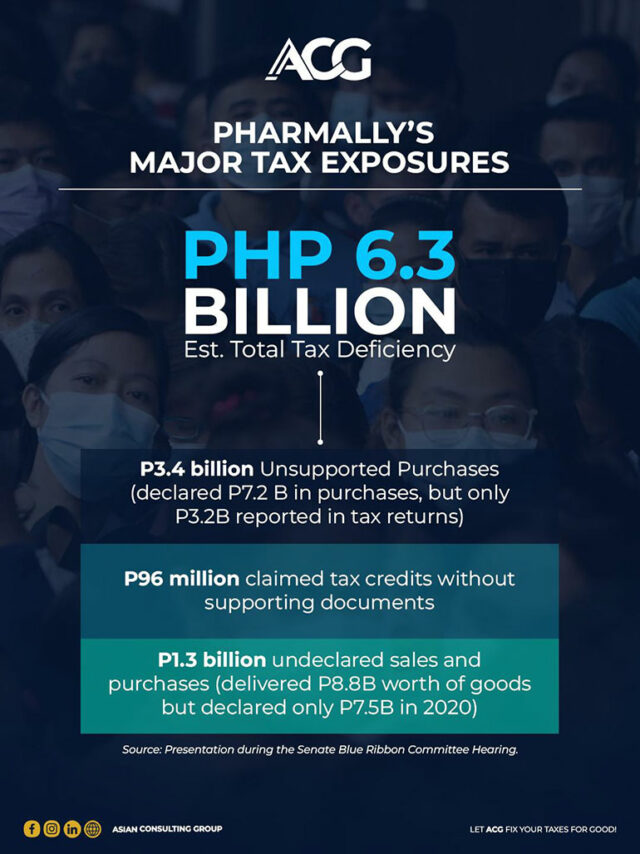
The recent push by the Office of the Ombudsman to file graft charges against those involved in the Pharmally case has brought renewed attention to the alleged significant lapses in financial oversight and governance associated with the case. A newly registered company with P625,000 in capital secured over P11 billion in government contracts, raising concerns about compliance and governance. Public findings from the Senate Blue Ribbon Committee revealed alleged discrepancies, including P6.3 billion in tax deficiencies and P3.4 billion in undeclared purchases. These discrepancies highlight a failure of due diligence that compromises financial transparency and undermines public trust.

Among the most troubling issues were material misstatements and unsubstantiated expenses that distorted tax reporting, along with executives signing erroneous tax returns without full knowledge of the content or implications. This lack of accountability underscores the need for businesses to ensure that financial statements are properly audited, tax returns are accurate, and responsible officers are fully aware of their management duties. Ignoring these obligations exposes businesses to significant financial and legal risks.

The Pharmally case serves as a powerful reminder for companies to strengthen financial governance and prioritize tax compliance. Mon Abrea, founder and CEO of the Asian Consulting Group (ACG), has emphasized the importance of robust compliance measures to avoid these pitfalls. ACG offers expert tax solutions to help businesses resolve tax issues effectively, ensuring taxes are never a burden. Consult ACG!


Spotlight is BusinessWorld’s sponsored section that allows advertisers to amplify their brand and connect with BusinessWorld’s audience by publishing their stories on the BusinessWorld Web site. For more information, send an email to online@bworldonline.com.

Join us on Viber at https://bit.ly/3hv6bLA to get more updates and subscribe to BusinessWorld’s titles and get exclusive content through www.bworld-x.com.

Microsoft relaxes data center grip on OpenAI amid $500 bln joint venture

WIKIMEDIA.ORG

Microsoft on Tuesday said it has changed some key terms of a deal with OpenAI after the ChatGPT creator announced a joint venture with Oracle and Japan’s SoftBank Group to build up to $500 billion of new AI data centers in the United States.

President Donald Trump gathered the leaders of the “Stargate” effort at the White House on Tuesday to announce the deal, saying it was intended to help keep the United States ahead of China and other rivals in the global AI race, using chips from Nvidia.

Since 2019, Microsoft has had arrangements with OpenAI that gave the Redmond, Washington-based company the exclusive right to build new computing infrastructure for OpenAI. Microsoft, in a blog post, said it has “approved OpenAI’s ability to build additional capacity, primarily for research and training of models.”

That opened the door for OpenAI to work with Oracle.

A person familiar with the deal said that Stargate is a joint venture structured as new entity in which OpenAI has an equity stake, governance rights and operational control. It will have a separate board appointed by the founding members and its own CEO, this person said. The venture will also have other investors including United Arab Emirates firm MGX.

Microsoft, along with Nvidia NVDA.O and Arm O9Ty.F, will be a “technology partner” in the new venture, but is not listed as an equity funder. SoftBank CEO Masayoshi Son is will be the entity’s board chairman, according to a statement from OpenAI posted on social media site X.

But Microsoft said that it still retains the exclusive right to offer OpenAI’s API – technology shorthand for application programming interface, which is the main way that software developers and business customers buy OpenAI’s services. That means Oracle will not be able to host OpenAI’s primary source of revenue.

Oracle did not immediately respond to a request for comment on Microsoft’s statements.

Microsoft said it has “revenue sharing agreements that flow both ways” with OpenAI.

“The key elements of our partnership remain in place for the duration of our contract through 2030, with our access to OpenAI’s IP, our revenue sharing arrangements and our exclusivity on OpenAI’s APIs all continuing forward,” Microsoft said.

Microsoft also said “OpenAI recently made a new, large Azure commitment that will continue to support all OpenAI products as well as training,” referring to Microsoft’s Azure cloud computing service. – Reuters

Japan hunts for dual-use goods makers to aid military expansion

 – Kyoto-based Mitsufuji got its start nearly 70 years ago as a weaver of decorative belts for kimonos. One day soon, it could be spinning high-tech fibers to shield fighter jets from electromagnetic interference.

The company, whose core business is making consumer-facing wearable gadgets, is one of dozens of small ventures that have caught the Japanese government’s eye in recent years as it looks for dual-use technologies to beef up its military capabilities.

Cultivating a home-grown defense industry was a key plank of Japan’s 43 trillion yen ($275 billion) military build-up strategy launched in 2022 to counter escalating security threats from China, Russia and nuclear-armed North Korea.

But it faces a challenge. Unlike some of its allies, Japan has no defense industry champions, such as Lockheed Martin Corp the U.S. and BAE Systems Britain, that depend on military work for almost all of their sales. Even at Mitsubishi Heavy Industries 7011.TJapan’s leading defense contractor, sales of combat aircraft, warships and other military equipment account for less than a fifth of revenue.

Nudged also by the fast-changing landscape of modern warfare, including the use of small drones in Russia’s war with Ukraine, Japan’s military – officially called the Self-Defense Forces (SDF) – decided to court smaller companies to cast a wider net for procurement.

“If we don’t pioneer on our own, we won’t be able to keep up with global trends,” former defense minister Minoru Kihara told Reuters. “Japan should invest in research and development that contributes to national security, including dual-use technologies, without fear of failure.”

In the latter part of 2023, the government began holding meetings with several companies at a time, looking to see what innovative products and technology they had on offer. Mitsufuji, which was already supplying the SDF with wrist bands that monitor heat stroke risk, attended the second such meeting.

“We don’t know what the needs are, so we basically showed them what we have,” Mitsufuji CEO Ayumu Mitera told Reuters. “It’s not that we have a desire to enter the defense business, but if there’s demand, we’re happy to make proposals.”

Using its highly conductive silver-metallized fiber, Mitsufuji produced a small-scale prototype of a hangar tent that could shield military aircraft and other equipment from electromagnetic interference.

In some cases, the meetings have led to deals. The Air Self-Defense Force (ASDF) last year procured powered exoskeleton “muscle suits” from Tokyo startup Innophys and introduced cutting-edge wind measuring instruments from Kyoto’s Metro Weather on a trial basis.

“I don’t think matching dual-use technologies with national security can be achieved unless the government plays an active role and does not simply wait for companies to come to it,” said former vice defense minister Kazuhisa Shimada.


BUILDING BRIDGES

The ASDF has been particularly active in approaching companies, meeting about 300 firms for its space operations since late 2023 in downtown Tokyo.

“Times have changed,” said ASDF Colonel Ryoji Kondo, a former F-2 fighter jet pilot. “We really need to get help from startups.”

His team is in talks towards a deal with startups CollaboGate Japan and Wyvern.

The government has also helped smaller firms set up booths at international defense exhibitions to tout their wares under the Japanese flag and drum up interest overseas.

Mitsufuji’s Mitera said his company had displayed at several such exhibitions, including the Vietnam Defense Expo last month. The company has secured deals to supply its high-tech fibre to companies in Asia and Europe, he said.

Building those bridges could also fortify Japan’s security bonds with friendly nations, Kihara said.

“Even if it doesn’t go as far as using the same technology or equipment, using the same parts will strengthen cooperation between nations, in terms of security,” he said. – Reuters

Trump announces private-sector $500 billion investment in AI infrastructure

An artificial intelligence (AI) sign is seen in this illustration taken on June 23, 2023. — REUTERS/DADO RUVIC/ILLUSTRATION

U.S. President Donald Trump on Tuesday announced private sector investment of up to $500 billion to fund infrastructure for artificial intelligence, aiming to outpace rival nations in the business-critical technology.

Trump said that ChatGPT’s creator OpenAI, SoftBank and Oracle planning a joint venture called Stargate, which he said will build data centers and create more than 100,000 jobs in the United States.

These companies, along with other equity backers of Stargate, have committed $100 billion for immediate deployment, with the remaining investment expected to occur over the next four years.

SoftBank CEO Masayoshi Son, OpenAI CEO Sam Altman and Oracle Chairman Larry Ellison joined Trump at the White House for the launch.

The first of the project’s data centers are already under construction in Texas, Ellison said at the press conference. Twenty will be built, half a million square feet each, he said. The project could power AI that analyzes electronic health records and helps doctors care for their patients, Ellison said.

The executives gave Trump credit for the news. “We wouldn’t have decided to do this,” Son told Trump, “unless you won.”

“For AGI to get built here,” said Altman, referring to more powerful technology called artificial general intelligence, “we wouldn’t be able to do this without you, Mr. President.”

It was not immediately clear whether the announcement was an update to a previously reported venture.

In March 2024, The Information, a technology news website, reported OpenAI and Microsoft were working on plans for a $100 billion data center project that would include an artificial intelligence supercomputer also called “Stargate” set to launch in 2028.


POWER-HUNGRY DATA CENTERS

The announcement on Trump’s second day in office follows the rolling back of former President Joe Biden’s executive order on AI, that was intended to reduce the risks that AI poses to consumers, workers and national security.

AI requires enormous computing power, pushing demand for specialized data centers that enable tech companies to link thousands of chips together in clusters.

“They have to produce a lot of electricity, and we’ll make it possible for them to get that production done very easily at their own plants if they want,” Trump said.

As U.S. power consumption rises from AI data centers and the electrification of buildings and transportation, about half of the country is at increased risk of power supply shortfalls in the next decade, the North American Electric Reliability Corporation said in December.

As a candidate in 2016, Trump promised to push a $1 trillion infrastructure bill through Congress but did not. He talked about the topic often during his first term as president from 2017 to 2021, but never delivered on a large investment, and “Infrastructure Week” became a punchline.

Oracle shares were up 7% on initial report of the project earlier in the day. Nvidia, Arm Holdings and Dell shares also rose.

Investment in AI has surged since OpenAI launched ChatGPT in 2022, as companies across sectors have sought to integrate artificial intelligence into their products and services. – Reuters

UK’s $60 billion maintenance backlog strains public services, spending watchdog says

REUTERS

 – At least 49 billion pounds ($60 billion) of maintenance work at schools, hospitals and prisons in Britain has yet to be carried out, a spending watchdog said on Wednesday, highlighting the real world impact of squeezed public finances.

Finance minister Rachel Reeves is facing growing pressure to cut spending, boxed in by fiscal rules limiting government borrowing and a reluctance to raise taxes any higher than she did in October.

However, the National Audit Office (NAO), which compiled the report, said deferring maintenance could lead to higher costs further down the line.

“Allowing large maintenance backlogs to build up at the buildings used to deliver essential public services is a false economy,” Gareth Davies, head of the NAO, said in a statement.

The Labor government said this was the result of “long-term underinvestment” by the previous administration. It was elected last July after 14 years of Conservative Party rule.

A Cabinet Office spokesperson told Reuters the government is taking immediate action to remedy the state of disrepair found across the public estate and is “already investing billions of pounds to deliver critical repairs and rebuild our public services.”

The NAO’s report on maintaining public service facilities said, however, that the true cost of remediation could be substantially higher, noting that official data on the condition of properties is incomplete and out of date.

Conservative lawmaker and chair of the Public Accounts Committee Geoffrey Clifton-Brown called on the government to “urgently break the cycle of short-term thinking, dither and delay”.

The report showed that the Ministry of Defense had the largest maintenance backlog, with an estimated 15.3 billion pounds. Schools and hospitals followed, each with a backlog of 13.8 billion pounds. – Reuters

Trump says he is open to Musk buying TikTok if Tesla CEO wants to do so

ALEXANDER SHATOV-UNSPLASH

 – U.S. President Donald Trump said on Tuesday he was open to billionaire Elon Musk buying social media app TikTok if the Tesla CEO wanted to do so.


WHY IT’S IMPORTANT

The short video app used by 170 million Americans was taken offline temporarily for users shortly before a law that said it must be sold by its Chinese owner ByteDance on national security grounds, or be banned, took effect on Sunday.

Bloomberg News reported last week that Chinese officials were in preliminary talks about a potential option to sell TikTok’s operations in the United States to Musk, though the company has denied that.

Mr. Trump on Monday signed an executive order seeking to delay by 75 days the enforcement of the law that was put in place after U.S. officials warned that under Chinese parent company ByteDance, there was a risk of Americans’ data being misused.

TikTok remained unavailable to download on Apple and Android devices in the United States on Tuesday afternoon.


KEY QUOTES

“I would be, if he wanted to buy it,” Mr. Trump told reporters on Tuesday when asked if he was open to Musk buying the platform.

“I have met with owners of TikTok, the big owners,” Mr. Trump added. “So, what I am thinking about saying to somebody is ‘buy it and give half to the United States of America.'”


CONTEXT

Free speech advocates have opposed TikTok’s ban under a law passed by the U.S. Congress and signed by former President Joe Biden.

The company says U.S. officials misstated its ties to China, arguing its content recommendation engine and user data are stored in the United States on cloud servers operated by Oracle, while content moderation decisions that affect American users are also made in the U.S.

Mr. Musk, who spent more than $250 million to help Mr. Trump win November’s presidential election, has said there was an “unbalanced” business environment between the U.S. and China.

“I have been against a TikTok ban for a long time, because it goes against freedom of speech. That said, the current situation where TikTok is allowed to operate in America, but X is not allowed to operate in China is unbalanced,” Mr. Musk, who owns social media platform X, said over the weekend. – Reuters

Global airlines in talks with Brazil’s Gol as part of bankruptcy exit, report says

STOCK PHOTO | Image from Pixabay

 – Major global airlines are in talks with Gol to invest in the Brazilian carrier, which is undergoing Chapter 11 bankruptcy proceedings in the U.S., local newspaper Valor Economico reported on Tuesday, citing sources.

The report mentions U.S.-based companies United Airlines and American Airlines, as well as European firms Air France-KLM, British Airways parent International Airlines Group ICAG.L and Germany’s Lufthansa Group among the carriers in talks with Gol.

Valor Economico said the investments from global airlines would be made as part of Gol’s exit from Chapter 11.

The Brazilian airline, which last week announced a memorandum of understanding to explore a merger with local rival Azul, has been in Chapter 11 bankruptcy proceedings since early 2024.

Gol’s potential merger with Azul would create a dominant airline in the Brazil domestic market, surpassing LATAM Airlines’ local unit.

The international airlines would be interested in a deal with Gol ahead of the proposed merger with Azul to strengthen their international presence at some of Brazil’s busiest airports, Valor Economico reported.

Gol and Air France-KLM declined to comment on the report. American Airlines said it was aware of Gol’s ongoing restructuring process, noting it already has a commercial agreement with the Brazilian airline.

United Airlines, International Airlines Group and Lufthansa did not immediately respond to requests for comment. – Reuters

ADVERTISEMENT
ADVERTISEMENT