Home Blog Page 207

UBS sees Philippine growth at low end of 5%-6% goal this year
PHILSTAR FILE PHOTO

By Katherine K. Chan, Reporter

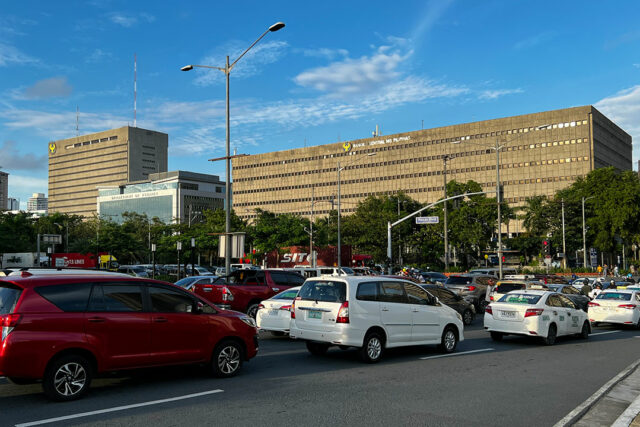
PHILIPPINE economic growth may land at the bottom of the government’s 5% to 6% goal this year as investment slowly recovers from last year’s flood control scandal, UBS Investment Bank Global Research said.

“Growth is near its trough, and we expect quarterly sequential momentum to strengthen to 1.4% over the next two quarters, and GDP (gross domestic product) growth to be 5% in 2026,” it said in a note on Wednesday.

That would top last year’s 4.4% growth, which was weighed down by a corruption scandal that hit investments, household spending and government outlays.

It would also mark a return to the government’s target after three consecutive years of misses. UBS expects public investment to rebound early this year before normalizing toward yearend.

“In our revised forecasts, we assume a gradual and backloaded recovery in public investment, starting with a small uptick in the first quarter of 2026, with spending returning to second-quarter 2025 levels by the fourth quarter of 2026,” it added.

Gross capital formation, the investment component of GDP, fell 2.1% last year after a 10.9% drop in the fourth quarter, the biggest in more than four years.

Economic managers said corruption allegations from last year’s flood mess undermined business and investor confidence.

Across Southeast Asia, UBS expects the six major economies — Indonesia, Malaysia, the Philippines, Singapore, Thailand and Vietnam — to expand by about 4.9% this year.

“The region continues to benefit from deep integration into global manufacturing value chains, supported by a sizable domestic market,” Grace Lim, senior ASEAN (Association of Southeast Asian Nations) and Asia economist at UBS Investment Bank Global Research, said in a statement.

“Conditions for growth remain in place, with household consumption driving momentum in Indonesia, an increase in private investment under way in Thailand and the Philippines, and resilient tech related export strengths in Singapore and Malaysia,” she added.

Remittances, a key source of foreign inflows, could help cushion the economy, but analysts warn that global shocks may pose risks.

The Middle East war is likely to weigh on growth, according to Metropolitan Bank & Trust Co. (Metrobank) Chief Economist Nicholas Antonio T. Mapa.

“For the economy, we’ll likely brace for weaker growth,” he said in a note. “Inflation is expected to breach the target and the central bank’s easing cycle is over.”

The peso-dollar rate is pressured higher as a bloated oil bill means more demand for dollars, he added.

The war could prompt the Bangko Sentral ng Pilipinas to hike rates, ending a nearly two-year easing cycle.

“The war in the Middle East likely means inflation will breach the target, growth will stay at 4% and the next [central bank] move is a hike and not a cut in 2026,” the Metrobank economist separately said in a post on social media platform X.

The Monetary Board last month cut the reverse repurchase rate by 25 basis points (bps) to 4.25%, the lowest since August 2022, trimming key rates by 225 bps since easing began in August 2024.

Singapore-based DBS Bank warned the Philippines might see the highest regional price pressures from oil.

“Amongst the ASEAN-6 countries, the net oil trade balance is most adverse in Thailand, Malaysia and Vietnam (as a percentage of GDP), with the pass-through to price pressures most material in Thailand and the Philippines,” DBS Senior Economist for Eurozone, India and Indonesia Radhika Rao and Senior Economist for ASEAN Chua Han Teng said in a note.

The Department of Energy has warned that oil price increases in the local market would continue as the Middle East war could last weeks.

Since January, pump prices have increased by P6.70 a liter for gasoline, P9.40 for diesel and P7.70 for kerosene.

Frontloaded issuance pushes PHL debt to P18.13 trillion

BW FILE PHOTO

By Justine Irish D. Tabile, Senior Reporter

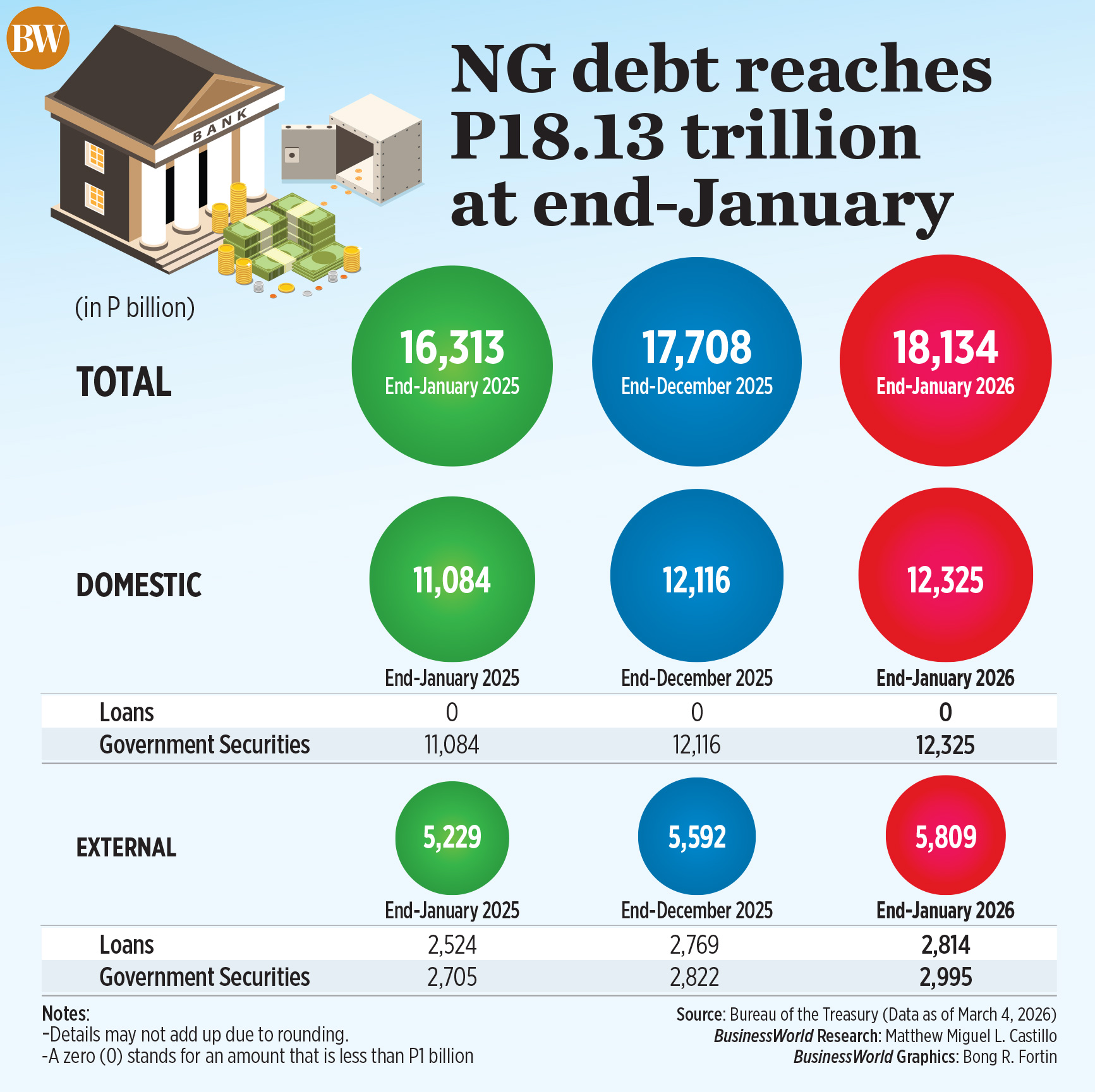
THE PHILIPPINES’ outstanding National Government (NG) debt rose to P18.13 trillion at the end of January, as the state accelerated borrowing at the start of the year to lock in funding ahead of global market volatility.

The debt stock increased by 2.41% or P426.15 billion from P17.71 trillion at end-December, according to data released by the Bureau of the Treasury (BTr) on Wednesday. Year on year, obligations jumped 11.16%.

Despite the surge, the Treasury said the country’s debt portfolio remains stable and within the Marcos administration’s P19.06-trillion projection for the year.

“This level remains sustainable amid pressing challenges in the domestic and global landscape,” the BTr said in a statement.

The month-on-month increase reflected the government’s strategy of frontloading domestic and external debt to secure concessional financing terms before global uncertainties potentially drive up interest costs. The approach gives the government flexibility in managing borrowing requirements for the rest of the year.

National Government debt refers to obligations owed to creditors, including international financial institutions, development partners, banks and global bondholders.

Domestic borrowings continued to account for the bulk of the debt stock. At end-January, 68% of the total outstanding debt was obtained locally, underscoring the government’s preference for peso-denominated funding to limit foreign-exchange risks.

Domestic debt rose 1.72% to P12.32 trillion from a month earlier. Compared with January last year, domestic obligations increased 11.19%. The Treasury attributed the monthly rise to the net issuance of government securities worth P208.05 billion.

“The net incurrence of government securities… reflects the NG’s commitment to prioritize domestic sources of funding,” the BTr said, noting that this strategy provides stable investment instruments for local investors while reducing exposure to exchange rate swings. Domestic debt remains within the P13.28-trillion full-year projection.

External debt climbed 3.89% to P5.81 trillion from December, slightly exceeding the P5.78-trillion program. Year on year, foreign obligations rose 11.1%.

The Treasury said P191.02 billion of the P217.63-billion monthly increase came from the issuance of global bonds and net availments of official development assistance from multilateral and bilateral partners.

The peso’s depreciation against major currencies added P26.61 billion through upward revaluation of foreign currency-denominated debt.

Foreign obligations consist mainly of P3 trillion in global bonds and P2.81 trillion in loans. External debt securities include dollar, euro, Islamic, yen and peso-denominated global bonds.

The Treasury said earlier global bond issuances highlighted sustained investor confidence in the country’s credit standing and long-term growth prospects.

Meanwhile, National Government-guaranteed obligations inched up 0.15% or P510 million to P345.08 billion at end-January, largely due to currency valuation adjustments on foreign currency guarantees. On an annual basis, guaranteed debt declined 0.34%.

Michael L. Ricafort, chief economist at Rizal Commercial Banking Corp., said the debt stock would have been higher if not for slower disbursements, particularly for infrastructure projects since late 2025. He added that lower interest rates could help temper debt service costs, though foreign exchange movements remain a key risk as these can inflate the peso value of external liabilities.

Reyes Tacandong & Co. Senior Adviser Jonathan L. Ravelas said the P18-trillion level might sound alarming, but the more significant risks stem from weaker economic growth or higher borrowing costs. 

“For now, Philippine debt remains manageable because growth is holding up and debt servicing is still affordable,” he said in a Viber message.

He added that debt is likely to continue rising in the coming months due to infrastructure spending and refinancing needs, but fiscal discipline would be crucial.

The government should “borrow wisely, spend on growth and strengthen revenues” to keep debt sustainable, Mr. Ravelas said.

BSP wants banks to use server-side biometrics to combat financial fraud

PIXABAY

THE Bangko Sentral ng Pilipinas (BSP) wants to require banks to enforce server-side biometric authentication to verify users and secure customer-initiated transactions amid rising financial fraud risks.

In a draft circular, the central bank said the system would cover high-risk transactions and major account changes in digital financial applications.

The move aligns with a circular issued last year under the Anti-Financial Account Scamming Act, which requires BSP-supervised institutions to deploy robust fraud management and customer authentication systems.

These measures include automated real-time monitoring, transaction velocity checks, geolocation tracking and blacklist screening to flag disputed, suspicious or fraudulent transactions.

“Server-side biometric authentication is considered a strong and acceptable authentication mechanism for high-risk transactions and critical account changes in electronic financial applications, provided that the risks associated with its implementation are adequately addressed and sound practices or minimum control requirements are adopted,” according to a copy of the draft circular.

The BSP added that adopting biometric authentication would factor into evaluations of whether banks maintain adequate risk management systems and could influence liability under the law.

Once implemented, institutions are expected to phase out interceptable methods like one-time pins (OTP) via text or e-mail, though OTPs may still verify a registered mobile number linked to transactions.

The draft also orders banks to secure all collected, stored and processed data, implement robust authentication controls, and ensure human oversight of flagged cases to strengthen audit and compliance.

The central bank noted that while server-side biometrics enhance verification, they introduce heightened security, operational and privacy risks.

“BSP-supervised financial institutions remain responsible for ensuring that their authentication frameworks are commensurate with their risk profile,” it said.

It added that they could still use stronger or equivalent authentication methods and follow existing security rules to protect customers from scams and digital fraud.

Under previous guidance, lenders were given until June 25 to upgrade fraud management systems and six months to revise risk management frameworks.

The regulation targets banks with complex electronic products handling high transaction volumes, specifically those averaging at least P75 million in monthly online transactions over six months.

Central bank officials confirmed earlier this year that the deadline remains firm despite requests from several banks for extensions. — Katherine K. Chan

Why the ASUS ExpertBook B5 is the ultimate business laptop for Philippine enterprises in 2026

The Philippine business landscape has shifted radically over the past decade. Digital transformation has evolved from a corporate buzzword into a baseline for survival, propelling us into a hyper-mobile, “always-on” economy. Today, CEOs, Business Heads, and AVPs are no longer tethered to a desk; they lead from boardroom huddles, NAIA airport lounges, and remote sites — often all in a single day.

That’s why a decision maker’s laptop is now more than a portable device; it is a strategic powerhouse. The ASUS ExpertBook B5 emerges as the smart, dedicated enterprise choice, delivering the continuity and competitive edge required to lead in 2026.

Redefining Productivity: Your New AI Executive Secretary

For years, executives relied on secretaries for meeting notes. In 2026, AI PCs flip the script. Microsoft’s WorkLab reports AI tools like Copilot lift sales revenue 9.4%, close rates 20%, and legal outputs 32% faster — freeing humans for big-picture work.

Why task your executive assistant with the tedious job of manual note-taking and translation when the ASUS AI ExpertMeet exclusive to ASUS ExpertBook laptops like ExpertBook B5 can handle it with pinpoint accuracy?

By leveraging AI for work, the ASUS ExpertBook B5 acts as a digital chief of staff. It provides real-time transcription, automated meeting summaries, and instant translation during global calls. This allows your team to focus on high-value strategic tasks rather than administrative backlogs. Let the AI handle the notes; let your people handle the innovation. It is the smartest way to optimize your human capital while staying ahead of the competition.

Process Data at the Speed of Thought with Intel® Core™ Ultra Processors and Windows 11 Pro

To lead a company, you need a work laptop that can process data at the speed of thought. The ASUS ExpertBook B5 is powered by the Intel® Core™ Ultra processor, an architecture engineered specifically for the intensive demands of AI-driven workflows. When paired with Windows 11 Pro, this becomes the best business laptop for handling complex financial dashboards, real-time analytics, and heavy multitasking. It delivers the high-performance overhead required for a seamless experience, ensuring your strategic momentum is never hindered by your device.

Worry-Free Data Security with ASUS ExpertGuardian

Executives handle the most sensitive data in the company — from confidential payroll to proprietary expansion plans. Protecting this information is no longer just an IT task; it’s a leadership responsibility. The ExpertBook B5 is built with ASUS ExpertGuardian to safeguard your data regardless of where you work.

Whether you are connecting to a public network in an airport lounge or working from a remote site, biometric authentication, and a physical webcam shield ensure your data remains impenetrable. With the ASUS ExpertBook B5, you can lead with the confidence that your “mobile office” is as secure as a bank vault.

Built for Worry-Free Business, a Partnership Beyond the Purchase
What truly separates a standard device from a world-class enterprise laptop is the support system behind it. ASUS Business understands that for Philippine businesses — from logistics to fintech, downtime is a direct hit to the bottom line. Our business support includes Next-Business-Day On-Site Service and warranty coverage of 3 years, extendable up to 5 years. With over 100+ service centers nationwide, we ensure that your business stays operational.

Ultimately, the ASUS ExpertBook B5 isn’t just an expense; it’s a competitive edge. It is the laptop for the leader who treats technology as a partner in success, ensuring that their organization is not just participating in the market, but defining it.

Empower your leadership today. Discover how you can leverage your business with ASUS ExpertBook B5 that’s Trusted by IT Experts. Built for Worry-Free Business. Equip your business with the ultimate business laptop this 2026. Inquire at the ASUS Business now.


Spotlight is BusinessWorld’s sponsored section that allows advertisers to amplify their brand and connect with BusinessWorld’s audience by publishing their stories on the BusinessWorld Web site. For more information, send an email to online@bworldonline.com.

Join us on Viber at https://bit.ly/3hv6bLA to get more updates and subscribe to BusinessWorld’s titles and get exclusive content through www.bworld-x.com.

ICTSI income rises 23% to $1.05B on cargo growth

ICTSI.COM

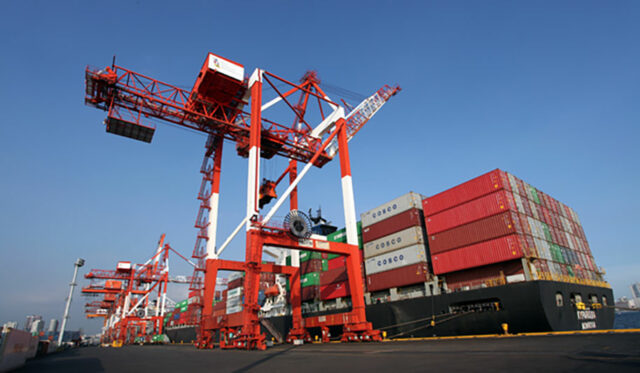
RAZON-LED International Container Terminal Services, Inc. (ICTSI) posted a 23% increase in attributable net income for 2025, reaching $1.05 billion on the back of higher cargo volumes across its port operations.

“ICTSI delivered another year of strong performance in 2025, marked by double-digit growth across volume, revenues, EBITDA (earnings before interest, taxes, depreciation, and amortization), and net income,” ICTSI Chairman and President Enrique K. Razon, Jr. said in a statement on Wednesday.

For 2025, the port operator’s gross revenue rose 17.88% to $3.23 billion from $2.74 billion in the comparable period a year earlier.

Total expenses for the period reached $1.55 billion, up 8.39% from $1.43 billion in 2024.

“Our focus on operational efficiency, targeted capital allocation, and prudent financial management supported continued margin expansion and strong cash generation. As we execute on strategic opportunities across our network and invest in new projects, we remain committed to maintaining the financial discipline and selective approach that have underpinned our track record of value creation,” Mr. Razon said.

ICTSI said that, without factoring in the impact of non-recurring income and charges — including new operations in Iloilo, Philippines; the discontinuation of operations in Jakarta in 2024; and new operations in Batam, Indonesia, last year — its attributable net income would have risen by 26%.

For 2025, Asia remained ICTSI’s growth driver, accounting for 41%, or $1.34 billion, of its total revenues for the year.

Port operations in the Americas generated $1.31 billion, while Europe, the Middle East, and Africa (EMEA) operations contributed $590.55 million.

ICTSI said revenues from Asia were mainly driven by volume growth, favorable container mix, tariff adjustments, and higher revenues from ancillary services. Most of the Philippine terminals contributed to the growth for the period, the company said.

In 2025, ICTSI handled a total of 14.50 million twenty-foot equivalent units (TEUs), marking an 11% increase from the 13.07 million TEUs in 2024.

Asian ports handled 7.73 million TEUs, up 8.8% from 7.11 million TEUs a year earlier, while the Americas and EMEA handled 4.16 million TEUs and 2.61 million TEUs, respectively.

Capital expenditures, excluding capitalized borrowing costs, reached $650.44 million, ICTSI said, adding that funds were mainly allocated to ongoing expansions in Mexico, the Philippines, the Democratic Republic of Congo, and Brazil.

For 2026, ICTSI said it is setting aside an estimated $740 million, mainly for the phase 3B expansion at Contecon Manzanillo S.A. in Mexico; expansions at Manila International Container Terminal, Mindanao Container Terminal, and South Luzon Container Terminal in the Philippines; upgrades at ICTSI Rio in Brazil; as well as equipment acquisitions, upgrades, and maintenance.

ICTSI is a global port operator. It owns and operates ports in 20 countries across Asia, the Americas, and EMEA.

At the local bourse on Wednesday, shares in ICTSI gained P6, or 0.85%, to end at P715 each. — Ashley Erika O. Jose

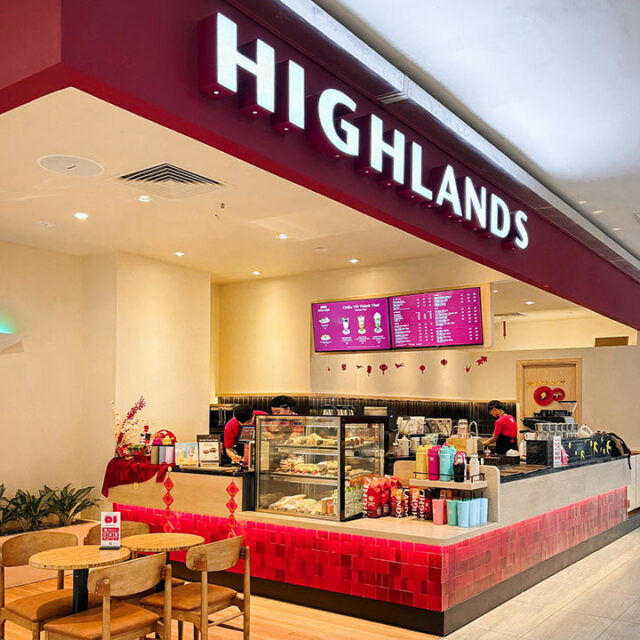
JFC’s Highlands Coffee eyes Vietnam IPO by 2027

PHOTO FROM the Facebook page of Highlands Coffee Service Joint Stock Co., operator of the Highlands Coffee chain in Vietnam. — FACEBOOK.COM/HIGHLANDSCOFFEEVIETNAM

By Alexandria Grace C. Magno, Reporter

JOLLIBEE FOODS CORP. (JFC) said its subsidiary Highlands Coffee’s board is evaluating a standalone initial public offering (IPO) and listing in Vietnam, with a target completion by the first quarter of 2027.

The company said in a disclosure on Wednesday that Highlands Coffee’s proposed IPO will provide access to capital markets to fund growth, boost its profile, and allow better focus on strategy and operations as Vietnam’s leading coffee brand in Southeast Asia.

“Highlands Coffee stands out as one of the most attractive growth and value creation stories within the company’s portfolio, reflecting both strategic M&A success and post-acquisition organic expansion, achieving clear market leadership as the undisputed #1 coffee chain in Vietnam,” JFC said.

Since JFC’s investment in 2012, Highlands Coffee has expanded from 56 stores to nearly 1,000.

The company noted that Vietnam’s equity market has recorded some of the fastest liquidity growth in the region, fueled by rising retail investor participation. The country targets roughly 9 million retail investor accounts by 2025 and 11 million by 2030, signaling deeper market engagement.

“This underscores the market’s expanding depth and relevance for consumer‑focused growth companies. The proposed IPO creates a platform for exponential shareholders’ value creation in a very dynamic capital market,” it added.

Highlands Coffee has hired international and local advisors and begun defining the structure, process, and timing for a potential IPO.

The transaction depends on market conditions, completion of diligence and internal restructuring, and obtaining all required regulatory and legal approvals in relevant jurisdictions.

“A Vietnam listing for Highlands Coffee enhances valuation clarity for JFC, potentially supporting a share price re-rating and unlocking additional value,” AP Securities, Inc. Equity Research Analyst Shawn Ray R. Atienza said in a Viber message.

“We think this simply suggests that the group wants to get into the deeper capital pools and investor appetite that other exchanges can offer,” Unicapital Securities Equity Research Analyst Jeri R. Alfonso said in a separate Viber message.

In 2023, Jollibee Group Chief Financial and Risk Officer and Jollibee Group International Chief Executive Officer (CEO) Richard Shin said Highlands Coffee could be listed separately on the stock market.

However, he emphasized that the IPO would only proceed at the appropriate valuation and timing that would benefit shareholders.

In 2016, JFC, through its subsidiary JSF Investments Pte. Ltd., partnered with Viet Thai International Joint Stock Co. with the aim of listing SuperFoods on the Vietnam Stock Exchange by 2019. The listing did not push through following JFC’s $350-million acquisition of The Coffee Bean & Tea Leaf that same year.

In June last year, JFC said the planned IPO of its Vietnamese coffee brand, Highlands Coffee, remained under consideration, though not as a standalone entity.

At the local bourse on Wednesday, JFC shares fell 3.07% to P195.60 apiece.

Watami (and The Bistro Group) jazz things up

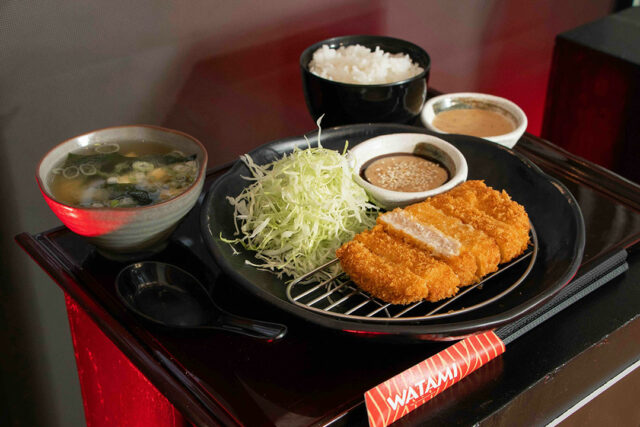
PORK CUTLET with refilable cabbage, rice and miso soup.

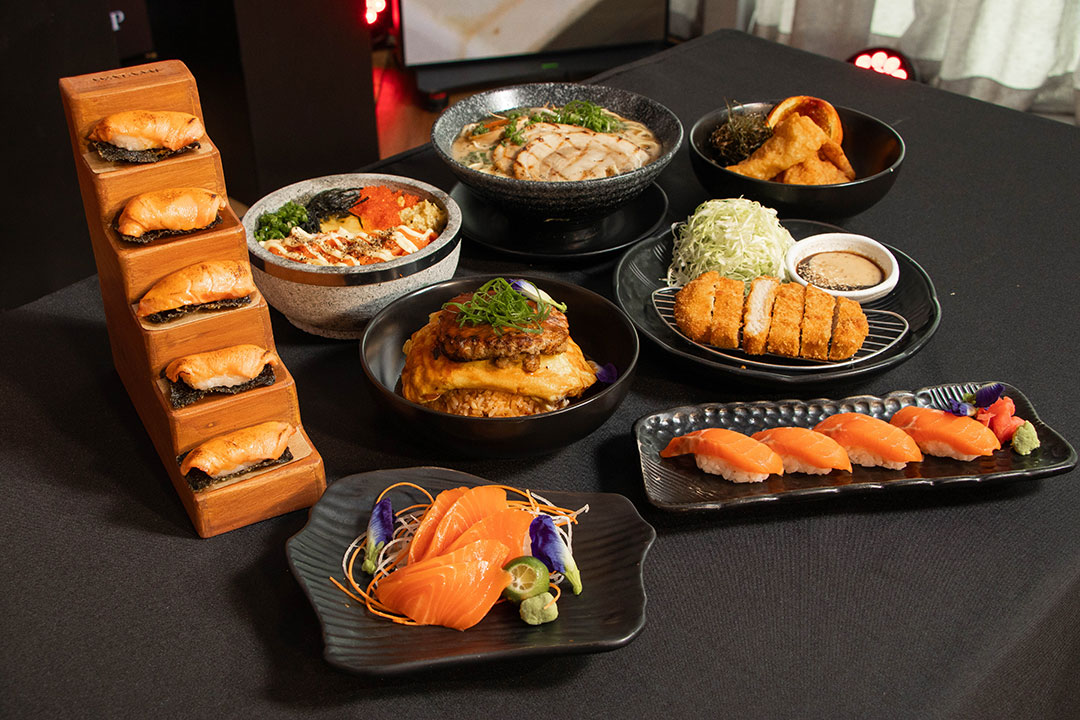
WHEN WE visited Watami at S Maison for a tasting on Feb. 27, there wasn’t anything that we haven’t tried before — we already liked the ramen, and the non-traditional sushi (California rolls and dragon rolls are on the menu), and the tonkatsu. What they were introducing was a new way of presenting things.

“We have not changed our core classics. What we did with some of these dishes — because they’re also bestsellers — is we just elevated the way we present it,” said Lisa Ronquillo-Along, The Bistro Group’s chief marketing officer, of the dishes at the Japanese-Casual franchise from Japan. Watami has over 700 branches in the Asia-Pacific region, while in the Philippines, according to Ms. Ronquillo-Along’s count, they have over 20 branches nationwide.

“That’s how they experience food. It’s not just the taste, but the look,” she said.

This is in keeping with a new policy to polish their dining spaces (we heard the same explanation at two other Bistro Group offerings). That ties up with the younger millennial and Gen Z predilection for documenting their dining experiences and posting it on social media.

“There’s been a dilution of the segment. We see the younger age group, they are very strong in the dining segment scene.” She pointed at a change in this segment’s behavior: they no longer scrimp on dining out. “Now, the food experience is important to them,” she said. “We don’t want us to be not relevant to this market.”

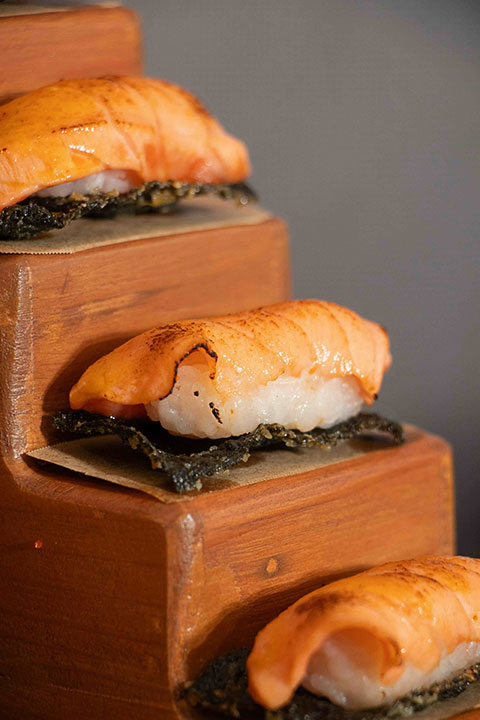
Still, Watami’s Japanese chef Masaaki Ishikawa said that they’re still concentrating on taste. While there weren’t too many new things to try (save perhaps for seeing sushi served on a miniature staircase), they’re planning to execute seasonal and quarterly items to match with Japan’s four seasons.

He’s also proud of one particular item: “Please check the ramen broth. Our broth is very good,” he said. The broth, according to him, had to be simmered for 20 hours (equivalent to two working days). That imparts a lot of bone-derived gelatin and collagen into the soup: “Very creamy.”

NEW DIGS
Ms. Ronquillo-Along talked about The Bistro Group’s expansion plans, saying “We’ve been aggressive since 2022.” They’re laying out bigger plans to expand outside Metro Manila, with locations in Iloilo, La Union, and Bacolod. They’re prioritizing their older brands first (TGI Friday’s for example, which has been here since the 1990s). In total, they’re targeting to open a minimum of 30 restaurants nationwide this year (with a possible maximum of 50, should conditions turn well).

Moreover, they’re exploring new directions in opening standalone restaurants, not within malls. “We’re going outside our comfort zone, the mall,” she said. Though “’yun pa rin naman ang strength (that’s still our strength).”

“People now are not limited to impulse dining,” she said, meaning people no longer eat at whatever happens to be there; but make a conscious decision on where to eat. “It’s easier for them to go,” she added, meaning bypassing mall parking and all other inconveniences. “You’re not confined with high mall rents also.

“We shouldn’t close our doors on that opportunity,” she said. — Joseph L. Garcia

Meralco to review fuel mix as Middle East tensions risk electricity costs

MERALCO.COM.PH

POWER DISTRIBUTOR Manila Electric Co. (Meralco) said on Wednesday it will review its fuel mix, including liquefied natural gas, coal, and diesel, as shifts in global fuel prices driven by the Middle East conflict could affect electricity costs.

“We want to ensure adequate supply of power and manage price volatility as responsibly as possible,” Chairman Manuel V. Pangilinan said in a post on X.

“[I] have made it clear to the team that we must help protect consumers as cost of goods rises globally,” he added.

He also urged households and businesses to be mindful of electricity consumption, noting that “we import much of the fuel used to generate power — we can all help to have enough power to get through the next few weeks if we conserve power.”

While Meralco does not source oil for its power supply requirements, the company warned of a potential impact of the Middle East conflict on electricity rates due to upward inflationary pressure.

Lawrence S. Fernandez, vice-president and head of utility economics at Meralco, said that constraints on oil may also drive coal and gas prices higher, which make up the company’s supply requirements.

“That’s one of the impacts we’re anticipating on global commodity prices because of the situation in the Middle East,” he said.

Currently, gas accounts for 60% of Meralco’s power supply requirements, followed by coal at 20-25%, and renewable energy at 10%. The remainder is sourced from the country’s electricity spot market.

Mr. Fernandez said that energy prices will depend on how long the tensions persist.

The Meralco official also noted that the current situation would not affect the March billing period.

“The earliest we may see an effect is for April. But again, this would depend on how long this situation will persist. So, we’re hoping it will normalize as soon as possible,” Mr. Fernandez said.

On the supply side, he assured that the company has adequate fuel and that consumers will continue to have electricity in the summer months.

“I’d like to assure everyone that we have our supply requirements adequately covered. We will make sure that we will be able to provide electricity to all our customers and that we will continuously support remote and ensure that we in Meralco will continuously push energy efficiency and energy saving practices in support of the government’s call as well,” Meralco Spokesperson Joe R. Zaldarriaga said.

Last month, Meralco rates increased by P0.2226 per kilowatt-hour (kWh) to P13.1734 per kWh this month from P12.9508 per kWh in January, mainly due to higher transmission charges.

Meralco is the country’s largest private electric distribution utility, serving over 8.1 million customers in Metro Manila and surrounding provinces, including Bulacan, Cavite, Rizal, and parts of Laguna, Batangas, Pampanga, and Quezon.

Meralco’s controlling shareholder, Beacon Electric Asset Holdings, Inc., is partly owned by PLDT Inc. Hastings Holdings, Inc., a unit of PLDT Beneficial Trust Fund subsidiary MediaQuest Holdings, Inc., has an interest in BusinessWorld through the Philippine Star Group, which it controls. — Sheldeen Joy Talavera

Weddings are in full swing at the Makati Shang

SHANGRI-LA.COM

(But there are still things to do at the hotel)

THE Makati Shangri-La held a lunch on Feb. 26 to show off what they can do for their wedding crowd in matters of food.

Lunch began with a tofu pudding topped with bonito dashi jelly, then followed up by a similarly light fish soup with a green dumpling at the center. Pomfret bones were chopped up and simmered for the stock, while the fish’s flesh was supplemented with shrimp and pork to fill the dumpling. This was finished with threads of egg white and topped with kaffir lime and ginger. The main course was a bit heavier, with Australian beef cheeks marinated in Shiraz overnight then braised. Dessert swung back to lightness with a spongy Hokkaido cheesecake with a strawberry sauce.

As one would notice, this lunch menu displayed multiple cuisines spanning the globe. Nina Besacola, director of sales and marketing for the hotel, said it’s part of the experience. “It’s always customized,” she said about the wedding menus they have been presenting to clients. “It can be a mix of different cuisines.”

She also spoke about the capabilities of the hotel to host big events, opening venues like their spa, the grand staircase, and even their gardens and tennis courts for shoots and events.

These customized menus are a sign of things to come for the hotel. In 2021, they closed down during the pandemic, but reopened in 2023. “We’re getting there, although admittedly, we started slow in 2023,” said Ms. Besacola.

For example, the hotel used to have 696 rooms in total, but now, it works on a partially opened status, with about 517 rooms. No matter — they’re planning to open more rooms to accommodate the Association of Southeast Asian Nations delegates arriving this year. “We were forced to open more rooms because of the demand,” she said. 

The function rooms, she said, are all open, but they are going to mix things up at the restaurants. Its Chinese restaurant, Shang Palace, will get a new chef, while the Japanese restaurant, Inagiku will see a rebrand and a new name.

Ms. Besacola remains optimistic about their events. “We’re getting a lot of local and international events,” she said, adding that they’ve been hosting several embassies’ national days (their ballrooms are popular with the embassy crowd). That includes not just the 700-seat Rizal Ballroom, but also the junior ballrooms and other function rooms. “Our edge (still) is our facilities,” she said. — Joseph L. Garcia

ATI nears delisting after receiving majority of tendered shares

ASIANTERMINALS.COM.PH

ASIAN TERMINALS, INC. (ATI) is moving closer to its planned delisting after receiving sufficient shares from minority stockholders, the listed company said on Wednesday.

In a regulatory filing, ATI and Maharlika Investment Corp. (MIC) reported that preliminary tender offer results showed 177.61 million common shares were tendered, representing 9.16% of its total issued and outstanding listed shares.

ATI said the total of tendered, excluded, and other non-public shares — representing 99.29% of its issued and outstanding common stock — has surpassed the threshold required to complete the company’s voluntary delisting.

The company said the cross date of the tendered shares is scheduled for March 13, while settlement will take place on March 17.

Once the tendered shares are formally transferred to the bidder, ATI’s public float will be at 0.74%, while the combined tendered shares, excluded shares, and other non-public shares will exceed the voluntary delisting threshold of 95%.

“Accordingly, the bidders anticipate the voluntary delisting of ATI with its share trading being suspended from 13 March 2026 upon crossing of tendered shares, in accordance with voluntary delisting procedures of the PSE (Philippine Stock Exchange) and all other applicable regulatory requirements,” ATI said.

ATI is scheduled to exit the PSE on April 3, following board and shareholder approvals and pending completion of regulatory requirements, the company announced in February.

According to its petition for voluntary delisting, ATI and MIC are set to acquire up to 191.44 million shares at P36 apiece to obtain full ownership of ATI’s outstanding capital stock.

MIC and ATI launched a tender offer from Feb. 2 to March 3 to acquire shares from ATI’s public float shareholders, the company said, adding that the P36 offer represents a 49% premium over the one-year volume-weighted average price of P24.15 per share. 

In December last year, MIC said it planned to buy a minority stake in the Tanco-led ATI as part of its strategy to position itself in one of the country’s key trade gateways.

At the local bourse, ATI shares closed unchanged at P35 apiece. — Ashley Erika O. Jose

Seven-day term deposits fetch lower average rate

THE BANGKO SENTRAL ng Pilipinas’ (BSP) seven-day term deposits fetched a slightly lower average yield on Wednesday as the market expects that headline inflation remained within target in February despite an anticipated pickup.

The central bank’s term deposit facility (TDF) attracted a total of P106.568 billion in bids, above the P90-billion offer but below the P117.878 billion in tenders for the same offer volume a week ago.

This translated to a lower bid-to-cover ratio of 1.1841 times from the 1.3098 ratio in the previous auction.

Still, the BSP made a full P90-billion award of its offering.

Accepted yields ranged from 4.05% to 4.28%, narrower than the 4% to 4.3% band last week. With this, the average rate of the seven-day papers slipped by 0.64 basis point (bp) week on week to 4.234% from 4.2404%.

“The seven-day term deposit facility rate remained broadly stable,” the central bank said in a statement on Wednesday.

Rizal Commercial Banking Corp. Chief Economist Michael L. Ricafort said the average accepted yield for the seven-day deposits was “marginally lower… ahead of the latest inflation data (on Thursday) that is expected to pick up from 2% in January 2026, but still benign nonetheless and still within the BSP’s inflation target of 2%-4%.”

A BusinessWorld poll of 17 analysts yielded a median estimate of 2.4% for February headline inflation.

If realized, this would be the quickest clip in 13 months or since the 2.9% in January 2025 and would be faster than the 2% recorded in January and the 2.1% in the same month in 2025.

This would mark the second straight month that the consumer price index settled within the BSP’s 2%-4% annual target and be the third consecutive month of acceleration.

Still, this is close to the low end of the central bank’s 2.3%-3.1% forecast for the month.

Mr. Ricafort said oil supply disruptions due to the conflict in the Middle East raises the risk of higher local fuel prices and import costs, which would stoke inflation and narrow the BSP’s space to ease its monetary policy stance. This could also result in second-round inflation effects like higher transport fares.

“There could be some shift to safe havens until the dust settles, as a matter of prudence, to hedge various risk exposures to be on the safe side,” he said.

Last month, the Monetary Board delivered a widely expected 25-bp cut for the sixth consecutive meeting, bringing the policy rate to 4.25% to support domestic demand as the country deals with the economic fallout from a corruption scandal that has affected consumer and investor confidence.

It has now reduced benchmark borrowing costs by a total of 225 bps since it began easing in August 2024.

BSP Governor Eli M. Remolona, Jr. has said that they are open to supporting growth through monetary policy as long as easing does not cause inflation.

However, he said that they are now less certain about the policy path ahead despite a manageable inflation outlook, adding that rate cuts may not be enough to boost the economy amid lingering governance concerns.

The central bank uses the TDF and BSP bills to mop up excess liquidity in the financial system and better guide market rates towards the policy rate.

It last auctioned off both the seven-day and 14-day deposits on Oct. 29. It has not offered 28-day term deposits for over five years to give way to its weekly offerings of securities with the same tenor.

BSP Deputy Governor Zeno Ronald R. Abenoja has said that the central bank limited its issuance of short-term papers to enhance monetary policy transmission and urge banks to better manage their liquidity.

Based on the BSP’s latest monetary policy report, its market operations have absorbed P1.5 trillion in liquidity from the market as of mid-November 2025, with 5.4% of this being siphoned off via the term deposit facility. — Katherine K. Chan

Cancer risk is lower for vegetarians but not vegans, study finds

FREEPIK

VEGETARIAN diets are linked with a lower risk of several cancers including pancreatic, breast, and prostate, according to a study that found no similar benefit — and even a higher chance of colon cancer — among vegans.

Researchers found people on vegetarian diets had a lower risk of five cancers compared with their meat-eating counterparts — though vegetarians had nearly double the risk of a cancer in the esophagus called squamous cell carcinoma. The pioneering study, published Friday in the British Journal of Cancer, looked at pooled data from more than 1.8 million people across three continents.

The findings come at a time of renewed focus on diet after President Donald J. Trump’s administration updated US nutrition guidelines with an emphasis on animal-based protein. Concerns around the impact of ultra-processed foods — which the study did not look at — are also growing in the US and globally.

Though the study didn’t probe the cause of a higher or lower risk of certain cancers, researchers hypothesized that diets higher in fruit, vegetables, fiber, and without processed meat could lower risks. The lack of meat is likely to be the reason for the different risk, according to Tim Key, emeritus professor of epidemiology at Oxford Population Health and co-investigator of the study.

Perhaps the biggest surprise was the finding for vegans. Red meat intake has long been associated with bowel cancer, yet vegans — who eat no meat or dairy — had a higher risk of this cancer in the study.

That may have been because many of the meat eaters in the study only ate moderate amounts of processed meat, according to the researchers. There were also relatively few overall cases of colon cancer among the vegans.

Still, the researchers said dairy might hold the key. “We are postulating that it could be because vegans have no dairy intake,” said Yashvee Dunneram, first author of the study. “Their calcium intake are really low in this consortium.”

The reduction in key vitamins and minerals might also be in play when it comes to the significantly higher risk among vegetarians of squamous cell carcinoma. “It may be related with a low intake of riboflavin,” said Aurora Perez Cornago, principal investigator of the study, while stressing that this was just a hypothesis. Riboflavin, also known as vitamin B2, is found in foods such as beef liver, eggs, fortified cereals, and milk.

Vegetarians in the study did have a lower risk of pancreatic, breast, prostate, kidney, and multiple myeloma. One possible factor is weight. The vegetarians in the study had a lower body mass index, and while the researchers adjusted for this in the results, they hypothesized that this weight difference could still be behind the lower risk of breast cancer, for example.

People on pescatarian diets, meaning they eat seafood and dairy but don’t eat meat, also showed a lower risk of colon, breast, and kidney cancer in the study.

One thing missing from the study was a comparison to a diet based on guidelines from the UK’s National Health Service, where meat and fish are consumed but only in moderation.

That provides important nutrients and may be the optimum diet for reducing the risk of diet-associated cancer, according to Jules Griffin, director of the Rowett Institute at the University of Aberdeen, who wasn’t involved in the study. — Bloomberg

ADVERTISEMENT
ADVERTISEMENT