Home Blog Page 2066

Argentina’s president is vowing to repeal ‘woke’ femicide law. It could have ripple effects across Latin America

MIKA BAUMEISTER-UNSPLASH

In a major setback in the fight against gender-based violence, Argentinian President Javier Milei’s government has announced it will repeal the crime of femicide from the penal code.

In a speech at the World Economic Forum in Davos last week, Milei dismissed femicide laws as a product of “woke” culture and called “radical feminism” a distortion of the concept of equality.

Repealing the law could have a ripple effect across the region, encouraging other countries to weaken their legal protections. This would be devastating for women and girls across Latin America.

Efforts to end violence against women and girls must remain a priority — in Argentina and around the world.

In 2023 alone, an estimated 85,000 women and girls were intentionally killed worldwide. Of these, 60% were murdered by an intimate partner or family members.

This equates to one woman or girl killed every 10 minutes at the hands of someone they know and likely trusted.

WHY FEMICIDE LAWS ARE IMPORTANT
Femicide is broadly defined as the gender-based killing of women or girls, typically due to misogyny, discrimination, or intimate partner violence. It differs from other homicides due to its roots in systemic gender inequality and the intent to exert control or punishment over women.

At least 18 of the 33 countries in Latin America and the Caribbean have adopted femicide laws since 2007.

Before these laws were enacted, the killing of women and girls were treated under the broad category of homicide in many of these countries, with a focus on intent rather than the gendered nature of the crime.

These broader laws fail to recognize how inequality, abuse, and power dynamics often fuel violence against women. They often render patterns of abuse invisible.

Femicide laws sought to change that. They explicitly recognize when women are killed because of their gender and acknowledge these crimes as part of a broader pattern of violence rooted in inequality.

These laws have often been introduced in response to public outrage following the killing of women and an acknowledgement of widespread inaction by authorities.

This has been seen a vital step toward justice, particularly in a region where violence against women has long been treated with relative impunity.

WHAT COUNTRIES HAVE A FEMICIDE LAW?
The laws vary significantly across Latin America.

In Chile, for example, femicide applies to killings by a current or former partner.

In Costa Rica, it is similarly limited to only include killings involving a victim and perpetrator who are married or related by common law.

Ecuador, by contrast, defines femicide more broadly, focusing on power dynamics and the gendered nature of the crime, regardless of the relationship between the victim and perpetrator.

In Argentina, femicide is an aggravated form of homicide, defined as a murder committed by a man against a woman in the context of gender-based violence.

Countries beyond Latin America have been slower to adopt specific femicide laws, despite advocacy efforts for them to follow suit. In recent years, Croatia, Malta, and Cyprus have all introduced specific femicide laws.

The effectiveness of femicide laws continues to be the subject of debate. There have been few comprehensive evaluations of their impact.

A 2024 report on Mexico’s femicide law highlighted that legislation alone will not prevent gender-related killings.

The report also noted that, in practice, femicide laws often focus predominantly on killings committed by intimate partners or family members. While this focus is critical, it has inadvertently led to the under-reporting and invisibility of femicides occurring in other contexts.

These include the killing of older women and deaths linked to female genital mutilation and organized crime. The killing of Indigenous women also continues to be unreported and under-investigated.

Such recognized limits do not support the repeal of femicide laws but rather underline the need for more effective implementation and embedding of these laws in society.

THE BENEFIT OF FEMICIDE LAWS
While challenges remain in implementation and enforcement, femicide laws have brought critical change in countries where violence against women has long been ignored. By explicitly acknowledging gender, power, and control as a factor in these killings, the laws send a powerful message this violence requires targeted solutions.

In several countries, for example, the introduction of femicide laws has led to the creation of specialized police units, judicial training programs, and harsher penalties for these acts of violence.

Femicide laws have also improved data collection. With these laws in place, governments can better understand the scope of the issue and direct resources towards evidence-based prevention, early intervention, and response mechanisms.

Without such laws, these crimes are not tracked or are misclassified.

Beyond the legal and systemic benefits, femicide laws have driven cultural change and public awareness. They have elevated the discourse on gender-related killings and reinforced the urgent need for systemic change to protect women and girls.

A STEP BACKWARD
Repealing Argentina’s femicide law would risk undoing years of progress. It would make these crimes less visible and send a message that tackling the crisis of violence against women and girls is not a priority. This can have a direct impact on dissuading victims from seeking justice and emboldening perpetrators.

Femicide laws represent more than legal protections. They are a commitment to accountability in societies where women’s lives have too often been disregarded.

This is not “woke.” It is a matter of justice, safety, and human rights.

THE CONVERSATION VIA REUTERS CONNECT


Kate Fitz-Gibbon is a professor (practice) in the Faculty of Business and Economics in Monash University. She has received funding for family violence and femicide-related research from the Australian Research Council, Australian Institute of Criminology, Australia’s National Research Organization for Women’s Safety, the Victorian, Queensland and ACT governments, the Commonwealth Department of Social Services, and the Victorian Women’s Trust. This piece was written by Ms. Fitz-Gibbon in her role at Monash University and is wholly independent of her role as chair of Respect Victoria.
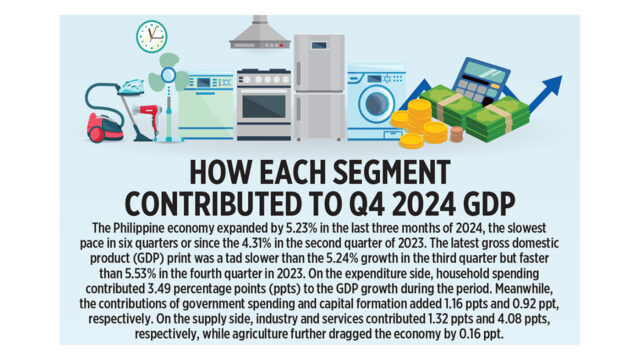
How each segment contributed to Q4 2024 GDP

The Philippine economy expanded by 5.23% in the last three months of 2024, the slowest pace in six quarters or since the 4.31% in the second quarter of 2023. The latest gross domestic product (GDP) print was a tad slower than the 5.24% growth in the third quarter but faster than 5.53% in the fourth quarter in 2023. On the expenditure side, household spending contributed 3.49 percentage points (ppts) to the GDP growth during the period. Meanwhile, the contributions of government spending and capital formation added 1.16 ppts and 0.92 ppt, respectively. On the supply side, industry and services contributed 1.32 ppts and 4.08 ppts, respectively, while agriculture further dragged the economy by 0.16 ppt.

How each segment contributed to Q4 2024 GDP

ICTSI Melbourne invests in hybrid carriers to raise capacity

ICTSI

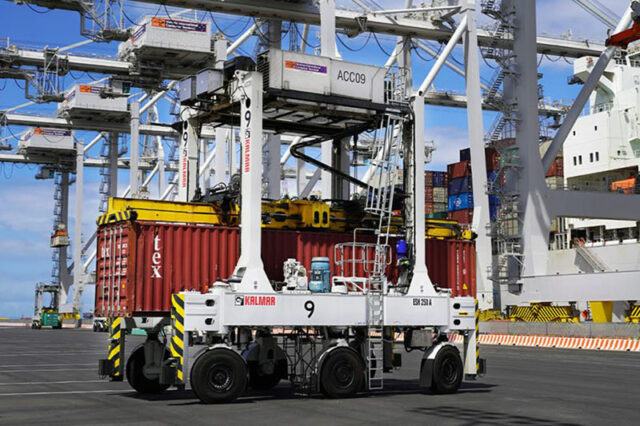
RAZON-LED International Container Terminal Services, Inc. (ICTSI), through its unit Victoria International Container Terminal (VICT) at the Port of Melbourne, has purchased four new hybrid automatic container carriers to expand its capacity.

The new carriers are set for delivery within this year and will help increase its capacity to 1.5 million twenty-foot equivalent units (TEUs) per year, the listed port operator said in a media release on Thursday.

These new carriers, purchased from Kalmar, a provider of heavy material handling equipment and services, will each feature a twin-box lifting capacity of up to 60 tons and hybrid technology with lithium-ion batteries for energy recovery.

This technology contributes to a 40% increase in energy efficiency and about a 50-ton carbon dioxide (CO2) emission reduction per carrier annually.

“These new hybrid carriers are part of our expansion plan, which will increase our capacity to 1.5 million TEUs annually. This investment demonstrates our commitment to customer focus, innovation, and sustainability, ensuring we can meet the growing demand for our services while minimizing our environmental impact,” said VICT Chief Executive Officer Bruno Porchietto.

VICT, which started operations in 2017, is a unit of ICTSI in Melbourne, Australia. It is a fully automated container terminal servicing large vessels.

Last year, VICT logged five million TEUs since its operations began. ICTSI said previously that this will fuel its commitment to further invest in the terminal to accommodate the increasing demand for shipments. — Ashley Erika O. Jose

London’s Blitz shelter tunnels to become a new tourist attraction

THELONDONTUNNELS.COM

LONDON — Tunnels built to shelter Londoners during World War TII bombing by Germany are set to be transformed into the British capital’s biggest new tourist attraction for years, according to the company that has bought the sprawling network of passages.

The tunnels, which are a mile (1.6 km) long and tall enough in parts to fit a double-decker bus, lie under Holborn in central London. They were dug by hand starting in late 1940, when German planes were bombing the city almost every day and night in what was known as the Blitz.

During the bombing raids, Londoners headed into underground train stations for safety. By 1942, when the purpose-built tunnels were finished, the Blitz had ceased so they were never used for shelter.

“It’s real. It’s emotional,” said Angus Murray, chief executive of The London Tunnels, standing in an arched steel cavern as London Underground trains rumbled overhead.

Mr. Murray, a former investment banker, hopes to turn the tunnels into a memorial to the Blitz, which he says will be part museum, part exhibition and part entertainment space.

The tunnels housed spy headquarters in 1944, when James Bond author Ian Fleming worked in them for naval intelligence. The location is believed to have inspired Q Branch, where Bond goes to get his specialist equipment.

Thirty meters (100 feet) down, the underground citadel is a maze of old generators, pipes and rusty bolts. Bundles of wires dangle from the walls, which are dotted with dials, switches, and levers.

There are also the remains of a staff bar and canteen for the 200 people who worked in the tunnels in the 1950s and ’60s when it served as a telephone exchange.

Since the 1970s, the tunnel network has mostly stood empty.

Mr. Murray estimates the plan to create a tourist attraction, which was approved by the authorities last year, will cost around £120 million ($149 million). His company hopes up to 3 million people a year will pay over £30 ($37) to visit the space.

He likened its expected impact on tourism to the London Eye observation wheel, which opened 25 years ago and attracts more than 3 million visitors annually.

The tunnels will be ready for the public by late 2027 or early 2028, Mr. Murray said, adding they would be operated by an entertainment company familiar with running visitor attractions.

“In London, if one thing works, it’s tourism,” he said. — Reuters

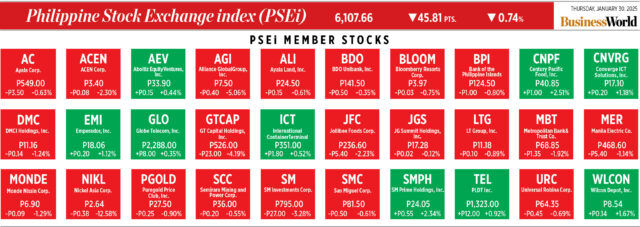
How PSEi member stocks performed — January 30, 2025

Here’s a quick glance at how PSEi stocks fared on Thursday, January 30, 2025.


Economic zone on BuCor land targeted for launch by 2028

PHILSTAR FILE PHOTO

By Justine Irish D. Tabile, Reporter

THE Philippine Economic Zone Authority (PEZA) said an economic zone (ecozone) it plans to establish at a penal colony in Palawan is expected to be operational by the time President Ferdinand R. Marcos, Jr. steps down in 2028.

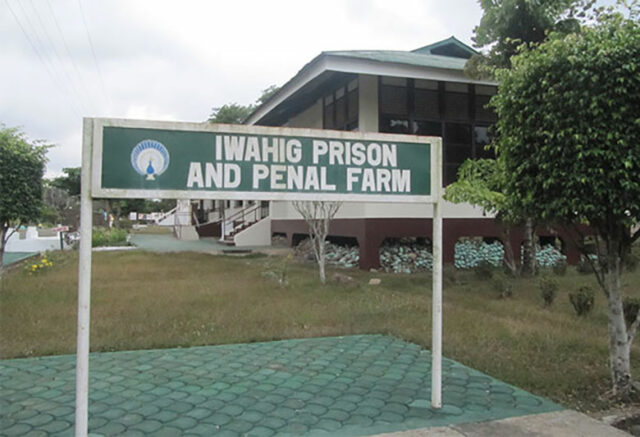
The so-called “mega ecozone” will be established after PEZA signed a memorandum of agreement (MoA) with the Bureau of Corrections (BuCor) covering more than 2,000 hectares on the Iwahig Prison and Penal Farm in Puerto Princesa, Palawan.

The Palawan Mega Economic Zone (PMEZ) is expected to be “proclaimed within the year,” PEZA said.

PEZA and BuCor had entered into a memorandum of understanding on Jan. 30, 2024 to facilitate the due diligence process for converting various BuCor sites into ecozones.

“We are proud to share that we have now entered the next important step for our ecozone development in Palawan,” PEZA Director General Tereso O. Panga said.

“We look forward to beginning the master planning and immediately starting the development of this ecozone, which will create more employment opportunities for Filipinos, most especially for persons deprived of liberty (PDLs),” he added.

BuCor estimates that it controls 32,000 hectares of idle land with ecozone potential, including 25,000 hectares in Iwahig, 7,000 hectares in Sablayan, Mindoro, and 300 hectares at the national penitentiary complex in Muntinlupa City.

“Palawan is the new frontier, and we want to generate income for social development and food security,” said BuCor Director General Gen. Gregorio Pio P. Catapang, Jr.

According to Mr. Panga, the 2,000 hectares allocated for the PMEZ could be expanded.

“We are eyeing a bigger area for our megazone project… But we will work on the proclamation of the 2,000 hectares initially,” Mr. Panga said via Viber.

“By next year, we can start accepting locators upon the initial area’s proclamation,” he added.

The target industries for PMEZ include electric vehicles, advanced manufacturing, green ore processing, nanotechnology, knowledge-based and artificial intelligence-driven industries, and medical-related industries.

“The impact of this project will be felt all across the region, to include an immediate heightened trade within the context of the BIMP-EAGA international framework,” Mr. Panga said, referring to the Brunei Darussalam–Indonesia–Malaysia–Philippines East ASEAN Growth Area.

Harmonized requirements seen critical for streamlining mining permits

NICKELASIA.COM

By Adrian H. Halili, Reporter

MINERS said the Environment department’s plan to streamline the mining permit process will require the National Government (NG) to work closely with local government units (LGUs) to avoid conflicting or redundant requirements.

Philippine Nickel Industry Association President Dante R. Bravo called for a “harmonized position between the local and National Governments.”

Mr. Bravo, speaking to BusinessWorld at a mining industry event on Thursday, said miners still need to conduct consultations at NG and LGU levels as a prerequisite for applying for mining permits.

The Department of Environment and Natural Resources is preparing an administrative order (AO) streamlining applications for mining exploration permits, mineral agreements, and financial or technical assistance agreements (FTAA).

The proposed AO will also allow the parallel processing of submissions in lieu of the old method of serial approvals.

Mr. Bravo also called for easing the process miners need to go through before obtaining signoff from the National Commission on Indigenous Peoples (NCIP) for projects on tribal land.

Mining firms seeking to operate in areas inhabited by Indigenous Peoples (IP) are required to submit a comprehensive project profile, conducting community consultations, and demonstrate an understanding of the local culture and potential impacts on the IP community, among others.

Under the draft AO, the requirements of the NCIP will be processed in parallel with other requirements.

“When it comes to exploration permits, since we don’t have an income generating activity yet, maybe we can ask for a slightly lighter requirement, and even from the local government,” he said.

First offshore wind production by 2028 ‘doable’ if all goes well

BUHAWIND.COM.PH

By Sheldeen Joy Talavera, Reporter

GETTING production out of the first offshore wind farms by 2028 is considered “doable” with close coordination between regulators and project proponents, according to Danish technical consultancy firm K2 Management (K2M).

“The 2028 completion of the first offshore wind sounds aggressive but it is also doable, but that does require all the stakeholders to closely collaborate (to achieve) the 2028 targets,” Scott Hsu, K2M director for Taiwan and the Philippines, told BusinessWorld.

The Philippines is hoping to generate its first output from offshore wind by 2028 as it bids to diversify its energy mix and reduce dependence on fossil fuels.

“If all the resources (from the) government and private sector are in place, I think the Philippines, with all that sea area, has a lot of potential to play a major role in the future electricity production,” he said. “But that (depends on the speed of) the auctions… (and whether) the authorities and the private sector come together.”

The Department of Energy (DoE) is planning to hold its fifth green energy auction (GEA-5) focused on offshore wind by the third quarter of 2025.

The auction is expected to ensure market access for offshore wind developers, to establish to their funders that they can tap long-term demand.

As of October 2024, the government has awarded 92 offshore wind contracts with 68 gigawatts (GW) of potential capacity. Of the total, 21 contracts representing 19.2 GW were awarded to foreign-owned companies.

The DoE said it is assisting 16 offshore wind frontrunners who have committed to deliver a total of more than 16 GW of new capacity.

“The offshore wind success requires all stakeholders’ efforts. And then transparent and supportive policy is very important from the government side,” Mr. Hsu said.

The banking industry also plays a crucial role in offshore wind development, he said.

“It is very important for (the banks) to be actively participating in the financing… That will be the only way to turn this financial investment into a successful project,” he said.

He said ports are also needed to serve as logistics hubs throughout the life cycle of the projects.

The DoE has said that the Philippine Ports Authority has committed and allocated funds for repurposing and expanding Currimao port in Ilocos Norte, the Port of Batangas, and the Jose Panganiban port in Camarines Norte.

These ports were identified as critical to offshore wind development due to their proximity to high-potential wind energy sites.

According to the World Bank’s 2022 Offshore Wind Roadmap for the Philippines, the country’s offshore wind resources are estimated at a potential 178 GW.

New clearance fees for other sweeteners delayed 

PHILIPPINE STAR/MIGUEL DE GUZMAN

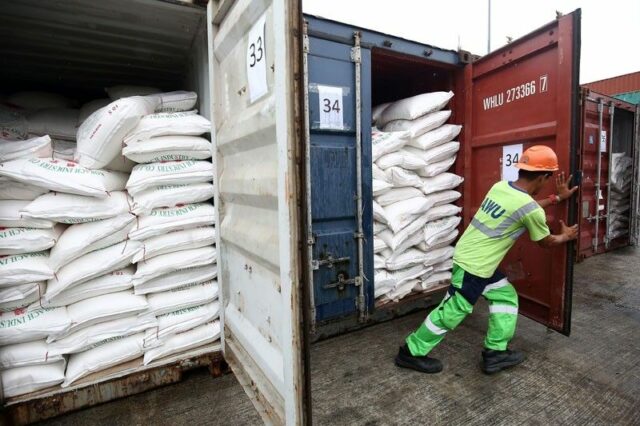
THE Sugar Regulatory Administration (SRA) has deferred a new set of fees it had planned to collect starting this weekend for clearances to import a number of non-sugar sweeteners.

Sugar Order (SO) No. 6 had originally been set to take effect on Feb. 1 but encountered resistance from food and beverage manufacturers who objected to the additional cost.

The order imposes a P60 per metric ton clearance fee on sucrose, lactose, glucose, maltose, maple syrup, honey and caramel, and flavored syrups, among others.

The Philippine Confectionery Biscuit Snack Food Association and the Beverage Industry Association of the Philippines had written to the SRA, citing concerns over the fees.

The decision to defer had been arrived at during a Jan. 23 board meeting, pending consultations with industry, the SRA said.

In a statement on Thursday, the Federation of Philippine Industries (FPI) warned of the sugar order’s possible impact on prices.

FPI President Jesus L. Arranza said SO 6 could also increase the “cost of doing business and adversely affect consumers.”

“The SRA order has the potential to trigger ripple effects, like congestion at the ports, leading to additional demurrage fees that would hurt the makers of confectioneries and beverages in terms of production delays and additional costs,” he added.

The SRA has said that the order is intended to help document and better monitor the entry of imported non-sugar sweeteners, and not to restrict their entry, while domestic sugar producers have long agitated for limits on imports of non-sugar sweeteners.

“There is no need to add another bureaucratic layer if the goal is only to gather data because import records are already available from the Bureau of Customs,” Mr. Arranza said.

SRA Administrator Pablo Luis S. Azcona said by telephone: “The Department of Agriculture (DA) took it upon itself to sit down with the people who wrote us letters and to see if their concerns are valid or speculative.”

Mr. Azcona said that the order will not cause delays in the processing of import clearances.

“We have been issuing import clearances for fructose under Tariff Code 1702 since 2017, and there have been no reports of delays or disruptions to business operations,” he added.

He called the clearance fees “minimal” and estimated them to account for about 0.08% of manufacturers’ costs.

He added that the SRA is also set to implement an online portal for import clearance applications.

“We welcome the opportunity to sit with them and find solutions to their concerns,” Mr. Azcona added. — Adrian H. Halili

Textile industry revival seen starting with developing tropical fabric niche

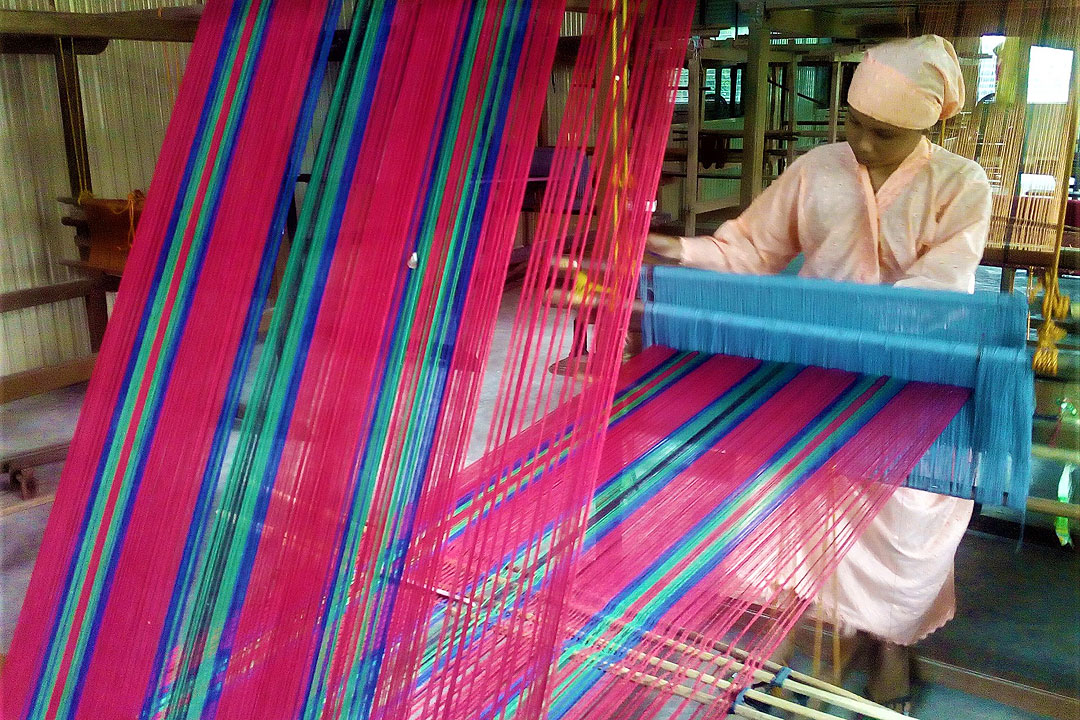
A YOUNG woman makes inaul, the traditional Maguindanawan woven cloth, in this 2018 photo. — SARANGANI PROVINCIAL GOVERNMENT

By Justine Irish D. Tabile, Reporter

THE PHILIPPINES could revive its textile industry by establishing a niche in “tropical fabrics,” the Board of Investments (BoI) said.

BoI Executive Director for Industry Development Services Ma. Corazon H. Dichosa added that the garments and textile industry roadmap is making slow progress following the disruptions of the pandemic.

“We launched it prior to the pandemic, and the implementation was a bit slow because, first of all, we do not have textiles,” she said on the sidelines of the 2025 National Textile Convention.

She said the lack of capacity is what opens the door to imports.

“I think it is very critical that we revitalize our textile industry … So right now what we are looking at is to start with creating a niche for a lot of tropical fabrics,” she said.

“If we scale it up, (tropical fabrics will be) premium and higher-value … We think that if we want to create a market for our garments again, it could be a starting point,” she added.

Garments from the Philippines used to have a ready market in the US before 1995 due to the Quota Regime, she said. However, the Philippines lost share to China after quotas were removed.

“We have a higher cost of production here, but if we start with tropical fabrics, which are something only available to us and have unique designs, that’s something that we can actually create a niche in,” she said.

“And hopefully that also establishes the Philippines again as another garment player globally and regionally. And then from there, we expand,” she added.

January is Philippine Tropical Fabrics month, organized by the Department of Science and Technology’s Philippine Textile Research Institute (PTRI). This year, the observance centers on circularity and sustainable fashion.

“Circularity is actually our (pathway) to attain a level of sustainability for the textile industry … The use of natural fibers is one step by which we actually eliminate and reduce our dependence on synthetics,” PTRI Director Julius L. Leaño, Jr. said.

“When you talk about exports, you talk about volume, quality, and sustainability. Right now, you won’t be able to export hand-woven products if they’re made of polyester,” Mr. Leaño said.

He said the market is evolving, and the Philippines needs to ensure it is not be “caught flat-footed.”

“This is our strategic competitive advantage, and together with our colorful products and weave patterns, we really have our own niche in global markets,” he added.

He said consumers are part of the solution, because without prodding they tend to buy cheap products.

“Economies of scale are really our arbiter for this kind of industry, particularly for textiles, because as long as your production is small, it is really more expensive,” he said.

Raymond Girard R. Tan, De La Salle University’s Vice Chancellor for Research and Innovation, said the sustainability of the textile industry will not only protect the Philippine environment but make exports more competitive.

“The Philippines exports only about 20% of the output of its textile and allied industries. By comparison, if you look at nearby countries of similar size and gross domestic product, Vietnam exports 50 times as much in terms of dollar value from its textile sector,” he told a panel discussion.

“And what that tells us, even though it seems like bad news at first, is it gives us a sense of how much we can scale up and cause economic growth if we get our act together. There is plenty of potential to create new livelihood opportunities if we can tap into this lucrative export market,” he added.

He said that adapting circularity in textiles will be crucial, as export markets will eventually close their doors to companies that cannot prove that their products are at least minimally green.

“The premium will become smaller and smaller, to the point, for example, that if you’re trying to export to the European Union, companies there are going to have to vet their supply chains (to favor) those that have better practices,” he said.

“I would encourage everybody to think not in terms of sustainability as hindering economic growth, but (as something that) will open doors if we consider just how big the export market is,” he added.

CAAP to focus navigation system upgrades on hardware this year

THE Civil Aviation Authority of the Philippines (CAAP) said it will focus on hardware upgrades to its communications, navigation, surveillance and air traffic management (CNS/ATM) systems this year. 

“For 2024, … we completed the software upgrade. What we want to happen now is to complete the hardware upgrade,” CAAP Director General Manuel Antonio L. Tamayo said.

He said CAAP is planning to tap the loan extended by Japan International Cooperation Agency (JICA) for this upgrade program.

“The primary concern is funding. However, we have savings from the JICA fund that was supposed to be used in constructing the existing CNS/ATM. JICA extended the loan; now we have approximately P2.1 billion (available),” he said.

This system upgrade, which was integrated last year — is part of CAAP’s program to enhance the air traffic management system, making air traffic operations more efficient and reducing delays.

The CAAP embarked on the system upgrades following the power outage that hit CAAP facilities in 2023, which affected thousands of passengers. — Ashley Erika O. Jose

Business groups urge Senate to pass Konektadong Pinoy bill

PHILSTAR FILE PHOTO

BUSINESS GROUPS have renewed their call for the Senate to pass the Konektadong Pinoy bill before the 19th Congress steps down, after President Ferdinand R. Marcos, Jr. certified the bill as urgent.

“Versions of the Konektadong Pinoy bill, or the proposed Open Access in Data Transmission Act, have passed on third reading in the House of Representatives for three Congresses since the 17th Congress,” they said in a joint statement on Thursday.

“Movement of the legislation stalled in the Senate in previous years,” it said, adding that the bills chances of passing have improved “thanks to strong backing from President Marcos.”

The Konektadong Pinoy bill, or Senate Bill No. 2699 was one of the two bills certified as urgent by the Office of the President earlier this week, along with the measure postponing the parliamentary elections in the Bangsamoro Autonomous Region in Muslim Mindanao.

“With Konektadong Pinoy certified as urgent, the fate of this landmark digital connectivity legislation now rests in the hands of Senator Alan Peter Cayetano, chairman of the Committee on Science and Technology,” the business groups said.

“Stakeholders look forward to Senate President Francis G. Escudero leading the passage of the bill now that it has been certified as urgent,” they added.

The Konektadong Pinoy bill aims to encourage more entrants seeking to participate in the digital infrastructure buildout by simplifying the licensing process for network providers.

The National Telecommunications Commission is tasked by the bill with regulating the data transmission industry.

“The Philippines has consistently ranked poorly in global and regional information and communication technology rankings, including the Digital Competitiveness Index and Network Readiness Index,” the business groups said.

“Philippine internet is one of the slowest but also one of the most expensive in the world. Poor digital connectivity can be attributed to outdated laws that discourage investment and prevent new players from putting up much-needed internet infrastructure, especially in the countryside,” they added.

The groups that signed the joint statement include the Alliance of Tech Innovators for the Nation, the American Chamber of Commerce of the Philippines, the Analytics & Artificial Intelligence Association of the Philippines, the Asia Open RAN Academy, the Association for Progressive Communications, Better Internet PH, and the Canadian Chamber of Commerce of the Philippines;

Democracy.net.ph, Employers Confederation of the Philippines, European Chamber of Commerce of the Philippines, Fintech Alliance.PH, Foundation for Media Alternatives, Global Digital Inclusion Partnership, Institute for Social Entrepreneurship in Asia, and the Internet Society;

The Japanese Chamber of Commerce and Industry of the Philippines, Korean Chamber of Commerce Philippines, National ICT Confederation of the Philippines, Philippine Association of Multinational Companies Regional Headquarters, Inc., Philippine Cable and Telecommunications Association, Inc., the Philippine Chamber of Commerce and Industry, and Philippine Exporters Confederation, Inc. — Justine Irish D. Tabile

ADVERTISEMENT
ADVERTISEMENT