THE PESO-DOLLAR exchange rate could breach the government’s assumptions from this year to 2026 amid expectations of slower rate cuts by the US Federal Reserve, the Bangko Sentral ng Pilipinas (BSP) said.
“The exchange rate could settle slightly above the Development Budget Coordination Committee’s (DBCC) assumptions for 2025 and 2026,” it said in its latest Monetary Policy Report.
The DBCC expects the peso to trade at around P56-P58 per dollar this year and P55-P58 in 2026.
“This projection is due to the slower pace of monetary policy easing by the United States Federal Reserve (US Fed) and recent near-term movements in the peso,” the central bank said.
The US central bank held interest rates steady on Wednesday and Federal Reserve Chair Jerome H. Powell said there would be no rush to cut them again until inflation and jobs data made it appropriate, Reuters reported.
After the Fed lowered rates three times in the latter part of last year, inflation has largely moved sideways in recent months, but “remains elevated,” the central bank’s policy-setting Federal Open Market Committee, said in a statement after a unanimous decision to keep the benchmark overnight interest rate in the current 4.25%-4.5% range.
Emerging from their first policy meeting during President Donald J. Trump’s second term in the White House, Mr. Powell said Fed officials are “waiting to see what policies are enacted.”
As a result, Fed fund futures still imply around 48 basis points (bps) of easing this year, compared to 49 bps earlier in the week. The next move is not expected until June, when the probability of a cut is put at 73%.
The BSP expects the Fed to deliver up to 75 bps worth of cuts this year and 25 bps for 2026.
The central bank said the peso depreciated in October and November “due to the broad strengthening of the US dollar after the US Fed signaled that there was no urgency to ease policy rates further.”
In 2024, the peso closed at its record low of P59 thrice (on Nov. 21, Nov. 26, and Dec. 19.) It has yet to breach this all-time low, which was first set in October 2022.
“Concerns about the inflationary impact of (US President) Donald J. Trump’s economic policies also weighed on the peso,” the BSP added.
Mr. Trump has proposed several policies that could stoke inflation, such as stricter import tariffs and tighter immigration measures.
He has pledged tariffs as high as 60% on China, 25% on Mexico and Canada and an up to 10% universal tariff.
The BSP said the recent currency weakness was also influenced by slower gross domestic product (GDP) growth in the third quarter, higher outstanding debt, a wider trade and current account deficit, as well as political uncertainty.
“Nonetheless, the peso’s depreciation was partly tempered by sustained structural FX inflows from foreign direct investment and foreign portfolio investment, and higher overseas Filipinos remittances,” it added. — Luisa Maria Jacinta C. Jocson
What to expect from the Philippine auto industry in 2025
The ever-changing automotive landscape evolves yearly and is set to experience more transformation in 2025. As the earth takes another lap around the sun, new trends, innovations, and opportunities are introduced to the industry as often as racecars make pitstops on their tracks.
Last year, global vehicle sales reached 88.2 million units, a 1.7% increase from 2023, supported by ongoing inventory restocking throughout the year as supply chains become more stable, according to rating agency S&P Global. For 2025, the agency forecasts 89.6 million vehicles sold or a 1.7% year-over-year rise.
In the Philippines, the Chamber of Automotive Manufacturers of the Philippines, Inc. (CAMPI) and the Truck Manufacturers Association (TMA) reported that the number of cars sold hit a record-high 467,252 units in 2024, albeit a little lower than the 468,300 sales target of the industry. However, CAMPI and TMA predict vehicle sales will rise by 10% in 2025 amidst several trends that have attracted car buyers.
Among these developments is the push of governments for electric vehicles to go mainstream. Fiscal incentives in the country such as tax exemptions and reductions as well as investment priorities have at least gotten Filipinos to consider environmentally friendlier automotive options. Add to that non-fiscal incentives such as priority registration and licensing, exemptions from number coding schemes, and dedicated parking slots make owning an electric vehicle more convenient, cost-effective, and appealing.
The rise of new technology is also expected to shape the industry in terms of safety and autonomy. While fully self-driving cars are still considered a pipedream in 2025, advancements in the area are improving rapidly and can be seen in advanced driver assistance systems (ADAS). Innovations in this area can lead to enhanced convenience and safety by minimizing human errors in a range of scenarios and conditions. These developments include speed limit information, lane-keeping assistance, and adaptive and predictive cruise control.
Beyond sustainability and efficiency, another area experiencing rapid evolution is car interiors. Car cabins are getting smarter and more comfortable, with AI-powered infotainment, customizable lighting, eco-friendly materials, and ergonomic seating making every ride more enjoyable. Features such as heating, ventilation, and massage functions may even be installed in seats this year.
As the world has become more modern, everything has been connected to the internet, including cars. This trend has seen automobiles transform into digital hubs, offering on-demand entertainment, real-time navigation updates, and cloud-based software enhancements. Internet in cars has also paved the way for subscription-based features, where owners can unlock premium functions like advanced driver assistance, heated seats, or enhanced infotainment services for a monthly fee.
With these innovations headlining what is shaping up to be a robust year for the industry, automakers are rolling out new models that embody these trends. These new releases usher in a new era of transportation, one that meets the needs of modern drivers.
Chery eQ7 — www.chery-eg.com
Chery Auto Philippines, Inc. is reportedly launching the eQ7, an all-electric compact crossover, this year. Equipped with a 211-horsepower motor and a 67.12 kWh LFP battery, the new model offers a range of up to 512 kilometers on a full charge, making it a practical choice for both city driving and longer trips, while contributing to a more sustainable driving experience.
Interior features of the eQ7 are as modern as it gets with a 12.3-inch screen with Bluetooth, electric seats with memory, a wireless charger, and a cell phone forgetfulness alert. Other features of the new model may also include a driver monitoring system, multi-zone climate control, an adjustable steering wheel as well as an anti-theft system. Six airbags, collision detection, automatic emergency braking, lane-keeping, and adaptive cruise control are also installed in the vehicle to ensure safety.
Following its European launch last year, Mitsubishi Motors Philippines Corp. is gearing up to bring another hybrid electric SUV into the country, the Mitsubishi Outlander Plug-in Hybrid electric vehicle (PHEV). The model comes with a new 22.7 kWh battery, good for an 86-kilometer drive powered by electric power, and a 53-liter fuel tank.
The Outlander retains some of its predecessor’s features including the overall look and driving modes. The brand worked on the model’s convenience and utility by updating its Super All-Wheel Control (S-AWC) system, fine-tuning the vehicle’s steering and suspension, as well as giving the model a new grille with active shutters. Aside from these features, the Outlander also possesses dual-zone automatic climate control, a 12.3-inch infotainment screen, and a suite of advanced driver-assist features including Blind Spot Warning, Rear Cross Traffic Alert, Lane Change Assist, Forward Collision Mitigation System, Auto High Beam, and Adaptive Cruise Control.
Changan’s Hunter REEV — Changan PH Facebook ppage
The world’s first Range-Extended Electric Vehicle (REEV), Changan’s Hunter REEV, is also coming to the Philippines this year. The 4X4 pickup truck with a PHEV system uses a series hybrid powertrain that charges its batteries giving the vehicle an astonishing range of 1,031 km when fully charged and has a full tank of gas.
As a pickup truck, the Hunter has a payload capacity of 495 kg with a 2.5-ton towing capability. Safety and security are also prioritized in the model as it is installed with Anti-theft devices, Anti-Lock Braking System, Hill-Start Assist Control, and many more features. Apple Carplay/Android Auto, Multi-function Steering Wheel, Navigation System, and a touchscreen infotainment system are just some of the other amenities also available in the model.
Toyota Vios — toyota.com.ph
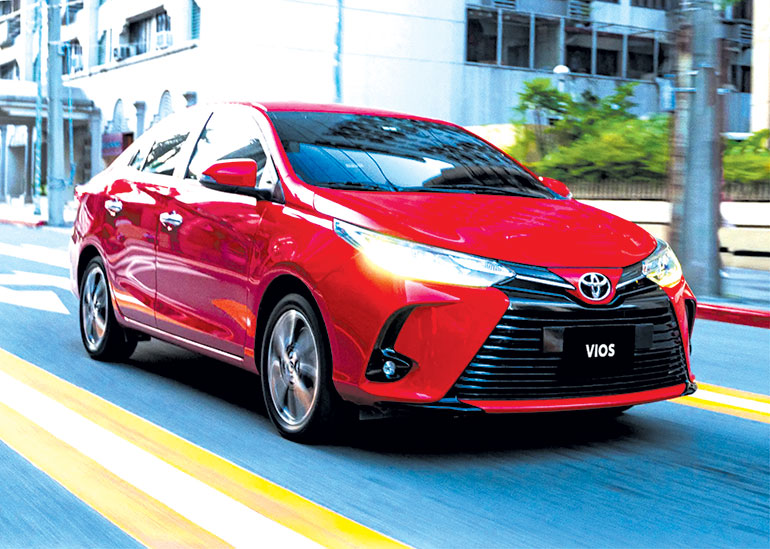
Toyota Motors Philippines’ (TMP) best-selling plate, the Toyota Vios, will also receive upgrades this year, continuing its legacy as the top choice for Filipinos looking for a subcompact sedan. Consistently among the country’s best-sellers, TMP produces the Vios in the brand’s plant in Santa Rosa making the model truly by Filipinos for Filipinos.
The improved Vios stands out with long squinting headlights, teardrop-shaped fog lamp vents, and a wide trapezoidal grille. Its interior will also feature a redesigned steering wheel, a more comfortable cabin, and a more advanced dashboard. While technological features vary per variant, Optitron gauge clusters, iPod connectivity, and steering-wheel-mounted audio controls are available.
Next Generation Toyota Tamaraw — toyota.com.ph
Similarly, this year marks the return of the Toyota Tamaraw, one of the most iconic models of the brand which has served generations of Filipinos from across the country. Renowned for its signature versatility and reliability, the relaunched automobile is the practical choice for families, aspiring business owners, and car enthusiasts looking for a vehicle with a wide range of applications.
The new Tamaraw will have two engine options: a 2.0-liter 1TR-FE gasoline engine and a 2.4-liter 2GD-FTV diesel mill. Safety is also prioritized in the Tamaraw lineup with its anti-lock braking system, airbags, and reinforced chassis for enhanced crash protection. To bring the model to modern times, Toyota has even added a touchscreen infotainment system (on higher trims), USB ports, and practical amenities that enhance the usability and comfort of the vehicle.
As we begin the road trip of 2025, the journey of the Philippine automotive industry is shaping up to be full of new trends, breathtaking features, and timely innovation. Whether it’s the sustainable eQ7, the versatile Toyota Tamaraw, or the technologically enhanced Mitsubishi Outlander PHEV, there’s no shortage of options for the discerning Filipino driver.
With advancements in electric mobility, hybrid technologies, and innovative features, 2025 promises to be a year when car manufacturers speed up to a future that promises transformation, sustainability, and reliable mobility. — Jomarc Angelo M. Corpuz
In 2025, the Philippine automotive industry is poised to unfold transformative changes and opportunities, preparing drivers for a journey that elevates their modern lifestyles.
As the auto industry increasingly shifts to eco-friendly and sustainable transportation, mobility is now charging towards electric vehicles (EVs). Projections for 2025 indicate that the share of electric cars will continue to grow in the Philippines, with forecasts predicting 6.6 million EVs on Philippine roads by 2030 and 50% of all vehicles shifting to electric by 2040.
Recognizing the rise of EVs in recent years, Toyota Motors Philippines (TMP) Corp. stated in a BusinessWorld report that the auto industry is on track to achieve 470,000 in sales, with EVs accounting for nearly 4% of that figure.
Another driving factor for this growth is the arrival of new models and brands. Among the leading EV companies in the Philippines include Chinese EV manufacturer BYD making up 70% of the country’s EV sales in 2024. Another key player is TMP, holding a solid 40% share of the market. By 2025, the company plans to expand its EV lineup with the introduction of more hybrid and fully electric models.
“With the sustained effect of expanded fiscal incentives for hybrid and plug-in hybrid models, the entry of new market players, and continuous public-private collaboration on EV charging infrastructure, TMP expects that EV sales volume will continue to increase,” TMP was quoted as saying.
Moreover, advanced features are expected in new vehicles, packed with cutting-edge technology that are set to redefine the driving experience.
According to information platform TechInsights, Level 2 (L2) vehicle automation is a standout feature to lookout for in 2025. Vehicles are becoming more than just one with steering wheels, as they are now equipped with smart technologies designed to assist drivers on the road.
This year, L2 automated vehicles are shaping up to become the new mainstream, whether in luxury or standard cars. This tech enables features like adaptive cruise control, which helps maintain a safe distance from other vehicles, adjust speed control, and keep the vehicle in its lane.
As cars become smarter, the appetite for 5G chipsets in vehicles is growing rapidly, allowing automobiles to connect to the internet, other devices, and other infrastructure at significantly faster speeds.
One notable application of 5G chipset can be seen on autonomous vehicles (AVs) or self-driving cars. Through 5G, AVs are enable a full 360-degree view, advanced sensors, optimized routes, better fuel consumption, PWD-friendly designs, and even shared ownership. One more interesting aspect for AVs is the Light Detection and Ranging (LIDAR) system, which utilizes automotive sensors, scanners, and lasers to measure distances.
In a report on its website, Tech Collective Southeast Asia expects AV driving technology to make its way to EVs, which will transform mobility across ASEAN countries, making transportation easier and more convenient.
“Vehicle electrification will make driving an emissions-free endeavor, reducing harmful fumes in the air and protecting the environment from the effects of carbon dioxide. The increase in young, tech-savvy citizens in the region will ensure advances in AI and ML to boost the development of autonomous vehicles, limiting traffic congestions that cause pollution,” it said.
Vehicle-to-everything (V2X) technology is also another groundbreaking feature. V2X enables vehicles to connect with various systems, including other vehicles, Internet of Things (IoT) devices, motorized systems, grids, and infrastructure around them. The V2X tech is set to take off across ASEAN countries in the upcoming years, Tech Collective Southeast Asia added. The V2X market is projected to reach $6 billion in 2025, positioning ASEAN as a key player in the global growth of the industry. — Angela Kiara S. Brillantes
Authorized dealerships of leading mobility company Toyota Motor Philippines (TMP) have begun rolling out the first units of the Next Generation Tamaraw to customers earlier this month, kick starting the “Abante, Posible” journey of Filipinos nationwide.
The Next Generation Tamaraw, which was launched last December, is TMP’s answer to the ever-evolving needs of Filipino businesses and families. Its stock variants, in particular — the Dropside, Utility Van, and Aluminum Cargo — offer micro, small and medium enterprises (MSMEs) the workhorse they need to advance toward new possibilities.
Built on Toyota’s global IMV platform, the Tamaraw is currently available in diesel variants, with a starting price of P937,000 for the 2.4 Dropside DSL M/T. Gas variants will become available at a later date.
Now with the Tamaraw in the hands of customers, TMP is elevating the ownership experience with exclusive value chain offerings.
Customers who purchase the Tamaraw between December 2024 to Jan. 31, 2025 are entitled to a P1,200 Service Discount Voucher, which can be applied to up to nine PMS between the 1,000-km and 40,000-km check-up. The voucher ensures discounted maintenance costs, making it easier for Tamaraw owners to keep their vehicles in optimal condition. This offer is valid at all authorized Toyota dealerships nationwide within a 48-month period from the date of release.
Also, customers can trade in their old vehicle for a brand-new Tamaraw and enjoy rebates of up to P20,000. The rebate may be used as a cash discount or for purchasing Toyota Genuine Accessories, adding even more value for Tamaraw buyers.
Moreover, TMP makes Tamaraw ownership even more accessible with a special financing offer of 10% downpayment and the option to choose between weekly or monthly payments. Customers interested in the Tamaraw Dropside, for example, can get the vehicle for a downpayment of only P93,700 with a weekly payment of P4,629.75.
These offers promise maximum value for Tamaraw owners, cementing Toyota’s continued commitment to helping Filipino families and businesses access reliable and versatile mobility solutions.
During the nationwide kick-off launch last December, the diesel variants, as well as various conversions, were displayed to highlight the customizability of the Tamaraw. More than 100,000 visitors came to see the displays, which were spread across eight locations nationwide, from San Fernando City, Pampanga in North Luzon; to Quezon City and Makati City in Metro Manila; Santa Rosa City, Laguna in South Luzon; Cebu City in Visayas; and Davao City and Cagayan De Oro City in Davao.
Some of the conversions displayed were the Food Truck, Camper RV and Mobile Van, which are available for purchase directly from authorized Toyota dealerships.
Spotlight is BusinessWorld’s sponsored section that allows advertisers to amplify their brand and connect with BusinessWorld’s audience by publishing their stories on the BusinessWorld Web site. For more information, send an email to online@bworldonline.com.
Join us on Viber at https://bit.ly/3hv6bLA to get more updates and subscribe to BusinessWorld’s titles and get exclusive content through www.bworld-x.com.
A RECENTLY passed bill that will cut the tax on stock transactions to 0.1% from 0.6% is expected to make the Philippine stock market more appealing to investors, according to economists, who also cited the need for the government to educate Filipinos on how to invest.
“The lower tax is a welcome development, but more reforms are needed to broaden and deepen the stock market in the Philippines,” Enrico P. Villanueva, a senior lecturer at the University of the Philippines Los Baños Economics Department, said in an X message.
“Education and proper orientation about the market and its potential returns are needed. There have to be investments in education and time as well.”
He added that a lower tax on stock purchases would likely boost profit margins for Philippine stock market participants.
The Senate on Monday approved on final reading Senate Bill No. 2865, or the Capital Markets Efficiency Promotion Act, which aims to make the country’s capital market more competitive with its regional peers.
In the 2024 Capital Market Review of the Philippines published by the Organization for Economic Cooperation and Development (OECD), the number of newly listed firms and capital raised through initial public offerings (IPO) in the Philippines have been the lowest in the Association of Southeast Asian Nations (ASEAN) since 2000.
The cost of listing on local stock exchanges varies significantly across different countries, and the Philippines is no exception. When comparing the initial listing fees on the main equity markets, the Philippines stands out with a fee of 0.10% of the market capitalization for companies with a market cap of $150 million, according to the OECD report. This is relatively high compared to its regional peers: Indonesia and Malaysia both charge 0.01%, Thailand charges 0.05%, and Singapore is slightly higher at 0.06%.
For equity markets dedicated to growth companies, such as those with a market capitalization of $10 million, the Philippines charges 0.10% of the market cap. This is comparable to Indonesia at 0.11% and Malaysia at 0.12%, while Singapore charges 0.24% and Thailand is lower at 0.03%.
Under the bill, a final tax rate of 10% will be imposed on cash and property dividends received from a local corporation, joint stock company, mutual fund, or on the share of an individual in the net income of the entity.
The House of Representatives passed a counterpart bill in March, which also seeks to lower the tax on dividends for non-resident investors to 10% from the current 25%.
“The Philippines is currently one of the more expensive markets in terms of transaction costs,” Eleanor L. Roque, tax principal of P&A Grant Thornton, said in a Viber message.
“So, lowering the stock transaction tax is a step in the right direction to making our stock market more attractive and competitive to its peers in the region.”
Based on a forecast by the Philippine Stock Exchange, the lowered 0.1% stock transaction tax would boost stock trading to P4.9 trillion by 2029.
On Tuesday, the value of shares traded on the local bourse rose to P5.64 billion with 1.53 billion issues changing hands from P5.44 billion with 1.14 billion shares traded on Monday.
Senator Sherwin T. Gatchalian, who sponsored the Senate bill, said the bill’s passage would make it easier for Filipinos to invest in the stock market and spur growth in the Philippine capital market.
But Leonardo A. Lanzona, who teaches economics at the Ateneo de Manila University, said the move would likely only favor rich Filipinos who can afford to participate in the capital market.
“The lower income classes carry the burden of the indirect taxes which dominate the country’s revenue structure,” he said in a Facebook Messenger chat.
“Instead of imposing new taxes in order to facilitate fiscal consolidation, the Senate took the opposite route by lowering taxes.”
Under the measure, capital gains from the sale, exchange, barter, or disposition of shares of stock not traded on the Philippine Stock Exchange will be subject to a 15% tax on net capital gains during a taxable year.
It will also set a 15% tax rate on net capital gains during a taxable year on shares of stock in domestic and foreign corporations.
Resident foreign corporations and their regional operating headquarters will be required to pay a minimum corporate income tax of 10% on their taxable income.
But foreign corporations not engaged in trade or business in the Philippines shall pay a tax of 25% of their gross income during each taxable year.
The bill also imposes a final tax of 20% on interest or monetary benefits earned from any currency bank deposit, trust fund, or similar arrangement.
“Cutting transaction taxes will also just boost financial profits without really leading to greater investments in the real economy,” Ibon Foundation Executive Director Jose Enrique “Sonny” A. Africa said in a Viber message.
“A better direction for tax reform would be a billionaire wealth tax and more progressive taxation on high incomes to generate public revenues for investment in social services and micro, small, medium enterprises.”
GOKONGWEI-LED JG Summit Holdings, Inc. said its petrochemicals unit, JG Summit Olefins Corp. (JGSOC), is now on an indefinite commercial shutdown amid “unfavorable global market conditions.”
“Given persisting unfavorable market conditions in the global petrochemical industry, JGSOC is now on an indefinite commercial shutdown,” JG Summit said in a statement on Thursday.
“JGSOC continues to evaluate various options to mitigate the adverse effects of challenging market conditions and will make the appropriate decision in due course,” it added.
JG Summit said that JGSOC will continue to sell its existing product inventory during the commercial shutdown.
The conglomerate added that the liquefied petroleum gas operations of JGSOC’s unit, Peak Fuel Corp., will continue.
In November last year, JG Summit infused up to P17.1 billion into JGSOC to cover maturing obligations.
This as JGSOC widened its net loss for the first nine months of 2024 to P11.4 billion amid “unfavorable global market conditions.”
In January last year, JGSOC inaugurated a P150-billion expanded petrochemical facility in Batangas City.
The company markets its petrochemical products to over 30 countries. Some of its products include the olefin raw materials ethylene and propylene, which are used as feedstock for downstream polyethylene and polypropylene polymer plants.
Market analysts said that JG Summit should consider exiting the petrochemicals business amid the surging losses.
“Unless market conditions change significantly to make the company profitable, they should consider exiting that business,” China Bank Capital Corp. Managing Director Juan Paolo E. Colet said in a Viber message after being sought for analyst comment.
According to Mr. Colet, JGSOC’s indefinite commercial shutdown is the “best decision” under the circumstances as it has been a “heavy drag” to JG Summit.
“After years of massive losses and no clear prospects for a sustainable turnaround, there was really no other rational choice but an indefinite shutdown,” he said.
“This should be ultimately positive for JG Summit as the group can now channel more time and resources to their other businesses,” he added.
AP Securities, Inc. Research Analyst Jose Antonio B. Cipres said that JG Summit should instead shift its capital expenditure budget to other profitable segments.
“Exiting the business is something worth considering at this point in time given the current state of continued losses,” he said in a Viber message.
“Not sure as to how long the earnings would continue to be dragged, but it’s safe to assume that losses should start coming down by the first quarter this year,” he added.
Aside from petrochemicals, JG Summit is engaged in agro-industrial and commodities, real estate and hotel, air transportation, and banking.
For the first nine months, JG Summit saw a 16% increase in net income to P17.9 billion as revenue climbed by 10% to P277 billion.
JG Summit shares fell by 0.12% or two centavos to P17.28 apiece on Thursday. — Revin Mikhael D. Ochave
FOLLOWING the release of a controversial teaser for director Darryl Yap’s upcoming filmThe Rapists of Pepsi Paloma, the Movie and Television Review and Classification Board (MTRCB) has released a statement clarifying that the film is not under review due to “incomplete requirements.”
Mr. Yap was ordered by a Muntinlupa court to take down the teaser, in a decision released to the press on Jan. 27 after a petition to do so was made by actor and TV host Vic Sotto. He accused the filmmakers of spreading false claims, referring to the rape allegations made against him.
Judge Liezel Aquiatan explained in the decision that the misuse of personal information found in the teaser, featuring already dead individuals, contains unverifiable facts.
However, the court said it is unable to suppress the entire film on the late actress Pepsi Paloma, with Mr. Yap having “secured the consent of the mother and brother, derived from public records like newspaper clippings and footage, and protected by artistic freedom.”
On Jan. 29, the MTRCB announced that they had not reviewed the film, given that the materials submitted by the representative of Pinoyflix, the film’s distributor, were incomplete.
“The Legal Affairs Division required the distributor to provide three specific requirements such as Certificate or Clearance of No Pending Criminal, Civil, or Administrative Case from the Regional Trial Court, the Department of Justice, and the Office of the City Prosecutor,” the board said.
They communicated formally with Pinoyflix Films and Entertainment Production regarding the missing requirements, the MTRCB said in a statement released to the press.
The board added that each film undergoes “a rigorous and meticulous review process,” based on standards set by Presidential Decree No. 1986. The decree aims to regulate and classify motion pictures and television programs in the Philippines.
“The MTRCB is composed of 30 Board Members, the Vice-Chairperson and the Chairperson. All applications are reviewed by a committee comprising three board members and a second review committee, composed of five members, if warranted,” it explained.
MTRCB Chairperson Diorella “Lala” Sotto-Antonio is the niece of Vic Sotto, who filed the case against the film.
The board’s statement concluded: “We will not tolerate any misinformation or false narrative that seek to discredit the agency and undermine its mandate to protect the public interest.”
The film’s director had made a Facebook post on Jan. 29 thanking the court for its decision on the trailer and said in that post that the film was being reviewed by the MTRCB.
He wrote: “Nagpasalamat na ako sa husgado (I thank the court) for protecting my rights of artistic expression and the public’s right to the truth. The teaser is just a micro-part of my movie. I have been allowed to release the whole movie. For that, I am deeply humbled and profoundly blessed,” he wrote. “Our film is now being reviewed by MTRCB.”
On Thursday he posted the MTRCB’s statement about the missing requirements and explained that he had assumed that since the distributor had submitted the film to the review body, it would be reviewed. He said he had not known about the requested documents.
“Wala akong intensiyon na maging adelantado o pangunahan o magsabi ng mali, pagbibigay ko ng update iyon sa mga nakasubaybay. (I had no intention of jumping the gun or saying anything wrong, I was just giving an update to my followers.)
“Hindi ako aware sa hinihingi nilang additional, magpapareview lang ako ng pelikula, at bahagi naman ng pagrereview ang paghingi ng requirements… hindi ko alam ano itong pahayag na ito (I was not aware that they were asking for additional [documents], I was just having my film reviewed, and asking for requirements is part of the review process… I do not know what this statement is about).”
He went on to say that they had no more funds to deal with any succeeding steps that might be necessary if they are unable to release the film as scheduled on Feb. 5.
“Ganunpaman, nirerespeto ko ang MTRCB, kung hindi pa nila nireview, okay (However, I respect the MTRCB, and if they still have not reviewed it, okay),” he wrote. — Brontë H. Lacsamana
WEST ZONE concessionaire Maynilad Water Services, Inc. is leveraging artificial intelligence (AI) to enhance its water supply services by addressing pipe leaks, its chief operating officer (COO) said.
“One of our top priorities this year is to further reduce non-revenue water (NRW). To achieve this, we are integrating new technologies to enhance our leak detection capabilities,” Maynilad COO Randolph T. Estrellado said in an interview with BusinessWorld.
To augment water supply, Mr. Estrellado said that the company is “actively reducing NRW” through pipe-laying, pipe replacement, and AI-powered leak detection.
NRW refers to water that is not billed and is lost through leaks or illegal connections.
For 2025, the company has allocated P10 million for the use of AI technology in leak detection.
“Integrating AI into our operations strengthens our efforts to reduce NRW by enhancing and complementing our existing leak detection tools,” Mr. Estrellado said.
With the use of AI, the company was able to detect pipe leaks and monitor pipe conditions, allowing it to replace pipelines more efficiently.
“Basically, all we do is input the pipe sizes, the quality types of pipes, when they were installed, and the repair history. The AI processes that information and tells us where it thinks the next leak is going to be or where the pipes may be more vulnerable, just using that information,” Mr. Estrellado said.
“And that’s also been very productive,” he added.
Maynilad has tapped Portugal-based AGS, a subsidiary of Marubeni Corp., for its AI technology called Infrawise. During its pilot run in 2023, the AI software was able to identify 1,525 leaks covering 750 kilometers of pipelines.
Maynilad Water Holdings Company, Inc. — a joint venture between Metro Pacific Investments Corp. (MPIC), DMCI Holdings, Inc., and Marubeni — took control of Maynilad in 2007.
When the consortium took over the company, NRW was at 68%, which it managed to bring down to 39%, said Mr. Estrellado.
“Of course, that’s still high, and we have even more aggressive targets in the coming years. We’re committed to bringing it down to 24% by the end of this rebasing period,” Mr. Estrellado said, referring to the 2023-2027 rate rebasing period.
He said that Maynilad is acquiring Pipa Hydrocam LS, a tethered camera for internal pipe inspections, and undergoing pilot testing of Gaill and Sim-On Water, which use hydraulic simulations through a “digital twin” of its system to enable more efficient outage management.
Moreover, the company is also exploring ways to fully leverage big data analytics.
“By analyzing historical and real-time data, we aim to gain actionable insights that will strengthen water quality monitoring, improve operational efficiency, elevate customer service, and support our sustainability objectives,” Mr. Estrellado said.
Maynilad is the largest private water concessionaire in the Philippines in terms of customer base, according to its website.
Republic Act No. 11600, signed into law on Dec. 10, 2021, granted Maynilad a 25-year legislative franchise until 2047 to establish, operate, and maintain a waterworks system and sewerage and sanitation services in the west zone service area of Metro Manila and Cavite province.
The law states that Maynilad should offer at least 30% of its outstanding capital stock within five years from the grant of the franchise.
Maynilad Chairman Manuel V. Pangilinan has said that the company is in talks with banks in preparation for its planned initial public offering.
This year, the company is expecting several projects to come online, including the Julian Modular Treatment Plant in Imus, the Pasay NEW WATER Facility, and the newly constructed deep wells. These projects combined are projected to yield an additional 33 million liters per day (MLD).
On the wastewater side, Mr. Estrellado said that two sewage treatment facilities in Muntinlupa are currently undergoing testing and commissioning: the Tunasan and Cupang Water Reclamation Facilities. These are targeted for full operational capacity this year.
Once fully operational, Cupang can treat up to 46 MLD of wastewater, while Tunasan has a designed capacity of 20 MLD.
“Our outlook for demand and water infrastructure projects is outlined in our approved business plan, which aims to secure the growing water needs of our customers in the service area, driven by population growth and industrialization,” Mr. Estrellado said.
Under the plan, Maynilad aims to achieve 95% 24-hour, 7 per square inch water availability by 2027, progressing to 100% by 2032.
MPIC, which has a majority stake in Maynilad, is one of three Philippine units of Hong Kong-based First Pacific Co. Ltd., the others being Philex Mining Corp. and PLDT Inc. Hastings Holdings, Inc., a unit of PLDT Beneficial Trust Fund subsidiary MediaQuest Holdings, Inc., has an interest in BusinessWorld through the Philippine Star Group, which it controls.
STUDIO CANTERO, a brand storytelling and production studio, announced its new name on Jan. 22. Studio Kamusta is now an expanded version, its new name signifying a broader reach helping brands tell their stories better and with empathy, said co-founder Gabby Cantero at the launch in Makati City.
“We’re showcasing that we’re doing much more than food, because with our old name we were known as the studio that does food commercials. Now, we want to tell more stories. We’re expanding and broadening our horizons,” she said.
Studio Kamusta offers a wide array of brand storytelling services, from production management to photography and video production to post-production.
“Along with the rebranding is our launch of Kamusta Films, which are films all produced by us. It’s our way of still loving our craft. Obviously, we’ll continue to do a lot of commercials, but we still need to be creative,” Ms. Cantero said.
She revealed that the studio has projects lined up until March, some of which are films and documentaries for musicians in local music subcultures.
The launch also saw the reveal of Studio Kamusta’s reel, which is a culmination of all the work they’ve done so far across food and lifestyle. It is now available to view on their platforms online.
“We’re also going to do a lot more experience-based stuff,” Ms. Cantero told BusinessWorld. “We did this physical launch so that people could experience Studio Kamusta beyond their screens.”
Instead of a massive online campaign as most production houses would do, the relaunch was confined within the lively Open Space studio in Makati. The place was transformed into an exhibition/party venue that highlighted Studio Kamusta’s friendly atmosphere.
With visuals of past commercials, videos, and photo shoots projected onto the walls, and house beats filling the air, the team welcomed friends in the industry to experience the “new them.” Proudly Promdi provided a Filipino cocktail bar with drinks like Session Road Spritz, Parang Gin Pom, and Lakatan Milk Punch.
“This is just a taste of what more we’re planning this 2025,” said Ms. Cantero. — Brontë H. Lacsamana
TERM DEPOSIT yields inched lower on Thursday on expectations of further rate cuts by the Bangko Sentral ng Pilipinas (BSP) following slower-than-expected Philippine gross domestic product (GDP) growth in 2024.
The central bank’s term deposit facility (TDF) fetched bids amounting to P250.399 billion on Thursday, higher than the P240-billion offering but below the P276.657 billion in tenders for the P280 billion auctioned off a week ago.
Broken down, tenders for the six-day papers reached P131.646 billion, above the P120 billion auctioned off by the central bank but a tad lower the P132.385 billion in bids for the P160 billion in eight-day deposits placed on the auction block a week prior.
Banks asked for yields ranging from 5.75% to 5.8%, narrower than the 5.735% to 5.825% band seen a week earlier. This caused the average rate of the one-week deposits to decline by 0.92 basis point (bp) to 5.7801% from 5.7893% previously.
Meanwhile, bids for the 13-day term deposits amounted to P118.753 billion, short of the P120-billion offering and the P144.272 billion in tenders for the P120-billion offer in the previous week. The BSP accepted all submitted bids.
Accepted rates for the tenor were from 5.79% to 5.87%, slightly wider and higher than the 5.7888% to 5.8675% margin seen a week ago. With this, the average rate for the two-week deposits dropped by 0.73 bp to 5.8274% from 5.8347% logged in the prior auction.
The TDF tenors were adjusted from the usual seven- and 14-day maturities in view of the Lunar New Year holiday.
The central bank has not auctioned 28-day term deposits for more than four years to give way to its weekly offerings of securities with the same tenor.
The term deposits and BSP bills are used by the central bank to mop up excess liquidity in the financial system and to better guide market rates.
Term deposit yields went down on expectations that the BSP would cut benchmark interest rates next month after softer-than-expected Philippine GDP data, Rizal Commercial Banking Corp. Chief Economist Michael L. Ricafort said in a Viber message.
The Philippine economy grew by 5.2% in the fourth quarter of 2024, matching the third-quarter print but slower than the 5.5% expansion logged in the same period in 2023, the government reported on Thursday.
This brought full-year 2024 GDP growth to 5.6%, below the government’s 6-6.5% growth target. This was also a tad slower than the 5.7% median estimate yielded in a BusinessWorld poll of 18 economists and analysts.
This marked the second straight year that Philippine GDP growth missed the government’s goal.
The BSP’s policy-setting Monetary Board will hold its first review for the year on Feb. 13.
BSP Governor Eli M. Remolona, Jr. earlier said the central bank still has room to continue its rate-cut cycle as current benchmark interest rates remain “restrictive.”
The Monetary Board has slashed benchmark borrowing costs by a total of 75 bps since it began its easing cycle in August, bringing its policy rate to 5.75%.
Mr. Ricafort added that TDF yields dropped amid the recent decline in global crude oil prices.
Oil prices were little changed on Thursday as markets braced for threatened tariffs by US President Donald J. Trump on Mexico and Canada, the two largest suppliers of crude oil to United States, and awaited a meeting of OPEC+ producers, Reuters reported.
Brent crude futures were down 7 cents or 0.1% at $76.51 a barrel by 0411 GMT. US crude futures were little changed at 2 cents up or 0.03% to $72.64. US crude futures had settled at their lowest price this year on Wednesday.
Mr. Trump still plans to make good on his promise to impose tariffs on Canada and Mexico on Saturday, White House spokeswoman Karoline Leavitt told reporters on Tuesday.
Mr. Trump’s nominee to run the Commerce department, Howard Lutnick, said on Wednesday that Canada and Mexico can avoid the tariffs if they act swiftly to close their borders to fentanyl, while vowing to slow China’s advancement in artificial intelligence.
The recent correction in US Treasury yields also affected TDF rates, Mr. Ricafort said. — Luisa Maria Jacinta C. Jocson with Reuters
A HOUSE of Representatives committee may start discussing proposals seeking to provide media company ABS-CBN Corp. with a fresh 25-year franchise by next week, a congressman said on Thursday.
Parañaque Rep. Gus S. Tambunting, who heads the House legislative franchises panel, said they will “scrutinize” the measures seeking to give ABS-CBN a new franchise to operate, four years after lawmakers denied its initial franchise renewal application.
“I’m trying to set a meeting next week,” Mr. Tambunting told BusinessWorld. “I’m still waiting for the documents, but I already asked the committee secretary for them.”
The prospects of providing ABS-CBN a new franchise gained attention in early January after Albay Rep. Jose Ma. Clemente S. Salceda filed the latest measure to allow the media giant to operate radio and television broadcasting stations.
Five bills seeking to provide ABS-CBN with a new franchise have been filed since 2022.
The House legislative franchises panel would likely discuss the measures next week, said Mr. Tambunting. “There’s no approval, we’ll only discuss it.”
He said lawmakers would look at the “feasibility” of providing ABS-CBN a new franchise. He did not elaborate.
“We have to look at the feasibility of the whole thing, that’s what we need to do.”
ABS-CBN was forced to halt its broadcast operations in May 2022 after ex-president Rodrigo R. Duterte’s allies in Congress denied its franchise renewal application owing to alleged tax issues and violations of its original franchise terms.
“The stock price may experience volatility, with sharp increases and potential pullbacks, as traders react to news updates from the hearings,” Globalinks Securities and Stocks, Inc. Head of Sales Trading Toby Allan C. Arce said in a Viber message.
He said trading activity will likely surge as short-term traders aim to make a profit on the potential outcomes of the hearing.
“Any indications of opposition or delays in the legislative process could temper investor enthusiasm and lead to short-term selloffs,” he said. “Speculative trading might dominate next week, with spikes in both buying and selling activity.”
April Lynn Lee-Tan, chief equity strategist at COL Financial Group, Inc., said via Viber: “It might have a positive impact like before.”
ABS-CBN shares retreated by 2.22% or P0.11 to P4.84 apiece on Thursday.
Movie Review A Real Pain Directed by Jesse Eisenberg
AN UNDERRATED gem from the many great films 2024 had to offer is Jesse Eisenberg’s A Real Pain, a frenetic but sincere look at a mismatched friendship between cousins. It’s a film that questions our ability to measure something as universal yet subjective as pain.
For many, pain is a necessary burden that we must deal with to function better in our day-to-day lives, to be regulated and hidden away unacknowledged. For others, it is an overwhelming proof of existence that is too real to be suppressed, so much sothat the act of softening and sugarcoating it seems disingenuous.
A Real Pain presents these two extremes in the form of two cousins, David (played by Eisenberg) and Benji (played by Kieran Culkin), who each truly love one another but at times just do not fully understand or know how to ease each other’s pain. The film shows them reuniting for a tour through Poland to honor their beloved grandmother who was a Holocaust survivor, in a narrative that is part-travelogue, part-quirky adventure comedy.
When the two encounter bumps in their friendship, their family and personal histories come to light, with Culkin (known for his scene-stealing role as Roman in Succession) garnering acclaim as the similarly unhinged Benji.
As third-generation Jewish-Americans who are confronted with the suffering of their ancestors in a Holocaust tour of Poland, the context of what pain is for each person is transposed to a larger scale.
Eisenberg’s David tempers his obsessive-compulsive tendencies in silence while Culkin’s Benji wears his rollercoaster-like discontent with the world on his sleeve. While the trope of the ignorant American being a tourist in a more sophisticated European land is a tried and tested one, the valuable lessons these two characters learn here are navigated very well. The two cousins learn of the Jewish practice of leaving a stone on a grave to remember a lost loved one by, and use it to honor their own grandmother on the doorstep of her old house — to the chagrin of actual Polish natives who see it as a safety hazard, albeit an endearing gesture.
On the surface, it may seem like this production was a smart choice for the Polish Film Council, with the elegantly shot scenery of the city of Warsaw and of the Polish countryside showcased to promote their tourism. All the while, the music of Chopin plays, as if with heartfelt empathy for the suffering of its characters. Cutting through the seemingly leisurely pace that allows one to yearn for a vacation there is the familiar nervous energy that Eisenberg brings, channeled into his beautifully written and directed film, as well as his acting in it. His triple role in this production is admirable on its own.
Then of course, there’s Culkin. His chaotic blur masking human vulnerability at its most potent takes centerstage, in a performance that I find similar, but of a different flavor of unstable as his Succession character — deserving of recognition in this awards season. But awards are not really needed to appreciate this film that is equal parts sharp and gentle; perhaps what is better is taking a moment to pause and leave little stones to mark the bouts of pain that serve as our proof of existence. It doesn’t matter that the practice is an odd derivative of an old tradition (as is the entire American identity, after all). Sometimes a meaningful gesture is all people need.
A Real Pain is now showing in Ayala Malls Cinemas.