Home Blog Page 2058

GCash tapped to disburse farmer indemnities

PHILIPPINE STAR/KRIZ JOHN ROSALES/PPA POOL

THE Philippine Crop Insurance Corp. (PCIC) said that indemnity payments for farmers may now be directly transferred to their GCash accounts.

In a statement on Sunday, the PCIC said it signed a memorandum of agreement with G-Xchange, Inc., to tap GCash’s Funds Disbursement Service for the release of indemnity payments to farmer-beneficiaries.

The PCIC added that this would no longer require farmers to visit PCIC offices to pick up checks.

It said that the tie up will streamline the PCIC’s payout system and advance the financial inclusion of rural areas.

“This partnership with GCash marks a transformation on how we will deliver our services to farmers, especially in the manner of distributing indemnity payments,” PCIC President Jovy C. Bernabe said.

He added that the platform would also allow farmers to manage their finances, giving them cashout options and access to online payments and micro-financing.

The PCIC covers farmers, fisherfolk, and livestock raisers who sustain losses from natural calamities, diseases, pest infestation, and other risks.

The PCIC has a target of covering 1.2 million farmers, 21,000 livestock raisers, as well as fisheries stakeholders. It processed 744,000 claims in 2023. — Adrian H. Halili

Chinabank shares surge before index comeback

BW FILE PHOTO

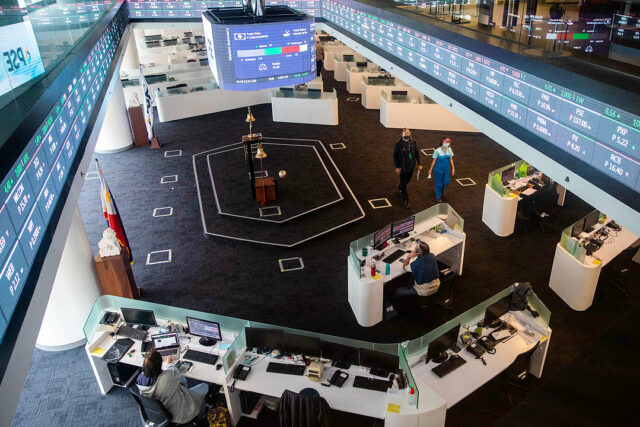
SHARES of China Banking Corp. (Chinabank) surged last week ahead of its reentry to the Philippine Stock Exchange index (PSEi) today.

Data from the Philippine Stock Exchange showed that the bank was the most actively traded stock in value terms last week, with 76.39 million shares worth P6.51 billion changing hands from Jan. 27 to 31.

The lender’s shares closed at P93 on Friday, up 33.8% or P23.50 from a week earlier. This marked a 46.5% increase from its previous close of P63.50 on the last trading day of 2024.

Claire T. Alviar, assistant manager for Research and Online Engagement at Philstocks Financial, Inc., attributed the stock’s performance to Chinabank’s inclusion in the PSEi.

“Additionally, we believe the anticipation of strong earnings results from Chinabank further contributed to the upward momentum in its share price,” Ms. Alviar said in a Viber message on Friday.

On Jan. 24, the PSE announced Chinabank’s return to the main index, marking its comeback since its previous stint from May 2010 to 2011. Chinabank starts trading on the main bourse today, Feb. 3. 

AREIT, Inc., the first real estate investment trust to enter the PSEi, also joins the index for the first time. They replace Nickel Asia Corp. and Wilcon Depot, Inc., which are moving to the PSE MidCap index. 

Ms. Alviar noted the market’s positive reaction, saying Chinabank’s inclusion is “expected to attract increased attention from large funds and institutional investors.”

“This shift in investment focus could drive higher demand for CBC shares, potentially leading to an upward price movement,” she added, referring to the bank’s ticker symbol.

Being part of the PSEi, she said, is generally a significant advantage as index constituents typically experience greater liquidity and demand compared to non-index stocks. 

Jeconiah S. Nicolas, research analyst at First Resources Management and Securities Corp., said Chinabank’s shares had been gradually gaining momentum in recent months due to speculation about its PSEi re-entry.

“CBC’s share price significantly jumped as funds tracking the index adjusted their portfolios to reflect the recent PSEi rebalancing,” he said in a separate Viber message. 

Chinabank’s attributable net income rose 29.4% to P6.93 billion in the third quarter of 2024, bringing its nine-month earnings to P18.37 billion, a 13.5% increase.

Ms. Alviar identified a “psychological resistance level” at P100, with support at P70.

Mr. Nicolas agreed with the P100 resistance level, setting support at P83, or 5% below its closing price of P93 on Friday. — Kenneth H. Hernandez

Designer Kim Jones bows out from Dior menswear brand

PARIS — British fashion designer Kim Jones is stepping down as artistic director for menswear at Christian Dior, the LVMH-owned label said on Friday, signaling a potential shift in its design approach as the brand struggles with slowing sales.

Dior, which has a separate womenswear and couture designer, Maria Grazia Chiuri, did not give a reason for Mr. Jones’ departure which comes a week after he held his final menswear show for the label.

Industry speculation about changes in design direction at Dior has been growing in recent weeks as luxury fashion houses face their slowest growth in years, with LVMH’s latest results disappointing investors hoping for stronger signs of a rebound.

The luxury conglomerate, which does not break down sales for its individual labels, said that Dior’s performance was weaker than Louis Vuitton over the final quarter of last year.

“We have seen the Dior brand slowing due to brand fatigue — when there’s a designer change generally it generates more momentum,” said Carole Madjo, analyst with Barclays.

“Brands need renewal,” she added.

Dior said in a statement that it was Mr. Jones’ decision to leave the label after seven years in the role. It did not name his successor.

Chief Executiev Officer Delphine Arnault has made top management changes at the label in recent months, including the recruitment of Benedetta Petruzzo as managing director. Petruzzo previously ran one of the industry’s fastest growing labels, Prada-owned Miu Miu.

The sector is grappling with its slowest sales in years, with consultancy Bain & Company estimating they fell globally by 2% last year, weighed down by China’s sluggish economy.

Many high-end labels are struggling to reignite interest from consumers squeezed by high inflation and interest rates, after hiking prices extensively over the post-COVID period.

A focus on the wealthiest clients, who are most immune in an inflationary environment, prompted criticism prices may have been raised too far.

Over the fourth quarter, sales of LVMH’s fashion and leather goods division, home to Vuitton and Dior, were down 1%. The division accounts for almost half of LVMH revenue and three-quarters of its recurring profit.

Other top design changes at other labels in recent months include the nomination of Matthieu Blazy as new creative director at Chanel and Glenn Martens at Maison Margiela. — Reuters

Awareness key to cancer prevention and early diagnosis

VECTEEZY/ STELLA E

Cancer is a leading cause of sickness and death in the Philippines, imposing a heavy socioeconomic burden on patients and their families. From January to June 2024, cancer was among the top three causes of death in the country, accounting for 11% of the total deaths nationwide. Cancer of the breast, lung, colon and rectum, and cervix claim the greatest number of Filipino lives.

February is National Cancer Awareness Month. Led by the Department of Health (DoH) in collaboration with local government units, cancer-focused professional societies, and academic institutions, the annual observance aims to raise awareness about cancer and its prevention as well as the importance of early detection in improving outcomes by providing care at the earliest possible stage.

Prevention offers the most cost-effective long-term strategy for the control of cancer. Between 30% and 50% of cancer deaths could be prevented by modifying or avoiding key risk factors and implementing existing evidence-based prevention strategies, according to the World Health Organization (WHO). These include avoiding tobacco use, including cigarettes and smokeless tobacco; maintaining a healthy weight; eating a healthy diet with plenty of fruit and vegetables; and exercising regularly.

Also in the list are limiting alcohol intake; getting vaccinated against hepatitis B and human papillomavirus (HPV); reducing exposure to ultraviolet radiation from the sun; avoiding urban air pollution and indoor smoke from household use of solid fuels; and getting regular medical check-ups among others.

The WHO also underscored the importance of early detection. Cancer is more likely to respond to effective treatment when identified early, resulting in a greater probability of surviving as well as less disease severity.

The WHO highlighted two distinct strategies that promote early detection. First, early diagnosis to identify symptomatic cancer cases at the earliest possible stage. To this end, the general public should be made aware of the symptoms of different forms of cancer and of the importance of seeking medical advice when abnormal findings are observed.

Signs and symptoms caused by cancer vary depending on what part of the body is affected, according to the Mayo Clinic. Some general signs and symptoms associated with, but not specific to, cancer, include fatigue; a lump or area of thickening that can be felt under the skin; weight changes, including unintended loss or gain; skin changes, such as yellowing, darkening, or redness of the skin, sores that won’t heal, or changes to existing moles.

Other general signs are changes in bowel or bladder habits; a persistent cough or trouble breathing; difficulty swallowing; hoarseness; persistent indigestion or discomfort after eating; persistent, unexplained muscle or joint pain; persistent, unexplained fevers or night sweats; and unexplained bleeding or bruising.

Second, screening to identify individuals with abnormalities suggestive of a specific cancer or pre-cancer who have not developed any symptoms and refer them promptly for diagnosis and treatment.

The US Centers for Disease Control and Prevention (CDC) supports screening for breast, cervical, colorectal (colon), and lung cancers. These include mammography screening for breast cancer, Pap tests and HPV tests (including HPV DNA and mRNA test) for cervical cancer screening, screening tests for colorectal cancer (including stool tests, colonoscopy, and flexible sigmoidoscopy), and low-dose computed tomography (LDCT) for lung cancer screening.

Aside from improving public awareness of different cancer symptoms and encouraging people to seek care when these arise, the WHO’s “Guide to cancer early diagnosis” recommends investing in strengthening and equipping health services and training health workers so they can conduct accurate and timely diagnostics and ensuring people living with cancer can access safe and effective treatment.

When fully implemented, the Universal Health Care (UHC) Act and the National Integrated Cancer Control Act (NICCA) will significantly enhance cancer care in the country and ease the heavy socioeconomic burden of the disease. In particular, NICCA has resulted in improved access to cancer centers, provision of financial support to patients, and the establishment of a multi-sectoral council for policymaking, planning, and coordination in cancer prevention and control, the WHO said.

The landmark legislation also paved the way for the establishment of the Cancer Assistance Fund which offers financial support for various interventions, and the Cancer and Supportive-Palliative Medicines Access Program which provides 61 medicines for the most common cancers for free through over 30 access sites across the country.

Furthermore, NICCA supports the Cancer Specialty Centers identified in the Philippine Health Facility Development Plan that provide comprehensive cancer care, along with the Primary Care Facilities that provide services for cancer prevention, screening, and early detection.


Teodoro B. Padilla is the executive director of Pharmaceutical and Healthcare Association of the Philippines which represents the biopharmaceutical medicines and vaccines industry in the country. Its members are in the forefront of research and development efforts for COVID-19 and other diseases that affect Filipinos.


Yields on gov’t debt drop

By Lourdes O. Pilar, Researcher

YIELDS on government securities (GS) declined across the board last week following strong demand for the Treasury’s dual-tenor bond offer and as the US Federal Reserve kept benchmark rates steady while signaling cautiousness moving forward.

Debt yields, which move opposite to prices, declined by an average of 8 basis points (bps) week on week at the secondary market, based on the PHP Bloomberg Valuation Service Reference Rates as of Jan. 31 published on the Philippine Dealing System’s website.

Rates fell across all benchmark tenors. At the short end of the curve, the 91-, 182-, and 364-day Treasury bills (T-bills) decreased by 3.36 bps (5.2786%), 5.02 bps (5.5219%), and 13.49 (5.7118%), respectively.

At the belly, the rates of the two-, three-, four-, five-, and seven-year Treasury bonds (T-bonds) likewise declined 10.38 bps (5.7901%), 10.92 bps (5.8758%), 10.46 bps (5.9372%), 9.59 bps (5.9872%), and 7.37 bps (6.0831%), respectively.

Lastly, at the long end of the curve, the 10-, 20-, and 25-year papers went down by 1.64 bps, 5.39 bps and 10.41 bps to yield 6.2288%, 6.3802%, and 6.3301%, respectively.

GS volume traded decreased to P30.65 billion last week compared to P45.12 billion previously.

“Strong demand for the Bureau of the Treasury’s (BTr) dual-tranche issuance led local bond yields to decline by 3-12 basis points across the curve. The yield curve continued to bull steepen, with the front end outperforming for the week,” Alessandra P. Araullo, chief investment officer at ATRAM Trust Corp., said in a Viber message.

On Tuesday, the government raised P35 billion as planned via its dual-tranche T-bond offering as total bids reached P120.917 billion or over three times the amount placed on the auction block.

“In the broader context, offshore developments influenced the local government securities market as well. The US Federal Reserve maintained its policy rate but signaled a cautious approach to future rate cuts, citing that they are on a wait-and-see mode as they consider the effects of [US President Donald J.] Trump’s policies on inflation and the US economy. This tempered the rally in the local GS space, as investors reassessed their outlook in light of the US policy trajectory,” Ms. Araullo added.

The US central bank held interest rates steady on Wednesday and Federal Reserve Chair Jerome H. Powell said there would be no rush to cut them again until inflation and jobs data made it appropriate, Reuters reported.

Emerging from their first policy meeting during Mr. Trump’s second term in the White House, Mr. Powell said Fed officials are “waiting to see what policies are enacted” before judging the effects on inflation, employment and overall economic activity, with no reason to adjust rates further until data either show a renewed decline in inflation or rising risks to the jobs market.

For this week, GS yield movements would likely be driven by the release of January Philippine inflation data on Feb. 5 (Wednesday) as well as the BTr’s bond auction, Ms. Araullo said. On Tuesday, the government will offer reissued seven-year bonds with a remaining life of five years and five months.

“Rising domestic inflation expectations and the slow GDP (gross domestic product) growth would warrant sideways to down movement in the week ahead,” Jonathan L. Ravelas, senior adviser at professional service firm Reyes Tacandong & Co., said in a Viber message.

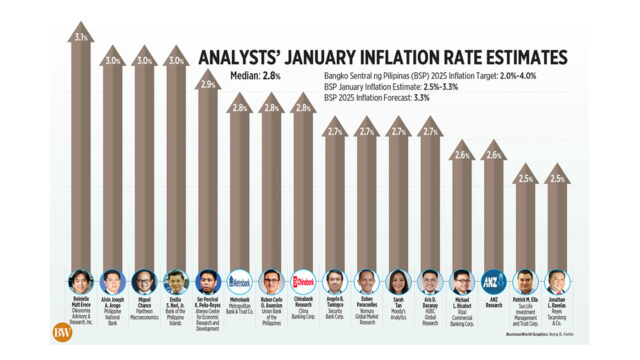
A BusinessWorld poll of 16 analysts yielded a median estimate of 2.8% for the January consumer price index. If realized, this would be slower than 2.9% in December and match the 2.8% print in the same month a year ago. This would also be within the 2.5%-3.3% forecast of the Bangko Sentral ng Pilipinas for the month.

Meanwhile, Philippine GDP expanded by 5.6% in 2024, falling short of the government’s 6-6.5% target. — with Reuters

Seaoil awards P100K to electronics technician board exam topnotcher

From left are Pamantasan ng Lungsod ng Pasig College of Engineering Dean Engr. Godofredo Zapanta, Seaoil Angat Pangarap Program beneficiary Engr. Jose Reynaldo Cube, Seaoil President for Retail Business & CFO Mark Yu, and Seaoil Vice-President for Corporate & Consumer Marketing Jayvee Dela Fuente. — PHOTO FROM SEAOIL

SEAOIL, the country’s “leading independent fuel provider,” recently awarded P100,000 to the first beneficiary of its Angat Pangarap Program, Engineer Jose Reynaldo Cube. A graduate of the Electronics Engineering program of the Pamantasan ng Lungsod ng Pasig (PLP), placed third in the Electronics Technician (or ECT) board exams in October 2023.

Angat Pangarap was launched in 2022 in partnership with the PLP and the Pasig City LGU. Angat Pangarap aims to inspire students to achieve academic excellence by pledging to reward top board passers from PLP, specifically those taking the licensure exams for nursing, teaching, accountancy, and engineering.

“Education is key, whether or not you’re a topnotcher. (Our) incentive is not just motivation for students, but it instills discipline in themselves even at the undergraduate level. It also teaches them not to place too much pressure on themselves. Seaoil is a driving force and motivation to be a topnotcher in the board exams,“ said Engr. Cube.

Since the launch of the program, the college has reported a significant increase in academic performance, as seen in high scores in board exams compared to before the program began.

“Seaoil is excited to recognize more dedicated scholars like Engineer Cube, who has not just dedicated time and hard work to succeed in the board exam. Our hope is that he and future board topnotchers inspire their peers to reach new heights,” said Seaoil President for Retail and Chief Finance Officer Mark Yu.

The Angat Pangarap program was set to run for only two years but will now continue indefinitely, said Seaoil in a release, with the unused funding to be set aside to help fund PLP’s faculty training and research efforts to bolster the quality of education in the university.

India unveils long-term programs to boost output of pulses, cotton

REUTERS

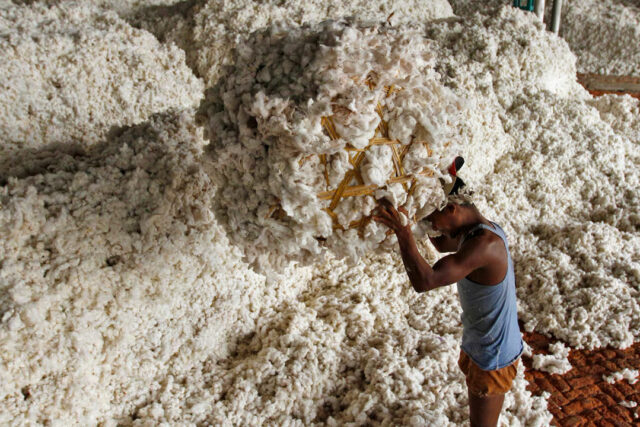
MUMBAI/NEW DELHI — India will launch a six-year program to boost the output of pulse crops by taking measures including directing state agencies to buy the staple at guaranteed prices, the Finance minister said, citing the need to cut reliance on imports.

Rising demand has forced India, the world’s biggest producer and consumer of pulses, to spend a record $5 billion on importing pulses such as pigeon peas, black matpe, and red lentils in 2024, making the country the world’s top importer. India currently imports large amounts of pulses from Canada, Myanmar, Russia, and a host of African countries.

Over the next four years, state agencies will procure pigeon peas, black matpe, and red lentils from farmers at government-set guaranteed, or support, prices, Nirmala Sitharaman said while presenting the annual budget for fiscal year 2025-2026.

Ms. Sitharaman said her government would also aim to boost cotton production, particularly of the extra-long staple variety, by supporting research and development.

India is the world’s second-biggest cotton producer, but yields have fallen in recent years, turning the country into a net importer of the fiber, after previously being a net exporter.

Announcing measures to assist millions of farmers grappling with low incomes, Ms. Sitharaman unveiled plans to set up a urea plant with an annual capacity of 1.2 million metric tons to boost supplies of one of the key crop nutrients.

Agriculture employs nearly 45% of the workforce and contributes about 15% to the $3.5 trillion economy.

Prime Minister Narendra Modi’s government will increase the subsidized farm loan limit to 500,000 rupees ($5,777.94) from the existing 300,000 rupees, Ms. Sitharaman said.

She said the government will also launch a “national mission” to develop high-yielding seed varieties.

Farm policy experts say India, the world’s most populous country, needs to develop high-yielding seeds to overcome the problem of shrinking farmland, caused by rapid urbanization and industrialization, and erratic weather patterns. — Reuters

Analysts’ January inflation rate estimates

HEADLINE INFLATION may have eased in January amid lower electricity rates and food prices, analysts said. Read the full story.

Analysts’ January inflation rate estimates

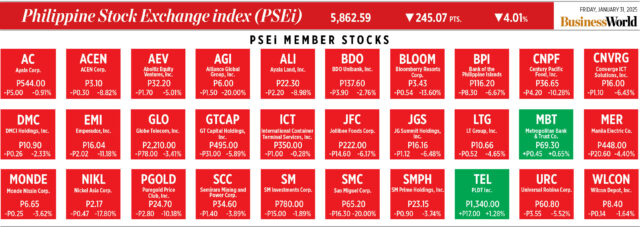
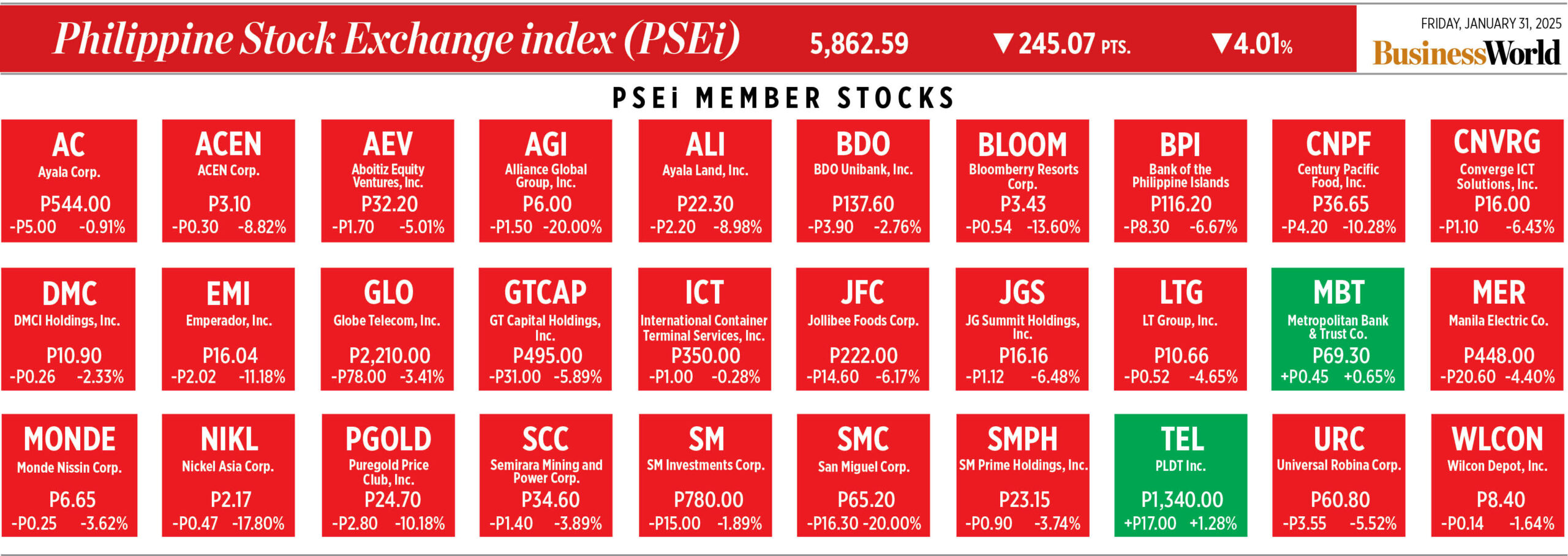
How PSEi member stocks performed — January 31, 2025

Here’s a quick glance at how PSEi stocks fared on Friday, January 31, 2025.


Bargain hunting likely as PSEi enters bear market

REUTERS

PHILIPPINE STOCKS may get a lift from bargain hunting this week after it fell into bear market territory on Friday, with the market also awaiting the release of January inflation data.

On Friday, the Philippine Stock Exchange index (PSEi) plummeted by 4.01% or 245.07 points to 5,862.59, while the broader all shares index retreated by 2.19% or 79 points to 3,520.32.

This marked the benchmark’s worst close in 27 months or since its 5,853.63 finish on Oct. 12, 2022. This also put the PSEi in bear territory as this represents a decline of more than 20% from its latest recorded peaks, which are the 7,604.61 intraday high and the 7,554.68 close on Oct. 7, 2024.

Week on week, the PSEi was down by 6.89% or 433.61 points from its 6,296.20 finish on Jan. 24, marking its fourth straight weekly decline.

“The PSEi broke below 6,000 for the first time since 2022 after 2024 gross domestic product (GDP) missed the target range and the Federal Reserve implied a ‘no-cut’ stance in the medium term,” online brokerage firm 2TradeAsia.com said in a market note.

Philippine GDP expanded by 5.6% in 2024, falling short of the government’s 6-6.5% target but slightly faster than 5.5% in 2023, the local statistics agency reported on Thursday.

Meanwhile, the US central bank kept its target rate at the 4.25%-4.5% range at the close of its two-day meeting on Wednesday, with Fed Chair Jerome H. Powell signaling cautiousness on further policy easing.

“With four straight weeks of decline, we expect bargain hunting to ensue. However, we may not see a complete turnaround yet as sentiment could remain bearish,” Philstocks Financial, Inc. Senior Research Analyst Japhet Louis O. Tantiangco said in a Viber message.

“Investors could still be concerned with how the Philippine economy would be this 2025 following its below target performance last year, and how the BSP (Bangko Sentral ng Pilipinas) can help given that the Fed is slowing down with its policy easing. Adding to the worries is the uncertainties in the US’ foreign policies,” he added.

The Philippine central bank may cut benchmark rates by 50 basis points (bps) this year in a gradual manner as “policy insurance” against risks, BSP Governor Eli M. Remolona, Jr. said on Saturday.

Mr. Remolona said the reductions could be implemented in increments of 25 bps each in the first and second half of the year.

He also said on Friday that a rate cut is “on the table” at their Feb. 13 policy meeting, with economic growth “a little bit below capacity.”

“If the [output] gap is widening, if it becomes more negative, then it would call for more easing,” Mr. Remolona said.

The Monetary Board has slashed benchmark borrowing costs by 75 bps since kicking off its easing cycle in August last year, bringing the policy rate to 5.75%.

Mr. Tantiangco put the PSEi’s trading range for this week between 5,700 and 6,000.

For its part, 2TradeAsia.com placed the PSEi’s support at 5,800 and resistance at 6,000. — Revin Mikhael D. Ochave

Peso to weaken as Trump slaps tariffs on China, Mexico, Canada

BW FILE PHOTO

THE PESO could weaken against the dollar this week after US President Donald J. Trump slapped tariffs on Canada, Mexico, and China.

The local unit closed at P58.365 per dollar on Friday, dropping by 8.5 centavos from its P58.28 finish on Thursday, Bankers Association of the Philippines data showed.

Week on week, the peso declined by 5.5 centavos from its P58.31 finish on Jan. 24.

“Tariff threats from Trump on Mexico and Canada triggered the dollar’s upside,” a trader said by phone interview on Friday.

The peso declined after the Philippine Stock Exchange index (PSEi) dropped to bear market territory on Friday, Rizal Commercial Banking Corp. Chief Economist Michael L. Ricafort said in a Viber message.

On Friday, the PSEi fell by 4.01% or 245.07 points to 5,862.59, while the broader all shares index lost by 2.19% or 79 points to 3,520.32.

This was the benchmark’s lowest close in 27 months or since the 5,853.63 finish on Oct. 12, 2022. This also put the PSEi in bear territory as this marked a decline of more than 20% from its latest recorded peaks, which are the 7,604.61 intraday high and the 7,554.68 close on Oct. 7, 2024.

For this week, the peso will likely decline further after Mr. Trump on Saturday announced the implementation of tariffs on Canada, Mexico, and China starting Tuesday.

The trader said the peso could move between P58.20 and P58.60 this week, while Mr. Ricafort sees it ranging from P58.10 to P58.60.

Mr. Trump on Saturday ordered sweeping tariffs on goods from Mexico, Canada and China, demanding they stanch the flow of fentanyl — and illegal immigrants in the case of Canada and Mexico — into the United States, kicking off a trade war that could dent global growth and reignite inflation, Reuters reported.

Mexico and Canada, the top two US trading partners, immediately vowed retaliatory tariffs, while China said it would challenge Mr. Trump’s move at the World Trade Organization and take other “countermeasures.”

In three executive orders, Mr. Trump imposed 25% tariffs on Mexican and most Canadian imports and 10% on goods from China, starting on Tuesday.

He vowed to keep the duties in place until what he described as a national emergency over fentanyl, a deadly opioid, and illegal immigration to the US ends.

A White House fact sheet said the tariffs would stay in place “until the crisis alleviated,” but gave no details on what the three countries would need to do to win a reprieve.

The tariff announcement makes good on Mr. Trump’s repeated threat during the 2024 presidential campaign and since taking office, defying warnings from top economists that a new trade war with the top US trade partners would erode US and global growth, while raising prices for consumers and companies. — A.M.C. Sy with Reuters

LA Lakers land Luka Dončić, trade Anthony Davis to Dallas Mavericks

ANTHONY DAVIS (3) of LA Lakers and Luka Dončić (77) of Dallas Mavericks — NBA.COM

THE Lakers and Mavericks have sent the NBA world into a frenzy, with ESPN reporting early Sunday morning that the teams had completed a trade that will send Luka Dončić to Los Angeles (LA) and Anthony Davis to Dallas.

While the two stars are at the center of the deal, the Lakers will also get Maxi Kleber and Markieff Morris, while the Mavericks will receive Max Christie and a 2029 first-round draft pick, per the report.

ESPN reported that the Jazz are also involved in the trade and will get Jalen Hood-Schifino and a 2025 second-round draft pick via the Los Angeles Clippers from the Lakers. Dallas is also sending a 2025 second-round selection to Utah.

“I believe that defense wins championships,” Mavericks General Manager Nico Harrison told ESPN. “I believe that getting an All-Defensive center and an All-NBA player with a defensive mindset gives us a better chance. We’re built to win now and in the future.”

Dallas came to the Lakers offering Dončić, and Los Angeles reportedly believed that the five-time All-Star has what it takes to someday be the face of the franchise, per ESPN. For now, he will be playing alongside LeBron James, who is in his 22nd NBA season.

James was not informed that such a deal was coming, and Dončić, Davis, and players and a number of coaches on both sides were also left in the dark, according to ESPN. James ended up finding out about the move while out at dinner with his family on Saturday night.

Both Dončić and Davis are currently sidelined due to injuries, as are Kleber and Hood-Schifino. Dončić hasn’t played since Christmas Day due to a strained left calf, while Davis just went down on Tuesday with an abdominal muscle strain.

There is no set date for Dončić’s return, but when the 25-year-old first hit the shelf, the Mavericks said he would be re-evaluated in about one month. Davis will be re-evaluated sometime next week.

Dončić has always had trouble staying healthy, and ESPN’s report noted that Dallas was frustrated with his poor conditioning and diet. Those two factors played a large role in causing Dončić to miss time due to injury, in the organization’s eyes, causing the Mavericks to shop him around.

Kleber last played on Jan. 25 and is dealing with a fractured right foot. Hood-Schifino, out with a strained left hamstring, was used sparingly in Los Angeles and hasn’t gotten time on the floor since Dec. 1.

Dončić has averaged 28.1 points, 8.3 rebounds and 7.8 assists in 22 games (all starts) this season. He has played only for Dallas in his seven-year NBA career after being selected third overall by the Hawks in the 2018 draft. Atlanta sent his draft rights to the Mavericks in exchange for the draft rights to Trae Young.

The 31-year-old Davis has put up averages of 25.7 points, 11.9 boards, 3.4 assists and 2.1 blocks across 42 games (all starts) during the 2024-25 campaign. He is a 10-time All-Star (including this season), five-time All-NBA selection and five-time All-Defensive Team selection.

Kleber, who turned 33 on Wednesday, is averaging 3 points, 2.8 rebounds and 1.3 assists this season. He has appeared in 34 games (four starts).

Morris, 35, has come off the bench in seven games and is posting 1.7 points and 1.1 rebounds per contest.

In just two games, the 21-year-old Hood-Schifino has averaged 2 points.

At the conclusion of play Saturday, the Lakers sat fifth in the Western Conference at 28-19. The Mavericks were three spots below them in eighth (26-23). — Reuters

ADVERTISEMENT
ADVERTISEMENT