Home Blog Page 2032

New PhilHealth chief seeks faster processing of claims

PHILIPPINE STAR/MIGUEL DE GUZMAN

By John Victor D. Ordoñez, Reporter

THE newly appointed chief of the Philippine Health Insurance Corp. (PhilHealth) on Wednesday vowed to speed up the processing of healthcare claims and expand the benefits for members, calling systemic problems of the agency as “illnesses” that should be treated.

“Hopefully, we can release new procedures to identify the causes and expedite minor issues,” PhilHealth President and Chief Executive Officer Edwin M. Mercado told a news briefing at the presidential palace in mixed English and Filipino.

“This will not only be prospective but also retroactive. We will review the old denied claims and determine what can be paid if the basis is set in compliance with Commission on Audit (CoA) rules,” he added.

Mr. Mercado, a US-trained orthopedic surgeon with 35 years of experience in hospital management, replaced Emmanuel R. Ledesma, Jr., who was criticized for failing to increase members’ benefits even after the agency declared excess funds worth P90 billion.

In October, the Supreme Court  blocked the transfer of P29.9 billion — the last tranche of PhilHealth’s P89.9 billion in excess funds — to the national Treasury.

Mr. Mercado got his medical degree from the University of the Philippines in 1987 and a master’s degree in medical sciences at Harvard Medical School in 2023.

He was also a lecturer at the Ateneo School of Medicine and Public Health on medical research methods and implementation science.

The surgeon has been a fellow at the Brigham and Women’s Hospital Division of Global Health Equity since July 2023, where he studies the use of artificial intelligence as a tool for community health workers.

Congress in December stripped PhilHealth of P74 billion in subsidy this year, citing its nearly P90-billion reserve funds that could be used to increase members’ benefits.

Senator Joseph Victor G. Ejercito, the primary author of the Universal Health Care Act, urged the new PhilHealth chief to avoid treating the agency as a private, profit-driven corporation and focus on reducing the out-of-pocket medical costs borne by Filipinos.

“PhilHealth’s coverage of every Filipino’s hospital and medical expenses must significantly improve in line with universal healthcare’s vision of reducing out-of-pocket costs to ease the burden on every family,” he said in a statement.

In August, the Senate passed on final reading a bill that seeks to cut PhilHealth premiums to 3.25% this year from 5% last year under the Universal Health Care Act.

It sets PhilHealth premium contributions at 3.25% for those with a monthly income of P10,000 to P50,000, with incremental increases of 0.25% each year

Mr. Mercado said he seeks to work with other agencies with robust information technology systems (IT) to boost the agency’s digital infrastructure.

“Shifting to a new system is not easy, as I experienced when I was running a chain of hospitals,” he said. “The go-live, when everyone transitions to the new system, involves a lot of debugging — it can take years; but we will prioritize immediate aspects like claims adjudication.”

Senator urges Marcos to certify minimum wage hike bill as urgent

BW FILE PHOTO

A SENATOR on Wednesday urged President Ferdinand R. Marcos, Jr. to certify as urgent bills that seek to raise the minimum wage to help Filipinos cope with spiraling prices.

“Minimum wages should keep up with the rising prices of goods, transportation and monthly bills,” Senator Ana Theresia N. Hontiveros-Baraquel said in a statement. “Nothing is more urgent than raising our workers’ wages.”

This comes after the House of Representatives approved on second reading a bill that seeks to give minimum wage workers a P200 daily increase.

Congressmen passed House Bill No. 11376, which is a departure from the across-the-board hike for private sector workers endorsed by the House labor committee.

Philippine minimum wages are set by regional wage boards, which drew criticism from lawmakers due to what they perceive as its slow and meager increases amid rising prices. The Senate approved a counterpart bill for a P100 daily wage increase for private-sector workers in February last year.

“The daily rate of all minimum wage workers in the private sector, regardless of employment status, including those in contractual and sub-contractual arrangements, whether agricultural or nonagricultural, shall be increased by P200,” according to a copy of the House bill.

Microenterprises in the service sector including retail with 10 workers or fewer may apply for an exemption from the proposed wage increase.

“There is still a need to push for a P1,200 daily living wage. Filipino workers deserve a decent salary that truly meets their needs,” Ms. Hontiveros said.

The Philippine Chamber of Commerce and Industry (PCCI) on Monday opposed the measure, saying Congress should leave wage decisions to regional wage boards and citing a potential rise in labor costs.

“For some businesses, particularly those in low-margin industries like retail, hospitality and agri-food, the wage increase forces them to pass on the cost to consumers,” PCCI President Enunina V. Mangio said in a statement.

The Regional Tripartite Wages and Productivity Board of the National Capital Region in July last year approved a P35 minimum wage hike for workers in Metro Manila, bringing the daily pay for nonagricultural workers to P645.

This was way lower than the petitions filed by labor groups seeking monthly pay increases of P597 to P750.

A Filipino family of five needs at least P13,797 a month or P460 a day to meet their basic needs, according to the Philippine Statistics Authority. — John Victor D. Ordoñez

Removal of U-turn slots on C5 road ‘approved in principle,’ MMDA says

PHILSTAR FILE PHOTO

PRESIDENT FERDINAND R. Marcos, Jr. has “approved in principle” a proposal to remove U-turn slots on C5 road along Kalayaan Avenue Interchange to improve the traffic flow in Metro Manila, according to the Metro Manila Development Authority (MMDA).

At a Palace briefing on Wednesday, MMDA Chairman Romando S. Artes said his agency met with the President on Tuesday to discuss the government’s five-year traffic management plan as well as plans to start the rehabilitation of the Epifanio de los Santos Avenue (EDSA) by March.

“Well, we first need to study the traffic management plan in the area because we might need to install a stoplight in case, and then, the budgeting for the underpass construction,” he said in a mixed English and Filipino.

The MMDA chief said the five-year Comprehensive Traffic Management Plan includes upgrading traffic regulation and enforcement, developing a traffic management database, upgrading the traffic signal system, and improving intersections and traffic corridors.

He added that the agency was mulling the phase out of the EDSA bus lane to “free up space” in the highway.

“If the passengers can be accommodated at the top, on the train, we don’t see the need to have a bus because it’s exactly the same route. In fact, the train is more advantageous because it has more stops than the bus carousel,” the official said in mixed English and Filipino.

Manila was the 14th most congested city in the world, with an average travel time of 32 minutes, according to the latest edition of the TomTom Traffic Index.

The index assessed cities and metropolitan areas across 62 countries by their congestion and travel times and how many hours commuters stuck in traffic have lost. — John Victor D. Ordoñez

Senate approves bills on digital infrastructure, government rightsizing

FACEBOOK.COM/SENATEPH

THE PHILIPPINE Senate on Wednesday approved on third and final reading a priority bill that seeks to make internet access more affordable by promoting fair competition in the data transmission industry.

With 17 yes votes, senators approved Senate Bill No. 2699 or the Konektadong Pinoy bill, which seeks to create a spectrum management policy framework to ensure fair competition, allow the system to adapt to tech advances and mandate the efficient use of data transmission frequencies.

“This bill ensures that no Filipino is left behind,” Senator Emmanuel Joel J. Villanueva, one of the authors of the bill, told the Senate plenary. “Whether for education, business, government services, or disaster response, connectivity is a lifeline.”

“We believe that digital inclusion is essential for progress, and this bill is a key milestone in building a connected, empowered and future-ready Philippines,” he added.

Under the bill, the government must come up with a framework to prevent digital transmission monopolies.

The Department of Information and Communications Technology (DICT) must plan and work with the Philippine Competition Commission to come up with incentives to entice investors in the sector.

The National Telecommunications Commission (NTC), which is under the DICT, must come up with regulations on the development, use and maintenance of satellite-based technologies.

A data transmission industry player may “deploy satellite technology and use associated spectrum in any or all segments of their broadband network without the need to go through lease or rent capacity,” according to a copy of the bill.

Senate Majority Floor Leader Francis N. Tolentino earlier introduced an amendment to the measure that would prioritize internet services for areas near educational institutions in unserved and underserved areas.

“This amendment will ensure equitable internet access across the country, particularly in those regions lacking sufficient infrastructure, thereby hindering economic growth, education and social inclusion,” he told the Senate floor.

Meanwhile, the Senate approved on second reading Senate Bill No. 890, which seeks to do away with obsolete government positions and empowers the President to scale down agencies under the Executive branch.

Under the bill, Congress, the Judiciary, constitutional commissions, the ombudsman and local governments may restructure their offices.

Affected state workers with five to 11 years of service will be entitled to half their monthly salary for every year of service.

“We want to reiterate the importance of passing a piece of legislation that will ultimately enhance the institutional capacity of our government agencies to improve public service delivery, while ensuring the welfare of millions of civil servants,” Mr. Villanueva said during plenary. — John Victor D. Ordoñez

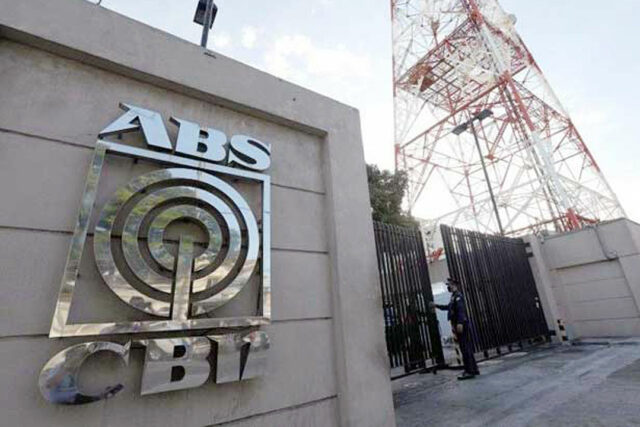
ABS-CBN franchise may be taken up

PHILIPPINE STAR/BOY SANTOS

A HOUSE of Representatives committee may take up bills providing media company ABS-CBN Corp. with a fresh 25-year franchise even if Congress is on break.

Cagayan de Oro Rep. Rufus B. Rodriguez on Wednesday issued a motion urging the House legislative franchises panel to still conduct hearings on bills seeking to provide ABS-CBN with a new franchise despite lawmakers going on a four-month break for the midterm polls in May.

“I’m moving… that the committee meets during the break, to get authority from the Speaker, so that we can hear these five bills,” he told lawmakers during a House hearing.

Parañaque Rep. Gus S. Tambunting, who heads the House legislative franchises committee, approved the motion. “I will,” he said in response to Mr. Rodriguez after a back-and-forth bantering.

The prospects of providing ABS-CBN a new franchise gained steam in early January after Albay Rep. Jose Ma. Clemente S. Salceda filed the latest measure to allow the media giant to operate radio and television broadcasting stations.

Five bills seeking to provide ABS-CBN with a new franchise have been filed since 2022. 

ABS-CBN was forced to halt its broadcast operations in May 2022 after former President Rodrigo R. Duterte’s allies in Congress denied its franchise renewal application owing to alleged tax issues and violations of its original franchise terms.

“There was procedural due process in not granting the renewal, but not substantive because there was no reason to not extend them,” said Mr. Rodriguez, noting that the Bureau of Internal Revenue cleared the media company of tax liabilities.

“And yet the previous Congress denied the extension of the franchise,” he added.

Meanwhile, the National Telecommunications Commission said during the same hearing that there are available frequencies for ABS-CBN if Congress grants it a new franchise.

“In the event that Congress decides to grant a franchise, NTC will be able to grant stations to ABS-CBN, specifically in areas where frequencies are available, ” NTC Deputy Commissioner Alvin Bernard B. Blanco told lawmakers. “There are still frequencies which ABS-CBN can apply for.” — Kenneth Christiane L. Basilio

Bill for school head shortage filed

PHILIPPINE STAR/ WALTER BOLLOZOS

A BILL seeking to address shortages in public school heads by mandating the Education department to fill all vacant principal positions within a year was filed at the House of Representatives on Wednesday.

Filed by Deputy Minority Leader and Party-list Rep. France L. Castro, House Bill No. 11432 also mandates the Budget department to ensure enough allocations to fulfill vacant positions in public schools.

The Second Congressional Commission on Education (EDCOM II) last year reported that 55% of all public schools lack principals.

“The lack of principals can be attributed to the government’s policies on filling the principal plantilla items,” the bill’s explanatory note stated.

“Another reason for the principal shortage is the policy and practice of ‘clustering’ of DepEd (Department of Education), which essentially implies that if the school is small, it does not need a dedicated principal,” it read.

The proposed law requires “every public school” to have one principal and assistant principal to lead the school. “DepEd shall prioritize the hiring and deployment of qualified principals to schools currently without a principal.”

There are more than 45,000 government schools in the Philippines.

DepEd should also coordinate with the National Educators Academy of the Philippines to provide “continuous professional development programs” for school heads to improve their school management skills, the bill added. — Kenneth Christiane L. Basilio

16% of required ballots printed

PHILIPPINE STAR/ MICHAEL VARCAS

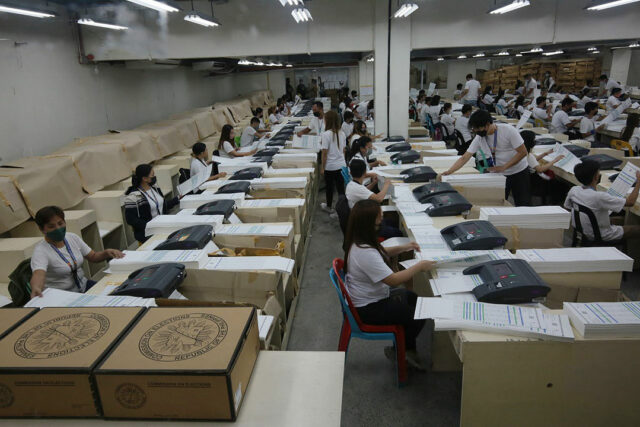
THE Commission on Elections (Comelec) has reached 16% of its target 72 million ballots for the upcoming May 12 midterm elections, printing about 1.8 million ballots per day, its chief said on Wednesday.

Chairman George Erwin M. Garcia said in a briefing in Manila that about 13 million ballots have already been printed since they resumed printing last Jan. 27.

This is about 1.8 million ballots per day, exceeding Comelec’s initial goal of 1.5 million printouts.

As part of their poll preparation, Comelec will also be hiring additional 10,000 emergency job order personnel to distribute voters’ information sheets and another 300 staff for verification efforts.

The Senate on Tuesday ratified a bill postponing the first-ever parliamentary elections of the Bangsamoro Autonomous Region of Muslim Mindanao (BARMM) to Oct. 13 instead of May 12, due to a 2024 Supreme Court declaring Sulu is not a part of the region.

Under the Bangsamoro Organic Law, the Bangsamoro Parliament must have 80 members.

Sulu was originally allocated seven seats, but without its inclusion, only 73 seats would be available, falling short of the mandated number and effectively violating the provisions of the law.

As a contingency plan, should both chambers of Congress move BARMM’s parliamentary elections on Oct. 13, Mr. Garcia said Comelec might ask interested candidates to refile their certificates of candidacy in June. 

He also noted there is no longer sufficient time to conduct a plebiscite in Sulu if the proposal to integrate the province into BARMM is enacted into law. — Chloe Mari A. Hufana

Robinsons, DoLE to host job fairs

ROBINSONS MALLS partnered with the Department of Labor and Employment (DoLE) to host job fairs and employment facilitation programs across various locations nationwide, an initiative that started on Jan. 31 until Feb. 27.

In a statement on Wednesday, Robinsons Mall said a series of job fairs will take place at its various malls nationwide, including Robinsons Magnolia, Robinsons Novaliches, Robinsons Las Piñas, Robinsons Cabanatuan, Robinsons Palawan, Robinsons Angeles, Robinsons Galleria Cebu, Robinsons North Tacloban, Robinsons Butuan and Robinsons Cagayan de Oro.

The initiative organized under Robinsons Malls Lingkod Pinoy Center drew over 1,000 job seekers on its first day last Jan. 27, it noted.

It added that more job fairs will be rolled out in Robinsons Malls nationwide in the coming weeks, with updates available on their social media pages. — Chloe Mari A. Hufana

EDSA Busway still most efficient amid calls for phaseout, DoTr says

PHILIPPINE STAR/ MIGUEL DE GUZMAN

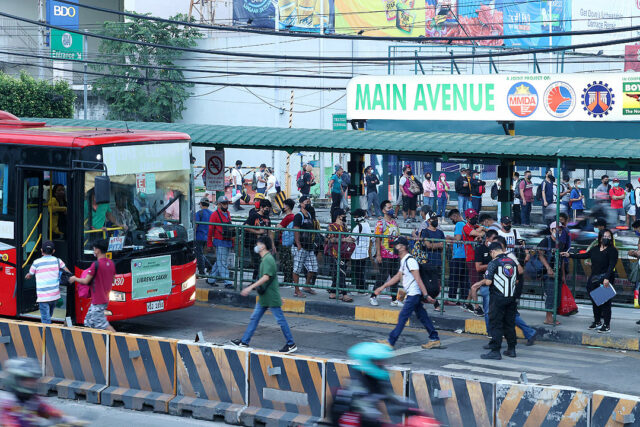
THE TRANSPORTATION department said the Epifanio de los Santos Avenue (EDSA) Busway remains one of the most efficient public transport systems in Metro Manila amid calls to phase out the busway system.

“The EDSA Busway is seen as a crucial step towards a progressive public transportation system with 23 stations operating 24/7, affording commuters a safe and reliable option for transport,” the Department of Transportation (DoTr) said in a statement.

This followed the remarks of Metropolitan Manila Development Authority (MMDA) Chairperson Romando S. Artes on Wednesday about the possibility of removing or gradually phasing out the busway system to help ease traffic and amid the expanding capacity of MRT-3.

Mr. Artes said MRT-3 is expected to have an additional capacity of about 30%.

Last year alone, over 63 million commuters benefited from the EDSA Busway system, the Transportation department said, adding that in January the busway served over 5.5 million passengers.

This is an average of 177,000 daily commuters, it said.

To recall, the DoTr has tapped the Asian Development Bank (ADB) for technical support for the EDSA Busway project.

The DoTr said that it is planning to offer the project via solicited mode after it returned the unsolicited proposal of infrastructure company Megawide Construction Corp.

For now, Transportation Secretary Jaime J. Bautista said the agency is awaiting the result of the feasibility study on the EDSA Busway.

“[The DoTr] is waiting for the result of the feasibility study on how best to improve the EDSA Busway tapping private sector technical and financial expertise. The goal is to improve commuter experience without worsening existing traffic conditions,” he said.

Meanwhile, Mr. Bautista said the DoTr is further studying the proposal to open the bicycle lanes for the possibility of mixed use with motorcycles. — Ashley Erika O. Jose

P50-M shelters open in Davao de Oro

THE Philippine Amusement and Gaming Corporation (PAGCOR) has recently inaugurated two shelters in the disaster-stricken municipalities of Maragusan and New Bataan in Davao de Oro.

“The new facilities, built with P50-million funding each from PAGCOR, will serve as safe shelters during emergencies as well as venues for various socio-economic activities of the communities,” PAGCOR said in a statement on Wednesday.

To date, PAGCOR has completed and inaugurated 43 socio-civic centers nationwide with 29 more facilities under way.

The regulator said the Maragusan homes approximately 65,000 residents and are still landslide prone.

“Classes in public schools will no longer be interrupted; at the same time, this structure will serve as a venue for promoting our local government’s projects and activities,” said former Maragusan Mayor Maricel Colina-Vendiola, who headed the project in 2022.

Incumbent Mayor Angelito J. Cabalquinto said the facilities can also host economic and livelihood programs that can generate additional revenues. — Aubrey Rose A. Inosante

NEA, DepEd to electrify off-grid schools with solar

THE National Electrification Administration (NEA) and the Department of Education (DepEd) have entered into a partnership to electrify schools in off-grid areas through solar power.

NEA Administrator Antonio Mariano Almeda on Wednesday inked a memorandum of agreement with Education Secretary Juan Edgardo “Sonny” M. Angara, in the presence of Energy Secretary Raphael P.M. Lotilla and University of the Philippines President Angelo A. Jimenez.

Under the agreement, the NEA, through its partner electric cooperatives, will provide technical assistance in setting up the solar PV panels, monitoring its system, and conducting further evaluations to ensure the project’s completion.

The agency said it will also mandate the electric cooperatives to refrain from imposing any charges, fees or cost in relation to the maintenance and sustainability of the project.

DepEd, for its part, will identify and prioritize schools needing electrification, facilitate the necessary permits from concerned local government units, and provide counterpart logistical and financial support to execute the project.

The program is targeted to be rolled out within the first quarter of the year, with completion set within the next two years.

Citing a report from the Second Congressional Commission on Education, the energy chief said around 1,500 schools in the country still have no electricity. — Sheldeen Joy Talavera

Two drug traders fall in P1-M drug sting in Kalinga

BAGUIO CITY Agents of the Philippine Drug Enforcement Agency (PDEA) in Kalinga, aided by policemen, cornered two alleged drug traders who tried to sell nine bricks of dried marijuana leaves on Tuesday at Tabuk City, Kalinga’s capital.

The duo, whose names were withheld by authorities, were identified as local residents of Brgy. Loccong in Tinglayan town, Kalinga.

The cannabis bricks weighed a total of 9,000 grams and valued at P1.08 million.

According to PDEA-Cordillera director Derrick Carreon, firearms and ammunition were also captured from the suspects.

Meanwhile, the PDEA in Isabela bared that only nine towns and the two cities of the province are drug-cleared. Isabela has 35 towns and two cities.

PDEA said, the drug-cleared Isabela areas are: Ilagan City, Cauayan City, the towns of Tumauini, Reina Mercedes, Cabagan, Delfin Albano, Mallig, Quezon, Quirino, Sta. Maria, and Sto. Tomas. — Artemio A. Dumlao

ADVERTISEMENT
ADVERTISEMENT