Home Blog Page 2005

SM and DENR partner to save critically endangered Philippine species

L-R: Hubert D’Aboville — President and Executive Director, D’Aboville Foundation and Demo Farm, Inc.; Mary Edwina D. Garchitorena — Country Director, Zoological Society of London-CMRP Philippines, Inc.; Dennis Joseph Ilustre Salvador — Executive Director, The Philippine Eagle Conservation Program Foundation; Steven T. Tan — President, SM Supermalls; Hanna Carinna Sy — Assistant Vice-President for Special Events and Tenant Marketing, SM Supermalls; Hon. Maria Antonia Yulo Loyzaga — Secretary, Department of Environment and Natural Resources; Sarah Jessica Navarro — First Vice-President, BDO; Katherine Custodio — Executive Director, World Wide Fund for Nature Philippines; and Indira Dayang Lacerna-Widmann — Program Director, KATALA Foundation

SM Supermalls has teamed up with the Department of Environment and Natural Resources (DENR) and some of the nation’s most respected organizations, each with expertise in wildlife conservation, to protect six critically-endangered animals found in the Philippines. The campaign — launched in partnership with Kultura, Banco De Oro Unibank, Inc. (BDO), World Wide Fund for Nature (WWF), Forest Foundation Philippines (FFP), Zoological Society of London (ZSL), D’Aboville Foundation (DAF), Philippine Eagle Conservation Program Foundation (PEF), and KATALA Foundation — aims to raise both awareness and funds to safeguard these species and the communities that depend on them.

The DENR and SM Supermalls are working with the following organizations for the conservation of these species:

  • The Dugong, a gentle marine mammal often seen in the waters surrounding the Philippines, and the Philippine Turtle, including several endangered sea turtle species, are supported by Kabang Kalikasan ng Pilipinas Foundation Inc. (KKPFI)/WWF-PH;
  • The Philippine Cockatoo, also known as the red-vented cockatoo and native to the country’s forests, is protected by the KATALA Foundation;
  • The Philippine Eagle, the country’s national bird known for its majestic size and critically low population, is conserved by the Philippine Eagle Foundation; and
  • The Tamaraw, a dwarf buffalo found only on the island of Mindoro, is looked after by the D’Aboville Foundation (DAF), and;
  • The Pangolin, a critically endangered scaly mammal from Palawan, is championed by the Zoological Society of London (ZSL).

As part of the “Save From Extinction” campaign, SM Supermalls will provide key platforms to promote awareness through posters, videos, and fund-raising booths in its malls. Participating malls include SM City North EDSA, SM Megamall, SM Makati, SM Aura, and SM Mall of Asia, starting Oct. 18. These booths will feature exclusive merchandise from Kultura, with proceeds supporting conservation efforts.

Exclusive shirts and totes by Kultura at the ‘Save from Extinction’ booth invite shoppers to join the movement to safeguard the Philippines’ most endangered wildlife. A portion of proceeds will go towards supporting this conservation initiative.

Kultura’s merchandise lineup includes t-shirt designs for both adults and children in several colors, with each product highlighting one of the six endangered animals. Canvas tote bags featuring the animals are also available for purchase.

Exclusive shirts and totes by Kultura at the ‘Save from Extinction’ booth invite shoppers to join the movement to safeguard the Philippines’ most endangered wildlife. A portion of proceeds will go towards supporting this conservation initiative.

Kultura’s exclusive merchandise collection for Save From Extinction features artwork of the dugong, pangolin, pawikan, tamaraw, cockatoo, and Philippine eagle on t-shirts and tote bags.

During the launch, Steven Tan, President of SM Supermalls, reaffirmed the company’s dedication to this vital cause: “At SM Supermalls, we are committed to protecting these remarkable creatures and their habitats. Through our malls and platforms, we are taking concrete steps to raise awareness and drive action that ensures their survival for future generations.”

BDO is leveraging its vast nationwide network to support the campaign, offering donation channels through its ATMs across the country. This integration makes it easier for the public to contribute, extending the reach of the campaign to thousands of communities. Funds raised will go directly to NGOs dedicated to the conservation of each species.

“This collaboration is not just about saving endangered animals; it’s about supporting the communities they belong to,” said Hanna Carinna Sy, SM Supermalls’ Assistant Vice-President for Special Events and Tenant Marketing. “Our goal is to ensure the survival of these animals while creating lasting economic, social, and ecological benefits for future generations.”

Hans Sy and Hanna Carinna Sy with His Excellency Kamal Kishore, Head of the UNDRR; and Hon. Marco Toscano-Rivalta, Chief of UNDRR Regional Office for Asia Pacific, during the ‘Save From Extinction’ MoU signing event

This initiative is a key pillar in SM’s broader sustainability strategy, reinforcing its unwavering commitment to environmental conservation. By mobilizing its resources and partners for this crucial cause, SM is taking concrete action toward a sustainable future, where both people and wildlife can thrive.

To know more about the Save From Extinction campaign, visit smsupermalls.com/save-from-extinction.


Spotlight is BusinessWorld’s sponsored section that allows advertisers to amplify their brand and connect with BusinessWorld’s audience by publishing their stories on the BusinessWorld Web site. For more information, send an email to online@bworldonline.com.

Join us on Viber at https://bit.ly/3hv6bLA to get more updates and subscribe to BusinessWorld’s titles and get exclusive content through www.bworld-x.com.

Taiwan president thanks air force for ‘outstanding’ work during China war games

TAIWAN President-elect Lai Ching-te, of Democratic Progressive Party (DPP), holds a press conference, following his victory in the presidential elections, in Taipei, Taiwan, Jan. 13, 2023. — REUTERS

 – Taiwan President Lai Ching-te thanked the air force on Friday for their “outstanding” work during Chinese war games around the island earlier this week, telling them to keep up the good work.

China’s military said Monday’s day of war games were a warning to “separatist acts”, vowing to take further action against the democratically governed island Beijing claims as its own territory if needed.

Visiting air force headquarters in Taipei, Mr. Lai was connected by radio to what sounded like a fighter pilot who the president identified by their call sign, “Viper One”, in a video released by the presidential office.

“Thank you for your hard work for our country. Please continue to guard the airspace of the Taiwan Strait to ensure national security, and have a safe and smooth flight,” Mr. Lai said, before adding in English “happy landing”.

In subsequent comments made to personnel inside air force command, Mr. Lai praised their performance.

“We were all on full alert during these Chinese exercises and did our best. The performance was outstanding. Thank you very much and please keep up the good work in our duty to protect and defend our country.”

Taiwan’s air force, which is dwarfed by that of China’s, has repeatedly scrambled in to see off almost daily missions by the Chinese military around the island.

During Monday’s drills, Taiwan said it had detected 153 Chinese aircraft, the highest figure for a single day.

Mr. Lai and his government reject Beijing’s sovereignty claims. Mr. Lai has offered talks many times with China, but been rebuffed. – Reuters

Trump knocks Harris, signals support for Adams at NY charity gala

REPUBLICAN presidential nominee, former US President Donald Trump and Democratic presidential nominee, US Vice-President Kamala Harris shake hands as they arrive at their podiums to attend a presidential debate hosted by ABC in Philadelphia, Pennsylvania, US, Sept. 10, 2024. — REUTERS

Republican presidential candidate Donald Trump tried to poke fun at his opponent Democrat Kamala Harris and embattled New York Mayor Eric Adams while touching upon his own legal troubles in a somewhat light-hearted speech at a charity gala on Thursday.

“It’s really a pleasure (to be) anywhere in New York without a subpoena for my appearance,” Mr. Trump told the gathering at the Waldorf-Astoria hotel in New York City.

The annual Al Smith dinner, which benefits Catholic charities, is a New York bipartisan tradition that attracts the city’s elite and extends back almost 80 years. In the past it has been known for being an evening when candidates could gently mock themselves and their opponents.

As Mr. Trump began his remarks, he turned to Mr. Adams, who has been indicted on federal corruption charges, and said, “Good luck with everything.”

Harris was the first major party presidential candidate since Democrat Walter Mondale in 1984 to skip the event. Instead, the vice president campaigned in Wisconsin, a crucial battleground state.

Gentle mockery, however, isn’t quite in Mr. Trump’s nature. He blasted Harris for the no-show and noted that Mondale was trounced by Republican Ronald Reagan in the 1984 presidential contest.

“It shows you there is a God,” he joked to applause.

Harris addressed the crowd in a pre-recorded video, saying: “In the spirit of tonight’s dinner, let us recommit to reaching across divides, to seek understanding and common ground.”

Later, Mr. Trump joked that Ms. Harris would have come if the charitable funds from the event were earmarked for “the looters and rioters in Minneapolis” – a reference to the 2020 racial justice protests after the death of George Floyd. Several in the audience booed.

Melania Trump, the former first lady, made a rare appearance alongside her husband. It was the first time the two were together at a political event since the Republican National Convention in July.

Melania Trump released a memoir last month in which she detailed her support for abortion rights, a position at odds with Donald Trump’s public stance.

Mr. Trump was criticized for using the 2016 dinner as a vehicle to attack his then-opponent, Democrat Hillary Clinton, rather than keeping the proceedings light-hearted.

He seemed to struggle again with that on Thursday.

“Tradition holds that I’m supposed to tell you a few self-deprecating jokes this evening,” he said. “Nope, I’ve got nothing.”

Also attending the dinner were Robert F. Kennedy Jr., the former independent presidential candidate who dropped out of the race and endorsed Trump, and Letitia James, the New York attorney general who brought a massive civil fraud case against Trump’s companies that resulted in a judgment of more than $450 million.

Mr. Trump still faces federal and state charges for interfering with the 2020 election.

Heavily Democratic New York state is not considered to be a battleground that will determine the 2024 election, but Trump has been spending an unusual amount of time there. He held a rally on Long Island in September and is scheduled to hold an event at Madison Square Garden later this month.

The dinner, however, is also a way to reach Catholic voters, an important swing constituency nationally. Mr. Trump leads Ms. Harris among Catholic voters in battleground states such as Michigan and Pennsylvania by 5 percentage points, according to a poll released this week by the National Catholic Reporter.

Nationally, the race remains close, with the latest Reuters/Ipsos poll showing Harris in the lead 45% to 42%. – Reuters

China’s Q3 GDP hits weakest pace since early 2023, backs calls for more stimulus

ZHANG KAIYV-UNSPLASH

 – China’s economy grew at the slowest pace since early 2023 in the third quarter, and though consumption and industrial output figures for last month beat forecasts a tumbling property sector remains a big challenge for Beijing as it tries to boost growth.

The world’s second-largest economy grew 4.6% in July-September, official data showed, a touch above a 4.5% forecast in a Reuters poll but below the 4.7% pace in the second quarter.

Policymakers could find cause for optimism in forecast-topping industrial output and retail sales data for September, but the property sector continued to show sharp weakness and backs markets’ calls for more support steps.

“China’s Q3 2024 data is not a turn-up for the books,” said Bruce Pang, Chief Economist at JLL. “The performance aligns with market expectations, given the weak domestic demand, a still struggling housing market, and slowing export growth.”

“The stimulus package announced at the end of September will take time and patience to boost growth over the next several quarters,” he added.

The latest figures come as authorities have started to sharply increase stimulus measures in an effort to ensure the economy meets the government’s 2024 growth target of around 5%.

A Reuters poll showed China’s economy is likely to expand 4.8% in 2024, undershooting Beijing’s target, and growth could cool further to 4.5% in 2025.

The economy has stuttered through uneven growth this year, with industrial production outstripping domestic consumption, fanning deflationary risks amid the property downturn and mounting local government debt.

Policymakers, who have traditionally leaned on infrastructure and manufacturing investment to drive growth, have pledged to shift focus towards stimulating consumption, but markets are awaiting further details of a planned fiscal stimulus package.

On a quarterly basis, the economy expanded 0.9% in the third quarter, compared with 0.7% growth in April-June, and below forecast of 1.0%.

“While (the Q3 figure) is a marginal decline from the second quarter, it makes the official growth target of 5% difficult to achieve if this trend continues to year-end,” said Zhiwei Zhang, Chief Economist at Pinpoint Asset Management.

“We are waiting for more clarity on the fiscal stimulus,” he added.

Recent data raised the risk of China sliding into an entrenched phase of deflationary pressures as prospects for exports, the economy’s lone bright spot this year, look to be dimming amid foreign trade curbs.

China’s export growth slowed sharply in September while imports also decelerated, undershooting forecasts by big margins and suggesting manufacturers are slashing prices to move inventory ahead of tariffs from several trade partners.

Worryingly, consumer inflation unexpectedly eased in September, while producer price deflation deepened, heightening pressures on Beijing to take steps to spur demand as exports lose steam.

Last week, China’s finance minister pledged to “significantly increase” debt to revive growth, but left investors guessing on the overall size of the stimulus package.

China may raise an additional 6 trillion yuan ($842.60 billion) from special treasury bonds over three years to help bolster the sagging economy through expanded fiscal stimulus, Caixin Global reported, citing multiple sources with knowledge of the matter.

Reuters reported last month that China plans to issue special sovereign bonds worth about 2 trillion yuan this year as part of fresh fiscal stimulus.

The central bank in late September announced the most aggressive monetary support measures since the COVID-19 pandemic, including interest rate cuts, a 1 trillion yuan liquidity injection and other steps to support the property and stock markets.

Analysts polled by Reuters expect a 20-basis points cut in China’s one-year loan prime rate, the benchmark lending rate, as well as a 25-basis points cut in banks’ reserve requirement ratio in the fourth quarter. – Reuters

China urges swift implementation of expansive financial policies

REUTERS

 – China’s central bank and financial regulators have held meetings with key financial institutions, urging them to swiftly implement expansive policies to support the economy and the capital markets.

The People’s Bank of China (PBOC) said in a statement on its website on Friday that it urged financial institutions to boost credit support for the real economy, and maintain reasonable growth in the total amount of money and credit.

It also urged solid implementation of interest rate adjustments, as well as two funding schemes created to support the stock market.

The meeting, held on Wednesday, was jointly chaired by China’s banking and securities regulators, and participants included banks, brokerages and fund companies.

The PBOC in late September announced the most aggressive monetary support measures since the COVID-19 pandemic, including interest rate cuts, a 1 trillion yuan ($140 billion) liquidity injection and other steps to support property and stock markets.

The central bank also for the first time created two monetary policy tools to support the stock market. They include a swap program for brokerages, funds and insurers to obtain liquidity, and a re-lending facility to fund stock purchases by listed companies.

Swift implementation of these policies will help China meet this year’s 5% growth target, as a prolonged property downturn and weak consumption remain a drag on activity.

China’s economy expanded 4.6% in the third quarter from a year earlier, official data showed on Friday.

The PBOC said it would “strengthen inter-department coordination, create synergies and make full use of the policies to reinvigorate market confidence, improve people’s expectations and promote sustained economic recovery.” – Reuters

Virginia congressional candidates debate incumbent’s AI – with a few glitches

FREEPIK

An online debate held on Thursday against a sitting congressman’s artificial intelligence likeness – marking a gray area in the use of the technology during elections – featured few fireworks, few viewers and a few glitches.

The debate, pitting two independent challengers against incumbent Don Beyer, a Democrat, was streamed on YouTube and Rumble. As Reuters first reported, challenger Bentley Hensel created an AI version of Beyer using his website and other materials to answer questions of policy so that he could debate it whether Beyer appeared or no.

Mr. Beyer, who eschewed the hour-long event, was represented by a robot icon above the word “DonBot” which read answers with a robotic voice that did not mimic the congressman’s. Hensel and David Kennedy both appeared on camera, as well as representatives from the debate’s sponsors. Republican Jerry Torres was not present.

Mr. Beyer, who captured nearly three-fourths of the vote in 2022, is expected to win re-election handily. Hensel previously told Reuters he designed the software to answer accurately based on source materials and not skew the responses to benefit the challengers.

The candidates fielded questions around gun control, limiting aide to Israel and healthcare access, among others. Asked why voters should reelect Mr. Beyer, the AI said: “My answer is simple: I believe that I can make a real difference in the lives of the people of Virginia’s 8th district.”

The software said it would oppose withholding all aide and weapons shipments to Israel in lieu of establishing a Palestinian state, if that were proposed. Mr. Beyer himself voted against additional aide to Israel in April saying the nation is wealthy and can borrow funds.

“I support humanitarian assistance and have voted in the past to fund defensive capabilities,” he said.

A spokesperson for Beyer did not immediately respond to a request for comment left after business hours.

Viewership for the debate on YouTube peaked at less than 20 viewers and DonBot was inaudible for portions of some answers, making it more stunt than consequential.

Still, observers say the use of AI is likely to become more commonplace in future elections, particularly if legislators fail to pass meaningful laws on its use. – Reuters

In Modi’s Delhi, Indian Muslims segregate to seek security

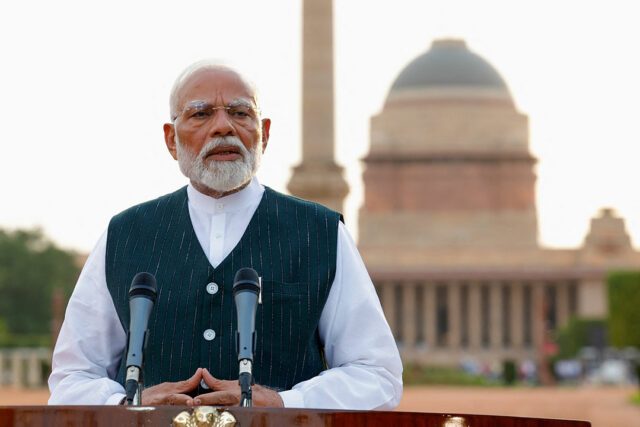
India’s Prime Minister Narendra Modi addresses the media at the Presidential Palace in New Delhi, India, June 7, 2024. — REUTERS

 – In February 2020, Nasreen and her husband Tofik were living in Shiv Vihar, an upcoming neighborhood in northeast New Delhi. But that month, riots erupted targeting Muslims like them and Mr. Tofik was pushed by a mob from the second floor of the building where they lived, according to a police report he filed days later from hospital.

He survived, but has a permanent limp and was only able to return to work selling clothes on the street after spending nearly 3 years recuperating.

Soon after the riots the couple moved to Loni, a more remote area with poorer infrastructure and job prospects – but with a sizable Muslim population.

“I will not go back to that area. I feel safer among Muslims,” Mr. Tofik, who like his wife goes by one name, told Reuters.

Reuters interviewed about two dozen people, who described how Muslims in the Indian capital have been congregating in enclaves away from the nation’s Hindu majority, seeking safety in numbers following the deadly 2020 riot and an increase in anti-Muslim hate speech. Details about this phenomenon, which has led a major Muslim neighborhood in Delhi to effectively run out of space, have not previously been reported.

There is no official data on segregation in India, whose long-delayed census also means that there are few reliable figures on how much Muslim enclaves have grown in the past decade. Muslims comprise about 14% of India’s 1.4 billion people.

Ground zero in Delhi is the central neighborhood of Jamia Nagar, which has long been a temporary sanctuary for Muslims when communal riots break out.

With ever more Muslims flocking in, the neighborhood is overflowing, despite a boom in construction, according to 10 local leaders, including politicians, activists and clergy, as well as five real-estate agents.

“No matter how brave a Muslim might be, they feel they have to move because if a mob comes, how brave can you really be?” said Raes Khan, a real estate agent in South Delhi who said Muslim clients now almost exclusively demand homes in Muslim-majority areas like Jamia Nagar.

Segregation nationally has increased significantly in the past decade, said London School of Economics political anthropologist Raphael Susewind, who has overseen long-term field-work on India’s Muslim population.

Rising Islamophobia under Prime Minister Narendra Modi’s Bharatiya Janata Party (BJP), which came into power in 2014, is a “key driver” of the trend, he said.

Six Muslim community leaders said significant anecdotal evidence supported Susewind’s assertion that segregation has increased. Jamia Nagar clergyman Md Sahil said the number of attendees at his mosque’s early morning prayers had more than doubled to over 450 in the past four to five years, and that it reflected the overall rise in population there.

In response to Reuters’ questions, Jamal Siddiqui, a senior BJP official for minority affairs, suggested that poorer Muslims might choose to live in segregated areas because such neighborhoods tend to be more affordable. “Educated Muslims leave the area and settle in developed areas with mixed population,” he said.

However, Syed Sayeed Hasan, a Congress party worker in Jamia Nagar, said a big push factor for sectarian cloistering in Delhi was the 2020 riot. More than 200 were injured and at least 53 people, mostly Muslim, were killed in protests after Modi’s Hindu nationalist government moved to introduce a law that made it easier for many non-Muslims to become citizens.

A 2020 Delhi government report blamed the riots on BJP leaders who made speeches that called for violence against protesters. At the time, the party said the allegations were baseless and that law enforcement had said there was no proof one of the leaders blamed in the report was responsible.

The Delhi government, controlled by the opposition Aam Aadmi Party, did not respond to requests for comment.


RISE IN HATE SPEECH

India’s National Crime Records Bureau, a government agency that collects and analyses crime data, doesn’t keep records on targeted violence against communities. It said the average number of annual riots with communal origins had fallen about 9% between 2014 and 2022 as compared to the previous nine years, when the Congress party ran India.

But independent experts at the Center for the Study of Organized Hate, a Washington-based think-tank, have documented a significant increase in anti-Muslim hate speech, from 255 incidents in first half of 2023 to 413 in the second half of 2023. BJP politicians and affiliate groups were key to the trend, the think-tank said.

Reuters has previously reported about how right-wing “cow vigilantes,” some of whom have ties to the BJP, have led lynch mobs against Muslims.

Modi, while campaigning in April for a third term as premier, attacked Muslims as “infiltrators” who had “more children,” implying they were a threat to India’s Hindu majority.

The BJP’s Siddiqui added that Modi was referring to undocumented immigrants like Rohingya Muslims whom he alleged “are living in India and are also weakening India.”

When previously asked about alleged anti-Muslim bias, the BJP government has said it does not discriminate and that many of its anti-poverty programs have benefited Muslims, who are among the poorest groups in India.

The BJP could only form a fragile coalition government after national election results were announced in June. In the immediate aftermath, at least eight anti-Muslim lynching incidents were reported, the non-governmental Association for Protection of Civil Rights said on July 5.


SAFETY IN NUMBERS

Jamia Nagar is a bustling cluster of alleyways behind Jamia Millia Islamia, a Muslim university that was an epicenter of the 2020 protests. It anchors an area of southeast Delhi that has many Muslim neighborhoods and a population of about 150,000, according to state election data.

When Reuters visited the cramped alleyways of the enclave on a sweltering summer day, they were framed by five-story buildings. Developers had added three storeys to what were many two story buildings to cater to the increase in demand, two real estate agents said. In a sign of booming growth, there were also dozens of newly-built kindergartens set up in the narrow lanes of the area.

Most Muslim enclaves are not as well-developed. A 2023 study from British, American and Indian economists that analyzed 1.5 million Indian areas found that public services like water and schools were comparatively rare in neighborhoods popular with Muslims and that children in such areas often face educational disadvantages.

After Tofik and Nasreen moved to Loni following Tofik’s assault, their income halved, with Tofik only able to work reduced hours.

Nasreen’s 16-year-old daughter, Muskan, suffered. The school in the outskirts of Delhi was under-resourced, Muskan said, and she missed her classmates. After feeling that the new school wasn’t for her, she dropped out.

But Nasreen doesn’t regret the move. “I will never go back. I have lost faith in them,” she said, of the neighbors who she said formed part of the mob that pushed her husband.

Reuters could not independently verify her claim but Sam Sundar, a 44-year-old Hindu resident of Nasreen’s old neighborhood, said both Hindus and Muslims suffered during the riots, which he blamed on outside perpetrators.

But he acknowledged that Muslims bore the brunt: “Very few Muslims now live in the area. This is not a good thing.”

Nasreen’s neighbor Malika also moved to the outskirts after her husband was killed in the 2020 riots. But she was unable to find a job and now also lives part-time at a small room in another neighborhood with more Hindu residents, where she is close to construction sites where she does odd jobs.

“Here I am afflicted with poverty, there I’m afflicted with insecurity,” she said.

Enclaves have also drawn upper middle class Muslim families, who used to be more comfortable living in mixed areas, said Raes, the real-estate agent.

“People feel it is better to live in separate areas rather than having a constant threat to life and property from members of the other community,” said Mujaheed Nafees, a Muslim leader from Modi’s home state of Gujarat, which hosts India’s largest Muslim enclave of some 400,000. – Reuters

BSP seen to continue easing cycle

BW FILE PHOTO

By Luisa Maria Jacinta C. Jocson, Reporter

THE DOOR is now wide open for the Bangko Sentral ng Pilipinas (BSP) to continue its rate-cutting cycle although at a gradual pace, analysts said.

“With luck coming into play, the door for the BSP to hasten its easing cycle has swung wide open,” HSBC economist for ASEAN (Association of Southeast Asian Nations) Aris D. Dacanay said in a report.

The Monetary Board slashed rates for a second straight meeting on Wednesday with a 25-basis-point (bp) cut, bringing the key rate to 6% from 6.25%.

The BSP has now lowered borrowing costs by a total of 50 bps since it began its easing cycle in August.

“The BSP may continue to cut interest rates in the coming months, although aggressive rate cuts are unlikely due to domestic and external considerations,” Bank of the Philippine Islands (BPI) Lead Economist Emilio S. Neri, Jr. said in a report.

BSP Governor Eli M. Remolona, Jr. said that they prefer to take “baby steps” in adjusting policy rates, referring to quarter-point cuts. He noted that a 50-bp cut may be too aggressive and would only be likely in a hard-landing scenario.

Mr. Remolona also signaled the possibility of 100 bps worth of cuts in 2025. However, he said rate cuts will not necessarily be done at every policy meeting.

“Given that inflation is expected to remain within target over the policy horizon and that economic growth should stay fairly robust, we expect the BSP to continue its gradual easing,” Citi economist for the Philippines Nalin Chutchotitham said.

RATE CUT IN DECEMBER
Analysts expect the BSP to deliver another 25-bp rate cut in December, in line with the central bank’s own signals.

“Given the persistently weak private consumption and improving inflation outlook in the near term, we now think that the BSP will cut its policy rate by 25 bps to 5.75% at its meeting in December 2024,” ANZ Research said in a report.

ING Bank likewise sees a 25-bp cut in December amid expectations of within-target inflation.

“We expect CPI (consumer price index) inflation to average 2.9%, well below the midpoint of the target band in 2024. The Philippines should benefit from improving global food supplies and lower rice prices following India’s lifting of its export ban on rice,” it said.

Mr. Dacanay expects the Monetary Board (MB) to cut by 25 bps at its next four policy meetings.

“We maintain our policy rate forecasts and expect the BSP to cut its policy rate again by 25 bps during the last rate-setting meeting for 2024. We then expect the BSP to cut its policy rate by 25 bps in each of the first three Monetary Board meetings of 2025,” he said.

“This also implies that the easing cycle will likely end in the second quarter of 2025 with the policy rate at 5% — a rate that is higher than pre-pandemic levels and a rate higher than what the BSP mentioned (on Wednesday). This is because we expect growth in 2025 to be strong when lower rice prices significantly boost household consumption.”

Ms. Chutchotitham also expects 25-bp cuts at the MB meeting in December, as well as the meetings in February, May and August next year. This would bring the policy rate to 5% by end-2025.

“We maintain our expectation of an additional 50-bp cut in 2026, to 4.5%. This would bring the policy rate slightly closer (but still a tad higher) to the pre-COVID average long-term policy rate,” she said.

“With the economy in a more ‘Goldilocks’ scenario, the BSP has options to remain flexible in its easing decisions, which may also include consideration of future Fed decisions and impact on the foreign exchange market,” she added.

RISKS
BPI’s Mr. Neri also sees the policy rate ending at 5.75% by end-2024, but warned of risks that could change this outlook.

“However, this outlook may evolve depending on what happens now until then, especially abroad. Recent developments have shown how economic data can surprise the markets and quickly lead to a shift in sentiment,” he said.

Mr. Neri cited risks such as the possibility of a pause by the US Federal Reserve in December, rising global oil prices and peso depreciation.

He said inflation should remain manageable in the next 12 months but warned of potential supply shocks.

“However, upside risks remain, particularly with the possibility of La Niña and the increase in cases of African Swine Fever… Inflation in the Philippines remains sensitive to climate conditions, and another extreme weather event could trigger a spike. On the other hand, stable commodity prices amid China’s economic slowdown may offset these risks,” he said.

Both Citi and BPI expect headline inflation to settle at 3.2% this year, before easing to 2.8% next year.

The BSP chief on Wednesday said the balance of risks to the inflation outlook for next year until 2026 has shifted to the upside.

The BSP trimmed its baseline inflation forecast to 3.1% (from 3.4%) for 2024 but raised the projection to 3.2% (from 3.1%) for 2025 and 3.4% (from 3.2%) for 2026.

Mr. Neri also cautioned the BSP against easing aggressively as the country’s external position is “not as strong as before.”

“(This) makes the peso less resilient to external risks and developments, which could spill over into domestic inflation… Moreover, the outlook for inflation can change quickly given the current global environment and the domestic supply shocks that can easily materialize. A cautious approach to rate cuts might be needed in order to offset these risks and ensure stability in the markets.”

Mr. Neri also flagged the possibility of a pause, though small, if the peso continued to be under pressure.

PhilHealth to proceed with fund transfer in Nov. — Recto

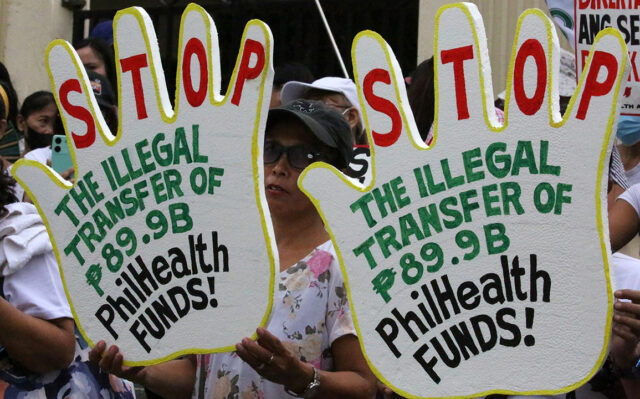
Health Alliance for Democracy (HEAD) hold a protest rally in front of the Philippine General Hospital in Manila, Oct. 15. The group is against the transfer of Philippine Health Insurance Corp. Funds to the National Treasury. — PHILIPPINE STAR/EDD GUMBAN

By Beatriz Marie D. Cruz, Reporter

THE PHILIPPINE Health Insurance Corp. (PhilHealth) will proceed with the scheduled transfer of the remaining P29.9 billion in excess funds to the Treasury in November despite questions over its constitutionality, Finance Secretary Ralph G. Recto said.

“Yes, [the third tranche of] excess funds were remitted to the Treasury yesterday (Oct. 16). There is a scheduled remittance in November,” Mr. Recto told BusinessWorld in a Viber message.

He was referring to the P30 billion remitted by PhilHealth to the Bureau of the Treasury (BTr) on Wednesday.

The last tranche, amounting to P29.9 billion, will be transferred to the BTr in November. PhilHealth previously remitted P20 billion on May 10 and P10 billion on Aug. 21.

This comes despite a petition filed on Wednesday by 1SAMBAYAN Coalition and other groups seeking to halt the transfer of PhilHealth’s excess funds to the Treasury.

The petitioners said the fund transfers violated Article VI, Section 25 (5) of the Constitution. Under the Charter, “no law shall be passed authorizing any transfer of appropriations.”

“However, the President, the President of the Senate, the Speaker of the House of Representatives, the Chief Justice of the Supreme Court, and the heads of Constitutional Commissions may, by law, be authorized to augment any item in the general appropriations law for their respective offices from savings in other items of their respective appropriations.”

Separate petitions questioning the fund transfers were filed by Senate Minority Leader Aquilino Martin D. Pimentel III and former Finance Undersecretary Ma. Cielo D. Magno on Aug. 2 and Bayan Muna on Sept. 6.

The Supreme Court (SC) en banc will hold oral arguments on the fund transfers in January next year.

Sought for comment, Mr. Recto said: “We are only following Congress’ instructions in the budget. We will respect the decision of the Supreme Court.”

A provision included in the 2024 General Appropriations Act allowed the Department of Finance to issue Circular No. 003-2024, authorizing PhilHealth and the Philippine Deposit Insurance Corp. to transfer P89.9 billion and P110 billion, respectively.

These would help fund unprogrammed appropriations worth P203.1 billion, which would support government programs in health, infrastructure, and social services.

“Unlocking these excess fund balances is a more prudent fiscal option than borrowing more or imposing taxes,” the Department of Finance (DoF) said in July.

Mr. Recto earlier said that projects funded by unprogrammed appropriations will boost the real gross domestic product growth by 0.7%. It would also generate up to P24.4 billion in additional revenues and create more jobs.   

The Finance chief also noted that the fund transfers would not impair the delivery of healthcare services, adding that PhilHealth would still have some P550 billion after the excess funds are remitted.

Meanwhile, medical groups are stepping up their efforts to stop PhilHealth’s fund transfers, said Anthony C. Leachon, former president of the Philippine College of Physicians.

“We will intensify our efforts to gather more supporters to stop the final transfer of P29.9 billion in November and hopefully influence the SC to expedite the issuance of TRO (temporary restraining order) or influence the decision in January in favor of the petitioners,” he said in a Viber message.

“The Executive branch should reflect on stopping the transfer since this unprecedented diversion of public funds has legal implications,” he added.

In August, healthcare representatives penned a letter to the DoF saying the excess funds of PhilHealth must be used to improve healthcare services.

Philippines’ BPO sector seen to shrink  amid shift to AI

REUTERS/DADO RUVIC/ILLUSTRATION

THE BUSINESS PROCESS OUTSOURCING (BPO) industry in the Philippines is likely to shrink as the shift to artificial intelligence (AI) in the workplace accelerates, Fitch Solutions’ unit BMI said.

“In the case of the Philippines, BPO is a key source of foreign currency, and this vital sector will probably shrink as AI adoption ramps up, since it would allow firms to reshore call centers to even developed economies cost effectively,” BMI Head of Asia Country Risk Darren Tay said in a webinar on Thursday.

“Put bluntly, AI could invalidate the Philippines’ current economic strategy,” he added.

The Contact Center Association of the Philippines (CCAP) expects contact center and BPO industries’ revenue to jump by 9% to $32.16 billion this year.

In 2023, CCAP members’ revenue stood at $29.5 billion, accounting for the bulk or 83% of the $35.5-billion revenue posted by the Information Technology and Business Process Management (IT-BPM) industry.

BMI said the Philippines is also among the countries that are less likely to benefit from the transition to AI.

According to BMI, lower-income countries are “much slower to adopt AI at a meaningful scale and the developmental gap between these countries and the rest in Asia will probably widen.”

“The Philippines, Indonesia and Thailand are in a worse position compared with the high-income group,” Mr. Tay said.

A quarter of these countries’ workforces are involved in high exposure and low complementarity jobs, such as elementary sales positions, he said.

“And they have a much smaller proportion of workers that are in high complementarity jobs, leaving them less able to benefit from AI-driven productivity gains” he added.

In 2023, the Philippines ranked 65th out of 193 countries in the Government AI Readiness Index by Oxford Insights.

The National Economic and Development Authority (NEDA) earlier said that the Philippine economy could generate P2.6 trillion annually if local businesses adopt AI.

BMI said workers in developed economies are more exposed to AI versus developing countries.

“The International Monetary Fund (IMF) argues that lower income countries could eventually leapfrog older technologies using AI and catch up developmentally with richer countries,” it said.

“However, we think the high cost of building the required infrastructure and highly skilled labor force makes achieving such a feat highly unlikely,” it added.

WIDER INCOME INEQUALITY
Generating the necessary investments to aid in the transition to AI may be increasingly difficult if AI “cuts off existing development paths,” BMI said.

“Furthermore, the proportion of workers who could benefit from AI is much smaller than those who stand to lose in these economies, which means there could well be strong public opposition to adopting AI,” it added.

BMI also noted how AI adoption can lead to a wider income inequality.

“AI will increase income and wealth inequality much like previous disruptive technologies like the internet,” Mr. Tay said.

Though AI has the capacity to boost productivity and incomes, the gap between the rich and the poor will likely widen as a result, BMI said.

This potential widening inequality can also hinder coordination and cooperation between countries.

“Social stability and international cooperation will probably deteriorate insofar as intra-country and inter-country inequality rises because of AI adoption.”

Inter-country inequality makes regional cooperation difficult, BMI said. It cited the challenges to climate change efforts due to the inequalities among countries.

“And in Asia, widening inter-country inequality can impede greater integration under such organizations as ASEAN (Association of Southeast Asian Nations). The counterargument is that developmental differences already exist and even if AI widened these gaps, the impediment to international cooperation may not increase appreciably.”

“However, the income gaps between middle-income and low-income countries tend to be much narrower, and we think that widening those (between Thailand and the Philippines for example) will have a material impact on international cooperation.” — Luisa Maria Jacinta C. Jocson

CAB, local carriers to discuss proposed fees

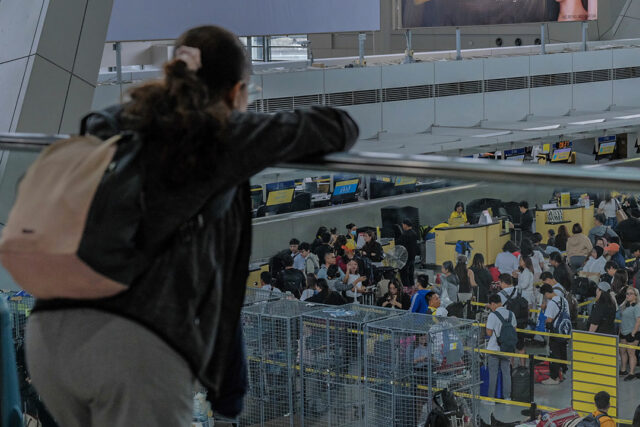
Passengers are seen at the Ninoy Aquino International Airport (NAIA) Terminal 3, July 25, 2024. — PHILIPPINE STAR/RYAN BALDEMOR

By Ashley Erika O. Jose, Reporter

THE CIVIL Aeronautics Board (CAB) is set to meet with local carriers on Friday (Oct. 18) to discuss the airlines’ proposal to collect terminal enhancement fees from passengers amid the rising cost of using the Ninoy Aquino International Airport (NAIA).

Manila International Airport Authority (MIAA) General Manager Eric Jose C. Ines said the CAB is currently studying the proposal of three airlines to collect these additional fees from passengers.

“The deliberation is ongoing, the CAB will look into it immediately,” Mr. Ines said by phone on Wednesday.

“MIAA’s part is just consultative, we will meet with CAB and the three local carriers on Friday so that they can justify their reasons,” he added.

MIAA, which has transitioned to its sole regulatory function for NAIA, serves as a consultative body for the proposed collection of terminal enhancement fees, Mr. Ines said.

The local airlines are reportedly seeking an average P300 per flight to cover the higher cost of operating at NAIA.

Aside from the three local carriers: Philippine Airlines operated by PAL Holdings, Inc.; Cebu Pacific operated by Cebu Air, Inc.; and Philippines AirAsia, Inc. (AirAsia Philippines), Mr. Ines said other foreign carriers operating at NAIA may also seek the same relief.

“I think the airlines anticipated that the moment NNIC (New NAIA Infra Corp.) took over there would be an increase in fees. To cover up for that expense, they filed this. It is still under request, whether it will be approved or not, it is being evaluated by CAB,” Mr. Ines said, noting that the petition was filed in September.

NNIC, the new operator of the Ninoy Aquino International Airport (NAIA), took over the operations and maintenance of the country’s main gateway on Sept.  14. Landing and take-off fees, a charge collected from airlines for using airport facilities and services, were increased starting this month.

A higher passenger service charge is also scheduled to be implemented by September 2025.

Enrico P. Villanueva, a senior lecturer at the University of the Philippines Los Baños Economics Department, said airline companies are expected to pass on additional charges to passengers.

“As a business, airlines have to pass on extra charges at terminals. It is a misnomer to call the fee enhancement, if the latter has not yet happened,” Rene S. Santiago, former president of the Transportation Science Society of the Philippines, said in a Viber message.

“The first order of the day should be for the Transport department and the MIAA to ask the new operator for a comprehensive list of the new airport fees that it seeks to implement on passengers and other airport stakeholders,” said Terry L. Ridon, a public investment analyst and convenor of think tank InfraWatch PH.

Nigel Paul C. Villarete, a senior adviser on public-private partnership (PPP) at the technical advisory group Libra Konsult, Inc., said the proposed terminal enhancement fees are justified since the new operator of NAIA is set to implement enhancements at the airport.

“These will be incorporated in their set fares which they can adjust anytime anyway so they may simply adjust the airport fees accordingly,” Mr. Villarete said in a Viber message.

AirportWatch Philippines Spokesperson Danilo Lorenzo S. Delos Santos called the higher fees imposed by NNIC as unreasonable and premature because no improvements yet have been implemented at NAIA.

“Clearly, these airport fee increases by Administrative Order 1 are unjustified because these are imposed on the public long before any impact from the rehabilitation efforts are felt by everyone,” Mr. Lorenzo said.

To recall, NNIC explained earlier that all fee increases implemented are only in accordance with the parameters and financial terms set by the Transportation department, MIAA, and its project transaction advisor Asian Development Bank during the bidding of the NAIA PPP partnership (PPP) project.

Water crisis could cut economic growth by 8% by 2050

BW FILE PHOTO

SINGAPORE — Countries need a new international pact to fix a mounting water crisis that could cut economic growth by at least 8% and put half the world’s food supplies at risk by 2050, an Organization for Economic Co-operation and Development (OECD)-backed commission said on Thursday.

Climate change, destructive land use and chronic mismanagement has put the global water cycle under “unprecedented stress,” said the Global Commission on the Economics of Water (GCEW), a two-year research initiative set up by the Netherlands in 2022.

Densely populated regions like northwestern India, northeastern China and southern and eastern Europe are especially vulnerable to water shortages, it said.

Governments must work together to create incentives to transform how water is consumed and ensure that investment in vital infrastructure reaches the right places, GCEW said in its final report.

“We are going to have to set common goals for water sustainability,” said Singapore President Tharman Shanmugaratnam, GCEW co-chair.

“Ultimately, it will require a global water pact. It is going to take several years to get there, but we are going to start that process,” he said at a briefing ahead of the report’s launch.

The report said global water supplies can no longer be counted on, partly as a result of shifting rainfall patterns, with each 1 degree Celsius of warming estimated to increase atmospheric moisture retention by 7%.

“For the first time, we are actually changing the very source of all freshwater, namely, precipitation,” said Johan Rockstrom, director of the Potsdam Institute for Climate Impact Research and another commission co-chair.  

As well as “blue water” in rivers and lakes, the commission looked at “green water” contained in soils and plant life. After evaporating, green water provides around half of global rainfall in a process known as “atmospheric rivers.”

Rising temperatures have created a vicious cycle, with lower soil moisture worsening droughts and wildfires and causing more degradation and biodiversity loss, further disrupting those atmospheric river flows, the commission said.

Regions relying on high levels of irrigation could suffer from water storage capacity declines. On current trends, global cereal production could fall by as much 23%.

Financing mechanisms are required to encourage investment in water infrastructure, especially in more vulnerable countries, and banks should also make lending conditional on protecting water supplies, the report said.

Global efforts are also needed to price water correctly and “redeploy” an estimated $600 billion in annual agriculture subsidies that encourage overconsumption and the planting of water-intensive crops in unsuitable regions, said Ngozi Okonjo-Iweala, Director-General of the World Trade Organization and another GCEW co-chair.

While multilateral cooperation is needed to address threats to global water supplies, growing shortages could aggravate geopolitical tensions, said Genevieve Donnellon-May, a researcher at the Oxford Global Society think tank, who studies water politics.

“One worry is that growing water scarcity could lead to less transboundary cooperation, both at a subnational level… and also between nations,” she said. — Reuters