Home Blog Page 198

Sharks Billiards Association allows ‘sharking’ to attract fans

WHEN the Sharks Billiards Association (SBA) was launched two years ago, one of the rules it allowed to attract fans was “sharking,” or giving the spectators the freedom to shout or boo the players during the game to force a miss.

It may have lost one to long-time pool patron Perry Mariano.

“Billiards is a gentleman’s game. It is quiet, respectful and all focus,” said Mr. Mariano. “At Lucky Break, we respect the heritage of the game, we are about the sport in its purest form and exactly how world champions were trained to play.”

Intriguingly, Mr. Mariano is the father of Hadley Mariano, the chief executive officer of the SBA, which is now on its Season Two.

“I look at Hadley’s league, I don’t approve of this ‘sharking’ rule,” he said.

“You have people screaming and heckling during live play in 9-ball. That’s a deviation from the sport.”

“It turns a professional match into a circus,” he added.

While sharking may be entertaining in some way, Mr. Mariano stressed it may devalue the beauty of the game.

“Is there a wide market for SBA? Maybe. I’ll be honest, I actually watch a lot of his games. It’s highly entertaining,” he said. “But as a mainstream professional league for the future? I don’t see it lasting. You can’t build a legacy purely on noise.”

In the end, Mr. Mariano gave his son fatherly advice by sticking to the old ways.

“I love my son, and I wish him all the luck in the world with this experiment. But he’d probably be better off sticking to the traditional game with me. When the fans get tired of the yelling, they’ll come back to the real sport.” — Joey Villar

Driving F1 car

The 2026 Formula One (F1) season has just begun, but the expected celebration of speed has already given way to a chorus of complaints from the very drivers who need to wrestle with the machinery. Heading into the race in Melbourne, the sport’s most recognizable voices have rendered a verdict on the new regulations. From their vantage point, overseers have managed the rare feat of producing cars that are technologically remarkable yet oddly joyless to drive. And the irony is not lost on all and sundry: The cars may be more sophisticated than ever, but the men behind the wheel are not thrilled. At all.

Lando Norris, the reigning world champion, offered perhaps the bluntest appraisal of the new generation of cars. Formula One, he said, has gone from “the best cars ever made” to “probably the worst.” The shift is largely rooted in the sport’s latest technical overhaul, which places far greater emphasis on electrical power and energy management. The new power units split output almost evenly between combustion and electric systems, forcing drivers to juggle energy harvesting, battery deployment, and braking regeneration. In other words, they need to focus as much on racing as on resource accounting: Push too hard in one corner and the battery drains; ease up and any advantage disappears.

Max Verstappen, arguably the sport’s best driver, summed up his experience more bluntly: He was “not having fun.” His qualifying session at the Australian Grand Prix ended abruptly when his car’s rear axle locked under braking, sending him spinning into the barrier before he could even post a lap time. The incident was attributed to the complex energy-regeneration system now embedded in the cars, if nothing else an abject reminder that technological ambition may well carry unintended consequences. He escaped injury, but his frustration mirrored that of his peers, who fear the regulations have made the sport harder to drive and, even more worrying, harder for fans to follow.

To be sure, a familiar pattern has emerged amid the criticism: Someone always manages to make the machinery work. In Melbourne, George Russell produced a commanding qualifying lap to claim pole position, leading a front-row lockout that hinted at Mercedes-AMG Petronas’ renewed strength in the sport’s new era. Needless to say, he was pleased, if surprised, by the margin, acknowledging that the car delivered more than expected. His reaction was pragmatic: When the opportunity presents itself, he said, the job is simply to “make hay while the sun shines.”

The performance inevitably drew attention to Mercedes’ power unit, which several rivals believe may hold an early advantage under the new rules. Even Lewis Hamilton suggested that the team’s engine could prove decisive in the championship battle. To be sure, such suspicions have become ritualistic in Formula One; whenever one team finds pace the others cannot immediately explain, speculation inevitably follows. In any case, the grid appears to have entered a competitive cycle featuring yet another shift in the balance of power.

For now, though, the opening weekend in Australia has offered an unusual spectacle: a sport launching its most technologically ambitious era while its drivers publicly pine for the same old, same old. Formula One has always been a delicate compromise between engineering ambition and the purity of racing. Tilt too far toward technology and the drivers become shackled to algorithms; tilt too far toward simplicity and the engineers lose the challenges that define the series. At this point, it’s anybody’s guess as to when, or if, 2026 regulations will find their equilibrium. In the meantime, the message from the cockpit is unmistakable: The cars being faster on paper is one thing, but the joy of driving them is another matter altogether.


Anthony L. Cuaycong has been writing Courtside since BusinessWorld introduced a Sports section in 1994. He is a consultant on strategic planning, operations and human resources management, corporate communications, and business development.

PHL becomes biggest buyer of Brazil pork

REUTERS

By Vonn Andrei E. Villamiel, Reporter

THE PHILIPPINES has overtaken China as the largest buyer of pork and pork products from Brazil, according to the US Department of Agriculture (USDA).

In a report, the USDA said Brazilian pork exports to the Philippines rose 56.6% last year to 433,595 metric tons (MT) in carcass-weight equivalent.

The shipments to the Philippines accounted for 25.3% of Brazil’s total pork exports during the year, making the country the top destination for Brazilian pork products.

The USDA also reported that Brazil supplied more than 66% of all pork and pork product imports to the Philippines in 2025.

“Analysts report that the reason for the increased exports to the Philippines is related to their economic and population growth, as well as challenges in the domestic industry related to animal disease,” the USDA said.

The Bureau of Animal Industry (BAI) earlier reported that meat imports rose 13.38% to a record 1.64 million MT in 2025, with pork imports up 16.09% to 851,760 MT.

The BAI said other major pork suppliers to the Philippines included Spain, Canada, and the Netherlands.

PHL has second-highest share of women in senior management

LINKEDIN SALES SOLUTIONS-UNSPLASH

THE PHILIPPINES has the second-highest share of women in senior management behind only South Africa, according to P&A Grant Thornton.

According to the firm’s Women in Business 2026 report, 44.5% of senior roles in the Philippines are held by women, up from 43% in 2025.

South Africa had the top share at 47.3%. Other countries in the study included  Thailand (44.1%), Colombia (43.4%), Malaysia (41.9%), Japan (21.5%), and South Korea (21.1%).

The number of Filipino women in senior management exceeded the global average of 32.9% and 31.8% across the Asia-Pacific.

Only 1.1% of businesses in the Philippines have all-male leadership teams, P&A Grant Thornton said.

“In today’s competitive talent environment, organizations that visibly embed gender equality into their strategy are better positioned to attract and retain high-performing leaders,” Romualdo V. Murcia III, chairman and managing partner of P&A Grant Thornton, said in a statement.

Colombia, Vietnam, India and South Africa reported no businesses with all-male leadership teams, it added.

The report also noted that 98.9% of Filipino businesses have diversity, equity, and inclusion (DEI) initiatives, higher than the global average of 92.7%.

About 80.7% of the Philippine businesses said they reviewed their DEI policies in 2025, with 33.3% planning to introduce new ones.

Job candidates are more likely to prefer a company with strong DEI policies, P&A Grant Thornton said.

About 97.7% of business leaders said they consider a company’s gender equality initiatives when applying for a new role, while 71.6% see it as a priority.

The report also noted that 40.9% of businesses said potential hires ask about gender balance.

“We’re seeing candidates focus more on culture aside from numbers,” Abe Pelayo, people and culture group director of P&A Grant Thornton, said.

“They want to know if the workplace is fair, if people are treated consistently, and if opportunities are genuinely open to everyone.”

It added that female senior hires in the last six months came from companies with fewer than 50 employees.

“This suggests that women leaders are actively seeking platforms where growth pathways are clearer, leadership is visible, and inclusion is measurable,” P&A Thornton said.

More Philippine businesses said they have embedded gender equality into senior leadership roles (60.9%) and the recruitment and selection processes (56.3%). However, gender equality is least embedded in the coverage of employee bonus at 55.2%.

The report also cautioned that 8% of Philippine businesses said they plan to relax or have already relaxed some of their gender equality initiatives.

“Given the external pressures and changes organizations have faced this year, it’s only natural that many would revisit their initiatives,” Eleanor L. Roque, tax principal at P&A Grant Thornton, said.

Most common areas affected when companies revisit their gender equality initiatives include senior leadership roles, mentoring programs, and employee pay, P&A Grant Thornton said.

Asked to comment, Rizal Commercial Banking Corp. Chief Economist Michael L. Ricafort said adopting DEI initiatives is now a standard practice globally.

“This forms part of compliance with ESG (environmental, social, and governance) standards, and is encouraged by global regulators to align with global best practices,” he said via Viber. — Beatriz Marie D. Cruz

Spot prices ease in Feb. on improved supply margin

BW FILE PHOTO

POWER PRICES in the Wholesale Electricity Spot Market (WESM) continued to decline in February as supply margins improved, according to the Independent Electricity Market Operator of the Philippines (IEMOP).

In a statement on Sunday, IEMOP reported a 1.8% month-on-month decline in the average WESM rate system-wide to P3.50 per kilowatt-hour (kWh).

Available supply increased 4.4% to 19,992 megawatts (MW). Demand grew 3.1% to 12,874 MW.

“Because supply increased faster than demand, the system maintained a larger buffer of available generation capacity,” IEMOP said.

Electricity demand in Luzon grew 5.2% to 9,016 MW, while available generation rose 8% to 14,286 MW. This resulted to a higher supply margin, which helped reduce the region’s spot price to P2.69 per kWh, down 17.2% from a month earlier.

Supply margins in the Visayas and Mindanao slightly decreased due to “higher levels of generating unit outages and variations in electricity transfers between regions,” IEMOP said.

Spot prices in the Visayas increased 26.6% month on month to P5.37 per kWh.

During the period, available supply dropped 4.4% to 2,256 MW. Demand declined 1.7% to 1,829 MW.

The market operator said the Visayas grid was not able to receive more electricity from the Luzon grid through the Leyte-Luzon transmission interconnection, which is already operating close to its maximum capacity.

Similarly, the Mindanao-Visayas interconnection faced periods of constrained transfers, reducing the available supply of the Mindanao grid by 3.2% to 3,449 MW, with demand easing 1.4% to 2,028 MW.

As a result, the region’s electricity rates rose 23.2% month on month to P5.25 per kWh.

IEMOP said several power plants experienced both planned maintenance outages and unexpected shutdowns, prompting the more frequent dispatch of higher-cost generating units during periods of higher demand.

IEMOP said it “continues to closely monitor electricity supply and demand conditions in coordination with the system operator and market participants to support the reliable and efficient operation of the power system.”

IEMOP operates the WESM, where energy companies can purchase power when their long-term contracted power supply is insufficient for customer needs. — Sheldeen Joy Talavera

Wholesale rice prices higher in Feb.

Farmers are seen in a rice field in Bustos, Bulacan, Oct. 17, 2023. — PHILIPPINE STAR/KJ ROSALES

THE WHOLESALE PRICE of rice increased in February, according to preliminary data from the Philippine Statistics Authority (PSA).

The PSA said the national average wholesale price of well-milled rice increased 4.2% year on year in February to P47.72 per kilo.

The biggest increase in the well-milled rice wholesale price was logged in the Caraga region, where it rose 15.7% year on year to P53.14 per kilo.

Wholesale prices of well-milled rice in the National Capital Region rose 15.5% from a year earlier to P53.95 per kilo.

The average wholesale price of regular-milled rice in February rose 0.7% year on year to P41.60 per kilo.

Central Luzon posted the biggest increase in the wholesale price of regular-milled rice, with the regional average rising 12.4% year on year to P44.92 per kilo.

Premium and special rice also posted wholesale price declines, with their national averages rising 6% and 4.9%, respectively.

Meanwhile, the national average wholesale price of yellow corn grains in February fell 5.9% year on year to P19.70 per kilo. The corresponding price for white corn grains rose 54.1% to P26.77 per kilo.

The wholesale price of yellow corn grits in February rose 7.7% year on year to P31.82 per kilo, while the price of white corn grits increased 36.7% to P38.67 per kilo. — Vonn Andrei E. Villamiel

Higher fuel prices seen affecting 1.2M households in off-grid areas

PHILSTAR FILE PHOTO

AROUND 1.2 million households residing in off-grid areas face the risk of prolonged power outages as fuel prices rise as a result of the Iran crisis, according to transition and transaction advisory firm Climate Smart Ventures (CSV).

In the latest analysis, CSV said that the energy security of communities in off-grid areas — typically remote or island communities — is at risk because of their reliance on diesel power plants.

“If oil prices continue to escalate and the conflict drags on, this can deplete the Universal Charge for Missionary Electrification (UCME) fund used to subsidize fuel in off-grid areas,” CSV Head of Philippine Operations Matthew Carpio said.

Mr. Carpio said the upward pressure on fuel prices could lead to an increase in UCME rates, which are collected from on-grid electricity consumers.

Citing the precedent of the Ukraine-Russia war in 2022, Mr. Carpio warned that a prolonged conflict could trigger blackouts of up to 16 hours in some off-grid areas if fuel subsidies are exhausted and diesel stocks run out.

Iran, currently under attack from the US and Israel, controls the northern shore of the Strait of Hormuz, which about 20% of the world’s oil and liquefied natural gas must transit.

Mr. Carpio said increasing the proportion of renewable energy (RE) for power generation can insulate remote communities against global price shocks.

“This is a reminder why a fast RE transition is not a negotiable but a necessary hedge, especially for off-grid,” he said.

Currently, island communities and off-grid areas depend almost exclusively on power plants operated by the National Power Corp.’s Small Power Utilities Group (NPC SPUG).

About 99% of the 79 SPUG power plants operating across 70 islands run on diesel fuel, leaving them exposed to global price shocks, according to CSV.

CSV cited NPC programs, such as the Accelerated Hybridization Program (AHP), which seeks to launch hybrid plants powered by a combination of diesel, solar, and battery, as holding promise for cushioning communities from the impact of oil price shocks.

Through AHP, NPC aims to reduce diesel consumption by at least 20% in the power plants, with the end goal of fully transitioning all SPUG areas to RE by 2030.

Mr. Carpio said electric cooperatives operating in island communities and off-grid areas being serviced by SPUG plants can develop their own RE plants to reduce dependence on diesel.

He said the “rapid decline” in the cost of RE and energy storage systems has made them more competitive than diesel on a per kilowatt-hour basis, especially in off-grid locations

“With more support, transitioning to RE sources can insulate the country’s off-grid and island communities from fuel supply chain constraints, strengthen energy sufficiency, and improve the overall resilience,” Mr. Carpio added. — Sheldeen Joy Talavera

Labor, consumer groups call for tax relief

PHILSTAR FILE PHOTO

LABOR AND CONSUMER groups are urging the government to relieve their tax burdens and raise wages, citing the high cost of living made worse by the attacks on Iran.

“Prices remain high. The government claims that inflation has only slightly increased, but in the public markets the reality is different,” Renna Joy F. Lasmarias, representative of the Promotion of Church People’s Response (PCPR) within the SUKI Consumer Network, said in a statement on Sunday.

Ms. Lasmarias noted that retail prices for staples remain elevated, with onions at about P165 per kilo, chicken P196, and galunggong (round scad) P326.

The Federation of Free Workers (FFW) Women’s Network said gasoline prices have hit P80 per liter in Tacloban.

Vilma Garcia, a board member of FFW, said that women bear the brunt of the crisis as they manage dwindling family budgets against uncontrolled price increases.

The statements were issued as part of the observance of Women’s Month.

“While a living wage is being denied to families and public funds intended for social protection are being lost to corruption, the suffering endured by women workers only intensifies,” Ms. Garcia added.

President Ferdinand R. Marcos, Jr. said last week that the March 10-16 forecast for fuel includes gasoline price increase of P7.48 per liter. Diesel was to rise P17.28 per liter, and kerosene P32.25 per liter.

Ronald B. Gustilo, national campaigner for the Digital Pinoys organization, told BusinessWorld via Messenger chat that the government should also consider suspending or reducing the excise tax or value-added tax (VAT) on fuel if prices continue to climb.

“This could help lower pump prices more quickly and mitigate the domino effect on transport fares, the cost of basic goods, and the operational expenses of businesses,” Mr. Gustilo said.

The FFW Women’s Network (FWN) added that the influx of women into the labor force has not been met with adequate protection, citing low wages, the lack of a pathway to permanent employment, and unsafe working conditions. Ma. Victoria Bellosillo, president of FWN, said: “the increasing number of women in the world of work is not matched by additional protections for them.”

Beyond tax relief, the FWN is calling for a legislated wage hike and the abolition of regional wage boards to provide more stable economic support for families. The group also raised concerns regarding the safety of overseas Filipino workers (OFWs) in the Middle East, noting that many women are forced to work overseas due to poverty and are now caught in the crossfire of Middle Eastern conflicts.

The SUKI Consumer Network said that current economic hardships are compounded by the privatization of essential utilities such as water and electricity. They are demanding the removal of the 12% VAT and excise taxes on basic necessities and an end to the Oil Deregulation Law. — Erika Mae P. Sinaking

PFRS 18 in focus: Confidently navigating changes in financial reporting

(Second of two parts)

IN BRIEF:

•PFRS 18 emphasizes Management-Defined Performance Measures (MPMs), which are specific subtotals reflecting management’s view of financial performance, and requires detailed disclosures to enhance transparency and accountability.

•The standard enhances the guidance on aggregating and disaggregating financial information, which is expected to reinforce more disciplined financial reporting.

•Companies must prepare for the implementation of PFRS 18 by aligning their financial reporting processes, assessing data management systems, and engaging with stakeholders to ensure a smooth transition and capitalize on the opportunity for modernization in financial reporting.

Entities often provide certain information about their financial performance beyond typical PFRS totals, such as certain additional performance metrics to guide decision-making and communicate results. These data and metrics are generally communicated outside the financial statements and included in management’s press releases, strategic reports, management discussion and analysis. Users of financial statements find these to be useful; however, there are concerns about the lack of transparency on how these measures or metrics are calculated.

In the first part of this article, we discussed the upcoming IFRS 18 standard, its significant changes to financial statement presentations, and the implications for clarity, comparability, and compliance in financial reporting starting from January 2027.

In this second part, we discuss how under PFRS 18, certain performance measures, known as Management-Defined Performance Measures (MPMs), will move to the financial statements, along with the enhanced guidance on disclosures of financial information and implications for companies as they prepare for its implementation.

SPOTLIGHT ON MPMS
PFRS 18 places a significant emphasis on MPMs, which are specific subtotals of income and expenses that reflect management’s view of the entity’s financial performance as a whole and are used in public communications outside of financial statements.

The introduction of MPMs is a strategically significant change that directly impacts how an entity communicates its performance. However, the narrow definition of MPMs means that not all performance measures used in an entity’s communications will qualify as MPMs. An adjusted profit figure, which modifies a total or subtotal required by PFRS Accounting Standards, can qualify as an MPM.

However, non-financial performance measures such as market share, store surface and customer satisfaction score will not meet the definition of an MPM. In addition, certain financial performance measures, such as free cash flows, net debt and adjusted revenues will also not qualify as MPMs since they do not represent subtotals of income and expenses.

PFRS 18 also provides that certain subtotals of income and expense, such as those already required or specified by a PFRS Accounting Standard (like operating profit) or are specifically excluded (like gross profit or loss), are not MPMs. Lastly, while financial ratios such as return on equity are not MPMs, a subtotal that is a numerator or a denominator in a financial ratio could qualify as an MPM.

DISCLOSURE REQUIREMENTS FOR MPMS
PFRS 18 requires entities to include all necessary information about MPMs in a single note to the financial statements, which includes how the measure is calculated, why it is useful, and a reconciliation to the most comparable PFRS subtotal.

This requirement ensures that users have access to relevant information about MPMs, enhancing transparency and accountability.

IMPLICATIONS FOR FINANCIAL REPORTING PROCESSES
Many entities currently use alternative performance measures (APMs) when explaining financial performance, but information about these measures is generally communicated outside the financial statements, which has led to some concerns about the quality of such information. As a result of PFRS 18’s guidance on MPMs, companies must ensure that their current financial reporting process can capture all the required information about MPMs.

Entities that use APMs will also need to assess whether any of such APMs meets the definition of an MPM, which will then require additional disclosures that they may not be preparing  currently, such as the reconciliation to the most comparable PFRS subtotal. The financial reporting process should also be able to monitor any changes to public communications, as these can affect which measures qualify, or cease to qualify, as MPMs.

Additionally, since MPMs are required to be disclosed in a single note to the financial statements, they will face increased scrutiny from regulators and investors.

AGGREGATION AND DISAGGREGATION GUIDANCE
PFRS 18 improves the general requirements for aggregating and disaggregating information in financial statements. It provides guidance on how entities should aggregate items based on shared characteristics and disaggregate them based on dissimilar characteristics.

IMPORTANCE OF CLEARER LINE ITEM PRESENTATION
In financial reporting, clarity is paramount. Users should not be left guessing about the nature of line items. PFRS 18 emphasizes that entities must avoid using vague labels like “other” unless absolutely necessary. If an entity cannot find a more informative label, it may use “other,” but this should be the exception rather than the rule.

PLANNING FOR PFRS 18 IMPLEMENTATION
PFRS 18 will be effective for periods beginning on or after Jan. 1, 2027. Entities are required to apply the standard retrospectively for comparative periods in both interim and annual financial statements. PFRS 18 also introduces consequential amendments to other PFRS Accounting Standards that entities must apply when adopting PFRS 18.

Given the requirement to retrospectively restate comparative periods and disclose certain reconciliations, companies need to plan ahead and start determining the impact of PFRS 18 as early as possible. For example, the annual financial statements in the year of adoption for an entity that adopts PFRS 18 beginning Jan. 1, 2027 will require information from 2025 onwards if the entity presents more than one comparative period in its statement of profit or loss.

For companies that prepare quarterly financial statements in accordance with PAS 34 Interim Financial Reporting, the impact of adopting PFRS 18 will already be reflected in their first quarterly report during the year of adoption by presenting the headings and subtotals and disclosing the reconciliations required by PFRS 18.

KEY CONSIDERATIONS FOR COMPANIES
Companies preparing for the implementation of PFRS 18 should consider the following key areas:

Compliance: Ensure that financial reporting processes align with the new requirements and that the impacts on contracts and debt covenants which currently use subtotals from the statement of profit or loss as inputs have been considered.

Processes: Evaluate existing processes and identify areas that may require modification.

Data and Systems: Assess whether current data management systems can accommodate the changes introduced by PFRS 18.

Internal reporting: Assess any potential changes to the current structure and contents of internal management reports and explore any opportunities for alignment with the new categories and subtotals required by PFRS 18.

Performance measurement: Revisit how management incentive structures are currently designed and how key performance indicators are measured, particularly those that are tied to certain subtotals in the statement of profit or loss.

Investor Relations: Communicate with investors, analysts, regulators and creditors about the changes and how they will impact financial reporting.

Strategy and People: Engage relevant stakeholders across the organization to ensure a smooth transition.

DRIVING MODERNIZATION IN FINANCIAL REPORTING PROCESSES
The countdown to PFRS 18 has begun, and as companies inch closer to the initial application of the new standard, it is essential that management understands the potential impact on their reporting. While the changes may seem daunting, they also present an opportunity for organizations to modernize their financial reporting processes.

PFRS 18 can serve as a catalyst for improving transparency and encouraging stronger cross-department collaboration in financial reporting. By redefining conversations about financial performance and performance measures, companies can rethink how they tell their story and shape how they are understood by stakeholders.

PFRS 18 represents a significant shift in financial reporting standards that will enhance the clarity, comparability, and transparency of financial statements. As companies prepare for the implementation of this new standard, they must embrace the opportunity to improve their reporting processes and engage with stakeholders effectively. By doing so, they can navigate the changes with confidence and position themselves for success in a rapidly evolving financial landscape.

This article is for general information only and is not a substitute for professional advice where the facts and circumstances warrant. The views and opinions expressed above are those of the authors and do not necessarily represent the views of SGV & Co.


Aris C. Malantic is the assurance growth areas leader and financial accounting advisory services (FAAS) leader of SGV & Co., and Dwayne JUSTIN G. Ignacio is a FAAS senior manager from SGV & Co.


Trump rejects settling Iran war, raises prospect of killing all its potential leaders

AN EXPLOSION caused by a projectile impact after Iran launched missiles into Israel following Israel and the US launched strikes on Iran, in Tel Aviv, Israel, Feb. 28, 2026. — REUTERS/GIDEON MARKOWICZ

BEIRUT/MIAMI/TEL AVIV/DUBAI — US President Donald J. Trump said he is not interested in negotiating with Iran and raised the possibility that the Iran war would only end once Tehran no longer has a functioning military or any remaining leadership in power.

Speaking to reporters aboard Air Force One on Saturday, Mr. Trump said the air campaign could make negotiations a moot point if all potential leaders of Iran are killed and the Iranian military is destroyed.

“At some point, I don’t think there will be anybody left maybe to say ‘We surrender,’” Mr. Trump said.

IRAN PRESIDENT’S APOLOGY CAUSES STIR
Israel said it had initiated fresh strikes across Iran on Sunday, and a huge fire engulfed a government office block in Kuwait hit by drones, as a war that has brought chaos to the Middle East and roiled global oil markets entered its second week.

Mr. Trump has justified the attack by saying Iran posed an imminent threat to the United States, without providing evidence, and was getting too close to being able to build a nuclear weapon.

The US and Israel have discussed sending special forces into Iran to secure its stockpile of highly enriched uranium at a later stage of the war, Axios reported, citing four people with knowledge of the discussions. The White House did not immediately comment on the report.

Iran’s president apologized to neighboring states for its attacks on US facilities in those countries, in an attempt to cool anger across the Gulf, but stirred criticism from hardliners at home.

“I personally apologize to neighboring countries that were affected by Iran’s actions,” Iranian President Masoud Pezeshkian said, urging them not to join US-Israeli attacks on Iran.

He dismissed Mr. Trump’s demand for the Islamic Republic’s unconditional surrender as “a dream,” but said its temporary leadership council had agreed to suspend attacks on nearby states unless strikes on Iran originated from their territory.

Mr. Pezeshkian’s comments caused a political stir in Iran, prompting his office to reiterate Iran’s military would respond firmly to attacks from US bases.

Ali Larijani, Iran’s secretary of the Supreme National Security Council, said on state television there was no rift among Iranian officials over its handling of the war.

Saudi Arabia has told Tehran that continued Iranian attacks on the kingdom, and its energy sector, could push Riyadh to respond in kind, four people familiar with the matter told Reuters.

The governments of Saudi Arabia, Kuwait and the United Arab Emirates reported Iranian drone attacks in their countries on Saturday and early Sunday with varying degrees of damage. Iran’s Revolutionary Guards also targeted US forces at a base in Bahrain, Iranian state media said.

In Norway’s capital Oslo, the US embassy was hit by an explosion early on Sunday, causing minor damage but no injuries, Norwegian police said. It was not immediately clear what caused the blast or who was involved.

Washington has halted for now a federal security bulletin that would have warned of a heightened threat to the US in light of the Iran conflict, a Trump administration official told Reuters. But a recent US intelligence assessment had warned that Iran and its proxies “probably” pose a threat of targeted attacks on the United States.

ISRAEL WARNS LEBANON TO REIN IN HEZBOLLAH
Huge explosions were heard in parts of Tehran, state media reported, while Israel said it had struck Iranian missile sites and command centers.

The US-Israeli attacks have killed at least 1,332 Iranian civilians and wounded thousands, according to Iran’s United Nations ambassador, Amir Saeid Iravani.

US forces were likely responsible for an apparent strike on an Iranian girls school that killed scores of children, US officials have told Reuters. But Mr. Trump, without citing evidence, told reporters on Saturday that Iran was responsible.

“We think it was done by Iran because they are very inaccurate as you know with their munitions. They have no accuracy whatsoever. It was done by Iran,” said Mr. Trump. Defense Secretary Pete Hegseth, standing behind Mr. Trump aboard Air Force One, said the matter was still under investigation.

Iranian attacks have killed 10 people in Israel. At least six US service members have been killed. Their remains arrived on Saturday at an Air Force base in Delaware.

In Iran, local news agencies, citing an Iranian oil ministry source, said its fuel depots were hit by strikes in three areas, including Karaj, west of Tehran.

Tehran has responded to the US-Israeli war on Iran by hitting Israel and Gulf Arab states hosting US military installations. Israel has launched fresh attacks in Lebanon after the Iran-aligned militia Hezbollah fired across the border.

With the conflict spreading, Israel warned Lebanon of a “very heavy price” if it did not rein in Iran-allied Hezbollah militants, as it pounded the group’s strongholds with airstrikes and mounted a deadly airborne raid in the east.

On Saturday morning, more buildings in Beirut’s Hezbollah-controlled southern suburbs had been reduced to rubble, dust and tangled wires, Reuters video showed. The death toll from Israel’s attacks on Lebanon since Monday rose to around 300.

Iran’s apparent strategy of maximum chaos has driven up the costs of the conflict by raising energy prices and hurting global business and logistics links.

Kuwait’s national oil company began cutting output on Saturday, adding to earlier oil and gas cuts from Iraq and Qatar. Oil prices have hit multi-year highs with the conflict effectively shutting the Strait of Hormuz. — Reuters

China says US talks vital as Trump targets Beijing’s key partners

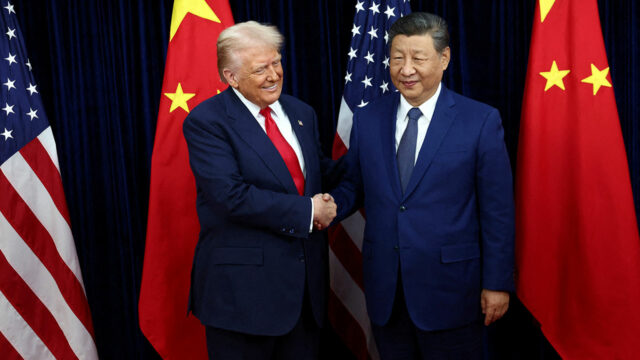
US PRESIDENT Donald J. Trump shakes hands with Chinese President Xi Jinping as they hold a bilateral meeting at Gimhae International Airport on the sidelines of the Asia-Pacific Economic Cooperation (APEC) summit in Busan, South Korea, Oct. 30, 2025. — REUTERS/EVELYN HOCKSTEIN

BEIJING — US-China dialogue is vital to preventing globally damaging miscalculations, China’s top diplomat said on Sunday, ahead of a highly anticipated summit this month between leaders Xi Jinping and Donald J. Trump.

“Failure to engage between the two nations would only lead to misunderstandings and misjudgments, escalating toward confrontation and harming the world,” Foreign Minister Wang Yi told a press conference on the sidelines of an annual parliament meeting in Beijing.

With the US president focused on the war he and Israel launched against Iran, analysts are watching for signs that his visit to meet Mr. Xi will go ahead. China has not previously announced the summit between the leaders of the world’s biggest economies, expected for the end of the month.

‘DONROE DOCTRINE’ VS BELT AND ROAD INITIATIVE
“The agenda for high-level exchanges (with the US) is on the table,” Mr. Wang said. “What is required is for both sides to make thorough preparations to create a conducive environment to manage existing differences,” he added, without giving further details.

In addition to the week-old Iran war, which has killed Supreme Leader Ayatollah Ali Khamenei and more than 1,300 others in the country, according to Tehran, Mr. Trump authorized the capture of Venezuelan President Nicolas Maduro in January, testing Beijing’s commitment to its strategic partners.

On Iran, Mr. Wang urged an immediate halt to military operations, saying the war that should not have happened and that the use of force was not a way to resolve issues. He did not go beyond Beijing’s previous condemnations and expressions of concern, despite reports Tehran had neared a deal to buy supersonic anti-ship missiles from Beijing.

Mr. Trump’s pursuit of a “Donroe Doctrine” — his rebranding of a 19th century policy asserting Washington’s zone of influence in the Americas — is crashing into Mr. Xi’s flagship Belt and Road and Global Security initiatives, which have been decades in the making and carry significant personal political investment for the Chinese leader.

Mr. Trump has also threatened military action against Colombia and Mexico and said Cuba’s communist regime “looks like it’s ready to fall” on its own, raising questions for Latin American countries over how their China ties might protect them if put to the test.

China’s foreign policy has not faced this much scrutiny since the Cold War, said Yasser Nasser, a historian at the University of Tennessee, Knoxville.

“In some senses it is existential in that it reveals that Chinese economic commitments or commitments to arms deals, for example, do not translate to directly confronting the US or preventing interventions as, for example, it did during the Vietnam War.”

‘CANNOT RETURN TO LAW OF THE JUNGLE’
Mr. Wang appeared to take a swipe at Mr. Trump’s foreign policy ambitions.

“If China, like some traditional major powers, was keen on carving out spheres of influence in its neighborhood, stoking bloc confrontation, or even shifting problems onto its neighbors, would Asia still be as stable as it is today?” Mr. Wang said. He did not name the US.

Beijing has grown more belligerent in its backyard over the past year, analysts say.

It has held massive war games around Taiwan, escalated a diplomatic spat with Japan over remarks by Prime Minister Sanae Takaichi that a Chinese attack on the democratically governed island could trigger a military response from Tokyo, and repeatedly confronted Philippine ships in disputed areas of the South China Sea.

Still, Mr. Wang sought to project China’s economy as a stabilizing force, in contrast to Mr. Trump’s military assertiveness.

“A hard fist is not the same as a hard reason,” he said. “The world cannot return to the law of the jungle. Resorting to force at every turn does not prove one’s might.” — Reuters

Families of flight MH370 passengers urge Malaysia to extend search

REUTERS

KUALA LUMPUR — Families of those aboard Malaysia Airlines flight MH370 on Sunday urged the Malaysian government to extend a contract it signed with deep-sea exploration firm Ocean Infinity to continue a search for the aircraft that disappeared 12 years ago.

The Boeing 777 was carrying 227 passengers and 12 crew when it vanished en route from Kuala Lumpur to Beijing on March 8, 2014, becoming one of the world’s enduring aviation mysteries.

Multiple search operations for the plane have been conducted in the southern Indian Ocean since then, but all have proved fruitless.

Malaysia in March last year agreed to allow Ocean Infinity to resume the hunt under a “no find, no fee” principle, with the firm to be paid $70 million only if the wreckage was successfully located.

Malaysia’s Air Accident Investigation Bureau (AAIB) said on Sunday, however, that operations had not yielded any findings so far, after two search phases covering 28 days and around 7,571 square kilometers (2,923 square miles) of seabed.

Operations were periodically disrupted by weather and sea conditions, with the second phase ending on Jan. 23, the AAIB said.

“The government remains committed to keeping the families informed and will continue to provide updates as appropriate,” it said.

Voice370, a group representing families of those onboard, said it was unlikely for Ocean Infinity to resume the search before its contract ends in June, due to the coming winter months in the southern hemisphere and deteriorating sea conditions.

It urged the government to grant any request for Ocean Infinity to extend its agreement, as well as expand the same terms to other interested exploration firms.

“A simple addendum extending the contract period without altering the core terms of the agreement would allow the search to continue without delay,” it said.

Ocean Infinity had conducted prior searches for the plane but failed to find substantive wreckage.

Malaysian investigators in a 2018 report drew no conclusion about what happened aboard the flight but did not rule out the possibility that the aircraft had been deliberately taken off course. — Reuters

ADVERTISEMENT
ADVERTISEMENT