Home Blog Page 1972

NZ central bank cuts rates by 50bps, flags more easing to revive frail economy

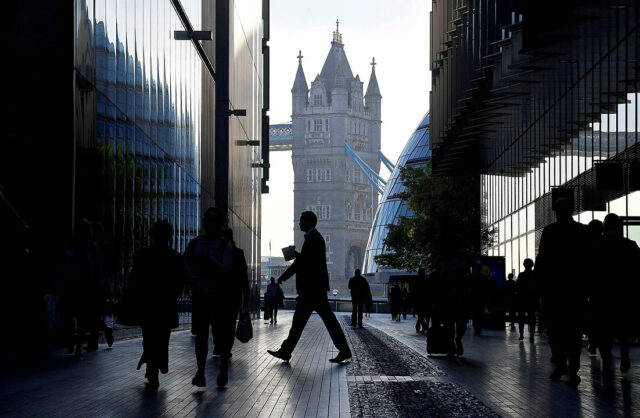
STOCK PHOTO | Image by Kerin Gedge from Unsplash

 – New Zealand’s central bank cut its benchmark rate by 50 basis points to 3.75% on Wednesday and policymakers flagged further reductions in borrowing costs amid moderating inflation as they sought to revive a struggling economy.

The New Zealand dollar slipped while the 90-day bank bill futures rallied as markets priced in a 25-basis point cut in April, and more reductions by year-end.

“The economic outlook remains consistent with inflation remaining in the band over the medium term, giving the Committee confidence to continue lowering the OCR,” the Reserve Bank of New Zealand said in its accompanying policy statement.

The decision was in line with a Reuters poll where 32 of the 33 economists surveyed forecast the RBNZ will cut the cash rate for the fourth straight meeting, and by half a percentage point.

“If economic conditions continue to evolve as projected, the Committee has scope to lower the OCR further through 2025,” the RBNZ said.

The central bank signaled a lower cash rate trajectory in coming months compared with previous forecasts, but the reductions are expected to be in smaller 25-bps moves. It now projects that rates will fall to 3.45% by June, and the year-end rate is expected to be 3.10%, down from the November estimate of 3.2%.

“The main message from today’s Monetary Policy Statement is the lowering (again) of the Official Cash Rate track. The RBNZ are signaling more cuts, sooner,” said Kiwibank chief economist Jarrod Kerr

The central bank has now cut rates by 175 basis points since August, with a slowdown in inflation giving policymakers leeway to extend their easing efforts in a much needed boost for an economy struggling to emerge from a deep recession.

The RBNZ said it is well placed to maintain price stability over the medium term and respond to future inflationary shocks, but added that global uncertainty over tariff policies pose some risks to the economy.

“The RBNZ’s aggressive 50-basis point cut to 3.75% shows its determination to revive the economy, despite inflation risks and global uncertainties like Donald Trump’s re-election as U.S. President,” Saxo Asia Pacific Senior Sales Trader Junvum Kim.

Several of the large banks in New Zealand including Westpac, ASB Bank, Kiwibank and Bank of New Zealand cut mortgage rates following the cash rate announcement.

Bill futures rallied as markets priced in a 93% chance of an easing in April and have rates near 3.0% by year-end, which is seen as the bottom of the cycle.

The kiwi dollar slipped 0.3% to $0.5683, having already lost 0.5% on Tuesday.


GLOBAL TARIFF, ECONOMIC UNCERTAINTY

A global front-runner in withdrawing pandemic-era stimulus, the RBNZ lifted rates 525 basis points since October 2021 to curb inflation in the most aggressive tightening since the official cash rate was introduced in 1999.

The punishing borrowing costs, however, took a heavy toll on demand and tipped the economy into recession in the third quarter of last year – the worst downturn outside of the pandemic since 1991.

The weakened state of the economy has added urgency to policymakers efforts to stimulate demand. The government has already abandoned hopes for a return to budget surpluses, seeing deficits for the next five years.

New Zealand’s annual inflation has come off in recent months and is currently at 2.2%, but the central bank said a volatile period ahead will probably see it increase to 2.7% in the third quarter before moderating again.

New Zealand is one of several countries to ease rates as inflation has moved lower, but its sharp reductions to borrowing costs contrast with a more cautious approach by the U.S. Federal Reserve and its counterpart in Australia.

The Reserve Bank of Australia on Tuesday delivered the first cut in interest rates in more than four years but signaled a cautious approach to any further easing.

Trade and other broader economic policies under U.S. President Donald Trump’s second term in power have also raised policy uncertainty around the world due to the renewed risk of inflation.

“Lower interest rates will encourage spending, although elevated global economic uncertainty is expected to weigh on business investment decisions,” the RBNZ said. – Reuters

Vietnam to approve key infrastructure projects, revised GDP target

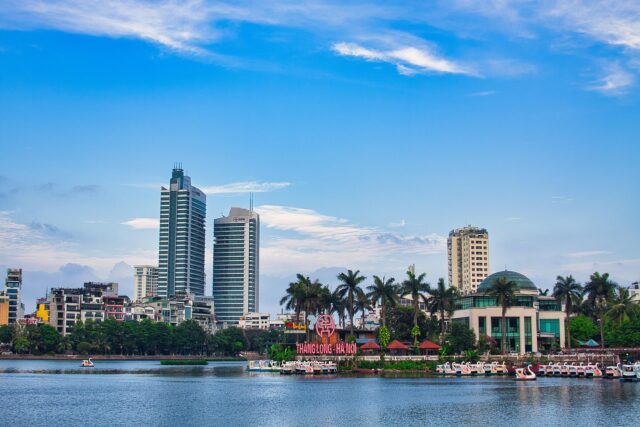
STOCK PHOTO | Image by Sinh Đặng from Pixabay
STOCK PHOTO | Image by quang vu ha from Pixabay

 – Vietnam’s National Assembly will on Wednesday vote to approve a new economic growth target for this year and adopt resolutions supporting major infrastructure projects, including nuclear power plants and a rail link to China.

The government has sought approval from lawmakers to revise up the gross domestic product growth target for this year to at least 8.0% from 6.5% to 7.0%.

Parliament will also vote to pass a resolution supporting construction of a new railway linking a major seaport in northern Vietnam with China, with a price tag of $8.3 billion, part of which to be funded by loans from the Chinese government.

Vietnam, a regional manufacturing hub heavily reliant on exports to drive its economy, has been seeking to ramp up its investment in infrastructure as one of its key measures to boost growth.

Lawmakers will on Wednesday vote to pass policies for the development of nuclear power plants, the first of which is set to be built by the end of 2031.

They will also vote to adopt rules that would allow Elon Musk’s Starlink to provide satellite internet services in the country while maintaining full ownership of any local subsidiary.

On Tuesday, the assembly approved a bold bureaucratic reform plan that will slash up to a fifth of government bodies, as it tries to cut costs and improve administrative efficiency. – Reuters

UK to probe health impact of vaping on children as young as eight

PIXABAY

– Britain will investigate the long-term effects of vaping on children as young as eight in a decade-long study of their health and behavior, the government said on Wednesday.

The government has been cracking down on the rapid rise of vaping among children, with estimates showing a quarter of 11- to 15-year-olds have tried it out.

ban on disposable vapes, sold for as little as five pounds, is due to come into force in June, and the Tobacco and Vapes Bill, currently passing through parliament, will limit flavors and packaging on vapes designed to attract children.

“The long-term health impacts of youth vaping are not fully known, and this comprehensive approach will provide the most detailed picture yet,” the health department said.

The 62 million pound ($78.1 million) study will track 100,000 people aged 8-18 years through the 10-year period, collecting data on behavior and biology as well as health records, the statement said.

The World Health Organization has urged governments to treat e-cigarettes similarly to tobacco, warning of their health impact and potential to drive nicotine addiction among non-smokers, especially children and young people.

“It is already known that vaping can cause inflammation in the airways, and people with asthma have told us that vapes can trigger their condition,” said Sarah Sleet, CEO of British lung charity Asthma + Lung UK.

“Vaping could put developing lungs at risk, while exposure to nicotine – also contained in vapes – can damage developing brains.”

In Britain, unlike traditional cigarettes which are heavily taxed and face strict advertising limitations, vapes are not subject to ‘sin tax’ and carry colorful designs and fruity flavors that make them stand out on shop shelves.

The government, which plans to introduce a flat rate duty on vaping liquid from next October, said the study would provide researchers and policymakers with the evidence needed to protect the next generation from potential health risks.

It also launched a nationwide vaping campaign, due to roll out primarily on social media to “speak directly” to younger audience using influencers. – Reuters

UK pay growth holds at lowest level since 2021, Brightmine says

REUTERS/TOBY MELVILLE/FILE PHOTO

 – Pay increases granted by British employers held steady in the three months to January at the lowest level since 2021, signaling a shift towards more restrained rises as businesses try to cope with economic pressures, according to a survey on Wednesday.

Human resources data firm Brightmine said the median pay award held at 3% for the second consecutive rolling quarter, following a revision of figures from 3.3% for the three months to December 2024.

“This is the lowest median pay settlement recorded since December 2021,” Brightmine said in a statement, adding that upcoming increases in employers’ social security contributions could further influence pay decisions in the months ahead.

Employers say the government’s plan to boost the social security contributions they pay from April – when Britain’s minimum wage is also due to rise by almost 7% – will reduce hiring and wage growth.

Data from the Office of National Statistics showed on Tuesday that British pay growth accelerated in late 2024 but the Bank of England expects pay increases to slow soon as weakness in the economy weighs on the labor market.

The British economy stagnated in the third quarter of 2024 but unexpectedly grew 0.1% in the last three months of the year.

Brightmine’s survey also showed that turnover rates have remained largely unchanged in 2024 compared to the previous year. However, more than one-third of organizations are concerned that turnover levels are too high.

“While labor turnover rates have stabilized, the combination of pay awards stalling and ongoing concerns about workload and career progression could increase resignations later in 2025,” said Brightmine’s Sheila Attwood.

“Employers may need to balance cost control with competitive pay and other retention measures to avoid unwanted staff losses,” Ms. Attwood added. – Reuters

Tax enforcers, rocket scientists, bank regulators fired as Trump slashes federal workforce

AI-Generated Stock Image | Pixabay.com

 – President Donald Trump’s administration targeted bank regulators, rocket scientists and tax enforcers on Tuesday for dismissal as a U.S. judge gave him the green light to continue with the unprecedented remaking of the U.S. civil service – at least for now.

Tech billionaire Elon Musk‘s Department of Government Efficiency, or DOGE, has swept through federal agencies slashing thousands of jobs since Mr. Trump became president last month and put Mr. Musk in charge of a drastic overhaul of government.

The White House has not said how many people it plans to fire and has given no numbers on the mass layoffs so far. The information to date has come from employees of federal agencies.

The Office of Personnel Management, the government agency that manages the civil service, set a deadline of 8 p.m. on Tuesday (0100 GMT) for all government departments to provide a list of probationary employees who have been terminated so far and those they want to retain, according to an OPM spokesperson.

According to government data, about 280,000 civilian government workers were hired less than two years ago with most still on probation, which makes them easier to terminate.

Agencies should prioritize retaining the highest-performing employees in “mission-critical roles,” said McLaurine Pinover, OPM’s head of communications.

It remained unclear whether the numbers would be disclosed.

State attorneys general from across the United States asked a federal court to intervene and place a temporary hold on the cost-cutting, but U.S. District Judge Tanya Chutkan denied their request, allowing the campaign to continue while underlying litigation plays out.

“Plaintiffs legitimately call into question what appears to be the unchecked authority of an unelected individual and an entity that was not created by Congress and over which it has no oversight,” Ms. Chutkan said in her ruling, referring to Musk.

Trump appointed Musk, the world’s richest person and his biggest donor during his election campaign, to oversee the culling of the federal workforce, which the Republican president views as bloated, corrupt and insufficiently loyal to him.


‘PEOPLE ARE SCARED’

With tax-filing season underway, senior officials at the Internal Revenue Service identified 7,500 employees for dismissal, with possibly more on the chopping block, according to a person familiar with the matter.

Republicans had objected to an IRS staff expansion undertaken by Democratic President Joe Biden that independent budget analysts said would boost tax collections and help close the persistent U.S. budget gap.

The Federal Deposit Insurance Corporation, which oversees banks, said it has fired an unknown number of new hires, according to an email seen by Reuters. The cuts could potentially worsen staffing problems at a 6,000-person agency where more than one in three workers are eligible for retirement.

Roughly 1,000 new hires, including rocket scientists, at NASA were expected to be laid off on Tuesday as well, according to two people familiar with the U.S. space agency’s plans, with more cuts possible.

“People are scared and not speaking up to voice dissent or disagreement,” said one employee at the 18,000-person agency who spoke on condition of anonymity.

Layoffs were also expected at the Federal Emergency Management Agency, which handles flood insurance and disaster response, as well as its parent agency, the Department of Homeland Security, sources said.

The Trump administration plans to fire hundreds of senior Department of Homeland Security employees this week, according to an administration official and a second source familiar with the matter. The planned firings, first reported by NBC News, would target people viewed as not aligned with Mr. Trump, the sources said.

Among the workers swept up in the overhaul of dozens of agencies are those reviewing Mr. Musk’s brain implant company Neuralink and others monitoring an outbreak of H5N1 bird flu that has infected millions of chickens and cattle this year.


COST SAVINGS

The overhaul comes as Mr. Trump attempts to exert even tighter control over the Justice Department, an agency traditionally seen as independent of White House influence.

Several department officials resigned last week after refusing a directive from a Trump appointee to drop a corruption case against New York Mayor Eric Adams. Another top prosecutor, Denise Cheung, resigned on Tuesday after refusing to investigate a government contract awarded during Biden’s tenure.

The acting head of the Social Security Administration, Michelle King, resigned over the weekend after Musk’s team asked for access to a vast database of personal and financial data at the agency, which handles retirement and other safety-net programs, according to a person familiar with the matter.

Mr. Musk’s team has said it has saved $55 billion so far, a relatively small slice of the annual $6.7 trillion federal budget. The DOGE website has begun giving more details of government contracts it has canceled after widespread complaints that its work was not transparent.

Trump signs executive order seeking to expand IVF access

By US Government Owned Photo - https://www.cdc.gov/art/key-findings/icsi.html, Public Domain, https://commons.wikimedia.org/w/index.php?curid=126317495
By US Government Owned Photo – https://www.cdc.gov/art/key-findings/icsi.html, Public Domain, https://commons.wikimedia.org/w/index.php?curid=126317495

 – U.S. President Donald Trump signed an executive order on Tuesday directing the government to expand access to in vitro fertilization and reduce the costs of the popular fertility treatment.

The order, which directs Mr. Trump’s domestic policy chief to produce a list of policy recommendations that protect IVF access and cut costs for individuals within 90 days, did not address how the costs would be covered.

Most states currently do not require insurers to cover IVFwhich involves combining eggs and sperm in a laboratory dish to create an embryo for couples having difficulty conceiving. Even with insurance coverage, IVF can cost thousands of dollars in drugs and medical procedures.

“It is the policy of my Administration to ensure reliable access to IVF treatment, including by easing unnecessary statutory or regulatory burdens to make IVF treatment drastically more affordable,” the order said.

More than 85,000 infants were born as a result of IVF in 2021, the White House said in a fact sheet, citing data from the Department of Health and Human Services. Costs can range from $12,000 to $25,000 per cycle and multiple cycles may be needed to get pregnant.

The U.S. fertility rate dropped 3% in 2023 from 2022, the White House said, and decreased by 2% annually between 2014 and 2020. The U.S. birth rate was 1.67 births per woman in 2022, according to World Bank data, below the replacement rate of 2.1 needed to maintain the population without immigration.

The order will also ensure the government examines current policies, including those requiring legislation to change, that make the treatment more expensive, the White House said.

Mr. Trump said during his election campaign that he would require the government or insurance companies to pay for IVF fertility treatments if elected.

IVF emerged as a hot-button issue in the 2024 presidential election after the conservative Alabama Supreme Court ruled that embryos are children. That ruling left it unclear how to legally store, transport and use embryos, prompting some IVF patients to consider moving their frozen embryos out of the state.

Senate Republicans twice blocked Democratic-led legislation designed to protect IVF access last year, with some arguing it was unnecessary because that was not in danger. – Reuters

New incentives for carmakers eyed

A man works at a car parts manufacturing facility in Santa Rosa City, Laguna in this photo taken on Aug. 22, 2023. — PPA POOL/YUMMIE DINGDING

By Justine Irish D. Tabile, Reporter

THE PHILIPPINE government is finalizing an incentive program that seeks to encourage car companies to boost manufacturing operations in the country, according to the Office of the Special Assistant to the President for Investment and Economic Affairs (OSAPIEA).

OSAPIEA chief Frederick D. Go said the government would soon introduce the Revitalizing the Automotive Industry for Competitiveness Enhancement (RACE) program.

“The previous administration came up with the Comprehensive Automotive Resurgence Strategy (CARS) program, and that’s already done, but we want to continue promoting the vehicle industry,” he told reporters on Monday.

Mr. Go said the RACE program would provide incentives to companies that will manufacture new car models in the country.

The program will be implemented by the Department of Trade and Industry (DTI), unlike CARS, which was established through an executive order.

“We designed RACE so that it is a department initiative,” Mr. Go said, noting that funds have  been allotted for the program through the 2025 General Appropriations Act.

The RACE program has been allotted P250 million under the DTI’s budget for locally funded projects.

Created through Executive Order No. 182 by then President Benigno S. Aquino III, the CARS program aimed to attract new investments in the automotive industry. 

It provided three slots for car manufacturers, which were required to produce at least 200,000 units of an enrolled model to avail themselves of the incentives.

However, only two slots were filled — Toyota Motor Philippines Corp. (TMP), which produces the Vios sedan, and Mitsubishi Motors Philippines Corp. (MMPC), which manufactures the Mirage hatchback and Mirage G4 sedan.

Mr. Go hinted the RACE program could accept more than three participants.

“We learned from CARS… The (RACE) program is slightly different, but the intent is the same, that if you introduce more local components into the vehicle, then you can qualify for the (incentives),” he added.

With the new program in the works, TMP and MMPC are again expected to register new models through RACE.

“We have expressed to DTI our intention to register the Next Generation Tamaraw as an additional CARS model if supported by regulation (CARS extension), particularly in considering reasonable flexibility for new production models,” TMP said in a statement.

“In case the DTI creates a new CARS-like program instead of ex- tending the existing program, we will gladly take that opportunity to make the Tamaraw even more sustainable for us automotive manufacturers, as well as our part makers and even body builders,” it added.

TMP recently invested P5.5 billion in its Laguna plant to ramp up vehicle production and in-house and outsourced parts localizations, as well as build a new conversion facility.

Meanwhile, Mitsubishi Motors Corp. (MMC), in a recent courtesy call to President Ferdinand R. Marcos, Jr., committed a P7-billion investment in the Philippines for the next five years.

The investment plan is said to include a new production model at its plant in Laguna, according to the Presidential Communications Office (PCO). The PCO said MMC would take part in the RACE program.

Meanwhile, the Philippine Parts Maker Association, Inc. (PPMA) urged the government to create a conducive environment for car manufacturing and assembly so the Philippines could keep up with its neighbors in the Association of Southeast Asian Nations (ASEAN) region.

“The time for action is now. Without immediate intervention… the Philippines risks falling further behind its ASEAN competitors,” the group said in a statement on Monday.

“The urgency to adapt and evolve in the automotive sector cannot be overstated. More decisive measures are essential to foster a sustainable and competitive automotive industry in the Philippines,” it added.

Data from the ASEAN Automotive Federation showed that the Philippines produced 116,650 motor vehicles in the first 11 months of 2024, ranking fifth in terms of production volume among six ASEAN countries.

Thailand produced the most cars, totaling 1.36 million in the January-to-November period, followed by Indonesia (885,516), Malaysia (725,173), and Vietnam (157,115).

“Our industry is in peril. We must urgently adopt measures to revitalize our auto parts manufacturing capabilities, or we will continue to fall behind our ASEAN neighbors,” said PPMA President Ferdinand I. Raquelsantos.

“The DTI has a critical role in this scenario, fostering initiatives that cannot only sustain but also enhance the automotive parts manufacturing sector is imperative,” he added.

Previously, the PPMA said the government could support the industry by mandating a 30% local content requirement for vehicles assembled in the Philippines and giving incentives such as income tax holidays and duty exemption on raw materials.

It also proposed tax credits for exports, accelerated depreciation for machinery and enhanced research and development deductions.

Metro Manila commuters face higher LRT-1 fares

Passengers get off at a Light Rail Transit Line 1 (LRT-1) station. — PHILIPPINE STAR/RYAN BALDEMOR

By Ashley Erika O. Jose, Reporter

COMMUTERS in Metro Manila will pay higher fares for the Light Rail Transit Line 1 (LRT-1) starting April 2 after the Department of Transportation (DoTr) approved a new fare matrix.

In a letter dated Feb. 14 but published on Tuesday, the DoTr said it had approved the petition of Light Rail Manila Corp. (LRMC) for adjustments in the LRT-1 fare matrix.

The letter was signed by Transportation Undersecretary for Railways Jeremy S. Regino.

Beginning April 2, the boarding fare will be raised to P16.25 from P13.29, while the distance per kilometer fare will be increased to P1.47 from P1.21.

Based on the approved fare matrix, the maximum fare for a single-journey end-to-end trip will increase by P10 to P55 from P45. This will cover the trip from FPJ Station (formerly Roosevelt) in Quezon City to Baclaran Station in Pasay City, including the last station of the Cavite extension Phase 1.

Meanwhile, stored value cardholders will pay P9 more for the end-to-end trip, bringing the fare to P52.

The approved rate is lower than LRMC’s proposal to raise the end-to-end-trip fare to P60 for single-journey tickets and P58 for stored value cards.

LRMC President and Chief Executive Officer Enrico R. Benipayo said the company is grateful for the approval of new fares.

“In the past 10 years of operating and maintaining the 40-year-old railway line, this will only be the second time that LRMC has been allowed to implement fare adjustments for LRT-1,” he said in a statement.

The private operator took over LRT-1 from Light Rail Transit Authority (LRTA) in 2015.

The company said the newly approved fare matrix, which is lower than its petition, is the same as its fare adjustment petition in 2022.

Under its concession agreement, the private operator may seek a fare adjustment once every two years. Mr. Benipayo has said previously the approved rate in 2023 is still well below the notional fare and has resulted in a fare deficit of P2.17 billion.

“Public transport is a service that requires continuous investment in maintenance, upgrades and expansion. Countries with world-class transport systems such as Singapore and Japan adjust fares regularly to keep services efficient and safe. We are thankful to our partners in government for their support in ensuring that we can sustain the necessary upgrades,” Mr. Benipayo said.

LRMC reiterated that it has made substantial operational improvements and system upgrades for LRT-1, which includes the completion of phase 1 of the LRT-1 Cavite extension last year.  The second and third phases of construction of the LRT-1 Cavite extension may begin next year if right-of-way acquisition issues are resolved.

“LRMC has since introduced new trains, station upgrades and better service efficiency,” Mr. Benipayo said.

He also justified the fare adjustment as LRMC also improved LRT-1’s cycle time — the average time for a train to complete an end-to-end journey — from 106 minutes or almost two hours to 91 minutes in 2024.

Rene S. Santiago, former president of the Transportation Science Society of the Philippines, said the approval of the LRT-1 fare hike is a necessary step since the government has to comply with its commitments under the public-private partnership (PPP) deal.

“(This) clears the way for more PPP tenders in the future. More than that, all public transport — rail, bus, jeepney — deserve long-delayed fare adjustments,” he said in a Viber message.

Meanwhile, Renato M. Reyes, Jr., secretary-general of Bagong Alyansang Makabayan (Bayan), said they are not surprised by the approval of the fare increase.

He called for a review of the private operator’s concession agreement which allows them to adjust fares every two years.

In a statement, transport group PISTON National President Mody T. Floranda called the fare increase unjustified and would hurt the pockets of ordinary Filipinos.

LRMC is a joint venture of Ayala Corp., Metro Pacific Light Rail Corp. and Macquarie Infrastructure Holdings (Philippines) Pte. Ltd.

Metro Pacific Light Rail is a unit of Metro Pacific Investments Corp., which is one of three Philippine subsidiaries of Hong Kong’s First Pacific Co. Ltd., the others being PLDT Inc. and Philex Mining Corp. Hastings Holdings, Inc., a unit of PLDT Beneficial Trust Fund subsidiary MediaQuest Holdings, Inc., has an interest in BusinessWorld through the Philippine Star Group, which it controls.

Below-target growth to support further rate cuts 

Individuals buy flowers at a market in Marikina City. — PHILIPPINE STAR/WALTER BOLLOZOS

EXPECTATIONS of below-target growth and manageable inflation should support further rate cuts by the Bangko Sentral ng Pilipinas (BSP) this year, DBS Bank said in a report.

At the same time, a Nomura Global Markets Research analyst said the BSP could have delivered a rate cut instead of a pause at last week’s meeting amid “persistent” uncertainty.

“The growth-inflation dynamic backs further rate cuts, with the real rate buffer considerably wide at 2.5%-2.75%, providing room for monetary policy to be growth supportive,” DBS Senior Economist Radhika Rao said.

DBS expects gross domestic product (GDP) to grow below 6% this year after a weaker-than-expected 5.6% growth in 2024. The government is targeting 6-8% growth this year.

Inflation has been “buoyant” in the past few months, DBS said. Headline inflation remained steady at 2.9% in January, within the central bank’s 2-4% target.

“Food supply disruptions due to a lagged impact of typhoons, utility costs and a weaker peso were behind this spurt, though are likely to be viewed as temporary and will not deter the central bank from a dovish path,” it added.

DBS expects the central bank to deliver up to 50 basis points (bps) worth of rate cuts this year.

“After a 75-bp rate reduction in 2024, the BSP is likely to bide time to monitor risk of further tariffs and the consequent inflation/US dollar path, before resuming further easing,” Ms. Rao said.

The BSP left the benchmark rate unchanged at 5.75% on Feb. 13, with BSP Governor Eli M. Remolona, Jr. citing global uncertainties due to US trade policies.

Nomura Global Markets Research analyst Euben Paracuelles said central banks, including the BSP, might struggle to consider the implications of US President Donald J. Trump’s tariff policies.

“I think this is going to be a sort of a persistent type of uncertainty. We will never really get a good handle of it. And I think sometimes it’s better to be just reactive than proactive just because of the extent of the uncertainty,” he said in an interview on Money Talks with Cathy Yang on One News on Tuesday.

Mr. Remolona last week said the BSP is recalibrating their models to better account for these uncertainties and other “unusual” phenomena.

“The uncertainty in itself is the one that’s going to create some downside pressure and growth, whether it’s weighing on business sentiment and other indirect channels,” Mr. Paracuelles said.

“And more importantly, we’ve already seen this in the first Trump administration. So, it’s not that difficult to think about the risks and how they play out when we get some of these tariffs announced by President Trump.”

Mr. Trump is planning to impose reciprocal tariffs on every country that charges duties on US imports, a move that has raised fears of a wider global trade war.

“So, to me, it’s a downside risk to growth. And therefore, it’s not a reason for us (to hold rates). It’s actually a reason to keep cutting,” Mr. Paracuelles said.

He said the Philippine economy “still needs a little bit of support from all policy fronts.”

“So, after they paused, I think there’s a little bit of a change in the sequencing. There might be a little bit of a preference to inject liquidity via the RRR (reserve requirement ratio) cuts, which they’ve already done in October,” he said.

“I think they’re doing more. What that does really is it improves the policy transmission of later policy rate cuts, which I still expect for the rest of the year, given a very benign inflation outlook. So, the BSP can actually focus a little bit more on supporting the economy with all of these tools.”

The central bank is looking to bring down the RRR to 5% from 7% this year.

“The RRR could be front-loaded a little bit. I think April is a good window because, obviously, we have the elections coming in early May, and that means the critical conditions could tighten,” Mr. Paracuelles added.

The BSP reduced the RRR for universal and commercial banks and nonbank financial institutions with quasi-banking functions by 250 bps to 7% from 9.5%, which took effect in October. — Luisa Maria Jacinta C. Jocson

PHL on track to become upper middle-income country by 2026

Mallgoers browse through an assortment of lucky bracelets and other charms inside a mall in Masinag, Antipolo. — PHILIPPINE STAR/MIGUEL DE GUZMAN

THE World Bank expects the Philippines to become an upper middle-income country (UMIC) by 2026 even as growth fell below 6% last year.

“Under our current baseline growth assumptions, average growth of 6% from 2025 to 2026, the Philippines is likely to reach upper middle-income status by 2026,” World Bank Country Director for the Philippines, Malaysia, and Brunei Zafer Mustafaoğlu told BusinessWorld in an e-mailed reply to questions.

The World Bank expects the country to grow by 6.1% in 2025 and 6% in 2026.

The Philippines grew by a weaker-than-expected 5.6% in 2024, slightly faster than 5.5% in 2023.

The Marcos administration expects the Philippines to reach UMIC status over the next two years (2025-2026).

The World Bank updates country classifications by income level on July 1 every year, based on the gross national income (GNI) per capita of the previous calendar year.

The World Bank computes a country’s GNI through the Atlas method, which serves as the basis of its income classifications — low, lower-middle, upper-middle and high. GNI refers to the total amount of money earned by its residents both within and outside its borders.

The Philippines remained a lower middle-income country even as GNI per capita rose to $4,230 in 2023 from $3,950 in 2022.

Under the World Bank’s classification, the threshold for a lower middle-income country stood at $1,146-$4,515 GNI per capita in 2023, while the threshold for an upper middle-income country stood at $4,516-$14,005.

Once the Philippines reaches upper middle-income status, the country will lose access to official development assistance loans that are typically long term and have low interest rates.

“As the Philippines transitions to upper middle-income status, sustaining growth and achieving its 2040 vision of consolidating a middle-class society and eliminating poverty requires a shift from investment-led to productivity-driven growth,” Mr. Mustafaoğlu said.

Mr. Mustafaoğlu identified four strategic actions that the Philippines can take once it achieves UMIC status.

“The country’s next strategic moves should focus on boosting productivity and innovation by enhancing competition, lowering business costs and accelerating digital and artificial intelligence adoption to drive high-value job creation,” he said.

Mr. Mustafaoğlu said the Philippines should also deepen regional integration.

“This entails reducing trade barriers, improving logistics and strengthening foreign direct investments spillovers to stimulate the tradeable sector,” he said.

Mr. Mustafaoğlu said the Philippines should invest in human capital by “reducing stunting and improving the quality of early education, as well as supporting the reskilling and upskilling of existing workers to help them adapt to technological disruptions.”

The Philippines should also strengthen climate and economic resilience, he added.

The country needs to invest in climate adaptation, green energy and infrastructure to mitigate any disruptions from adverse climate events, he said.

“It is crucial to undertake these actions while maintaining macroeconomic stability, which is a pillar for development,” Mr. Mustafaoğlu said. — Aubrey Rose A. Inosante

March airfares may go up following fuel surcharge hike

PHILSTAR FILE PHOTO

By Ashley Erika O. Jose, Reporter

AIRFARES are likely to increase after the Civil Aeronautics Board (CAB) raised the passenger fuel surcharge level for March.

In an advisory on Tuesday, CAB elevated the passenger fuel surcharge to Level 5 for March from Level 4 in February.

This is the first time CAB has increased the passenger fuel surcharge in the last five months, as the surcharge had remained at Level 4 since October of last year.

At Level 5, the fuel surcharge for domestic flights ranges from P151 to P542. For international flights, the surcharge is P498.03 to P3,703.11.

For airlines collecting the fuel surcharge in foreign currency, the applicable rate for the period is P58.46 to a dollar, CAB said.

Currently, at Level 4, the passenger fuel surcharge is between P117 and P342 for domestic flights and between P385.70 and P2,867.82 for international flights originating from the Philippines.

Cebu Pacific said that despite the increase in fuel surcharges for March, it will continue to offer the best-value fares for its passengers.

“With summer travel approaching, we encourage our passengers to book early and take advantage of our lowest fares,” Cebu Pacific President and Chief Commercial Officer Alexander G. Lao said in a statement.

Steve F. Dailisan, head of communications and public affairs at AirAsia Philippines, said that the higher fuel surcharge would have a minimal impact on travel costs for its passengers.

“Despite the adjustments, AirAsia remains fully committed to fulfilling our brand promise of making air travel safe, accessible, and hassle-free,” Mr. Dailisan said.

A fuel surcharge may be collected by airlines based on the movement of jet fuel prices, using a benchmark known as MOPS (Mean of Platts Singapore).

The global average jet fuel price rose by 0.5% week-on-week as of February 14, to $93.11 per barrel.

Year-on-year, the global average jet fuel price dropped by 3%, according to fuel price monitoring reports by the International Air Transport Association.

Meanwhile, air passenger volume ballooned to 59.91 million in 2024, nearing its pre-pandemic peak due to booming domestic travel, according to CAB.

Domestic passenger volume in 2024 grew to 32.13 million, marking an increase of 10.9% from the previous year, while international passenger volume rose by 12% to 27.78 million, CAB Executive Director Carmelo L. Arcilla said in an e-mail to BusinessWorld.

Data from CAB’s website showed that in 2023, domestic passenger volume stood at 28.97 million, while international passenger volume was recorded at 24.81 million. In 2019, CAB logged a peak of 60.07 million total passenger traffic, mainly driven by international passenger traffic.

Tonik targets Filipinos with no bank accounts

GREG KRASNOV — TONIKBANK.COM

By Beatriz Marie D. Cruz, Reporter

TONIK Digital Bank, Inc., the Philippines’ first licensed digital-only bank, seeks to broaden its presence in the country by targeting the unbanked population through strategic branding, according to its chief executive officer (CEO).

“I think branding is a very important issue that is being ignored by both the traditional banks and actually by most of our competitors in digital banking,” Greg Krasnov, founder and CEO of Tonik Bank, said in an interview with BusinessWorld.

Bank branding in the Philippines is “typically intimidating,” he noted.

“Our research shows that the Filipino mass market thinks banks are by the rich and for the rich,” he added, noting that this remains a significant barrier to building trust in banks and encouraging consumers to use their services.

About 76% of Filipinos remain unbanked and underserved — the highest percentage among five Southeast Asian countries. Indonesia followed at 67%, Vietnam at 47%, Malaysia at 40%, and Thailand at 25%, according to a 2024 report by Euromonitor International.

Latest data from the Bangko Sentral ng Pilipinas (BSP) showed that in 2022, the share of Filipinos with bank accounts reached 65% of the adult population.

To make digital banking more accessible to Filipinos aged 25 to 30, Tonik has positioned its brand as “approachable.”

“When we were creating Tonik’s branding, we were consciously trying to counteract that,” Mr. Krasnov said.

“Our brand is funny and approachable. We’re on a first-name basis with our customers. We want them to fall in love with us, so we are your financial girlfriend or boyfriend.”

For instance, Tonik’s “Luv Stash” allows users to invite their partners, friends, or family members to contribute to a shared savings “pocket” without opening a joint bank account. In celebration of Valentine’s Day, users who create a Luv Stash by the end of February can earn 5% interest per annum.

Around 57% of Filipino consumers said they would likely spend more on brands that provide personalized experiences, according to customer engagement platform Twilio.

To further enhance user personalization, Tonik also leverages alternative data to analyze consumer behavior and tailor its product offerings.

Tonik has onboarded more than two million users since its launch in 2021.

Customers can open a savings account, deposit funds, manage payments, and own a virtual debit card through the digital banking platform. Its key loan products include the credit builder loan and the shop installment loan.

Under its Tendo brand, Tonik also partners with employers to offer employee benefits such as life and health insurance, savings and cash loans, and employee rewards.

For 2025, Tonik is targeting more than 150% annual growth in its lending portfolio. Last year, its loan portfolio expanded by 110% year on year, driven by a rise in employer and retail partnerships offering its loan products, Mr. Krasnov said.

“We spent three years focusing on achieving unit profitability, and we’re now profitably lending to these unbanked and uncredited consumers.”

However, Mr. Krasnov acknowledged challenges in the widespread adoption of Tonik’s payroll lending product, which has only covered 10% of the market.

“This is a relatively new solution for employers in the Philippines,” he said. “The challenge is convincing large employers to partner with us because this is a very cost-efficient way to provide credit access to their employees.”

The Philippines also continues to lag behind its Southeast Asian peers in consumer lending penetration, Mr. Krasnov noted.

“We think the Philippines needs to grow consumer lending fourfold to catch up with the Southeast Asian average.”

Mr. Krasnov cited inflationary shocks as a potential risk to lending growth.

“We hope that this year won’t have as many inflationary shocks that impact consumer purchasing power,” he said. “When customers feel financial stress, it becomes more difficult for us to make decisions.”

The BSP expects inflation to average 3.3% in 2025, remaining within its 2-4% target range for the year.

Mr. Krasnov also emphasized the need for the mass deployment of the Philippine Identification System (PhilSys) card, or national ID, to help onboard more users and reduce lending fraud.

To expand consumer lending, Tonik plans to partner with more employers and retailers to increase accessibility to its loan products.

The digital bank is also set to accelerate the rollout of its credit builder loan, which encourages users to take a small cash loan to establish a credit history and eventually increase their credit limits.

“The concept of the credit builder is that users proactively build their credit history through our product.”

Tonik is also exploring expansion into car and mortgage loans.

“Over time, we will continue rolling out more products that fit into the customer’s lifestyle as they continue to upgrade their life,” Mr. Krasnov said.

ADVERTISEMENT
ADVERTISEMENT