Home Blog Page 190

Crisis headlines drown out Marcos governance narrative — RMAP

The Reputation Management Association of the Philippines (RMAP) released the results of a three-month national media scan conducted by PAGEONE Analytics and Insights (PAGEONE AI), revealing that crisis- and scandal-driven stories have almost completely overshadowed the Marcos administration’s broader governance agenda.

The PAGEONE AI scan, covering late August to November 2025, found that Philippine media has been dominated by corruption controversies, political infighting, economic anxiety, and security tensions. These include the flood control corruption scandal, the creation of the Independent Commission for Infrastructure, high-profile arrests, Cabinet resignations, the Marcos-Duterte rift, the ICC custody of former President Rodrigo Duterte, the economic slowdown, and incidents in the West Philippine Sea.

RMAP warned that this imbalance in media framing deprives the public of a full understanding of how the country is being governed, and noted that the administration has not done enough to communicate its broader programs outside these crises.

Key Findings from the PAGEONE AI Media Scan

  1. Crisis narratives dominate national media. Flood control anomalies, political realignments, and security flashpoints command the bulk of news attention. Stories about investigations and infighting take precedence over policy substance.
  2. Governance programs and long-term reforms remain largely invisible. Initiatives in education, agriculture, climate adaptation, digital transformation, health, and economic competitiveness appear only sporadically. RMAP noted that if such programs exist but are not being covered, it raises questions about whether they are insufficiently implemented or inadequately communicated.
  3. Media salience shapes public perception of what matters. As crisis stories dominate the agenda, structural governance issues receive limited public attention. This affects how citizens form judgments about national leadership and how policy makers prioritize action.
  4. Communication gaps in the Marcos administration contribute to the imbalance. The scan suggests that the administration has not sufficiently articulated its governance agenda or provided clear, consistent communication on reforms beyond crisis response.
  5. Systemic issues remain under-reported. Education quality, climate resilience, digital governance, institutional integrity, and long-term economic strategy do not receive sustained framing despite their national importance.

RMAP emphasized that the predominance of crisis coverage weakens public understanding of national priorities and undermines the capacity of government to demonstrate progress in areas that impact long-term development. The association added that reputation is shaped by both how crises are managed and how governance efforts are communicated.

When essential programs are not covered, citizens may assume they are absent or ineffective. Conversely, limited media framing may reflect editorial judgments that these programs are not yet substantial or newsworthy.

RMAP urged both the government and media institutions to strengthen the depth, balance, and clarity of public communication in order to promote informed citizenship and a healthier democracy.

Dr. Ron Jabal, APR, Founder and President of RMAP, stressed, “The PAGEONE AI media scan confirms what many have sensed. The national information space is saturated with crisis, scandal, and political drama. What is missing is the governance narrative. The Marcos administration is not doing enough to inform the public about its reforms beyond crisis management. If the media is not covering these efforts, it means either the initiatives are not strong or the communication is not strategic. Either way, the public loses.”

He added, “What is given prominence shapes national priorities. If crisis stories dominate and governance stories disappear, the country risks losing sight of the long-term work needed to build trust, stability, and progress. RMAP calls for a more balanced information environment that strengthens public understanding of how the Philippines is being governed.”

About RMAP

The Reputation Management Association of the Philippines (RMAP) is the country’s leading professional body dedicated to advancing excellence in corporate, public sector, and institutional reputation management. RMAP promotes ethical standards, research, training, and strategic communication to strengthen trust and accountability across Philippine organizations.

About PAGEONE Analytics and Insights (PAGEONE AI)

PAGEONE AI is the analytics and intelligence arm of the PAGEONE Group. Through advanced technology and data-driven research, PAGEONE AI provides media intelligence, sentiment analytics, and insights to help organizations navigate risk, public perception, and reputation in a complex information environment.


Spotlight is BusinessWorld’s sponsored section that allows advertisers to amplify their brand and connect with BusinessWorld’s audience by publishing their stories on the BusinessWorld Web site. For more information, send an email to online@bworldonline.com.

Join us on Viber at https://bit.ly/3hv6bLA to get more updates and subscribe to BusinessWorld’s titles and get exclusive content through www.bworld-x.com.

Building mini dams all over

STOCK PHOTO | Image by Brgfx from Freepik

(Part 1)

After obtaining my Ph.D. in Economics at Harvard University in September 1963, I decided to accept the offer from the newly established IESE Business School in Barcelona, Spain to help in the writing of cases patterned after the Harvard Business School (HBS) model. It was the HBS that introduced for the first time the use of cases in the training of business managers. At that time, Spain was very much a Third World country, still struggling to recover from the ravages of one of the most destructive civil wars (1936 to 1939) in modern history. Our former colonizer was still under the authoritarian rule of Francisco Franco, the military officer who saved the country from the evils of communism.

I was fortunate to witness first hand the evolution of Spain from a country with a very high rate of poverty to a First World economy by the 1980s. Spain really had to lift itself by the bootstraps because the dictatorial rule that prevailed under Franco made it a pariah among the Western democratic states that ostracized it, denying it the economic and technical assistance given to other developing economies. Fortunately for Spain, Franco was an enlightened leader who knew how to deploy the best and the brightest, regardless of political allegiances, to help him carry out successive development plans that blended strong government action (especially in the aggressive building of infrastructure) with free market economics. It was during my stay in Spain that I learned for the first time the slogan “Build, Build, Build” and the professional title “technocrat.”

In his Build, Build, Build program, there was a special emphasis on the construction of hundreds of small dams all over the country to address the problem of scarcity of water during most of the year coupled with its abundance during short periods, causing serious damage from floods. With characteristic Spanish humor, Franco was nicknamed the “Great Frog” (El Gran Sapo) because he was inaugurating a new mini dam almost every week during my stay there.

From Chat GPT, we can get a brief account of what Spain has achieved with small dams or mini-hydro facilities. Spain has for a long time used not only massive, but also small-scale hydropower and small dams. The “mini-hydraulic/small hydropower” sector (installed capacity under 10 MW) was instrumental especially in the early electrification of rural areas. Because of Spain’s varied topography and many rivers — mountains, hills, and river basins — many small-scale installations could be built widely across regions (especially in mountainous or hilly areas).

Compared to large reservoirs (like our La Mesa Dam), small-scale hydro power/mini dams tend to require less massive infrastructure, smaller reservoirs or sometimes “run-of-river” setups, which can reduce environmental, social, and landscape impacts. Mini dams can have multiple uses. In Spain, dams —large and small — have served for water regulation, irrigation, flood control, and hydroelectric generation. This multi-purpose approach helped both agriculture and energy supply.

During the Age of Electrification (Industrial Revolution 2.0), the “mini-hydraulic” sector was key in the electrification of many localities at the end of the 19th and early 20th century. For countries like the Philippines that are facing the serious challenges of high energy costs, scarcity of water, damaging floods, and environmental deterioration, Spain shows that small dams and small-scale hydropower — if designed and deployed carefully — can be an effective tool, especially in regions were big dams may be impractical or undesirable, offering a balance among energy, water management, and lower environmental footprints.

There are, however, some serious challenges that Spain had to face in the building of mini dams from which the Philippines can learn. During the past two decades, the mini-hydro sector of Spain has undergone a downturn. Regulatory changes (retributive regime) and some economic factors have rendered many of them uneconomical. There were environment-related challenges. Even small or “run-of-river” dams can affect river ecosystems: altering natural flow, disrupting sediment transport, harming aquatic and riparian life, and if there are many dams cascaded along a river, the cumulative effect can be significant.  As has already been happening with our own Department of Environment and Natural Resources (DENR), regulatory, financial, and administrative barriers have discouraged new small-scale dam projects.

Then there was the competition posed by large hydro and energy projects. As national energy demand grew and large hydroelectric or other energy sources (thermal, wind, solar) developed, many mini-hydro plants lost competitiveness and had to be decommissioned or abandoned. Needless to say, there is a need for cumulative planning. Studies show that although small-scale hydropower has potential, success strongly depends on good planning, including environmental flow requirements, ecosystem impact assessment, and governance.

Here are some lessons that can be learned by other countries, especially those that have to give priority to developing the rural areas: Small-scale dams can complement rather than replace the large ones. They can provide localized water management, irrigation, or electricity — especially in rural or mountainous areas — without the large social and environmental costs of huge reservoirs. Wherever possible, geographical features and natural rivers should be used (e.g., run-of-river, small head, minimal reservoir). This approach reduces environmental impact and displacement and is better suited for steep terrain or areas with rivers but limited flat land. There should always be a plan for environmental and cumulative impacts. Even small dams affect river ecology. Factors that should be seriously considered are environmental flow, fish passages, and sediment transport, which if ignored can degrade rivers in the long-term.

It should also be kept in mind that economic and regulatory viability is as important as engineering. Without supportive regulation, financial incentives or fair energy pricing, small-scale dams may not be viable. Mixed-purpose design (water supply, irrigation, flood control, plus energy) increases resilience and social benefits. There should be constant adaptation to changing energy markets and environmental/climate conditions. As hydropower demand or climate change shifts (as is the case in the Philippines in recent times), small hydro infrastructure must be managed, maintained, or repurposed.

In summary, the Spanish experience in the construction of mini dams can provide useful lessons to countries like the Philippines under the following specific circumstances. If the country has many rivers, mountainous terrain, rural communities, and variable rainfall, the experience of Spain suggests that small or mini-hydro dams can be:

• A relatively low-impact, decentralized option to provide electricity (especially in remote/rural zones);

• Useful for water management, irrigation, flood control — not just electricity — which adds social value in drought-prone or agricultural regions;

More feasible to build than large dams (lower investment, simpler logistics), especially for local or community-scale projects;

• But are sustainable only if accompanied by good environmental planning, fair regulation, good maintenance, and long-term vision (not just a stop-gap measure).

Obviously, small dams are not a magic solution. Environmental trade offs, regulatory and economic viability, and cumulative impacts must be carefully considered. This is especially necessary if, as I will strongly suggest in the second part of this article, the private sector — not the Government — should take the lead in the construction of these mini dams. This shift to the private sector — as has already been proven very beneficial to the public in the cases of power plants and electricity and water distribution systems, airports, and telecom facilities — has become more desirable as an aftermath of the corruption-ridden flood control projects under the supervision of the Department of Public Works and Highways that have been recently unearthed, causing so much damage to the national economy in recent times.

(To be continued.)


Bernardo M. Villegas has a Ph.D. in Economics from Harvard, is professor emeritus at the University of Asia and the Pacific, and a visiting professor at the IESE Business School in Barcelona, Spain. He was a member of the 1986 Constitutional Commission.

bernardo.villegas@uap.asia

DFNN board OKs P1.5-billion capital stock hike plan to strengthen balance sheet

DFNN President and CEO Ricardo F. Banaag — DFNN.COM

LISTED gaming technology provider DFNN, Inc. said its board of directors has approved an increase in the company’s authorized capital stock to P2 billion from P500 million, subject to the approval of stockholders.

In a disclosure to the exchange on Tuesday, DFNN said the increase will expand its common shares to 1.9 billion from 400 million, while retaining 100 million preferred shares. All shares carry a par value of P1.

DFNN is the parent company of licensed gaming technology provider IEST, Inc.

Through its subsidiaries and affiliates, DFNN holds licenses with the Philippine Amusement and Gaming Corp. (PAGCOR) for electronic gaming machines, a sports betting exchange, and digit and pari-mutuel games.

In its latest quarterly report, the company said the planned capital increase will support additional subscriptions and enable a debt-to-equity conversion to reduce its accumulated deficit.

DFNN added that the capital infusion and related measures are expected to lower interest and penalty expenses and strengthen its financial position.

“These actions, together with expected long-term lead time projects due within the year, should affect the group in a positive financial manner,” it said.

DFNN reported a wider third-quarter attributable net loss of P135.6 million in 2025, from P112.43 million a year earlier, mainly due to lower commission income from its online gaming platform.

The decline followed the disconnection of payment links to online gaming sites by major e-wallet providers.

“Management is actively pursuing strategic partnerships and operational efficiencies to stabilize this segment and restore sustainable revenue growth,” DFNN said.

In July, DFNN President and Chief Executive Officer Ricardo F. Banaag said the company is banking on its newly launched LottoMatik platform and related technology products, such as electronic gates (e-gates), to support its recovery after reporting deeper negative equity in March.

The Philippine Stock Exchange earlier required DFNN to submit a recovery plan due to its widening deficit, which places the company at risk of involuntary delisting.

LottoMatik is a portable point-of-sale device designed to streamline lotto ticket purchases.

DFNN shares fell by 1.22% or one centavo to close at 81 centavos apiece on Tuesday. — Alexandria Grace C. Magno

Planned Dec. 15 strike at France’s Louvre Museum adds to catalog of woes

LOUVRE Museum — WIKIPEDIA

PARIS — Staff at France’s Louvre Museum plan to strike from Dec. 15 over pay and conditions, the stoppage adding to a catalog of recent woes — including a spectacular jewel heist and a water leak that damaged ancient books — that have put the site’s management under intense scrutiny.

Representatives of three unions sent a strike warning on Monday to the Culture Ministry, an official of the Sud union, Elise Muller, said. She said whether the museum opened on Dec. 15 would depend on how many people heeded the strike call.

“This letter serves as a strike notice for all (Louvre) staff, for the night preceding 15 December 2025 and for the following days until the demands are met,” the strike warning letter said.

The unions said staff at the Louvre, the world’s most-visited museum, are overworked and mismanaged. They are calling for more hiring, pay increases, and a redirection of spending.

The Louvre Museum and the Ministry of Culture did not immediately reply to requests for comment.

The museum’s director, Laurence des Cars, has faced intense criticism since burglars made off with crown jewels worth an estimated $102 million in October.

Critics including the state auditor office have questioned the museum’s low spending on security and infrastructure maintenance while it made lavish purchases of new artwork, only a quarter of which is open to the public, and spent heavily on post-pandemic relaunch projects.

Ms. Des Cars has admitted security lapses at the Louvre and offered her resignation after the heist, which Culture Minister Rachida Dati turned down. Ms. Des Cars has spoken of her “disappointment and surprise” at the state of the Louvre when she moved there in September 2021 from the Musée d’Orsay — home of the French Impressionists.

Last month she announced the museum will install 100 external cameras by the end of 2026.

In mid-November, the Louvre had to close a gallery hosting Greek vases and offices as its structures, designed in the 1930s, showed weakness.

At the weekend, the museum reported a water leak which had damaged hundreds of ancient books in the Egyptian antiquities department.

“Staff… feel they are the last line of defense before its (the museum’s) collapse,” said the unions’ letter to the Culture Ministry.

The unions also oppose a 45% ticket price increase from mid-January for non-European Union tourists. The hike is meant to help finance renovations.

WATER LEAK
A water leak last month damaged hundreds of books in the museum’s Egyptian antiquities department, with specialist website La Tribune de l’Art reporting that around 400 rare books were affected, blaming poor pipe conditions. It said the department had long sought funds to protect the collection from such risks without success.

The Louvre’s deputy administrator, Francis Steinbock, told BFM TV on Sunday the water pipe leak concerned one of the three rooms of the library of the Egyptian antiquities department.

“We have identified between 300 and 400 works, the count is ongoing,” he said, adding the books lost were “those consulted by Egyptologists but no precious books.”

He acknowledged the problem had been known for years and said repairs were scheduled for September 2026. — Reuters

People, Prosperity, and Peace: The ASEAN-ROK Comprehensive Strategic Partnership in the Indo-Pacific

STOCK PHOTO | Image from Freepik

During the formal launch of the Philippines as the 2026 Chair of the Association of Southeast Asian Nations, President Ferdinand Marcos, Jr. presented the theme “Navigating our Future, Together.” This focuses on three priorities: peace and security anchors, prosperity corridors, and people empowerment.

As ASEAN Chair, the Philippines now has the duty to advance continued regional efforts toward peace, stability, and prosperity in the Indo-Pacific region.

We look towards fortifying partnerships with countries that share the regional bloc’s values. And at the outset, it has been evident that the Republic of Korea (South Korea) is one such country. In fact, the partnership between ASEAN and South Korea was elevated to Comprehensive Strategic Partnership (CSP) status last year.

We talked about this during the recently held ASEAN-Korea forum co-organized with the Stratbase Institute. During the forum, South Korean Ambassador to the Philippines Lee Sang-hwa said their President had reaffirmed ASEAN as a central pillar of Korea’s foreign policy.

The ASEAN is now Korea’s third-largest trading partner and third-largest destination for foreign direct investment.

It is evident that Korea’s Comprehensive Strategic Partnership with ASEAN has grown from the Korea-ASEAN Solidarity Initiative and to the New Southern Policy. These developments solidify Korea’s aim for stronger partnerships and mutual prosperity.

Prof. Jae Hyeok Shin, CEO of Geopolitics Insight and Director of the Korea University ASEAN Center, underscored that the CSP should function not merely as a symbolic upgrade but as a practical roadmap for joint growth and stability amid global disruption.

Medardo Abad, Jr., Former Director of the ASEAN Regional Forum, emphasized that Korea’s growing engagement with ASEAN — rooted in the Korean-ASEAN Solidarity Initiative and advanced through the Comprehensive Strategic Partnership — reflects a deepening commitment to long-term regional cooperation, seen in its readiness to strengthen security dialogue, pursue joint initiatives against transnational crime, enhance maritime capacity-building, and upgrade economic frameworks such as the ASEAN-Korea Free Trade Area and the Regional Comprehensive Economic Partnership (RCEP).

Further, sociocultural collaboration in education, cultural exchange, and digital connectivity reinforces people-to-people ties and gives meaning to broader economic and security cooperation, demonstrating how Korea and ASEAN are building on established mechanisms to advance shared development and mutual prosperity.

Indeed, the CSP with Korea aligns with ASEAN Vision 2045. The CSP provides an outline of driving both “quantitative and qualitative growth toward achieving a USD 300 billion trade era between ASEAN and Korea.”

Furthermore, it proposes cooperation between ASEAN and Korea “to enhance regional stability, including joint investigative efforts between ASEANAPOL and the Korean National Police to address the growing challenge of transnational crime.”

Eminent Person of the Philippines to the High-Level Task Force – ASEAN Community, H.E. Elizabeth Buensuceso, echoed that the Republic of Korea has been one of ASEAN’s most reliable external partners. She shared that one of the crucial ASEAN milestones include the Plan of Action to Implement the ASEAN-ROK Strategic Partnership (2026-2030).

House of Representatives Committee on Foreign Affairs Chairperson Rep. Rachel Arenas noted that “through Korea’s Comprehensive Strategic Partnership with ASEAN, Korea contributes to the fulfillment of ASEAN member states’ dreams and aspirations, facilitates growth and innovation, and becomes a partner for sustainable peace, stability, and resilience in the region.”

And then, Department of Foreign Affairs Undersecretary and former Philippine Ambassador to the Republic of Korea Theresa Dizon-De Vega highlighted Korea’s consistent commitment to ASEAN Centrality. She expressed optimism about continued cooperation on the digital transformation agenda, supply chain resilience, the role of artificial intelligence, climate action and green growth, and maritime cooperation, among other priorities.

Defense and maritime security are areas of particular interest, as the ASEAN region faces increasingly complex security challenges — from cyberthreats to maritime coercion. South Korea’s capabilities and experience offer valuable opportunities for partnership.

Dr. Renato de Castro, Trustee, Program Convenor and Non-Resident Fellow of Stratbase Institute, emphasized that now is the moment for Korea to take on a stronger, more strategic security role in Southeast Asia, beginning with the Philippines. He stressed that, “Korea’s effort should be focused on building its defense industry here in Southeast Asia, starting with the Philippines.”

***

The ASEAN-ROK partnership is manifested clearly in the latter’s relationship with the Philippines. The two countries have a strategic partnership that was announced last year during the commemoration of their 75 years of diplomatic relations — years marked by cooperation, strong people-to-people ties, and mutual support across security and economic fronts.

A Stratbase-commissioned Pulse Asia survey conducted last September 2025 reveals that South Korea is seen by most Filipinos as one of the most beneficial economic partners of the Philippines.

An example of this economic empowerment is HD Hyundai’s revitalization of the Agila Subic Shipyard which was launched last September 2025. With a goal of producing 10 ships a year that will create 7,000 jobs by 2026, this demonstrates how South Korean investments are helping in reviving critical industries and strengthening our economic base.

As the Philippines and the broader ASEAN region confront increasingly complex challenges, it is truly reassuring — and vital — to have unwavering partners like South Korea. The ROK’s steadfastness, proven competence, unwavering dependability, and above all, genuine sincerity, stand out as pillars of support that the region can confidently rely on.


Victor Andres “Dindo” C. Manhit is the president of the Stratbase ADR Institute.

Bebang Halo-Halo eyes first overseas store in Dubai in 2026

BEBANG HALO-HALO

By Almira Louise S. Martinez, Reporter

BEBANG HALO-HALO, a fast-growing Filipino dessert chain, is preparing to enter the international market with plans to open its first overseas store in Dubai by late 2026 or early 2027, aiming to bring its signature halo-halo to a wider global audience.

“We’re hoping that… we will have an international location either by the end of 2026 or the first quarter of 2027,” President and Chief Executive Officer Sam Karazi said in an interview.

Dubai is the likely first stop because of the founders’ familiarity with the market. “I spent more than 10 years there… It will be easier to expand in a place you know versus when you’re completely blind,” he said.

The company sees strong potential demand from the large Filipino community in the United Arab Emirates (UAE), many of whom regularly look for familiar comfort foods while working overseas.

“Overseas Filipino workers (OFWs) in Dubai are a huge population,” Mr. Karazi said, noting that his co-founder, Daymee Salumbides, also lived there for almost a decade. “We both have a lot of ties to the place.”

The UAE remains one of the biggest hubs for overseas Filipinos. Data from the Philippine Embassy in Abu Dhabi and the Philippine Consulate General in Dubai showed 189,892 registered OFW voters in the country, with 123,891 based in Dubai and the Northern Emirates and 66,001 in Abu Dhabi.

As the chain sets its sights abroad, Mr. Karazi said Bebang Halo-Halo’s growth has been powered largely by its strong social media presence.

“The reason we succeeded is because I know how to navigate social media and how to market a brand on social media,” he said. “This is our secret sauce. This is where all the magic happens.”

He added that the company’s early success came from investing heavily in marketing from day one.

Bebang Halo-Halo began in 2021 out of a residential parking space in Quezon City, selling halo-halo to neighbors. When Mr. Karazi joined the venture, he said the business was struggling to grow beyond its immediate community.

“Within a few months — two to three months — we were already open and operational in Mandaluyong,” he said, referring to what became the chain’s first official branch.

The company has since expanded rapidly. It now has 42 branches across the Philippines and is targeting 50 stores by year-end and 60 by January 2026.

“Sometimes, we open two to three stores a week,” Mr. Karazi said. “We were supposed to have more locations than this now, but we started expanding only last year.”

He said the company intends to sustain its momentum as it prepares to take the brand overseas. “We have to continue moving forward. We have to go take the brand globally. That’s our goal. Nothing should slow us down.”

T-bill yields fall below 5% as market anticipates rate cuts

BW FILE PHOTO

THE GOVERNMENT made a full award of the Treasury bills (T-bills) it auctioned off on Tuesday as all tenors fetched average yields below 5%, with investors swamping the offer to lock in still-high rates ahead of expected cuts by the US Federal Reserve and the Bangko Sentral ng Pilipinas (BSP) this week.

The Bureau of the Treasury (BTr) raised P22 billion as planned via the T-bills it placed on the auction block as the offer was more than four times oversubscribed, with total tenders reaching P88.225 billion. This was also higher than the P85.26 billion in bids recorded last week.

The Auction Committee made a full award as the T-bills were quoted at yields that were all lower than those fetched at last week’s offering, the Treasury said in a statement.

Broken down, the government raised P7 billion as planned from the 91-day T-bills as the tenor was met with demand worth P30.825 billion. The three-month paper fetched an average rate of 4.759%, down by 5.3 basis points (bps) from 4.812% in the previous auction. Yields accepted were from 4.712% to 4.828%.

The Treasury also made a full P7.5-billion award of the 182-day debt as bids reached P25.85 billion. The average rate of the six-month T-bill went down by 5.7 bps to 4.873% from 4.93% last week. Tenders awarded carried yields from 4.83% to 4.963%.

Lastly, the BTr likewise sold the programmed P7.5 billion in 364-day securities as bids for the tenor hit P31.55 billion. The one-year paper’s average yield was at 4.962%, declining by 4.9 bps from 5.011% the previous week. Accepted rates were from 4.943% to 4.998%.

At the secondary market before Tuesday’s auction, the 91-, 182-, and 364-day T-bills were quoted at 4.8732%, 4.999%, and 5.052%, respectively, based on PHP Bloomberg Valuation Service Reference Rates data provided by the Treasury.

The government fully awarded its T-bill offer as yields went down week on week across the board and with all tenors fetching bids that were over three times the offered volume, a trader said in a text message.

“Lower yields across the board are likely in anticipation for the next FOMC (Federal Open Market Committee) meeting, as there is a high chance that there will be another rate cut,” the trader said.

The Fed was set to begin its two-day policy meeting overnight, where it is widely expected to lower borrowing costs.

The spotlight, though, is on what comes after the Fed’s December rate cut, with bond investors positioning for a shallow US easing cycle and many Wall Street banks predicting fewer Fed interest rate cuts in 2026 on lingering inflation concerns and expectations of a more resilient US economy, Reuters reported.

Traders are pricing in 77 bps of easing by the end of next year, according to LSEG data.

While a rate cut is broadly expected, some strategists think the Fed’s policy committee could be sharply divided.

T-bill yields also went down as the market expects another rate cut from the BSP this week, especially as November inflation came in slower than expected, Rizal Commercial Banking Corp. Chief Economist Michael L. Ricafort said in a Viber message.

He added that demand was strong as investors wanted to take advantage of the still relatively high T-bill yields before they go down further in line with expectations of further monetary easing by both the Fed and the BSP.

Headline inflation eased to 1.5% last month from 1.7% in October and 2.5% in November 2024, the Philippine Statistics Authority reported on Friday. This was within the BSP’s 1.1-1.9% forecast for the month but was a tad below the 1.6% median estimate in a BusinessWorld poll of 15 analysts.

The November clip brought the 11-month average to 1.6%, below the central bank’s 1.7% full-year forecast and 2-4% annual goal.

Analysts said below-target inflation and weakening growth could prompt the BSP to ease its policy settings further. A BusinessWorld poll showed that 17 of 18 analysts expect the Philippine central bank to deliver a fifth straight 25-bp reduction at its meeting on Thursday (Dec. 11) to bring the policy rate to 4.5%, its lowest since September 2022.

The central bank has cut benchmark borrowing costs by a total of 175 bps since it began its easing cycle in August 2024.

BSP Governor Eli M. Remolona, Jr. said last week that softer growth prospects raise the odds of a cut on Thursday. He earlier said that they could extend their rate cut cycle until next year to help provide economic stimulus as governance concerns have caused a slowdown in public spending and also dampened consumer and investor confidence.

The BTr wants to raise P101 billion from the domestic market this month, or P66 billion through T-bills and P35 billion via Treasury bonds.

The government borrows from local and foreign sources to help fund its budget deficit, which is capped at P1.56 trillion or 5.5% of gross domestic product this year. — A.M.C. Sy with Reuters

SEC warns public against Legacy Asia over investment scheme

BW FILE PHOTO

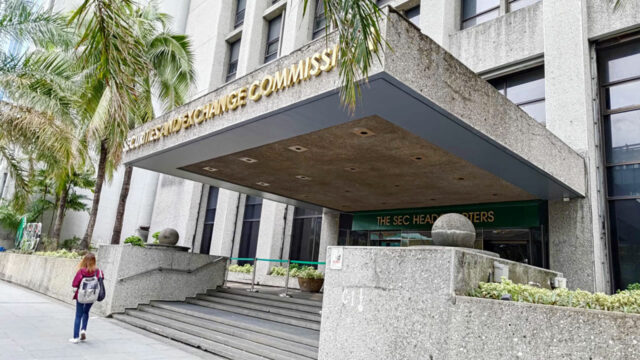
THE SECURITIES and Exchange Commission (SEC) has issued an advisory against Legacy Asia International and its owner for allegedly soliciting investments from the public while promising unusually high returns.

In its advisory, the SEC said Legacy Asia has been using its Facebook page to collect funds from the public, presenting these as investments or business loans with promised returns of 22%, 55%, 71%, or 88% over five, 15, 20, or 25 days, respectively.

“Investors may register through their website… or join different Facebook groups that are managed by team leaders to manage their investments and serve as their adviser in future transactions,” the corporate regulator said.

The scheme offers four investment plans, each with varying profit rates tied to specific minimum and maximum investment amounts, the SEC added.

The commission said these arrangements fall under the definition of an investment contract, which must be registered and authorized under the Securities Regulation Code (SRC).

Under the SRC, an investment contract exists when money is placed in a common enterprise with the expectation of profits primarily from the efforts of others.

“The public is hereby informed that Legacy Asia International is not authorized to solicit investments from the public, not having secured prior registration and/or license to sell securities or solicit investments as prescribed under Section 8 of the SRC,” the SEC said.

The regulator advised the public to avoid or discontinue investing in the scheme, warning that those acting as promoters, recruiters, or agents may face criminal liability under the Financial Products and Services Consumer Protection Act and the SRC, with penalties of up to P5 million or 21 years’ imprisonment, or both.

The SEC-provided website link was unavailable, and the owner’s other contact information is not publicly accessible. — Alexandria Grace C. Magno

La Scala season opens with Russian opera in tribute to composer Shostakovich

TEATRO ALLA SCALA INTERIOR — COMMONS.WIKIMEDIA.ORG/WOLFGANG MORODER

MILAN — La Scala opened its new season on Sunday with Russian composer Dmitri Shostakovich’s Lady Macbeth of the Mtsensk District, an opera promoting women’s rights that was once banned in Russia.

The Milan opera house is staging the work in a tribute to Shostakovich 50 years after his death.

The opera, based on a play by Nikolai Leskov, debuted in St. Petersburg in 1934 and was originally intended to be the first of a trilogy dedicated to Russian women.

Despite its initial success, the opera faced criticism from the Soviet leadership, including Joseph Stalin, due to its depiction of sex, violence, and female rebellion and it was banned for nearly 30 years in the country.

“Opening the season with this opera is… a tribute to a 20th century giant and to an opera that suffered for far too many years,” Riccardo Chailly, La Scala’s principal conductor, said.

Speaking about calls to exclude Russian performers from European stages, Russian director Vasily Barkhatov said that personal political views and cultural identity should be kept separate.

“If you openly support the Russian government, you must be aware of the possible consequences of your choice,” Mr. Barkhatov told Reuters.

“It’s different, however, if you are discriminated against just because you are a Russian artist,” he said.

KATERINA’S CHARACTER ‘LIKE A RACING CAR’
The opera tells the story of Katerina who, trapped in an unhappy marriage, murders her husband and father-in-law with the help of her lover, but is eventually discovered and sent to Siberia where she commits suicide.

“It’s a story about women’s freedom and human happiness,” said Mr. Barkhatov.

US soprano Sara Jakubiak, who plays Katerina, said her character “is like a racing car that goes from zero to 100 km in a couple of seconds.”

The opera was originally set in the countryside of 19th century Russia, but Mr. Barkhatov and Belarusian set-designer Zinovy Margolin have shifted the three-and-a-half-hour production to an urban setting of 1950s Moscow.

“We wanted to do something different. We thought that setting it in the city where Shostakovich lived would be fitting,” said Mr. Margolin.

Russian tenor Yevgeny Akimov plays Katerina’s husband, Zinovy, while Uzbek tenor Najmiddin Mavlyanov stars as her lover Sergey.

This season will be the first for La Scala’s new artistic director, Fortunato Ortombina.

La Scala, inaugurated in 1778, has become one of the world’s most prestigious opera and ballet theaters.

Sunday’s opening performance, was sold out. Tickets, costing as much as €3,200 ($3,725) — will generate a record €2.8 million in revenue.

The opera will be performed at La Scala until Dec. 30. — Reuters

Why the push for a stronger yuan won’t go away

STOCK PHOTO | Image by Xb100 from Freepik

By Daniel Moss

TWO DECADES after China began allowing its currency to fluctuate, authorities are again standing in the way of an appreciation. It’s a reminder that the decision in 2005 to sever the yuan’s hard peg to the dollar, important as it was, came with strings attached.

While Beijing never walked away from the foreign-exchange market, recent interventions are noteworthy. They suggest a desire to preserve exports made more competitive by a weak currency and a worry that the domestic economy is softer than official growth numbers suggest. The problem is that this situation is unlikely to cure itself. Exports rose more than forecast in November, according to figures released on Monday, and the trade surplus exceeded $1 trillion for the first time. A raft of data later in the week, by contrast, are projected to point to a lackluster domestic picture.

Not that the yuan has suffered in 2025. It’s up almost 4% against the dollar and on course for the best annual performance in five years. But these gains are middling, considering the greenback is having a less-than-stellar time. The Malaysian ringgit, Thai baht, and Singapore and Taiwan dollars have done much better. Investors want to take the yuan higher, but keep encountering resistance from the People’s Bank of China.

One of the main ways for the central bank to signal intentions is through the setting of a reference rate for the currency; dealers try to predict the starting point for the day’s trade. Last week, the fixing was significantly weaker than forecast. State banks reinforced the go-slow message, buying dollars to keep a lid on the yuan. Beijing recognizes the power of markets. FX trading has ballooned to $9.6 trillion a day, compared with just $1.9 trillion when the long practice of maintaining a value for the yuan of 8.3 per dollar ceased in 2005. It traded at around seven on Monday.

It’s not a stronger rate per se that repels the government. Rapid moves are anathema and decisions about the pace and degree of change must always reflect what top officials believe is the overall national interest. The challenge is how to preserve the export machine, while acknowledging the reasons behind the pressure for appreciation: A rally in local stocks, which draws money into the country, and an easing of trade tensions with the US, which tends to lift emerging markets, generally.

US President Donald Trump has historically moaned that a range of nations, China included, conspire to keep their currencies artificially weak to “rip off” the US. But in the most recent round of talks between the two countries, the yuan hasn’t been a sticking point, and tariffs have come down from levels that would have crippled the economy. Washington and Beijing appear content to come to mini-deals every few months to stop the relationship nosediving. Not allowing any yuan gains might jeopardize this relative detente.

President Xi Jinping should go further and let it advance some more. According to two former American officials, the yuan could be undervalued to the tune of as much as 18%, based on International Monetary Fund estimates. A number of large banks, including Goldman Sachs Group, Inc., tip advances next year. Prominent Chinese economists, while careful to not be sharply critical in their commentary, see plenty of scope for upward movement. It may even help the economy — over time — by stimulating local demand. The question will be whether the short-term disruption and difficulties will persuade top policymakers that it’s a worthwhile step.

The time has come to let the yuan run a bit, says Miao Yanliang, chief strategist at China International Capital Corp., and a former top economist at the foreign-exchange regulator. The dollar is likely to be soft for a few years. It’s natural for other currencies to rise in that environment; to hold the yuan back would be to allow it to depreciate against other trading partners.

It’s not without risks. China has been skirting deflation and a strong currency could exacerbate the difficulties. Activity could use a boost in other areas: Retail sales have been disappointing, along with industrial production and employment, while investment is languishing. By lowering the cost of imports, they could become more attractive to consumers.

The case for rebalancing China’s economy away from exports is a familiar one. It lurks behind many of the calls for appreciation in the 20 years since the hard link was broken. And it was one of the arguments in favor of reforming the trading rules in 2005 — along with heading off protectionist bills in the US Congress. Now, there is a trade-barrier fan in the White House. Extracting concessions from China these days is all about getting it to buy more soybeans and allow the West to purchase the rare minerals so critical to modern manufacturing.

Encouraging further yuan strength, or not standing so vigorously in its path, makes sense.  The alternative is a sudden move, with disruption that entails. In 2005, China did just enough to quell the arguments of yuan bulls. Not a bad approach to adopt today. The pressure isn’t going away.

BLOOMBERG OPINION

Financing gaps, weak data systems slowing MSME shift to AI, IBM says

STOCK PHOTO | Image by Gerd Altmann from Pixabay

MICRO, small and medium enterprises (MSME) are increasingly becoming interested in using artificial intelligence (AI) but continue to face hurdles such as financing constraints and poor data quality, IBM Philippines said.

“MSMEs cater to smaller end-clients, so absorbing and organizing data is quite challenging,” IBM Philippines Technical Sales Lead Felicisimo S. Torres, Jr. told reporters on the sidelines of an event on Tuesday.

He added that adoption is more complex for small firms because many still rely on manual processes and lack integrated systems.

Only 14.9% of Philippine companies use AI tools, according to a recent study by the Philippine Institute for Development Studies, underscoring how far most businesses are from automation.

To address cost pressures, Mr. Torres said MSMEs could start with subscription-based AI tools rather than large upfront investments.

He added that cultural barriers remain a concern, with some workers and business owners reluctant to adopt tech due to fears of job displacement or added operational complexity.

A study by the IBM Institute for Business Value found that 64% of business leaders globally think AI success depends more on people’s willingness to adopt it than the technology itself.

The report also showed that 85% of executives expect AI to enable fresh business models, though many admit there is still a wide gap between their ambitions and what they have implemented.

Mr. Torres said interest among MSMEs is rising, noting that IBM recently closed a deal with a Cebu-based medium enterprise looking to integrate the company’s AI solutions into its operations. “The complexity is there, but it’s not impossible,” he said.

Globally, organizations are directing 64% of their AI investments into their core operations, according to the IBM study.

MSMEs account for more than 99% of Philippine businesses and contribute about 40% of economic output. — Beatriz Marie D. Cruz

Banks’ loans to MSMEs rise as of Sept.

BW FILE PHOTO

PHILIPPINE BANKS extended more loans to micro, small and medium enterprises (MSMEs) at end-September.

Banks’ loans to MSMEs amounted to P536.51 billion at end-September, up 7.13% from the P500.809 billion disbursed in the same period last year, based on data from the Bangko Sentral ng Pilipinas (BSP). However, this was lower than the P540.92 billion in loans posted at end-June.

This made up 4.45% of the banking system’s P12.049-trillion loan book in the period.

Under Republic Act No. 9501 or the Magna Carta for MSMEs, banks must allocate 8% of their loan portfolio to micro and small enterprises (MSEs), and 2% to medium-sized businesses.

The mandated credit allocation lapsed in June 2018, or 10 years after the law was passed. However, the BSP continues to monitor banks’ lending to MSMEs as part of its supervisory oversight and policy development.

Central bank data showed that loans to micro and small enterprises amounted to P225.17 billion at end-September, rising by 9.9% from P204.886 billion a year earlier. This accounted for 1.87% of banks’ portfolio.

Meanwhile, banks lent P311.34 billion to medium enterprises at end-September, making up 2.58% of their loan book. This was 5.21% more than the P295.923 billion disbursed a year ago.

Broken down, universal and commercial banks extended P158.57 billion in loans to micro and small enterprises as of September, which accounted for 1.44% of their P10.98-trillion loan portfolio. They also lent P253.35 billion to medium enterprises or 2.31% of the total.

Thrift banks’ lending to MSEs reached P31.64 billion or 3.68% of their P859.55-billion loan portfolio, while loans to medium enterprises stood at P37.23 billion or 4.33% of the total.

Rural and cooperative banks extended P34.31 billion in credit to micro and small enterprises as of September or 20.35% of their P168.62-billion loan book. They also lent P20.69 billion to medium enterprises or 12.27% of the total.

The BSP had allowed Philippine banks to count MSME loans as alternative reserve compliance with the reserve requirements to help support the sector during the pandemic until June 2023. This relief measure was extended only for thrift banks and rural and cooperative banks until Dec. 31, 2025.

Lastly, digital banks disbursed P66 million in loans to the micro and small enterprise sector, equivalent to 1.61% of their P40.93 billion total loan book. Loans granted to medium enterprises accounted for 0.17% of their portfolio at P7 million.

The BSP said it continues to promote MSME lending by improving credit risk assessment, simplifying loan applications, supporting digital finance, and creating frameworks.

John Paolo R. Rivera, a senior research fellow at the Philippine Institute for Development Studies, said in a Viber message that the year-on-year increase in banks’ lending to small businesses “reflects recovering demand, improved mobility, and the continued expansion of MSMEs in food services, retail, and logistics.”

“Banks also maintained lending momentum because MSMEs remain a key driver of domestic consumption, and some lenders have expanded credit programs supported by guarantees and government-backed facilities,” he said.

However, the decline from the end-June level may have been due to corruption concerns that could have caused businesses to put their expansion plans on hold, resulting in slower borrowing.

“Higher operating costs and soft consumer sentiment also led many MSMEs to postpone inventory buildup and investment plans, reducing credit demand in the third quarter,” Mr. Rivera said.

He added that increased economic activity during the holiday season could boost MSME lending towards the end of the year.

“MSME lending may see a modest bump in the fourth quarter due to holiday demand, but growth will likely remain subdued overall. Borrowing appetite will depend on how quickly confidence recovers, how stable the peso becomes, and whether government disbursements normalize,” he said.

“Until clarity on governance and fiscal spending improves, MSME loan growth is expected to stay steady but not strong.” — Katherine K. Chan