Home Blog Page 1895

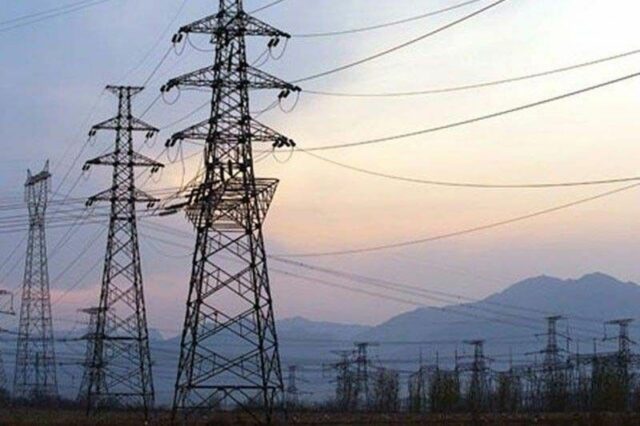
Power co-ops urged to shun politics

PHILSTAR FILE PHOTO

ELECTRIC cooperatives should disengage from politics in this year’s midterm elections and instead focus on improving their services, an energy advocacy group said on Thursday.

“Leading up to the 2025 midterm elections, we have observed that there have been questionable posts by electric cooperatives in the past couple of weeks that seemingly endorse a political candidate,” Nic Satur, Jr., chief advocate officer for Partners for Affordable and Reliable Energy, said in a statement.

“Electric cooperatives are mandated to serve consumers, not politicians. Their time, resources, and expertise should be dedicated to providing least-cost power — not to political campaigns,” he added.

The Philippines is set to hold its midterm elections on May 12, when Filipinos will pick more than 12 senators, 300 congressmen and thousands of local posts. 

Mr. Satur said some electric cooperatives had held assemblies with energy consumers where political candidates’ campaign materials were blatantly displayed. Such gatherings could’ve been used as an avenue to discuss on how to make power costs cheaper.

“These events must be a venue to discuss power rates and other electric cooperative concerns only,” he said.

“When leaders of electric cooperatives use their influence for political endorsements, it diverts

their attention from pressing energy concerns,” he added. “Consumers are left with higher rates, unreliable service, and mismanaged resources.” — Kenneth Christiane L. Basilio

1Life to provide healthcare tools

STOCK PHOTO | Image by Silas Camargo Silão from Pixabay

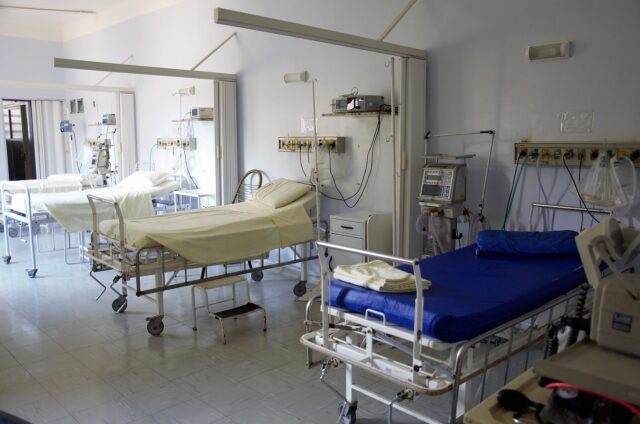
HEALTHCARE technology company 1Life, Inc. has teamed up with the local government of Parañaque to provide early detection and preventive healthcare tools in its health facilities.

The partnership is expected to benefit 500,000 residents in 20 barangay health centers, 1Life said in a statement on Wednesday. The memorandum of agreement was signed on March 6.

“We are doing this partnership with the local government of Parañaque to help them in the modernization of their barangay health centers, giving their indigent residents access to better healthcare services,” Kenneth So, vice-president for community healthcare partnerships at 1Life, was quoted as saying.

Under the partnership, 1Life is expected to provide portable diagnostic equipment for detection and disease prevention services. This would help ease the number of residents visiting city government hospitals.

Locals can also avail services such as blood chemistry tests, full abdomen ultrasound, chest X-ray, fetal doppler for pregnant patients, respiratory rate and oxygen saturation measurements, urinalysis, checking of blood sugar, uric acid, cholesterol, and hemoglobin levels.

1Life’s healthcare services help address the “4-Day Problem,” which states that poor Filipinos need to wait for four days to get a diagnosis and prescription. — Beatriz Marie D. Cruz

Virginia tobacco begins trading

DA.GOV.PH

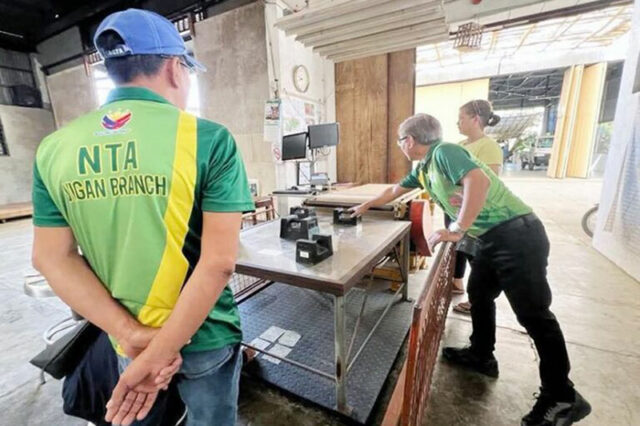
BAGUIO CITY — The National Tobacco Administration (NTA) announced that Virginia tobacco has started trading operations for the cropping season 2024–2025, following the opening of the buying stations in Region 1 and Abra.

Administrator and Chief Executive Officer Belinda S. Sanchez said, NTA extension workers have already checked the trading equipment and facilities of the two biggest tobacco trading outlets in the Ilocos region before the end of February.

The assigned NTA field workers have sealed all the weighing scales of the buying stations upon calibration using the weighing test certified by the Department of Science and Technology as well as calibration of weighing scales of accredited field canvassers.

This is to ensure the accuracy of the weighing of all tobacco leaves brought about by the farmers to the trading centers, Ms. Sanchez explained.

NTA said that tobacco farmers, who planted as early as the last week of November 2024, have started delivering their flue-cured Virginia tobacco to the trading centers.

Trading warehouses of the Universal Leaf Philippines, Inc. in Agoo, La Union; Candon City and Cabugao, both in Ilocos Sur; Currimao, Ilocos Norte; and Bangued, Abra; and the warehouse of Trans Manila Incorporated (TMI) in San Juan, Ilocos Sur, are now open to accommodate all the flue-cured Virginia tobacco leaves produced by the farmers, NTA also said.

At the start of the 2025 tobacco trading operations, trading centers purchased a kilo of prime class of flue-cured tobacco at P107 while field canvassers in the first district of Ilocos Sur bought the same class of cured tobacco as high as P125 per kilo.

With these, Sanchez is expecting another golden season for tobacco farmers this year, as the current tobacco buying prices are much higher than the approved tobacco floor prices during the tripartite conference in October 2023. — Artemio A. Dumlao

Five nabbed in Nueva Vizcaya sting

BAGUIO CITY — Five alleged drug personalities were caught at an alleged drug den in Barangay Curifang, Solano town in Nueva Vizcaya, late Wednesday evening.

Philippine Drug Enforcement Agency (PDEA) operatives in Nueva Vizcaya swooped down at the alleged drug den at around 11:20 p.m. on Wednesday and seized at least 20 grams of suspected crystal meth (shabu) with an estimated market value of P136,000, at least 5 milliliters of suspected marijuana oil found in two vape cartridges, drug paraphernalia and non-drug evidence, such as four cellular phones, and the buy-bust money.

PDEA-Nueva Vizcaya agents were assisted by PDEA-Kalinga, Philippine National Police Drug Enforcement Group, Solano town police, and the Drug Enforcement Unit of Nueva Vizcaya police.

PDEA Regional Director Charlene Magdurulang said four of the suspects were from Solano, Nueva Vizcaya, while one was from Quezon. The suspects are facing charges for violation of Article II of Republic Act No. 9165, Comprehensive Dangerous Drugs Act of 2002. — Artemio A. Dumlao

P3.4-M drugs seized in Marawi

PHILSTAR FILE PHOTO

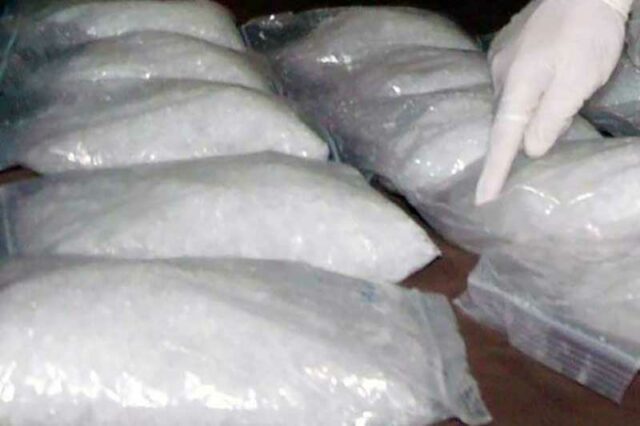
COTABATO CITY — Agents of the Philippine Drug Enforcement Agency (PDEA) seized P3.4 million worth of crystal meth (shabu) from a peddler entrapped in Marawi City on Wednesday.

Gil Cesario P. Castro, director of the PDEA-Bangsamoro Autonomous Region in Muslim Mindanao (BARMM), said on Thursday that the suspect was immediately detained after selling half a kilo of shabu to non-uniformed PDEA-BARMM agents and policemen in Barangay Matampay in Marawi City.

Mr. Castro said the entrapment operation was carried out with the help of Lanao del Sur Gov. Mamintal A. Adiong, Jr. and the regional director of the Bangsamoro police, Brig. Gen. Romeo J. Macapaz, and Muslim religious leaders in Marawi City.

The suspect, a resident of Barangay Kanyugan Papandayan in Marawi City, yielded peacefully when he realized that he had sold his illegal merchandise to PDEA-BARMM agents and personnel of the Marawi City Police Office disguised as drug dependents. — John Felix M. Unson

Stocks rise on bargain hunting, US inflation data

BW FILE PHOTO

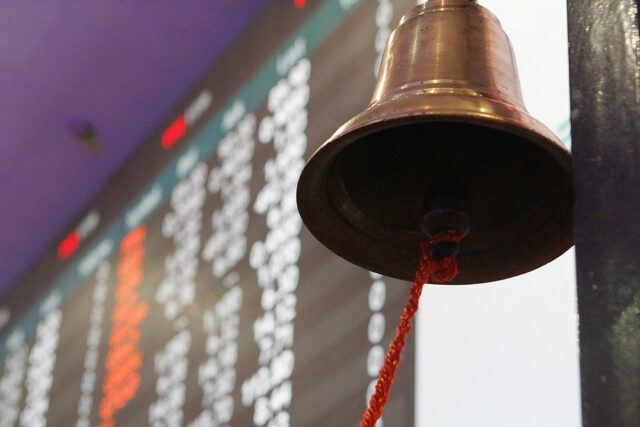
PHILIPPINE STOCKS recovered on Thursday on bargain hunting following their two-day drop and with data showing slower US consumer inflation in February.

The bellwether Philippine Stock Exchange index (PSEi) rose by 0.75% or 46.81 points to 6,242.07, while the broader all shares index climbed by 0.53% or 19.6 points to 3,701.4.

“The local market bounced back this Thursday as investors hunted for bargains following two straight days of decline,” Philstocks Financial, Inc. Senior Research Analyst Japhet Louis O. Tantiangco said in a Viber message. “Helping in today’s rebound are the lower-than-expected February inflation in the US and the robust fourth quarter and full-year 2024 corporate results onshore.”

“Philippine investors resumed their bargain hunting after investors calmed down after the latest US consumer price index (CPI) came out. Wall Street was able to even close mixed after a rough start,” Regina Capital Development Corp. Head of Sales Luis A. Limlingan said in a Viber message.

US consumer prices increased moderately in February as higher shelter costs were partially offset by cheaper airline fares, giving the Federal Reserve room to keep interest rates unchanged next week while monitoring the economic impact of a trade war, Reuters reported.

The CPI rose 0.2% last month, the smallest gain since October, after accelerating 0.5% in January, the Labor Department’s Bureau of Labor Statistics said.

In the 12 months through February, the CPI increased 2.8% after climbing 3% in January. Economists polled by Reuters had forecast the CPI would gain 0.3% and advance 2.9% on a year-on-year basis.

With the economic outlook deteriorating because of tariffs, financial markets expect the Fed to resume cutting rates in June after it paused its easing cycle in January. The central bank’s benchmark overnight interest rate is currently in the 4.25%-4.5% range, having been reduced by 100 basis points since September.

Majority of sectoral indices posted gains on Thursday. Mining and oil surged by 2.97% or 257.66 points to 8,926.71; financials rose by 2.4% or 56.47 points to 2,401.53; services went up by 1.71% or 34.41 points to 2,040.47; and holding firms increased by 0.4% or 20.87 points to 5,223.56.

Meanwhile, property dropped by 1.54% or 34.56 points to 2,196.74 and industrials went down by 0.72% or 63.31 points to 8,667.55.

“BDO Unibank, Inc. was the day’s index leader, climbing 3.95% to P158. Alliance Global Group, Inc. was at the bottom, falling 3.23% to P6.30,” Mr. Tantiangco said.

Value turnover went down to P5.65 billion on Thursday with 1.04 billion shares exchanged from the P5.98 billion with 741.54 million issues traded on Wednesday.

Decliners narrowly beat advancers, 93 versus 90, while 45 names were unchanged.

Net foreign buying increased to P436.10 million on Thursday from P2.62 million on Wednesday. — Revin Mikhael D. Ochave with Reuters

Peso flat vs dollar as market awaits fresh leads

BW FILE PHOTO

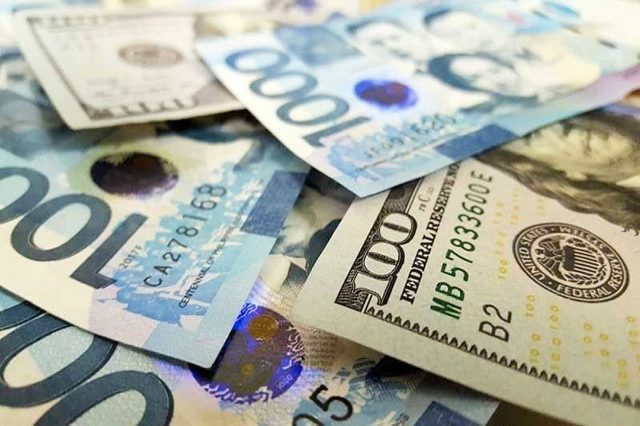
THE PESO was flat against the dollar on Thursday as markets continue to monitor developments in the Trump administration trade policies and before the release of US producer inflation data.

The local unit closed unchanged at P57.36 per dollar on Thursday, Bankers Association of the Philippines data showed.

The peso opened Wednesday’s trading session weaker at P57.39 against the dollar. Its worst showing was at P57.41, while its intraday best was at P57.25 versus the greenback.

Dollars traded went up to $1.25 billion from $1.16 billion on Tuesday.

The peso mostly moved sideways on Thursday as the market remained cautious while awaiting fresh leads, including potential tariff policy announcements from US President Donald J. Trump, a trader said by phone.

“The peso resumed gains earlier in the day, partly after recent political noise [that have been] manageable so far,” Rizal Commercial Banking Corp. Chief Economist Michael L. Ricafort said in a Viber message.

The market was also looking ahead to the release of February US producer price index data overnight, Mr. Ricafort added.

For Friday, the trader sees the peso moving between P57.20 and P57.50 per dollar, while Mr. Ricafort expects it to range from P57.25 to P57.45.

The dollar struggled for traction on Thursday as investors worried about the impact of an escalating global trade war on US inflation and growth, Reuters reported. Against a basket of currencies, the dollar stood at 103.57, close to a five-month low.

A rise in global trade tensions and worries over US recession risks have rattled global markets and sparked huge volatility in currencies, as traders seesaw between relief and angst over Mr. Trump’s whipsaw policy changes.

Mr. Trump threatened further tariffs on European Union goods on Wednesday as major US trading partners said they would retaliate against the tariffs imposed so far.

US consumer inflation rose slightly less than expected in February, but the relief it offers could be temporary as the data did not fully capture the cascade of Mr.Trump’s tariffs. — A.M.C. Sy with Reuters

Russia weighs Ukraine ceasefire plan as US tries to seal a deal

REUTERS

MOSCOW — The Kremlin said on Wednesday it would review details from Washington about a proposal for a 30-day ceasefire in Ukraine before responding, while US Secretary of State Marco Rubio hoped a deal would be struck within days.

As Moscow considered the plan, President Vladimir Putin, dressed in military fatigues, made a surprise visit to Russia’s Kursk region for the first time since Ukrainian troops captured part of it last year.

With Mr. Putin’s presence highlighting recent Russian advances in Kursk, Valery Gerasimov, head of Russia’s General Staff, told the Kremlin leader his troops had repelled Ukrainian forces from 86% of the ground they once held in Kursk. Ukraine had hoped to use that territory as a bargaining chip in any peace talks with Moscow.

The US on Tuesday agreed to resume weapons supplies and intelligence sharing with Ukraine after Kyiv said at talks in Saudi Arabia that it was ready to support a ceasefire proposal.

The Kremlin on Wednesday said it was carefully studying the results of that meeting and awaited details from the US.

Mr. Rubio said the United States was hoping for a positive response, and that if the answer was “no” then it would tell Washington a lot about the Kremlin’s true intentions.

Speaking to reporters when his plane refueled in Ireland, Mr. Rubio said on Wednesday: “Here’s what we’d like the world to look like in a few days: Neither side is shooting at each other, not rockets, not missiles, not bullets, nothing… and the talking starts.”

Two people familiar with the matter said Russia has presented Washington with a list of demands for a deal to end the Ukraine war and reset relations with the United States.

The specific demands were not clear, nor whether Russia, which holds just under a fifth of Ukraine, was willing to enter peace talks with Kyiv prior to their acceptance.

The people said the demands were similar to previous Kremlin terms including no North Atlantic Treaty Organization (NATO) membership for Kyiv, recognition of Russia’s claim to Crimea and four Ukrainian provinces and an agreement that foreign troops not be deployed in Ukraine.

Mr. Rubio said that Europe would have to be involved in any security guarantee for Ukraine, and that the sanctions Europe has imposed would also be on the table.

After a meeting of five European defense ministers, British Defense Minister John Healey on Wednesday told reporters that work was accelerating on a “coalition of the willing from Europe and beyond” to support Ukraine. French Defense Minister Sebastien Lecornu said about 15 countries had expressed interest.

In Kyiv, Ukrainian President Volodymyr Zelensky hailed this week’s meeting in Saudi Arabia as constructive, and said a potential 30-day ceasefire with Russia could be used to draft a broader peace deal.

After Russian forces made gains in Ukraine in 2024, Mr. Trump reversed US policy on the war, launching bilateral talks with Moscow and suspending military assistance to Ukraine, demanding that it take steps to end the conflict.

Tuesday’s agreement signaled a major improvement in US-Ukraine relations after a clash between Mr. Trump and Mr. Zelensky at the White House last month sent them to a new low, but it did not alter the issues underlying the conflict with Russia, Ukrainian sources said.

RUSSIA WANTS ITS ADVANCES TAKEN INTO ACCOUNT
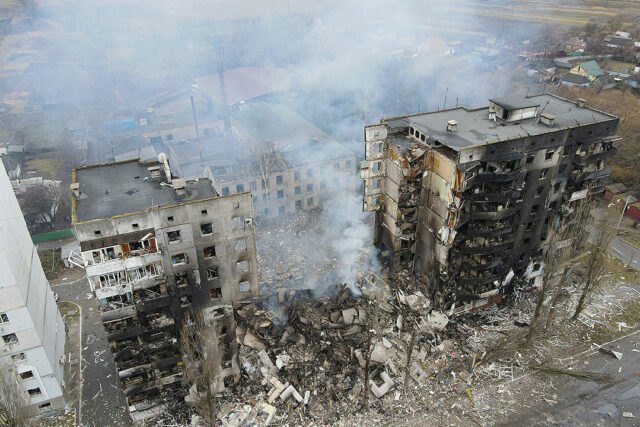
Russia’s invasion of Ukraine in early 2022 has left hundreds of thousands of dead and injured, displaced millions of people, reduced towns to rubble and triggered the biggest confrontation between Moscow and the West in six decades.

During Mr. Putin’s visit to Kursk, Mr. Gerasimov told him Russian forces had regained 1,100 square kilometers (425 square miles) of territory including 259 square kilometers in the last five days.

Kyiv’s forces have been on the verge of losing their foothold in Kursk. Their main supply lines were cut, and they ceded control of the town of Sudzha.

Mr. Putin called for Russia’s forces to swiftly retake any remaining area from Kyiv’s troops. He also made it clear he was considering the creation of a buffer zone in Ukraine’s Sumy region, across the border from Kursk.

Deep State, an authoritative Ukrainian site that charts the frontlines of the war, updated its battlefield map to show Ukrainian forces were no longer in control of Sudzha. However, it said fighting was continuing on the outskirts.

Ukraine’s top army commander said on Wednesday that Kyiv’s troops will keep operating in Kursk region as long as needed and that fighting continued in and around Sudzha.

Mr. Putin has repeatedly said he is ready to talk about an end to the war and Mr. Trump says he thinks Mr. Putin is serious, though other Western leaders disagree.

Reuters reported in November that Mr. Putin was ready to negotiate a deal with Mr. Trump but would refuse to make major territorial concessions and would insist Kyiv abandon ambitions to join NATO.

Ukraine says the regions claimed by Moscow have been annexed illegally and that it will never recognize Russian sovereignty over them.

Konstantin Kosachev, chairman of the international affairs committee of the Federation Council, the upper house of Russia’s parliament, said on Telegram that Russia’s advances in Ukraine must be taken into account in any deal.

“Real agreements are still being written there, at the front. Which they should understand in Washington, too,” he said. — Reuters


G7 foreign ministers meet in Canada amid tensions with Trump

FLICKR

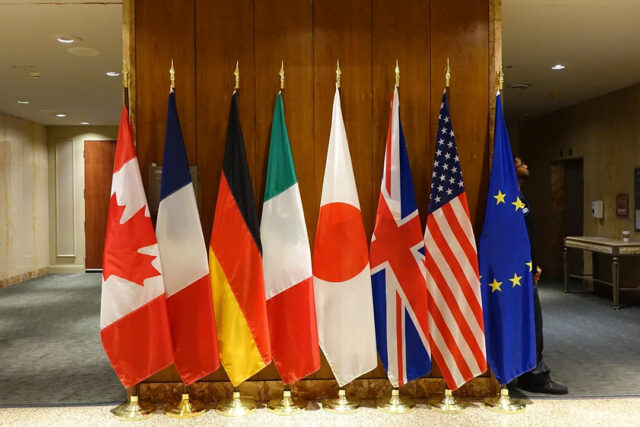
LA MALBAIE, Canada — Foreign ministers of leading Western democracies meet in Canada on Thursday after seven weeks of rising tensions between US allies and President Donald J. Trump over his upending of foreign policy on Ukraine and imposing of tariffs.

The Group of Seven (G7) ministers from Britain, Canada, France, Germany, Italy, Japan and the United States, along with the European Union (EU), meet in the remote tourist town of La Malbaie, nestled in the Quebec hills for two days of meetings that in the past have broadly been consensual on the issues they face.

Top of the agenda for Washington’s partners will be getting a debriefing on US Secretary of State Marco Rubio’s talks on Tuesday with Kyiv in Jeddah, Saudi Arabia, where Ukraine said it was ready to support a 30-day ceasefire deal.

But in the run-up to the first G7 meeting of Canada’s presidency, the crafting of an agreed all-encompassing final statement has been tough.

A US decision to impose 25% tariffs on all steel and aluminum imports immediately drew reciprocal measures from Canada and the EU, underscoring the tensions.

Washington has sought to impose red lines on language around Ukraine and opposed a separate declaration on curbing Russia’s so-called shadow fleet, a murky shipping network that eludes sanctions, while demanding more robust language on China.

On Monday, Mr. Rubio cautioned that Washington did not want language that could harm efforts to bring Russia and Ukraine to the table. Speaking to reporters on Wednesday he said a good G7 statement would recognize that the United States has moved the process to end the war forward.

G7 diplomats said the positive outcome from Jeddah may at least ease talks on Ukraine.

The United States, since Mr. Trump’s return to office on Jan. 20, has taken a less-friendly stance on Ukraine, pushing for a quick deal to end the war, demanded European partners take on more of the burden without openly endorsing their role in future talks, and warmed Washington’s ties with Moscow.

TARIFFS TO 51ST STATE
Even Japan, so reliant on American security guarantees, has found itself in Mr. Trump’s firing line.

“It’s very difficult. Maybe we should wait for the G8,” said one European diplomat ironically.

Mr. Trump has suggested the G8 might be revived with the return of Moscow 11 years after its membership in the group was suspended over its annexation of Crimea.

Nowhere have the difficulties for US allies been more apparent than in Canada.

Relations between the United States and Canada are at an all-time low, thanks to Mr. Trump’s threats to impose tariffs on all imports from Canada and his constant musing about annexing the country to make it the 51st US state.

“We’re going to be focused in the G7 on all of those things. That’s what the meeting is about. It is not a meeting about how we’re going to take over Canada,” Mr. Rubio told reporters, highlighting how offbeat their ties have become.

That may not appease Ottawa. Foreign Minister Melanie Joly said on Wednesday she would be on the offensive at the G7.

“In every single meeting, I will raise the issue of tariffs to coordinate a response with the Europeans and to put pressure on the Americans,” she said.

European diplomats said they hoped to use the G7 to assess directly how much influence Mr. Rubio has on US foreign policy.

Mr. Trump has used a wide array of officials not linked to the State department in talks ranging from Ukraine to the situation in the Middle East, where allies have been alarmed by some of the erratic statements coming from Washington. — Reuters

Taiwan president warns of China’s ‘infiltration’ effort, vows counter measures

TAIWAN President-elect Lai Ching-te, of Democratic Progressive Party (DPP), holds a press conference, following his victory in the presidential elections, in Taipei, Taiwan, Jan. 13, 2023. — REUTERS

TAIPEI — Taiwan President Lai Ching-te said on Thursday China has deepened its influence campaigns and infiltration against the democratic island, pledging measures to tackle Beijing’s efforts to “absorb” Taiwan.

Taiwan has accused China of stepping up military drills, trade sanctions and influence campaigns against the island in recent years to force the island to accept Chinese sovereignty claims.

Speaking to reporters after holding a meeting with senior security officials, Mr. Lai said Beijing had used Taiwan’s democracy to “absorb” various members of society including organized crime groups, media personalities, and current and former military and police officers.

“They (China) are carrying out activities such as division, destruction, and subversion from within us,” Mr. Lai told a press briefing broadcast live from the Presidential office.

China’s Taiwan Affairs Office did not immediately respond to a request for comment.

Citing government data, Mr. Lai said 64 people were charged for Chinese espionage last year, three times more than in 2021. He said the majority of them were current or former military officials.

“Many are worried that our country, hard-earned freedom and democracy and prosperity will be lost bit by bit due to these influence campaigns and manipulation,” Mr. Lai said.

By making these efforts, Mr. Lai said China constituted what Taiwan’s Anti-Infiltration Act defined as “foreign hostile forces.”

The president proposed 17 legal and economic countermeasures, including the strict review of Taiwan visits or residency applications by Chinese citizens, and proposals to resume the work of the military court.

Mr. Lai also said his government would make “necessary adjustments” to the flows of money, people and technology across the strait. He did not elaborate.

In addition, he said the government would issue “reminders” to Taiwanese actors and singers performing in China on their “statements and actions,” a response to what Taipei sees as an ongoing Chinese campaign to pressure pop stars to make pro-Beijing comments.

“We have no choice but to take more active actions.”

China claims Taiwan as its own territory and has never renounced the use of force to bring the island under its control.

Taiwan’s government rejects Beijing’s sovereignty claims and says only the island’s people can decide their future. — Reuters

Australia’s top universities say US funding at risk due to Trump crackdown

FLATART-FREEPIK

SYDNEY — Australia’s top universities said on Thursday the Trump administration had cut US funding to some of its researchers and asked others who receive US government financial support to prove their work was aligned with American interests.

The Group of Eight, a coalition of Australia’s most research-intensive universities, said the action could jeopardize crucial medical and defense research in the country.

Some researchers who receive funding from US federal agencies had been asked to assess their work’s compliance with US President Donald J. Trump’s agenda in a 36-point questionnaire, said the universities.

The survey included questions on diversity, equity, and inclusion (DEI) programs that the Trump administration has been seeking to end. In some cases, recipients were only given 48 hours to respond, the Group of Eight said.

“We are extremely concerned about the broader implications of the Trump administration’s policy, not only for the future of health and medical research, but especially regarding defense collaboration,” the Group of Eight Chief Executive Officer Vicki Thomson said in a statement to Reuters.

The Group of Eight has sought Australian government intervention and is seeking urgent guidance from the US government, including a time extension to respond to the questionnaire, the statement said.

A spokesperson for the US embassy in Canberra declined to comment. Australia’s Education ministry did not immediately respond to a request for comment.

The Group of Eight universities carry out 70% of all university research in Australia and the US is their single largest global research partner.

The universities collectively received around $161.6 million in grants from the US National Institutes of Health (NIH) between 2020 and 2024.

The universities said some researchers had received a “show cause” notification to justify ongoing funding over the past week and an extensive survey with questions relating to the Trump administration’s priorities and research collaboration with China, Russia, Cuba or Iran.

The questionnaire, issued by the US Office of Management and Budget and seen by Reuters, asked Australian researchers questions such as: “Can you confirm that this is no DEI project (sic) or DEI elements of the project?” and “Does this project take appropriate measures to protect women and to defend against gender ideology?”

It also asked them to rank their projects on a scale from 1-5 based on how it promoted US interests such as preventing illegal immigration, limiting the flow of illicit drugs into the country, “combatting Christian prosecution” and strengthening US supply chains. — Reuters

China accuses New Zealand’s top spy of spreading ‘false information’

FREEPIK

BEIJING — China’s embassy in New Zealand on Thursday accused Wellington’s top spy of lying after the intelligence chief warned of security risks posed by Beijing’s growing influence in the Pacific.

In a speech in Wellington last week, New Zealand’s Security Intelligence Service Director-General Andrew Hampton said the focus of Pacific nations on economic and transnational crime issues had opened the door for China to sign strategic deals with them that linked economic and security cooperation.

“The relevant remarks are totally baseless, all fabrication, and amount to spreading false information,” the Chinese embassy in Wellington said.

“For someone holding a hammer, everything looks like a nail.”

In recent years, Beijing has struck deals with a number of Pacific nations, worrying New Zealand, a member of the Five Eye intelligence alliance along with Britain, the US, Canada, and Australia.

Mr. Hampton had last week said China wanted to “create competing regional architectures, and expand its influence with Pacific Island countries,” which posed foreign interference and espionage risks.

The Cook Islands, a self-governing Pacific nation in free association with New Zealand, is at the heart of recent tensions between China and New Zealand.

Cook Islands Prime Minister Mark Brown traveled to China in February, signing a comprehensive strategic partnership deal with Chinese Premier Li Qiang. That angered Wellington, which complained about the lack of consultation and transparency around Mr. Brown’s visit.

Relevant cooperation documents have been made public, the Chinese statement said, adding that there is no “secret agenda” in China’s relations with the Cook Islands.

China’s embassy in Wellington also handles the country’s diplomatic relations with the island nations of Niue and the Cook Islands. — Reuters