Home Blog Page 1886

Wise eyeing first PHL bank partnership

WISE PHILIPPINES hopes to secure this year its first partnership with a local bank for the use of its cross-border payments infrastructure.

“I think that’s always the objective, but we should give credit that banks take time as well. These are big projects for them, we should give them time,” Wise Chief Executive Officer Kristo Käärmann said at a media briefing on Monday.

Wise Philippines Country Manager Areson I. Cuevas said their platform can help banks lower their transfer fees.

“We would like to speak with more banks, but no timeline yet. The Wise platform, I think that’s probably a discussion for another time in Philippines. It’s a very successful feature where banks who want to improve their own international payments, to make them cheaper or faster, will use our services in the background. So, it’s like a white label within the bank,” he said.

Mr. Cuevas said depositors are already able to transfer funds from their bank accounts to Wise Philippines via InstaPay.

Wise Philippines also hopes to eliminate hidden foreign exchange fees as Filipinos continue to globalize with the rise of the gig economy, and to help overseas Filipino workers (OFWs).

According to a study commissioned by Wise, Filipinos unknowingly lost approximately P8.37 billion to hidden foreign exchange (FX) fees in 2023.

“The reason why we’re having this research and sharing it with you is to make sure that a lot more Filipinos get to learn about hidden costs,” Mr. Cuevas said.

According to the study, 72% of the respondents said they “somewhat” or “fully” understand international payment costs, yet only 18% fully recognize the impact of hidden FX markups.

The study also found that 57% believe they understand the cost of payments but they actually don’t, while 25% are unaware of the true cost of remittances.

“The findings, drawn from independent studies by Edgar, Dunn & Co. and YouGov, emphasize the need for greater fee transparency in cross-border payments, and better consumer awareness of hidden fees,” Wise Philippines said.

Money lost to hidden fees affect Filipinos with cross-border financial needs, including parents sending funds for overseas education, OFWs, gig economy workers, and their families, it said. 

Foreign exchange service providers should provide a clear breakdown of the costs associated with every transaction, show the foreign exchange mark-up or the difference between the prevailing central bank reference/guiding rate and the exchange/conversion rate, and to stop using misleading terms like “free” and “0% commission,” which often hide extra charges or markups in the fine print, Wise Philippines added. — A.M.C. Sy

Aboitiz Equity Ventures profit down 23% to P18.1B in 2024

TARI Estate, Tarlac City, Tarlac — ABOITIZINFRACAPITAL.COM

LISTED CONGLOMERATE Aboitiz Equity Ventures, Inc. (AEV) posted a 23% decline in net income for 2024 to P18.1 billion from P23.5 billion in 2023 due to an asset impairment and a weak fourth quarter.

The company’s net income fell after accounting for P7.4 billion in non-recurring items, mostly related to an asset impairment, AEV said in a regulatory filing on Monday.

Despite this, core net income rose by 15% to P25.5 billion in 2024 from P22.1 billion in 2023.

For the fourth quarter of 2024, AEV recorded a net loss of P645 million, reversing the P5.5-billion net income posted in the same period in 2023.

Core net income for the October-to-December period rose by 39% to P6.7 billion from P4.8 billion in 2023.

AEV’s power segment accounted for 59% of consolidated net income contributions on a core net income basis for 2024, followed by financial services and food and beverage businesses at 20% each. The real estate and infrastructure units contributed 3% and -2%, respectively.

In the power business, Aboitiz Power Corp. recorded a 4% increase in net income contribution to P18 billion in 2024.

Earnings before interest, taxes, depreciation, and amortization (EBITDA) on a standalone basis grew by 13% to P73.3 billion, driven by higher generation portfolio margins and increased energy sales from the distribution utility business.

In the banking and financial services segment, Union Bank of the Philippines (UnionBank) saw a 32% rise in net income contribution to P6 billion in 2024 from P4.5 billion in 2023.

On a standalone basis, UnionBank’s net income increased by 31% to P12 billion in 2024 from P9.2 billion in 2023.

Net interest income grew by 12% to P58 billion due to a higher net interest margin.

The real estate segment, led by Aboitiz Land, Inc., posted a 9% decline in consolidated net income to P943 million in 2024 from P1 billion in 2023 due to the absence of asset monetization gains.

Net income contribution from the food and beverage segment, which includes Pilmico Foods Corp., Pilmico Animal Nutrition Corp., Pilmico International Pte. Ltd., and Coca-Cola Europacific Aboitiz Philippines Inc. (CCEAP), grew more than fourfold to P5.9 billion in 2024 from P1.3 billion in 2023.

The growth was driven by stabilizing commodity prices, optimized feeds and flour formulations, pricing adjustments, and new contributions from AEV’s 40% stake in CCEAP, acquired in February 2023.

In the infrastructure segment, Aboitiz InfraCapital, Inc. reported a 73% decline in net income contribution to P644 million in 2024 from P2.4 billion in 2023.

AEV said its share in Republic Cement & Building Materials, Inc.’s net loss widened to P1.1 billion in 2024 from P789 million in 2023, reflecting continued annual declines in sales volume and selling prices due to weak cement demand.

The conglomerate also booked P7.5 billion in impairment losses on Republic Cement last year.

As of end-2024, AEV’s consolidated assets increased by 7% to P893 billion, while consolidated liabilities grew by 8% to P496.6 billion.

AEV shares declined by 0.90% or 30 centavos to P33.20 apiece on Monday. — Revin Mikhael D. Ochave

Philippine nuclear energy, soon please

A year ago, in early March 2024, I joined the Philippine Nuclear Trade Mission to Canada that was organized by the Canadian Embassy in Manila. The delegation was headed by Department of Energy (DoE) Undersecretary Sharon Garin, plus Science and Technology Undersecretary Leah Buendia, Energy Regulatory Commission Chairperson Monalisa Dimalanta, and Philippine Nuclear Research Institute Deputy Director Vallerie Samson.

Private sector participants included Ronald “Suiee” Suarez, Vice-President for Corporate Communications of Aboitiz Power (AP) along with Lino Bernardo and Nicole Yazon, also of AP; Froilan Savet, Vice-President and Head of Networks of Meralco; and Sebastian Quinones, Jr. of Prime Energy. Guy Boileau, Senior Trade Commissioner of the Canadian Embassy in Manila plus Philippine consular officers in Toronto were with us all throughout.

I super-enjoyed that very educational trip. It was not the regular conference where we’d stay in one hotel all day long — instead we hopped from one meeting to another, had site visits to the McMaster University Nuclear Reactor, a big CANDU (Canada Deuterium-Uranium) mock-up reactor by Ontario Power Generation (OPG). In Toronto, we also met the officials of Bruce Power, the biggest nuclear power company in North America, among many others.

On Feb. 26 this year, the DoE released a statement, “DoE and OECD-NEA Strengthen Collaboration on Advancing the Philippine Nuclear Energy Program.” It is about the visit to the DoE of Director-General William D. Magwood IV of the Organization for Economic Cooperation and Development Nuclear Energy Agency (OECD- NEA) to discuss developments in the Philippine Nuclear Energy Program (NEP). The DoE projects the integration of 1,200 megawatts (MW) of nuclear power into Philippines’ energy mix by 2032.

Energy Secretary Raphael P.M. Lotilla was quoted as saying that, “Much of our work has focused on building a strong legal and regulatory framework for nuclear energy. We have made significant progress in submitting all necessary requirements for the ratification of existing nuclear energy-related agreements, paving the way for a safe, sustainable, and responsible nuclear energy program that will secure our nation’s energy future.”

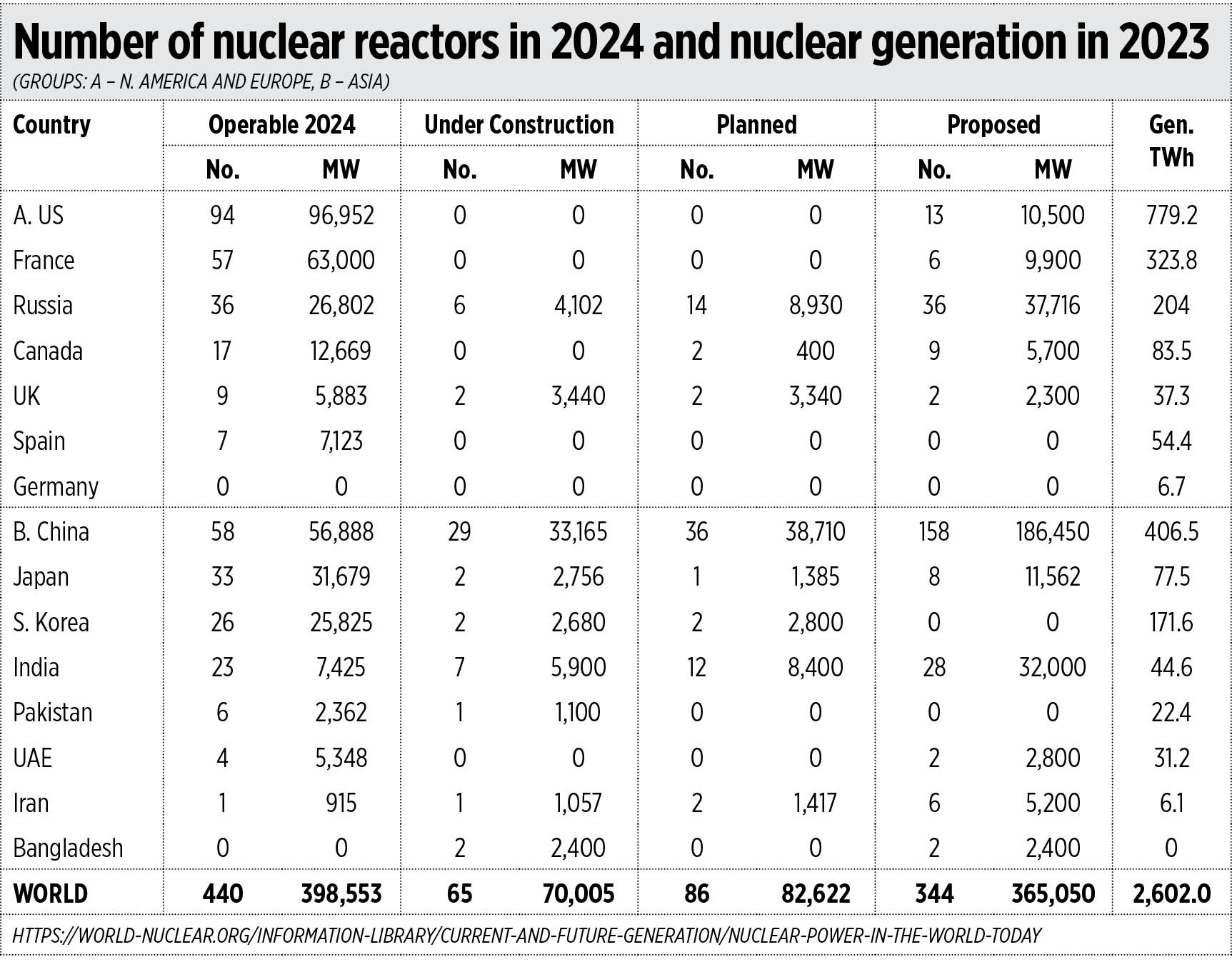
I checked the status of nuclear energy development in the world. In the accompanying table, these nuclear reactors are defined as follows: “Operable” are already connected to the grid, “Under Construction” have their first concrete already poured and a keel layed for floating plants, “Planned” have approvals and funding or commitments in place and are mostly expected to be in operation within the next 15 years, and “Proposed” are specific programs or site proposals but the timing is uncertain.

The US remains the nuclear powerhouse with a capacity of 96,952 MW, followed by France. But China will lead the world in the future with 33,165 MW under construction and 38,710 MW from planned reactors. Europe’s largest economy, Germany, had hit peak nuclear generation of 171 terawatt-hours (TWh) in 2001 then started de-nuclearization as they pivoted hard towards more intermittent wind-solar energy sources with only 34.7 TWh of nuclear energy in 2022 and 6.7 TWh in 2023 (see Table).
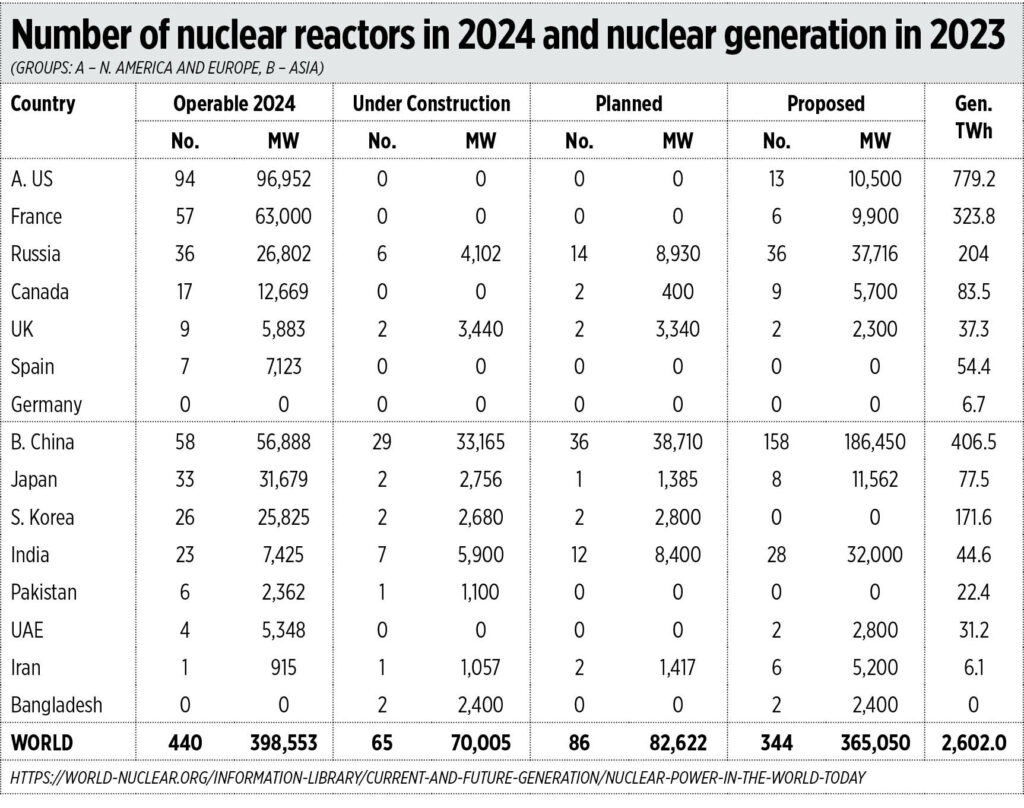
Taiwan is phasing out its nuclear power and has only one remaining 932-MW operable plant. In contrast, Saudi Arabia and Iran have proposed nuclear plants with 2,900 MW and 5,200 MW respectively.

One company in the Philippines that is very enthusiastic about integrating nuclear power into the mix is Meralco, through its subsidiary Meralco Power Gen (MGEN). I asked Emmanuel V. Rubio, President and CEO of MGEN, about the preparations they are making for this task. He has an optimistic response.

“We believe that nuclear energy will play an important role in the energy mix of the Philippines as we shift towards a low carbon economy. We continue to endorse the efforts of the DoE in crafting the necessary policies to enable nuclear energy, and we likewise support the work in Congress in crafting legislation that will allow for the safe use of nuclear energy.

“At One Meralco, we are proactively working towards this future by undertaking initiatives such as the NEST (Nuclear Energy Strategic Transition) program and the FISSION (Filipino Scholars and Interns on Nuclear Engineering) program. These initiatives are designed to build our institutional readiness and cultivate local talent, ensuring that we are well-positioned to be at the forefront of nuclear energy development in the Philippines.”

If the planned 1,200 MW of nuclear power comes online, can the transmission system handle it given the huge entry of intermittent renewables wind-solar in the grid? I asked Cynthia Alabanza, spokesperson and Head of Corporate Communications and Public Affairs of the National Grid Corporation of the Philippines (NGCP). She gave a practical response.

“NGCP has two major projects which will be completed by 2026 and 2027. Assuming no further major generation development will be built and commissioned in the Bataan area before 2032, and assuming further that the 1,200 MW nuclear target will be located in the Bataan area, then the existing facilities by 2027 will be adequate for that. Until the details of the project (location and capacity) are determined, and a System Impact Study (SIS) is issued for said project, everything remains speculative. NGCP cannot overemphasize the importance of collaborative and holistic planning when it comes to energy security.”

If oil-gas powerhouses Iran, Saudi, and the United Arab Emirates are setting up or planning more nuclear plants, the Philippines, which is an oil-gas-coal importer, should have big nuclear plants too. In 2023, the Philippines’ total power generation (from coal, gas, geothermal, hydro, etc.) was 119 TWh. That is equivalent to the nuclear generation of Japan in 1983, South Korea in 2002, and China in 2013.

The non-commissioning of the Westinghouse-built Bataan Nuclear Power Plant (BNPP) in 1986 was one of the single biggest mistakes of the Cory Aquino administration. If it had been allowed to operate, and with an average capacity factor of 85%, it could have generated an average of 4.6 TWh/year. This is larger than the combined generation of wind and solar of 3.8 TWh in 2023.

The BNPP was a “classmate” of nuclear plants built by Westinghouse in many countries, including Brazil’s Angra 1 plant (609 MW, commissioned in 1982); Slovenia’s Krisko plant (688 MW, commissioned in 1983); Spain’s Asco plant (995 MW, commissioned in 1984); and South Korea’s Hanbit 1 and Hanbit 2 (995 MW and 988 MW, respectively, both commissioned in 1986). They all were started to be built by Westinghouse in the 1970s, all experienced cost escalations when construction started, all were commissioned in the 1980s, and all are operating until now. And all are safe and have had no accidents.


Bienvenido S. Oplas, Jr. is the president of Bienvenido S. Oplas, Jr. Research Consultancy Services, and Minimal Government Thinkers. He is an international fellow of the Tholos Foundation.

minimalgovernment@gmail.com

Keanu Reeves syncs up with creatives in motorcycle docuseries Visionaries

LOS ANGELES — Keanu Reeves was able to translate his love for motorbikes into the docuseries Visionaries where he and his business partner Gard Hollinger meet creative people from different walks of life that help them design the perfect motorcycle.

Mr. Reeves co-founded ARCH Motorcycles in Hawthorne, California alongside Mr. Hollinger in 2011 and had the chance to meet bike designers and inventors for Visionaries.

One of the creatives they spoke to was a young man who built a space rocket using a giant 3-D printer.

“It’s an extraordinary opportunity,” Mr. Reeves told Reuters.

“We really hoped to inspire people with creativity and what are the potentials? And really championing creativity and creating, you know, championing people to create and to get over obstacles and to, you know, to realize dreams,” he added.

Visionaries, distributed by Roku, came out on The Roku Channel on March 7.

Mr. Reeves and Mr. Hollinger chose the people they wanted to meet on their journey, with Mr. Reeves’ favorite being James Turrell, a light artist who turned a volcanic crater in Arizona into a naked-eye observatory for the stars.

“I’ve thought about the skies and telescopes and the constellations, but someone to kind of create situations and mold a dormant crater,” said Mr. Reeves. “I guess a crater’s always dormant in order to be a creator, but anyway, that to me with James Turrell was certainly remarkable,” he added.

He also found being an on-screen talent refreshing as well.

“I love meeting folks and I love being able to speak. I love being able to talk to someone about their passion and their art and their craft,” said Mr. Reeves.

“And the whole production company and the artists that we spoke to, they were very open to have that intimacy in a way to talk about passion and creativity, was some of the more profound experiences that we have in life,” the John Wick actor said. — Reuters

Data center growth drives need for secure, risk-assessed land — STT GDC

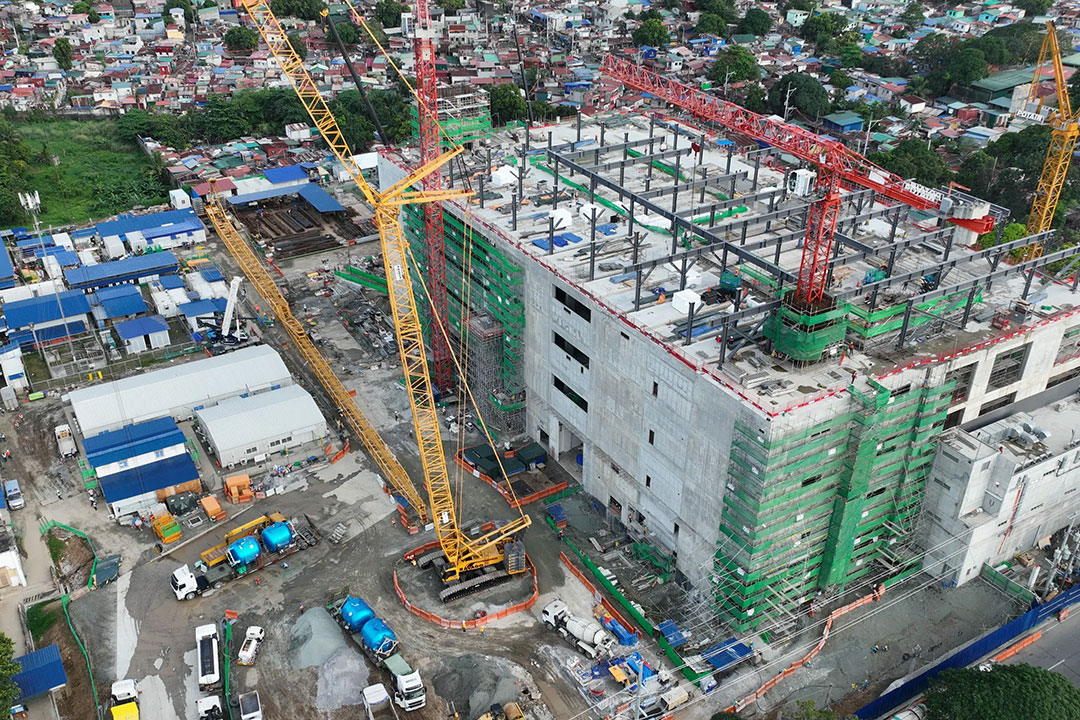
STT FAIRVIEW 1, the first building in the country’s largest carrier-neutral data center campus. — STTELEMEDIAGDC.COM

By Beatriz Marie D. Cruz, Reporter

THE GROWING data center industry in the Philippines is increasing demand for land that meets strict safety and infrastructure standards, according to ST Telemedia Global Data Centres Philippines (STT GDC), a provider of data center services supporting cloud, digital, and enterprise solutions.

“As you start looking at data centers and compare it with the other countries, there’s going to be a demand for land that meets our data center risk assessment criteria,” Carlomagno E. Malana, president and chief executive officer of STT GDC Philippines, told reporters on the sidelines of a March 6 briefing.

When you build a data center, you have to still figure out whether where you’re building is the right place to build, are you on a fault line, are you [prone to] flooding… it will likely increase demand for those types of land.”

The increasing adoption of artificial intelligence (AI) has been driving demand for data centers in the Philippines, which could bolster growth in the country’s property sector, according to Leechiu Property Consultants (LPC).

However, the Philippines remains the most disaster-prone country in the world amid high exposure to flooding and earthquakes, according to the World Risk Index.

In 2024, the Philippines’ data center capacity stood at about 182.2 megawatts (MW), according to LPC. It estimates an additional 1,364 MW in power capacity in the pipeline.

The building of a data center also hinges on whether it can reach high client occupancy, Mr. Malana added.

“Data centers are like real estate, you have to fill it with clients,” Mr. Malana added. “It also has to be somewhere where our clients would want to locate, because when we put clients here, they bring their computers, but they also bring people that work on the computers.”

STT GDC Philippines is Globe Telecom, Inc.’s joint venture with Ayala Corp. and ST Telemedia Global Data Centres.

The company operates a total of seven data centers in the Philippines, with a combined IT (information technology) load of 150 MW.

Its two upcoming data centers in Fairview and Cavite are on track for customer access by June and October, respectively.

“We’re doing a lot of testing already, we call it the commissioning process where we start activating all our mechanical, electrical [systems,]” Mr. Malana said, referring to the Fairview STT. “In a few weeks, a client will start moving in their equipment.”

LIQUID COOLING
Also on Thursday last week, STT GDC unveiled the country’s first liquid cooling technology showroom for data centers, in response to the rise of AI and high-performance computing.

The AI Synergy Lab, launched in collaboration with Dell Technologies, Inc., Novare Technologies, Inc., and Vertiv Philippines, Inc., specializes in direct-to-chip liquid cooling catered to high-density servers.

Direct liquid cooling is a technique that circulates liquid into the heat-generating components of a device such as graphics processing units and central processing units. It has become a viable alternative to air cooling especially for high-density and high-performance servers.

The showroom features a Dell PowerEdge server designed to support graphics processing unit intensive applications. It is cooled by Vertiv’s Liebert® XDU100 coolant distribution units, its direct-to-chip liquid cooling technology.

This ensures greater computational density, improved server performance, intelligent energy efficiency, and increased sustainability.

Under a typical application of AI servers in a data center, liquid cooling technologies remove about 80% of heat in AI servers, while air cooling removes the remaining 20% of heat generated.

The newest generation of chips coming out this year are specked at a 130-150 kilowatt per rack, Mr. Malana told the briefing. “So, you can’t just use air [cooling] anymore, you have to use liquid [cooling.]”

BPI launches digital payroll platform for businesses

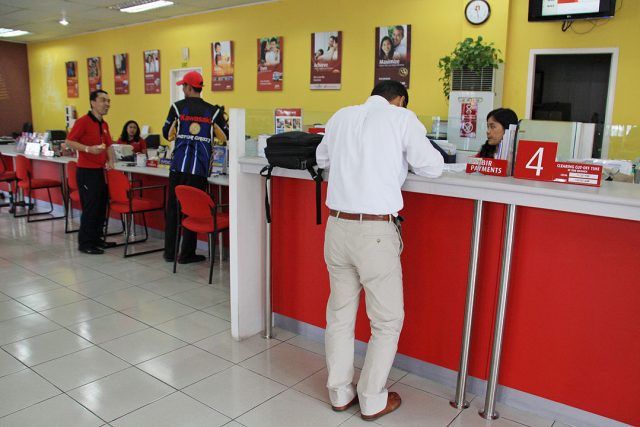
BANK of the Philippine Islands (BPI) has launched a digital payroll platform for businesses.

“With BPI ePayroll, our corporate clients can now handle the entire payroll account setup and employee onboarding digitally, offering ease and accessibility,” BPI Institutional Banking Head Juan Carlos L. Syquia said in a statement on Monday.

“We’re not just offering automation — we’re making payroll management simple for businesses and employees alike. By eliminating complex account opening processes and providing a seamless salary experience, we empower companies to focus on growth while giving employees easy access to their earnings,” Mr. Syquia said.

Businesses can access the BPI ePayroll through BPI BizLink, BPI’s corporate banking platform.

The digitized system allows for faster account setup, with employees no longer required to visit BPI branches to open accounts.

“With just a few clicks, employers can onboard their employees, upload payroll details in a single file, and ensure salary disbursements without delays,” the bank said.

Employees will receive via both e-mail and SMS their ePayroll invitations along with a reference code within one hour. The code will allow them to access the ePayroll portal and set up their accounts.

“To further streamline the process, employers will receive detailed daily reports, allowing them to accurately track and document newly opened accounts with ease,” the bank said.

BPI’s net profit rose by 20% year on year to a record P62 billion last year, driven by double-digit revenue growth.

Its shares went up by 50 centavos or 0.38% to close at P131.90 apiece on Monday. — Aaron Michael C. Sy

100-M business, gov’t transactions completed with digital national ID as of Feb. — DICT

BW FILE PHOTO

THE Department of Information and Communications Technology (DICT) said the digital national ID has been used in over 100 million transactions as of February, enabling identity verification for private- and public-sector services.

“As of February 2025, the digital national ID has been used in over 100 million transactions, improving access to both public and private services and reinforcing digital trust in governance,” the department said in a statement on Monday.

This has streamlined transactions across national and local government agencies, banks, and other financial institutions, it added.

“The digital national ID is more than just an ID — it’s the foundation of a truly digital government. It enables seamless access to services, reduces red tape, and fosters trust between citizens and the government,” DICT Undersecretary David L. Almirol, Jr. said.

The department said it has generated 84 million digital PhilSys (Philippine Identification System) IDs under the term of outgoing DICT Secretary Ivan John E. Uy.

“The work is far from over. We are committed to pushing the boundaries of digital transformation and ensuring that no Filipino is left behind in the digital age,” Mr. Almirol said.

The DICT also noted that the eGov Super App has about 11 million users and 120 recorded use cases since its launch in 2022.

The app consolidates national and local government services into a single mobile platform.

It has integrated services from several government agencies, including the Department of Health, Philippine Health Insurance Corp., Government Service Insurance System, Professional Regulation Commission, Philippine National Police, Maritime Industry Authority, Land Transportation Office, and Overseas Workers Welfare Administration, among others.

The eGov Super App now includes new features such as eJobs, eHealth, eTravel, Start-Up Empowerment, Citizens eReport, OFW (overseas Filipino workers) Services, and artificial intelligence capabilities.

Meanwhile, the E-Government Data Exchange Platform (eGovDX) has facilitated over 440 million transactions since its launch in May 2023, the department said. It enables seamless integration among government agencies without direct data sharing.

“Data interoperability is crucial in building a responsive and efficient digital government. With eGovDX, we are eliminating redundancies, cutting costs, and ensuring that citizens don’t have to submit the same documents over and over again to different agencies,” Mr. Almirol said. — Beatriz Marie D. Cruz

Executive immunity: A comparative perspective

FREEPIK

On July 1, 2024, in Trump v. United States, the United States Supreme Court resolved the issue: “Whether and if so to what extent does a former President enjoy presidential immunity from criminal prosecution for conduct alleged to involve official acts during his tenure in office.”

An act of a US president may be official or unofficial.

For unofficial acts, there is no immunity.

Official acts are of two kinds: 1.) acts within the core and exclusive constitutional and statutory authority, and 2.) acts within the outer perimeter of official responsibility. For the former, there is absolute immunity from criminal prosecution. For the latter, there is presumptive immunity — meaning, that the president is immune from prosecution “unless the Government can show that applying a criminal prohibition to that act would pose no ‘dangers of intrusion on the authority and functions of the Executive Branch.’”

There is no specific constitutional text supporting presidential immunity or a “presidential immunity clause.” Nonetheless, jurisprudence recognizes presidential immunity for at least three reasons:

1. A specific textual basis is not a prerequisite to recognition.

2. The doctrine of separation of powers and the vesting of executive power solely in the president mandates “certain presidential privileges and immunities.”

3. Presidential immunity is necessary for a “vigorous and energetic” executive, to safeguard its independence and effective functioning, and to enable it to carry out constitutional duties without undue caution.

Trump dealt only with criminal liability. As to civil liability, the June 1982 case Nixon v. Fitzgerald recognized that a former president “is entitled to absolute immunity from open damages liability predicated on his official acts.” For acts within the “outer perimeter” of his official responsibility, there is absolute presidential immunity from civil liability to allow the president to take the “bold and unhesitating action” required of an independent executive.

On March 2, 2001, in Estrada v. Desierto, the Philippine Supreme Court, resolved: “Whether or not the petitioner enjoys immunity from suit. Assuming he enjoys immunity, the extent of the immunity.” In this same ruling, the Court using the “totality test,” held that petitioner, Joseph E. Estrada, resigned as president on Jan. 20, 2001.

In the Philippines, the “principle of nonliability” first emerged as case law in Forbes v. Chuoco Tiaco in 1910. The Court ruled that “governors-general, like the judges of the courts and the members of the Legislature, may not be personally mulcted in civil damages for the consequences of an act executed in the performance of his official duties.” But governors-general may still be held liable even for official acts “when he acts in a case so plainly outside of his power and authority that he cannot be said to have exercised discretion in determining whether or not he had the right to act.” He is “not protected if the lack of authority to act is so plain that two such men could not honestly differ over its determination. In such case, he acts, not as Governor-General but as a private individual, and as such must answer for the consequences of his act.”

The 1935 constitution and the 1973 constitution framed by the 1971 Constitutional Convention did not contain any provision on executive immunity. In 1981, the 1973 constitution was amended to include Article VII, Section 17, which states: “The President shall be immune from suit during his tenure. Thereafter, no suit whatsoever shall lie for official acts done by him or by others pursuant to his specific orders during his tenure.” Ferdinand E. Marcos was then the president.

The 1987 constitution did not reenact the immunity provision of the 1973 constitution, amended in 1981. On Oct. 24, 1986, the Supreme Court in Re: Saturnino V. Bermudez, ruled that “incumbent Presidents are immune from suit or from being brought to court during the period of their incumbency and tenure.” This rule is reiterated in two recent rulings: De Lima v. Duterte (Oct. 15, 2019) and Nepomuceno v. Duterte (May 11, 2021).

In Estrada, the Court held that immunity does not extend beyond a president’s tenure: “We now come to the scope of immunity that can be claimed by petitioner as a non-sitting President. The cases filed against petitioner Estrada are criminal in character. They involve plunder, bribery, and graft and corruption. By no stretch of the imagination can these crimes, especially plunder which carries the death penalty, be covered by the alleged mantle of immunity of a non-sitting president. Petitioner cannot cite any decision of this Court licensing the President to commit criminal acts and wrapping him with post-tenure immunity from liability.” Citing the 1967 US case Wallace v. Board of Education: “The rule is that unlawful acts of public officials are not acts of the State and the officer who acts illegally is not acting as such but stands in the same footing as any trespasser.” It added, moreover, that important provisions in the 1987 constitution “will be devalued if we sustain petitioner’s claim that a non-sitting president enjoys immunity from suit for criminal acts committed during his incumbency.”

In both Trump and Estrada, petitioners were ex-presidents claiming post-tenure immunity for acts done during their incumbency. In the former, the US Supreme Court granted the petition. In the latter, The Supreme Court of the Philippines denied it. Following Estrada, the president is immune from suit during their incumbency but not beyond. By contrast, Trump made presidential immunity in the US today not unlike the immunity provision in the 1973 Philippine constitution, amended in 1981, when Marcos Sr. was president.


Millard O. Lim is a lecturer at the Political Science department of Ateneo de Manila University.

The 1975, Olivia Rodrigo to headline UK’s Glastonbury Festival

LONDON — English rock band The 1975 and American pop star Olivia Rodrigo will join singer-songwriter Neil Young as headliners of Britain’s Glastonbury music festival, organizers said last week.

As announced last November, rocker Rod Stewart will take the Sunday afternoon “legend” slot, the 80-year-old singer’s first appearance at Worthy Farm in southwest England since he performed at the festival’s main Pyramid stage in 2002.

The Glastonbury festival was started by dairy farmer Michael Eavis in 1970 and over the decades has become a sprawling and often muddy five-day event in June, with some of the biggest names in music performing for tens of thousands of revelers.

This year’s edition will take place from June 25-29.

Ms. Rodrigo, whose hits include “drivers license” and “good 4 u,” will make her Pyramid stage debut, closing the festival on Sunday evening. The 1975 will perform on Friday and Neil Young on Saturday.

Born in Canada and now also a US citizen, Mr. Young was inducted into the Rock and Roll Hall of Fame as a solo artist in 1995, and as part of Buffalo Springfield in 1997. He was also a member of the supergroup Crosby, Stills, Nash & Young.

Other acts on the lineup include Charli xcx, whose album Brat inspired a cultural phenomenon last summer, hip hop artist Loyle Carner, electronic band The Prodigy, and singer-songwriter Raye. — Reuters

CPG’s PHirst Park eyes 2031 completion for Batulao estate

CENTURY-PROPERTIES.COM

PHIRST Park Homes, Inc., the first-home brand of Century Properties Group (CPG), recently unveiled its second township project, Century PHirst Centrale Batulao, in Nasugbu, Batangas.

The 142-hectare (ha) mixed-use estate is expected to be completed by 2031, PHirst President Ricky M. Celis told BusinessWorld.

Launched on Feb. 15, the estate will be located along the Nasugbu-Tagaytay National Highway. The project follows the 15-minute city concept, in which homeowners have access to residential, commercial, institutional, and retail establishments within the area.

“Century PHirst Centrale Batulao aims to set a new standard for township living in Batangas, blending urban convenience with suburban tranquility,” the real estate developer said in an e-mailed statement.

The project aligns with the company’s vision of redefining first-home living in the country, according to CPG President and Chief Executive Officer Marco R. Antonio.

“This township reflects our commitment to innovation, sustainability, and inclusive progress, ensuring that more Filipinos have access to a higher quality of life,” he said.

Mr. Celis added that the project caters to the housing demands of Filipino families across different market segments and contributes to the region’s growth potential.

The township’s “dwell zone” features gated villages for different market segments. PHirst Park Homes Batulao and PHirst Impressions Batulao offer affordable house-and-lot options for first-time buyers.

Likewise, PHirst Editions Batulao provides houses for upper middle-income families, while the Commune Village caters to both local and foreign home seekers.

The property developer also introduced its newest residential village, PHirst Editions Batulao Vol. 2 West.

The 10-ha project is expected to be completed by 2026 for land development and by 2029 for housing units.

It features 496 homes with floor areas ranging from 54 square meters (sq.m.) to 120 sq.m., designed for a range of family sizes.

PHirst Editions Batulao Vol. 2 West offers four model units: Cartland 54 (with a typical lot area of 88 sq.m.), Charles 70 (99 sq.m. lot area), Christie 90 (110 sq.m. lot area), and Corin 120 (132 sq.m. lot area). Pricing for the homes starts at P4.5 million.

Also within Century PHirst Centrale Batulao is a 13.6-ha “create zone” for third-party tenants to foster business growth. It is expected to house commercial and retail establishments, including food and beverage outlets, service providers, recreational facilities, and office spaces.

“Its focus on business and industry will create a hub for professionals and entrepreneurs, offering a range of opportunities for individuals seeking a thriving career and business venture,” according to CPG.

Lastly, the “thrive zone,” which spans 1.2 ha, will be allotted for the construction of a church and an events space. This area will cater to social gatherings, spiritual growth, and cultural activities.

PHirst has a total of 27 projects nationwide — 26 in Luzon and one in the Visayas — catering to diverse market segments. — Beatriz Marie D. Cruz

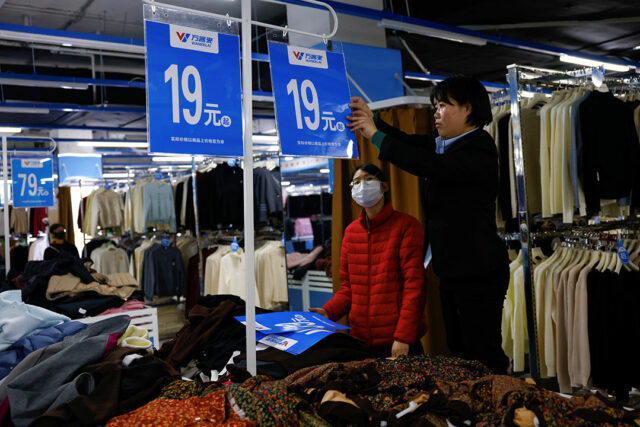
In deflation-hit China, one store holds flash sales four times a day

STAFF MEMBERS change price tags at a clothing section at the Wankelai store in Beijing, China, Feb. 27, 2025. — REUTERS

BEIJING/HONG KONG — Leo Liu, manager of the sprawling Wankelai store in the Chinese capital of Beijing, spoke into a microphone, announcing progressively steeper discounts in a flash sale, until he finally sold a cotton jacket and a woman’s undershirt.

In a symptom of China’s deflationary economy, Liu eventually found a customer for the jacket at 20 yuan, or less than a tenth of its initial price of 239 yuan ($33), but he ended up giving away the 39-yuan undershirt, for which nobody wanted to pay.

The exercise was one of four each day in the store that sells clothing, snacks and basic household products just outside Beijing’s financial district.

“We do flash sales to reduce inventory pressure,” said Liu. “We run a small-profit, quick-turnover business model.”

While his store was making “thin” profits, it sold some items at a loss, Liu said, adding, “We serve ordinary people.”

Chinese consumers grappling with uncertainty about jobs and incomes are increasingly turning to discount stores at a time of expanding industrial capacity in the face of sluggish household demand.

But analysts say the success of such businesses is stoking deflationary pressures, which can start to drag on growth as their popularity grows at the expense of other retailers, as Japan experienced in the 1990s.

“The broader shift toward more value-for-money purchases will play a role in deflationary pressures,” said Lynn Song, chief Greater China economist at ING.

“This sort of intense price competition likely adds some pressure on more traditional retail models as well.”

Data on Sunday showed China’s consumer price index missed expectations in February, falling by 0.7% from a year earlier, while producer prices fell by 2.2%, stretching a run of negative readings dating back to September 2022.

While the growing industrial capacity has led to surging exports, it is also fueling deflationary pressures at home.

Price wars have become ubiquitous, from restaurants that push 3-yuan breakfast menus to electric vehicle maker BYD cutting the price for one of its cars to below $10,000.

Coffee vendor Starbucks lost its market leader crown to cheaper local rival Luckin.

“Corporate strategies often seem to prioritize market share instead of profits,” in China, said Louis Kuijs, chief Asia economist at S&P Global Ratings.

“That can really complicate the situation for everybody in that sector driving down prices by just staying there, whether you make any profits or not.”

In a work report last week Premier Li Qiang flagged a greater focus on boosting household spending while cutting the official inflation target to about 2% in 2025 from last year’s target of about 3%. Inflation was 0.2% in 2024

WARY CUSTOMERS
Shoppers at Wankelai were not in a mood to splash the cash.

Lily Liu, 34, a financial auditor for a technology company, said she was earning less than before the COVID-19 pandemic.

“People like us, struggling a bit financially, are obviously going to shop here,” she said. “I feel like my job could be gone at any moment. I’m working today, but I could be laid off… maybe even tomorrow.”

She said she has cut back on traveling and stays home on most weekends instead of dining out, only shopping during store sales.

Vivian Liu, a student browsing for a cheap snack, said she enjoyed going to stores with friends to window-shop, but rarely buys anything.

She failed to get a job after graduation two years ago with a diploma in biology, so she is continuing her studies while taking temporary part-time jobs to stay afloat. China’s youth unemployment, running at 15.7%, is also a drag on consumption.

“I don’t have much money to spend,” said Liu. “I save a bit every month. I have no idea how the job market will be in the future. It’s kind of scary.” — Reuters

2024 Net FDI level highest in 2 years

NET INFLOWS of foreign direct investments (FDI) into the Philippines inched up by just 0.1% in 2024 but plunged in December to its lowest monthly tally in 11 years, amid uncertainty in global trade, data from the central bank showed. Read the full story.

2024 Net FDI level highest in 2 years