Home Blog Page 1883

Pharma industry eyes 9% growth this year

Illustration photo shows various medicine pills in their original packaging in Brussels, Belgium, Aug. 9, 2019. — REUTERS/YVES HERMAN/ILLUSTRATION

By Justine Irish D. Tabile, Reporter

THE PHILIPPINE pharmaceutical industry is targeting at least 9% growth this year amid the implementation of the universal healthcare law, an industry group said.

“The growth is estimated at 9%. The increase is driven by requirements in the implementation of the universal healthcare law,” Philippine Pharmaceutical Manufacturers Association (PPMA) President Higinio P. Porte, Jr. told BusinessWorld.

In particular, he said that the industry is banking on the implementation of the universal healthcare law’s outpatient drug benefit program.

“The outpatient drug benefit will be rolled out this year, wherein outpatients visiting health centers or public hospitals once given prescriptions will be provided vouchers that they can redeem in public hospitals and accredited drugstores,” he added.

The PPMA currently has 75 members, of which 45 are manufacturers and traders of drug products. Other members include major suppliers of raw and packaging materials, medical machines, and services.

Last year, the local pharmaceutical market was estimated at P285 billion, representing a 5% growth from the P270-billion market value in 2023.

If the 9% projection is realized, it means the local pharmaceutical market will reach P310 billion in market value this year.

However, only 34% of the estimated total market value in 2024 are products manufactured locally, according to Mr. Porte.

Although there are improvements in the approval of certificates of product registration (CPR), he said the lengthy process remains a concern for the sector.

“Although the delays in CPR and licenses approval significantly improved, about half of applications are beyond Citizens’ charter,” he said. “These delays have a great impact on the launches of new products both locally manufactured and imported.”

Sought for comment, Rizal Commercial Banking Corp. Chief Economist Michael L. Ricafort said that the reason must be because of the economies of scale in other countries.

“The global supply chain [for pharmaceutical products] is strong. India, which is a source for many countries, already has economies of scale,” he said in a Viber message.

“They offer the best global technologies at the lowest possible cost or price, benefiting developing countries,” he added.

However, he said that there is an opportunity to increase the local share of manufacturing amid changes in the global supply chain and worldwide distribution.

“Let’s see if Trump’s higher tariffs, reciprocal tariffs, and trade wars would adversely affect the global supply chains and worldwide marketing or distribution,” said Mr. Ricafort.

Last month, US President Donald J. Trump said that he will impose 25% or higher tariffs on pharmaceutical imports with plans to increase it over the course of a year, along with his plans to impose tariffs on vehicle and semiconductor chip imports, Reuters reported.

The US is the largest market for most Indian generic drugmakers, accounting for 31% or $8.7 billion of the industry’s overall exports last year.

Mr. Ricafort said that the Philippines can be an attractive market for global pharmaceutical giants since it has the 12th largest population in the world.

“There are still opportunities to produce or manufacture in the Philippines for the local and export market, but that would require more investments in research and development and other high-tech facilities,” he added.

Last year, President Ferdinand R. Marcos, Jr. proposed the idea of establishing pharmaceutical economic zones in the Philippines to serve as one-stop shops to make the drug application process more accessible and efficient.

“We are still at the developing stage of our pharma parks, of which we have already established one in Tarlac,” said Philippine Economic Zone Authority (PEZA) Director-General Tereso O. Panga.

“In addition, PEZA looks forward to the groundbreaking of ZEN Industrial, the first Active Pharmaceutical Ingredient manufacturing facility in the Philippines,” he added.

Mr. Panga said that the primary objective of the pharma zones is to enable the Philippines to have a stronger pharmaceutical manufacturing footprint and increase access to affordable medicines.


World Bank says PHL needs reforms in education, health

Students walk to school, March 3, 2025. — PHILIPPINE STAR/RYAN BALDEMOR

THE PHILIPPINES should focus on reforms that will improve learning and health outcomes, as well as boost private sector competitiveness to sustain economic growth, a World Bank official said on Monday.

“I see the Philippines has good opportunities. But of course, [it] will also need to invest in reform efforts and continue boosting with reforms and opening up its market,” World Bank Country Director for the Philippines, Malaysia, and Brunei Zafer Mustafaoğlu said on Money Talks with Cathy Yang on One News.

He said these reforms are needed for the Philippines to sustain growth amid global uncertainty.

He pointed to reforms that would improve health and learning outcomes, enhance competitiveness of the private sector, boost community resilience and address gaps in infrastructure.

The Philippines has seen low learning outcomes, especially after the strict lockdowns during the coronavirus disease 2019 pandemic.

“We see that at the age of 10… Almost 90% of them are having difficulty in comprehending what they read. This, of course, is an area that we are focusing very much on improving educational outcomes,” Mr. Mustafaoğlu said.

A World Bank report previously showed that around 91% of 10-year-olds in the Philippines cannot read and understand an age-appropriate text, which is known as “learning poverty.”

Mr. Mustafaoğlu also noted that a child born in the Philippines today will be able to achieve only around 52% of their productive potential by age 18 due to the lack of education and adequate health services.

The Philippines is seeking a $600-million loan from the World Bank to fund a project aimed at improving learning outcomes in public schools.

“We are focusing on improving regulatory business environments, its implementation, deepening financial markets that both provide access to finance but also stability, and also firm entry into the markets to create more product firms and help them grow,” Mr. Mustafaoğlu said.

He said the World Bank is also prioritizing funding projects that will support resilient communities amid climate risks, as well as projects that will address infrastructure gaps.

“We all know that the Philippines suffers from infrastructure gaps, both in terms of physical renewable energy and digital transformation,” Mr. Mustafaoğlu said.

Asked about the possible impact of the global trade war on the Philippines, he said the economy is still expected to be one of the top performers in the region.

“If you look at its growth performance over the past decade, it did very well and also it created jobs. It is a good opportunity for its future. It is a young population… We expect the Philippines to continue growing in the next years,” Mr. Mustafaoğlu said

“And in that sense, it is likely to achieve its upper middle-income status by 2026.”

The World Bank expects the Philippines to be the second-fastest growing economy in the Southeast Asian region until 2026.

The Philippines is expected to grow 6.1% this year, just behind Vietnam at 6.6% and ahead of Cambodia (5.5%), Indonesia (5.1%), Malaysia (4.5%), Laos (3.7%), Thailand (2.9%), and Myanmar (2%). — A.R.A. Inosante

Cebu Landmasters starts offer period for P5-B sustainability-linked bonds

DAVAO GLOBAL TOWNSHIP, the first township development of Cebu Landmasters in partnership with Davao’s Villa-Abrille clan under the joint venture YHEST Realty and Development Corp. — CEBULANDMASTERS.COM

PROPERTY DEVELOPER Cebu Landmasters, Inc. (CLI) began the offer period for its P5-billion sustainability-linked bond issuance on Monday as part of its fundraising efforts.

The offer period will run until Friday, March 14, with a target listing date of March 21 on the Philippine Dealing & Exchange Corp., CLI said in a regulatory filing.

The company said it received the permit to sell from the Securities and Exchange Commission on March 7.

CLI’s issuance consists of a base amount of up to P3 billion with an oversubscription option of up to P2 billion, comprising Series D three-year bonds at 6.6348% per annum and Series E five-year bonds at 6.9157% per annum.

This is the second tranche of the company’s P15-billion shelf-registered debt securities program.

The second tranche secured a PRS Aa plus credit rating with a stable outlook from the Philippine Rating Services Corp. in December last year.

Obligations with a PRS Aa rating are considered “high quality” and subject to very low credit risks, reflecting the company’s “capacity to meet financial commitments.” A stable outlook indicates that the rating is unlikely to change within the next 12 months.

The first tranche of the P15-billion shelf-registered debt securities program was listed in October 2022.

CLI previously said it would allocate P12 billion for the initial phases of its two maiden projects in Luzon, which include a horizontal development and a condominium project. The first Luzon project is expected to launch by 2026.

Since its establishment in 2003, CLI has launched nearly 130 projects across 17 cities.

Its portfolio includes residential developments, offices, hotels and resorts, co-living and co-working spaces, mixed-use projects, and large-scale townships.

On Monday, CLI shares closed unchanged at P2.67 apiece. — Revin Mikhael D. Ochave

Ayala Corp. gets JCR ‘A-’ rating, may improve loan prospects

BW FILE PHOTO

AYALA CORP. said its “A-” foreign currency long-term issuer rating from the Japan Credit Rating Agency, Ltd. (JCR) may enhance its ability to secure yen-denominated loans.

The rating, which indicates a “relatively high level of creditworthiness,” advises that the conglomerate has a strong capacity to meet financial commitments, Ayala Corp. said in an e-mail statement on Monday.

The “A-” rating with a stable outlook may improve the conglomerate’s ability to tap credit and capital markets, including access to Samurai loans. It is in line with the Philippine sovereign rating.

“While high interest rates are anticipated to persist, cost of capital is expected to remain competitive. When we have widened access to capital, we are more able to build businesses that enable people to thrive,” Ayala Corp. Treasurer Estelito C. Biacora said.

“This is an affirmation of Ayala Corp.’s strong credit and further enhances funding sources amidst the current market volatilities,” he added.

JCR said in a report that the company’s creditworthiness was emphasized by its business foundation with stable cash flow as well as a relatively favorable financial balance to support the growth potential of its business portfolio.

Mizuho Bank was the advisor for the company’s JCR rating.

“Key points to be watched in the future are the impact of changes in factors such as interest rates, or trends of the real estate market or regulations on the ability to generate cash flow and its financial balance of the businesses in which it invests, changes in its business portfolio stemming from changes in its investment policy and trends of its consolidated financial balance,” JCR said.

“In particular, as Ayala Corp. plans to expand its renewable energy power generation capacity in the power business, JCR will closely monitor how this will impact its financial position,” it added.

Ayala Corp.’s core businesses are in the real estate, banking, telecommunications, and renewable energy sectors. It also has a growing presence in healthcare, mobility, and logistics as well as investments in industrial technologies, education, and other ventures.

On Monday, Ayala Corp. shares rose by 1.89% or P11 to P593 apiece. — Revin Mikhael D. Ochave

Gov’t upsizes T-bill award amid robust demand

BW FILE PHOTO

THE GOVERNMENT hiked the volume of Treasury bills (T-bills) it awarded on Monday as rates were below secondary market levels on growing expectations that the Bangko Sentral ng Pilipinas (BSP) will resume its easing cycle next month following slower-than-expected February inflation.

The Bureau of the Treasury (BTr) raised P30.8 billion from the T-bills it auctioned off on Monday, higher than the P22-billion plan, as total bids reached P90.598 billion, more than four times as much as the amount on offer and higher than the P85.474 billion in tenders recorded on Feb. 24.

The strong demand prompted the government to double the accepted noncompetitive bids for the 91- and 182-day securities to P5.6 billion and to P6.4 billion for the 364-day T-bill, the Treasury said in a statement.

Broken down, the Treasury borrowed P9.8 billion via the 91-day T-bills, higher than the P7-billion plan, as tenders for the tenor reached P35.628 billion. The three-month paper was quoted at an average rate of 5.178%, declining by 10.5 basis points (bps) from the 5.283% seen at the previous auction, with the BTr only accepting bids with this yield.

The government also made a P9.8-billion award of the 182-day securities, above the programmed P7 billion, as bids stood at P30.05 billion. The average rate of the six-month T-bill was at 5.48%, 13 bps lower than the 5.61% fetched last week, with accepted rates ranging from 5.49% to 5.568%.

Lastly, the Treasury raised P11.2 billion via the 364-day debt papers, more than the P8 billion placed on the auction block, as demand for the tenor totaled P24.92 billion. The average rate of the one-year debt inched up by 0.3 bp to 5.773% from 5.77% previously, with bids accepted carrying yields of 5.755% to 5.779%.

At the secondary market before the auction, the 91-, 182-, and 364-day T-bills were quoted at 5.2702%, 5.5681%, and 5.7941%, respectively, based on PHP Bloomberg Valuation Service (BVAL) Reference Rates data provided by the Treasury.

The government upsized its T-bill award on Monday as average rates were all lower than prevailing secondary market yields amid robust demand, the Treasury said.

“The latest Treasury bill average auction yields again slightly corrected lower for the second straight week after slightly rising for three straight weeks after the latest inflation unexpectedly eased to 2.1%, a pleasant surprise near the lower end of the BSP’s inflation target of 2-4%,” Rizal Commercial Banking Corp. Chief Economist Michael L. Ricafort said in a Viber message.

This could support a 25-bp cut in borrowing costs as early as next month, he said.

“Demand was strong due to renewed interest in positioning given the recent decline in inflation. Looking forward, there are chances of another rate cut in April,” a trader said in a phone interview.

Philippine headline inflation slowed to 2.1% in February from 2.9% in January, the government reported last week. This was the slowest monthly print in five months or since the 1.9% in September 2024.

This was also below the BSP’s 2.2%-3% forecast for the month and the 2.6% median estimate in a BusinessWorld poll of 18 analysts.

The Monetary Board will next meet to discuss policy on April 3.

Analysts said slower February inflation gives the BSP room to resume its rate-cut cycle at next month’s meeting following its surprise pause at last month’s review.

BSP Governor Eli M. Remolona, Jr. last month said the central bank is still in easing mode, signaling the possibility of up to 50 bps worth of cuts this year.

The Monetary Board has delivered 75 bps in reductions to borrowing costs since it began its easing cycle in August 2024, with the policy rate now at 5.75%.

The trader added that investors swamped the offer as they sought to lock in returns ahead of the upcoming cuts in banks’ reserve requirement ratios (RRR) by month-end, which would free up about P300 billion in liquidity.

Effective March 28, the RRR of universal and commercial banks and nonbank financial institutions with quasi-banking functions will be cut by 200 bps to 5% from 7%. Digital banks’ ratio will go down by 150 bps to 2.5%, while the ratio for thrift lenders will be lowered by 100 bps to 0%.

Rural and cooperative banks’ reserve ratio has been at 0% since October, which was the last time the BSP cut reserve requirements.

The RRR is the portion of reserves that banks must hold onto to ensure they can meet liabilities in case of sudden withdrawals. A lower ratio means banks have more liquidity, which they can use to fund their loans.

On Tuesday, the BTr will offer P30 billion in reissued 10-year Treasury bonds (T-bonds) with a remaining life of seven years and six months.

The Treasury is looking to raise P147 billion from the domestic market this month, or P22 billion from T-bills and P125 billion from T-bonds.

The government borrows from local and foreign sources to help fund its budget deficit, which is capped at P1.54 trillion or 5.3% of gross domestic product this year. — A.M.C. Sy

Mober opens 3,000-sq.m. EV charging hub in Pasay

GREEN LOGISTICS SERVICES provider Mober Technology Pte., Inc. (Mober) said it aims to charge up to 200 electric vehicle (EV) trucks per day with the opening of its Pasay Central Charge hub.

“For this central hub, we have invested around P14 million,” Mober Chief Executive Officer Dennis O. Ng told reporters on the sidelines of the facility’s inauguration on Monday.

Located in Pasay City, the facility spans 3,000 square meters (sq.m.) and has a 56-port capacity to serve Mober’s mixed fleet of e-vans and e-trucks.

Equipped with 50 7-kilowatt (kW) direct current chargers and two 60-kilowatt-hour (kWh) fast-charging units, Central Charge enables Mober to streamline operations and minimize vehicle downtime.

“At Mober, we’ve been committed to finding solutions to infrastructure challenges since our transition to EVs in 2021. Central Charge demonstrates our vision to pave the way for a cleaner, more efficient future for our clients and solidify the Philippines’ place at the forefront of sustainable logistics in Southeast Asia,” Mr. Ng said.

Mober is exploring the installation of solar photovoltaic panels and a 500-kWh battery energy storage system at Central Charge to reduce its carbon footprint.

The opening of the new facility follows the launch of the company’s first charging hub on Zamora Street, Pasay City, in 2023. That hub spans 800 square meters and has 30 charging units.

Meanwhile, Mr. Ng said the company is looking to establish a network of charging points across southern Luzon by the end of this year.

Last year, Mober announced its partnership with BDO Unibank, Inc. to finance the acquisition of 60 new EV trucks to expand its commercial fleet.

The partnership with BDO follows the company’s successful securing of a $6-million blended investment from the South East Asia Clean Energy Facility II, managed by Singapore-based fund manager Clime Capital.

Mober aims to scale up its fleet to over 500 EVs by 2026.

Meanwhile, Senator Sherwin T. Gatchalian said it might be more appropriate to exempt EVs and hybrid EVs from the motor vehicle user’s charge (MVUC) until 2028 or 2030 rather than provide subsidies.

MVUC is a fee collected by the government to help fund the maintenance of national and provincial roads and mitigate vehicle-related air pollution.

“After this event, I realized that instead of giving subsidies, why not exempt EVs and hybrids from MVUC? Because we already exempted them from excise taxes. And it’s time-bound — it’s not going to be perpetual,” he told reporters in a separate interview.

Last year, the National Economic and Development Authority approved the extension of tax breaks for two- and three-wheeled battery EVs, plug-in hybrid EVs, and hybrid EVs until 2028.

Under the Comprehensive Roadmap for the Electric Vehicle Industry, the business-as-usual scenario targets a 10% EV fleet share by 2040, while the clean energy scenario sets a target of at least 50%.

“It’s quite challenging. So, we need to provide as many incentives as possible for people to adopt EVs,” Mr. Gatchalian said. — Sheldeen Joy Talavera

UnionBank expects strong AUM growth

PHILIPPINE STAR/KRIZ JOHN ROSALES

THE WEALTH management arm of Union Bank of the Philippines, Inc. (UnionBank) expects sustained growth in its assets under management (AUM) despite market volatility.

“There is volatility now, but I think it’s relatively more stable because you at least know which direction the winds are blowing in. I think there has been some improvement in the equity markets, and that is helping out in terms of customers having more options. That is driving better momentum in terms of throughputs and volumes that are coming into the market,” UnionBank Wealth Management Sales Network Head Gautam Sharma told BusinessWorld at an event last month.

“Clients’ risk appetite has improved this year, and that is helping in terms of taking a wide variety of products to them.”

Mr. Sharma said their AUMs grew by about 10% year on year in 2024.

“We’ve had a fairly robust growth of double digits in both our revenues in our number of acquisitions and in our AUM, it’s close to 10%. It’s been a pretty healthy growth that we’ve seen across all our business metrics last year, and we started very strong this year as well,” he said.

“So, I think in advisory business, which is what we are in, in wealth management, clients wanting to do more products, being open to more ideas, being open to rebalance their portfolios, which have been static for a long time, are very good signs. And we’ve been seeing tailwinds from that.”

UnionBank’s wealth segment also expects customer growth to be driven by its restructuring, Mr. Sharma said.

“I think we are looking to beat the record of the last three years in terms of the total number of Elite and Access customers that we get through. Earlier, we were restricted in the three wealth branches through which we used to expand. Now, it’s the whole power of all our branches that’s helping us grow our wealth base,” he said.

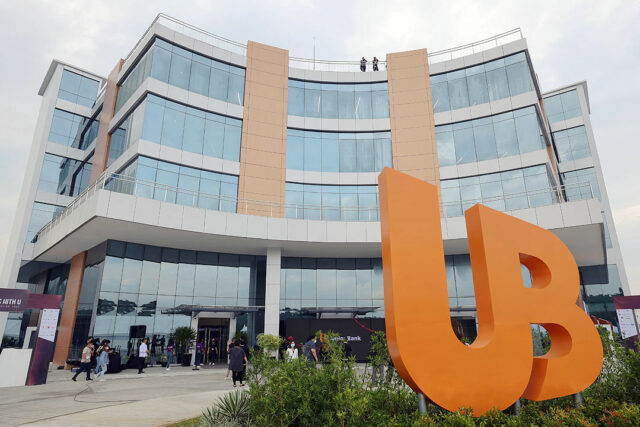
UnionBank last month unveiled its enhanced Wealth Management Center at its The Ark branch in Makati City.

UnionBank Chief Marketing Officer Albert Raymond C. Cuadrante said the bank may open another center in Bonifacio Global City.

“This (The Ark) is on pilot. Depending on how this does, the next will probably be BGC for the same model,” he said.

He added that the bank could finish renovating all its branches by 2026, with 150 out of 198 branches already done.

“There are some branches that we are still thinking about whether we will relocate to better locations or close,” Mr. Cuadrante said.

UnionBank is also looking to open more branches in the provinces this year as well as in “big, urban cities which are not too saturated,” such as in Calabarzon (Cavite, Laguna, Batangas, Rizal, and Quezon), Cebu, or Cagayan de Oro, he added. — Aaron Michael C. Sy

PLDT Enterprise, Coca-Cola renew partnership

PLDT ENTERPRISE, the corporate arm of PLDT Inc., has renewed its partnership with Coca-Cola Europacific Aboitiz Philippines (CCEAP) as its digital and connectivity provider.

“This renewed collaboration marks another milestone in the decades-long relationship between PLDT Enterprise and Coca-Cola, solidifying PLDT’s role as the beverage giant’s trusted telecommunications and digital solutions partner,” PLDT said in a media release on Monday.

Under this partnership, PLDT Enterprise will provide CCEAP with end-to-end fixed, wireless, and information and communications technology (ICT) services to support its operations and enhance business productivity.

CCEAP operates 18 manufacturing plants across the Philippines, PLDT said, adding that the company relies heavily on a robust digital infrastructure for its operations.

“Through PLDT Enterprise’s extensive portfolio of mobility, connectivity, and ICT solutions, the company has been able to accelerate its digital transformation initiatives, ensuring seamless communication and efficient distribution networks,” PLDT said.

PLDT said that through its ICT and cybersecurity services, CCEAP has adopted its “continuity and managed security services,” strengthening the company’s cybersecurity framework.

At the local bourse on Monday, shares of PLDT rose by P10, or 0.72%, to close at P1,401 apiece.

Hastings Holdings, Inc., a unit of PLDT Beneficial Trust Fund subsidiary MediaQuest Holdings, Inc., holds a majority stake in BusinessWorld through the Philippine Star Group, which it controls. — Ashley Erika O. Jose

There’s never been a better time to be anti-American

A CARNIVAL FLOAT of US President Donald Trump during the Rose Monday parade on March 3 in Dusseldorf, Germany. — BLOOMBERG-HESHAM ELSHERIF/GETTY IMAGES EUROPE

THE Trump administration is boosting a powerful force in global affairs: anti-Americanism.

Canadians have taken to booing the American national anthem and Panamanians to burning US flags. The British tabloids have tarred and feathered Vice-President JD Vance for insulting British troops. A carnival float in Dusseldorf, Germany, displayed giant puppets of Donald Trump and his Russian counterpart, Vladimir Putin, shaking hands while squeezing Ukrainian President Volodymyr Zelenskiy between them into a bloodied pulp. A sign on the float read “Hitler-Stalin Pact 2.0.” Back at home, the Washington Post has published a guide on how to navigate hostility abroad (“dress neutrally, not patriotically”).

There has never been a better time to be anti-American. Trump embodies everything critics of the US have always warned about, multiplied several times over. Yankee arrogance? He and Vance, in the Oval Office, shamelessly bullied the leader of a nation victimized by the Russian president’s aggression. Yankee imperialism? Trump bragged to a cheering Congress that he will take over Greenland “one way or another.” Yankee incompetence? His tariffs are destabilizing global stock markets and downgrading his own economy.

A YouGov poll published March 4 shows positive feelings toward the US have fallen by between six and 28 points since Trump was elected. The smallest decline (from 48 to 42) is in Italy. The biggest (from 48 to 20) is in Denmark, where, unsurprisingly, people are annoyed by his intention to annex part of their territory. There is currently nowhere in Europe where more than half the population has a positive feeling about the US.

These numbers are likely to worsen significantly as the mass deportation of migrants starts and when the tariffs take an increasing toll on the global economy.

Is there anything more to rising anti-Americanism than just anti-Trumpism? I think so. There is intensifying hostility to America’s enthusiasm for throwing its political and cultural weight around — a fervor that long predates Trump and is driven as much by the country’s command of the world’s most powerful technologies as it is by its politics. Living with America is like rooming with badly behaved teenagers who demand constant attention and think they have solved the mysteries of the universe.

America’s last great cultural export before Trump won the election — wokery — has infuriated people on the right and center with its weaponization of cultural tensions. Its social media sites — particularly Facebook and X, formerly Twitter — are increasingly seen as agents of division and distraction rather than, as they once liked to brand themselves, creators of a global village.

Equally, there’s never been a worse time to be pro-American. Champions of the US have traditionally defended the nation (and excused its failures) on three grounds: that, as the world’s greatest power, the US provides stability and security; as the world’s leading liberal democracy, it defends and spreads liberal democracy around the world; and that it is an engine of free-market capitalism.

Those justifications are turning into dust. The US is becoming a source of global instability — most obviously because of Trump’s behavior but also because of the growing habit of swinging between extremes (President George W. Bush’s crusading democracy promotion to Trump’s isolationism). America’s internal politics are now so erratic as to make it an unreliable long-term partner no matter who occupies the White House. Under Trump, the US is groveling to the world’s biggest enemy of liberal democracy, Putin, and injecting massive instability into global markets.

During the last upsurge of anti-Americanism under Bush, pro-Americans at least had something to fight for: the idea that the US was toppling a vicious dictator and spreading democracy in the Middle East. But what can they fight for today? Nobody outside the US embraces its tariffs. And nobody outside the axis of autocracy backs Trump’s strongman-first foreign policy. Even people who make nice with Trump, such as UK Prime Minister Keir Starmer, do so through gritted teeth.

Anti-Americanism is likely to be transformative in domestic European and international politics if Trump continues with the incendiary acts of his first seven weeks. The sentiment is already eroding the domestic support of populist politicians who have aligned themselves with him.

Nigel Farage, the leader of Britain’s Reform Party and a man who has traded on his position as Trump’s best friend in the UK, has backtracked on his suggestion that Zelenskiy was “rude” to Trump and denounced Vance as “wrong, wrong, wrong” on British troops. Both the Labor and Conservative parties think Farage’s closeness to Trump could prove to be an electoral problem for Reform. The Canadian Conservative Party, which has enjoyed a massive lead in the polls over Prime Minister Justin Trudeau’s Liberals for two years, has seen its advantage evaporate since January, with a Conservative victory in October’s election no longer a foregone conclusion.

One of the reasons why sensible great powers present themselves as benign defenders of the global order is to prevent smaller powers from ganging up against them. Trump’s America has decided to do the opposite. Western powers are forging alliances that exclude (or at least don’t include) the US. The European Union, particularly in Germany, is beginning to take its military destiny in its hands after decades of passivity. The EU has struck trade deals with Latin America and Malaysia and has made various side accords with Canada and China. A number of its allies regard the US, in the words of the political scientist Michael Beckley, as “a rogue superpower, a mercantilist behemoth determined to squeeze every ounce of wealth and power from the rest of the world.”   

Even as America weakens alliances that it has spent the post-World War II era cultivating, the axis of autocracy is doing the opposite. Russia and China have pledged lasting friendship. What used to be called nonaligned powers are queuing up to join the BRICS group of emerging-market nations. The US can no longer assume that other liberal powers will automatically come to its side because of shared interests and culture. Nor can it assume that, when push comes to shove, nonaligned powers will choose America over China.

The genie of anti-Americanism is now not only out of the bottle but doing immense damage to the country’s long-term interests. Even if Trump proves to be an aberration, as seems increasingly likely as aversion to his policies spreads at home and abroad, it will take many years to regain the trust of the free world.

BLOOMBERG OPINION

Tracing the difficult path of food delivery at sea

A STILL from the documentary Food Delivery.

Documentary follows West Philippine Sea fisherfolk, naval forces

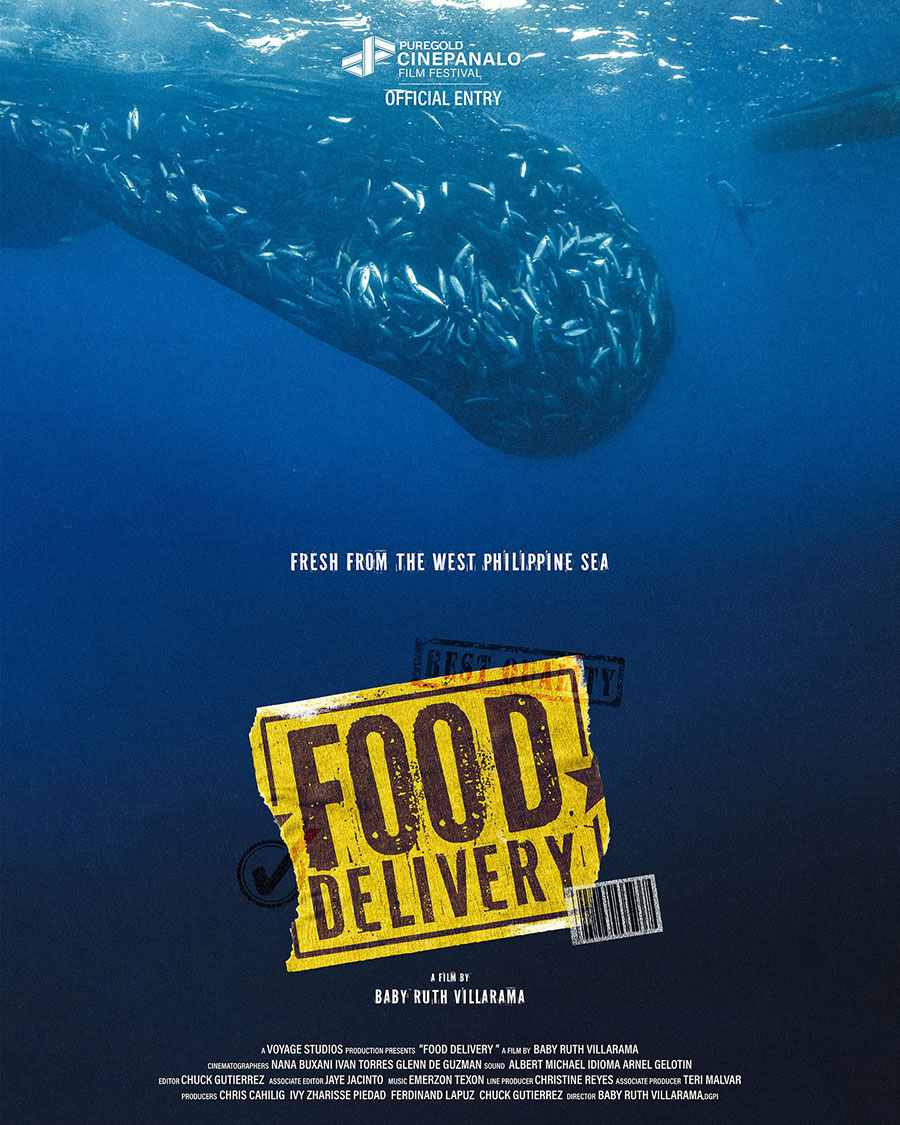
FOOD DELIVERY: Fresh from the West Philippine Sea is a documentary film about Filipino fishermen and naval soldiers at the frontlines of the fight for national sovereignty, told through their struggle to get food to and from the distant isles in the highly contested West Philippine Sea (WPS).

Baby Ruth Villarama, an award-winning documentary filmmaker known for her acclaimed 2016 film on overseas Filipino workers (OFWs), Sunday Beauty Queen, now turns her attention to overlooked stories at the local shores of a global issue.

“Ultimately, we have to communicate that these little islets that we have are ours, and they’re actually very crucial in terms of our security, our maritime territory, and also our economic power,” she told BusinessWorld in a video call.

China claims sovereignty over the entirety of the South China Sea, a vital waterway for over $3 trillion in annual ship-borne commerce, despite much of it also being claimed by various Southeast Asian countries, including the Philippines which calls the area under its jurisdiction the West Philippine Sea.

This has led to Filipino fishermen working near Scarborough Shoal and other islets being monitored and sometimes harassed by Chinese ships, as Philippine naval forces are also stationed there to keep watch.

For Food Delivery, produced by Voyage Studios, the goal is to offer a deeper perspective of this hot topic largely seen on the news, Ms. Villarama said.

“It never came into my radar to do such a story because I feel like we’re nautical miles away from what’s happening,” she added. “When news came pouring in on my feed about WPS, sentiments on pro-China policy, and people being a bit confused about it all, I thought that there’s something that we can do. I just didn’t know what.”

She explained that her producer, Chuck Gutierrez, pushed her to look for an angle. Because their film pitch was for the CinePanalo Film Festival, which is backed by the Puregold supermarket chain, this sparked an idea.

I thought the story can revolve around food, because we’re all connected by it, and it’s the fisherfolk who feed us who are the most affected by the situation. When I did further research, I learned that the Armed Forces of the Philippines (AFP) is also having a hard time delivering food to the soldiers stationed in these shoals,” she said.

After getting their pitch approved by Puregold CinePanalo, Ms. Villarama and her crew then filmed with fisherfolk from October to December and with the AFP stationed near the WPS in January.

A LEARNING EXPERIENCE
One of their sources was Arnel Satam, the Subic-based fisherman with a small motorized wooden boat who was chased away from his usual fishing waters by the Chinese Coast Guard back in 2023.

He showed them the beauty and freedom of his work out at sea, the act of catching fish called simbada in their community, and the brotherhood of fisherfolk — all of which Ms. Villarama described as “a beautiful dance.”

“We capture the process of fishing, and how fish is sent to hotels in Manila, Pangasinan, Laguna, Cavite, all over,” she told BusinessWorld. “We have about 5,000 fisherfolk based in Subic, and we only get to know their story if there’s a mishap or incident at the WPS,” she said.

“To witness their life, their choices, and the things that make them happy is the most priceless experience,” she added.

From Subic Bay they have to travel over 270 kilometers of ocean to get to the fishing grounds around Scarborough Shoal, which takes approximately 14 hours.

“They would be out there for two months just catching fish, until a service boat comes to get their catch for the day and bring it back to the fish port of Subic to deliver,” said Ms. Villarama. “We went with them until Scarborough and then opted to go back on the service boat while they went on farther out to continue fishing.”

The documentary crew spent a total of 30 days with the fisherfolk, staggered over various small trips ranging from five days to two weeks.

Throughout filming, the presence of China could be felt — a drone was monitoring the fishing boats, and a Chinese Coast Guard ship was following from afar.

“It’s like a dot in the day. In the dark, it’s like a star,” Ms. Villarama said of the Chinese ship. “There’s no fear, but it’s annoying because there’s somebody uninvited in your backyard that’s not supposed to be there.”

WAR OF NARRATIVES
To get the side of the story following the Armed Forces of the Philippines and the Philippine Coast Guard (PCG), the Food Delivery team pitched the film as their way to “contribute to the narrative of the WPS.”

“When we received the news that we were part of the official lineup of the [CinePanalo] festival, that’s when we confirmed that we can help them with the war they’re trying to win, which is the war of narratives,” Ms. Villarama said.

Food Delivery: Fresh from the West Philippine Sea will premiere on March 14 at Gateway Mall in Quezon City, but its festival run until March 25 will not be the end of its journey. There are plans to have the documentary screened at schools and universities.

Ms. Villarama likened the goal to the campaign of her previous film, Sunday Beauty Queen, which got a lot of media coverage and gained independent champions, from politicians to OFW communities to non-government organizations.

“It’s very important that we bring the film to students because I heard that in China, as early as six years old, they are taught the nine-dash line. For us, we have to teach the conviction to respect the 200-nautical mile exclusive economic zone,” she explained, describing the claims of both countries over the area.

In arbitration proceedings against China before a United Nations-backed tribunal in 2016, the Philippines was able to validate its claim over the West Philippine Sea. Its main basis was the 1734 Pedro Murillo Velarde map showing the Scarborough Shoal and Spratly Islands as part of the Philippines.

Ms. Villarama told BusinessWorld that, despite that triumph, China’s bullying tactics are difficult to fight against. While Food Delivery can be described as “Nat Geo with a Pinoy heart,” its ambition stretches beyond being informative.

“We have a few PCG and AFP naval ships, and 200 Chinese ships hovering around our territorial waters. So how do we deal with that? The big question is, how do you handle a bully?” she said.

“I don’t want to be messianic about it, because we’re only doing a small part. Collectively, we have to rise together. With our film’s focus on food, I hope we can at least inspire fellow Filipinos, as well as other countries.” — Brontë H. Lacsamana

Family dynamics, lack of literacy impede Filipinas’ financial stability

FREEPIK

WOMEN in the Philippines believe they are now more financially secure compared to the previous generation, but low literacy and family dynamics continue to hamper their stability, a study by Sun Life Asia showed.

Some 60% of Filipinas feel their financial security has improved compared to their mothers’ generation, but traditional family dynamics and responsibilities held by women at home prevent them from achieving financial stability, according to a study by Sun Life Asia titled “Women’s Wealth in Focus: Building Confidence and Security.”

This was lower than the regional average of 65%. The country with the highest rate of financial security from women was Vietnam (75%), followed by Indonesia (71%) and Singapore (66%). Trailing the Philippines were Hong Kong (59%) and Malaysia (59%).

The company interviewed over 3,000 female respondents in the Philippines, Hong Kong, Indonesia, Malaysia, Singapore, and Vietnam.

“The survey highlights the Filipinas’ growing focus on savings and financial independence. While women are committed to their financial futures, there’s a clear knowledge gap regarding available resources and the importance of early financial planning,” Sun Life of Canada (Philippines), Inc. (Sun Life Philippines) Chief Client Experience and Marketing Officer Maria Carla Gonzalez-Chong said in a statement on Monday.

“Seeking expert advice can help address concerns about unforeseen financial risks. This approach not only helps protect against unexpected costs but also ensures that women can maintain their desired lifestyles while working towards long-term financial security,” Ms. Gonzalez-Chong said.

The findings showed that 36% of mothers said they are stressed about managing the needs of their children and parents, which Sun Life Philippines said shows the multi-generational responsibilities that many women carry.

“While 52% of women are saving for their parents’ current or future elderly care, only 16% of women with children expect full support from their children as they age. This may reflect a growing desire among women to cultivate their own financial resilience, opting to prepare for their future care needs independently rather than relying on their children,” it said.

The study also showed that 71% of Filipina respondents said their knowledge of financial and investment products is at the basic or beginner level, reflecting the lack of financial literacy, Sun Life Philippines said.

“When asked to give estimates on key financial knowledge points, majority are able to share the exchange rate between their local currency and the US dollar (79%), balance of credit card debt (66%), and current interest rates in the Philippines (57%),” it said.

“However, there are still some gaps in financial literacy, particularly seeing that 53% with mortgages are unable to estimate their remaining balance and 53% are not able to share the average annual return of their investments. Moreover, 68% face challenges in finding financial products tailored to their unique needs.” — Aaron Michael C. Sy

Cirtek Holdings suspends dividends on all preferred shares to manage liquidity

FOUNDED IN 1984, Cirtek Holdings Corp. (CHC) specializes in technology product development. — CIRTEKHOLDINGS.COM

By Revin Mikhael D. Ochave, Reporter

LISTED TECHNOLOGY COMPANY Cirtek Holdings Philippines Corp. has suspended cash dividends on all its preferred shares to manage liquidity and ensure the sustainability of its operations.

The move was approved during a special meeting of the company’s board on March 7, Cirtek said in a regulatory filing on Monday.

“The board of directors of Cirtek… approved the suspension of payment of the declared cash dividends until further notice for all Cirtek’s preferred shares as part of the company’s strategy to manage liquidity and to preserve its resources to ensure long-term sustainability of its business,” it said.

Cirtek said the suspension applies to its preferred A shares, preferred B-1 shares, preferred B-2 subseries A shares, preferred B-2 subseries B shares, preferred B-2 subseries C shares, and preferred B-2 subseries D shares.

Despite this, Cirtek said it remains committed to fulfilling its obligations. “This includes payment of all dividends due on all preferred shares of the corporation and payment of all arrears of dividends outstanding by reason of the suspension, on future dates to be set by the corporation,” it said.

Cirtek declared the cash dividends for the preferred shares on Jan. 20. The cash dividends for the preferred A shares amounted to $0.000012196 per share, totaling $8,537.01, while dividends for the preferred B-1 shares were P0.06125 per share, amounting to P4.29 million.

Dividends for the preferred B-2A shares reached $0.0228125 per share, totaling $1.53 million, while the preferred B-2B shares had dividends of $0.025 per share, amounting to $500,000. Dividends for the preferred B-2C shares were P1.7678125 per share, totaling P29.94 million, while the preferred B-2D shares had dividends of P0.968825 per share, totaling P27.73 million.

Sought for comment, AP Securities, Inc. Research Head Alfred Benjamin R. Garcia said in a Viber message that Cirtek’s move signals the company is in “survival mode.”

He said Cirtek’s cash pile has dropped significantly over the past two years, from $44 million to $15 million, and the company has been cash flow negative in 21 out of the past 36 quarters.

“This is a sign of a company in trouble, and if the company has come to the point that it suspends dividends on preferred shares, we are not optimistic that a turnaround will happen in the near future,” he said.

DragonFi Securities, Inc. Equity Research Analyst Jarrod Leighton M. Tin said in a Viber message that Cirtek’s decision is “a concerning development” that suggests potential liquidity issues.

He said a closer examination of Cirtek’s financials reveals a cash balance of approximately $15.1 million as of the third quarter of 2024, which is less than half of its fiscal year 2023 cash position of $36.7 million, an alarming decline.

He added that this signals deteriorating cash flow, raising doubts about the company’s ability to meet its dividend obligations. “Given these red flags, we recommend that preferred shareholders consider liquidating their holdings, as Cirtek’s ability to sustain dividend payments appears to be compromised,” he said.

For the first nine months of 2024, Cirtek recorded a 35% decline in net income to $5 million, as revenue fell 21% to $48.5 million due to lower contributions from its business units. Cirtek is engaged in the production of semiconductor devices, antenna solutions, and other technology products.

On Monday, Cirtek shares dropped by 1.74%, or two centavos, to P1.13 apiece.

ADVERTISEMENT
ADVERTISEMENT