Home Blog Page 188

PetroEnergy to buy remaining stake in Aklan wind farm

BW FILE PHOTO

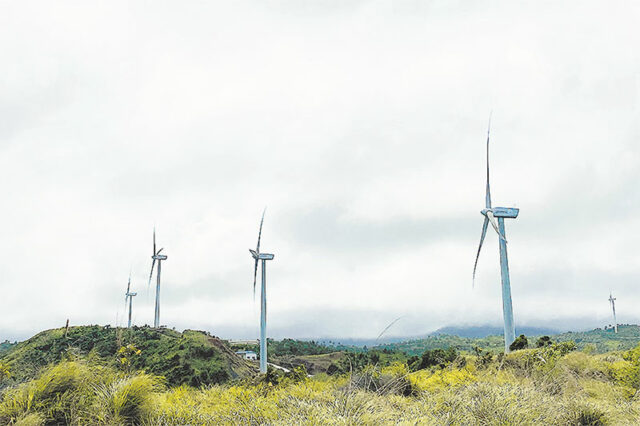
YUCHENGCO-LED PetroEnergy Resources Corp. is acquiring the entire stake held by Thailand’s BCPG Public Co. Ltd. for P1.9 billion to take full control of the 49.2-megawatt (MW) Nabas wind farm in Aklan.

The move follows PetroEnergy’s signing of a share purchase agreement with BCPG unit BCPG Wind Cooperatief U.A. to acquire its 7.81 million common shares in PetroWind Energy, Inc., representing a 40% stake, the company said in a regulatory filing on Tuesday.

PetroEnergy and its subsidiary, PetroGreen Energy Corp., currently hold 20% and 40% direct ownership in PetroWind, respectively, giving PetroEnergy an effective 50% interest in the wind energy firm.

Upon closing, PetroEnergy’s effective ownership will rise to 90%, comprising 60% direct ownership and 30% indirect ownership through PetroGreen Energy Corp.

“The transaction represents the acquisition of the remaining non-controlling interest in [PetroWind] and will not result in a change in control or consolidation status,” the company said.

PetroEnergy said the move is part of its strategy to simplify its ownership structure and increase its direct economic participation in its renewable energy portfolio.

“This is expected to streamline decision-making for the Nabas Wind Power Project, optimize capital allocation, and potentially enhance long-term revenue and shareholder value,” it added.

The transaction will close upon clearance from the Philippine Competition Commission and other internal and regulatory approvals.

PetroWind’s Nabas wind projects are located in the municipalities of Nabas and Malay. Phase 1, with a capacity of 36 MW, began commercial operations in 2015, while the remaining 13.2 MW is under development. — Sheldeen Joy Talavera

LFM Properties expands Makati portfolio with P1.1-B land deal

FREEPIK

LISTED real estate developer LFM Properties Corp. has acquired a 918-square-meter lot in Salcedo Village, Makati City, as part of its portfolio expansion.

In a disclosure on Tuesday, the company said it had entered into an agreement to acquire the property from Parity Values, Inc.

The land is situated along Valero and San Agustin Streets, Barangay Bel-Air, Makati City, and the acquisition is covered by Transfer Certificate of Title No. S-87611.

The property was acquired for a total of P1.1 billion, including value-added tax. LFM Properties’ board of directors approved the purchase on Dec. 23, it said.

The purchase price was based on a valuation report from a third-party adviser jointly selected by the company and the seller.

Payment for the property will be made under a one-year term, with no conditions precedent to the transaction.

“The acquisition is expected to add to the company’s property portfolio,” LFM Properties said.

The company currently owns three buildings in Makati City — Liberty Plaza Building, Liberty Center, and Liberty Building.

LFM Properties is a subsidiary of listed Liberty Flour Mills, Inc., a pioneer in flour milling since 1958.

The company reported a 14% decline in third-quarter gross revenues to P168.4 million from P196.7 million a year ago, mainly due to vacant units in Liberty Plaza Building.

Shares of LFM Properties last closed on Dec. 18 at four centavos each. — Beatriz Marie D. Cruz

SMC’s P55.87-B Skyway Stage 4 cost pending TRB approval

PHILIPPINE STAR/BOY SANTOS

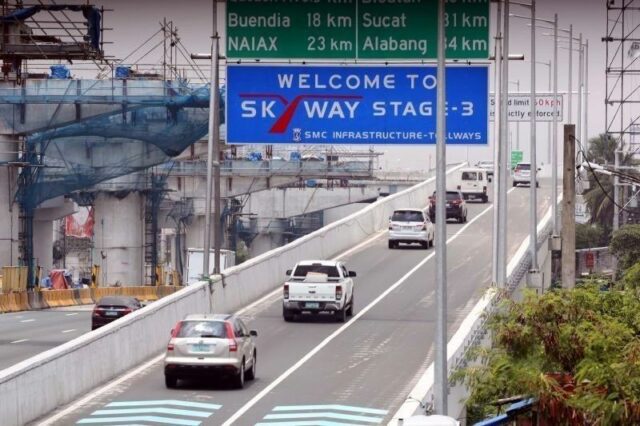
THE P55.87-billion estimated cost for the Southeast Metro Manila Expressway – Skyway Stage 4 Project remains subject to review and approval by the Toll Regulatory Board (TRB) and other government authorities, San Miguel Corp. (SMC) said.

Inflation, higher costs, and refinements in project scope have pushed the updated estimate from the P45.27 billion originally disclosed in 2019, the company told the local bourse on Tuesday.

“The increase is primarily attributable to inflation, updated unit costs, and refinements in project scope consistent with prevailing market conditions,” SMC said.

The figure reflects the current estimate of SMC Skyway Stage 4 Corp., the company’s concession unit for the project.

SMC noted that the increase does not change the fundamental nature, scope, or objectives of the project.

Skyway Stage 4, a 32.7-kilometer expressway, will be constructed in six phases.

Its first phase is expected to be completed within two years once right-of-way issues with the government are resolved.

The road will connect the Skyway system at Arca South in Taguig City to the Batasan Complex in Quezon City.

SMC said the expressway is expected to provide an alternate route for southern and eastern Metro Manila and ease traffic congestion along EDSA and C5. — Sheldeen Joy Talavera

2GO Travel expects over 20,000 passengers from Manila this week

FACEBOOK.COM/2GOTRAVEL

SEA TRAVEL PROVIDER 2GO Travel is projecting more than 20,000 passengers this week from Manila alone amid the holiday rush.

“We’re expecting a lot of passengers coming in our seaports. In fact, this week, we’re expecting more than 20,000 passengers just in Manila alone, leaving Manila,” 2GO Senior Assistant Vice-President and Business Unit Head Francis John Chua told Money Talks with Cathy Yang on One News on Tuesday.

Mr. Chua added that the company is also seeing heavy passenger volumes arriving in Cebu, Bacolod, Iloilo, and Cagayan de Oro.

He urged the public to plan ahead and purchase tickets early. “We do encourage everyone to please buy their tickets ahead because we will not be able to accommodate everyone. So it’s been a full week already,” he said.

2GO Travel provides passenger transport services across the country’s islands and is part of 2GO Group, Inc. The company also offers freight, courier, and logistics services.

2GO Express, the group’s courier arm, is handling a high volume of shipments, particularly from e-commerce businesses. Mr. Chua said the company is prepared for the holiday surge across all its service units.

On possible delays, he apologized for inconveniences caused by efforts to accommodate as many passengers as possible. “Despite the challenges, we remain committed to safe, secure, and reliable service,” he said.

On courier operations, he said: “We’re already looking at the operations… to make sure that packages and goods arrive on time as promised.” — Sheldeen Joy Talavera

Toyota PHL sees 45% jump in EV sales in Jan.-Nov.

TOYOTA MOTOR PHILIPPINES

TOYOTA MOTOR Philippines Corp. (TMP) reported a 45% increase in electrified vehicle (EV) sales in the first eleven months of 2025, which it plans to boost further through new EV launches.

Data from the company showed that combined EV sales of Toyota and Lexus models reached 16,986 units in January-November, up from 11,745 units in the same period last year.

Toyota accounted for most of the sales at 15,455 units, while Lexus contributed 1,531 units.

“With the ATIV hybrid EV lowering the barrier to EV ownership and the bZ4X joining the market along with Lexus battery EV models, TMP is strengthening its multi-pathway strategy to support the country’s transition toward cleaner and more sustainable mobility,” the company said.

TMP recently launched the ATIV hybrid EV and its first battery EV model in the Philippines, the bZ4X.

“The expansion of the electric lineup from Lexus to Toyota vehicle models signals TMP’s continued push to broaden specification options in line with the company’s ‘Beyond Zero’ sustainability vision,” it added.

The move aligns with Toyota Motor Asia’s target of achieving a 30% EV share of new vehicle sales in Southeast Asia by 2030.

“This broader strategy also reflects the growing need to address the environmental impact of the country’s transport sector,” TMP said, noting that the automotive sector remains a major contributor to greenhouse gases.

“TMP fully supports the Philippine government’s carbon reduction goals, which aim to reduce greenhouse gas emissions by 75% by 2030,” said Masando Hashimoto, president of TMP.

“Today, Philippine customers can choose from four vehicle types — gasoline, diesel, hybrid electric, and battery electric — to be their mobility partner, according to their lifestyle and location,” he added.

According to the company, hybrid EV technology remains the most viable and accessible option in the Philippine landscape.

“Their self-charging capability, fuel efficiency, and reliability make them effective for conditions where charging infrastructure is limited,” TMP said.

The company expects the launch of the ATIV hybrid EV to widen access to hybrid mobility, as it is the most affordable option in its current electrified lineup. — Justine Irish D. Tabile

Instead of ham, how about Seafood Paella for Noche Buena?

Seafood Paella by Benilde Culinary Arts Management Program Chairperson Chef Jester Garcia Arellano

A FEAST of the senses with its serving of rich flavors, Seafood Paella (Paella de Marisco), a popular Spanish dish which originated from the Valencia region, makes for an ideal entrée for family and loved ones to savor during Noche Buena.

This season of giving, chef Jester Garcia Arellano shares his personal recipe which symbolizes two special moments of his life as a culinarian. First, as a chef in a local restaurant in Spain. Second, as a loving son who channeled his passion in the kitchen to prepare his father’s favorite dish.

His version takes inspiration from his tenure as part of the culinary team of Carme Ruscalleda Sant Pau, a three Michelin Star-dining destination in Sant Pol de Mar, Barcelona.

It features aromatic short-grain rice cooked in a rich saffron-infused broth, and highlights an array of fresh seafood, from shrimps and squids, mussels to clams.

Mr. Arellano, who is currently the program chairperson of the Culinary Arts Management of the De La Salle-College of Saint Benilde (DLS-CSB), likewise notes how his paella became a family tradition which elevates the true essence of the holidays.

“It was the long-time favorite of my dad, whose birthday falls on Christmas Day,” he said. “Cooking this paella brings back fond memories of our family gatherings, laughter, and sharing meals together.”

With hopes that his recipe will likewise find a home in the culinary heritage of other Filipino families, he prepared a step-by-step guide for those who wish to include the Spanish favorite as part of their festivities.

“I have crafted a simpler version which fits perfectly into the hustle and bustle of Noche Buena preparations using local and more affordable ingredients,” he said. “Many components, such as the seafood broth and pre-cooked seafoods, can be prepped a day in advance, making it a breeze to serve during Christmas Eve,” he adds.

SEAFOOD PAELLA RECIPE BY CHEF JESTER GARCIA ARELLANO
Serves 5-10 Persons

INGREDIENTS:
• For the seafood saffron broth:

500 ml Fish stock (use dorado or maya-maya head and bones)

1 pinch Saffron (or 1 pack of paella mix)

100 grams Leeks (sliced)

200 ml White cooking wine

Salt and pepper to taste

Shrimp heads and skin (for flavor)

• For the rice mixture:

30 ml Olive oil

50 grams Onions, diced

50 grams Green bell pepper, diced

100 grams Tomatoes, diced

10 grams Garlic, finely chopped

250 grams Short grain rice, washed

250 grams Shrimp, peeled and deveined

150 grams Squid, cut into rings

200 grams Mussels, cleaned

250 grams Clams, cleaned

50 grams Green peas

Salt and pepper to taste

2 Lemon wedges

PROCEDURE:
1. Prepare the seafood broth. In a pot, combine the fish stock, shrimp heads and skins, leeks, white cooking wine, and saffron (or paella mix). Bring to a gentle simmer for about 10 to 15 minutes to infuse the flavors. Strain the broth to remove solids and keep it warm.

2. Cook the seafood. In the strained broth, add the mussels, clams, shrimp, and squid. Cook for three to five minutes until the seafood is just cooked through. Remove the seafood and set aside.

3. Sauté the base and rice. In a large paella pan or wide skillet, place the olive oil over medium heat. Add the diced onions, green bell pepper, and garlic. Sauté until the vegetables are soft and translucent, about five minutes. Stir in the diced tomatoes and cook until they break down and form a sauce, about five minutes. Pour in the washed Japanese short grain rice and stir to coat it well with the vegetable mixture, cooking for about two to three minutes.

4. Combine with broth. Pour the prepared seafood broth over the rice mixture. Season with salt and pepper to taste. Bring the mixture to a gentle simmer. Do not stir the rice once the broth is added.

5. Cook the rice. Allow the rice to cook, covered, over low heat for about 15 minutes, or until it is tender and absorbs most of the liquid.

6. Add the cooked seafood. Once the rice is cooked, evenly arrange the previously cooked shrimps, squid, mussels, and clams on top of the rice. Sprinkle green peas evenly over the seafood. Cover and let cook for an additional five minutes to warm the seafood through.

7. Rest and serve. Remove the paella from the heat and let it rest, covered, for five minutes. Serve with lemon wedges on the side for squeezing over the paella.


Yields on BSP’s term deposits continue to drop

BW FILE PHOTO

YIELDS on the Bangko Sentral ng Pilipinas’ (BSP) term deposit facility (TDF) fell on Tuesday, even as the offer went undersubscribed, as the market continued to price in expectations of further monetary easing,

The 10-day term deposits fetched just P76.657 billion in tenders on Tuesday, below the P80 billion on offer. This was also well below the P171.256 billion in bids for the P80 billion in six-day papers auctioned off on Dec. 17.

The central bank only accepted P72.657 billion in bids. The TDF tenor offered this week was adjusted from the usual seven-day term and the auction was held on a Tuesday instead of Wednesday due to upcoming holidays.

Accepted yields for the 10-day deposits ranged from 4.44% to 4.55%, wider than the 4.4515% to 4.55% band seen in the previous auction. With this, the average rate of the papers went down by 2.14 basis points (bps) to 4.5076% from 4.529% last week.

“The 10-day term deposit facility rate declined further,” the central bank said in a statement. “The BSP maintained the offer volume at P80 billion, while total tenders reached P76.7 billion, resulting in a bid-to-cover ratio of 0.96x.”

This was lower than the bid-to-cover ratio of 2.14x logged a week ago.

The central bank has not offered the 14-day term deposit tenor for two months. It last offered both the one- and two-week papers on Oct. 29.

Also, it has not auctioned off 28-day term deposits for over five years to give way to its weekly offerings of securities with the same tenor.

Both the TDF and BSP bills are used by the central bank to mop up excess liquidity in the financial system and better guide market yields towards the policy rate.

“The BSP TDF auction yield was again slightly lower after recent dovish signals on possibly one more 25-bp BSP rate cut in 2026, especially if economic recovery takes longer,” Rizal Commercial Banking Corp. Chief Economist Michael L. Ricafort said in a Viber message.

The market also priced in bets on further easing by the US Federal Reserve, he said, adding that demand was weaker amid a decline in market activity before the holidays.

On Dec. 11, the Monetary Board delivered a fifth straight 25-bp cut to bring the policy rate to an over three-year low of 4.5%. It has now slashed benchmark interest rates by 200 bps since August 2024.

BSP Governor Eli M. Remolona, Jr. said benign inflation gives them room to help support weak domestic demand amid lingering governance concerns that have affected investments, but stressed that they are nearing the end of their easing cycle.

He left the door open to one final 25-bp cut next year as economic prospects have darkened further, with the slowdown in third-quarter growth likely to extend to this quarter and with recovery seen to start only by the second half of 2026.

The Monetary Board will hold its first meeting for 2026 in February.

Meanwhile, the Fed’s rate cut this month brought the target range for US benchmark short-term borrowing costs to 3.5%-3.75%, in the upper range of policymakers’ estimates for a neutral level that neither boosts nor brakes the economy, Reuters reported.

About a third of the central bank’s 19 policymakers felt the rate cut was unnecessary, based on projections published by the Fed at the time.

Mr. Ricafort added that signals of a potential cut in big banks’ reserve requirement ratio (RRR) also helped bring down TDF yields as this would infuse more liquidity into the financial system.

Mr. Remolona earlier said they could bring down universal and commercial banks’ RRR by 300 bps next year, which would bring the ratio to 2% from the current 5%. — Katherine K. Chan

San Miguel lists P5.7-B fixed-rate notes on PDEx

BW FILE PHOTO

ANG-LED conglomerate San Miguel Corp. (SMC) listed its P5.7-billion fixed-rate notes issuance on the Philippine Dealing & Exchange Corp. (PDEx) as part of its funding initiatives.

“The 3-year fixed-rate notes will have a fixed interest rate equivalent to 6.3000% per annum, and have been enrolled with the Philippine Dealing & Exchange Corp. on the issue date, December 23, 2025,” the company said in a disclosure on Tuesday.

Proceeds from the issuance will be used for refinancing and redenominating the company’s US dollar obligations, for general corporate purposes, and for paying fees and expenses related to the issuance.

In its Nov. 13 disclosure, SMC said the notes are exempt from Securities and Exchange Commission registration requirements, as they are offered exclusively to qualified institutional buyers.

“The notes will be issued within December 2025 in scripless form, in minimum denominations of P5 million each, and in integral multiples of P1 million thereafter, with a tenor of 3 years,” the company added.

SMC shares were unchanged at P84 apiece on Tuesday. — Alexandria Grace C. Magno

A Simbang Gabi-inspired cocktail

SIMBANG GABI Cocktail by Quezon Club Head Bartender Martin Protacio.

SIMBANG GABI, the devotional nine-day novena of dawn Holy Masses attended by Catholics in anticipation of Christmas, has become a distinct Filipino tradition of faith.

This holiday season, beverage specialist Martin Ben Protacio was inspired by this profound religious-cultural experience and sense of community to come up with a festive, deep-purple highball dubbed as Noche Buena Star.

For this original after-dinner drink, the Hospitality Management graduate from the De La Salle-College of Saint Benilde (DLS-CSB) School of Hotel, Restaurant, and Institution Management blends the warm, comforting spirit of dark rum with a custom ube horchata — a fusion of Filipino purple yam and a milky rice drink. This is then garnished with grated Quezo de Bola, which adds a necessary salty-tangy counterpoint. The result is a creamy, earthy, spiced, and subtly sweet mix finished with a delightful savory-salty kick.

Mr. Protacio is currently the head bartender of Quezon Club at Solaire Resort North.

NOCHE BUENA STAR COCKTAIL
INGREDIENTS

45 ml Dark Rum

Ube Horchata

Grated Quezo de Bola

• For Ube Horchata:

1 cup Uncooked white rice

3 to 4 cups Water (for soaking the rice)

1 cup Evaporated milk

½ cup Condensed milk (adjust to taste)

2 to 3 drops Ube extract (start small)

½ teaspoon Vanilla extract (optional)

¼ teaspoon Ground cinnamon or cinnamon syrup (optional)

Ice (for serving)

PROCEDURE FOR UBE HORCHATA:
1. Rinse the rice thoroughly. Combine with water and soak for several hours or overnight to soften.

2. Transfer the soaked rice with the water into a blender. Blend until the mixture is fine.

3. Strain the mixture using a fine mesh strainer or cheesecloth to remove solids. Discard the rice pulp.

4. Add evaporated milk, condensed milk, ube extract, and the optional vanilla extract. Stir or blend again until well combined.

5. Taste and adjust sweetness or ube flavor as needed.

6. Chill in the refrigerator.

PROCEDURE FOR NOCHE BUENA STAR:
1. Add ice to a chilled highball glass.

2. Grate some Quezo de Bola.

3. Apply the cheese on the rim of the glass.

4. Add 45 ml of dark rum.

5. Top it with the Ube Horchata.

6. Serve.

Transfers via InstaPay, PESONet hit P22 trillion

ANASTASIA NELEN–UNSPLASH

TRANSACTIONS made via InstaPay and PESONet breached P22 trillion at end-November as more Filipinos used digital finance platforms.

The combined value of InstaPay and PESONet transactions surged by 41.15% to P22.054 trillion as of November from P15.624 trillion a year ago, the latest Bangko Sentral ng Pilipinas (BSP) data showed.

The volume of transactions made via the two clearing houses more than tripled (203.6%) year on year to 4.065 billion in the January-to-November period from 1.339 billion.

Broken down, the value of InstaPay transactions jumped by 56.18% to P10.209 trillion in the first 11 months of 2025 from P6.537 trillion in the previous year.

The volume of transactions coursed through the payment gateway was at 3.958 billion at end-November, more than triple (217.39%) the 1.247 billion a year earlier.

Meanwhile, the value of transactions done on PESONet also rose by 30.35% to P11.845 trillion in the 11-month period from P9.087 trillion in the previous year.

In terms of volume, transfers made via the clearing house climbed by 16.19% year on year to 106.626 million from 91.772 million.

InstaPay and PESONet are automated clearing houses under the central bank’s National Retail Payment System framework.

InstaPay is a real-time, low-value electronic fund transfer facility for transactions up to P50,000 and is mostly used for remittances and e-commerce.

Meanwhile, PESONet is mainly used for high-value transactions and may be considered as an electronic alternative to paper-based checks.

The BSP wants digital payments to account for 60%-70% of the total volume of retail payments by 2028, in line with the Philippine Development Plan.

The share of online payments in monthly retail transactions stood at 57.4% in terms of volume and 59% in value terms in 2024, according to the BSP’s 2024 Status of Digital Payments in the Philippines report.

These are up from 52.8% and 55.3%, respectively, in 2023. — Katherine K. Chan

Balai Ni Fruitas redirects IPO proceeds to immediate expansion needs

PHILSTAR FILE PHOTO

LISTED counter-service bakery operator Balai Ni Fruitas, Inc. has reallocated proceeds from its July 2022 initial public offering (IPO) to fund its near-term expansion plans.

In a regulatory filing on Tuesday, the company said its board of directors approved the reallocation of IPO proceeds totaling P203.8 million.

The funds were previously earmarked for expanding its store network, setting up a commissary, and pursuing potential acquisition opportunities.

Under the revised allocation, the commissary setup fund was increased to P112 million from P110 million, while the allocations for store network expansion and store improvement were raised to P76.8 million from P73.8 million, sourced from the “Introduction of new concepts” and potential acquisitions.

“The management determines that such reallocation is necessary to fulfill its near-term requirements for expansion,” the company said.

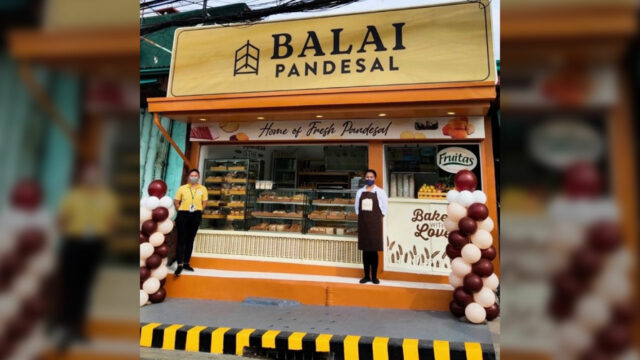
Balai Ni Fruitas operates food and beverage brands including Buko Ni Fruitas, Fruitas House of Desserts, and Balai Pandesal. It is a wholly owned subsidiary of Fruitas Holdings.

Shares of Balai Ni Fruitas fell 2.99% to 0.325 centavos apiece on Tuesday. — Alexandria Grace C. Magno

Christmas the whole year through

PHILIPPINE STAR/MIGUEL DE GUZMAN

It can be Christmas the whole year through for those who are real followers of Christ and believe in his teachings. This can be discerned from my favorite Christmas carol which is “Joy to the World.” The words do not only convey the truth that a Christian can thoroughly enjoy his stay on earth if he is really a faithful follower of Christ, the very melody is so uplifting that one can really feel the joy of living. Other Christmas carols — also very inspiring (like “Silent Night” or “O Little Town of Bethlehem”) — are too somber and don’t make you jump for joy.

“Joy to the World” reminds us that since Jesus came to the world to save us from the only evil — which is sin — God has restored His original plan when He created our first parents to be happy in Paradise. That means that we should find our happiness first on Earth. No one can expect to go to Heaven if he or she does not have a joyful existence on Earth. It is a doctrinal error for some Christians to believe that we must go through hell (spending our time on Earth always in suffering and pain in a so-called valley of tears) in order to be able to win the eternal bliss in Heaven. In fact, someone who is not happy on Earth cannot expect to go to Heaven.

The key here is to equate joy with love. God is Love itself. The way to God is Love in all its forms.

First, there is what the Greeks called Storge or affection. This is the most natural and common love. It is instinctive: one does not have to make an effort to love with affection. It is found, for example, in families, such as the love of parents for children and vice versa. Affectionate love is warm, familiar, and humble, often growing quietly from daily life and shared experiences. It can also apply analogously to affection to other worldly creatures since everything God created is good and lovable. One can say, “I love adobo,” “I love Boracay,” “I love Kitty, my pet cat,” “I love the moon and the stars,” etc., etc. All these forms of love for God’s creatures, both human and non-human give us joy, although quite fleeting.

A more enduring joy can be found in what the Greeks called Philia or friendship. In his book The Four Loves, the writer C. S. Lewis considers it one of the least emphasized but most rewarding forms of love. It is the love between friends who share common interests, values, or pursuits. It is based on mutual respect and companionship. It is not driven by necessity or biology but by freely chosen connection. This connection is normally based on shared experiences. For example, some of our lifelong friends were our classmates in grade school, high school, or college. We nurture friendship with those who share with us the same interests in sports (like golf, tennis, running, mountain climbing); or some common hobbies like gardening or stamp collecting; or common professions or occupations. Spending time with friends is one of our most enjoyable moments.

In fact, the reverse is true: having no friends or being lonely is today, especially in highly economically developed countries like the US, considered the leading human sickness or disease. It is alarming to see loneliness as a leading reason for people committing suicide. This is especially true in societies where the family as the foundation of society has broken down because of widespread divorce, single parenthood, or voluntary childlessness.

The third form of love is called Eros in Greek or Romantic Love. This form of love is more than sexual desire. This is “being in love with the entire person.” The focus is on the entire person. If the focus is only on the sexual pleasure one can derive with the partner of the opposite sex, it is not romantic love but lust, the so-called concupiscence of the flesh according to St. John the Evangelist. The culmination of romantic love is marital love between a man and a woman joined in an indissoluble union (as Pope Leo XIV recently reminded Catholics) whose primary purpose the procreation of children. Married people in a stable marriage can attest to the fact that marital love produces one of the highest forms of human joy, including, of course, the love for the ensuing children. The negation of this truth about marriage and procreation in many modern societies has led to the tragedy of rapid population decline and the subsequent ageing of the population which is wreaking havoc on countries like Japan, Spain, and South Korea, not excepting even modern China. We often hear the billionaire Elon Musk lament that the greatest obstacle to economic progress today is the rapid depopulation and subsequent ageing in practically all the developed economies.

The fourth and highest form of human love is called Agape in Greek, which is to make an effort to love as God loves. Agape is seeking the good of others without expecting anything in return. When God created us, He did so out of the purest form of love, seeking our happiness without expecting anything in return. His love for us was unconditional and selfless. When we try to imitate God in loving our fellow human beings, we seek the good of others without expecting anything in return, even at personal costs. When we perform corporal or spiritual works of mercy, for example, we are loving with Agape because we are not expecting anything in return from the beneficiaries of our good works. Patriotism is a form of Agape because we are working for the common good of Philippine society made up of people most of whom we do not know personally.

This form of love — patriotism or civic mindedness — is what is sorely wanting in our society. Unless we have a critical mass of Filipinos who are determined to promote the common good of our country in their personal behaviors, we will not be able to bring down corruption to tolerable levels. In our ongoing efforts to combat the very high level of corruption that were unearthed by the flood control scandals, it is necessary to do what some segments of business, civil society, the academe, and the Church have admirably pursued, i.e., to publicly protest and demonstrate against the corrupt practices and the corrupt people themselves.

It is necessary also to demand that those proven to have stolen trillions of pesos be jailed, and that public institutions, like the departments of Public Works and Highways and Health, the Legislative bodies and others, be reformed to minimize corruption. It is also right that measures be taken to minimize the nefarious influences of family dynasties on national and local governments. All these are necessary, and for the minority of Filipinos who are engaged in all these efforts for reform, I am sure they are already being rewarded with the joy of living Agape as shown in their patriotism.

All these, though necessary, are not sufficient to bring corruption down to tolerable levels.

Obviously, corruption cannot be completely eradicated because, as the guru of good governance, former Secretary of Finance and Founder of the Institute of Corporate Directors (ICD) and Institute for the Solidarity of Asia (ISA), Dr. Jesus Estanislao, told a young idealistic professional, “Corruption cannot be completely eradicated because we human beings are all sinners.” The occasion was in a talk given by Dr. Estanislao at the Sangandaan Cultural Center at the Legaspi Village in Makati. He was just trying to be realistic.

In the context of our beliefs as Christians, trying to completely eradicate corruption is to attempt to eradicate Original Sin. No matter how much we try to perfect our institutions in order to make sure they are led by people of integrity and have the necessary preventive measures against corrupt practices, there will always be those “sinful humans” who will be creative and ingenious enough to beat the system. We can only try our best to minimize corrupt practices.


Bernardo M. Villegas has a Ph.D. in Economics from Harvard, is professor emeritus at the University of Asia and the Pacific, and a visiting professor at the IESE Business School in Barcelona, Spain. He was a member of the 1986 Constitutional Commission.

bernardo.villegas@uap.asia