Home Blog Page 187

White supremacist content grips teens plotting attacks in Southeast Asia

STOCK PHOTO | Image by Carlos Andrés Ruiz Palacio from Pixabay

SINGAPORE/JAKARTA — When police detained an Indonesian teenager accused of bombing his high-school campus in Jakarta in November, he had a life-size toy rifle inscribed with “welcome to hell” and the names of white supremacist mass killers.

The November 7 attack, which injured 96 people, may have been the first in the country inspired by white supremacists but police fear it won’t be the last.

At least 97 youths – the youngest just 11 – are being monitored after coming under the influence of content glorifying mass violence and white supremacists spread largely on messaging app Telegram, Indonesian police told Reuters in March.

At least two were planning acts of violence following the Jakarta bombing, according to the police.

And it’s not just Indonesia. Across Southeast Asia – home to hundreds of millions of people of different ethnicities and faiths – police are grappling with a surge in teenagers plotting violence inspired by white supremacists such as Christchurch mosque attacker Brenton Tarrant, according to interviews with security officials in Indonesia, Singapore, Malaysia, Thailand and the Philippines.

Singapore’s domestic intelligence agency has detained four youths since December 2020 on grounds that they subscribed to “violent far-right extremism ideologies” and were planning attacks. Far-right extremism has since been named by the city-state’s Internal Security Department (ISD) as a top threat.

None of the teenagers Singapore and Indonesia are monitoring are white. Some were plotting attacks they believed would protect the existing racial and religious composition of their countries, according to ISD statements on the detentions. Others, three Indonesian security officials say, were inspired by the violence of far-right attackers, even if they didn’t have similar grievances.

In every instance in Singapore and Indonesia reviewed by Reuters, the teenagers were alleged by authorities to have been radicalized through social media posts and communities.

Many of the young people who have been detained or placed under monitoring appear to be disillusioned and lonely individuals “turning towards a nihilistic worldview after being radicalized by far-right messaging”, said Pravin Prakash, who researches Southeast Asia at the Center for the Study of Organised Hate, a Washington think-tank.

The Jakarta suspect, according to Indonesian authorities, had posted online video footage of his campus alongside Nazi symbols and text that appeared to be inspired by “Highway to Hell” from the rock band AC/DC: “Don’t need no reason, ain’t nothing I’d rather do. I am on the highway to hell and all my friends are going to be there.”

Telegram groups, in particular, had provided the young people with a sense of belonging, according to Indonesian police.

That platform often doesn’t take action on content that authorities have reported as extremist, said police commissioner Mayndra Eka Wardhana, a spokesperson for the counter-terrorism squad.

Telegram spokesperson Remi Vaughn said in response to questions that the platform “has an open channel of communication with Indonesian authorities” and “removes any content that breaches Telegram’s terms of service whenever reported.”

Telegram “supports the right to peaceful free speech, but calls to violence are explicitly forbidden,” Vaughn added.

Southeast Asian security and police agencies are coordinating efforts, marking the first regional cooperation on this type of radicalization, according to officials from Singapore and Indonesia.

KILLER MEMES
All the Indonesian teens authorities identified as being radicalized were affiliated with the “true crime community”, a popular internet subculture.

In channels linked to the community, users share memes and other content that glorifies killers like Tarrant, whose name was found on the Jakarta suspect’s toy rifle, according to screenshots shared with Reuters by police and a separate review of four such groups.

Some online posters also traded bomb-making tutorials and egged each other on toward violence, screenshots of their conversations show.

White supremacist content has also spread across other platforms, though often with a localized twist. Posts, for instance, may feature Southeast Asian iconography alongside Nazi symbols.

Reuters viewed hundreds of such videos from Southeast Asian users on TikTok showcasing racist caricatures of Chinese people and other minorities such as Rohingya Muslims alongside phrases like “TCD,” or “Totally Cheerful Day” and “TRD,” or “Total Refreshing Day.”

The phrases appear to be code calling for “Total Chinese Death” or “Total Rohingya Death”, said Saddiq Basha of Singapore’s S. Rajaratnam School of International Studies (RSIS), who has tracked such content since 2024.

One popular video by an Indonesian user featuring the hashtag #TCD has been viewed over 542,000 times. The creator did not respond to a request for comment.

Western white supremacist groups have used phrases like “TND/Totally Nice Day” and “TJD/Totally Joyful Day” to advocate the extermination of black and Jewish people, according to anti-discrimination groups like the Anti-Defamation League.

TikTok removed the Indonesian user’s post, as well as similar content identified by Reuters, after the news agency sent the platform questions about its moderation policies.

“There is no place on our platform for those dedicated to spreading beliefs or propaganda that encourage violence or hate,” a company spokesperson said.

Two people working on online-safety teams at TikTok told Reuters they were not familiar with the existence of policies on moderating posts that featured localized takes on white supremacist slogans and had been unaware of such content. They were interviewed on condition of anonymity because they were not authorized to speak to media.

The TikTok spokesperson said the platform blocks “certain keywords from appearing as search suggestions to reduce their visibility if we find that they are being used as coded language” and consults with Southeast Asian advisors on online safety.

Tech companies have focused on moderating Islamist content in Southeast Asia, sometimes to the point where they fail to account for other extremist posts, said Chasseur Group director Munira Mustaffa, who has advised Southeast Asian governments and social media platforms on combating extremism.

“While the concept of neo-Nazism lies in the assertion that the white race reigns supreme, these ideas are easily adaptable into local context,” she said, adding that teens who successfully carry out attacks believe they will gain status in their online communities.

Among the youths authorities say were radicalized by algorithms is Nick Lee Xing Qiu, who was detained last year by the ISD as an 18-year-old on suspicion of plotting attacks against Singapore’s Malay Muslim minority.

The agency said algorithms on unspecified platforms had recommended far-right extremist content to him.

Reuters couldn’t reach Lee, who is being held under a law that permits his detention without trial. The news agency also couldn’t identify a legal representative to direct questions to.

Lee and another teenager, who was separately detained and has not been named, self-identified as “East Asian supremacists”, ISD said in statements about their cases.

The youths had in their online posts referenced the neo-Nazi “great replacement theory” – which posits that white populations are being forcibly replaced by minorities – and claimed to be inspired to fight back, according to ISD.

YOUTH REHABILITATION
Mayndra, the Indonesian counter-terrorism official, said authorities were worried that teenagers radicalized by the violence of extremist content could be targeted by “terror groups” for recruitment.

Many of the teenagers in detention or under monitoring in Indonesia and Singapore are under the age of majority or have not successfully perpetrated acts of violence.

The Jakarta bombing suspect, for instance, is being held by child protective services while authorities construct their case, according to police spokesperson Budi Hermanto.

The suspect has not been charged or entered a plea, the official said.

“My hope, if it’s possible, is do not punish him, just give him counselling so he can be a better person,” Rudianti, a family member of the Jakarta suspect who goes by one name, told Reuters.

Indonesia this month announced plans to restrict social-media access for children under the age of 16, in a move that Mayndra said would also help combat youth radicalization though it was not a complete solution.

In Singapore, authorities have turned to the Religious Rehabilitation Group (RRG) to work with some teenagers detained for plotting far-right attacks. The non-profit was set up by Muslim scholars in 2003 to rehabilitate suspected Islamist militants and is staffed by volunteer educators.

The group counsels young detainees and prepares them for national exams, said Ahmad Helmi Bin Mohamad Hasbi, an RRG counsellor and expert on radicalism at RSIS.

RRG worked with Singapore’s first far-right extremist detainee, who was held in 2020 at the age of 16 for allegedly planning machete attacks on two mosques. He was released from rehabilitation in 2024.

Groups like RRG will have to contend, however, with the speed at which some Southeast Asian extremists are gaining influence globally.

Just a month after the Jakarta bombing, a 15-year-old Russian was accused of stabbing a Tajik migrant child to death in the Moscow area.

The Russian had written a manifesto, which was published on Telegram and authenticated by researchers with the Global Project on Hate and Extremism, a U.S.-based non-profit.

In it, the Russian suspect labelled the Indonesian teen a hero. He also argued that if non-white youths could execute such attacks, white supremacists should be capable of more. — Reuters
Philippine firms brace for rising costs as oil surge drags peso

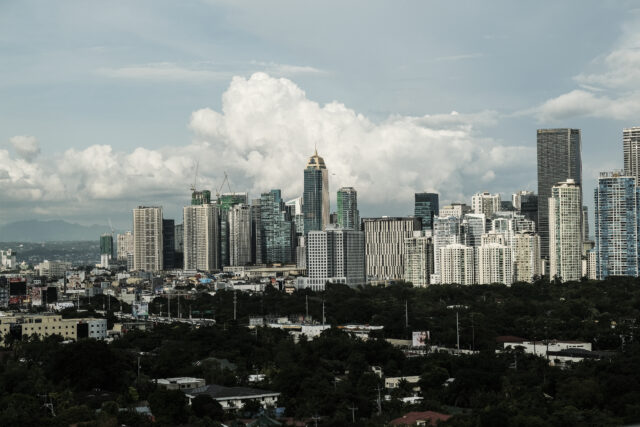
Buildings in the Central Business District (CBD) in Makati City, the Philippines. Photographer: VEEJAY VILLAFRANCA/BLOOMBERG

Philippine companies are bracing for higher costs as oil’s spike above $100 a barrel drags the peso to a record low, heightening the risks for an economy heavily reliant on fuel imports from the Middle East.

“I can’t imagine anyone not being afraid of what we’ve been reading,” Sergio Ortiz-Luis Jr., head of the Philippine Exporters Confederation Inc., said on Monday. The group, comprised of about 4,000 exporters and service providers, was already dealing with the uncertainty on US tariffs before fuel costs climbed, though members have not indicated plans to reduce output, he added.

While a weaker currency bodes well for exporters, it inflates the import cost of manufacturers in the Southeast Asian nation. Many Philippine producers buy their raw materials and components overseas to ship out finished goods such as electronic products which comprise about half of the country’s shipments.

The Philippines imports nearly all of its oil needs and the commodity’s surge past $100 a barrel stoked inflation fears in the country and across the region, many of them also net oil importers. Exacerbated by the dollar’s haven appeal, currencies in emerging Asia retreated, with the peso touching a record low.

The Philippine Chamber of Commerce and Industry warned that a sharp jump in pump prices would be difficult to absorb. A P20 (34 US cents) per liter increase, set to take effect this week, would cause fuel, logistics and transport costs to surge, and businesses may have to pass those on to consumers, Ferdinand Ferrer, head of the chamber, told GMA News TV.

Other companies are looking to absorb the extra cost. Miner Global Ferronickel Holdings Inc. plans to adjust rates for its contractors to cover higher fuel prices, according to Dante Bravo, president of the company. “We are still able to get some fuel supply at the moment,” he said.

2GO Group Inc., one of the country’s largest logistics operators controlled by conglomerate SM Investments Corp., said it has measures in place to help manage volatility in fuel prices.

President Ferdinand Marcos Jr. is seeking emergency authority from Congress to slash taxes on petroleum products and has enforced a four-day work week from Monday for government offices to save on energy. — Bloomberg

Trump says war could be over soon, as Iran rallies behind new hardline leader

Smoke rises after reported Iranian missile attacks, following strikes by the United States and Israel against Iran, in Manama, Bahrain, February 28, 2026. — REUTERS/STRINGER TPX IMAGES OF THE DAY

DUBAI/JERUSALEM/DORAL Florida — US President Donald Trump on Monday predicted the war in the Middle East could be over soon, even as Iran’s hardliners staged a show of loyalty to new Supreme Leader Mojtaba Khamenei in a sign that it was not prepared to back down any time soon.

The conflicting signals sent markets on a rollercoaster, with oil prices surging and stock markets nosediving before swinging in the other direction after Mr. Trump’s comments and reports of a possible ease in sanctions on Russian energy.

Mr. Khamenei, 56, a Shi’ite cleric with a power base among the security forces and their vast business empire, has been declared unacceptable by Mr. Trump, who has demanded Iran’s unconditional surrender.

Mr. Trump said the war would continue until Iran is “totally and decisively defeated,” but predicted it would be over soon.

“It’s going to be finished pretty quickly,” he told Republican lawmakers. “We’ve already won in many ways, but we haven’t won enough,” he said.

Mr. Trump did not, however, define exactly what victory in the war would look like.

Iranian state media showed large crowds in several cities rallying behind the new leader, waving Iranian flags and holding portraits of his father Ali Khamenei, the supreme leader killed by an Israeli strike on the war’s first day.

In Isfahan, state TV reported the sound of nearby explosions from apparent airstrikes as loyalists gathered in the historic Imam Square, chanting “God is the Greatest” below a stage with portraits of Ali and Mojtaba Khamenei.

In a further sign of defiance, Iran’s military said it would step up its missile strikes.

POLITICAL SYSTEM RALLIES BEHIND NEW LEADER
Politicians and institutions issued pledges of loyalty to the new supreme leader, whose wife, son and mother also died at the start of the US-Israeli air onslaught according to Iranian state media.

“We will obey the commander-in-chief until the last drop of our blood,” a defense council statement said.

Iranians reached by telephone were divided, with supporters of the authorities hailing the choice as a declaration of defiance and opponents fearful it would dash their hopes for change.

“I am so happy that he is our new leader. It was a slap in the face to our enemies that thought the system will collapse with the killing of his father. Our late leader’s path will continue,” said university student Zahra Mirbagheri, 21, from Tehran.

Many Iranians had initially celebrated the elder Khamenei’s death, weeks after his security forces killed thousands of anti-government protesters in the worst domestic unrest since the era of Iran’s 1979 revolution. But there has since been little sign of anti-government activity, with activists fearful of taking to the streets while Iran is under attack.

“The (elite Revolutionary) Guards and the system are still powerful. They have tens of thousands of forces ready to fight to keep this regime in place. We, the people, have nothing,” said Babak, 34, a businessman in the central city of Arak who asked to keep his family name confidential.

Israel says its war aim is to overthrow Iran’s system of clerical rule. US officials mainly say Washington’s aim is to destroy Iran’s missile capabilities and nuclear program, but Mr. Trump has said the war can end only with a compliant Iranian government.

Israel had said it would kill whoever succeeded the elder Khamenei unless Iran ended its hostile policies.

OIL SURGES, THEN DIPS BACK
The war has effectively shut the Strait of Hormuz, a chokepoint for a fifth of global oil and liquefied natural gas, leaving tankers unable to sail for more than a week and forcing producers to halt pumping as storage fills.

Brent crude futures jumped about 7% to settle at their highest price since 2022 after soaring by as much as 29% during the session, as Saudi Arabia and other OPEC members cut supplies. But prices fell in post-settlement trade.

The price of gasoline has particular political resonance in the United States, where voters cite rising costs as a top concern ahead of the November midterm elections, when Mr. Trump’s Republicans will try to keep control of Congress.

A Reuters/Ipsos poll released Monday found 67% of Americans expect gas prices to rise over the coming months, and only 29% approve of the war.
After speaking with Russian President Vladimir Putin, Mr. Trump said the United States will waive certain oil-related sanctions to ease the shortage. According to multiple sources, that could mean a further easing of sanctions on Russian oil, which could complicate efforts to punish Moscow for its war in Ukraine.

Other options include a possible release of oil from strategic reserves or restricting US exports, sources said.

OIL REFINERY HIT
Tehran was choked in black smoke after an oil refinery was hit, an escalation in strikes on Iran’s domestic energy supplies. World Health Organization chief Tedros Ghebreyesus warned the fire risks contaminating food, water, and air.

Turkey said on Monday NATO air defenses had shot down a ballistic missile that was fired from Iran and entered Turkish airspace, the second such incident of the war. Iran did not immediately comment on the report.

Turkey, Iran’s neighbor with NATO’s second-largest army, had warned Tehran on Saturday against attacking again, but it has not suggested it wants to formally call on bloc members for further protection.

Israel’s military said it had launched new attacks in central Iran and struck the Lebanese capital Beirut, where Israel has extended its campaign after the Iran-backed militia Hezbollah fired across the border.

US-Israeli attacks have killed at least 1,332 Iranian civilians and wounded thousands, according to Iran’s UN ambassador. Lebanon has reported more than 400 people killed there, with nearly 700,000 people fleeing their homes.

In Israel, ambulance workers said one man died from shrapnel wounds at a construction site near Tel Aviv’s international airport, raising to 11 the death toll from Iranian strikes. — Reuters

Obesity cost Philippines P1.9 trillion in 2025— study

KENNY ELIASON-UNSPLASH

Obesity, a condition that increases the risk of severe chronic diseases such as diabetes, is estimated to have cost the Philippines around P1.9 trillion in 2025, according to the Epidemiological Burden and Cost of Obesity in the Philippines (EpiCOb-PH) study released Monday.

The EpiCOb-PH study was led by Dr. Madeleine de Rosas-Valera and funded by Novo Nordisk Pharmaceutical (Philippines) Inc., aiming to assess obesity’s demographic distribution and economic burden in the country.

It also found that obesity’s total economic cost is equivalent to 7.3% of last year’s gross domestic product (GDP). The cost could rise to as much as P2.7 trillion if overweight-related expenses are also included.

Of the total cost, P551 billion was attributed to healthcare expenses, which could reach P790 billion when overweight is included. These cover direct medical costs such as hospital confinement, based on normative estimates assuming patients are diagnosed and treated according to medical guidelines.

Non-medical costs were also taken into account, reaching P165.39 billion, including expenses such as transportation.

Meanwhile, productivity losses, including workdays missed due to obesity-related conditions, were estimated at P1.17 trillion.

On an individual level, obesity’s average annual cost is estimated at around P66,696 per person, which could significantly increase when complications occur.
The study also estimated that of the 72 million Filipino adults, about 41% or 29.5 million people are overweight or obese based on the Asia-Pacific BMI threshold, placing more than four in 10 Filipino adults at risk of obesity-related health problems.

The EpiCOb-PH study, whose key aims include calculating the economic costs associated with obesity and estimating its health burden among Filipinos, used a modelling approach that combined multiple national data sources.

Researchers used data from the National Nutrition Survey and Expanded National Nutrition Survey from 1993 to 2023 to estimate obesity’s current and future trends and health impacts. — Edg Adrian A. Eva

New Clark City eyed to boost PHL’s sports tourism

Ceremonial signing of the Memorandum of Understanding between the Department of Tourism and Bases Conversion and Development Authority. — ALMIRA S. MARTINEZ

THE BASES Conversion and Development Authority (BCDA), in collaboration with the Department of Tourism (DoT), said it aims to highlight the “world-class facilities” in New Clark City (NCC) to boost the country’s sports tourism and economic growth.

“We are aligning infrastructure with destination marketing, we are aligning event hosting with visitor experience,” BCDA President and Chief Executive Officer Joshua M. Bingcang said in his speech on Monday.

“And we are aligning sports development with economic opportunity,” he added.

The NCC houses the only 20,000-seater athletics stadium in the Philippines certified by the International Association of Athletics Federations (IAAF), a 2,000-seater aquatics center, and the Athletes’ Village.

It also became the central hub for the 30th Southeast Asian Games in 2019.

“We are having this partnership to further develop these facilities as engines,” Mr. Bingcang said. “Engines for sports excellence, engines for local enterprise, and engines for regional growth.”

Under the partnership, the Tourism department will assist in marketing and promotion of the NCC’s sports facilities to attract local and international sports events and activities.

Tourism Secretary Ma. Esperanza Christina G. Frasco said hosting more athletic events in the NCC will drive more economic opportunities for local businesses.

“Partnerships such as this reflect a principle that has guided our work in tourism, that growth must translate into real opportunity for our people,” she said in a speech.

“We aim to maximize the potential of destinations such as New Clark City and other BCDA-managed properties as venues for international events and as drivers of tourism activity, investments, and jobs,” she added.

To complement the agency’s sports tourism initiatives, strategic programs and tour packages will also be promoted.

“We will work with local governments and tourism stakeholders to develop experiences around these sporting events,” Ms. Frasco said.

In line with its target to become a sports tourism hub, the BCDA has partnered with the Philippine Sports Commission (PSC) to develop an additional 10-hectare indoor gym facility in NCC for basketball, volleyball, and pickleball.

A separate 10-hectare tennis center development, in collaboration with the Philippine Tennis Association (PhilTA), is also scheduled for completion in 2027.

The budget for both of the facilities is P2.5 billion.

“We’re merging those two properties, 20 hectares, to develop these facilities… We’re going to finalize the concept plan with the Philippine Sports Commission,” Mr. Bingcang told BusinessWorld in an interview.

“This will translate to a PPP arrangement with the private sector to build,” he added.

Last week, the BCDA broke ground for the John Hay Sports Center in Baguio City – a regional training center positioned as another sports tourism destination. — Reuters

US says UN aid to Afghanistan needs evaluation

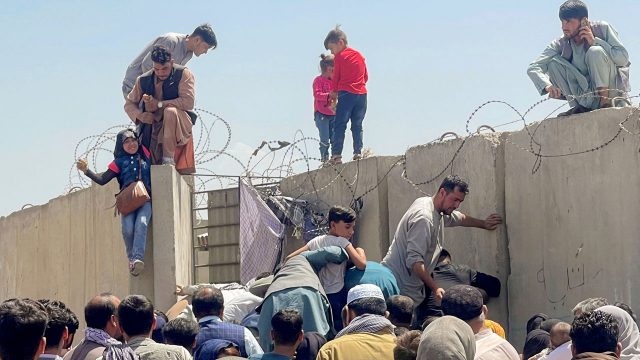
A MAN pulls a girl to get inside Hamid Karzai International Airport in Kabul, Afghanistan, Aug. 16. — REUTERS

DESPITE what it called a humanitarian “disaster” in Afghanistan, the US said on Monday international assistance to the country should be evaluated, given Taliban “intransigence” and its exclusion of the female population from basic rights.

Speaking to a UN Security Council meeting on Afghanistan, the US ambassador to the United Nations, Mike Waltz, noted that the budget for the United Nations Assistance Mission in Afghanistan (UNAMA), the mandate of which is up for renewal next week, is the largest of any special UN mission in the world.

“In light of the Taliban’s intransigence, we must carefully evaluate the utility of international assistance and engagement in Afghanistan,” Mr. Waltz said, even as he highlighted an ongoing “humanitarian disaster” there.

“This council must consider carefully the funds we collectively provide for this mission’s budget, when the mission’s female national staff are not even able to go into the office to work,” he added.

Afghanistan under the Taliban faces one of the world’s most pressing humanitarian crises.

According to the UN World Food Programme, more than 17 million Afghans – or one-third of the population – are facing acute food shortages, including 4.7 million facing emergency levels of hunger.

The temporary head of UNAMA, Georgette Gagnon, told the meeting Afghanistan had “urgent” humanitarian needs and the humanitarian crisis there had worsened due to funding cuts. She said humanitarian agencies aimed to assist 17.5 million Afghans in 2026 through an appeal for $1.71 billion, but this was currently only 10% funded.

Ms. Gagnon said Afghanistan’s nearly two-week conflict with Pakistan had had “punishing human and economic costs” and the Iran war on its other border was causing prices of basic commodities to rise.

She said some positive developments showed the value of international engagement, including the Taliban ban on opium poppy cultivation. She warned that if rights and humanitarian issues were not dealt with, Afghanistan could “once again become a driver of regional and global instability in the form of outmigration, terrorism, narcotics and more.” — Reuters

Canada says it will let TikTok continue operations in the country

STOCK PHOTO | Image by amrothman from Pixabay

WASHINGTON — The Canadian government said on Monday that it will let TikTok continue to operate in Canada and allow an investment by the tech platform to proceed after completing a national security review.

The approval is subject to new legally binding undertakings provided by TikTok Canada, Canadian Industry Minister Melanie Joly said in a statement.

“Further, this decision will protect Canadian jobs, ensuring that TikTok Canada maintains a physical presence in Canada, with commitments to invest in its cultural sector,” the Canadian government said.

In November 2024, Canada’s industry ministry had ordered TikTok’s business be dissolved, citing national security risks.

But Canada’s federal court in January overturned the government order, allowing the short-video app to keep operating, and told Ottawa to review the case. The industry ministry said at the time that Ms. Joly would conduct a national security review.

TikTok also acknowledged the undertakings and said on Monday it had reached an agreement with Canada’s government that will keep its local operations in place.

The platform will implement enhanced protection for Canadians’ personal information, including new security gateways and privacy-enhancing technologies to control access to Canadian user data in order to reduce the risk of unauthorized or prohibited access, the Canadian government said.

It also said TikTok will implement enhanced protections for minors.

An independent third-party monitor will be appointed to audit and continuously verify data access controls, the Canadian government added.

Prime Minister Mark Carney has been seeking closer ties to China to help offset the damage done to the Canadian economy by US import tariffs.

Canada and other nations have been scrutinizing TikTok because of concerns China could use the app to harvest users’ data or advance its interests. TikTok is owned by Chinese company ByteDance.

Last September, TikTok agreed to improve its measures to keep children off its Canadian website and app after an investigation found its efforts to block children and protect personal information were inadequate. — Reuters

Peso, stocks sink as oil prices surge

PHILSTAR FILE PHOTO

THE PHILIPPINE PESO plunged to a new record low against the dollar on Monday while the main stock benchmark recorded its steepest single-day drop since 2020 as global oil prices spiked, threatening to drive up inflation as the war in the Middle East rages on.

The local unit fell by 50 centavos to close at a new all-time low of P59.50 against the greenback from its P59 finish on Friday, data from the Bankers Association of the Philippines showed. This surpassed the previous record-low close of P59.46 logged on Jan. 15.

Year to date, the peso is now down by 1.19% or 71 centavos from its end-2025 close of P58.79.

The peso opened Monday’s trading session sharply weaker at P59.25 per dollar, which was already its peak for the day. Its weakest showing was at P59.71, which is now the lowest intraday level the local unit has touched.

Dollars traded surged to $2.597 billion from $1.847 billion on Friday.

The peso’s intraday low was likely a knee-jerk reaction to oil prices hitting $100 per barrel early in the trading day, the first trader said in a Viber message.

The peso’s decline on Monday was driven by global risk-off sentiment and stronger dollar demand amid the conflict in the Middle East, Philippine Institute for Development Studies Senior Research Fellow John Paolo R. Rivera said in a Viber message.

“Heightened geopolitical tensions, particularly the conflict in the Middle East, have pushed investors toward safe-haven assets like the US dollar, putting pressure on emerging-market currencies including the peso. At the same time, higher global oil prices raise concerns about the Philippines’ import bill since the country is a net energy importer, increasing demand for dollars in the local market,” he said.

“Also, expectations that US interest rates may stay higher for longer tend to strengthen the US dollar relative to regional currencies. When these external factors coincide with thin market liquidity or speculative positioning, the Philippine peso can experience sharper intraday moves.”

The US dollar jumped on Monday as soaring oil prices sent investors scrambling for cash on worries that a protracted Middle East war could severely disrupt energy supplies and hurt global growth, Reuters reported.

It pared some gains in the Asian afternoon on a Financial Times report that the Group of Seven finance ministers will discuss on Monday a joint release of oil from emergency reserves coordinated by the International Energy Agency. The report sent oil prices retreating slightly after they earlier spiked to just shy of $120 per barrel.

Analysts have said Asia could bear the brunt of the energy price shock, due to the region’s heavy reliance on oil and gas from the Middle East.

Rizal Commercial Banking Corp. Chief Economist Michael L. Ricafort added in a Viber message that the peso was also dragged by signals of potential monetary tightening from Bangko Sentral ng Pilipinas (BSP) Governor Eli M. Remolona, Jr.

Mr. Remolona said Philippine inflation could breach 4% if oil prices surge past $100 per barrel, which could force them to hike rates again.

For Tuesday, the first trader expects the peso to move between P59.40 and P59.65 per dollar, while Mr. Ricafort sees it ranging from P59.35 to P59.60.

In the near term, Mr. Rivera said the peso may remain under pressure due to persisting external pressures and range from P59 to P60 per dollar before the BSP’s next policy meeting on April 23. He added that the country’s gross international reserves are sufficient to manage short-term pressures without significantly weakening the country’s external position.

“At current levels, we are expecting the peso to test the key P60 level but as the recent movement in the peso has been driven by a sudden event, BSP intervention cannot be ruled out as this sudden FX (foreign exchange) movement could endanger domestic inflation expectations,” the first trader added.

The second trader said the peso will likely track other Asian currencies in the near term, but will likely continue to be one of the worst performers in the region as the conflict could also affect remittances.

STOCKS
Worsening sentiment due to the prolonged conflict also affected the equities market, with the Philippine Stock Exchange index (PSEi) plunging 4.97% or 314.19 points to close at 6,006.22, while the broader all shares index went down by 4.24% or 148.24 points to end at 3,346.75.

This was the bellwether’s largest single-day drop since April 16, 2020, when it went down by 7.07% or 420.45 points to 5,525.60. This was also its lowest finish in almost three months or since it closed at 5,920.87 on Dec. 19, 2025.

The PSEi opened Monday’s session at 6,198.45, dropping 1.93% from Friday’s finish of 6,320.41 and already its high for the day. It crashed to an intraday low of 5,938.39, down 6.04% versus Friday’s level, but managed to climb back above the 6,000 mark before the closing bell.

“Financial markets are now in full risk-off mode in the face of $100 oil and the prospect of a prolonged war in the Middle East,” China Bank Capital Corp. Managing Director Juan Paolo E. Colet said in a Viber message.

Unicapital Securities Research Head Wendy B. Estacio-Cruz said the spike in crude oil prices presents short-term inflation threats for the Philippines, a net oil importer, which would affect the BSP’s easing cycle and further erode investor sentiment.

“For equities, higher oil effectively acts as a tax on consumption and corporate margins, weighing on consumer, property, and transport-related sectors that dominate the PSEi, while global risk aversion could trigger foreign outflows from emerging markets, putting additional pressure on valuations and the peso,” she said in a Viber message.

“In this environment, defensive sectors such as utilities, power producers, and telecommunications may prove more resilient given their stable cash flows and pricing pass-through mechanisms, while companies with dollar revenues or export exposure could also benefit from potential peso weakness.”

F. Yap Securities Investment Analyst Marky Carunungan likewise said that rising oil prices could drive up inflation expectations and lead to tighter financial conditions.

“If the conflict leads to a sustained spike in oil prices, the main macro risks would be higher inflation and a delayed easing cycle from the BSP. That could keep interest rates elevated for longer, which historically weighs on equity valuations.”

“The near-term impact centers on rising inflation and growth concerns. With oil prices surging, fears are mounting that the cost of goods and services could accelerate, as transportation and logistics rely heavily on fuel. At the same time, with GDP (gross domestic product) growth already at relatively modest levels, the risk of stagflation — slowing growth combined with rising prices — could begin to emerge,” DragonFi Securities analyst Jarrod Leighton M. Tin added. — Aaron Michael C. Sy and Alexandria Grace C. Magno

Big-time fuel price hikes set as war throttles supply

MOTORISTS queue at a gasoline station along Norzagaray Road in San Jose del Monte on Sunday, March 8. Oil companies are set to roll out staggered price hikes starting Tuesday, March 10, 2026. — PHILIPPINE STAR/RYAN BALDEMOR

By Sheldeen Joy Talavera, Reporter

SEVERAL OIL COMPANIES have agreed to spread out this week’s increases in fuel costs to temper the big-time adjustments reaching as much as P38.50 per liter as a widening war in the Middle East continues to threaten oil supply, driving up global prices.

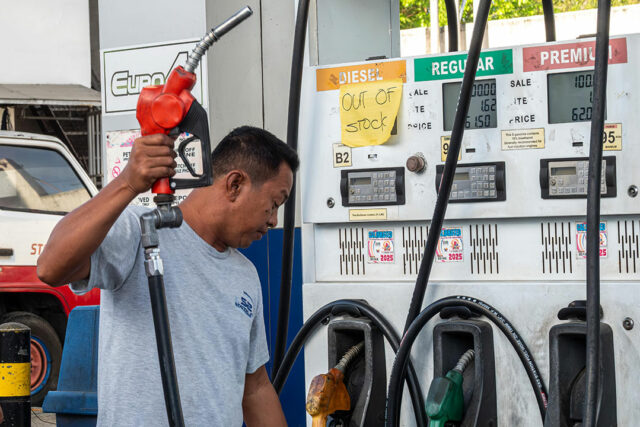
Motorists should brace for a sharp spike in pump prices starting on Tuesday, March 10, ranging from P7 to P38.50 per liter, data from the Department of Energy (DoE) showed. Gasoline prices are set to increase by P7 to P13 per liter, diesel prices will rise by P17.50 to P24.25 per liter, while kerosene is expected to go up by P32 to P38.50 per liter.

The hikes will result in pump prices ranging from P53.10-P73.40 per liter for gasoline, P63-P87.44 per liter for diesel, and P92.17-P125.17 per liter for kerosene.

At a press briefing on Monday, Energy Secretary Sharon S. Garin said several oil companies agreed to stagger the implementation of increases instead of imposing one-time hikes. This is as Energy Undersecretary Alessandro O. Sales said that this week’s price increases would be “the largest single-week adjustment” in fuel costs.

Some of the major oil companies that will implement a gradual rollout of price hikes over periods of two to seven days are Shell Pilipinas Corp.; Petron Corp.; Total (Philippines) Corp.; Chevron Philippines, Inc.; Jetti Petroleum, Inc.; and Seaoil Philippines, Inc.

Seaoil and Total will split the increases in gasoline and diesel prices over March 10-11, while Shell and Petron will implement a three-day rollout of increases.

For its part, Jetti implemented a staggered increase in gasoline and diesel prices as early as March 8, which will continue until March 13, as acknowledged by the DoE.

Meanwhile, Chevron will have the slowest movement in price adjustments as it plans to spread the increases from March 10-16.

Fuel retailers have implemented several rounds of price increases this year as global oil prices continue to climb. This week’s price adjustments mark the 11th consecutive weekly increase for diesel and kerosene prices and the ninth straight week for gasoline.

“We do not dictate the companies what price they will charge the public. What DoE can do is monitor and have them explain why their prices are like that, but we cannot impose in that sense,” Ms. Garin said.

Under the revised guidelines for the monitoring of prices in the sale of petroleum products issued by the DoE in 2019, price adjustments for liquid fuel should be implemented beginning every Tuesday of the week.

The DoE has flagged several fuel stations for allegedly implementing unscheduled or unauthorized price adjustments. Of over 80 reports reviewed, Ms. Garin said the department will issue 55 show-cause orders to the fuel stations.

“(We are) giving them 24 hours to answer DoE if there is a valid reason not to cancel their permits,” she said.

Fuel shipments are currently disrupted following the closure of the Strait of Hormuz, where about 20% of the world’s oil and liquefied natural gas pass through, amid the conflict involving Iran, the United States, and Israel.

As a net importer of crude oil, the Philippines is vulnerable to global crude price swings, which geopolitical tensions often trigger. Around 98% of Philippine crude imports come from the Middle East. The remaining 2% is sourced from Brunei and Malaysia.

Ms. Garin assured the public that the country has enough supply until the end of April and enough time to order for more.

Currently, oil companies are required to maintain at least a 30-day inventory of crude oil and a 15-day inventory of finished petroleum products.

The Energy chief said that some fuel retailers have secured enough stockpile that could cover 50 days of consumption.

Mr. Sales added that the DoE is currently monitoring the threshold level of Dubai crude prices, as hitting $80 per barrel over a period of one month would trigger the release of fuel subsidies allocated for various beneficiaries.

“As per our calculation, the average 30-day is close to $75 per barrel already. So, we’re keeping a watch on this,” he said.

FUEL PRICE CAP?
Meanwhile, asked if the Philippines can cap prices as a relief measure, Ms. Garin said Republic Act No. 8479, or the Oil Deregulation Law, which liberalized the country’s downstream oil industry, prevents them from doing this.

“We are constrained by the law and the deregulation that we do not have the power to control the prices, unless maybe they give us authority or an amendment of the law or emergency powers,” she said.

Enacted in 1998, the law allows oil companies to set and adjust pump prices based on global oil prices and other market factors, instead of awaiting government approval. It aims to promote competition among oil companies and ensure adequate and continuous supply of petroleum products.

Ms. Garin said the department is open to discuss with the Congress any potential amendments to the law.

“If there’s a change, then I think it would be a welcome change also for us to be able to scrutinize more how the prices are computed and if we should limit or make a uniform pricing. That’s something that they can discuss and consider,” she said.

This, as governments in Asia are scrambling to limit the impact on economies and consumers from the widening Iran war, which fueled a record surge in oil prices on Monday after key producers cut output and Tehran signaled that hardliners will remain in charge, Reuters reported.

In South Korea, which buys 70% of its oil from the Middle East, President Lee Jae Myung said Seoul would cap fuel prices for the first time in nearly 30 years and warned against panic buying.

A senior Japanese parliament member said on Sunday that the government had instructed a national oil reserve storage site to prepare for a possible crude release, although the country’s chief Cabinet secretary said on Monday that no decision had been made to release stockpiles.

Elsewhere, Vietnam removed import tariffs on fuels and Bangladesh shut universities to conserve electricity and fuel, while China last week asked refiners to halt fuel exports and try to cancel shipments already committed.

Oil jumped 25%, with Brent on track for a record one-day gain, after Iran on Monday named Mojtaba Khamenei to succeed his father Ayatollah Ali Khamenei as supreme leader, while Organization of the Petroleum Exporting Countries producers Kuwait and Iraq cut oil output during the weekend as the crucial Strait of Hormuz remained effectively shut. — with Reuters

House panel eyes approval of bill letting Marcos suspend fuel excise taxes this week

PHILIPPINE STAR/BOY SANTOS

By Kenneth Christiane L. Basilio, Reporter

A HOUSE of Representatives committee will take up on Wednesday a proposal to suspend excise tax collections on petrol, a congressman said on Monday, seeking its swift approval to pave the way for plenary passage before Congress goes on a month-long break next week.

The House Ways and Means Committee will discuss measures to suspend excise tax collections on fuel products and is expected to pass them the same day, said Marikina Rep. Romero “Miro” S. Quimbo, who heads the panel, as lawmakers aim to quickly authorize President Ferdinand R. Marcos, Jr. to cut petrol duties and ease rising fuel costs that threaten to drive up living expenses.

“There will be a break next week and we won’t be able to pass it if we don’t finish it by Wednesday,” he told reporters in Filipino. “Unless an emergency session is called, the President will have no tools, equipment or weapons to address rising gas prices.”

“What we’re facing is economic contraction.”

Proposals to suspend or scrap petrol duties have gained traction in Congress as expected fuel hikes loom, with the Iran war entering its second week after initial US and Israeli strikes on Iranian targets throttled energy exports from the Middle East, home to five of the world’s top 10 oil producers.

The expanding war has severely disrupted global oil trade as energy shipments through the Strait of Hormuz remain subdued after Iran closed access to the critical chokepoint where roughly a fifth of the world’s oil and gas shipments pass, stoking concerns over the conflict and raising fears of higher living costs.

The Philippines is a net importer of oil and is highly sensitive to sharp fluctuations in global oil prices. About 98% of the country’s crude oil imports come from the Middle East, according to Department of Energy data.

Energy Secretary Sharon S. Garin said Philippine petrol companies have agreed to spread out fuel hikes this week, she told lawmakers at a congressional hearing.

Temporarily halting the collections of excise tax on fuel products would benefit the public, she said. “Any excise tax reduction is helpful.”

A 2017 law previously allowed the government to suspend the collection of excise tax on petroleum products when world oil prices reach $80 per barrel for three months, but the provision lapsed six years ago.

REVENUE LOSSES
Finance Undersecretary Karlo Fermin S. Adriano said suspending excise tax collections may lead to P136 billion in foregone revenue if implemented from May to December. The move could widen the government’s budget deficit and raise the country’s debt, according to a Department of Finance (DoF) presentation.

“This can be higher if we start in March or April,” Mr. Adriano told lawmakers.

Mr. Quimbo said revenue losses are inevitable under the proposal but argued the move must be taken despite the hit, warning that keeping the levy in place would continue to stoke price increases that threaten economic activity.

“It could be offset by value-added tax collections,” he said. The Finance department forecasts the government could collect an additional P16 billion if Dubai crude oil hits $80 per barrel, P25.4 billion at $85, P26.6 billion at $90 and P37 billion if prices reach $100 per barrel.

DoF data presented during the congressional briefing showed that the government collected an average of P116 billion in value-added tax from fuel products from 2021 to 2025.

“If you don’t do anything, it’s going to be worse,” Mr. Quimbo said. “If you don’t remove the tax, prices will climb even higher, and no one will buy commodities anymore, and taxes won’t be collected if that happens.”

The purchasing power of the Philippine peso could be shaved by P1 for every P100 if oil prices stay at $100 a barrel in March, Department of Economy, Planning, and Development (DEPDev) Undersecretary Rosemarie G. Edillon said, adding that scrapping the excise tax could soften the impact but would not be enough to offset the blow to consumer spending power.

“We recommended a full package of interventions to the President,” she told lawmakers, advising the need to conserve fuel and provide targeted subsidies for the agriculture sector.

The Iran war could also push inflation higher if hostilities persist, she added, noting that March inflation could range from 4.5% to 5.1% under the agency’s baseline projection and rise as high as 6.3% to 7.5% in its “extreme case” scenario.

April inflation could reach 4.5% to 4.8% under the agency’s baseline scenario and climb to 6.4% to 7.5% in its worst‑case projection, Ms. Edillon said. The full-year consumer price index could breach the 2%-4% target of the central bank, settling at 4% to 4.2% for its baseline projection, she said.

She added that DEPDev projected 2026 inflation could reach 4.5% to 4.8% under its worst‑case scenario.

Prices of electricity could increase by 16% if the Iran war persists, Ms. Edillon said. “That’s significant if this keeps on going and if we don’t intervene.”

She added diesel prices could climb to as high as P96.76 per liter this month under the agency’s worst-case scenario and P91.19 per liter in April. For its baseline scenario, diesel could hit P74.22 per liter in March and P67.33 in April.

Meanwhile, gasoline prices could reach P70.20 per liter this month and P64.59 in April under its baseline scenario, she added.

Ms. Garin said the Philippines is exploring direct talks with foreign governments and local oil companies are seeking alternative suppliers as the conflict in Iran enters its second week, noting that current stockpiles are sufficient to last until April.

The country’s petrol stockpile and inbound shipments could withstand weeks of disruption if unrest in the Middle East drags on, and the government is continually preparing to prevent shortages that could weigh on economic activity.

“We are hoping it’s just one more week,” Ms. Garin said, warning that a continuous fuel increase may affect economic output. “A price change of two weeks will have a longer effect on our economy because prices will readjust and fares will go up.”

US President Donald J. Trump has signaled that military action against Iran would continue “as long as necessary” to curb Tehran’s nuclear ambitions and pursue regime change. White House Press Secretary Karoline Leavitt on Saturday said achieving Washington’s objectives could take “four to six weeks.”

Ms. Edillon told BusinessWorld that DEPDev is updating its assessment of the Iran war’s impact on gross domestic product.

Meanwhile, Mr. Quimbo said he will also push for the regulation of the oil industry, which has been deregulated since 1988.

“What’s worrying is the lack of power of the government to try and control gasoline prices,” he said in Filipino. “I’m going to take it up with the House leadership so we can have a bipartisan initiative to bring it back.”

He said government agencies such as the Energy department have “no real power” to penalize oil companies profiting from higher oil prices.

Rate hikes unlikely for now despite oil shock, MUFG says

BW FILE PHOTO

By Katherine K. Chan, Reporter

THE BANGKO SENTRAL ng Pilipinas (BSP) is unlikely to hike rates in the near term even as oil price shocks due to the ongoing war in the Middle East are expected to weigh on inflation and the peso, MUFG Global Markets Research said.

“Will BSP hike rates if the crisis worsens and oil prices spike further? We think the answer is likely “no” right now, but the key distinction is whether this is a temporary supply-side shock perhaps analogous to COVID lockdowns, or proves something more permanent with the potential to raise inflation expectations over time,” MUFG Senior Currency Analyst Michael Wan said in a report on Monday.

Deutsche Bank Research said the economic impact of costlier oil may prompt Asian central banks to be more hawkish.

“Although most Asian economies have reduced their reliance on Iranian oil to negligible levels, they remain vulnerable to both inflation and growth shocks from higher oil prices,” it said in a report on Monday. “For now, Asian central banks are likely to view this as an inflationary shock, warranting a more hawkish bias.”

On Friday, BSP Governor Eli M. Remolona, Jr. said Philippine inflation could breach 4% if oil hits $100 a barrel, adding that if fuel prices rise sharply and persistently, they could be forced to tighten their policy stance anew.

The Monetary Board last hiked borrowing costs in October 2023. It began its current easing cycle in August 2024 and has lowered rates by a total of 225 basis points (bps), bringing the key policy rate to its lowest in over three years at 4.25%.

Brent crude oil price hit over $100 per barrel (/bbl) on Monday, the first time in over three years, as the ongoing war in the Middle East continued to disrupt oil trade from the region.

This puts Philippine inflation at risk of breaching the 4% mark this year until 2027 if this price level is sustained, said MUFG’s Mr. Wan.

“Our current base case forecast is for the BSP to cut rates twice more to 3.75%, likely in June and October, but this is predicated on the crisis resolving by March 2026 and for oil prices to move to $70/bbl by 2Q2026. A scenario of sustained oil prices at $90/bbl will likely see inflation breach the upper end of the BSP’s inflation target of 4% in 2026 before coming down to 3.2% in 2027.”

He said if the conflict is prolonged and results in “something more permanent in terms of destruction to global economic and energy supply capacity,” the central bank may need to raise rates again.

“We could well see more permanence in inflation rates (and not just price levels) and hence inflation expectations, and warrant a policy rate response, despite being accompanied by far weaker growth prospects.”

Meanwhile, Jose Mari Lacson, head of macroeconomics and impact investing at ATRAM Trust Corp., told BusinessWorld in a phone interview last week that they will revisit their BSP rate projections amid emerging risks to inflation due to oil shocks from the ongoing Middle East conflict.

ATRAM sees Philippine inflation averaging 3.2% by yearend, but he said it could end closer to 4% if the war lasts around three to six months.

Mr. Lacson said the BSP’s policy path would likely depend on the duration of the ongoing war in the Middle East and when government spending will recover, adding that a rebound in the first quarter would give the central bank “more reason” to stand pat.

He added that the peso could test new lows, potentially hitting P60 versus the dollar, if the Iran conflict is prolonged.

“So, right now, again depending on how long this goes, because our vulnerability is in our imports. Oil accounts for a substantial part of our imports bill,” Mr. Lacson said. “So, if oil surges back to, say, peak levels, this can push our peso closer to P60.”

Despite having record-high dollar reserves in February, Mr. Remolona said on Friday that the central bank does not have much appetite to intervene in the foreign exchange market as they only step in if inflationary risks emerge from the peso’s depreciation.

MUFG’s Mr. Wan likewise said the peso may weaken to over P60 per dollar if oil prices continue to soar, especially if the dollar stays strong and the US Federal Reserve becomes hawkish.

“From a FX (foreign exchange) and rates perspective, we think USD/PHP could trade between P59-P60 levels with $90 oil prices, P60-P61 levels with $100 oil prices, and above that if coupled with a stronger dollar and/or a hawkish Fed,” he said.

He added that higher oil prices could also cut gross domestic product (GDP) growth as besides inflation and the currency, the ongoing Middle East conflict could also impact energy-intensive sectors like manufacturing, transportation, travel, and food production, as well as remittances from migrant Filipinos, which help drive domestic consumption.

“Our current GDP forecasts for the Philippines of 4% in 2026 and 6% in 2027 are already below consensus, but if oil prices were to spike to $100/bbl on a sustained perspective, GDP may easily fall closer to 3.7% in 2026 and 5.7% in 2027, after incorporating the lagged impact of higher oil prices to the economy. If oil prices were to spike to $130/bbl, GDP will likely be cut by more than 1%, with GDP growth coming in at 3.4% and 5.4% in 2026 and 2027, respectively,” Mr. Wan said.

“Once again, these are probably under-estimates, and the negative impact could well be bigger after incorporating indirect spillovers which are much harder to accurately estimate now. How the Philippine government responds through fiscal policy support moving forward will also be key.”

The Asian Development Bank (ADB) also said it expects the war in Iran to drive up inflation in the Philippines.

“Smaller energy-importing economies, including the Philippines, Pakistan, and Sri Lanka, are likely to experience comparatively stronger macroeconomic effects,” ADB Chief Economist Albert F. Park said via X over the weekend.

“In these economies, higher oil prices tend to transmit rapidly into inflation and exchange rate pressures through widening current account deficits and increased foreign currency demand,” he added.

The ADB sees five ways the war could impact Asian countries: rising energy prices, currency depreciation, shipping and global trade disruptions, slower export growth, and aviation and logistics disruptions.

It said these economies should focus on stabilizing prices rather than aggressively tightening monetary policy, as it can add to financial volatility.

“Shielding consumers from higher domestic energy costs through price controls or subsidies could risk distorting market incentives and undermining the efficient allocation of resources,” said Mr. Park.

“Central banks should prioritize exchange rate smoothing and liquidity provision before tightening monetary policy aggressively, especially where inflation pressures originate externally,” he added.

The ADB also said that Asian countries should implement targeted fiscal measures toward vulnerable households rather than blanket measures, as they can “weaken fiscal positions without addressing underlying price pressures.”

ECONOMIC RECOVERY
China Banking Corp. Chief Economist Domini S. Velasquez said the government’s spending catch-up plan could spur economic recovery this year, but the ongoing crisis in Iran presents fresh risks.

“That 4.4% [growth] last year, it’s really a fiscal constraint. So, the government is saying they will spend more this year. They will spend the whole budget. So, we see an upside for this year,” she said on Money Talks with Cathy Yang on One News on Monday.

Asked about the impact of oil shocks on the country’s growth prospects, Ms. Velasquez said: “It is a downside but as mentioned, if we address it through the proper subsidies, targeted subsidies, time-bound, it might not be a fiscal drag, and we can spend more on other priorities.”

She said the government should provide fuel subsidies, particularly for oil-dependent sectors like transport, agriculture and fisheries, or allow fare increases for public transport, instead of cutting the excise tax on oil.

“Addressing the concerns of the transport sector immediately would be most effective, I would say, as opposed to maybe a rollback of excise taxes, which usually benefits the higher income segment.”

ATRAM’s Mr. Lacson added that an anticipated rebound in infrastructure spending as early as next quarter could drive the Philippine economy’s rebound in the coming months, following a slump late last year due to a graft scandal involving government projects.

“So, our assumption here is that by the second quarter, we’ll already see public construction or infrastructure spending (starting) to recover,” he said. “Meaning, not fully back to normal, but heading that way (or to) the path to recovery.”

In November 2025, infrastructure spending slumped by 45.2% year on year to P48 billion, latest Department of Budget and Management data showed, marking the fifth straight month of annual declines amid corruption allegations tied to government flood control projects. This dragged public investment, which was among the primary reasons for the GDP growth slowdown last year.

Mr. Lacson said infrastructure spending may remain sluggish this quarter but may begin to show some signs of growth in the second quarter.

“And the reason for this is because… I think the government is cognizant that they need to maintain a certain level of infrastructure spending to support growth,” he said. “Because if not, the long-term implications can be worrisome.” — with Justine Irish D. Tabile

Shipping lines hike rates by up to 25% as fuel prices soar

STARLITEFERRIES.COM

By Ashley Erika O. Jose, Reporter

THREE regional shipping lines are raising passenger and cargo rates by up to 25% following a surge in fuel costs triggered by the closure of the Strait of Hormuz, which pushed global oil prices above $100 per barrel.

While the Philippine Ports Authority (PPA) reported that maritime gateways remain physically operational, the sector is reeling from escalating bunker costs that have forced these companies to revise their fare matrices to offset rising diesel and kerosene prices.

Starlite Ferries, Inc., a unit of Chelsea Logistics and Infrastructure Corp., announced in a Monday advisory that both passenger and cargo rates would increase by up to 25% starting March 10.

“The price of fuel has been steadily increasing since January of this year. On top of that, there is an abrupt high spike of fuel price that was implemented during the first week of this month and an impending big-time price hike in the coming weeks due to the ongoing conflict in the Middle East,” Starlite Ferries said.

Starlite operates vital maritime corridors including Batangas, Calapan, Cebu, and Surigao.

Other regional operators followed suit. Montenegro Shipping Lines, Inc. will implement a 10% to 20% increase in passenger and vehicle rates across its routes starting March 23. FastCat, Inc. operated by Archipelago Philippine Ferries Corp., revised its fare matrix upward for both passengers and vehicles beginning March 6.

FastCat serves Batangas, Mindoro, Cebu, and Surigao, while Montenegro also covers Batangas to Mindoro routes and several key Visayas and Mindanao corridors.

The fare adjustments follow a dire forecast from the Department of Energy (DoE), which projected domestic diesel prices would rise by P17.50 to P23 per liter and kerosene by P32 to P36 per liter.

These domestic increases are a direct result of global oil prices breaching the $100-per-barrel mark after the closure of the Strait of Hormuz, a primary global shipping corridor.

While the PPA maintained that the nation’s major terminals continue to operate without reported disruptions, the regulator warned that ongoing tensions in the Middle East present significant economic risks.

The PPA also said that rising bunker costs and freight rates could eventually weigh on cargo volumes across the archipelago if the situation persists.

ADVERTISEMENT
ADVERTISEMENT