Home Blog Page 186

GOAT debate

For decades, the debate has raged with ritualistic predictability. Steady a conversation on who basketball’s greatest player is and it almost immediately narrows to two names: Michael Jordan and LeBron James. Fans marshal statistics, championships, longevity, and aesthetics. Analysts dissect eras, pace, rules, and competition. The arguments repeat themselves so often that they have become part of the sport’s cultural background noise. Needless to say, however, the most significant voices in the discussion belongs to the players themselves.

Jordan recently revisited the subject in an interview segment for NBC, explaining that the label simply “doesn’t exist” for him. And, no, he’s not being modest in the conventional sense; he’s simply considering the subject from a historical perspective. He noted that he never competed against such notables as Oscar Robertson or Jerry West, whose accomplishments helped define earlier generations of the pro scene. Basketball, he argued, evolves in layers: one generation learning from the last, and then passing the craft to the next. His era, he said, influenced the likes of Kobe Bryant and James, just as he himself learned from those who preceded him. Thus, he pointed out, ranking players across decades risks turning appreciation into erasure.

Jordan’s view runs counter to the modern sports ecosystem, which thrives on comparison. The “Greatest of all Time” (GOAT) debate is irresistible because it offers the illusion of a definitive answer. His resume alone invites the argument: six championships with the Bulls, six Finals Most Valuable Player (MVP) awards, five regular-season MVPs, and an aura of competitive dominance that defined the 1990s. Yet he himself believes the conversation misses the point. Comparing eras, he contended, inevitably elevates one generation while diminishing another, creating unnecessary friction among players who actually share a common lineage in the sport’s development.

The irony is unmistakable. Jordan’s competitive ferocity is legendary, even mythical. Teammates and opponents alike have long described a protagonist who took every slight personally and treated every contest as a referendum on his greatness. And yet on the question of historical ranking, he has chosen to wax philosophical. He has even suggested that the debate can foster resentment among former players who feel their contributions have been forgotten. Giants such as Kareem Abdul-Jabbar, Wilt Chamberlain, and Bill Russell built the foundation on which the National Basketball Association rests. From his vantage point, collapsing the sport’s entire history into a two-man argument risks losing sight of the larger continuum.

Of course, the debate persists precisely because fans insist on engaging in it. It keeps the past alive while animating the present. Every generation measures its heroes against those who came before, and the sport gains gravitas in the process. And Jordan remains central to the scrutiny, whether he embraces the title or not. His influence, from style of play to global marketing, reshaped professional basketball in ways that still reverberate today. Even those who argue passionately for James or other candidates rarely do so without acknowledging the shadow he has cast over the game.

All things considered, Jordan’s refusal to claim the throne proves revealing. The GOAT debate seeks certainty in a sport defined by evolution. Perhaps more than anyone who has been part of hoops annals, he understands that greatness is not a fixed summit; rather, it is a long climb built on the footsteps of those who came before. And so the back and forth will continue, in barber shops, studios, and arenas, while the figure most often placed at the center of it deliberately steps aside, content to let the game speak for itself.


Anthony L. Cuaycong has been writing Courtside since BusinessWorld introduced a Sports section in 1994. He is a consultant on strategic planning, operations and human resources management, corporate communications, and business development.

Iran says oil blockade will continue until attacks end; Trump threatens to escalate strikes

AN EXPLOSION caused by a projectile impact after Iran launched missiles into Israel following Israel and the US launched strikes on Iran, in Tel Aviv, Israel, Feb. 28, 2026. — REUTERS/GIDEON MARKOWICZ

DUBAI/CAIRO/WASHINGTON — Iran’s Revolutionary Guards said on Tuesday they would not allow “one liter of oil” to be shipped from the Middle East if US and Israeli attacks continue, prompting a warning from President Donald J. Trump that the US would hit Iran much harder if it blocked exports from the vital energy-producing region.

The heightened rhetoric did little to quell a sharp retreat in crude prices and a rally in global shares, which came after Mr. Trump expressed confidence in a swift end to hostilities even after Iran appointed Mojtaba Khamenei as its new supreme leader in a signal of defiance.

Mr. Trump said on Monday the United States had inflicted serious damage on Iran’s military and predicted the conflict would end well before the initial four-week time frame he had laid out, though he has not defined what victory would look like.

Israel says its war aim is to overthrow Iran’s system of clerical rule. US officials mainly say Washington’s aim is to destroy Iran’s missile capabilities and nuclear program, but Mr. Trump has said the war can end only with a compliant Iranian government.

At least 1,332 Iranian civilians have been killed and thousands wounded since the US and Israel launched a barrage of air and missile strikes across Iran at the end of February, according to Iran’s United Nations ambassador.

Mr. Trump warned that US attacks could rise sharply if Iran sought to block tanker traffic through the Strait of Hormuz, which handles one-fifth of the world’s oil supply.

“We will hit them so hard that it will not be possible for them or anybody else helping them to ever recover that section of the world,” Mr. Trump said at a news conference on Monday.

IRAN SAYS IT WILL DETERMINE END OF WAR
Iran’s Islamic Revolutionary Guard Corps said it would not allow any oil to leave the region if attacks from the United States and Israel continue.

“We are the ones who will determine the end of the war,” a spokesperson said, describing Mr. Trump’s comments as “nonsense,” according to state media.

In a later Truth Social post, Mr. Trump repeated his warning.

“If Iran does anything that stops the flow of Oil within the Strait of Hormuz, they will be hit by the United States of America TWENTY TIMES HARDER than they have been hit thus far,” he said.

Iran’s Foreign Minister Abbas Araghchi said Iran was unlikely to resume negotiations with the US, citing what he described as a “bitter experience” with past talks.

“After three rounds of negotiation, the American team in the negotiation said itself that we made a big progress. Still, they decided to attack us. So, I don’t think talking to the Americans anymore would be on our agenda any more,” he said in an interview with PBS.

The war has already effectively shut the Strait of Hormuz, leaving tankers unable to sail for more than a week and forcing producers to halt pumping as storage facilities fill.

Mr. Khamenei’s appointment on Monday appeared to dash hopes of a swift end to the war, sending oil markets surging and share markets nose-diving, before swinging in the other direction when Mr. Trump predicted a quick end to the war and reports of a possible ease in sanctions on Russian energy.

After speaking with Russian President Vladimir Putin, Mr. Trump said the United States will waive oil-related sanctions on “some countries” to ease the shortage.

According to multiple sources, that could mean a further easing of sanctions on Russian oil, which could complicate efforts to punish Moscow for its war in Ukraine. Other options include a possible release of oil from strategic reserves or restricting US exports, sources said.

Brent crude futures LCOc1 fell more than 10% on Tuesday after soaring by as much as 29% on Monday to their highest since 2022. Global stock markets also bounced.

The price of gasoline has particular political resonance in the United States, where voters cite rising costs as a top concern ahead of the November midterm elections, when Mr. Trump’s Republicans will try to keep control of Congress.

A Reuters/Ipsos poll released on Monday found 67% of Americans expect gas prices to rise over the coming months, and only 29% approve of the war.

“They’re horrible,” one Los Angeles driver said of current gas prices. “They’re too expensive, they’re high, they’re just so high, you know. Sometimes you have to choose between gas and other things that you really need.”

OIL REFINERY HIT
Tehran was choked in black smoke after an oil refinery was hit, an escalation in strikes on Iran’s domestic energy supplies. World Health Organization chief Tedros Ghebreyesus warned the fire risks contaminating food, water and air.

Turkey said the North Atlantic Treaty Organization air defenses had shot down a ballistic missile that was fired from Iran and entered Turkish airspace, the second such incident of the war. Iran did not immediately comment on the report.

Israel’s military said it had launched new attacks in central Iran and struck the Lebanese capital Beirut, where Israel has extended its campaign after the Iran-backed militia Hezbollah fired across the border.

In Australia, five Iranian women’s soccer team players were granted humanitarian visas after they sought asylum fearing persecution in their home nation. Canberra has also promised to send military surveillance aircraft to the Middle East and missiles to the United Arab Emirates to help them defend themselves against attacks from Iran. Reuters

North Korea’s Kim Yo Jong says US-South Korea drills to harm regional stability

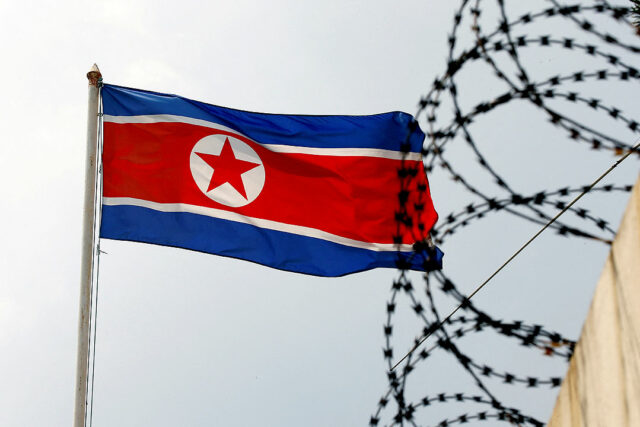
A North Korea flag flutters next to concertina wire at the North Korean embassy in Kuala Lumpur, Malaysia March 9, 2017. — REUTERS/EDGAR SU/FILE PHOTO

SEOUL — North Korea’s Kim Yo Jong, the sister of leader Kim Jong Un, said US-South Korea military drills that began this week were a “provocative and aggressive war rehearsal” that would harm regional stability, state media KCNA reported on Tuesday.

The annual Freedom Shield military exercises revealed the allies’ “habitual hostile policy” toward North Korea and “will further destroy regional stability,” Ms. Kim said in a statement.

Ms. Kim described the drills in South Korea as involving more than 18,000 South Korean and US forces and being staged “day and night across the territorial ground, sea, air, outer space and cyberspace” of North Korea.

She said the display of military force could “lead to terrible consequences that are unimaginable.”

Recent global geopolitical crises and various international events demonstrate that in all military maneuvers carried out by hostile forces, there is no distinction between defense and offense, nor between drills and actual combat, Ms. Kim said.

South Korea and the United States have said the drills, which run from March 9 to 19, were “defensive in nature” and would incorporate deterrence scenarios related to North Korea’s nuclear weapons.

The exercise will also serve as an opportunity to support ongoing preparations for the transfer of US wartime operational control to South Korea, officials from both countries have said.

South Korea aims to complete the handover of military command from the US before President Lee Jae Myung’s term ends in 2030.

Analysts say the drills come at a sensitive time for North Korea, as it witnesses the US and Israel carry out leadership‑targeting operations against Iran that may reinforce Pyongyang’s reliance on its nuclear capacity.

Ms. Kim’s remarks that offensive power is the most reliable deterrent “reflects a determination not to suffer the same fate as Iran, serving as both a justification for self-defense and a renewed message at home and abroad that giving up nuclear weapons would mean doom,” said Lim Eul-chul, a North Korea expert at South Korea’s Kyungnam University.

The US-South Korea drills follow North Korea’s ruling Party Congress in February, where leader Mr. Kim said he would focus on expanding his country’s nuclear arsenal. Reuters

Taiwan says US drone orders not impacted by Middle East war

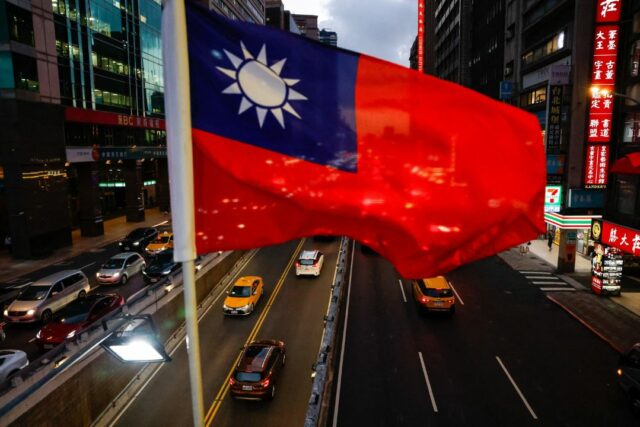
A Taiwan flag can be seen on an overpass ahead of National Day celebrations in Taipei, Taiwan, Oct. 8, 2025. — REUTERS/ANN WANG

TAIPEI — An order for four advanced US-made MQ-9B “SkyGuardian” drones is on track and hasn’t been affected by the war in the Middle East, Taiwan’s air force said on Tuesday.

The air force said in a statement that the order for the drones, made by General Atomics and designed for surveillance and target acquisition, is proceeding according to schedule. It has previously said it expects delivery of the first two later this year.

The US and Israeli attack on Iran, on top of the Russian invasion of Ukraine and Israel’s military operations in Gaza, has seen the US draw down billions of dollars’ worth of weapons stockpiles.

The United States is Taiwan’s main source of weapons, and Taipei has repeatedly complained of delivery delays due to snarled supply chains dating back to the COVID pandemic, including of F-16V fighter jets.

“Deliveries have not been affected by the fighting in the Middle East,” the air force statement said.

“The military remains in close contact with the US side to ensure progress stays on track and to effectively strengthen overall national defense capabilities.”

The MQ-9 series of drones has been widely used in combat situations, including by Israel over Gaza.

Speaking to reporters earlier on Tuesday at parliament, Taiwan Defense Minister Wellington Koo said the government had not been approached by the US about transfers of weapons to the Middle East.

If any of Taiwan’s US-made weapons were to be redeployed, that would only happen if the US side made a request, he added.

“But so far, because of the US-Iran war, they have not approached us about making use of any of our related equipment,” Mr. Koo said.

Democratically governed Taiwan is facing increased military pressure from China, which views the island as its own territory. Taiwan’s government rejects Beijing’s sovereignty claims.

South Korea cannot stop US forces in Korea from redeploying some weapons, President Lee Jae Myung said on Tuesday, after reports that some US Patriot missile defense systems were being sent to the conflict in the Middle East. Reuters

Ultrahuman Ring Air: one smart ring to track them all

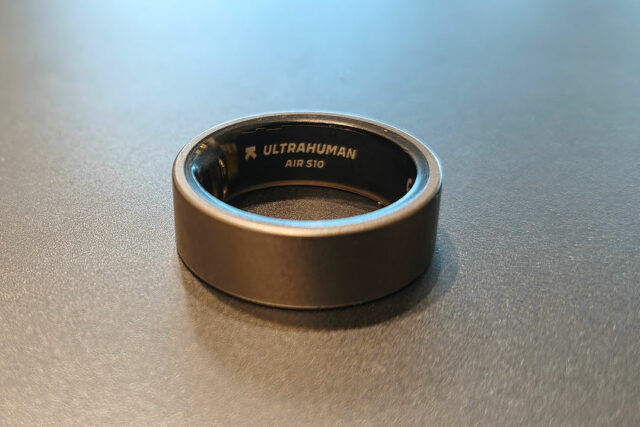
The Ultrahuman Ring Air is available in ten sizes with six different metallic finishes. — ED G. GERONIA

The wearables market has grown by leaps and bounds in the post-pandemic period. As a distinct category of devices, they’re one of the smallest and most compact. It’s a big challenge for any company going into wearables since they need to significantly invest in their engineering and software development.

The Ultrahuman Ring Air is the smart device for those who may be hesitant or a bit on the fence with it comes to fully committing to smart devices. Not to stir any debates with the smartwatch wearing camp, but the Ring Air is as unobtrusive as any wearable can get. Another value proposition is the freedom to wear a traditional watch or go watch free but stil have a wearable.

It’s available in ten sizes for that will fit a wide variety of fingers. In order to get the right size, users can determine their ring size with an available sizing kit from Ultrahuman prior to ordering.

As a wearable, getting the right size is crucial for this smart right that is made from jet-fighter grade titanium. The inner band is made from medical grade epoxy resin which houses the complex electronics containing the sensors, processor, and battery. The ring is coated with a tungsten carbide layer for added durability and scratch resistance.

Bundled with the ring is a compact magnetic charging dock that connects via USB-C to a power source. It takes around an hour and a half to two hours to fully charge the ring. In terms of battery life, the ring lasts anywhere from 4 to 6 days depending on power usage mode. A critical mode can even extend battery life further.

Using the Ultrahuman Ring Air is as easy as installing the app which is an essential component and wearing the ring. It is recommended that the ring is worn even during sleep for complete tracking. 

Inside the ring is a slight hump which contains the PPG sensor which monitors the heart rate and blood oxygen levels. Other sensors include a 6-axis sensor for motion tracking and a skin temperature sensor. 

For meaningful data analysis, the ring needs to be worn at least for two weeks. It is recommended that it is also worn daily for continuous health data analysis.

The sensors can work together to give the users their core metrics which are broken down into sleep, movement, and dynamic recovery which is an indicator of overall well-being. The Ring Air can take a snapshot of various health markers such as active hours, resting heart rate, temperature deviation, and restorative sleep among others.

The ring can suggest when is the optimal time to sleep or even the ideal time to have coffee without affecting your sleep. A weekly digest helps collect all the data and compares it with the previous week so users can monitor their progress in the areas of sleep efficiency, heart rate variability, movement, active hours etc. 

The data that the app can display can be overwhelming and may seem to blend into each other but tapping on the upper right corner of the data point displays a tooltip.

While the main Ultrahuman app with all of its robust monitoring functionality is fully subscription-free, other optional data points called PowerPlugs which give the Ring Air extra functionality can be installed. A lot of these PowerPlugs are mostly free and may be useful for other users and have specific functions like tracking menstrual cycle and ovulation for women. 

With retail price of P22,500, the Ultrahuman Ring Air belongs in the same price bracket as an upper midrange to premium smartwatch. As a premium wearable, the Ring Air is an all-in-one solution for those who want an advanced yet discreet health and sleep tracker. — Ed G. Geronia Jr.

Oil sinks 7% as Trump predicts Middle East de-escalation

MODELS of oil barrels and a pump jack are displayed in this illustration photo taken on Feb. 24, 2022. — REUTERS

LONDON — Oil prices plummeted 7% on Tuesday after soaring to a more than three-year high in the previous session as US President Donald Trump predicted the war in the Middle East could end soon, easing concerns about prolonged disruptions to oil supplies.

Brent futures fell $6.79, or 6.9%, to $92.17 a barrel at 0840 GMT, while US West Texas Intermediate (WTI) crude was down $6.55, or 6.9%, to $88.22 a barrel. Both contracts fell as much as 11% earlier before paring some losses.

Oil surged past $100 a barrel on Monday to the highest since mid-2022, as supply cuts by Saudi Arabia and other producers during the expanding US-Israeli war on Iran stoked fears of major disruptions to global supplies.

Prices later retreated after Russian President Vladimir Putin held a call with Mr. Trump and shared proposals aimed at a quick settlement to the war, according to a Kremlin aide, easing concerns about supply.

Mr. Trump said on Monday in a CBS News interview that he thought the war against Iran was “very complete” and Washington was “very far ahead” of his initial four- to five-week estimated time frame.

“Clearly Trump’s comments about a short-lived war have calmed markets. While there was an overreaction to the upside yesterday, we think there is an overreaction to the downside today,” said Suvro Sarkar, energy sector team lead at DBS Bank, adding that the market was underappreciating risks at these levels for Brent.

“Murban and Dubai grades are still well above $100 per barrel, so practically nothing much has changed in terms of ground realities,” he added, referring to benchmark Middle Eastern oil grades.

In response to Mr.Trump, Iran’s Islamic Revolutionary Guards Corps said they would “determine the end of the war,” and Tehran would not allow “one liter of oil” to be exported from the region if US and Israeli attacks continued, state media reported on Tuesday, citing the IRGC’s spokesperson.

Meanwhile, Trump is considering easing oil sanctions on Russia and releasing emergency crude stockpiles as part of a package of options aimed at curbing spiking global oil prices, according to multiple sources.

“Discussions around easing sanctions on Russian oil, comments from Donald Trump hinting that the conflict could eventually de-escalate, and the possibility of G7 countries tapping strategic oil reserves all pointed to the same message – that oil barrels will somehow continue to reach the market,” Priyanka Sachdeva, a Phillip Nova analyst, said in a note on Tuesday.

“Once traders sensed that supply routes could still be maintained, the initial ‘panic premium’ that had pushed prices above the $100 mark yesterday started to fade, and oil prices quickly pulled back.”

Goldman Sachs said because the situation remains fluid, it was not changing its oil price forecast for Brent at $66 per barrel in the fourth quarter 2026 and WTI at $62 per barrel.

G7 nations had said on Monday they were prepared to implement “necessary measures” in response to surging global oil prices but stopped short of committing to the release of emergency reserves. — Reuters

German exports record sharpest decline since May 2024

A GERMAN national flag flies atop the illuminated Reichstag building in Berlin, Germany Dec. 9, 2022. — REUTERS

BERLIN — German exports recorded their sharpest decline in more than a year and a half in January due to falling demand from China and Europe, federal statistics office data showed on Tuesday.

Exports shrank by 2.3% in January compared with the previous month to 130.5 billion euros ($152.06 billion), their biggest fall since May 2024.

Analysts polled by Reuters had expected a 2.0% decrease.

Imports fell even more sharply than exports in January, plunging 5.9% to 109.2 billion euros, marking their largest decline since April 2020.

Analysts had predicted slight growth of 0.2%.

UNITED STATES REMAINS MAIN DESTINATION
The majority of January exports once again headed to the United States, where goods worth 13.2 billion euros were delivered.

That was 11.7% more than in December, even as the high tariffs introduced by President Donald Trump weighed on demand for German-made goods.

“US tariffs are still weighing on exports and will probably only show their full impact this year, notwithstanding the new uncertainty since the Supreme Court’s ruling,” ING economist Carsten Brzeski said.

With the additional shock from weaker China demand and increased competition, as well as surging energy prices as a result of the Iran war, Germany faces an array of headwinds, he said.

German trade with China slumped. Exports fell by 13.2% to 6.3 billion euros.

Exports to European Union countries also fell by 4.8% to 71.6 billion euros. ($1 = 0.8582 euros) — Reuters

Aramco sees ‘catastrophic consequences’ for oil markets if Hormuz strait remains blocked

The logo of Saudi Aramco is pictured outside Khurais, Saudi Arabia, Oct. 12, 2019. — REUTERS

DUBAI — Saudi Arabia’s Aramco, the world’s top oil exporter, said on Tuesday there would be “catastrophic consequences” for the world’s oil markets if the Iran war continues to disrupt shipping in the Strait of Hormuz.

Oil shipments have been largely blocked from traversing through the shipping artery, where normally roughly 20% of the world’s oil would pass through daily. Iran’s Revolutionary Guards said on Tuesday they would not allow “one liter of oil” to be shipped from the Middle East if US and Israeli attacks continue.

“There would be catastrophic consequences for the world’s oil markets and the longer the disruption goes on … the more drastic the consequences for the global economy,” Aramco CEO Amin Nasser told reporters on an earnings call.

“While we have faced disruptions in the past, this one by far is the biggest crisis the region’s oil and gas industry has faced.”

WIDE RANGE OF SECTORS MAY BE HIT
The crisis has not only upended the shipping and insurance sectors but also promises to have drastic domino effects on aviation, agriculture, automotive, and other industries, he added.

Global crude benchmark Brent, which rocketed to a more than three-year high of nearly $120 a barrel on Monday, was trading around $92 on Tuesday following comments by US President Donald Trump predicting the war could end soon.

Mr. Trump warned that the US would hit Iran much harder if it blocked exports from the vital energy-producing region.

He has also said the US Navy could escort ships in the Gulf to guarantee safe passage. But the Navy’s capacity to do that is unclear, with some vessels engaged in carrying out strikes against Iran and shooting down its missiles.

NO EXPORTS FROM THE GULF
Mr. Nasser noted global inventories of oil were at a five-year low and said the crisis will lead to drawdowns at a faster rate, adding that it was critical that shipping in the strait resumed.

At present, Aramco is not exporting oil from the Gulf as ships cannot load cargoes from there. But the company, which does not disclose its exact crude output, is meeting the majority of its customers’ needs, he said.

The East-West pipeline is being used to transport Arab Light and Arab Extra Light crude grades to the Red Sea port of Yanbu. The pipeline is expected to reach its full capacity of 7 million barrels per day in the next couple of days as customers re-route, he added.

In addition to the pipeline, Aramco is also able to direct crude towards domestic demand, he noted.

A small fire from an attack last week on Aramco’s Ras Tanura refinery, its largest domestically, was quickly extinguished and brought under control, Mr. Nasser said, adding that the refinery was in the process of being restarted.

His comments come after Aramco reported a 12% drop in annual profit mainly due to lower crude prices. It also announced it would repurchase up to $3 billion worth of shares in its first-ever buyback. — Reuters

Airlines flag higher ticket prices as fuel costs take toll

STOCK PHOTO | Image by Stefan Fluck from Unsplash

Australia’s Qantas Airways and Air New Zealand said on Tuesday they are hiking fares due to the Middle East conflict, underscoring how global airlines are struggling to cope with the sudden and soaring costs of fuel.

Jet fuel prices, which were around $85 to $90 per barrel prior to the conflict, have increased sharply to between $150 and $200 per barrel in recent days, New Zealand’s flag carrier said as it suspended its financial outlook for 2026 due to uncertainty over the conflict.

The US-Israeli war on Iran has sent oil prices surging, upending global travel, pushing airline tickets on some routes sky-high, sparking fears of a deep travel slump and the potential for the widespread grounding of planes.

Highlighting the chaos around Middle Eastern airspace, planes arriving into Dubai were briefly placed in a holding pattern on Tuesday morning due to a potential missile attack, flight tracking service Flightradar24 said on X. The planes eventually landed.

Qantas said that in addition to increasing international fares, it was exploring options to redeploy capacity to Europe as airlines and passengers seek to evade disruptions in the Middle East, where drone and missile fire have curtailed flights.

The Australian airline said its flights to Europe are more than 90% full in March, compared to the usual 75% at this time of year.

Airfares have soared on Asia-Europe routes due to airspace closures and capacity constraints, and Hong Kong’s Cathay Pacific Airways said on Tuesday it was adding extra flights to London and Zurich in March.

Air New Zealand said it had raised one-way economy fares by NZ$10 ($6) on domestic routes, NZ$20 on short-haul international services and NZ$90 on long-haul flights, with further price, network and schedule changes possible if jet fuel costs remain elevated.

Hong Kong Airlines said on its website it would raise its fuel surcharges by up to 35.2% from Thursday, with the sharpest increase on flights between Hong Kong and the Maldives, Bangladesh and Nepal where charges will rise to HK$384 ($49) from HK$284.

Cathay Pacific said it reviewed its fuel surcharges on a monthly basis. It kept them flat last month at $72.90 each way on flights between Hong Kong and Europe and North America before the conflict began.

Vietnam Airlines has asked local authorities to remove an environmental tax on jet fuel to help it maintain operations. The Southeast Asian nation’s government said Vietnamese airlines’ operating costs have risen 60% to 70% due to the rise in jet fuel prices and fuel suppliers were facing difficulties in meeting airline demand.

AIRLINE SHARES STABILIZE AFTER SELLOFF
In a move that lifted some airline stocks, US President Donald Trump said on Monday the war could be over soon, sending oil prices down to around $90 a barrel on Tuesday from a high of $119 on Monday.

In Asia, airline shares showed signs of stabilising, with Qantas up 0.5%, Korean Air Lines rising nearly 9% and Cathay Pacific up more than 4%. All had recorded sharp drops on Monday.

Fuel is the second-largest expense for air carriers after labour, typically accounting for a fifth to a quarter of operating expenses. Some major Asian and European airlines have oil hedging in place, but U.S. airlines largely stopped the practice over the last two decades.

CONFLICT TAKES TOLL ON TRAVEL INDUSTRY
High fuel prices could have severe implications for the global travel industry, with airlines already navigating tight airspace as pilots reroute to avoid the Middle East conflict and capacity on popular routes fills up.

Combined, Emirates, Qatar Airways and Etihad normally fly about one-third of the passengers from Europe to Asia and more than half of all passengers from Europe to Australia, New Zealand and nearby Pacific Islands, according to Cirium.

South Korea’s HanaTour Service said it has been cancelling group tours that include flights to the Middle East and it is waiving cancellation fees for affected customers. All Middle East-related tours for March will be suspended, it added.

In Thailand, the Ministry of Tourism forecast that if the conflict drags on for more than eight weeks, the country will lose a total of 595,974 tourists and 40.9 billion baht ($1.29 billion) in tourism revenue. — Reuters

Globe and Ayala Foundation launch CENTEX Digital Education wallet on GlobeOne to bridge learning gaps in public schools

When you donate your Globe Rewards points to CENTEX, you become part of a community working alongside schools and DepEd to strengthen teaching, support learners, and close learning gaps — one classroom at a time. — Photo courtesy of Ayala Foundation, Inc.

Globe, alongside the Department of Education and local government units, is supporting the continued expansion of Ayala Foundation’s CENTEX Digital Education program, reinforcing a shared commitment to improving access to quality digital learning for Filipino learners. The program introduces a “High Touch, High Tech” approach to education, combining digital modules, in-person coaching, and Professional Learning Communities — enabling teachers to use digital tools and real-time data to deliver targeted instructional support based on students’ actual learning needs.

CENTEX Digital Education is built on the belief that technology alone is not enough, and that meaningful improvement requires a strong support system anchored in real-time data — so instruction can be adjusted, timely, and responsive to each learner and sustained by community engagement. In its pilot phase in San Marcelino, Zambales, the program showed a 13.8 percentage point improvement in math learning outcomes among students in treatment schools compared to control schools within just 12 weeks.

“Learning improves when technology is paired with care, guidance, and accountability,” said Yoly Crisanto, Chief Sustainability and Corporate Communications Officer at Globe. “CENTEX Digital Education reflects our commitment to help teachers lead confident digital classrooms and ensure students learn at the right level, not just move through the system.”

The program empowers educators to become confident, data-driven mentors who can address individual learning needs, helping build a thriving, learning community for both teachers and students.. It also exposes students early to digital tools that build future-readiness and confidence in learning.

“CENTEX is about helping students learn better by supporting the teachers who guide them,” said Tony Lambino, President of Ayala Foundation. “By strengthening teacher capacity and using data to inform instruction, we help teachers differentiate learning and provide support that responds to each student’s needs.”

Globe customers can support the initiative through Globe Rewards or GoGIVE. Donations fund the setup of Digital Learning Labs, support connectivity, and help integrate platforms such as Khan Academy for personalized learning.

Ayala Foundation’s CENTEX Digital Education program brings together the Department of Education and local school communities: We work hand-in-hand to create meaningful change grounded in our partners’ needs and contexts. Join our shared work by donating your Globe Rewards points. Photo courtesy of Ayala Foundation, Inc.

To support Ayala Foundation through GoGIVE:

  1. TapGoGIVEon the GlobeOne app.
  2. Select Building Learning Communities through CENTEX Digital Education as your advocacy to start earning hearts.
  3. Support your advocacy automatically every time you use mobile data.

More than 8,000 students and over 300 public school teachers are expected to directly benefit from the program. The model also builds local teacher-leaders and secures support from LGUs and DepEd, making the initiative scalable and sustainable across the public school system. Through this partnership, Globe continues to champion digital inclusion in education, making sure no child is left behind in today’s evolving learning landscape.


Spotlight is BusinessWorld’s sponsored section that allows advertisers to amplify their brand and connect with BusinessWorld’s audience by publishing their stories on the BusinessWorld Web site. For more information, send an email to online@bworldonline.com.

Join us on Viber at https://bit.ly/3hv6bLA to get more updates and subscribe to BusinessWorld’s titles and get exclusive content through www.bworld-x.com.

Irrigators’ Associations key to food security, infra rollout — NIA

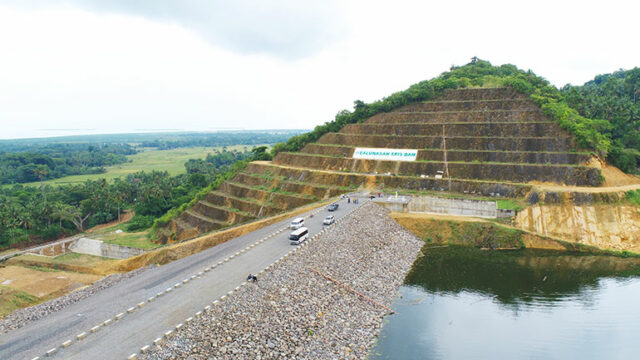
Built for function and resilience.The Calunasan Small Reservoir Irrigation Project (SRIP) in Bohol provides year-round irrigation while helping regulate water flow during extreme weather conditions.

The National Irrigation Administration (NIA) is powering its drive toward food security through a renewed focus on modern irrigation systems, climate-resilient infrastructure, and, most critically, closer collaboration with farming communities on the ground.

In recent years, the Agency has moved beyond traditional project delivery toward a more proactive, systems-based approach — standardizing operations, improving oversight, and adopting data-driven planning to ensure that irrigation services remain reliable amid increasingly variable weather conditions.

“At the end of the day, irrigation is about reliability for farmers,” said NIA Administrator Engr. Eddie Guillen. “When water delivery is predictable, farmers can focus on planting and harvesting, not disruptions.”

Productivity vs. disruption

By managing both water storage during heavy rains and controlled releases during dry spells, NIA’s irrigation systems help reduce risks from flooding and drought, allowing farming communities to focus on productivity rather than disruption. At its core, the effort is straightforward: stabilize water supply across seasons so farmers can plant and harvest with greater certainty.

Projects such as the Union Water Impounding Dam in Cagayan and the Calunasan Small Reservoir Irrigation Project (SRIP) in Bohol illustrate this approach. Designed as multi-purpose facilities, these systems provide year-round irrigation to surrounding barangays while also serving as flood-control structures that protect farms and communities during extreme weather events.

Paired with weather monitoring, modern farm equipment, and technical support, these irrigation networks form part of a broader push to improve agricultural resilience and long-term food security.

Farmers’ IAs at the core

Central to NIA’s strategy is its partnership with Irrigators’ Associations (IAs) — organized groups of farmers who collectively manage, operate, and maintain communal irrigation systems.

These associations function as NIA’s on-the-ground partners, bridging national programs with community realities. Composed of farmers themselves, IAs coordinate water distribution schedules, monitor system conditions, and relay operational concerns directly to field offices, ensuring that local needs are addressed quickly and practically.

In many areas, IAs also serve as hubs for cooperation. bringing together farmers, local government units, and partner agencies to exchange information, organize maintenance activities, and adopt improved farming practices.

Work on community development continues. Irrigators’ Associations hold meetings to coordinate irrigation schedules, share information on farming technologies, and work with NIA and the Department of Agriculture on local needs.

More accessible, more responsive

Through these IAs and farmer collectives, government support becomes more accessible and responsive. Training programs, technical assistance, and agricultural initiatives from NIA and the Department of Agriculture (DA) are disseminated directly within communities, helping farmers adopt more efficient and sustainable methods.

NIA reinforces these partnerships through institutional support and incentive mechanisms, including awards for high-performing associations, livelihood assistance, and the turnover of model farms.

IA’s may also access financing through partner institutions such as the Land Bank of the Philippines, including low-interest programs that help fund farm inputs and equipment.

Beyond irrigation operations, many associations have contributed to broader community improvements — from maintaining local facilities to supporting small rehabilitation works that help climate-proof existing systems.

Said Engr. Guillen: “Taken together, these efforts highlight a simple principle: irrigation infrastructure works best when the people who depend on it are actively involved in its management.”

A collaborative model for modern irrigation

For NIA, the partnership with IAs reflects a broader shift in how irrigation services are delivered — not solely as top-down infrastructure projects, but as shared systems sustained by both engineers and farmers.

In the past three years under Engr. Guillen, the NIA has emphasized practical coordination and reliability: strengthening water access, improving system uptime, and ensuring that projects continue delivering benefits long after construction is completed.

An engineer by training who comes from an agricultural region, Engr. Guillen said the goal is to keep programs grounded in day-to-day realities.

“Our partnership with Irrigators’ Associations helps us understand local conditions better and deliver infrastructure and technologies that directly support farmers’ livelihoods,” he said. “When irrigation systems are dependable, communities become more resilient.”

Building toward food security

As the Philippines continues to prioritize food security and climate adaptation, irrigation remains one of the most fundamental enablers of stable agricultural output.

Reliable water access allows for more predictable cropping cycles, reduces vulnerability to weather shocks, and supports higher productivity across farming areas — factors that ultimately contribute to steadier supply for markets and households.

Through continued investment in climate-resilient infrastructure, stronger institutional systems, and sustained collaboration with farmer collectives, NIA aims to reinforce its role as a key partner in the country’s agricultural development.

Across the country, that partnership is increasingly visible — not only in dams and canals, but in organized groups of farmers working together to manage the water that sustains their livelihoods.


Spotlight is BusinessWorld’s sponsored section that allows advertisers to amplify their brand and connect with BusinessWorld’s audience by publishing their stories on the BusinessWorld Web site. For more information, send an email to online@bworldonline.com.

Join us on Viber at https://bit.ly/3hv6bLA to get more updates and subscribe to BusinessWorld’s titles and get exclusive content through www.bworld-x.com.

Okada Manila hosts media and KOLs appreciation event to mark seven consecutive years of Forbes 5-Star excellence

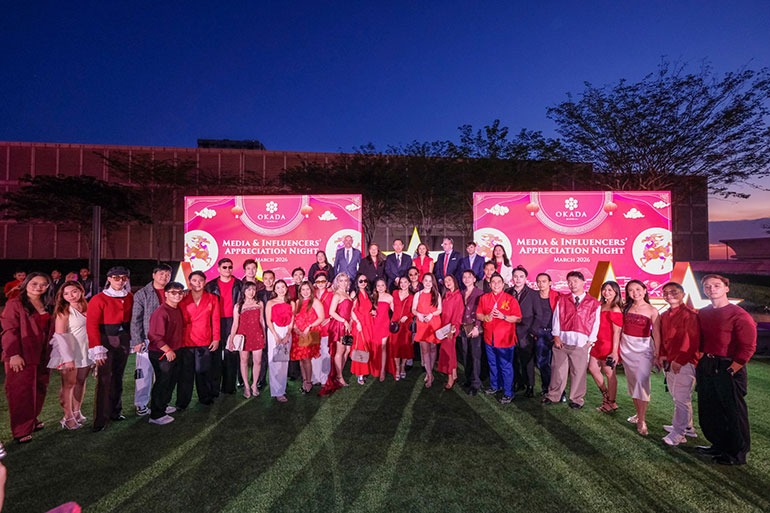
President and COO Nobuki Sato opened the program by thanking media and influencers for their continued support in sharing Okada Manila’s story with a wider audience.

Okada Manila, the Philippines’ Forbes 5-Star integrated resort, welcomed leading members of the media and digital creator community for its annual Media and Influencers’ Appreciation Night at Sinag, Coral Wing. The gathering recognized the continued partnership between the resort and the storytellers who help spotlight Manila as a vibrant destination for world-class hospitality and entertainment.

Held under the theme “Auspicious Fortune,” the evening coincided with Okada Manila’s seventh consecutive year as a Forbes 5-Star Integrated Resort and The Retreat Spa’s fourth consecutive year as a Forbes 5-Star Spa. The celebration also welcomed the Lunar New Year, bringing together media partners and executives to mark shared milestones and look ahead to new opportunities for tourism and storytelling in the year ahead.

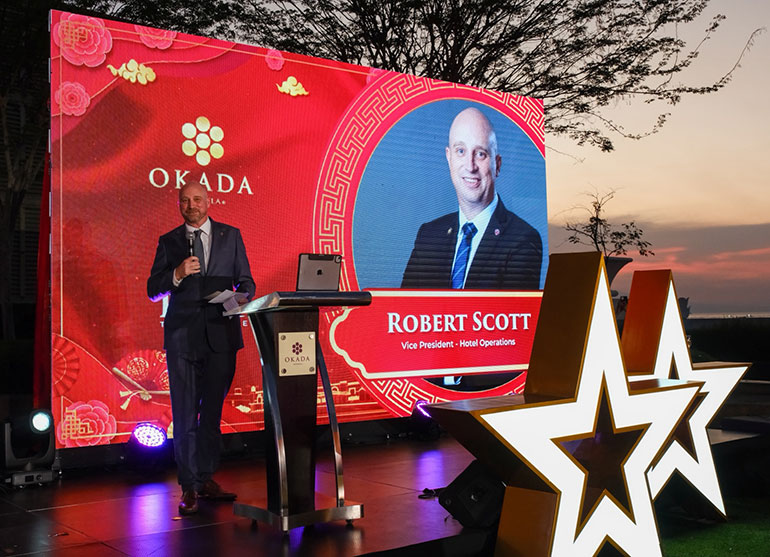
Robert Scott, Vice President of Hotel Operations, shared an update on Okada Manila’s ongoing room enhancement program, a strategic initiative aimed at further elevating the guest experience while sustaining the standards behind its Forbes 5-Star recognition.

President and COO Nobuki Sato opened the program by thanking media and influencers for their continued support in sharing Okada Manila’s story with a wider audience. He noted that the resort’s sustained Forbes recognition reflects a culture of consistency, discipline, and service excellence that continues to define the brand.

Joining the celebration were key members of Okada Manila’s leadership team, including Ms. Shirley Tam, Executive Vice-President of Casino Marketing; Ms. Reddy Leong, Vice-President of Corporate Marketing and Communications; Mr. Andreas Balla, Vice President of Food and Beverage; Mr. Robert Scott, Vice-President of Hotel Operations; and Mr. Alvaro Ramos, Assistant Vice-President of Retail Operations.

During the evening, Mr. Robert Scott, Vice President of Hotel Operations, shared an update on Okada Manila’s ongoing room enhancement program, a strategic initiative aimed at further elevating the guest experience while sustaining the standards behind its Forbes 5-Star recognition. Several floors have already been refreshed with refined interiors, warmer tones, upgraded lighting, and enhanced in-room features designed to create a more comfortable and contemporary stay. The improvements also introduce intuitive technology and operational upgrades that support efficiency and sustainability, reinforcing Okada Manila’s commitment to continually refining the guest journey.

The celebration continued with a traditional Lo Hei prosperity toss led by the resort’s executives, symbolizing abundance and shared success for the year ahead. Guests also enjoyed dinner, live entertainment, and interactive activities throughout the evening, along with raffle draws featuring dining experiences, spa treatments, and overnight stays at the resort.

More than a festive gathering, the appreciation night reaffirmed Okada Manila’s commitment to working closely with media and key opinion leaders to promote Manila as a dynamic tourism and lifestyle destination. By sharing milestones, experiences, and new developments with its partners, the integrated resort continues to contribute to the city’s growing profile as a hub for hospitality, entertainment, and world-class experiences.

Stay updated on Okada Manila’s latest events, milestones, and offerings. Visit https://okadamanila.com/ or follow Okada Manila on social media.


Spotlight is BusinessWorld’s sponsored section that allows advertisers to amplify their brand and connect with BusinessWorld’s audience by publishing their stories on the BusinessWorld Web site. For more information, send an email to online@bworldonline.com.

Join us on Viber at https://bit.ly/3hv6bLA to get more updates and subscribe to BusinessWorld’s titles and get exclusive content through www.bworld-x.com.

ADVERTISEMENT
ADVERTISEMENT