Home Blog Page 1844

Pakistan, India in talks with PHL for rice supply deals

REUTERS

By Adrian H. Halili, Reporter

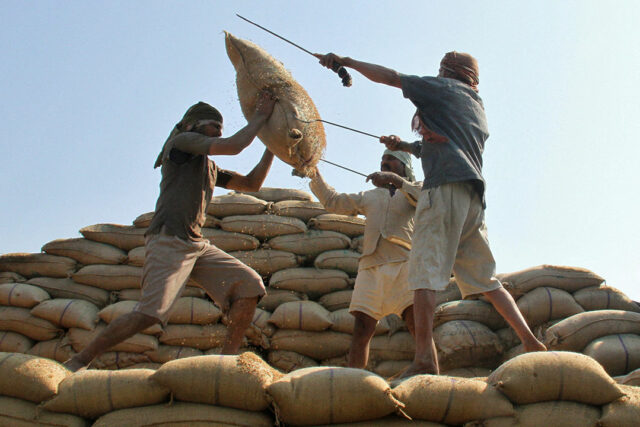
THE Department of Agriculture said on Wednesday that it is looking to enter into rice supply deals with Pakistan and India for volume of about 2 million metric tons (MMT) combined.

In a statement, Agriculture Secretary Francisco P. Tiu Laurel, Jr. said that the agency is planning to sign memoranda of understanding (MoUs) with the two countries, which are currently minor rice suppliers to the Philippines. The arrangements are designed “to create a level playing field among our rice supplying nations. We want them to compete for our market.”

Mr. Laurel said he met with Pakistan’s ambassador to Manila to finalize an MoU. Under the terms of the pending deal, Pakistan is expected to ship up to 1 MMT of rice annually.

Ambassador Imtiaz Ahmad Kazi has said that Pakistan is looking to expand its shipments of rice to the Philippines if Manila commits to taking up a guaranteed volume of imports.

Mr. Laurel said a “similar negotiation is under way with India.”

In October, the Indian government lifted its ban on non-basmati white rice exports, citing ample inventory levels. The ban had been imposed last year to guarantee sufficient domestic supply for India.

India is the world’s largest exporter of white rice. Vietnam is currently the Philippines’ primary foreign rice supplier.

In January, the Philippines and Vietnam signed a five-year agreement setting a shipment quota of between 1.5 MMT and 2 MMT.

The Philippines is projected to remain the top rice importer in the world, according to the US Department of Agriculture. It is expected to import about 5.4 MMT of rice next year.

Rice imports hit 4.48 MMT in the year to date as of Dec. 12, the Bureau of Plant Industry reported.

Indian buffalo meat suppliers accredited amid foot-and-mouth disease outbreaks

REUTERS

THE Department of Agriculture (DA) said it accredited 34 Indian suppliers of buffalo meat (carabeef), authorizing them to continue shipping to the Philippines, though 13 located in Indian states with active foot-and-mouth disease (FMD) outbreaks remain barred for the moment.

“The move is aimed at broadening the sourcing options for Philippine food processors and potentially lowering costs for Filipino consumers, particularly for products like corned beef,” Agriculture Secretary Francisco P. Tiu Laurel, Jr. said in a statement on Wednesday.

The DA has a current ban on buffalo meat from the Indian states of Bihar, Maharashtra, and Telangana, following the detection of FMD there.

“To protect local cattle and livestock, the DA has imposed an import ban on meat from these three states,” the agency said.

India is the Philippines’ sole source of imported buffalo meat.

The Philippines typically imports about 40% of its buffalo meat needs to augment domestic production.

“We do not intend to increase imports. What we want is to encourage more foreign companies to compete for our market, which will ultimately drive down the cost of imported agricultural products, benefiting consumers,” Mr. Laurel added.

He added that all 34 Indian exporters met the Philippines’ requirements, though 13 companies in the three states remain subject to the ban pending the end of the outbreak.

“Imports of carabeef from these regions will be prohibited until India’s national competent authority declares them free from FMD,” the DA said.

The DA added that it will not grant exemptions for heat-treated products, with the accreditation applying specifically to the trade in frozen carabeef.

Mr. Laurel said that if India applies a method of boiling carabeef to address FMD concerns — similar to the process Pakistan uses for buffalo meat it exports to China — he would consider allowing such imports.

“If they can do that, I will allow it,” he added.

According to the National Meat Inspection Service, all 34 companies met international food safety standards, including Good Manufacturing Practices and Hazard Analysis and Critical Control Points. — Adrian H. Halili

Passing the torch: Family succession planning

Christmas is a time for family reunions — a moment to celebrate traditions, revisit shared goals, and reflect on legacies. For those with family businesses, these gatherings often spark deeper discussions about preserving wealth and maintaining harmony across generations.

One way families prepare for succession planning is by coming up with a family constitution. This document serves as a moral and operational guide for managing not only family-owned businesses, but general family affairs as a whole. A family constitution generally covers several key areas, including the family’s values, mission, and vision. It also outlines governance structures and decision-making processes for family affairs. Additionally, it includes succession plans and qualifications for leadership roles to prepare for a seamless transition to the next generation. Finally, it contains conflict resolution mechanisms that provide structured approaches for resolving disputes.

Yet, while invaluable, family constitutions are neither legally binding nor sufficient on their own.

THE LIMITS OF FAMILY CONSTITUTIONS
A family constitution is not enforceable in courts of law. It is akin to the Constitution’s preamble which, according to jurisprudence, is not considered a source of rights or obligations. The preamble merely serves as an introductory statement that declares the general and guiding principles of the nation’s organic law.

For a family constitution to have legal weight, it must be accompanied by formal documents such as:

Shareholder agreement: This document defines ownership rights, voting power, corporate management policies, dividend policies, and share transfer restrictions.

Trust agreement: This document serves as a tool to manage and safeguard assets while ensuring they are utilized in line with the goals and values outlined in the family constitution.

Corporate charter documents: Integrating family governance principles into the company’s articles of incorporation and/or by-laws ensures that family principles are legally enforceable within the corporation.

Wills: This is a legal mechanism for distributing the decedent’s assets according to their wishes. However, probate proceedings to validate the will can be costly and time-consuming, often involving significant legal fees and administrative delays.

Deed of extra-judicial settlement: This facilitates the transfer of a decedent’s estate among heirs without court intervention, provided there is no will, and all heirs agree to the distribution plan.

Each type of document serves a specific purpose, from formalizing ownership rights and safeguarding assets to ensuring the smooth transfer of wealth and organizational responsibilities. The family must carefully evaluate its unique circumstances and objectives to determine the most suitable combination of these instruments. By doing so, the family will be able to align their shared values and goals, as indicated in the family constitution, with defined legal rights and obligations embodied by such legal forms.

Beyond these considerations, another crucial aspect of succession planning is the tax implications of the transfer of wealth to the next generation.

TAX AND WEALTH TRANSFERS
Under the current tax rules, payment of the correct taxes is a prerequisite for the issuance of a Certificate Authorizing Registration (CAR) by the Bureau of Internal Revenue (BIR). The CAR is a document that authorizes the transfer of legal title over the properties to the heirs. Without this document, the transfer of title over shares of stock and real estate cannot be legally completed. This may potentially cause complications in the administration and future dealings involving the estate because the assets are left under the decedent’s name.

The Tax Reform for Acceleration and Inclusion (TRAIN) Law, implemented in 2018, simplified tax rates for Capital Gains Tax (CGT), estate tax, and donor’s tax, aligning them at 6%. For disposals of shares of stock not listed in the stock exchange, a 15% CGT is due on the net capital gain.

There is an ongoing estate tax amnesty program which allows heirs to settle unpaid estate taxes covering decedent/s who died on or before May 31, 2022. With the signing into law of Republic Act No. 11956, the period for availment of Estate Tax Amnesty has been extended to June 14, 2025. Families with unpaid estate taxes may consider this as an opportunity to minimize any unpaid taxes due the government and avoid any further imposition of penalties.

In addition to the alignment of tax rates under the TRAIN Law and the estate tax amnesty extension, the recent signing of Republic Act No. 12001 (June 13, 2024), otherwise known as the “Real Property Valuation and Assessment Reform Act”, has made compliance increasingly straightforward by streamlining the valuation of real property throughout the country. By providing a uniform framework for property values, potential issues (i.e., discrepancies in the valuation of property) that could lead to tax disputes and/or penalties are minimized.

Given these positive reforms for taxpayers, the author urges families to comply with the prescribed tax rules rather than attempt to circumvent them when planning for property transfers. Compliance ensures not only smoother transitions but also the avoidance of potential legal and tax disputes that could result in substantial penalties and delays in the transfer of assets.

This holiday season, as families gather to celebrate the most joyous time of the year, it is the perfect time to reflect not only on the legacy of the past, but more importantly, on the dreams and aspirations for the future. A family constitution provides a strong foundation for governance, but without the necessary legal instruments and proper tax compliance, its principles may falter under the weight of excessive costs and potential liabilities. By integrating the family constitution with binding legal forms, as well as strategies that are aligned with Philippine tax law, families can preserve their wealth and harmony for generations to come.

As you share meals and stories this Christmas, consider giving your family the gift of foresight. With the right planning, the success of today can become the foundation of your family’s future.

The views or opinions expressed in this article are solely those of the author and do not necessarily represent those of Isla Lipana & Co. The content is for general information purposes only, and should not be used as a substitute for specific advice.


Jose Luis M. Yupangco is a manager of the Tax Services department of Isla Lipana & Co., the Philippine member firm of the PwC network.

jose.luis.yupangco@pwc.com

Filipina death-row prisoner home after almost 15 years in Indonesia

DEATH-ROW prisoner Mary Jane Veloso, incarcerated for alleged drug trafficking in 2010, is emotional upon seeing her parents, and two sons inside the Correctional Institute for Women in Mandaluyong City on Wednesday, following her arrival after nearly 15 years of detention in Indonesia. — PHILIPPINE STAR/MIGUEL DE GUZMAN

By Chloe Mari A. Hufana, Reporter

FILIPINA drug convict Mary Jane F. Veloso, who narrowly escaped a firing squad in Indonesia in 2015, is back in the Philippines after almost 15 years of incarceration, the Bureau of Corrections (BuCor) confirmed on Wednesday.

Ms. Veloso, a 39-year-old former domestic helper and mother of two, told reporters in Jakarta she was ready to start a new life in the Philippines.

She was arrested in Yogyakarta in 2010 after being found with 2.6 kilograms of heroin concealed in a suitcase. She said she was an unwitting drug mule, but she was convicted and sentenced to death.

She received a last-minute reprieve from execution in 2015 after the late former President Benigno Simeon C. Aquino III appealed to the Indonesian government, arguing she could be a vital witness in prosecuting drug syndicates.

Ms. Veloso was flanked by heavy security upon her arrival at Manila’s airport and was transported straight to a prison facility for women. Her family and dozens of supporters who were waiting outside the terminal failed to greet Ms. Veloso on her arrival.

Prison guards later allowed Ms. Veloso’s family to spend time with her. Ms. Veloso’s two sons ran towards her and hugged her tightly as they met inside the prison compound.

“I’m so happy I’m able to come home to our country. I appeal to the president that I be given clemency,” Ms. Veloso told reporters, in a brief note to the members of the press at the Correctional Institute for Women (CIW) in Mandaluyong City.

The BuCor noted Ms. Veloso landed in Manila around 5:51 a.m. aboard a Cebu Pacific flight from Jakarta.

BuCor Director General Gregorio Pio P. Catapang, Jr. in a statement said Ms. Veloso was not in handcuffs or any restraining instruments during her transit, citing the Standard Minimum Rules for the Treatment of Prisoners.

He said under the rules, such instruments must not be applied for any longer than is strictly needed.

“Veloso had no intention of escaping or harming herself as she was eager to return to the Philippines,” he added.

Ms. Veloso will undergo a mandatory five-day quarantine at the CIW in Mandaluyong City.

In a separate briefing after her arrival in the CIW, Justice Undersecretary Raul T. Vasquez said she would be treated as an ordinary prisoner under Philippine laws.

“All that means is that whatever privileges the BuCor will grant to all [prisoners], Mary Jane Veloso is entitled to receive them,” he added in Filipino.

He said the Philippines would respect Indonesia’s conviction of Ms. Veloso, which is the essence of the agreement they reached prior to her return to Manila.

Mr. Vasquez said decision on Ms. Veloso’s appeal is under the President’s discretion as he has absolute authority in granting executive clemency.

“At the same time, we should not lose sight of the fact that there are also many persons deprived of liberty who are equally entitled, the aged, the elderly, the sick,” he added in mixed English and Filipino.

The President, in a statement posted on his X (formerly Twitter) account, said the mother of two’s safety and welfare are paramount.

“Our agencies in the justice and law enforcement sector shall continue to ensure it, as our Indonesian counterparts have safeguarded it for so long. The Philippine government welcomes the imminent transfer of Ms. Veloso which was made possible by our strong friendship and cooperation with the Indonesian government,” he said.

Meanwhile, Senate President Francis Joseph “Chiz” G. Escudero asked the Department of Foreign Affairs (DFA) to account for Filipinos imprisoned abroad.

“The nature of the cases against them… what has or can be done to help them regain their liberty… how we can assist to make their detention, in the meantime, more bearable,” he said in a statement.

Josue Raphael J. Cortez, lecturer at the De La Salle-College of St. Benilde’s School of Diplomacy and Governance, said Ms. Veloso’s repatriation highlighted the pivotal role diplomacy plays in ensuring peace and security and the promotion of human rights and the rule of law.

“This gesture of the Indonesian public sector towards the Philippine government’s request marks yet another milestone in our partnership and shared visions,” he told BusinessWorld in a Facebook Messenger chat.

“Veloso’s return actually coincided with the celebration of our 75th year of formal ties with Jakarta, and this landmark move will undoubtedly enhance our strategic partnership as both parts of maritime Southeast Asia [are] being confronted with alike challenges,” he added. “Given that Indonesia is dubbed as ASEAN’s de-facto leader, in light of the tensions we face today, (this) can undoubtedly play a key role for us to maintain our territorial integrity by working hand-in-hand in maintaining rules-based order.”

Ms. Veloso will be held in the Reception and Diagnostic Center (RDC) for a maximum of 60 days, as per standard protocols for newly committed prisoners.

This process also includes a five-day quarantine followed by a 55-day orientation, diagnostic evaluation and initial security classification.

Once completed, she will be transferred to her designated corrections facility on the recommendations from the RDC Initial Classification Board.

During the quarantine, Ms. Veloso will be held in a regular quarantine cell for medical observation and undergo medical and physical examinations to assess her condition.

CIW personnel will also interview her to gather information for her registration and list authorized visitors.

The five-day quarantine is expected to end on December 24, allowing Ms. Veloso’s immediate family to visit her for Christmas, Mr. Catapang noted earlier. — with Reuters


DoTr inks P16.9-B Cebu port project, 4 others

COURTESY OF PRESIDENTIAL COMMUNICATIONS OFFICE

THE Transportation department on Wednesday signed contracts for five transport projects for central Philippines, including the P16.9-billion New Cebu International Container Port.

The port project financed by the Export-Import Bank of Korea (KEXIM) is the Department of Transportation’s (DoTr) first public-private partnership (PPP) project in the maritime sector, agency Secretary Jaime J. Baustista said in a speech at a ceremony at the Malacañan Palace.

Dubbed as the first hybrid PPP project under the Marcos administration, the project’s civil works will be “financed by cheap concessional financing,” according to Mr. Bautista.

Under the setup, “agile private sector financing will be used for operations and maintenance,” he added.

The project is targeted for completion by 2027 and is under a Transaction Advisory Services Agreement. It aims to improve the Cebu Base Port’s cargo handling capacity and reduce logistics costs.

The civil works contract package for the New Cebu International Container Port was awarded to HJ Shipbuilding Construction Co., Ltd. during the event.

Civil works include a 1,365-meter access road that will connect the new port through a 300-meter offshore bridge.

“All these projects are a major win for the economy, for tourism, for the environment, for the private sector, and most of all, for the Filipino people,” Finance Secretary Ralph G. Recto said in a speech.

Mr. Recto assured that the Department of Finance (DoF) would continue to “act fast on PPP projects.” The DoF is responsible for evaluating solicited and unsolicited PPP proposals.

The project was first approved by the National Economic and Development Authority (NEDA) Board in 2016, but it had been delayed due to the pandemic, the Russo-Ukrainian war, and the global tightening of monetary policy, which all resulted in “significant surge” in project costs, Mr. Bautista said.

The DoTr also signed an expression of interest to engage the International Finance Corporation (IFC) of the World Bank as a “transaction advisor” in structuring and bidding out the bus supply and operations and maintenance of the P28.78-billion 35-kilometer (km) Cebu Bus Rapid Transit.

The bus transit will have 17 km of trunk service, 22 stations, 62 bus stops, four terminals, a depot, and 18 km of feeder services in the north and south of the trunk lines.

It is expected to accommodate 116,000 passengers during partial operations, and as many as 164,000 passengers per day once full operations start.

The DoTr also signed the 30-year concession agreement for the Bohol-Panglao International Airport PPP project with Aboitiz InfraCapital.

The agreement involves the construction of a new passenger terminal building and other airport facilities, installment of required and modern aviation equipment, development of commercial assets and services in the airport, the gateway Tagbilaran City and the rest of mainland Bohol.

The expansion project, which was approved by the NEDA Board in October 2023, is expected to increase the airport’s capacity to 3.9 million passengers yearly from 2 million passengers.

“Like other airport development projects, Bohol airport’s transformation is seen to promote regional growth, generate jobs and livelihood, and create investment
opportunities,” the DoTR chief said. 

President Ferdinand R. Marcos, Jr., who witnessed the signing, said the airport project is “expected to generate P15 million in annual revenue during its first five years, rising to P200 million a year by the end of the concession period.”

“But more than just the revenue, its true success will be the number of lives that it will change for the better in Bohol,” he added.

The DoTr also entered into an agreement with the World Bank’s International Finance Cooperation to assist in conducting a preliminary analysis and assessment of the proposed New Dumaguete and New Siargao Regional Airports.

“These transformative initiatives build on the momentum of the successful transfer of operations and management of the Ninoy Aquino International Airport (NAIA) to New NAIA Infrastructure Corporation and Laguindingan Airport to Aboitiz InfraCapital earlier this year,” the Civil Aviation Authority of the Philippines said in a statement.

“These partnerships highlight the critical role of private sector expertise and resources in modernizing Philippine aviation infrastructure.” — Kyle Aristophere T. Atienza

Gov’t needs to spend P220B annually to achieve rice sufficiency — NIA

A worker unloads a sack of rice from a truck in Manila, May 30, 2024. — PHILIPPINE STAR/RYAN BALDEMOR

THE National Irrigation Authority (NIA) said it would cost about P220 billion per year to irrigate a total of 1.2 million hectares of farmlands needed to achieve rice sufficiency, its chief said on Wednesday.

Speaking at a House of Representatives committee hearing, NIA Administrator Eduardo G. Guillen said improvements to the country’s irrigation facilities, while costly, are a key factor in raising palay productivity amid the country’s increasing dependence on rice imports.

“We need a higher budget to complete the required 1.2 million hectares in around 10 years. We need to invest around P220 billion per year,” Mr. Guillen told congressmen in Filipino.

“Our agricultural productivity is really low. So, one key to increasing our productivity level is through irrigation,” he added.

The government of President Ferdinand R. Marcos, Jr. vowed to improve the country’s agriculture sector by investing in irrigation systems, with the goal of irrigating at least 45,000 hectares of new farmland this year.

Mr. Guillen said it costs about P1.2 million per hectare of new farmland and takes three years to operationalize traditional irrigation facilities, while solar pump irrigation facilities cost P200,000 to P300,000 per hectare.

Meanwhile, repairing deteriorated and faulty irrigation structures would cost around P500,000 per hectare, he added.

Lawmakers part of the 2025 budget bill’s joint panel decided to slash NIA’s budget by 25%, to P69.3 billion from the P92.5 billion allocated by the House of Representatives in its General Appropriation Bill (GAB).

“Our House GAB became P90 billion, but we are waiting to see the outcome from the bicameral committee. When we went to the Senate, I think they reduced the amount the House of Representatives added,” said Mr. Guillen. — Kenneth Christiane L. Basilio

House panel recommends crimes against humanity charges vs Duterte

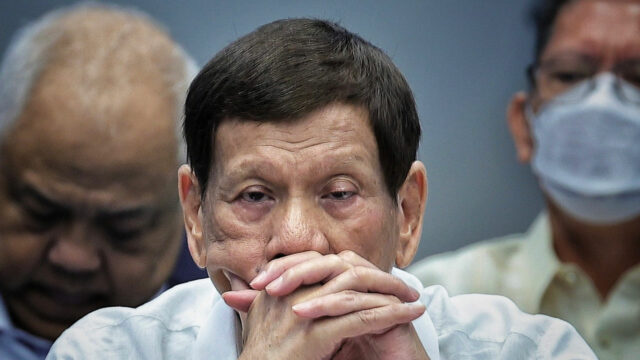
FORMER PRESIDENT Rodrigo R. Duterte — OFFICIAL FACEBOOK ACCOUNT OF THE SENATE OF THE PHILIPPINES

A HOUSE of Representatives committee on Wednesday recommended the filing of crimes against humanity charges against former President Rodrigo R. Duterte for his bloody campaign against illegal drugs.

Mr. Duterte, 79, is culpable of violating Republic Act (RA) No. 9851, a domestic law penalizing crimes against humanity, according to Surigao del Norte Rep. Robert Ace S. Barbers, who heads the House quad committee.

“There was a systemic violation of human rights and blatant disregard of due process,” Manila Rep. Bienvenido M. Abante, Jr., a co-chairman of the House quad committee, told lawmakers during Wednesday’s session.

“The deep probe into the extrajudicial killings (EJK) that occurred during the administration of former President Rodrigo R. Duterte’s war on drugs yielded a far deeper tragedy into the lives of the Filipino people rather than its protection,” he added.

The Philippine Justice department in November launched an investigation into Mr. Duterte’s possible violations of international humanitarian law.

The Philippine government estimates that more than 6,000 died under the campaign, according to a Facebook infographics published in June 2022 by RealNumbersPH, which is operated by the inter-agency Committee on Anti-Illegal Drugs. Human rights groups, however, say the death toll could be as high as 30,000.

The firebrand leader made a crackdown on the illegal drug trade a key plank of his election campaign, promising to kill 100,000 criminals in his first six months in office and throw so many bodies in Manila Bay that the fish there “will grow fat.”

During a congressional hearing in November, Mr. Duterte said he launched his drug war to prevent children being hooked on illegal drugs. “I was particularly worried because drugs target the youth. Not us. Drugs are being distributed in high schools and such.” 

The House quad committee also implicated Senators Ronald M. dela Rosa and Christopher Lawrence T. Go, who served as Mr. Duterte’s former police chief and special assistant, respectively, as being culpable for committing crimes against humanity, citing their connection to the alleged EJKs of drug suspects.

Former spokesperson Salvador S. Panelo and the offices of Mr. Dela Rosa and Mr. Go did not immediately respond to a Viber message seeking comment.

Lawmakers also said two former police chiefs of Mr. Duterte should also face crimes against humanity raps. — Kenneth Christiane L. Basilio

POGO exodus boosts PHL’s image

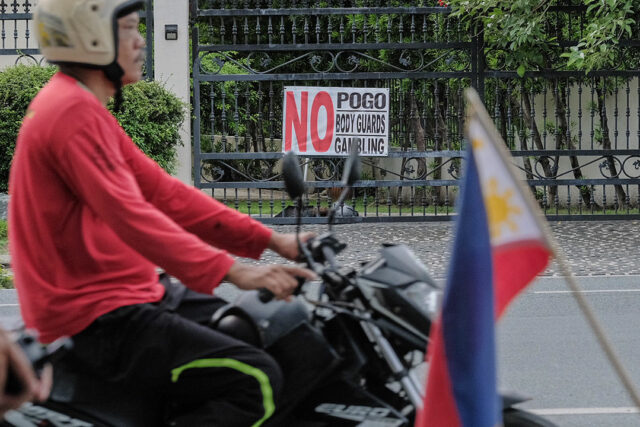
Some residents have displayed signs protesting the presence of Philippine Offshore Gaming Operators (POGO) in Ayala Alabang Village in Muntinlupa, July 13, 2024. — PHILIPPINE STAR/RYAN BALDEMOR

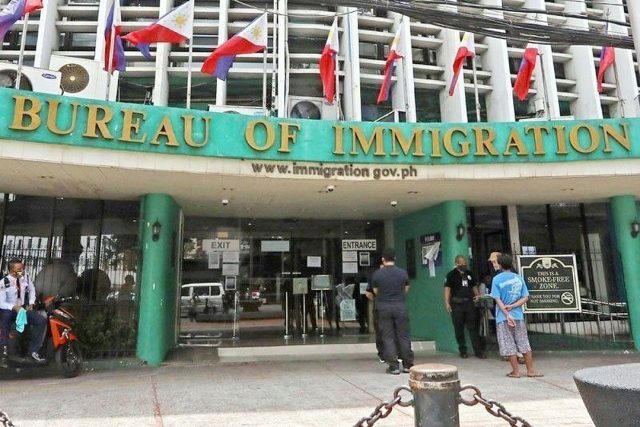
THE total ban on Philippine offshore gaming operators (POGOs) due on Dec. 31 is helping boost the country’s international image as a safe country, the Bureau of Immigration (BI) said on Wednesday.

“The effect of the exodus of POGOs seems to be good because I believe it’s making people feel that it’s safer in the Philippines,” Spokesperson Dana Krizia M. Sandoval said in mixed English and Filipino in a briefing in Manila City.

She said the government has implemented changes to ensure tourists feel safer in the country.

“We believe this is a good sign for foreign nationals to go here. Our numbers of visitors are good. Our numbers of visitors are high. So, we saw the POGO ban didn’t have any adverse effects, and it was even more positive and effective in our tourism,” she added.

Tourism department data showed that international visitors to the Philippines totaled 5.65 million, as of Dec. 15. This accounted for 73.4% of the department’s 2024 target. 

Meanwhile, Commissioner Joel Anthony M. Viado cited Philippine Amusement and Gaming Corporation (PAGCOR) data of 33,000 registered POGO, now called Internet Gaming Licensees (IGLs) workers, noting about 23,000 to 24,000 of them had voluntarily left the country already.

He said a “substantial number” had downgraded their working visas to tourist visas.

About 8,000 foreign IGL workers are still in the country, he said. A thousand of them are unaccounted for or IGL workers who did not downgrade their visas.

Mr. Viado reminded those who did not downgrade their visas to leave the country before the Dec. 31 deadline or they would be blacklisted by the bureau.

“After Dec. 31, the bureau would start blacklisting them.”

During his State of the Nation Address in July, President Ferdinand R. Marcos, Jr. ordered a ban on all offshore gaming operations, citing links to illegal activities such as human trafficking, money laundering, and financial scams. — Chloe Mari A. Hufana

Lawmakers split AKAP distribution

PHILIPPINE STAR/ MICHAEL VARCAS

LAWMAKERS on Wednesday proposed a split scheme for the Social Welfare Department’s indigent aid program to expedite its disbursement, addressing concerns the cash aid could become politicized.

Members of the 2025 budget bill’s bicameral conference committee opted to allocate P26 billion for the Department of Social Welfare and Development’s (DSWD) Ayuda Para sa Kapos ang Kita Program (AKAP), of which, P21 billion would be earmarked for the House of Representatives, while the remaining P5 billion would be for the Senate.

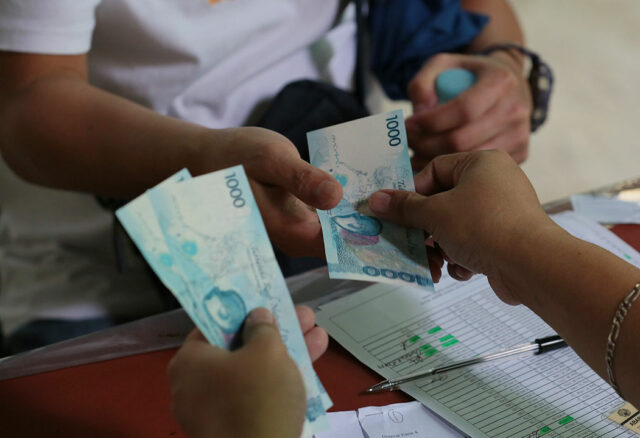
DSWD’s AKAP provides financial assistance to workers whose income falls below the poverty threshold. It provides one-time cash assistance between P3,000 to P5,000 for eligible beneficiaries.

“The allocation might be pegged to the number of congressmen and senators,” Party-list Rep. Jude A. Acidre, a member of the House contingent to the budget bill’s bicameral panel, said in Filipino during a media briefing.

“Basically, it’s one fair way of ensuring that the distributions we provide are equitable. Especially for congressmen, whose constituencies are divided according to population,” he added.

The financial aid program drew the public’s concern amid the possibility that it could be exploited by lawmakers to curry favor with voters, with the country just five months away from its elections.

Bataan Rep. Geraldine B. Roman said that lawmakers would only help DSWD in doling out the cash aid. “The sad fact of the matter is that the DSWD is undermanned. They are not really that capacitated to roll out [the financial aid].”

It would also be “counterproductive” for them to politicize AKAP’s use, saying it could leave a bad impression for their constituents.

“We do not nominate people who do not deserve this (the financial aid) out of political accommodation because it’s counterproductive for us,” she said in the same media briefing. “It’s better for our constituents to see that those receiving AKAP are those who really qualify for AKAP and those who are in need.”  — Kenneth Christiane L. Basilio

Makati promotes solar energy

STOCK PHOTO | Image by Michael Wilson from Unsplash

MAKATI CITY approved an ordinance promoting solar energy systems, offering incentives such as real property tax exemptions and simplified permit requirements as a part of the city’s sustainable transition.

Mayor Mar-len Abigail S. Binay-Campos said the City Ordinance No. 2024-221, the Solar Energy Systems Ordinance, will help the city’s transition to sustainable energy due to the reduction of greenhouse gas emissions.

“We believe that the use of solar energy systems is a long-term commitment that supports the city’s advocacy to reduce greenhouse gas emissions,” she said in a statement on Wednesday.

Under the ordinance, Accessory Solar Energy Systems (ASES) will be permitted in all zoning districts and will be exempt from real property tax.

The ordinance sets rules for ASES, including roof-mounted, wall-mounted, window-mounted, and ground-mounted types.

All ASES must secure an electrical permit and adhere to the provisions of Presidential Decree No. 1096, also known as the National Building Code of the Philippines, along with all other relevant laws, rules, and regulations. 

The ordinance also streamlines the permit process by allowing applicants to submit certifications from licensed professional engineers as an alternative to original as-built plans and detailed architectural and engineering designs for ASES installations. — Chloe Mari A. Hufana

Study permit, visa processing eased

PHILSTAR FILE PHOTO

THE Bureau of Immigration (BI) on Wednesday launched its online application and payment system for special study permits and student visas as an effort to digitalize the immigration process.

Commissioner Joel Anthony M. Viado said the e-services platform will help applicants submit requirements and online payments, streamline procedures, and provide convenience for students and educational institutions.

The system allows schools to apply directly to the bureau, removing unnecessary paperwork and adding convenience by making applications online.

“This is a priority project of the BI to make things easier and more secure for foreign students to apply for their visas and permits,” he added during a briefing.

He also said this initiative is a step for the Philippines to be a leading education hub in Asia.

The services may be accessed via the BI’s e-services website at e-services.immigration.gov.ph. — Chloe Mari A. Hufana

Ilocos Norte farmers get $46,000

REUTERS

BAGUIO CITY – The Embassy of Japan handed out a US$46,244 (approximately P2.6-million) grant to small farmers from the Bacarra Multi-Purpose Cooperative, to buy a refrigerated truck for the cooperative’s farmer-members on Tuesday.

The Embassy of Japan in the Philippines Second Secretary Nishimura Tokiko attended the turnover ceremony for The Project for the Provision of a Refrigerated Delivery Truck for Small-scale Farmers in Ilocos Norte in Laoag City, Ilocos Norte’s capital.

Governor Matthew Marcos Manotoc, Vice-Governor Cecilia Araneta Marcos, Bacarra Sangguniang Bayan Chairman on Agriculture Jonathan Sagario, Bacarra Multi-Purpose Cooperative Chairperson Primrose Manglal-lan, and the farmers of Ilocos Norte graced the turn-over rites that could spell huge benefits to the province’s agriculture.

Most residents in Ilocos Norte engage in agriculture as their main source of income.  But small-scale farmers grapple with the dual burden of high demand and escalating logistical costs, the Japanese Embassy acknowledged.    

Lacking their own transportation, small farmers often resort to renting vehicles or relying on intermediaries, posing not only risks to the quality of their fresh produce but can also lead to delays and unpaid incomes.

Ms. Nishimura told farmer-beneficiaries of the grant that she hopes that the use of the truck will significantly improve the farmers’ incomes and that they would become a role model for others to follow. — Artemio A. Dumlao