Home Blog Page 1810

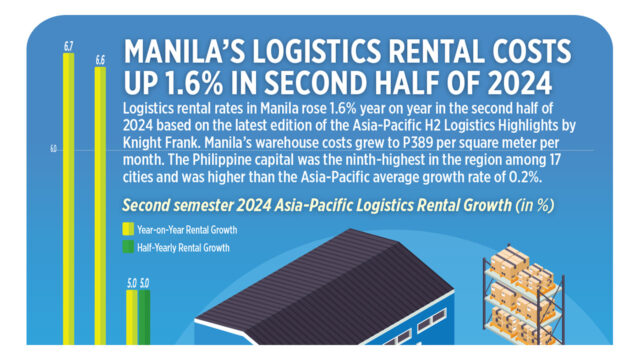
Manila’s logistics rental costs up 1.6% in second half of 2024

Logistics rental rates in Manila rose 1.6% year on year in the second half of 2024 based on the latest edition of the Asia-Pacific H2 Logistics Highlights by Knight Frank. Manila’s warehouse costs grew to P389 per square meter per month. The Philippine capital was the ninth-highest in the region among 17 cities and was higher than the Asia-Pacific average growth rate of 0.2%.

Manila’s logistics rental costs up 1.6% in second half of 2024

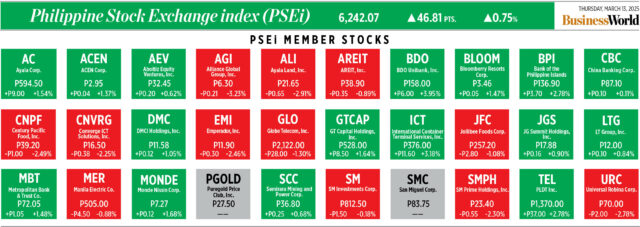
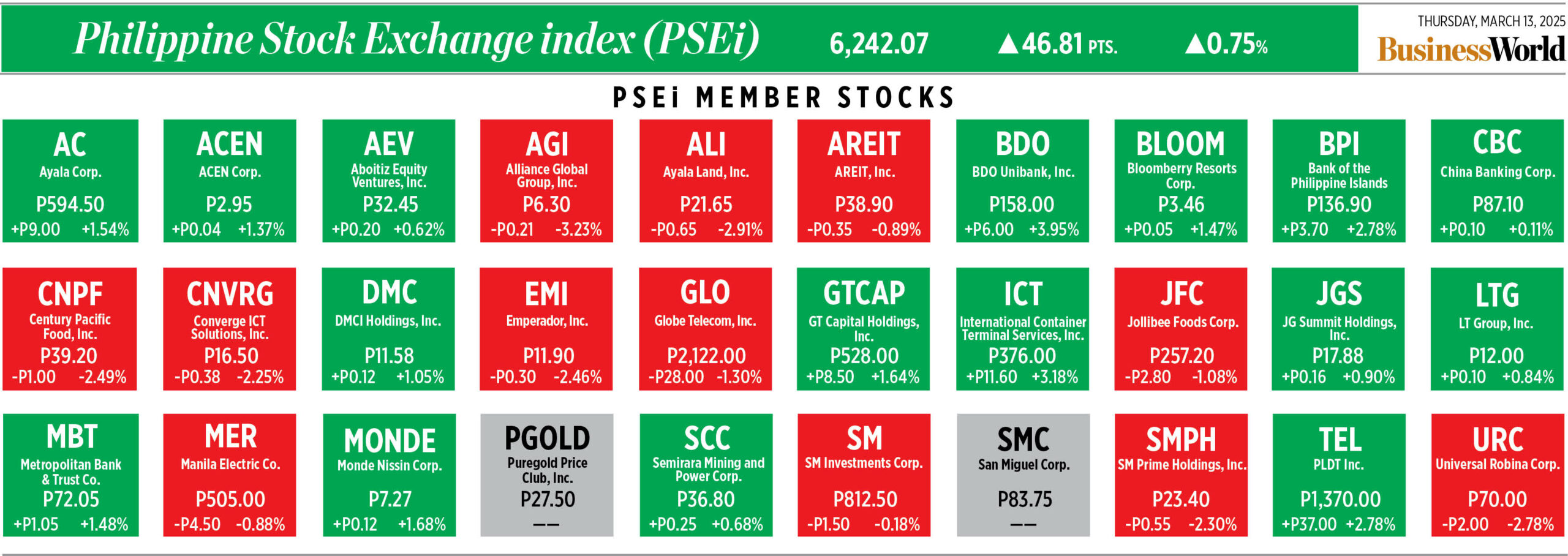
How PSEi member stocks performed — March 13, 2025

Here’s a quick glance at how PSEi stocks fared on Thursday, March 13, 2025.


DoE considering standard LGU power project approval process

THE Department of Energy (DoE) said it is seeking to standardize local government unit (LGU) ordinances for approving energy infrastructure projects.

“By implementing this standardized approach, the DoE seeks to create a more transparent regulatory environment and accelerate the development of critical energy infrastructure that supports the country’s long-term energy security and economic growth,” the DoE said in a statement on Thursday.

The DoE said it has consulted with LGUS on ways to streamline the permit process and “create a more investment-friendly environment for energy development.”

“By working closely with LGUs, we enhance regulatory transparency, improve coordination, and streamline approval processes. These efforts not only facilitate faster project implementation but also reinforce the government’s commitment to strengthening the country’s energy infrastructure and advancing sustainability initiatives,” Energy Undersecretary Sharon S. Garin said.

The DoE said Iloilo province is serving as a pilot area for the initiative due to its large number of existing and upcoming renewable energy (RE) projects.

It said that the province is positioning itself as a center for sustainable energy after passing the Iloilo Province Renewable Energy Ordinance (I-PORE) in 2022.

As the first LGU to pass such an ordinance, Iloilo has encouraged the development of renewable energy infrastructure, pushing barangays and municipalities to identify potential RE investment sites, and provided incentives under the provincial investment code.

Iloilo is currently hosting three operational renewable energy projects and is expecting 26 more.

According to the DoE, one of the most common bottlenecks in developing power projects is the “varying timelines for the issuance of permits” like the LGU Resolutions of Support, causing significant delays.

The proposed ordinance template recommends that these resolutions be issued “within a definite and transparent timeline” to ensure “a more predictable and efficient approval process.”

The DoE said that LGUs should also prioritize and allow parallel processing of applications for strategic investments in energy, as opposed to resorting to a step-by-step approval chain. They were also urged to issue provisional permits and publish and post their schedules of fees and charges. — Sheldeen Joy Talavera

Easing inflation leaves room for rate cuts, ex-central banker says

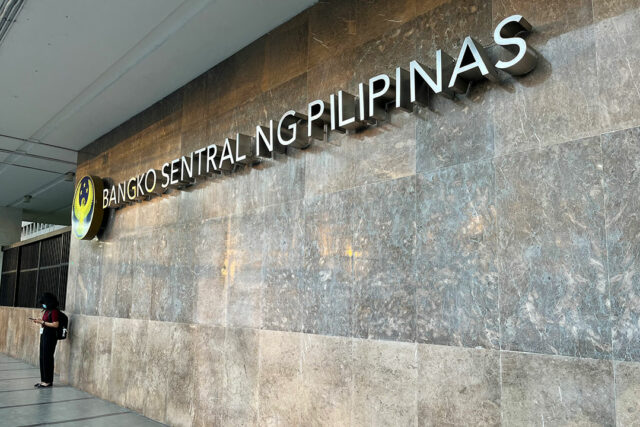
Bangko Sentral ng Pilipinas main office in Manila — BW FILE PHOTO

THE Monetary Board could cut rates at its April meeting, with receding inflation giving it space to ease monetary policy, a former Bangko Sentral ng Pilipinas (BSP) official said.

GlobalSource Partners Country Analyst Diwa C. Guinigundo, a former deputy governor, told reporters on Wednesday: “I think the BSP has a space to cut. One, the actual inflation rate of 2.1% in February. And then in January, 2.9. — so that’s 2.5 average. That is within the target of 2-4%. So on that basis, they have a reason.”

BSP Governor Eli M. Remolona, Jr. said the monetary authorities are still in easing mode, after an unexpected decision to keep the benchmark rate steady last month at 5.75% amid “global trade uncertainties.”

He signaled that a rate cut is still “on the table” at the Monetary Board’s next rate-setting meeting on April 10.

Mr. Guinigundo said inflation expectations and the BSP’s forecast fall within the range of 2-4% target.

Headline inflation in January eased to 2.1% in February from 2.9% a month earlier and 3.4% a year earlier, according to the Philippine Statistics Authority.

“Of course, as I said, yes you can cut, but you have to be very careful because of the risks,” he said.

He said these include the new US government’s trade policies, and the possible adjustment to fares and wages, noting that these could add to inflation.

“Even without this political noise, the BSP should always be careful in its easing policy stance. Precisely because in America, the US Federal Reserve is not that aggressive,” he said.

He also noted the differential between the Federal funds target rate and the BSP’s policy rate.

“(The gap is) around 100-125 bps. That is the risk premium. If it can go down, because we are going down, that could be a possible reason or underlying reason for capital to flow out,” he said.

Meanwhile, Mr. Guinigundo said the political noise surrounding former President Rodrigo R. Duterte’s arrest could hurt the peso.

“But there are bonds coming in. Some people invested. Others made outward investments in the previous period. Now they are returning the money here. That is a counterweight to the negative political noise.” 

“That’s why peso is stable. But once the configuration of events changes, then you can expect some volatility,” he said.

The peso closed at P57.36 to the dollar on Thursday, unchanged from its Wednesday finish. — Aubrey Rose A. Inosante

Trade dep’t plans more funding for film industry

STARLINE-FREEPIK

THE Department of Trade and Industry  said it hopes to increase funding allocated to develop the film industry next year.

“We are still reviewing. The budget (season) is approaching,” Trade Secretary Ma. Cristina A. Roque told reporters on Wednesday.

“To be honest, I really haven’t thought about how much the increase is. But probably double and we’ll get the private sector involved also,” she added.

According to Ms. Roque, the budget for the film industry was around P300 million in 2025.

“I am also really looking at the marketing cost to get our films displayed abroad. Based on my research, in Korea and Thailand, there really is government funding for the push of the industry,” she said.

She said that the increased support for the industry will help promote the country which may encourage tourism and trade.

“Pushing the creative industries is also something that the President really wants us to be aggressive on. Of course, when our sites are seen in the movies abroad, the filmgoers are enticed to go to the Philippines,” she said.

“The more tourists we have, the more sales the small and medium enterprises will have,” she added.

During her visit to Los Angeles last week, Ms. Roque, together with the Tourism Secretary Ma. Esperanza Christina G. Frasco and First Lady Marie Louise Araneta-Marcos introduced the “Expanding the Bridge” package of financial incentives, including cash rebates of up to 25% via the Film Location Incentive scheme and grants of up to P10 million for international co-productions through the International Co-Production Fund. 

“We are not merely offering a location; we are offering a partnership. The Philippines is open for business, and we’re bringing substantial resources to the table. We are here to build a new era of cinematic collaboration,” said Ms. Roque.

“With these incentives, we are not just making the Philippines a cost-effective filming location — we are offering Hollywood a creative partnership. Our filmmakers, crew, and post-production teams are world-class, and our stories have universal appeal,” she added. — Justine Irish D. Tabile

Tariff Commission expects to conclude probe into safeguard duties for cement by June

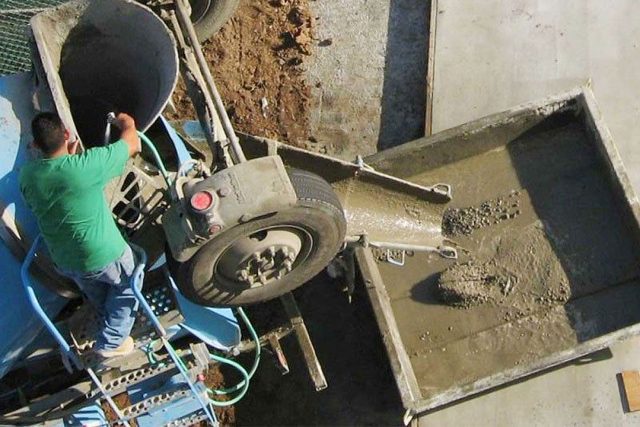
PHILSTAR FILE PHOTO

THE Tariff Commission said it hopes to complete the safeguard duty investigation into cement imports by June.

At a preliminary conference on Thursday, the commission said it hopes to submit the formal investigation report to the Secretary of Trade and Industry by June 24.

On March 4, the Tariff Commission launched formal proceedings to determine whether to impose safeguard duties on imports of ordinary Portland cement and blended cement from various countries.

Following the preliminary conference held on March 13, the commission has set a March 25 deadline for the submission of the adjustment plan and an April 4 deadline for the submission of initial memoranda position papers.

Verification of submissions is scheduled to begin on April 4, while the staff report is set to be issued on May 15.

Comments on the staff report will be accepted until May 25, while public hearings are tentatively scheduled from June 2 to 6.

Amended memoranda or final position papers are due on June 15, the commission said.

Last month, the Department of Trade and Industry (DTI) issued Department Administrative Order No. 25-01, which imposes provisional duties on products classified under AHTN Code Nos. 2523.29.90 and 2523.90.00.

Under the order, safeguard duties of P400 per metric ton or P16 per 40-kilogram bag in the form of a cash bond will be provisionally imposed on imports of ordinary Portland cement and blended cement.

The order follows the preliminary safeguard measures investigation conducted by the DTI.

The DTI said increased imports resulted in declining sales, production, capacity utilization, profitability, and employment for domestic producers.

Currently, the Philippines imposes an anti-dumping duty against cement imports from Vietnam, which accounted for 94% of cement imports in 2024. — Justine Irish D. Tabile

Philippine business conditions seen headed in right direction

BW FILE PHOTO

THE PHILIPPINES is headed in the right direction in terms of becoming a more conducive business environment, the Chandler Institute of Governance (CIG) said.

“The attractive marketplace (pillar) is about the capabilities that the government has to create a conducive business environment,” said Chandler Institute of Governance Managing Director (Strategy and Research) Kenneth Sim in an event organized by CIG and the Eastern Regional Organization for Public Administration.

“Relative to peers, the Philippines doesn’t do as well. But the gap is closing, and in the right direction, which means the Philippines is actually catching up to the global average,” he added, citing comparable economies like Vietnam and Egypt.

Citing results of the Chandler Good Government Index (CGGI) in 2024, Mr. Sim said that the Philippines posted a 0.56 marketplace attractiveness score last year, up from 0.53 in 2023. The global average is 0.58.

“Part of the reason why this is improving is the stable macroeconomic environment, which looks at metrics like inflation, as well as the other indicator that has improved, which is logistics competence,” he said.

Some key indicators for an attractive marketplace, like property rights and business regulations, are below the global average.

In particular, the country scored 0.39 in stability of business regulations, against the 0.51 global average. It scored 0.30 in property rights, against the 0.50 global average.

Mr. Sim noted opportunities to improve in the leadership and foresight components of the index.

“Over the years, there has been a decline in the score for the Philippines. It started at just above 0.4 in 2021, and by 2024, the Philippines will have dropped to 0.33. So this means, again, that the gap between the Philippines and the global average has been widening,” he said.

“It is important to point out, however, that even though we call it leadership and foresight, it is not about individual leaders; it is about the ability of the system to develop these capabilities,” he said.

“Of course, leaders play an important role, but this pillar is not about people. It is about the system,” he added.

“The performance of the Philippines in the CGGI in 2024 is somewhere in the middle. 67th out of 113, not the best, but certainly not the worst,” Mr. Sim said.

He added that although the country’s rank has suffered, its score has declined only slightly.

“What this means is that over time, relative to itself, in your own country, you have kept your performance relatively stable, but the rank has fallen, which simply means that more countries are joining the index, and others are doing even better,” he said.

“So, staying in place and being complacent is not going to help you to improve in ranking,” he added.

He said that, relative to its peer countries, the Philippines is stronger in the strong institutions and financial stewardship pillars. — Justine Irish D. Tabile

Dairy regulator to open 5 stock farms by April

REUTERS

THE National Dairy Administration (NDA) said it plans to open five stock farms by April to help expand the dairy cattle herd.

Each of the stock farms will initially hold 50 head of dairy cattle, NDA administrator Marcos Antonius T. Andaya told reporters.

He said the NDA is awaiting the arrival of 600 head of cattle from Australia.

“The structures are nearing completion,” he said.

The five stock farm locations are General Tinio, Nueva Ecija; Ubay, Bohol; Malaybalay, Bukidnon; Carmen, Cotabato; and Prosperidad, Agusan del Sur.

Mr. Andaya said the NDA is also studying sites in Isabela and Palawan.

The dairy herd rose 56% to 156,000 animals in 2024, including cattle, carabaos, and goats.

Mr. Andaya said the NDA will partner with the private sector to put up nucleus farms to develop dairy animals that can deal with the Philippine climate.

Dairy production increased 11.31% to 32.39 million liters last year, bringing the milk self-sufficiency ratio to 1.66% from 0.8% a year earlier.

Philippine dairy imports rose 19.99% to 3,495.88 million liters.

The NDA has a self-sufficiency target of 2.5% this year, rising to 5% by 2028. — Kyle Aristophere T. Atienza

Palay farmgate price falls 18.9% in Feb.

PHILIPPINE STAR/KRIZ JOHN ROSALES

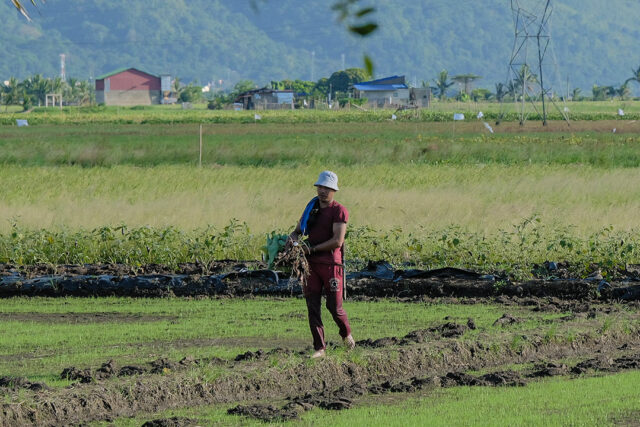
THE farmgate price of palay (unmilled rice) fell 18.9% year on year in February to an average of P20.29 per kilogram, after rice imports hit record levels last year.

The Philippine Statistics Authority (PSA) said all regions except the Eastern Visayas reported falling prices on average in the 12 months to February.

Month on month, the palay farmgate price fell 1.9%, the PSA said in a report.

Only five of the 16 regions posted growth in average farmgate prices from a month earlier — the Ilocos Region, the Central Visayas, Soccsksargen, Caraga, and Bangsamoro.

The highest palay prices in February were posted in the Eastern Visayas, where they rose 4.7% year on year and 2.5% month on month to P24.18 per kilo.

The lowest palay prices were logged in Calabarzon at P17.34, with the farmgate price in the region falling 31.0% year on year and 0.4% month on month.

The Department of Agriculture in January said it was expecting the palay harvest to exceed 20 million metric tons (MT) this year.

In 2024, rice imports hit a record 4.68 million MT, against 3.6 million MT a year earlier. — Kyle Aristophere T. Atienza

23 conservation projects granted funding of P100 million each — UNDP

PHILIPPINE STAR/MARTIN RAMOS

THE United Nations Development Programme (UNDP) said P100 million each was granted to 23 community-based organizations in the 7th Operational Phase of the Global Environment Facility Small Grants Programme in the Philippines (SGP-7).

In a statement on March 11, the UNDP said the funding will “support socio-ecological and economic resilience in priority landscapes and seascapes across the country.”

The project is expected to benefit approximately 20,000 individuals, with an estimated 300,000 benefiting indirectly across the four project sites.

“While we call them the small grants, as opposed to larger grants that are being given to a bigger organization, this is an extremely strategic approach — a very determined approach — to drive development from the grassroots,” UNDP Philippines Deputy Resident Representative Edwine Carrié said.

The UNDP said the SGP-7 will support conservation initiatives in the Catubig Watershed in Northern Samar, Aurora Province within the Sierra Madre Mountain Range, the Siargao Island Protected Landscape and Seascape in Surigao del Norte, and the Calamian Islands in Northern Palawan.

Environment Undersecretary Analiza Rebuelta-Teh said SGP-7 helps the Philippines meet commitments to the Kunming-Montreal Global Biodiversity Framework. — Aubrey Rose A. Inosante

Duterte takes responsibility for drug war, anticipates long ICC legal battle

FORMER PRESIDENT RODRIGO R. DUTERTE — PHILIPPINE STAR/JESSE BUSTOS

By Kenneth Christiane L. Basilio, Reporter

FORMER Philippine President Rodrigo R. Duterte said he takes full responsibility for his government’s war on drugs, as he braces for a legal battle at the International Criminal Court (ICC) in The Hague, where he will be tried for crimes against humanity.

“Whatever happened in the past, I will be the front of our law enforcement and the military,” he said in a video message posted on his Facebook account. “I said this already, that I will protect you, and I will be responsible for everything.”

His remarks were his first since being put on a plane to the Netherlands.

Mr. Duterte was taken into custody by the ICC on Wednesday after his arrest in Manila on murder charges linked to his anti-illegal drug war, in which thousands of suspected drug pushers and users were killed.

The video, which has been viewed 10 million times, showed only the firebrand leader in a plain white T-shirt speaking. It appeared to have been recorded inside the plane, with the faint hum of the engine audible in the background.

In a statement, the ICC said Mr. Duterte had been “surrendered to the custody of the International Criminal Court.” “He was arrested by the authorities of the Republic of the Philippines… for charges of murder as a crime against humanity.”

He will be brought before an ICC judge in The Hague in the coming days for an initial appearance, according to the statement. He was transferred to a detention unit on the Dutch coast.

“This will be a long legal proceeding, but I say to you, I will continue to serve my country,” Mr. Duterte said, while assuring his supporters that he was well. “And so be it, if that is my destiny.”

“I am OK, do not worry,” the 79-year old former President said in the more than two-minute video clip.

Mr. Duterte, who led the Philippines from 2016 to 2022, will face allegations of crimes against humanity for overseeing death squads in his anti-illegal drug crackdown. He could become the first former Asian head of state to go on trial at the ICC.

The ICC arrest warrant says that as President, Mr. Duterte created, funded and armed the death squads that carried out murders of drug dealers and users.

During his six years in office, 6,200 suspects were killed during anti-drug operations, by the police’s count. Human rights groups say the death could be as many as 30,000.

Mr. Duterte’s daughter, Vice-President Sara Duterte-Carpio, arrived in The Hague on Wednesday evening, her office said.

Lawyers and academics said the arrest and transfer were a big moment for the ICC, which is targeted by US sanctions and does not have any police of its own to arrest people.

A State Department spokesperson said the US was aware of Philippine authorities’ arrest of Mr. Duterte.

The Philippine Embassy in the Netherlands said it had provided consular assistance to Mr. Duterte upon his arrival. It added that it had given former Executive Secretary Salvador C. Medialdea a 15-day visa because he would serve as Mr. Duterte’s lawyer.

Mr. Medialdea was also allowed to visit the former President at the ICC’s detention center in Scheveningen.

The embassy also notified officials from the ICC and the Netherlands Ministry of Foreign Affairs on Mr. Duterte’s medical condition and requirements.

WIDESPREAD AND SYSTEMATIC
“The chamber… found reasonable grounds to believe that Mr. Duterte is individually responsible as an indirect co-perpetrator for the crime against humanity of murder,” the ICC said in a statement.

It said it found merit in the prosecution’s request to arrest Mr. Duterte due to his past government’s policy and statements that propelled an “attack directed against a civilian population.”

“There are reasonable grounds to believe that this attack was both widespread and systematic: the alleged attack took place over a period of several years and resulted in thousands of deaths,” it added.

Mr. Duterte arrived at Rotterdam Airport at 11:54 p.m. Manila time on Wednesday, a day after being flown to the European nation by Philippine authorities aboard a private jet, according to tracking service FlightRadar 24. He was arrested at the Manila airport on Tuesday by local police at the request of the ICC coursed through the International Criminal Police Organization (Interpol).

His initial appearance before an ICC judge in The Hague will be scheduled in the coming days. The international court will verify his identity, determine the language for the trial and ensure he has been informed of the charges against him at their first hearing, the court said in a statement.

He will be held in an ICC detention unit on the Dutch coast during the duration of the proceedings, according to a briefer on its prison complex posted on its website.

Mr. Duterte made the crackdown on the illegal drug trade a key plank of his election campaign, promising to kill 100,000 criminals in his first six months in office and throw so many bodies in Manila Bay that the fish there would “grow fat.”

Among those who died were at least 122 children, according to a 2020 report by the World Organisation Against Torture and Children’s Legal Rights and Development Center.

“International law is not as weak as some may think,” ICC Prosecutor Karim Ahmad A. Khan said in a video message posted on the international tribunal’s website on Wednesday. “When we come together, when we work, when we build partnerships, the rule of law can prevail.”

The family of Philippine President Ferdinand R. Marcos, Jr., whose government helped hand Mr. Duterte over to the ICC, would benefit politically amid a deepening rift with the Duterte clan, said Arjan P. Aguirre, who teaches political science at the Ateneo de Manila University.

“It places the Dutertes in an awkward position, where they are facing numerous cases, such as the impeachment and criminal charges, which will force them to spread out their resources and attention,” he said in a Facebook Messenger chat. — with Reuters


Marcos: Government investing in infra to boost food security

PHILIPPINE STAR/RYAN BALDEMOR

PHILIPPINE President Ferdinand R. Marcos, Jr. on Thursday said his government is investing in more dryers, silos, warehouses, rice and corn mills and other agricultural equipment, whilst pushing partnerships between farmers and the private sector to boost food security.

“Because of this, we will reduce wasted rice and corn, lower food prices and make our farmers more productive,” Mr. Marcos said at the inauguration of the Sorosoro Ibaba Development Cooperative Grains terminal and trading project, a P270-million feed mill facility in Batangas City, streamed live on Facebook.

The Batangas facility can hold about 12,000 metric tons of corn or 480,000 sacks of feed for 100,000 pigs or almost 600,000 chickens, he said.

“With this, the storage of our corn will be better and our support for the poultry and livestock industry will be stronger,” the President said in Filipino.

He also vowed to support farmers and fisherfolk communities to sustain their livelihood.

“Let’s strengthen the partnership between the government, private sector and our farmers,” Mr. Marcos said.

The Department of Agriculture in February declared a food security emergency on rice, the latest effort by the government to lower the cost of the staple grain.

This allows the agency to release rice buffer stocks held by the National Food Authority (NFA) to stabilize prices and ensure that rice, a staple food for millions of Filipinos, remains accessible to consumers.

It cited the “extraordinary” increase in local rice prices despite the drop in global prices and the reduction in tariffs in July last year.

Under Republic Act No. 12708 or the Agricultural Tariffication Act, the Agriculture secretary can declare a food security emergency in case of rice supply shortages or extraordinary price spikes.

Under a food security emergency, the NFA would release its rice buffer stock to government agencies, local government units, and the KADIWA ng Pangulo program. — J.V.D. Ordoñez