Home Blog Page 1799

US allies get a Signal chat’s worth of red flags
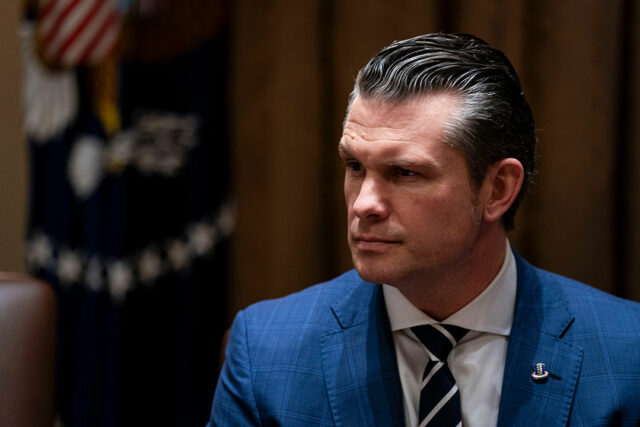
PETE HEGSETH, US SECRETARY OF DEFENSE — AL DRAGO/BLOOMBERG

IF EUROPEANS didn’t already know what the new administration in Washington thinks and wants of them, they now do: “PATHETIC” and cash, respectively. This is thanks to the hard-to-credit decision of President Donald Trump’s top security officials to chat about an imminent military strike against targets in Yemen on a publicly available texting app, and to include a journalist by mistake.

For a continent already worried that Trump may not honor any NATO Article 5 request or would be willing to shake down allies by withholding the spare parts and software upgrades needed to keep their F-35 Joint Strike Fighters flying, the content of this unintentionally leaked discussion has provided confirmation.

In the short term, that may have few real consequences.

Although insulting, the administration’s assessment of Europe’s weak military capabilities is correct. The resulting dependency on US military might has made European states highly vulnerable to extortion by their now-former ally. Longer term, though, the drive to move away from buying US arms and build European will be overwhelming. Charles de Gaulle, the postwar French president who in 1966 pulled France out of the North Atlantic Treaty Organization’s integrated command structures to avoid just such dependencies, has been vindicated from his grave.

US allies in the Asia Pacific and Middle East can only conclude that this might soon be them, too, should Trump and his officials ever decide that they aren’t paying enough for their defense or making sufficient trade concessions.

Russia and China, meanwhile, will also draw conclusions, though viewed from their perspective this offers exploitable opportunities. At least as important as all this is that America’s friends and foes alike are finding out what happens when you get a group of poorly qualified ideologues to run the most powerful military in the world. The short answer is either recklessness or, under a more generous interpretation, a group with a steep learning curve.

John Ratcliffe, director of the Central Intelligence Agency, was on the call. He never thought, however, to question the exposure to potential foreign espionage in discussing the most highly classified subject possible — an imminent military operation — on personal cell phones open to loss or hacking, and while using Signal, a public, albeit encrypted, messaging service.

It’s because of those vulnerabilities that the US government has a dedicated secure communications system. It’s less convenient than a phone chat, but that’s because it’s safe. Ratcliffe, a Texas lawyer, had no intelligence qualifications for the job when he was appointed, either this year or for a brief stint as director of national intelligence in Trump’s first term. It shows.

Mike Waltz, the national security adviser now heavily involved in negotiating an end to the war in Ukraine, set up the Signal chat and included Jeffrey Goldberg, editor-in-chief of the Atlantic magazine, by error. Waltz has an impressive military background as a former special forces officer, and he served as a policymaker in the George W. Bush administration. Yet this isn’t a mistake you could imagine Henry Kissinger, Brent Scowcroft, or Zbigniew Brzezinski making. On Tuesday, Trump backed Waltz, telling NBC News his adviser had “learned a lesson, and he’s a good man.”

Defense Secretary Pete Hegseth, a former major in the National Guard and Fox News commentator, distributed operational plans for the strike to the group, including, inadvertently, to Goldberg. It was Hegseth who described the Europeans as “PATHETIC” for lacking the capabilities required to carry out the coming Houthi strike alone.

Twice in the chat, parts of which Goldberg published on Monday, Hegseth assures his colleagues on this inherently leak-prone forum that he had OPSEC (operational security) firmly under control. Hegseth served tours in Iraq and Afghanistan, if at a relatively low rank, whereas some US defense secretaries have had no military experience at all. Yet concerns over his judgment that were raised in Senate approval hearings now seem relevant.

Trump has said the March 16 air and missile strikes on Yemen were designed to end Houthi attacks on Israel and international shipping lanes once and for all, where numerous less extensive strikes ordered by the Biden administration had failed. More than 50 people were killed in the operation, according to the Houthis, who vowed to continue their campaign and to retaliate.

It’s hard to know whether this strategy of bigger air strikes will succeed. The Houthis had already shown signs of reduced capabilities in recent months as a result of dozens of smaller US attacks, and more might do the trick without a need for boots on the ground. But it’s hard to defeat any enemy with airstrikes alone. It’s also unclear how they might retaliate. What’s more interesting is that the political appointees in charge raised none of these questions of effectiveness and potential blowback. They don’t appear to have been discussed.

Instead, the chat focused on how to persuade US taxpayers that this was the right and necessary thing to do. The conclusion was that messaging should focus relentlessly on Joe Biden’s failures and the Iranian threat, because so few Americans would know who the Houthis are. Vice-President JD Vance’s main concern was whether the strike would send the wrong message, by defending an international seaway through which far more European than US trade passes. Vance said he just didn’t want to be “bailing Europe out again.” If he was aware that European ships and aircraft have taken part in patrols and previous punitive missions against the Houthis, it didn’t show.

I have never served in any military or intelligence agency, so I can’t judge from experience just how unusual or shocking this kind of sloppiness around a mission would seem to those who do serve. But as my colleague Paul Davies reminds me, when employees at some of the world’s leading investment banks used WhatsApp for messaging without authorization just a few years ago, it cost several senior executives their jobs and the banks $200 million in fines each.

Mick Ryan, a retired major general in the Australian army, had this to say in a Substack post: The “shortfall in security is appalling. In normal times, this would see people sacked. I don’t expect that in this case though because these are not normal times.”

That seems about right. Or, to use the US defense secretary’s less careful language, this whole episode was pathetic.

BLOOMBERG OPINION

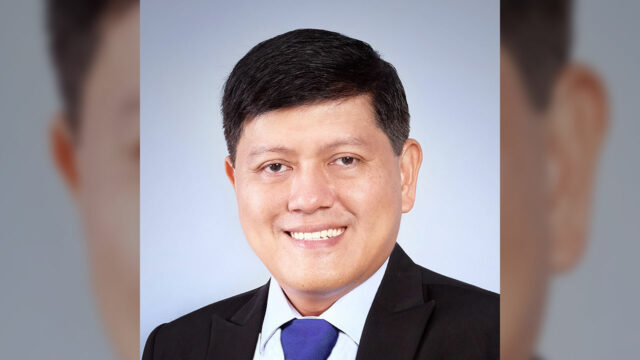
Edwin Bautista is PNB’s new president and CEO

EDWIN BAUTISTA — BW FILE PHOTO

PHILIPPINE NATIONAL Bank (PNB) has appointed former Union Bank of the Philippines, Inc. chief Edwin R. Bautista as its new president and chief executive officer (CEO).

Mr. Bautista will succeed Florido P. Casuela effective April 29, PNB said in a disclosure to the stock exchange on Wednesday. The former will also take the latter’s seat on the bank’s board of directors.

“This impending leadership transition marks a key milestone in PNB’s ongoing strategic transformation. The board expressed its deep appreciation for Mr. Casuela who skillfully led the bank through the challenges of the post-pandemic period,” the bank said. “Mr. Bautista brings with him a wealth of experience from Union Bank of the Philippines (UnionBank), where he played a pivotal role in driving the bank’s digital transformation and expanding its retail banking.”

“His appointment signals PNB’s commitment to innovation, customer-centric banking, and long-term sustainable growth. PNB remains dedicated to modernizing its operations, enhancing financial services, and strengthening its position as one of the country’s premier banking institutions,” it said.

Mr. Bautista stepped down as UnionBank president and CEO on Jan. 1 but stayed on as director. UnionBank said in a separate disclosure on Wednesday that it has accepted his resignation as director effective immediately.

The ex-UnionBank chief spent 27 years at the Aboitiz-led lender, joining as senior vice-president in 1997 and holding various senior leadership roles in transaction, institutional, consumer, and retail banking throughout his career.

He oversaw UnionBank’s acquisition of Citigroup Inc.’s Philippine retail banking business in 2023.

Mr. Bautista began his career as a brand manager at Procter & Gamble. Prior to his UnionBank stint, he also served as head of Global Transaction Banking at Citibank Philippines.

He graduated from De La Salle University with a degree in BS Mechanical Engineering. He is also an alumnus of the Advanced Management Program of Harvard Business School.

PNB’s attributable net income grew by 17.1% year on year to P21.05 billion in 2024 on continued core business growth.

Its shares ended at P47.90 each on Wednesday, rising by P1.90 or 4.13% from the previous close. — AMCS

SEC says no filing yet on lower MPO requirement

SEC Chairperson Emilio B. Aquino — AMLC.GOV.PH

THE Securities and Exchange Commission (SEC) said it has not received any formal proposal to reduce the minimum public ownership (MPO) requirement for large initial public offerings (IPOs). 

“It didn’t reach us. Once it reaches us, that’s the time we will tell you. But for now, there’s none,” SEC Chairperson Emilio B. Aquino told reporters on the sidelines of the 2025 International Tax and Investment Conference hosted by the Asian Consulting Group in Pasay City on Wednesday. 

“The issuer has to apply. But so far, there’s no filing yet… They should go to us first,” he added.

Mr. Aquino said any proposal to amend the MPO rule would undergo regulatory review, with the SEC evaluating multiple factors within a 45-day period before reaching a decision. 

“There are different regulatory objectives in mind. One is to promote. As much as possible, we want to get more listings. But at the same time, we should also balance protection. There are many factors that we have to consider,” he said. 

Mr. Aquino’s statement follows Philippine Stock Exchange (PSE) President and Chief Executive Officer Ramon S. Monzon’s announcement last week that the exchange had secured SEC approval to lower the MPO threshold, aiming to encourage more companies to proceed with public listings. 

According to Mr. Monzon, IPO-bound companies may initially comply with a 15% public float, provided they commit to a follow-on offering or private placement within two to three years to meet the 20% MPO requirement. 

He said the adjustment is temporary and will be reassessed. 

“We have a two-year window, then if that’s not working, we will extend it for another two years,” Mr. Monzon said.

The PSE’s initiative aligns with GCash’s planned IPO later this year. GCash is controlled by Globe Fintech Innovations (Mynt).

Globe Telecom, Inc. President and Chief Executive Officer and Mynt Chairman Ernest L. Cu previously said the GCash IPO would partly depend on regulators allowing a reduced public float of 10-15% for larger offerings. He added that the IPO could target an $8-billion valuation. 

Mr. Monzon said GCash qualifies for the exemption as its IPO exceeds the P5-billion threshold.

The PSE anticipates six IPOs in 2025, though no listings have taken place so far.

Among the expected IPOs are Cebu-based fuel retailer Top Line Business Development Corp., GCash, and Pangilinan-led water concessionaire Maynilad Water Services, Inc. — Revin Mikhael D. Ochave

Apple set to stave off EU fine into browser options, sources say

REUTERS

BRUSSELS — Apple is set to stave off a possible fine and a European Union (EU) order over its browser options on iPhones after it made changes to comply with landmark EU rules aimed at reining in Big Tech, people with direct knowledge of the matter said on Tuesday.

The European Commission (EC), which launched an investigation in March last year under the Digital Markets Act (DMA), is expected to close its investigation early next week, the people said.

It had been concerned that Apple’s design of the web browser screen on its iPhones may hinder users from switching to a rival browser or search engine.

The EU decision will come amid tensions with US President Donald J. Trump who has threatened to slap tariffs against countries that levy fines against US companies.

The EU competition enforcer declined to comment.

The DMA sets out a list of dos and don’ts for Big Tech, aiming to make it easier for people to move between competing online services like social media platforms, internet browsers and app stores and open up space for smaller rivals to compete.

Companies risk fines of as much as 10% of their global annual sales for DMA breaches.

The EC’s decision to close the investigation early next week will come at the same time as it hands out fines to Apple and Meta Platforms for DMA violations and orders to comply with the legislation, the people said.

In this second Apple case, the issue is whether the company imposes restrictions that hinder app developers from informing users about offers outside its App Store free of charge.

The Meta case concerns its no-ads subscription service in Europe in November 2023 that has triggered criticism from rivals and users, with regulators saying the company should offer free alternative options. Reuters

Oscar-winning Palestinian director injured in attack by Israeli settlers released after arrest

SUSIYA, WEST BANK — The Oscar-winning director of a documentary on the Israel-Palestinian conflict was released from detention on Tuesday, a day after being injured and arrested during a raid by Israeli settlers on his village in the occupied West Bank.

Hamdan Ballal, co-director of the award-winning No Other Land, said he had been assaulted by settlers after filming them attacking a neighbor’s house and then returning to make sure his own house was not attacked.

“I was just waiting outside, if any settlers or any army were attacking my home,” he told Reuters after being released from police custody.

He said he had been pushed to the ground, while soldiers yelled at him to stand up and pointed their guns at him. “It’s crazy, you can imagine your family, your kids inside the home and you need to protect them,” he said.

Shortly before the incident, in which he ended up being arrested by Israeli security forces, a group of settlers attacked a gathering for Iftar, the end of the daily Ramadan fast, at Susiya village near Hebron.

“Dozens of settlers attacked the gathering at Iftar,” Jihad Nawajaa, head of the Susiya local council, told Reuters by phone. “The young men came out to prevent them, and there were about eight injuries on our side.”

Israeli police arrested three men, including Mr. Ballal, who was injured during the standoff.

“This is not the first time that the settlers attacked our gathering, but in the recent period the attacks have increased,” Mr. Nawajaa said, adding that the settlers had stolen around 10 sheep from the village during the attack.

Monday’s incident was the latest in which Israeli settlers have been accused of raiding Palestinian or Bedouin villages and encampments in the West Bank, sometimes to steal livestock. Palestinians and activists who monitor such attacks say the police and army typically stand by without intervening.

Lamia Ballal, the filmmaker’s wife, said settlers had gathered around the family house and her husband had gone outside to prevent them from breaking in.

“The settlers attacked him and started beating him, and then they arrested him,” she told Reuters.

Anna Lippman, an American-Canadian from a group called the Center for Jewish Nonviolence, said her group had been attacked by settlers after arriving in the village around 15 minutes after the violence began.

‘TARGETED’
The Israeli military said police and soldiers intervened after Palestinians threw rocks at the vehicles of Israeli citizens and later at Israeli security forces.

“In response, the forces apprehended three Palestinians suspected of hurling rocks at them, as well as an Israeli civilian involved in the violent confrontation,” it said in a statement.

It denied reports that at least one of the Palestinians was arrested in an ambulance.

Asked for an update on Mr. Ballal’s condition and status on Tuesday, the Israeli police sent the statement first issued by the army the previous night.

No Other Land, a film about Israeli displacement of a Palestinian community, co-directed by Palestinian and Israeli directors, won the Oscar for best documentary at this year’s Academy Awards.

Mr. Ballal said one of the settlers who took part in the assault was well known to him.

“This is not the first time,” he said. “He has attacked my home many times and also has grazed his cows in the garden of my house.”

Basel Adra, one of the film’s other co-directors, said he believed the settlers had taken the army to the family house as revenge for the film’s depiction of the Masafer Yatta area near where Monday’s incident occurred.

“Because he carries his camera and documents what is going on, I think he is targeted and he was avenged this way at night,” he said.

European countries and the previous US administration of President Joseph R. Biden have imposed sanctions on violent Israeli settlers, but under President Donald J. Trump, the White House has removed them. — Reuters

Restoring order on our roads

PHILIPPINE STAR/MIGUEL DE GUZMAN

Urban congestion and traffic violations pose a major challenge to public safety and governance globally, particularly in the Philippines. A significant part of this issue stems from reliance on traditional traffic enforcement involving human enforcers, who are prone to corruption, inconsistent application of laws, and questionable judgment due to inadequate training.

I have consistently advocated for a shift toward technology-based enforcement — specifically, the no-contact apprehension program (NCAP). However, this system has remained in limbo for nearly three years since its suspension in various Metro Manila cities following a Supreme Court restraining order in August 2022.

Despite its imperfections, I firmly support NCAP, believing in the effectiveness of technology in enforcing traffic rules. Technology is dispassionate, impartial, and free from personal discretion when determining violations. Although technology cannot be held personally accountable, it also cannot be corrupted. Thus, the Philippines should consider adopting a national law to institutionalize NCAP.

Oral arguments regarding NCAP have already been presented before the Supreme Court, and the necessary comments have been submitted. While it is unclear if the issue is now ready for a decision, I hope the Supreme Court resolves the matter promptly and restores the use of NCAP in traffic enforcement.

Meanwhile, according to submissions by the Metropolitan Manila Development Authority (MMDA) and the Land Transportation Office (LTO), the average monthly number of traffic violations recorded by surveillance cameras increased threefold since the suspension of NCAP in August 2022.

As previously mentioned in another column, no-contact apprehension is not a new concept. Other countries have utilized camera-based traffic enforcement since the 1960s. The Dutch company Gatsometer BV introduced the first film-based red-light camera in 1965, followed by the first road traffic radar in 1971 and the first mobile speed camera in 1982.

Globally, many cities adopting camera-based enforcement systems report significant improvements in traffic compliance, accident reductions, and increased transparency in administrative processes. In London, extensive camera enforcement has substantially reduced traffic-related fatalities and violations.

Similarly, Singapore employs a comprehensive automated enforcement system with cameras strategically placed citywide, ensuring consistent compliance, enhancing discipline, and significantly reducing opportunities for corruption.

The advantages of automated, camera-based enforcement are clear. Firstly, it provides impartiality and consistency — two essential elements often missing from human-led enforcement. Cameras enforce traffic rules uniformly, without regard to drivers’ socioeconomic or political backgrounds. This transparency significantly reduces bribery and corruption risks, issues frequently encountered in enforcement systems reliant on human discretion.

Additionally, automated systems generate substantial efficiency gains. Cameras operate continuously, accurately documenting violations and providing reliable evidence for adjudication. In the United States, cities like New York and Washington, DC, effectively use traffic cameras, reducing the workload for enforcement personnel and allowing officers to focus on more critical law enforcement tasks.

For NCAP to reach its full potential, however, we must establish robust judicial or administrative frameworks to swiftly and fairly handle disputes. International best practices suggest specialized traffic adjudication boards or dedicated traffic courts as efficient mechanisms for managing contested citations.

Continued reliance on poorly trained human enforcers exacerbates inefficiency and inconsistency. Human-led enforcement often results in arbitrary decisions and selective enforcement, eroding public confidence and weakening overall effectiveness. Automated enforcement mechanisms, by contrast, apply rules consistently, enhancing public trust.

Cities such as Dubai and Tokyo demonstrate that combining automated enforcement with rigorous adjudication standards significantly improves traffic compliance cultures.

Once the Supreme Court resolves the current issue, the Philippines must adopt and rigorously enforce NCAP, supported by stricter penalties. Higher fines, clear communication of consequences, and systematic enforcement will be crucial to the program’s success.

Moreover, as Congress possibly considers legislation to institutionalize NCAP nationwide, it should also explore creating dedicated traffic adjudication boards in urban areas to ensure fair and swift resolution of disputes, improving overall acceptance of automated enforcement.

Updating the current Land Transportation Code is necessary to accommodate emerging technologies and set clear national standards for road use and traffic enforcement. Additionally, regulations should be rationalized, especially regarding public utility vehicles, motorcycles, bicycles, and other personal mobility devices sharing roads.

Legislative reviews can align NCAP systems with existing traffic enforcement laws and introduce scientific and data-driven standards for fines. A common argument against NCAP highlights the arbitrary nature of fine setting. Although legally grounded, fines rarely reflect scientific studies or algorithmic analysis. Traffic fines typically remain static and are seldom adjusted to inflation or evolving driver behavior.

As previously argued, if fines aim to correct behavior and prevent violations effectively, penalties should adapt to changing behaviors over time. If a specific violation persists or grows, its penalty should correspondingly increase. Current fines are legally set without considering their long-term effectiveness.

Furthermore, within Metro Manila, consistency and alignment of regulations, violation lists, and fine amounts across different territories are essential. Regular reviews of fines, based on data-driven assessments of policy effectiveness, should become standard practice.

As emphasized before, the primary goal is enforcement, not entrapment. Cities should aim to improve traffic flow and ensure public safety. NCAP should not serve primarily as a revenue-generating tool; fine collection is merely a consequence of effective enforcement. Effective fines should lead to improved traffic flow and compliance.

Lastly, effective NCAP systems require simultaneous improvements in road conditions, markings, signage, and signals. With support from Public Works, these enhancements can be implemented at local, national, and tollway levels.

Enforcement remains the primary objective — not entrapment. The ultimate goal is improving public safety, traffic flow, and quality of life. NCAP systems should strive to positively influence driver behavior rather than merely punish wrongdoing.


Marvin Tort is a former managing editor of BusinessWorld, and a former chairman of the Philippine Press Council

matort@yahoo.com

LANDBANK offers savings account with free insurance

PHILSTAR FILE PHOTO

STATE-RUN Land Bank of the Philippines (LANDBANK) has launched a savings account with free life or personal accident insurance coverage.

LANDBANK OptiSaver Plus is an upgraded version of its OptiSaver product and seeks to help customers grow their funds and achieve financial security through the free insurance coverage, it said in a statement on Wednesday.

The product has tiered interest rates of up to 4% per annum and provides depositors with free insurance coverage based on their average daily balance (ADB).

“With the LANDBANK OptiSaver Plus, we are empowering our clients to achieve financial growth while securing their future. By combining the benefits of higher savings potential and built-in financial protection, we are ensuring their hard-earned money works even harder for them as they build wealth with confidence,” LANDBANK President and Chief Executive Officer Lynette V. Ortiz said.

“OptiSaver Plus account holders receive life insurance coverage which scales with account balance tiers, rewarding higher savings with greater financial protection. Meanwhile, personal accident insurance offers additional coverage against accidents resulting in injury or loss, ensuring a safety net for depositors and their families,” the bank said.

Depositors with a minimum ADB of P50,000 can receive either life or personal accident insurance coverage for free, LANDBANK said.

Meanwhile, those in the highest balance tier of P20 million or above will get both life and personal accident insurance.

“As a savings account, the LANDBANK OptiSaver Plus offers flexibility with no tenor, and allows account holders to unlimited deposits and withdrawals with seamless access through LANDBANK’s digital banking channels for cardless LANDBANK Visa Debit Card transactions and at all LANDBANK branches for passbook over-the-counter transactions,” the bank said.

Existing OptiSaver account holders will have their accounts automatically converted to OptiSaver Plus and only need to visit any branch to complete the required forms to avail of the free insurance coverage if qualified.

Those interested to open an OptiSaver Plus account can visit any LANDBANK branch and get a passbook for account monitoring.

LANDBANK’s net income declined to P35.36 billion in 2024 from the P40.27 billion in 2023, based on its financial statement posted on its website. — A.R.A. Inosante

Basic Energy secures approval for Cadiz solar power project

PHILSTAR FILE PHOTO

LISTED firm Basic Energy Corp. has obtained approval from the Department of Energy (DoE) to proceed with the pre-development phase of its proposed Cadiz 1 Solar Power Project in Negros Occidental.

In a stock exchange disclosure on Wednesday, Basic Energy said it received a certificate of authority from the DoE, allowing the company to secure the necessary permits and tenure instruments for the project.

The solar power facility will cover approximately 30 hectares and is expected to generate at least 43 megawatts (MW), based on a preliminary assessment by an independent third-party firm.

Following the approval, the company will proceed with key activities, including securing clearances from national agencies and local government units.

Basic Energy will also conduct a system impact study with the National Grid Corp. of the Philippines to ensure seamless grid integration.

“This milestone reinforces our commitment to expanding renewable energy solutions in the Philippines. Basic Energy Corporation is eager to advance the Cadiz 1 Solar Power Project and will provide updates as it progresses,” said Basic Energy Vice-Chairman and Chief Executive Officer Oscar L. De Venecia, Jr. 

The company previously disclosed that it had also received a certificate of authority for its solar power project in Mariveles, Bataan, with a potential capacity of 62 MW.

These initiatives are part of Basic Energy’s strategy to develop a 500-MW solar energy portfolio by 2030, alongside its target of 500 MW in wind energy generation. 

At the local bourse on Wednesday, shares of the company declined by 0.81% to close at P0.12 each. — Sheldeen Joy Talavera

For Musk’s Starlink, India approval could unlock emerging markets

STARLINK.COM

BENGALURU — As Starlink nears regulatory approval in India for satellite broadband services, analysts say a victory there could pave a road into more emerging markets and boost the company’s ambitions to add a million subscribers every year.

There are still legal hurdles to overcome, and competition from companies such as Eutelsat and China’s SpaceSail, which is entering Brazil, Malaysia and Kazakhstan. SpaceX also argues that US regulations put it at a disadvantage against foreign rivals.

But a foothold in India would be a potential $25 billion boon for Starlink, helping it reshape that country’s satellite broadband industry and making an attractive case to other developing markets, experts say.

“Starlink securing the contract serves both as a strategic PR victory and a demonstration that it has successfully navigated challenges that seemed insurmountable for most other operators. From Starlink’s perspective, India is not only a credibility boost but also a crucial test of its economic feasibility in emerging markets,” said independent satcom specialist Davis Mathew Kuriakose.

Elon Musk’s SpaceX-owned satellite internet network has been waiting since 2022 for licenses to operate commercially in India, locked in a regulatory impasse over spectrum allocation. Starlink did not respond to an e-mail seeking comment.

The standoff saw Starlink clash publicly with Mukesh Ambani’s Reliance Jio and Sunil Mittal’s Bharti Airtel over whether India should auction satellite broadband spectrum — favoring existing telecom players — or allocate it administratively, which would benefit newer entrants such as Starlink.

India decided in October it would allocate the bandwidth.

In a surprise development this month, Mittal’s Airtel and Ambani’s Jio signed separate agreements with SpaceX to bring Starlink services to India, a move industry insiders say signals that regulatory hurdles may soon clear.

Goldman Sachs forecasts that low Earth orbit (LEO) subscription fees, which include broadband and mobile services, will get dramatically cheaper, with prices dropping from $148 per month in 2023 to about $16 per month by 2035. Goldman also estimates the global satellite market will surge from $15 billion to at least $108 billion by 2035.

Space-focused financial firm Quilty Space projects Starlink will add 3 million subscribers globally in 2025, with 1 million coming from Asia, its director of research Caleb Henry said.

“India will be the biggest contributor to Starlink’s Asia subscriber growth once authorized,” Mr. Henry said.

‘A SEAT AT THE TABLE’
Six industry experts interviewed by Reuters noted that SpaceX’s revenue gains in India will depend on its pricing strategy.

Three of them expect Starlink to offer competitive broadband plans, potentially starting at $15 a month — a price point designed to challenge India’s existing market, where basic plans start at about $12.

“There’s always going to be a subset of the market willing to pay a premium for convenience. India is an aspirational market, and the brand value of having a Starlink connection is also an added edge,” said Vivek Prasad, principal analyst for space and satellite at consulting firm Analysys Mason.

Starlink operates in more than 120 markets with varying levels of regulatory complexity, including spectrum coordination requirements.

The company’s deals with Reliance and Airtel need final regulatory clearances but were signed just weeks after Prime Minister Narendra Modi met Musk in Washington — an interaction that analysts say may have helped smooth the way.

Approval in India would give Starlink a leg up on any rivals hoping to enter that country, said three industry executives who declined to be named because of business sensitivities.

“India’s satellite internet market is just coming up, with a potential addressable market of some 700 million customers. Starlink gets a seat at the table to influence how that market develops,” said one senior executive.

India’s space regulator and the department of telecoms did not immediately respond to an e-mail seeking comment on Starlink’s license approval.

The SatCom Industry Association — India said Starlink’s entry would foster growth in the sector.

“This will fuel employment growth in satellite network operations, ground stations, equipment manufacturing, and rural broadband services, while enhancing the global competitiveness of Indian space startups collaborating with international players,” the industry body said. Reuters

Actor Depardieu admits to ‘grabbing’ woman by the hips, denies assault in court

Gérard Depardieu in a scene from 2021’s Adieu Paris.

PARIS — French movie star Gerard Depardieu admitted in court on Tuesday that he had grabbed by the hips a woman who has accused him of sexual assault, but denied it was assault, attributing any crude comments he had made to being in a bad mood.

The plaintiff, Amelie K, a set decorator, spoke in court after Mr. Depardieu, and said the actor had groped her all over her body as he trapped her between his legs and made explicit sexual comments, terrifying her while they were on a film set in 2021.

“He grabbed me and groped me in the front of my body, the back, all around. He trapped me with his legs,” she told the court. “He touched everything, including my breasts,” she said. “I was terrified, he was laughing.”

A towering figure of French cinema, Mr. Depardieu, 76, has faced a growing number of sexual assault allegations in recent years.

Mr. Depardieu’s trial is the highest-profile #MeToo case in the media industry to come before the courts in France. He has denied wrongdoing, and this is the first case over which he is standing trial.

“Yes, I confirm I grabbed her by the hips to tell her not very nice things, but not to grope her,” Mr. Depardieu said.

Earlier, he had said he had grabbed Amelie K to avoid slipping, as he was tired and upset.

After Amelie K’s lawyer said Mr. Depardieu had changed his version of events yet again, as he had thus far denied touching her, the actor said: “If you say so.”

The actor told the court he was not at ease with how society was evolving. “I think my time is over,” he said.

If found guilty, Mr. Depardieu could face a sentence of up to five years in jail and a 75,000 ($81,000) fine.

DRAMA
The second day of the trial was marked by high drama, with Mr. Depardieu’s lawyer interrupting and screaming at Amelie K’s lawyer, while Mr. Depardieu heatedly denounced the “hysteria” of some women.

Often wandering off topic, Mr. Depardieu said he had accused Amelie K of doing her job badly, shocking her, and that any crude comments he made were related to her work.

Amelie K repudiated this, saying Mr. Depardieu had not criticized her work but had made repeated, crude, sexual comments and assaulted her.

She said someone — she did not know who — eventually stepped in, freeing her from his grasp and pulling her away.

Prosecutors have given a similar account of what they described as a sexual assault, witnessed by three people.

They said the alleged assaults against Amelie K and another woman — their full identities were not revealed — took place during the 2021 filming of Les Volets Verts (The Green Shutters).

The second woman was groped by Mr. Depardieu on set and in the street, prosecutors said.

Mr. Depardieu’s lawyer Jeremie Assous told reporters on Monday the accusations were false and based on lies. In court, he accused investigators of bias and wanting to bring Mr. Depardieu down.

The accusations against Mr. Depardieu and his trial, have divided French actors, with some supporting him and expected to speak at the trial, and others backing the plaintiffs.

At the time of the alleged assaults on the set of Les Volets Verts, Mr. Depardieu was already under investigation over a rape allegation by actress Charlotte Arnould, who was present in court this week to follow the proceedings.

The Paris prosecutor’s office last year said Mr. Depardieu should face trial over Ms. Arnould’s complaint. Mr. Depardieu has denied any wrongdoing. It is now up to an investigative judge to say if there will be a trial over those allegations. — Reuters

The Philippines is cementing its place in regional venture capital

PHILIPPINE STAR/RYAN BALDEMOR

THE PHILIPPINES is making waves in Southeast Asia’s venture capital scene. A record-breaking $1.12 billion in deals in 2024 signals a maturing startup ecosystem, drawing international investors and shifting the region’s investment balance. But beyond the headline numbers, a deeper question remains: how do Filipinos ensure that this is sustained dominance and not just a cyclical peak?

Our recent report, “The Philippine Venture Capital Report 2025,” published by Foxmont Capital Partners and Boston Consulting Group (BCG), reveals a striking shift: the Philippines captured 19% of total funds raised in Southeast Asia in 2024, up from just 5% three years prior. This jump isn’t just about quantity — it reflects a qualitative evolution. The ecosystem is moving beyond early-stage bets to larger, growth-stage deals exceeding $20 million.

Fintech continues to lead the charge, but direct-to-consumer and cleantech sectors are gaining momentum. More significantly, foreign investment inflows surged 45%, signaling confidence that the Philippines is no longer just a frontier market but a core player in Southeast Asia’s economic engine.

With growing interest from international investors, now is the perfect time to examine how local startups have adapted — and must continue to adapt — to an evolving market. In this case, we look at the potential of the rising middle class.

ENGINE OF TRANSFORMATION
Beyond venture capital, the Philippines’ economic landscape is being reshaped by a rising middle class. Since 2012, middle-income groups have expanded from 42% to 47.5% of the population, while the lowest-income bracket shrank by 39%. This shift isn’t just about statistics — it’s about behavior.

With incomes rising faster than expenses, savings rates have nearly doubled over two decades, reaching 27% in 2023. Spending is no longer purely necessity driven. Filipinos are prioritizing personal growth, aspirations, and experiences, fueling a “premiumization” trend. Consumers are willing to pay more for quality, and businesses that understand this shift stand to benefit.

FOUR SECTORS PRIMED FOR GROWTH
We see these economic changes creating tailwinds for four key industries.

Healthcare is experiencing a surge in demand as wellness becomes a priority, with increased interest in preventive care, insurance, and premium healthcare services.

In financial services, entrepreneurship is on the rise, with more than half of surveyed Filipinos aspiring to start their own business — making access to financing more critical than ever.

Meanwhile, energy consumption is rapidly increasing, as rising incomes drive demand for modern conveniences, manufacturing expansion, and retail growth. This puts pressure on the grid to improve efficiency, reliability, and sustainability.

Lastly, agriculture must evolve to meet the middle class’ growing appetite for higher-quality food, requiring innovations in supply chains, sustainable farming, and scalable production.

Businesses that recognize and adapt to these shifting behaviors and needs will be best positioned to lead — and win — in this evolving economic landscape.

THE AGRICULTURAL IMPERATIVE
The Philippines faces a looming food security challenge. The middle class’s demand for premium goods, combined with population growth, risks deepening the country’s reliance on imports and straining domestic production. Addressing this requires a deeper understanding of the factors that drive farm productivity — and the barriers that hold farmers back.

A survey commissioned by Foxmont Capital Partners and BCG, which examined a representative group of 300 farmers across the Philippines, provides insights into what separates well-performing farms from struggling ones. Education, access to technology and equipment, and third-party support emerged as key enablers of success.

However, farmers across the board face persistent challenges, including high input costs, volatile sales prices, climate-related risks, and limited access to finance. Closing the productivity gap requires better access to credit, technology (both digital and mechanical), and education — whether through cooperatives, private investment, or government intervention.

With 75% of farmers believing government support is insufficient, the private sector has a clear opportunity to step in, leveraging fintech, agritech, and data-driven financing solutions to modernize an industry that remains fundamental to national stability.

THE ROAD AHEAD
The Philippines is cementing its place in private capital markets in the region. Venture capital is playing a critical role in its transition to a middle-income economy and can enable further growth together with the help of the public sector and other stakeholders.

Positive changes in the regulatory environment are creating opportunities for international investors to introduce global best practices to the local market. The investment boom is real, and by harnessing the country’s entrepreneurial mindset, the Philippines can unlock long-term prosperity and drive broad-based economic growth.


Bea Mantecon is director of Value Creation at Foxmont Capital Partners. Lance Katigbak is a principal at Boston Consulting Group’s Manila office. Read the full report here: https://tinyurl.com/26jvkmfe

BankCom net profit climbs to P3.02 billion in 2024

BANKCOM.COM.PH

BANK of Commerce’s (BankCom) net income climbed by 7.95% year on year in 2024, as strong loan growth boosted its interest earnings.

The San-Miguel Corp.-led bank’s net profit stood rose to P3.02 billion last year from P2.8 billion in 2023, its financial statement disclosed to the stock exchange on Wednesday showed.

This translated to a return on equity of 9.44% and a return on assets of 1.22% last year, down from 9.52% and 1.25%, respectively.

Net interest income increased by 9.82% to P9.11 billion from P8.296 billion amid higher loans. Interest income grew by 11.91% to P13.16 billion from P11.76 billion, while interest expense rose by 16.93% to P4.05 billion from P3.47 billion.

Net interest margin was at 4.17%, down from 4.28%.

This led its total operating income to rise to P10.76 billion last year from P9.98 billion in 2023, with earnings from service charges, fees and commissions at P1.07 billion, up from P886.38 million a year prior.

Meanwhile, BankCom’s operating expenses climbed by 9.21% to P6.81 billion last year from P6.24 billion in 2023.

The bank set aside loan loss provisions of P139.41 million last year, up by 76.82% from P78.84 million.

This resulted in a cost-to-income ratio of 62%.

The bank’s total loans expanded by 24.59% to P136.51 billion at end-2024 from P109.57 billion in the previous year.

Its nonperforming loan (NPL) ratio was at 1.25%, while NPL cover was at 97.47%.

On the funding side, total deposits rose by 14.04% to P212.01 billion from P185.91 billion.

As a result, BankCom’s loan-to-deposit ratio stood at 0.64% in 2024.

The bank’s total assets expanded by 14.58% year on year to P265.44 billion at end-2024 from P231.68 billion.

Total equity also increased by 7.71% to P33.23 billion.

The bank’s capital adequacy ratio stood at 17.58% last year while common equity Tier 1 ratio was at 13.75%, down from 19.88% and 15.32%, respectively.

BankCom’s shares rose by nine centavos or 1.28% to close at P7.10 each on Wednesday. — A.M.C. Sy

ADVERTISEMENT
ADVERTISEMENT