Home Blog Page 1743

Oscar nominations postponed for second time because of wildfires

WIKIPEDIA.ORG
WIKIPEDIA.ORG

LOS ANGELES — The Academy of Motion Picture Arts & Sciences has postponed the announcement of this year’s Oscar nominations for a second time because of the ongoing wildfires in Los Angeles, organizers said on Monday.

The nominations for the film industry’s highest honors will now be announced on Jan. 23. They originally had been set for this Friday and then moved to Jan. 19.

“Due to the still-active fires in the Los Angeles area, we feel it is necessary to extend our voting period and move the date of our nominations announcement to allow additional time for our members,” Academy CEO Bill Kramer and Academy President Janet Yang said in a statement.

The academy also canceled the annual Oscar nominees lunch, which had been set for Feb. 10. The Academy Awards telecast is still scheduled to take place on March 2.

Organizers of the Grammys said the music industry honors also will take place as planned, on Feb. 2.

“This year’s show, however, will carry a renewed sense of purpose: raising additional funds to support wildfire relief efforts and honoring the bravery and dedication of first responders who risk their lives to protect ours,” Recording Academy officials said in a letter to members. Reuters

Governance and economic growth are deeply intertwined

FREEPIK

A new year is supposed to occasion introspection and a new way of seeing things. As we welcome 2025, it is time to change the mindset that good governance on one hand, and economic growth on the other, are mutually exclusive concerns. On the contrary, they are deeply intertwined, and one will hardly exist without the other.

It is always good to have our ears on the ground. What are our people saying and feeling? A November 2024 survey conducted by Pulse Asia made it clear that Filipinos are most pressingly concerned about economic issues. Seventy-four percent of respondents are primarily concerned with inflation, 36% with increasing workers’ pay, 31% with reducing poverty, 27% with creating more jobs as well as with fighting graft, theft, and corruption in government.

During the month that this survey was taken, the Philippine Statistics Authority reported that headline inflation slightly increased to 2.9% from the 2.5% registered the previous month. The uptick was driven by higher costs in housing, water, electricity, gas, and other fuels, as well as transport.

In the same survey, Pulse Asia also found that a majority of respondents — 61% — believe that controlling corruption leads to economic growth. Other beneficial consequences are good law enforcement (48%), effective delivery of public services (47%), improving the lives of ordinary citizens (46%), and the efficient utilization of government funds and resources (40%).

The people are dissatisfied with how the current administration is handling the rising prices of basic commodities, with 82% expressing disapproval. They are also not happy with the administration’s performance in fighting graft and corruption: 45% disapprove, 40% are undecided, with only 16% approving.

Another polling firm, Social Weather Stations, found that the people’s trust in President Ferdinand Marcos, Jr. dropped from 57% in September to 54% in December. The same trend is observed when it comes to the Vice-President, who has figured in controversies surrounding her use of confidential and intelligence funds, even as her numbers remain strong in her family’s bailiwick in Mindanao.

In fact, in the latter part of 2024, top national officials suffered declining approval and rising disapproval across the board, albeit to different degrees.

Our leaders must listen, and listen well.

The people are telling them something. Political noise notwithstanding, what Filipinos care about is that they are able to afford the basic needs of their families and enjoy a measure of security in their economic future. The trends observed last year, as demonstrated by the surveys, show a widening gap between public expectations and government action.

This indicates that the people want more. Their confidence in their leaders is waning and they are very much aware of the leadership and governance challenges that have been left unaddressed.

Perceptions of a nation governed well, with the principles of transparency and accountability in motion, create a ripple effect within the country and outside it as well. From outside our shores, foreign investors with their capital, infrastructure, and know-how, will be encouraged to establish their presence in a country with reasonable policies, evenly and consistently implemented. From within, our people will be driven to take part in economic activity, using their skills and upgrading them, because they are confident that the taxes they pay are spent wisely by their leaders acting as stewards of public resources.

These principles gain an even greater significance now that another election will be held in May.

Corruption has stunted our country’s growth for decades and has prevented us from realizing our true potential. This time around, the electorate is more conscious of how integrity should serve as the cornerstone of both the national and local governments. They will be able to see through the claims and promises of candidates and will be able to discern who among the candidates, judging from their actions and track record, really has their constituents’ best interests at heart. In addition, restoring public trust lies in the transparent and truthful disclosure of their Statements of Assets, Liabilities, and Net Worth (SALN), reinforcing collective commitment of the Filipino to accountability and ethical leadership.

Again, no single sector can effect such a big change. The government for its part has been too steeped in its own decades-old practices and mindsets, even as there are pockets of good intentions and beginnings of reform. The private sector, with its advantages in technology, access to capital, evidence-based measures of performance, and civil society with its long-held ideals and bias for participation and transparency, will always be good partners of the government as it strives to serve the people better.

The next leaders in government must prioritize national interests and ensure that efforts to combat corruption align with the broader goal of safeguarding the country’s future, promoting good governance, and addressing the pressing needs of the nation. It is not a case of making governance or economics a priority; it is addressing them both through strategic thinking, even implementation, and multi-sectoral collaboration.


Victor Andres “Dindo” C. Manhit is the president of the Stratbase ADR Institute.

FEU bullish on second-half earnings

FAR EASTERN UNIVERSITY FACEBOOK PAGE

LISTED educational institution Far Eastern University, Inc. (FEU) expects earnings growth to be sustained in the second half of its fiscal year ending in May.

“The group remains optimistic that it will sustain its sound financial position and positive results of operations in the second half of the school year 2024-2025,” FEU said in a regulatory filing on Tuesday.

“Management continues to take a conservative outlook on the economy and a prudent stance in the implementation of its overall operational plans,” it added.

FEU said this after the company’s first-half net income (June to November) rose by 7% to P651.4 million from P608.6 million the previous year.

The company’s six-month revenue during the period rose by 7% to P2.34 billion on higher tuition fee revenue.

Operating expenses likewise climbed by 16% to P1.78 billion on account of accruals and earlier recognition of certain operating expenses.

“The group’s six-month results for the school year 2024-2025 remain strong, backed by a healthy core operation which benefits from the increase in student population and effective cost management initiatives,” FEU said.

“Operating cash flows remain stable, and earnings are expected to be sustained in the next half of the year,” it added.

FEU operates Far Eastern University in Manila and is the majority shareholder of East Asia Computer Center, Inc., FEU Alabang, Inc., Far Eastern College Silang, Inc., FEU High School, Inc., and Roosevelt College, Inc.

The company’s shares were last traded on Jan. 13 at P780 per share. — Revin Mikhael D. Ochave

Oliviero Toscani, photographer behind Benetton’s shock ads, 82

OLIVIERO TOSCANI — COMMONS.WIKIMEDIA.ORG

OLIVIERO TOSCANI, the man behind the shock advertising campaigns that helped make Italy’s Benetton one of the world’s biggest clothing brands, died on Monday at the age of 82, his family said in a statement.

Mr. Toscani was admitted to hospital on Friday in Cecina, near his Tuscan country home, in a very serious condition. A source with knowledge of the matter said on Saturday he had lost consciousness.

“It is with great sorrow that we announce the news that today, 13 January 2025, our beloved Oliviero has embarked on his next journey,” Toscani’s wife Kirsti and three children said in the statement.

The photographer had revealed in an interview in August with the Corriere della Sera newspaper that he was suffering from amyloidosis, a rare and incurable condition that leads to the build up of amyloid proteins that affect the body’s vital organs.

Toscani said he had lost 40 kg (88 lb) in weight in one year and the newspaper published a picture of him looking sickly and emaciated.

Mr. Toscani, who was born on Feb. 28, 1942, followed in his father’s footsteps by training as a photographer, studying in Zurich and working for a number of fashion magazines where he helped establish the careers of models including Monica Bellucci.

However he came to prominence in the 1980s as creative director for Benetton, the family-owned fashion chain based in northern Italy.

Toscani put images of a dying AIDS patient and the blood-drenched clothes of a soldier killed in Bosnia on to billboards around the world, stoking controversies that helped to popularize the “United Colors of Benetton” logo.

The photographer left Benetton in 2000 after a furor over a campaign featuring images of US prisoners on death row.

Toscani and American freelance journalist Ken Shulman interviewed and photographed 26 prisoners awaiting execution in US jails in a campaign which read like a passionate manifesto against capital punishment.

“I exploit clothing to raise social issues,” Mr. Toscani told Reuters in an interview at the time as the controversy raged over whether the campaign was a step too far.

“Traditional advertising says if you buy a certain product you will be beautiful, sexually powerful, successful. All that bullshit doesn’t really exist,” he said.

He resumed working for the group in 2017, reestablishing his partnership with Luciano Benetton, one of the company founders, who had returned to try and revive a brand that had been overtaken by nimbler players in the fast fashion sector.

However, the Benetton group cut ties with him in 2020 after comments that played down the significance of the 2018 Morandi Bridge disaster which killed 43 people.

The bridge in Genoa was operated at the time by a unit of the Benetton family-controlled infrastructure group Atlantia.

His work was showcased in an exhibition in Zurich’s Museum fur Gestaltung in 2024 entitled Photography and Provocation. Reuters

Trump’s Greenland bid is really about control of the Arctic and the coming battle with China

NICOLA ABRAHAM-UNSPLASH

When Donald Trump first offered to buy Greenland in 2019, he was widely ridiculed and nothing much came of it, apart from a canceled state visit to Denmark. Fast forward six years and Trump’s renewed “bid” for the world’s largest island is back on the table.

And with renewed vigor at that. In an interview on Jan. 7, the incoming US president refused to rule out the use of force to take possession of Greenland and he dispatched his son, Don Jr., “and various representatives” there on Jan. 8, to underline his seriousness. With Elon Musk on board as well, money may not be an obstacle to any deal that Trump envisages.

Trump is not the first US politician to try to buy Greenland. The earliest documented attempt to acquire the island goes back to 1868.

The last serious pre-Trump effort was that by President Harry S. Truman’s government in 1946. Trump’s renewed interest in Greenland thus stands in a long tradition of American efforts of territorial expansion.

Even without this historical background, Trump’s latest bid is less irrational today than it may have seemed back in 2019. On the one hand, Greenland is exceptionally rich in so-called “critical minerals.” According to a 2024 report in The Economist, the island has known deposits of 43 of 50 of these minerals. According to the US Department of Energy, these minerals are essential for “technologies that produce, transmit, store, and conserve energy” and have “a high risk of supply chain disruption.”

The latter certainly is a valid concern given that China — a key supplier of several critical minerals to global markets — has been increasing restrictions on its exports as part of an ongoing trade war with the US. Access to Greenland’s resources would give Washington more supply chain security and limit any leverage that China could to bring to bear.

STRATEGIC VALUE
Greenland’s strategic location also makes it valuable to the US. An existing US base, Pituffik Space Base, is key to US missile early warning and defense and plays a critical role in space surveillance. Future expansion of the base could also enhance US capabilities to monitor Russian naval movements in the Arctic Ocean and the north Atlantic.

US sovereignty over Greenland, if Trump’s deal comes to pass, would also effectively forestall any moves by rivals, especially China, to get a foothold on the island. This may be less of a concern if Greenland remains part of NATO member Denmark which has kept the island economically afloat with an annual grant of around $500 million.

Greenland’s independence — support for which has been steadily growing — could open the door to more, and less regulated, foreign investment. In this case, China is seen as particularly keen to step in should the opportunity arise.

Add to that growing security cooperation between Russia and China and the fact that Russia has generally become more militarily aggressive, and Trump’s case looks yet more credible.

Nor is he the only one to have raised the alarm bells: Canada, Denmark, and Norway have all recently pushed back against an increasing Russian and Chinese footprint in the Arctic.

So, the problem with Trump’s proposal is not that it is based on a flawed diagnosis of the underlying issue it tries to address. Growing Russian and Chinese influence in the Arctic region in general is a security problem at a time of rising geopolitical rivalry. In this context, Greenland undeniably poses a particular and significant security vulnerability for the United States.

THE FLAWS IN TRUMP’S PLAN
The problem is Trump’s “America first” tunnel vision of looking for a solution. Insisting that he wants Greenland and that he will get it — even if that means exceptional tariffs on Danish exports (think Novo Nordisk’s weightloss drugs) or the use of force.

Predictably, Greenland and Denmark rejected the new “offer.” And key allies, including France and Germany, rushed to their ally’s defense — figuratively for now.

Rather than strengthening US security, Trump is arguably effectively weakening it by, yet again, undermining the western alliance. Not only does the irony of doing so in the north Atlantic appear to be lost on Trump. But it also seems that there is an even more fundamental problem at work here in that this kind of 19th century-style territorial expansionism reflects Trump’s isolationist impulses.

“Incorporating” Greenland into the US would likely insulate Washington from the disruption of critical mineral supply chains and keep Russia and China at bay. And signaling that he will do it whatever the cost is an indication that, beyond the kind of bluster and bombast that is normally associated with Trump, his approach to foreign policy will quickly do away with any gloves.

Rather than investing in strengthening security cooperation with Denmark and the rest of its NATO and European allies to face down Russia and China in the Arctic and beyond, Trump and his team may well think that the US can get away with this. Given that what is at stake here are relations with the US’s hitherto closest allies, this is an enormous, and unwarranted, gamble.

No great power in history has been able to go it alone forever — and even taking possession of Greenland, by hook or by crook, is unlikely to change this.

THE CONVERSATION VIA REUTERS CONNECT


Stefan Wolff is a professor of International Security at the University of Birmingham. Wolff is a past recipient of grant funding from the Natural Environment Research Council of the UK, the United States Institute of Peace, the Economic and Social Research Council of the UK, the British Academy, the NATO Science for Peace Program, the EU Framework Programs 6 and 7 and Horizon 2020, as well as the EU’s Jean Monnet Program. He is a trustee and honorary treasurer of the Political Studies Association of the UK and a senior research fellow at the Foreign Policy Center in London.

Aboitiz Upgrade Solar, Republic Cement ink solar deal

REPUBLIC CEMENT/NESTLE.COM.PH

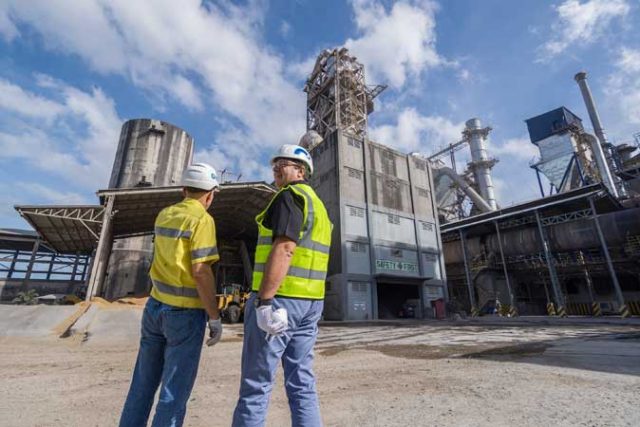
ABOITIZ Upgrade Solar, Inc. (AUSI) has inked a long-term solar power purchase agreement with cement manufacturer Republic Cement & Building Materials, Inc. (RCBM) to power the latter’s facility in Norzagaray, Bulacan.

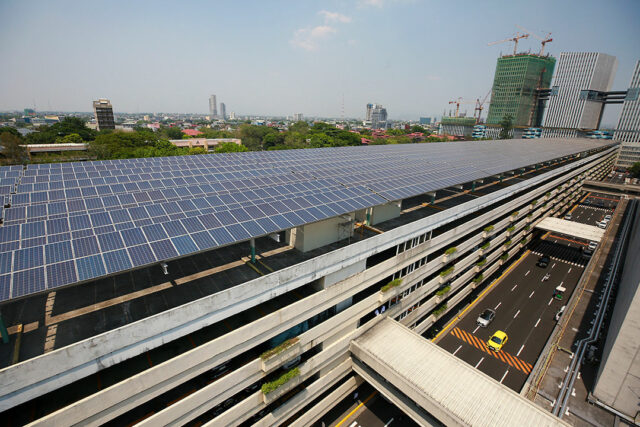
Under the deal, AUSI will develop, build, and operate a ground-mounted solar project in RCBM’s plant to allow RCBM to purchase clean energy.

The solar company will shoulder the upfront capital investment and the operations of the project and will exclusively sell the produced power to RCBM’s cement plant. The ground-mounted solar project is slated for completion by the second half of 2025.

AUSI is a joint venture between listed energy company Aboitiz Power Corp. (AboitizPower) and solar project developer Upgrade Energy Philippines (UGEP).

“This project sets a new benchmark for solar adoption in the industrial sector,” said AboitizPower First Vice-President and Head of Retail James Byron Yu.

“By bridging AUSI’s expertise in delivering innovative energy solutions and Republic Cement’s sustainability goals, we are creating a blueprint for how renewable energy solutions can power the Philippines’ industrial future.”

Roman Menz, chief executive officer of Republic Cement Services, underscored the importance of renewable energy for the cement industry, which he said is often recognized for its carbon-intensive operations.

“This partnership reflects Republic Cement’s dedication to sustainability in terms of addressing the pressing need for cleaner energy solutions,” said Mr. Menz. “By integrating solar energy into our operations, we take a decisive step toward reducing emissions and contributing to a more sustainable Philippines.”

Founded in 1955, the Republic Cement Group has five plants and one grinding station, boasting a total cement capacity of 9.7 million tonnes per annum.

“AUSI, backed by the collaboration between AboitizPower and UGEP, is dedicated to offering sustainable and efficient energy solutions that address the energy needs of businesses while supporting the Philippines’ transition to renewable energy,” said AUSI Chairperson Ruth Yu-Owen.

AUSI develops, builds, and operates distributed solar solutions catered to large commercial and industrial consumers. — Sheldeen Joy Talavera

Peso may sink to P60 on Trump, Fed cut worries

PHILSTAR FILE PHOTO

By Luisa Maria Jacinta C. Jocson, Reporter

THE PESO could sink to the P60-per-dollar mark this year due to potential protectionist policies from the administration of US President-elect Donald J. Trump, Fitch Solutions’ unit BMI said, which could lead to further intervention by the Bangko Sentral ng Pilipinas (BSP).

“Breaching the P60.00/USD level remains a very real possibility and much depends on how Trump’s policies will shape up,” BMI said in a report dated Jan. 13.

“If the newly elected president opts for very aggressive protectionism policies that take markets by surprise, the dollar could reach another all-time high. And in the event this occurs, BSP intervention in the FX (foreign exchange) market will prove ineffective.”

At end-2024, the peso closed at P57.845 versus the dollar, depreciating by 4.28% from its end-2023 finish of P55.37 against the greenback.

The peso closed at its record low of P59 thrice last year. It has yet to breach this level that was first set in October 2022.

BMI said the US Federal Reserve’s hawkish tilt amid lingering inflation concerns has caused volatility among emerging market currencies.

“Likewise, the peso is no exception and is trading at P58.39/USD on the spot rate. This ran counter to our original projection for the peso to strengthen by end-2024,” it said.

“To be fair, our previous projection was based on a Harris victory that simply did not materialize. With Trump’s return to the White House, and the accompanying policy overhang, this will keep the dollar strong,” BMI added.

Economies around the world are bracing for the potential inflationary pressures arising from the proposed policies of Mr. Trump, who will take office on Jan. 20. Among these are import tariffs, tax cuts and tighter immigration measures.

For now, BMI said there is “not much clarity” on Mr. Trump’s policies.

“But it is still too early to tell if Trump will follow through on his plans. He could still deliver a more watered-down approach to his promises by implementing smaller blanket tariffs as opposed to the 10-20% he originally suggested,” it said.

“Until more details of his policies are revealed, markets will speculate on his every move.”

The dollar hovered near its highest level in more than two years on Tuesday as traders scale back wagers on US rate cuts in 2025 after strong economic data, Reuters reported.

Traders are pricing in 29 basis points of easing this year, less than the 50 basis points the Fed projected in December, when it jolted the market with its measured approach to rate cuts due to inflation worries.

BMI expects the peso to trade between the P55.20 to P59.20 range this year. In the first two weeks of 2025, it has mostly traded at the P58 level, even setting multi-week lows in the past few days after a slew of strong US economic data stoked inflation concerns and caused markets to recalibrate their Fed easing bets.

“For sure, the peso would have traded weaker had the BSP not stepped in to arrest its decline. It is well documented in news outlets that the bank will not hesitate to intervene when the currency comes under undue stress,” BMI said.

“And the recent decline in foreign reserves confirms our view. If anything, this reflects the BSP’s commitment to keep the currency at around current levels.”

Latest data from the BSP showed the country’s gross international reserves (GIR) dropped by 1.5% to $106.84 billion at end-December from $108.49 billion at end-November.

BMI said central bank intervention will help “curb depreciatory pressures” on the currency.

“In the coming months, the BSP will need to intervene more actively as US interest rate changes continue to add volatility to the peso.”

BSP Governor Eli M. Remolona, Jr. earlier said they have been intervening in small amounts to keep markets orderly and curb speculation.

BMI also noted the impact of monetary easing on the currency.

“Even so, any appreciatory pressures will be constrained by the BSP’s loosening cycle. Admittedly, we are expecting the BSP to cut rates by less than the Fed.”

It said it expects the BSP to deliver 75 bps worth of cuts this year and the US central bank to slash rates by 100 bps.

“But with the economy in need of support, policy makers will likely implement the bulk of cuts in the first half even as the Fed does so in the second half. This means interest rate differentials will widen slightly in favor of the US,” it added.

The US central bank began its rate-cutting cycle in September, slashing rates by a cumulative 100 bps last year.

The BSP, which cut ahead of the Fed in August, delivered a total of 75 bps worth of cuts last year. This brought the policy rate to 5.75%.

PESO WEAKNESS TO PERSIST
Meanwhile, BMI said the peso will likely remain on a “depreciatory trend” in the next six to 24 months.

For this year, the Development Budget Coordination Committee (DBCC) expects the peso to range from P56 to P58.

“The biggest reason is that the Philippines will continue to run ‘twin deficits’ which will pose challenges for the currency,” it said.

BMI expects the current account deficit to widen to 2.5% of gross domestic product (GDP) this year from 2.3% in 2024.

In the first nine months of 2024, the current account deficit accounted for 3.9% of GDP.

“And we are even more certain that it will not return to pre-pandemic norms at least until the next presidential elections in 2028,” it said.

“The government’s plans to spend 5-6% of GDP annually on infrastructure which will keep capital imports high and the current account deficit wide.”

Country music superstar Carrie Underwood to perform at Trump’s inauguration

CARRIEUNDERWOODOFFICIAL.COM

WASHINGTON — Country music superstar Carrie Underwood will perform “America the Beautiful” at US President-elect Donald Trump’s inauguration on Jan. 20, according to a copy of the program shared by a spokesperson of the presidential inaugural committee.

“I love our country and am honored to have been asked to sing at the Inauguration and to be a small part of this historic event,” said Ms. Underwood who has mostly stayed out of politics during her career.

“I am humbled to answer the call at a time when we must all come together in the spirit of unity and looking to the future.”

The Grammy-winning superstar won singing competition show American Idol in 2005.

Mr. Trump, the Republican former president, defeated Vice-President Kamala Harris in the Nov. 5 US election.

Artists like Beyoncé and Celine Dion asked Mr. Trump to stop using their songs in the lead up to the 2024 election. Neil Young and Guns N’ Roses are among the performers who had asked him to stop using their music ahead of and after the 2016 election.

Mr. Trump has garnered the support of rapper Waka Flocka Flame and country singers Kid Rock and Billy Ray Cyrus, the father of Miley Cyrus, among others.

After Ms. Underwood’s performance, Chief Justice John Roberts will administer the oath of office to Mr. Trump, according to the copy of inauguration plans. Reuters

SMEs told to balance profit with sustainability

PHILIPPINE STAR/MIGUEL DE GUZMAN

By Patricia B. Mirasol, Multimedia Producer

SMALL Philippine companies can strive for stronger sales while ensuring sustainable corporate practices, according to small business owners.

Narrow profit margins and limited resources are some of the challenges these businesses face, but “there’s always a strategy,” Armando O. Bartolome, a business mentor and founder and president at GMB Franchise Developers, said in an interview. “You have to take the first step.”

The Southeast Asian nation has about 1.2 million micro, small and medium enterprises (MSME), accounting for more than 99% of its total enterprises, according to the government.

Mr. Bartolome said cost-efficient measures such as the installation of light-emitting diode (LED) lamps, solar panels and inverter air conditioners go a long way in the pursuit of sustainability.

LEDs use as much as 90% less energy and last up to 25 times longer than traditional incandescent bulbs. Users of solar panels, meanwhile, can avail themselves of the Energy department’s net-metering scheme to offset their electricity consumption.

Franchise business Tipid Sulit Laundromat gets its washing machines and dryers from Alliance Laundry Systems, a Wisconsin-based provider of commercial laundry systems.

The washing machines, which are customized for the Philippine market, consume 80 liters of water per load, Tipid Sulit co-owner Roderick F. Dilag said.

“In terms of water consumption, [our machines] are very economical,” he said in a virtual interview. “It uses 40% less water compared with other commercial brands.”

They use a combination of liquefied petroleum gas (LPG) and electricity to reduce electricity use. “Based on our computation, we save as much as P14 for every load.”

Products that made environmental, social, and governance claims grew 28% from 2017 to 2022, according to a 2023 study by McKinsey and NielsenIQ. Products that made no such claims, in comparison, grew 20%.

Consumers are also willing to spend an average of 9.7% more on sustainably produced or sourced goods, even as cost-of-living and inflationary concerns weigh, according to PricewaterhouseCooper’s 2024 Voice of the Consumer survey.

MSMEs that align themselves with these global sustainability trends can gain a competitive edge in international markets and meet the demand for eco-conscious options.

In its 2023-2028 MSME Development Plan, the Department of Trade and Industry (DTI) highlighted the circular economy, which creates a closed-loop system where materials are continuously repurposed, and green growth, which espouses economic growth that is good for the planet, as ways for MSMEs to scale sustainably.

The initial investment and the raw materials needed, however, are among the reasons people perceive eco-friendly business practices as expensive. Implementing these often requires an investment in energy-efficient appliances. Sustainable products also use ethically sourced materials, which may be more costly.

A solar system that can generate 3,000 watts of electricity, for instance, costs about P145,000 to P200,000.

While Mr. Bartolome noted the importance of an entrepreneur’s passion and persistence in championing sustainability, he said incentives are key to further promoting this concept.

“I have yet to see the government give incentives to MSMEs to go solar,” he pointed out. “In the US, when you have a solar panel installed, they give rebates.”

There also isn’t enough collaboration between the private and public sectors, he said.

“If you’re into agriculture, for example, can the government help [connect] you with farmers?”

Among the DTI’s programs is Green Economic Development, which helps MSMEs adopt climate-smart, environment-friendly and inclusive measures.

“Engaging MSMEs in sustainable business practices is a huge challenge and a huge opportunity,” said Katreena V. Pillejera, Philippine country manager at Global Reporting Initiative (GRI) ASEAN, in an Aug. 26 post on their website.

The 2024 pilot of its Sustainable Practices and Reporting Kickoff (SPARK) program, in collaboration with the DTI, “aims to use the power of sustainability reporting to reach more MSMEs and build their understanding of the value that comes from understanding their impacts.”

SPARK is the first stage of the five-year GRI-DTI initiative, which addresses sustainability issues related to supply chain practices and responsible procurement.

For Mr. Dilag, combining innovation and technology with green initiatives has translated to savings for the enterprise and made it more competitive.

Tipid Sulit Laundromat charges its customers 20-25% less because of its use of LPG, he said.

Its machines’ soft wash function uses earth-friendly chemicals that prevent skin allergies and clean fabrics such as silk.

The business is also exempted from having water treatment facilities due to the small amount of waste it generates.

“The Environment department has given us a certificate of noncompliance for water treatment facilities,” Mr. Dilag said. “Of course, we still need to have disposal facilities, but they don’t have to be as sophisticated as those of bigger companies.”


The New Government Procurement Act: Promises, problems, and progress

FREEPIK

The passage of Republic Act No. 12009, or the New Government Procurement Act (NGPA), introduces transformative reforms to the government procurement framework, building upon Republic Act No. 9184, or the Government Procurement Reform Act (GPRA). While the NGPA resolves many inefficiencies of its predecessor, it raises new challenges that may complicate its implementation.

SUSTAINABILITY GOALS IN PROCUREMENT
A landmark feature of the NGPA is its explicit incorporation of sustainability into procurement processes. Procuring entities are mandated to establish sustainable public procurement programs aimed at achieving value for money on a whole-life basis while benefiting society and the economy and minimizing environmental impacts.

This progressive agenda introduces opportunities but also raises concerns. How should agencies balance sustainability goals against cost-efficiency? If a more sustainable option is significantly costlier, should it be prioritized despite budgetary constraints? Furthermore, the varying capacities of agencies to assess environmental and social criteria effectively could lead to inconsistent implementation.

SIMPLIFICATION OF PROCUREMENT PROCESSES
The NGPA reduces administrative burdens and increases efficiency, particularly in small-value procurements and alternative procurement methods. Under the GPRA, small-value procurement applies to goods, infrastructure projects, and consulting services not covered by the “Shopping” method. Financial thresholds depend on the procuring entity: national agencies, government-owned and -controlled corporations, government funding institutions, state universities and colleges, and the Autonomous Regional Governments have a limit of P1 million. For local government units, thresholds vary from P1 million to P50,000.

The thresholds for small-value procurements have been adjusted to account for inflation and project complexities, enabling simpler procedures for smaller projects. An evaluation may now proceed with just one quotation if the amount does not exceed P2 million, subject to periodic review and adjustment of the threshold.

The NGPA also expands the use of alternative methods, such as competitive dialogue, unsolicited offers with bid matching, and direct procurement for science, technology, and innovation. It grants the head of the procuring entity greater discretion to approve alternative methods in justified cases, including emergencies.

However, this flexibility raises concerns about accountability and transparency. Simplified procedures, while efficient, could inadvertently weaken oversight and increase the risk of abuse. Safeguards must be implemented to prevent these streamlined processes from undermining procurement integrity.

THE FIT-FOR-PURPOSE APPROACH
A key innovation under the NGPA is the adoption of the fit-for-purpose approach, which replaces the one-size-fits-all procurement model with tailored solutions designed to align closely with project-specific requirements.

Section 3(d) of the NGPA emphasizes proportionality, ensuring procurement conditions are scaled to the complexity of the project. Section 7 mandates the incorporation of lifecycle considerations, including environmental and economic impacts, into procurement planning. This approach extends the focus beyond immediate costs to ensure sustainable value throughout a project’s operational life.

Section 26 introduces innovative procurement modes, such as competitive dialogue and unsolicited offers with bid matching. These modalities offer flexibility in addressing complex or innovative projects that may not fit traditional procurement methods.

While this approach promotes efficiency, it also raises potential challenges. The discretionary nature of tailored procurement decisions may lead to inconsistencies across entities or even misuse without robust oversight mechanisms.

DIGITAL TRANSFORMATION
The modernization of the Philippine Government Electronic Procurement System (mPhilGEPS) represents a significant leap forward.

The integration of e-bidding and e-marketplace features streamlines procurement by enabling electronic payments, interconnecting government databases, and providing a secure audit trail of electronic transactions. These enhancements reduce fraud opportunities and ensure traceable procurement activities.

The modernization reduces compliance burdens for bidders by allowing the submission of a PhilGEPS Certificate of Registration and Membership in lieu of multiple legal, technical, and financial eligibility documents.

Despite these advantages, the reliance on advanced digital technologies assumes universal access and proficiency among government entities and suppliers. Smaller or remote entities may lack the infrastructure or technical capacity to fully utilize mPhilGEPS, potentially creating disparities in participation and access.

CHALLENGES IN IMPLEMENTATION
While the NGPA introduces substantial improvements, its implementation raises several challenges:

1. Balancing Goals: Sustainability objectives may conflict with cost-efficiency, requiring clear guidelines on prioritization.

2. Oversight in Simplified Processes: Streamlined methods risk weakening transparency and accountability, necessitating stringent controls.

3. Capacity Disparities: The fit-for-purpose approach and digital modernization depend on the technical competence of procuring entities, which may vary significantly.

4. Equity Concerns: Digital systems like mPhilGEPS must be accessible to all stakeholders, including smaller agencies and less-resourced suppliers, to avoid exclusion.

CONCLUSION
The NGPA represents a forward-thinking approach to public procurement, addressing inefficiencies in the GPRA while incorporating sustainability, efficiency, and digital transformation. However, its success will depend on tackling challenges posed by its innovative features, particularly balancing flexibility with accountability and ensuring equitable resource access.

While the NGPA positions the Philippines as an exemplar in transparent and sustainable procurement, its effectiveness relies on robust implementation, capacity-building measures, and resolving open-ended problems in real-world scenarios. Addressing these issues will enable the NGPA to foster progress in government procurement.

The views and opinions expressed in this article are those of the author. This article is for general informational and educational purposes only and not offered as and does not constitute legal advice or legal opinion.


Eric Leonardo L. Cembrano is an associate of the Corporate and Special Projects department of the Angara Abello Concepcion Regala & Cruz Law Offices (ACCRALAW).

elcembrano@accralaw.com

8830-8000

Gov’t fully awards reissued 10-year Treasury bonds at higher rates

BW FILE PHOTO

THE GOVERNMENT made a full award of the reissued Treasury bonds (T-bonds) it offered on Tuesday at rates higher than secondary market levels amid uncertainties on the policies of US President-elect Donald J. Trump.

The Bureau of the Treasury (BTr) raised P30 billion as planned via the reissued 10-year bonds it auctioned off on Tuesday as total bids reached P54.219 billion or almost double the amount on offer.

This brought the total outstanding volume for the series to P293.6 billion, the Treasury said in a statement.

The bonds, which have a remaining life of seven years and eight months, were awarded at an average rate of 6.249%. Accepted yields ranged from 6.075% to 6.29%.

The average rate of the reissued papers decreased by 31.3 basis points (bps) from the 6.562% fetched for the series’ last award on July 6, 2023. This was also 50.1 bps lower than the 6.75% coupon for the issue.

However, the average rate was 2.3 bps above the 6.226% seen for the same bond series and 9.1 bps higher than the 6.158% quoted for the seven-year bond at the secondary market before Tuesday’s auction, based on PHP Bloomberg Valuation Service Reference Rates data provided by the BTr.

The T-bonds fetched rates that were higher than comparable secondary market yields as the market awaits Mr. Trump’s inauguration, Rizal Commercial Banking Corp. Chief Economist Michael L. Ricafort said in a Viber message.

T-bond rates rose to track the rise in US Treasury yields after the stronger-than-expected US labor data and Mr. Trump’s potential protectionist policies caused inflation concerns in the world’s largest economy, a trader said in a phone interview.

The BTr plans to raise P213 billion from the domestic market this month, or P88 billion via Treasury bills and P125 billion through T-bonds.

The government borrows from local and foreign sources to help fund its budget deficit, which is capped at P1.54 trillion or 5.3% of gross domestic product this year.

With Mr. Trump set to step back into the White House next week, the focus has been on his policies that analysts expect will boost growth but add to price pressures, Reuters reported.

The threat of tariffs along with the Federal Reserve’s stated measured approach to rate cuts this year have lifted Treasury yields and the dollar.

After a blowout jobs report on Friday reinforced support for the US central bank’s cautious stance toward further monetary policy easing this year, investors’ focus is now on the US consumer inflation report due on Wednesday.

Traders are pricing in 29 basis points of easing this year, less than the 50 basis points the Fed projected in December, when it jolted the market with its measured approach to rate cuts due to inflation worries.

US Treasury 10-year yields touched a 14-month high of 4.799% on Monday in choppy trading before pulling back. It was steady at 4.7656% on Tuesday. — Aaron Michael C. Sy with Reuters

CA upholds SEC cease-and-desist order vs NWorld

PHILSTAR FILE PHOTO

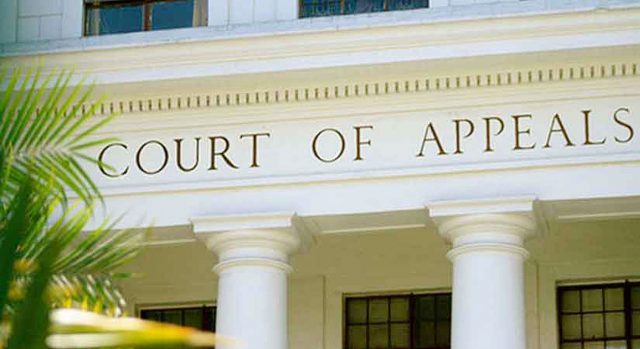
THE Court of Appeals (CA) affirmed the cease-and-desist order imposed by the Securities and Exchange Commission (SEC) against AlphanetWorld Corp. (NWorld) for offering investments without the necessary registration and licenses.

The CA 8th Division promulgated an 11-page decision on Dec. 27 that said the SEC provided NWorld with due process in issuing the order and that the company was engaged in soliciting investments from the public without the needed requirements, the corporate regulator said in an e-mailed statement on Tuesday.

The commission issued the cease-and-desist order against NWorld on Feb. 23, 2022. It also denied NWorld’s motion to lift the order on July 19, 2022, citing a lack of merit.

NWorld was found to be engaged in the selling of investment packages ranging from P4,750 to P19,000, with a guaranteed return of up to P127,000 per month following an investigation by the SEC’s Enforcement and Investor Protection Department.

Investors were allegedly entitled to bonuses such as discounted rates for every purchase of investment packages, referral bonuses, sales match bonuses, and potential earnings of P25,000 under NWorld’s “XX Cash” program whenever they meet the required pairs of recruits.

The sale or distribution of securities without the necessary documents is prohibited under Republic Act No. 8799 or the Securities Regulation Code.

In July 2022, the SEC canceled the corporate registration of NWorld for fraud in the procurement of its certificate of incorporation, citing its submission of an invalid Tax Identification Number in its articles of incorporation. — Revin Mikhael D. Ochave