Home Blog Page 1724

Bella Ramsey teases action-packed season 2 of The Last of Us

Bella Ramsey in a scene from The Last of Us.

LONDON — Makers of the post-apocalyptic TV series The Last of Us say fans are in for extra action and scarier zombies when the show returns for a much-awaited second season, two years after the first season finale aired.

The series is based on the video game franchise of the same name and follows survivors Joel Miller, played by Pedro Pascal, and his young protege Ellie (Bella Ramsey), who fight mutated creatures and other people.

The show’s second season takes place five years after the events of the first season, and sees Joel and Ellie, who is now 19, settled in Jackson, Wyoming, and at odds with each other.

“There’s a lot more action in this season, or more like physical fighting. It was more intense, more emotionally complex,” Ramsey said premiering the new season in London on Thursday.

Craig Martin, who co-created the series with Neil Druckmann, said the seven-episode second season stays loyal to its source material and the style they established previously.

“Neil and I just said, we’re going to adapt following the same method as season one. So, let’s not change anything, which I think sometimes people change things, but if it’s working, you sort of keep your process,” Mazin said.

“But we did learn a lot about mounting action and about portraying the infected and making them even more convincing, more grounded, and more scary. So, people that really like the infected and maybe thought, ‘oh, I wish we had seen some more,’ there will be more because the story demands it,” he added.

The second season also introduces audiences to new characters. It stars Isabela Merced in the role of Dina, Ellie’s best friend, and Beef actor Young Mazino as Dina’s ex, Jesse, a “pillar of his community.”

The series has already been confirmed to return for a third season.

“Season 3 is very exciting. There’s a little hint in the second season, I reckon, as to where the third season is going to go, so watch out for that,” said Ramsey.

The Last of Us season 2 debuts on HBO and Max on April 13 and Sky and NOW on April 14. — Reuters

Manila continues to slump in IMD’s Smart City Index

Manila fell four places to 125th out of 146 cities in the latest edition of the Smart City Index. This was the Philippine capital’s lowest ranking thus far according to Switzerland-based International Institute for Management Development (IMD). The Smart City Index measures and rates each city’s level of technological application to the five key areas: health and safety, mobility, activities, opportunity, and governance.

Manila continues to slump in IMD’s Smart City Index

LCF touts DEI to boost corporate growth

FREEPIK

THE League of Corporate Foundations (LCF) said companies should incorporate diversity, equity, and inclusivity (DEI) as well as corporate social responsibility (CSR) into their business strategies, as these could help boost corporate growth.

“Businesses that prioritize DEI do more than adapt; they lead. By embedding DEI into their core strategies, they unlock new opportunities, drive meaningful change, and contribute to a more equitable and sustainable future for all,” LCF Chairperson and Vivant Foundation, Inc. Executive Director Shem Jose W. Garcia said during a launch event in Makati City last week.

“This includes intentional efforts to ensure the inclusion of underrepresented groups, particularly women, persons with disabilities, senior citizens, Indigenous people, people of various faiths and beliefs, and others,” he added.

According to Mr. Garcia, businesses should embrace DEI as a key driver of sustainable development in the country.

LCF said that 43% of Southeast Asian companies, including those in the Philippines, have diversity programs, higher than the 36% in 2020, based on a study by the Boston Consulting Group.

Mr. Garcia said this as LCF launched its 2025 CSR Conference and Expo last week with the theme “DEI for Shared Prosperity.”

The conference will be held from July 1 to 3 at Dusit Thani Manila, while the Expo will be on July 1 and 2 at the Glorietta Activity Center in Makati City.

The 2025 CSR Conference and Expo aims to highlight the role of businesses in embedding DEI into their core strategies, ensuring CSR initiatives are a catalyst for systemic change, sustainability, and shared prosperity.

“Integrating DEI into business strategies is not only about corporate responsibility,” Mr. Garcia said.

The 2025 CSR Conference and Expo will feature discussions, networking opportunities, and insights on integrating DEI into both CSR initiatives and overall business operations.

The event is co-presented by Cebuana Lhuillier Foundation, Inc. and co-organized with Metro Pacific Investments Corp. Foundation, Inc., and The SM, Henry Sy, and Felicidad T. Sy Foundations, Inc.

LCF is the country’s leading network for fostering environmental, social, and governance-driven initiatives. It is composed of operating and grant-making corporate and family foundations. — Revin Mikhael D. Ochave

Climate change and health

PCH VECTOR-FREEPIK

Climate change is having profound and far-reaching effects on human health, the World Health Organization (WHO) warns. It contributes to death and illness through increasingly frequent extreme weather events — such as heatwaves, storms, and floods — as well as the disruption of food systems; rising cases of zoonotic, water-, food-, and vector-borne diseases; and growing mental health challenges.

In simple terms, climate change refers to long-term shifts in temperatures and weather patterns. While these changes can occur naturally — such as through solar activity or volcanic eruptions — human activities have been the dominant driver since the 1800s. The primary culprit? The burning of fossil fuels like coal, oil, and gas, which releases greenhouse gases such as carbon dioxide and methane. These gases trap the sun’s heat in the atmosphere, causing the planet to warm like a blanket wrapped around it.

Today, around 3.6 billion people live in areas highly vulnerable to climate change. Between 2030 and 2050, the WHO estimates that climate change will cause an additional 250,000 deaths annually, from causes like undernutrition, malaria, diarrhea, and heat stress. The projected direct health-related costs (excluding those related to other sectors like agriculture and water supply) are estimated at $2-4 billion per year by 2030. Regions with under-resourced health systems — often in developing countries — face the greatest risks.

But climate change doesn’t just affect physical health. It also threatens many of the social determinants of health — livelihoods, access to care, equality, and support systems. The burden falls most heavily on vulnerable groups: women, children, the poor, the elderly, migrants, and those with chronic illnesses.

To avoid catastrophic health consequences, the WHO emphasizes that global warming must be limited to 1.5°C. Reducing emissions through improved transport, food systems, and energy choices can yield immense health benefits, especially by reducing air pollution.

PHILIPPINE RESPONSE
The Philippines is a signatory to the Paris Agreement, which aims to limit the global temperature rise. The country has also endorsed the COP28 UAE Declaration on Climate and Health and is part of the WHO-led Alliance for Transformative Action on Climate and Health — all steps toward building climate-resilient health systems.

At home, the Department of Health (DoH) has been leading multistakeholder efforts to safeguard health from climate impacts. In line with the Climate Change Act of 2009, the DoH sits on the Climate Change Commission’s advisory board and chairs the Inter-Agency Committee on Environmental Health. The DoH also plays a key role in the National Climate Change Action Plan (2011-2028) and the National Adaptation Plan (2023-2050).

Most notably, in January, the DoH established the Health and Climate Change Office (HCCO) — a dedicated unit tasked with coordinating a whole-of-society response to climate threats while promoting sustainable, low-carbon, and climate-resilient health systems.

The HCCO is responsible for:

• Embedding climate considerations into health policies and programs;

• Integrating health concerns into broader climate strategies and plans;

• Leading cross-sector collaboration to protect public health from climate risks;

• Developing a unified Health and Climate Change Program across DoH units;

• Crafting a Health and Climate Change Roadmap and Action Plan, with clear short-, medium-, and long-term targets.

BIOPHARMACEUTICAL INDUSTRY’S ROLE
Innovative biopharmaceutical companies are also stepping up — not only by addressing the health challenges posed by climate change, but also by minimizing their own environmental footprints. These companies are:

• Developing new technologies to detect, treat, and prevent climate-sensitive diseases;

• Reducing emissions across their operations and supply chains;

• Investing in renewable energy and energy efficiency;

• Lowering water use and increasing recycling and sustainability practices;

Together with the DoH and other partners, the biopharmaceutical industry is committed to ensuring that the health impacts of climate change are addressed with urgency, innovation, and shared responsibility.


Teodoro B. Padilla is the executive director of Pharmaceutical and Healthcare Association of the Philippines which represents the biopharmaceutical medicines and vaccines industry in the country. Its members are in the forefront of research and development efforts for COVID-19 and other diseases that affect Filipinos.

Hongqi PHL to introduce next-gen EVs

A profile of the Hongqi EH7 — PHOTO FROM EVOXTERRA

EVOxTerra, exclusive distributor of Hongqi in the Philippines, said it is set to augment its lineup with the introduction of “next-generation electric vehicles” — the Hongqi EH7 all-electric sedan and Hongqi EHS7 all-electric SUV.

Launched recently at the Paris Motor Show, both the Hongqi EH7 and Hongqi EHS7 continue to gain global recognition and popularity as parent company FAW-Hongqi develops new vehicles that are “technologically advanced, and feature uncompromised comfort, performance, and safety that exceed global standards.”

Hongqi Philippines President Rashid Delgado said, “What you’re about to see from Hongqi isn’t just your typical vehicle rollout. What we’re about to unveil speaks to a brand-new design paradigm for Hongqi. These models reflect a radical change in our design philosophy that we believe is as modern and innovative as the technology in the cars themselves.”

Mr. Delgado further commented that both the Hongqi EH7 and Hongqi EHS7 have markedly different designs from Hongqi’s current design language. With sleek external lines and improved internal architecture, the EH7 and EHS7 will be Hongqi’s interpretation of electric luxury. Both vehicles will feature next-generation battery and electric motor technology that boast of greater power efficiency through high-capacity batteries and high-output motors.

Hongqi’s new-generation electric vehicles highlight their shift to a sleeker, more modern approach to automotive design and innovation. As Hongqi continues to grow in Europe, Southeast Asia, and the Americas, the global market can expect even more exciting products soon.

Hongqi’s full lineup is available for viewing and test drive at showrooms located at BGC, Manila Bay, Alabang, and Quezon City. Test drives may be booked through https://www.hongqi.ph. For more information, follow Hongqi’s official Facebook page at https://www.facebook.com/hongqi.philippines/ and Instagram (@hongqi.ph).

Debt yields end higher on Trump tariffs, BSP

YIELDS on government securities (GS) traded in the secondary market went up last week amid increased volatility due to the Trump administration’s shifting tariff policies and the Bangko Sentral ng Pilipinas’ (BSP) policy meeting.

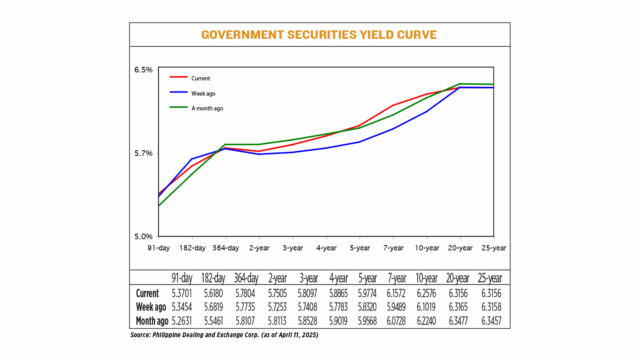
GS yields, which move opposite to prices, rose by an average of 6.17 basis points (bps) week on week, according to the PHP Bloomberg Valuation Service Reference Rates as of April 11 published on the Philippine Dealing System’s website.

Rates at the short end of the curve were mixed, with the 91- and 364-day Treasury bills (T-bills) increasing by 2.47 bps and 0.69 bp to fetch 5.3701%, and 5.7804%, respectively. Meanwhile, the yield on the 182-day T-bill fell by 6.39 bps to 5.6180%.

At the belly, yields went up across all tenors. The two-, three-, four-, five-, and seven-year Treasury bonds (T-bond) saw their rates increase by 2.52 bps (to 5.7505%), 6.89 bps (5.8097%), 10.82 bps (5.8865%), 14.54 bps (5.9774%), and 20.83 bps (6.1572%), respectively.

At the long end, rates were mixed. The 20- and 25-year bonds inched down by 0.09 bp and 0.02 bp to fetch 6.3156% and 6.3156%, respectively. Meanwhile, the yield on the 10-year T-bond surged by 15.57 bps to 6.2576%.

GS volume traded was at P36.07 billion on Friday, lower than the P96.37 billion recorded a week earlier.

Trading last week was volatile due to uncertainties over US President Donald J. Trump’s trade policies, a bond trader said.

“There was a significant rise in investor demand for fixed-income securities as a hedge against the more pronounced movements in the local equity market,” the trader said in an e-mail.

“However, bond movements were still being primarily driven by anticipated inflationary impact of the announced tariffs on imported goods, especially on the longer end of the yield curve. The recently announced 90-day lowering of US tariffs to 10% for applicable Philippine imports have likewise eased significant market concerns over its potential impact to inflation,” the trader added.

ATRAM Trust Corp. Vice-President and Head of Fixed Income Strategies Lodevico M. Ulpo, Jr. said in a Viber message that the yield curve steepened last week, partly driven by the increase in US Treasury rates amid global trade concerns.

“Yields reacted to global and domestic developments with longer-dated bond yields tracking global bond markets. US Treasury yields jumped on concerns about the US economy post Trump’s tariff tantrum. Short end yields edged lower, tracking the BSP’s much anticipated rate cut,” said Nicholas Antonio T. Mapa, chief economist at Metropolitan Bank & Trust Co.

Beijing increased its tariffs on US imports to 125% on Friday, hitting back against Mr. Trump’s decision to raise duties on Chinese goods and increasing the stakes in a trade war that threatens to upend global supply chains, Reuters reported.

The retaliation intensified global economic turmoil unleashed by Mr. Trump’s tariffs. US stocks ended a volatile week higher, but the safe haven of gold hit a record high during the session and benchmark US 10-year government bond yields posted their biggest weekly increase since 2001 alongside a slump in the dollar, signaling a lack of confidence in America Inc.

The $29-trillion Treasury market saw an acute sell-off following Mr. Trump’s initial announcement about what he calls reciprocal tariffs. That turbulence was seen as part of what drove Mr. Trump to announce a 90-day pause for countries other than China on Wednesday.

The White House has said since then that more than 75 countries have sought trade negotiations with the United States and that future deals would bring certainty.

The tit-for-tat tariff increases by the US and China stand to make goods trade between the world’s two largest economies impossible, analysts say. That commerce was worth more than $650 billion in 2024. 

Benchmark 10-year US Treasury yields, which move opposite to prices, registered their biggest weekly rise in more than two decades, with trading volumes well above average, amid fears that China may be offloading a large portion of its US bond holdings.

The market’s anticipation of a jumbo issuance of new 10-year benchmark T-bonds also drove yields higher, Mr. Ulpo said, overshadowing the BSP’s widely expected rate cut on Thursday.

“While the BSP’s decision was aligned with easing inflation and signaled a dovish stance, its market impact was muted amid heightened supply concerns and shifting risk sentiment. The upcoming bond issuance created a defensive tone in the belly to the long end of the curve as investors positioned ahead of expected duration supply. With global factors still dominant, market expectations have tilted toward higher long-end yields despite the easing cycle,” he said.

“Despite the rate cut, yield movements were more reactive to global rate volatility and looming supply risks, dampening the downward pressure on yields that typically follows a policy easing,” Mr. Ulpo added.

The Bureau of the Treasury (BTr) is looking to raise at least P30 billion through 10-year fixed-rate Treasury notes that will start this week. National Treasurer Sharon P. Almanza said the offering will establish a new 10-year benchmark bond.

The BTr will hold the price-setting for the bonds on Tuesday. The offer is set to run until April 24, unless closed earlier, while the issue date is scheduled for April 28.

Meanwhile, the Monetary Board on Thursday cut benchmark interest rates by 25 bps to bring the policy rate to 5.5%, as expected by all 17 analysts in a BusinessWorld poll.

BSP Governor Eli M. Remolona, Jr. said expectations of easing inflation support the shift to a more accommodative monetary policy stance.

He added that the Monetary Board is considering further rate cuts this year but maintained that these will be delivered in “baby steps” of 25 bps at a time.

“For now, what we’re looking at is a few more cuts, but we have more meetings than the number of cuts we are thinking about,” Mr. Remolona said.

The Monetary Board has four meetings left this year, which are scheduled for June 19, Aug. 28, Oct. 9, and Dec. 11.

For this week, the market’s focus will be on the Treasury’s bond offer, Mr. Ulpo said.

“All eyes will be on the expected issuance of a jumbo 10-year bond, which is likely to test market appetite for duration and drive positioning across the curve. Preliminary indications suggest the bond may price with a coupon in the 6.25%–6.5% range, reinforcing expectations of continued steepening unless strong demand emerges,” he said.

“At the same time, external risks — particularly upcoming US inflation data and any Federal Reserve commentary — remain critical drivers for sentiment and could exacerbate volatility in long-end yields. Market participants should remain cautious, as supply pressures and global macro factors continue to dominate short-term rate direction,” Mr. Ulpo added.

The trader said that the market will continue to monitor the US government’s trade policy announcements. “Moreover, they will also consider major economic releases on Chinese GDP (gross domestic product) and US retail sales, which might provide an initial assessment of the potential impact of a protracted trade war on broader global economic prospects.” — Abigail Marie P. Yraola with Reuters


China expands Spanish pork access as trade tensions with US intensify

REUTERS

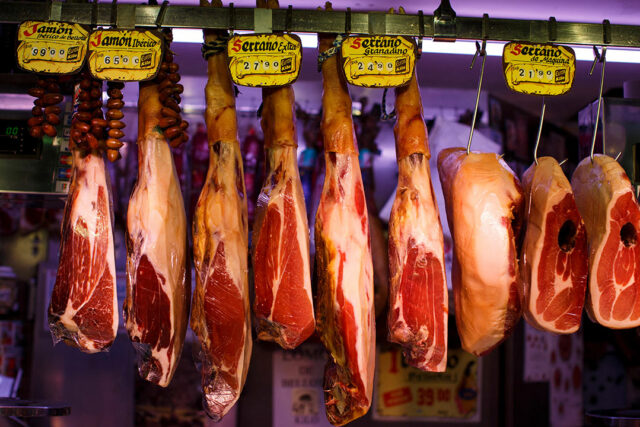
BEIJING/MADRID — China has signed two agricultural trade protocols with Spain covering pork and cherries as the world’s second largest economy acts to bolster ties with the European Union (EU) amid an escalating trade war between Beijing and the US.

The deal, announced on Friday by Spanish Prime Minister Pedro Sanchez in Beijing, came after US President Donald Trump hiked tariffs on Chinese imports to 145%, prompting China to raise its own duties on US goods to 125%.

“In a context of enormous international commercial turbulence, derived from the tariff crisis, we welcome with optimism and hope this new gesture from the Asian giant, which is opening up new options for the supply of pork products,” according to the National Association of Spanish Meat Industries.

The new deal includes pork stomach exports — a product widely consumed in China but not previously authorized, according to Daniel de Miguel, international manager of Interporc, Spain’s pork producers association.

Analysts regard the deal as a signal Beijing might ease its anti-dumping inquiry into EU pork, launched last year in retaliation for EU tariffs on Chinese electric vehicles (EVs).

The investigation could badly impact countries like Spain, the Netherlands and Denmark because a large portion of the EU’s pork shipments to China are pig ears, noses, feet and offal — products rarely consumed in Europe but popular in China.

“This is great news for Spain’s pig farmers,” according to Even Rogers Pay, agriculture analyst at Trivium China. “It suggests regulators may delay or ease the pork investigation, as they recently did with brandy.”

China has extended its investigation into EU brandy by three months and is in talks with the 27-nation EU to set minimum prices for Chinese EVs.

“This is part of a pattern of Beijing seeking to stabilize and improve its trade relationships with multiple key trade partners, including the EU,” Pay added.

Mr. Trump’s announcement on Wednesday of a 90-day tariff pause for dozens of countries prompted the EU to hold off on retaliatory levies on about 21 billion euros ($23.85 billion) of US imports set to take effect on April 15.

The bloc is still assessing how to respond to US car tariffs and the broader 10% levies that remain in place.

China imported $4.8 billion worth of pork, including offal, in 2024 — over half of it from the EU, with Spain leading the bloc in exports by volume.

China’s pork inquiry is due to conclude by June 17, but could be extended. — Reuters

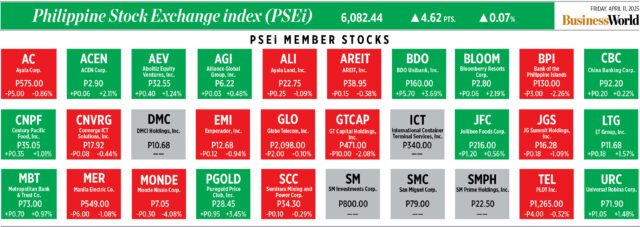
How PSEi member stocks performed — April 11, 2025

Here’s a quick glance at how PSEi stocks fared on Friday, April 11, 2025.


Peso may be range-bound on escalating US-China trade war

PHILIPPINE STAR/WALTER BOLLOZOS

THE PESO may move sideways against the dollar this week as markets continue to monitor the growing trade war between the United States and China.

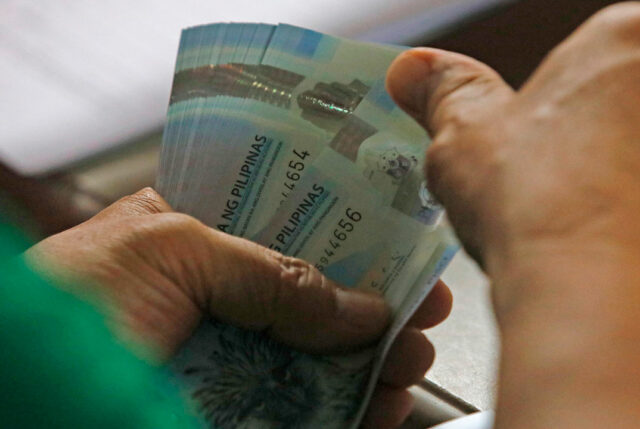
The local unit closed at P56.97 per dollar on Friday, strengthening by 38 centavos from its P57.35 finish on Thursday, Bankers Association of the Philippines data showed.

Week on week, however, the peso was down by 14.9 centavos from its P56.821 finish on April 4.

“The peso rose on broad dollar sell-off, still on growing concerns of a recession and the escalating China trade war,” a trader said in a phone interview.

The dollar was generally weaker on Friday as the market continued to react to the Trump administration announcement of a 90-day pause on the “reciprocal” tariffs it imposed on most of its trading partners, Rizal Commercial Banking Corp. Chief Economist Michael L. Ricafort said in a Viber message.

For this week, the trader said the peso’s movements will continue to depend on the developing trade war between the US and China.

The trader sees the peso moving between P56.90 and P57.30 per dollar this week, while Mr. Ricafort said it could range from P56.75 to P57.25.

The dollar continued to slide against major currencies on Friday as the back-and-forth over import tariffs shook investor confidence in the safety of the greenback, sending it to its lowest level in a decade against the Swiss franc and a three-year low versus the euro, Reuters reported.

China increased its tariffs on US imports to 125% from 84% on Friday, retaliating against US President Donald J. Trump’s decision to hike duties on Chinese goods to a total of 145% after pausing many of his latest tariff hikes on most countries.

The dollar has been hit hard by a global sell-off that spread to stocks and even safe-haven US Treasuries. The yields on benchmark 10-year notes were on course for their biggest weekly jump since 2001.

Brad Bechtel, global head of FX at Jefferies, said dollar weakness is being driven partly by the view that US economic exceptionalism is waning — with the potential of a looming recession — and a switch from the dollar as a safe-haven asset to the yen and Swiss franc.

“There’s a great rotation, which is basically foreign investors diversifying away from the US into other regions such as the euro zone. And for those foreign investors still involved in the US, they’re realizing they need to currency hedge their assets. There’s a scramble to do so, which is putting additional pressure on the dollar.”

The greenback was down 0.51% at 144.05 yen after hitting its lowest level since September 2024. It was set for its largest weekly drop since early February.

The dollar index, which measures the greenback against a basket of currencies including the yen and the euro, fell 0.56% to 99.958 — hitting its lowest mark since April 2022. It was on track for its biggest weekly drop since early last month.

“Part of the dollar weakness in the past few weeks has been linked to worries over a recession or the Fed cutting rates, but it’s kind of gone beyond that,” said Win Thin, global head of markets strategy at Brown Brothers Harriman in New York.

“It’s more really loss of confidence and credibility in the dollar and then in US policy making. Typically in risk-off episodes, the dollar should gain as a safe haven, but it’s really been the yen and Swiss franc that have been picking that up, and the dollar has been under pressure.” — Aaron Michael C. Sy with Reuters

PHL shares may rise further on bargain hunting

BW FILE PHOTO

PHILIPPINE STOCKS may extend their climb in the coming days on bargain hunting, with investors likely to stay on the sidelines amid a shortened trading week.

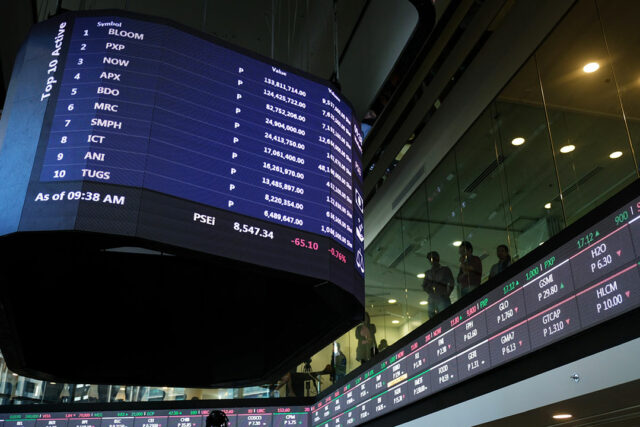
On Friday, the Philippine Stock Exchange index (PSEi) inched up by 0.07% or 4.62 points to close at 6,082.44, while the broader all shares index slipped by 0.03% or 1.18 points to 3,621.76.

Week on week, however, the PSEi was down by 0.03% or 1.75 points from the 6,084.19 finish on April 4, marking its fifth straight week of decline.

Philippine financial markets are closed on April 17 and 18 for non-working days in observance of Holy Week.

“Ahead of the Lenten pause, the local mark was not spared from a global rout driven by retaliatory tariffs, but was staved off by a predicated rate cut from the Bangko Sentral ng Pilipinas (BSP),” online brokerage 2TradeAsia.com said in a market note.

“The local market is already on a five-week losing streak as global trade war fears take over sentiment. On a positive note, the market is still able to keep its position above the 6,000 level,” Philstocks Financial, Inc. Senior Research Analyst Japhet Louis O. Tantiangco said in a Viber message.

On Wednesday, US President Donald J. Trump declared a 90-day pause on the “reciprocal” tariffs it imposed on most of the US’ trading partners including the Philippines, subjecting them to a 10% blanket duty instead of the adjusted rates announced earlier.

Meanwhile, the BSP on Thursday cut benchmark interest rates by 25 basis points (bps) to bring the policy rate to 5.5%, as expected by all 17 analysts in a BusinessWorld poll, putting its easing cycle back on track after an unexpected pause in February.

BSP Governor Eli M. Remolona, Jr. said the Monetary Board is considering further rate cuts this year in “baby steps” of 25 bps at a time.

The Monetary Board has now reduced borrowing costs by a cumulative 100 bps since it kicked off its easing cycle in August last year.

Mr. Tantiangco said bargain hunting following the market’s recent decline may continue to lift the PSEi this week. “Hopes of further easing by the BSP moving forward may also compel investors to take positions.”

“However, worries over the global economy amid the US’ protectionist policies and the possibility of retaliation by other countries may continue to weigh on sentiment. Investors are also expected to maintain a cautious stance especially by the end of the shortened trading week as they take into consideration the uncertainties on the days the market is closed,” he added. He placed the PSEi’s support at 6,000 and resistance at 6,400.

Rizal Commercial Banking Corp. Chief Economist Michael L. Ricafort put the PSEi’s support at 6,000 and minor resistance at 6,230-6,490.

“The PSEi posted relatively modest declines despite the recent volatility in the global stock markets,” Mr. Ricafort said.

For its part, 2TradeAsia.com pegged the PSEi’s immediate support at 6,000 and resistance at 6,400. — Revin Mikhael D. Ochave

Trump unpredictability pushing exporters to diversify markets

REUTERS

By Justine Irish D. Tabile, Reporter

THE Philippine Exporters Confederation, Inc. (Philexport) said its members need to diversify their markets in the face of the unpredictability of US trade policy.

“The problem is, knowing Trump, the situation is still fluid. He might change his mind on some aspects,” Philexport President Sergio Ortiz-Luis, Jr. told reporters.

“There are items now that are exempted… Those are things that he might change his mind on,” he added.

US President Donald J. Trump last week announced a 90-day pause on the duties he had unveiled on April 2. The April 2 tariff schedule featured some of the highest rates being imposed on members of the Association of Southeast Asian Nations (ASEAN).

Cambodia is facing a 49% tariff, followed by Laos (48%), Vietnam (46%), Myanmar (44%), Thailand (36%), Indonesia (32%), Malaysia (24%), and Brunei (24%).

The Philippines was assigned a 17% tariff, second in the region only to Singapore’s baseline rate of 10%.

With the 90-day pause now in place, all countries will be charged the blanket 10% duty until July, pending negotiations in Washington with various national delegations.

Following a virtual meeting on Thursday, ASEAN ministers committed to not imposing retaliatory measures in response to the US tariffs.

Mr. Ortiz-Luis said for the moment, the Philippines is in a good position, but “we have to watch for the changes that will happen because some are negotiating, some are retaliating, so I think we should just keep quiet and watch.”

In particular, Vietnam expressed openness to bringing down its tariffs on US goods to zero.

Asked if this is something the Philippines should do, Mr. Ortiz-Luis said that the Philippines is relatively a small market for the US.

“We are not such a big exporter to the US … We are not a big player to be able to affect the US,” he said.

Instead of helping exporters, he said that the zero rate on US goods will result in supply chain issues.

He said the Philippines needs to address its non-tariff barriers.

“Even with the lower tariff here, that may not be enough to counter the corruption issues and red tape, among others,” he said.

In its 2025 National Trade Estimate Report, the Office of the US Trade Representative identified bribery and corruption as among the barriers to trade in the Philippines.

“Corruption is a pervasive and longstanding problem in the Philippines. National and local government agencies, particularly the Bureau of Customs, are beset with various corruption issues,” according to the report.

“Both foreign and domestic investors have expressed concerns about the lack of transparency in judicial and regulatory processes,” it added.

Asked which markets the Philippines should focus on, he said, “China. Before, China was catching up to the US as our export market.”

“If you combine Greater China, they are more than double the US and Japan. So it is important that we continue with developing other markets,” he added.

Meat imports top 16% in Feb. as ASF continues to pressure supply

PHILSTAR FILE PHOTO

By Kyle Aristophere T. Atienza, Reporter

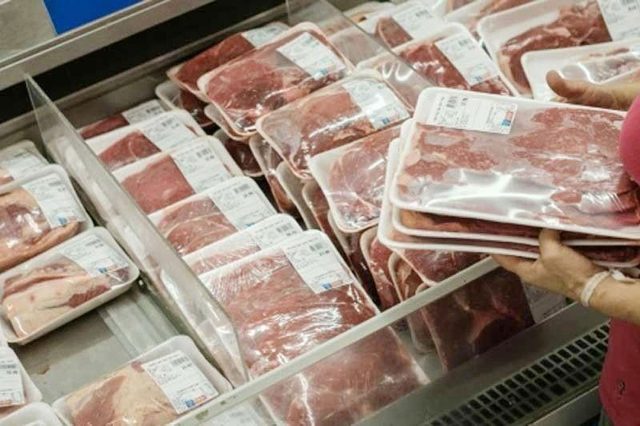
MEAT IMPORTS rose 16.18% year on year in February, the Bureau of Animal Industry (BAI) said, with domestic supply remaining constrained by African Swine Fever (ASF).

Meat shipments hit 99.681 million kilograms (kg) during the month, slowing down from the 137.999 million kg in January.

Pork accounted for 53.598 million kg of the total volume for February, up from 38.994 million kg a year earlier. It was down from 70.449 kg in January.

Chicken imports hit 31.679 million kg in February, lower than the volumes of 32.426 million kg a year earlier and 45.631 million kg a month earlier. Beef imports totaled 12.490 million kg, buffalo 1.876 million kg, turkey 21,588 kg, and lamb 15,825 kg.

Jesus C. Cham, president of the Meat Importers and Traders Association (MITA), said via Viber that ASF continues to “plague” pork production, while high input costs batter poultry production.

Agriculture Secretary Francisco Tiu Laurel, Jr. said in March that the hog population remains well below levels recorded before the ASF outbreak in 2019.

“Before ASF, we had nearly 14 million hogs, now, we have eight million. This creates a six-million head deficit,” he told the pork industry.

“With a growing population, demand is far higher than the previous 14 million,” he added. 

The Department of Agriculture (DA) said in March that the BAI is working to ensure the commercial release by April of a Vietnamese vaccine against ASF.

Mr. Cham, meanwhile, said the release of the meat import allocation under the minimum access volume  (MAV) remains delayed.

Pork imports falling within the MAV quota are subject to a tariff of 15%, against the regular rate of 25%.

The DA said in April it will overhaul the MAV rules, noting that the allocations have been “exploited by a small number of accredited importers.”

The MAV allocation for pork is 55,000 metric tons (MT), with 30,000 MT going to meat processors.

“At the same time Customs has been targeting higher revenue via high valuations. We will see the effects in the coming months,” Mr. Cham said.

“Meat imports are needed to fill the gap in supply, except for chicken which is sufficient in supply,” Philippine Chamber of Agriculture and Food, Inc. President Danilo V. Fausto said via Viber.

National Federation of Hog Farmers, Inc. Vice-President Alfred Ng, meanwhile, said concerns over higher tariffs imposed by the US will likely prompt the Philippines to maintain the low duties on meat and other agriculture products for longer “for fear of retaliation by the Trump administration.”

“This is not good for livestock raisers,” he said via Viber.

“We are seeing a chaotic economic new order shaping up and we are at its mercy since we are heavily dependent on food imports to feed our growing population,” he said.

“We must go back to basics — support our agriculture industry, support our farmers, and encourage more local production for ultimate food security and food sovereignty,” he added.

The US, which accounts for about 17% of total Philippine agriculture trade, on April 9 announced that it is pausing its plan to impose additional tariffs on most countries — except China — for 90 days.

The Philippines has been assigned a 17% tariff.  In Southeast Asia, Cambodia faces the steepest tariff at 49%, followed by Laos (48%), Vietnam (46%), Myanmar (45%), Thailand (37%), Indonesia (32%), Malaysia (24%) and Brunei (24%). Singapore will be charged a baseline tariff of 10%.

ADVERTISEMENT
ADVERTISEMENT