Home Blog Page 171

Stuff to Do (03/06/26)



Watch Disney and Pixar’s Hoppers

IN the animated film Hoppers, an all-star voice ensemble takes on a fun cast of animals — Kathy Najimy, Dave Franco, Meryl Streep, Piper Curda, Bobby Moynihan, and Jon Hamm. It is directed by Daniel Chong with an original score by Mark Mothersbaugh and capped off by an end-credits song from SZA called “Save The Day.” The film introduces Mabel (Curda), an animal lover who seizes the opportunity to test a new technology that allows her to “hop” into the body of a robotic beaver, making her communicate directly with animals. It leads her to uncover mysteries in the animal world beyond anything she could have imagined. Hoppers is now showing in Philippine cinemas.


See artworks by women

THE exhibition PaintHERs: Women in Arts will be on view at the Quantum Skyview, Upper Ground B, Gateway Mall 2 from March 7 to 15. On March 8, Binibining Pilipinas 2025 Globe Annabelle McDonnell and Binibining Pilipinas 2025 2nd runner-up Kathleen Espinido will officially open the show, along with a special performance from P-pop girl group KAIA. The exhibit features tattoo artists, with a tattoo pop-up where women can get both real and temporary tattoos. The event will also have side activities, including an art workshop, a flower bar, and a DIY pouch station.


Explore Sari Dalena’s work in a retrospective

THIS MARCH, a multi-site retrospective presents the cinema of filmmaker and professor Sari Dalena across the University of the Philippines Film Institute (UPFI), the Mowelfund Film Institute, the University of the Philippines Mindanao, The Green House Cinema (Davao), and Mindanao State University–Iligan Institute of Technology. Titled Counter-Archives of a Film Guerrera: A Retrospective of Sari Dalena’s Cinema, and curated by Patrick F. Campos, the program gathers Dalena’s documentaries, hybrids, experimental works, and video art into a sustained look at how film can function as a counter-archive. It opens March 6 at the UPFI Cine Adarna with a screening of Memories of a Forgotten War and Cinemartyrs, timed with the start of Women’s Month and in commemoration of 120 years since the 1906 Bud Dajo massacre, a central historical wound revisited by both films. Post-screening conversations will follow.


Play Pokémon Pokopia on Nintendo Switch

POKÉMON POKOPIA, a town-building game, is now on Nintendo Switch 2. The game is planned and co-developed by The Pokémon Company, Game Freak, Inc., and Koei Tecmo Games. Starting March 10, it will launch a seasonal event called “More Spores for Hoppip,” where the Cottonweed Pokémon named Hoppip will be arriving in town. Players must collect the special cotton spores available during the event period and become friends with Hoppip, Skiploom, and Jumpluff. The in-game event will run until March 25.


Watch Zootopia 2 in cinemas

DISNEY’S Zootopia 2 will be available on Disney+ this March. The film continues the adventure of rookie cops Judy Hopps and Nick Wilde as a new mysterious character, Gary de’Snake, arrives in Zootopia. To crack the case, the partner cops go undercover to discover new parts of the town entangling them in a wild escapade. After the success of Zootopia and Zootopia+ which have collectively been streamed over 805 million hours globally to date, Zootopia 2 will arrive on Disney+ on March 11.


Watch The Sandbox Collective’s Spring Awakening

ONGOING until March 22 at the Proscenium Blackbox Theater in Rockwell, Makati City, is The Sandbox Collective’s season opener, the Tony Award-winning rock musical Spring Awakening. With book and lyrics by Steven Sater and music by Duncan Sheik, the production is based on the Frank Wedekind play of the same name. Set in 19th century Germany, it tells the stories of teenagers exploring their burgeoning sexualities and rapidly changing bodies. This version is directed by Andrei Nikolai Pamintuan, with musical direction by Ejay Yatco. It also marks The Sandbox Collective’s first production under the leadership of its new artistic director, Sab Jose. Menchu Lauchengco-Yulo and Ana Abad Santos share the role of Adult Woman while Audie Gemora plays the Adult Man. Alongside them are Nacho Tambunting and Alex Diaz who share the role of Melchior Gabor; Nic Chien and Omar Uddin who alternate as Moritz Stiefel; and Sheena Belarmino who plays Wendla Bergmann. Spring Awakening is the inaugural show of The Black Box at The Proscenium Theater. Tickets are available via Ticket2Me (tinyurl.com/SandboxSpring2026).


Get nostalgic with Bagets the Musical

BAGETS THE MUSICAL, a stage adaptation of the 1984 coming-of-age film Bagets, follows a group of high school friends navigating adolescence, family, friendship, and young love. This production by Newport World Resorts, The Philippine Star, and VIVA Communications, is directed by Maribel Legarda, with a book by J-mee Katanyag and music by Vince Lim. The five leads are played by Sam Shoaf, Milo Cruz, Noel Comia, Jr., Ethan David, and Andres Muhlach. They alternate with Jeff Moses, Migo Valid, Tomas Rodriguez, KD Estrada, and Mico Hendrix Chua. Also in the cast are Neomi Gonzales, Natasha Cabrera, Mayen Cadd, Ring Antonio, and Carla Guevara Laforteza. Bagets the Musical runs until March 22 at the Newport Performing Arts Theater, Pasay City. Tickets, ranging in price from P1,000 to P4,000, are now available at the Newport World Resorts Box Office and via TicketWorld.


Travel the world with the Brickman Wonders

GMG PRODUCTIONS announced that the Manila leg of the global tour of the exhibition Brickman Wonders of the World has been extended until March 8 at The Space at Solaire. It features over 45 iconic landmarks from across the globe, all brought to life in LEGO brick form. Visitors can walk through recreations of famous sites such as the Taj Mahal, the Leaning Tower of Pisa, the Arc de Triomphe, and many more. Tickets are available exclusively on TicketWorld.

Batangas poultry marks milestone with first certified cage-free egg house

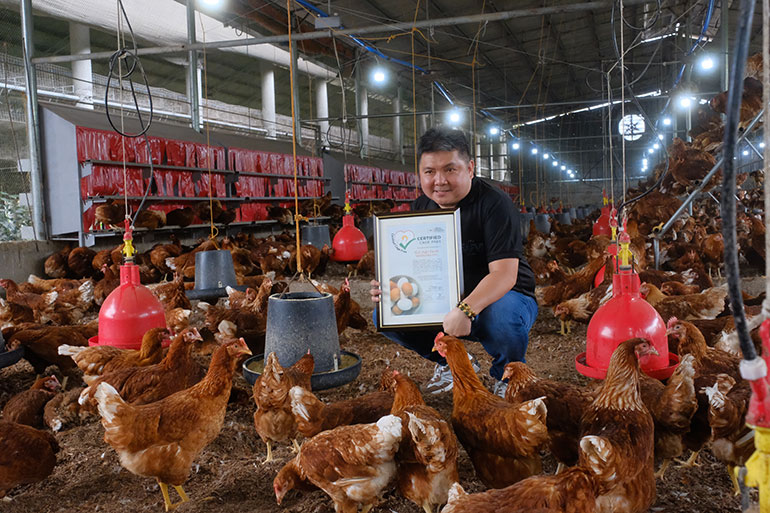
AKF’s Program Director awarding the cage-free certification to the SLC Agri-Farm Ventures, Inc.

For decades, egg production in Batangas — long known as the “Egg Capital of the Philippines” has largely relied on conventional battery cage systems. Today, that narrative begins to change.

The Animal Kingdom Foundation (AKF) proudly announces the certification of the first cage-free egg house in the province, marking a significant step forward for animal welfare and sustainable agriculture.

SLC Agri-Farm Ventures, Inc., located in San Jose, Batangas, has completed its transition to a cage-free housing system for laying hens. This milestone demonstrates that even in a province responsible for supplying a substantial portion of the country’s egg demand, producers can adopt humane, future-ready farming practices while remaining commercially viable.

“Transitioning was not an overnight decision,” shared Wilson Ang, owner of SLC Agri-Farm Ventures, Inc. “Years ago, we explored free-range and alternative systems, but there simply wasn’t enough market demand. Today, that has changed. Hotels are actively asking for cage-free eggs, and I can personally attest to that demand. The market is finally ready.”

A look inside the newly certified cage-free house of the SLC Agri-Farm Ventures, Inc.

The farm’s cage-free eggs are now supplied to hotels committed to meeting sustainability goals and strengthening responsible sourcing policies. By choosing cage-free, these institutions align their procurement practices with improved animal welfare standards while advancing their broader environmental and social commitments.

According to Atty. Heidi Caguioa, program director of AKF, the cage-free transition reflects years of sustained engagement and collaboration. “This is a breakthrough in our work of encouraging producers to take the leap toward cage-free systems,” she said. “Behind this milestone is extensive groundwork — educating farmers on standards, addressing operational and cost concerns, and building confidence that the market would respond.”

AKF played a central role in supporting SLC Agri-Farm Ventures, Inc. through consultations, technical discussions, and on-site assessments to guide the development of its first certified cage-free house. Acting as both technical partner and industry bridge, the organization helped ensure that the transition met established animal welfare standards while remaining practical for local production conditions.

Through partnerships like this, AKF continues to work with farmers, institutions, and industry stakeholders to accelerate the shift toward humane and ethical egg production. The organization envisions cage-free systems becoming a mainstream component of sustainable food production in the Philippines, where animal welfare, business viability, and consumer demand move forward together.


Spotlight is BusinessWorld’s sponsored section that allows advertisers to amplify their brand and connect with BusinessWorld’s audience by publishing their stories on the BusinessWorld Web site. For more information, send an email to online@bworldonline.com.

Join us on Viber at https://bit.ly/3hv6bLA to get more updates and subscribe to BusinessWorld’s titles and get exclusive content through www.bworld-x.com.

STI posts 18% income growth despite slight enrollment decline

STI ACADEMIC CENTER in Sta. Mesa, Manila — STI.EDU

STI EDUCATION Systems Holdings, Inc. saw its net income rise 18% to P1.08 billion for the first half of its fiscal year, from P912.2 million in the same period last year.

For the six months ended December 2025, the listed educational institution’s gross revenues climbed to P2.83 billion, up 8% from P2.63 billion a year earlier.

In a statement on Thursday, STI Holdings said it recorded 132,941 total enrollees for school year (SY) 2025-2026, a slight drop from 139,155 the prior year due to public schools starting earlier on June 16, 2025, while STI Education Services Group (STI ESG) and STI West Negros University (STI WNU) began on July 28.

Tertiary program enrollment rose to 102,407 from 101,256 in the previous school year. Continuing students in Commission on Higher Education-regulated programs increased to 73,421, up 14% from 64,429 in SY 2024-2025.

STI WNU in Bacolod City recorded a 3% increase in enrollment to 14,890 students this school year.

The Philippine School of Business Administration (PSBA), managed by STI ESG, saw enrollees jump 45% to 1,583 from 1,095 the previous year, while iACADEMY in Makati and Cebu recorded 1,899 enrollees.

“STI Holdings stays committed to producing job-ready graduates by adopting specialized platforms for cybersecurity and computer-aided design for its Criminology and Information and Communication Technology programs, as well as Adobe Creative Cloud licenses for its Multimedia Arts program,” the company said.

“This initiative prepares students for industry-aligned certifications, aimed at further increasing competitiveness in the modern workforce,” it added.

STI Holdings’ financial year follows its academic calendar, beginning July 1 and ending June 30 of the following year.

At the stock exchange on Thursday, shares in the company rose 3.08% to close at P1.34 each. — Alexandria Grace C. Magno

The Iran War is forcing the Gulf to choose: Fight it or take it

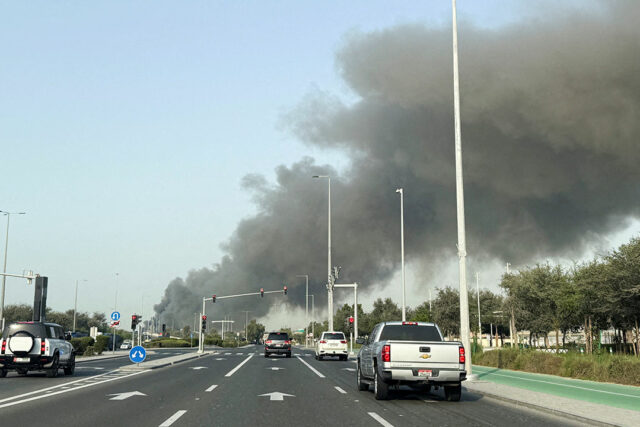
SMOKE BILLOWS from Zayed port after an Iranian attack, following United States and Israel strikes on Iran, in Abu Dhabi, United Arab Emirates, March 1, 2026. — REUTERS/ABDELHADI RAMAHI

By Marc Champion

ONE LESS EXPECTED development since the US and Israel unleashed an air war on Iran last weekend has been the distribution of the Iranian response. The revelation isn’t that Tehran has attacked US bases in the Persian Gulf, as it said it would, or that it began to go after regional energy supplies, which was at least predictable. What’s surprising is the way in which it has singled out the United Arab Emirates (UAE).

The UAE has neither the most important US military base in the Gulf, nor much in the way of oil and gas production. It’s also important to Iran’s economy, as an entrepôt for trade and commerce. The Emiratis, like other members of the Gulf Cooperation Council, said they wouldn’t allow their territory or airspace to be used in the US-Israeli campaign and have kept their word.

The fact that the UAE has, nonetheless, been heavily targeted should tell us something about Iranian intentions. It’s forcing the Emiratis — and other Gulf states — into a dilemma: Should they respond in kind, in effect joining the US-Israeli attack on Iran? Or should they sit back and take it? That’s not an easy choice.

According to the Washington-based Institute for the Study of War, Iran has so far directed more missiles and drones at the Gulf states, which aren’t attacking it, than at Israel, which is. Why? One likely reason is that it can; the shorter distances involved mean there’s a lot less time for Gulf air defenses to shoot drones and missiles down. But that can’t be the whole story, because it explains neither the distribution of attacks within the Gulf, nor the purpose of focusing on the region at all.

The UAE says that, as of Tuesday, it had been targeted by 186 ballistic missiles, eight cruise missiles, and 842 drones. For Qatar, which hosts the largest US military base in the area and has a massive natural gas facility that draws from the same field as Iran, those figures were 101, three, and 39, respectively.

Bahrain, which hosts the US Fifth Fleet, fielded 73 ballistic missiles and 91 drones. For Kuwait, home to the US Central Command, the figures were 178 missiles and 348 drones. Saudi Arabia hasn’t provided aggregated data but seems to have been a less frequent target.

The vast majority of these projectiles have been shot down. A few got through, however, and in the UAE they hit some curious targets either directly or with debris, including the civilian airport that Dubai has turned into one of the world’s largest travel hubs; the power station that runs Dubai’s main desalination plant, critical to the city’s supply of fresh water; the sail-like Burj Al Arab (Arabian Tower) hotel; and the high-end Fairmont hotel on The Palm Jumeirah island development.

These are internationally recognized symbols of the globally integrated statelet the UAE has built in the desert. As my colleague Lionel Laurent has written, the reminder that the UAE lives in one of the world’s most volatile regions poses an existential threat to its model of successful Arab integration with the Western-dominated global economy.

The consensus view seems to be that Iran is trying to force the Gulf states to pressure Donald Trump into halting the war, and that this looks to be a miscalculation, prompting them instead to join in. The first assertion seems very likely to be correct. I’m not sure about the second.

Although there have been some warnings from Riyadh, so far it doesn’t look as though the Gulf states are keen to join the war. On Wednesday, the Emirati Minister of State for International Cooperation Reem Bint Ebrahim Al Hashimy said the UAE did not “seek to expand the circle of confrontation” and called on the US and Israel to return to negotiations with Tehran.

That’s advice worth considering if the White House isn’t sure it can control the war’s outcome, because the message Iran is sending is dark.

The UAE stands in opposition to everything the Islamic Republic represents. Tehran’s goal has, since 1979, been to eject the US and Israel from the Middle East and introduce a religious form of rule and life across the Muslim world. The UAE has, in the interim, built a successful, contrary model. It has become rich by welcoming Westerners and their lifestyles. It hosts the US military. It also, together with Bahrain, Morocco, and Sudan, joined the Abraham Accords that established formal diplomatic relations with Israel, in 2020.

For the UAE and other Gulf states to now join a US-Israeli attack on a fellow Muslim — albeit Shiite — country is not a straightforward choice. First, it does not appear that the Gulf countries could easily operate in already crowded skies, alongside US and Israeli jets. The friendly-fire incident in which Kuwaiti defense units shot down US F-15s serves as a warning. So, any participation would likely be symbolic.

In addition, it isn’t clear that the Gulf states would have the same goals in Iran as Israel, the US, or even anti-regime Iranians — which is why they opposed starting the war in the first place. Among the conflict’s possible outcomes, the most likely are also the least appealing to Iran’s neighbors. A total regime collapse that opens the way to a democratic uprising, for example, is as apt to end in chaos and a failed state. That might not worry Israel or the US, which have the benefit of distance, but it would be a nightmare scenario for the Gulf and Turkey.

The Gulf states want a return to stability. That makes their ideal post-war Iran a humbled continuation of the current regime that restricts itself to trying to build “Shiite Islamism in one country,” rather than across the whole of the Middle East, as the US academic F. Gregory Gause put it in a webinar for the Washington-based Middle East Institute, on Wednesday. The worst possible outcome would be an Islamic Republic whose replacement leaders saw mere survival as victory and then doubled down on regional destabilization, in an effort to reshape events in its favor.

This would see the war drawn out into a second phase that relies on asymmetric means, likely beginning when Iran runs out of missile launchers and other conventional military tools. This would involve activating proxies, such as the Houthis of Yemen and Shiite militias in Iraq, as well as cells of Iran’s Islamic Revolutionary Guard Corps around the world. Qatar said on Tuesday it had rounded up two such cells, accused of spying and sabotage.

The Iranian goal would be to reshape the war into one for the future of the wider Muslim Middle East, tapping into the sympathies of Sunni Islamist organizations such as the Muslim Brotherhood and calling for a wider Jihad against Israel, the US, and their lackey governments across the region. That may seem farfetched, given the hostility between Sunni and Shiite Islamists and current anger at Iran in the Gulf. But if the choice is between backing Iran on one side, or the US and Israel on the other, for Islamists there’s no contest.

None of this speaks to strength on the part of the Islamic Republic. It speaks of desperation. But as its otherwise senseless attacks on the UAE and other Gulf states indicate, the message is that Iran can and will set the region on fire if forced, even in its much reduced condition.

BLOOMBERG OPINION

Maggie Gyllenhaal gives Frankenstein’s monster’s companion a voice in The Bride!

JESSIE BUCKLEY in a scene from The Bride!

LONDON — Oscar nominee Maggie Gyllenhaal’s new film The Bride! began with a tattoo.

“I went to a party and I saw this guy with the tattoo of the ‘Bride of Frankenstein’ on his entire forearm… and something about it hooked me,” the writer-director told Reuters.

Ms. Gyllenhaal, who made her directorial debut with 2021’s The Lost Daughter, watched the 1935 movie, inspired by Mary Shelley’s Gothic novel Frankenstein, in which actor Elsa Lanchester appears as the titular bride for a few minutes.

“It got me thinking about, well, in two minutes, somehow (Ms. Lanchester) was able to make such an impact that this guy tattooed her face on his arm. And at the same time, that movie is not concerned really with her experience at all.”

The result is The Bride!, Ms. Gyllenhaal’s punk and bold new take in which she gives the monster’s companion a voice.

The Warner Bros. movie, released this week, begins in 1930s Chicago, with lonely monster Frank, played by Oscar winner Christian Bale, arriving to see Dr. Euphronius (Annette Bening) to ask her to create a companion for him.

They dig up the corpse of a murdered woman and bring her to life as the Bride, played by Oscar contender Jessie Buckley. Romance, murder, a police chase, and a cultural movement all follow.

“I always like to step into something that is unknowable, that I have to grow within,” Ms. Buckley, who plays three roles in the movie, said. “These characters, in some way, they’re individual, but also they’re just one woman… in a really intense, epic, bold, brave conversation within herself.”

Asked what he made of the story when he first read it, Mr. Bale said: “I thought, I’ve got the wrong script… it was so radical and original and bold that I thought, well, no one’s going to be willing to take the risk to put the amount of money that I’d heard was being put into this.”

“Movies are in dire straits. We’re in trouble. This incredible medium that brings… so many people together and cures loneliness… is getting lost to humanity. And so they’re (Warner Bros.) taking big swings, they’re trusting in amazing filmmakers,” he said.

The actor added his character’s look struck a balance between monster and human.

“We always tried to humanize him as much as we could while still maintaining the fact that he’s someone who, if he lost his temper, could kill everyone in the room and bring the whole house down literally too,” he said.

The cast also includes Ms. Gyllenhaal’s brother, actor Jake Gyllenhaal, who plays a matinee idol, alongside her husband Peter Sarsgaard, and Spanish actor Penelope Cruz, who portray a detective duo hunting Frank and the Bride.

The film opened in the Philippines on March 4 and has an MTRCB Rating of R-16. — Reuters

Peso down for sixth straight day on prolonged Iran conflict

PHILIPPINE STAR/WALTER BOLLOZOS

THE PESO extended its losing streak against the dollar on Thursday as the conflict in the Middle East continues to rattle markets.

The local unit went down by six centavos to close at P58.63 against the greenback from its P58.57 finish on Wednesday, data from the Bankers Association of the Philippines showed.

This was its worst finish in a month or since it ended at P58.69 a dollar on Feb. 5.

The peso opened Thursday’s trading session sharply stronger at P58.40 per dollar. It climbed to an intraday best of P58.335 but failed to hold on to its gains as it finished at its worst showing for the session.

Dollars traded went down to $1.57 billion from $1.774 billion on Wednesday.

The peso continued to slide against the greenback amid the prolonged Middle East conflict and its impact on oil prices, the first trader said by telephone.

“The local currency continued to weaken after Iran denied reports of a negotiation with its US counterparts to end their ongoing conflict,” the second trader said in an e-mail.

For Friday, the second trader said the peso could recover ahead of potentially softer US labor data. The first trader sees the peso moving between P58.30 and P58.70 per dollar, while the second trader expects it to range from P58.50 to P58.75.

The dollar strengthened on Thursday after briefly retreating from three-month highs, as the fallout from war in the Middle East roiled global markets and kept sentiment fragile, bolstering demand for the safe-haven currency, Reuters reported.

Earlier in the session, a towering rally in the dollar was halted as investors clung on to tenuous assumptions that the conflict might not last as long as initially expected and for a resumption of oil shipments through the Strait of Hormuz.

But markets remained at the mercy of the US-Israel war with Iran, now in its sixth day, after Iran launched a wave of missiles at Israel, sending millions of residents into bomb shelters.

That kept the greenback in favor as it quickly reversed early losses to trade higher, leaving the euro down 0.2% at $1.1608 and sterling falling 0.27% to $1.3335.

Against a basket of currencies, the dollar was up 0.2% at 99.00, resuming its climb toward an over three-month high hit earlier this week.

The dollar has risen nearly 1.4% for the week thus far, emerging as one of a handful of winners in a volatile few sessions that have dragged stocks, bonds and, at times, even safe-haven precious metals lower.

The spike in energy prices from the Middle East war has stoked fears of a resurgence in inflation that could derail the rate outlooks for major central banks.

Traders are now pricing in just a 34% chance of a Federal Reserve rate cut in June, as compared with a near 46% chance a week ago, according to the CME FedWatch tool, though that has in part been driven by upbeat US economic data on Wednesday.

The yen similarly reversed early gains and was last little changed at 157.08 per dollar. — A.M.C. Sy with Reuters

SEC says term caps align broker director service with ‘international best practices’

RAWPIXEL-FREEPIK

THE Securities and Exchange Commission (SEC) said the proposed 10-year cumulative term limits for broker directors align the governance of exchanges with international best practices, specifically those established by the International Organization of Securities Commissions (IOSCO).

According to a draft memorandum circular released on March 3, the Commission said it intends to restrict broker directors, or individuals representing trading participants on an exchange board, to a maximum cumulative service period of ten years.

The SEC said that the move is necessary to ensure “fair and effective representation,” allowing more qualified brokers the opportunity to provide “new perspectives” within the leadership of an exchange.

Under the proposed guidelines, a broker director may be elected for a one-year term. However, after serving a cumulative period of five years (whether consecutive or intermittent), the director must observe a mandatory two-year cooling-off period before becoming eligible for re-election.

Once this cooling-off period is completed, a director may serve a fresh term of up to five additional years, provided they do not exceed the overall 10-year maximum limit.

For the purposes of calculation, any service exceeding six months in a given year will be counted as one full year of service.

The SEC sets forth stringent financial and administrative sanctions to enforce compliance with term limits for broker directors.

The basic penalty imposes a fine of P1 million per broker director for each year the violation occurs. In addition, a continuing monthly fine of P30,000 applies for every month a director remains in office beyond the permitted term.

For repeated violations, the consequences escalate. A third or subsequent offense could lead to the suspension or revocation of the exchange’s primary or secondary operating license, reflecting the SEC’s commitment to maintaining strict governance standards and accountability within the industry.

The Commission further said that any schemes designed to circumvent these term limits will be penalized accordingly.

The SEC noted that term limits are already in place for independent directors and those representing other market participants. Aligning broker directors with these standards follows IOSCO principles, which suggest that the length of board terms is a critical factor in the ability of shareholders to actively participate in the nomination and election process.

The proposal is currently in a public exposure phase. The Commission is inviting stakeholders to submit comments, suggestions, and inputs on the draft through March 19, 2026.

Once finalized, the rules will take effect 15 days after complete publication in the Official Gazette or newspapers of national circulation.

A transitory provision will allow incumbent broker directors to complete their current terms before the new limits and cooling-off requirements are applied. — A.G.C. Magno

The Philippines at the crossroads of global risk

PHILIPPINE STAR/MIGUEL DE GUZMAN

The World Economic Forum’s Global Risks Report 2026 reads less like a warning and more like a diagnosis. Its central finding is stark. The world has entered an Age of Competition where uncertainty is no longer episodic but structural, and where risks increasingly compound rather than occur in isolation.

For the Philippines, this is not an abstract global condition. It is already the lived reality.

The report identifies geoeconomic confrontation as the most severe global risk in the immediate term. This refers to the growing use of trade, finance, technology, and supply chains as instruments of strategic pressure. While the Philippines is not a primary actor in great power competition, it is deeply exposed to its consequences. Trade disruptions, shifts in investment flows, energy price volatility, and supply chain realignments directly affect domestic inflation, employment, and growth.

In practical terms, this means that decisions made far beyond Philippine borders increasingly shape local economic outcomes. The risk is not that the country chooses the wrong side, but that it has limited control over shocks generated by others.

An economic downturn ranks among the top 10 short-term global risks in the report, alongside rising concerns over debt and asset bubbles. For the Philippines, this risk manifests less as recession and more as fragility. Growth may continue, but buffers are thin. External shocks quickly translate into higher food prices, transport costs, and fiscal pressure. When global risks accelerate, economic resilience depends not just on macro indicators but on institutional credibility and policy consistency.

Climate-related risks dominate the long-term outlook of the Global Risks Report. Extreme weather events are ranked as the number one global risk over the next decade, followed closely by biodiversity loss and critical changes to Earth systems. For the Philippines, these are not future projections. They are recurring disruptions.

Each typhoon damages infrastructure, displaces communities, and diverts public spending from long term development to emergency response. Over time, this creates a cumulative strain. Climate shocks amplify inequality, weaken productivity, and intensify regional disparities. The report emphasizes that environmental risks increasingly interact with social and economic vulnerabilities. In the Philippine context, climate risk is inseparable from poverty reduction, food security, and political stability.

Infrastructure failure is another risk highlighted in the report, particularly as climate extremes intensify and cyber threats grow. Aging transport systems, power grids, water networks, and digital infrastructure are increasingly exposed. For the Philippines, infrastructure weakness is not simply a development backlog. It is a governance signal.

When infrastructure fails, recovery costs rise. Investor confidence weakens. Public frustration deepens. Infrastructure performance becomes a proxy for state capacity and seriousness. In an age of competition, countries are judged not only by growth, but by reliability under stress.

One of the most consequential risks identified in the report across all time horizons is misinformation and disinformation. It ranks among the top five short-term global risks and remains highly significant in the long term. The report frames misinformation not merely as a media issue, but as a systemic threat that undermines trust, governance, and crisis response.

This resonates strongly in the Philippines. High social media usage, emotionally charged political narratives, and uneven information literacy create fertile ground for false narratives. During elections, disasters, or economic shocks, misinformation spreads faster than institutional correction. The result is polarization, weakened consensus, and reduced compliance with public policy.

In a compounding risk environment, misinformation does not stand alone. It magnifies every other risk. It undermines climate action, distorts economic debate, erodes trust in institutions, and weakens democratic processes. When citizens no longer agree on basic facts, governance becomes exponentially harder.

The Global Risks Report repeatedly emphasizes that today’s threats are interconnected. Climate shocks strain infrastructure. Infrastructure failure undermines economic confidence. Economic anxiety fuels polarization. Polarization accelerates misinformation. Misinformation weakens trust. Trust erosion amplifies every subsequent shock.

This is the anatomy of the polycrisis, and it describes the Philippine condition with uncomfortable accuracy.

Yet the report also offers an implicit lesson. In a world where risks are accelerating and overlapping, the decisive variable is not prediction, but resilience. And resilience rests on trust.

Trust determines whether people comply during emergencies, whether reforms are accepted, whether sacrifices are shared, and whether recovery is possible without social fracture. Trust is not a soft value. It is a strategic asset.

From the Philippine experience, the lens widens to Asia.

Asia sits at the epicenter of the Age of Competition identified in the report. Geoeconomic confrontation, state-based conflict, and technology fragmentation are reshaping the region’s operating environment. Asia’s strength has long been its integration into global trade and supply chains. Today, that same integration creates exposure.

The report highlights multipolarity without effective multilateralism as a defining feature of the coming decade. For Asia, this weakens regional coordination mechanisms and places pressure on middle and smaller economies to constantly rebalance. Trade rules are contested. Technology standards diverge. Security concerns spill into economic decision making.

At the same time, Asia is disproportionately exposed to the long-term environmental risks highlighted in the report. Extreme weather, sea level rise, water stress, and urban vulnerability threaten growth and social stability. Environmental risks are not evenly distributed. They fall hardest on dense, coastal, and lower income populations, many of which are concentrated in Asia.

Misinformation also carries a particular weight in the region. High digital penetration combined with diverse political systems creates a volatile information environment. The report notes that younger populations express heightened concern over misinformation compared to geopolitical conflict. This signals a generational awareness that trust and truth are becoming scarce resources.

Across Asia, the lesson mirrors that of the Philippines. Growth alone is no longer sufficient. In a fragmented global order, countries that sustain institutional credibility, social cohesion, and adaptive capacity gain an advantage that cannot be replicated through tariffs or technology controls.

The Global Risks Report 2026 does not offer comfort. But it offers clarity. The future will not be defined by the absence of shocks, but by the capacity to absorb them. In an age of competition, shared values are not ideals to be admired. They are foundations that determine whether societies bend or break.

For the Philippines and for Asia, the task ahead is not to outpace risk, but to outgrow vulnerability. And that begins with recognizing that trust, once eroded, is far harder to rebuild than any road, bridge, or balance sheet.


Dr. Ron F. Jabal, APR, is the CEO of the PAGEONE Group (www.pageonegroup.ph) and the founder of Advocacy Partners Asia (www.advocacy.ph).

ron.jabal@pageone.ph rfjabal@gmail.com

Meet Geeta Gandbhir, the director with two separate Oscar-nominated films

LOS ANGELES — American filmmaker Geeta Gandbhir is making waves in this year’s Oscar documentary race, earning two nominations: The Perfect Neighbor for best documentary feature and The Devil is Busy for best documentary short.

Both films were already on the Academy’s shortlist of 15 before nominations were announced, so Ms. Gandbhir knew she had a strong chance. Still, the moment itself caught her off guard.

“Don’t judge me. I slept through the nominations,” she laughed while speaking to Reuters at the Independent Spirit Awards. “I was so anxious the night before. I planned to go to bed early and sleep well, but I was awake until three in the morning staring at the ceiling. I literally slept through the announcements,” she added.

The Devil is Busy, distributed by HBO Max, offers a gripping, ground‑level look at a day inside an abortion clinic in Atlanta, Georgia, highlighting the dangers that staff and patients face amid America’s shifting political landscape.

The Perfect Neighbor, distributed by Netflix, examines the events leading up to the killing of Ajike Owens in a Florida neighborhood, reconstructing the incident through police calls and body‑camera footage.

Speaking at the Oscars Luncheon, Ms. Gandbhir emphasized how deeply personal both projects are. “Both were made with so much love and attention — and also with my family,” she said. “The Perfect Neighbor is made with my sister‑in‑law and my husband; they’re producers on it. And The Devil is Busy is co-directed with my best friend from college.”

Her connection to The Perfect Neighbor goes even further. “Ajike was a family friend,” she said. “That was our connection — mine and my team’s at Message Pictures — to the case.” — Reuters

Philippines records second-lowest score among eight Asian markets in financial well-being index

MATHIEU STERN-UNSPLASH

THE PHILIPPINES had the second-lowest score out of eight markets in Asia in an index that aims to measure financial confidence and preparedness.

Prudential plc’s inaugural Financial Wellbeing Index showed that the country scored 55 out of 100.

The index was based on a survey of 7,707 adults aged 18-60 in the Philippines, Hong Kong, Indonesia, Malaysia, Singapore, Taiwan, Thailand, and Vietnam.

It measures financial well-being across four dimensions, namely, present and future financial security, and present and future freedom of choice — showing a snapshot of how people are managing their finances today and how ready they feel for the future.

Prudential said the survey “combines attitudes, behaviors and expectations into a single score to indicate level of well-being.”

Present financial security means having control over day-to-day, month-to-month finances, while future financial security means having the capacity to absorb a financial shock or large, unexpected expenses, it said.

Meanwhile, present freedom of choice aims to measure having the financial freedom to make choices that allow enjoyment of life, while future freedom of choice refers to being on track to meet financial goals.

The Philippines’ index score was below the 58.9 overall score for the eight markets included in the survey, and only beat Hong Kong’s 52.5.

Meanwhile, Vietnam had the highest score at 65.1, followed by Indonesia at 62, Thailand at 60.4, Malaysia at 58.1, Taiwan at 57.8, and Singapore at 57.7.

The study also found that access to financial solutions in the region remains limited, with only 18% strongly agreeing that they have access to the services and products they need.

“In markets with higher financial well-being, people feel more equipped and supported by access to financial knowledge, services and planning that help them move forward,” Prudential said.

In the Philippines, 18% of respondents said strongly felt they had financial access, in line with the regional average.

Indonesia had the highest rate of confidence for financial access at 28%, while Hong Kong has the lowest at 8%.

The study also showed that financial confidence and preparedness are highest among younger adults in Asia and decrease in later life stages, Prudential said, as respondents aged 18-35 score 59.8 out of 100 in financial well-being, compared with 58.2 for those between the ages of 36-49 and 57.7 among those aged 50-60.

“While those aged 18-35 express stronger optimism towards their financial future, concerns around job stability and family health remain prominent,” Prudential said. “In contrast, respondents aged 50-60 are most concerned about their physical health deteriorating and rising costs of necessities such as food, clothing, power and transport, reflecting the financial and health‑related pressures that tend to intensify later in life.”

It added that there is a disconnect between day-to-day stability and long-term financial freedom. The region’s overall present security score was at 61.7, which means they feel relatively financial secure in the present, but their future freedom score was at just 55.2, showing lower confidence. Prudential said this suggests that many are getting by financially in the short term but do not feel equipped to absorb potential future shocks.

Meanwhile, only 34% of respondents said they do not need to keep earning in their retirement years, while 47% said they feel secure when thinking about their financial future, and just 45% believe they could handle a major unexpected expense.

“This gap continues to widen across later life stages, highlighting the importance of early financial preparation, ongoing education and long-term planning in achieving financial freedom and sustained well-being.” — AMCS

Mitsubishi, Intellicare partner to serve Japanese firms in Philippines

[L-R] AVENTUS MEDICAL CARE, INC. Vice-President Sally Gaspar; Mitsubishi Corp. Manila Branch General Manager Harutaka Ishikawa; Mitsubishi Corp. General Manager of Healthcare Department Yutaka Suzuki; Asalus Corp. (Intellicare) President Jeremy Matti; The Intellicare Group Chairman Mario Silos; and Avega Managed Care, Inc. Senior Vice-President & Chief Operating Officer Jerico Dela Cruz. — INTELLICARE

MITSUBISHI CORP. (MC) has signed a partnership with healthcare provider The Intellicare Group to deliver data-based healthcare solutions for Japanese firms operating in the Philippines.

Under the agreement, Intellicare said the partnership will roll out comprehensive health maintenance organization (HMO) solutions, clinic-based services, educational workshops, third-party administration (TPA), and fully customized healthcare structures tailored for Japanese companies in the country.

The partnership allows Mitsubishi to support Intellicare in providing data-driven healthcare services nationwide, the company said in a statement.

It also follows Mitsubishi’s recent investment in Fullerton Health, Intellicare’s parent firm.

“Our partnership with Mitsubishi Corp. marks a new chapter of growth for Intellicare,” Asalus Corp. (Intellicare) President Jeremy G. Matti said in a statement.

“We also hope this expands our partnerships, allowing for more companies and lives to experience the true meaning of our healthcare delivery,” he added.

The collaboration aims to expand Intellicare’s engagement with Japanese medical networks and health technologies to support long-term growth and operational efficiency, it said.

“Mitsubishi’s extensive network and Japan-derived healthcare intelligence will also assist the Intellicare Group in developing integrated services, cost optimization, and data-driven healthcare management to improve healthcare accessibility in the Philippines,” the company added.

Intellicare and its subsidiary Avega are the sole HMOs in the Philippines with strategic collaborations with Japanese companies under Mitsubishi’s global network, the statement said.

“By leveraging our complementary strengths, we are dedicated to building a data-driven platform that enables companies to manage medical costs more effectively and intelligently, while contributing to a more sustainable healthcare ecosystem in the country,” said Yutaka Suzuki, general manager of Mitsubishi’s healthcare department.

The Intellicare Group comprises Asalus Corp. (Intellicare), Aventus Medical Care, Inc., and Avega Managed Care, Inc. Intellicare, part of Fullerton Health Group, offers end-to-end healthcare services across the Asia-Pacific region, including managed care, diagnostics, specialty care, and ancillary services. — Beatriz Marie D. Cruz

GCash waives transaction fees for overseas Filipinos in the Middle East

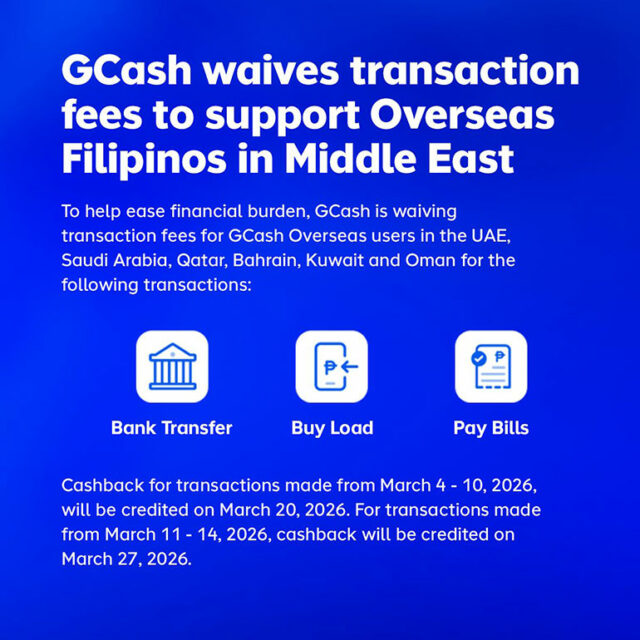
GCash is waiving transaction fees on bank transfers, bill payments, and mobile load purchases for GCash Overseas users in the United Arab Emirates, Qatar, Bahrain, Kuwait, Saudi Arabia, and Oman to help ease their financial burden amid the ongoing developments in the Middle East.

This initiative allows overseas Filipinos in affected areas to stay connected with loved ones back home and to receive assistance without added costs. This supports the national government’s continuing efforts to prioritize the safety and welfare of overseas Filipinos.

Waived transaction fees will be credited back via in-app cashback. No registration is required, and eligible fees will be automatically returned to GCash user accounts, and users will receive an in-app notification confirming that the cashback has been successfully credited.

For transactions made from March 4-10, 2026, cashback will be credited back to users on March 20, 2026. Transactions from March 11-14, 2026 will receive cashbacks on March 27, 2026.

GCash will continue to closely monitor developments in the region and assess the need for a possible extension of these financial relief measures as necessary.

GCash encourages overseas Filipinos requiring urgent assistance to coordinate directly with the nearest Philippine Embassy or Consulate, or contact the Department of Foreign Affairs and the Department of Migrant Workers through their official hotlines and channels for emergency support.

Emergency assistance contact information:

  • GCash Help Center: Visit help.gcash.com by chatting with Gigi or by call the official GCash hotline at 2882 

For more information, please visit: 

https://gcash.com/promos/gcash-waves-transactionfees-for-ofws-in-middle-east.


Spotlight is BusinessWorld’s sponsored section that allows advertisers to amplify their brand and connect with BusinessWorld’s audience by publishing their stories on the BusinessWorld Web site. For more information, send an email to online@bworldonline.com.

Join us on Viber at https://bit.ly/3hv6bLA to get more updates and subscribe to BusinessWorld’s titles and get exclusive content through www.bworld-x.com.