Home Blog Page 1682

Shakey’s eyes double-digit growth after 11% income rise

SHAKEYSGROUP.PH

LISTED food service operator Shakey’s Pizza Asia Ventures, Inc. (SPAVI) is targeting double-digit growth in both revenue and profit this year, following an 11% increase in net income to P1.2 billion last year.

“While we remain cognizant of uncertainties the market presents, we’re aiming for continued double-digit growth, driven by new store openings and same store sales,” SPAVI President and Chief Executive Officer Vicente L. Gregorio said in a statement on Tuesday.

“This will be supported by our multi-brand portfolio — from growing market leaders like Shakey’s and Potato Corner to newer, expanding concepts such as Peri-Peri, and other incubating brands — along with our geographically diverse footprint,” he added.

Mr. Gregorio said this as SPAVI grew its net income by 11% to P1.2 billion in 2024. Systemwide sales increased by 17% to P21.7 billion.

Blended same stores sales growth reached 4% last year on volume growth carried by December festivities, product innovations and improvements, and value offerings.

“Navigating through 2024 wasn’t easy — from a strained consumer environment to inclement weather in the final quarter. Be that as it may, we focused on execution and on our guests. Holidays hold a prime space in the consumer wallet, and we wanted to make sure we have a compelling reason for families to choose our brands during this time,” Mr. Gregorio said.

SPAVI opened 478 new stores and outlets in 2024, bringing its global store network to 2,619.

The company established over 100 stores on international shores, such as Thailand, Singapore, and China.

“This is just the tip of the iceberg. We aim to open new, promising territories soon,” Mr. Gregorio said.

Total capital expenditure for the year reached P953 million, most of which was allocated to store openings and renovations.

“We are grateful for SPAVI’s performance in 2024 and the momentum we carry into 2025. We believe this will be a better year for us, given the investments that have begun to pay off, Shakey’s 50th golden year programs, and international opportunities opening up for us organically,” Mr. Gregorio said.

SPAVI shares rose by 0.72% or five centavos to P6.99 apiece on Tuesday. — Revin Mikhael D. Ochave

Haus Talk posts 51% income growth

The Granary in Biñan, Laguna — HAUSTALK.COM.PH

LISTED real estate developer Haus Talk, Inc. (HTI) reported a 51% increase in its net income for 2024, reaching P365 million, driven by an income tax holiday and operational improvements.

“The substantial rise in net income is attributed to the favorable impact of an income tax holiday and operational efficiencies realized through strategic investments in advanced construction methodologies, notably the cast-in-place technology, which have collectively expanded the company’s net income margin to a healthy 26%,” HTI said in an e-mail statement on Tuesday.

HTI said revenue rose by 39% to P1.4 billion, led by its residential projects such as Southview Homes Calendola in San Pedro, Laguna, and The Granary in Biñan, Laguna.

“Since we started, location, design, and build quality have always been the pillars of our residential developments, even though we cater to a market that requires affordability,” HTI President and Chief Operating Officer Ma. Rachel D. Madlambayan said.

“Through efficient operations and utilization of technologies now available, the impact on our financial performance is now very much apparent,” she added.

HTI said it posted a compound annual growth rate of 33% for revenue and 39% for net income since its initial public offering in 2022.

The company added that it is set to launch new vertical and horizontal projects in Angono, Antipolo, and Biñan, catering to a wider range of housing preferences.

“These strategic initiatives are designed to support HTI’s objective of addressing the demand for affordable housing and ensuring long-term value creation,” it said.

On Tuesday, HTI’s stocks remained unchanged at P1.14 per share. — Revin Mikhael D. Ochave

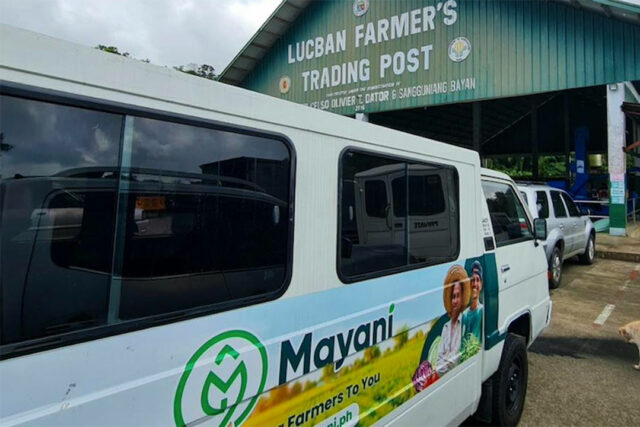
Digital transformation in Philippine agribusiness: Mayani’s social enterprise

FACEBOOK.COM-MAYANIPH

(Part 4)

We have seen how the increasing re-consolidation of small farms into larger units of thousands of hectares to follow the banana and pineapple model of large commercial farms is being encouraged by the Marcos Jr. Administration.

We presented the Lionheart Farm model of coconut farming. Located in Rizal town of Palawan, the farm is able to creatively combine the objective of significantly increasing farm productivity and, at the same time, improving the lives of farmers and farm workers living below the poverty line. Hopefully, this model will be replicated with farms of other commercial crops like palm oil, bamboo, coffee, cacao, mangoes, avocado, durian, and pili and cashew nuts. It is important that there be a source of long-term capital coming from Foreign Direct Investments or from the Maharlika Investment Fund put up by the Government.

Equally important for food security, however, is the sector in agriculture consisting of millions of small farmers and fisherfolk with such produce as rice, corn, vegetables, fruits, cut flowers, poultry, hogs and other livestock, as well as aquaculture products. Here, the major assistance must come from the Government in the form of more efficient infrastructure such as farm to market roads, irrigation systems, post-harvest facilities, agricultural extension services, digital infrastructure, and access to credit. The private sector, however, has a very important role in supporting the efforts of the Government, mainly to help the farmers and fisherfolk rise from poverty, by engaging in what is called social entrepreneurship, in addition to the traditional non-profit organizations or NGOs focused on reducing poverty in the countryside.

A very good example of a social enterprise is Mayani, which was represented in the Forum on Digital Transformation by its CEO, JT Solis. As we can read on its website, Mayani is a social enterprise (a for-profit business whose special mission is to address a major social problem like mass poverty). It envisions a Philippines where smallholder farmers and fisherfolk lead better lives because of technology, community, and an overarching passion to cultivate positive impact. By building a sustainable pathway to market, Mayani is able to boost rural incomes while strengthening access to affordable fresh produce for both households and commercial buyers. Mayani now collaborates with the country’s largest supermarket chains, food brands, international hotels, food processors, and other institutional players in moving the Philippine agri-fisheries sector forward.

In the session on “Digitalization in Market Access and Logistics,” Mr. Solis started by asserting that the major problem in market access available to the small farmers is the huge data deficit. What Mayani is trying to build is not only the infrastructure that underpins the supply chain operation available to the small farmers and fisherfolks, but the INFOstructure that is needed to correct the asymmetry of information, i.e., the abundant market information available to the big middlemen in contrast with the lack of data among the small producers.

Referring to information made available by Facebook and news websites, the news of the day was about the 91 hectares in Bungabon, Nueva Ecija that were devoted to the planting of tomatoes. Because there was an oversupply of tomatoes, the prices faced by the farmers collapsed. There was evident overproduction. The irony was that inflation in January was 2.9%, of which 4% was accounted for by the price of tomatoes. Of the top five contributors to inflation, the majority of the commodities actually hailed from the agricultural sector, with tomatoes being number one, in fourth and fifth place were pork meat and poultry, respectively.

This explains why just by providing the small farmers with information on the prices of the commodities they produce at the retail level through their respective cellphones, Mayani can already help the farmers get better prices because they are no longer at the mercy of unscrupulous middlemen who take advantage of the ignorance of the farmers. This illustrates the power of INFOstructure in benefiting both farmers and consumers.

Mr. Solis then elaborated on the benefits conferred on the population by the social entrepreneurship function of Mayani.

First, Mayani acts as an agri-commerce platform that is able to provide ordinary Filipinos with access to nutritious, fairly priced food products. This benefit was actually enhanced when Mayani started to work directly with B2B offtake partners like Jollibee Food Group, Shakey’s, etc. that are patronized by the ordinary Filipino consumers. These food retailing giants, by having access to reasonably priced raw materials, can then afford to keep their prices at reasonable levels for the mass consumers who belong predominantly to the C, D, and E households.

In addition to helping the institutional buyers access raw materials at lower costs, Mayani also helps provide the necessary financing to enable them to have access to lower-priced inputs, thus bringing down the cost of production. Mayani partnered with GCash enabling it to leverage the INFOstructure. The data contained within the supply chain enabled Mayani to holistically underwrite loans to the small farmers, while at the same time leveraging the offtake from the institutional buyers whose commitment to buy the produce of the small farmers guarantees the repayment of the loans.

Mr. Solis stressed that the role of the government is crucial.

According to him, the function of the government is to provide an enabling environment for the private sector to thrive alongside civil society organizations and other sectors of society. This is where the Local Government Unit (LGU) has an indispensable role. In the countryside, the “government” is the LGU, not the National Government. So, Mr. Solis stressed, Mayani works closely with the LGU officials.

In his words, “Last week we just came from Batangas with a team with GCash and we consulted with the smallholders in the presence of the local barangay kagawad that is always there, together with the mayor and the vice-mayor. Equally important is resource sharing. For example, the public sector can provide the use of trucks during times of oversupply.

“It is important to change the mindset of the farmers. As regards logistics, they have to reimagine the value chain, both in regard to access to the market and access to credit. As regards the former, I remember working with farmers in Pangasinan. They were used to working with four layers of middlemen. It was difficult for them to reimagine how to shorten the supply chain. It was even a greater challenge to rethink the manner in which they financed their production. When we started our partnership with GCash, we saw the lay of the land for credit. We realized that the farmers did not have bank accounts, credit cards, or collateral. Theirs was the world of informal credit in which predatory lending was the rule, leading to very high rates of interest.

“We asked them to imagine a situation where they were freed from those traditional usurious ways of financing their farming. Instead, we proposed to work with them, provide them with market access, and by leveraging the power of offtake and demand from institutional buyers, we could provide them with financing at more reasonable interest rates. In that way, they can belong to the world of formal credit and build their own credit history. Today, they are normally banked and belong to the world of formal credit, where predatory pricing is not the norm. We were able to demonstrate that the traditional mindset of the small farmer can be changed with the appropriate social intervention.”

(To be continued.)


Bernardo M. Villegas has a Ph.D. in Economics from Harvard, is professor emeritus at the University of Asia and the Pacific, and a visiting professor at the IESE Business School in Barcelona, Spain. He was a member of the 1986 Constitutional Commission.

bernardo.villegas@uap.asia

OPM singer Hajji Alejandro, 70

HAJJI ALEJANDRO — BW FILE PHOTO

VETERAN SINGER and an icon of Original Pilipino Music (OPM), Angelito “Hajji” Alejandro, passed away on April 21 at the age of 70 after battling stage 4 colon cancer.

“It is with deep sorrow that we announce the passing of our beloved dad and son, Angelito ‘Hajji’ T. Alejandro. At this time, we kindly ask for privacy as our family grieves this tremendous loss. We appreciate your understanding and support during this difficult time,” read an April 22 statement released by talent manager Girlie Rodis, on behalf of the Alejandro family.

In another post, his daughter Barni said: “I can’t fathom a life without you. My heart is broken into a million pieces. You were my first love, my hero, my idol. Forever, your Yabs!”

Her post included a video clip where she sang part of her father’s hit song, “Ang Lahat Ng Ito’y Para Sa ’Yo.”

Mr. Alejandro was diagnosed with stage 4 colon cancer in February last year. His longtime partner, singer Alynna Velasquez, had requested prayers after he was rushed to the hospital and intubated. He was cleared to return home shortly after.

Born on Dec. 26, 1954, he was known as the “Kilabot ng mga Kolehiyala” (college girls’ heartthrob) in the 1970s and ’80s. The balladeer was beloved for his effortless charm and soulful vocal talent.

He is best known for timeless hits like “Panakip Butas,” “May Minamahal,” “Tag-araw, Tag-Ulan,” “Kay Ganda ng Ating Musika,” and “Nakapagtataka,” among many others.

Aside from being in the Circus Band in the 1970s, alongside fellow OPM legend Basil Valdez, Mr. Alejandro held the distinction of winning the first-ever Metro Manila Popular Music Festival in 1978. The winning song was a collaboration with Ryan Cayabyab, “Kay Ganda ng Ating Musika,” which later went on to win the International Seoul Song Festival Grand Prix in South Korea.

Over the years, he toured in the Philippines and internationally with his contemporaries Rico J. Puno, Rey Valera, Nonoy Zuñiga, and Marco Sison in the retro pop group called the Hitmakers.

In his solo shows, he often featured his daughter, singer and theater artist Rachel Alejandro. Just last year, the father-daughter duo went on a concert tour in Australia.

At the sidelines of an entertainment event on April 11, Ms. Alejandro told the press that, if it were not for his health, “he would actually be out there performing,” referring to the ongoing US tour of the Hitmakers with APO.

“His first love is really singing and performing for all of you,” she said.

The Organisasyon ng mga Pilipinong Mang-aawit posted a statement on Facebook saying: “Your music will live on in the hearts of Filipinos everywhere. Maraming salamat sa musika, alaala, at pagmamahal mo sa sining (Thank you so much for your music, memories, and love of art.)”

Mr. Alejandro is survived by his daughters Rachel and Barni from his first marriage, and by his son Ali from his second wife, beauty queen Rio Diaz, who also died of colon cancer in 2004. He also has another daughter named Michelle. — Brontë H. Lacsamana

Maya Group remains profitable in 1st quarter

MAYA GROUP remained profitable in the first quarter as its digital banking arm booked strong loan growth, it said on Tuesday.

The financial technology (fintech) ecosystem said it continued to achieve net income profitability last quarter, which the group first reached at end-2024.

It added that it also saw faster revenue growth in the January-March period to build on the over 100% year-on-year increase in its topline in 2024.

“We are proud to deliver strong growth across all our products, continued scaling of our integrated ecosystem, and achieving net income profitability in Q1 2025. This reflects the strength of our model — anchored on innovation, disciplined execution, and a clear mission to expand access to digital financial services for millions of Filipinos,” Maya Group President and Maya Bank Co-Founder Shailesh Baidwan said in a statement.

“With a strong first quarter 2025 performance, Maya is on track to accelerate its ecosystem growth — expanding its credit portfolio, enhancing merchant offerings,  growing its consumer platform with products like credit cards, and deepening its impact by democratizing finance in the Philippines,” the company added.

Maya Innovations Holdings, Pte. Ltd., formerly Voyager Innovations Holdings, Pte. Ltd., is the parent holding company of Maya Philippines, Inc. and Maya Bank, Inc.

Maya Philippines is registered with the Bangko Sentral ng Pilipinas (BSP) as an electronic money issuer, remittance and transfer company, operator of payment system, and virtual asset services provider.

Meanwhile, Maya Bank is one of the six BSP-licensed digital banks in the country.

PLDT Inc., Maya Innovations’ main shareholder, said in February that the Maya Group booked a profit in full-year 2024 and that Maya Bank has been in the black starting September 2024.

Maya Bank posted a net loss of P826.83 million in 2023, widening from the P729.77-million loss in 2022, its annual report showed.

Maya Group on Tuesday said its strong performance for the first quarter by driven by “robust lending activity and continued leadership in deposits and payments.”

Maya Bank’s loan disbursements reached nearly P28 billion in the first quarter alone, with cumulative disbursements now at P120 billion from P92 billion at end-2024.

The digital bank also ended the quarter with P43.6 billion in total deposits.

“This achievement highlights the trust Maya has built among its customers and its capacity to support accelerated credit expansion,” it said.

“Maya’s loan-to-deposit ratio improved to 51.1%, signaling strong credit demand and disciplined capital deployment,” it added.

Maya Bank’s nonperforming loan ratio was at 3.8% at end-March.

“Maya is also accelerating growth in its merchant business through an integrated payments and banking platform designed for large enterprises, as well as small and micro businesses. In 2024, Maya processed over P1 trillion in payments for merchants, leading the market in digital transactions,” it added.

Hastings Holdings, Inc., a unit of PLDT Beneficial Trust Fund subsidiary MediaQuest Holdings, Inc., has a majority stake in BusinessWorld through the Philippine Star Group, which it controls. — AMCS

SM Prime eyes completion of Pico Terraces in Batangas by 2027

PICO TERRACES — HAMILOCOAST.COM

LISTED real estate developer SM Prime Holdings, Inc. said its Pico Terraces mid-rise residential project in Batangas is slated for completion by December 2027.

Pico Terraces is a multi-tower development located across a 2.3-hectare area at Hamilo Coast in Batangas, SM Prime said in a regulatory filing on Tuesday.

The project is under SM Prime unit SM Leisure Resort Residences. It features 211 units consisting of one-, two-, and three-bedroom layouts.

“Pico Terraces is designed for families and individuals seeking a balanced lifestyle with forested landscapes as their constant backdrop,” SM Leisure Resort Residences Executive Vice-President and Business Unit Head Shirley C. Ong said.

“It places you far enough to truly disconnect yet close enough to come and go with ease,” she added.

Pico Terraces is located within Pico de Loro Cove and is also near Pico Beach as well as the Pico de Loro Beach and Country Club.

Pico Terraces allots 80% of its land to open spaces. Amenities include a 500-square meter cascading pool complex, a nature trail, an outdoor fitness lawn, indoor gym, and a multi-purpose green.

The property also has a private theater, game room, a clubhouse with al fresco dining pavilions, barbecue stations and a landscaped events garden.

“Pico Terraces is a premium coastal development that moves to the rhythm of nature — unhurried, grounded and deeply attuned to how people truly want to live today,” Ms. Ong said.

SM Prime has allotted P100 billion in capital expenditure this year, of which P67 billion will fund SM Residences and integrated property developments such as regional, premium, and leisure projects.

On Tuesday, SM Prime shares rose by 0.46% or ten centavos to P22 apiece. — Revin Mikhael D. Ochave

The franchise and strategic responsibility of distribution utilities

PHILIPPINE STAR/EDD GUMBAN

Remember that unfortunate outage on Panay Island last year, which led to a staggering P3.8 billion in economic losses?

That incident serves as a reminder that while we may take power for granted because of its constant availability in our daily lives, any disruption is bound to have consequences in the lives of individuals, families, communities, and the nation.

Thus, as we work toward our aim of achieving sustainable and inclusive economic growth, it is vital to acknowledge that it is power that supports and sustains all economic activity.

The Philippine Energy Plan (PEP) 2023-2050 foresees electricity sales to grow more than four times over their 2022 levels by the year 2050. This translates to an average annual growth rate of 5.5%. The increasing population and expanding economy will continue to drive the demand.

In the short term, the need for affordable, reliable power is magnified with the coming elections on May 12. Imagine polling centers, using automated machines, experiencing power interruptions or outages. Thus, power is not just an economic issue; it is also crucial to the integrity of our electoral process.

THE ROLE OF DISTRIBUTION UTILITIES
In this context, the role of distribution utilities (DUs) becomes even more critical. They serve as the crucial link between power generation and the everyday needs of homes, businesses, and essential services.

In the Philippines, utility companies operate through franchises, which are granted by Congress and affirmed by Executive action. By the nature of the services they provide, utilities — distribution utilities in particular — engage in businesses that must be viable investments, yes, but above all, they exist to serve the public good.

The fact that distribution utility franchises must go through a rigorous legislative process underscores the great responsibility that franchise holders must deliver. A franchise is not merely a license to operate; it is a public trust that demands continuous investment in infrastructure, system reliability, and consumer protection.

MERALCO’S FRANCHISE
Last week, Executive Secretary Lucas Bersamin confirmed that President Ferdinand Marcos, Jr. had signed the extension of the franchise of the Manila Electric Co. to distribute power in Metro Manila and its environs.

With the extension, Meralco has been granted a fresh 25-year privilege to distribute power until 2053. Its current franchise will expire in 2028.

Meralco has well over a hundred years’ experience in the power industry. Economic activity in its service areas make up a significant part of the national output. Residents of Metro Manila and its environs have practically never known any other power distributor aside from Meralco.

The company’s established track record stems from its keen awareness of its responsibility to secure adequate and affordable power supply through transparent and competitive mechanisms such as the Competitive Selection Process (CSP). This ensures that consumers benefit from least-cost power procurement while ensuring transparency and fair competition among power generation companies.

DISPARATE ABILITIES
Despite Meralco’s reach and capacity, however, the extension of its franchise alone does not comprise nor guarantee the stability and affordability of power across the country. Distribution utilities are still disparate in terms of capacity and quality. They vary in the fulfillment of their franchise mandates — how customers deserve consistent energy services, and how DUs must perform to meet customer needs.

Franchises are not to be taken lightly. It is not a right that one is entitled to, no matter how long a DU has been in business. It’s a privilege earned by showing a real commitment to energy security, strong performance, and forward thinking — especially in addressing challenges that impact power distribution and service quality.

As the nation strives for progress, distribution utilities must rise to the challenge. They must take proactive steps to upgrade their systems, prevent outages, and ensure uninterrupted service. Only then can we build an energy-secure Philippines capable of supporting long-term development.

Despite the current challenges that the Philippine economy is facing, there is great reason to be hopeful that targets can be met and that the right systems and policies are in place. Still, these systems aren’t flawless, and outcomes will vary across franchise areas.

Meralco’s franchise was extended for good reason, and key to the new 25-year privilege is its acknowledgment that for it to be able to deliver quality service, it must not be content with what it has been doing in the past. Energy is a critical infrastructure, affecting the lives and livelihoods of millions. Improving the quality of distribution channels is a persistent challenge to DUs. They also have to contend with threats that may not have been present, or may not have been as sophisticated, in the past.

Energy security is essential to powering our country’s economic aspirations. It is the DUs’ strategic responsibility to be a key enabler of growth by ensuring reliable and accessible power to all households and industries — an essential foundation for sustained national development and economic competitiveness.


Victor Andres “Dindo” C. Manhit is the president of the Stratbase ADR Institute.

Arts & Culture (04/23/25)


Elements-themed dance showcase at Benilde

A MIXED-BILL repertoire titled Beyond Elements: BPAD in Motion will be performed on April 25 and 26 at the De La Salle-College of Saint Benilde (DLS-CSB) in Manila. The 90-minute dance showcase is inspired by the four elements of nature. It is directed by CSB Dance Program chairperson Nina Anonas, using the works of various 19th-century dance icons and renowned Filipino dancers. The show will spotlight the term-end works of the dance majors under the Benilde School of Arts, Culture, and Performance. Ticket prices are P450 for regular patrons, P400 for Benildeans, and P350 for senior high school students. It will be held at the Benilde Design + Arts Theater on April 25 at 1 and 6 p.m. and April 26 at 4 p.m. Interested viewers can register via tinyurl.com/BeyondElementsBPADinMotion.


Instituto Cervantes to celebrate Día del Libro

WORLD BOOK DAY, on April 26, will be celebrated from 9 a.m. to 11 p.m. at the Ayala Triangle Gardens in Makati City. Led by Instituto Cervantes de Manila, together with the Embassy of Spain, Ayala Land, and Make it Makati, Día del Libro is a whole-day event filled with activities that promote reading. Thousands of books will be up for grabs at the venue, with Manila’s top bookstores and publishing houses selling a wide array of books at a 20% discount. Following the tradition in Spain, each book purchase will come with a free rose. There will also be poetry recitals, free Spanish classes, book signings, street art, games, exhibits, storytelling sessions, Spanish food, fun activities for children, and an authentic Flamenco show. The complete program can be found via this link: https://manila.cervantes.es/es/cultura_espanol/calendario_dia_libro_2025.htm


22nd and 5th Gallery opens physical space

MORE THAN A YEAR since its online debut, 22nd and 5th Gallery is officially opening its doors to the public — marking the occasion with an exhibition that honors both artistic excellence and Filipino heritage. Located at 225 Bistro in Greenhills Town Center, San Juan, the gallery is set to become a permanent creative space where art, culture, and community intersect. For its inaugural exhibition which opens on April 26, the gallery presents A Celebration of Filipino Art, a showcase of works from 16 Filipino artists. They are Fitz Herrera, Seth Corda, Edu Perreras, Eric Perreras, Eliseo Perreras, Sheila Osmeña-Go, Mylene Quito, Joshua Carlos Barrera, Joel Regios, Nantz Matienzo, Brook, Norlie Meimban, Sam Penaso, Binong Javier, Joel Reglos, and Win Castillo. The works range from contemporary pieces to traditional expressions, each reflecting the rich cultural tapestry of the Philippines. “We’re excited to bring these incredible artists to a larger audience and create a space where creativity and culture collide,” said Jaffe Misa, founder of 22nd and 5th Gallery.


FEU Bamboo Band concert returns to the stage

THE Far Eastern University (FEU) Center for the Arts is presenting the Far Eastern University Bamboo Band (FBB) in ASCEND: Reaching New Heights in Music, a special concert on April 26. Scheduled for 6 p.m. at the FEU Auditorium, this year’s performance aims to highlight the limitless potential of bamboo music by combining cherished Filipino classics with international pieces. It will be led by Norberto Cads, Jr., a key member of Banda Kawayan Pilipinas, and artistic director of the FBB. There will be special performances by the FEU Chorale, the FEU Drum and Bugle Corps, and guest soloists Marlexis Del Mundo on saxophone, John Erin Gonzaga on flute, and Jhon Mark Isla on trumpet. The concert is free and open to the public.


Denise Weldon talk, meditation as part of exhibit

FOR a morning of calm and creativity, photographer Denise Weldon will hold a talk and meditation session on April 26. It is a part of Witness of the Quiet, her ongoing exhibit at the Y Space at the Yuchengco Museum in RCBC Plaza, Makati City. The event is set for 10 a.m. to noon, and welcomes visitors who want to appreciate Ms. Weldon’s photographs and explore the essence of the quiet moments captured within them. Admission is P500 for the general public and P400 for seniors, persons with disabilities, students, academic faculty, and RCBC Plaza employees.


Liwanag sa Dilim musical adds 2 more shows

DUE TO DEMAND, 9 Works Theatrical has added two more shows as a final extension to the hit musical Liwanag Sa Dilim. The added shows are an 8 p.m. show on May 3, and the new final show at 3 p.m. on May 4. The original Filipino musical features the songs of OPM icon Rico Blanco, with book and direction by Robbie Guevara. The story follows Elesi, an orphan on his quest to uncover the secrets of his past and meets a friend named Cris in the process. Together, they fight for justice and ignite a revolution. It is headlined by Khalil Ramos, Anthony Rosaldo, CJ Navato, Vien King, and Alexa Ilacad. Performances are at the Carlos P. Romulo Auditorium, RCBC Plaza, in Makati City. Tickets are available on Ticket2Me.


Philippine printmaking exhibit on view

THE exhibit Perspectives in Philippine Printmaking, tackling the rich history and diverse techniques of prints as an art form, is currently on view at the College of Saint-Benilde (CSB). It showcases a range of works by established masters, current practitioners, and emerging artists, in collaboration with the Purita Kalaw-Ledesma Foundation, Inc., the Association of Pinoy Printmakers, and Talyer 15. The installation is produced by the college’s Center for Campus Art and Fine Arts, curated by visual artist Ricky Francisco. The show traces the growth of printmaking in the country from the 1950s to the present, and features about 200 prints. It is on view until June 14 on the sixth floor of the Benilde Design + Arts Campus in Malate, Manila.


Philippine Pavilion opens at Osaka Expo

THE Philippine Pavilion has officially opened its doors at Expo 2025 Osaka. Built around the theme “Nature, Culture, and Community: Woven Together for a Better Future,” it contains the largest collaboration of Filipino weavers ever assembled, as well as a multisensory journey that blends traditional craftsmanship with tech-powered storytelling. The pavilion, behind its woven facade, showcases 212 indigenous fabrics from across the Philippines. Live performances take place during its run at the expo, which runs until October. Another feature is Dancing with Nature, an interactive installation that weaves guests into the Filipino narrative. Using generative algorithms, it transforms visitors into fluttering leaves, blooming flowers, or swimming fish, like threads in the fabric of nature. It was developed in collaboration with design studio Tellart.


Group exhibit, Rhaz Oriente show open at MO_Space

THIS April, MO_Space is hosting two exhibitions. One in the Main Gallery is titled A Bench in a Park and contains works by Juan Alcazaren III, Sam Bumanlag, Annie Cabigting, Veronica Lazo, Ella Mendoza, Henrielle Baltazar Pagkaliwangan, Nicole Tee, and Jemima Yabes. Each piece is anchored on notions of place, be it through engagement with materials, sensitivity to the process of transit, or with the physical environment as inspiration for artistic experimentation. The second exhibit is Parallax, A Trace, located at Gallery 2, with works by Rhaz Oriente. Here, she continues her exploration of light as subject, paralleling the intangibility and ubiquity of illumination in art with the frailty of memory. She uses diaphanous materials such as acrylic glass, vellum, or acetate. Both shows will run from April 26 to May 25 at MO_Space, located in Bonifacio Global City, Taguig.

AHG Lab to invest in 5 startups this year

PHILIPPINE INFORMATION AGENCY

By Beatriz Marie D. Cruz, Reporter

PHILIPPINE-BASED venture builder AHG Lab is looking to invest in four to five startups this year, citing growth opportunities in business automation and consumer products, according to its chief executive officer (CEO).

“In the last four years, we have invested in about 36 companies in the portfolio,” Rene D. Cuartero, co-founder and CEO at AHG Lab, told BusinessWorld on the sidelines of Sinigang Valley’s BUILD Startup Festival. “This year, we want to focus more on our current portfolio, and we will be investing in a maximum of five companies this year.”

“For those five companies, we’re planning to deploy around $500,000 to a million dollars,” he added.

The venture builder started investing in one company early this year, and will announce the remaining four investments this quarter.

“We’re looking at those related to what consumers are really tapping so that could be a consumer product or something that affects consumer behavior,” Mr. Cuartero said.

“The Philippines is a consumption-driven economy, and a lot of the value and cash revenue that can be generated would be taking advantage of the consumption of Filipinos.”

Private consumption, which accounts for about three-fourths of the economy, rose 4.8% in 2024, according to data from the Philippine Statistics Authority.

AHG Lab is also looking to invest in companies that automate business processes, whether through using artificial intelligence (AI) or not, Mr. Cuartero said.

“We truly believe that business processes that need to be automated is still an important space to invest in because a lot of companies, both small and large, are actually starting to look at more tech solutions,” he added.

AHG Lab is also eyeing investments in companies, organizations and even nonprofits that seek to bolster the capability of Philippine startups and founders.

To raise funds, it has partnered with Abu Dhabi-based venture capital firm Yellowfin Capital to invest in Philippine companies.

AHG Lab is also launching its VC credit fund to help tech startups and founders fund their growth capital or long-term investments.

“We see that a lot of founders, when they raise capital, the tendency is that it gets locked up into working capital and they don’t actually get to invest their capital into growth,” Mr. Cuartero said.

In 2024, the Philippine startup ecosystem raised $1.12 billion, 16% higher than a year ago, according to the latest Philippine Venture Capital report by the Boston Consulting Group venture capital fund Foxmont Capital Partners.

Japan sees little scope for grand deal on yen in talks with the United States

TOKYO — When Japanese Finance Minister Katsunobu Kato meets his US counterpart Scott Bessent in Washington this week, the yen is shaping up to be a major topic of discussion, though sources say Tokyo will push back against any request to boost its currency.

While some analysts bet Washington will pressure Tokyo to help prop up the yen, Japan sees little scope for direct action such as currency intervention or an immediate interest rate hike by the central bank, according to three sources with knowledge of the negotiations.

Rather, Japanese policy makers hope to better understand what the US has in mind on exchange-rate matters, and how they fit into a package of steps the two countries will negotiate in clinching a trade deal, the sources said.

That means the meeting between Mr. Kato and Mr. Bessent, which will be the first face-to-face talks between the two, will likely underwhelm expectations of some market players for a major, coordinated arrangement to boost the yen.

“Much will be about sounding out Washington’s intentions,” one of the sources said on Japan’s strategy on the expected meeting between Mr. Kato and Mr. Bessent, which will take place on the sidelines of the spring meeting of the International Monetary Fund in Washington.

The two countries are still arranging a date for the meeting, Kato told reporters on Tuesday. Japanese policy makers say they have yet to receive any specific requests from the US on currency policy.

The last major occasion when the US pressured Japan into strengthening the yen was in 1985, when Washington led the Group of Seven countries in a coordinated depreciation of the dollar under the Plaza Accord.

LACKING FEASIBLE TOOLS
US President Donald J. Trump’s focus on addressing a huge trade deficit, and his past remarks criticizing Japan for intentionally maintaining a weak yen, have led to market expectations that Tokyo will face pressure to strengthen the yen’s value against the dollar and give US manufacturers a competitive advantage.

These expectations have fuelled the yen’s recent rise to seven-month highs against the dollar.

Bessent has also said he was looking forward to discussions with Japan on tariff, non-tariff barriers and exchange rates.

Sources have previously told Reuters the slow pace at which the Bank of Japan (BoJ) is raising borrowing costs from ultra-low levels could also come under fire in bilateral trade talks.

But there is little Japan can do to influence exchange rates in ways beneficial for both countries. Japan’s latest foray into the exchange-rate market was in 2024, when it bought yen to prop up the currency from a nearly three-decade low of 161.99 to the dollar hit in early July.

With broad-based dollar declines already having pushed up the yen to around 140, Japanese officials are wary of taking steps to further strengthen the currency for fear of narrowing exporters’ margin at a time of tariff strains.

If Japan were to conduct yen-buying intervention, it would need to sell US Treasury holdings — something Washington may not prefer given the recent US bond market rout.

The hurdle is even higher to use Japan’s monetary policy as a means to prop up the yen. The BoJ is in no mood to rush into hiking rates at a time Mr. Trump’s tariffs threaten to derail Japan’s fragile economic recovery.

Hiking rates in response to US demands would also erode the BoJ’s independence in setting monetary policy and put the central bank’s credibility on the line, analysts say.

“Even if Japan and the US were to discuss currency rates, there’s really not much the two sides can do. It doesn’t make sense to conduct currency intervention. Rate hikes are also out of the question,” said Hiroyuki Machida, director of Japan FX and commodities sales at ANZ.

In the end, the two countries may seek middle ground in the language they use in describing currency moves.

“Both the euro and the yen have risen quite a bit recently, so the US may not want the dollar to fall further,” said Katsuhiro Oshima, chief economist at Mitsubishi UFJ Morgan Stanley Securities.

“The two countries might end up just agreeing that stable exchange-rate moves are desirable, and that Japan should avoid intentionally weakening the yen,” he said. — Reuters

JPMorgan Chase expands Taguig center to support growing employee base

PHILSTAR FILE PHOTO

MULTINATIONAL financial services firm JPMorgan Chase & Co. expects to complete the setup of four additional floors in its new office building, the JPMorgan Chase Center in Taguig City, by the first quarter of 2026.

“As of today, 20 floors are production ready. We’re still fitting out the next four floors for operational use by the first quarter of 2026,” Pia Manzano, chief administrative officer at JPMorgan Chase, told reporters on Monday.

The additional four floors are expected to accommodate about 500 seats each, or 2,000 in total, according to Ms. Manzano.

“It’s largely driven by the growth of the corporate center and the roles that have been moving into Manila specifically,” she said.

Situated along Bonifacio Global City’s 11th Avenue and 36th Street in Uptown BGC, the JPMorgan Chase Center is just a block away from the JPMorgan Chase & Co. Tower.

At present, the JPMorgan Chase Center houses about 8,000 seats, with each floor spanning 43,000 square feet. It was developed by listed property developer Megaworld Corp.

The center was built to further accommodate the company’s growing employee base and is an extension of the JPMorgan Chase & Co. Tower.

“We also had acquisitions that included employees in the Philippines back in 2022 and 2023, which added extra headcount that was not in our forecasted growth. So, this building has been able to absorb those employees,” Brian D. Hood, Philippine head of human resources at JPMorgan Chase, said in a media briefing.

The two buildings were strategically located near each other to facilitate better engagement among its 16,000 Manila-based employees.

“When there’s better engagement, there’s better productivity. I think it’s all about making sure that you’re interconnected,” Ms. Manzano said.

Since launching its Global Service Center in Manila in 2005 and in Cebu in 2010, JPMorgan Chase has employed a total of 21,000 people in the Philippines.

Its corporate centers provide analytics, finance and accounting voice-based services, transaction processing, and other functions.

The firm’s key services also include consumer and community banking, commercial and investment banking, home lending, asset and wealth management, international consumer banking, and other corporate functions.

The company has 5,000 employees in Cebu, with offices located at eBloc Towers 1 and 4 and Central Bloc Tower 2. — Beatriz Marie D. Cruz

Digital campaign wars: How social media, influencers, and AI will shape the 2025 elections

FREEPIK

With the 2025 Philippine midterm elections just three weeks away, the political landscape is no longer defined solely by traditional campaign sorties, tarpaulins, motorcades, and paid airtime. While those remain part of the mix, it is now clear that digital media — particularly social platforms, influencers, and algorithm-driven content — has become the new battleground for winning votes.

More than ever, candidates must realize that digital is no longer optional; it is central to political persuasion. The phrase “all politics is local” may still hold true, but in today’s digital age, “all voters are online” is the new reality. From TikTok to YouTube shorts, Facebook groups to WhatsApp threads, digital media now reaches the hearts and minds of Filipinos more intimately — and instantly — than any campaign rally ever could.

In a country where over 85 million people are on social media and mobile-first behaviors dominate, the 2025 elections will be decided not just in barangay halls but in Facebook timelines, comment sections, Viber groups, and the For You pages of TikTok. Voters, especially younger ones, are increasingly influenced by digital word-of-mouth, parasocial relationships with influencers, and the emotional narratives pushed by algorithms that reward controversy, virality, and sensationalism.

Historically, Philippine elections have always had a transactional element. Politicians give, and voters receive — sometimes groceries, sometimes envelopes, sometimes jobs. This is a reality born of poverty and lack of opportunity. It’s often said that “the way to a man’s heart is through his stomach,” and in campaign seasons, this sentiment has been used — often cynically — as a way to secure votes. But in 2025, that’s only half the equation. The other half lies in the power of the mind. And nothing engages and influences the mind more directly today than social media.

That is why candidates who want to win must invest not only in ground operations, but also in digital community-building, data-driven content strategies, and influencer ecosystems. Campaigns are no longer waged only through posters and speeches; they are fought and won in the comment sections, the meme wars, and the influencer endorsements that subtly — or not so subtly — shape voter perceptions.

Take, for example, how community management plays a quiet but powerful role in this new campaign model. A simple post from a local influencer endorsing a candidate, when combined with a hyperactive Facebook group or TikTok challenge, can spread faster than any paid ad. Authenticity and relatability are the currency. An endorsement from a tricycle driver with 50,000 loyal followers can now rival the impact of a big-budget ad on TV. People are more likely to trust those they feel are “like them,” which is why micro and nano influencers — those with 1,000 to 10,000 followers — are proving to be more effective than celebrity endorsements in many localities.

Even more potent is the ability of digital platforms to shape narratives through targeted messaging. With AI-powered tools now easily accessible, campaigns can micro-target voters based on interests, behavior, and emotional triggers. A candidate can now deliver one message to young professionals on LinkedIn and another to housewives on Facebook — both optimized for engagement. This kind of segmentation and narrative shaping would have been unimaginable in the broadcast era.

But herein lies the double-edged sword: the very technologies that empower democratic engagement can also be weaponized.

The rise of AI-generated deepfakes is particularly alarming. We’ve already seen, in other countries, how AI can be used to fabricate convincing videos and voice recordings that spread misinformation or engage in the character assassination of opponents. In the US, AI-generated robocalls imitating political figures have confused voters. In India, synthetic videos of candidates speaking in different languages have been used to sway regional voters. In the Philippines, where the average voter may not yet be media literate enough to discern real from fake, the potential for abuse is enormous.

It’s not hard to imagine a last-minute viral video, deepfaked and distributed in the final days before the election, tilting the outcome in a hotly contested district. By the time the truth comes out, the damage is already done. The tools to create such content are not only available, but are getting cheaper and easier to use by the day.

This raises serious questions for both the Commission on Elections and the broader ecosystem of digital platforms, civil society, and the media. How do we balance the promise of digital democratization with the need for digital responsibility? Are our election watchdogs prepared to monitor and address synthetic disinformation at scale? Should we demand more from social media companies in moderating politically sensitive content? Are political parties educating their digital teams on ethical campaign practices?

At the same time, we cannot overregulate to the point that we stifle free expression. The strength of digital campaigning lies in its openness and the way it gives voice to those who previously had no platform. The challenge, then, is not to resist digital transformation, but to approach it with wisdom, safeguards, and accountability.

For political candidates, the lesson is clear: digital is not merely an extension of your campaign; it is the campaign. Every piece of content you post, every influencer you partner with, every community you engage, can either build momentum or backfire. It’s a delicate dance between strategy and sincerity, between automation and authenticity.

For voters, especially the young, the challenge is discernment. Be critical of what you consume. Question what you share. Verify what you see. Just because a video looks real doesn’t mean it is. Just because a message feels right doesn’t mean it’s true.

The digital age has made us all participants in the election, not just as voters, but as amplifiers, storytellers, and sometimes, unwitting agents of disinformation. With great power comes great responsibility.

In the end, the 2025 elections will test more than just political popularity. They will test our nation’s digital maturity. Will we use technology to empower the electorate, or to manipulate them? Will digital media serve as a force for truth or a tool for deception?

What is certain is this: the battle for the Filipino vote is no longer being fought in the streets alone. It is being waged in timelines and threads, in captions and comments, in videos and voiceovers — many of which may not even be real.

This election season, candidates must feed the people’s stomachs, yes — but more importantly, they must win their minds. In the age of AI and algorithm-driven influence, the heart follows where the mind is led.

And in a digital Philippines, the voting minds are now online.


Dr. Donald Lim is the founding president of the Global AI Council Philippines and the Blockchain Council of the Philippines, and the founding chair of the Cybersecurity Council, whose mission is to advocate the right use of emerging technologies to propel business organizations forward. He is currently the president and COO of DITO CME Holdings Corp.