THE Department of Finance (DoF) said it is counting on the business process outsourcing (BPO), semiconductor, and renewable energy industries to deliver job creation.
“Creating jobs (is behind) everything we do, from the reforms we have created to attract investment, both foreign and domestic,” Finance Secretary Frederick D. Go said in a statement on Sunday.
“It has one singular purpose, which is to provide jobs for millions of Filipinos,” he added.
He expects the country’s next wave of employment to be driven by these industries as they climb the value chain.
“The BPO industry is evolving into higher-value services such as artificial intelligence, data analytics, and information technology-enabled services — opening more opportunities,” the DoF said.
Meanwhile, Mr. Go said that the continued expansion of the semiconductor and electronics manufacturing sector due to investments from global firms such as Samsung creates more jobs in advanced manufacturing.
He added that the Philippines’ vulnerability to climate-related disasters is attracting increasing investment in wind, solar, and geothermal projects which are also becoming a major source of employment.
“Our weakness is our strength. We get hit by a lot of typhoons, so we need to harness wind power. We get a lot of sun, we need to harness solar power. And third, we’re also a volcanic country, we need to find ways to keep harnessing the geothermal energy,” he said.
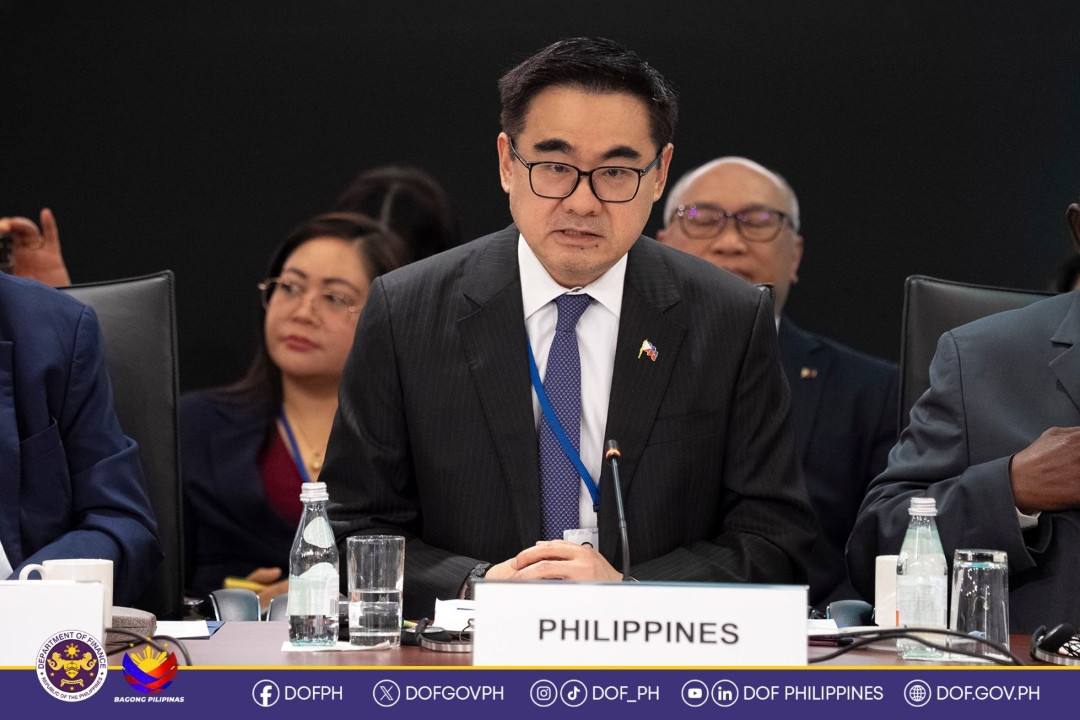
At the Intergovernmental Group of Twenty-Four (G-24) Ministers’ and Governors’ Meeting on April 14, Mr. Go called for stronger international support to help protect jobs during war and climate-related crises.
In particular, he cited the need for scaled-up and more flexible financing, which includes budget support and emergency funding tools that will help countries absorb external shocks.
He also called for deeper mobilization of private capital, sustained support for jobs and human capital, and stronger and faster support for disaster and climate resilience.
“Sustaining progress requires collective resolve. We call on countries and development partners to deepen collaboration in responding to both current and emerging crises,” he said.
“We therefore urge renewed multilateralism and deeper international cooperation to strengthen and stabilize the global financial architecture — so that economic transformation is achieved and progress remains inclusive and sustainable,” he added.
On Friday, the heads of Multilateral Development Banks (MDBs) said that they are ready to deploy timely and effective support to help countries amid higher energy costs, supply chain disruptions, and tighter financial conditions.
Mr. Go during a constituency meeting with the World Bank sought faster approval of crisis-related assistance to enable the government to respond more quickly to disaster or economic shocks.
“The Philippines further requested continued scaling up of financial support from the Bank, along with more affordable lending terms,” the DoF said.
“This would help ensure that critical investments, specifically those that create jobs and support vulnerable and upper middle-income communities, can continue despite global challenges,” it added.
The Philippines also called for expanded access to blended financing, which is seen to help fund urgent needs, strengthen institutions, and support long-term development. — Justine Irish D. Tabile