Home Blog Page 1563

BEPS Pillar 2: What now in ASEAN and what’s next for the Philippines

Digitalization in the 21st century brought with it several challenges to the rules for taxing international business income, which gave rise to base erosion and profit shifting (BEPS), in which multinational entities (MNEs) shift profits to locations with minimal or no tax to pay a reduced amount of taxes globally. BEPS practices undermine the fairness and integrity of tax systems because businesses that operate in various jurisdictions may use BEPS and gain a competitive advantage over entities operating domestically.

To address the challenges to the tax system brought about by globalization, the Organisation for Economic Cooperation and Development (OECD) and the G20 countries created the OECD/G20 Inclusive Framework on BEPS. In October 2021, over 135 Inclusive Framework Members joined a two-pillar solution to reform the international tax system, ensuring that MNEs pay their fair share of tax regardless of the tax jurisdiction where they generate revenue.

OVERVIEW OF BEPS PILLAR 2
The BEPS Pillar 2 or the Global Anti-Base Erosion Rules (GloBE Rules), introduces a Global Minimum Tax (GMT) of 15%. To apply, if a qualified MNE’s effective tax rate (ETR) in a particular jurisdiction is less than the 15% GMT, the MNE should pay the top-up tax (the difference between the 15% GMT and ETR) to meet the GMT. However, the GloBE rules do not apply to all MNEs. Only MNEs with consolidated group revenue of 750 million euros in at least two out of the last four years are required to pay the top-up tax.

The top-up tax may be collected in three ways. The first is the Income Inclusion Rule (IIR), which imposes a top-up tax on the ultimate parent entity (UPE) based on the earnings of foreign subsidiaries with ETRs below the GMT. UPE will pay the top-up tax to the taxing jurisdiction where it is situated. The second is the Undertaxed Profit Rule (UTPR), which “sweeps” whatever is not collected by the IIR. UTPR enables the taxing jurisdictions where the subsidiaries are operating to collect the top-up tax yet to be collected through the IIR by way of denial of a deduction for otherwise deductible expenses (or be subject to an equivalent adjustment under domestic law in an amount sufficient to result in the MNE located in the UTPR jurisdiction having an additional tax expense equal to the UTPR top-up tax allocated to that jurisdiction). The third is the Qualified Domestic Minimum Top-Up Tax (QDMTT), where the taxing authority that has jurisdiction over the entity will have the primary rights to the top-up tax.

WHAT NOW IN THE ASEAN MEMBER COUNTRIES
Based on the Tax Challenges Arising from the Digitalization of the Economy – Administrative Guidance on the Global Anti-Base Erosion Model Rules – Central Record, OECD/G20 Inclusive Framework on BEPS, which was published by OECD on Jan. 15, starting Jan. 1, 27 countries had transitional qualified status for IIR, while 28 countries had transitional qualified status for QDMTT worldwide.

In the region, only Vietnam has been granted a transitional qualified status for both IIR and QDMTT. Indonesia, Malaysia, Singapore, Thailand, and Hong Kong have adopted BEPS Pillar 2 starting Jan. 1.

Indonesia issued Government Regulation No. 55 of 2022 on Dec. 20, 2022, which implemented amendments to the Income Tax Law. Government Regulation No. 55 serves as a legal basis to adopt the GloBE rules. Further, Indonesia’s Ministry of Finance issued Regulation No. 136 of 2024, which provides for the implementation of the Pillar 2 GMT rules in Indonesia. This includes the IIR and QDMTT, which will apply starting Jan. 1, 2025, and the UTPR, which will apply starting Jan. 1, 2026.

Malaysia published the Finance Act (No. 2) 2023 in its Official Gazette on Dec. 29, 2023. The Finance Act will implement the Domestic Top-up Tax and the Multinational Top-up Tax. On Dec. 2, 2024, the Malaysian Inland Revenue Board (MIRB) issued guidelines on the implementation of GMT in Malaysia. This law took effect on Jan. 1.

Singapore President Tharman Shanmugaratnam approved the Multinational Enterprise (Minimum Tax) Act 2024 on Nov. 8, 2024. The new law seeks to implement two new top-up taxes —Domestic Top-up Tax and the Multinational Enterprise Top-up Tax — under the OECD’s BEPS. On Dec. 30, the Singapore Ministry of Finance published the Multinational Enterprise (Minimum Tax) Regulations 2024 in support of the new legislation. The new tax legislation took effect on Jan. 1.

Thailand also issued Emergency Decree on Top-up Tax on Dec. 26, which took effect on Jan. 1. Thailand’s new legislation adopts QDMTT, IIR, and UTPR.

Brunei Darussalam, Cambodia, Lao PDR, Myanmar, and the Philippines, which constitute half of the ASEAN member countries, have not yet passed laws implementing the GloBE Rules.

WHERE IS THE PHILIPPINES NOW?
The Philippines joined as a member of the OECD/G20 Inclusive Framework on Nov. 8, 2023. This move reconfirms our government’s commitment to a fair system of taxation, protecting the country’s tax base against aggressive tax avoidance schemes, and promoting international tax cooperation. Despite joining the OECD/G20 Inclusive Framework, the Philippines has not yet pass a tax law to implement the GloBE Rules.

Philippine entities of MNEs may be subject to the regular corporate income tax (RCIT) of 20% or 25%. On the other hand, companies that are registered business enterprises have preferential income tax rates such as income tax holiday (ITH) or the 5% Special Corporate Income Tax (SCIT). Therefore, the GloBE Rules may most likely apply to these registered business enterprises enjoying the preferential income tax rates since they may have an ETR lower than the 15% GMT.

IMPACT OF GLOBE RULES IN THE PHILIPPINES
Republic Act No. 12066, otherwise known as the CREATE MORE Act, was signed in November. The CREATE MORE Act makes the Philippines’ tax incentives regime more globally competitive and investment-friendly, with the goal being to promote the Philippines as a prime investment destination.

Developing countries like the Philippines rely mostly on foreign investment to generate revenue. However, with the eventual implementation of GloBE Rules, investing in the Philippines may be less appealing to MNEs because they can no longer take advantage of the preferential tax rates, since they would be required to pay a GMT of 15% regardless of where they invest.

If the Philippines adopts the GloBE Rules, our Congress should pass a law amending the Tax Code to implement at least the QDMTT to maximize tax collection. The adoption of the QDMTT will give priority to the Bureau of Internal Revenue (BIR) to collect the top-up tax of those qualified MNEs with low ETRs. The implementation of the IIR may only have a minimal increment on our tax revenues since we do not have that many UPEs situated here. Likewise, UTPR will not have a huge increment on tax revenue, unlike the QDMTT. Congress, however, should weigh the possible benefits and consequences of adopting the GloBE Rules.  While the Philippines will benefit from the GloBE rules, resulting in additional tax revenue, a possible consequence is that it could drive away foreign investors.

I believe that BEPS Pillar 2 is still in the experimental stage. On the one hand, developed countries will surely benefit from this as they may earn back the tax revenues lost through MNEs investing in a low- or no-tax jurisdiction. On the other hand, developing countries, like the Philippines, may be adversely affected by it since it might drive away foreign investors who prefer to do business in developing countries offering lower tax rates.

In 2023, the OECD published sets of administrative guidance on BEPS Pillar 2, which provides new tax credits such as the marketable transferable tax credits (MTTCs) and non-MTTCs. MTTCs are tax credits that can be used by the holder of the credit to reduce its tax liability and are transferable upon satisfaction of certain conditions. Non-MTTCs, on the other hand, are still transferable but no longer marketable once transferred. To mitigate the effects of the adoption of GloBE Rules to the attractiveness of the Philippines as an investment hub, Congress should pass amendments to the Tax Code, specifically on tax incentives that can be provided to MNEs qualified to pay the GMT.

In the Philippines, investors are assured of a quality workforce. The depth and quality of our human resources make the Philippines an attractive place for doing business. Filipinos are known for diligence, hard work, and English proficiency. According to the latest Pearson Global English Proficiency Report 2024, Filipinos rank above the global average in Business English Proficiency scoring 63 compared to the global average of 57. This, together with the government’s continuous dedication to ease of doing business, should be bolstered to attract potential investors.

The government must find new ways to attract foreign investors to the Philippines. To gain new investors, the government should consider adding fiscal incentives and devising and improving non-fiscal incentives. Several countries are already implementing the GloBE Rules, and it is only a matter of time before our current fiscal incentives will be rendered irrelevant because of the payment of the GMT.

Let’s Talk TP is an offshoot of Let’s Talk Tax, a weekly newspaper column of P&A Grant Thornton that aims to keep the public informed of various developments in taxation. This article is not intended to be a substitute for competent professional advice.


Runell Alvyn V. Sarmiento is a manager from the Tax Advisory & Compliance division of P&A Grant Thornton, the Philippine member firm of Grant Thornton International Ltd. pagrantthornton@ph.gt.com


PSEi sinks to seven-month low before GDP data

PHILIPPINE STAR/KRIZ JOHN ROSALES

THE MAIN INDEX sank to the 6,100 level on Monday, hitting a seven-month low, as investors were cautious before the release of Philippine gross domestic product (GDP) data and the US Federal Reserve’s policy meeting.

The Philippine Stock Exchange index (PSEi) fell by 1.57% or 99.32 points to close at 6,196.88 on Monday, while the broader all shares index slumped by 1.12% or 41.49 points to end at 3,639.85.

This was the PSEi’s lowest close and first time to end at the 6,100 level in more than seven months or since its 6,158.48 finish on June 21, 2024.

“The local market declined as investors took a cautious stance while waiting for the Philippines’ 2024 GDP data and the Fed’s policy meeting, both of which are set this week,” Philstocks Financial, Inc. Senior Research Analyst Japhet Louis O. Tantiangco said in a Viber message. “Expectations that the local economy was unable to hit the government’s growth target last year weighed on the market.”

The Philippine Statistics Authority will release fourth-quarter and full-year 2024 GDP data on Jan. 30 (Thursday).

A BusinessWorld poll of 18 economists and analysts yielded a median estimate of 5.8% for fourth-quarter GDP growth, faster than 5.2% in the third quarter and matching the 5.8% expansion in the same quarter in 2023.

The poll also yielded a median growth forecast of 5.7% for full-year 2024, below the government’s revised 6-6.5% goal. Still, this would be faster than the 5.5% economic expansion logged in 2023.

Philippine GDP growth averaged 5.8% in the first nine months of 2024. National Economic and Development Authority Secretary Arsenio M. Balisacan last week said that economic growth in 2024 may have fallen short of the government’s target due to the typhoons that hit the country in the fourth quarter.

Meanwhile, the Fed will hold its first policy meeting for the year on Jan. 28-29, where it is widely expected to keep rates unchanged for the first time since September amid renewed inflation concerns.

“Philippine shares fell below the 6,200 level as the market braces for a shortened trading week with more key economic indicators ahead,” Regina Capital Development Corp. Head of Sales Luis A. Limlingan said in a Viber message. Philippine markets are closed on Jan. 29 (Wednesday) for the Lunar New Year.

All sectoral indices closed in the red on Monday. Industrials sank by 2.07% or 183.42 points to 8,679.54; holding firms dropped by 1.98% or 105.90 points to 5,235.02; mining and oil decreased by 1.62% or 126.78 points to 7,686.99; services retreated by 1.49% or 30.71 points to 2,029.68; property went down by 1.29% or 29.88 points to 2,277.76; and financials slumped by 1.18% or 25.59 points to 2,140.19.

Value turnover rose to P5.44 billion on Monday with 1.14 billion shares traded from the P4.74 billion with 1.14 billion issues exchanged on Friday. Decliners outnumbered advancers, 118 versus 68, while 48 names were unchanged.

Net foreign selling declined to P322.39 million on Monday from P1.12 billion on Friday. — Revin Mikhael D. Ochave

Peso drops versus the dollar on renewed Trump tariff concerns

BW FILE PHOTO

THE PESO weakened anew on Monday as the dollar rose after US President Donald J. Trump threatened to impose tariffs on Colombia.

The local unit closed at P58.435 per dollar on Monday, weakening by 12.50 centavos from its P58.31 finish on Friday, Bankers Association of the Philippines data showed.

The peso opened Monday’s session slightly weaker at P58.35 against the dollar. Its intraday best was at P58.27, while its worst showing was at P58.46 versus the greenback.

Dollars exchanged inched down to $1.53 billion on Monday from $1.57 billion on Friday.

The peso declined against the dollar on Monday amid souring risk sentiment after Mr. Trump threatened tariffs on Colombia, a trader said by phone.

Concerns over Mr. Trump’s threats on US import tariff hikes, the latest of which on Colombia, after the agreement on the return of undocumented immigrants, boosted safe-haven demand for the greenback, Rizal Commercial Banking Corp. Chief Economist Michael L. Ricafort said in a Viber message.

For Tuesday, the trader expects the peso to move between P58.20 and P58.50 per dollar, while Mr. Ricafort sees the local unit ranging from P58.30 to P58.50.

The US dollar edged up versus the euro but dropped against the yen on Monday as concerns about US tariffs returned and investors braced for a raft of central bank policy meetings and economic data later this week, Reuters reported.

Last week was the dollar’s weakest in more than a year on expectations that tariffs enacted by Mr. Trump will be lower than previously feared. But concerns have resurfaced as the US and Colombia pulled back from the brink of a trade war.

Monetary policy decisions later this week and inflation data on Friday suggest the focus may shift, at least temporarily, from tariff risks to interest rate differentials, some analysts say.

No change in rates from the US Federal Reserve and 25-basis-point cuts from the European Central Bank, the Bank of Canada and Riksbank are priced in, but markets will closely watch any clues on the outlook.

The dollar index, which measures the currency against six others, rose 0.1% to 107.58, still close to the one-month low it touched last week. The index has risen nearly 4% since the US elections in early November.

The prospect of high US tariffs on goods from countries including China, Canada and Mexico, as well as the euro zone, has stoked concerns about a renewed bout of inflation, boosting Treasury yields and the greenback in recent months.

The Japanese yen changed hands at 155.88 per dollar after the Bank of Japan (BoJ) pushed its policy rate to the highest level since the global financial crisis and revised up its inflation forecasts.

Some analysts said that tariffs could also affect BoJ monetary policy. — A.M.C. Sy with Reuters

Marcos told not to be overly reliant on US amid rising China tensions

FACEBOOK.COM/USEMBASSYPH

By John Victor D. Ordoñez, Reporter

THE PHILIPPINES should not rely heavily on the US to build its defense capabilities in the face of its sea dispute with China, political analysts said, citing the expected “transactional” approach to bilateral ties under a second Trump presidency.

“President Trump has not been shy saying that everything the US does in the international field has a price,” Michael Henry Ll. Yusingco, a fellow at the Ateneo de Manila University Policy Center, said in a Facebook Messenger chat. 

“The Marcos administration should not be naïve to think that the US will act in the name of world peace or international law. It would be better to anticipate that the America First Policy may be applied in the literal sense by Trump,” he added.

Last week, US Secretary of State Marco Rubio talked about China’s “dangerous and destabilizing actions in the South China Sea” with Philippine Foreign Affairs Secretary Enrique A. Manalo and underscored the “ironclad” US defense commitment to Manila.

The US is the Philippines’ major security partner, with a 1951 Mutual Defense Treaty compelling both nations to defend each other in case of an armed attack. 

The Philippines has been embroiled in wrangles at sea with China in the past two years and the two countries have faced off regularly around disputed features in the South China Sea that fall within Manila’s exclusive economic zone. 

China claims almost the entire South China Sea, a conduit for more than $3 trillion of annual ship-borne commerce, including parts claimed by the Philippines, Vietnam, Indonesia, Malaysia and Brunei. The Permanent Court of Arbitration in the Hague ruled in 2016 that China’s claims had no legal basis, a ruling Beijing rejects.

“He (Mr. Rubio) merely reiterates and reaffirms the official policy of the US towards the Philippines,” Rommel C. Banlaoi, president of the Philippine Society for International Security Studies, said in a Viber message.

“What we need to see is how the Trump administration will implement this policy amidst persistent conflicts in the South China Sea.”

The US military has moved its Typhon launchers, which can fire multipurpose missiles up to thousands of kilometers, from Laoag airfield to another location on the island of Luzon, a senior Philippine government source said on Jan. 23, according to Reuters.

The Tomahawk cruise missiles in the launchers can hit targets in both China and Russia from the Philippines. The SM-6 missiles it also carries can strike air or sea targets more than 200 km away.

China’s Foreign Ministry accused the Philippines on Jan. 23 of creating tension and confrontation in the region, and urged it to “correct its wrong practices.”

The deployment of the missile system is “extremely irresponsible” for regional security, Ministry spokesperson Mao Ning told a news briefing last week.

Typhons are relatively easy to produce — drawing on large stockpiles and designs that have been around for a decade or more — and could help the US and its allies catch up quickly in an Indo-Pacific missile race in which China has a big lead.

Security engagements between the allies have soared under Philippine President Ferdinand R. Marcos, Jr., who has moved closer to Washington and allowed the expansion of military bases that American forces could access, including facilities facing the democratically governed island of Taiwan, which China claims as its own.

“I believe that we are off to a good start, but then again, it would depend on how well we are able to elevate our agency in the eyes of Washington as well, so we have to do more in that regard so it’s safe to say that the Philippine-US alliance remains intact,” Don McClain Gill, who teaches foreign relations at De La Salle University, said in a Facebook Messenger chat.

US AID PAUSE
Meanwhile, Senate Minority Floor Leader Aquilino Martin “Koko” D. Pimentel said the government should not be fazed by the Trump government’s decision to freeze new funding foreign assistance programs for 90-days.

“We should learn to live with this decision,” he told reporters in a Viber message. “The Philippines should not be dependent on foreign aid, although we should be welcoming of all aid without strings and conditions that are extended to us.” 

The US Department of State on Jan. 20 issued an executive order that froze foreign funding, with exceptions for emergency food programs and military aid to Israel and Egypt.

US President Donald J. Trump ordered the 90-day pause in foreign development assistance pending a review of these programs in relation to his administration’s foreign policy.

Washington provided foreign aid worth $60 billion in 2023 or about 1% of the US budget.

“The United States foreign aid industry and bureaucracy are not aligned with American interests and in many cases antithetical to American values,” according to a copy of the order published on the US Department of State website.

“They serve to destabilize world peace by promoting ideas in foreign countries that are directly inverse to harmonious and stable relations internal to and among countries.”

“[Pausing foreign aid] is not a good indicator especially considering there were previous promises from US Foreign Affairs officials that our working relationship and projects will not change,” Hansley A. Juliano, who teaches political science at the Ateneo de Manila University, said in a Facebook Messenger chat. 

“It potentially belies the assumption of the security sector that the US will remain a reliable Philippine security partner.”

The Southeast Asian nation, one of the weakest in the world in terms of military capability, is important to Washington’s efforts to push back against China, which claims the South China Sea almost in its entirety.

ICC likely to proceed with Philippine drug war probe despite US sanction threat

PHILIPPINE STAR/MICHAEL VARCAS

By Chloe Mari A. Hufana, Reporter

POSSIBLE US sanctions against the International Criminal Court (ICC) are unlikely to quash the tribunal’s interest in investigating the Philippines’ deadly war on drugs, which has drawn international scrutiny over human rights violations, political analysts said on Monday.

The Philippines should still push the ICC probe of ex-President Rodrigo R. Duterte’s anti-illegal drug campaign even if Washington undermines the ICC “if we are to remain adamant about promoting and adhering to democratic norms and the rule of law,” Josue Raphael J. Cortez, a diplomacy instructor at the De La Salle-College of St. Benilde’s School of Diplomacy and Governance, said in a Facebook Messenger chat on Monday.

“This is something that we want in line with our campaign for a nonpermanent seat in the United Nations Security Council by 2027,” he added.

Mr. Cortez noted that if the Philippine government chooses to collaborate with the ICC and the International Police (Interpol) once the court orders the arrest of key actors in the drug war, the US decision to penalize the ICC would have a minimal impact on such efforts.

Manila would likely feel pressured to align its actions with Washington’s stance on the ICC due to US President Donald J. Trump’s “drastic” orders, he added.

“In terms of strengthening our alliance, furthering our economic partnership, and ensuring the welfare of Filipino migrants in the US, our decision to support Washington on the matter may be some sort of appeasement towards Washington’s new regime,” he said.

The ICC might assert its independence and continue probing the bloody drug war, National Union of Peoples’ Lawyers (NUPL) President Ephraim B. Cortez said.

“We have to wait and see how the ICC would respond to the threat of sanctions from the US,” he said in a Viber message. “Of prime consideration is whether the US will consider the Philippines a US ally within the context of the proposed US bill.”

The US House of Representatives earlier this month approved a bill that seeks to sanction the ICC in protest of its arrest warrants for Israeli Prime Minister Benjamin Netanyahu and his former defense minister over Israel’s military campaign in Gaza.

The vote was 243 to 140 in favor of the Illegitimate Court Counteraction Act, which would sanction any foreigner who investigates, arrests, detains, or prosecutes US citizens or those of an allied country, including Israel, who are not members of the ICC, Reuters reported on Jan. 11.

The ICC is a permanent court that can prosecute people for war crimes, crimes against humanity, genocide and the crime of aggression in member states or by their nationals.

“Although the US is not a major financial contributor to the ICC, the sanctions proposed under the bill will affect US companies like Microsoft, financial and banking institutions that have dealings with the ICC,” NUPL’s Mr. Cortez said. “This may also move some US allies who are major contributors to the ICC, like Germany and the UK, to follow suit.”

“Financially, the immediate effect of a US sanction would be the cessation of US financial assistance to the ICC’s victims’ fund,” he added.

American sanctions could also affect the tribunal’s legitimacy, making more countries hesitant to work with it in the future, Benilde’s Mr. Cortez said.

“The US, by promulgating such decisions, is clearly undermining the ICC’s mandate and influence,” he said. “This will certainly debilitate the ICC’s capacity to help out in addressing certain crimes that are deemed perilous to the global order.”

The ICC started its preliminary examination of the Philippines’ war on drugs in February 2018, focusing on allegations of crimes against humanity committed under Mr. Duterte’s anti-narcotics campaign.

The probe examined reports of extrajudicial killings and widespread human rights violations, which resulted in thousands of deaths, including those of minors and civilians.

In March 2019, Mr. Duterte withdrew the Philippines from the ICC, citing “unwarranted attacks” against his government.

In September 2021, the ICC authorized a full investigation of the drug war, but the probe was suspended two months later after the Philippine government requested a deferral, claiming it was conducting its own probe.

The ICC resumed its investigation in early 2023, citing insufficient evidence of genuine efforts by Philippine authorities to prosecute offenders.

Philippine President Ferdinand R. Marcos, Jr. earlier said the country would not lift a finger in the probe, but Executive Secretary Lucas P. Bersamin said the country would respond favorably if the ICC seeks Interpol’s help.

Justice Secretary Jesus Crispin C. Remulla has signaled a softer stance on the ICC probe, Reuters reported on Jan. 23.

“We will talk to them soon in a very well-defined manner, in the spirit of comity,” he told Reuters. “Some people are trying to bridge the divide to bring us together, so we can sit at one table. There are certain areas where we can cooperate… Lines have to be drawn properly.”

Smaller Philippine Coast Guard ship keeps China vessel from Zambales coast

PHILIPPINE COAST GUARD PHOTO

THE Philippine Coast Guard (PCG) said its 44-meter vessel BRP Cabra had managed to prevent a bigger Chinese ship from getting closer to the coastline of Zambales province.

BRP Cabra, despite its smaller size [than] the China Coast Guard (CCG) vessel 3103, has been successful in preventing [it]] from advancing closer to the coast of Zambales,” it said in a statement on Sunday night.

It added that the ship had kept CCG 3103 at a distance of 185.2 kilometers from the Philippines’ exclusive economic zone (EEZ).

While BRP Cabra is only 44 meters in length, the China Coast Guard deployed another vessel at a distance, “appearing to serve as a supporting vessel for CCG 3103,” the PCG said. “Additionally, CCG 5901 was also spotted a few nautical miles away from CCG 3103.”

The Philippine Coast Guard vowed not to allow China to alter the order in the South China Sea by encroaching closer to the Zambales coastline in northern Philippines.

“Despite these developments, the PCG remains committed to challenging the illegal presence of Chinese Coast Guard vessels,” it said.

“Our continued presence serves as a clear demonstration of our commitment to upholding our sovereign rights and a steadfast stance against any violations of international law, all while prioritizing a peaceful approach,” it added.

The PCG at the weekend accused CCG 3103 of using a long-range acoustic device against its vessel near the Zambales, weeks since it started monitoring the area after Beijing deployed its biggest coast guard ship in the Philippine EEZ.

The PCG said CCG 3103 had replaced another vessel deployed near the Zambales and “appears to be escorted by CCG 5901 or the “Chinese monster ship.”

The Philippines has accused China of intimidating Filipino fishermen near Scarborough Shoal and normalizing its “illegal presence” after Beijing sent the monster ship, the world’s biggest coast guard vessel, into the Philippine EEZ on Jan. 4.

A United Nations-backed court in the Hague voided China’s expansive claim in the South China Sea in 2016, as it ruled the shoal is a traditional fishing ground for Filipino, Chinese and Vietnamese fishermen. — Kyle Aristophere T. Atienza

Marcos pardons ex-Iloilo mayor dismissed during Duterte’s term

FORMER ILOILO CITY MAYOR JED MABILOG — FACEBOOK.COM/HOUSEOFREPSPH

PRESIDENT Ferdinand R. Marcos, Jr. has pardoned a former mayor who was dismissed from office in 2017 and had been linked by the former administration to the illegal drug trade.

In granting executive clemency or presidential pardon to former Iloilo City Mayor Jed Patrick E. Mabilog, Malacañang cited his “long standing commitment to good governance, coupled with awards and recognition received by Iloilo City under his leadership.”

Mr.  Mabilog was dismissed by the Office of the Ombudsman in 2017 after being found guilty of “serious dishonesty” for failing to explain an P8.9-million increase in his wealth from 2012 to 2013.

Executive Secretary Lucas P. Bersamin said the presidential pardon dated Jan. 15 also reverts Mr. Mabilog’s right to run for public office and removes all other penalties related to the 2017 case.

Interior and Local Government Secretary Juan Victor “Jonvic” Remulla said in a Viber message to reporters that all Mr. Mabilog’s “civil rights are restored.”

“This serves not just as a vindication for the wrongful and deceitful cases filed against me but as the triumph of justice in this country,” Mr. Mabilog said in a statement.

“My seven years of exile taught me very beautiful lessons, but foremost among them is this: to build and rebuild the community, we need love and integrity,” he added.

Former President Rodrigo R. Duterte had linked Mr. Mabilog to the drug trade, which the former local chief had denied. No charges were filed against him in relation to drug allegations.

Mr. Mabilog left the country in 2017 and only went back in September 2024 under the Marcos administration, supposedly to clear his name.

In a congressional hearing last year, the ex-mayor said he had been pressured by the former administration to implicate opposition figures including former Senator Franklin M. Drilon and former presidential candidate Manuel A. Roxas II in the drug trade. 

‘REWARD’
“The pardon granted Mabilog on his administrative [case], obviously, is a reward for attacking and besmirching the integrity and reputation of former [President] Rodrigo Roa Duterte, who is a critic of the administration,” Mr. Duterte’s former chief lawyer, Salvador M. Panelo, said in a statement.

Mr. Mabilog said the Marcos administration “upholds justice, which people like me, who are unjustly accused, can somehow be confident to avail themselves of vindication.” — Kyle Aristophere T. Atienza

Minimal impact seen in US aid halt

BW FILE PHOTO

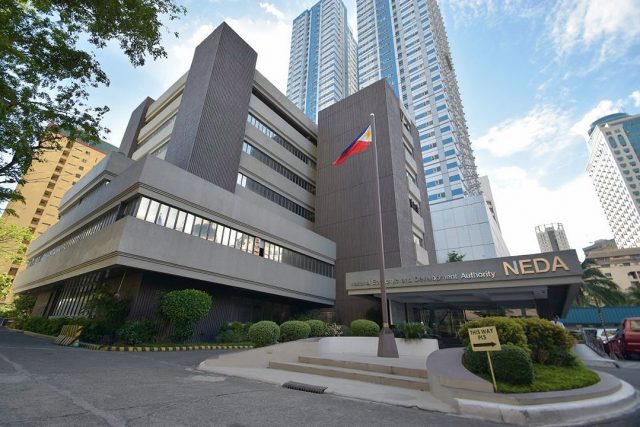
THE United States government’s temporary suspension of foreign assistance would only have minimal impacts on the Philippine economy, the National Economic Development Authority (NEDA) said.

Foreign assistance from the US represents only a “small part” of the Philippines’ overall economic activities, NEDA Secretary Arsenio M. Balisacan said.

“Not so much directly. And in the short term, much of our loans now are with other countries and multilateral institutions,” he told reporters when asked about the potential impacts of US President Donald J. Trump’s freeze on foreign aid.

“If you are talking about the economy, that’s a small part,” he added.

He said any indirect effects could stem from its role as a key shareholder in multilateral lending institutions like the World Bank and the Asian Development Bank (ADB).

The potential impacts would likely be more medium-term in nature, he noted.

Mr. Balisacan also said the Philippines’ flagship infrastructure projects, which are largely funded by countries like Japan, Korea, and multilateral institutions like the ADB and World Bank, would not be significantly impacted.

“For our current infrastructure flagship projects, not much. Many of those projects are funded by Japan, Korea, ADB, and World Bank,” he said.

The suspension, announced by the US State Department, involves a “stop-work” order for all existing foreign assistance, in addition to halting new aid, as Mr. Trump recently ordered a 90-day pause in foreign development assistance. A stop-work order issued by the US State Department last week covers all existing foreign assistance. — Kyle Aristophere T. Atienza

Budget is constitutional — Quimbo

JCOMP-FREEPIK

THE PHILIPPINE Congress submitted to Malacañang the budget bill without any blank line items, a lawmaker said on Monday, allaying concerns about the constitutionality of the P6.326-trillion national budget this year.

In a statement, Marikina Rep. Stella Luz A. Quimbo said the 2025 budget’s bicameral conference committee authorized legislative staff members to “implement corrections” made to the spending plan, acknowledging there were blank line items in its committee report.

The 2025 national budget was put in the spotlight in mid-January after ex-President Rodrigo R. Duterte said the budget bill had blank line items whose amounts were later filled out by the Executive branch, a claim that President Ferdinand R. Marcos, Jr. denied.

“When the members of the Bicameral Committee signed the report, all appropriations had already been determined and approved — no changes were made,” she said.

“The Bicameral Report explicitly authorized the technical secretariats of both the Senate and the House of Representatives to implement corrections and adjustments as required,” she added. “These do not affect the integrity nor the legality of the budget.” — Kenneth Christiane L. Basilio

ERC power over bill deposits upheld

BW FILE PHOTO

THE Supreme Court (SC) upheld the authority of the Energy Regulatory Commission (ERC) to require consumers to provide bill deposits as security for their electricity bills, deeming it a legitimate exercise of the ERC’s rate-setting powers to safeguard the financial stability of electricity distributors.

The tribunal en banc, in a 32-page ruling promulgated on Oct. 8, 2024, but was only publicized on Jan. 27, said that judicial review necessitates an actual and finalized government action that directly impacts the petitioners.

As the ERC’s Rules on Bill Deposits are still in the process of being finalized, there is no definitive act subject to challenge.

“It is not our function to issue an advisory opinion on the questions of policy and regulations of administrative agencies. It is premature for this Court to intervene in the delicate exercise of the ERC’s rate-fixing functions since it has yet to finalize the rules on bill deposits and the more specific mechanisms for its implementation,” it said.

The case stemmed from the Magna Carta for Residential Electricity Consumers, which ERC introduced in 2004. It mandated residential consumers to pay bill deposits equivalent to one month’s estimated billing as a guarantee for payments.

These deposits could be used for overdue bills, earned annual interest credited to customers’ accounts, and were refundable upon service termination. The ERC issued guidelines for the collection and refund of deposits.

In 2018, the ERC proposed draft rules for monitoring and reporting bill deposits and sought stakeholder feedback.

In 2019, former lawmakers Neri J. Colmenares and Carlos Isagani T. Zarate, among others, challenged the bill deposit requirement before the high court, arguing that it lacked sufficient regulations. — Chloe Mari A. Hufana

Halt vehicle inspection, Tulfo says

Motorists are stuck in traffic along Commonwealth Avenue in Quezon City, July 28, 2022. — PHILIPPINE STAR/MIGUEL DE GUZMAN

A PHILIPPINE senator on Monday asked the Land Transportation Franchising and Regulatory Board (LTFRB) to halt its mandatory inspection of private vehicles to spare owners of needless costs, citing the need for the agency to focus on the roadworthiness of public utility vehicles (PUVS).

“Suspend that first (private motor vehicle inspection). Study this first and reduce the burden on private vehicle owners,” Senator Rafael T. Tulfo, who heads the public services committee, told a hearing in mixed English and Filipino.

“Most of these private vehicles are well-maintained by their owners, these delivery vans and bigger vehicles are what we see with smoke emissions.”

He said the agency should focus on buses and other public utility vehicles.

At a Senate public service committee hearing on Jan. 14, LTFRB Chairman Teofilo E. Guadiz III said the government would use these testing centers to certify jeepneys for road safety ahead of cooperatives’ vehicle modernization obligations once transport routes are finalized by 2026.

The agency earlier said it would come up with at least half of the final transport routes for modern jeepneys by the end of this year and finish these routes by 2026 with only about 15% of routes having been completed.

In August last year, Philippine President Ferdinand R. Marcos, Jr. rejected a proposal to suspend the government’s jeepney modernization program, rejecting criticisms that the plan had been rushed.

Transportation Secretary Jaime J. Bautista earlier said suspending the modernization program would waste investments that have been made to roll out the plan. — John Victor D. Ordoñez

Dengvaxia petitioners may pursue civil case instead — DoJ

OLGA KONONENKO-UNSPLASH

A Department of Justice (DoJ) official on Monday said the petitioners in the controversial Dengvaxia vaccine case might have a better chance of obtaining justice if they pursue a civil case rather than a criminal one after it withdrew charges against health officials.

“The remedy may not be criminal. There could be claims of civil damages whoever may be held responsible,” Justice Undersecretary Raul T. Vasquez told reporters in an ambush interview in Manila City.

“We’re not saying there is an obligation — we don’t want to speculate — but it is up to their lawyers to craft a legal strategy that could provide them with some assistance and support, particularly in seeking compensation for all their suffering. It’s truly a very difficult situation.”

This comes after the DoJ junked 98 Dengvaxia complaints, dismissing criminal charges against former Health Secretary Janette L. Garin and other officials.

The charges involve the deaths of 98 children who were inoculated with the anti-dengue vaccine.

In a resolution dated Jan. 10, and signed by Secretary Jesus Crispin C. Remulla, the prosecutor general was directed to withdraw the charges filed before the Quezon City Regional Trial Court against Ms. Garin, along with co-respondents.

“In the scheme of things that transpired involving Dengvaxia, we found that the step-by-step procedures undertaken by respondents-appellants, leading to the implementation of the program, do not exhibit inexcusable lack of precaution to hold them liable for reckless imprudence resulting in homicide,” the resolution read.

The DoJ added that no causal link could be established between the Dengvaxia vaccination of school children, and the deaths cited in the victims’ complaint-affidavit. — Chloe Mari A. Hufana