Home Blog Page 1560

All about auto insurance
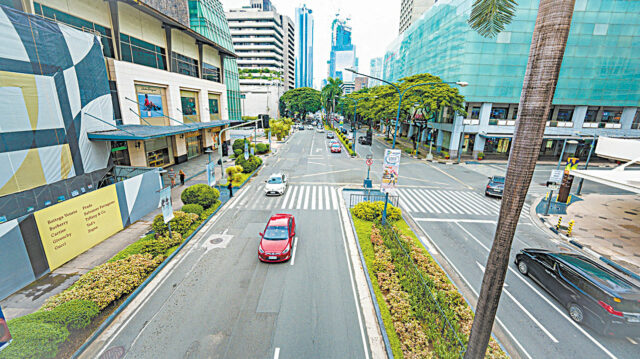
Getting peace of mind on the road doesn’t happen by accident. — PHOTO BY KAP MACEDA AGUILA

What to keep in mind when choosing protection

HAPPY MOTORING is all about peace of mind. You must be confident in the car you are driving, that it is reliable enough to get you to where you are going. You need to make sure that the route you are taking will get you there the fastest, safely, and comfortably. Know where you can make pit stops as needed and where to seek help in case of an emergency. Going places seems easy enough but no matter how well prepared you are, there is always the possibility that not everything will go as planned. Speaking of which, do you have an eye on the weather?

Yes, accidents do happen. A Statista report on road traffic incidents in Metro Manila shows that incidents climbed from 77,950 in 2010 to a high of 121,770 in 2019. Mobility restrictions during the COVID-19 pandemic saw this number halved to 65,030 in 2020, but is now back on the rise. In 2023, the number of recorded incidents rose to 85,950; from January to November of 2024, the number stood at 62,720.

This underscores the importance of having proper motor vehicle insurance for when you might figure in any of those road incidents. Whether you’re a new car owner or a seasoned driver, having the right car insurance is essential for financial security and the aforementioned peace of mind. Accidents, theft, and other surprises can happen anytime — making insurance coverage a necessity rather than an option. I don’t mean just the Compulsory Third Party Liability insurance mandated by law. That is certainly not nearly enough to provide you with adequate protection.

A comprehensive insurance plan can include coverage for own damage, theft, acts of God, excess body injury, third-party property damage, and passenger injury. The premium you will be charged will depend on your desired coverage, the age of your vehicle, place of use, and amount of deductibles, among others. “Deductibles” refer to the ascribed minimum portion of repair cost that the owner covers out of pocket. If the repair amount is less than the deductible, the owner shoulders the entire expense; if the repairs exceed the deductible amount, the insurer covers the excess.

It is important to remember, though, that it’s not just the amount of your coverage that counts. I would even say that the reliability of your insurer matters even more. AXA Philippines — a venture of AXA SA of France, First Metro Investment Corp. (FMIC), and GT Capital Holdings (GTCAP) — is one of the country’s leading insurance providers. AXA SA is the fourth largest financial services company by revenue in France and the eighth largest French company. FMIC, on the other hand, is part of the GTCAP group, one of the leading business conglomerates in the Philippines with diversified business interests in banking, automotive, property and utilities. Surely, this partnership offers rock-solid credentials when it comes to assuring peace of mind.

AXA Philippines Officer-in-Charge for Commercial Sales and Chief of Partnerships and Employee Benefits Johanna Janeo emphasizes the importance of choosing a trusted insurance partner. “You want to know that your insurer comes through when you need it to,” she told this writer. Ms. Janeo cited several reasons for motorists to be discerning in their choice of vehicle insurer. “Among others, reliable car insurers should offer financial security and stability, efficient claims processing and customer support, flexible coverage options and regulatory compliance, and consumer protection,” she continued.

A report by Shoppable.ph in 2024 listed other major motor vehicle insurance companies in the Philippines. They include Bank of the Philippine Islands-MS Insurance, Malayan Insurance, and Prudential Insurance, among the larger non-life insurers. But there are others that focus more particularly on automotive insurance as well, such as Standard Insurance, Stronghold Insurance Company, People’s General Insurance, and Commonwealth Insurance. It is always advisable to do some research before deciding on your insurer. It will save you a lot of grief should the time come when you figure in an unfortunate accident.

A car buyer is free to choose any insurer. Often, however, auto dealers have preferred partners. The Toyota Insure Program (TIP), for example, works with a select basket of insurance companies that include AXA Philippines, Malayan, Standard, Stronghold and People’s. These insurers are selected based on standards of service that meet customer expectations. Ms. Janeo maintained, “There are good reasons to get your insurance directly from your auto dealer. Among others, you enjoy the benefits of a convenient and hassle-free process — akin to a one-stop shop — and you also have access to a seamless after-sales support for claims and repairs.”

Ms. Janeo also offers some tips to make the claims process easier. “If you make sure to document everything, coordinate with authorities, know your policy details, report claims promptly and stay contactable, filing an insurance claim should be hassle-free,” she explained.

But what excites Ms. Janeo even more are the new products that AXA is rolling out. In line with promoting road safety and rewarding responsible drivers, AXA Philippines and Toyota Motor Philippines (TMP) offer Connected Toyota Insure (CTI) — the first Pay-How-You-Drive car insurance product in the country. Available under the Toyota Insure Program, this innovative policy is designed to help drivers save on insurance premiums based on their driving behavior.

Through Toyota’s myToyota Connect, a connected device in your car tracks driving scores, monitoring habits such as acceleration, braking, and cornering. Safer driving can result in lower renewal premiums, while riskier behavior may limit access to discounts. Beyond cost savings, CTI provides peace of mind with 24/7 claims assistance, access to quality repair at Toyota dealers, and exclusive AXA Motor Club perks.

Car insurance is more than just a legal requirement. It’s an investment in safety, financial security, and overall driving peace of mind. By choosing a reliable insurance provider and exploring innovative solutions, drivers can enjoy comprehensive protection and rewards for safe driving habits.


HMO industry swings to profit in 2024

PHILSTAR FILE PHOTO

THE HEALTH maintenance organization (HMO) industry returned to profitability in 2024 amid higher revenues, data from the Insurance Commission (IC) showed.

The sector’s net income stood at P979.8 million as of end-2024, a turnaround from the P4.27-billion net loss in 2023, according to IC data based on the unaudited financial statements submitted by 28 companies.

“This is explained by the higher increase in the sector’s total revenue compared to its total expenses,” Insurance Commissioner Reynaldo A. Regalado said in a statement on Friday.

Total revenues increased by 20.12% to P79.37 billion from P66.08 billion driven mainly by a 18.42% growth in membership fees to P75.62 billion — making up 95.3% of the total.

Meanwhile, total expenses rose by 11.44% to P78.39 billion from P70.35 billion as healthcare benefits and claims paid grew 10.08% to P61.06 billion.

“We also noted from the submissions, that the HMO sector’s total assets, total invested assets, total equity, total capital stock, and total liabilities upswung across the board during the quarter under review,” Mr. Regalado said.

Total assets expanded by 23.85% to P75.13 billion at end-2024 from P60.66 billion.

“The 21.38% increase in cash equivalents, a marked 273.08% rise in deposit to healthcare providers (net), and a 27.51% increase in membership fees receivable (net) contributed to this growth,” the IC said.

Total invested assets, which comprised 23.77% of total assets, increased by 0.92% to P17.86 billion on higher cash equivalents and government securities.

Meanwhile, total liabilities climbed by 26.44% to P63.73 billion amid increases in membership fee and claims reserves.

Total equity rose by 11.14% to P11.4 billion last year from P10.25 billion.

HMOs’ total capital stock went up by 4.43% year on year to P9.18 billion.

PRE-NEED INDUSTRY
Meanwhile, the pre-need industry saw its net income jump by 146.93% last year despite lower plan sales, separate IC data showed.

The sector’s combined net income rose to P5.15 billion in 2024 from P2.09 billion in 2023, IC data from the unaudited financial statements of 16 companies showed.

“The increase was largely driven by the 68.04% spike in the total income earned from investments in trust funds and a 120.23% surge in other income,” Mr. Regalado said.

Meanwhile, premium income inched down by 0.38% to P22.64 billion from P22.73 billion as only eight out of 17 companies reported increases in premiums collected.

Pre-need plans sold decreased by 6.61% to 699,621 in 2024 from 749,154.

This, as sales of life or memorial plans went down by 6.67% to 698,791. This made up 99.88% of the total plans sold by the pre-need sector.

The industry’s combined assets expanded by 8.12% to P164.71 billion on higher investments in trust funds, which made up 84.79% of total assets.

Meanwhile, liabilities rose by 5.89% to P136.73 billion from P129.12 billion.

“Notably, seven out of eight companies that recorded asset growth likewise experienced a rise in liabilities,” the IC said.

The sector’s net worth increased by 20.54% to P27.98 billion from P23.22 billion.

Total capital stock declined by 4.63% year on year to P3.91 billion in 2024 from P4.1 billion the year prior. — AMCS

Mineral production up 1.28% by value in 2024 led by gold

NICKELASIA.COM

THE value of the mining industry’s metallic mineral production rose 1.28% to P252.9 billion in 2024, driven by gold, according to the Mines and Geosciences Bureau (MGB).

Gold accounted for nearly half of the total at P126.36 billion, which was up 19% from the 2023 total.

The value of raw nickel ore fell 15% to P56.67 billion in 2024, the MGB said.

It said the value of mixed nickel-cobalt sulfide fell 21% to P37.37 billion.

The MGB said copper output was valued at P27.24 billion, up from P25.41 billion in 2023; silver at P2.91 billion from P1.86 billion previously; and chromite at P1.75 billion from P1.51 billion.

The growth of Philippine mineral output lagged gross domestic product growth of 5.6% in 2024, Rizal Commercial Banking Corp. Chief Economist Michael L. Ricafort said.

“This could have been weighed down by mostly softer economic data in China, the world’s second biggest economy and the world’s biggest importer of oil, metals, and other major commodities,” he said via Messenger chat.

He said gold was propelled by record world prices, which rose 27% in 2024  after a 13.1% rise in 2023.

Meanwhile, Mr. Ricafort said the 15% decline in the value of raw nickel ore was due to the decline of global prices to a four-year low.

Nickel prices declined 7.9% in 2024. — Kyle Aristophere T. Atienza

CTA cancels P48-M tax on Smart

CTA.JUDICIARY.GOV.PH

THE COURT of Tax Appeals (CTA) has ruled in favor of Smart Communications, Inc., canceling over P48 million in local franchise taxes assessed by the province of Cagayan for the years 2011–2015, citing an expired demand letter and lack of territorial jurisdiction.

“All told, petitioner’s (Smart) insistence on its local franchise tax exemption is untenable. However, as discussed hereunder, respondent’s (Cagayan) local franchise tax assessment must still fail,” the 13-page ruling, made public on Feb. 27, stated.

“The local franchise tax assessment for the year 2011 has already prescribed,” Associate Justice Maria Rowena Modesto-San Pedro wrote.

The tribunal canceled P48,587,497.20 in local franchise taxes for the period.

In granting Smart’s petition, the CTA’s Second Division cited Section 166 of the Local Government Code (LGC), which states that unless otherwise provided, all local taxes, fees, and charges shall accrue on Jan. 1 each year.

Section 167 further provides that unless otherwise specified, all local taxes, fees, and charges must be paid within the first 20 days of January or each subsequent quarter, as applicable.

Meanwhile, Section 194 of the LGC sets a five-year prescriptive period for assessing local taxes, fees, or charges from the date they become due. After this period, no administrative or judicial action for collection may be initiated.

“The same is replicated in Section 133 of the Cagayan Revenue Code. Respondent thus only had five years from the date the tax became due within which to assess the same,” the ruling noted.

As the 2011 local franchise tax became due on Jan. 20, 2011, under Section 167 of the LGC, the Cagayan provincial government had until Jan. 20, 2016, to assess it.

However, Smart received the demand letter only on May 13, 2016, by which time the province’s authority to assess the 2011 local franchise tax had expired.

The tribunal also voided the province’s tax assessment, ruling that Cagayan failed to examine Smart’s books of accounts and other records.

Moreover, it found that the province was not authorized to use the presumed Level Income Assessment Approach as the basis for computing the tax.

In granting Smart’s plea, the tax court also ruled that the company’s franchise operations were outside Cagayan’s territorial jurisdiction since its gross receipts were recorded in Tuguegarao City.

“Respondent is not authorized to impose local franchise tax outside its territorial jurisdiction,” it said.

Section 137 of the LGC allows provinces to impose a franchise tax at a rate not exceeding 50% of 1% of the gross annual receipts for the preceding calendar year, based on income earned or realized within their territorial jurisdiction.

However, Article 266(b) of the LGC’s implementing rules and regulations prohibits provinces from imposing franchise taxes on businesses operating within any city in their jurisdiction.

“The LGC does not expressly provide guidelines for determining the situs of a local franchise tax,” the ruling noted.

Nonetheless, the tax tribunal cited Section 150(a) of the LGC, which states that businesses with branches or sales outlets—such as manufacturers, wholesalers, contractors, and financial institutions—must record sales at the branch where the transaction occurs. The corresponding tax should be paid to the municipality where that branch is located.

“In this case, it is undisputed that petitioner’s gross receipts are recorded in Tuguegarao City. As such, pursuant to Article 266(b) of the LGC IRR, petitioner’s gross receipts are already outside respondent’s territorial jurisdiction,” it said.

The case originated when the province of Cagayan argued that Smart was liable for local franchise tax under Section 137 of the LGC and Section 2G.02 of the Cagayan Revenue Code of 2005, asserting that Smart conducted business throughout the province.

The province also contended that the franchise tax was abolished by the Expanded Value-Added Tax (E-VAT) Law.

Smart, however, maintained that the province’s right to assess the 2011 local franchise tax had prescribed.

It further invoked its exemption from local taxes under its legislative franchise, Republic Act No. 7294, which includes an “in lieu of all taxes” clause.

Additionally, Smart cited the equality clause of the Public Telecommunications Policy Act, arguing that it should receive the same tax privileges as other telecommunications companies.

The company also challenged the validity of the tax assessment, asserting that its gross receipts were recorded in Tuguegarao City, which falls outside Cagayan’s jurisdiction.

Finally, Smart argued that the assessment was flawed due to the absence of an examination of its books of accounts and other records, and that the province’s tax computation lacked legal and factual bases.

A regional trial court initially dismissed Smart’s appeal but later ruled on the merits, ultimately denying the company’s claims. Smart then elevated the case to the tax court.

Smart is the wireless subsidiary of PLDT Inc. Hastings Holdings, Inc., a unit of PLDT Beneficial Trust Fund subsidiary MediaQuest Holdings, Inc., has a majority stake in BusinessWorld through the Philippine Star Group, which it controls. — Chloe Mari A. Hufana

NCR retail price growth cools to three-month low

BW FILE PHOTO

RETAIL PRICE growth of general goods in the National Capital Region (NCR) were at their lowest level in three months in January, the Philippine Statistics Authority (PSA) said in a report.

Citing preliminary data, the PSA said price growth in Metro Manila as measured by the general retail price index (GRPI) slowed 1.4% year on year in January from the 1.5% posted in December.

This was also significantly slower than the year-earlier rate of 2.5%.

The January indicator was the weakest reading since October’s 1.3%. It was level with the pace set in November.

“The primary contributor to the deceleration of the annual growth rate of GRPI in NCR was the slower annual increase recorded in the index of manufactured goods classified chiefly by materials at 1.1% during the month from 1.5% in December 2024,” the PSA said.

The manufactured-goods sub-index accounted for 16% of GRPI growth.

Growth in the heavily-weighted price sub-index for food cooled to 1.8%, from 1.9%.

Slower price growth was also seen in beverages and tobacco (3.8% from 3.9%), crude materials, inedible except fuels (0.6% from 0.7%), chemicals, including animal and vegetable oils and fats (2.2% from 2.5%), and miscellaneous manufactured articles (1.1% from 1.4%).

The growth in the sub-index for mineral fuels, lubricants and related materials was 0.9%, a reversal of December’s 0.3% drop.

The sub-index for machinery and transport equipment was unchanged at 0.2% growth.

According to the PSA, the GRPI is used as a deflator in the National Accounts, particularly in the retail trade sector, and serves as a basis for forecasting. — Pierce Oel A. Montalvo

Japan trade delegation seeks out opportunities in supply-chain integration

THICI.COM

A JAPANESE delegation has inquired about investment opportunities in integrating supply chains for Philippine industry, the Department of Trade and Industry (DTI) said.

In a statement, the DTI said that a business and investment mission from Okayama in Western Japan visited the Philippines on Feb. 9-13.

“The delegation aimed to explore investment opportunities and bolster supply chain integration within the Philippine industrial ecosystem,” the DTI said.

“It comprised top executives from Okayama-based companies spanning manufacturing, education, software development, property management, steel processing, banking and finance, and the automotive sector,” it added.

The business mission participated in networking events and site visits to economic zones (ecozones) in Manila, Cavite, and Cebu.

“These activities provided Japanese executives with firsthand insights into the Philippine market, enabling them to assess investment prospects and connect with key stakeholders from the government and private sector,” the DTI said.

“The delegation also engaged with senior officials from the Japanese Embassy in Manila and the Philippine Economic Zone Authority (PEZA) for an in-depth briefing on the country’s economic zones, incentive programs, and key investment opportunities,” it added.

Board of Investments Managing Head Ceferino S. Rodolfo welcomed the delegation, noting the Philippines’ strong commitment “to fostering a competitive and investor-friendly business environment.”

“The Philippines provides a dynamic economic landscape, compelling incentives, and strategic advantages that make it an ideal partner for Japanese enterprises looking to expand in Southeast Asia,” Mr. Rodolfo said.

PEZA Director General Tereso O. Panga said that Japanese firms have been the top ecozone investors for nearly three decades.

“With over 800 Japanese firms contributing P589 billion in investments and generating more than 300,000 direct jobs, we remain confident that this mission will further bolster our collaboration and attract more high-value manufacturing investments to the Philippines,” he said.

The Japanese delegation visited Nakashima Philippines Corp. and JPN, Inc. at the Cavite Economic Zone and Tsuneishi Heavy Industry in Balamban, Cebu.

“The visit aimed to explore opportunities for supply chain integration with the global shipbuilder (Tsuneishi) and assess additional prospects within the West Cebu Industrial Park,” the DTI said.

“It further underscored the Philippines’ thriving shipbuilding industry and its vast potential to attract increased Japanese investment in industrial estates offering world-class infrastructure and investor-friendly regulatory frameworks,” it added. — Justine Irish D. Tabile

US will spend up to $1B to combat bird flu

REUTERS

WASHINGTON — The US will invest up to $1 billion to combat the spread of bird flu, as well as increase imports of eggs in an effort to drive down high prices, Agriculture Secretary Brooke Rollins said.

A three-year bird flu outbreak in US poultry has killed 166 million chickens since 2022, according to the US Department of Agriculture (USDA) data.

The virus has also infected nearly 1,000 dairy herds and almost 70 people, including one who died, since early 2024.

The USDA will spend up to $500 million to provide free biosecurity audits to farms and $400 million to increase payment rates to farmers who need to kill their chickens due to bird flu, Ms. Rollins said at a conference of state agriculture officials.

In a Wednesday Wall Street Journal column, Ms. Rollins said some of the money will come from cuts to USDA spending by Elon Musk’s Department of Government Efficiency. But on a call with reporters later in the day, Ms. Rollins’ chief of staff, Kailee Tkacz Buller, said the money was coming from the USDA’s Commodity Credit Corp., a discretionary pool of funding available to the secretary.

The agency did not immediately clarify the discrepancy.

The USDA is exploring vaccines for chickens but is not yet authorizing their use, Ms. Rollins said. The poultry industry is divided on whether to vaccinate chickens because of potential trade implications.

“It could be a solution, but to push that out now and require it, we’re just not ready,” Ms. Rollins said of vaccines when speaking to reporters at the White House on Wednesday.

Some industry groups expressed relief that the agency did not move to require vaccines, said Rick Phillips, director of poultry professional services veterinarians for drugmaker Boehringer Ingelheim, who was on the call.

“There was a little bit of a sigh that they didn’t move fast on certain things like immediately going to vaccination until we better understand the nature of what we’re dealing with,” he said.

The administration plans to increase imports and decrease exports of eggs to boost domestic supply and combat record high egg prices, Ms. Rollins said. Turkey has said it will export 15,000 tons of eggs to the US through July.

This year, Turkey is expected to supply about 420 million eggs to the US, up from about 70 million normally, Ms. Buller said.

Egg prices have nearly doubled since last year. Scant supply is leading some consumers to “panic buy,” said Virginia Tech economist Jadrian Wooten in an e-mail.

In May, the administration of President Joseph Biden allocated more than $800 million to combat bird flu in livestock. About $450 million of that money is still available, a USDA official said Tuesday at the National Association of State Departments of Agriculture conference. — Reuters

Style (03/03/25)


ArteFino returns for resort season

LIFESTYLE fair ArteFino is coming back on March 6 to 9 at the North and South Court of Powerplant Mall in Rockwell, Makati. The lifestyle fair is jumping on the Resort Collection bandwagon with wares designed for the coming summer months. Brands include Pinas Sadya, Barba, R. Filart, del, Maison Métisse, Farah Abu, Golden Monstera, Good Luck Humans; Coco & Tres, Jhaz Footwear, Arao, and Jor-El Espina Swim, among others. Admission is free.


Estancia Mall has summer sale

FOR VACATION essentials and refreshments, Estancia’s mallwide three-day Summer Fab Sale from March 14 to 16 has you covered. Enjoy up to 70% off on several brands and restaurants at Estancia Mall. Shop breezy outfits to prepare for the sunny season, and stock up on sunscreen and swimsuits. Ortigas Community Card members get free parking when they present a single or accumulated receipt worth P3,000 from any Estancia store during the Summer Fab Sale. Sign up via the OrtigasMalls+ app or go to the concierge to get an Ortigas Community Card, and get access to events and exclusive perks across all Ortigas Malls. Drop by Estancia Mall’s 3-Day Summer Fab Sale from March 14 to 16, from 10 a.m. to 10 p.m. For more information, check out the mall’s Facebook page and Instagram page.


Pop Mart in SM Makati

POP MART opened a pop-up store at SM Makati earlier this month, and is staying open throughout March. Known for its collectible blind box figures, Pop Mart offers popular characters including Labubu, Crybaby, Hirono, Molly, Skullpanda, and Dimool, among others. Asian celebrities are known to lug around the charms and toys. The brand innovates with original IPs and exclusive collaborations. The pop-up is at the 3rd Floor Concourse of SM Makati.

Vietnam’s olive branch to Elon Musk sets a bad precedent

VIETNAM was often viewed as a winner during the first US-China trade war. This time around, such a victory looks less certain as it faces the threat of tariffs. But the Southeast Asian nation appears to be trying to come out on top again by opening itself up to business with Elon Musk.

Last week, Vietnam approved new regulations that would allow Musk’s Starlink to provide satellite internet services in the country and maintain full ownership over any subsidiary — an abrupt reversal of the local rules that had previously barred overseas companies from fully owning satellite internet providers. Talks between regulators and the company have been going on for years, sputtering in 2023 after lawmakers signaled they would not make an exception to the domestic partnership policies. The government said last September that SpaceX, Starlink’s parent company, had plans to invest $1.5 billion in Vietnam, but it still didn’t give details on its potential entry into the market.

So, what’s behind the sudden reversal now? Apparently, the threat of tariffs spurred Vietnamese lawmakers to extend an “olive branch” to the business owned by Donald Trump’s close ally.

The move exposes a new reality: Musk’s proximity to the US president, known for his transactional approach to foreign policy, is impacting how countries are writing regulations — and in ways that stand to further enrich the billionaire. Musk’s pseudo-government role is already causing consternation in Washington over a slew of potential conflicts of interest. Vietnam’s change of heart reveals how this new era of techno-imperialism is quietly reshaping policy in developing countries.

Vietnam isn’t alone in its efforts to court the world’s wealthiest man and his political clout. Bangladesh’s interim leader recently invited Musk to visit the country and launch Starlink.

It’s true that expanding access to satellite internet has upsides in both countries; the service can help boost connectivity across harder-to-reach mountainous and rural regions. And these nations have nothing to gain by trying to separate Musk’s business empire from US foreign policy. Vietnam, meanwhile, is going through its own government overhaul. Leaders recognize that tariffs would devastate their export-driven economy. Opening its tech savvy market up to Musk’s business, even without a domestic partner, still seems like a wiser option. And it’s an attention-grabbing way to chip away at its trade surplus with the US.

But is Vietnam setting up a bad precedent? Should the personal business interests of Trump’s “first buddy” be enough to alter US trade policy? Is opening up your marketplace to Musk a sufficient reason to avoid the president’s long-promised tariffs?

Other jurisdictions will be watching closely how this plays out. China, the prime target of the new trade war, will especially be taking notes. Beijing has reportedly mulled using Tesla, Inc., the electric-vehicle maker deeply intertwined with its domestic market, as a potential bargaining chip in negotiations. Musk stands out among Trump allies with his softer stance toward America’s top geopolitical rival, likely because of his business interests there. Chinese policymakers recognize they can exploit their control over his company to further their own interests and catch the attention of the president.

It is said that no one is a winner from a trade war. Time will ultimately tell if that holds true in this new era of the Trump’s broligarchy, or if it will end up growing the power and influence of America’s tech elite. Vietnam may have prematurely capitulated to Musk, but leaders in other jurisdictions are responding to the threat of US tariffs by pre-emptively targeting his firms.

As Musk injects his global businesses in more countries across Asia, it could potentially give governments bargaining chips as the trade war heats up — but being a political pawn could also backfire on his companies. It’s no guarantee these unevenly gained business wins so far are sustainable.

BLOOMBERG OPINION

CAMPI, TMA sell 37K units in January

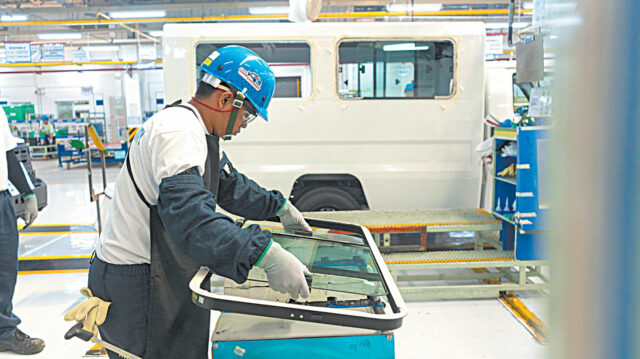
Assembling a Toyota Tamaraw in Santa Rosa, Laguna — PHOTO BY KAP MACEDA AGUILA

APPARENTLY SUSTAINING the momentum of their best-ever sales performance last year, the Chamber of Automotive Manufacturers of the Phlippines, Inc. (CAMPI) and Truck Manufacturers Association (TMA) reported sales of 37,604 vehicles in January. The consolidated sales total of their member companies surpassed the 34,060 units moved in the same month in 2024. In January 2023, the two organizations jointly reported sales of 29,499.

Broken down into vehicle segments, the 2024 total is led by commercial vehicle sales, which grew 16.6% year-on-year to 29,875 units, then passenger cars which accounted for 7,729 units (declining by 8.5% year-on-year).

Said CAMPI President Atty. Rommel Gutierrez in a release, “CAMPI is confident in setting the aspirational figure of 500,000 units in sales as its target for this year. Newly rolled-out models and the anticipated introduction of new models are some of the factors that will contribute to achieving this target.”

Leading the sales charge anew is Toyota Motor Philippines Corp. (TMP), which sold a total of 18,078 vehicles and accounts for nearly half (48.07%) of the market. TMP is followed by Mitsubishi Motors Philippines Corp. (MMPC), selling 7,374 vehicles and cornering 19.61% of the industry. In third place is Nissan Philippines, Inc. (NPI) with a total of 2,366 units moved and 6.29% of the market; fourth is Suzuki Philippines, Inc. (SPH) with 1,781 vehicles sold and 4.36% market share. Completing the top five is Ford Motor Company Philippines, Inc. with 1,577 units sold and 4.19% share of market.

The biggest month-on-month mover in terms of percent growth is Velocita Motors Philippines, Inc. (Ferrari), with sales of its ultra-premium super cars jumping by 100% from two units in December 2024 to four in January. Changan Auto Philippines (IC Automotive) made the largest jump in year-on-year sales — growing its 52-unit tally in January 2024 to 118 vehicles (or a spike of 126.9%) last month. — Kap Maceda Aguila

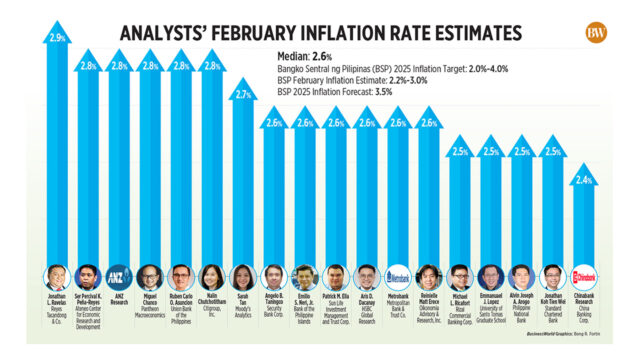
Analysts’ February inflation rate estimates

HEADLINE INFLATION likely slowed in February amid the decline in prices of rice and other key commodities, analysts said. Read the full story.

Analysts’ February inflation rate estimates

SLIMTC expects AUMs to reach about P450 billion this year

BW FILE PHOTO

SUN LIFE Investment Management and Trust Corp. (SLIMTC) expects its assets under management (AUM) to reach P440 billion to P450 billion this year as it plans to launch retail products.

“The bulk of it will come from the insurance assets. But for retail alone… we’re launching the unit investment trust funds (UITFs) by April. We have them already, but for institutional clients. So, we’re targeting an ambitious goal of at least P10 billion in AUMs for the UITFs alone, for the year,” SLIMTC President Michael Gerard D. Enriquez told reporters on Friday.

SLIMTC’s AUMs almost doubled to around P220 billion in 2024 following the transfer of insurance assets to the trust company.

“We just completed that transfer…  That’s why the AUMs significantly grew. We just had to do it in phases because the AUMs are huge. It was really mainly coming from the institutional client base,” Mr. Enriquez said.

SLIMTC also hopes to become part of the top three standalone trust corporations in the Philippine in terms of AUMs in the next few years, he added.

SLIMTC is now moving into the retail segment to complement its current offerings to institutional investors and select high net worth individuals, Mr. Enriquez said in a separate speech on Friday.

Aside from the launch of retail UITFs by next month, it is also rolling out an online platform to tap the retail segment.

“We’re excited about that because now we will have a chance to help our financial advisors expand their product suite to also offer UITFs to their individual clients. Our primary point of distribution, at least for the first few years, would be through our financial advisors. We would like to complete that product suite and for them to be able to offer a holistic solution for their clients,” Mr. Enriquez said.

Appetite for UITFs among the public has been low as consumers prefer to put their money in banks instead of investing, he said.

“I think there should be more communication and marketing towards how easy it is to invest. Accessibility now has been addressed with digital means,” Mr. Enriquez added. — AMCS