Home Blog Page 154

PHINMA acquires 84.91% stake in Southeastern Colleges

PHINMA.COM.PH

PHINMA Education Holdings, Inc. has acquired an 84.91% stake in Southeastern Colleges, Inc., expanding its presence in southern Metro Manila as well as in Laguna and Cavite.

The transaction, completed on March 13, involved the acquisition of 64,834 shares of Southeastern Colleges, Inc.

The deal also includes an investment in additional shares to subsequently acquire the school’s land and buildings, bringing the total transaction value to P690 million.

Founded in 1946, Southeastern Colleges becomes PHINMA Education’s 12th school in the Philippines and the 14th across its regional network.

Its Pasay campus will be integrated into the PHINMA Saint Jude College network in the National Capital Region, alongside campuses in Manila and Quezon City, expanding services to about 80,000 students.

“With every school we bring into our network, our focus is helping more Filipino students complete their education and move forward with better opportunities,” PHINMA Education Philippines Country Head Christopher “Happy” A. Tan said in a statement on Monday.

“Many of our students are the first in their families to go to college. We want them to know that college is possible — and once they begin their journey, we are committed to walking with them every step of the way,” he added.

Southeastern Colleges, which is joining the PHINMA Education network, will adopt the group’s approach to student success.

“We are in the business of reducing poverty through education. So we build schools where students are empowered to persist, those who’ve dropped out are welcomed back, and every student has the opportunity to complete their education at their own pace and on their own terms. No one is left behind — and to every student who chooses to pursue college, we say: “sasamahan kita,” Mr. Tan said.

PHINMA Education is the education unit of the Del Rosario-led conglomerate PHINMA Corp. It entered the education services sector in 2004 after acquiring PHINMA Araullo University in Nueva Ecija and now serves about 178,000 students across the Philippines and Indonesia.

Other PHINMA Education schools include PHINMA St. Jude College Manila, PHINMA St. Jude College Quezon City, PHINMA St. Jude College Dasmariñas (Cavite), PHINMA Araullo University, PHINMA Cagayan de Oro College, PHINMA University of Pangasinan, PHINMA UPang College Urdaneta, PHINMA University of Iloilo, PHINMA Rizal College of Laguna, PHINMA Union College of Laguna, and Southwestern University PHINMA.

The company also operates Horizon University and Kalbis University in Indonesia. — Alexandria Grace C. Magno

The Constitution’s guardrails for the public purse

FREEPIK

Public finance rarely captures public attention unless something goes wrong. A controversial insertion in the national budget. A large infrastructure project with questionable costs. A sudden surge in public debt. Or a dispute between the Executive and Congress over spending priorities.

Yet the national budget is the most important policy instrument of government. It determines how public resources are mobilized and how they are spent to advance national development.

This column will examine the national budget and broader public finance issues through one guiding question: Are the guardrails of the public purse working?

The Constitution of 1987 did not treat the national budget as a mere accounting exercise. It established a structured process designed to balance political negotiation with fiscal discipline.

At the heart of that design is a simple but powerful idea: the national budget is not just a spending bill. It is the financial translation of the government’s development program for a given year.

Article VII, Section 22 of the Constitution requires the President to submit to Congress “a budget of expenditures and sources of financing.” This means the budget must be a financed fiscal program — a coherent plan that links spending priorities with identifiable sources of revenue and financing.

In practice, this fiscal program is expressed through the Budget of Expenditures and Sources of Financing (BESF) and the National Expenditure Program (NEP). These documents translate the administration’s development strategy into allocations for agencies, programs, activities, and projects.

Congress then exercises the power of the purse. Legislators may reduce appropriations, reallocate funds, and introduce new programs funded by reductions elsewhere.

Budget deliberations therefore become a site of political negotiation.

When Congress is aligned with the administration, the budget often reflects the President’s priorities. When Congress is controlled by the opposition, the budget becomes a contest over competing visions of national priorities.

That contest is not a flaw in the system. It is part of democratic governance.

But the Constitution places limits on how far it can go.

Article VI, Section 25 provides that Congress may not increase the appropriations recommended by the President and that appropriations must remain as specified in the budget submitted to Congress. These provisions ensure that legislative changes do not erase the fiscal program the President is constitutionally required to prepare.

In other words, Congress has the power of the purse — but the purse must still reflect the fiscal program the President is mandated to propose.

This constitutional balance is essential.

The national budget should remain the financial translation of a coherent national plan. When legislative changes become so extensive that the enacted budget no longer reflects that plan, the constitutional architecture of budgeting begins to strain.

Similarly, when spending authority arises outside the financed fiscal program — through mechanisms that activate appropriations only during budget execution — the integrity of the budget process is also put at risk.

These issues are not merely technical matters for economists and accountants. They go to the heart of fiscal governance and democratic accountability.

In the weeks ahead, this column will examine how the country manages the public purse — from budget preparation and congressional deliberations to debt management, fiscal transparency, and the design of major spending programs.

Public money is, after all, the people’s money.

Following how it is raised, allocated, and spent is one of the most important tasks of democratic governance.


Florencio B. Abad was formerly chairman of the Committee on Appropriations of the House of Representatives and secretary of the Department of Budget and Management. Currently, he is professor of Praxis at the Ateneo School of Government and senior professional lecturer at the De La Salle Tañada-Diokno School of Law.

Pinoy celebrities bring Filipino cuisine to South Korea

FIVE Filipinos — four actresses and a chef-restaurateur — united to represent the vibrant food culture of the Philippines in South Korea. The reality series brings them to Gangnam, Seoul, where they are tasked to run a restaurant that will introduce Philippine cuisine to the city’s bustling dining scene. The culinary travel show, titled Kumusta, is set to premiere on TV5 and Viu on May 24.

Filmed last year, the show is headlined by South Korean star Ji Chang-wook, who assisted the Filipino cast as a server. The celebrities running the restaurant were Jodi Sta. Maria, Janella Salvador, Francine Diaz, Arci Muñoz, and chef-restaurateur JP Anglo.

The show blends food and cultural exchange as the stars break away from their typical on-screen roles to run a fully operational Filipino pop-up restaurant. For most of them, it marked their first time working in the kitchen or service industry.

Speaking in a press conference on March 14 in Pasay City, Mr. Anglo said that he first thought the concept would be “impossible to pull off.”

“That’s what I told them when I was first offered this project. Imagine non-chefs opening a restaurant serving Filipino food in Korea,” he said. “But they were troopers. They embraced their roles the way they embrace their characters when they act. It was impressive.”

Known as the man behind the Filipino restaurant Sarsa and a former MasterChef Philippines judge, he felt joy being able to offer dishes like palabok, sinigang, kare-kare, sisig, gising-gising, lechon, inasal, and halo-halo to Koreans through the show. He added that, though the other cast members did not have his experience, “their heart was really there.”

For Ji Chang-wook — the only non-Filipino in the cast — the role of helping at the restaurant was important.

“When I was asked to join Kumusta, I found it very interesting,” he said in Korean, translated to English at the media conference. “Introducing Filipino cuisine to Koreans was the main point for me, and I thought I could help with this. I really appreciate being a part of it and I did my best.”

Ms. Sta. Maria, who was the hall manager of Kumusta, said that putting a group of strangers together to run a restaurant resulted in them becoming a family.

“Team Kumusta is mapuso (full of heart),” she said. “The most exciting part about sharing our culture is the sense of pakikisama (camaraderie). The international audiences will see how we take care of each other and slowly become a cohesive restaurant.”

Another realization for the cast was how difficult it is to work in the kitchen and service industry, said Ms. Salvador, who was Mr. Anglo’s sous chef.

“I was behind-the-scenes, in the kitchen with Chef JP the whole time. It’s messy. Hindi siya pang-maganda (It’s not for looking beautiful). I have a renewed respect for people who do this as a job,” she said.

Kumusta challenged the celebrities to spend up to 12 hours a day for seven straight days preparing, cooking, and serving dishes for diners. The youngest member of the cast, Ms. Diaz, expressed her gratitude to the others for taking care of her.

Kapag patapos na ang araw, parang hinahabol ka ng pagod (When the day nears its end, it’s like the exhaustion catches up with you),” she said. “Mahirap maging bunso (It’s difficult being the youngest).”

As for Ms. Muñoz, who actually comes in later in the show as an “all-rounder” reinforcement for the overwhelmed celebrity staff, the project was a dream come true for her.

“I’m a big fan of Korean culture and food, which is the best way to discover a different culture. I was really thankful and happy to be asked to be a part of it,” she said, adding that she was the only one of them to know basic Korean.

The series also boosted its cross-cultural lineup with guest appearances by South Korean celebrities Kim Min-seok, Kim Myung-soo, and Seo In-guk. It is produced by E&S Partners, a subsidiary of Echolive Korea, which is the company that organized Waterbomb Manila in 2025.

For Mr. Anglo, Pinoy audiences can watch out for a unique take on Filipino food being translated into Korean side dishes, which are a staple in every Korean restaurant.

“Overall, I think Koreans were surprisingly impressed,” he said, on how the Kumusta restaurant’s food was received.

Kumusta is set to premiere on TV5’s Weekend Trip block and on the Viu streaming app on May 24. — Brontë H. Lacsamana

Sun Life Philippines to boost fintech adoption

BW FILE PHOTO

SUN LIFE of Canada (Philippines), Inc. plans to expand its use of financial technology (fintech) and forge more partnerships as it seeks to deepen its understanding of customers and improve its products, its incoming chief executive officer (CEO) said.

Sun Life Philippines President, incoming CEO and Country Head Jonathan Juan D. Moreno said the insurer is focusing on using data to guide product development.

“We are going to come up with client-centric products,” he told reporters last week, adding that their product development cycle is very much data-driven.

Mr. Moreno, who formally assumes the role of CEO and country head on April 1, said the company would prioritize fintech adoption, strategic partnerships and stronger operational foundations to support its expansion.

He said they need to improve their understanding of their customers, adding that his experience in the retail sector shaped his approach to the role.

“In retail, one very important skill that you need is to get the pulse of your consumers.”

As part of its push to expand in the high-net-worth segment, Sun Life Philippines plans to launch a product focused on legacy planning before the end of the first quarter, Mr. Moreno said.

The insurer is also studying the launch of more global technology funds for affluent clients after seeing strong interest in such investments last year.

“Last year, we saw a bunch of tech funds being launched. The high-net-worth clients are kind of more sophisticated. They know where to place their money,” he said.

Mr. Moreno said demand for offshore investments remains despite market volatility stemming from war in the Middle East.

However, he said the country’s insurance penetration rate might not necessarily improve even if the Philippines achieves upper middle-income status because financial literacy remains a key challenge.

“Affordability is one of the reasons why people do not get insurance,” he said. “If affluence increases, the propensity to buy insurance also rises.”

But many still see insurance as a nonessential product, he pointed out.

The Philippines has remained in the lower middle-income bracket since 1987 despite posting a gross national income per capita of $4,470 in 2024.

This was just $26 below the World Bank’s threshold of $4,496 to $13,935 for upper middle-income country status.

The Washington-based lender is expected to release updated income classification thresholds in July.

Mr. Moreno also said income growth in the country might not be evenly distributed across income groups.

“Assuming growth is inclusive, it’s going to be a function of inflation and wages,” he said.

Sun Life Philippines remained the country’s top life insurer last year in terms of premium income and net income, posting P61.183 billion and P10.225 billion, respectively, based on the latest data from the Insurance Commission. — Aaron Michael C. Sy

RLC signs clean energy deal with First Gen for malls

Robinsons Place Antique — ROBINSONSLAND.COM

LOPEZ-LED First Gen Corp. has entered into a power supply agreement with Gokongwei-led developer Robinsons Land Corp. (RLC) to provide clean energy to several key shopping malls and a supermarket in the Visayas and Mindanao.

In a statement on Monday, First Gen said it will deliver 22 megawatts (MW) of electricity to RLC to “optimize costs and decarbonize operations” as part of the developer’s sustainability efforts.

The agreement covers eight RLC shopping malls and a supermarket across Cebu, Leyte, Zamboanga del Sur, Capiz, and Antique.

First Gen will source the electricity from its geothermal facilities in Leyte and North Cotabato.

RLC President and Chief Executive Officer Mybelle V. Aragon-GoBio said the partnership will allow the company to power its shopping malls with clean energy even as electricity demand peaks.

“Consistent with the Net Zero goal of the Gokongwei Group by 2050, we at Robinsons Land are committed to keeping our carbon footprint as low as possible and ensuring sustainability through strong environmental performance and energy efficiency,” she said.

Ms. Aragon-GoBio said procuring renewable energy supply also helps reduce exposure to electricity price volatility driven by global fuel markets.

RLC owns and operates 57 shopping malls nationwide and maintains a diversified real estate portfolio that includes office buildings, residential developments, hotels, industrial and logistics facilities, and destination estates.

About 10-15% of the property developer’s total power supply requirements come from renewable sources, including 30-MW rooftop solar facilities.

“Geothermal energy is not just renewable, it’s also indigenous and the only clean energy source that can run baseload capacity. It offers not just electricity cost optimization, but also price predictability,” First Gen President and Chief Operating Officer Francis Giles B. Puno said.

First Gen currently has about 1,700 MW of generating capacity from 30 hydropower, geothermal, solar, and wind facilities across the country. — Sheldeen Joy Talavera

FLI files for SEC nod on third tranche of P35-B bond program

FILINVESTLAND.COM

FILINVEST LAND, INC. (FLI) has filed a registration statement with the Securities and Exchange Commission (SEC) for the offer and issuance of up to P11.57 billion in fixed-rate peso bonds with tenors of up to 10 years.

“This latest bond issuance will be the third tranche out of its P35-billion shelf-registered Philippine peso-denominated fixed-rate bonds of the company approved by the SEC under SEC MSRD Order No. 64, Series of 2023,” the company said in a disclosure on Monday.

FLI said the bonds will be issued in Philippine pesos and structured into three subseries with different maturity dates: 3.5-year bonds maturing in 2029, five-year bonds due in 2031, and 10-year bonds maturing in 2036.

The base offer is set at P9 billion, with an oversubscription option of P2.57 billion.

In an earlier disclosure, the company said it had appointed BDO Capital & Investment Corp., BPI Capital Corp., China Bank Capital Corp., East West Banking Corp., First Metro Investment Corp., Land Bank of the Philippines, RCBC Capital Corp., and SB Capital & Investment Corp. as joint lead underwriters and bookrunners for the planned bond offering.

FLI also appointed the Philippine Depository & Trust Corp. (PDTC) as registrar and paying agent for the third-tranche bonds, while Philippine Rating Services Corp. (PhilRatings) will provide the issue credit rating.

The company said the planned retail bond offering could raise up to P11.57 billion to fund expansion projects outside Metro Manila.

In March last year, FLI raised P12 billion from the second tranche of its shelf-registered bond program, which it said supported its retail and industrial expansion.

At the local bourse on Monday, shares in FLI fell by 1.3% to P0.76 apiece. — Alexandria Grace C. Magno

The PEPIF 2026 energy forum and the war in Iran

Last week, on March 12, I attended a huge annual energy forum, the Philippine Electric Power Industry Forum (PEPIF) 2026, held at John Hay Convention Center in Baguio City, organized by the Independent Electricity Market Operator of the Philippines (IEMOP).

The ongoing fuel supply disruption due to the US/Israel-Iran war was naturally mentioned and discussed. In an opening Keynote Message by Department of Energy (DoE) Secretary Sharon S. Garin (read by her staff), she reiterated that we need energy resilience despite unstable geopolitical developments in the Middle East that adversely affect energy prices and electricity markets.

Ms. Garin has been the energy secretary for only eight months and now the world has entered a Distressing Oil (price) Explosion. The supply of very useful hydrocarbon commodities, oil and gas, is now tightening with the closure of the Strait of Hormuz.

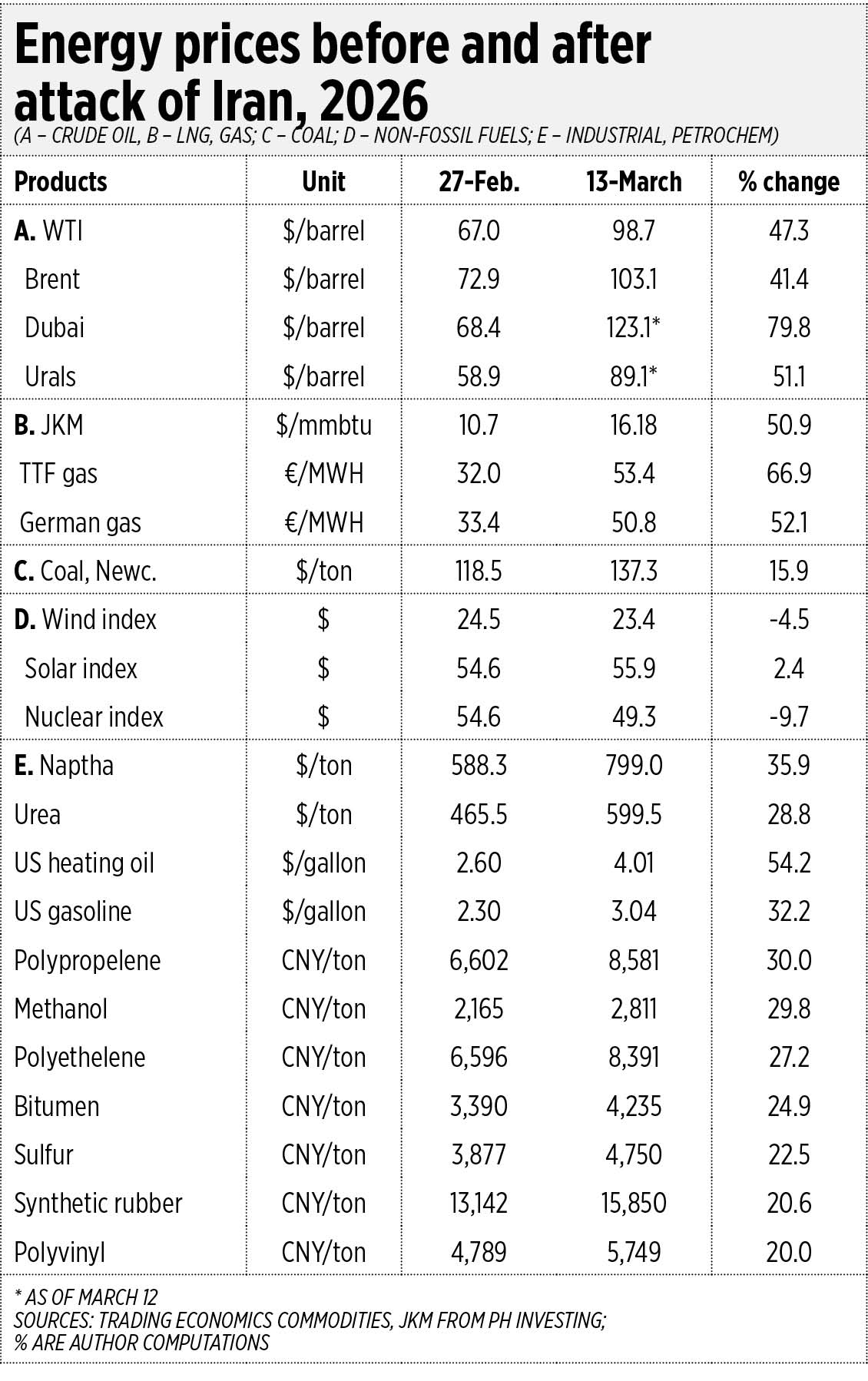
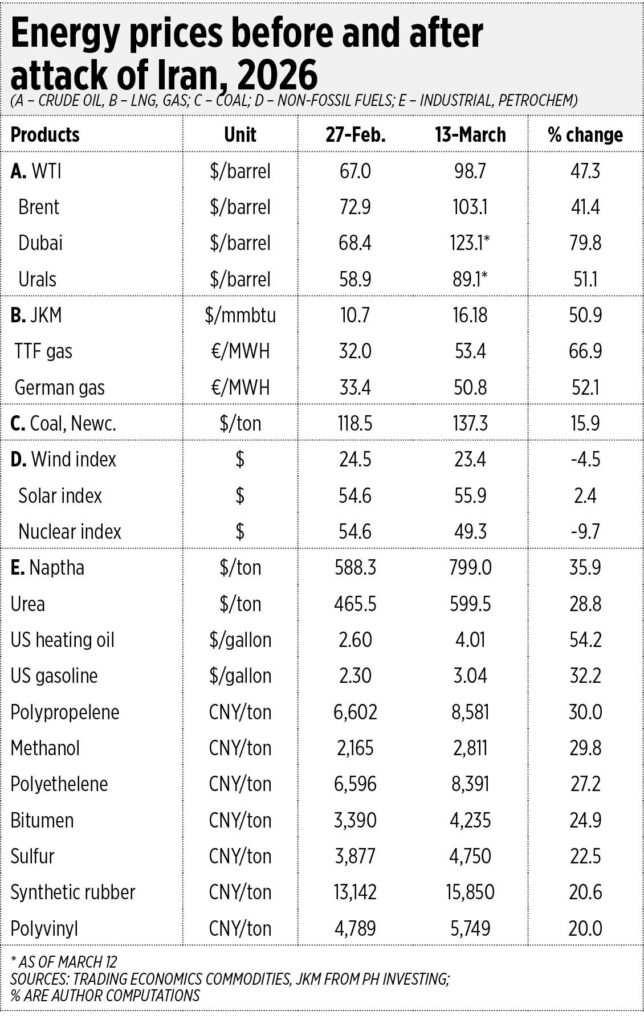
I checked the prices of certain commodities after two weeks of the war. The price of Dubai crude oil is up by 80%, the Japan Korea Market (JKM) LNG price is up by 51%, and TTF gas in Europe is up by 67%. Countries and companies rushed to coal, whose price is now up by 16%, and not to solar and wind power where the price index changed by 2.4% and -4.5% respectively.

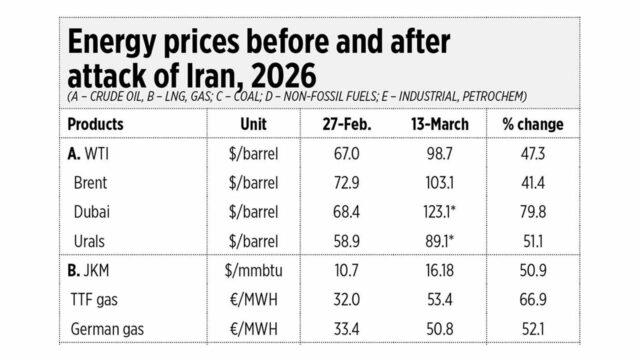
The prices of various byproducts of oil and gas — fertilizers, industrial and petrochemical products like naphtha, urea, bitumen, methanol, polypropylene, polyethylene, etc. — are up (see the table).
Meralco PowerGen Corp. (MGEN) issued a statement through its president and CEO Manny Rubio, saying they are improving their power generation resilience via “high availability through rigorous plant maintenance, efficient operations, and dedication of our people. We also have sufficient fuel supply for our existing generation facilities… strengthening our long-term contribution to the region’s energy security by investing in new capacities, including large scale renewable energy projects such as the 3,500 MWp (megawatt-peak) MTerra Solar combined with 4,500 MWhr (megawatt-hour) battery energy storage system.”

I recognize the important contribution of MGEN in electricity stability via its coal plants in Luzon, Cebu, and Iloilo-Panay. Last week MTerra Solar started contributing to the grid with an 85 MW plus battery. Good.

Back to PEPIF 2026. Another keynote speaker that day was Joseph S. Yu, president and CEO of SN Aboitiz Power (SNAP) who talked about “Beyond Megawatts: SNAP’s Approach to Responsible, Resilient, and Reliable Power.”

They operationalize the energy trilemma — energy equity, security, and sustainability — via their current 673-MW hydroelectric power plant (HEPP) capacity in Northern Luzon. They have the Binga HEPP with 140 MW and the Ambuklao HEPP with 112.5 MW both in Benguet, the Magat HEPP with 388 MW in Isabela-Ifugao, and the Maris HEPP with 8.5 MW in Isabela.

SNAP owns only the HEPPs, not the dams, weirs, and reservoirs that are still owned by either the National Power Corp. – Power Sector Assets and Liabilities Management Corp. (NPC-PSALM) or the National Irrigation Administration. SNAP got these HEPPs up and running after few years of upgrades and repairs, and supplied electricity to the grid while sending money to PSALM and the Department of Finance via privatization proceeds. Ambuklao was upgraded from 75 to 112.5 MW, Binga was upgraded from 100 to 140 MW, and Magat was upgraded from 360 to 388 MW. The engineers and management guys of SNAP are brilliant.

In the afternoon I moderated the only panel discussion that day. The six speakers were Energy officials Fielmor C. Amor and Jhannelyn D. Marasigan, Energy Regulatory Commission Director Sharon O. Montaner, Philippines Independent Power Producers Association (PIPPA) Chairman Roman Miguel de Jesus, Ateneo Economics Professor Fernando T. Aldaba, and NGCP’s Redi Allan B. Remoroza.

Each speaker was asked three questions. Here are some of them.

1. Should the DoE reconsider its “coal repurposing” plan given the shift to coal by many countries as oil-gas become more expensive now? Mr. Amor replied that so far it has not come to the point that the DoE should stop coal repurposing and continue its high renewable energy targets. The DoE is doing other measures to cushion the impact to consumers of high oil and gas prices.

2. Should the Philippines tap possible extra oil-gas sources from any from our ASEAN neighbors (Malaysia, Indonesia, Thailand, Vietnam, Brunei)? Ms. Marasigan said that the DoE is looking at the situation and possibly maximizing other resources. Mr. Amor added that biofuels could contribute more inputs to the country’s gasoline-diesel needs.

3. Should the ERC target higher power generation per capita, not “low price at all costs” and if the ERC is bending  over backwards to accommodate the offshore wind companies that will get P11/kWh green energy auction rate? ERC’s Ms. Montaner said that it is not really a lower but rather a reasonable price that they target to protect the consumers while encouraging more efficient power plants to come in and not leaving ourselves highly exposed to energy price shocks like now. And the ERC did not bend over backwards; they have been transparent and made public each of the 44 parameters they used in their computations.

4. Should PIPPA push back on anti-coal narratives given that the Philippines has very low coal generation per capita among eight East Asian nations? Mr. De Jesus said that countries’ natural endowments contribute to their energy mix, like Vietnam has more hydro, Indonesia so much coal they are exporting it. The independent power producers decide what energy technology and sources are feasible for different consumers.

5. Are the many pessimistic scenarios justified given that this is not the first or second or third oil price shock the world has seen? Ateneo’s Mr. Aldaba said that oil price shocks are triggers but there are other factors that contribute to lower growth performance of many countries.

6. Is the NGCP ready for the DoE plan of 19 to 50 gigawatts (GW) of offshore wind (OSW) power by 2050 or just 24 years from now? NGCP’s Mr. Remoroza answered that the NGCP is not ready today for those huge OSW plans, but they have already conducted a systems impact study (SIS) of 30 GW of OSW, and that it is good that in GEA-5 there are only 3.3 GW of OSW. The NGCP is now preparing the interconnection from southern Mindoro to Batangas, they have already upgraded this to 500 kilovolts (kV), then come the overhead lines within Mindoro. In Northern Luzon, the NGCP already has a 500 kV backbone.

Thanks to Arjon Valencia of IEMOP for giving me the opportunity to be part of PEPIF 2026. Thanks to the sponsors — SN Aboitiz Power, Meralco PowerGen Corp., ACEN, and Exist — for helping IEMOP roll out the logistics for that forum.


Bienvenido S. Oplas, Jr. is the president of Bienvenido S. Oplas, Jr. Research Consultancy Services, and Minimal Government Thinkers. He is an internationa fellow of the Tholos Foundation.

minimalgovernment@gmail.com

A homecoming for The Ransom Collective

OPM BAND The Ransom Collective has dropped a new track, “Tongue Tied,” which is their first official single in four years. To mark its release, the band held a virtual press conference where they detailed the song’s evolution — from being first written in 2020 to its completion across multiple cities and studios.

The song infuses bossa nova with indie pop and aims to be “a snapshot of who they were and a reminder of what still connects them.” The Ransom Collective was formed in 2013 and went on to define indie pop OPM in the 2010s.

For band members Kian Ransom, Jermaine Choa Peck, Muriel Gonzales, and Lily Gonzales, the song was a product of jamming together and an encapsulation of the butterflies of forming a new love.

“We weren’t sure where the song was gonna go. It was kind of a bossa nova style, but we found a way to pull it into our indie folk sound,” said Mr. Ransom, the band’s lead guitarist and vocalist. “I hope it will bring people back to some memory. The song plays out like a story, of people following a spark of curiosity, intrigue, or romance.”

He added that “Tongue Tied” was shelved for a long time when the band slowed down, with some members turning to other priorities and others moving out of town during the pandemic. This makes the song feel “less like a comeback, but more like coming home.”

For percussionist and vocalist Ms. Choa Peck, it was natural for the band members to pick production back up remotely, record their parts in different studios and spaces, and finally finish the track in Manila in late 2025.

“As a band, we allowed ourselves to experience life outside of the fulltime music that we were doing for how many years. Some of us got married, some of us moved to another country, some of us pursued solo careers. We were supportive of each other’s growth in life,” she explained. “The beauty of releasing this is that it’s like going back to those times, and seeing how we are now in this part of our lives after everything we’ve been through.”

Built on rich instrumentation, “Tongue Tied” introduces new textures and approaches into the band’s signature indie-folk palette, from jazzy harmonies to bossa nova rhythms.

The older Ms. Gonzales, violinist Muriel, noted that they’re no longer too strategic about what they put out. “We’re just going with the flow, whatever comes. If the younger generation picks it up, that’s cool, but in terms of genres, there’s so many different trends now. Our sound is very acoustic and organic, and we enjoy making the music that we like. It comes spontaneously when we write,” she said.

The band detailed that the song could resonate with both long-time fans and new listeners as it balances their familiar sound with a contemporary edge. It can be described as “an unreleased track of the Traces album, but jazzier, so it also feels like a standalone” — an unintentional result that emerged from their easygoing songwriting approach.

“I think our mindset has evolved in terms of having to be productive all the time,” the younger Ms. Gonzales, keyboardist Lily, added, on how their creative process as a band has changed. “It’s not really about productivity.”

On “Tongue Tied,” both she and Ms. Choa Peck were able to unleash their creativity with the percussion and voicing of the outro (the closing section of a song, the opposite of an intro). Mr. Ransom revealed: “The song changed so much because of the amount of time it took [to write]. We ended up swapping out the outro multiple times.”

“The outro was Lily just interacting with the music we already started together,” he said, concluding that “there’s something that just happens when we are all together.”

While they are under no pressure to churn out more music as a band, it is something they are all looking forward to doing naturally, they said.

The Ransom Collective’s “Tongue Tied” is out now on all digital music platforms worldwide. — Brontë H. Lacsamana

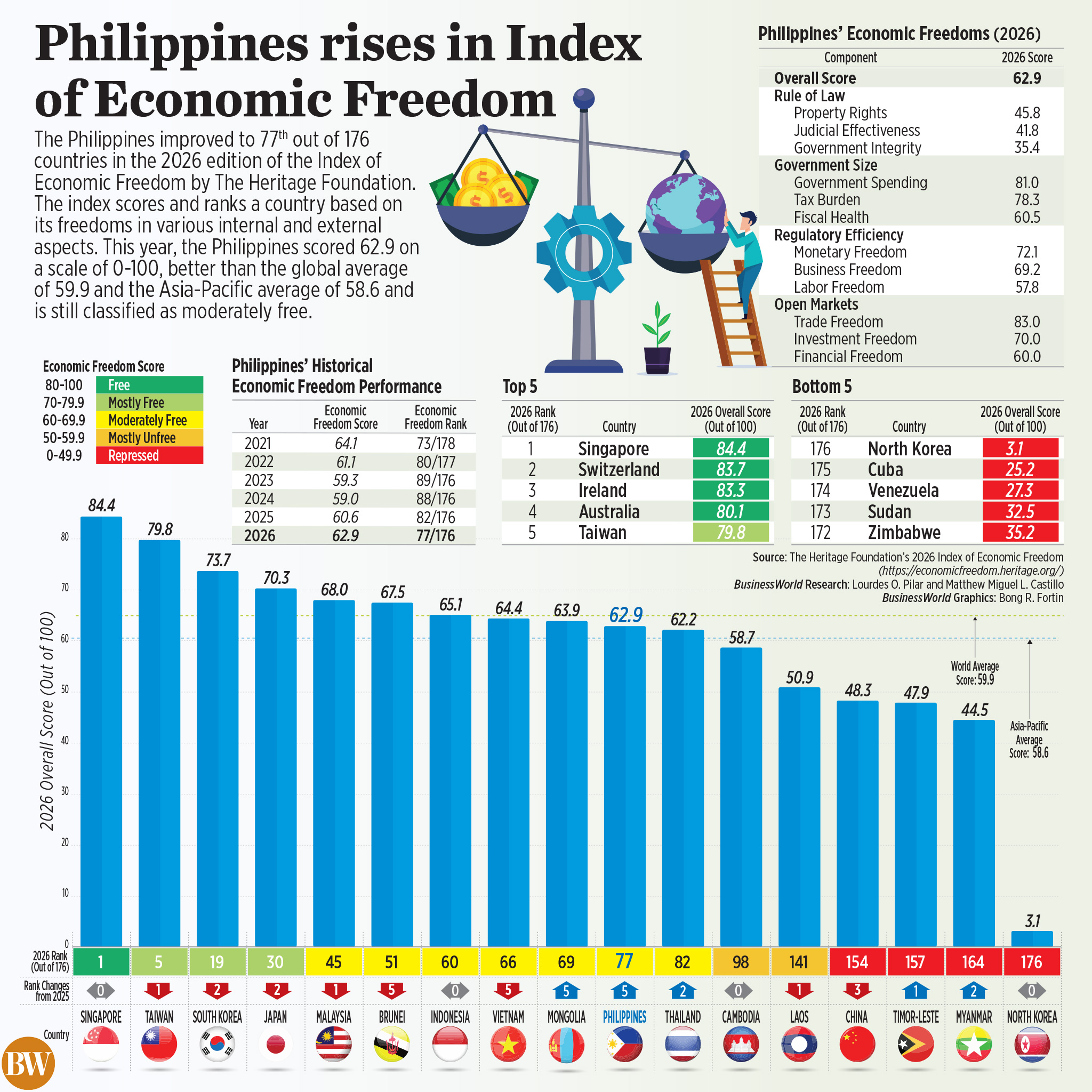
Philippines rises in Index of Economic Freedom

THE PHILIPPINES improved five spots to 77th out of 176 countries as its economy remains “moderately free,” according to a global index on economic freedom by The Heritage Foundation. Read the full story.

BSP profit up on forex gains and lower expenses

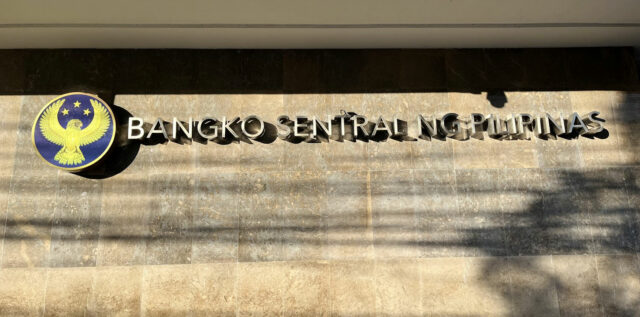
The main office of the Bangko Sentral ng Pilipinas in Manila. — BW FILE PHOTO

THE BANGKO SENTRAL ng Pilipinas (BSP) posted higher net income as of end-November, boosted by lower expenses and strong gains from foreign exchange (forex) movements, preliminary data showed.

Net income rose 4.05% to P118.2 billion from a year earlier, while revenue rose to P278.3 billion from P252.2 billion.

Interest income, the bulk of revenue, increased 1.04% to P223.5 billion, reflecting higher earnings from BSP holdings. However, miscellaneous income, which includes fees, penalties and other operating receipts, fell 49.7% to P28.7 billion.

Expenses declined 8.3% to P186.2 billion, driven largely by a 21.6% drop in interest payments to P121 billion. Other expenses, covering net trading losses and similar items, rose 33.5% to P65.3 billion.

Net income before foreign exchange gains or losses, taxes and capital reserves fell 12.4% to P65.9 billion from a year earlier. Foreign exchange gains that rose 35.5% year on year to P52.3 billion helped lift income.

Michael L. Ricafort, chief economist at Rizal Commercial Banking Corp., attributed the gains to high global gold prices and central bank rate cuts.

“These rate cuts could have led to additional investment gains on bond or fixed-income holdings, while record-high world gold prices also contributed,” he said.

The BSP’s key policy rate sits at a three-year low of 4.25% after a 225-basis-point (bp) reduction since August 2024. The US Federal Reserve has cut rates by 175 bps since September 2024, bringing its benchmark to 3.5%-3.75%.

Meanwhile, the central bank’s assets declined 1% to P7.972 trillion from a year earlier, with domestic security holdings falling 17.2% to P934.6 billion. International reserves, which make up the majority of assets, rose 2.7% to P6.491 trillion. Liabilities decreased 2.2% to P7.62 trillion, even as reserve money climbed 4.7% to P3.594 trillion. Other deposits not included in reserve money fell 16.5% to P1.1 trillion.

The BSP’s net worth increased 4.36% to P351.7 billion, supported by a 5.31% rise in surplus and reserves to ₱291.7 billion. These include unrestricted retained earnings, contingency funds and unrealized gains or losses from investments in government securities, stocks and other assets. — Katherine K. Chan

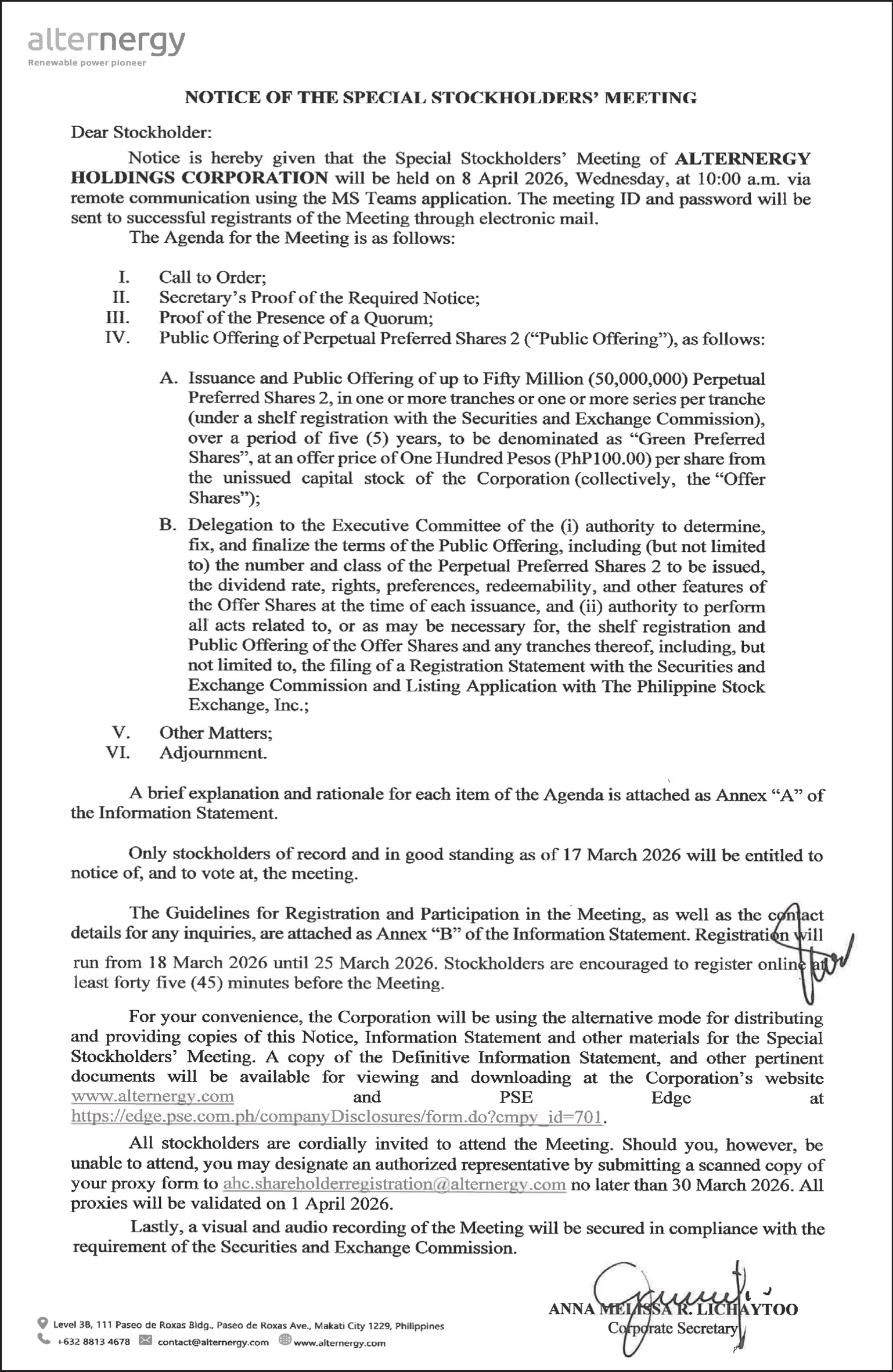
Alterenergy Holdings Corp. announces 2026 Special Stockholders’ Meeting to be held on April 8


Spotlight is BusinessWorld’s sponsored section that allows advertisers to amplify their brand and connect with BusinessWorld’s audience by publishing their stories on the BusinessWorld Web site. For more information, send an email to online@bworldonline.com.

Join us on Viber at https://bit.ly/3hv6bLA to get more updates and subscribe to BusinessWorld’s titles and get exclusive content through www.bworld-x.com.

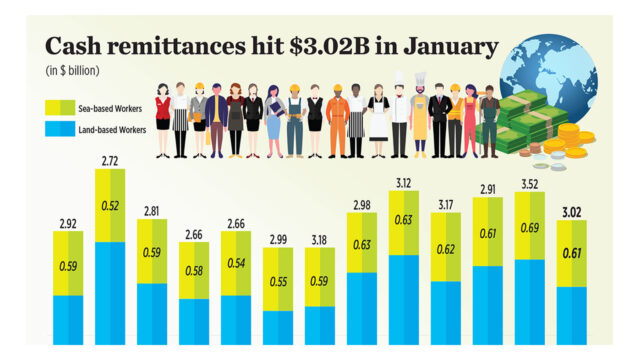
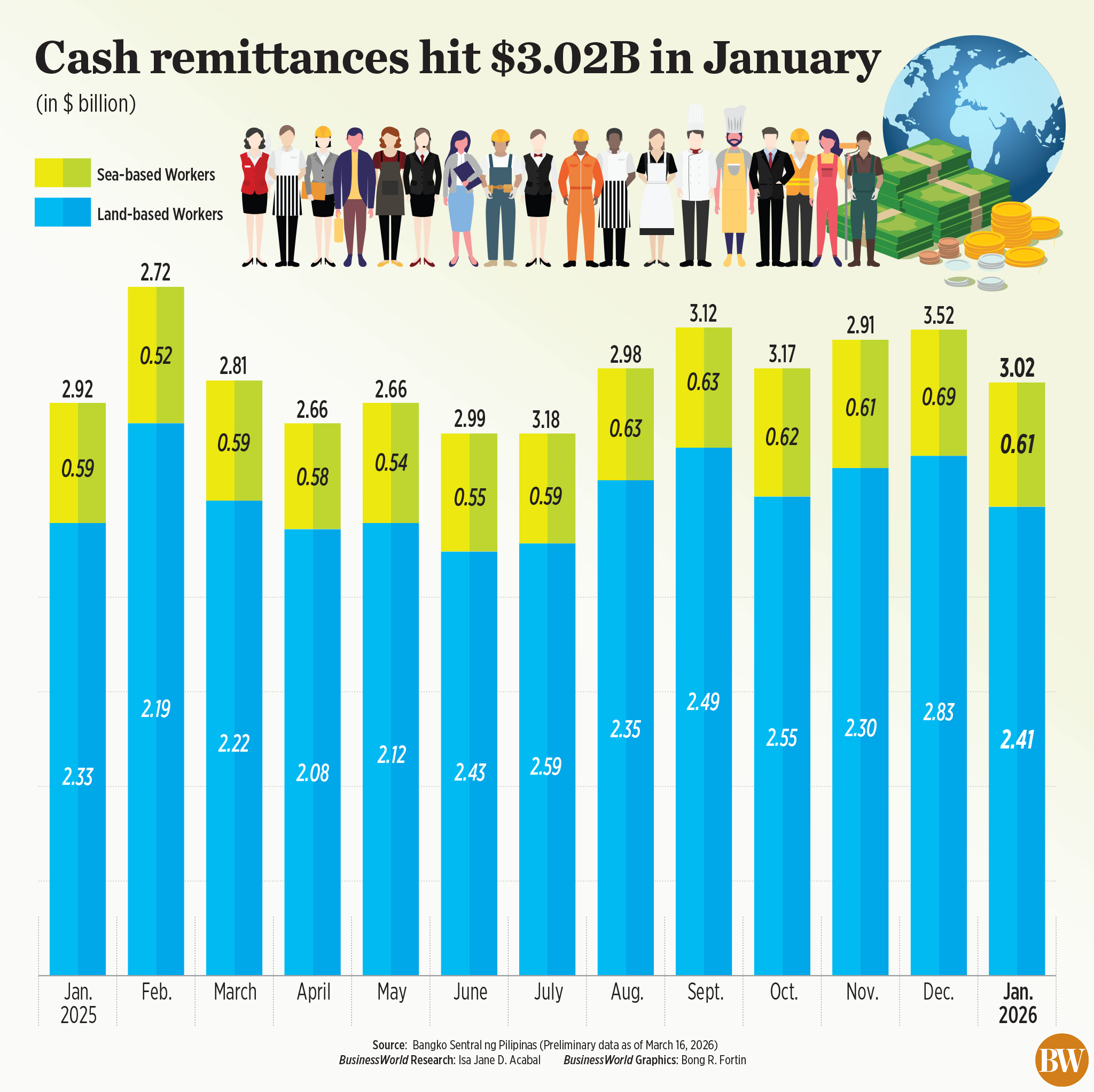
Cash remittances hit $3.02B in January

MONEY SENT HOME by Filipinos abroad climbed by 3.5% year on year in January as a weak peso boosted foreign exchange gains, preliminary Bangko Sentral ng Pilipinas (BSP) data showed. Read the full story.

ADVERTISEMENT
ADVERTISEMENT