Home Blog Page 153

SMGP gets SEC nod for up to P30-B bond offer

SAN MIGUEL GLOBAL POWER

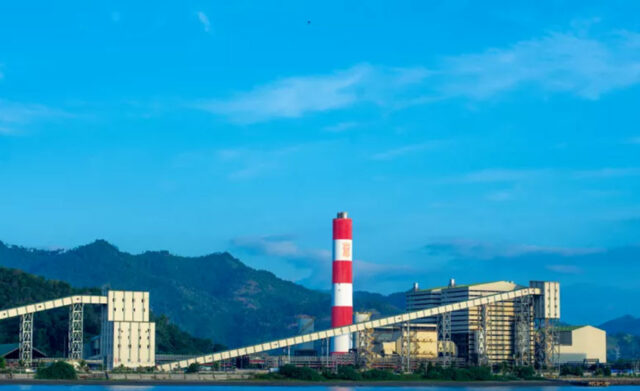
ANG-LED San Miguel Global Power Holdings Corp. (SMGP) has received approval from the Securities and Exchange Commission (SEC) to proceed with a bond offering of up to P30 billion.

In a statement on Tuesday, the SEC said its Commission En Banc approved SMGP’s registration statement covering P20 billion in fixed-rate bonds, with an oversubscription option of up to P10 billion.

The issuance remains subject to the company’s compliance with certain remaining requirements, the regulator said.

The bonds consist of 5.25-year Series N bonds due 2031, seven-year Series O bonds due 2033, and 10-year Series P bonds due 2036, and will be offered at face value.

If the oversubscription option is fully exercised, SMGP could raise as much as P29.64 billion from the offering. The proceeds will be used to refinance existing debt and partially fund the company’s renewable energy projects.

Based on the latest timeline submitted to the SEC, the offer period is scheduled from March 30 to April 10, with listing on the Philippine Dealing & Exchange Corp. set for April 17.

SMGP has appointed Bank of Commerce, BDO Capital & Investment Corp., and China Bank Capital Corp. as joint issue managers. They will join Land Bank of the Philippines, Philippine Commercial Capital, Inc., PNB Capital and Investment Corp., and Security Bank Capital Investment Corp. as joint lead underwriters and bookrunners.

SMGP is the power generation arm of San Miguel Corp. (SMC), led by Ramon S. Ang. The company is among the country’s largest power producers, with a diversified portfolio that includes natural gas, coal, hydroelectric power, and battery energy storage systems. — Sheldeen Joy Talavera

Peso rebounds as oil prices ease on Strait of Hormuz transit signs

BW FILE PHOTO

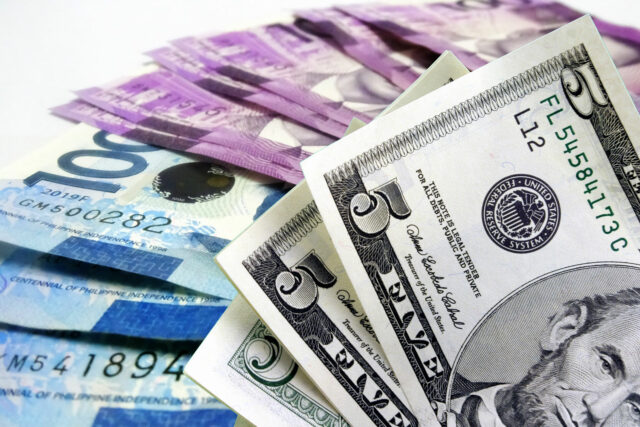
THE PHILIPPINE PESO snapped a two-day slide on Tuesday as oil prices eased following reports that some vessels had begun passing through the Strait of Hormuz, tempering inflation concerns.

It closed at P59.80 a dollar, strengthening by seven centavos from its record low of P59.87 on Monday, according to Bankers Association of the Philippines data posted on its website.

It opened slightly firmer at P59.777 and traded from P59.65 to P59.88 during the session. Dollar turnover rose to $1.88 billion from $1.81 billion a day earlier.

“The dollar-peso closed lower from its all-time high amid improving risk-off sentiment after oil prices corrected, dragging the dollar,” a trader said by phone.

The rebound came as crude prices pulled back after earlier gains driven by supply fears linked to the Middle East conflict.

The partial resumption of ship movements through the Strait of Hormuz — a critical global oil chokepoint — helped ease concerns over prolonged supply disruptions.

“The peso recovered from record lows on optimism that some ships are already able to pass through the Strait of Hormuz,” another trader said in an e-mailed reply to questions.

Still, broader market sentiment remained fragile. The dollar index, which tracks the US currency against six peers, stood at 100.05, up 0.19% and about 2.5% higher since the escalation of the US-Iran war in late February, according to a Reuters report.

Fighting between the two sides has shown little sign of easing, with the conflict entering its third week and continuing to threaten energy supply routes.

Efforts to fully reopen the Strait have so far fallen short, keeping oil markets volatile and inflation risks elevated.

Traders expect the peso to remain sensitive to developments in the conflict.

The currency is expected to move from P59.60 to P60 a dollar on Wednesday, with another trader projecting a narrower range of P59.65 to P59.90. — A.M.C. Sy

CREIT keeps PRS Aa+ rating from PhilRatings with stable outlook

CREIT.COM.PH

SAAVEDRA-LED Citicore Energy REIT Corp. (CREIT) has retained its PRS Aa+ issuer credit rating from the Philippine Rating Services Corp. (PhilRatings) for the sixth consecutive year.

In a statement on Tuesday, CREIT said it maintained the rating with a stable outlook.

The company also retained the same rating for its P4.5-billion ASEAN green bonds.

“Maintaining the PRS Aa+ rating both for CREIT as an issuer and for our maiden ASEAN green bond signals continued confidence in our business model, our stability, and our long-term value creation as the Philippines’ foremost renewable energy REIT,” said CREIT President and Chief Executive Officer Oliver Tan.

PhilRatings said the issuer credit rating reflects the “overall creditworthiness of a company, evaluating its ability to meet all its financial obligations within a time horizon of one year,” while the stable outlook indicates that the rating is expected to remain unchanged over the next 12 months.

It added that issue credit ratings of PRS Aa are of high quality and subject to very low credit risk, with the obligor’s capacity to meet financial commitments considered very strong.

CREIT issued its ASEAN green bonds in February 2023, with the offer oversubscribed. Proceeds were used to acquire renewable energy properties.

These acquisitions expanded the company’s green land portfolio to 7.1 million square meters.

“Our platform is built not only on securing resilient investments but is anchored on trust and confidence of our investors. As we continue to grow and expand our green asset portfolio, we remain fully committed to empower your sustainable investments and ensuring that the expectations and obligations to our shareholders are met,” Mr. Tan said.

CREIT is the Philippines’ first real estate investment trust focused on renewable energy, specializing in income-generating renewable energy properties across the country.

At the local bourse on Tuesday, shares in CREIT declined by 0.91% to close at P3.25 apiece. — Sheldeen Joy Talavera

Population decline: Greatest threat to humanity

STOCK PHOTO | Image by Tirachardz from Freepik

(Part 6)

To avoid the disastrous path of the aging countries, most of them from the developed world, there is no substitute to applying the so-called principle of subsidiarity, i.e., the solution to any economic, social, or cultural problem should come from below, not from an all-powerful State that can often choose the wrong solutions — as actually happened with the population or birth control culture introduced by some powerful states, especially China, in the last century.

The Philippines is fortunate because of the presence of an active private sector, inspired by both traditional pro-marriage and pro-children traditions embedded in Filipino culture, as well as by the anti-birth control and pro-family doctrines of the Catholic faith, the predominant religion in the Philippines. Here, I will survey some of the leading private initiatives in favor of strong marriages and large families.

There is the EDUCHILD (Education for the Upbringing of Children) Foundation whose motto is “loving couples, great parents and happy families.” I witnessed the establishment of this foundation in the late 1970s because I was one of the academic consultants of the founding parents who wanted to learn from the best sources all over the world on how to foster strong marital relations, effective age-appropriate parenting skills, well-informed children, strong and happy families and responsible and happy adults. They were convinced that the very important task of the upbringing of children could no longer be done by trial and error, just relying on purely traditional practices. Consulting with people from the academe who were in such relevant fields as pedagogy, economics, psychology, moral philosophy, and theology, among others, the parents were convinced that they could improve the manner by which they were bringing up their children to be God-loving, industrious, honest, peace loving, and civic-minded individuals.

Encouraged by some of their consultants from the business schools, they decided to incorporate into their parenting courses the famous case method that originated from Harvard Business School. Instead of just parroting theories about the science and art of parenting, they used specific cases describing how to actually arrive at decisions when facing actual circumstances involving the upbringing of children.

It was not long before they became a founding member of the International Federation for Family Development (IFFD), which was a veritable source of teaching materials, lecturers, and resource persons from all over the world. IFFD has a General Consultative status with the UN Economic and Social Council. As such, IFFD participates in scientific studies about the family. IFFD also organizes regional and international congresses. One of these congresses was held in Cebu in November 2024 and attended by close to 500 delegates from all over the world.

Among those who are members of EDUCHILD are moderators, volunteers, and alumni within the group of single young professionals and married couples. More than 1,000 Filipino families have enrolled and completed the courses and programs of the Foundation which has more than 40 years of experience in family formation in the Philippines. Concretely, the deliverables of EDUCHILD are strong marital relations (the antidote to the divorce culture in many developed countries, both East and West); effective age-appropriate parenting skills; well-informed children; strong and happy families; and responsible and happy adults.

A sampling of the courses are: First Steps (offered to parents of children zero to three years of age or those planning to have children), enabling them to maximize these years of early development; First Letters (a course for parents with children aged four to seven years old), as they start to develop their personality and reach the age of reason; Middle Childhood (for parents of eight to 12 year olds), fostering a foundational set of values and virtues to steer their children’s decisions and actions; and Parenting Teens (for parents of teenagers), the course aims to provide them with current social issues that are affecting their children and effective ways of communication to manage this challenging phase of the overall human and spiritual development of the adolescent. A very important part of this formative phase of teenagers is the morally safe use of social media and digital technology, especially the internet and artificial intelligence. There are also courses for couples coming from the lower income households which are delivered in Filipino. These are entitled “Gabay Sa Pamilya.”

Another initiative of parents from the private sector that is fostering a strong family-oriented and children-friendly culture is the Parents for Education Foundation (PAREF) that has existed for half a century. The educational philosophy of PAREF schools is inspired by teachings of St. Josemaria Escriva, founder of Opus Dei, on two main ideas: 1.) integral education of the youth; and, 2.) parents as the primary educators of their children (with teachers just playing a supporting role). Integral education develops a child into a well-rounded individual by forming all aspects of their person — the physical, social, intellectual, moral, and spiritual — in an atmosphere of love for the truth, as well as respect for the dignity and freedom of the person.

The education of children is, first and foremost, the responsibility of parents. Therefore, collaboration and partnership between the school and the home are essential to ensure the pupil’s integral development that helps him achieve his full potential and direct him towards doing good (through a systematic means of cultivating virtues).

The PAREF system is now a big family with 17 schools spread out among the islands of the Philippines. With PAREF’s existence spanning close to half a century, its schools have graduated more than 8,000 students, most of whom are already engaged in the world of work and who, because of the PAREF culture in which they were nurtured, have a high regard for stable marriages, strong and happy families, and the value of children. Like the EDUCHILD Foundation, PAREF can counter any negative influence coming from some of the developed countries in which the institution of marriage, a stable family, and the value of children are given short shrift.

EDUCHILD and PAREF are just two among the many private initiatives in the Philippines inspired by the Catholic faith that are helping to prevent the deterioration of the family, thus leading to lower fertility rates. Among them are Couples for Christ (CFC), a major Catholic lay ecclesial movement that focuses specifically on renewing and strengthening Christian family life and values. CFC was established in Manila in 1981 with the mission to evangelize married couples and uphold the sanctity of marriage as God designed it. CFC has various family ministries and programs aimed at family formation, relationship enrichment, and parish-based support for married couples and parents.

The Christian Family Movement (CFM) Philippines is one of the oldest Catholic family life organizations in the country — it was established in 1956 — under the guidance of the Catholic Bishops’ Conference of the Philippines. CFC’s mission is to evangelize families, strengthen marriage, and support families living their faith in everyday life. Its programs include family meetings, marriage education, seminars, and community outreach, all designed to foster a supportive environment for marriages and family life.

In addition to these organizations, there are many Catholic dioceses that have official commissions or ministries for Family and Life. There is also the Catholics for Family and Life (CFL), a lay Catholic community committed to preserving the sanctity of marriage and family life through formation programs, faith formation events, and community building. Most Catholic parishes have Family Life or Marriage ministries. Then there are the Marriage Encounter communities that offer enrichment and dialogue for couples. Caritas Philippines and diocesan social action center support families in difficult circumstances through social services and community programs, helping stabilize family life.

Thanks to the strong doctrinal guidance and encouragement coming from all the Popes of modern times, the practicing Catholics of the Philippines can be counted on to be among the staunchest defenders of the value of children who come from stable and lasting marriages. We can count on these Catholics, who are faithful to the teachings of their faith on marriage and procreation, to prevent the Philippine fertility rate from dropping much below the replacement rate. As an economist familiar with the demographic history of the Philippines, I will bet my bottom dollar that our fertility rate will remain close to 1.9 babies per fertile woman for many decades to come. A young and growing population will continue to be our competitive advantage in the global economy.


Bernardo M. Villegas has a Ph.D. in Economics from Harvard, is professor emeritus at the University of Asia and the Pacific, and a visiting professor at the IESE Business School in Barcelona, Spain. He was a member of the 1986 Constitutional Commission.

bernardo.villegas@uap.asia

Quest to identify the artist Banksy uncovers much more than a name

AN OLDER ARTWORK by Banksy in Hoxton, London. — VUK VALCIC/ZUMA PRESS WIRE/REUTERS

HORENKA, Ukraine — In late 2022, an ambulance pulled up to a bombed-out apartment building in this village outside Kyiv. Three people emerged. One wore a gray hoodie, another a baseball cap. Both had masks covering their faces.

The third was more easily identifiable: He was unmasked, and had one arm and two prosthetic legs, witnesses told Reuters.

The masked men carried cardboard stencils from the ambulance and taped them to what had been an interior wall of an apartment before the Russians obliterated the place. Then they pulled out cans of spray paint and got to work. An absurd image appeared in minutes: a bearded man in a bathtub, scrubbing his back amid the wreckage.

Its creator was Banksy, one of the world’s most popular and enigmatic artists, whose identity has been debated and closely guarded for decades. Banksy is best known for simple yet sophisticated stencil paintings with searing social commentary.

His work has generated tens of millions of dollars in sales over the years.

Once an annoyance to authorities who viewed him as a vandal, he has become a British national treasure. In one survey, Brits rated him more popular than Rembrandt and Monet. In another poll, his Girl with Balloon painting was voted the favorite piece of art produced.

Some critics believe Banksy’s anonymity is as important to his work as stencils and paint. The British press has run many articles over the years that tried to deduce his identity. Still, Banksy and his inner circle won’t talk about it. Some have signed non-disclosure agreements. Others keep quiet out of loyalty, or fear of crossing the artist, his fans, and his influential company, Pest Control Office, which authenticates his work and decides who gets the first chance to buy Banksy’s latest pieces.

When the bathtub mural and other Banksy pieces began appearing in Ukraine, Reuters wondered about the artist and how he had pulled off the stunt. Horenka was less than five miles east of Bucha, where Russian forces had left behind at least 300 civilians dead.

So we set out to determine how Banksy did it — and who he really is. Weeks later, a reporter visited Horenka with a photo lineup of graffiti artists often rumored to be the artist and showed the pictures to locals to see if anyone recognized him. Not long after, we heard that a famous British musician — one of the people often whispered to be Banksy — had been spotted in Kyiv, giving us a theory to pursue.

Reuters interviewed a dozen Banksy-world insiders and experts. None would comment on his identity, but many filled in details about his life and career. We examined photos of the artist, most of which obscured his face but contained critical information. We later unearthed previously undisclosed US court records and police reports.

These included a handwritten confession by the artist to a long-ago misdemeanor charge of disorderly conduct — a document that revealed, beyond dispute, Banksy’s true identity.

And in the process, we learned how and why the man behind the name Banksy vanished from the public record more than a decade ago.

Reuters presented that man with its findings about his identity and detailed questions about his work and career. He didn’t reply. Banksy’s company, Pest Control, said the artist “has decided to say nothing.”

His long-time lawyer, Mark Stephens, wrote to Reuters that Banksy “does not accept that many of the details contained within your enquiry are correct.” He didn’t elaborate. Without confirming or denying Banksy’s identity, Mr. Stephens urged us not to publish this report, saying doing so would violate the artist’s privacy, interfere with his art, and put him in danger.

For years, Mr. Stephens wrote, Banksy has “been subjected to fixated, threatening and extremist behavior.” (He declined to describe those threats.) Unmasking Banksy would harm the public, too, Mr. Stephens wrote.

Working “anonymously or under a pseudonym serves vital societal interests,” he wrote. “It protects freedom of expression by allowing creators to speak truth to power without fear of retaliation, censorship or persecution — particularly when addressing sensitive issues such as politics, religion or social justice.”

Reuters took into account Banksy’s privacy claims — and the fact that many of his fans wish for him to remain anonymous. Yet we concluded that the public has a deep interest in understanding the identity and career of a figure with his profound and enduring influence on culture, the art industry, and international political discourse. In so doing, we applied the same principle Reuters uses everywhere. The people and institutions who seek to shape social and political discourse are subject to scrutiny, accountability, and, sometimes, unmasking. Banksy’s anonymity — a deliberate, public-facing, and profitable feature of his work — has enabled him to operate without such transparency.

As for the risk he might face of retaliation or censorship, Britain’s legal and political establishments seem comfortable with Banksy’s messages and how he delivers them.

On Sept. 7, for example, he stenciled a provocative piece on the exterior wall of London’s Royal Courts of Justice, a historically protected building. It depicted a judge in wig and robes bashing an unarmed protester with a gavel. Two months earlier, the government had designated the pro-Palestinian group Palestine Action as a terrorist organization. The day before the painting appeared, about 900 people were arrested at protests against the ban.

Mr. Stephens didn’t reply to a question about whether the mural was tied to that crackdown. In any event, Banksy’s painted protest against British justice appears to have gotten a pass so far.

Under local laws, graffiti is a crime, with penalties ranging from fines and community service to (rarely) jail time. The day after the mural went up, London’s Metropolitan Police said it was investigating “a report of criminal damage” to the building. An investigation remains under way, the Ministry of Justice said. The mural was power-washed off the wall, leaving behind a shadow of the image. In response to a Freedom of Information Act request, the ministry said that as of December, the government had spent £23,690 removing the piece. The work continues, it said: Next, specialist contractors will use laser equipment on the stain.

The justice ministry declined to say whether Banksy was penalized or paid compensation. Mr. Stephens had no comment.

Some artists have questioned if Banksy, once considered anti-establishment, now enjoys special treatment from Britain’s powers that be. In 2014, Vice Media asked: “Why Is Banksy the Only Person Allowed to Vandalize Britain’s Walls?” The story quoted David Speed, a street artist who ran a British graffiti collective. “It’s very much one rule for him and another rule for everyone else,” Mr. Speed told Vice. “When street artists do it, it’s vandalism. When Banksy does it, it’s an art piece.”

Contacted by Reuters, Mr. Speed praised Banksy as “a really important artist of modern times.” Yet he still wonders why “one artist should be able to have carte blanche and everyone else would be subject to penalties.”

“Is he above the law?” Mr. Speed said. “The evidence would suggest that he is.”

Some experts believe Banksy’s ability to use the world as his canvas is money in the bank. One analyst, MyArtBroker, observed that the Royal Courts of Justice mural helped bolster Banksy’s market value.

Although such public pieces “cannot be monetized directly, they maintain visibility and authorship — qualities that keep collector confidence high and demand active,” art investment site MyArtBroker wrote in a report on the 2025 market for Banksy’s work. Banksy’s “street interventions,” it said, help prop up demand and prices for his art as a whole. One Banksy piece was sold by Sotheby’s for £4.2 million ($5.7 million) last year, the report noted.

Banksy lawyer Mr. Stephens didn’t answer questions about whether Banksy has been penalized for his exploits. But he noted that some owners are happy when he paints on their buildings. “It appears that if people find a Banksy added to their wall, most of them call Sotheby’s rather than the police,” he wrote. “The question of where the artist’s work sits in the legal landscape is an interesting one, and I’m as bemused as anyone else.”

This is the story of the art, commerce and paradox of Banksy, arguably the most famous anonymous man in the world. The journey to understand him began in Ukraine and took us to a billboard in New York’s Meatpacking District, and the walls and auction houses of London.

THE PHOTO LINEUP
For a quarter of a century, Banksy has created the impression that he can be anywhere, at any time, and go unnoticed. Searching for clues to his identity feels “like a treasure hunt,” said Ulrich Blanche, an art historian and Banksy expert.

After the Ukraine murals appeared, Banksy posted a video on his Instagram confirming the pieces were his. The footage also showed a painter wearing a gray hoodie in Horenka. It was filmed from behind the man, hiding his face. We went back to the village in hopes that locals had a better view.

Among the possible Banksys in the Reuters photo lineup was Thierry Guetta, a street artist who goes by Mr Brainwash. Mr. Guetta was featured in Banksy’s Oscar-nominated 2010 documentary, Exit Through the Gift Shop. Mr. Guetta is French; Banksy has said he’s from Bristol, England. Given Mr. Guetta’s nationality and his role in the film, he seemed a longshot candidate. Still, the idea that Banksy would covertly feature himself on screen might fit with his reputation as a prankster who hides in plain sight.

Another candidate, perhaps the prime one, was Robin Gunningham. The Bristol native had been “unmasked” as Banksy in 2008 by The Mail on Sunday. The British tabloid said its year-long investigation had “come as close as anyone possibly can to revealing” Banksy’s identity. But it hedged a bit. Its cover featured a photo of a man “believed to be Banksy.” When the photo first surfaced years before the 2008 story, the artist’s manager denied it depicted Banksy.

A third artist in the lineup was also from Bristol: Robert Del Naja, frontman of trip-hop band Massive Attack. A graffiti pioneer known as 3D, Mr. Del Naja hosted a 2013 exhibition of art he produced for Massive Attack. It was held at the London gallery of Banksy’s former manager, Steve Lazarides. In 2016, a Scottish writer had found that several Banksy street pieces appeared at the same locations and around the same time Massive Attack had just performed.

Horenka resident Tetiana Reznychenko told us she made coffee for the two men who did the bathtub mural and saw the two painters without their masks. As we swiped through the lineup on a cellphone, Ms. Reznychenko shook her head no. Then, when shown one of the photos, her eyes widened, even as she denied having seen the man in the picture.

That man was Robert Del Naja.

The reaction proved nothing. But it made sense given some other information we later discovered.

We also learned that the two men who painted the wall were escorted there by Giles Duley, the man with one arm and two prosthetic legs. Mr. Duley, a documentary photographer, lost his limbs in Afghanistan in 2011. His Legacy of War Foundation donates ambulances to local NGOs in Ukraine. After painting the Ukraine murals, Banksy publicly thanked Mr. Duley for lending him an ambulance to travel in the region.

Mr. Duley had an interesting link to one candidate. His photography has served as backdrop visuals at concerts of Massive Attack, Mr. Del Naja’s band.

Not long after the Reznychenko interview, we got another tantalizing lead. A source had stopped by the Kyiv Hilton during Banksy’s time in Ukraine.

“You’ll never fucking guess who I met,” the source said. “Robert Del Naja of Massive Attack!”

We later learned from people familiar with Ukrainian immigration procedures that Mr. Duley and Mr. Del Naja had indeed entered Ukraine. They crossed the border with Poland on Oct. 28, 2022 — shortly before the Banksy murals began to appear.

But there was no evidence that Mr. Gunningham, Mr. Guetta, or any other rumored Banksy traveled to Ukraine in that period.

That left a puzzle: Besides Mr. Del Naja, who was the other painter Mr. Duley took to Horenka? Mr. Del Naja didn’t reply to questions sent via his band’s manager. Mr. Duley, reached by e-mail, said: “I’d leave that to Banksy’s team.”

THE ALLURE OF ANONYMITY
Some critics believe Banksy’s ability to paint at lightning speed in public and evade detection is “a big part of his work, or his most important work,” said scholar Blanche. “This anonymity is a statement in itself.”

His mastery of disguise began as a way of shaking the police, says former manager Mr. Lazarides. In an interview, Mr. Lazarides said anonymity served a practical purpose in Bristol, where authorities enforced “draconian” policies against graffiti. “Banksy’s anonymity, to start with, was exactly that: It was to evade law authorities,” he said.

Anonymity became integral to the brand. In 2010, when TIME magazine named him one of the world’s most influential people, Banksy appeared in a photo portrait wearing a bag over his head.

Despite such influence and popularity, most of the world’s top museums don’t display his work. Those contacted by Reuters politely declined to explain why. One of them, Britain’s National Portrait Gallery, owns a photo portrait of Banksy in a hooded coat and a chimpanzee mask. A gallery spokesperson said the portrait is in its collection because “the artist himself is a British figure of cultural and social significance.” It isn’t currently on display.

Banksy has evolved as an artist, from painting street pieces to making an Oscar-nominated movie to creating a hotel on the West Bank and a satirical theme park called Dismaland. He was quick to use the Internet and other digital tools to spread his work. Early on, he registered a website where his team posted online images of his street art. Images that got the most clicks were mass-produced and sold as screen prints.

How much would the revelation of Banksy’s identity affect the value of his work? Reuters contacted more than a dozen major galleries, museums, and auction houses. Most declined to comment on Banksy. Views differ among those who spoke.

One of the largest Banksy dealers, Acoris Andipa, said his clients are enticed by the art, “not because he’s masked, not because he’s a Robin Hood-character.”

Gallery owner and dealer Robert Casterline sees a potential drop in the market value of Banksy’s work. “It depends how he spins it,” Mr. Casterline said of the way Banksy responds to being named. “And it depends on what he creates next and whether someone wants to hang it on their wall.”

Banksy is “not doing anything mind-shattering. Half of his paintings are sprayed stencils.” Even so, Banksy has “created something amazing,” Mr. Casterline said. “He formulated a recipe that the media became enamored with. He created that mystique.”

That mystique has been monetized. In 2024, former manager Mr. Lazarides auctioned off art and personal artifacts, including 15 burner phones once used “for contacting Banksy.” The phone collection fetched $15,875.

Reuters examined what Banksy and people close to him have divulged about his identity. Much pointed to Mr. Del Naja and reinforced our theory that Banksy was Mr. Del Naja, who immigration sources told us was in Ukraine when the murals appeared.

In past media interviews, Banksy talked about his hometown of Bristol in southwest England, known for its street-art and music scenes. Bristol is where Mr. Del Naja began to paint as the street artist 3D. Some credit him with bringing stencil graffiti — Banksy’s trademark medium — to Britain.

In a 2014 interview with Very Nearly Almost magazine, Mr. Del Naja said he grew interested in the form because of stencils distributed with records by anarchist punk bands. One band in particular links Mr. Del Naja to Banksy. “I remember getting records from Crass,” Mr. Del Naja said.

Crass published its own fanzines. One gave detailed instructions for fans to make their own stencils. Decades later, Banksy offered similar instructions in his own publications. Crass printed its work under its own imprint, “Exitstencil Press.” One of Banksy’s self-published fanzines was similarly titled “Existencilism.” A Crass poster is featured in a diorama of Banksy’s boyhood bedroom that the artist created for his Cut & Run exhibition in 2023.

Like Banksy, Crass has denounced fascism and authoritarianism and advocated pacifism, feminism, and environmentalism. The anarchy symbol eventually became common in Banksy’s work. Today he finances a ship that helps rescue migrants in the Mediterranean Sea. It’s named the Louise Michel, after one of France’s most famous anarchists. His “showing Britain’s House of Commons filled with chimpanzees, exemplifies his skill at sticking it to authority.

A CRUCIAL CLUE
On Instagram in June 2018, Banksy posted a series of rats he stenciled in Paris and called the city the “birthplace of modern stencil art.” He was referring to the May 1968 protests, when students papered Paris with posters made with screen prints, a variety of stencil art.

Banksy isn’t the first street artist to use rats as a motif. In the 1980s, French artist Xavier Prou, who goes by Blek le Rat, used stencils to paint rodents around Paris.

“Every time I think I’ve painted something slightly original, I find out that Blek le Rat has done it, too, only Blek did it 20 years earlier,” Banksy said in a 2008 interview with Britain’s Daily Mail. That year, Blek said of Banksy: “People say he copies me, but I don’t think so. I’m the old man, he’s the new kid, and if I’m an inspiration to an artist that good, I love it.”

In an interview with Reuters, Blek expanded on that view. “Does an idea belong to those who use it or those who find it?” he asked. “I’ve decided to think that ideas belong to those who use them, thus to everyone.”

Banksy has acknowledged similarities between his work and Blek’s, but he has cited another painter as a stronger influence. In a 2012 post, the FAQ section of Banksy’s website addressed whether he copied Blek. Banksy answered: “No. I copied 3D from Massive Attack. He can actually draw.”

It was a reference to Mr. Del Naja, the artist who painted as 3D, who stated in 2014 that his inspirations included the punk band Crass, and whose early stencil work, though less refined, resembles later Banksy pieces.

Another possible clue came from a longtime Del Naja friend, music producer Goldie. In a 2017 podcast interview, Goldie referred to Banksy by his first name: “No disrespect to Rob,” Goldie said. “I think he is a brilliant artist. I think he has flipped the world of art over.” The comment fueled rumors that “Rob” was a reference to Mr. Del Naja.

As frontman for Massive Attack, Mr. Del Naja has used his fame to highlight political and social injustice, a theme of Banksy’s art and philanthropy. Protesting the Iraq War in 2003, Mr. Del Naja was photographed holding a placard high above his head. On it was Banksy’s image of a smiling grim reaper.

In an interview with CBS television first aired in 2023, former manager Mr. Lazarides toyed with viewers keen to solve the mystery. “I was on my computer and looked and I went Rob, Robin …,” he said. “Yeah, yeah, yeah. That name’s out there and who says it’s true. Robin, Robert, Robbie.”

Mr. Lazarides continued: “Mr. Del Naja is a graffiti artist, and I would say arguably way better than Banksy.” Then: “Yes. It’s Robert Del Naja. And me, and a few other people,” he teased, breaking into laughter. Then: “Well maybe I’m being serious and maybe I’m not.”

Hints like that were part of the reason we scoured Banksy Captured, Mr. Lazarides’ two-volume account of managing the artist from the late 1990s to 2008. The books are filled with behind-the-scenes photos. The shots of Banksy obscure his face, but the pictures and text are sprinkled with clues — including an anecdote from 25 years ago, when Banksy was arrested in New York.

CHAPTER 2

CAUGHT IN THE ACT
NEW YORK — In September 2000, gallerist Ivy Brown gave Steve Lazarides and Banksy an earful about her apartment building.

At the time, Ms. Brown represented Mr. Lazarides in his photography career. A billboard had been erected on the roof of 675 Hudson Street in Manhattan, an architecturally distinctive brownstone with a triangular footprint similar to that of New York’s famous Flatiron building.

In an interview, she told Reuters she was “having a meltdown.” September Fashion Week was under way in New York, and the billboard was an advertisement for Marc Jacobs clothing. The ad showed a young man’s head alongside the words, “Boys Love Marc Jacobs.”

“I felt it defaced the building,” Ms. Brown said.

She took her guests to the roof and hoped for help. “I was, like, ‘Look at that thing! ’You know, it’s like, ‘Yo B, love you to do something up there.”

Over the next three days, Banksy hung out at a bar across the street. Ms. Brown said she often noticed him gazing at the ad. Advertising billboards had long fascinated Banksy. They are, he once argued, akin to how some critics view graffiti: a public statement foisted on people without permission. “Any advert in a public space that gives you no choice whether you see it or not is yours,” he wrote in 2004. “It’s yours to take, re-arrange and re-use.”

In September 2000, Banksy was shifting from painting freehand to using stencils, a method suited for repetition and speed. But when he climbed up on Ms. Brown’s roof to have at the billboard, he painted freehand.

The half-finished image resembled a billboard Banksy saw in Steven Spielberg’s Jaws. In his 2023 Cut & Run exhibition in Glasgow, the artist said the movie scene inspired him to get into graffiti. In Jaws, someone doctored a tourism billboard depicting a woman on an inflatable raft in the sea. The vandal added a shark fin and gave the woman bulging eyes and a speech bubble: “HELP!!! SHARK.”

In a painting spree, Mr. Lazarides wrote, Banksy “doctored the Marc Jacobs Men billboard so that the model had goofy teeth” and drew a “giant speech bubble” that was strangely empty.

That’s because New York police caught Banksy before he could finish.

In his book, Mr. Lazarides mentioned the arrest, though not when it happened or the building’s address. But by geolocating the building in the photos Mr. Lazarides published, and by dating the Marc Jacobs billboard to September 2000, when New York Fashion Week was underway, we were able to unearth police documents and a court file from the incident.

The contents of these records have never been reported.

They show that at 4:20 a.m. on Sept. 18, 2000, authorities found a man defacing a billboard on the roof of 675 Hudson Street. Because damages exceeded $1,500, police sought to charge him with a felony. Among the documents is the man’s handwritten confession.

“The evening the night of Sept. 17th I had been out drinking at a nightclub with friends when I decide to make a humorous adjustment to a billboard on top of the property on Hudson St. Using a key I entered the building where I had been keeping some paints and using a ladder I painted eyeshadow a new mouth and a speach (sic) bubble of the billboard.”

Within hours of his arrest, documents show, the man was assigned a public defender. That afternoon, he was released after agreeing to temporarily turn over his passport.

“He got out pretty fast, and he called me,” Ms. Brown recalled. “He was like, ‘Ello luvvie! ’I said ‘Yo, B! How did you get out so fast? ’And he said, ‘Female judge, nudge-nudge, wink-wink,’” Ms. Brown said.

“I realized that part of his art was getting out of jail.”

SIGNED BY THE ARTIST
The court file shows he would later post $1,500 bail in exchange for his passport. The felony charges were reduced to a misdemeanor charge of disorderly conduct. He paid a fine and fees totaling $310, and by early 2001, he completed his sentence of five days of community service, the records show. On the bail form, he gave his address as 160 E. 25th Street in New York, the location of one of Manhattan’s most eccentric hotels.

Before his arrest, Banksy had lived for months at a time at the Carlton Arms Hotel, which over the years has let artists stay for free in return for decorating their rooms. Archived pages of the hotel website indicate that in 1997, Banksy painted a mural at the hotel. In 1999, the site shows, he finished an entire room, 5B.

The work looked nothing like the Banksys of today. It was painted freehand, in a rainbow of colors. The characters were cartoonish. The hotel site attributed the works to “Robin Banks” — a play on “robbing banks,” later shortened to Banksy.

Emma Houghton told Reuters she dated the artist for four years in the 1990s, “just before he was transitioning into Banksy.” In an interview, she wouldn’t reveal his true identity or how they met. But she recounted that in written correspondence with her, the name he used for himself evolved: from his birth name to “Mr. Banks” and then “to Banksy.” In 2024, Ms. Houghton auctioned a number of these hand-painted and signed cards, which fetched £56,000.

Robert Clarke, a former Carlton Arms employee, struck up a friendship with Banksy and wrote in a memoir about their time together at the hotel. They bonded because both were from Bristol, Mr. Clarke wrote.

The book included a passage that would later strike us as important: Banksy, Mr. Clarke wrote, told him he was considering legally changing his name to “Robin Banks.” Reuters was unable to locate Mr. Clarke for comment.

When Banksy was busted in 2000, he wasn’t on the New York Police Department’s radar, said Steve Mona, the now-retired lieutenant who ran the 75-member vandal squad back then. The police had no idea they had nabbed “Banksy” because the artist had only recently begun employing the style and pseudonym that would make him famous.

Given Banksy’s celebrity, the name of the culprit now takes on significance. It wasn’t Mr. Del Naja who defaced the billboard atop 675 Hudson Street. The man who confessed was Robin Gunningham.

In addition to his signature, Mr. Gunningham is repeatedly named in court and police documents related to the arrest.

The Mail on Sunday had been right in 2008 in making the case that Mr. Gunningham was Banksy. In hindsight, Mr. Gunningham’s effort to hide his identity began falling apart with his September 2000 arrest in New York. Records of the bust existed and they contained his real name. The books by former manager Mr. Lazarides wouldn’t be published until 2019. But the photos and the details Mr. Lazarides included about the arrest enabled us to pinpoint where Banksy was apprehended and the ad he defaced.

But how did proving beyond question that Banksy was Robin Gunningham square with what we knew about the murals in Ukraine?

Sources told us there was no record that Mr. Gunningham ever entered Ukraine. So who was Mr. Del Naja’s painting partner if Mr. Gunningham hadn’t been there?

We recalled a detail from Banksy’s Carlton Arms days. As Clarke notes in Seven Years with Banksy, the artist had once considered legally changing his name.

CHAPTER 3

ON THE TRAIL
LONDON — In the years after his New York arrest, Banksy became a phenomenon. His work seemed to be everywhere. No one seemed to know who he was, and many in the art world were dying to find out.

But in 2004, his anonymity act nearly collapsed after a run-in with a Jamaican photographer named Peter Dean Rickards.

Mr. Rickards was on assignment for the record label Wall of Sound. Banksy had signed with the label to produce artwork for album covers. He and Mr. Rickards met up in Kingston to work together. It didn’t go well.

“What we object to,” Mr. Rickards wrote on his website in a now-deleted post, “are people like Banksy who go around spewing pseudo-humanitarian bullshit to explain their ‘art.’” He wrote that Banksy “was just some wannabe-punk ‘stencilist’ with his head stuck incredibly far up his own redneck ass.”

Mr. Rickards didn’t reveal Banksy’s name. But he posted 21 photos of Banksy at work in Jamaica, 14 of which show his face from various angles. In July 2004, one of the photos was published by the Evening Standard. The headline: “Unmasked at last.”

But the Standard did not have Banksy’s given name. And there was at least some question whether the man in the photo was Banksy. Manager Mr. Lazarides issued a firm denial, telling the paper it was “someone else.”

Asked about that denial, Mr. Lazarides told Reuters he doesn’t believe he saw the photo before talking to the Standard.

Mr. Rickards died in 2014. It’s not clear what prompted his beef with Banksy, but his photos are unambiguous. We compared them to many more from Mr. Lazarides’ books and to footage from interviews that Banksy, using his pseudonym, gave in the late 1990s and early 2000s. The man in Mr. Rickards’ photos was Banksy.

Image comparisons show that Banksy often wore a bracelet and watch, always on his left arm. His hair was brown and bristly. He had glasses and an earring in his left ear. Mr. Rickards and Mr. Lazarides also captured in their photos a distinctive tattoo on Banksy’s left forearm.

In July 2008, The Mail on Sunday ran its Banksy investigation. Citing an anonymous source, the paper identified the man in the Mr. Rickards photo for the first time as Mr. Gunningham, an artist from Bristol who was born in 1973 and attended the Bristol Cathedral School.

Archived copies of the student magazine, The Cathedralian, contain numerous mentions of Mr. Gunningham. These include a comic strip he created around age 11.

Later, Mr. Gunningham earned school awards for his artwork and was lauded in the Cathedralian for his acting and athleticism. He “showed stage presence” in a school play and was commended for “spectacular saves” as a goalkeeper on the field hockey team.

A nimble artist with a theatrical streak: key traits of Banksy, the persona Mr. Gunningham would embrace.

Curiously, after the 2008 Mail on Sunday piece, the trail went cold. We found no trace of Mr. Gunningham in UK public records. He had seemingly gone off the grid.

But we now had a hypothesis about why there was no record of Mr. Gunningham visiting Ukraine. It was reinforced when we reached former manager Mr. Lazarides late last year. He told us we were pursuing a ghost.

“There is no Robin Gunningham,” Mr. Lazarides said when asked about the artist’s identity. “The name you’ve got I killed years ago,” he said of Robin Gunningham. Searching for him would be “a straight dead end.”

“Life-wise,” he said, “you’ll never find him.”

Anonymity started as a way to dodge the cops, Mr. Lazarides said. Eventually, keeping the secret became a burden. By the end of their partnership, Mr. Lazarides estimates he spent half or more of his time managing and maintaining the artist’s mystique.

“I think it became a good gag, and then, if you want my honest, honest opinion, I think it then became a disease,” he said.

In 2008, Mr. Lazarides said, he and Banksy made a “mutual” decision to part ways. In one of his last acts as Banksy’s manager, Mr. Lazarides said, he arranged a legal name change for his client. Robin Gunningham became someone else, under a name that could never be linked to him.

“I don’t remember whose idea it was, but I know for a fact it was me that set it all up,” Mr. Lazarides said. He declined to reveal the new name Mr. Gunningham took. “You make a pact and you keep your word,” he said.

A SECRET NO MORE
Mr. Lazarides did note that there was no hidden meaning, no pun, nothing special at all about the new identity Robin Gunningham took. “It’s just another name,” Mr. Lazarides told us.

That offhand comment was encouraging. It fit with another theory we had concerning the identity of the other painter with Mr. Del Naja in Ukraine.

We had compiled a rich public record of all things Banksy: his past statements, companies connected to him, and excerpts from books or articles about him at various stages of life.

By searching that data and cross-referencing it with other public records, we identified what we believed to be the name Banksy took. It is one of the most popular names in Britain, so common it helps him hide in plain sight.

Although those documents are public, Reuters isn’t identifying the specific ones used, in order to reduce the chances of revealing Banksy’s address and certain other private information. The documents include property records that establish a new name adopted by a relative, and records from a corporate filing — handled by Banksy’s former accountant — in which the only two shareholders listed were that relative and the new name assumed by the artist.

We had already placed Mr. Del Naja in Horenka, and witnesses described two men painting the Banksy mural there. Sources confirmed there was no evidence that Mr. Gunningham had entered Ukraine. But what about a man by the name we believed Banksy had taken?

That name is David Jones. It’s one of the most popular names among British men. In 2017, for example, there were about 6,000 men named David Jones in the UK, according to data analyzed by GBG, an identity-data intelligence company. David Jones also is the given name of David Bowie, whose Ziggy Stardust alter ego inspired a Banksy portrait of Queen Elizabeth.

On Oct. 28, 2022, the day Mr. Duley and Mr. Del Naja entered Ukraine, a “David Jones” also crossed the border at the same location, according to a source familiar with immigration procedures. The source also told us the date of birth listed on Mr. Jones’ passport. It was the same as Robin Gunningham’s birthday.

According to the source, records also indicate Mr. Jones left Ukraine on Nov. 2, 2022, the same day Mr. Del Naja departed.

Banksy, born Robin Gunningham, later took the name David Jones. (Whether he still uses that name is unclear.) And Robert Del Naja, Mr. Gunningham’s graffiti idol, friend, and a man himself rumored to be Banksy, has on at least one occasion been his secret painting partner.

Banksy wasn’t the Massive Attack frontman, whose 2024 climate action concert drew more than 30,000 fans to Bristol. But he has become a star performer in his own right. Case in point is the wild 2018 Sotheby’s auction in London of his iconic Girl with Balloon.

The painting had recently sold for $1.4 million. When it went up for resale that day, the art world was shocked to watch the piece get partially shredded by a device Banksy had secretly built into its frame. That piece, renamed Love is in the Bin, sold three years later for about $25 million.

Art dealer Mr. Casterline was at the auction and remembers when the shredder began to beep. He pulled out his phone to take pictures.

“Unfortunately, there was one person standing in front of me,” blocking the view, he said. It was an eccentric-looking man with a broad neck scarf and thick eyewear. Oddly, the man wasn’t watching the painting get shredded. He was looking in the other direction, observing the crowd’s reaction.

Only later, reviewing what he shot, did Mr. Casterline notice that the man’s glasses appeared to have a small camera built into the bridge. (Banksy later posted a video of the stunt, including shots of the astonished audience.) Having seen Rickards’ 2004 photo of Robin Gunningham, Mr. Casterline is “pretty sure” it was the same man, thinner and older.

Mr. Casterline still has the photos. He is keeping them private, save for a tiny crop of the man’s glasses he shared with us. He echoed what many say in Banksy’s protective circle of friends, partners, collectors, and critics.

“I don’t want to be the guy who exposes Banksy,” he said. — Reuters

Lampara Books’ educational materials to address literacy crisis

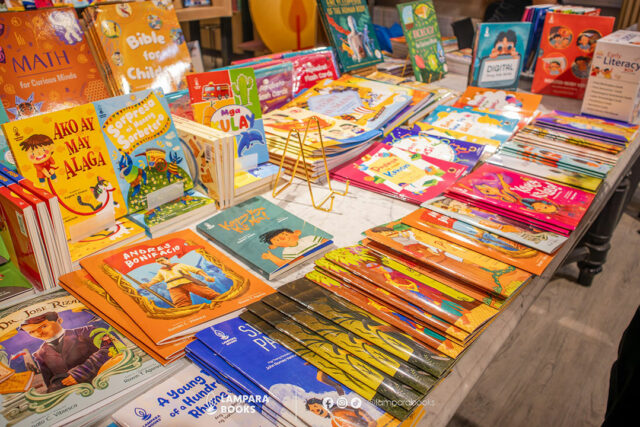
THE LATEST LINEUP of educational materials by local publishing company Lampara Books, developed as a proactive measure against literacy setbacks in the Philippines, has been released. The books are geared towards improving reading comprehension, foundational literacy, numeracy skills, and home-based learning support.

The nation’s literacy crisis informs the lineup. A study published by the Journal of Interdisciplinary Perspectives revealed that many young Filipino students have advanced to higher primary levels despite struggling with basic reading and math skills.

Through Lampara Books’ new offerings, teachers and parents can help fill the gaps in the education system.

“We’re here. Who else can the government or its citizens rely on for publishers like us who develop books for children?” Segundo Matias, Jr., chief executive officer of Lampara Books, told BusinessWorld at the sidelines of the collection’s launch on March 3.

Every book in the collection was created in collaboration with reading specialists and teachers Victor Villanueva and Daisy Jane Calado, alongside writers like Eugene Y. Evasco and Genaro R. Gojo Cruz, to name a few.

Though the public education system has been coping with education gaps through digital means, Mr. Matias noted that this should not be the approach for children in the K-3 (kindergarten to grade 3) levels.

“Digital has some contribution to K-3, but it isn’t necessarily good. Those levels deal with the basics. If you’re not able to provide the right materials for them in that stage, then they’re already behind,” he explained.

By partnering with key literacy consultants and education professionals, Lampara’s materials meet high pedagogical standards without sacrificing entertainment and fun, it said. For example, its Let’s Read series in English allows students to apply phonics skills in a structured way.

Similarly, its curriculum-aligned numeracy materials aim to improve Filipino children’s math skills. The newly launched books in this category make use of everyday story-based examples such as buying goods at a store or counting change to illustrate the real-world value of mathematics.

DEVELOPING MATERIALS
The latest collection of books and learning materials includes decodable and leveled texts for early readers, integrated numeracy concepts embedded in stories, and supplementary worksheets and guides for teachers and parents.

For Victor A. Villanueva and Daisy Jane Calado, reading intervention specialists and authors of the Magbasa Tayo! and Let’s Read! series, their work with children who are “left behind” resulted in insights on how to help them past learning difficulties and low self-esteem.

“We compiled the materials we’ve been using in our sessions into a deck and reorganized it to come up with a kit,” said Ms. Calado at a panel discussion at the launch. The result was 300 small books, written over the span of three months, for both Filipino and English reading packages.

Mr. Villanueva added that these books are sulit (worth it) because of how they combine “expository story elements and basic reading,” which invite children to decode words and gain confidence as their comprehension improves.

Meanwhile, Eugene Y. Evasco, who wrote Lampara’s new collection of Filipino Board Books, told the press that it’s important for toddlers to have something to see and read that’s grounded in their own culture.

“The imagery in our science books is always from other countries. The book industry should really develop more materials for children that are suited to the Philippine context,” he said. Thus, the 15 board books he made are distinctly Filipino in content.

Makikilala nila ang sariling bansa sa kabundukan ng Sierra Madre, na ngayon nasa panganib, at sa istorya ng mga kalabaw at ng estado ng agrikultura (they will get to know their own country through the mountains of Sierra Madre, which are now under threat, and the story of carabaos and the state of agriculture),” Mr. Evasco explained.

Instead of Filipino children learning about cardinal birds, oaks, and pine trees, they will be able to get to know the native maya bird and the makahiya plant.

Mr. Matias told BusinessWorld that localization can help children actually comprehend what they’re learning.

“There’s something called functional reading or comprehension. If it’s low, it means they can read, but they cannot really understand it,” he said. “That’s what we want to improve.”

He also encouraged parents to do their part. “Find time to really read for your child, because reading is very important. Findings say that kapag mahilig magbasa ang isang tao, madaling maka-solve ng problema sa buhay (if one likes to read, they can solve life’s problems more easily).” — Brontë H. Lacsamana

Metrobank plans P5-billion  sustainability bond sale

METROBANK.COM.PH

METROPOLITAN BANK & Trust Co. (Metrobank) is looking to raise at least P5 billion through the sale of short-term ASEAN sustainability bonds, as it seeks to diversify funding and support lending activities.

The listed lender is offering 1.5-year Series F ASEAN sustainability bonds at a fixed rate of 5.4727% per annum, it said in a disclosure on Tuesday.

Proceeds will be used to finance or refinance eligible green and social projects under the bank’s Sustainable Finance Framework, including initiatives with environmental and social benefits.

“Proceeds from the bonds will help diversify Metrobank’s funding sources while supporting the bank’s lending operations,” it said.

The notes will have a minimum investment of P500,000, with additional increments of P100,000. The offer period runs until March 30, unless adjusted.

The bonds are scheduled for issuance and listing on the Philippine Dealing & Exchange Corp. on April 14.

The offer will be drawn from the bank’s P200-billion bond and commercial paper programme approved in December 2021.

Metrobank has tapped First Metro Investment Corp., ING Bank N.V. Manila Branch, and Standard Chartered Bank as joint lead managers and bookrunners.

The bank, along with the three institutions, will also serve as selling agents, while ING will act as sustainability coordinator.

The lender last issued domestic bonds in October 2022, raising P23.7 billion from 1.5-year notes at a 5% coupon.

The final size more than doubled the initial P10-billion offer amid strong demand, prompting an early close of the offer period.

Proceeds from that issuance were used mainly for general capital requirements, including refinancing maturing obligations.

Metrobank reported a record net income of P49.7 billion in 2025, supported by steady loan growth and strong trading gains.

Its shares closed at P66.30 apiece on Tuesday, down 1.12% or 75 centavos from the previous session. — Aaron Michael C. Sy

Nestlé Philippines says it will try to avoid price hikes

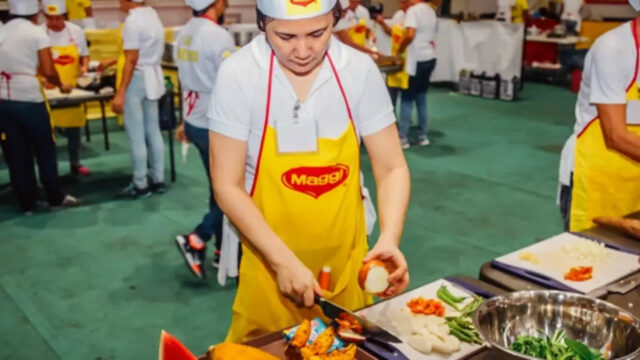
Maggi is a brand owned by Nestlé. — NESTLE.COM.PH

NESTLÉ Philippines, Inc. said it will try to avoid raising prices this year despite geopolitical risks that could disrupt supply.

“Price is the last thing that we want to touch,” Nestlé Philippines Head of Corporate Affairs José T. Uy III said at a briefing on Tuesday. “As long as we can absorb it, we will try to absorb it.”

The company said it remains cautiously optimistic about its revenue outlook, as it works to manage cost pressures through efficiency measures and sustainability initiatives.

“We always try to find efficiencies in our operations in order to compensate for the fluctuations,” Mr. Uy said.

Nestlé Philippines generated $3.2 billion in revenues in 2025, making it the Swiss company’s sixth-largest market globally.

In terms of revenue size, the Philippines is only behind the United States, China, Brazil, the United Kingdom, and Mexico.

The company said it is managing price pressures as the war in the Middle East affects global supply chains.

Kasia Gryzbowska, zone head of sustainability for Nestlé’s Asia, Oceania, and Africa region, said investing in sustainability “makes sense in the longer term” amid external uncertainties.

“Sustainability is not just doing good for the bigger good. It is very much the essence of survival for the company,” she told the briefing.

Nestlé Philippines has reduced its net greenhouse gas (GHG) emissions by 20%, mainly due to a shift to renewable energy (RE), according to Meg Anne Santos, the company’s sustainability head.

Ms. Santos said all Nestlé manufacturing sites, as well as its head office in Makati City, now operate on 100% renewable energy, mainly sourced from hydroelectric and geothermal sources.

Five of the company’s six distribution centers are powered by renewable energy, and it aims to transition all centers by yearend.

Ms. Santos said investments in renewable energy have become more practical due to increased availability and more competitive pricing in the market.

The company’s top brands in the Philippines include Nescafé, Milo, Bear Brand, and Maggi.

Nestlé Philippines is also exploring regenerative agriculture practices through new technologies, Ms. Santos said.

At its factory in Cabuyao, Laguna, the company is converting locally sourced wooden pallets into biomass fuel to reduce fossil fuel use.

Last year, Nestlé partnered with Mober Technology Pte., Inc. to transport products across the Greater Manila area using electric vehicles.

The company has also shifted to paper straws for its ready-to-drink products, reducing about three million kilograms of plastic.

Looking ahead, Nestlé plans to further integrate circular economy practices into its production processes.

“The dream really for us is to change the design for recycling to be recyclable, but we cannot do that without the infrastructure development,” Ms. Santos said. “We’re a long way to go, but that doesn’t mean we stop trying.”

Nestlé Philippines operates manufacturing facilities in Cabuyao and Canlubang, Laguna; Cagayan de Oro; and Lipa and Tanauan, Batangas. — Beatriz Marie D. Cruz

Building economic resilience in the face of geopolitical shocks

AI GENERRATED IMAGES/FREEPIK

The ongoing war in the Middle East has thrown a monkey wrench into the global economy in general, and the Philippines’ economic ambitions in particular. Suddenly, there is great uncertainty over the fate of a region that hosts millions of overseas Filipino workers. They made the sacrifice of leaving the comforts of home for a better-paying job in a foreign land. In the short term, they fear for their safety; in the longer term, they wonder how they will still be able to provide for their loved ones.

But we know only too well that even if we do not have any OFWs in our family, or rely on their remittances to fuel consumption, the conflict in the Middle East has a tangible effect on our daily living. Already, we are feeling the effects of higher prices of oil. We are told to brace ourselves for succeeding waves of price hikes. The costs of goods and services will inevitably follow.

These are developments in which neither we nor our leaders had an active hand. And yet, Filipinos are feeling the fallout of this global geopolitical crisis. Indeed, the reality of today’s interconnected global economy is that vulnerabilities rarely remain confined within borders.

Is there a way to shield ourselves from the corrosive effects of these external events? How do we make sure that our economy and our people continue to prosper whatever happens in the outside world?

One important lesson from the recent geopolitical disruptions is that economic resilience can no longer be pursued purely through domestic policy. In an interconnected world, resilience is strengthened through strategic partnerships with countries that share common interests in stability, secure supply chains, and responsible technological development.

It is within this context that the Stratbase Institute, together with the Asia Pacific Foundation of Canada, and in collaboration with the Embassy of Canada in the Philippines, recently convened policymakers, industry leaders, and experts to explore Philippines-Canada cooperation deeper.

The two countries are becoming increasingly aligned in recognizing that resilience in the face of uncertainty demands practical collaboration across strategic sectors. Thus, the growing synergy between Manila and Ottawa, specifically in areas crucial to establishing economic growth and resilience, was emphasized.

These areas are digital resilience, critical minerals and clean technology, and defense industrial development.

In the age of information and disinformation, digital resilience has emerged as a central pillar of the Philippines’ national development strategy. As connectivity expands and more citizens and businesses rely on online platforms for communication, commerce, and government services, the need for trusted digital systems becomes more urgent.

Strengthening digital data governance, investing in connectivity infrastructure, and ensuring secure data management are no longer optional. They are essential to economic competitiveness and national preparedness.

Canada’s leadership in artificial intelligence governance, cybersecurity standards, and data infrastructure development offers valuable insights for strengthening network resilience and ensuring that digital innovation proceeds responsibly.

The development of critical minerals and clean technology value chains is another area of focus. The Philippines has abundant mineral resources essential to the global energy transition, including copper, nickel, cobalt, and other inputs for battery production. However, maximizing these resources requires more than extraction. It demands investment in domestic processing, technological capability, and energy systems that support industrial activity.

Recent policy reforms aimed at streamlining permitting processes and improving the investment climate signal a strong commitment to unlocking the country’s mineral potential. Public-private partnerships and targeted incentives are expected to play an important role in mobilizing capital for large-scale projects. At the same time, partnerships with countries that have deep experience in responsible mining and resource governance can help ensure that development proceeds in a sustainable and inclusive manner.

Canada’s long-standing expertise in mining technology, environmental safeguards, and community engagement presents a natural complement to the Philippines’ resource endowment. Collaboration in processing facilities, clean energy deployment, and supply chain diversification can help both countries capture greater value from critical minerals while supporting global decarbonization goals.

Finally, and equally significant, is the growing importance of defense industrial collaboration in shaping economic security. As the Philippines recalibrates its strategic posture in response to evolving regional dynamics, it is increasingly shifting from a primarily internal security focus toward strengthening its external defense capabilities under the Comprehensive Archipelagic Defense Concept.

Efforts to strengthen domestic industrial capacity through the Self-Reliant Defense Program highlight the role of defense investments in supporting broader economic development. Building local capabilities in manufacturing and technology development can generate spillover benefits across civilian sectors, contributing to job creation, research advancement, and industrial competitiveness. Partnerships with trusted allies can facilitate technology transfer, joint capability development, and more secure defense supply chains.

The pursuit of economic resilience cannot — and should not — be undertaken by any country acting alone. Instead, it requires deliberate cooperation with like-minded partners like Canada that share its commitment to openness, innovation, and a rules-based international order.

The Philippines is well-positioned to leverage its core strengths. Its geostrategic location at the heart of key maritime routes, abundant natural resources, and dynamic young workforce provide strong foundations for deeper engagement with global partners. Legislative reforms and targeted policy measures aimed at improving the investment climate further enhance the country’s attractiveness as a hub for strategic cooperation.

All these contribute to our economic resilience, making us less vulnerable to global shocks and other events beyond our control.


Victor Andres “Dindo” C. Manhit is the president of the Stratbase ADR Institute.

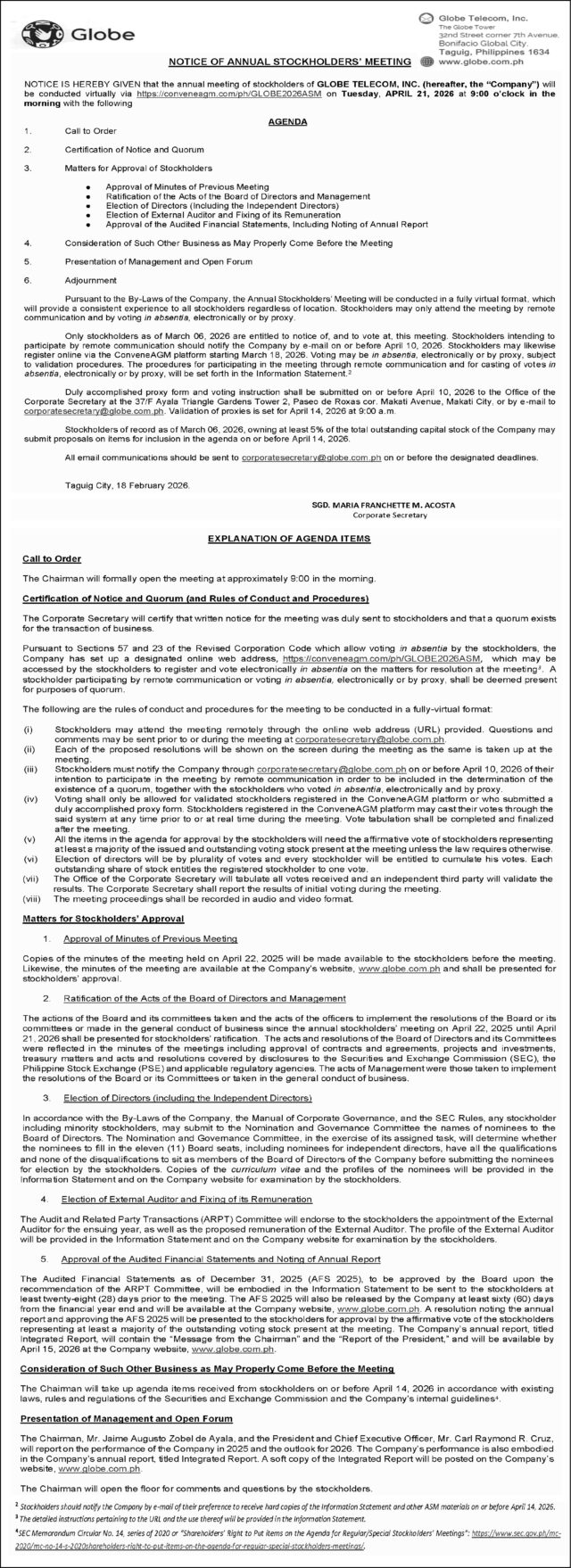
Globe Telecom, Inc. to hold 2025 Annual Meeting of Stockholders virtually on April 21


Spotlight is BusinessWorld’s sponsored section that allows advertisers to amplify their brand and connect with BusinessWorld’s audience by publishing their stories on the BusinessWorld Web site. For more information, send an email to online@bworldonline.com.

Join us on Viber at https://bit.ly/3hv6bLA to get more updates and subscribe to BusinessWorld’s titles and get exclusive content through www.bworld-x.com.

Confronting a tumultuous part of history

Musical on Apolinario Mabini challenges viewers

By Brontë H. Lacsamana, Reporter

Theater Review
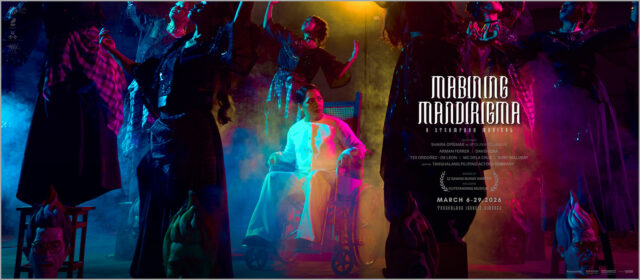
Mabining Mandirigma: A Steampunk Musical
Presented by Tanghalang Pilipino

IT’S BEEN 11 years since Mabining Mandirigma — a retelling the life of Apolinario Mabini with a firm grasp of 19th century Philippines through a compelling steampunk lens — took local theater scene by storm. Tanghalang Pilipino has brought back this landmark production, which swept the Gawad Buhay awards in 2015 and has been restaged a few times since.

The musical, with a book by Dr. Nicanor Tiongson and music by Joed Balsamo, follows Mabini through the key points of his life, from his youth in Lipa, Batangas, to his days as adviser and confidante to President Emilio Aguinaldo, to his death at age 38 just a little past the turn of the 20th century.

For those like me, who only saw the success of the musical from a distance and never got to see it in its original run, it’s a great way to see how ambitious our theater talents are and how dense our historical materials can be for engaging stories like these. The extensive research can be felt in the sheer barrage of information that is packed into the lyrics, made entertaining through the magic of theater.

Since it tackles the volatile politics of the time, which overwhelms Mabini in his attempt to lend his gifts to the Philippine revolution, the creative choices highlight the narrative tensions even more. The gender-swapped lead, with Shaira Opsimar playing Mabini with a nuanced sense of his solid yet limited physicality in a wheelchair, adds to the anachronisms — the steampunk visuals dialing up the chaos of the time being the most obvious example.

Performed at the Tanghalang Ignacio Gimenez (the Cultural Center of the Philippines’ Black Box Theater), the small stage in full view of the audience allows every detail of Toym Imao’s set and props and James Reyes’ costumes to shine. The steampunk aesthetic is both tasteful yet stylized, from the barong-like touches refined into military shapes to the contrast between garish accessories with rattan textures.

It may be a challenge for newer, younger audiences to dive into the extremely dense historical text, but Emilio Aguinaldo’s questionable political decisions are dramatized so compellingly. Directed by Chris Millado and choreographed by Denisa Reyes and Richardson Yadao, the show is dynamic and full of energy, each musical number transforming along with the tides of history. The musical arrangement by TJ Ramos brings out the strength of the original score, though depending on the sound conditions of a given night, some lyrics can be lost in the music.

Mabining Mandirigma is meant to center on the titular historical figure, but his relationship with Emilio Aguinaldo is an undeniable highlight. Opsimar bounces off of David Ezra’s powerful, dignified Aguinaldo very well, as they both come across as participants in a larger picture, sometimes together and sometimes apart.

Ms. Opsimar and Mr. Ezra’s voices blend perfectly, and they really command the stage in scenes where their personal friendship either blooms or strains. When they have heated confrontations, the hush in the crowd is palpable, their human connection fraught in the context of a tumultuous history. It plays somewhat like a doomed relationship, if you will.

Supporting cast members occasionally steal the scene. There’s Tex Ordoñez-De Leon lending a headstrong quality to Mabini’s worried mother, Dionisia. There’s Gelo Molina as Mabini’s hopeful caretaker, Pepe, who injects humor and dimension to the story. Even the actress who plays young Mabini, Ynna Rafa, brings a youthful vulnerability to the role that stays with you.

Of course, the ilustrados are a riot. Played by MC de la Cruz, Jonathan Tadioan, Roby Malubay, and Marco Viaña, their fun delivery kicks up a storm each time they’re on stage. The entire ensemble similarly provides a vibrant energy that keeps you engaged, especially in the meaty parts, sustaining momentum in a musical that’s so animated yet dense in commentary.

The uneasy wartime transition from Spanish to American rule sheds light on the harmful habits that are embedded in Philippine politics today, and Mabining Mandirigma wants you to know that. It pays full respect to its titular hero, but goes beyond that by connecting his struggles to ours.

Ultimately, it’s an intelligent and entertaining production that Filipinos have to watch, to learn from the difficult parts of history and to be reminded of what it means to try to make things better, despite everything.

Mabining Mandirigma runs until March 29 at the Tanghalang Ignacio Gimenez or CCP Black Box Theater at the CCP Complex in Pasay City. Tickets range in price from P1,800 to P2,000.

RCBC ends bond offer early on strong demand

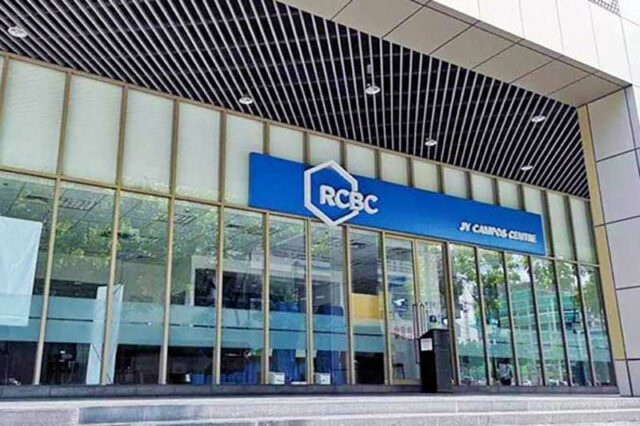
RCBC/BW FILE PHOTO

RIZAL COMMERCIAL Banking Corp. (RCBC) said it ended the public offer period for its three-year ASEAN sustainability bonds ahead of schedule after drawing strong demand from both retail and institutional investors.

“RCBC decided to shorten the public offer period following positive and strong demand for the bonds coming from both retail and institutional investors,” the listed lender said in a disclosure on Tuesday.

The offer, which began on March 12, was originally set to run until March 27. Settlement and listing on the Philippine Dealing & Exchange Corp. remain scheduled for April 8.

The bonds carry a coupon rate of 6.08% and were offered at a minimum investment of P100,000, with additional increments of P10,000.

Proceeds will be used to finance or refinance eligible green and social projects under the bank’s Sustainable Finance Framework, RCBC said.

The issuance marks the ninth drawdown from the bank’s P200-billion bond and commercial paper program, which was expanded in 2022 from the P100 billion initially approved in 2019.

The Securities and Exchange Commission approved the ASEAN label for the issuance on Feb. 23.

RCBC tapped Standard Chartered Bank and RCBC Capital Corp. as joint lead arrangers and bookrunners, with both also serving as selling agents.

The lender last accessed the domestic bond market in July last year, raising P12.21 billion from a sustainability bond offering, exceeding the P3-billion minimum issue size amid strong demand.

Those notes had a tenor of two years and six months and carried a 6% coupon, bringing total issuances under its peso fundraising program to P99.01 billion.

RCBC also raised $350 million from a five-year sustainability bond issuance in January 2025, priced at 5.375%, under its $4-billion medium-term note program.

The bank reported an 11% increase in net income to P10.6 billion in 2025. Its shares closed unchanged at P24 apiece on Tuesday. — Aaron Michael C. Sy

ADVERTISEMENT
ADVERTISEMENT