Home Blog Page 1434

Satellite images show fresh Chinese bomber deployment in South China Sea
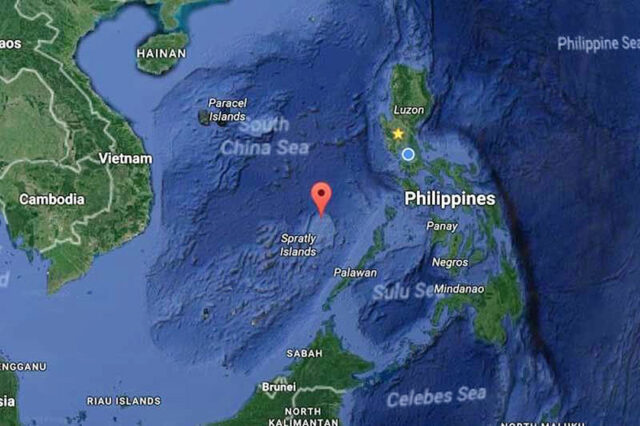
PHOTO FROM GOOGLE MAP

HONG KONG, March 28 (Reuters) – China deployed two long-range H-6 bombers around the Scarborough Shoal this week, in Beijing’s latest move to assert sovereignty over the hotly disputed atoll in the South China Sea, satellite images obtained by Reuters showed.

The deployment, which was not publicized by China, came ahead of U.S. Defense Secretary Pete Hegseth’s visit to the Philippines, which also claims the shoal that lies within its exclusive economic zone of 200 nautical miles.

China’s defense ministry did not immediately respond to questions from Reuters on the scale of the deployment or whether it was timed to coincide with Mr. Hegseth’s trip.

Officials from the Philippines National Security Council and military did not immediately respond to requests for comment.

During a visit to Manila on Friday, Mr. Hegseth reaffirmed the United States’ “ironclad commitment” to its mutual defense treaty with the Philippines, saying China’s actions made deterrence necessary in the South China Sea.

Monday’s images taken by Maxar Technologies show two aircraft east of Scarborough Shoal, which China calls “Huangyan Dao”.

In recent years, Chinese coast guard vessels have clashed frequently with Philippine fishermen near the mouth of atoll, which China has at times attempted to block since it seized de facto control of the shoal in 2012.

Last month, the Philippines coast guard accused the Chinese navy of performing dangerous flight maneuvers nearby.

An international arbitration tribunal in the Hague ruled in 2016 that China’s claims had no legal basis, but Beijing rejected that decision.

In an email to Reuters, Maxar said the aircraft in the images were H-6 bombers, adding that “rainbow colors” close to them resulted when satellite images of fast-moving objects were processed.

The timing of the flights was unlikely to be accidental, however, regional security analysts said.

Beijing was sending “a signal that China has a sophisticated military,” said Peter Layton of Australia’s Griffith Asia Institute.

“The bombers’ second message could be you (the United States) have the potential for long range strike; so do we, and in larger numbers. Clearly not serendipity,” he added.

Regional military attaches say China has gradually stepped up deployments of H-6 bombers into the South China Sea as its military presence has grown, starting with landings on improved runways in the disputed Paracel islands in 2018.

The jet-powered H-6 is based on a Soviet-era design but has been modernized to carry an array of anti-ship and land attack cruise missiles, and some are capable of launching nuclear-tipped ballistic missiles.

Similar to the U.S. B-52, the basic H-6 design dates back to the 1950s but with improved engines, modern strike weapons and on-board flight systems, it is China’s key long-range bomber.

The Pentagon’s annual report on China’s military in December said a more stealthy aircraft was probably in development.

The bombers were deployed in war game drills in October around Taiwan, which China claims as its own territory, and in late December at Scarborough, as part of broader air and sea operations by the Chinese military’s Southern Theatre Command.

The command, which covers the South China Sea, operates two regiments of the bombers, the London-based International Institute for Strategic Studies says.

The December drills were publicized, with the defense ministry saying at the time they were meant to “resolutely safeguard China’s national sovereignty and security, and maintain peace in the South China Sea”.

The ministry posted images of aircraft above the shoal but satellite images capturing patrols in operation are rare.

The altitude at which the H-6s were flying near the shoal is not known.

Taiwan’s government rejects China’s sovereignty claim, saying only the island’s people can decide their future. – Reuters
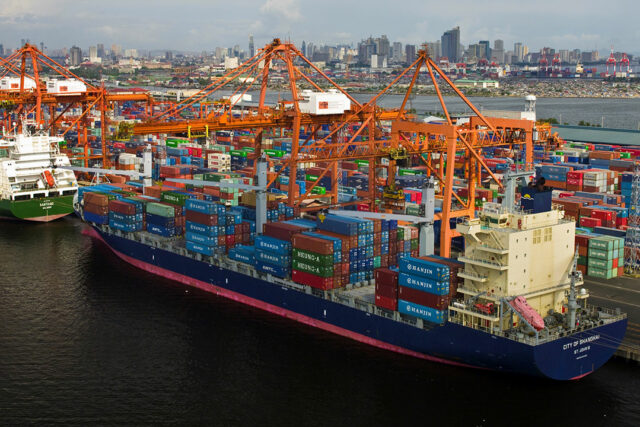

Trade gap narrows to $3.16 billion in February

A view of the Manila International Container Terminal. — COURTESY OF ICTSI

The Philippines’ trade-in-goods deficit narrowed in almost four years in February as exports eased while imports declined, the Philippine Statistics Authority (PSA) reported on Friday.

Preliminary data from the PSA showed the country’s trade balance in goods — the difference between the values of exports and imports — reached $3.16 billion from the revised $5.12-billion deficit in January and the $3.56-billion gap a year earlier.

February saw the narrowest trade deficit in 46 months since the $3.09-billion deficit in April 2021.

Export receipts rose for the second straight month by 3.9% to $6.25 billion February from $6.02 billion a year earlier.

However, this pace was slower than revised 6.3% growth in January and the 17.9% surge recorded in February last year.

Meanwhile, imports declined by 1.8% year on year to $9.41 billion in February, reversing the revised 11.2% growth in January and the 6.6% rise in February 2024.

It was the sharpest import fall since the 3.3% drop in November 2024.

Year to date, the trade-in-goods deficit widened by 4.6% to $8.28 billion from the $7.91-billion gap in the January-February period last year.

Outbound sale of goods expanded by 5.1% to $12.62 billion in the first two months of 2025, while imports grew by 4.9% to $20.90 billion.

The Development Budget Coordination Committee (DBCC) projects 6% and 5% growth in exports and imports, respectively, this year.

“Lowered imports may be because, as rate cuts are anticipated, domestic firms may delay their projects and have lesser need to import materials until then,” Rischelle Alysha T. Legaspi, an economist at Oikonomia Advisory and Research, Inc., said in an e-mail.

She added that the growth in exports may be attributed to “other countries stocking up on supply” as US President Donald J. Trump’s reciprocal tariffs looms on the global market.

“I think it’s partly because of geopolitical aspects… what [Mr.] Trump is doing and what he has done,” Sergio R. Ortiz-Luis, president of Philippine Exporters Confederation, Inc., said in a phone interview.

Mr. Trump has recently threatened to further raise tariffs the US has already imposed on the European Union and Canada if these continue their collaboration in countering his trade policies, Reuters reported.

Since taking office at the start of the year, Mr. Trump has slapped a 20% tariff on all Chinese imports and 25% levy on steel and aluminum imports.

Automobiles manufactured outside of the United States may face a 25% tariff if the White House pushes through with this in the upcoming trade policy announcement on April 2.

Since its easing cycle in August, the Bangko Sentral ng Pilipinas (BSP) slashed benchmark rates by a total of 75 basis points (bps) bringing policy rate at 5.75%.

However, in February during its first policy meeting this year, the BSP kept its policy settings, surprising market expectations and at the same time signaled fewer rate cuts this year.

Headline inflation in February decelerated to 2.1%, bringing the average inflation rate in the first two months to 2.5%, within the central bank’s 2-4% target.

Manufactured goods, which made up the bulk of the country’s exports, grew by 3.6% to $5.18 billion in February from $5 billion a year ago.

By commodity group, electronic products, which made up 56.3% of exported manufactured goods, rose by 2.5% year on year to $3.52 billion.

Semiconductors, which accounted for 41% of outgoing electronic products, declined by 4.1% to $2.54 billion.

Exports of other manufactured goods jumped 34.6% to $412.60 million, while machinery and transport equipment rose by 13.9% to $254.62 million in February.

The United States remained the top destination for Philippine-made goods, with exports valued at $986.84 million accounting for 16% of the total.

It was followed by Japan with $984.76 million (15.7% share), Hong Kong with $873.64 million (14%), China with $646.59 million (10.3%), and The Netherlands with $347.70 million (5.6%).

Meanwhile, imports of raw materials and intermediate goods, which accounted for 37.8% of the total imports, rose by 1.7% to $3.56 billion in February from $3.50 billion a year earlier.

Imports of capital goods grew by 1.8% to $2.61 billion, while consumer goods increased by 7.7% to $1.89 billion.

By commodity group, electronic products had the highest import value at $2.11 billion, up 9.8% in February from $1.92 billion a year ago.

Imports of semiconductors, which accounted for the bulk of electronic products, went up by 14.8% to $1.50 billion.

Imports of mineral fuels, lubricants and related materials, on the other hand, declined by 23.2% year on year to $1.32 billion, while transport equipment rose by 12.2% to $914.70 million.

China was the biggest source of imports in February with $2.46 billion worth of goods, accounting for 26.1% of the total import bill.

It was followed by Japan with $841.87 million (8.9% share), Indonesia with $803.17 million (8.5%), South Korea with $671.99 million (7.1%), and the United States with $647.25 million (6.9%).

Both analysts were optimistic in the country’s chances of meeting the government’s growth targets for imports and exports in 2025.

Ms. Legaspi said the country may attain the government’s trade targets this year and that further investments should be made in improving the manufacturing sector.

“Hindrances to these goals, however, would include geopolitical tensions which disrupt supply chains and domestic inflation, which could make us more reliant on imports,” she said.

“We don’t know ’til now what US would do. So, it depends, a big factor is what US is going to do,” Mr. Ortiz-Luis said.

In a research note, Chinabank Research said that external demand may remain subdued moving forward, with risks from elevated uncertainty amid an escalating global trade war and higher US tariffs.

It also added that potential economic slowdown in major trading partners such as the US and China may be a factor.

“This trade gap could widen this year as potential changes in the global trade landscape could hurt export demand,” Chinabank Research added. — M.M.L. Castillo

Djokovic reaches Miami Open semis, Sabalenka into final

MIAMI – Novak Djokovic is two wins away from capturing a 100th career title after beating Sebastian Korda 6-3 7-6(4), and world number one Aryna Sabalenka cruised into her first Miami Open final with a 6-2 6-2 victory over Jasmine Paolini on Thursday.

Mr. Djokovic let out a triumphant roar after sending down an ace on match point as the 37-year-old’s former rival and now coach Andy Murray jumped out of his seat to do the same.

The Serbian 24-times Grand Slam champion trailed Korda 5-2 in the second set but broke the American as he served at 5-3 and his precise and powerful serving carried him to the finish.

“I’ve been serving great the entire tournament but particularly today I needed it in the second to try to come back,” Mr. Djokovic told Tennis Channel.

“In the tiebreak, a couple of points really decided the winner, 5-4 service winner, ace at 6-4 to finish off the match. So I’ll take that as the highlight.”

Victory ensured that Mr. Djokovic, who turns 38 in May, became the oldest ATP Masters 1000 semi-finalist, surpassing Roger Federer, who made the final four at Indian Wells and Miami aged 37 years and seven months in 2019.

The match was originally scheduled for Wednesday but postponed under ATP rules aimed at avoiding matches dragging on into the early hours of the morning.

Fourth seed Djokovic, gunning for a record seventh Miami Open title, will face 14th-seeded Bulgarian Grigor Dimitrov in the semi-finals on Friday.

Unseeded Czech Jakub Mensik was a 7-6(5) 6-1 winner over 17th-seeded Frenchman Arthur Fils and will meet American Taylor Fritz in the semis after he outlasted Italian 29th seed Matteo Berrettini 7-5 6-7(7) 7-5.

Third seeded Fritz saw six match points come and go in the second set but converted on his seventh opportunity in the decider to put away Berrettini.

“There’s two options, get frustrated about it, lose and then be even more frustrated about all the chances I blew, or regroup and get the win,” Fritz said.

“Now I can sleep tonight.”


PEGULA ENDS EALA‘S RUN

On the women’s side, Ms. Sabalenka won 77% of her first-serve points, fired down six aces, saved all four break points she faced and converted four of her five break point chances against Italian sixth seed Paolini during the 71-minute match.

The Belarusian top seed, who resides in South Florida and arrived in Miami fresh off a runner-up finish at Indian Wells, has not dropped a set in her five matches.

Up next for Ms. Sabalenka will be American fourth seed Jessica Pegula, who ended the fairytale run of Philippine wildcard Alexandra Eala 7-6(3) 5-7 6-3.

“It’s nice to know I can win these big matches in really clutch, pressure moments and come out on top,” said Ms. Pegula, who will compete in her sixth WTA 1000 final.

“One of the people who does it better than me is Aryna. I’m going to have a big battle.”

Ms. Pegula battled back from 2-5 down to win the opening set and was up a break in the second before 19-year-old Eala came back to level the match despite twisting her ankle during a point.

But Ms. Pegula’s experience shone through in the decider and she prevailed in a thriller that finished well past midnight, with the 31-year-old writing, “I’m tired” on a camera lens.

Ms. Eala, who beat three Grand Slam champions during her run, blew kisses to a small crowd that gave her a standing ovation after sharing a warm exchange with Ms. Pegula at the net. – Reuters

[B-SIDE Podcast] Breaking barriers: Filipina women in STEM and beyond

Follow us on Spotify BusinessWorld B-Side

In celebration of National Women’s Month, we recognize the trail-blazing Filipinas who have defied all odds through their success in various fields. However, we must also acknowledge the challenges that plague women into breaking existing glass ceilings.

Carlota Salamat Andres shares in an interview with BusinessWorld her journey to becoming an S&E engineer, and why more Filipinas deserve more opportunities to excel in the sciences.

Interview by Beatriz Cruz
Audio editing by Jayson Mariñas

Follow us on Spotify BusinessWorld B-Side

BSP warns of short-term refinancing risks

Pedestrians cross a road in Caloocan City, Philippines.Photographer: Lisa Marie David/Bloomberg

The Philippine central bank warned companies to avoid an excessive reliance on short-term funding that could leave them vulnerable when refinancing debt.

“While increased risk-taking and leverage are not seen as excessive, the high level of debt incurred by corporates warrant close monitoring,” Bangko Sentral ng Pilipinas said in its annual Financial Stability Report released on Thursday. “Many corporates continue to face persistent funding mismatches where current liabilities exceed current assets.”

The Philippine economy is among the region’s fastest-growing, with Finance Secretary Ralph Recto last week saying gross domestic product may expand as much as 7% this year as interest rate cuts spur investment and expansion. The BSP said that while corporate profits have also been rising, risks include an over-reliance on bank lending, the use of short-term funding for long-term investment, and the interconnectedness between some companies and systemically important banks.

“A maturity wall and higher leverage may make refinancing challenging at higher interest rates,” it said.

Another danger is a potential mismatch between local-currency revenues and offshore liabilities. Non-financial corporations have an estimated P2.48 trillion ($43 billion) of foreign-currency debt maturing this year, plus P11.3 trillion of local-currency borrowings falling due in 2025, according to the BSP report, which cited data from S&P Capital.

The P14.24 trillion maturing in 2025 is a third lower than the P21.54 trillion total maturities in 2024. Maturing debts are seen easing below P10 trillion by 2028.

The regulator said conglomerates and lenders must exercise caution in lending to a subsidiary or affiliate, pointing out that banks’ asset quality and capital adequacy may decline if any conglomerate experiences financial distress.

The top 15 conglomerates owe P9.7 trillion, accounting for 93% of total corporate debt, according to the BSP. Many of these conglomerates also own major lenders.

“While such related-party transactions are allowed, this must be conducted in an arm’s length basis within prudential limits,” the BSP said.

The central bank called for the development of alternative sources of financing to help lessen companies’ dependence on bank financing.

“This entails streamlining issuance requirements, particularly for small to mid-sized corporate borrowers, improving platform accessibility through technology, and increasing activity through engaging market-makers,” the report said. — Bloomberg

Pegula ends Eala’s fairytale run at Miami Open

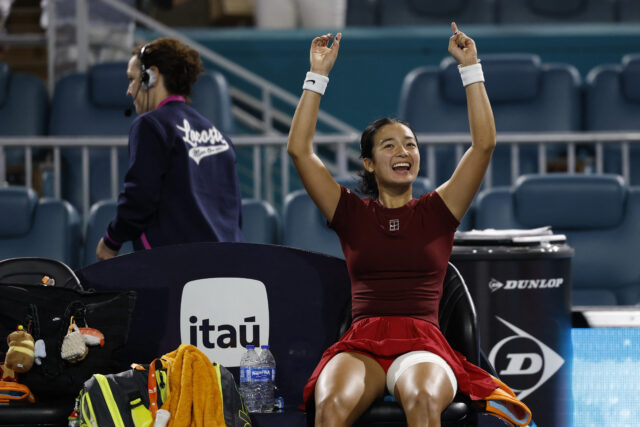
Alexandra Eala (PHL) waves to fans from her player's chair after her match against Jessica Pegula (USA)(not pictured) in a women's singles semifinal on day ten of the Miami Open at Hard Rock Stadium. Mandatory Credit: Geoff Burke-Imagn Images via Reuters Connect

MIAMI – American fourth seed Jessica Pegula ended the fairytale run of Philippine wildcard Alexandra Eala 7-6(3) 5-7 6-3 at the Miami Open.

“It’s nice to know I can win these big matches in really clutch, pressure moments and come out on top,” said Pegula, who will compete in her sixth WTA 1000 final.

“One of the people who does it better than me is Aryna. I’m going to have a big battle.”
Pegula battled back from 2-5 down to win the opening set and was up a break in the second before 19-year-old Eala came back to level the match despite twisting her ankle during a point.

But Pegula’s experience shone through in the decider and she prevailed in a thriller that finished well past midnight, with the 31-year-old writing, “I’m tired” on a camera lens.

Eala, who beat three Grand Slam champions during her run, blew kisses to a small crowd that gave her a standing ovation after sharing a warm exchange with Pegula at the net.

Meanwhile, world number one Aryna Sabalenka cruised into her first Miami Open final with a 6-2 6-2 victory over Jasmine Paolini on Thursday.

Sabalenka won 77% of her first-serve points, fired down six aces, saved all four break points she faced and converted four of her five break point chances against Italian sixth seed Paolini during the 71-minute match.

The Belarusian top seed, who resides in South Florida and arrived in Miami fresh off a runner-up finish at Indian Wells, has not dropped a set in her five matches. — Reuters

Globe HR chief named among SEA’s 2025 Most Influential HR Leaders

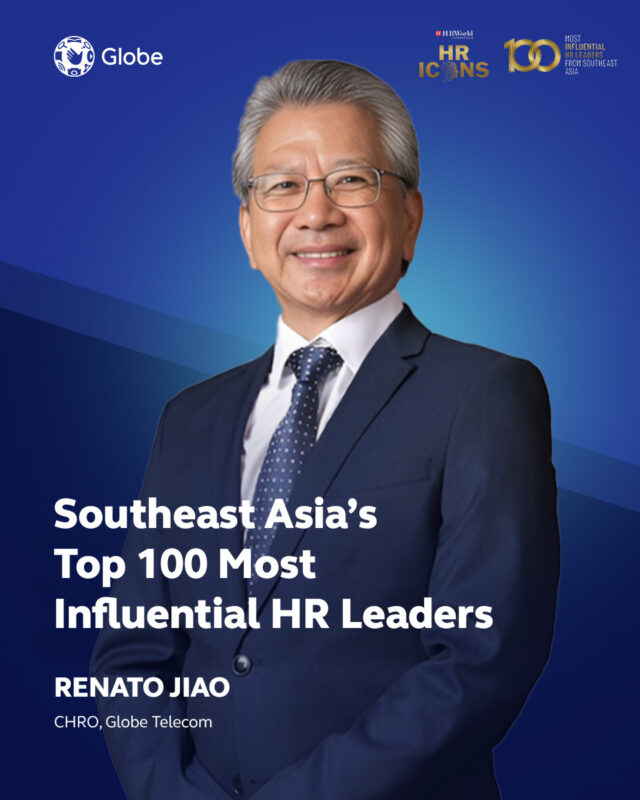
Globe’s Chief Human Resource Officer Renato Jiao has been recognized as one of the region’s 100 most influential HR leaders for 2025 by ETHRWorld Southeast Asia HR Icons.

The annual initiative was organized by ETHRWorld Southeast Asia, the HR vertical of The Economic Times. It acknowledges CHROs and senior HR executives who have made exceptional contributions to leadership, innovation, and transformation in the HR industry.

Unlike a traditional ranking system, the HR Icons list celebrates aspirational HR leaders from across the region, including Singapore, Malaysia, Thailand, Indonesia, and the Philippines.

Recipients are selected based on an in-depth assessment conducted by ETHRWorld’s editorial team, evaluating criteria such as social media influence, engagement, industry awards, community impact, thought leadership, and pioneering HR practices. It also considers the impact of HR initiatives on revenue growth and overall market influence.

“This prestigious accolade is a testament to the collective effort of our entire HR team. We are committed to creating a workplace that empowers employees, embraces innovation, and drives meaningful change while continuously exploring new ways to support our people, ensuring that they remain at the core of our success,” said Jiao.

Jiao has led Globe’s HR strategies since 2010, building a culture of excellence, and implementing forward-thinking policies that enhance employee engagement and productivity.

Under his guidance, Globe has expanded its efforts in employee well-being and development while actively promoting diversity and inclusion. The company’s focus on learning, growth, and innovation has also created a workplace where individuals feel valued, respected, and empowered.

At the same time, Jiao ensures that employees are engaged in programs that contribute to both customer welfare and community development in line with Globe’s dedication to sustainability and nation-building.

Under Jiao’s leadership, Globe has received multiple local and international accolades for excellence in human resources management.

Globe continues to evolve and adapt to the changing needs of its employees and customers, maintaining its commitment to a work environment that supports growth, innovation, and social responsibility.

To learn more about Globe, visit https://www.globe.com.ph/.


Spotlight is BusinessWorld’s sponsored section that allows advertisers to amplify their brand and connect with BusinessWorld’s audience by publishing their stories on the BusinessWorld Web site. For more information, send an email to online@bworldonline.com.

Join us on Viber at https://bit.ly/3hv6bLA to get more updates and subscribe to BusinessWorld’s titles and get exclusive content through www.bworld-x.com.

US Defense Secretary reaffirms “ironclad commitment” to the Philippines

BW FILE PHOTO

MANILA, March 28 (Reuters) – U.S. Defense Secretary Pete Hegseth reaffirmed the United States’ “ironclad commitment” to the Mutual Defense Treaty with the Philippines, saying in Manila on Friday that deterrence was needed in the South China Sea due to China’s actions.

Mr. Hegseth met with Philippine President Ferdinand Marcos Jr, and they signaled continued strong cooperation amid growing threats from China, emphasizing a shared commitment to peace in the Indo-Pacific region and in the South China Sea.

“Deterrence is necessary around the world, but specifically in this region, in your country, considering the threats from the communist Chinese,” Mr. Hegseth said.

The Philippines is Mr. Hegseth’s first stop on a trip to Asia that has been overshadowed by revelations that highly sensitive attack plans against Houthi militants in Yemen were shared on a commercial messaging app that included a journalist.

“President Trump, who sent regards to you as well, thinks very fondly of this great country, is very committed to the alliance that we have, to the friendship that we have, the cooperation that we have,” Hegseth said.

“He and I both want to express the ironclad commitment we have to the Mutual Defense Treaty and to the partnership, economically, militarily”.

Mr. Marcos, who pledged to work closely with Washington to uphold regional stability, said Mr. Hegseth’s visit was a sign of the U.S. support for its treaty ally.

“It sends a very strong message of the commitment of both our countries to continue to work together to maintain the peace in the Indo-Pacific region within the South China Sea,” he said.

The meeting comes against the backdrop of tensions between the Philippines and an increasingly powerful China over disputed islands in the South China Sea, where the two nations have had frequent maritime run-ins.

Ahead of Mr. Hegseth’s visit, Chinese defense ministry spokesman Wu Qian said military co-operation between the U.S. and the Philippines should not harm security interests of other countries.

“Throughout history, the U.S. has maintained an eye-popping record of breaking its promises and turning its back on its allies,” Wu said at a press briefing in Beijing on Thursday. – Reuters

Breaking barriers: Filipina women in STEM and beyond

In celebration of National Women’s Month, we recognize the trail-blazing Filipinas who have defied all odds through their success in various fields. However, we must also acknowledge the challenges that plague women into breaking existing glass ceilings.

Carlota Salamat Andres shares in an interview with BusinessWorld her journey to becoming an S&E engineer, and why more Filipinas deserve more opportunities to excel in the sciences.

Interview by Beatriz Cruz
Audio editing by Jayson Mariñas

Knowing the ‘Angels of the Sea’ of the Philippine Coast Guard

Seawoman 1st Class Aigielyn A De Jesus is one of the 81 ‘Angels of the Sea’ of the Philippine Coast Guard, an all-woman unit launched in 2021. She shares her unit’s key role in protecting our territories in the West Philippine Sea.

Interview by Edg Adrian Eva
Video editing by Arjale Queral

‘Angel of the Sea’ recalls a tense encounter at Scarborough Shoal

An ‘Angel of the Sea’ of the Philippine Coast Guard recalls her unforgettable encounter with the Chinese Coast Guard during her first mission at Scarborough Shoal (Bajo de Masinloc).

“Madaling-araw na po iyon nang bigla po kaming binunggo ng Chinese Coastguard [It was already dawn when the Chinese Coast Guard suddenly rammed us],” Seawoman 1st Class Aigielyn A De Jesus said.

Interview by Edg Adrian Eva
Video editing by Arjale Queral

US pauses financial contributions to WTO, trade sources say

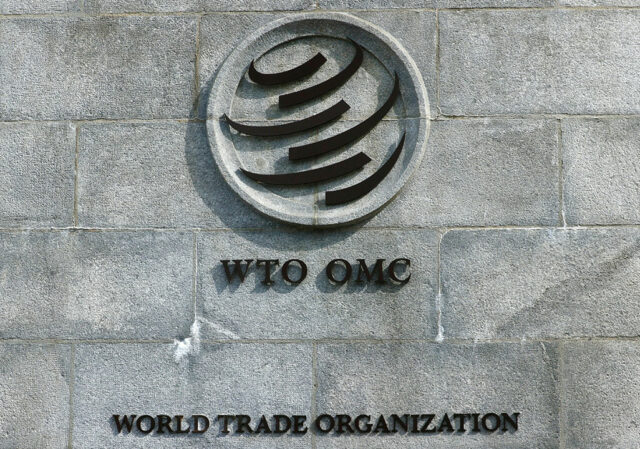
A logo is pictured outside the World Trade Organization (WTO) in Geneva, Switzerland, Sept. 28, 2021. — REUTERS/DENIS BALIBOUSE

 – The United States has paused contributions to the World Trade Organization, three trade sources told Reuters, as U.S. President Donald Trump’s administration ramps up efforts to cut government spending.

The Trump administration is retreating from global institutions it sees as at odds with his “America First” economic policies. It plans to quit some, such as the World Health Organization, and has cut contributions to others as part of a broad review of federal spending.

The WTO has already been hobbled by a U.S. move in 2019 during Trump’s first term to block new judge appointments to its top appeals court, which left its key dispute settlement system only partially functional. Washington had accused the WTO Appellate Body of judicial overreach in trade disputes.

The Geneva-based trade watchdog had an annual budget of 205 million Swiss francs ($232.06 million) in 2024. The United States was due to contribute about 11% of that based on a fees system that is proportionate to its share of global trade, according to public WTO documents.

A U.S. delegate told a March 4 WTO budget meeting that its payments to the 2024 and 2025 budgets were on hold pending a review of contributions to international organisations and that it would inform the WTO of the outcome at an unspecified date, two trade sources with direct knowledge of the meeting said.

A third trade source confirmed their account and said the WTO was coming up with a “Plan B” in case of a prolonged funding pause, without elaborating.

All three sources asked for confidentiality because the budget meeting was private and the U.S. funding pause has not been formally announced.

The White House did not immediately respond to requests for comment.

A State Department spokesperson said Mr. Trump last month signed an executive order directing Secretary of State Marco Rubio to review within 180 days all international organizations the U.S. is a member of “to determine if they are contrary to U.S. interests.”

“Funding for the WTO, along with other international organizations, is currently under review,” the spokesperson said.

WTO spokesperson Ismaila Dieng said that U.S. contributions had been on the way but “got caught up in the pause of all payments to international agencies”.

“Generally, arrears can impact the operational capacity of the WTO Secretariat. But the Secretariat continues to manage its resources prudently and has plans in place to enable it to operate within the financial limitations imposed by any arrears,” he said, referring further questions to U.S. authorities.

As of end-December 2024, the United States had arrears of 22.7 million Swiss francs ($25.70 million), according to a WTO document obtained by Reuters marked “RESTRICTED” and dated February 21.

Under WTO rules, any member that fails to pay its dues after more than a year is subject to “administrative measures” – a series of punitive steps that get progressively stricter the longer the fees go unpaid.

The country is now classified as being in the first of three such categories, two of the trade sources confirmed to Reuters, which means its representatives can no longer preside over WTO bodies nor receive formal documentation.

Reuters could not immediately establish if the WTO was already applying these measures to the United States.

William Reinsch, a former U.S. Commerce official now at the Center for Strategic and International Studies, said he thought the U.S. would eventually pay its WTO bill. He said the Trump administration had nominated a U.S. ambassador to the institution, which indicated some desire to remain engaged.

WTO spokesperson Dieng confirmed the chair of the budget committee had informed WTO members that the United States was currently in “Category 1 arrears”, along with other countries.

“It remains the responsibility of WTO Members to implement the consequences associated with arrears,” he said.

As of end-2024, five other member countries – Bolivia, Democratic Republic of Congo, Djibouti, Gabon and Gambia – were in that category, the WTO restricted document showed.

A total 38.4 million Swiss francs of contributions were outstanding, including unpaid fees from 2024 and prior, it showed. – Reuters