Home Blog Page 143

Ethics case vs dela Rosa hinges on Senate rule changes

SENATOR RONALD "BATO" DELA ROSA — FACEBOOK.COM/SENATEPH

THE Senate must amend its rules before it can tackle the ethics complaint against Senator Ronald “Bato” M. dela Rosa, a senator said on Wednesday.

Senator Joseph Victor G. Ejercito, who heads the Ethics committee, said that it must amend the Senate’s rules to include a “no work, no pay” policy before it can tackle the ethics complaint against Mr. dela Rosa.

“It is really necessary, if we continue with this (then) the case will be dismissed. It’s not in our rules, so it will be dismissed because you cannot find it anywhere in our rules on ethics or the rules of the Senate,” he told a news briefing in mixed Filipino and English.

Mr. Ejercito added that legislators must push for the amendment of Senate rules to avoid the dismissal of the complaint.

“If any member would propose that the rules be amended or proposed the inclusion of such provision for no work, no pay, then we can make the necessary amendment,” he said.

Mr. Ejercito added that the committee had approved its rules and will begin to assess if cases filed against senators are sufficient.

He said that Mr. dela Rosa’s complaint is sixth in line, with the committee following a “first in, first out,” for filed ethics cases.

An ethics complaint has been filed against Mr. dela Rosa over his repeated absence and failure to return to his duties in the Senate, constituting a clear dereliction of duty and a “grave abuse of the privilege entrusted to him by the Filipino people.”

The civil society group that filed the complaint stated that the senator’s absence from committee hearings risks disrupting proceedings and pending legislative measures.

The senator has not attended a single Senate session since November last year, amid talks of a potential warrant against him by the International Criminal Court. — Adrian H. Halili

Army, police Eid al-Fitr security measures in place

COTABATO CITY — The police and military are now guarding extensively the entry and exit routes in this city and in nearby areas in the neighboring Bangsamoro region and in Region 12 to ensure a peaceful Eid al-Fitr celebration by the local Muslim communities on Friday.

Brig. Gen. Jaysen C. De Guzman, director of the Police Regional Office-Bangsamoro Autonomous Region, announced on Wednesday that officials of the Cotabato City Police Office, led by their director, Col. Jibin M. Bongcayao, and Mayor Bruce C. Matabalao are overseeing the Eid al-Fitr security preparations in all of the 37 barangays under their jurisdiction.

Mr. Matabalao is also chairman of the multi-sector peace and order council in Cotabato City, where the regional capital of the Bangsamoro Autonomous Region in Muslim Mindanao (BARMM) is located.

Mr. De Guzman and Army Major Gen. Jose Vladimir R. Cagara, commander of the 6th Infantry Division, separately told reporters on Wednesday that local executives, traditional Moro datus and influential blocs of Islamic missionaries are helping push security efforts forward.

“We are thankful to all of them, to the mayors in the cities and provinces under our jurisdiction and to their provincial governors for helping us ensure a peaceful Eid al-Fitr celebration in Central Mindanao and in the Bangsamoro provinces,” Mr. Cagara said.

The Eid al-Fitr marks the culmination of the month-long Islamic Ramadan fasting season, which started on Feb. 19. Physically fit Muslims fast from dawn to dusk during Ramadan, which lasts for one lunar cycle, as a religious obligation. They focus on reparation for wrongdoings and reconciliation with adversaries during the period.

There are two important yearly religious holidays in Islam, the Eid al-Fitr and the Eid al-Adha, also known as the feast of sacrifice, both being observed as nonworking holidays in BARMM’s three cities and five provinces and in all southern regions.

Brig. Gen. Arnold P. Ardiente, Region 12 police director, said all four governors in the provinces under their jurisdiction, Cotabato, Sultan Kudarat, South Cotabato and Sarangani, are also helping their units secure the designated open-field worship sites where thousands of their Muslim constituents will converge and perform their Eid al-Fitr rituals on Friday.

Mr. Ardiente said South Cotabato Governor Reynaldo S. Tamayo, Jr., and his counterpart in Cotabato, Emmylou T. Mendoza, have instructed all of their constituent-mayors to deploy on Friday all the community watchmen under their local government units around the Eid al-Fitr worship sites in their municipalities.

Mr. Tamayo, now in his last term as South Cotabato governor, is chairperson of the multi-sector Regional Peace and Order Council 12. — John Felix M. Unson

Sandiganbayan junks civil case linked to coco levy funds

PHILSTAR FILE PHOTO

THE Philippines’ anti-graft court has dismissed a long-running civil case involving the alleged misuse of coconut levy funds against the relatives and business associates of the late Eduardo M. Cojuangco, Jr. due to inordinate delay in the proceedings.

In a 14-page resolution dated March 17, the Sandiganbayan Second Division granted the motion to dismiss filed by Rafael Abello, Enrique Cojuangco, Marcos Cojuangco, and Agricultural Investors, Inc., saying the 38-year delay since the 1987 filing left the case at pre-trial stage for decades and was “unreasonably excessive by any standard.”

The tribunal said that the circumstances of the remaining defendants were substantially similar to those of the late Mr. Cojuangco, whose version of the case was ordered dismissed by the Supreme Court in 2021, and that the same legal conclusion must apply to the remaining parties to ensure judicial certainty. It also rejected the prosecution’s claim of waiver.

“The renunciation of a constitutional right must be positively demonstrated,” Presiding Justice Geraldine Faith A. Econg said in the resolution. “The implied waiver of such right cannot be presumed. Mere silence of the holder of the right should not be easily construed as surrender thereof.”

“The defendants have been put under a cloud of anxiety, suspicion, and often, hostility as the case loomed over them,” the court said, adding that “The prolonged litigation of the case resulted in the defendants incurring significant fees for legal representation,” and said the state failed to justify the nearly four-decade delay. — Erika Mae P. Sinaking

PSEi rises on Wall Street gains, fuel tax hopes

BW FILE PHOTO

PHILIPPINE SHARES climbed on Wednesday as bargain-hunters drew support from a rebound on Wall Street and optimism over potential policy changes on fuel excise taxes.

The benchmark Philippine Stock Exchange Index (PSEi) rose 0.48% or 29.44 points, closing at 6,055.45, while the broader all-share index added 0.41% or 13.81 points to 3,363.56.

“Investors took cues from the strong rebound in US equities amid developments in the Iran conflict,” Wendy B. Estacio-Cruz, research head at Unicapital Securities, Inc., said in a Viber message.

Market participants were also watching local policy developments. The House of Representatives on Monday approved House Bill No. 8418, which seeks to grant the President authority to suspend or cut fuel excise taxes during national and global emergencies.

Its counterpart at the Senate was still under discussion. The bills differ in duration and automatic triggers: the Senate limits powers to three months with an automatic reversion if Dubai crude prices fall below $80 per barrel, while the House version allows a six-month suspension without a price safeguard.

Sectoral performance was mixed. Four of six sectoral indexes closed higher. Property led gains, rising 1.74%, followed by industrials up 1.19%, holding firms advancing 0.67% and services edging up 0.23%. Meanwhile, financials fell 0.38% and mining and oil slipped 0.22%.

Winners beat losers 113 to 81, with 61 stocks unchanged.

Trading activity eased, with value turnover down to P6.06 billion on 930.22 million shares from P7.44 billion on 1.06 billion shares a day earlier.

Net foreign selling increased to P664.05 million from P563.22 million in the previous session.

Analysts said the market remains sensitive to external and domestic catalysts, including geopolitical developments, crude oil prices and legislative actions that could affect corporate costs and inflation.

The combination of bargain-hunting, Wall Street momentum and hopes for a fuel excise tax cut supported local equities, Japhet Louis O. Tantiangco, research manager at Philstocks Financial, Inc., said via Viber.

“The local market extended its gains as investors continued with their bargain-hunting, taking cues from Wall Street’s overnight rise,” he added.

Investors will continue monitoring the Senate’s deliberations on the fuel excise bill, alongside external cues from oil markets and US equities, which are likely to guide near-term trading in the PSE. — Alexandria Grace C. Magno

P10-B presidential aid fundtapped for farmers, fisherfolk

PHILIPPINE STAR/CESAR RAMIREZ

By Vonn Andrei E. Villamiel, Reporter

THE Department of Agriculture (DA) said it accessed a P10-billion standby fund supporting the Presidential Assistance for Farmers and Fisherfolk Program (PAFFP) to provide cash assistance to farmers and fisherfolk dealing with rising production costs.

According to Memorandum Circular No. 11, signed by Agriculture Secretary Francisco P. Tiu Laurel, Jr. on March 17, eligible rice, corn, and sugarcane farmers, as well as registered fisherfolk affected by the ongoing war in the Middle East, will receive P2,325 each.

“The PAFFP seeks to alleviate the impact of these developments on farm and fisheries production, strengthen farmer and fisherfolk resilience, and sustain production in the face of market volatility and rising production costs,” according to the circular.

The DA said the Iran war has added volatility to the prices of fuel, fertilizer, logistics, and other agricultural inputs, further squeezing the narrow margins of small-scale producers.

Farmers listed in the DA’s Registry System of Basic Sectors in Agriculture and fisherfolk enrolled in the Boat Registration system are eligible to receive the cash assistance.

According to PAFFP guidelines, farmers must be actively engaged in their industry during the economic disruption, with rice farmers aid limited to those cultivating farms no larger than two hectares.

Funded by the 2026 General Appropriations Act, the PAFFP is typically used to aid the agricultural sector after calamities.

However, the DA has said that geopolitical developments, such as the ongoing conflict in the Middle East, can also be considered trigger events to unlock the assistance.

The DA said the corresponding Notice of Cash Allocation covering the PAFFP is awaiting release by the Department of Budget and Management.

PHL ‘has moved closer’ to threshold of upper middle-income status — World Bank

REUTERS

By Justine Irish D. Tabile, Senior Reporter

THE World Bank said the Philippines is approaching the gross national income (GNI) per capita threshold that would lead to its reclassification as an upper middle-income country (UMIC).

“The Philippines is projected to be close to the upper middle-income threshold based on current GNI per capita trends,” the World Bank said in an e-mail late Tuesday in the wake of the approval of an $800-million loan for the Philippines.

The bank greenlit the $800-million Philippines Growth and Jobs Development Policy Loan last week, which will help the country strengthen its fiscal resilience, attract higher-quality private investment, and upskill its workforce.

“This support comes as the Philippines’ GNI per capita has moved closer to the threshold of upper middle-income countries, on the back of inclusive GDP growth since 2010 that has enabled the economy to double in size every 13.5 years,” the World Bank said in a statement that was updated on March 17.

“Yet, the country today faces domestic and external shocks that underscore the value of ongoing fiscal and structural reforms to reach higher, more job-rich growth, and to reduce vulnerability to shocks,” it added.

Last year, the World Bank classified the Philippines as a lower middle-income country after it missed the threshold for UMIC status by $26. GNI per capita was $4,470, while the GNI per capita requirement for UMIC classification was $4,496-$13,935.

The bank is scheduled to release its updated annual thresholds and GNI per capita lists in July.

Earlier this year, the Department of Economy, Planning, and Development (DEPDev) said the Philippines is still on track to achieve UMIC status this year, despite posting weaker-than-expected 4.4% gross domestic product (GDP) growth in 2025.

DEPDev issued its assessment before the latest round of fighting broke out in the Persian Gulf. Asked to comment on Tuesday, Economy Secretary Arsenio M. Balisacan said: “The updated data in the July 1 publication of the WB covers the GNI per capita in 2025. The ongoing crisis in the Middle East will not affect the 2025 numbers.”

Ateneo Center for Economic Research and Development Director Ser Percival K. Peña-Reyes told BusinessWorld that “slow growth from last year” makes it “not likely” that the Philippines will cross the threshold this year.

He also cited “inflation, which could further dampen growth” and “stagflation … if this war drags on” as risks to achieving UMIC status.

He said it is possible that the World Bank lowers the threshold, “but it is not something I would consider reassuring.”

Last year, the World Bank lowered the GNI per capita requirement for UMIC to $4,496-$13,935 from between $4,516 and $14,005 in 2024.

China Banking Corp. Chief Economist Domini S. Velasquez said that the “slowdown in growth, coupled with higher inflation, could delay or even reverse  progress toward UMIC status.”

“Higher inflation does two things: reduces real purchasing power (hurting households directly), and it can weaken the currency, which lowers GNI per capita in US dollar terms — the metric that matters for UMIC classification,” she said via Viber.

However, she said that the focus should not be on the UMIC label itself but on “improving lives through stable jobs, stronger incomes, and better resilience.”

“While we may be approaching the World Bank’s upper middle-income threshold, what matters is sustaining it — not just reaching it,” she added.

Tourism seen taking severe hit from war; recovery to be slow

BW FILE PHOTO

THE Philippine tourism industry, a Southeast Asia laggard, is expected to be among the worst-hit by the war in the Middle East, an economist said.

At the “Advancing Sustainable Tourism for Inclusive Growth in the Philippines” forum on Wednesday, John Paolo R. Rivera, a senior research fellow with the Philippine Institute for Development Studies (PIDS), described tourism as especially vulnerable during crises.

“War, whether indirectly or directly (affecting us) will have cascading and medium- to long-term effects on tourism. Other than oil prices, tourism is always one of the first sectors to be affected in times of conflict and also the last to recover,” he said.

“The war in the Middle East is far from us, (but any travel is risky) because of disruptions,” he added, eroding confidence among travelers.

He said that the government should look at its messaging and product development to assure that the Philippines can always deliver on its tourism offerings even in the face of possible unanticipated fallout from the war.

Richard G. Daenos, regional director at the Department of Tourism, said that the war would definitely bring economic strain and declines in tourism due to safety concerns.

“We really need… to strengthen our preparedness before the crisis escalates,” he said.

He said the war reinforces the lesson that the Philippines should develop a healthy domestic tourism segment and gear any international offerings to short-haul travelers.

“We have to have alliances with resilient markets like South Korea and Japan,” he added.

Cherry Lyn S. Rodolfo, advisory board member at the Dr. Andrew L. Tan Center for Tourism at the Asian Institute of Management, said that the Philippines will need to monitor markets such as the UK, Germany and France.

“These are actually European markets that have been growing quite well, very robust in the past years, that actually depend significantly on Middle East connectivity,” she said.

“The channel is already missing at this point, and although there are other channels that they can use, it would require deliberate route development efforts for airlines to move some of their capacity more to this side of Asia,” she added.

However, she said that the Philippines is still heavily dependent on the Asia and Oceania market, where connectivity is well-developed.

“If we invest more of our resources for marketing and promotions in these short-haul markets … this is already economic resilience as well,” she said. “We really have to start mobilizing and reallocating resources to these markets.”

Christina G. Aquino, a member of the technical panel for tourism and hospitality management at the Commission on Higher Education, said the Philippines needs to optimize for domestic travel for the time being, while also being ready for the eventual return of international visitors.

“We have to make sure that we continue developing or promoting our destinations because on the off chance that the war will stop, we will have products ready,” she said.

“We need to make sure that we do not stop inventing … because that would be a good way of ensuring that there is consistency,” she added.

The forum was anchored on a PIDS study released in December which in part recommended updating the Tourism Act (2009).

Mr. Rivera said that the priority amendments include infrastructure financing for tourism gateways and destinations, stronger and usable tourism enterprise zone incentives, digital and data governance for tourism, and clear local government unit-national coordination mechanisms.

If realized, these amendments, he said could result in growing investment, clear governance, bankable tourism zones, and stronger private sector confidence by 2028. — Justine Irish D. Tabile


Agri data push seen narrowing gap between farmgate, retail prices by 30%

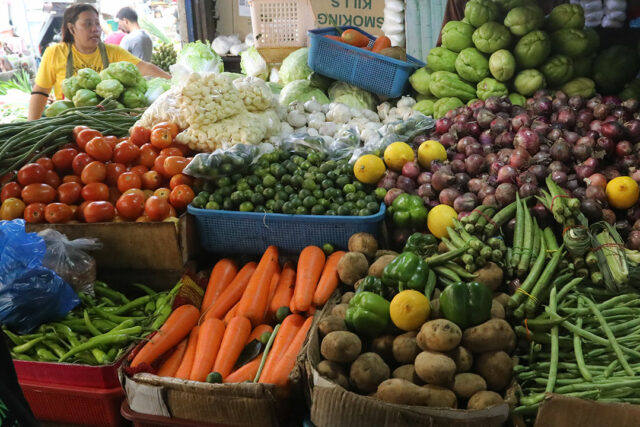
Customers are seen buying goods at Quinta Market in Quiapo, Manila. — PHILIPPINE STAR/EDD GUMBAN

THE Department of Agriculture (DA) said it is seeking to reduce by about 30% the gap between farmgate and retail prices of major agricultural commodities by strengthening its use of real-time data.

Agriculture Secretary Francisco P. Tiu Laurel, Jr. said the DA hopes to complete within six months a more comprehensive system for monitoring prices, covering rice, corn, and high-value crops.

The DA currently provides daily retail price monitoring through its Bantay Presyo platform, but farmgate price data remain incomplete.

“The farmgate prices are what we are working on right now. We don’t have real-time data on farmgate prices nationwide. But I’m hopeful that after six months, we can complete that,” Mr. Laurel said at the Makati Business Club’s Agriculture and Food Security Summit late Tuesday.

Mr. Laurel said the DA has started compiling data on rice, corn, onion, and carrots, and is working to expand the system to cover farmgate prices of other commodities.

Mr. Laurel said real-time data will help the department ensure that farmers and consumers both benefit from the narrowing of the price gaps.

“If we see the trend in farmgate and retail prices, and the gap in between, we will be able to determine what should go to farmers and what should go to consumers,” he told reporters on the sidelines of the summit.

Citing onions as an example, Mr. Laurel said farmgate prices are between P35 and P50 per kilo in major producing areas such as Mindoro and Nueva Ecija, with retail prices at between P100 to P120.

He said improved data could help correct price distortions across the supply chain, like those observed in onions, which could eventually lead to lower retail prices and higher farmgate prices. 

The DA recently completed a command center in February which consolidates information on crop production, imports, weather, and livestock inventory to help with planning and coordination.

It added that the center will help anticipate shortages, minimize instances of oversupply, and guide interventions across regions.

The DA is also exploring artificial intelligence tools to generate insights, simulate crop scenarios, and monitor price distortions. — Vonn Andrei E. Villamiel

Fertilizer supply 80% sufficient; price volatility remains a risk

REUTERS

THE Department of Agriculture (DA) said it has orders and inventory sufficient to meet 80% of Philippine fertilizer needs, which are expected to last until September, but prices are likely to be volatile for synthetic fertilizer types that depend on natural gas and petroleum because of fighting in the Persian Gulf.

In a statement on Wednesday, the DA said that surging prices could yet disrupt deliveries, and the government is negotiating with China, Russia, and India to cover its bases should the supply outlook from the Gulf become even more uncertain.

Agriculture Secretary Francisco P. Tiu Laurel Jr. was quoted as saying that there are plans to also engage Belarus to ensure steady delivery of petroleum-based inputs.

He added that the Chinese reaffirmed plans to continue with its agricultural cooperation with the Philippines.

The DA said it is also exploring low-input farming techniques developed by China and boosting domestic fertilizer production.

The DA said global fertilizer prices are rising, with urea possibly reaching $800 per metric ton if disruptions to Gulf shipping continue. — Vonn Andrei E. Villamiel

Lowering corn tariff expected to mitigate impact of surging fuel prices

REUTERS

THE Foundation for Economic Freedom (FEF) said reducing the tariff on corn imports to 5% for shipments exceeding the minimum access volume (MAV) will help cushion the blow from the ongoing fuel crisis, by lowering the cost of animal feed and making meat products cheaper.

“Now is the right time to act on this to mitigate the impact of the recent rise in oil prices, driven by the Iran-Israel-US conflict, on food prices brought about by higher transport costs,” FEF President Calixto V. Chikiamco said during the Management Association of the Philippines’ General Membership Meeting on Wednesday.

Philippine corn imports are subject to an MAV quota of 216,939 metric tons, which is admitted at a 5% tariff. Volumes exceeding the quota are charged 15%. The FEF proposal would effectively equalize the tariff treatment of all shipments, regardless of whether they fall within the MAV quota or not.

Yellow corn is a key component of animal feed, which constitutes a major proportion of the cost to raise animals.

Mr. Chikiamco said imports of corn will add to the supply of meat and poultry, thereby addressing the protein needs of the population and reduce malnutrition and stunting.

As of 2023, about 23.6% of Filipino children under five years were classified as stunted, with 15% underweight, the Department of Science and Technology’s Food and Nutrition Research Institute reported last year.

About 17.9% of children between five to 10 years and 20.7% of adolescents are stunted.

“Stunting is driven not only by calorie deficiency but also by chronic lack of quality protein and essential nutrients,” Mr. Chikiamco said.

The Department of Agriculture estimates that corn accounts for up to 55% and 65% of livestock and poultry feeds, respectively. It is also a key ingredient in fish feed.

Reducing the tariff for shipments exceeding the MAV quota to 5% would raise pork production by 2.6% and chicken production by 2.2%, Mr. Chikiamco noted, citing a 2025 study by the Philippine Institute for Development Studies.

The lower tariffs would also reduce the retail price of pork by 2% and chicken by 1.7%, Mr. Chikiamco said.

Charging a single tariff for corn imports would also help “address inefficiencies in the administration of the MAV and reduce graft and rent-seeking opportunities,” he added.

To cushion its impact on corn farmers, Mr. Chikiamco said the government can provide direct subsidies from tariff revenue.

Philippine corn imports are expected to hit 1.85 million MT in the 2025-2026 production season due to a decline in domestic production, the US Department of Agriculture said in December.

Asked to comment, Trade Undersecretary Allan B. Gepty said proposals to liberalize imports must consider the impact on domestic farmers.

“When it comes to our sensitive products, particularly agriculture products, we have been very mindful of the need to protect our farmers,” he told reporters on the sidelines of the event. — Beatriz Marie D. Cruz

Polish investors pitched on PHL shipbuilding opportunities

HANJIN FACEBOOK PAGE

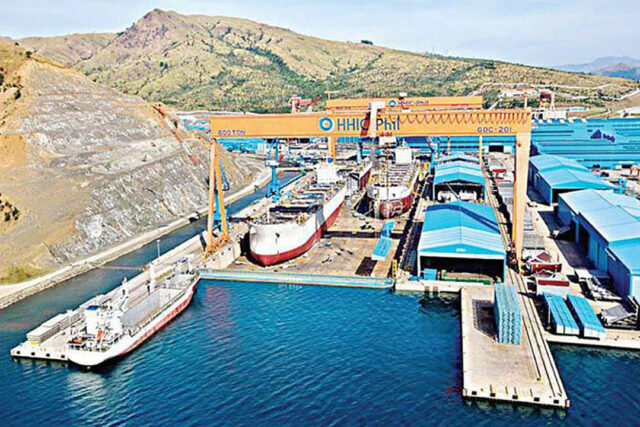
THE PHILIPPINES received a business delegation from Northern Poland to explore possible collaboration in maritime investments, including shipbuilding, the Philippine Economic Zone Authority (PEZA) said.

“The participation of the West Pomeranian delegation — representing shipbuilding, maritime logistics, industrial engineering, and construction — underscores Poland’s growing interest in the Philippines as a strategic investment hub in the region,” PEZA Director General Tereso O. Panga said in a statement on Wednesday.

At a March 13 meeting with the Polish Investment and Trade Agency, Mr. Panga touted the Philippines’ strategic location, expanding shipbuilding industry, and emerging priority industries.

“With West Pomerania’s maritime-driven economy and expertise in shipbuilding and port operations, this mission underscores high-potential synergies for the Philippines’ maritime, industrial, and infrastructure sectors,” PEZA said.

The delegation consisted of representatives from eight companies involved in marine and industrial electrical systems; maritime logistics; heavy concrete and specialized engineering; construction; ship repair and marine services; and industrial metal fabrication.

Chargé d’Affaires Katarzyna Wilkowiecka called on the need to strengthen bilateral ties.

“I hope Polish businesses will return home with a positive view of the Philippine market, and I also encourage our Filipino partners to help create a more open and enabling environment for our exporters and investors,” she was quoted as saying.

The Philippines is negotiating a free trade agreement (FTA) with the European Union (EU), which the government is hoping to finish by the middle of the year.

“The anticipated EU-PHL FTA, coupled with robust bilateral collaboration, is poised to unlock greater trade and investment flows, positioning the Philippines as a premier gateway for European businesses and reinforcing its role in fostering inclusive and sustainable economic growth,” Mr. Panga said.

The Philippines could potentially access additional exports of about $12 billion once the FTA is finalized, the Trade department has said. — Beatriz Marie D. Cruz

German-funded ‘blue economy’ program expected to generate 3 million jobs, DoF’s Go says

PHILSTAR FILE PHOTO

THE Department of Finance (DoF) said €200 million in funding provided by Germany’s KfW Development Bank (KfW) is expected to generate 3 million jobs in the so-called “blue economy,” the sustainable use of ocean and coastal resources.

“By strengthening the foundations of the blue economy, we are securing livelihoods, raising incomes, and reinforcing a vital engine of national growth, today and for the future,” Finance Secretary Frederick D. Go said in a statement on Wednesday.

The funding, which supports the Marine Ecosystems for Blue Economy Development Program, Subprogram 1 (MEBED1), “aims to enhance regulatory capacities for the protection, restoration, and sustainable management of marine and coastal resources.”

“The program is expected to generate increased and sustainable livelihoods for more than three million people — fisherfolk, aquaculture operators, and tourism workers — boosting national income and strengthening the resilience of coastal communities,” the DoF said.

The program will build on the gains achieved under the MEBED Program and is expected to address core development in coastal and marine ecosystems through supporting key government reforms and operations.

The funding stems from the agreement signed by Mr. Go and KfW Management Committee Member for Europe and Asia Stephan Opitz.

“The partnership with KfW reflects a shared commitment to ensuring that environmental protection, climate resilience, and economic growth advance together,” Mr. Go said. — Justine Irish D. Tabile
ADVERTISEMENT
ADVERTISEMENT