Home Blog Page 1417

SEC: Investor education needed
BW FILE PHOTO

THE Securities and Exchange Commission (SEC) wants better investor education efforts to help address evolving investment scams, its new chairperson said.

“As these fraudulent schemes continue to evolve, so too must our responses. If scams are now being promoted through viral content and deceptive online communities, then investor protection efforts must likewise go where the public is — on their screens and in their feeds,” SEC Chairperson Francis Ed. Lim said in his speech during a launch event on Tuesday.

“Financial education also now has to include engaging reels, short-form videos, and targeted digital campaigns that resonate with today’s investors — especially the younger and digitally connected generations,” he added.

Mr. Lim also called for coordination among regulators, saying that they should align their strategies, messaging, enforcement priorities, and investor education efforts.

“Investment fraud today is borderless, fast-moving, and significantly complex, requiring a coordinated and collaborative approach,” he said.

“Financial literacy is a cornerstone of investor protection. A financially literate public — able to identify red flags and challenge suspicious promises — is our first and most reliable line of defense,” he added.

Meanwhile, Mr. Lim pushed for the enactment of the Capital Market Development Act to help improve investor education. 

“We continue to advocate for the enactment of the Capital Market Development Act, which institutionalizes financial education as a fundamental pillar of investor protection and capital market deepening,” he said.

Mr. Lim said this as the Financial Sector Forum launched its Protect Your Money campaign on Tuesday to address the increasing number of financial scams in the country.

“The Protect Your Money campaign is not just a public awareness drive—it is a signal of our mutual resolve to create a more secure financial environment where fraud finds no safe harbor,” he said. — Revin Mikhael D. Ochave


Mastercard enters into strategic collab with DoT

TOURISM Secretary Christina G. Frasco speaks during the launch of the Strategic Collaboration between the Department of Tourism (DoT) and Mastercard held at the DoT Central Office in Makati City on Wednesday, June 18, 2025. — PHILIPPINE STAR/RYAN BALDEMOR

MASTERCARD and the Department of Tourism (DoT) have entered into a strategic collaboration to boost the country’s appeal to both travelers through digitalization.

“MasterCard, a global leader in technology and payments, is driving inclusive economic growth through powerful data-driven efforts. In tourism, these insights help destinations understand travel behavior, optimize services, and unlock new opportunities, making our industry more connected, resilient, and inclusive,” Tourism Assistant Secretary Sharlene Zabala-Batin said in a speech on Wednesday.

Mastercard Southeast Asia Customer Solutions Center Senior Vice-President Aisha Islam said the DoT and Mastercard will share data to form tourism strategies.

Ms. Islam said the data will allow both parties to understand spending behavior and travel patterns across five potential segments.

“In fact, early on today, we were talking about how some new markets are going to be able to enter the Philippines visa-free, such as those like India, and how we can use these opportunities to attract more South Asian customers and tourists to this country,” she said.

“We need to ensure that we are very aware of new insights, new patterns, as well as new trends to make sure that together we can meet the evolving needs of travelers, not just those who are international but also those who are domestic.”

The DoT noted the partnership was in line with the National Tourism Development Plan 2023-2028.

“Secondly, we will also support tourism’s goal when it comes to creating impactful, priceless destination marketing. We will do this by combining Mastercard’s global Priceless platform with our customized insights as well as secure digital payments, which will aim to showcase the grand best of what the Philippines offers while creating both seamless and safe travel experiences,” Ms. Islam said. — Aaron Michael C. Sy

AI regulatory body sought

REUTERS

AN OUTGOING lawmaker on Wednesday urged the next Congress to pass a bill creating a regulatory body to oversee artificial intelligence (AI) technology adoption in the country to curb its misuse.

Lawmakers should pass legislation to regulate AI development in the country and ensure its use aligns with ethical standards, Surigao del Norte Rep. Robert Ace S. Barbers said.

“While the rapid phase of technological advancement in AI provides huge potential in the development of the people and the economy, it also poses risks and challenges that must be addressed to ensure that its benefits are maximized, and its negative impacts are minimized,” he said in a statement.

“We should have a ‘watchdog’ to guard against unscrupulous individuals, like foreign propagandists, lobbyists, bandits or terrorist groups, that would take advantage of or use it for their selfish or criminal ends,” he added. — Kenneth Christiane L. Basilio

APECO acquires 12-hectare land for Casiguran airport

THE Aurora Pacific Economic Zone and Freeport Authority (APECO) acquired 12 hectares of land for the development of the Casiguran Airport into a commercial airport.

“[This] is a major step for the development of the existing APECO Airstrip into a commercial airport, which will connect the Casiguran-based ecozone to the global investment market,” APECO said in a statement on Wednesday.

Under the agreement, APECO received 5.2 hectares of land from the Chua Cham family as a donation, which already represents half of the airstrip, while the family sold an additional 6.8 hectares to APECO.

“APECO’s potential to do more depends on the amount of land we administer. In our continuing land acquisition efforts, we were left with higher rates beyond the zonal valuation,” said APECO President and Chief Executive Officer Gil G. Taway IV.

“APECO, however, was able to acquire the property from the Chua Cham family at 50% less than the buying rate, which we consider highly advantageous to the government,” he added.

The Casiguran Airport, which is planned to be renamed APECO Airport, is eyed to improve accessibility to Aurora and northeastern Luzon.

“The operationalization of the APECO Airport is also aimed at boosting investments and trade by providing direct air links for business travelers, investors, and cargo,” APECO said.

“In the tourism sector, it will also open up APECO’s natural tourist attractions, including beaches and its rich biodiversity, which will attract more visitors and create livelihood and employment for local communities,” it added. — Justine Irish D. Tabile

SPAVI, QC to create jobs for seniors, PWDs

SHAKEYSGROUP.PH

LISTED food service company Shakey’s Pizza Asia Ventures, Inc. (SPAVI) has partnered with the Quezon City government to provide job opportunities for senior citizens and persons with disabilities (PWDs).

The company signed a memorandum of agreement (MoA) with Quezon City government officials led by Mayor Maria Josefina “Joy” G. Belmonte last month, SPAVI said in a regulatory filing on Tuesday.

Under the MoA, SPAVI will create job opportunities for senior citizens and PWDs at company-owned Shakey’s restaurants in Quezon City to promote equal employment for diverse members of society.

Quezon City is the fifth city where SPAVI worked with local governments through its inclusive hiring program.

“We are excited to partner with SPAVI and provide both senior and PWD QCitizens with a chance to work,” Ms. Belmonte said.

Meanwhile, SPAVI also reinforced its commitment to create positive social impact through its Love ‘Em Down program as part of its 50th anniversary celebration this year.

In partnership with the Down Syndrome Association of the Philippines, Inc. (DSAPI), Shakey’s supports individuals with Down Syndrome through inclusive hiring and community engagement initiatives.

The company also held its inaugural Pizza and Smiles pizza-making and designing activity and supported DSAPI’s Happy Walk earlier this year.

“At heart of it all, we are a people business, and that means cultivating an organization where diverse talents and abilities are not only valued but also harnessed, such that everyone has a chance to contribute,” SPAVI President and Chief Executive Officer Vicente L. Gregorio said. — Revin Mikhael D. Ochave

Four hurt in Basilan grenade attack

COTABATO CITY — Four individuals were wounded in a grenade explosion that ripped through the premises of a roadside gasoline station in Lamitan City, Basilan on Tuesday afternoon.

It was the second grenade attack at the same petroleum refill station since last year.

Lamitan City’s police chief, Lt. Col. Elmer P. Solon, and Brig. Gen. Romeo J. Macapaz, director of the Police Regional Office-Bangsamoro Autonomous Region (PRO-BAR), separately confirmed on Wednesday that the incident left Jamil M. Mahmud, Naim L. Tomas, Reyyan S. Gunong and Mut-ab M. Gunong wounded.

They were immediately transported by emergency responders to the Lamitan District Hospital for treatment.

Mr. Solon had reported to the headquarters of PRO-BAR in Parang, Maguindanao del Norte that the victims were at a gasoline station in Barangay Matibay where a grenade, thrown by one of two men riding a motorcycle together, landed and went off.

Local executives and traditional community leaders in Lamitan City are certain that extortionists were behind the attack, meant to compel the owner of the gasoline station to shell out “protection money” in exchange for the safety of the establishment.

Members of the multi-sector Lamitan City Peace and Order Council, led by Mayor Roderick H. Furigay, are helping police investigators identify the perpetrators of the grenade attack for prosecution. — John Felix M. Unson

More floating drugs found off Cagayan waters

BAGUIO CITY — More floating crystal meth (shabu) packs were found by fishermen between the Babuyan Island and Gonzaga town waters in Cagayan province.

Philippine Drug Enforcement Agency (PDEA) Director General Isagani Nerez said a sack containing 15 plastic packs of suspected shabu, weighing roughly 15 kilograms and worth P102 million, was fished out between the territorial waters of Babuyan Island and Gonzaga, Cagayan on Sunday.

On Monday, a 400-gram floating shabu package valued at P2.72 million, was also found off the sea waters connecting Camiguin Island and Cape Engaño, Barangay San Vicente, Sta. Ana, also in Cagayan.

The shabu finds were immediately surrendered by two Cagayan fisherfolks to PDEA Regional Office II and local policemen.

“The honest acts of fishermen, the prompt response and proper turnover of the floating contraband to authorities, and the steady sea surveillance and patrolling, are all part of a holistic approach to curb the flow of illegal drugs in the coastal areas of Cagayan Province. We do not want these dangerous substances to fall into the clutches of wrong people,” Mr. Nerez said.

He noted that all recovery incidents so far occurred within the waters of the provinces of Luzon.

“An in-depth investigation is currently underway to determine the place of origin of the recovered shabu that were offloaded at sea for pick-up of intended recipients. Strong currents may have brought them to the site where they were found,” he said.

Also on Monday, a kilogram of shabu worth P6.8 million was found by a villager washed in the shoreline of Barangay Pasaleng in Pagudpud, Ilocos Norte. It was also turned to PDEA and policemen. — Artemio A. Dumlao

BIR sees ‘possible recalibration’ of P3.232-trillion revenue target 

BW FILE PHOTO

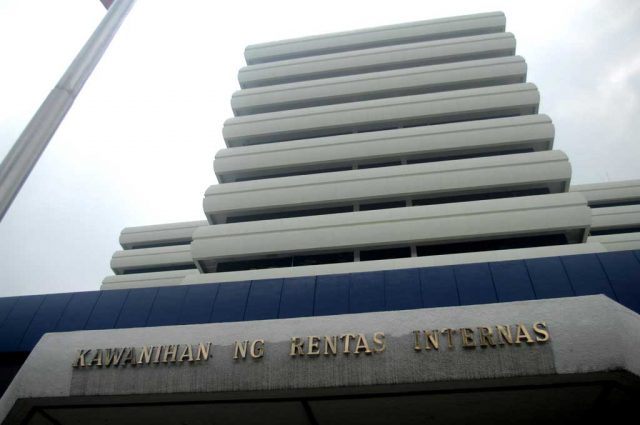
THE Bureau of Internal Revenue (BIR) said it is possible the government may have to adjust the bureau’s P3.232-trillion collection target for 2025 to bring it more into line with economic growth.

Appearing at the Kapihan sa Manila Bay on Wednesday, BIR Commissioner Romeo D. Lumagui, Jr. said “it’s possible given the actual gross domestic product (GDP) growth.”

“Since the economy’s growth… isn’t going as projected, there’s a need to recalibrate the collection target if we’re basing it on GDP performance. Discussions are ongoing about what the appropriate collection target for the BIR should be, but for now, it remains at P3.2 trillion,” Mr. Lumagui said.

In the first quarter, the economy grew by a weaker-than-expected 5.4%, easing from the

5.9% year-earlier pace amid looming uncertainty in the face of US tariffs disruptions. The first quarter reading missed the government’s 6-8% target band for the year.

The Development Budget Coordination Committee is scheduled to meet on June 23 to review its targets and macroeconomic assumptions.

If the BIR hits its current target this year of P3.232 trillion, it would beat its actual 2024 collection performance by 13.36%.

The BIR exceeded the target pace in the first four months by 14.5%, collecting P1.11 trillion.

Separately, Mr. Lumagui said the BIR is preparing its new digital track-and-trace system, expecting full implementation next year.

This will replace the currently used stamps, and curb the proliferation of illicit vapes and cigarette products, and further improving collections.

“All cigarettes, vape products, and alcoholic beverages will have QR codes and stamps, distinguishing marks for all registered products,” he said.

He said the proposal still has to undergo the approval of the Department of Economy, Planning, and Development, formerly the National Economic and Development Authority.

The feasibility study is still being prepared by the Department of Finance.

Mr. Lumagui said the BIR proposed a P15-18 billion budget for 2026, with its priorities being improving facilities and digitalization. 

The BIR has a budget of P16.9 billion this year.

“I hope this time, the budget I’m requesting for the contact center will be granted. Last year, that was the one thing we didn’t receive. It’s a small amount — probably, for a year, the amount I’m aiming for is around P150 million,” he said.

This will allow transactions to be processed over the phone, removing the need to visit offices, he said.

In its budget proposal, the BIR outlined plans to move to larger offices.

“All district offices need to have e-lounges. We also requested an increase in computers,” Mr. Lumagui said. — Aubrey Rose A. Inosante

Sugar output exceeds 2 MMT weeks before milling closes

FACEBOOK.COM/VICTORIASMILLINGCOMPANY

SUGAR production breached the 2 million metric ton (MMT) mark weeks before the end of the milling season, the Sugar Regulatory Administration (SRA) said, adding that sugar self-sufficiency could be a few years away.

As of June 8, output hit 2.015 MMT, the SRA said in a statement, putting the industry on track to smash the most recent projection of 1.840 MMT and actual output of 1.92 MMT in the previous crop year.

Raw sugar production last topped 2 MMT in the 2020-2021 crop year, when output hit 2.14 MMT.

“This steady increase in raw sugar production under this administration shows that there is potential (of matching demand of) 2.3 MMT, given the right conditions and sustained support for the industry,” it said.

The SRA attributed this year’s performance to the adjustment of the crop calendar to October from August, which it said was “better suited to climatic conditions and cane maturity.”

It also cited improving soil productivity, better cane varieties, improved coordination among sugar producers, and timely release of fertilizers and farm mechanization programs.

“That level of production indicates that retail prices will be stable,” the SRA said.

The industry is currently dealing with an infestation of red-striped soft scale insects, which could reduce sugar content by nearly 50%.

The infestation has affected 1,300 hectares as of June 18, up from 841 hectares on June 6, the SRA said. — Kyle Aristophere T. Atienza

Extension of US tariff negotiation period favorable to the Philippines — Roque

REUTERS/MIKE BLAKE/FILE PHOTO

THE Department of Trade and Industry (DTI) said the extension of US tariff negotiations beyond July 8 will be favorable for the Philippines because it will mean the provisional 10% rate will apply for longer.

“For now the tariff is at 10%, which is lower (than the April 2 reciprocal tariff of 17%). So the extension should be okay, favorable for us,” Trade Secretary Ma. Cristina A. Roque told reporters on Wednesday.

The US imposed a 17% reciprocal tariff on the Philippines on April 2. Tariffs were then put on hold for 90 days pending negotiations. In the interim, most trading partners were charged a provisional 10% rate.   

“But of course if we get the tariffs lower than 10%, why not, right? But again, everything is under negotiation,” she added.

Last week, Reuters reported that US President Donald J. Trump is willing to extend the deadline for completing trade talks before the reciprocal rates, or the new rates negotiated by the various trade delegations, take effect on July 8.

“I have also heard that there might be an extension, but it is not yet confirmed, so everybody is just speculating,” Ms. Roque said.

According to Reuters, only the trade deal with the UK was confirmed as of last week, while 17 others are at various stages of negotiation.

“Negotiations are still ongoing … We do not know yet what the decision of the US will be; we are waiting for that,” she said.

“Everybody is hoping to get what they negotiated for because when we went there, it seemed that their feedback was okay, but until we really get the exact tariffs, we really cannot say for sure,” she added.

She said that the negotiations are currently being handled by Trade Undersecretary Allan B. Gepty.

“He said that the negotiations are ongoing and are favorable … By favorable, I mean it is still within what we want,” she said.

“Of course what we want is lower than 17%, so we are hoping it to be within that range,” she added.

She said the department is hopeful as the Philippines is already starting at a lower rate than most of its regional competitors. — Justine Irish D. Tabile

Exchange rate to influence imported pork maximum suggested retail price

PHILSTAR FILE PHOTO

THE Department of Agriculture (DA) said on Wednesday that exchange rates and freight costs will be factors in setting the maximum suggested retail price (MSRP) for imported pork.

“We have to look at exchange rates, freight costs, and the overall price of pork worldwide,” Secretary Francisco Tiu Laurel, Jr. told reporters on the sidelines of a market inspection at Paco public market in Manila.

The peso closed at its weakest level in two months on Monday at P56.415 to the dollar.

Mr. Laurel said the agency will pilot the MSRP for imported pork in eight public markets in July.

The government will also enforce labeling rules for imported and domestically grown pork to deter profiteering by retailers.

“During the pilot, we also fix the labeling rules for pork,” he said, “noting that consumers currently cannot identify the origin of pork they are buying.”

Mr. Laurel said the MSRP for imported pork is primarily designed to address profiteering, citing retailers who sell frozen products at the price of domestically grown pork. 

He noted that during the inspection, he found that most of the pork on sale was imported.

“We see imported pork being sold at only P300 per kilo for liempo and P260 for kasim/pigue. It’s better that our people already have options.”

He cited the risk of dealers charging buyers of imported pork at the rate for fresh, domestically grown pork.

“We need to set the MSRP for (imported) pork because there are people who might take advantage in other markets. Instead of selling imported pork at P300 per kilo for liempo (belly), they will label it local and sell it for P450, P400.”“That’s profiteering. We would like to avoid that. That’s why we have to set an MSRP.” — Kyle Aristophere T. Atienza

Logistics firms agree to freeze prices during San Juanico rehab

PHILSTAR FILE PHOTO

By Justine Irish D. Tabile, Reporter

THE Department of Trade and Industry (DTI) said logistics providers have agreed to hold their prices steady for the time being while the San Juanico Bridge is being rehabilitated.

“(The logistics providers) have signified that they will not increase prices to move goods,” Trade Secretary Ma. Cristina A. Roque said on the sidelines of the launch of the Supply Chain and Logistics Center on Wednesday.

“It is normal to have delays, but at least the supply chain and logistics companies are getting together to really help move the goods,” she added.

Last week, President Ferdinand R. Marcos, Jr. declared a state of calamity in the Eastern Visayas for about a year to facilitate the repair of the bridge and mitigate disruption on the economies of Samar and Leyte.

“We follow the mandate of our president to make sure that basic necessities and prime commodities will not increase in price, and the logistics companies have also expressed their support (in not imposing) price increases,” Ms. Roque added.

Asked to comment, Fast Logistics Group Chief Executive Officer for Logistics Manuel L. Onrejas, Jr. said that the compromised state of the bridge has doubled the cost for logistics companies.

“As a logistics company, we must take care of the costs first. What we will do is negotiate with our principal because the cost is really double or even triple,” he told reporters on Wednesday.

He said that the additional costs are due to the need to handle goods multiple times across multiple vehicles to comply with the three-ton limit imposed on bridge users.

“We have to break up the goods and then use L300 vans. So it is tough. In fact, we brought so many L300s from Manila and Cebu just to rescue our Tacloban branch,” he said.

He said the Tacloban branch has experienced backlogs of two to three weeks, which the company plans to bring down over the next three days.

“Our operations will be normalized by then, and we can serve the market better,” he added.

To assist logistics companies, he said more ports need to be established to serve affected areas. 

The DTI said on Wednesday that it will be establishing the Supply Chain and Logistics Center (SCLC), a central platform for businesses to access real-time, accurate, and actionable logistics and supply chain information.

“This center will act as a nationwide support system to address logistics concerns and connect users to appropriate service providers, thereby reducing transaction costs and enhancing market access,” it said.

The DTI launched on Wednesday the SCLC Hotline and SCLC Website.

It also took pledges of support from 17 partner logistics service providers.

The SCLC is expected to go live within the year, Ms. Roque said.

ADVERTISEMENT
ADVERTISEMENT